Friday, 25 October 2024

One Man’s Trash: Fascinating Finds from the Rudi Klein Collection

Rudi Klein Collection from Porsche Foreign Auto Wrecking
Resourcefulness is a virtue of the most prolific junkmen, but the term junkman seems less fitting when talking about a man who probably owned more Porsches than any other in California. The man is Rudi Klein, a German emigrant who arrived in Los Angeles in the 1950s, and after a string of odd jobs, Rudi founded one of the most impressive collections of foreign cars in America.
Rudi Klein Collection from Porsche Foreign Auto Wrecking
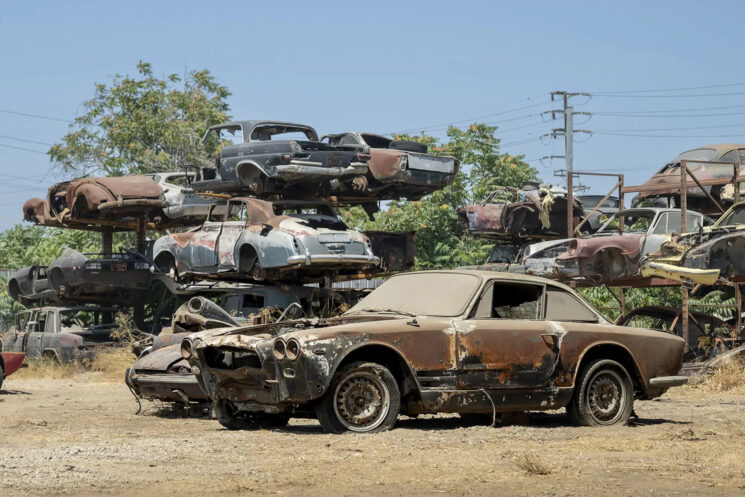
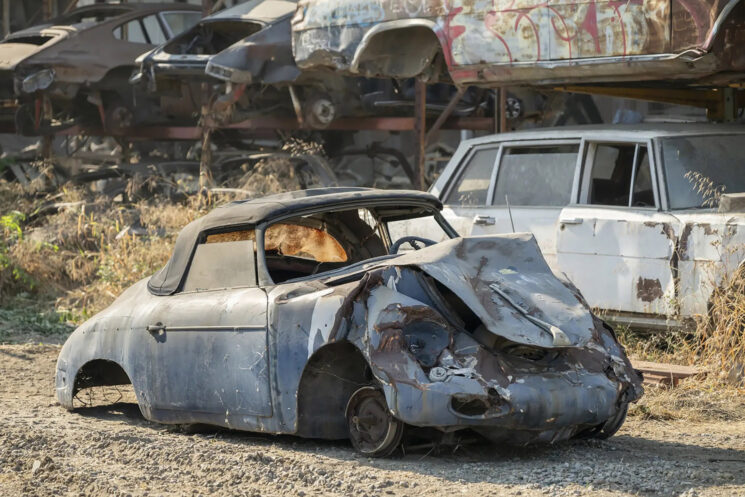
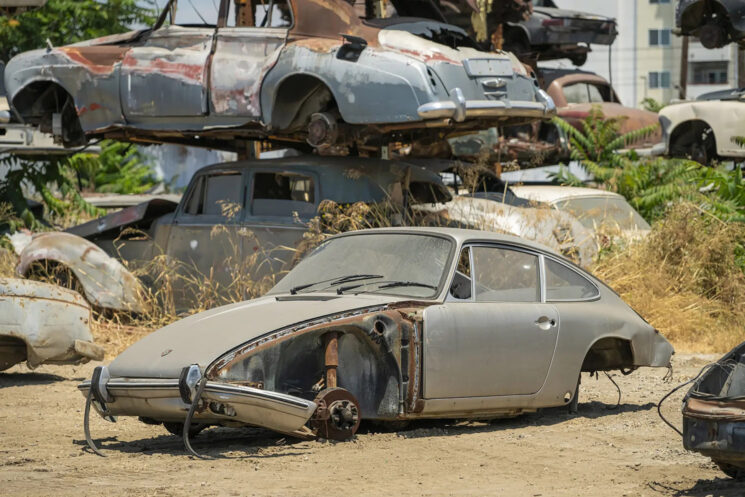
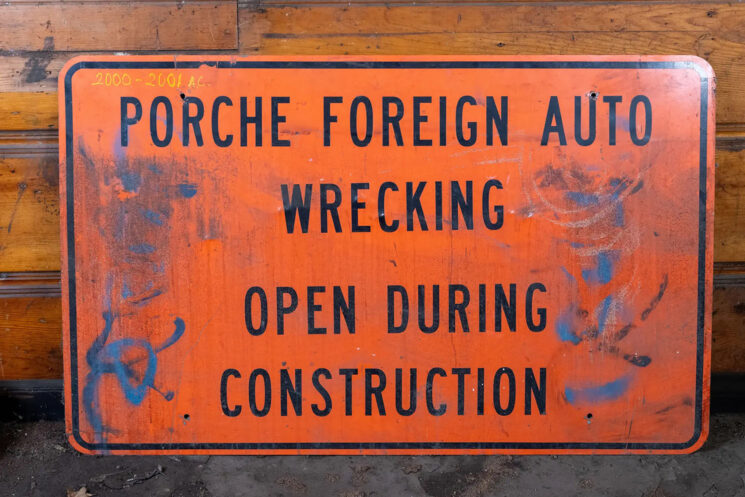
By now it’s probably clear that Rudi’s collection is different than most, in that it consists mostly of wrecked cars—predominantly Porsches—but all manners of foreign exotics have passed through his yard. Rudi’s business was Porche Foreign Auto (Rudi omitted the ‘s’ after Porsche threatened legal action years back), which he operated from 1967 until he passed away in 2001, and his yard will go down in history as one of America’s best-kept secrets.
Rudi Klein Collection from Porsche Foreign Auto Wrecking
Rudi bought up and tore down all the crashed exotics he could get his hands on, from Maserati, Mercedes-Benz, Audi, Ferrari and more, with their big-ticket components bagged, tagged and shelved. From transaxles to carburetors, the auto parts business started paying serious dividends in the 1970s, and Rudi expanded his personal collection to include Lamborghini Muiras, Iso Grifos, a real-deal alloy-bodied 300 SL Gullwing and a concours-winning Mercedes-Benz 500 K Coupe.
Rudi Klein Collection from Porsche Foreign Auto Wrecking
The value of Rudi’s personal cars is in the millions, and that’s before you start factoring in the regular inventory of the wrecking yard. The whole lot is being sold by RM Sotheby’s in a live auction and an online sale as well, starting Saturday, October 26. Rudi’s personal cars are astonishing, but the true magic of the junkyard is the junk—insanely valuable cars reduced to picked-over shells—reminding us that even the most valuable cars are still just cars. Since the gems in the collection will certainly enjoy their time in the limelight, let’s take a brief walk past some of our favorite scrap in the auction.
Rudi Klein Collection from Porsche Foreign Auto Wrecking
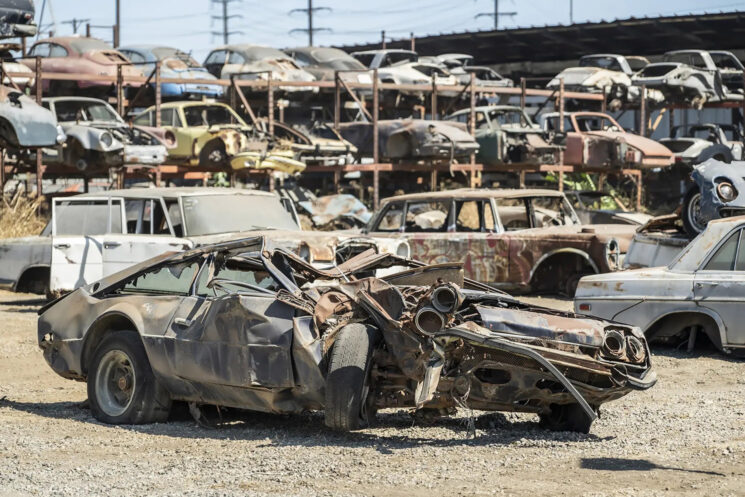
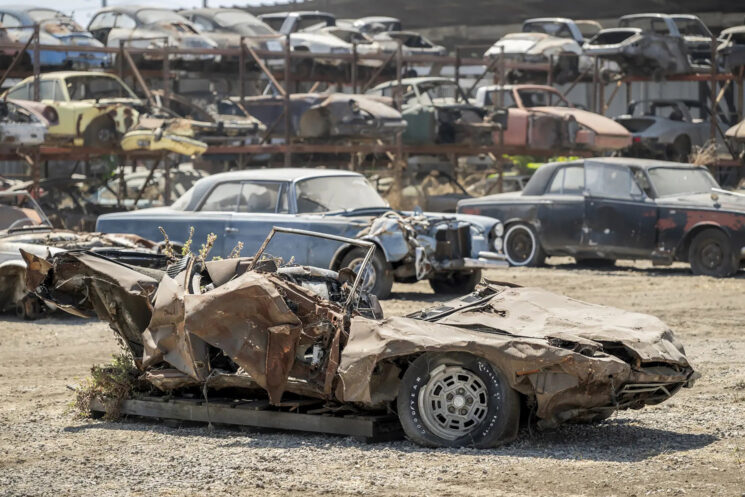
DeTomaso Pantera A brilliant but flawed mix of Italian design and American V8 power, the DeTomaso Pantera is one of the sexiest cars of the early ’70s. Its steel-monocoque body was designed by Ghia and accommodated a 330-hp Ford 351 Cleveland V8 and a five-speed ZF transaxle. The early Pantera would go from 0 to 60 mph in 5.5 seconds, and it could reach around 170 mph flat out.

DeTomaso beat the cars together in Modena, and Ford provided the engines and additional tooling to improve manufacturing, and the majority of early production cars were sold through Lincoln-Mercury dealers in the states. Despite its somewhat shoddy construction and an uncomfortable, clunky driving experience, early Panteras are incredibly sought after—just not this one.
Rudi Klein Collection from Porsche Foreign Auto Wrecking
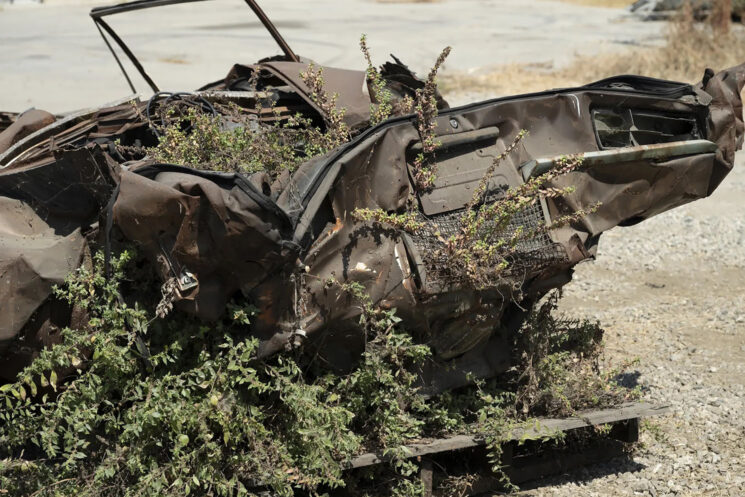
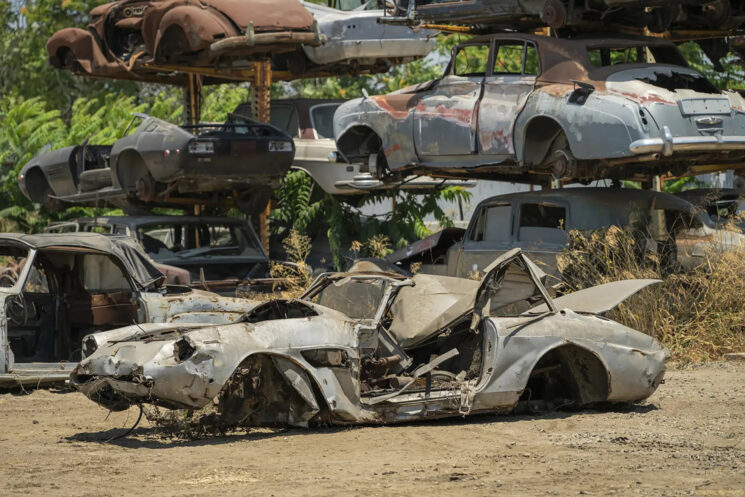
The Pantera from the junkyard is so rough, RM Sotheby’s didn’t even bother to say what year it is, and they can hardly be blamed considering there’s almost nothing to salvage. How about the two magnesium Campagnolo wheels? Nope, they’re both busted. And while the 351 Cleveland is still present, there’s a bush going on it, so the block may be beyond a few sleeves.

I’m no Pantera expert, but the early bumpers and Ghia badges on the quarter panels have me thinking 1971 or ’72, and considering the front wheels are still wrapped in Goodyear Polyglas tires, I doubt this Pantera had seen many miles before it was wrecked. It’s certainly a conversation piece and it’s selling at no reserve.
Rudi Klein Collection from Porsche Foreign Auto Wrecking
1967 Ferrari 330 GTC by Pininfarina There are GT cars, and then there are Ferrari GT cars, and if you’ve so much as sat in the driver’s seat of a V12-powered Ferrari grand tourer, you know what I mean. The interiors smell of old leather, the dash houses a staggering assortment of Veglia instruments and the wood-rimmed Nardi wheel has a magnetic force against your palms. Spacious, powerful and comfortable enough for a long drive, a Ferrari grand tourer is the car you want to be seen in.

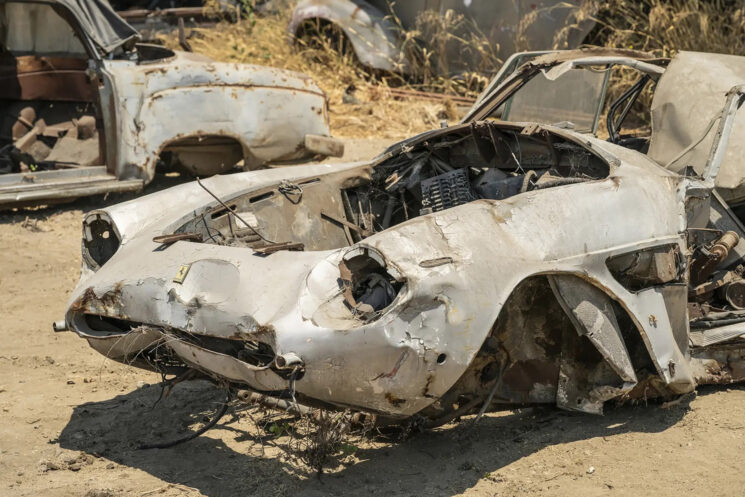
This particular Ferrari 330 GTC is a highly desirable two-headlight ’67 model, finished in Grigio Notte silver over a super-rare Arancia (orange) Connolly leather interior. Had it not met an untimely demise in the mid-’70s, it’d probably be a $700,000 car.
Rudi Klein Collection from Porsche Foreign Auto Wrecking
Unfortunately, the 330 GTC is wrecked on all sides, with only a bit of the passenger side and trunk still holding Pininfarina’s intended shape. While it likely survived the wreck unscathed, the 4.0-liter Colombo V-12 and the rest of the driveline have been pulled—potentially used to re-power an old stablemate ages ago.

Any car can be fixed if you have the resources, but I’m not sure a restoration is in the cards for this particular car. The bones are there, and the all-important factory VIN stampings, but restoring it today would be a fool’s errand. Maybe someday.
Rudi Klein Collection from Porsche Foreign Auto Wrecking
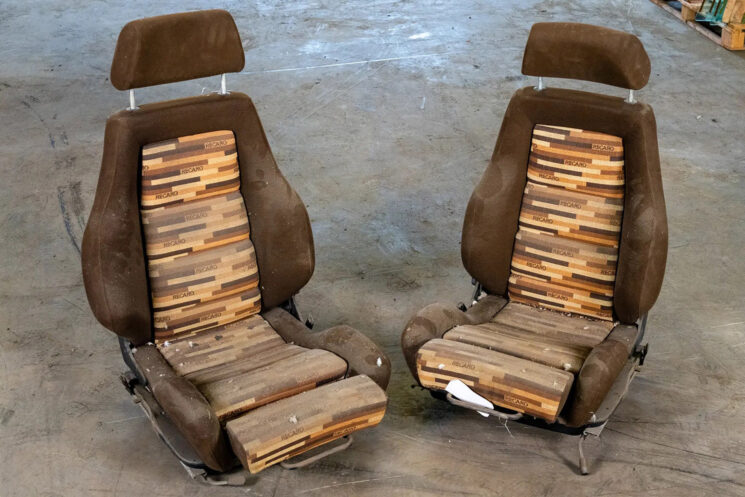
Two Recaro Seats Most items in the Rudi Klein collection will require some significant refurbishing before they can be put back to use (to put it lightly), but you can’t say the same for this rad pair of Recaro buckets. Beyond a thorough cleaning, these Recaros look ready to rock, and they’d be just the thing for any classic ’80s Porsche or BMW that needs some interior wow factor.

RM Sotheby’s offers no further details on the lot, other than they’re up at no reserve, but a little internet sleuthing suggests they’re likely the Recaro idealseat-C model—mid-’80s vintage. The unique colorway and presumably unrestored condition of the seats suggest they could be worth a few thousand after the barn dust is knocked off.
Rudi Klein Collection from Porsche Foreign Auto Wrecking
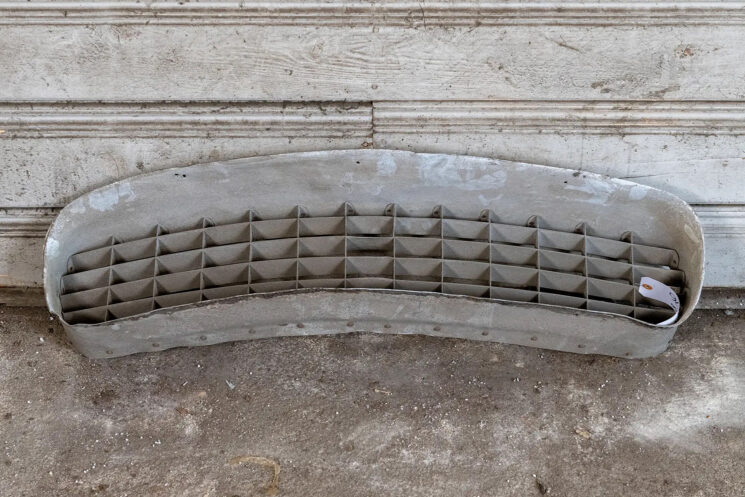
Ferrari 275 GTS Grille People often accuse us gearheads of being hard to shop for—an unfair suggestion in my opinion. If there’s a car guy in your life who’s been extra good this year, look no further than this fine Ferrari 275 GTS grille. It’s the kind of piece you can design a room around, and the perfect centerpiece for any shop or man cave.

A good Ferrari 275 GTS spyder is worth right around a million, so safe bet this piece won’t go cheap, but imagine the smile on Christmas morning when they unwrap an iconic egg-crate Ferrari grille. Worth it in my opinion, but take that with a grain of salt—I’m a bit of a junkman myself.
Rudi Klein Collection from Porsche Foreign Auto Wrecking
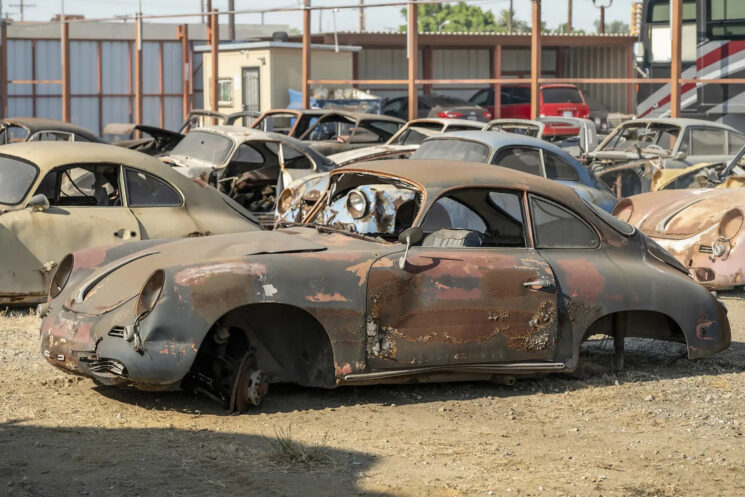
1964 Porsche 356 C 1600 Coupe by Karmann There are few finer corner-carving experiences on four wheels than a Porsche 356. Its controls are antiquated—true old-school Porsche—and a meager 95 hp from its Type 616/15 flat-four demands that your gearshifting and pedal pushing be expertly executed to reach its true potential.

Outlaw 356 builds are all the rage, and the dozens of pre-911 Porsche bodies in the Rudi Klein collection fuel the gearhead drive to rescue a piece of old iron. There are dozens to pick from, but this 1964 356 C Coupe might be one of the most salvageable.
Rudi Klein Collection from Porsche Foreign Auto Wrecking
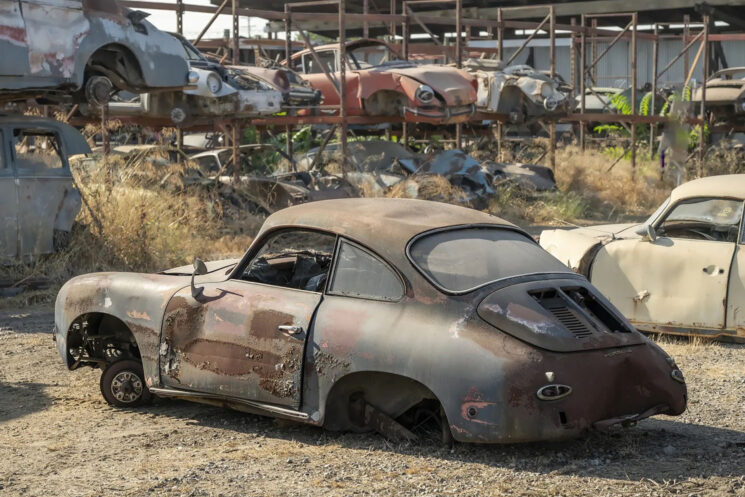
Its specification is nothing spectacular, just a run-of-the-mill U.S.-spec car from the first year of 356 C production. It was originally Signal Red over a black leather interior, and wore chrome wheels when purchased new at John Von Neumann’s Competition Motors of Culver City, California. Rudi purchased the car in 1969, so its days of tearing up Los Angeles lasted less than five years.

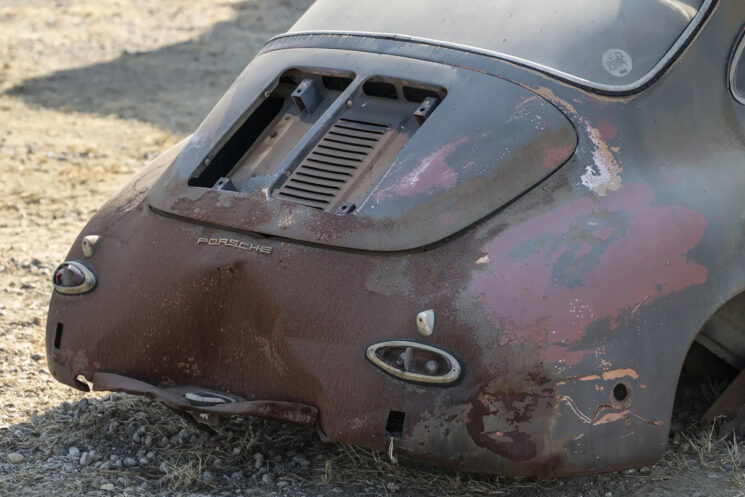
Besides a boatload of dents and a kinked hood, it isn’t all that bad and the original Signal Red paintwork protrudes through an old respray. Important bits of trim, door handles, interior pieces and some of the glass still remain as well.
Rudi Klein Collection from Porsche Foreign Auto Wrecking
There’s some legal maneuvering required, as this car is being sold for parts only, but I would love to see this 356 on fresh running gear with the dents hammered out and a new lease on life. The kind of project an average guy could undertake in the shed, and have a badass, ratty old Porsche on somewhat of a budget. If we could only pull the strings…

Photos by Robin Adams | RM Sotheby’s
Rudi Klein Collection from Porsche Foreign Auto Wrecking


from Bike EXIF https://ift.tt/OWe4kDM

Thursday, 24 October 2024

Cashing Out: A How-To Guide for Selling Custom Motorcycles

Bike EXIF Motorcycle Classifieds
A custom motorcycle has very little in common with soulless machines like a Toyota Camry or a washing machine, so why would you sell it like one? We pour our hearts, souls and wallets into our bikes, perfecting every detail of form and function, but when it comes time to pass it on to the next owner, too many of us are guilty of doing the bare minimum.

When we choose to release a motorcycle from our clutches, it’s usually to fund the next bike, and that’s why all of this matters. As unique as your custom bike is, it’s worthwhile to put extra effort into the sale process—because it’s not just a motorcycle you’re selling—you’re selling your personality, your handiwork and your brand. Pulling out the right stops can mean the difference between selling a bike, and selling a riding experience.

Bike EXIF Custom Motorcycle Classifieds
We’ve just cut the ribbon on the Bike EXIF Classifieds, home of the very best custom motorcycles and classics for sale worldwide. If you’re an EXIF regular and lust for the kind of custom bikes featured on this site, our classifieds will be the place to find them, and every bike featured in this write-up is available right now.

In the spirit of leveling up your buying and selling experience away from the ‘Is this available’ nonsense we’ve become accustomed to, we’re serving up some quick tips for selling custom bikes. Consider it a guide for maximizing your ROI, because if you’re about to list, we know you’ve already got your eye on the next one.

Cafe Racer Dreams Motorcycle Classifieds
Nail Your Prep Before you bust out the camera and craft a listing, it’s vital to consider whether your bike is 100% ready to sell. Of course, we don’t always have the time to make everything perfect, but it pays to make sure your motorcycle is the best it can be, which means getting it cleaned up and addressing any issues.

If your bike has seen use, ensure all your maintenance is up to date, and items that suggest neglect are taken care of—such as a dry loose chain. If you have the means to modify a motorcycle, you’re knowledgeable enough to identify the items that might spoil a sale. Remember, the condition of your bike is a reflection of your ownership, so put your best foot forward.

Of course, that logic extends to cleanliness, and after all your maintenance is locked in, give your bike a thorough degrease, wash and polish.

Bike EXIF Custom Motorcycle Classifieds
Get The Right Shots A picture says 1,000 words and a single photo might be enough to make or break the interest of a potential buyer. Remember this is more than a motorcycle you’re selling, it’s a custom vehicle that makes a statement, and good photography will speak volumes about the riding experience that you’re selling. To put it bluntly, a handful of vertical photos from your cell simply won’t do.

Even if your photography experience is limited to switching your iPhone to portrait mode, there’s still a ton to be gained by putting extra effort into your photos. Refer to our Motorcycle Photography 101 Guide for quick tips on how to select a backdrop, light your subject and frame your shots, as the usefulness of these topics isn’t lost on cellphone photography.

Bike EXIF Custom Motorcycle Classifieds
If you’ve given it your best effort, but find the tenets of basic photography are beyond you, don’t be afraid to phone a friend. Chances are good there’s someone in your extended circle who’s proficient behind a lens, and they’ll probably be thrilled to shoot something different and rad like your motorcycle.

Photography is a founding principle of Bike EXIF, so we could really beat this subject into the ground. Quitting while we’re ahead, we’ll reiterate that good photography picks up where your description leaves off. Photos that convey speed, craftsmanship and unique style are subliminal messaging to buyers, reinforcing that a custom motorcycle is a lifestyle purchase instead of a generic piece of power sports equipment.

Bike EXIF Custom Motorcycle Classifieds
Provide All the Information Besides photography, listing descriptions are another area where it’s easy to fall short. Provide all the information you’d want to know if you were considering buying the bike, and don’t even think about pulling that ‘message for more info’ crap. List it once, list it right, and you won’t have to answer the same questions multiple times.

This is especially important with a custom motorcycle since you’re the only source for the information. List all the modifications and the parts used, and feel free to inject a little personality regarding the build and riding experience. Inspire confidence in your work by providing additional details, such as if the frame was TIG welded, the wheels were laced with stainless Buchanan spokes, etc. The more complete picture you can paint here will give buyers confidence in your work.

Bike EXIF Custom Motorcycle Classifieds
The Price is Right Determining a price for a stock motorcycle is simple, just find comps in your area, and adjust for condition, mileage and specification. The same can’t always be said for your custom motorcycle though, and arriving at a realistic dollar figure can be hard when your blood, sweat and handiwork are on the line.

Unless things really got out of hand, you probably have a rough idea of how much time and money you’ve spent building a motorcycle. It’s important to realize that every hour of work won’t directly correlate with another dollar, that’s why established shops build for clients so they’re paid by the hour. Until you get your name out there, your return might not be as good.

Bike EXIF Custom Motorcycle Classifieds
We’re not paid to build bikes, but the right number is obviously somewhere in between the value of a stock bike and the value of your added investment. The market is going to determine that number at the end of the day, which can be a bitter pill in some instances. If you’re just cutting your teeth in the custom bike world, it’s important to realize that your stylistic changes may not add value for all buyers, so keep those stock pieces around.

Bike EXIF Custom Motorcycle Classifieds
Is This Available? These four simple words form a phrase that’s the bane of existence for anyone who has listed something for sale lately. Where classifieds used to be more dedicated forums, be it Craigslist, eBay, Kijiji, and infinite others, things have changed since Facebook Marketplace launched back in 2016—now catering to over 3 billion monthly users globally.

The Marketplace works, don’t get me wrong, but often, your listing starts to feel a bit like an NPC generator instead of a for-sale post. Missed appointments, insultingly low offers and dozens of ‘Is this still available?’ messages become the norm, and that’s all before you meet with a single tire kicker looking for a joy ride.

Bike EXIF Custom Motorcycle Classifieds
With a specialty item like a custom motorcycle, it can be worthwhile to get your listing in front of a more knowledgeable audience—especially if you’re in a rural area. Listing your bike on classifieds with a global audience like ours may mean the difference between three interested parties and 30, and they may have deeper pockets as well. Who knows, your bike may even grab someone’s attention and secure future projects.

On that note, I’ll conclude with one more plug for the new Bike EXIF Classifieds, live now with 11 custom motorcycles from shops like Cafe Racer Dreams, Powerbrick and Killer Custom. Our listings are open to big names like these, as well as aspiring home builders looking to establish a name. Be sure to check back regularly, as many of the motorcycles we feature may just become available, and you never know what obscure classics we’ll kick up.

Bike EXIF Custom Motorcycle Classifieds


from Bike EXIF https://ift.tt/ODdH0ZX

Wednesday, 23 October 2024

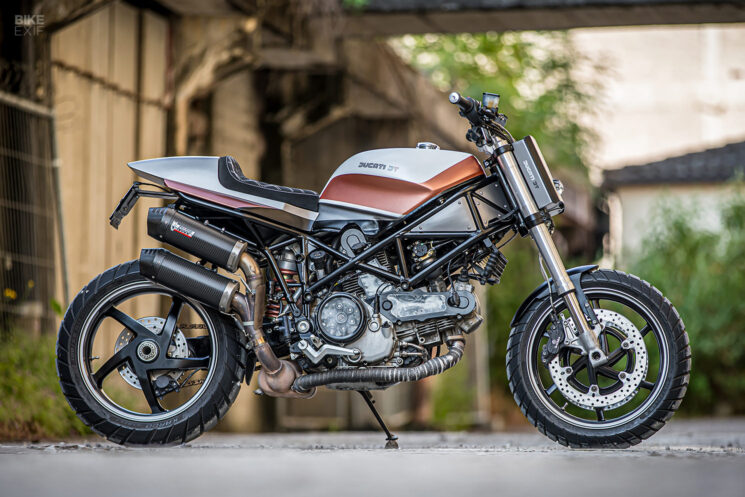
Ducati DT: A Ducati Multistrada 1000 DS street tracker from Switzerland

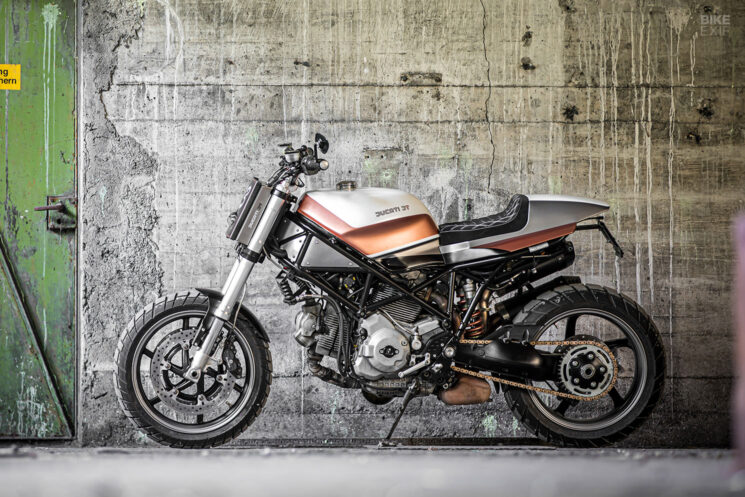
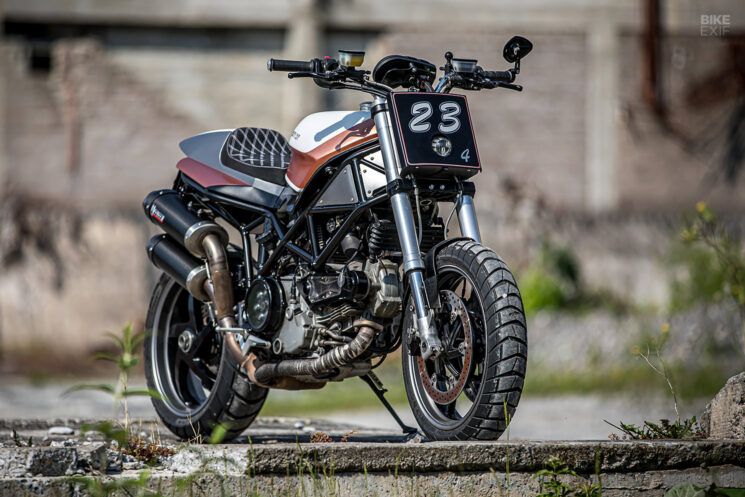
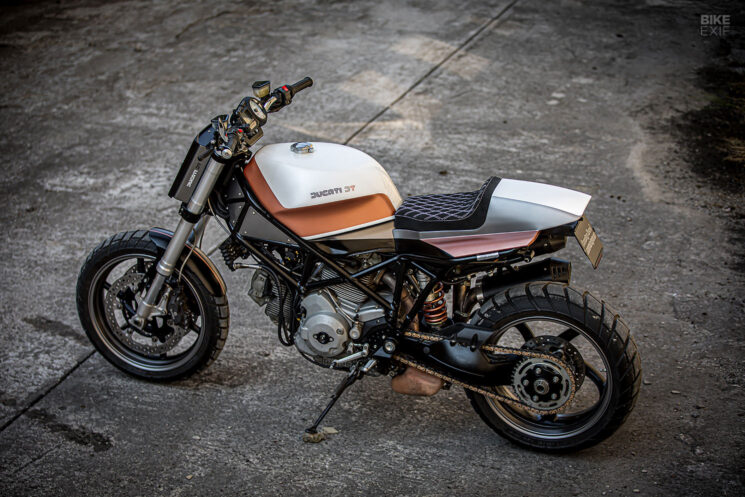
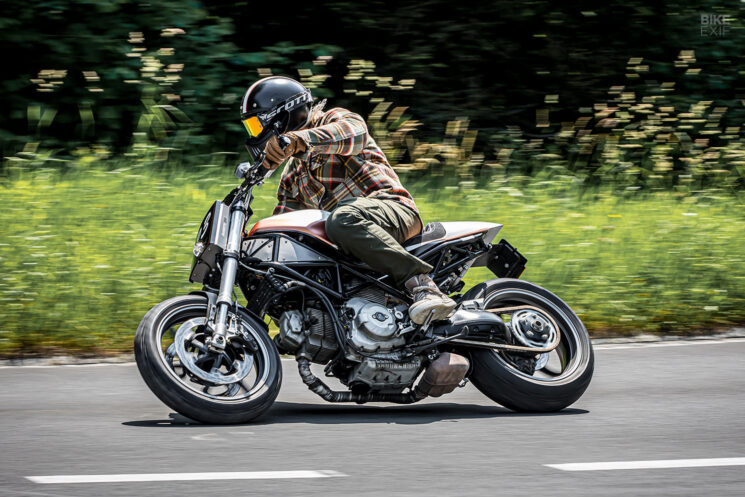
Custom Ducati Multistrada 1000 DS street tracker
Pierre Terblanche has penned countless motorcycles in his career, but he’s best known for the 11 years he spent at Ducati. In that time, the South African designer became infamous for designing bikes that were polarizing at first but went on to become successful.

The Ducati 999’s boxy bodywork and stacked headlights upset Ducati purists, but it was wildly successful on the race track. The Ducati Hypermotard was a massive departure from the Italian marque’s usual fare, but it was immensely popular among riders. And the Ducati Multistrada 1000 DS, although goofy as heck, went on to spawn one of Ducati’s most successful model ranges.

Custom Ducati Multistrada 1000 DS street tracker
There’s a huge difference between the Multistrada 1000 DS and the current range-topping Multistrada V4—both aesthetically and mechanically. But time has gifted the 1000 DS a certain awkward retro charm. Look past its quirky split fairing and layered tailpiece, and you’ll find Ducati’s trusty early-2000s desmodromic L-twin engine, elegantly housed in a trellis frame.

Of course, if the old Multistrada’s design doesn’t butter your toast, you can always tear it up and use it as the platform for your next project. That’s what Swiss motorcycle enthusiast Didi Schweighauser did, with stunning results.

Custom Ducati Multistrada 1000 DS street tracker
Didi’s obsession with motorcycles started when he was 13. He counted the days until his 14th birthday, which is when he could legally start riding mopeds. Then he got his hands on a Puch X30 and promptly found himself in trouble with the law.

Didi’s bikes got progressively bigger, and then he turned 50 and found a new obsession—custom motorcycles. He ticked the bobber box with a custom BMW R65, and then ticked the cafĂ© racer box with a Moto Guzzi Le Mans 1000. A peppy street tracker was third on the list…

Custom Ducati Multistrada 1000 DS street tracker
“I had long been fascinated by Ducati engines and their characteristics,” Didi tells us, “so I bought a 2004 Ducati Multistrada 1000 DS and started planning.”

“The first steps were difficult. As the Multistrada’s tank, seat, and rear fairing are all one piece of plastic, the idea of replacing the tank and fitting a new saddle was out. My petrolhead friends advised me to sell the thing and look for an easier-to-convert base—but that was the attraction.”

Custom Ducati Multistrada 1000 DS street tracker
With loaned workshop space (and help) from his friends at Country Road Motorcycles in the picture-perfect Swiss village of Alpnach Dorf, Didi stripped the Multistrada down to its frame and engine and started figuring out his next steps.

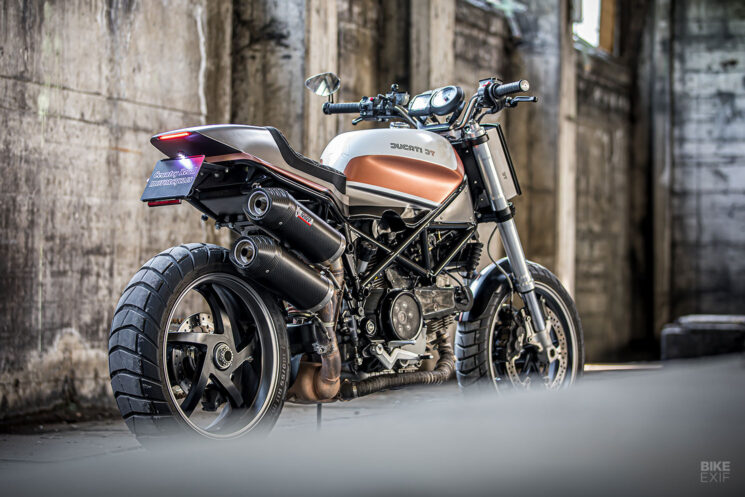
He soon found a Honda VF750F fuel tank that suited the lines of the Ducati frame. Armed with the fuel tank, and a clear idea of what he wanted the tail section to look like, Didi roped in his trusted fabricator, Jimmy Iten at Jimmy’s Repair Shop. Jimmy massaged the Honda tank to sit perfectly on the Multistrada, before building the rear section from scratch.

Custom Ducati Multistrada 1000 DS street tracker
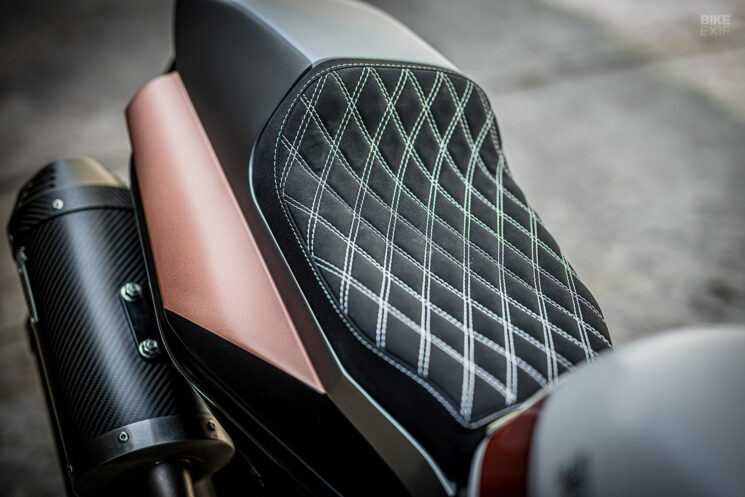
The fuel tank and seat pan lock into each other like puzzle pieces, while the rear hump hides the bike’s battery. A Highsider LED taillight sits under the rear lip, while an integrated license plate bracket lower down hosts a pair of Motogadget turn signals. Toni Käppeli handled the swish diamond-stitched seat.

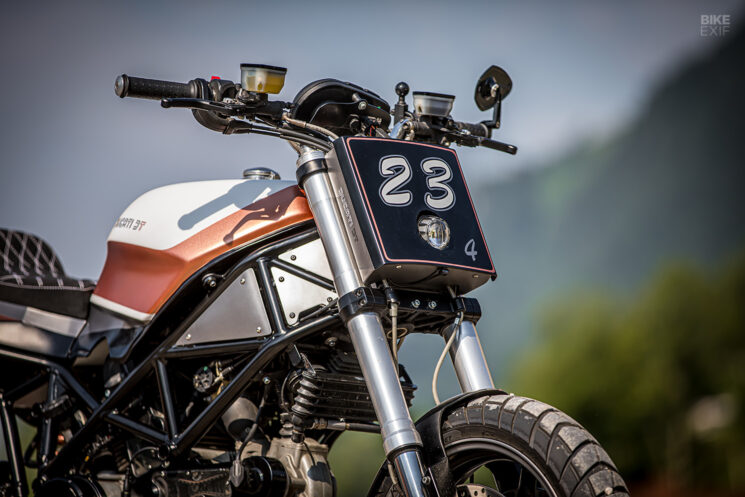
Other handmade parts include the headlight nacelle, the front and rear fenders, and a set of triangular panels that block the gaps in the front section of the frame. The headlight is a Highsider part, and the front turn signals come from Heinz Bikes. Didi kept the OEM handlebars, dashboard, and controls, but ditched the mirrors for a single Motogadget bar-end item.
Custom Ducati Multistrada 1000 DS street tracker
A pair of Mivv silencers hang off the right-hand side of the bike, while clear covers on the clutch and belts create a quintessential Ducati vibe. The copper, white, and anthracite livery is as stylish as it gets, complemented by a host of black powder-coated parts.

“My aim with the Ducati was to design the bike with clean lines—to build it as cleanly as possible and to hide or even do without anything unnecessary,” Didi tells us. “The bike is 100% legal and the fun is 100% insane.”

Custom Ducati Multistrada 1000 DS street tracker
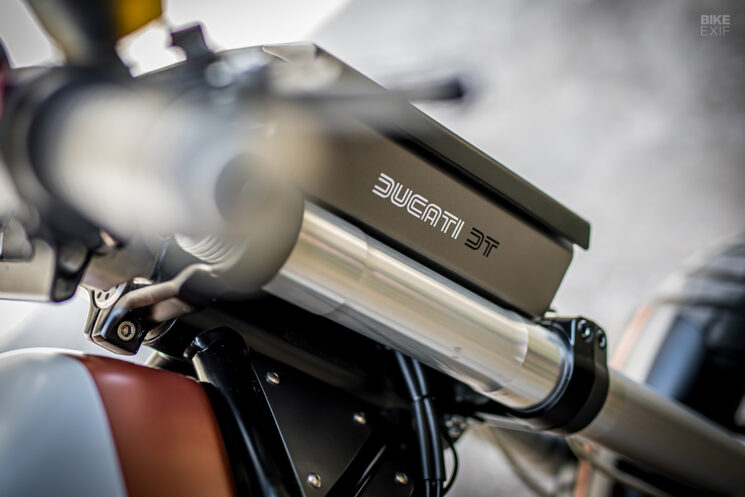
Finally, the ‘Ducati DT’ logos on the bodywork, done in a period-correct font, hint at the bike’s moniker.

“Why DT? For me, it was a play on words for Didi’s Töff, or Dirt Tracker. Or—because the conversion of the Ducati gave me a lot of strength during my divorce—Divorce Tracker.”

Didi Schweighauser Facebook | Country Road Motorcycles | Images by Lennart van Dijk

Custom Ducati Multistrada 1000 DS street tracker

Sidecar Subject: Major Multistrada Milestones

Multistrada 1000 (2003): The original model introduced Ducati’s adventure touring bike concept, featuring a 1,000cc L-twin engine and a unique trellis frame design.

Multistrada 1100 (2006): This version upgraded the engine to 1,100 cc and introduced advanced features like traction control and improved ergonomics for enhanced rider comfort.

Multistrada 1200 (2010): A significant redesign that included a 1,200 cc engine, a more modern aesthetic, and several electronic rider aids.

Multistrada 1200 S (2012): Added active suspension and a larger TFT display, along with further refinements to the engine and frame for better performance and comfort.

Multistrada 1200 (2015): Introduced the Desmodromic Variable Timing (DVT) engine, improving torque delivery and fuel efficiency, along with enhanced electronics and riding modes.

Multistrada 1260 (2018): Upgraded to a 1,262 cc engine that improved low-end power, along with an updated chassis for better handling and stability.

Multistrada V4 (2021): Marked a major shift with the introduction of the V4 Granturismo engine, advanced radar systems for adaptive cruise control, and a new design focused on performance and comfort.


from Bike EXIF https://ift.tt/dgUCIbq

Tuesday, 22 October 2024

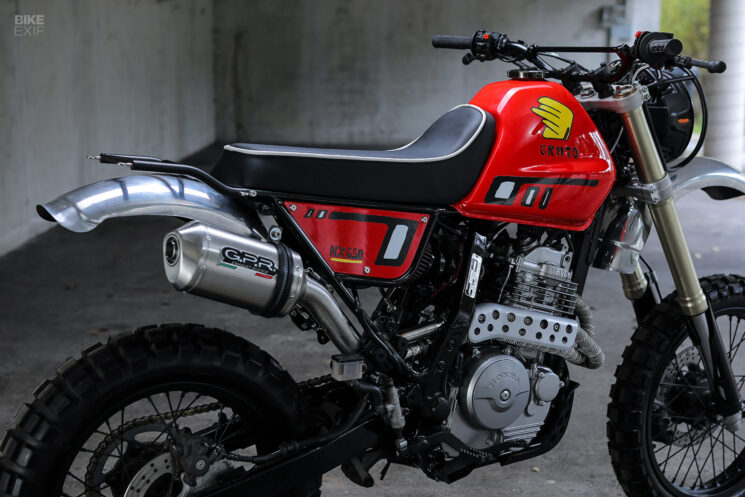
Real Steel: This MX-inspired Honda Dominator is no plastic bike

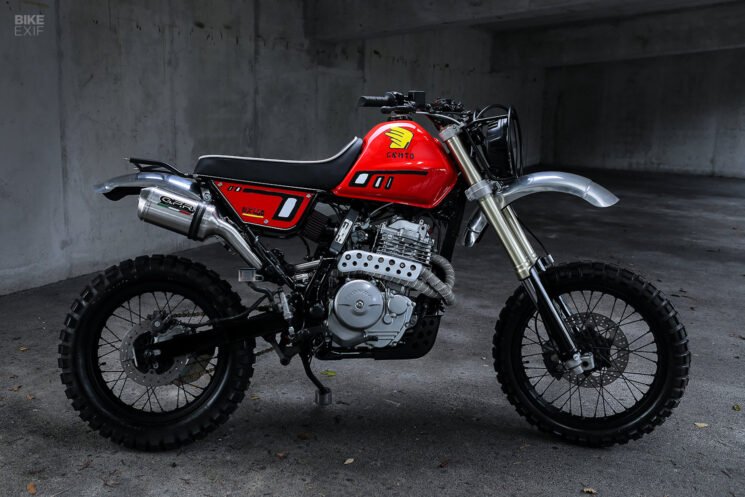
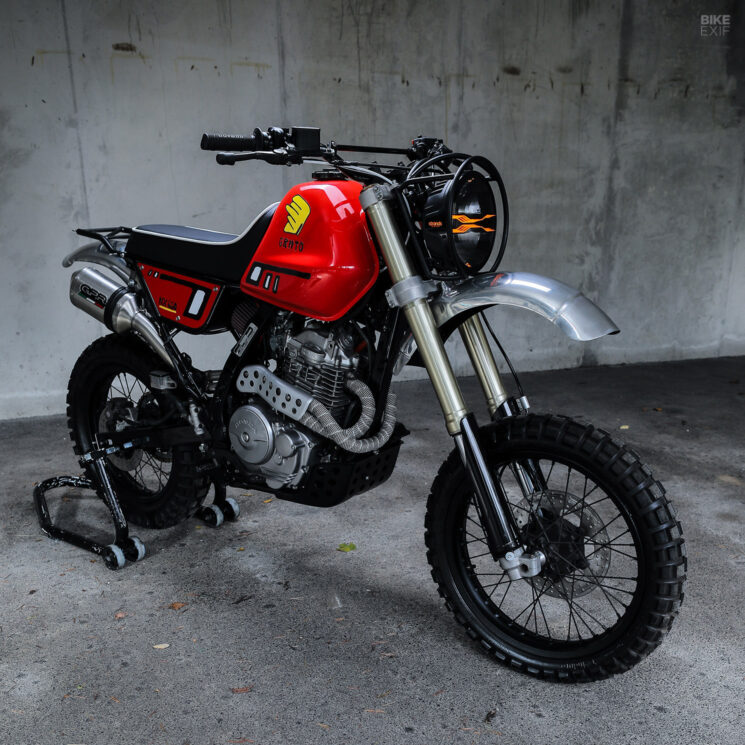
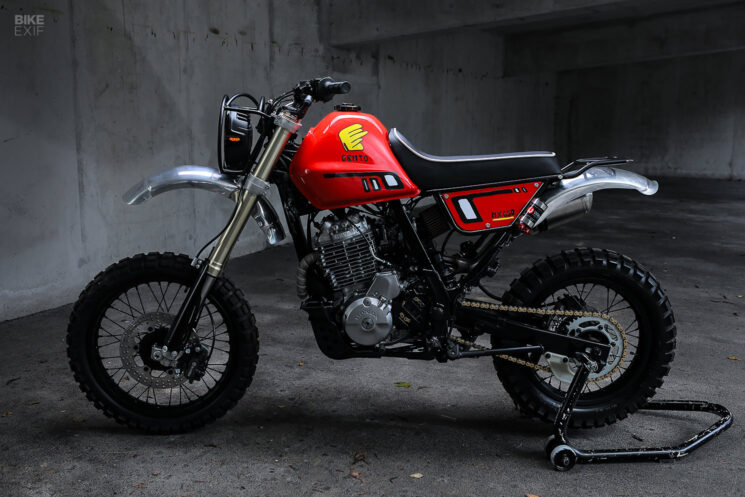
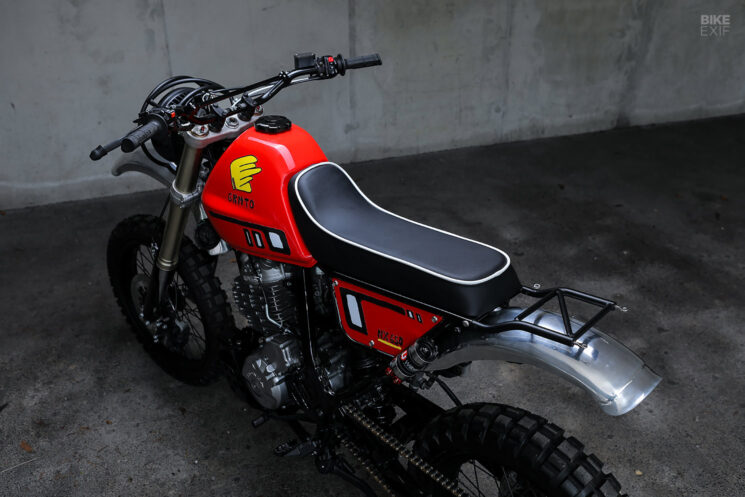
2002 Honda Dominator scrambler by Gas&Retro
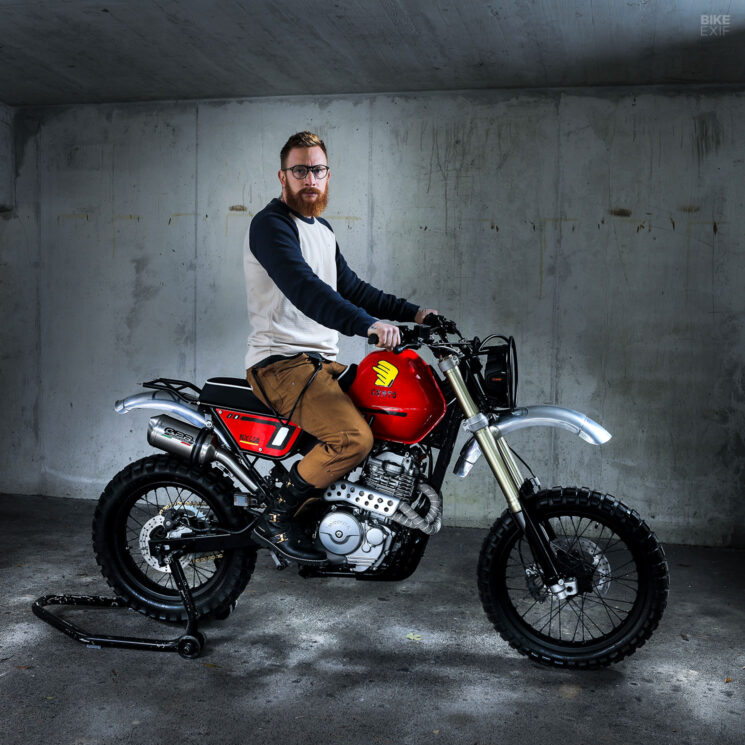
We regularly wax lyrical about the virtues of the venerable Honda Dominator, and how its rugged simplicity makes it a prime candidate for customization. Many find it charming in stock form too, thanks to its quirky early-2000s adventure bike aesthetic. But not Žiga Petek.

The man behind Slovenia’s Gas&Retro workshop ranks metal fabrication as his favorite aspect of custom bike building. So the amount of plastic on the iconic Honda thumper grinds his gears. With a 2002-model Honda NX650 Dominator on his bench, he set out to rid it of its stock body panels and dress it in as much metal as possible.

2002 Honda Dominator scrambler by Gas&Retro
Much to Ĺ˝iga’s chagrin, the bike still wears a pair of plastic Acerbis fork protectors. A set of handmade guards would have been preferable, but the project’s scant 49-day timeline didn’t leave much wiggle room.

The Honda actually landed in Ĺ˝iga’s lap six months ago, when he traded a Harley Sportster for it plus a handful of other bikes. It belonged to a friend who had started customizing it before running out of steam. Ĺ˝iga relegated it to the corner of his workshop… until a conversation in early July prompted him to turn it into an MX-inspired scrambler for an event in late August.

2002 Honda Dominator scrambler by Gas&Retro
“While I was in Garmisch-Partenkirchen for BMW Motorrad Days as an invited builder, I met Mathias and Barbara from Bad&Bold,” he tells us, “and we spoke about the MaxlRIDE event that they organize. I was part of it last year with my Husqvarna ‘120 years’ tribute build.”

Held on the grounds of a 14th-century Bavarian castle, MaxlRIDE is an adventure riding festival catering to modern dual-sport bikes and retro scramblers alike. Keen to return, Ĺ˝iga reasoned that he could get the Dominator ready to shred in less than 50 days. “I was like, ‘Is it possible?’ and I said to myself, ‘Sure it is!’”

2002 Honda Dominator scrambler by Gas&Retro
Back at the shop, Ĺ˝iga dragged the Honda onto the table and began undoing some of the mods that had already been done. The work included removing a set of perfectly good aftermarket plastics, because Ĺ˝iga doesn’t like to “just buy stuff and put it on the bike.”

Since the Honda Dominator’s fuel tank is sculpted to interface with the OEM fairing, it looked a little off standing alone. Ĺ˝iga replaced it with the smoother unit from the NX650’s more road-focussed cousin, the Honda SLR650 (which has no fairing). A few deft mods were all it took to massage it into place.

2002 Honda Dominator scrambler by Gas&Retro
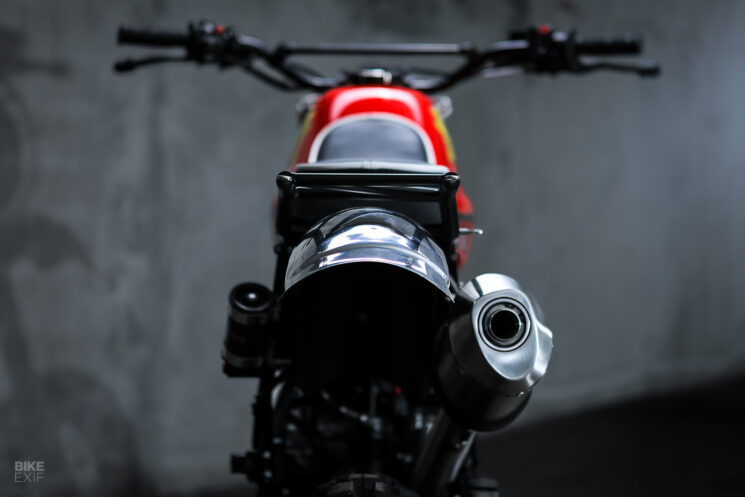
Moving to the rear of the bike, Žiga built a new subframe with an integrated luggage rack at the back, and extra bracing below the seat that cradles a handmade electronics box. A custom-made three-quarter length seat sits up top, covered in black vinyl with stylish white piping, while steel side panels flank the subframe. Finishing touches include threaded-in anchor points for luggage, and combination turn signal and taillight LEDs from Highsider.

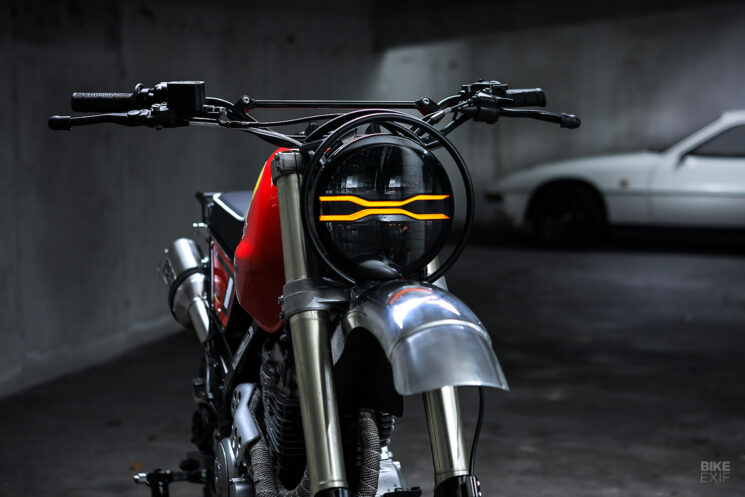
The Honda’s new fenders are, naturally, hand-rolled aluminum items. Ĺ˝iga modeled them on classic motocross fenders, but with a slight twist.

2002 Honda Dominator scrambler by Gas&Retro
The Dominator’s monstrous 9” LED headlight comes courtesy of the 4×4 lighting specialists Strands Lighting Division. Ĺ˝iga mounted it in a handmade cage, similar to those you’ll find on classic Baja race bikes. A set of TRW handlebars sits behind it, fitted with Domino grips and the original Honda switches and controls.

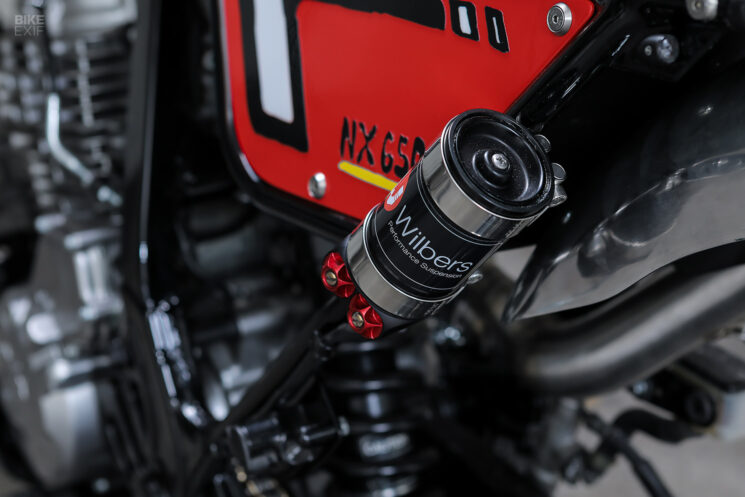
Ĺ˝iga swapped out the Dominator’s running gear too. The upside-down Showa forks from a Honda CRF450 do duty up front, with a Wilbers shock mounted out back; both are fully adjustable. Fresh 18” laced wheels sit front and back, wrapped in Continental TKC80 rubber.

2002 Honda Dominator scrambler by Gas&Retro
Thanks to its low mileage, the bulletproof Honda mill needed little more than a service and new gaskets before it was good to go. Ĺ˝iga swapped the airbox for a pod filter, and modified the bike’s two-into-one-into-two exhaust system to accommodate a GPR muffler.

Last on the list was picking a livery that would turn heads at MaxlRIDE. Ĺ˝iga got Matej Mrzlika to lay down a striking red paint job, but couldn’t settle on suitable decals. In the end, he doodled a set of cartoonish graphics, which were then sent to Urban Upelj to turn into motocross-grade vinyls.

2002 Honda Dominator scrambler by Gas&Retro
Gas&Retro’s Honda Dominator is equal parts playful and aggressive, with proportions geared towards unbridled hooliganism. Now that MaxlRIDE is behind him, he might find time to swap out those plastic fork covers.

Gas&Retro | Facebook | Instagram | Images by Rok Plešnar

2002 Honda Dominator scrambler by Gas&Retro


from Bike EXIF https://ift.tt/oMTOv7S

Monday, 21 October 2024

The Humble Rokon AWD is Built for Utility, Exploration and the Apocalypse

Rokon Awd Motorcycle Factory
Be it bobbers,
baggers, beamers, or what-have-you’s, there’s a bike for everyone, imbuing the rider with the Steve McQueen or Peter Fonda cool that comes from sitting atop an engine with a can full of gasoline between your knees, hurtling through space as your brain whispers, “Bigger. Faster. Louder.” But there is a motorcycle that rebels against the seductive power of speed and the Botticellian curves of our two-wheeled Freudian steeds: the Rokon Trail-Breaker, the antithesis of all that we’ve decided the essence of a motorcycle should be.

Rokon Awd Motorcycle
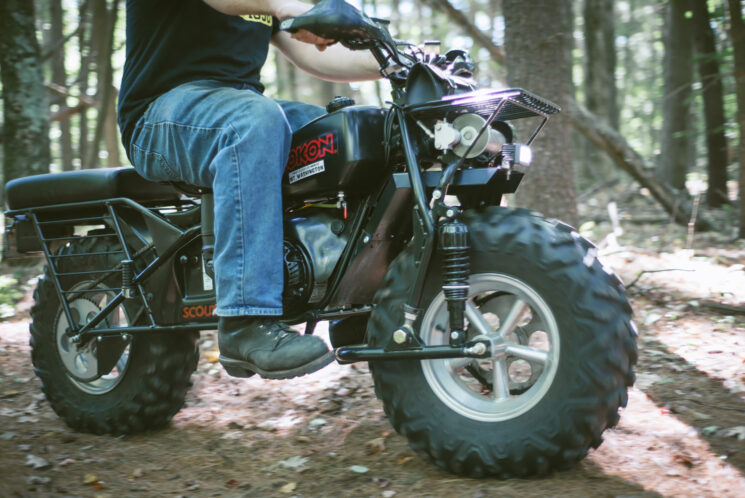
Rokon is the second-oldest continually operating motorcycle company in the U.S., and the bikes they produce today look remarkably like the prototype developed in 1958. For the uninitiated, the Trail-Breaker, Rokon’s original and best-selling model, is a two-wheel-drive mule of a bike. With its squat, ATV tires inflated to just 3 psi, a 7-hp, 208cc four-stroke Kohler engine and torque converter automatic clutch, it has a top speed of 35 mph. In the history of mankind, no one has ever gotten laid for riding a Rokon. It is the bike of the married and celibate. You will not see this bike tearing up the track any time soon, but with its ability to climb a 60 percent grade, the Rokon dominates where no other vehicle can go.

Rokon Motorcycle Company
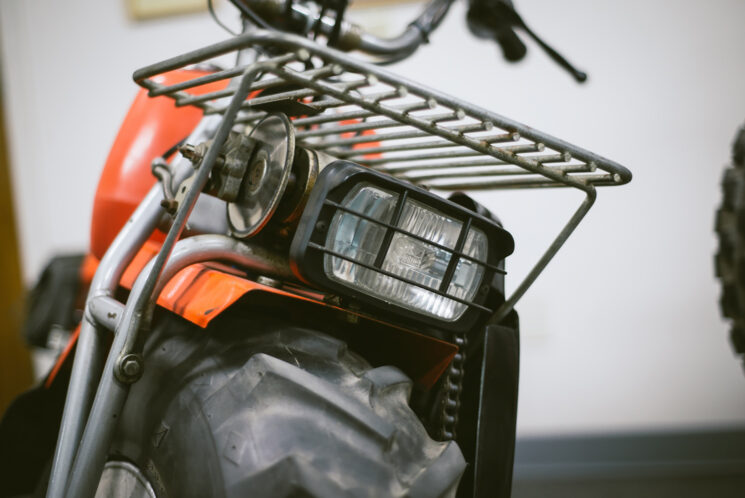
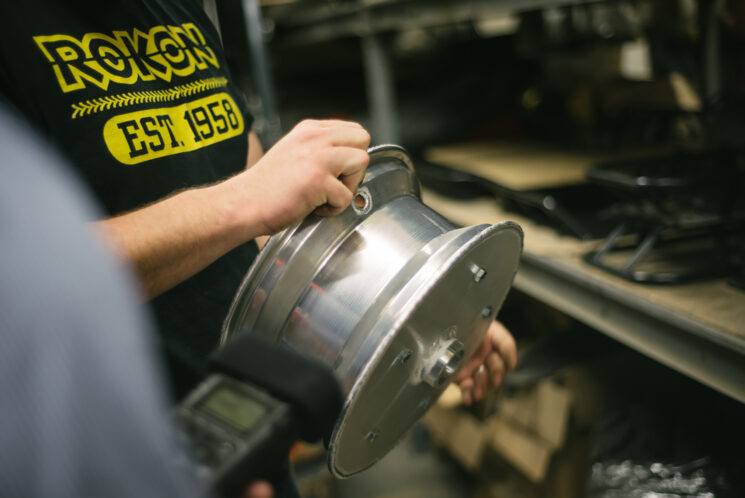
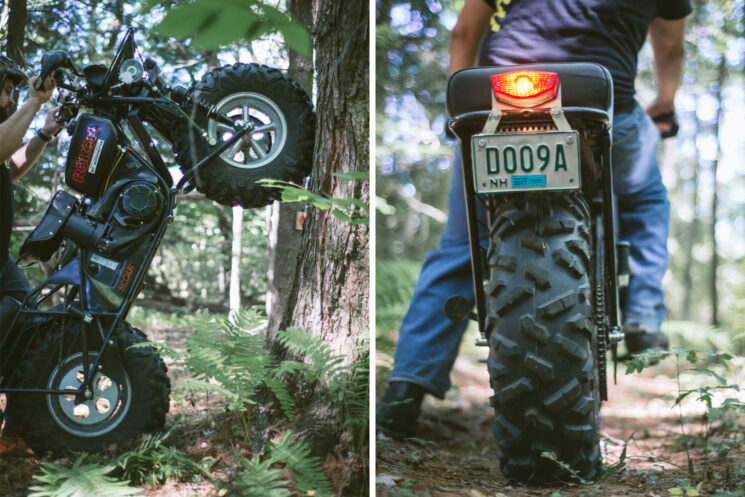
How is this possible? Like its 4×4 counterparts, Rokon’s two-wheel-drive system allows it to attack terrain other motorcycles just can’t. Power is delivered from a three-speed transmission to a drive shaft that runs through the center tube of the bike to a universal joint at the handlebars, which allows them to still turn while power is delivered to the front wheel. This turns a set of gears which spins an 11-tooth sprocket above the front wheel, which connects by a chain to an 84-tooth sprocket attached to the wheel. The Rokon’s lightweight, hollow aluminum drum wheels can be filled with an extra 2.5 gallons of fuel or water; when left empty, they allow the bike to float on its side across otherwise impassable waterways.

Early on a warm September morning, we traveled east across the width of the southern tier of New Hampshire from Keene — where Rokon was manufactured from 1966 to 1981 — to Rochester, where the company resides today. We were off to see how this peculiar bike is made, who it is being made for, and how the company making it has held on for a half-century.

Rokon Awd Motorcycle Factory
Pulling into the Rokon facility we are struck by how small the building is — more self-storage space than manufacturing facility. We make our way around one side of the building, a door opens and standing there is Tom Blaise, president and owner of Rokon, telling us we’ve gone to the back door. Despite its international reputation, Rokon is a classic small business. When we called to set up the interview, it was Tom who answered the phone. Only eight people make up the entirety of the manufacturing line. Like the bike they produce, Rokon seems to do the impossible with very little.
In the showroom, about a dozen Rokon models are on display. The room is stark, with a few promotional posters on the wall and a video playing on a small TV in the corner. One of the posters features Tim Ralston, of the National Geographic show Doomsday Preppers, alongside a Rokon.

Though hunters and other sportsmen are the key demographic for Rokon, they have been making inroads into the “prepper” market — those squirreling away cans of Dinty Moore and AR-15s as they await the end of the world. It is a widely held belief on internet forums and in prepper publications (a couple of which are splayed out on a table in the middle of the showroom), that one of the best “bug out” vehicles for the coming end times is a Rokon. If the zombie apocalypse does happen, you might just see me heading north at 35 mph on one of these.

Rokon Awd Motorcycle
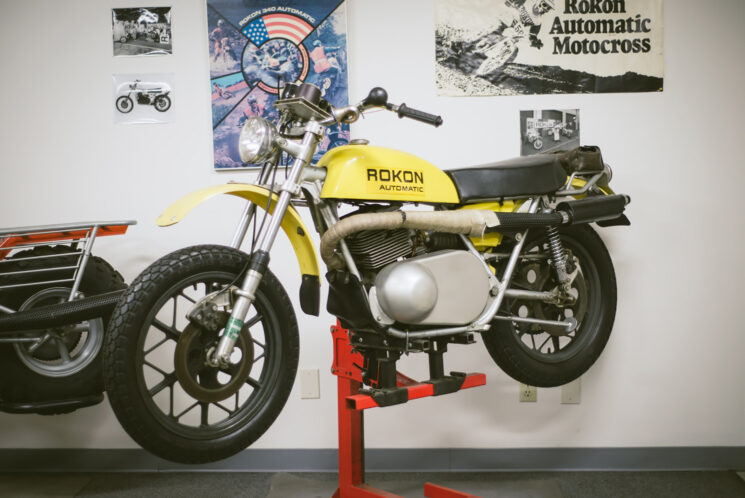
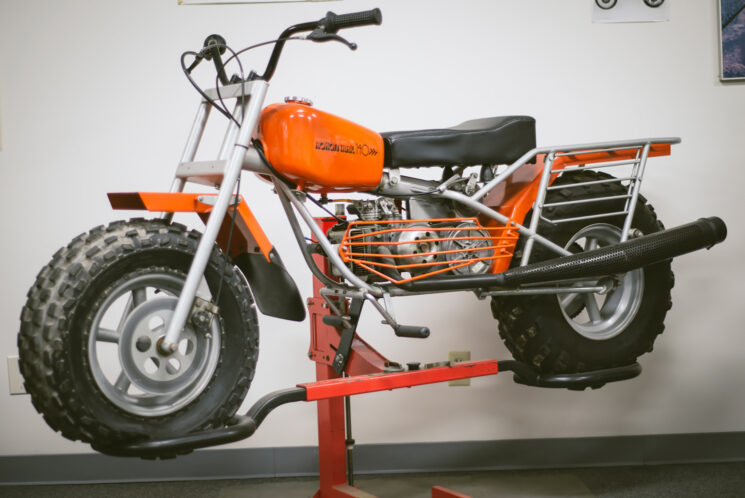
An adjoining space houses the Rokon museum, featuring a collection of earlier versions of the Trail-Breaker and a few other notable bikes including the one naturalist Jim Fowler used to make his way across Africa in his Wild Kingdom TV series as well as a flat black EMP-proof prepper bike. There are pictures on the wall of President George Bush (the elder) riding a Rokon at his Texas ranch and photos of Tom with King Abdullah of Jordan. The King purchased bikes for his Special Forces Unit, choosing these machines specifically for their ability to trek across the sand dunes of his desert country. The museum also features an RT-340, Rokon’s foray into the enduro market in the 1970s. The RT-340, with its Sachs snowmobile engine, torque converter, and dual hydraulic disc brakes, was unlike anything else on two wheels at the time. In 1973, Popular Science questioned if this might be the bike of the future. Rokon offered several bikes based on this platform, including a street-legal dual sport, a motocross, and my personal favorite, a flat tracker. It did well on the race circuit but the cost of development and production drove Rokon into the red; the RT-340 was shelved in 1978.

Rokon Awd Motorcycle Factory
One of the keys to Rokon’s longevity has been to avoid overreaching. Long before the idea of sustainable business models, Rokon was organically cultivating its brand. They only produce six bikes a week, and the small production numbers allow the bikes that are sold to retain much more of their value than if the company flooded the market.

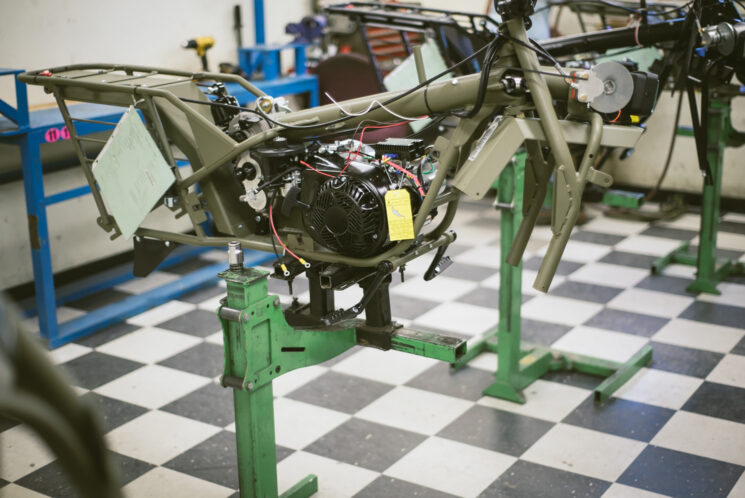
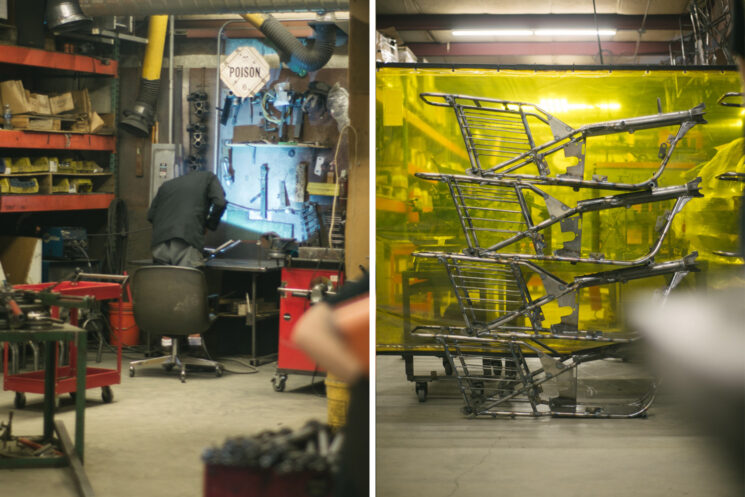
In the production area, the six Rokons that will be produced this week sit on lifts in mid-assembly. Walking into this area is like going back in time. There are no computers except for the one Stephen, the production manager giving us the tour, says is running the music. All frames are welded, descaled, and slagged by hand before being powder-coated. In the middle of the floor is a manual pipe bender that sits next to the jig used to weld all the frames. Though you could call this a factory, there is no sense of an assembly line; each bike that goes out the door is proudly hand-built in America.

Rokon Awd Motorcycle Factory
After the tour we head outside for what we really came here for: the chance to ride one of these bikes for ourselves. In the parking lot, we are given a quick overview of the bike and set loose to do a couple of laps. While not exactly the most harrowing of experiences, it’s still fun. The next demonstration really allows the Rokon to shine as it ascends a small set of stairs before heading down a short trail behind the factory where it rides over logs and up a tree, all with the greatest of ease. This is the terrain where Rokon leaves all other vehicles wanting.

Such a unique motorcycle attracts a special breed of rider. These are people who like to push the envelope and test the limits of man and machine, where the chance of getting stuck in the mud is an open challenge. Groups of Rokon enthusiasts meet up around the country on what they call “romps” to swap stories and ride together through the toughest terrain they can find.

Rokon Motorcycle Trip Across the United States
One such rider is Randy Tefft of Keene, NH. In the summer of 2015, Randy took a Rokon Ranger — the company’s street legal model complete with D.O.T. tires, turn signals and horn — from Portsmouth, NH to Malibu, CA to raise awareness for the Wounded Warrior Project. He did it solo, without any other support vehicles. The 3,800-mile journey took 20 days of riding on the back roads of America. That’s 180 to 220 miles a day at 35 miles per hour. As far as he knows, it is the only 2WD motorcycle to go from coast to coast. “It’s a pretty simple and amazing bike.” In the end, he raised over $10,000 dollars for the charity.

Randy’s Rokon is parked outside the window as we talk in a booth in Lindy’s Diner in Keene. Person after person stop to look at it, scratching their heads, trying to figure out what they are looking at. Randy says this happens everywhere he goes. He leads me down the road to a steep hill beside an onramp that he likes to climb with his Rokon to demonstrate what makes the bike so special. “Who is the Rokon rider?” I ask him. “We’re explorers,” he responds.

Rokon Awd Motorcycle
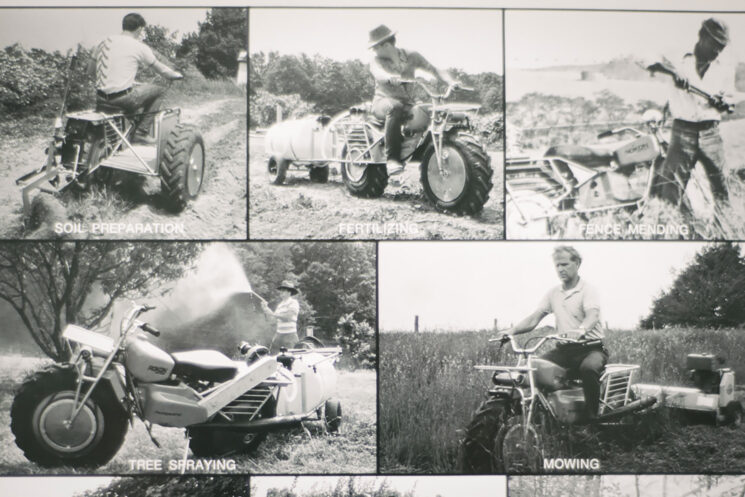
When we asked Tom Blaise the same question, his mind immediately turned to the bike’s practical applications: large-scale farmers inspecting long rows of crops, and gas and oil companies inspecting pipe running through the Rockies. He says he also sells to first responders who need ways of getting supplies and people into and out of disaster areas where all other access may be blocked, such as in New Orleans after Hurricane Katrina. Rokon riders are as varied as the tasks at hand.

The Rokon is at once a toy and a tool. It calls to that part of our brain that brought us out of the cave, that wonders what is just over the horizon, and that tells us to climb the mountain just because it’s there. The Rokon needs no roads; it transports its rider to destinations inconceivable by other means, and where you go is constrained only by your imagination.

Rokon Awd Motorcycle Factory
This article first appeared in issue 025 of Iron & Air Magazine, and is reproduced here under license | Words by Ian J.D. Logan | Images by Gregory George Moore & Ian J.D. Logan

Rokon Awd Motorcycle Factory

Sidecar Subject: 2024 Rokon Trail-Breaker AWD Motorcycle

Engine:
Rokon’s 2024 motorcycles are powered by a 208 cc Kohler single-cylinder, fan-cooled engine.
Peak engine output is 7 hp at 3,600 rpm and 9.1 lb. ft. [12.4 Nm] at 2,800 rpm.
Equipped with an automatic torque converter and a three-gear range selector, the Trail-Breaker’s top speed is 35 mph [56 kph].

Chassis:
The Trail-Breaker is based on a fabricated steel chassis with hollow drum wheels that provide floatation, or space for up to 2.5 gallons of extra fuel or water.
Heavy-duty off-road tires sized 8 x 12 x 25 inches.
Drive: Full-time front and rear-wheel drive
Brakes: Hydraulic front and rear discs

Dimensions and Weight:
Ground clearance: 14 inches
Weight: 218 pounds
Fuel Tank Capacity: 2.69 gallons

Production:
Charles Fehn came up with early designs for an AWD motorcycle in 1958, called the Trailmaker, with production rights purchased in 1960 by Nethercutt Industries.

Rugged Design:
The Rokon’s simple and rugged design lends itself to trouble-free off-road performance and utility.
Readily available replacement parts and accessories make the Rokon customizable for any sort of off-grid work and adventure.
Able to climb a 60% grade and tow up to 2,000 lbs, the Rokon Trail-Breaker is one of the world’s most unique utilitarian motorcycles.


from Bike EXIF https://ift.tt/p9TltGc