Sunday, 22 September 2024

Speed Read: A Kawasaki Z900RS café racer from Japan, and more

The latest motorcycle news, customs, and modern classics
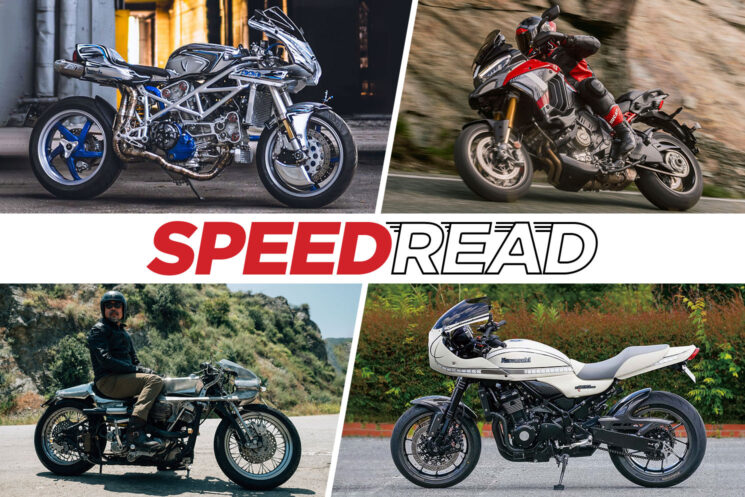
We open this week’s proceedings with a modern Kawasaki Z900RS with miles of retro style, before pivoting to a Ducati Frankenbike with a gleaming paint job. We also examine the new Ducati Multistrada V4, and take a peek inside Shinya Kimura’s workshop, courtesy of the fine folks at Prism Supply.
Custom Kawasaki Z900RS by American Dream
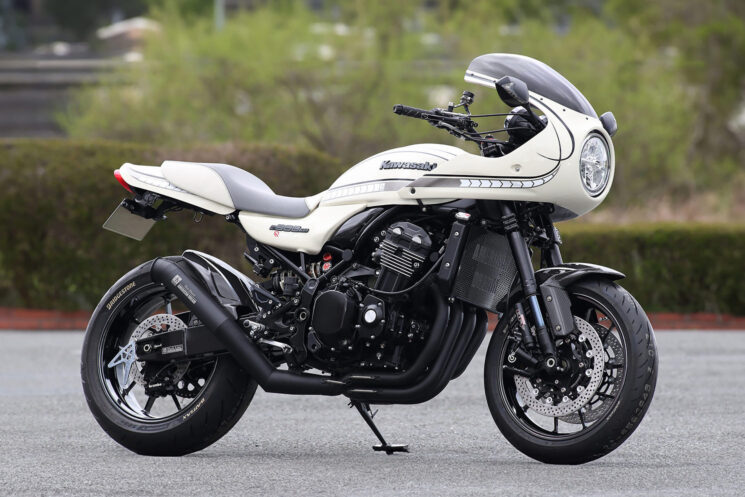
Kawasaki Z900RS by American Dream Takashi Matsuda is the man behind the brilliant American Dream workshop in Kashihara City, Japan. Specializing in classic Kawasaki Z-series bikes, they’ve been building customs and selling their parts since the 90s. This Kawasaki Z900RS, developed to be the perfect daily rider, perfectly encapsulates the shop’s signature style.
Custom Kawasaki Z900RS by American Dream
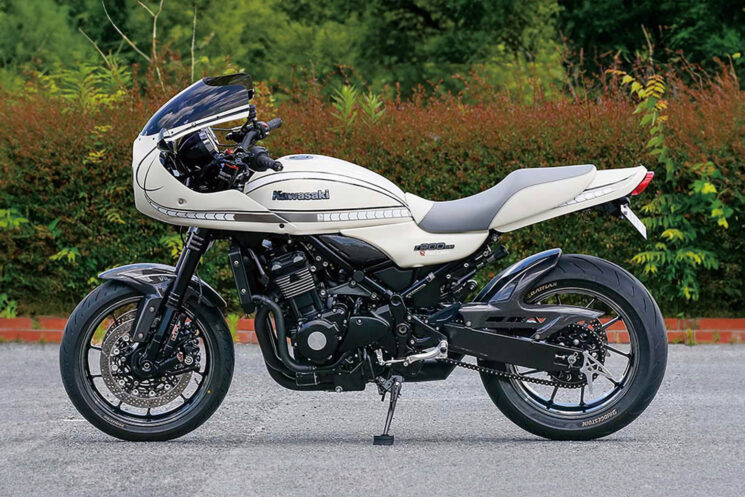
Matsuda-san is a racer at heart, so the suspension was upgraded with fully adjustable Showa parts at both ends. The front end also got an American Dream Pride steering stem kit, which changed the fork offset by a few degrees for sharper steering. The rear geometry was tweaked with an extended swingarm from the American Dream Black Line series of parts.

The carbon rear wheel hugger is adjustable in height, and was made for riders who like to slip on a set of tire warmers now and then. The front fender is also carbon fiber and looks fantastic slung low over the new Gale Speed Type-R wheels. There are new Brembo calipers with Sunstar discs all around and the rear brake is mounted upside down with a Pride underslung conversion kit.
Custom Kawasaki Z900RS by American Dream
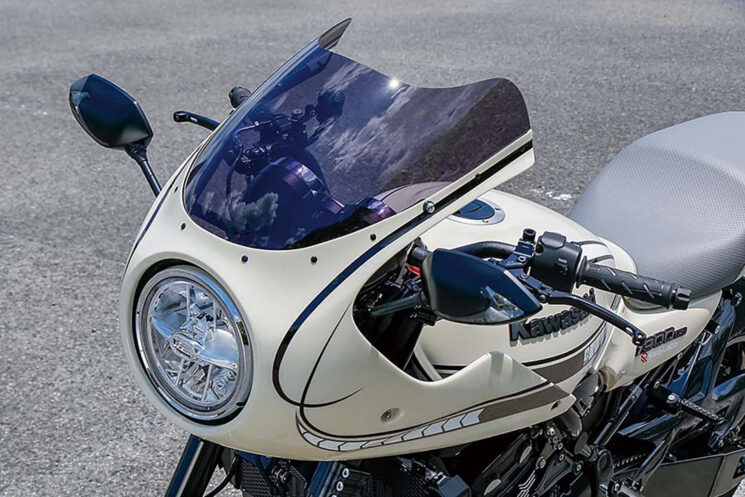
The bikini fairing is another American Dream item and features a tinted screen and an extended lower section that gives the bike a more classic café racer vibe than the factory fairing. Speaking of classic vibes, the rear of the bike is fitted with an American Dream ‘Long Tail Cowl Type-1’ kit that looks more like an original Z bike with its 30 mm of extra length.

The custom cream livery with black pinstripes and white details is both classic and classy. As far as daily riders go, Takashi and his team have built an absolute stunner. [Source]
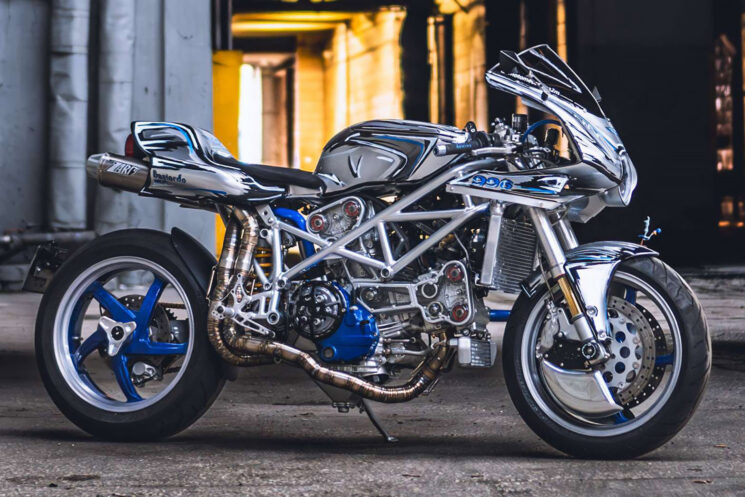
Ducati 996 Frankenbike by Moto Meccanica 2M
Ducati 996 by Moto Meccanica 2M Marcin Marzur of Moto Meccanica 2M has loved motorcycles since his youth. He’s been running the motorcycle repair shop in Poland for eight years, and has been itching to build a one-off Ducati for even longer than that. Now he’s finally scratched that itch, with this gleaming Ducati 996-powered creation.

Made of parts taken from various Ducati models, Marcin has rather aptly named the bike ‘Ducati Bastardo.’ Starting with the trellis frame and front end from a 2001 Ducati ST4S, he got it rolling with a Hypermotard swingarm and 996 wheels.
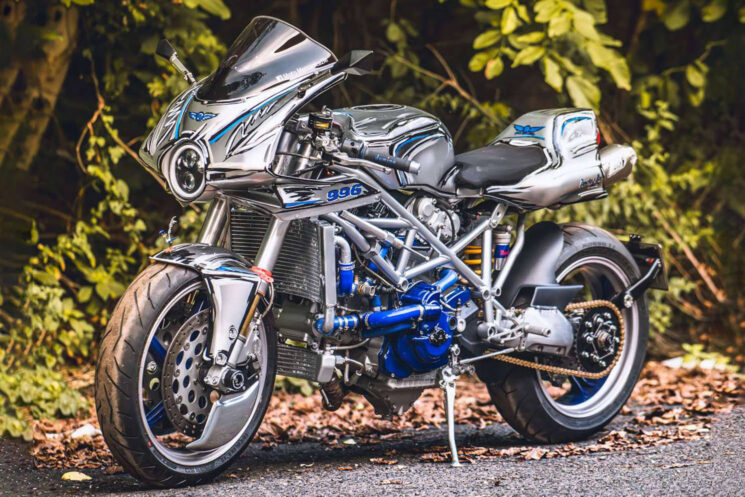
Ducati 996 Frankenbike by Moto Meccanica 2M
A Ducati 999 donated its fuel tank, while the striking seat and tail unit are from an MH900e. The front fairing is a modified 996 race unit, for which Marcin made a custom fiberglass and resin headlight opening.

The engine received the same Frankenstein treatment. Marcin had a 996 engine lying around (as one does), so the internals were swapped into a set of cases from a Monster S4RS and shoehorned into the ST4 frame. The heads are from the ST4 and the transparent timing belt covers were custom-made by Marcin himself.
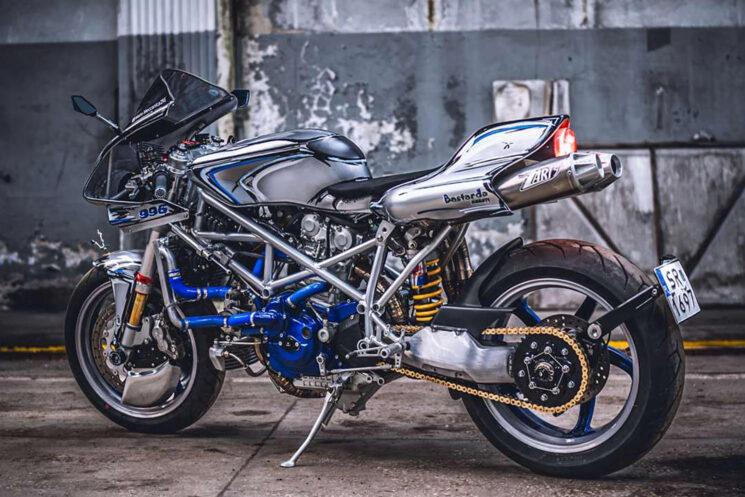
Ducati 996 Frankenbike by Moto Meccanica 2M
The engine uses a 999 wiring harness to pass electrons through a modern ECU for a nice performance boost. The exhaust was made from over 200 pieces and was welded together by Marcin’s son, Mateusz, in the Moto Meccanica workshop. Terminating in a pair of Zard mufflers, we’re sure it sounds incredible.

The plumbing—usually hidden behind a fairing—is on full display, with Marcin using blue high-performance silicone to match the wheels and hand-painted designs on the fairing, tank, and seat. Resplendent in chrome paint, it’s easy to see why this Ducati stops people in the street. [Source]
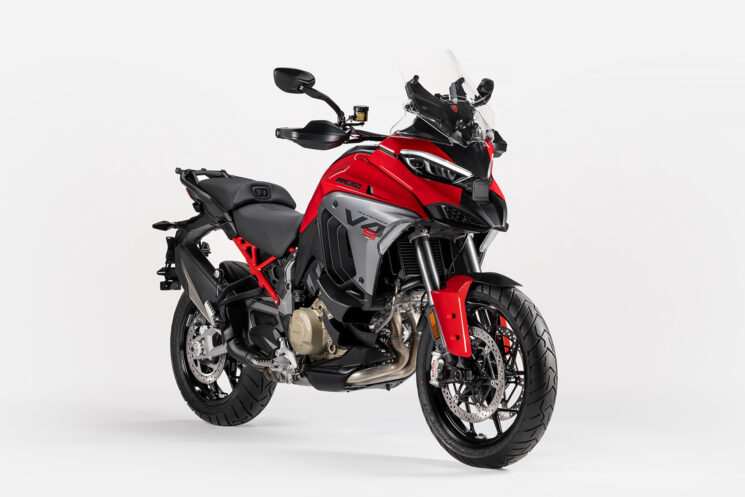
2025 Ducati Multistrada V4
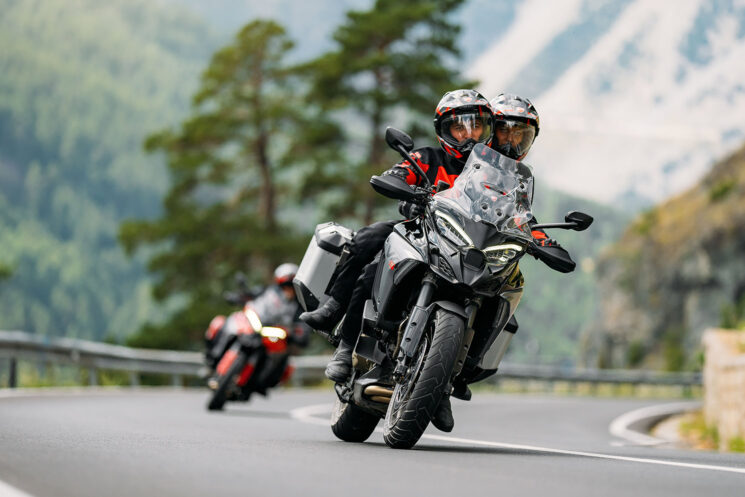
2025 Ducati Multistrada V4 Ducati has yet again taken the Multistrada V4 range and upped the ante. Showcasing the brand’s dedication to performance, style, and comfort, the big red adventure touring bikes have been updated in myriad ways for 2025. And just to add a little extra spice, Ducati has also made improvements to the Multistrada V4 Pikes Peak—a bike that’s as comfortable carving up mountain roads as it is putting in 500-mile days.
2025 Ducati Multistrada V4
Following Harley-Davidson and BMW, new for 2025 on the Multistrada is an automatic suspension lowering system—a clever bit of tech that drops the bike’s height by up to 30 mm when stationary. This makes it more manageable in stop-start traffic and on low-grip, gravel roads where stable footing is a considerable advantage.

Ingeniously, the new Multi also features self-leveling suspension that automatically adjusts depending on how the bike is loaded. As people who like to pack our bags and hit the road, that kind of thing cranks our hogs.
2025 Ducati Multistrada V4
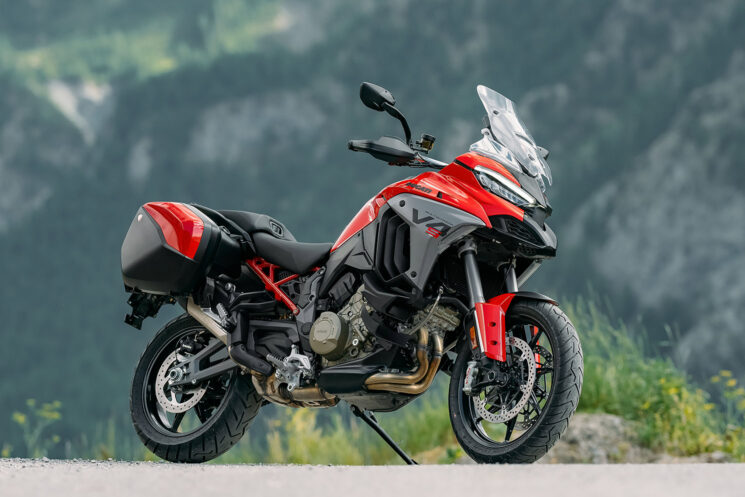
The Euro 5+ V4 ‘Granturismo’ engine makes 170 hp and now features a more generous rear cylinder deactivation system, which reduces fuel consumption by six percent. But that’s not just about the cost-saving—it’s also about the stricter emissions targets of the Euro5+ engine. No fuel to rear cylinders means less fuel and less emissions; everybody wins.

The semi-active Skyhook DSS EVO suspension gets even smarter this year with new predictive functionality. Monitoring road conditions and adapting in real-time, it looks like a pretty cool system. Along with forward collision warning, blind spot detection, and updates to the adaptive cruise control system, there are too many tech upgrades to list.
2025 Ducati Multistrada V4
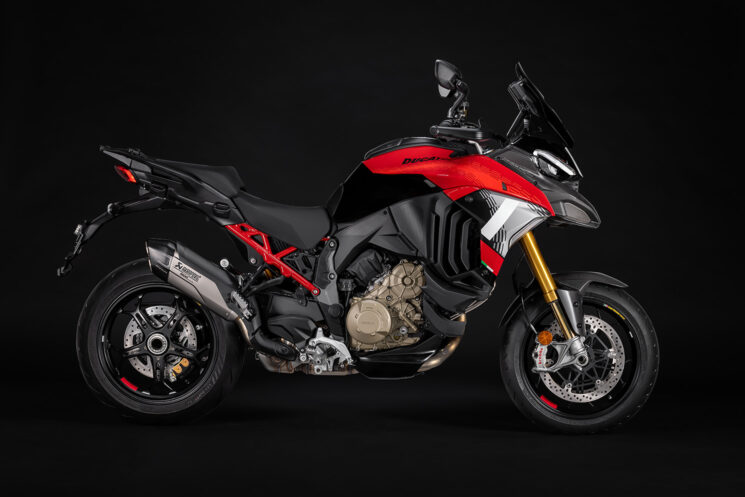
Then there’s the V4 Pikes Peak, which Ducati has gone to town on to make it the sportiest Multistrada yet. It keeps the 17” front wheel and single-sided swingarm, but now benefits from Ducati’s MotoGP-derived tech—like Öhlins Smart EC2.0 suspension. That, coupled with its lightweight forged wheels and race-bred electronics package, makes the V4 Pikes Peak a serious machine for riders who are too old to fold themselves in half to fit on the latest V4 Panigale.
2025 Ducati Multistrada V4
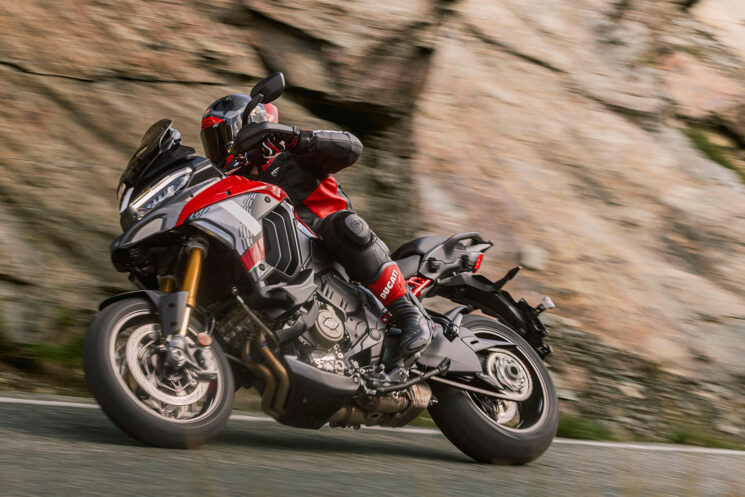
In true Ducati fashion, the aesthetics of the new Multistrada V4s are just as impressive as their performance, and have us thinking that maybe you actually can build a beautiful adventure bike. The front end takes cues from the aforementioned Panigale, while the new silencer and sharper lines emphasize the bike’s aggressive stance.

For the Pikes Peak edition, the new livery and carbon fiber touches will stand out on the road—and, more importantly, at the local bike meet. [Ducati]
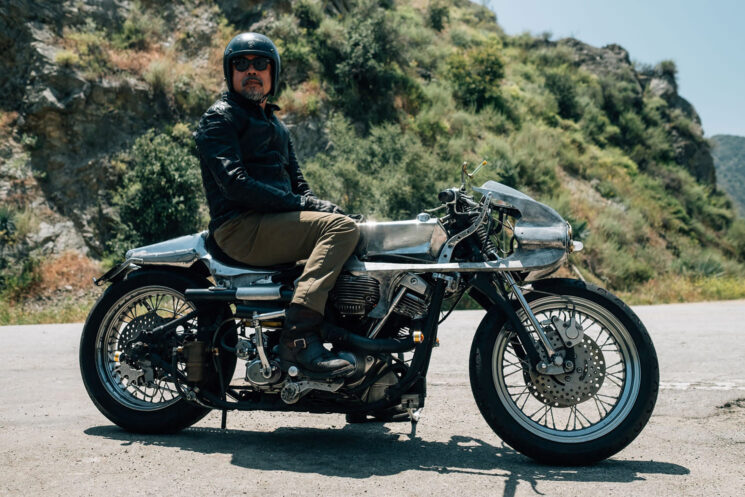
Shinya Kimura garage visit by Prism Supply
My Garage: Shinya Kimura, by Prism Supply Shinya Kimura barely needs an introduction around here. The highly-respected Japanese custom motorcycle builder is known for his unique, hand-crafted designs that blend art, engineering, and raw functionality.

Kimura-san founded Zero Engineering in 1992, before leaving Zero in the early 2000s to start Chabott Engineering in Azusa, California. Honing his craft over decades into the form of art it is today, his creations are revered the world over.
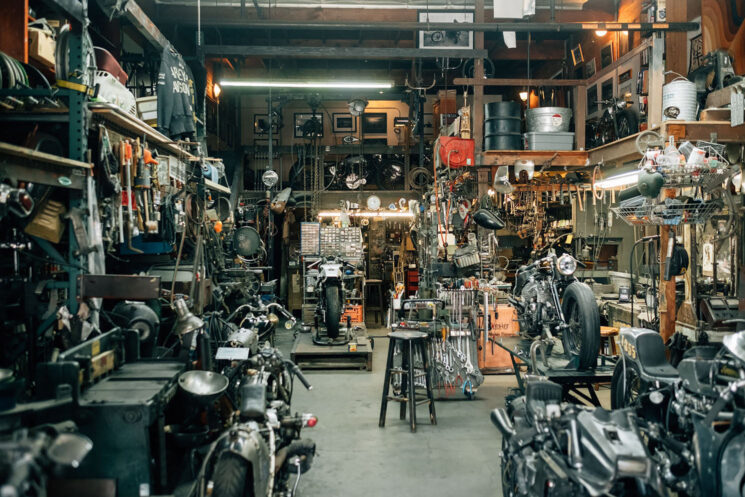
Shinya Kimura garage visit by Prism Supply
We consider him a pioneer of the custom motorcycle scene and see his unconventional approach to mechanical styling inspiring builders from all over the world. And while ‘retro-futuristic’ partly summarizes his style, it almost seems a disservice to try and lump him into any one category. His bikes are, simply, Shinya Kimura bikes.

If you’d like to delve deeper into his past, and see his incredible workshop and what makes him tick, pour yourself a tasty beverage and hit ‘play’ below. [More]


from Bike EXIF https://ift.tt/Rd0Tm81

Saturday, 21 September 2024

How Car Leasing Can Simplify Your Financial Planning

In uncertain times, a solid financial plan can be the tool that helps you to overcome challenges that bring others to ruin. Knowing your expenses and sticking to a budget allows you to create and maintain a financial margin so that when unplanned difficulties arise, you can quickly change course and maintain your equilibrium.

But as prices fluctuate and interest rates change, how can you create a predictable financial plan? Does it make sense to make large investments now or to wait until the market stabilizes? 

A classic example of a large personal investment is the automobile. A beautiful car that runs perfectly and provides a comfortable ride is a massive contributor to quality of life, but with prices, repair costs, and interest all high, does it make sense to purchase a new car? What about depreciation?

Fortunately, there is an answer that provides a year or more of financial stability in the transportation line of the budget. puts you in firm control of your budget, allowing you to enjoy a stable monthly payment and complimentary maintenance—without worrying about depreciation. 

Bumper to Bumper Warranty

Leasing a brand new vehicle means that the manufacturer’s warranty will still be in effect, so most repairs will be covered. 

Depending on the lease contract, even routine maintenance like oil changes may also be covered, so read your document thoroughly. 

It adds great peace of mind to know that repairs and maintenance will not turn up as surprise expenses in your budget. 

Lower Down Payment and Monthly Payments

Leasing a vehicle requires some money down, but nothing like what is necessary to purchase a vehicle. This will definitely help your cash on hand, allowing you to enjoy the security of having access to those funds—or allowing you to spring for a better car than you would have been able to purchase. 

Don’t Worry About Resale

Leasing a car lets you enjoy its amazing qualities for a specified period of time. But what do you do when the lease expires?

 
You may choose to renew your lease—or to choose a different vehicle. Fortunately, if you choose the latter, returning a leased vehicle is as simple as turning in the keys; there will be no string of half-interested buyers, or taking the car to different dealerships to see where you can get the most for your trade. Drop off the keys, then decide if you want to try another vehicle from the same dealer or move on to a different selection. 

Financial Freedom: Predictable Planning For Peace

Choosing to lease a vehicle can be a major part of setting a solid foundation of steady monthly expenses, which in turn creates a sense of continuity in the budget. Combining the reduced down payment with the lower monthly payments versus financing means that your wallet will take a smaller hit while having routine repairs and possibly maintenance done for free negates financial surprises. 

Enjoy the luxury and power of a high-end leased vehicle, and experience the stability and confidence that only a solid financial plan can bring.


from Auto Blog | Latest Car News and Reviews, Trucks, Bikes, and Motorcycles https://ift.tt/xWHqIgm

Friday, 20 September 2024

The NUEN N1-S: A production-ready electric motorcycle from Vietnam

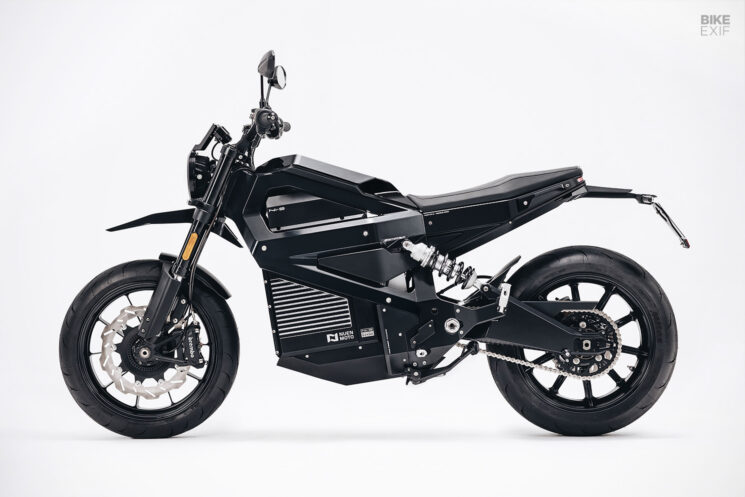
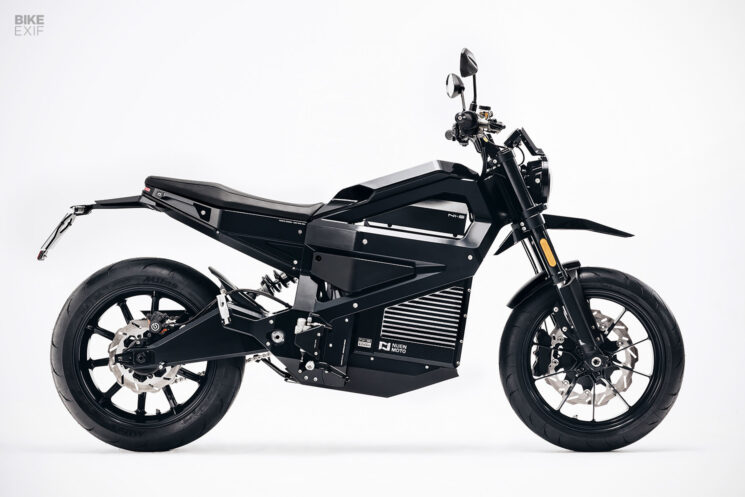
NUEN N1-S limited edition electric motorcycle
In the world of electric motorcycles, the upstart is king. A small company with big ideas can grab an off-the-shelf electric drivetrain, rapidly prototype its concept, and massage it into a working motorcycle. And they can do it quicker than what it takes a major marque to get buy-in from the myriad internal departments that hold the reins.

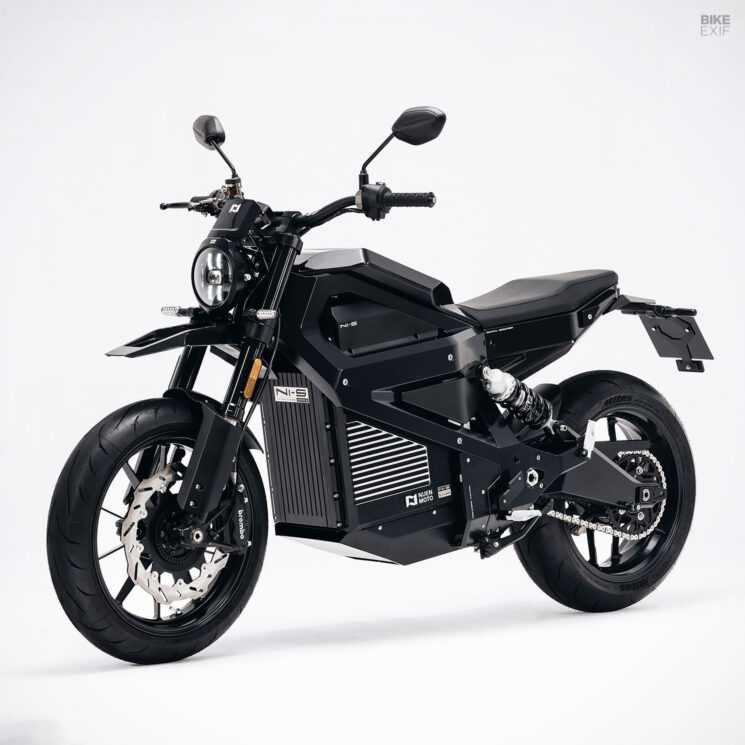
NUEN Moto only burst onto the scene a couple of years ago, but their first made-to-order electric motorcycle, the NUEN N1-S, is ready. And, like everything else we’ve seen from the dynamic Vietnamese brand, it looks sharp as heck.

NUEN N1-S limited edition electric motorcycle
NEUN Moto might be based in Vietnam, but frontman Gia Nguyen founded the company while working as a multi-disciplinary designer in Sweden. That accounts for NUEN’s signature aesthetic—a unique neo-futuristic vibe with Scandinavian underpinnings. That thread runs through everything from NUEN’s debut Ducati Scrambler build, to the precursor of the N1-S.

Dubbed the NU-E, that bike was designed as a proof of concept. The design was radical, but it was also wildly impractical and far from being street-legal. With the N1-S, Gia’s mission was to use the NU-E’s DNA, but wrap it in a road-ready package with mass appeal.

NUEN N1-S limited edition electric motorcycle
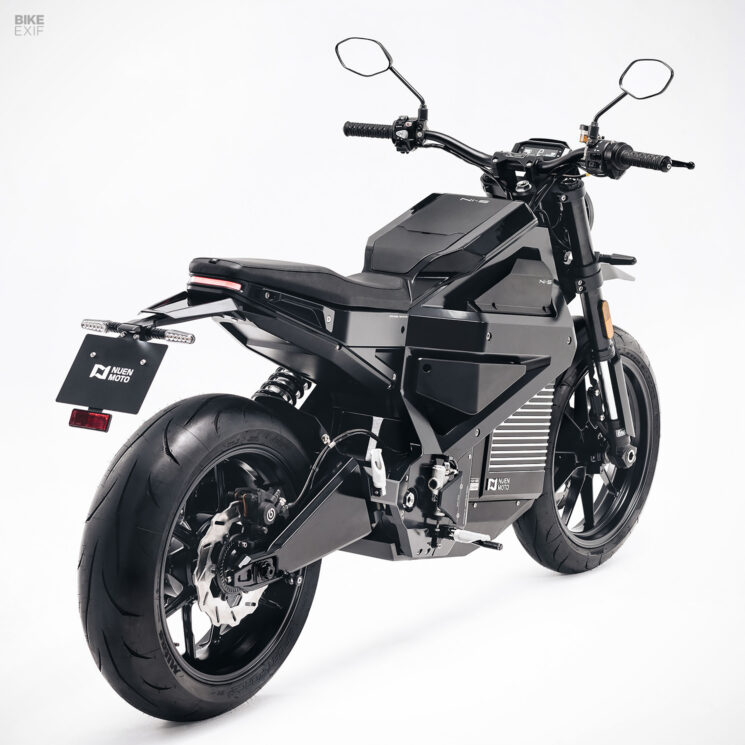
Even though the two bikes share a design language, the N1-S had to be redeveloped from the ground up. Designed as an urban scrambler, the geometry of its aluminum chassis is more relaxed than that of the focused NU-E. Its upright riding position is geared towards commuting, and there’s space for a passenger.

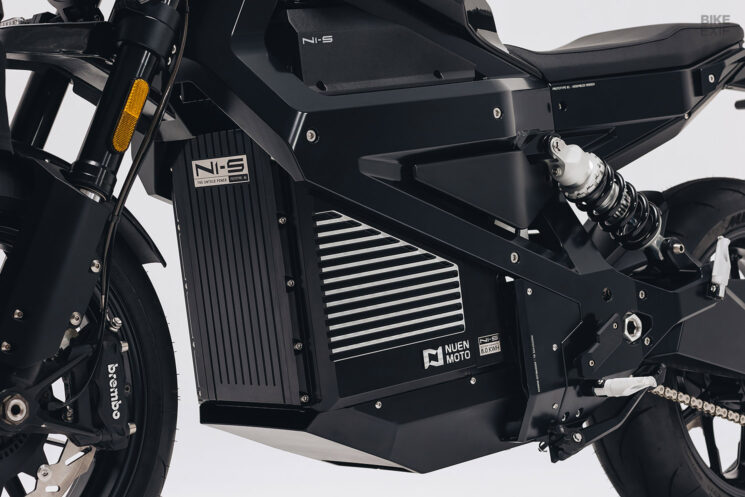
The NU-E used a hub motor, but Gia wanted to revert to a traditional mid-mounted setup on the N1-S—so the chassis had to accommodate that too. NUEN also moved the battery housing further down, to help lower the center of gravity.

NUEN N1-S limited edition electric motorcycle
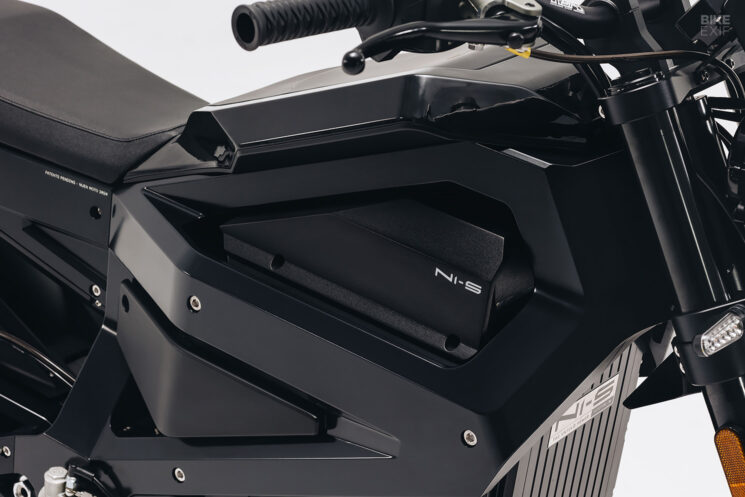
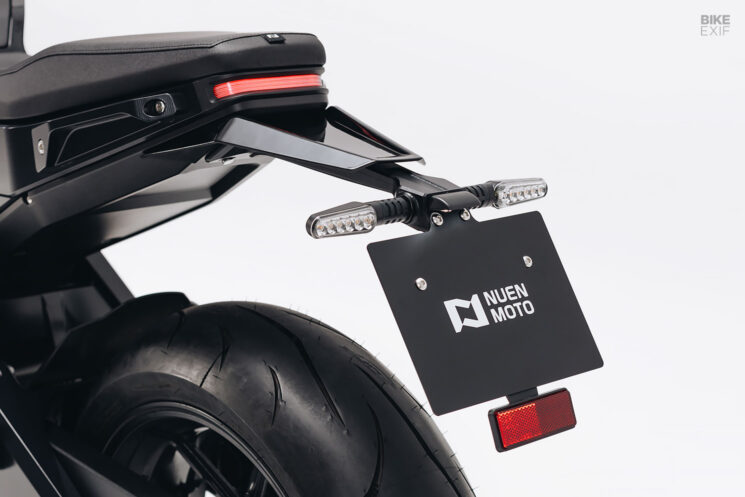
Because of the way the N1-S is packaged, there’s very little actual bodywork, with the frame acting as an exoskeleton of sorts. NUEN has done well to give the bike the frou-frou it needs to pass roadworthy, like fenders, lights, and mirrors, without adding too much clutter. The setup is as minimal as production bikes get, and the wide riser bars and tall seat look perfect for energetic rides through the city.

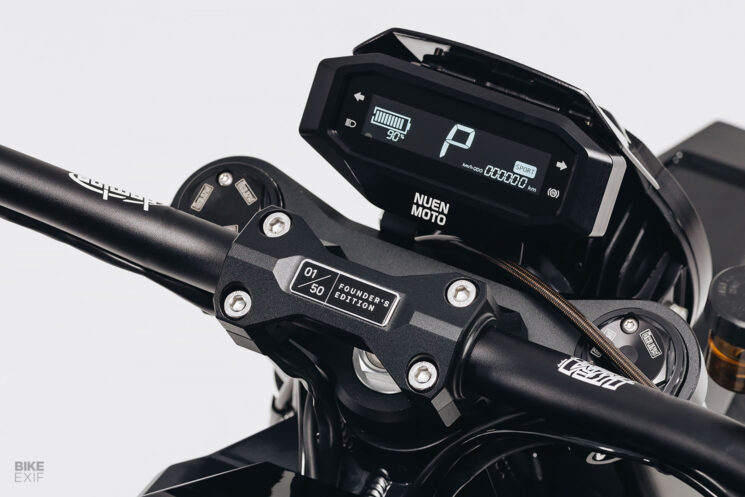
Gia’s penchant for brutalism is evident not only in the bike’s heavily machined look, but also in its minimalistic finishes. This all-black version is a special ‘Founder’s Edition,’ limited to just 50 units. The cheaper ‘Signature Edition’ features a silver frame and a different parts spec.

NUEN N1-S limited edition electric motorcycle
The Founder’s Edition trades the base bike’s J.Juan brakes for a Brembo setup and upgrades the suspension to Öhlins. It also gets a black headlight surround with an integrated fly screen, and a handful of subtle special edition-esque adornments. Each is available in three different colors, but it’s only the hue of the bodywork that changes from one colorway to the next.

Both versions sport a full complement of LED lights and a slim digital dashboard, and share the same 17” wheels—although they’re not the mismatched set pictured here. NUEN is working on its own set of hoops, based on a style that Gia has managed to use on all of his builds so far.

NUEN N1-S limited edition electric motorcycle
The two N1-S models also share the same drivetrain and battery pack. Claimed numbers are 24 kW and 190 Nm (at the motor), for a top speed of 130 km/h [81 mph]. Tech features include dual-channel ABS, regenerative braking, cruise control, a reverse gear, and three riding modes.

A connectivity suite is bundled into the system too, with Bluetooth, GPS, and WiFi functionality. The bike’s 8 kWh battery can be charged at home or a DC fast-charging station, for a maximum range of 200 km [124 miles]. (It’s worth noting that NUEN quotes that figure at speeds lower than 50 km/h [31 mph].)

NUEN N1-S limited edition electric motorcycle
NUEN is currently establishing their factory in Vietnam, so that they can start building the N1-S from next year, but pre-orders are open. The Signature Edition will set you back 180,000,000đ [about $7,316], with the Founder’s Edition costing 220,000,000đ [about $8,941].

There’s no word on whether NUEN will (or can) ship the N1-S internationally, or what else they have planned. But we do know one thing—this is one heck of a debut. We’ll be watching Gia and his crew with keen anticipation.

NUEN Moto | Instagram

NUEN N1-S limited edition electric motorcycle


from Bike EXIF https://ift.tt/1I9TuxW

Thursday, 19 September 2024

Investment Grade: 5 Lots from Bonhams’ 2024 Autumn Stafford Sale

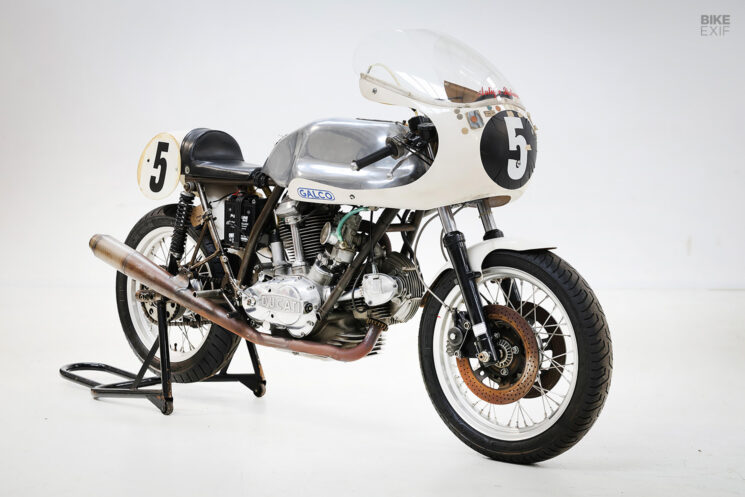
Galco Ducati 750 Racer
The leaves are falling
(in my hemisphere anyway), and in addition to running up our odometers in the coming weeks, fall also means another one of Bonhams’ remarkable Autumn Stafford Sales. The current tally for the 2024 sale is up to 183 Lots, consisting of all types of vintage motorcycles and projects, and the live auction takes place at the Staffordshire County Showground on October 12 and 13.

As is customary, we perused the Lots and picked five of the most interesting motorcycles for a quick history lesson, as every leaky antique has a story to tell.

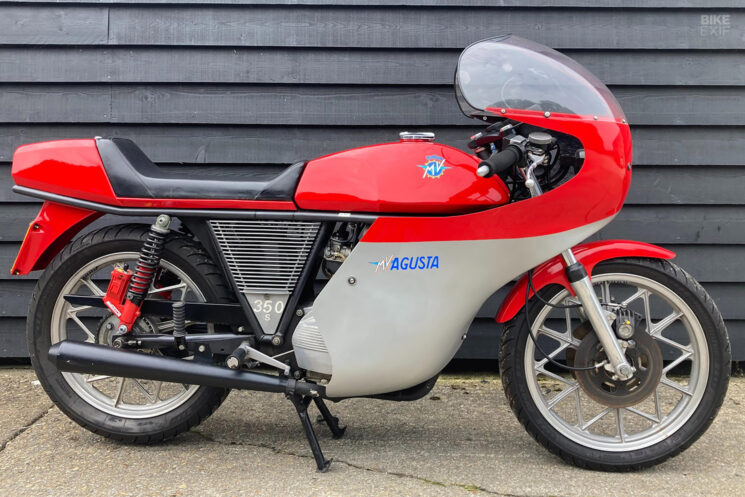
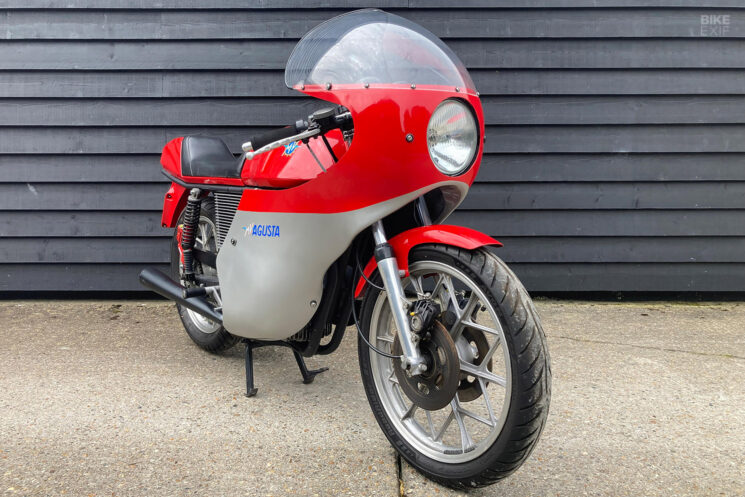
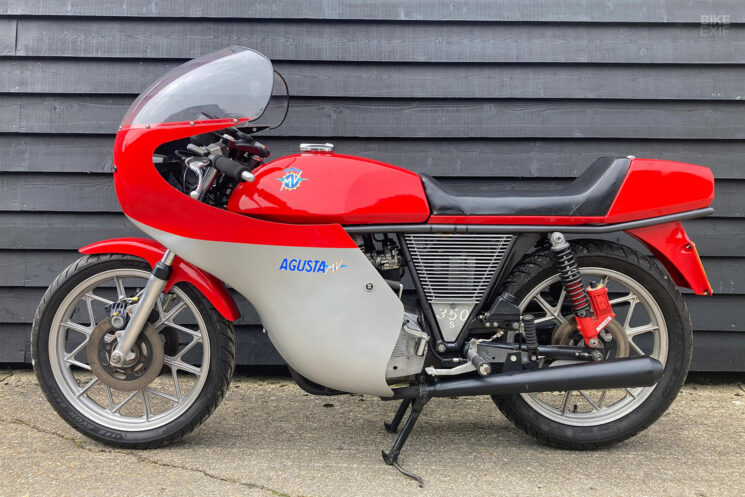
1976 MV Augusta 350 Sport
1976 MV Agusta 350 Sport Like many of its boutique European peers, MV Augusta found itself in hot water in the early 1970s, predominantly from the onslaught of affordable motorcycles pouring out of Japan’s ports. The situation at MV worsened with the passing of founder Count Domenico Agusta in 1971, and without a serious shift in the company’s direction, bankruptcy was inevitable. MV needed to shed its image of dated 1950s styling, and the 350 Sport model would be the cornerstone of this effort.

Working with what they had, MV Augusta breathed new life into the bones of the existing 350B model while famed Italian designer Giorgetto Giugiaro penned completely refreshed cosmetics. The result was a bike that embodied MV’s new direction, with a racy streamlined fuel tank, a full-length, cafe-inspired saddle with an integrated mudguard hanging off the back. 18-inch Snowflake cast alloys were also used, and a sporty full fairing was an eye-catching option. Rear-set pegs and clip-on bars hinted at its sporty intentions, even if they proved uncomfortable in practice.

1976 MV Augusta 350 Sport
The 349 cc parallel twin from the 350B was no spring chicken, and its basic design was derived from an even older 250. MV updated the engine with a fresh cylinder head design and eeked output up to 34 hp at 8,500 rpm. Significant effort went into the design of a new chassis though, constructed entirely from steel tubing, whereas older designs employed some use of sheet metal sections. With this serious upgrade in rigidity, MV fit the 350 Sport with top-quality suspension from Ceriani and Scarab triple-disc braking.

1976 MV Augusta 350 Sport
The new ’75 350 Sport looked the business, even if its drivetrain was aged technology, and its top-spec running gear made for a thrilling and dependable machine in the hands of an experienced rider. Paving the way for the coming modern generation of MVs, just shy of 2,000 350s were built across two model variants.

In our opinion, this 1976 MV 350 selling at Bonhams is poised to be an excellent investment. It presents in excellent, albeit non-running, condition, and is estimated to bring just $3,900 to $5,200 [£3,000 to £4,000].

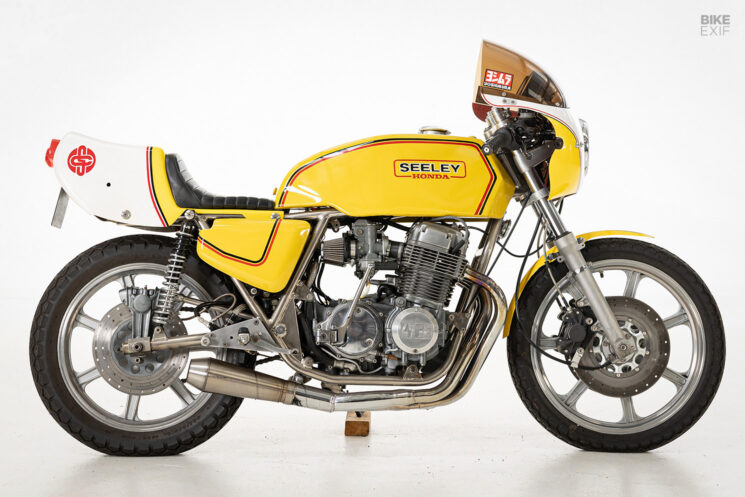
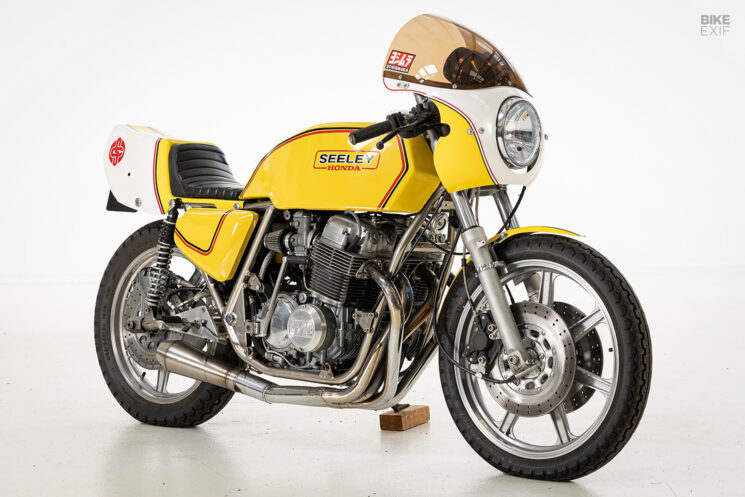
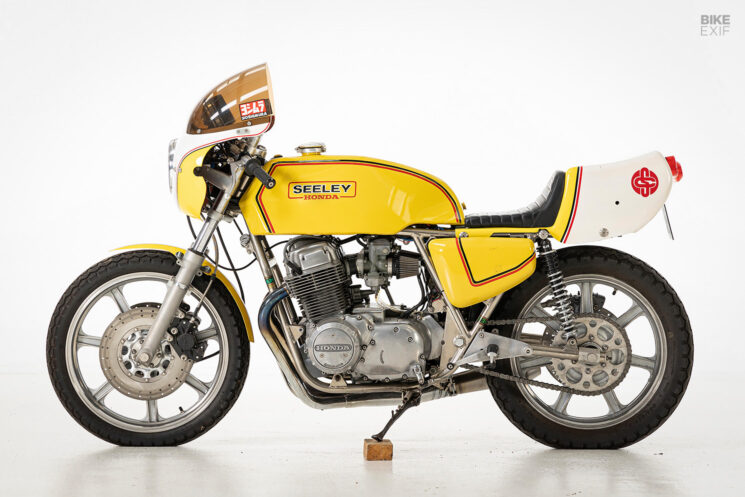
1976 Seeley-Honda 750
1976 Seeley-Honda CB750 Honda was tired of sitting on the sidelines by the late 1960s, but as long as the AMA limited the displacement of overhead-valve engines to 500 cc, side-valve engines like the HDs enjoyed a handsome advantage in displacement. Of course, all that would change with a new AMA ruling in 1970, and Honda responded with the ‘King of Motorcycles,’ a 736 cc SOHC four-cylinder that produced a reliable 68 hp in street trim. Sounds like a world-beater, and it might have been if Honda had given the chassis more than a passing thought.

The CB750 production bike was hailed for its performance and sophistication, but the frame was certainly its weak link for aggressive riding. Mass-produced with shoddy welds and cruising geometry, top racers all but disregarded the ill-handling production Honda frames, and manufacturers like Bimota, Egli and Rickman sold proprietary designs that righted Honda’s wrongs.

1976 Seeley-Honda 750
Ace British chassis builder Colin Seeley was also drawn to the marketing possibilities the CB750 offered. After retiring from a successful racing career, Seeley had forged a reputation for some of the best handling road racing bikes available—starting with Matchless engines in the early 1960s, and eventually Japanese powerplants from Yamaha and Suzuki.

Instead of an all-out racer, Seeley’s Honda CB was a single-seat sport bike of the highest order, employing a lightweight proprietary chassis made from his standard Reynolds 531 tubing with a shortened wheelbase. The fuel tank, exhausts and seat were of Seeley’s own design, and a fabricated swingarm was an available extra. Finished in high-luster nickel plating with white bodywork, the Seeley-Honda was a substantial upgrade in handling and performance, with the rock-solid reliability of Honda’s SOHC 750 mill.

1976 Seeley-Honda 750
Built to the highest standard, Seeley would go on to build limited-edition motorcycles in partnership with Honda, including the Phil Read Replica TT Formula 1 roadsters and Seeley-Honda TL200 trials bike.

This 1976 Seeley-Honda offered by Bonhams is a final example of the marque, boasting fitting upgrades and custom graphics over Seeley’s white finish. In running condition with just over 35,000 miles on the clock, the Seeley-Honda is expected to bring $9,200 to $13,000 [£7,000 – £10,000].

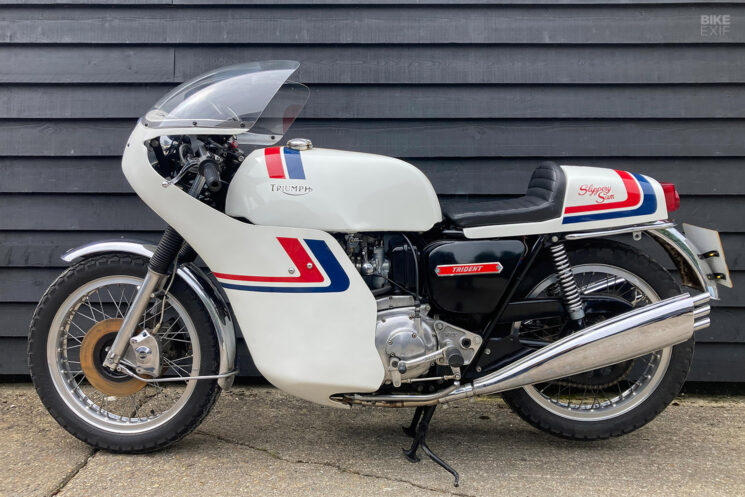
1976 Triumph T160 Trident Slippery Sam
1976 Triumph T160 Trident ‘Slippery Sam’ Replica To the victor go the spoils, but sometimes a charismatic runner-up is engrained more in our collective memories. ‘Slippery Sam’ didn’t even make the podium, but against strong odds, the oil-soaked works Triumph Trident of Percy Tait and Steve Jolly rolled across the line in fifth, and in doing so became a permanent piece of Triumph lore.

The scene was the 1970 French Bol d’Or held at Linas-Montlhéry, and three specially prepped Triumph Tridents showed great promise to win the 24-hour endurance event. After 469 laps, 1,838 miles and four drive chains, the works Trident of Paul Smart and Tom Dickie cruised to a victory, besting the competition by nine laps. Further back, Tait and Jolly’s works Trident dealt with more extenuating circumstances.

1976 Triumph T160 Trident Slippery Sam
The exact details of the oily mess that prompted the moniker are up for debate, and the most interesting narrative states that a last-minute change in oil type caused sludge to develop in the sump, presumably causing oil to leak from all the vulnerable points. The ‘Sam’ in question is said to be everyone from a works Triumph transport man, to one of the mechanic’s girlfriends—draw your own conclusions—but the name Slippery Sam stuck better than any sludge could.

1976 Triumph T160 Trident Slippery Sam
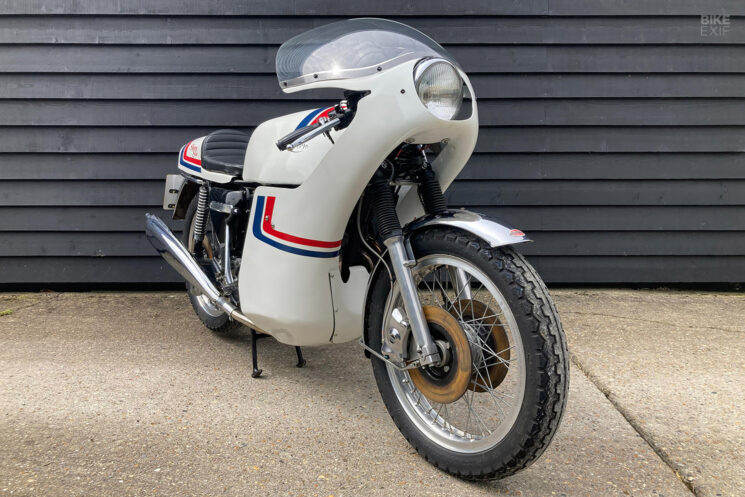
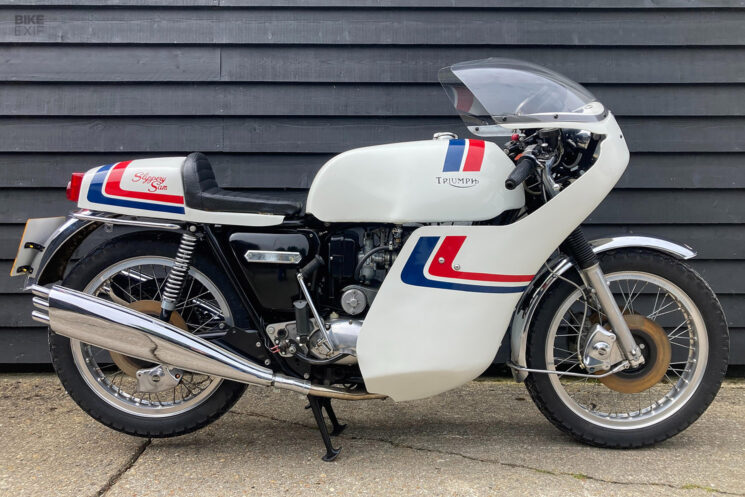
After this, it seems that the Tait/Jolly Triumph, and possibly its sister bikes as well, regularly flew the Slippery Sam banner, and Sam is credited with five consecutive Isle of Man TT wins in the early 1970s. Even as the doors were closing at Norton Villers Triumph, Sam trudged on, and the Trident we’re looking at today was built in 1976 by race shop foreman Les Williams.

Based on a new T160, this was the second Slippery Sam replica Williams built, and in addition to the full racer bodywork, the bike was fit with dual front discs, a works-style exhaust, rear-set pegs and clip-on bars. Covering 7,161 miles since new, Bonhams estimates the 1976 T160 Trident will bring $7,900 to $11,000 [£6,000 – £8,000].

Galco Ducati 750 Racer
Galco Ducati 750 Paul Smart and Bruno Spaggiari’s 1-2 finish at the 1972 Imola 200 changed the trajectory of the Ducati brand overnight. A marque that few considered to be a real contender in the top echelon of road racing had toppled the favored MV Augusta of Giacomo Agostini, and they’d done so on a bike that was not far removed from the production model. With its stock soaring, the Ducati brass pledged to devote even more effort in 1973.

Over the winter of 1972, Ducati refined their works machines to an even higher state of tune, starting with Fabio Taglioni reworking the 90-degree with a shorter 64.5 mm stroke, larger 86 mm bore and a tighter valve angle. After revising the frame slightly, a new swingarm was developed that allowed the wheelbase to be changed for different circuits. The resulting machine was significantly lighter at 326 pounds, and the reworked engine produced 100 bhp.

Galco Ducati 750 Racer
Three works machines were prepped for the 1973 Imola 200, but faced stiff competition from Yamaha’s new TZ350. Spaggiari still managed a strong second-place finish, but the writing was on the wall—the era of two-stroke domination had arrived—and Ducati pivoted to endurance racing in the following years.

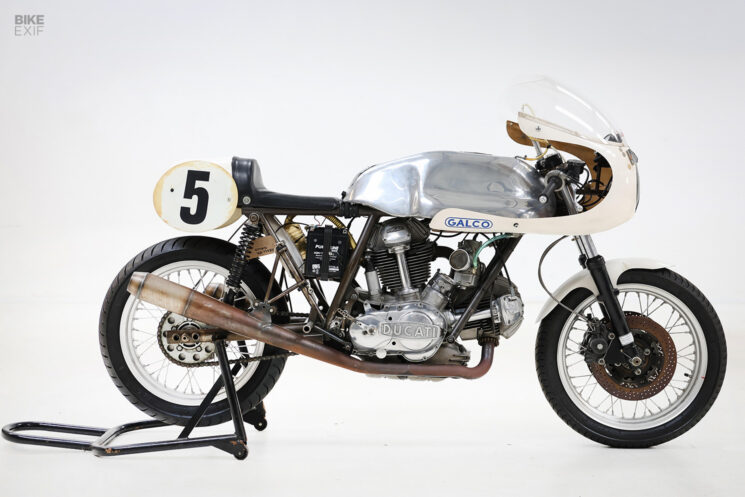
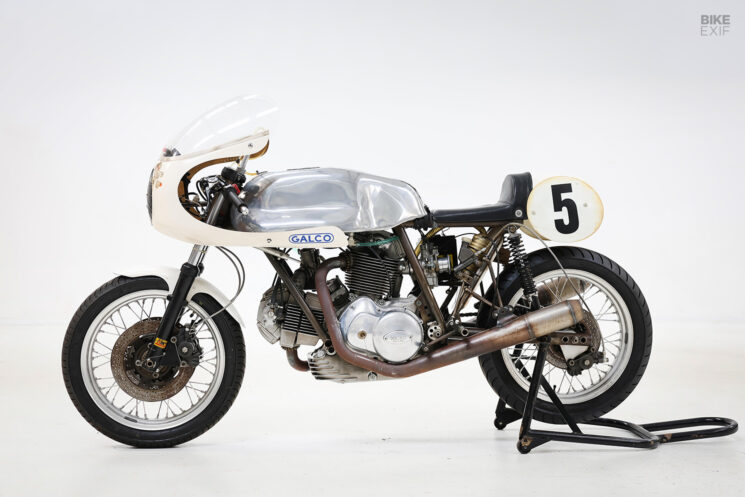
Despite the changing times, there’s little doubt that the 1973 Desmo 750s represent the pinnacle of Ducati L-twin evolution, prompting this ’73 Imola 750 recreation crossing the block at Bonhams’ Autumn Stafford Sale. The bones of the Ducati were fabricated by known Ravensdale, Washington, chassis expert Reed Galbraith of Galco, with the chassis constructed of TIG-welded aircraft chrome-moly thin wall tubing.

Galco Ducati 750 Racer
Since an exact replica of the short-stroke ’73 L-twin was unobtainable, a round-case 750GT engine was extensively modified with Desmo valve gear, Imola cams, Dell’Orto 41 mm carburetors, twin-plug ignition and an ‘Imola’ exhaust by Sid Tunstall. Campaigned in numerous events by its commissioner, the bike was a regular top finisher in 750 cc events from 1989 to 1993.

Offered in running condition, Bonhams states that the bike has never been dropped, and has had just one owner since new. The $13,000 to $18,000 [£10,000 – £14,000] estimate makes for an interesting proposition, considering the original 1973 Spaggiari Imola bike was valued at around $400,000 in the early 2000s.

1912 Indian Model D
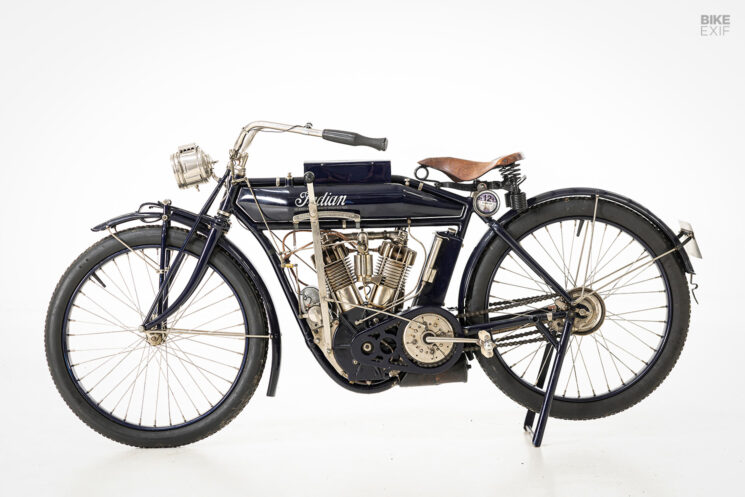
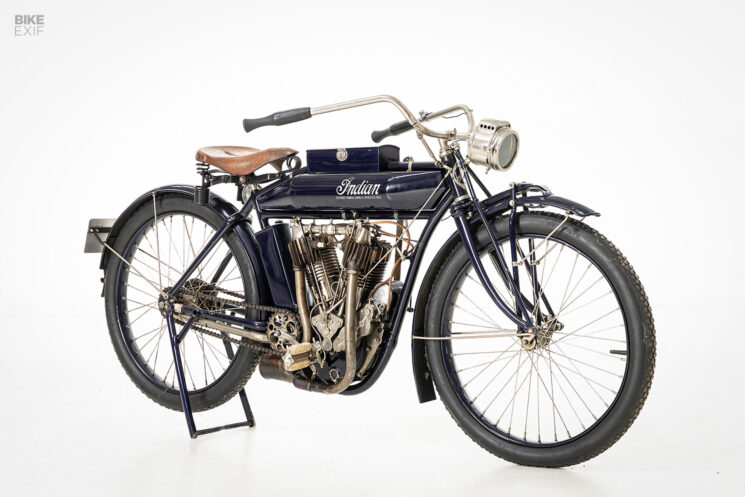
1912 Indian Model D Just over 10 years in the business and the outlook at the Hendee Manufacturing Company couldn’t have been better. Spurred on by the scores of race victories and long-distance records set by Indian motorcycles, Hendee had become the largest motorcycle manufacturer in the world, and 1913 would prove to be the height of Indian’s production.

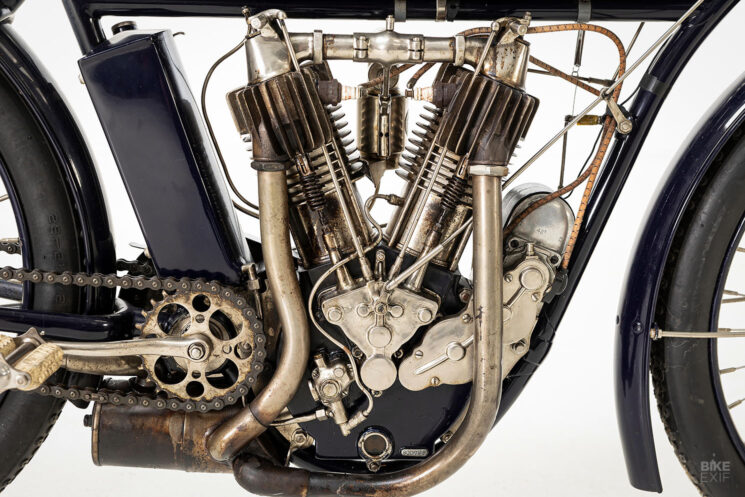
In addition to the bicycle racing experience founders Oscar Hedstrom and Oliver Hendee brought to Indian, there was also a constant dedication to mechanical excellence that kept Indian on top in these years. Where competitors used drive belts, Indians used a chain drive from the start, and the company debuted a leaf-sprung fork by 1910. That same year, a clutch and two-speed transmission was optional on select models, and Indian would unveil a leaf-sprung rear suspension by late 1912. Indian’s first big twin was also fresh on the market, displacing 988 cc, and offering—wait for it—7 hp.

1912 Indian Model D 988 cc Engine
The Indian was the motorcycle to beat in those days, proving dominant on dirt circuits and board tracks, but their largest triumph was surely an underdog 1-2-3 finish at the Isle of Man TT in 1911. A massive achievement for an American firm still in its infancy, Indian had become a global player, and the period leading up to World War I would prove to be Indian’s golden years.

Indian’s early production excellence is displayed in this stunning 1912 Model D twin selling at Bonham’s Autumn Stafford Sale. The bike was allegedly stored inside a house from 1955 until 1988 when it was acquired by the seller, and a nut-and-bolt restoration was performed between 2000 and 2007. The Indian is powered by the 988 cc V-twin and uses the rigid frame of the early 1912 production bikes. Bonhams cautions that the bike will need some recommissioning before use, and estimates it will bring between $37,000 and $50,000 [£28,000 – £38,000].

1912 Indian Model D 988 cc


from Bike EXIF https://ift.tt/y5c3wQl

Tuesday, 17 September 2024

First Look: The 2025 Triumph Speed Twin 1200 and Speed Twin 1200 RS

First Look: The 2025 Triumph Speed Twin 1200 and Speed Twin 1200 RS
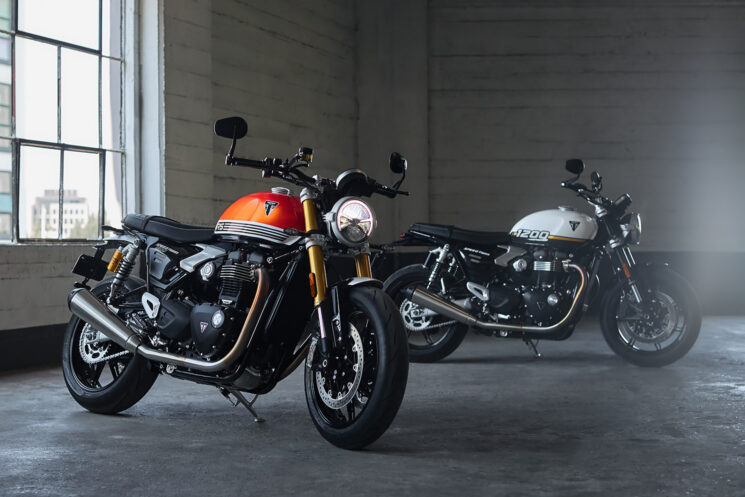
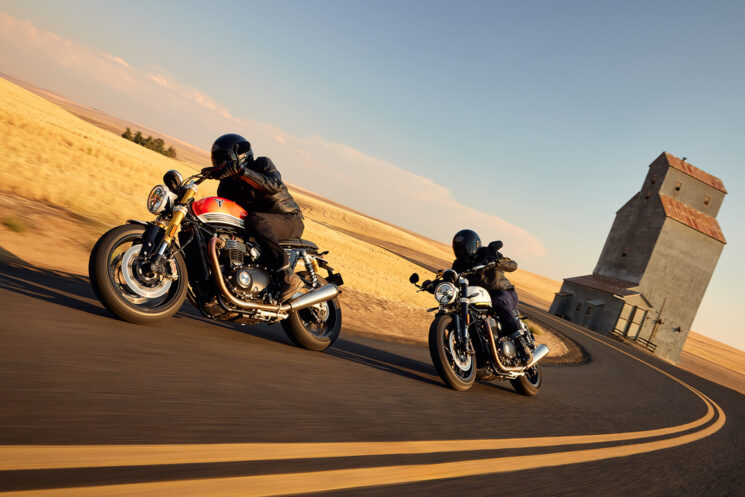
One of our favorite modern classics has just received a major update for 2025. Triumph has refreshed its popular Speed Twin 1200—but the news that has us giddy is the addition of the new, higher-spec Triumph Speed Twin 1200 RS to the range.

The Triumph Speed Twin 1200 sits in Triumph’s neo-retro line-up as a sportier alternative to the Triumph Bonneville T120. Powered by Triumph’s brilliantly lively 1,200 cc parallel-twin motor, the Speed Twin trades the Bonneville’s laid-back vibe for an aggressive stance, 17” alloy wheels, and sharper bodywork. So while it’s stylish, it’s also designed to be ridden in anger.

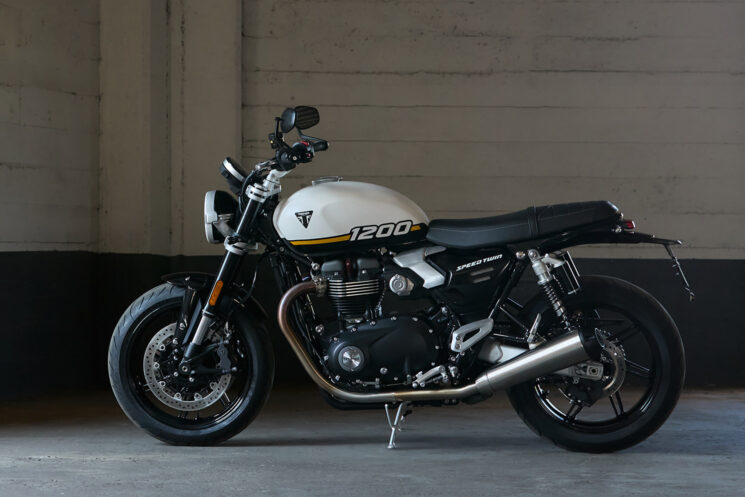
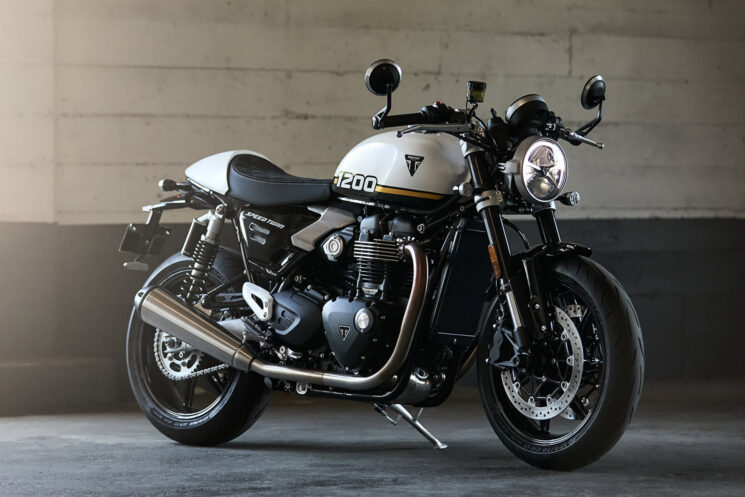
2025 Triumph Speed Twin 1200
At a glance, very little separates the new Triumph Speed Twin 1200 [above] from the outgoing one (apart from its new graphics, of course). The changes are subtle, but numerous—and welcomed.

For starters, the 1,200 cc twin now makes 5 PS [4.93 hp] more, bringing its output up to 105 PS [103.56 hp] at 7,750 rpm. It retains its characterful 270-degree firing order and low inertia crankshaft, with torque peaking at 112 Nm. Two electronic rider modes come standard (‘Road’ and ‘Rain’), along with updated cornering ABS and traction control features.

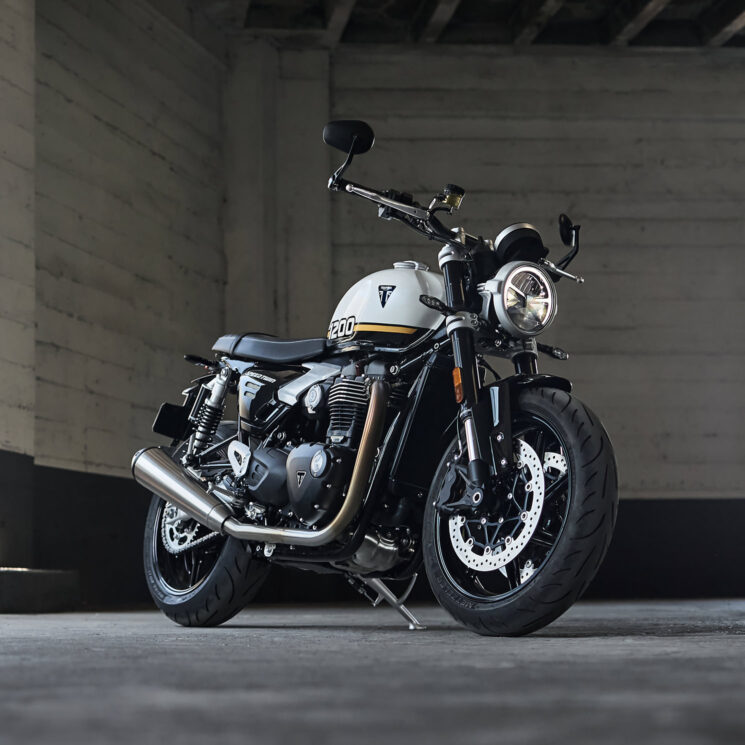
2025 Triumph Speed Twin 1200
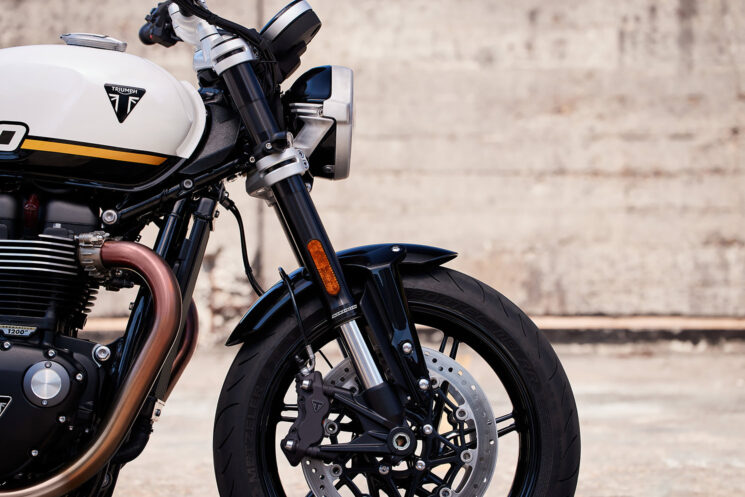
Triumph has tweaked the Speed Twin’s riding position too, by way of higher bars that sit further forward. The 43 mm upside-down forks and twin rear shocks are all updated Marzocchi parts, offering preload adjustment at the back. Triumph-branded radial brake calipers and Metzeler Sportec M9RR tires complete the spec.

Fans of the Speed Twin will notice several visual tweaks too. The fuel tank is more sculpted and boasts a new flip-up filler cap. The side panels are pared-back, flowing from the new, more pronounced throttle body covers.

2025 Triumph Speed Twin 1200
The whole design is pitched forward, creating a sharp silhouette that amplifies the Speed Twin’s aggressive nature. Parallel lines run through the bike’s side covers, throttle body covers, tank scallops, revised engine covers, and its unique new finned cast aluminum headlight brackets. The LED headlight is new, as is its part-LCD, part-TFT display (and USB-C charging socket).

Other changes include stubbier mufflers, a redesigned bench seat that’s narrower at the front, and new cast aluminum wheels with a modern seven-split-spoke design.

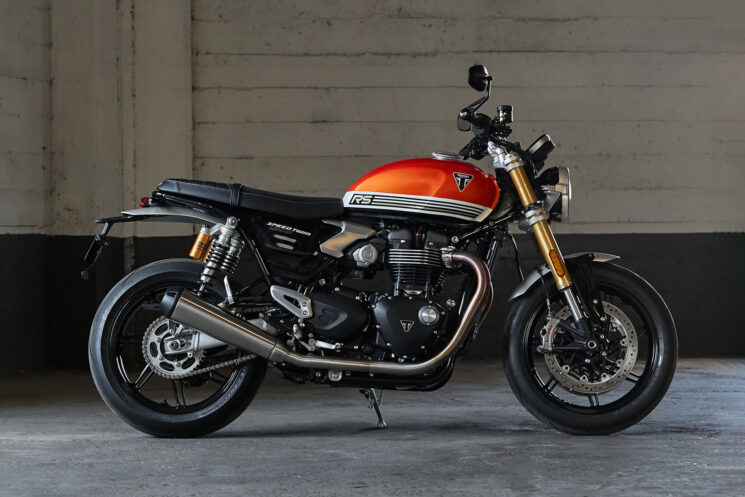
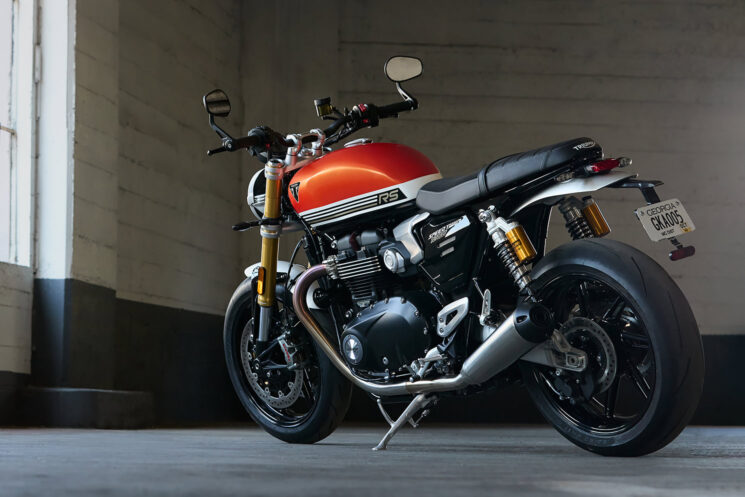
2025 Triumph Speed Twin 1200 RS
The new Triumph Speed Twin 1200 RS [above] takes this new package and cranks it up to 11. In Triumph’s language, ‘RS’ models are better-specced versions of their non-RS counterparts. Given that Triumph has always pushed the Speed Twin as a sporty modern classic, the addition of an RS variant is long overdue.

The RS designation adds full adjustability to the Speed Twin’s Marzocchi forks and swaps the rear shocks for a pair of fully adjustable Öhlins items. Twin Brembo Stylema calipers grip 320 mm discs at the front, and the bike comes with Metzeler Racetec RR K3 tires.

2025 Triumph Speed Twin 1200 RS
Triumph has tweaked the Speed Twin 1200 RS ergonomics further, creating a more engaged riding position. The rear end sits higher, and the handlebars lower, than on the base model Speed Twin, with the foot pegs shuffled further back (and slightly higher).

On the tech side, the RS gets an additional ‘Sport’ riding mode, and a quick-shifter; a first for the modern Bonneville platform.

2025 Triumph Speed Twin 1200 RS
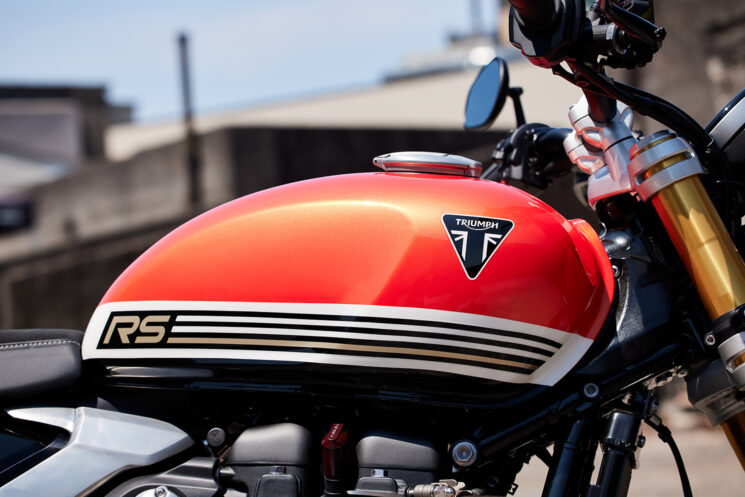
Finally, the Speed Twin 1200 RS gets swankier finishes to differentiate it from its sibling. Available in ‘Baja Orange’ and ‘Sapphire Black,’ it trades the simple striping and ‘1200’ decals on the base model for dedicated ‘RS’ decals and a bank of thin stripes that echo the bike’s polished engine fins. It also gets contrast stitching on the seat, and brushed aluminum fenders.

Official Triumph accessories for both bikes abound—but the most notable pieces are a café racer-style passenger seat cover and clip-on bars [below]. Fit those to the RS, and you have the closest thing Triumph currently offers to the now-defunct Thruxton RS.

2025 Triumph Speed Twin 1200 café racer kit
Available from December, the Speed Twin 1200 and Speed Twin 1200 RS are priced from £12,495 and £14,495 in the UK, respectively. In the US, those prices start at $13,595 and $15,995.

Tempted? We certainly are.

Source: Triumph Motorcycles

First Look: The 2025 Triumph Speed Twin 1200 and Speed Twin 1200 RS


from Bike EXIF https://ift.tt/2mLHrsd