Wednesday, 24 January 2024

WalzWerk’s custom BMW R80 is dripping with authentic patina

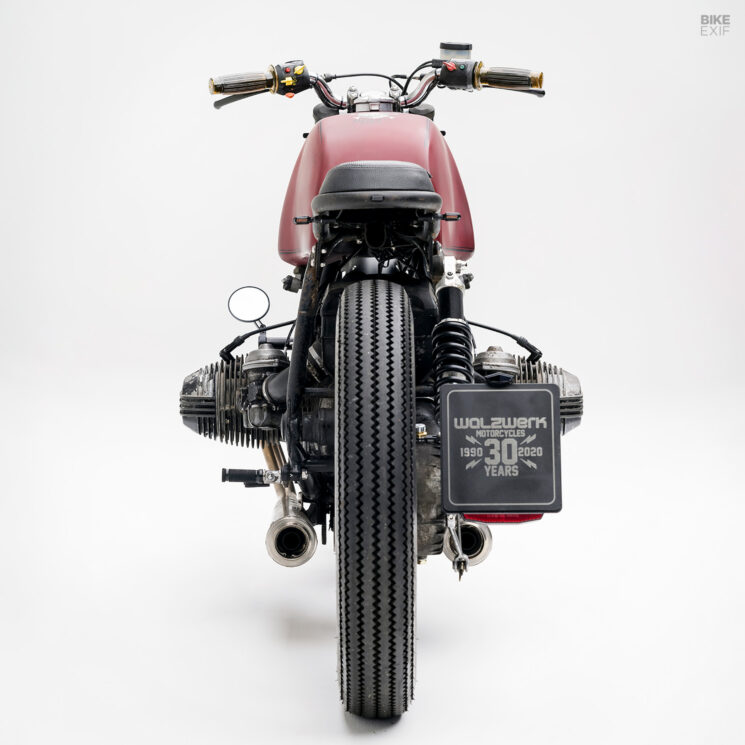
Custom BMW R80 patina build by WalzWerk
Marcus Walz made his bones building extreme choppers in the 90s. But as the new wave café racer scene blossomed, the founder of WalzWerk Motorcycles pivoted towards more contemporary custom build styles. WalzWerk now builds around 100 motorcycles a year—and at least 80 of those are classic BMW boxers.

That sort of output demands a steady stream of donor bikes, so the WalzWerk crew is always on the hunt for suitable candidates. “We buy around 120 BMW R80 and R100 Monolever models a year,” says Marcus, “The majority come from relatives, heirs, and survivors—and almost every one of them has a personal, and often tragic, story behind it.”
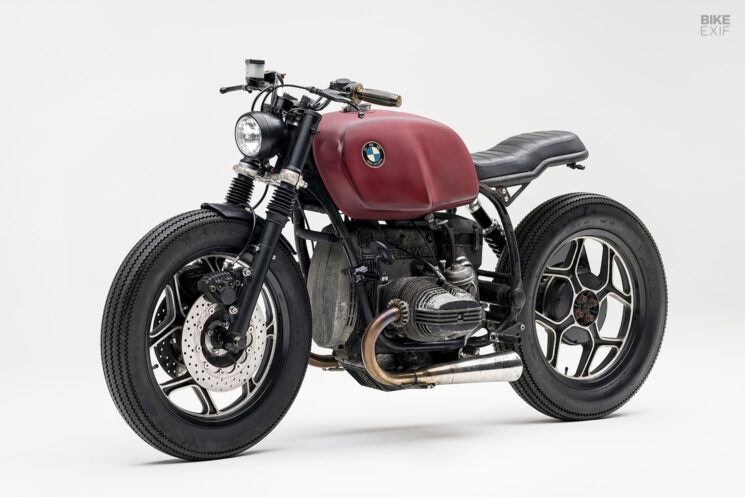
Custom BMW R80 patina build by WalzWerk
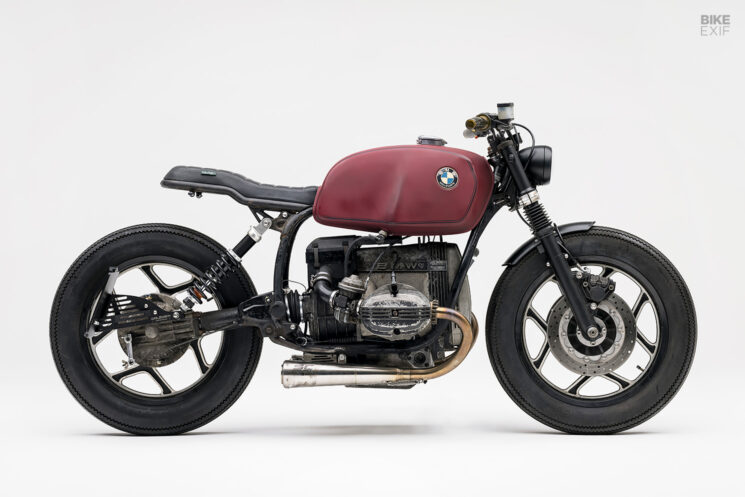
The history of this 1987 BMW R80 was so compelling that, once he’d heard it, Marcus decided to keep the bike for himself. The idea was to customize it according to WalzWerk’s popular ‘Schizzo’ template—but to keep as much of the original patina intact as possible as a nod to its provenance.

The story goes that the BMW R80’s sole owner, ‘Mr. H,’ bought it in 1987 from a BMW dealer in Hamburg. At the time, you could spec the R80 with a second front disc brake, a windshield, and a set of Krauser cases; Mr. H ordered just the cases and immediately put the bike to work. Over the next 30 years, he and his wife racked up over 300,000 km [about 186,400 miles] on countless trips across Europe.
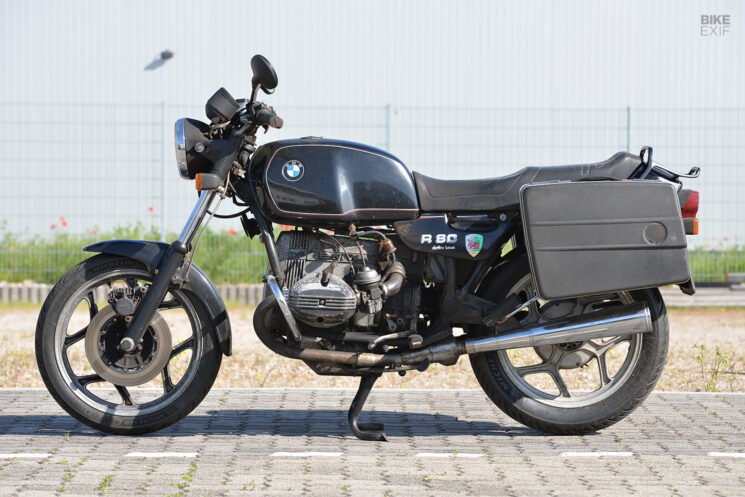
1987 BMW R80 in original condition
After Mr. H passed away, his wife mothballed the BMW—dragging it out of the garage only once so that a local motorcycle dealer could put it through a TÜV inspection. When Mrs. H died last year, ownership of the BMW went to their daughter, who decided to sell it to WalzWerk.

“When we picked up the BMW,” Marcus tells us, “their daughter visibly struggled to part with it and shed a lot of tears. Together with the motorcycle, she also handed us a folder full of information, with countless workshop and TÜV receipts, which documented every single kilometer of the machine.”
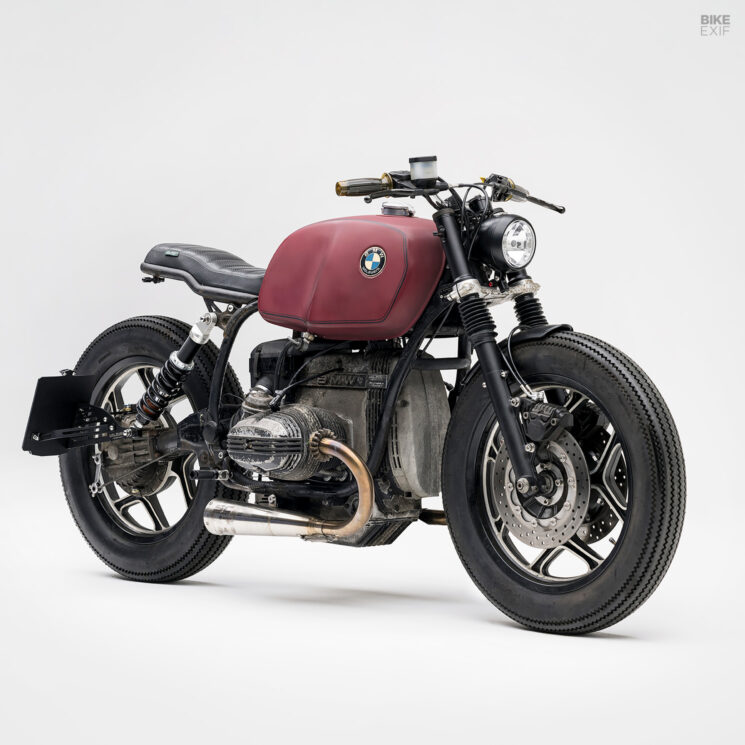
Custom BMW R80 patina build by WalzWerk
“The reason that she offered her parents’ motorcycle to us was because she liked the idea of it practically becoming a new motorcycle—a kind of rebirth, as she put it. We liked this idea too, and decided to continue writing the history of this BMW.”

WalzWerk’s Schizzo BMWs are ground-up rebuilds that leave no bolt untouched. That sort of approach is usually at odds with the idea of a building patina-laden machine, but Marcus has managed to pull it off here. For example, although the engine, transmission, and final drive look battered on the outside, they’ve all been torn apart and rebuilt on the inside.
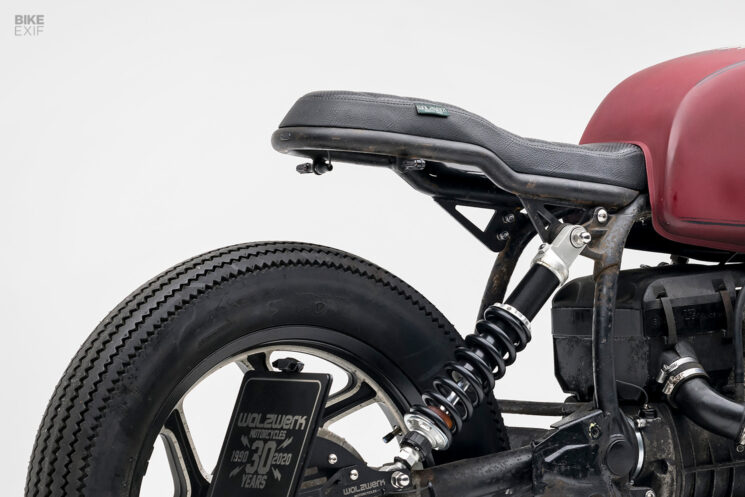
Custom BMW R80 patina build by WalzWerk
WalzWerk also made the requisite frame mods without repainting the original frame. Then they bolted on one of their Schizzo subframes, finishing it with a worn look so that it wouldn’t look out of place on the otherwise aged bike. A slim saddle sits up top.

Next, the team shortened and rebuilt the front forks, and fitted a neat little front fender. They also added a second disc brake to the front, using a vintage Brembo caliper to match the stock unit. A new YSS shock does duty out back, while chunky Firestone Deluxe Champions wrap around the original BMW rims.
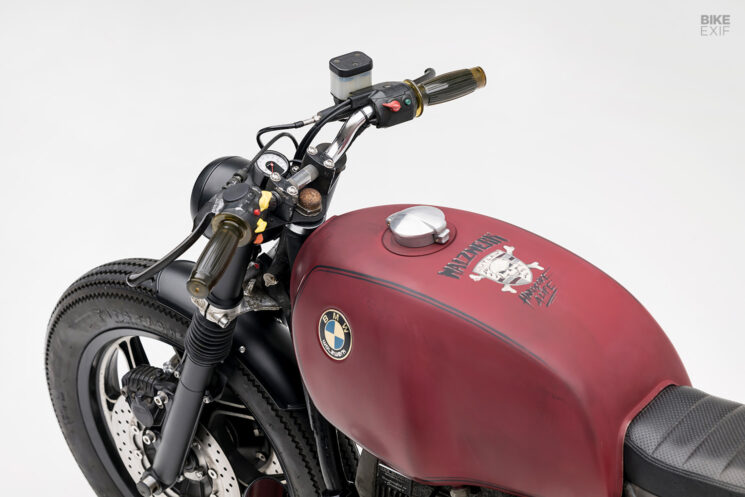
Custom BMW R80 patina build by WalzWerk
The cockpit is a judicious mix of old and new. Marcus kept the OEM handlebars, clamps, and switchgear, but replaced the grips and installed a brand-new Motogadget speedo. The headlight is new too, as are the custom-made fork sleeves that host a pair of tiny LED turn signals.

Three-in-one LEDs handle taillight and turn signal duties out back, while a WalzWerk license plate bracket attaches to the lower shock mount.
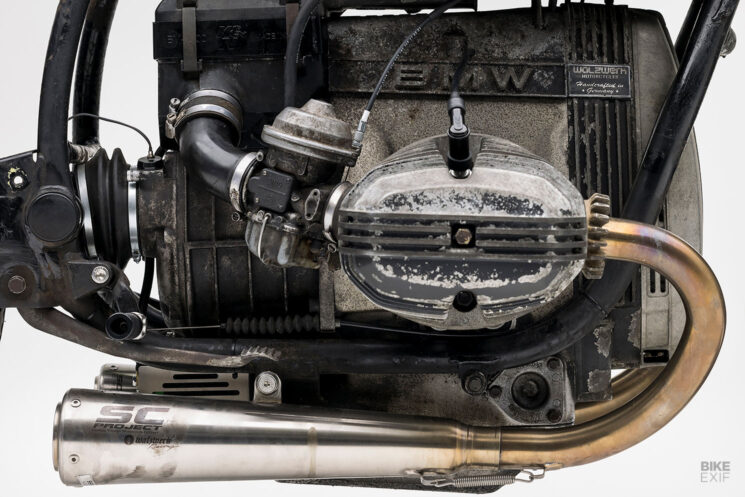
Custom BMW R80 patina build by WalzWerk
WalzWerk built a fresh wiring loom for the R80 with a Motogadget controller, then installed a Lithium-ion battery, tucking it away in one of their signature battery boxes under the transmission. Finishing touches include a pair of custom headers and slightly blemished SC-Project cans, and WalzWerk engine badges that have been scuffed up to look as old as the bike they adorn.

“The main goal and the most difficult thing was to keep and preserve the true and unique patina which the bike has more than enough of,” Marcus adds. “There are so many things on that bike that tell the story of more than three decades, and it would have been a shame to destroy all this.”
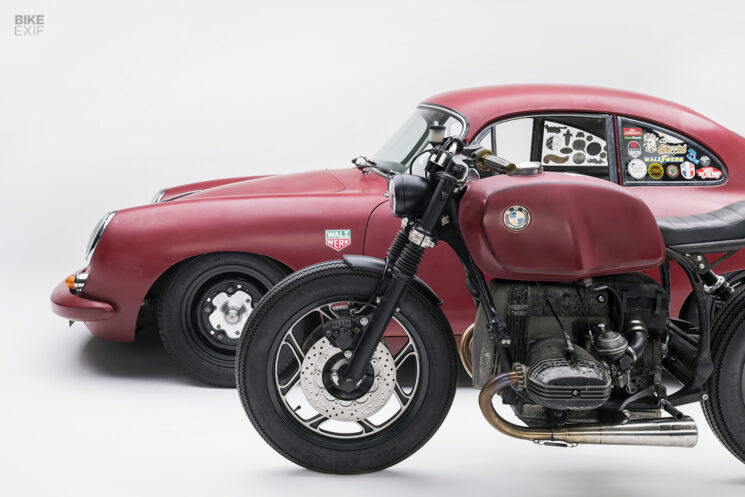
Custom BMW R80 and Porsche 356 by WalzWerk
One part that Marcus couldn’t save was the BMW R80’s fuel tank, which was rusted beyond reason. So he used a fuel tank from another boxer, painting it to match his 1959 Porsche 356 survivor.

“My 356 has almost the same history as the bike,” he says. “It’s still in its original color and has never been restored.”
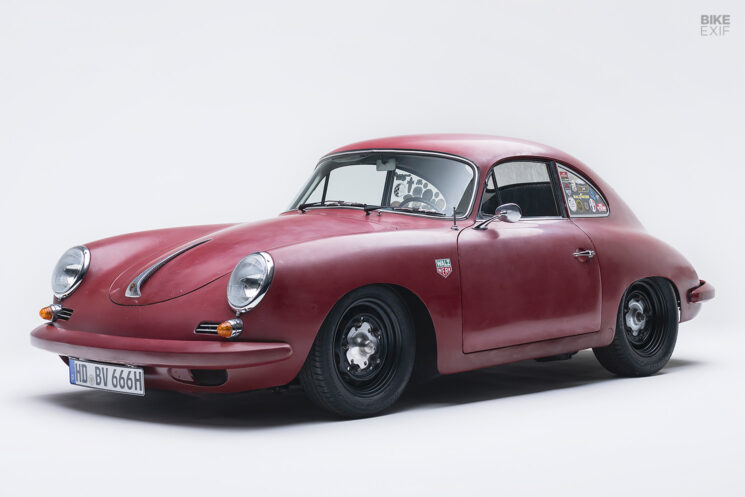
Porsche 356 survivor by WalzWerk
“I bought the car in California a few years ago from the heirs of its first owner. I kept the original patina and rebuilt all the technical parts like the suspension, brakes, gearbox, and engine, without destroying the patina. Today the car runs like new and is the star at every vintage car show—especially when I park the BMW next to it.”

WalzWerk Motorcycles | Facebook | Instagram
Custom BMW R80 patina build by WalzWerk


from Bike EXIF https://ift.tt/4LRPbzD

Tuesday, 23 January 2024

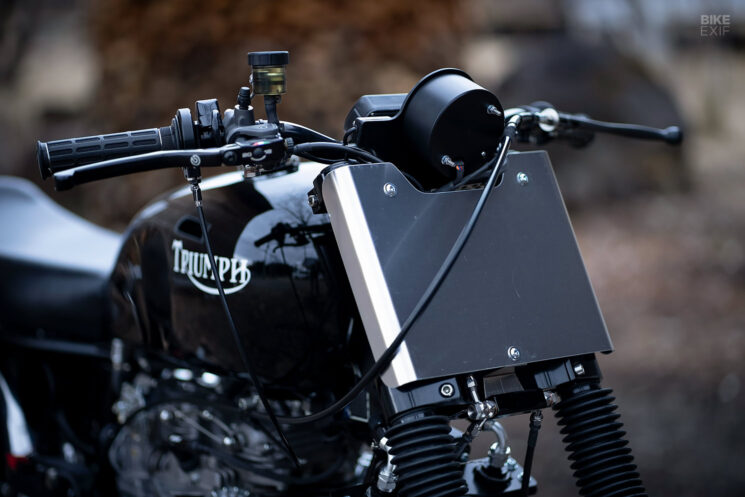
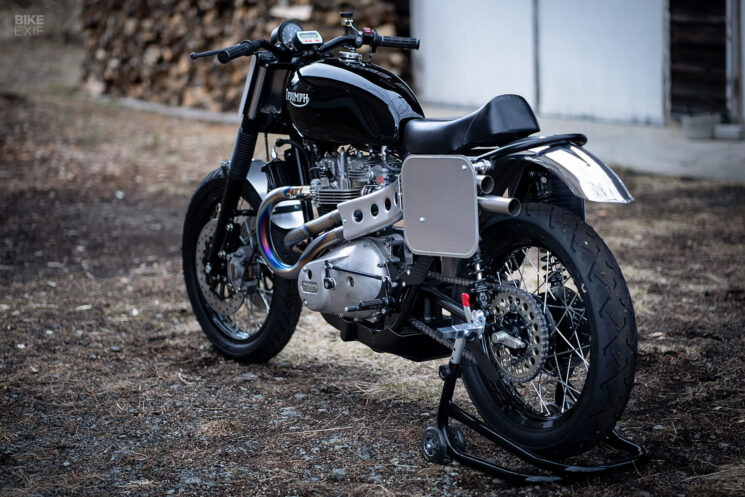
Race spec: A Triumph T140 track bike inspired by Steve McQueen’s TR6

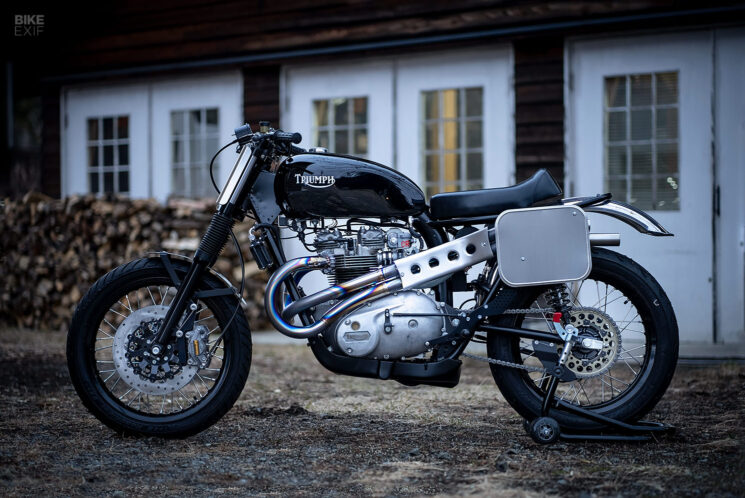
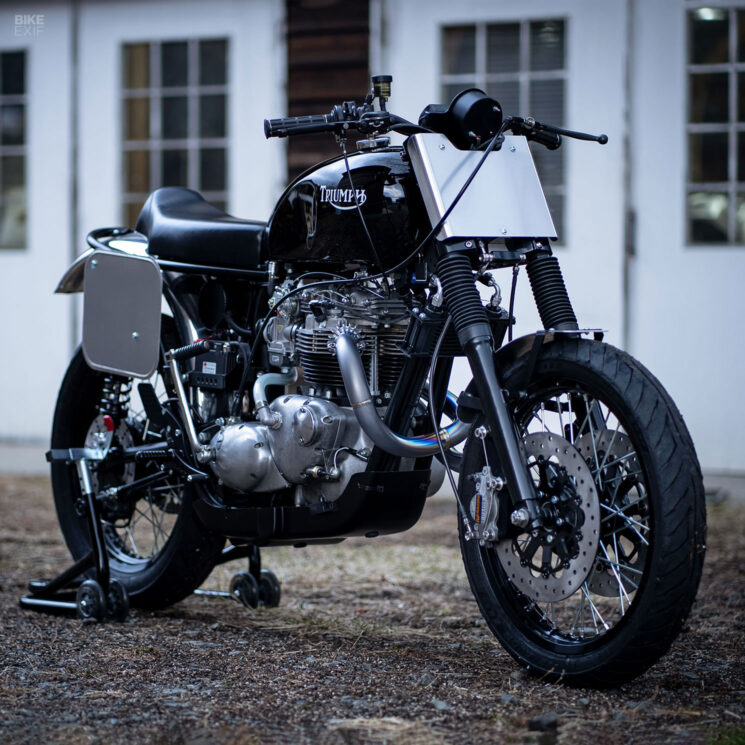
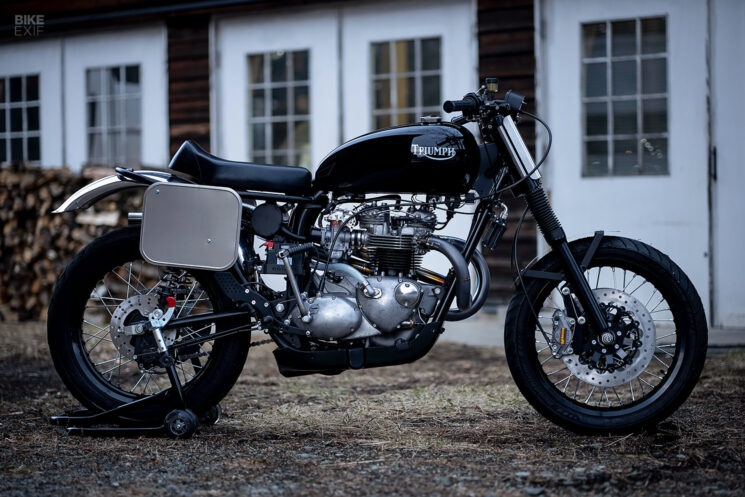
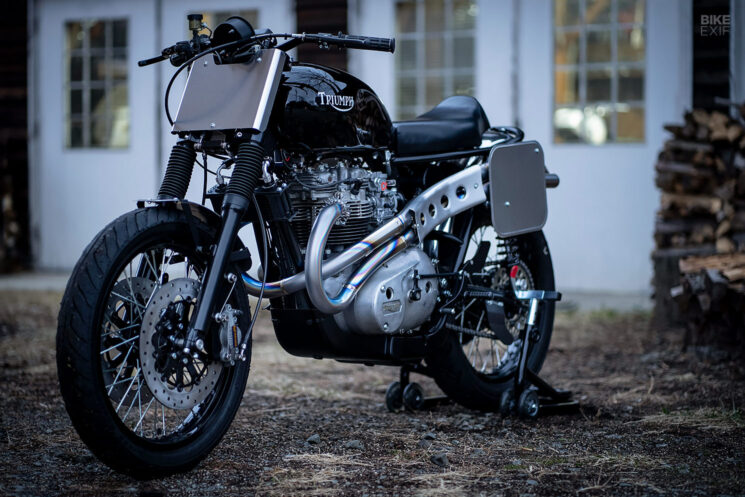
Triumph T140 race bike by 46Works
Mentioning ‘Triumph’ and ‘Steve McQueen’ together conjures up images of the iconic desert sleds that the King of Cool kicked up Californian dust with. This custom Triumph T140 Bonneville takes inspiration from one of McQueen’s most famous bikes—his number 955 TR6 desert racer. But it’s been built for a very different purpose.

The 1976-model T140 lacks a desert sled’s long travel suspension, big wheels, and tall handlebars, because it’s been designed to dominate on the track instead of in the dirt. More specifically, it’s been custom-made by Shiro Nakajima at 46Works to compete in the Japanese Legend of Classic race series.

Triumph T140 race bike by 46Works
We can’t think of a better man for the job than Nakajima-san. A regular on our pages, he’s probably best known for founding the Japanese restomod powerhouse Ritmo Sereno—but he’s also a furniture maker, a vintage car restorer, and one heck of a motorcycle builder.

Shiro lives and works in a charming traditional wooden building, tucked away against the foothills of the Yatsugatake Mountains where scenic B-roads abound. But he still regularly makes the trek to the Tsukuba Circuit a few hours away, where he races the classic race bikes that he’s so adept at building. So he knows how to make older bikes look good and go fast.

Triumph T140 race bike by 46Works
Shiro put the Triumph T140 Bonneville together for a customer, who supplied nothing more than the frame, swingarm, and engine. McQueen’s ‘955’ offered design inspiration, but it was up to Shiro to add all the right mods to make the T140 track-capable.

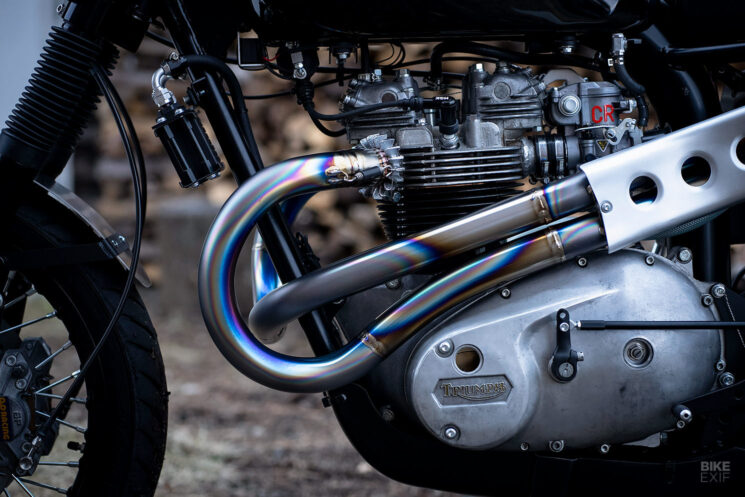
Right away, the engine went off to Gladstone, a Triumph specialist in Shizuoka, for a full rebuild. It came with high-compression pistons, upgraded camshafts, a modified head, and a belt drive conversion. Also present are a Quaife five-speed transmission kit, and a pair of Keihin CR carbs.

Triumph T140 race bike by 46Works
From there, Shiro set about building the chassis—starting with tweaking and reinforcing the frame. The front forks come from a Yamaha (Shiro won’t say which), and have been rebuilt with new internals. They’re held in place by a set of machined aluminum yokes, connected to a custom steering stem.

The Triumph T140 rolls on 18” Excel rims, laced to two different Yamaha hubs with brand-new Yamaha spokes. There’s an Avon Roadrider wrapped around the front wheels, with an Avon Super Venom AM18 out back.

Triumph T140 race bike by 46Works
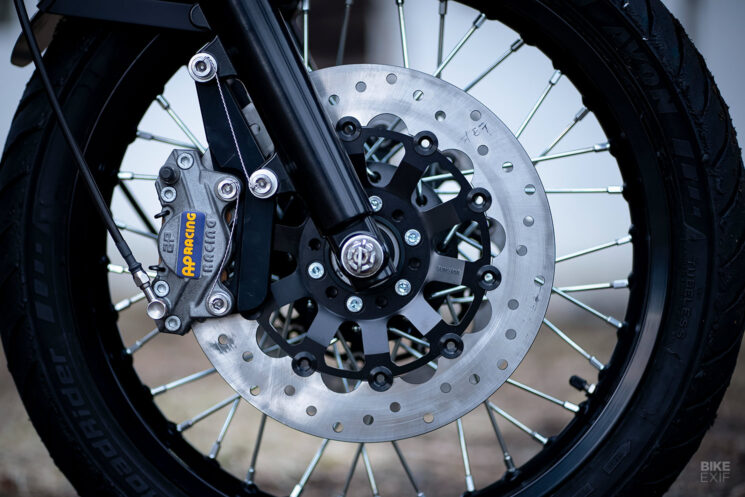
Thanks to the new wheels, the bike benefits from a major braking upgrade. It now uses two AP Racing calipers up front and a single Brembo caliper out back, with Sunstar discs and Brembo master cylinders at both ends. (There’s no ABS, but the T140 should stop quicker than it did in the 70s.)

Equally impressive are the bespoke rear-set foot controls, and the myriad linkages that make them function. And since this is a race bike built by an experienced racer, there’s safety wire in all the right places.

Triumph T140 race bike by 46Works
Moving to the bodywork, Shiro pieced together a set of parts that come as close to mimicking McQueen’s Triumph as a track bike can. The fuel tank is a reproduction Triumph unit, while the seat, which looks like a classic Bates number, is a one-off. Shiro built the aluminum seat pan, and then handed it over to Razzle Dazzle for foam and upholstery.

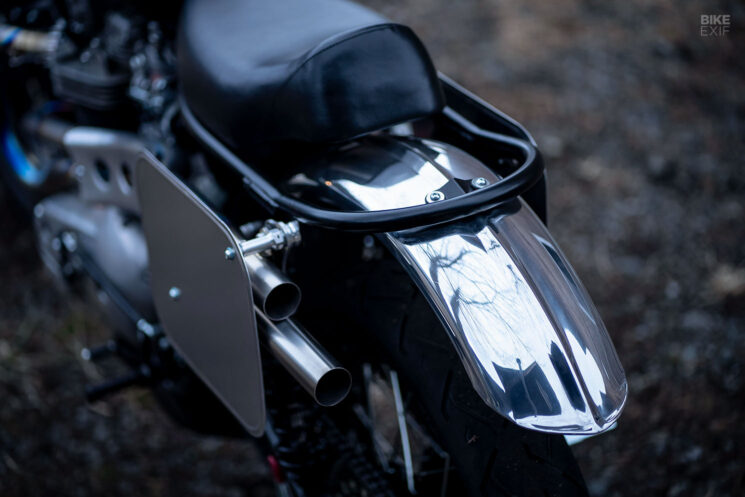
The rear section follows the traditional desert sled formula of a three-quarter seat, a kinked subframe, and a long alloy rear fender. At the opposite end of the bike, Shiro replicated the style of fairing and fairing brackets found on McQueen’s bike, but with a stubbier design.

Triumph T140 race bike by 46Works
The twin shotgun-style exhaust pipes are another nod to the TR6 sled, right down to the way that the ends are stacked. They’re also a testament to Shiro’s craftsmanship, since he hand-bent the headers out of titanium. Aluminum number boards add to the bike’s vintage appeal (and give the owner somewhere to stick his race numbers).

Other details include a Setrab oil cooler with Kinokuni fittings, a handmade oil catch tank, and a battery mount that offers quick and easy access. Shiro wired the bike from scratch too.

Triumph T140 race bike by 46Works
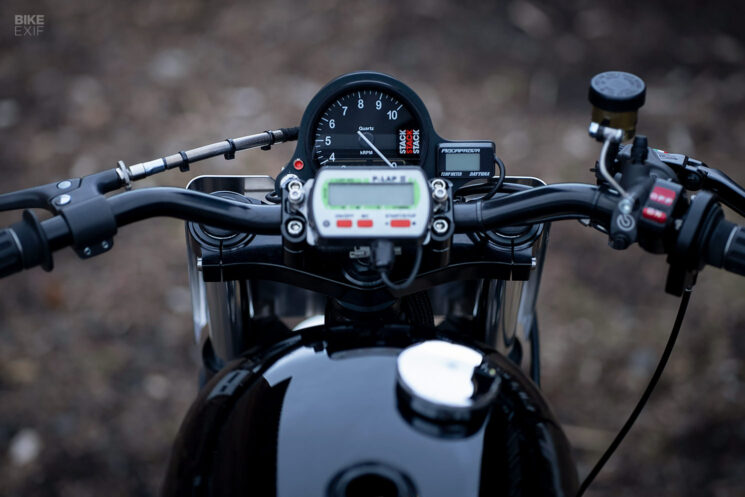
The cockpit sports low-rise handlebars fitted only with the most basic controls. A custom dashboard hosts a Stack tachometer, a single warning light, and a Daytona temperature meter, while a lap timer sits atop the bar clamps. There’s nothing unnecessary on this T140; every last inch of it has been fine-tuned for Shiro’s customer, “so that he can win races.”

Even the livery is all business. Rather than fully mimic the McQueen bike, this Triumph opts for a simple coat of jet black with period-correct logos. Top work by regular 46Works collaborator, Drops Design Works.

Triumph T140 race bike by 46Works
46Works’ custom Triumph T140 might not be the first thing we picture when we think of a classic Triumph track bike, but that’s what we love most about it. It’s also refreshing to know that it’ll be used as intended—as we write this, Shiro’s at Tsukuba making sure it goes as good as it looks.

46Works | Facebook | Instagram

Triumph T140 race bike by 46Works


from Bike EXIF https://ift.tt/0g1YJy3

Sunday, 21 January 2024

Speed Read: A superb Ducati Monster café racer from France and more

The latest motorcycle news and custom bikes
Jerem Motorcycles leads the charge with a stylish Ducati Monster café racer this week, while XTR Pepo delivers a classic Ducati endurance racer to conquer all. On the news front, we look at the Moto Guzzi V7 Stone Ten, and the 2024 Husqvarna Svartpilen 401 and Vitpilen 401.

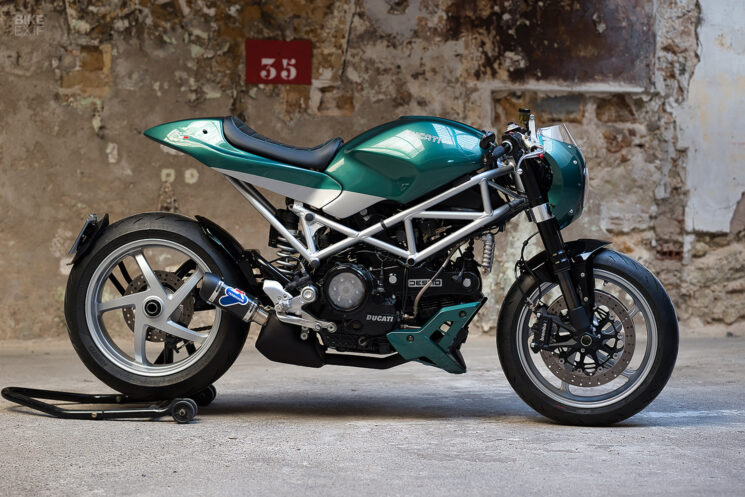
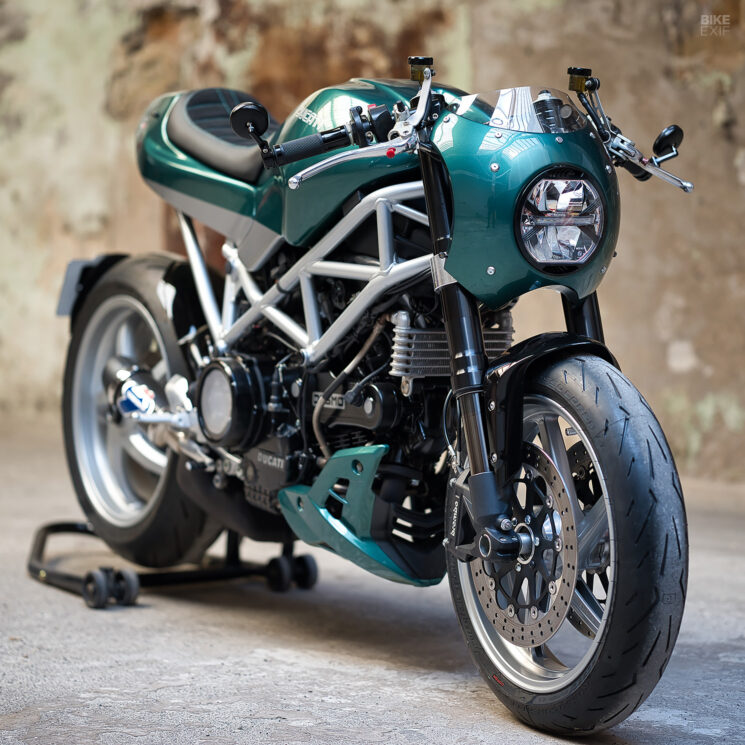
Ducati Monster café racer by Jerem Motorcycles
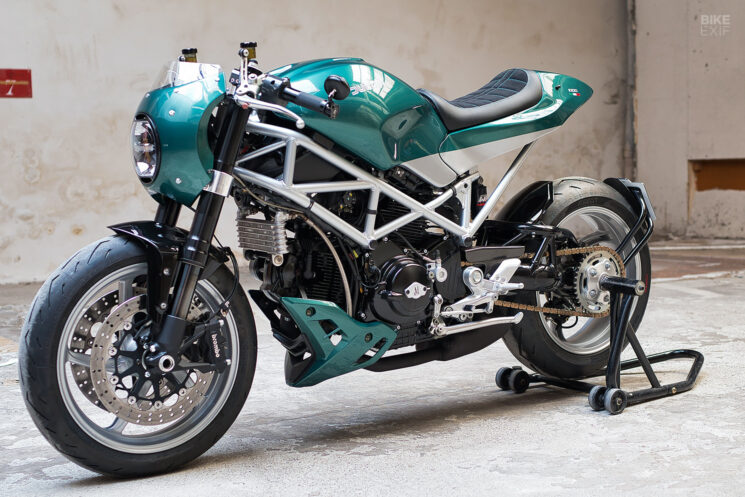
Ducati Monster S2R 1000 by Jerem Motorcycles Even though Jérémie Duchampt doesn’t exclusively customize Ducatis, he has the magic touch when it comes to Italian machinery. This time around, he’s taken a Ducati Monster S2R 1000 and turned it into an aggressive café racer with a superb green and silver livery.

Jérémie’s Monster retains its signature OEM wheels but swaps out its suspension for beefier components. The front forks are off a Ducati Diavel AMG edition, as is the front fender. The rear shock is a repurposed WP Suspension unit.

Ducati Monster café racer by Jerem Motorcycles
The S2R’s Brembo brakes didn’t need replacing, but Jérémie had to fabricate spacers to match the front discs to the wider Diavel forks. New brake lines from Exact Engineering add a smidgen more stopping power.

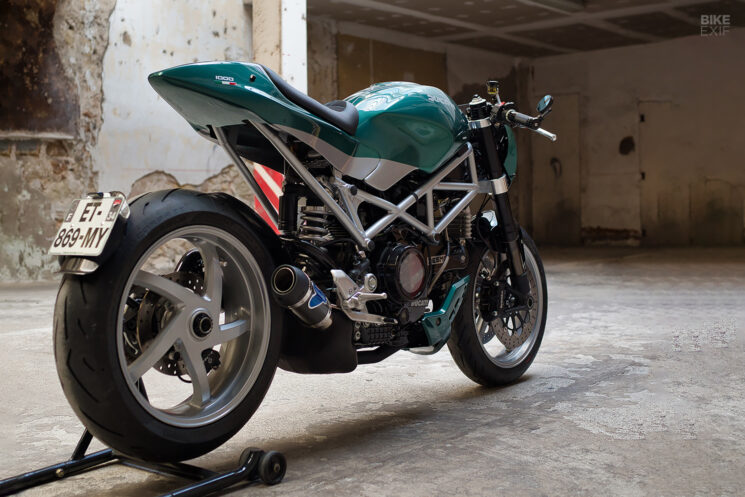
Jérémie rebuilt the Monster’s motor, putting it back together with a high-temperature black finish and a transparent clutch cover from CNC Racing. The exhaust headers are blacked-out too, and the original twin mufflers have given way to a single carbon fiber Termignoni can.

Ducati Monster café racer by Jerem Motorcycles
Perched on top of the modified subframe is a carbon fiber tail unit with a leather and Alcantara seat. The way it’s sculpted to match the stock fuel tank makes the whole arrangement look factory—and the way the raised seat height juxtaposes the lowered front end gives it an unapologetically aggressive stance. A Paolo Tex headlight fairing and a fiberglass belly pan finish off the bodywork.

Ducati Monster café racer by Jerem Motorcycles
The running gear includes a Koso LED headlight, LED front turn signals, and three-in-one LEDs acting as taillights and rear turn signals. The cockpit features clip-ons with bar-end mirrors, and an eye-catching AviaCompositi dash that sports a yellow face and a carbon fiber housing.
Jérémie’s judicious use of green and silver deserves another mention—as does the way that he’s finished certain parts in black to complement the colorful bits. If we had our way, we’d convince him to build a small production run of Monsters in this style. [Jerem Motorcycles Instagram]

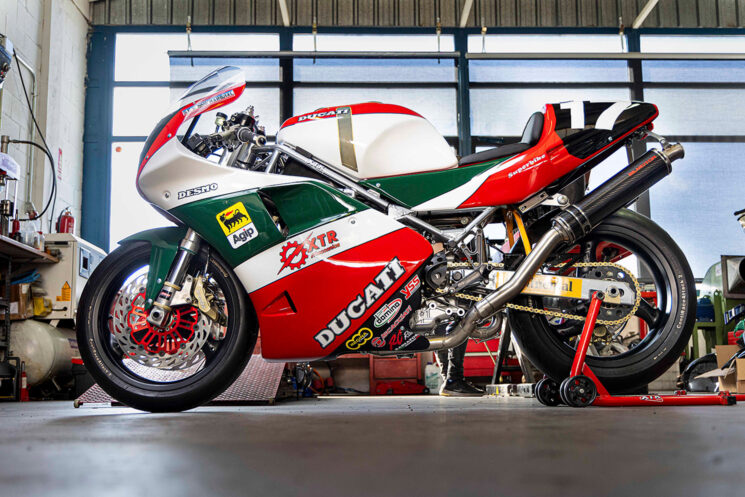
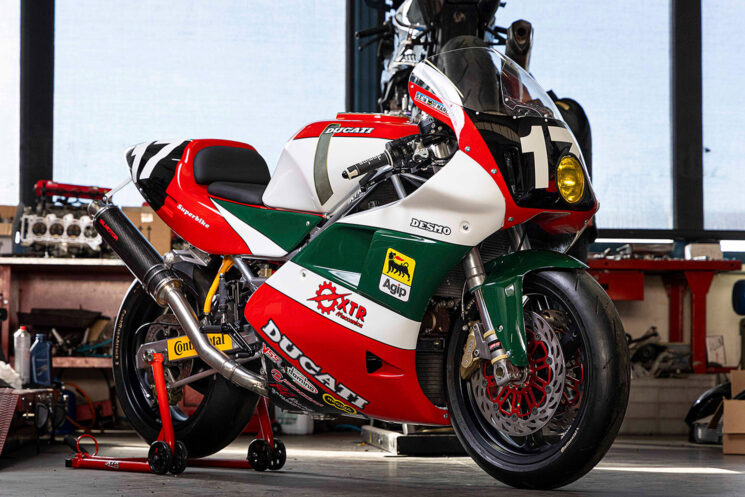
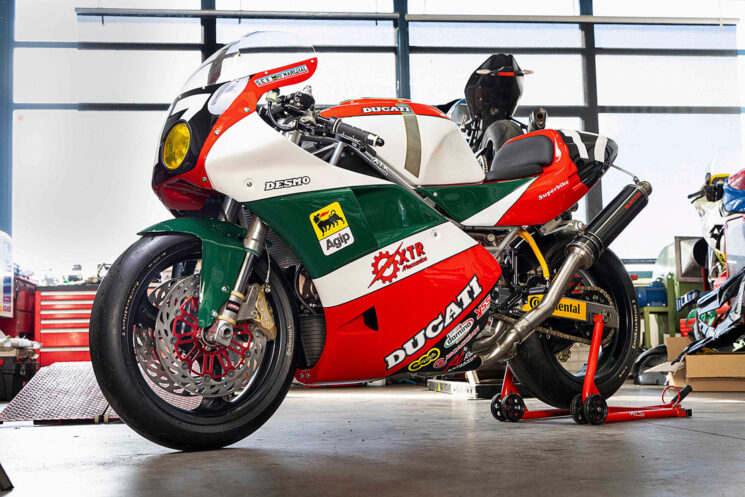
Custom Ducati endurance racer by XTR Pepo
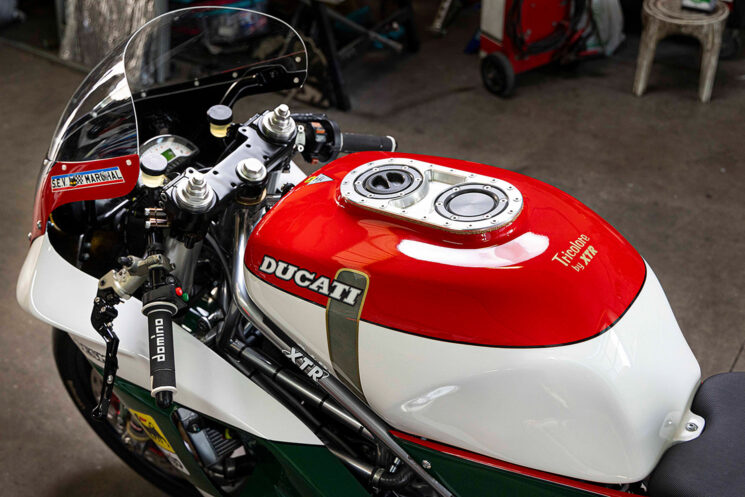
Ducati endurance racer by XTR Pepo This fabulous retro endurance racer comes from the wild imagination of Pepo Rosell—better known as XTR Pepo. The brief came from a customer who wanted to partake in classic endurance races, and sought a bike in the vein of the legendary Ducati 851 to do so on. But rather than source and hack up an original 851, Pepo went ahead and built the gnarliest parts bin special we’ve ever seen.

Custom Ducati endurance racer by XTR Pepo
The frame and engine are both Ducati Monster units, but they didn’t come from the same bike. Pepo started with a Monster 600 frame, then reinforced the daylights out of it. The subframe is a genuine race-spec aluminum Ducati 851 unit, and the swingarm is another Monster part.

Moving the front end, Pepo installed a set of Monster 900 yokes with the forks and wheel from a Ducati ST3. A custom linkage and a YSS shock handle rear suspension duties, with another ST3 wheel mounted out back. Pepo pieced the brakes together using repurposed Ducati Brembo components, with upgraded rotors, pads, and hoses.

Custom Ducati endurance racer by XTR Pepo
For the engine, Pepo took the 998 cc L-twin mill from a Ducati S4RS Testastretta, and rebuilt it with a blueprinted bottom end, a lightened flywheel, and Ducati 999 throttle bodies with a Walbro fuel pump. The engine also benefits from a custom-made airbox and a slipper clutch. Most of the wiring loom comes from a Ducati 998, with two ECUs that split engine mapping and general electrical duties.

For the bodywork, Pepo installed an 851 fairing on custom fairing stays, then retrofitted it with a single headlight, borrowed from a Cagiva Mito 125 II Eddie Lawson replica. The fuel tank is a custom fiberglass part, and the tail is a modified Ducati 888 unit. Everything is wrapped in the only livery we could imagine on a bike of this pedigree; a classic Tricolore scheme, laid down by Artenruta.

Custom Ducati endurance racer by XTR Pepo
Survey the bike, and you’ll also spot XTR Pepo clip-ons, an AviaCompositi dash, Ducabike rear-sets, a Ducati 1098 fender, an XTR Pepo rear hugger, and a whole lot more. The exhaust system is particularly tasty—it matches a set of custom headers to a pair of Silmotor Raymond Roche replica mufflers.

We can only assume that Pepo’s client is happy—because we’d be pleased as punch if this was our track day weapon. Bravo, Pepo! [Source]

Special edition Moto Guzzi V7 Stone Ten
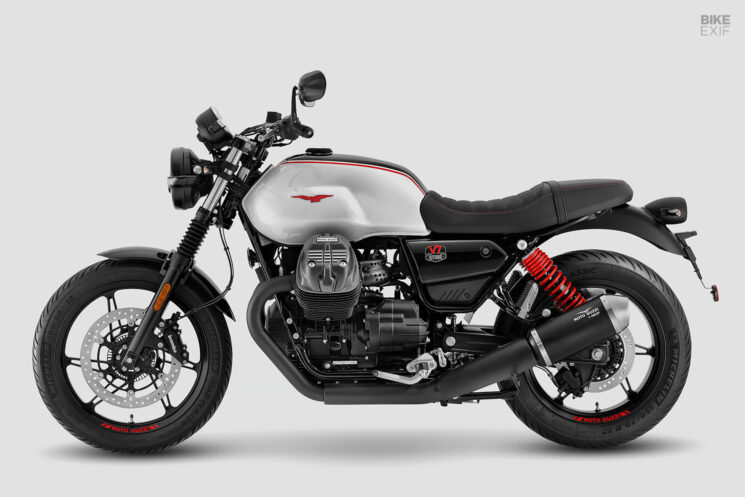
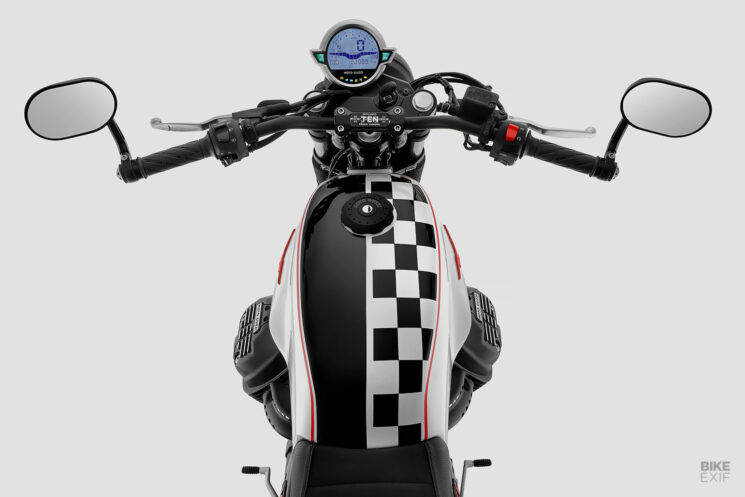
Moto Guzzi V7 Stone Ten Moto Guzzi is the latest major manufacturer to cash in on an anniversary with a commemorative motorcycle. The occasion is the tenth birthday of the Moto Guzzi Proud Owners Club—a worldwide owners club that boasts 50,000 members. And the motorcycle is the Moto Guzzi V7 Stone Ten.

Like most special edition bikes, the Moto Guzzi V7 Stone Ten is effectively just a regular Moto Guzzi V7 Stone with a fresh paint job (and a few special parts). That’s not a terrible thing though—the 853 cc modern classic might not be the zippiest bike on the street, but its transversal V-twin engine has oodles of character, and it’s an attractive motorcycle.

Special edition Moto Guzzi V7 Stone Ten
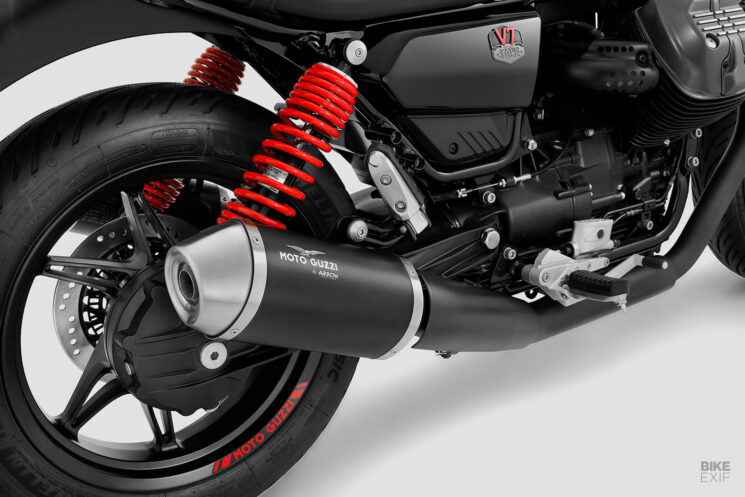
The Moto Guzzi V7 Stone Ten trades the flat colors that the V7 Stone comes out in for a sporty black and white livery with red accents. An offset checkered stripe runs over the top of the fuel tank, while red pinstripes connect to red stitching on the saddle. The shock springs, tank badges, and wheel logos are all finished in red.

Also included on the V7 Stone Ten are an anodized aluminum gas cap and bar-end mirrors. The engine’s valve covers sport a special graphite-colored finish, while the throttle body covers are anodized black.

Special edition Moto Guzzi V7 Stone Ten
The sportbike-esque Arrow mufflers are a nice touch too. They not only look good, but also free up an extra 1.3 hp and an extra 2 Nm of torque.

All this will cost you the tidy sum of $9,990 in the US. That’s $800 more than the regular V7 Stone—which isn’t too bad when you consider that the Arrow mufflers alone likely cost way more than that. [Moto Guzzi]

2024 Husqvarna Svartpilen 401 and Vitpilen 401
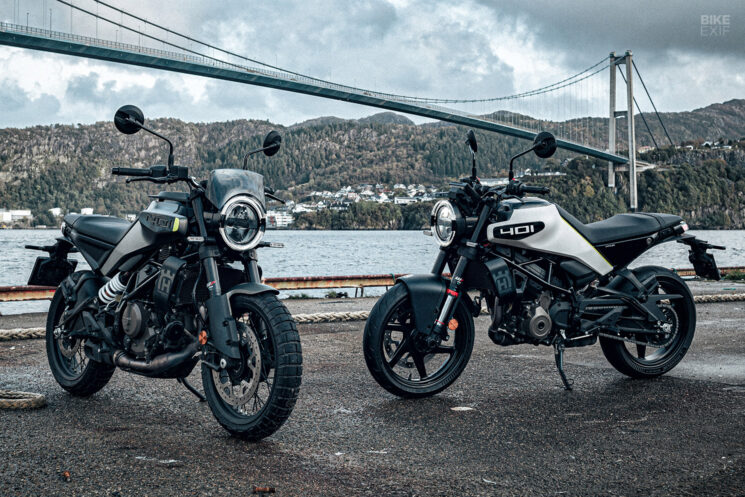
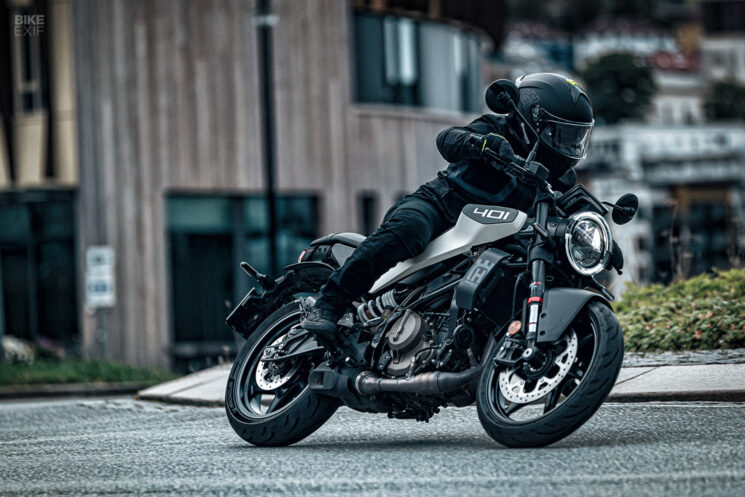
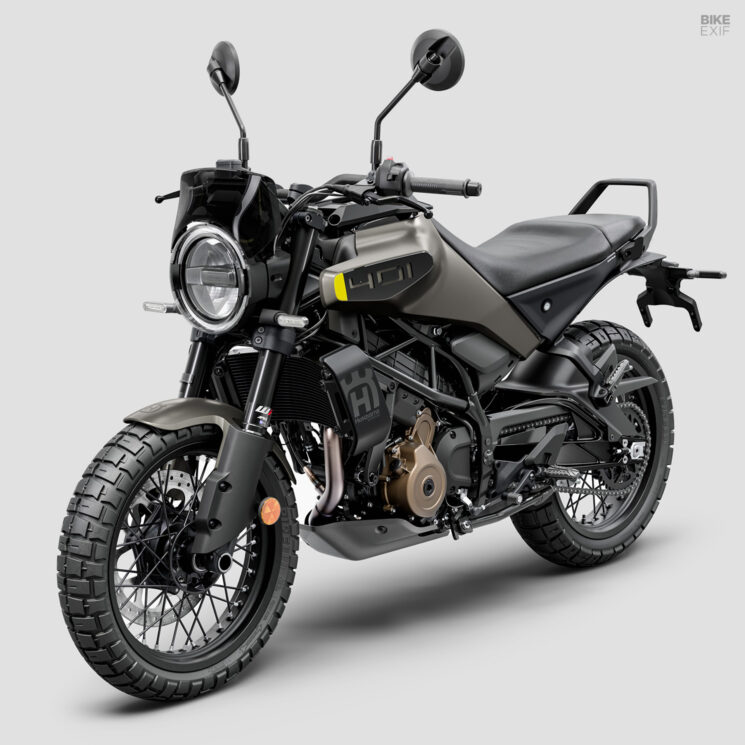
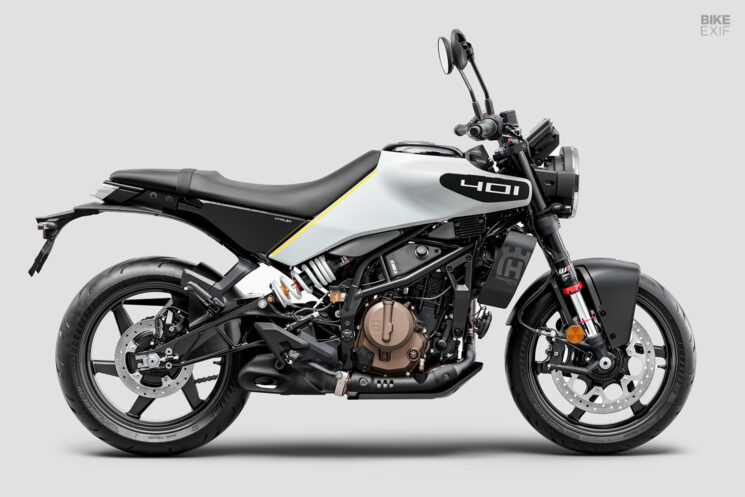
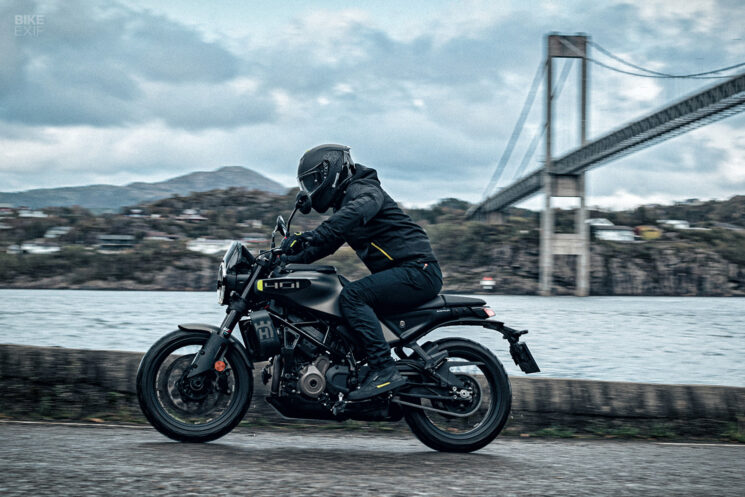
2024 Husqvarna Svartpilen 401 and Vitpilen 401 The Husqvarna Svartpilen 401 and Vitpilen 401 have gone largely unchanged since they hit the scene nearly six years ago. But now that KTM has updated the bike that they’re based on—the KTM Duke 390—the Pilen twins have followed suit.

That means that both bikes get the Duke 390’s all-new steel trellis frame, with an aluminum swingarm and WP suspension at both ends. The changes result in a longer wheelbase and a slightly lower seat height, which should make for a more stable ride. More importantly, the Vitpilen has shed its uncomfortably low clip-ons for a far more sensible set of street bars.

2024 Husqvarna Vitpilen 401
The new 399 cc engine is good for 45 hp, with amenities like ByBre brakes, Bosch ABS, switchable rider modes, clutchless shifting, LED lighting, and a 5” bonded glass TFT display.

Both bikes sport revised styling, while still retaining hints of the classic Pilen aesthetic. Notable changes include the relocation of the license plate from behind the rear wheel to a more traditional tail-mounted placement, a less blocky design for the primary plastics, and a tight, underslung exhaust design.

2024 Husqvarna Svartpilen 401
The two bikes are still set apart by distinctive styling differences. The scrambler-like Svartpilen 401 [above] is finished in a mix of black and olive hues, with a slim front fender, a headlight nacelle, a luggage rack on top of the fuel tank, a rear grab handle, and a slim bash plate. The Vitpilen wears a stark black-and-white paint job with yellow striping, and a chunkier front fender that looks to be borrowed from the Vitpilen Aero concept that debuted some time ago.

Additionally, the Svartpilen 401 gets laced wheels with Pirelli Scorpion Rally STR tires, while the Vitpilen 401 [below] has alloy hoops with Michelin Power 6 rubber.

2024 Husqvarna Vitpilen 401
While the Pilen design was overdue for a refresh, we’re not sure all the changes work. The longer tail throws out the compact, BMX-like styling of the original bikes, and the new trellis frame doesn’t look quite as impactful as the old one. The coolant reservoir poking out on the right-hand side of the bike is a bit of an eyesore too.

That said, we’re still eager to take it around the block. We’re fans of the nimble nature of the outgoing Svartpilen 401 and Vitpilen 401, and it’s clear that Husqvarna set out to improve the formula rather than mess with it. There’s only one way to find out if it worked… [Husqvarna]

2024 Husqvarna Svartpilen 401


from Bike EXIF https://ift.tt/K1XFjAw

Saturday, 20 January 2024

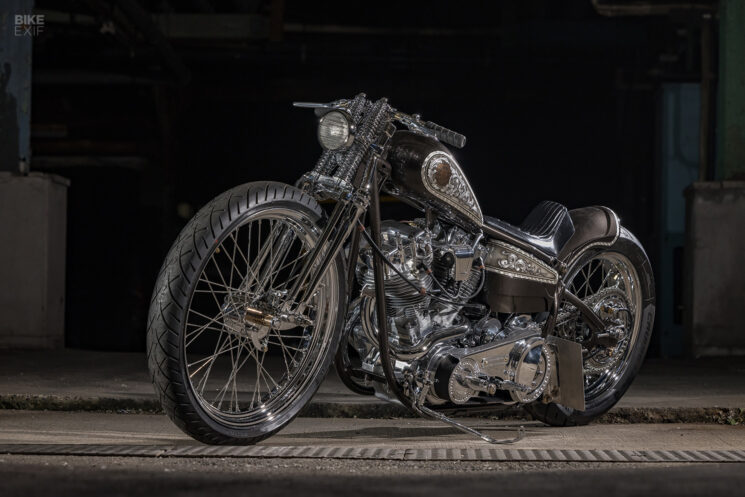
Fit for a King: Satomari’s 1981 Harley Shovelhead

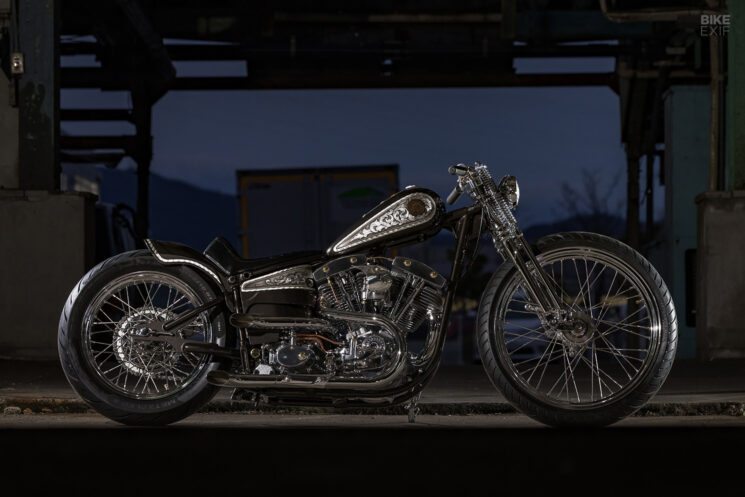
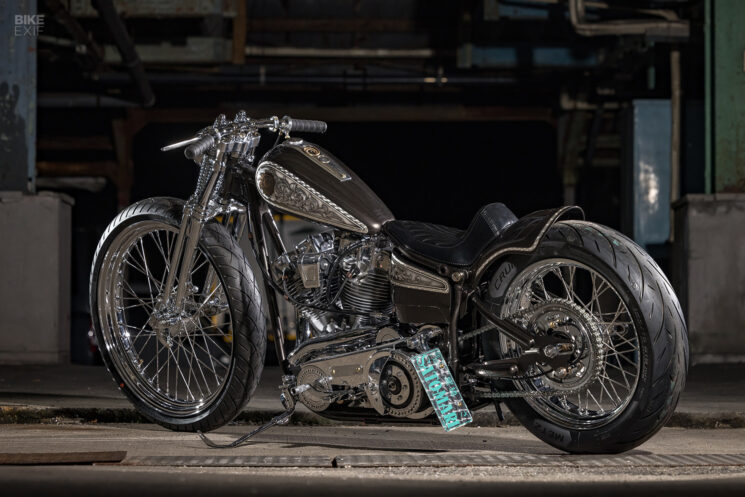
Custom Harley Shovelhead by Satomari
If you want to learn how to weld, fabricate parts, or rebuild an engine, there’s no shortage of resources out there. But good design can’t be taught. You either have impeccable taste and a sharp eye—or you don’t.

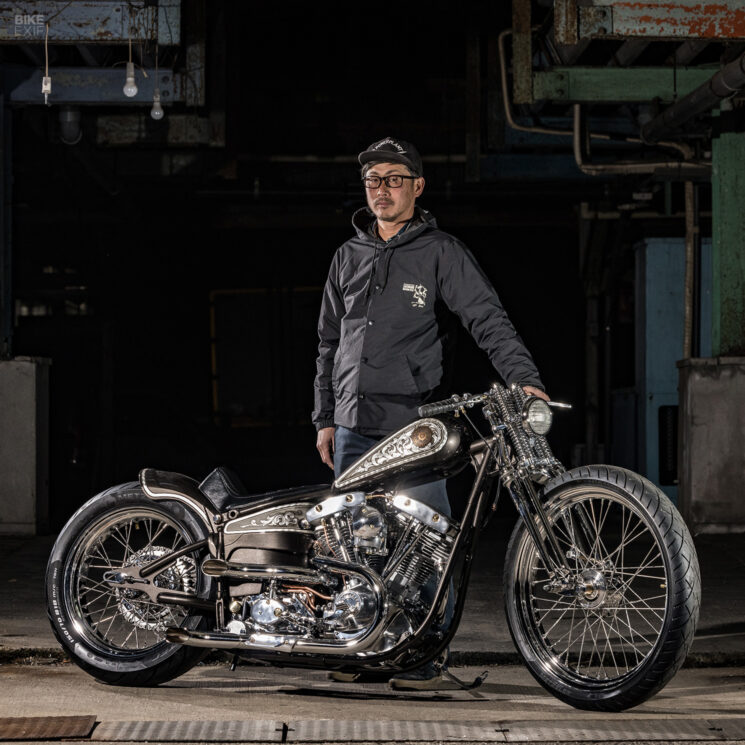
For Yusaku Sato at Satomari Motorcycle in Hiroshima, Japan, good design is instinctual. The Harley choppers that roll out of his workshop just look ‘right,’ often with a simple elegance that belies the amount of engineering that goes into them.

Custom Harley Shovelhead by Satomari
This exquisite 1981 Harley-Davidson FXR proves our point with ease. It’s loosely based on an earlier Satomari Shovelhead that a customer saw at the Mooneyes show. Before long, he had reached out to Sato-san and requested a custom Harley in the same vein—albeit with a few key differences.

One of the client’s requests was that the bike should have a springer fork. With that in mind, Yusaku tore the bike down and began bringing his vision to life. “My approach is to take the image that pops into my head and shape it as I want,” he says, “so it feels like I’m coming up with a design idea in real-time.”

Custom Harley Shovelhead by Satomari
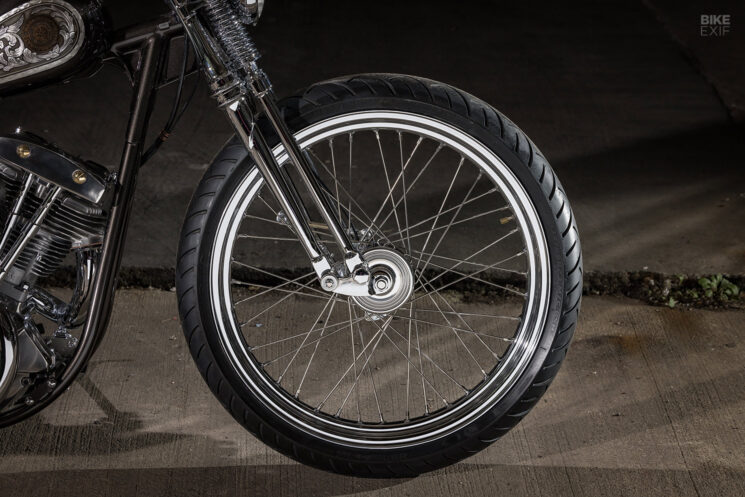
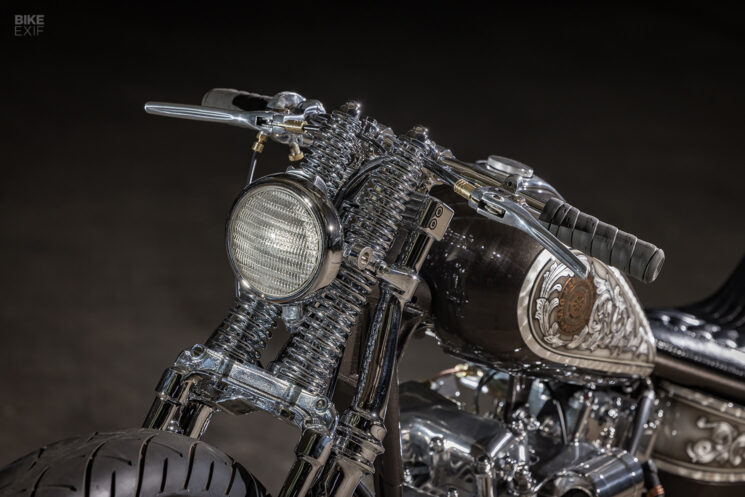
Yusaku started by fabricating an all-new frame and swingarm, retaining only the donor bike’s steering neck and motor mounts. The stunning twin down tube design rises to meet the custom-built springer fork, with a 2” stretch and a 2” rise in the neck. But, more importantly, the springer fork has been made narrow in a bid to keep the overall build impossibly skinny.

The rear end looks rigid from afar, but there is a shock lurking under there. Yusaku hasn’t given us a peek at it, but he describes it as a “cantilever mono-cross” system.

Custom Harley Shovelhead by Satomari
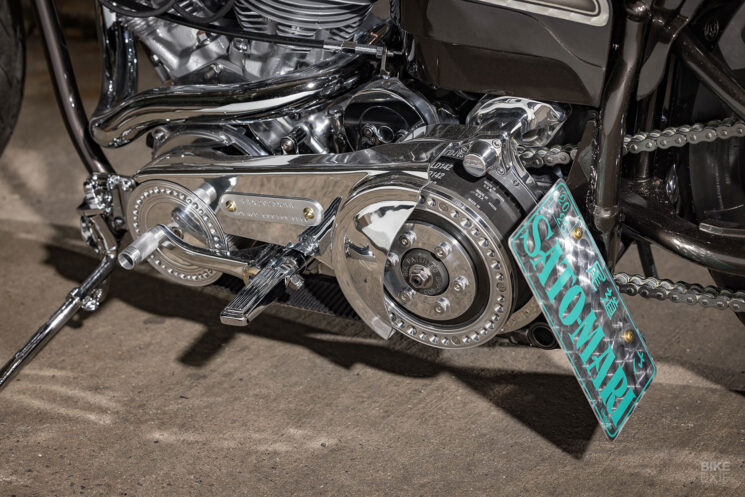
This Shovelhead rolls on a 23” front wheel and an 18” rear wheel, laced up to two very different styles of drum brake hub. Yusaku modified a mini drum brake unit to run up front, then pieced together a hydraulic drum brake system for the rear, using salvaged Harley parts. The tires are surprisingly modern Metzeler items.

A 23F/18R wheelset sounds wild on paper, but it works here. And that’s largely down to the fact that Yusaku has tailored every last piece on this bike to accommodate the next.

Custom Harley Shovelhead by Satomari
Like the chassis, this Shovelhead’s bodywork is all handmade. Yusaku shaped the fuel tank and rear fender out of steel and the side covers out of aluminum. A deeply sculpted seat sits perched in the middle.

There’s a lot to digest around the engine bay too. The Shovel powerplant inhales via an S&S Cycle carb and exhales via an unapologetic twin exhaust system with turned-out end caps. And the closer you get, the more copper and brass bits you’ll spot.

Custom Harley Shovelhead by Satomari
The left-hand side of the bike is dominated by an electric-start primary drive from BDL. It’s an imposing piece of kit that calls for a reasonably sized battery—which is currently hiding under the seat, competing with the rear suspension for real estate.

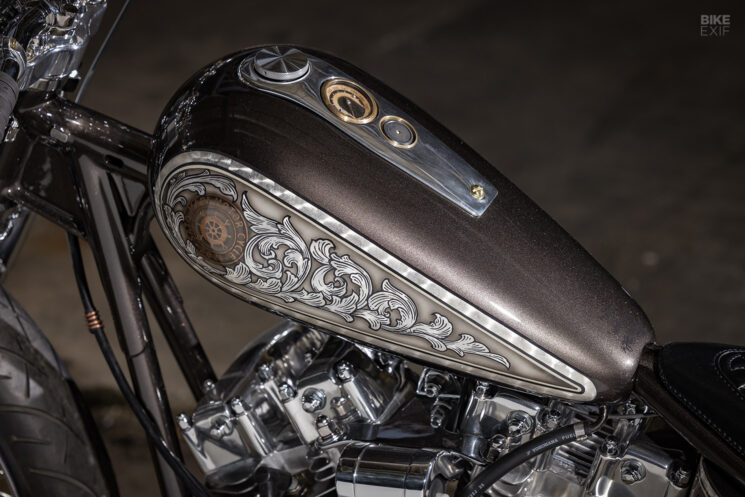
The cockpit is a tidy affair, consisting of a narrow set of custom drag bars fitted with wrapped grips from Kuryakyn. If you’re looking for the speedo, you’ll find it on top of the tank, embedded in a dashboard that echoes classic Dyna designs. The classically styled Motogadget unit is accompanied by a knurled gas cap and a keyless ignition module.

Custom Harley Shovelhead by Satomari
The Shovelhead is finished in a deep gunmetal flake, punctuated by intricate silver-leaf work that adds a luxurious touch to this near-flawless machine. It’s just a pity that it’s already spoken for.

Satomari Motorcycle | Facebook | Instagram | Images by, and with sincere thanks to, Kazuo Matsumoto

Custom Harley Shovelhead by Satomari


from Bike EXIF https://ift.tt/v2lOQfN

Thursday, 18 January 2024

Beach Bum: A laid-back Honda XL 500 scrambler by AMP Motorcycles

Honda XL 500 scrambler by AMP Motorcycles
Nothing cures boredom quite like motorcycles—and that goes not just for riding them, but wrenching on them too. This is why the father-and-son team behind AMP Motorcycles, Michael and Allen Posenauer, are never bored.

Based in Offenbach, Germany, the Posenauers started AMP Motorcycles as a way to spend time together after hours. They never intended for it to be anything beyond a hobby, but their work resonated with others and orders soon trickled in. That hasn’t stopped them from sneaking in personal projects whenever they can though—like this lighthearted Honda XL 500 scrambler.

Honda XL 500 scrambler by AMP Motorcycles
“My father bought the 1983 Honda XL 500 R almost three years ago,” says Allen. “He wanted to build it for himself.”

“We had a lot of customer work to do, so we worked on the bike just when there was time and we felt like it. We had no deadline. It was just about having fun, while building the bike to our own expectations as father and son.”

Honda XL 500 scrambler by AMP Motorcycles
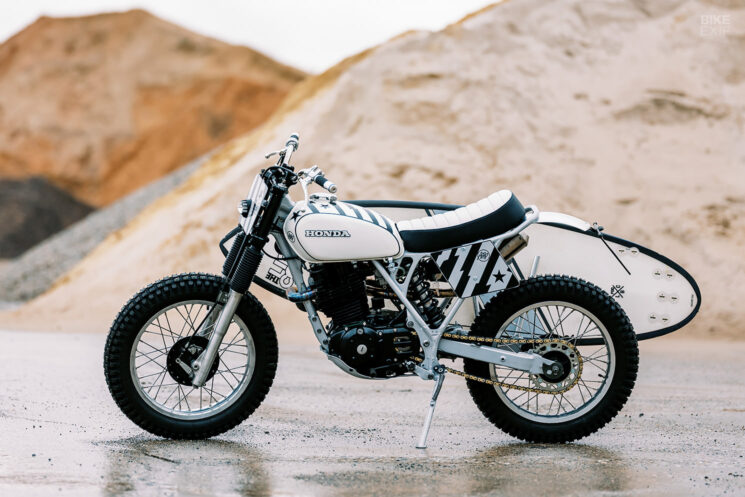
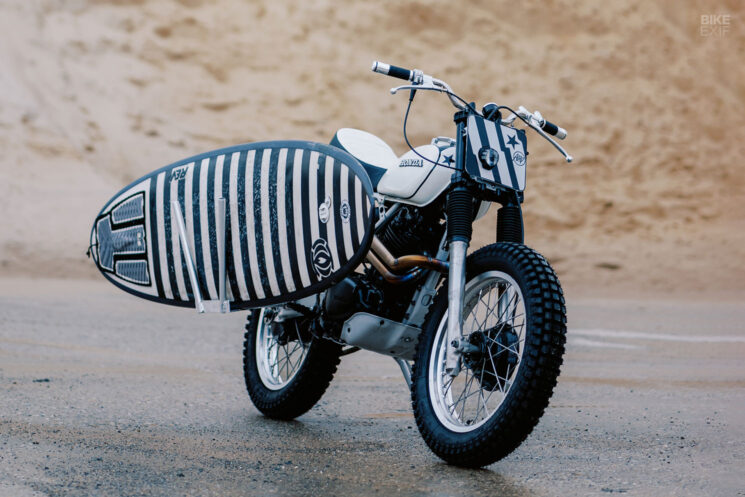
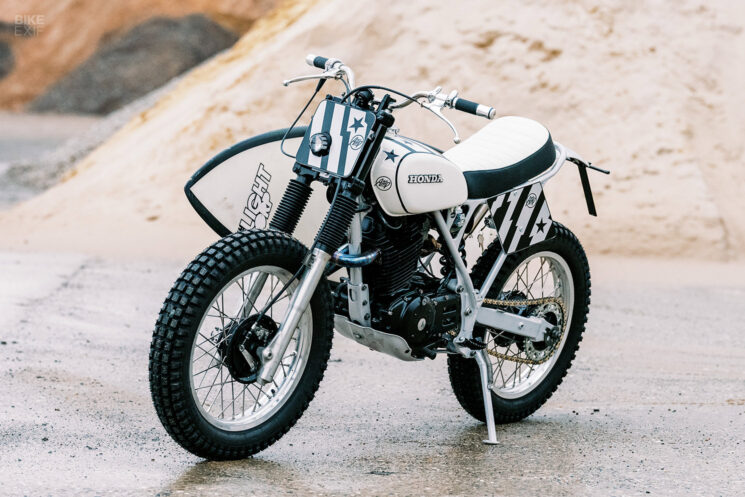
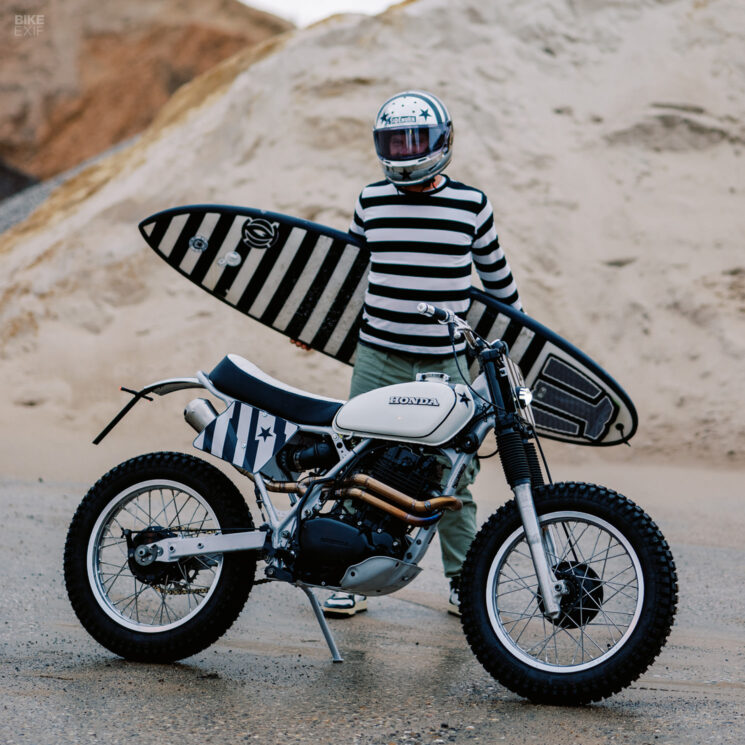
The overly abbreviated tail, small fuel tank, and lack of front fender might seem silly to some, but AMP didn’t customize this Honda scrambler for serious souls. All they wanted was a light-footed beach runner—stripped down and ready for shenanigans.

“Our aim was to only have the essentials on the bike,” Allen adds. “We cut off everything we didn’t need, shortened the rear, and removed the passenger foot pegs. The bike is kickstart-only, with a tiny battery under the tank.”

Honda XL 500 scrambler by AMP Motorcycles
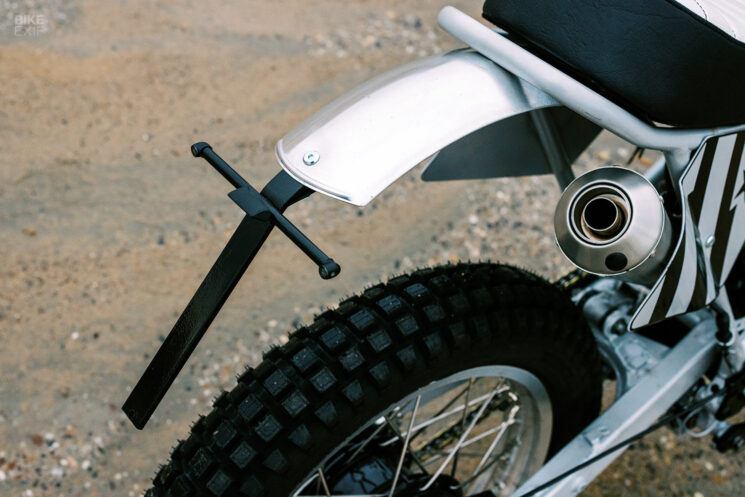
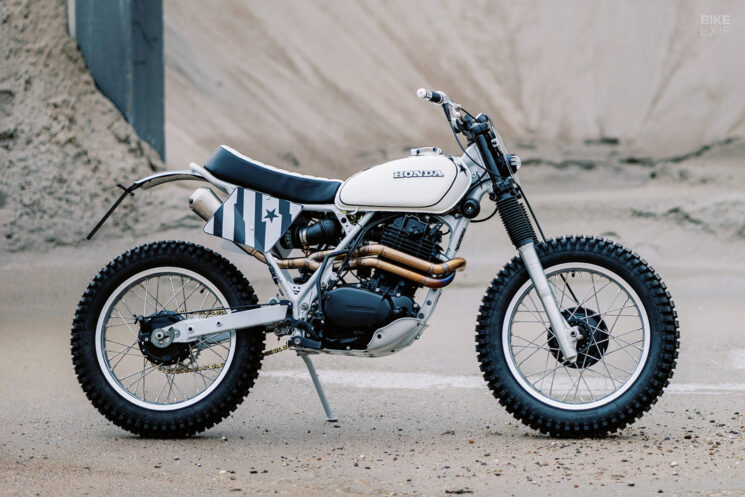
The XL 500’s big front wheel and tall suspension were great for pinning it across the desert in the 80s, but they were total overkill for AMP’s needs. So the guys took the OEM drum brake hubs, and laced them to shiny new aluminum rims with stainless steel spokes. The new wheels measure 18” front and back, with Heidenau tires offering all-terrain grip and an appropriately chunky aesthetic.

The forks were lowered to fine-tune the scrambler’s stance before being fitted with fresh gaiters. A new shock props up the Honda Pro-Link rear suspension system.

Honda XL 500 scrambler by AMP Motorcycles
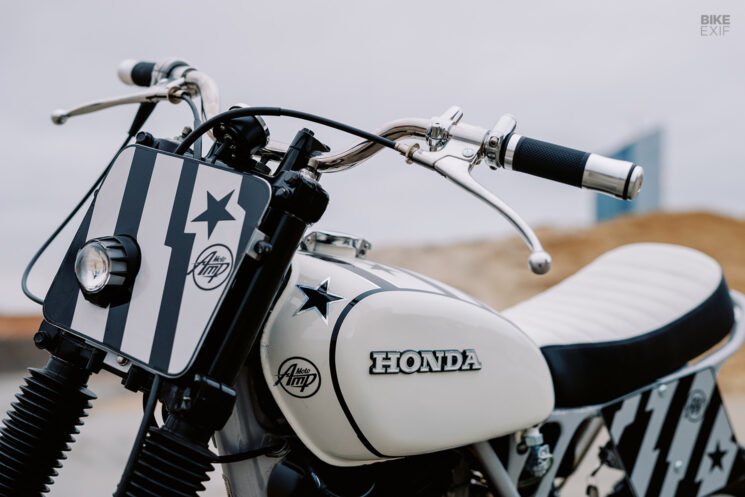
AMP tossed all of the XL 500’s bodywork, then redressed it with a mix of salvaged and custom-made parts. The fuel tank came from a friend; it’s an old Honda unit of an undetermined model. Michael and Allen cleaned it up, adapted it to the bike, painted it, and re-fitted its original badges.

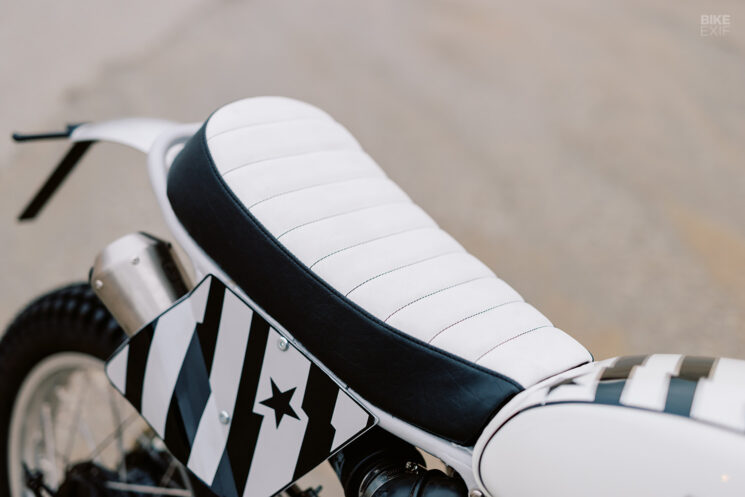
A three-quarter length seat sits atop the cut-and-shut subframe, upholstered in two-tone leather. Handmade aluminum number boards flank the bike, with an aftermarket alloy fender finishing off the tail.

Honda XL 500 scrambler by AMP Motorcycles
There’s an aluminum number board up front too, with an LED headlight poking out of it. A set of chromed scrambler bars sit just behind it, along with a Motogadget speedo, Motone switches, and a new throttle. The turn signals come from Highsider, with the rear units doubling up as taillights.

The XL’s single-cylinder engine was treated to a full service and then painted black with all-new stainless steel hardware. The carb was ultrasonically cleaned and fitted with a foam air filter.

Honda XL 500 scrambler by AMP Motorcycles
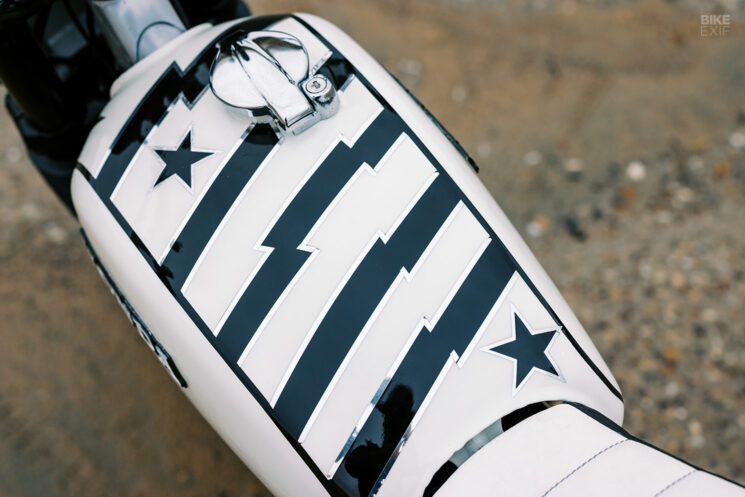
The Honda wears a black and white paint job that plays with stars and jagged stripes. AMP went for a glittery bright silver finish on the frame (just like the finish on the Kawasaki Z400 that they built a while ago). There’s not an inch on this bike that hasn’t been refurbished and refinished.

A custom exhaust system adds a finishing touch, snaking its way through the frame and terminating in an aftermarket muffler under the seat. Oh, and there’s a surfboard on the right-hand side of the bike.

Honda XL 500 scrambler by AMP Motorcycles
“The bike is exactly what we wanted,” Allen concludes. “It’s the perfect scrambler-slash-tracker for the city—super light, super agile, super good looking. It’s a real head-turner and everyone on the street wants to take pictures of it.”

“It would also be great to ride it to the beach and go surfing—but, sadly, we don’t have any waves near us.”

AMP Motorcycles | Instagram | Images by (and with thanks to) Marc Holstein and Christine Gabler

Honda XL 500 scrambler by AMP Motorcycles


from Bike EXIF https://ift.tt/er4h9Ui