Thursday, 26 October 2023

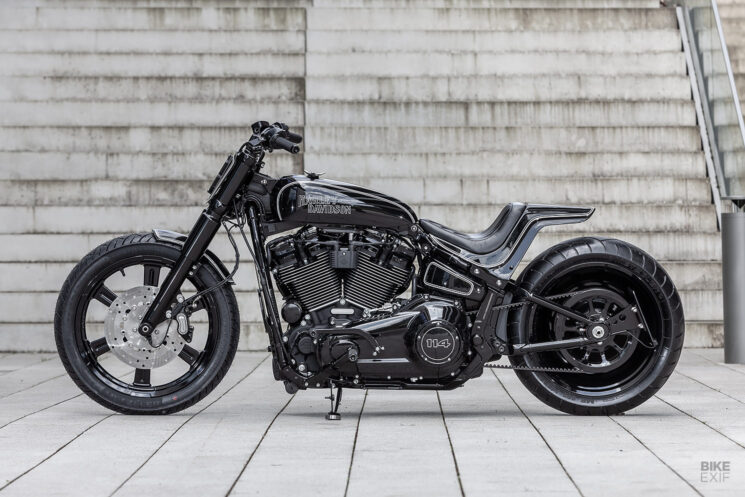
Classic Fighter: A punchy custom Street Bob by One Way Machine

Custom Street Bob by One Way Machine
Like any master of their craft, Julian von Oheimb has a distinctive style that makes his work easy to identify. His sultry Harley-Davidson bobbers have put his workshop, One Way Machine, on the map—and they’ve secured multiple wins and podiums at the prestigious AMD World Championships. But the German custom bike builder has been operating outside of his comfort zone lately.

This custom Street Bob is the biggest departure from his signature aesthetic yet. Based on a brand new Harley-Davidson Softail Street Bob 114, it eschews One Way Machine’s typical classic bobber vibe for a more aggressive, streetfighter-inspired look.
Custom Street Bob by One Way Machine
It’s also notable for being a modern Harley-Davidson, rather than a classic one. For the first decade of running One Way Machine, Julian exclusively worked on older bikes—but he’s added the Motor Co.’s contemporary Milwaukee-Eight Softails to his remit in recent years. Despite those differences, Julian’s hand is still evident in every inch of this custom Street Bob.

The concept for this build first started percolating in Julian’s head in the early 2000s, when an episode of the television series, Biker Build-Off, featured a Harley-Davidson streetfighter from Exile Cycles. Julian hated it at first—but found himself admiring it by the end of the episode. When an image of that bike popped up on the internet recently, he felt inspired to build his own Harley ‘streetfighter.’
Custom Street Bob by One Way Machine
As luck would have it, Julian was between customer projects and had time on his hands. So he bought a new Harley Street Bob from his local dealer, picking it over its stablemates for its punchier motor, barebones layout, and light(er) weight.

Since this was a personal project, Julian had complete artistic freedom. He started sketching out his ideas and quickly decided to denude the bike of its stock bodywork. But remarkably, there was no need to hack into the Street Bob’s frame; a testament to how versatile it is as a platform for customization.
Custom Street Bob by One Way Machine
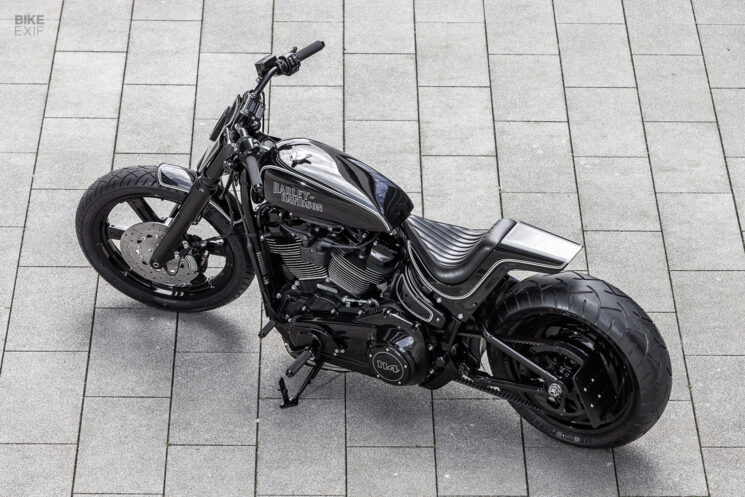
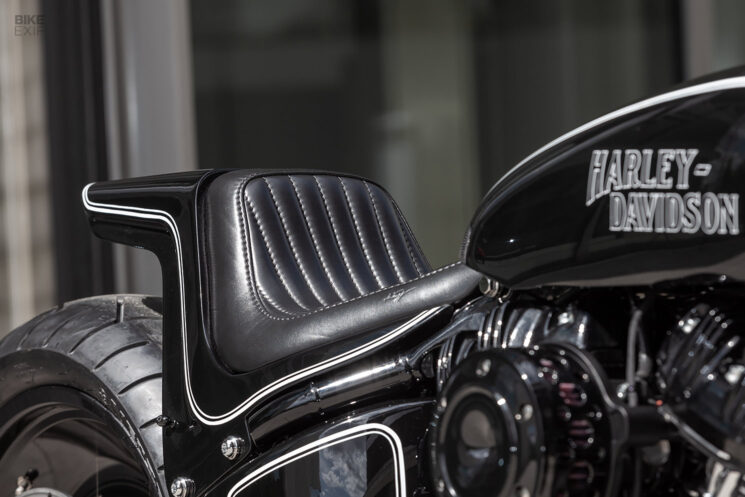
A new fuel tank is perched atop the Harley, handmade by Julian. Set skinny and slim, it’s juxtaposed against the swooping, flared tail section.

Regular readers should recognize the tailpiece. It comes from Winston Yeh’s Taiwanese shop, Rough Crafts, and bolts to the OEM strut mounts on any Harley-Davidson Softail. The seat wears a stylish Nappa leather cover, courtesy of regular OWM collaborator, Spirit Leather.
Custom Street Bob by One Way Machine
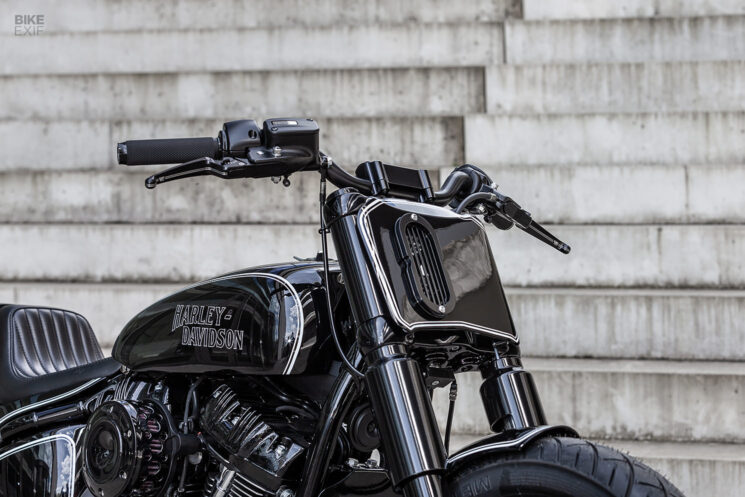
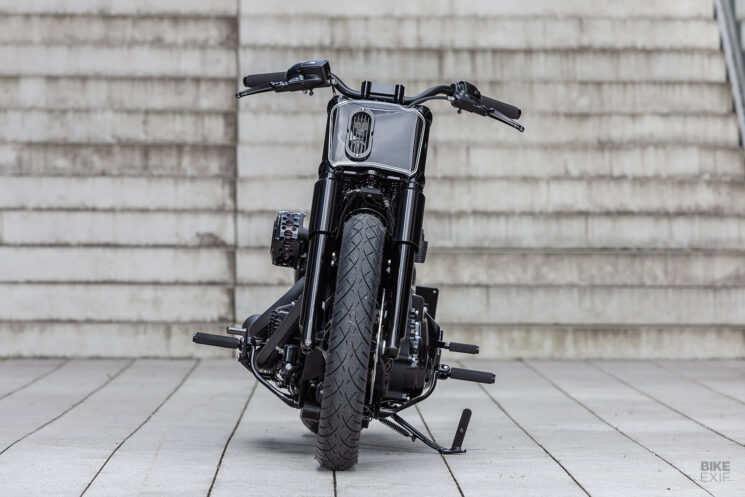
There’s more custom metalwork up front, where Julian fabricated a new front fender, headlight nacelle, and fork shrouds. A pair of recessed LED projectors light the way, covered by a custom-made grill. It’s a riff on the grill-covered headlight design that dominated OWM’s early work, but with a modern twist.

The stock forks and 19” front wheel are still in play, but the forks have been lowered by way of a kit from Thunderbike. It’s a different story out back though, where Julian wanted to run something burlier than the stock 150-wide tire, without going overboard.
Custom Street Bob by One Way Machine
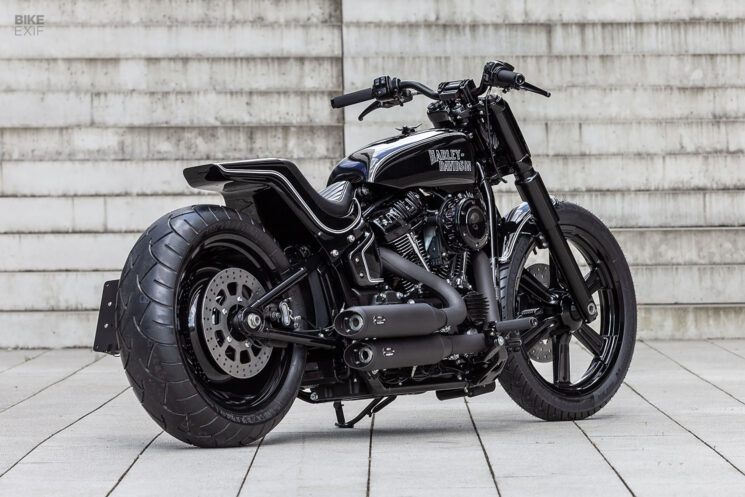
The solution came in the form of a solid 18” Harley-Davidson rear wheel, which was machined down to fit the Street Bob’s narrow swingarm. The setup can accommodate a 200-wide tire; wide enough to get the look Julian wanted, but narrow enough that the bike can still be thrown around. “After all,” says Julian, “what would be the point of building a fighter that you can’t bang through corners?”

Metzeler ME 888 Marathon Ultra tires offer sporty grip, while Zodiac brake discs and Probake hoses improve the Street Bob’s stopping power.
Custom Street Bob by One Way Machine
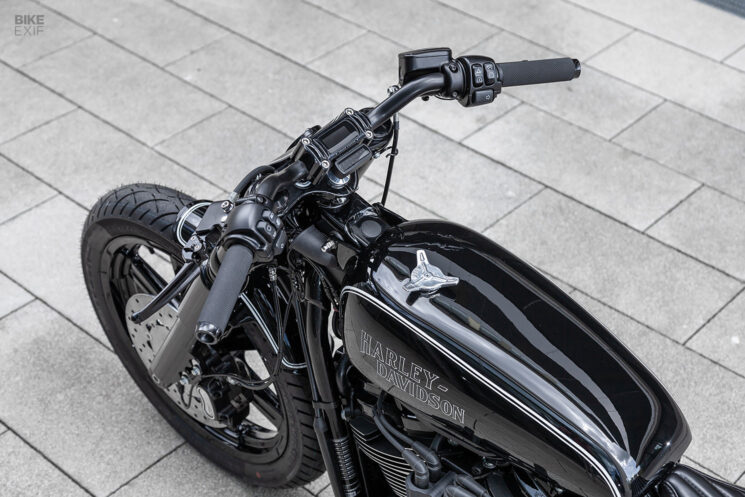
The bike’s finished off with an enviable list of aftermarket parts. OWM handlebars are fitted with Wunderkind levers and Rough Crafts grips. Rough Crafts supplied the footpegs too, along with the ribbed handlebar clamps that double as a housing for the Street Bob’s tiny digital speedo.

The engine wears a Thunderbike air filter, a cam cover and rocker boxes from EMD in France, and a blacked-out exhaust system from MCJ. The exhaust is particularly crafty, with a switch that activates an electronically-actuated valve to adjust its volume. An OWM radiator cover and Kellermann LED turn signals round out the package.
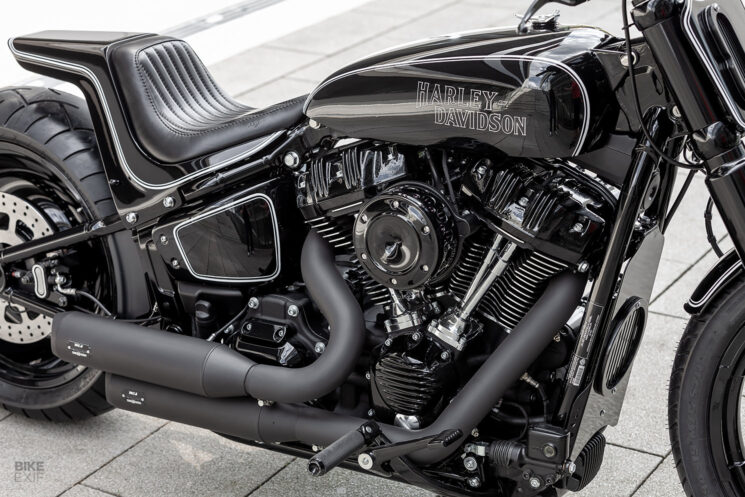
Custom Street Bob by One Way Machine
Although Julian deliberately opted for a contemporary look for the Street Bob, he could resist adding a few vintage touches. His affinity for older machines is hard to shake—especially since he spends every Saturday working on pre-1960 Harleys and Indians with his father.

The Mooneyes hot rod fuel filler cap and 1920s Harley-Davidson logos are obvious nods to the past, as is the bike’s timeless livery. Julian opted for a mostly-black layout, with double pinstripes added by Chiko’s Pinstriping.
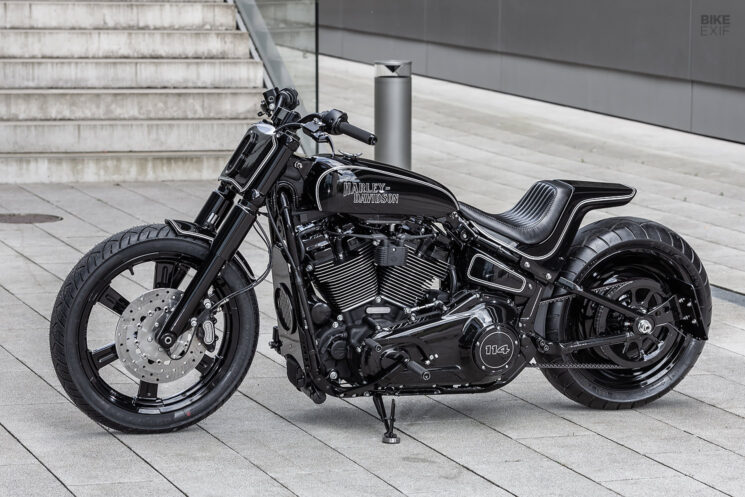
Custom Street Bob by One Way Machine
The result is a purposeful custom Street Bob that’s surprisingly lithe for a cruiser, beautifully finished, and begging to be ridden in anger. If this is OWM’s new direction, we can’t wait to see what Julian cooks up next.

One Way Machine | Instagram | Images by Pixel Fetisch
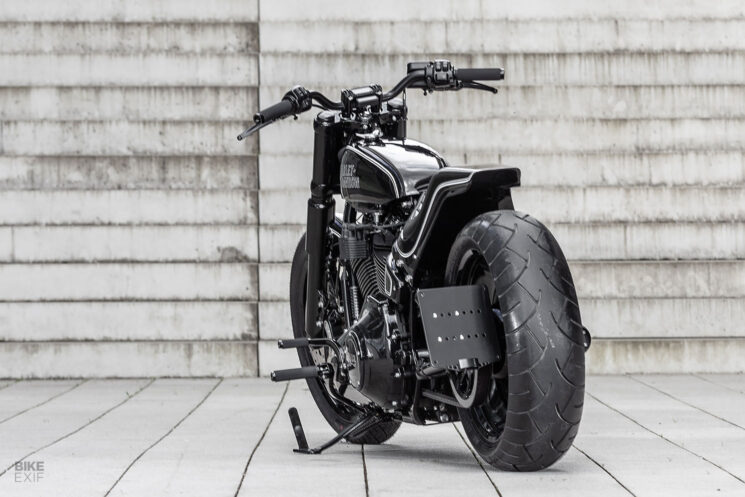
Custom Street Bob by One Way Machine


from Bike EXIF https://ift.tt/US7gIpN

Tuesday, 24 October 2023

Factory Special: The new Yamaha XSR 900 GP goes into production

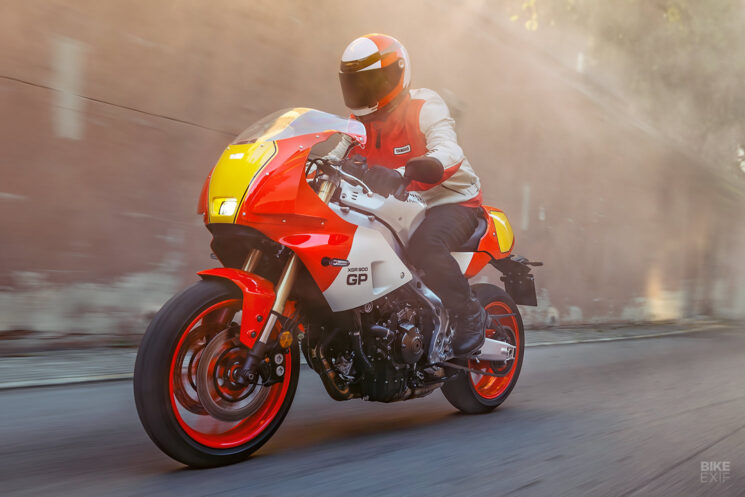
The new Yamaha XSR900 GP neo-retro motorcycle
Every time we think the motorcycle industry’s heritage segment has reached its zenith, another major manufacturer cashes in and the cycle continues. This time it’s Yamaha’s turn, with the announcement of the remarkably provocative Yamaha XSR900 GP.

Yamaha doesn’t have as big a range of modern classics as, say, Triumph or Royal Enfield. But the Japanese marque has more skin in the game than most. Their ‘Yard Built’ initiative is one of the biggest OEM-led custom build programs around and has yielded numerous top-shelf custom Yamahas over the years.

The new Yamaha XSR900 GP neo-retro motorcycle
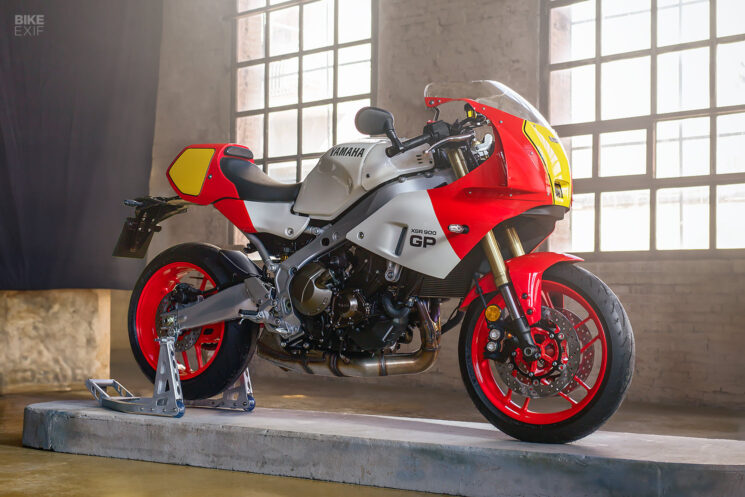
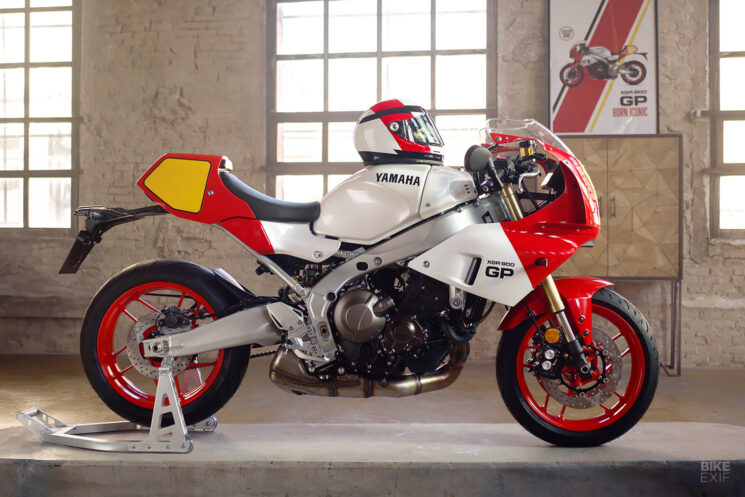
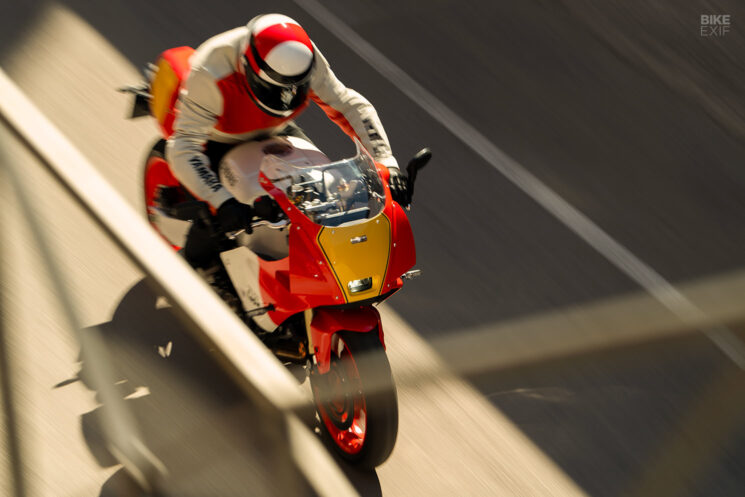
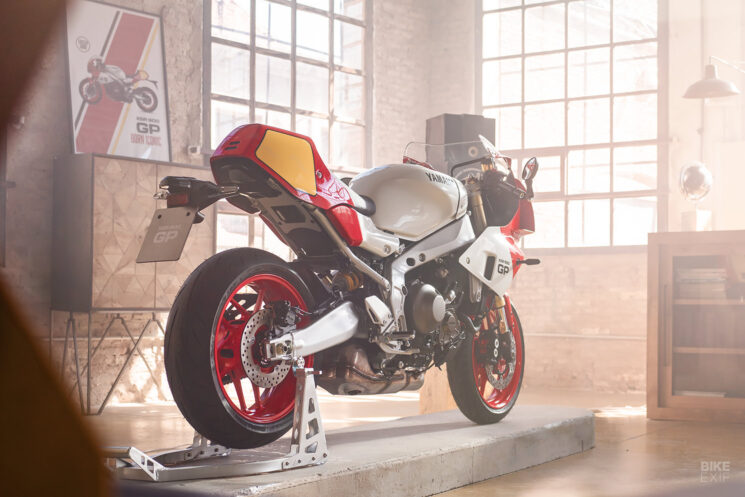
That’s probably why the Yamaha XSR900 GP looks more like a high-quality custom build than an OEM release. Seriously, just look at it. From the fairing and tail bump to the pixel-perfect livery and tiny lights, this is one of the slickest—and boldest—factory specials we’ve ever seen.

And if the XSR900 GP looks familiar to you, that’s because Yamaha has shown it off before. It’s essentially a production-ready version of the stunning ‘DB40’ prototype that they revealed at the Goodwood Festival of Speed earlier this year. Except this one has fresh paint, and all the accouterments to make it street-legal (in most countries at least).

The new Yamaha XSR900 GP neo-retro motorcycle
It’s not hard to see where Yamaha got their inspiration. Since bagging its first premier-class motorcycle racing title in the 70s with the legendary Giacomo Agostini, the manufacturer went on to embed itself in racing history throughout the 80s. With a historic roster that includes ‘King’ Kenny Roberts, Wayne Rainey, Max Biaggi, and Valentino Rossi, Yamaha’s racing pedigree is among the best.

Yamaha’s racing program also produced what would become a hallmark of their motorcycle design—the iconic Yamaha Deltabox chassis. First used in the 1982 YZR500 OW61 Grand Prix race bike, it’s still used on several Yamaha motorcycles today—including the XSR900.

The new Yamaha XSR900 GP neo-retro motorcycle
Yamaha’s philosophy when developing modern classics is all about “respecting the origin, learning from the past, and creating a better machine for the modern-day rider.” So the XSR900 GP is more of a contemporary homage to Yamaha’s Grand Prix racing heritage than a replica.

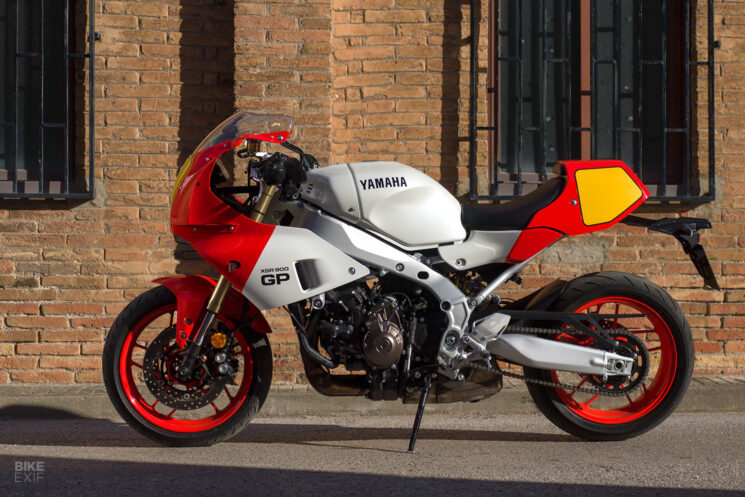
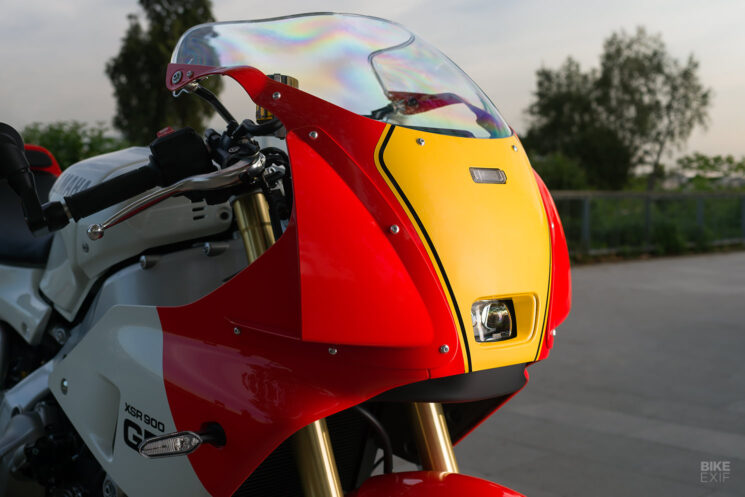
The XSR900 GP’s bodywork shows shades of the iconic Yamaha TZR250 and YZR500 OW01, with the same boxy aesthetic that dominated the 80s and 90s. The attention to detail is astounding, with visible fasteners along the side of the multi-part half-fairing, and a tiny rectangular LED headlight that almost feels illegal.

The new Yamaha XSR900 GP neo-retro motorcycle
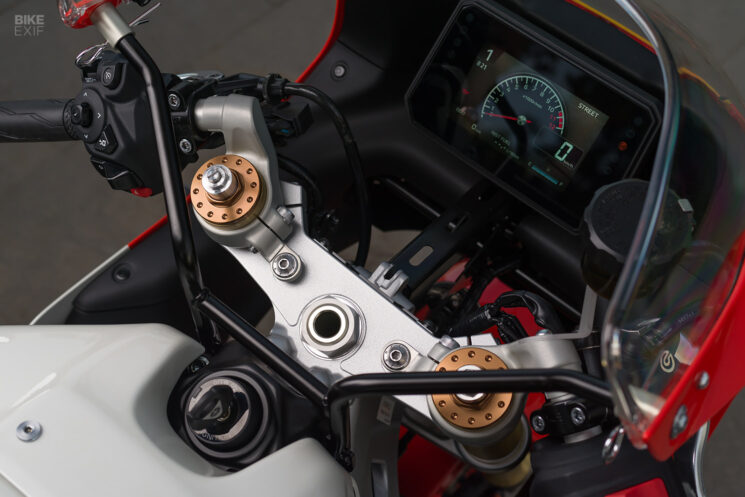
Just as much consideration has been given to the cockpit area. The XSR900 sheds its handlebars in favor of racy clip-ons, and its digital display has been relocated to tuck it right up into the front of the fairing. Tubular fairing stays branch out from in front of the fuel tank, while the upper fairing stay bolts mimic those on the TZ250 and use a beta pin—something Yamaha hasn’t done on a production bike before.

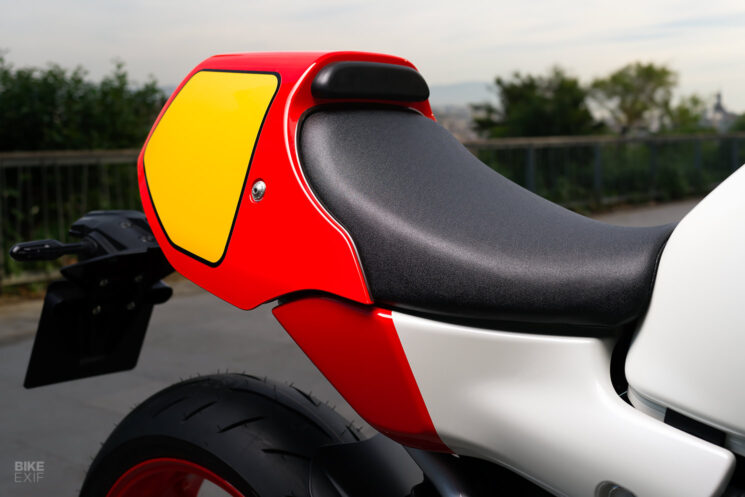
A boxy cowl covers the XSR900’s passenger seat. It features a slim bum stop pad at the front, and a pair of slits to reveal the brake light at the back.

The new Yamaha XSR900 GP neo-retro motorcycle
But it’s the Yamaha XSR900 GP’s retina-searing livery that truly makes this factory special a knockout. The red and white come straight from Wayne Rainey’s 1990 YZR500, punctuated by period-correct yellow ‘number boards,’ and silver finishes for the chassis and swingarm. Notice how the edges of the graphics run parallel to each other and then to the angle of the front fork?

Under all that luscious bodywork is a regular XSR900… sort of. Yamaha has tweaked the frame and reinforced the swingarm, to match the sportier feel offered by the clip-ons. The clip-ons have been set higher than a dedicated race bike, so that the riding position isn’t too aggressive, and the bike also gets a slightly thicker seat and adjustable foot controls.

The new Yamaha XSR900 GP neo-retro motorcycle
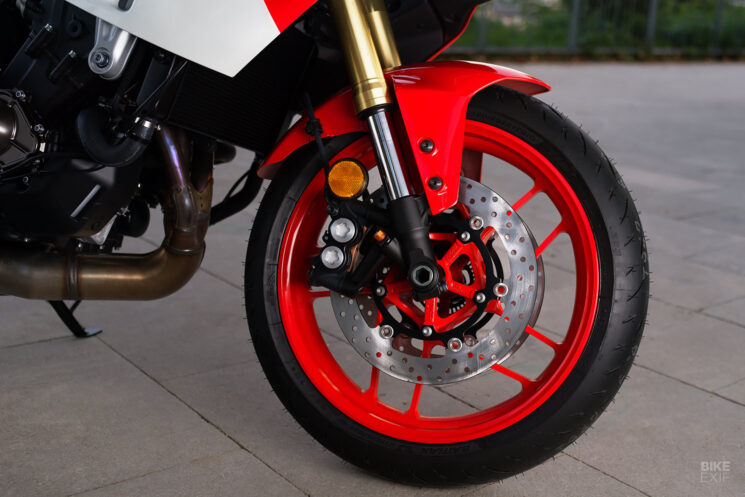
The XSR900 GP also borrows its donor’s adjustable KYB suspension, Brembo front brakes, ABS braking, and a full set of electronic rider aids. It gets new switchgear and bar-end mirrors though, and its rotary-forged aluminum wheels wear Bridgestone Battlax Hypersport S23 rubber.

Powering the XSR900 GP is the same brilliant 889 cc triple-cylinder mill as its stablemate. It’s a peach of a motor, with 117.4 hp and 93 Nm on tap, and a throttle feel that encourages spirited riding. Yamaha claims that the XSR900 GP boasts a higher top speed and better acceleration though, thanks to the aerodynamic properties of its fairing, while the air ducts that flank the fairing serve to help dissipate heat from the radiator.

The new Yamaha XSR900 GP neo-retro motorcycle
There’s no word on exactly when Yamaha will start rolling the XSR900 GP out to dealers, but we do know a few things. You’ll be able to get it in two color schemes, ‘Legend Red’ (pictured here) and ‘Power Grey.’ And you’ll be able to pay extra for lower fairings, a different license plate holder, a tinted screen, and an Akrapovič exhaust system.

It also doesn’t appear to be a limited edition model, which is good news. But it hasn’t been announced for the US yet either—and considering that its tiny lights surely won’t meet with US legislation, we’re not sure if or when it will reach America.

The new Yamaha XSR900 GP neo-retro motorcycle
One thing’s for sure—the Yamaha XSR900 GP is more gorgeous than a production motorcycle has any business being. And considering that the base model XSR900 is one of our favorite modern motorcycles, this one’s just shot to the top of our wishlist.

Source: Yamaha Motor Europe

The new Yamaha XSR900 GP neo-retro motorcycle


from Bike EXIF https://ift.tt/rYRFQ4n

Monday, 23 October 2023

Modern Elegance: Cardsharper’s plum-hued BMW R100 bobber

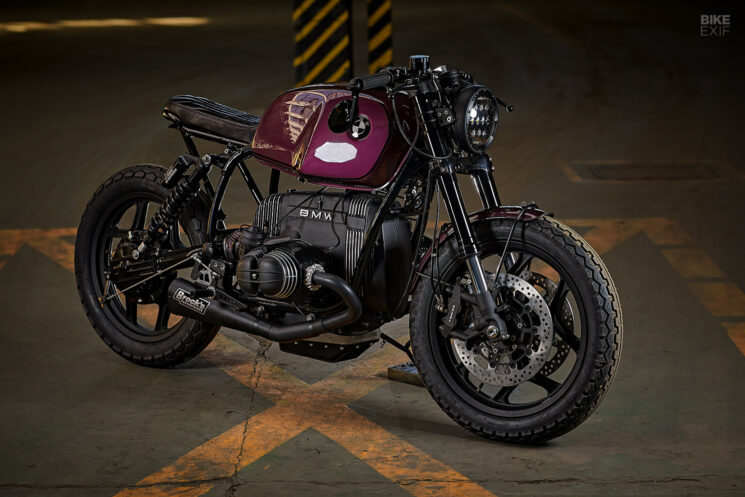
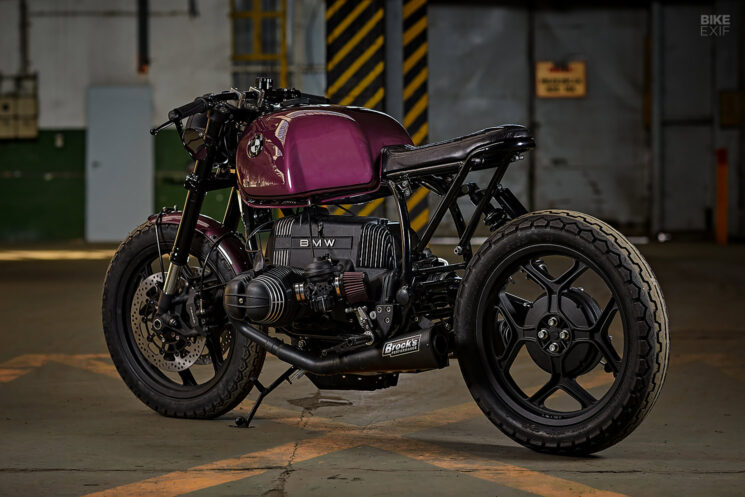
BMW R100 bobber by Cardsharper Customs
As far as Jacek Mulak is concerned, there are far too many custom BMW boxers around. That said, he’s not one to turn away a customer. So when he recently got the call to build this BMW R100 bobber, he was all too happy to oblige—just as long as he could do it his way.

“A customer who wants a custom BMW R100 often expects to get a copy of the WalzWerk Schizzo motorcycle,” says Jacek, who runs Cardsharper Customs in Lublin, Poland. “That’s not a bad thing in itself—but I wanted the opportunity to show something of my own.”

BMW R100 bobber by Cardsharper Customs
“While showing me his inspiration pieces, my customer, Marcin, also referenced these bikes. However, being an incredibly cool guy, he quickly agreed to my request to trust me. I promised that the motorcycle would retain the characteristic elements of a ‘typical’ custom BMW R100—that it would be minimalist, elegant, and would make an impression.”

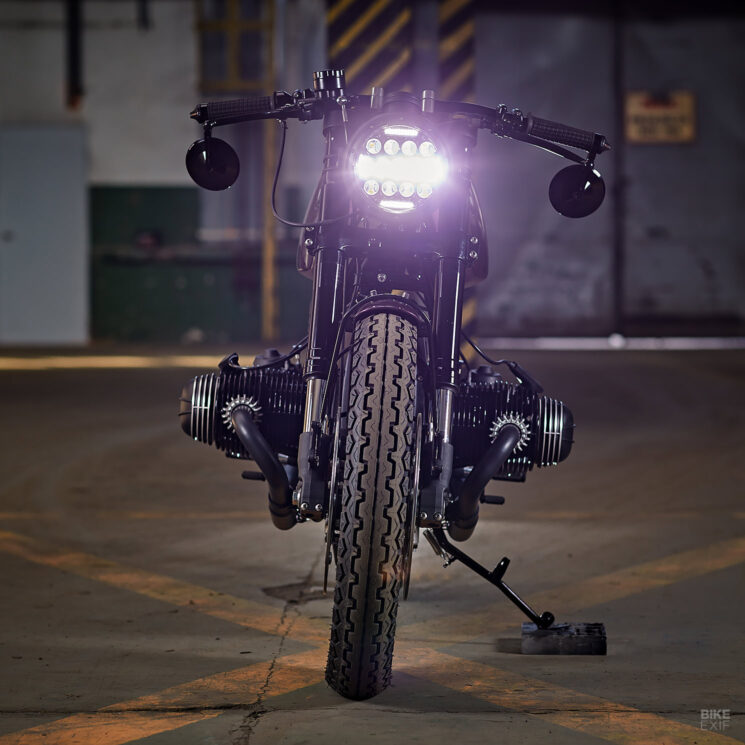
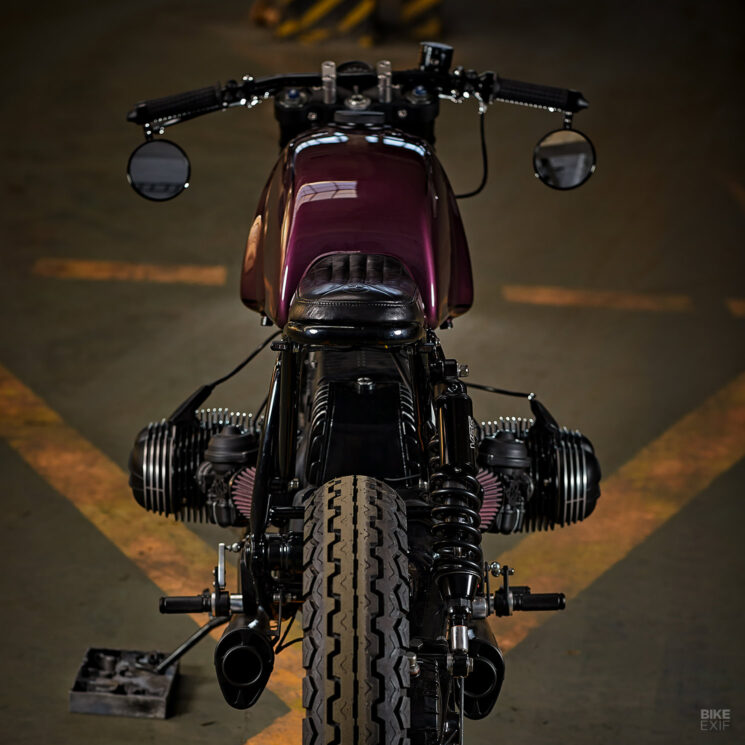
Marcin had a few requests consistent with quintessential custom BMW build styles, but Jacek led him towards more practical pastures. “I dissuaded him from using clip-on handlebars,” he tells us, “which in my opinion is a terrible mistake if you’re building a motorcycle for relaxing Sunday rides. He agreed, so we used a drag bar that doesn’t look too bad and is much more comfortable.”

BMW R100 bobber by Cardsharper Customs
Next, Jacek tweaked the BMW R100 bobber’s stance by way of new suspension components. The front forks and brakes are off a Suzuki GSX-R; a popular mod on classic boxers. The forks are held in place by a set of custom yokes, with a unique two-piece design for the top clamp.

A YSS shock props up the rear, lengthened to improve the ride height. Jacek says that he did this partly for comfort, and partly so that the bike would look good with a rider on it. “Plenty of custom bikes look amazing on their own, but when someone sits on them, they look like a hunched-over dog.”

BMW R100 bobber by Cardsharper Customs
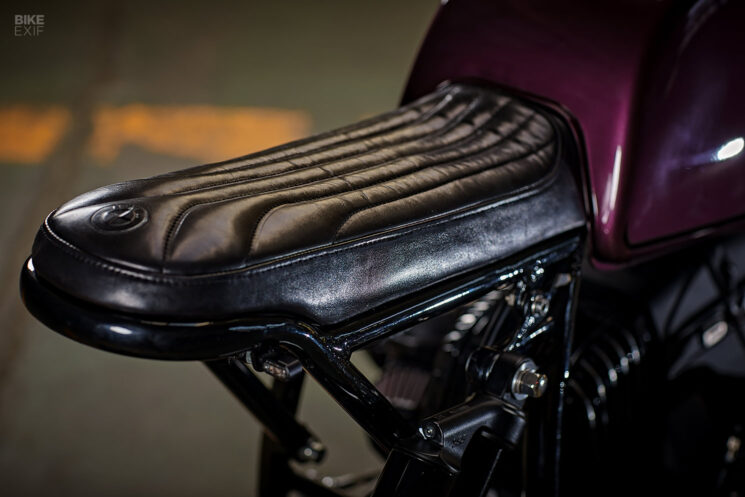
The brief called for a bobbed seat, so Jacek obliged by fabricating an abbreviated bolt-on subframe. There’s a subtle kick at the end of it that forces the seat pad to taper towards the rear, and a subtle lip at the front of the leather upholstery that blends with the fuel tank. It’s hard to tell, but Jacek has tweaked the mounting angle of the tank too.

Other custom touches include a knurled gas cap and a generous handmade front fender mounted on custom struts. “At first I made a short, minimalist fender,” Jacek tells us, “but it somehow disturbed the balance of the whole thing. It looked too sporty—so I created this one, which, in my opinion, suits the bike.”

BMW R100 bobber by Cardsharper Customs
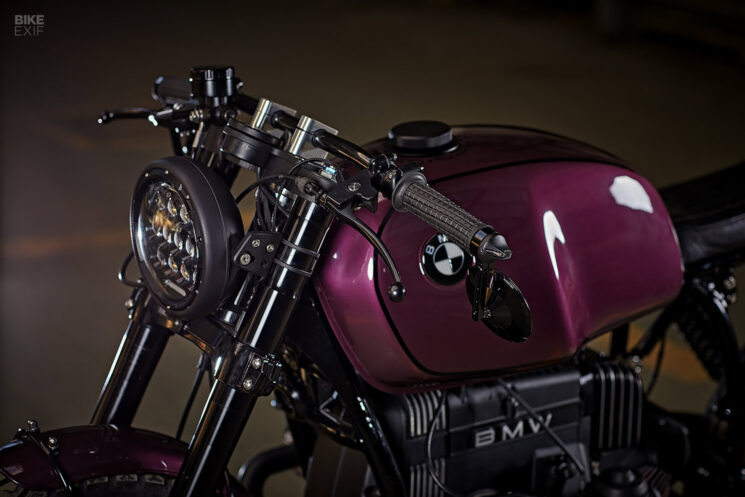
Higher up, you’ll find an LED headlight mounted on a pair of stubby brackets to tuck it in tight. A Daytona speedo sits just behind it, while the drag bars are fitted with aftermarket levers, grips, and switches. The bar-end mirror and turn signal assemblies are from Highsider in Germany.

The foot controls are custom too, but their slick appearance belies how much work into making them fit. Jacek trimmed off the original mounts (along with the R100’s unsightly passenger peg mounts), then had to fabricate new attachment points for the pegs, levers, and linkages.

BMW R100 bobber by Cardsharper Customs
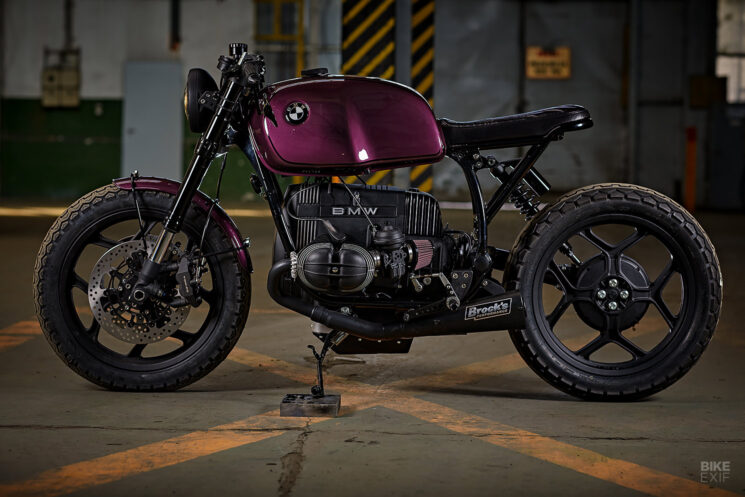
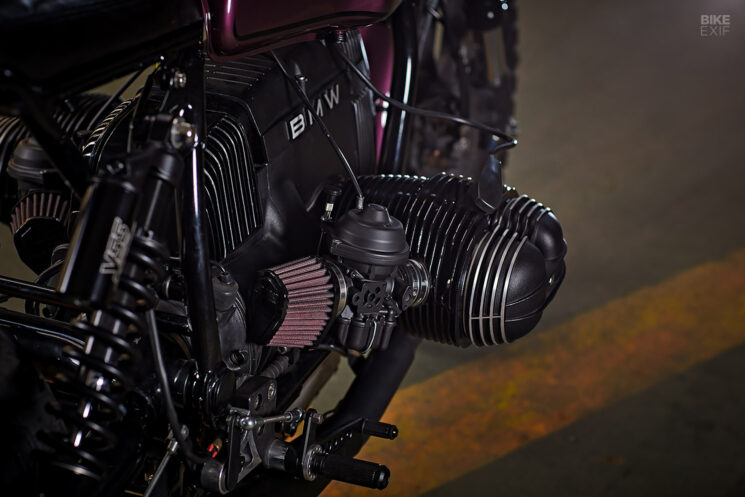
The BMW’s classic boxer engine is mostly stock inside, but it’s been treated to new paint and polishing. Jacek removed the airbox, opting for DNA pod filters instead. A custom-made box now sits where the airbox once did, hosting the ignition switch and key electronic components.

A Siebenrock oil sump extender sits lower down, fitted in lieu of an oil cooler. “Marcin and I agreed that he wouldn’t be too harsh on the bike so that we could remove the oil cooler,” Jacek quips.

BMW R100 bobber by Cardsharper Customs
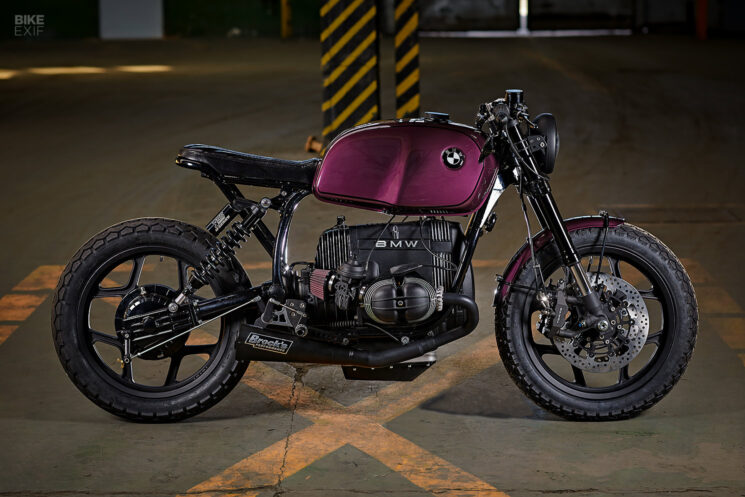
The blacked-out exhaust mufflers are Brock’s Performance items—but that wasn’t the original plan. Jacek had something else in mind at first but decided to roll the dice on the Brock’s cans when he came across them. The result is a short, aggressive aesthetic that, although unusual, suits this build perfectly.

One thing that is missing from this BMW, is its fuel petcock and lines. Jacek confesses that he couldn’t quite button it up in time for its scheduled photo shoot; “Rest assured, since this session the motorcycle has traveled several hundred kilometers with Marcin!”

BMW R100 bobber by Cardsharper Customs
One important task that did get done in time, was the BMW’s alluring paint job. Marcin’s only request was that it had to be “dark and elegant”—so Jacek dug into BMW’s archives, opting for a riff on the marque’s classic ‘Topaz Red Violet Metallic’ hue. Details include black pinstripes and roundels, with assorted galvanized, ceramic-coated, and painted finishes on the bike’s hard parts.

“The motto of the entire project was that nothing should be too much—that nothing should be visually strange,” Jacek adds. “A simple, elegant engine on wheels, with custom solutions that complement the look rather than stand out.” Amen.

Cardsharper Customs Facebook | Instagram

BMW R100 bobber by Cardsharper Customs


from Bike EXIF https://ift.tt/lOm5sK2

Sunday, 22 October 2023

Speed Read: Deus’ Royal Enfield Super Meteor cruiser and more

The latest motorcycle news, customs and rare icons.
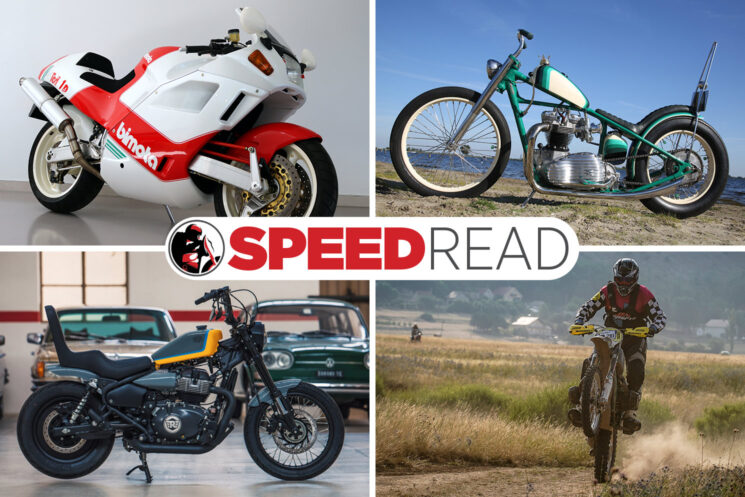
In our quest to pack Speed Read with every style of motorcycle imaginable, we’re kicking things off with a groovy 70s-style Royal Enfield Super Meteor cruiser. It’s followed by a vintage Triumph chopper from The Netherlands, a Police-spec BMW R80 that’s been turned into an enduro bike, and a rare Bimota Tesi 1D 904.

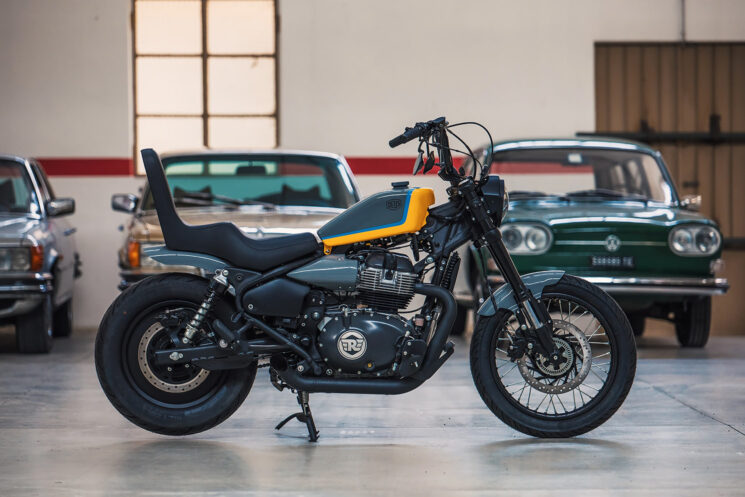
Royal Enfield Super Meteor cruiser by Deus ex Machina
Royal Enfield Super Meteor 650 by Deus Milan Building on the worldwide success of their 650 twin platform, Royal Enfield announced the new Super Meteor 650 highway cruiser late last year. Bikes have been rolling out to customers for a few months now, and custom shops are slowly sinking their teeth into them.

This custom-built Royal Enfield Super Meteor cruiser comes from Deus Ex Machina’s Portal of Possibilities in Milan, Italy. The commission came directly from Royal Enfield, who instructed the Milano workshop not to return it in the same condition as they found it in.

Royal Enfield Super Meteor cruiser by Deus ex Machina
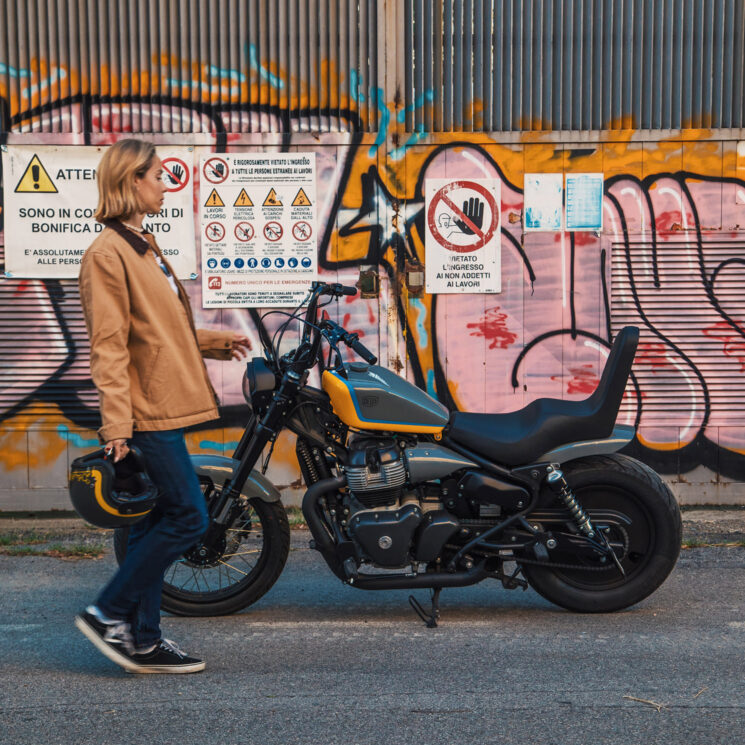
Deus obliged with a stylish cruiser that looks like it’s been transported straight out of the 70s. They did so by focussing on subtle cosmetic mods, leaving the Super Meteor’s foundations largely unmolested.

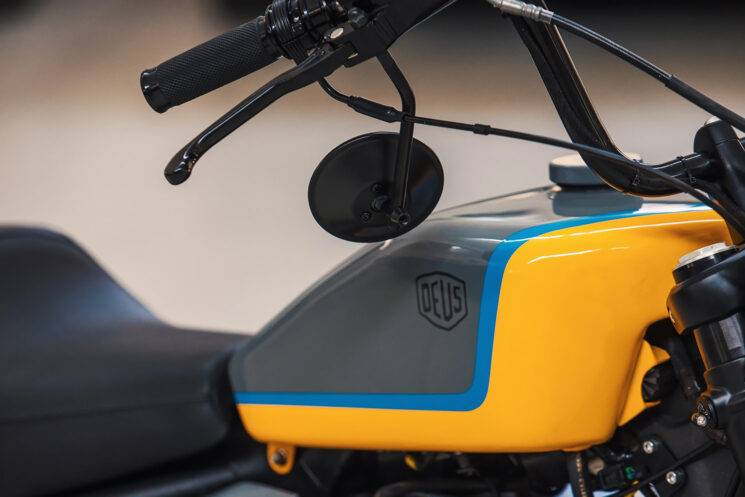
The front fender is new, as is the spoked front wheel which replaces the OEM cast hoop. A custom nacelle surrounds the LED headlight, which sits in front of a new Motogadget speedo. Other fresh parts include the fuel tank, injector covers, and rear fender.

Royal Enfield Super Meteor cruiser by Deus ex Machina
Lighting out back is by way of three-function Kellerman Atto LEDs, bolted to the shock mounts. Bits have been blacked out over the whole bike, with not a lick of chrome remaining.

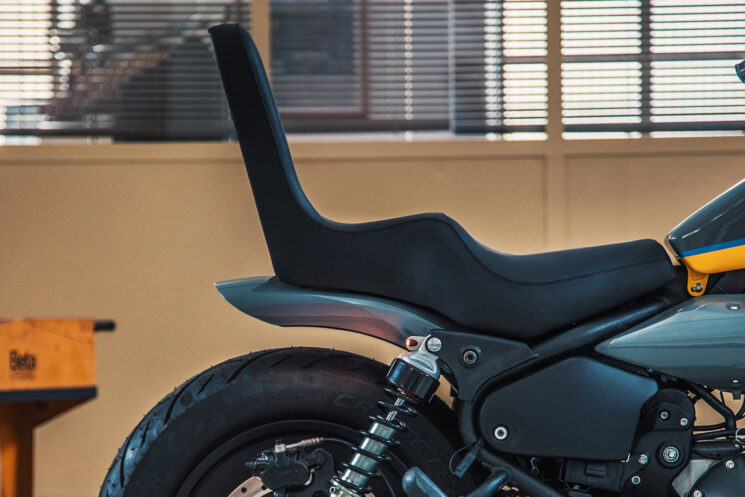
Sure, a chrome-less look is counter to the 70s aesthetic, but we love the splash of yellow and blue on the tank, and we know that chrome isn’t the best choice for a daily rider. And with high-rise bars and a generous king and queen saddle, Deus has nailed the laid-back retro cruiser vibe.

Royal Enfield Super Meteor cruiser by Deus ex Machina
Finishing the build off in style are black ceramic-coated exhausts from Mass Moto, covers for the rear wheel, and a bobbed rear fender. All that’s missing is a skateboard rack and a sissy bar to tie some luggage to. [More]

Triumph T120 chopper by DBBP Design
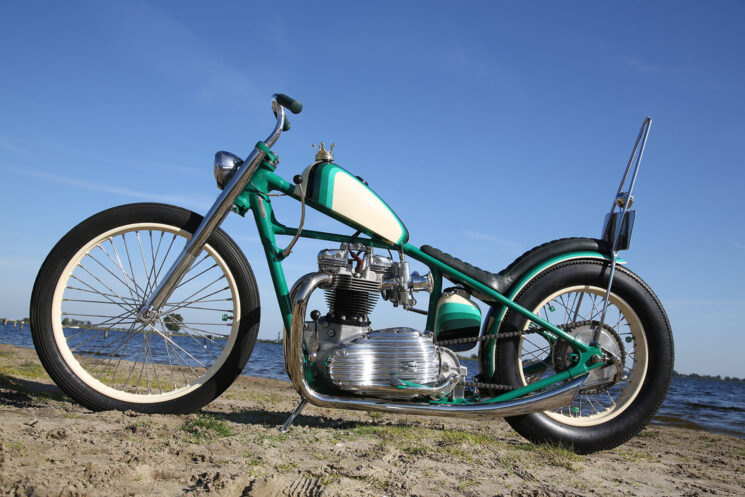
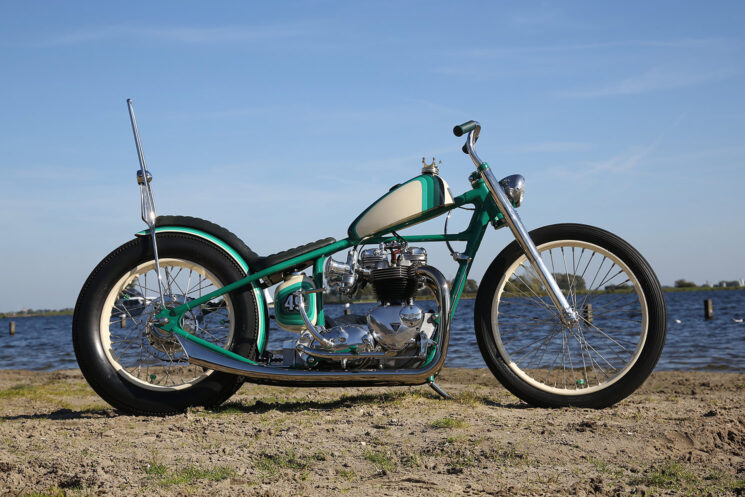
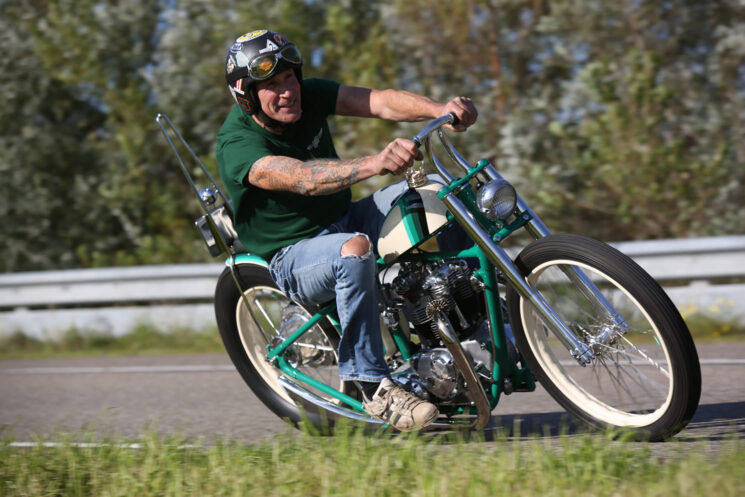
Triumph T120 by DBBP Design Mark van der Kwaak and Aad Heemskerk know that all good things take time. Case in point: this perfectly proportioned Triumph T120 chopper took them fourteen years to build.

Based on a 1960s Triumph T120 Bonneville, the motorcycle was designed in CAD by Mark and then brought to life by Aad. Mark’s design business is called DBBP Design—and when he’s not dreaming up wicked motos he’s focussing on product development and computer-animated design. Aad spends most of his time fabricating parts for high-end boats, so it’s easy to see why they make a great team.

Triumph T120 chopper by DBBP Design
To get the show started, the T120 had its back end chopped off and converted to rigid. The original front forks remain, but they have been shortened and fitted with millimeter-perfect shrouds. A vintage-style headlight lights the way, but there are no gauges, switchgear, or levers fitted to the stainless steel handlebars.

A foot clutch system was made and paired with a jockey shift to cycle through the Bonneville’s refurbished transmission. Its left-foot clutch, right-foot brake, and jockey system cross over the frame above the headers, following the down tube to a custom-made linkage. It’s both ingenious and artfully done.

Triumph T120 chopper by DBBP Design
The tank is from an old Japanese bike and drapes over the frame to hide the ignition coil. It’s got a custom filler cap which is finished with a glass eye that was given to them by an old friend. There isn’t a wire or cable to be seen, thanks to an internal throttle and the aforementioned lack of switchgear.

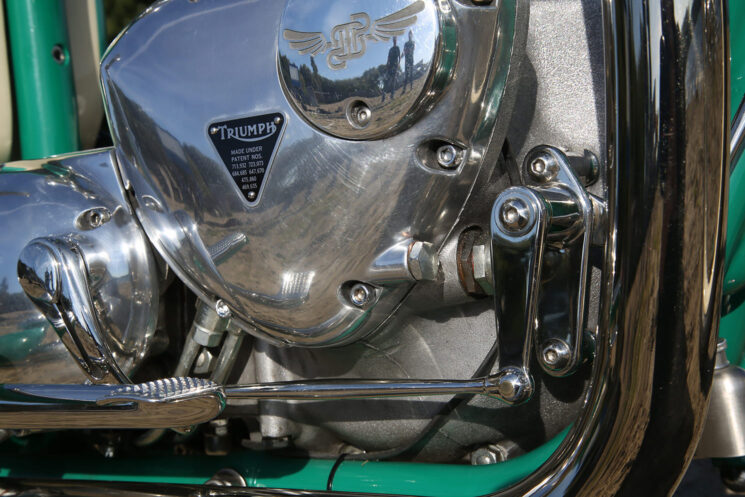
The engine (which is from 1964) was spritzed up and fitted with a slew of parts, including oversized pistons and new Amal carbs. The stainless steel exhaust is another work of art; we love how it traces the frame and flows out into wonderful flared ends.

Triumph T120 chopper by DBBP Design
The seat was made from an old leather jacket and runs up onto the handmade rear fender. The sissy bar and taillight setup are, you guessed it, also custom parts made by Aad. The oil tank is a stunning aftermarket item, but it’s been modified with a cutout to accommodate the chain.

Finished with custom paint and judicious polishing, this might be the best Triumph chop we’ve ever seen. [Via]

BMW R80 enduro bike by SWT-Sports
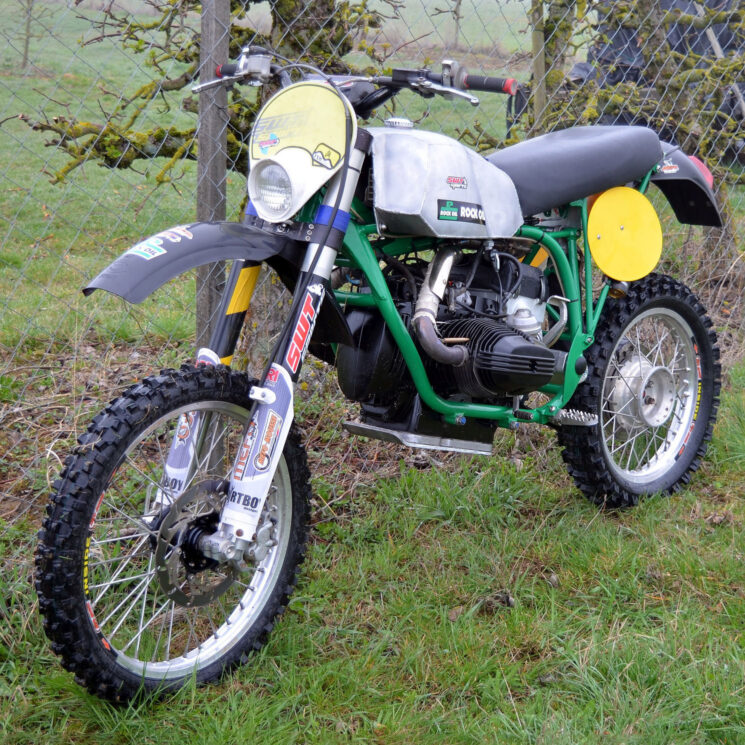
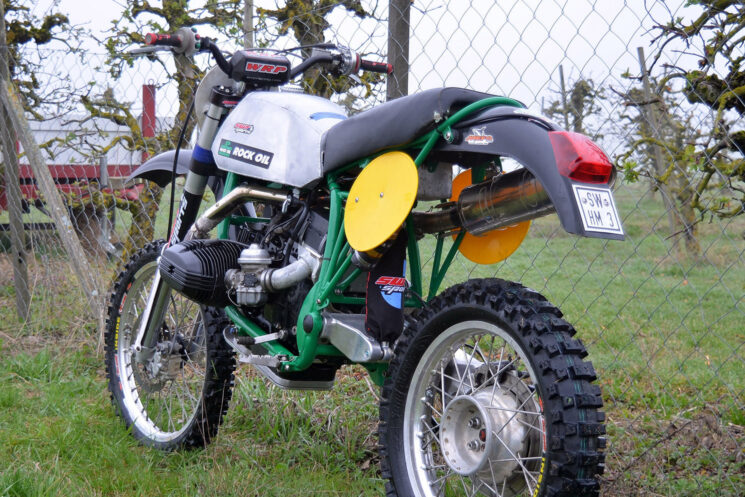
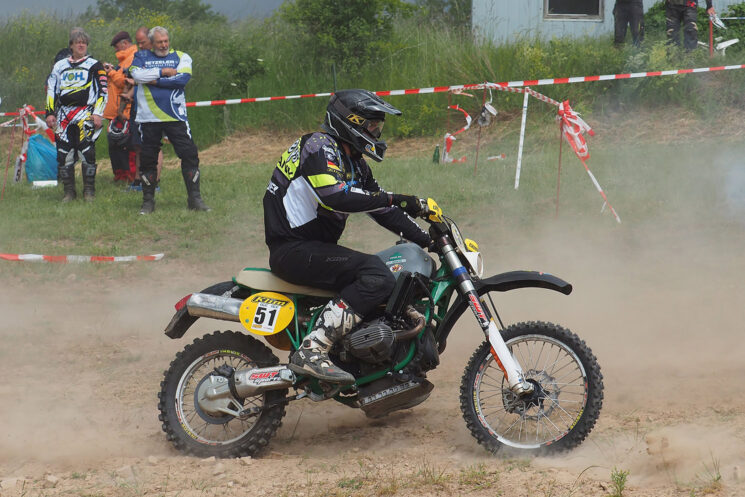
BMW R80 ‘EnduroBoxer’ by SWT-Sports It’s hard to think that this beefed-up enduro machine started life as a stock standard Police-issue BMW R80, but it did. Built by its owner Manuel Schad, it was created to compete in heavyweight enduro competition in the Interessengemeinschaft Enduro (IGE). Spoiler alert: Manuel became the champion in his class.

Manuel runs a shop in Germany called SWT-Sports, specializing in BMW parts and modifications. So when he isn’t working on custom bikes, he’s working on his own.

BMW R80 enduro bike by SWT-Sports
To turn the R80 from a police cruiser into an ‘EnduroBoxer,’ Manuel first swapped out the front suspension for a set of WP Suspension forks, held in place by custom CNC yokes. The paralever shaft drive from a later-model BMW was grafted on out back, along with its single-shock system.

Manuel spent a lot of time reinforcing the frame’s steering head, top tube, and the points where the swingarm attaches to the frame. He also designed and built a new subframe, then added a Maico seat and a rear fender from Preston Petty MX. The fuel tank comes from a classic Husqvarna.

BMW R80 enduro bike by SWT-Sports
Next, the engine capacity was increased to 880 cc, with an additional oil cooler installed. Manuel removed the engine’s top cover to shave a little weight off, then used the space to reroute the exhaust headers ‘through’ the chassis. The factory airbox remains, most likely due to the harsh racing conditions that Manuel likes to throw the bike around in.

BMW R80 enduro bike by SWT-Sports
With a set of MX bars mounted up top, the whole machine stands tall—which is just as well, since Manuel is a big guy. At over 6’6” tall, he’s built this bike for him and him alone. Finishing touches include an enduro-style headlight and number plate, and a burly sump guard.

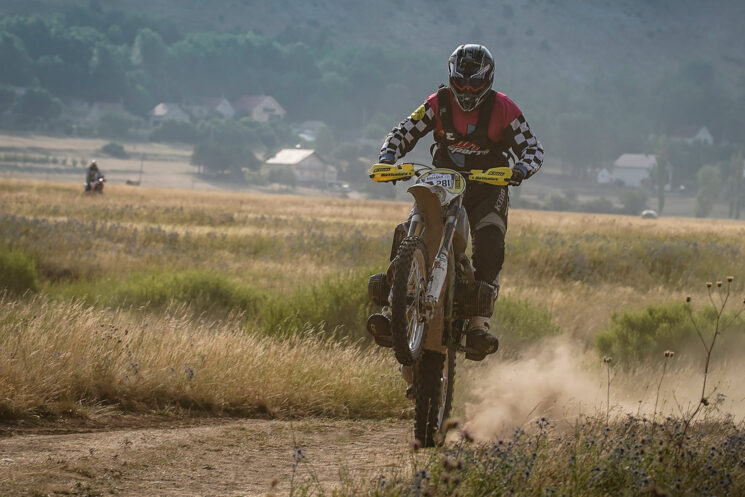
Manuel has used (and abused) his BMW R80 at the formidable Erzberg Rodeo, Enduropale du Torquay, and many other IGE enduro events. We’re more than certain he’s a crowd favorite. [Via]

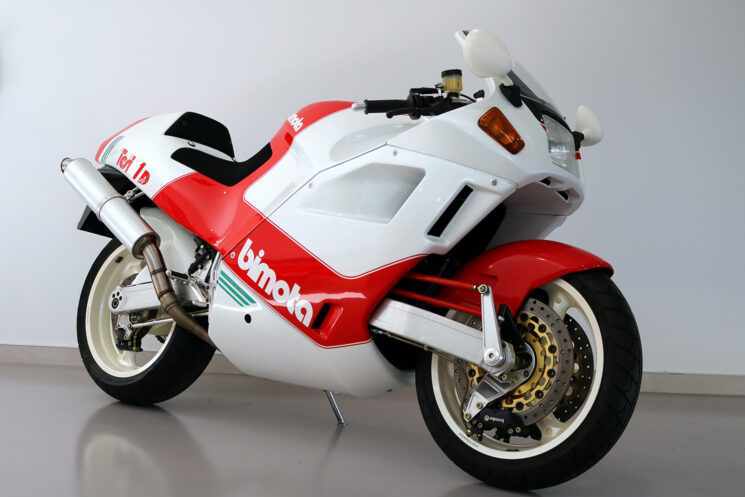
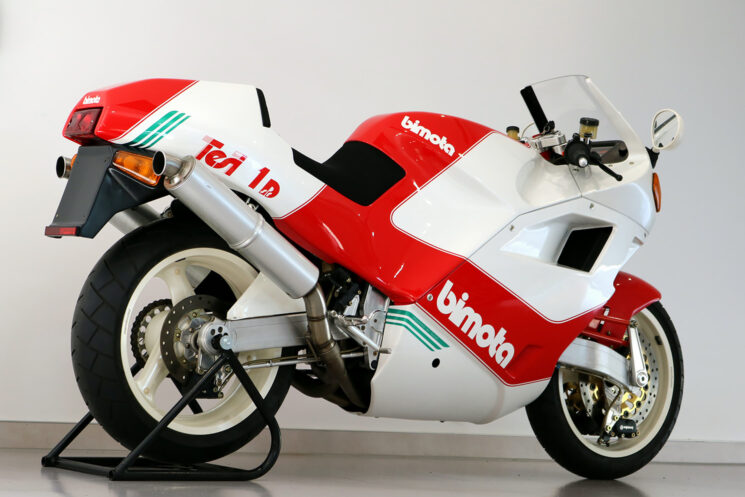
1991 Bimota Tesi 1D 904
Reserve not met: Bimota Tesi 1D 904 Bimota motorcycles are often held aloft as some of the best riding bikes on the planet. Their limited numbers, hand-built approach, and striking looks also add to their mystique.

Bimota was founded in 1973 by Valerio Bianchi, Giuseppe Morri, and Massimo Tamburni. The three Italian gentlemen combined their expertise (and their names) to create the company, focussing on motorcycle frame design and performance.

1991 Bimota Tesi 1D 904
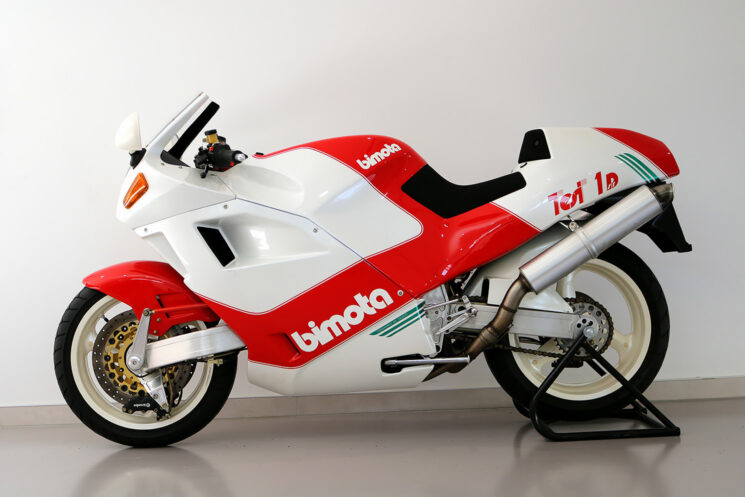
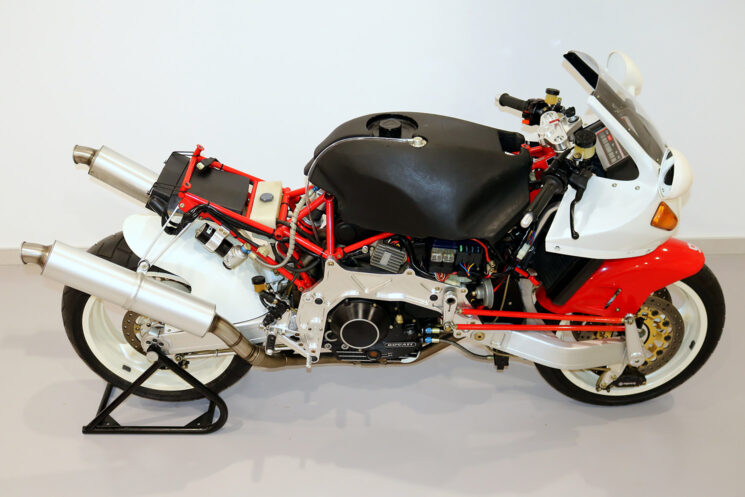
This is a Bimota Tesi 1D 904, of which there were only 20 made from 1991 to 1992. It uses a 904 cc Ducati engine, derived from the Ducati 851 Desmoquattro. The engine is paired with a six-speed transmission—but, as with all Bimotas, the engine and transmission play second fiddle to the frame, suspension, and steering.

While we adore the fully encapsulated fairings of the 1D 904, they hide all the engineering artwork that Bimota has become famous for. Beneath the white, red, and green bodywork, and wrapped around the Ducati L-twin, is a CNC-machined aluminum frame. The frame supports the Bimota Tesi’s signature hub-centered steering system, with swingarms at both ends of the bike.

1991 Bimota Tesi 1D 904
The idea was to separate the steering and suspension aspects of the front end, to dial out front-end dive under braking for a more stable ride through corners. Whether you believe the hype or not, it remains one of the most interestingly engineered motorcycles ever made.

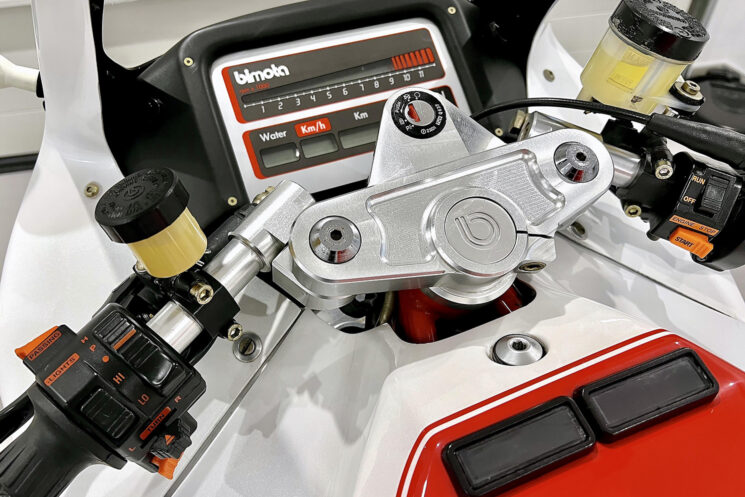
Everything else on the Bimota Tesi is top-notch too. From the Marchesini wheels to the enormous Brembo brakes and Marzocchi shocks, there are myriad reasons why Bimotas have always been so expensive. The extremely 90s dashboard setup is particularly trick, as is the strip of warning lights that’s embedded into the tank section.

1991 Bimota Tesi 1D 904
This particular bike was for sale on Bring-a-Trailer with only about 800 miles on the clock. Interestingly, bidding only went up to $21,500, which was passed on because the reserve was not met.

If it pops up for sale again, this Bimota Tesi would no doubt make for an incredible museum piece. But as with all rare and interesting motorcycles, we’d love to see it back on the road. [Via]

1991 Bimota Tesi 1D 904


from Bike EXIF https://ift.tt/0guVOGA