Sunday, 23 July 2023

Speed Read: The Yamaha XSR900 DB40 retro racer and more

The latest custom motorcycles, news and prototypes
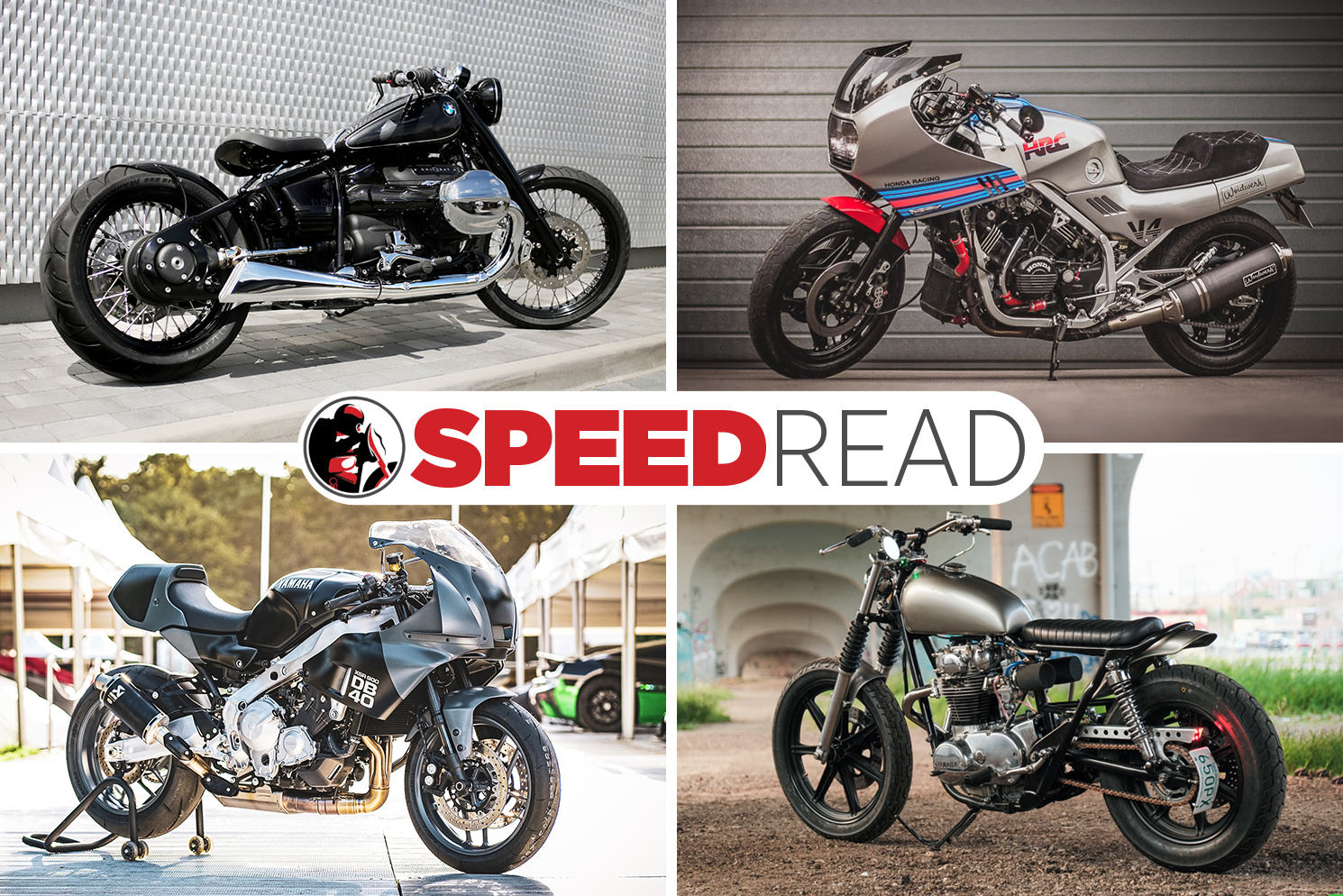
Two very different Yamahas dominate this weekend’s edition of Speed Read. We take a closer look at the new Yamaha XSR900 DB40 Prototype, and we profile a slick Yamaha XS650 street tracker from Canada. We also check out a new BMW R18 kit from Poland, and a tasty Honda VF1000F2 from Bavaria.
Yamaha XSR900 DB40 Prototype
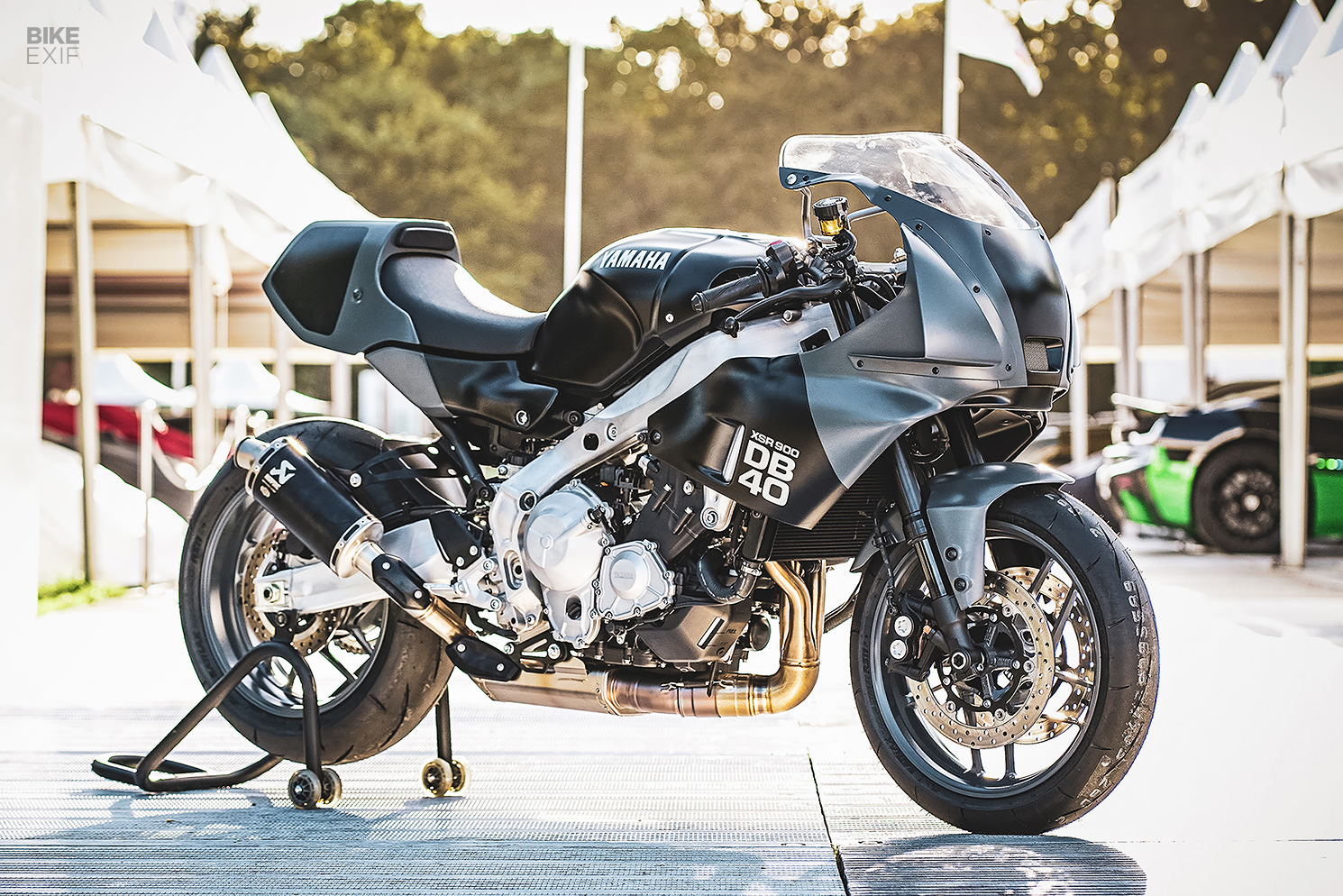
Yamaha XSR900 DB40 Prototype Since it broke cover in 2016, the Yamaha XSR900 has been a hit. Effectively a tweaked MT-09 in neo-retro trim, it looks, sounds and rides amazing—and it gets even better when you customize it.

This custom Yamaha XSR900 comes directly from the Japanese marque’s in-house design team. Dubbed the ‘DB40 Prototype, it broke cover last weekend at the Goodwood Festival of Speed. And we absolutely love it.
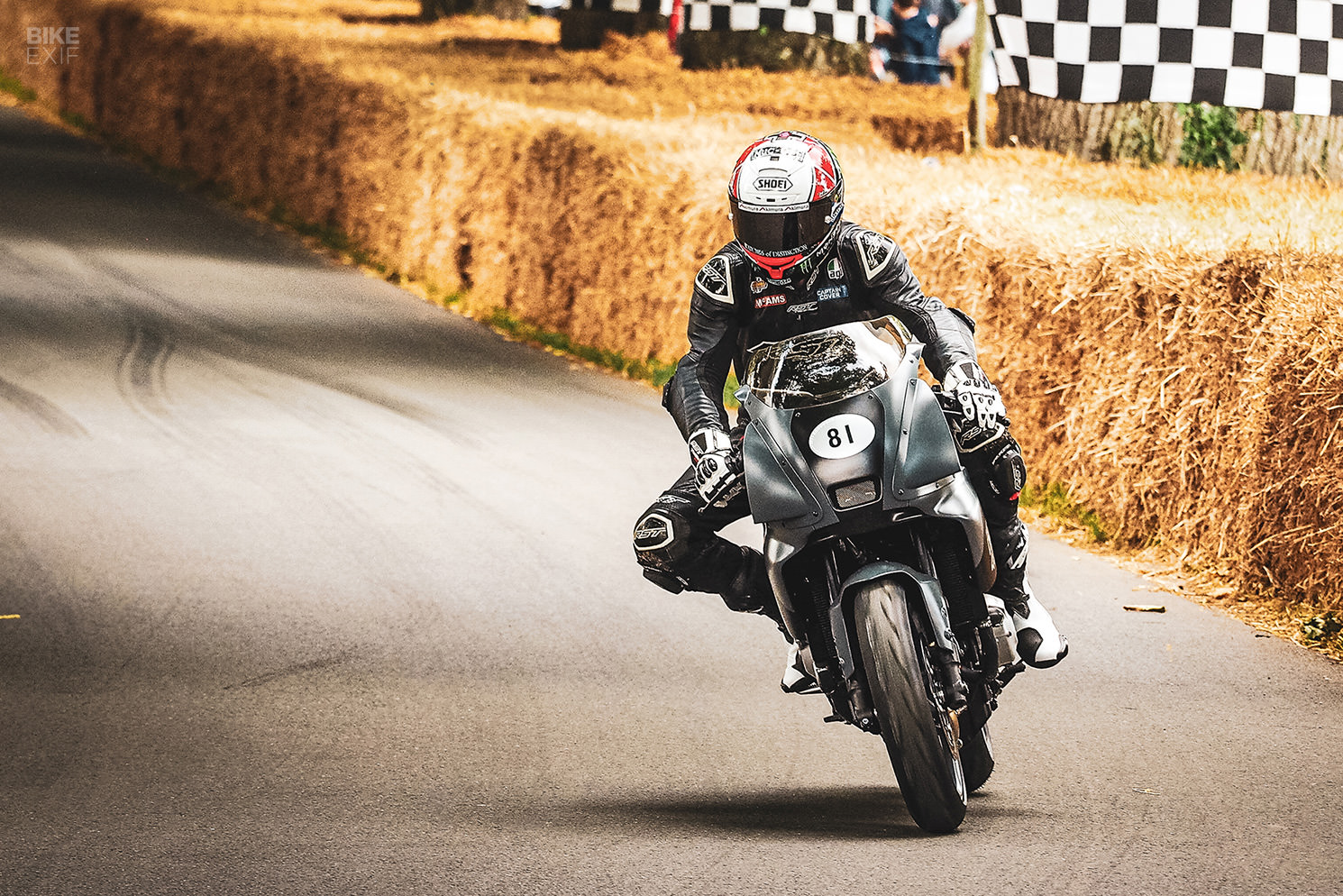
Yamaha XSR900 DB40 Prototype
The DB40 Prototype follows on from CROIG’s ‘Yard Built for Good’ custom XSR900, and from the launch of the brand’s new range of café racer-style XSR accessories. It’s a nod to Yamaha’s illustrious racing history, and draws inspiration from 80s and 90s racing motorcycles. We can clearly see inspiration from the Yamaha TZR250, YZR500 OW01, and other classic Yamaha race bikes.

The DB40’s most obvious feature is its incredible front fairing. Supported by custom brackets and fairing stays mounted behind the top yoke, it does a bang-up job of injecting some old-school-cool into this modern performance motorcycle. But that’s not all that Yamaha has carried over from their heritage.
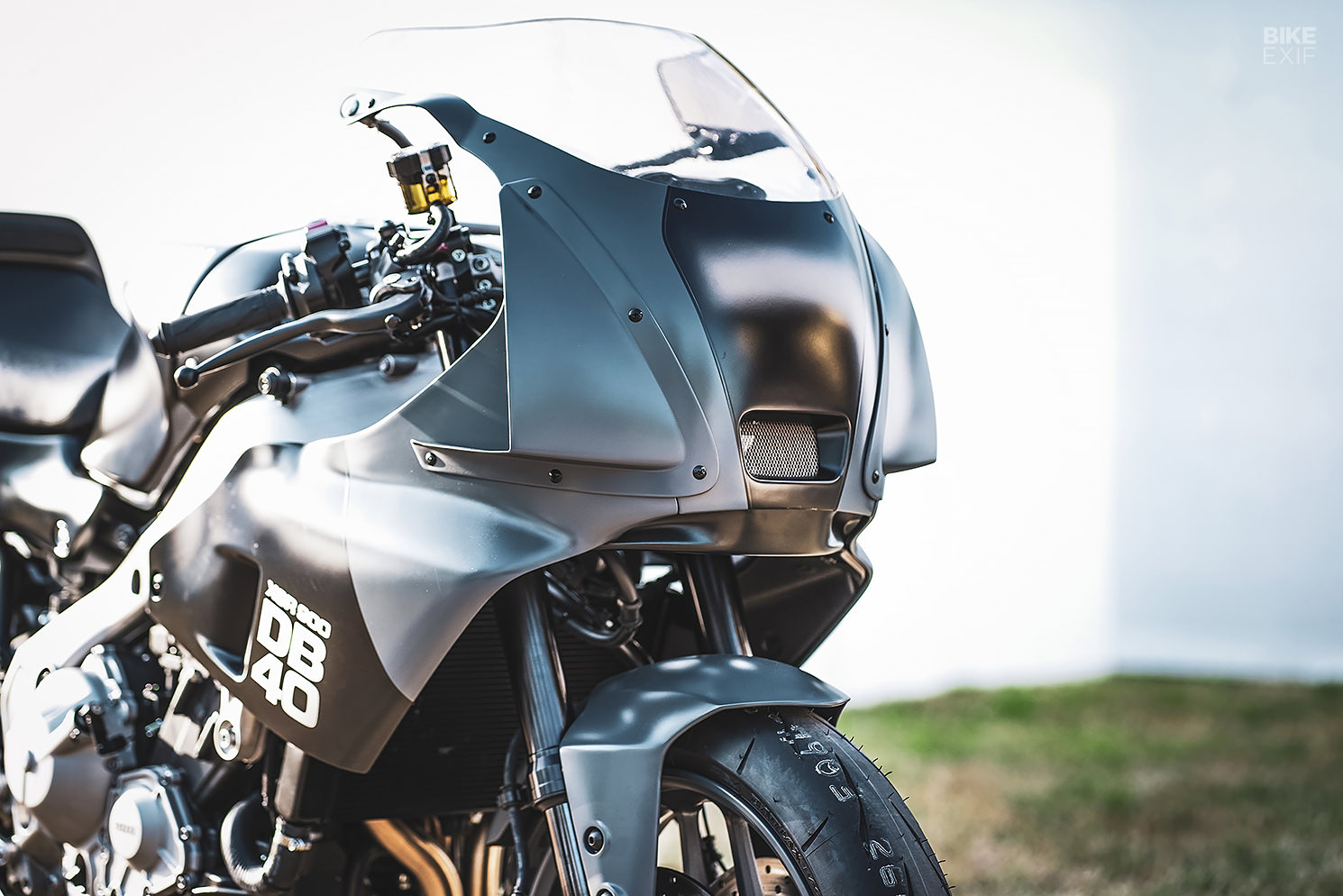
Yamaha XSR900 DB40 Prototype
The ‘DB40’ designation refers to Yamaha’s 40-year-old Deltabox frame design. First featured on the Yamaha YZR500 Grand Prix machine in 1982, it’s been updated over the years and is still being produced today. The highlight this, this bike’s frame has been painted silver, putting it on full display against the dark bodywork.

Öhlins suspension, a moody paint scheme, and a very slick tail section transform the naked XSR900 into a slippery retro race bike. The taillight and seat are particularly neat, and we love how the bottom half of the engine is left exposed.
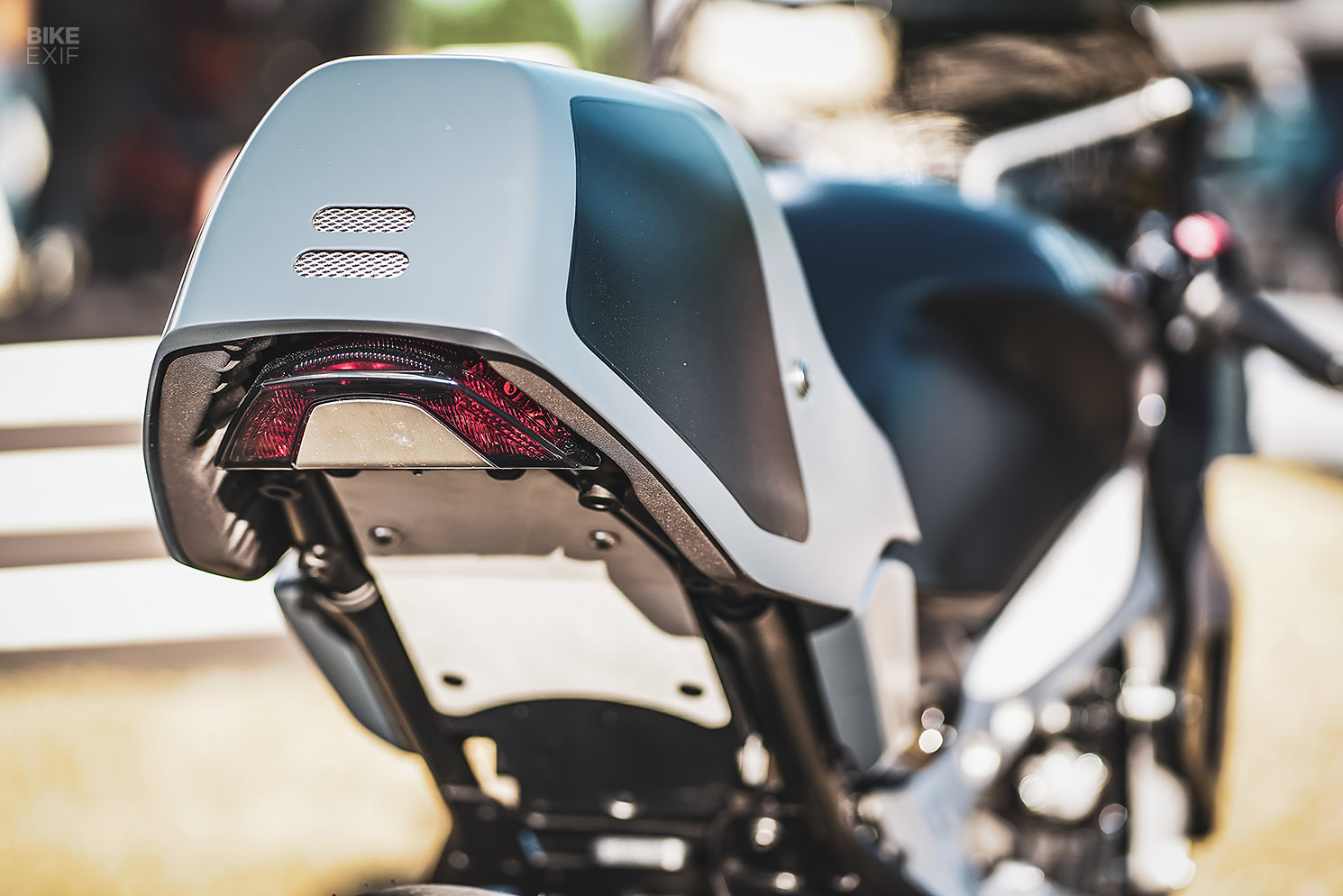
Yamaha XSR900 DB40 Prototype
The Yamaha XSR900 DB40 Prototype was ridden up Goodwood Hill on each of the festival’s four days in front of an adoring crowd. If it wasn’t for the lack of indicators and headlight, we would think that this is a production bike—it’s that well-finished. And with rumors swirling that Yamaha are planning to release a new R9 based on the XSR’s cracking triple-cylinder engine, we’re hopeful. [Yamaha Motorcycles]
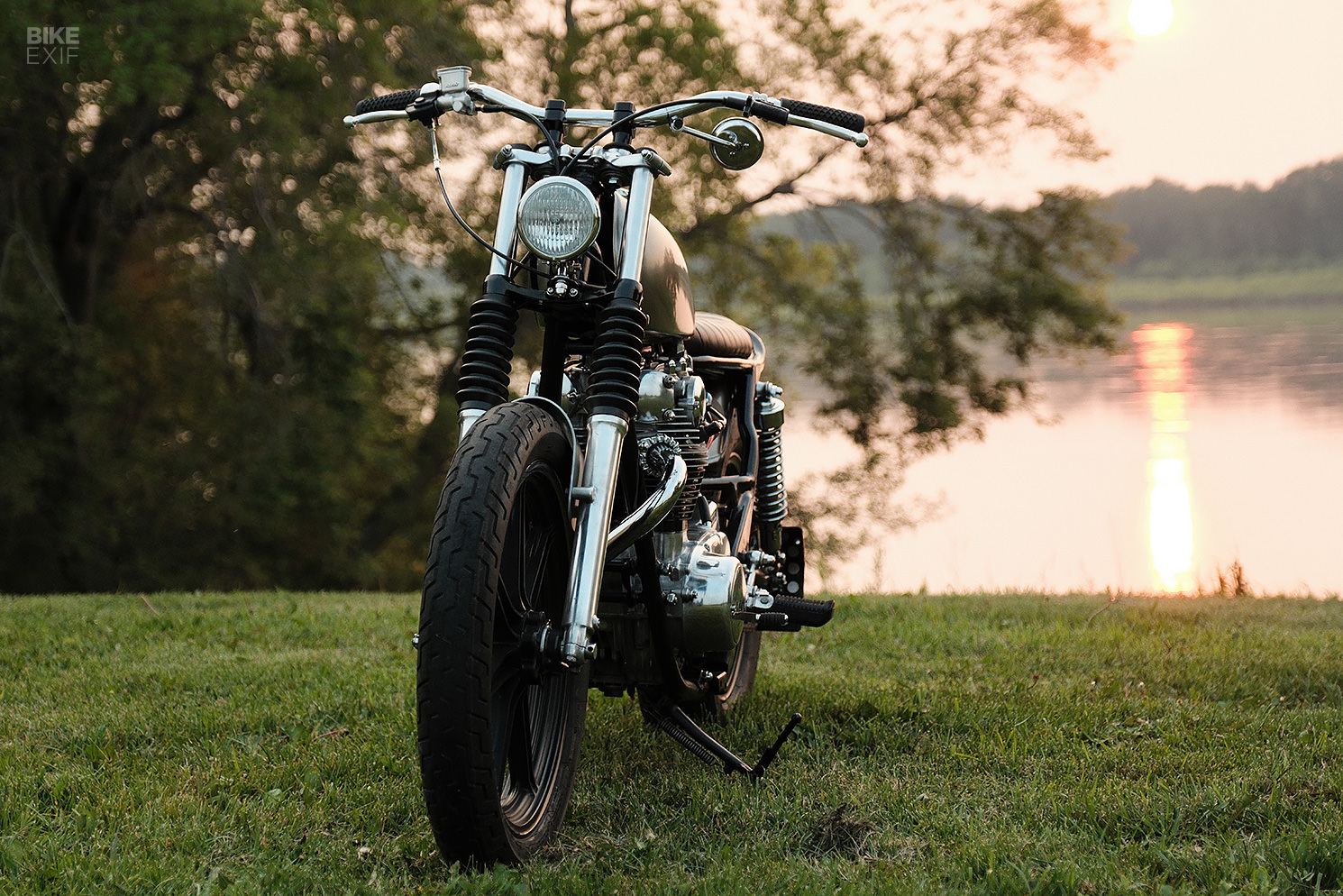
Yamaha XS650 street tracker by Matt Thomas
Matt Thomas’ Yamaha XS650 The Yamaha XS650 was quite advanced when it was released in 1969, and gave the British parallel twins of the time a good run for their money. Its second lease on life came in the 2010s, when it quickly became a darling of the burgeoning café racer scene.

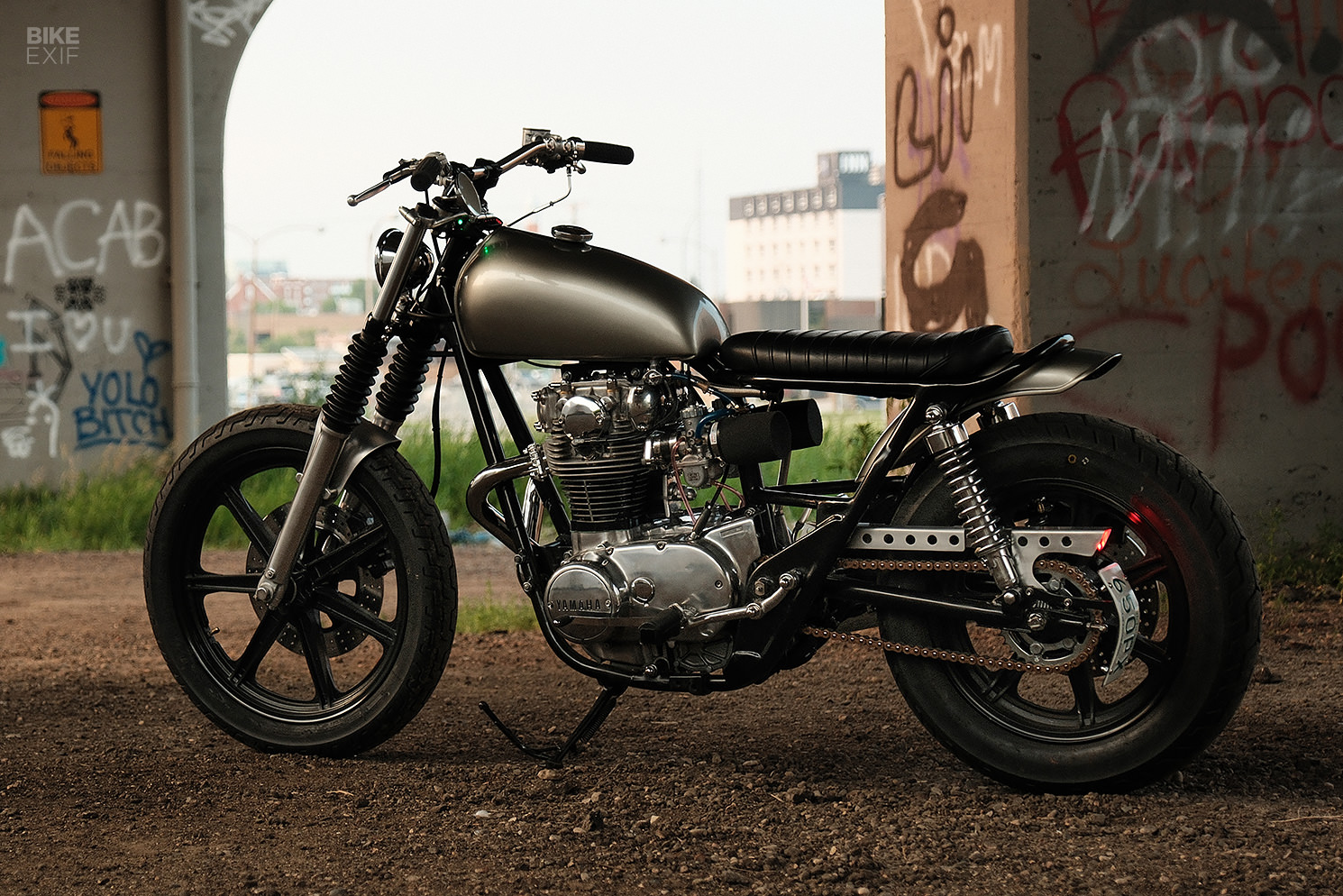
Matt Thomas is a fan. Based in Canada, he picked up a 1979 Yamaha XS650 for just CA$450 [about $340] last summer, then tore it down in his home garage. Spending every evening and weekend through winter while his kids were tucked away in bed, Matt turned the salvaged bike into a svelte street tracker.
Yamaha XS650 street tracker by Matt Thomas
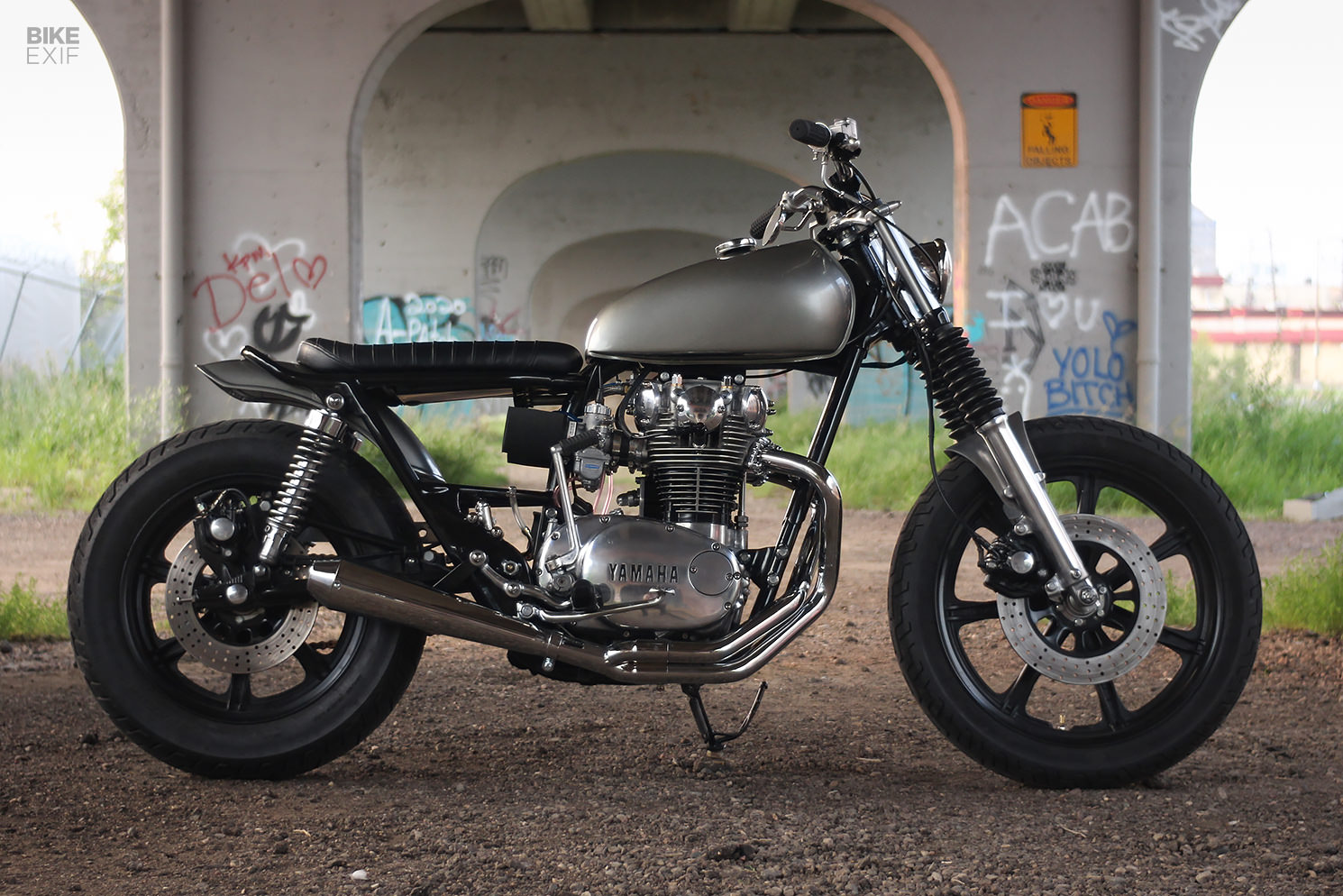
The big win here is how well Matt has slimmed down the XS650. A 1974 DT360 fuel tank sits up to, with its narrow lines suiting the style of the build nicely. It’s been painted in a stylish Lamborghini Titanium Silver.

The engine was cleaned and polished, and the top end was rebuilt. The factory headers were probably tubes of rust by the time Matt got his hands on the bike so he replaced them with a beautiful two-into-one system, terminated with a reverse cone muffler. A pair of Mikuni VM34 carbs finishes off the engine.
Yamaha XS650 street tracker by Matt Thomas
The frame was liberated of all unnecessary tabs and brackets, while the subframe was chopped and looped. It was then finished with a custom seat that Matt’s wife was kind enough to upholster for him.

The rear fender was made by welding pieces of a 1979 and a 1983 Yamaha fender together, then painted to match the tank. Matt fabricated the chain guard and tailight setup himself. Low-profile turn signals are hidden on the bike, and the build is kept street legal by way of a side-mounted license plate.
Yamaha XS650 street tracker by Matt Thomas
The wheels were painted black and treated to a new set of chunky tires, a cut-down front fender, and drilled brake rotors. Fork gaiters and a 5” bottom-mount headlight give the front end even more attitude.

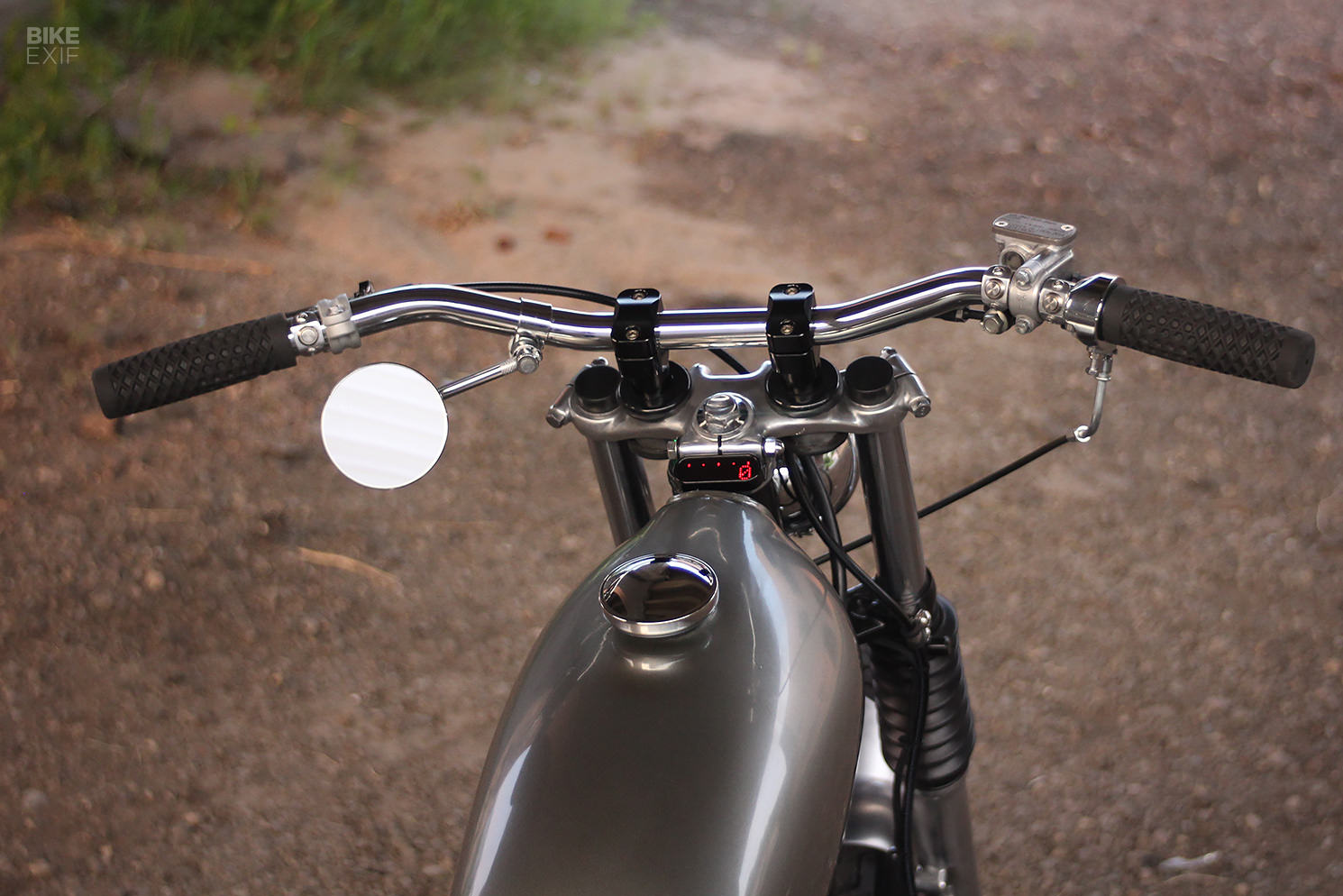
Mounted on new risers and 1” bars are a set of Vans x Cult grips, a new throttle assembly, a new master cylinder, and a few basic switches. A tiny Motogadget speedo was squeezed into the space between the frame and the tank, further reducing clutter.

Matt tells us that he’s been fixing up bikes for years, but this is his first complete teardown and custom build. And if this is his first, we can’t wait to see what he comes up with next. [Matt Thomas Instagram]
BMW R18 custom kit by Unikat
BMW R18 kit by Unikat Motorworks When BMW first pulled the covers off the production version of the R18, the motorcycling world was a little… taken aback. The idea of the traditionally pragmatic German marque releasing a cruiser was a little weird. And even thought the BMW R18 looks a lot better than the last cruiser BMW released, the ill-fated R1200C, it’s still long, low and heavy, with a few awkward design points.

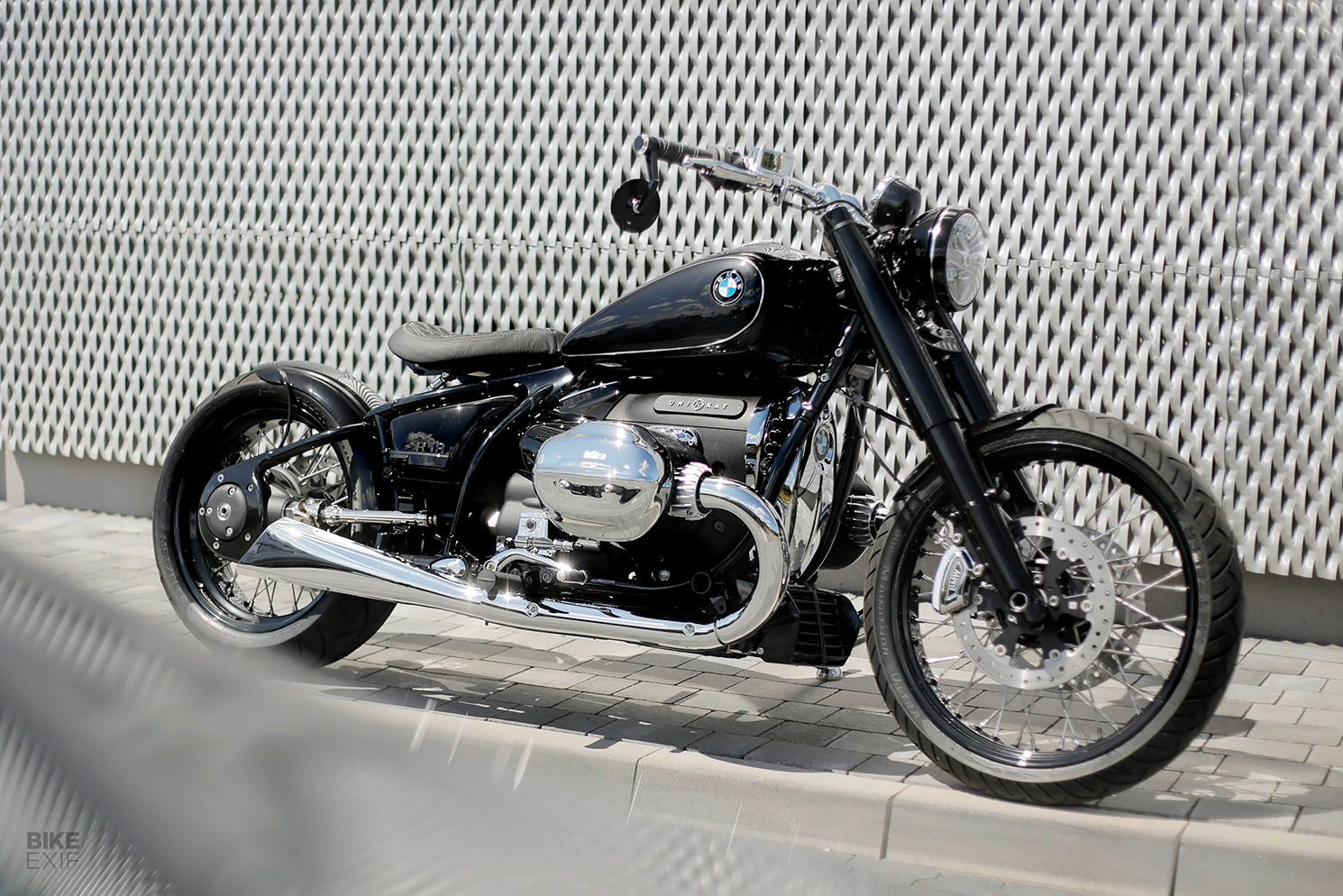
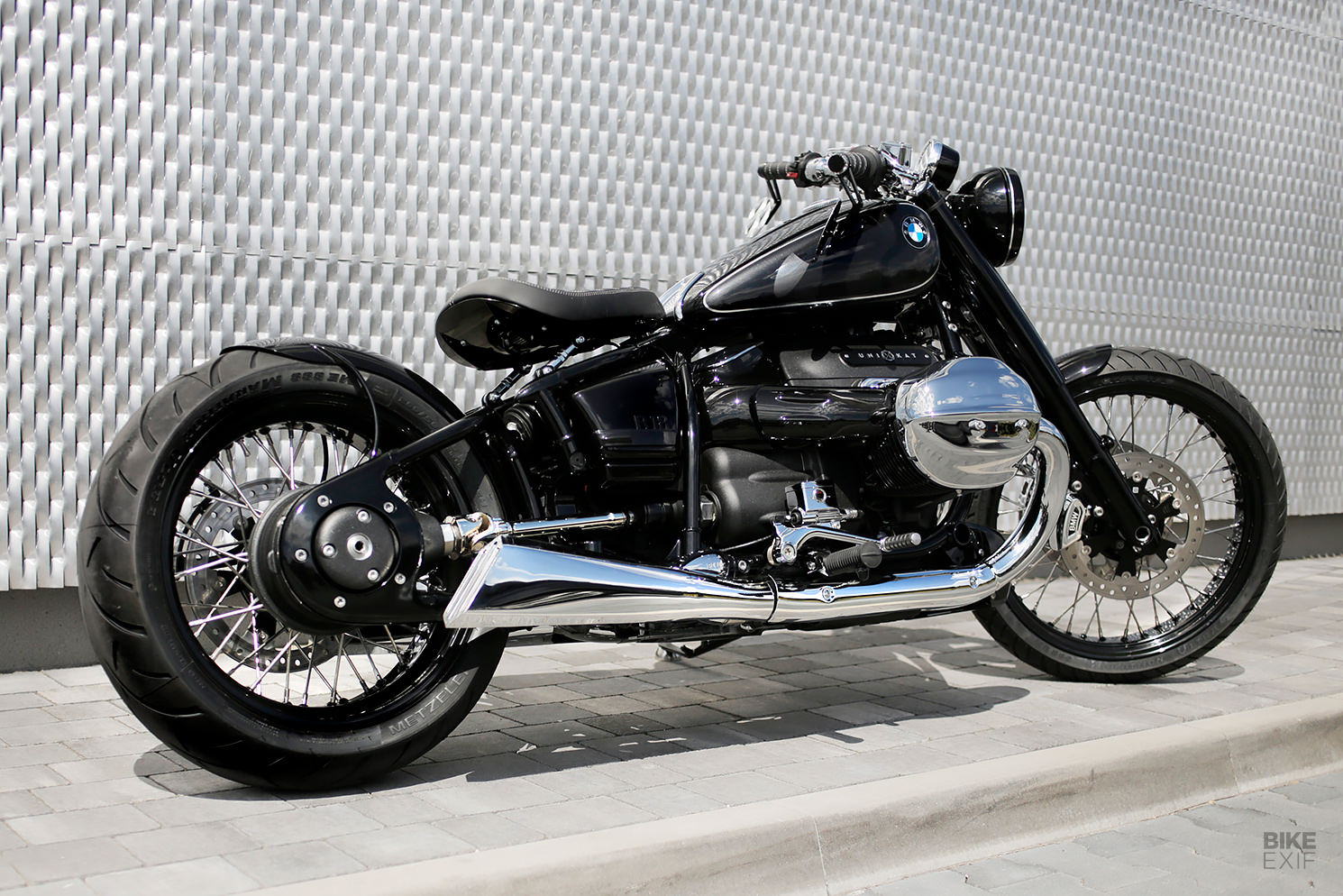
That said, there’s a distinct beauty lurking deep within the R18 that can be persuaded to rise to the surface. That’s where Poland’s Grzegorz Korczak and his workshop, Unikat Motorworks, come into the picture. They have created a bolt-on bobber kit for the BMW R18 that transforms the bike entirely via a handful of well-judged tweaks.
BMW R18 custom kit by Unikat
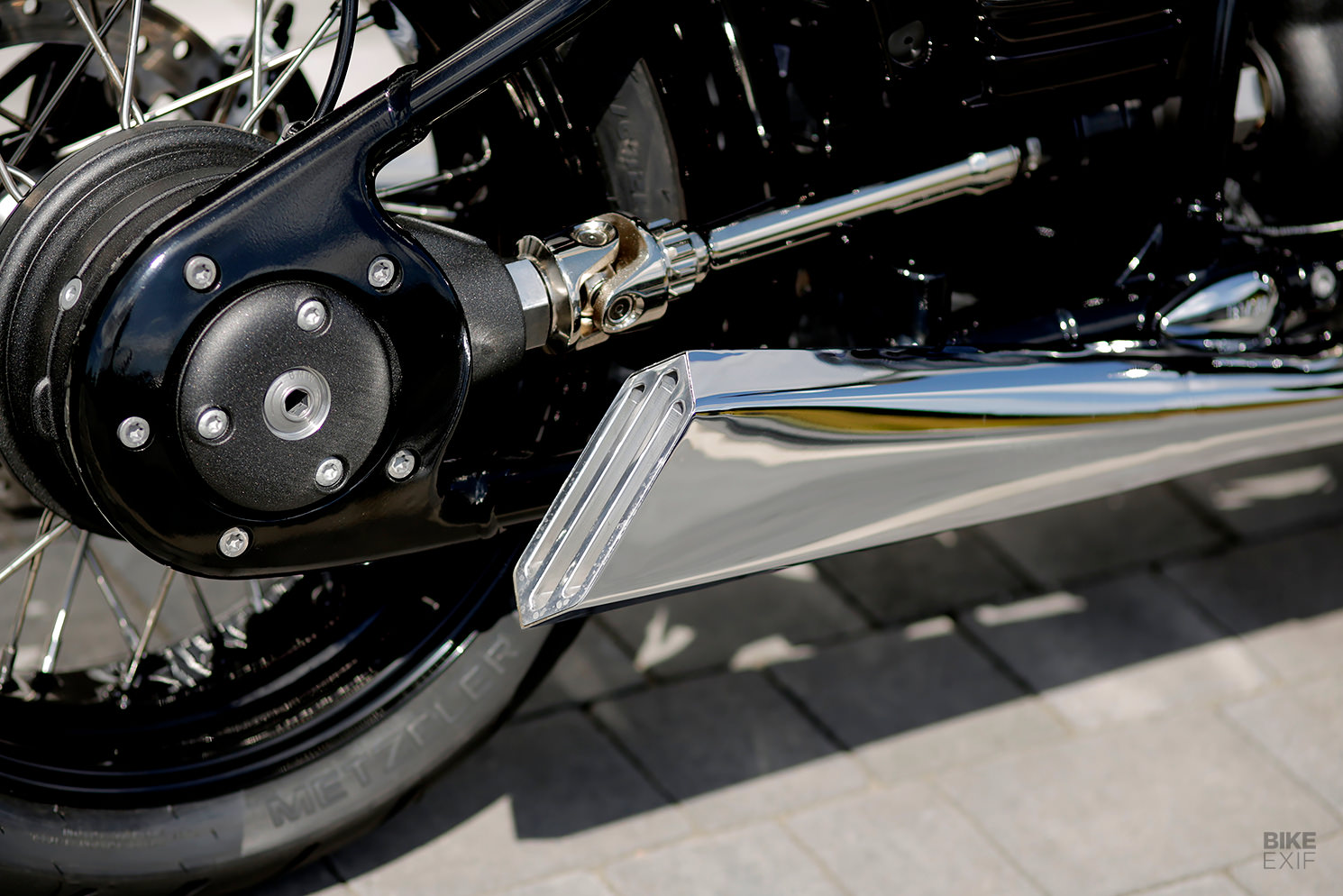
The most notable design improvement is the new muffler design. Unikat has fabricated tighter and shorter silencers that blend beautifully with the OEM headers and heat shields. They take over 100 hours to make by hand but they are a marked improvement over the bloated factory fishtails.

Unikat has installed dB killers, so that the exhausts unleash a bassy rumble rather than a harsh scream. And they can produce these in black too, if that’s your jam.
BMW R18 custom kit by Unikat
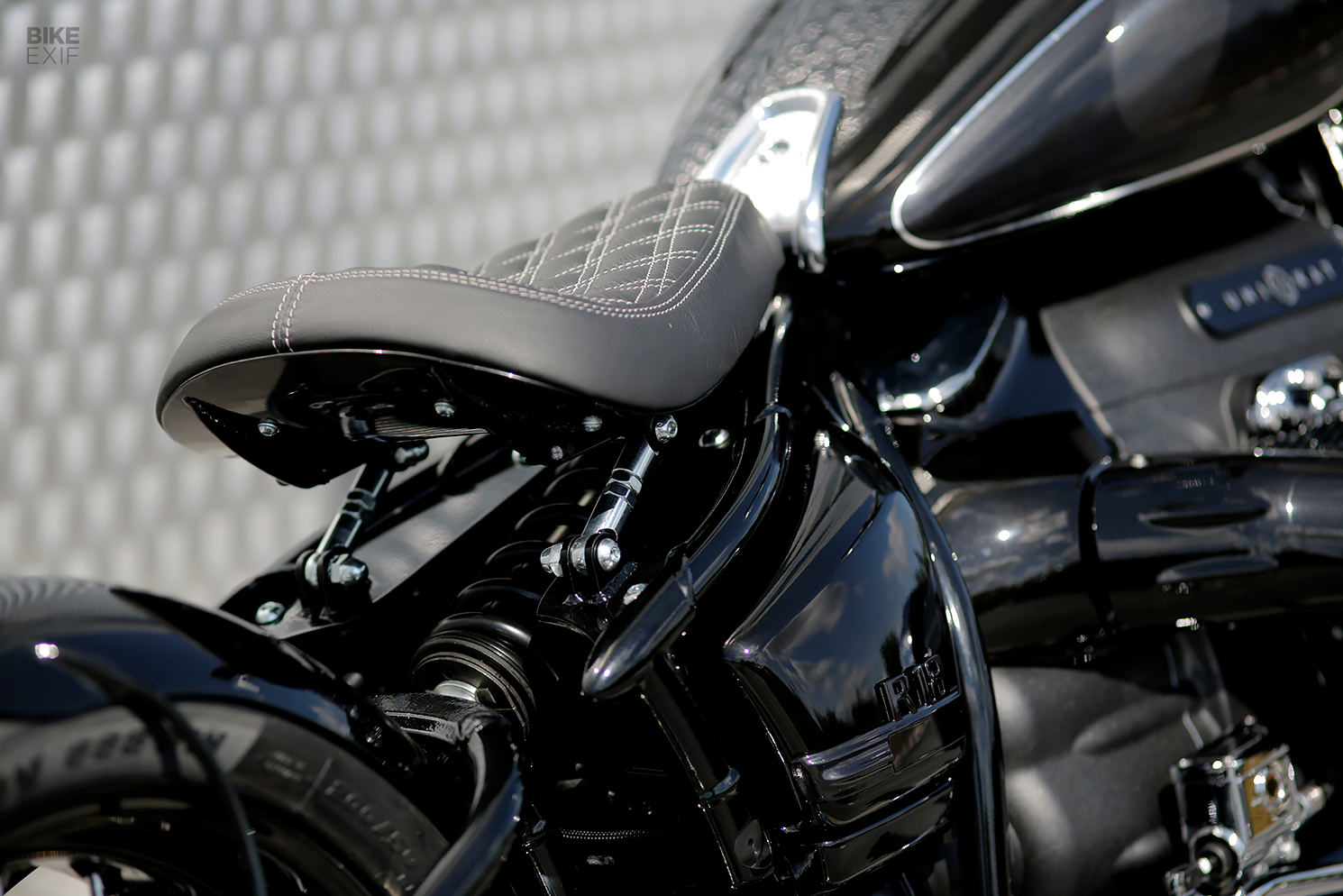
The kit also includes a single bobber-style diamond-stitched seat, and the necessary mounting hardware. It sits on small struts that are adjustable, offering an inch and a half of movement back and forth, and the ability to adjust the angle. Lower down are a set of stainless steel foot pegs, designed to mount to the frame without any mods.

Custom 18” wheels have been laced onto the stock hubs, and there are custom fenders both front and rear. The headlight and gauge cluster have been lowered using more custom brackets to improve the lines. Motogadget bar-end turn signals and mirrors, and leather grips, sit on custom handlebars, slimming down the control area.
BMW R18 custom kit by Unikat
The engine has been painted to match the sides of the tank and various covers have been blacked out. Real silver flake was used to pinstripe the tank, adding an extra touch of class to the otherwise classic BMW paint scheme. Highsider LEDs sit under the seat, doing double duty as taillights and turn signals.

Unikat are selling most of the above as a bolt-on kit. The set includes the seat, exhausts, fenders, foot pegs, headlight and gauge lowering kit, and a license plate mount. The rest is up to you. [Unikat Motorworks]
Honda VF1000F2 restomod by Woidwerk
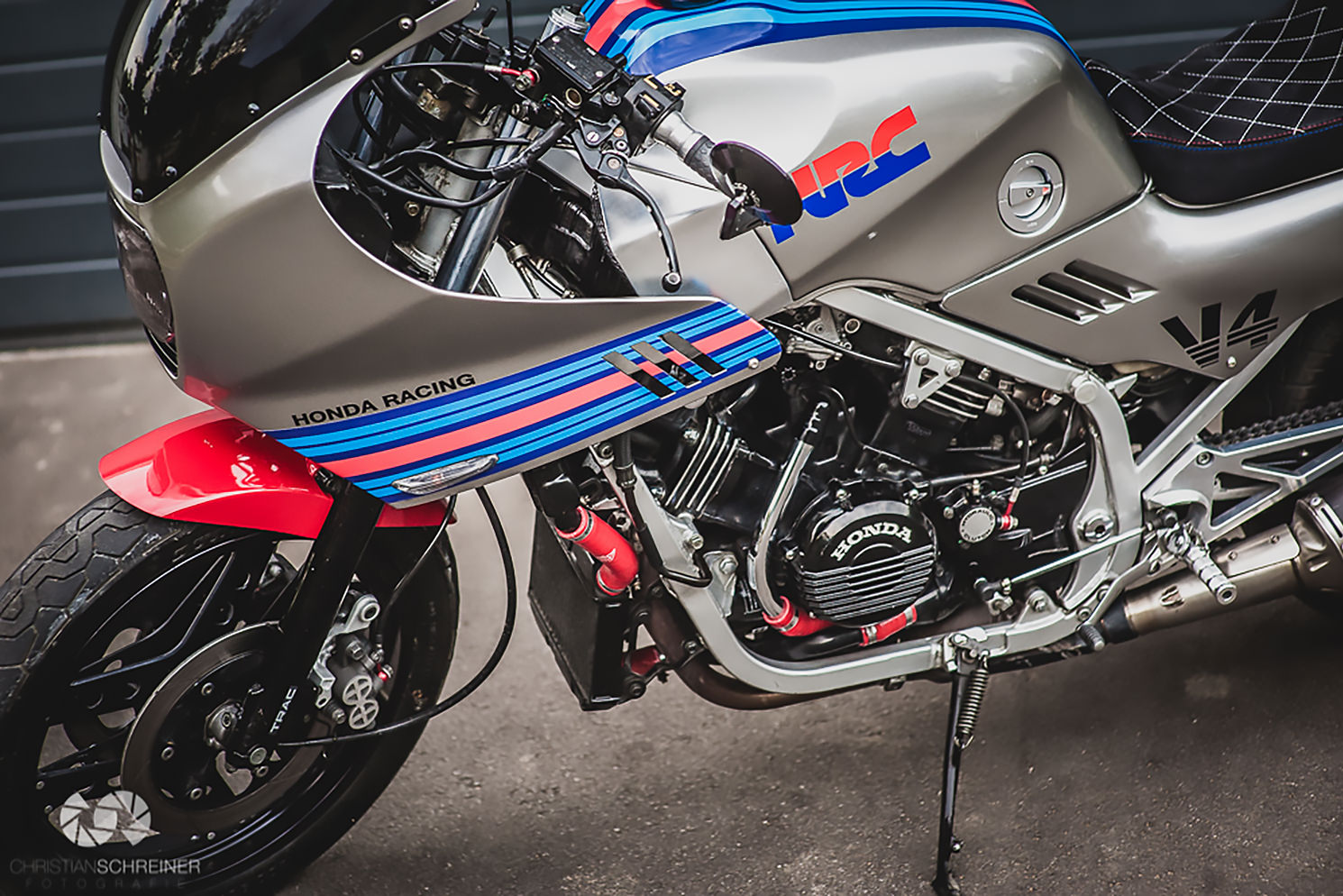
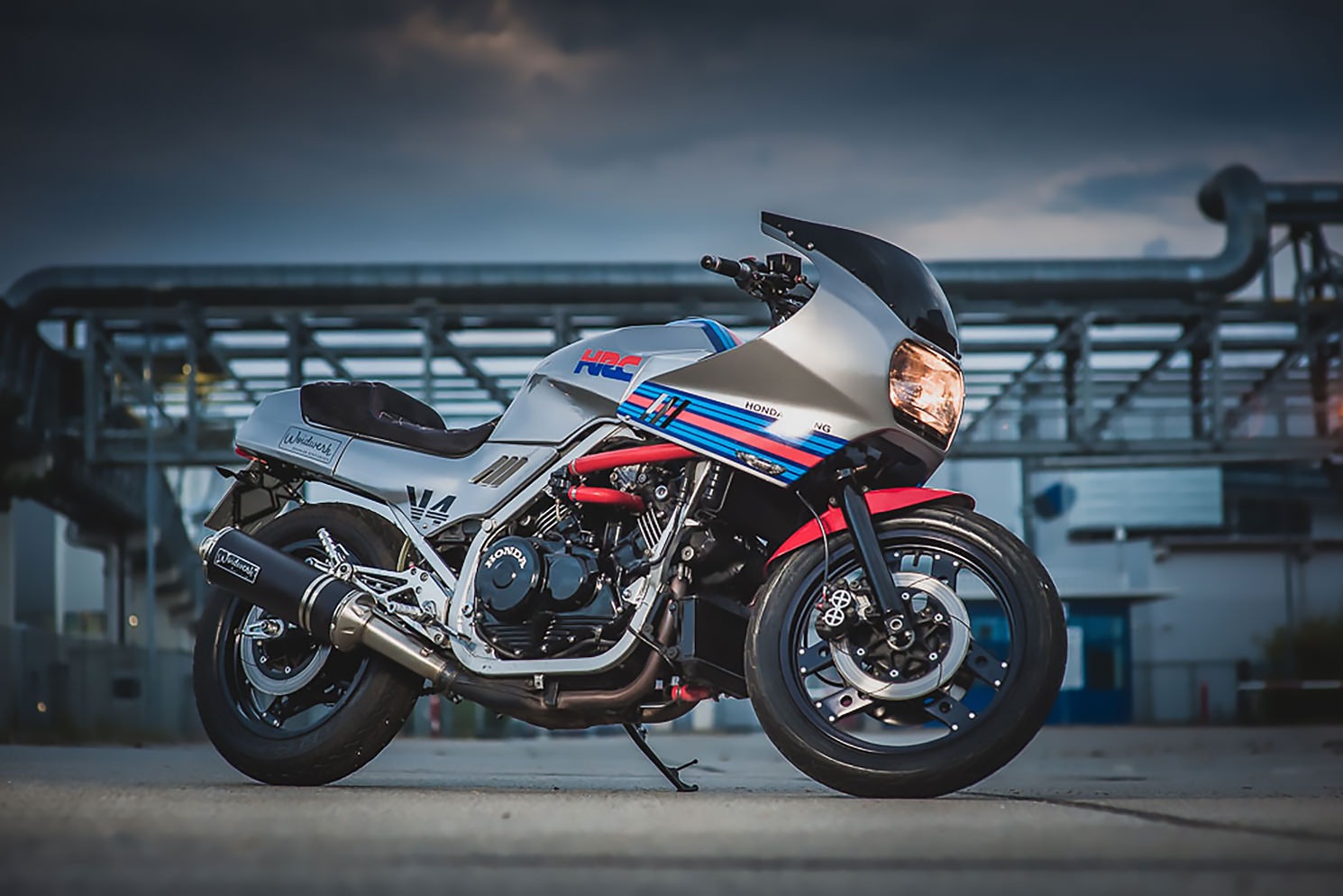
Honda VF1000F2 by Woidwerk Looking at a stock Honda VF1000F2, you’d never really know that a 998 cc, 122 hp V-four hides under all those fairings. Back in 1985, Honda squeezed the big four into a sports tourer, equipped with an extra radiator, and proved that it could be quite a versatile package.

Fast forward 40 years, and Ralf Eggl of lower Bavaria’s Woidwerk came into possession of a very special VF1000F2. This particular 1985 example was bought, brand new, by Ralf’s grandfather, and is the very bike that introduced a young Ralf to the world of motorcycling. His grandfather used the bike every day until 2005, after which it was parked for ten years.
Honda VF1000F2 restomod by Woidwerk
The bike was in sore need of attention, and Ralf was all too happy to oblige. He started with the most obvious modification—getting rid of much of the fairing. But this was easier said than done.

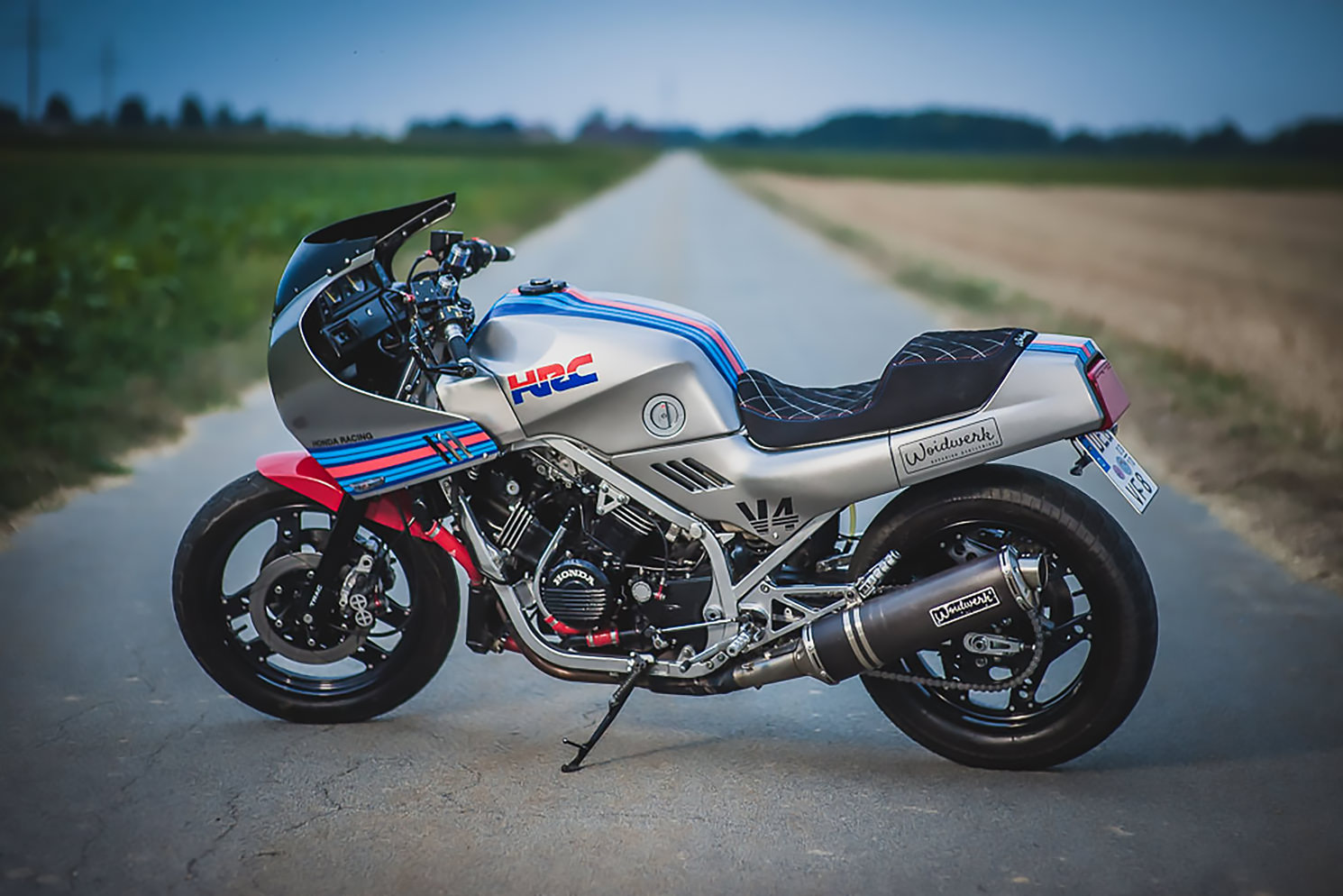
First, he had to remove the lower fairing and its mounts, then, he lowered the entire front section of the fairing by a few inches. This left ugly gaps between the fairing and tank, but Ralf was able to fabricate aluminum air scoops to blend the two back together. The smoked screen was cut down to complete the package
Honda VF1000F2 restomod by Woidwerk
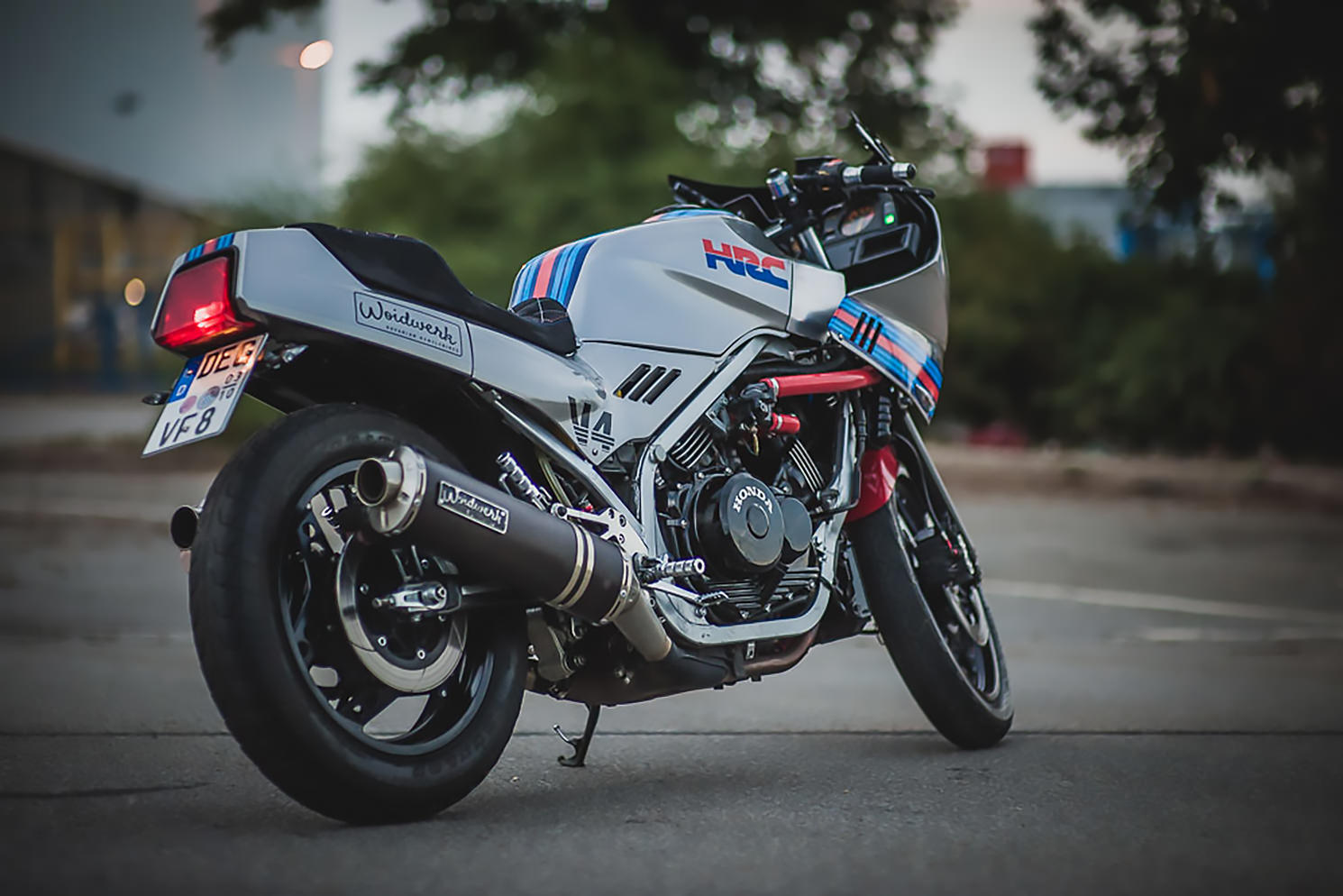
The tank, engine, and front end were mostly left alone—but they were rebuilt and given a fresh coat of paint. The back end is where Ralf got tricky again, by chopping a chunk out of the factory seat and narrowing the entire rear section. A new two-up seat with custom stitching sits up top, and although it doesn’t look like anything Honda would’ve done in the 80s, it still has a factory feel.

Finishing touches include a new exhaust (donated by an Aprilia V4), red coolant hoses, a slick Martini-Porsche style paint scheme, and new Wilbers rear suspension. It’s another fantastic build from Woidwerk, and it’s a great way to honor the man who got Ralf into bikes in the first place. [Via]
Honda VF1000F2 restomod by Woidwerk


from Bike EXIF https://ift.tt/UobIdQP

Friday, 21 July 2023

Fever pitch: A Kymco KTR 150 scrambler from Taiwan

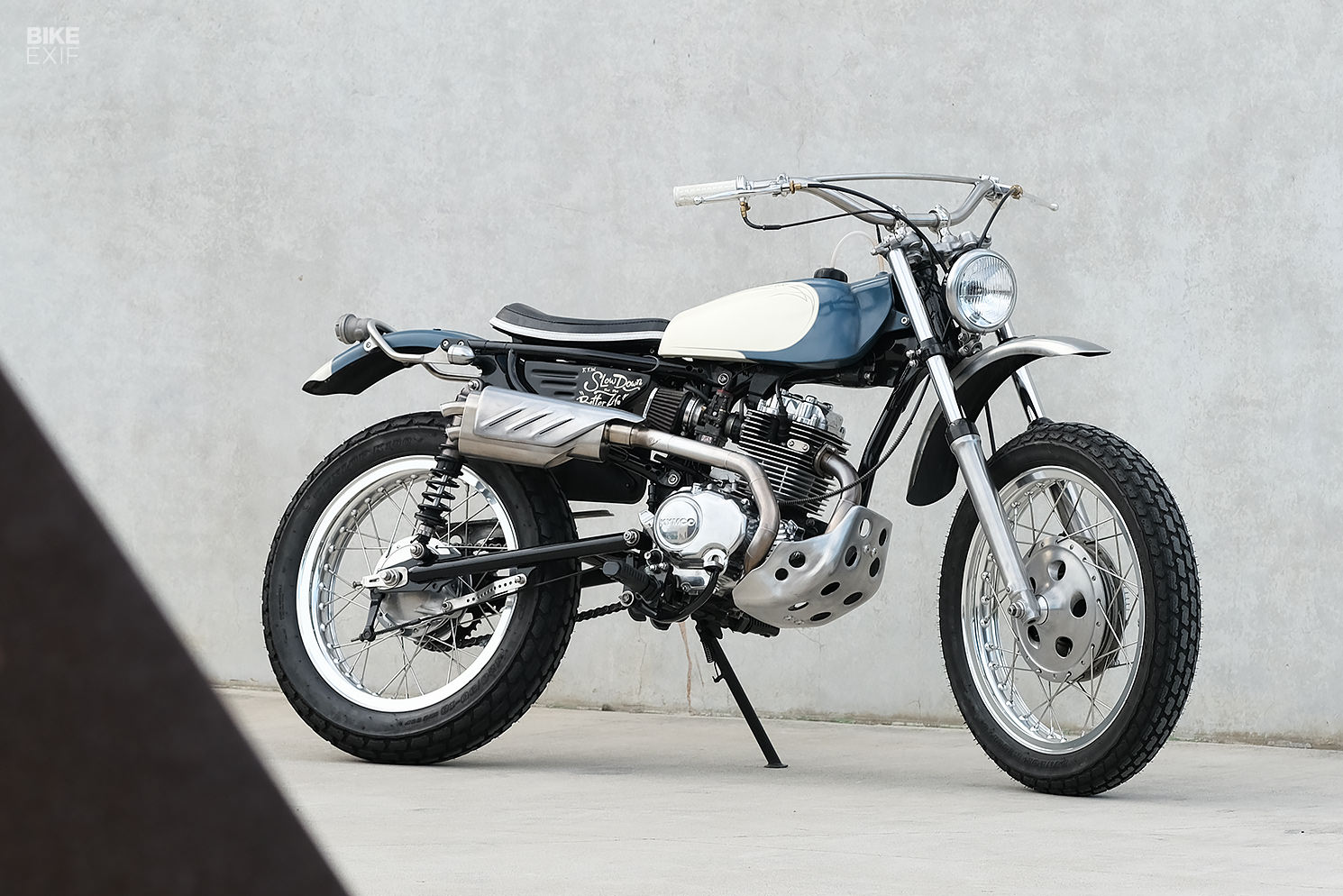
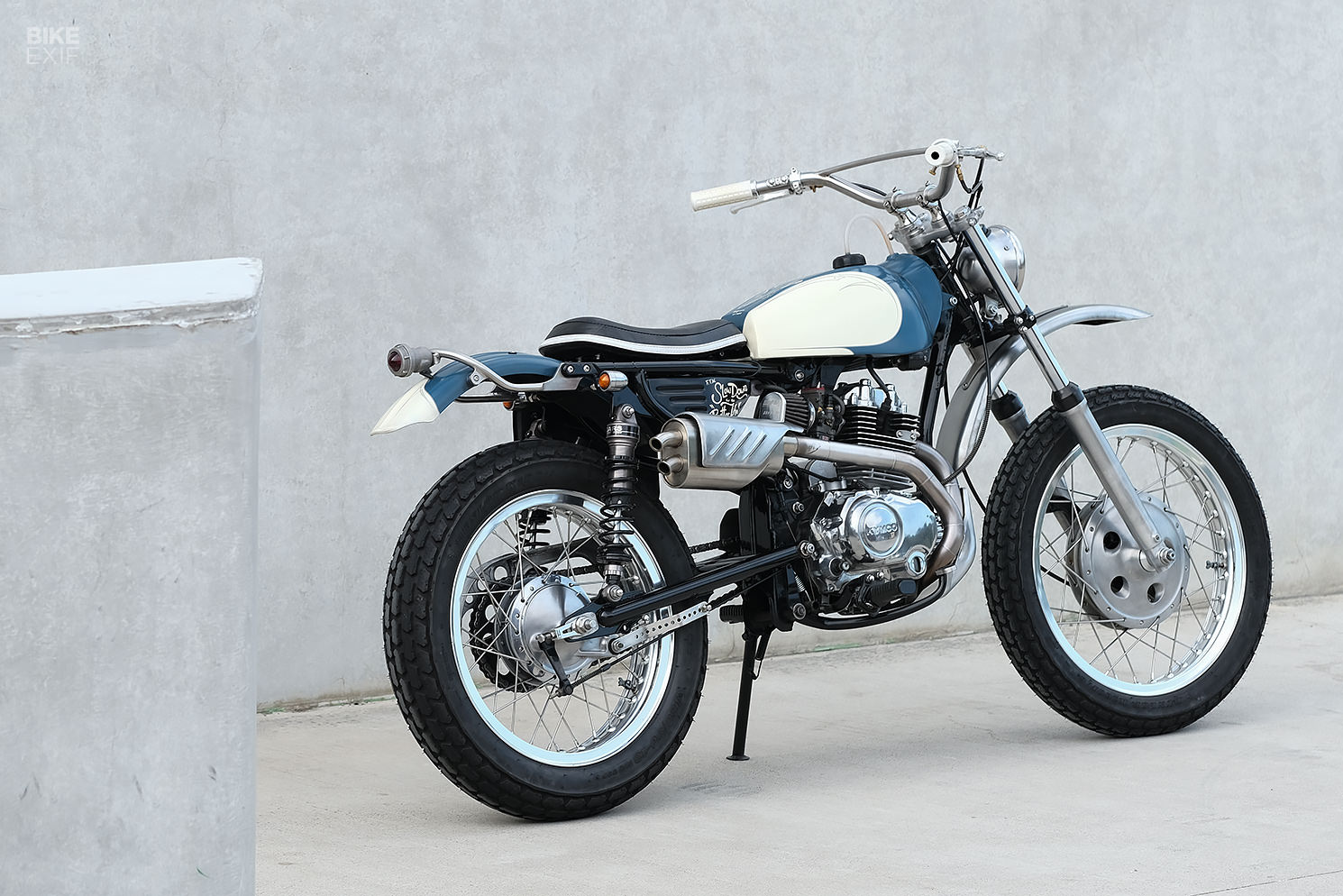
Kymco KTR 150 scrambler by Fever Taiwan
In Taiwan, 150 cc motorcycles like the locally-produced Kymco KTR 150 sell like hotcakes. They’re nimble, utilitarian and economical, and small enough to qualify for cheaper licensing fees, too. But it’s not just commuters that see the appeal—the KTR 150 and its ilk are fast becoming darlings of Taiwan’s blossoming custom scene.

The country’s best custom motorcycle builders are adept at turning the likes of the humble Kymco KTR 150 into spunky customs. If you don’t believe us, just take a look at this street scrambler from Fever in Taoyuan City just outside of Taipei. Svelte and stylish, it makes a compelling argument for the KTR’s potential.

Kymco KTR 150 scrambler by Fever Taiwan
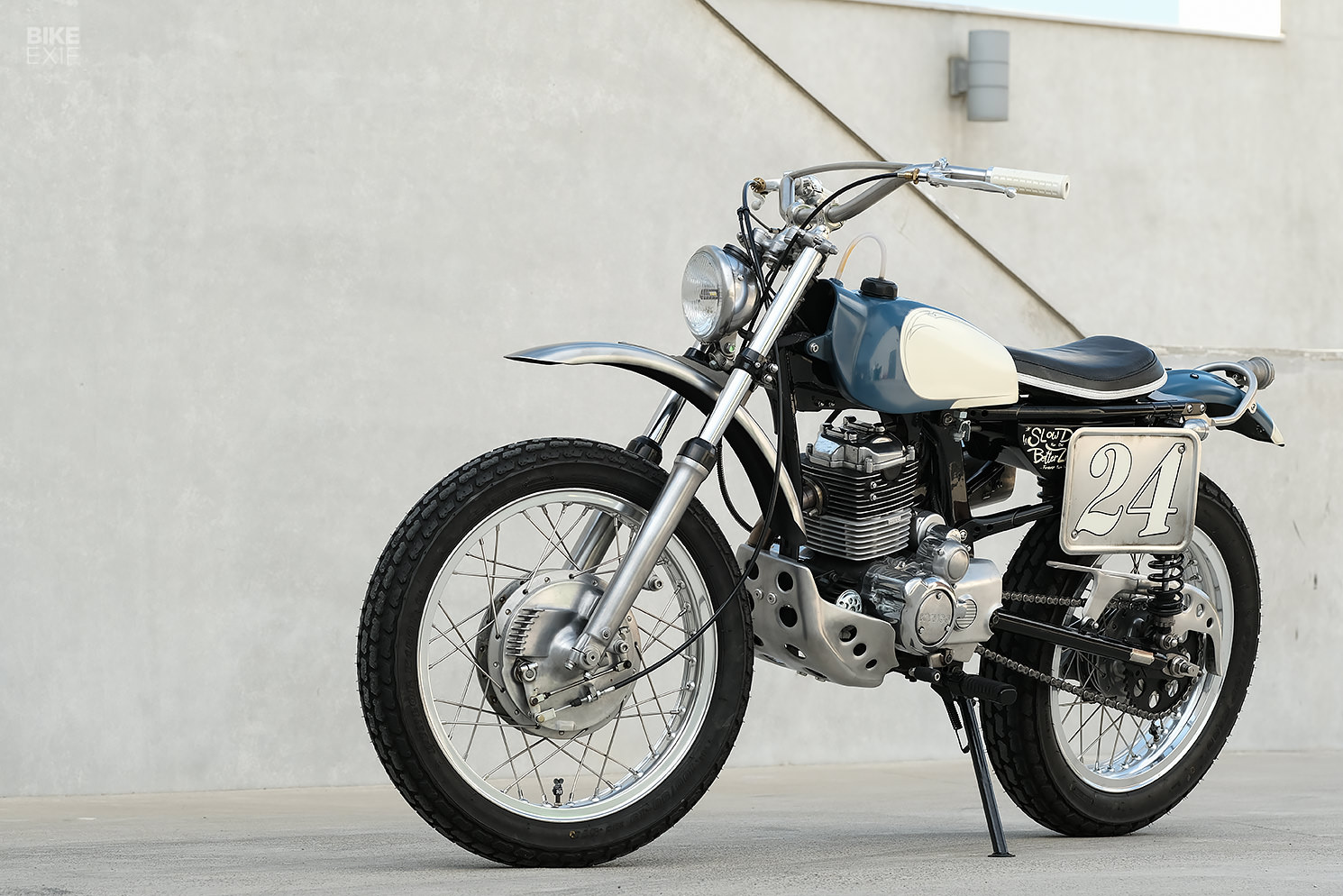
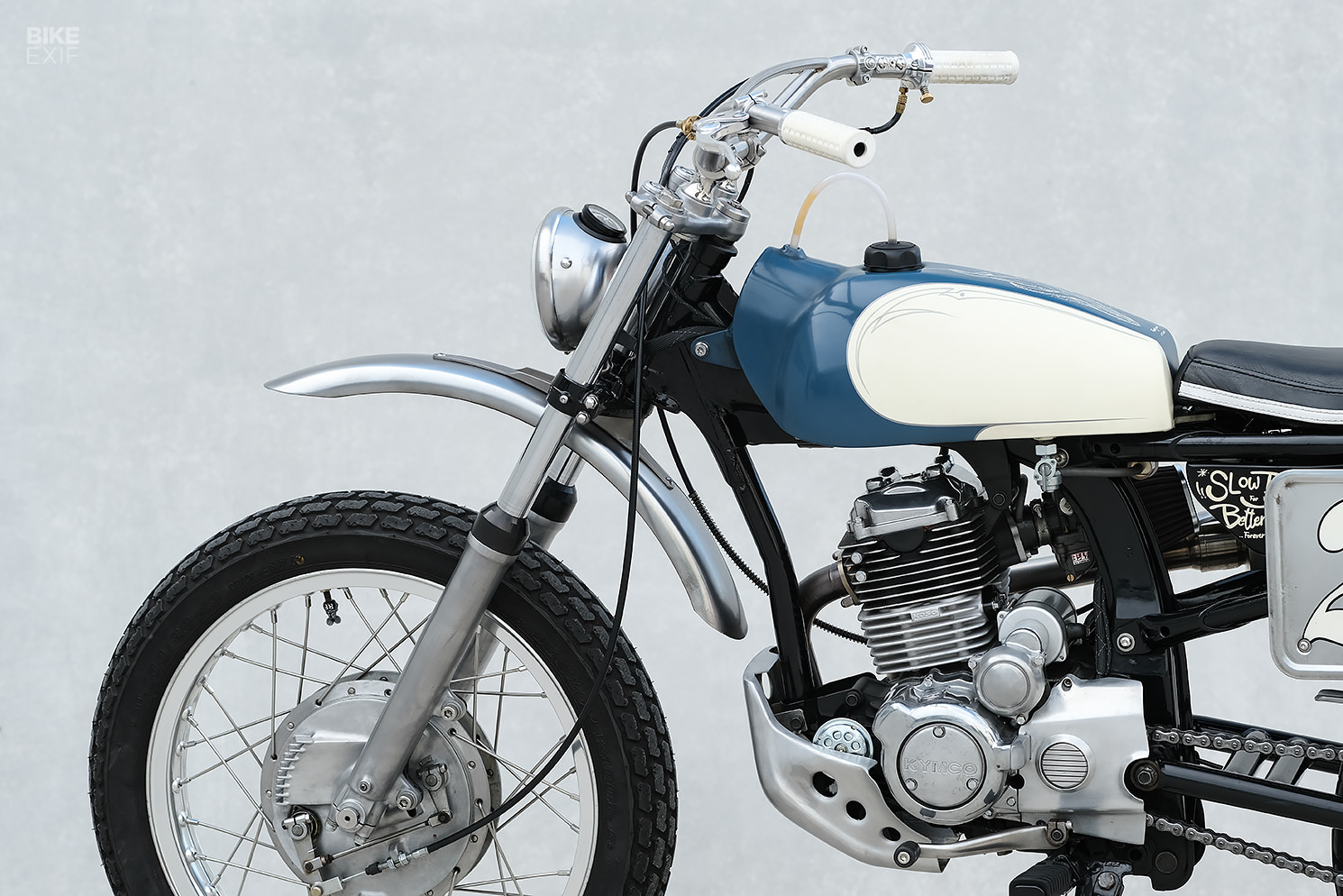
The brief was to create a stripped-down scrambler while weaving together retro and modern aesthetics. Fever responded with a tasteful symphony of styles. The fuel tank recalls vintage Japanese dirt bikes, the seat and tail have a classic Brit feel, and the exhaust almost has a performance scooter vibe going on.

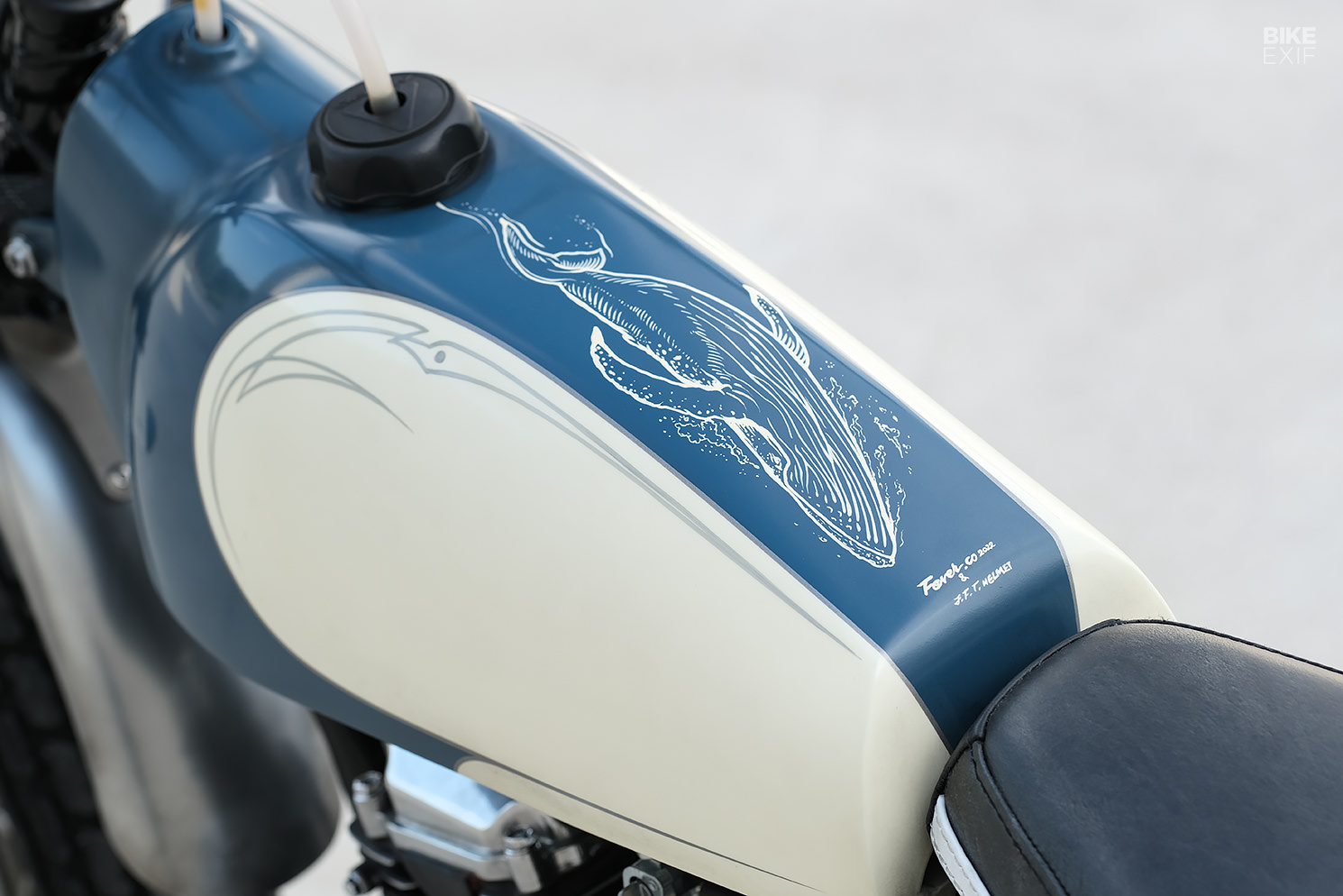
That fuel tank was the first part to go onto the KTR 150—even though it wasn’t originally designed for this particular bike. It was the first part that Fever’s founder, Xiao An, fabricated while he was busy with his metalworking apprenticeship years ago. When he opened Fever, he hung it on the wall for nostalgia’s sake.

Kymco KTR 150 scrambler by Fever Taiwan
Once it was adapted to fit the Kymco’s frame, the tank dictated the rest of the build. Fever tweaked the bike’s subframe, finishing it off with a bolt-on rear loop. The loop isn’t just for show either—it’s also sporting mounting tabs to stabilize the rear fender.

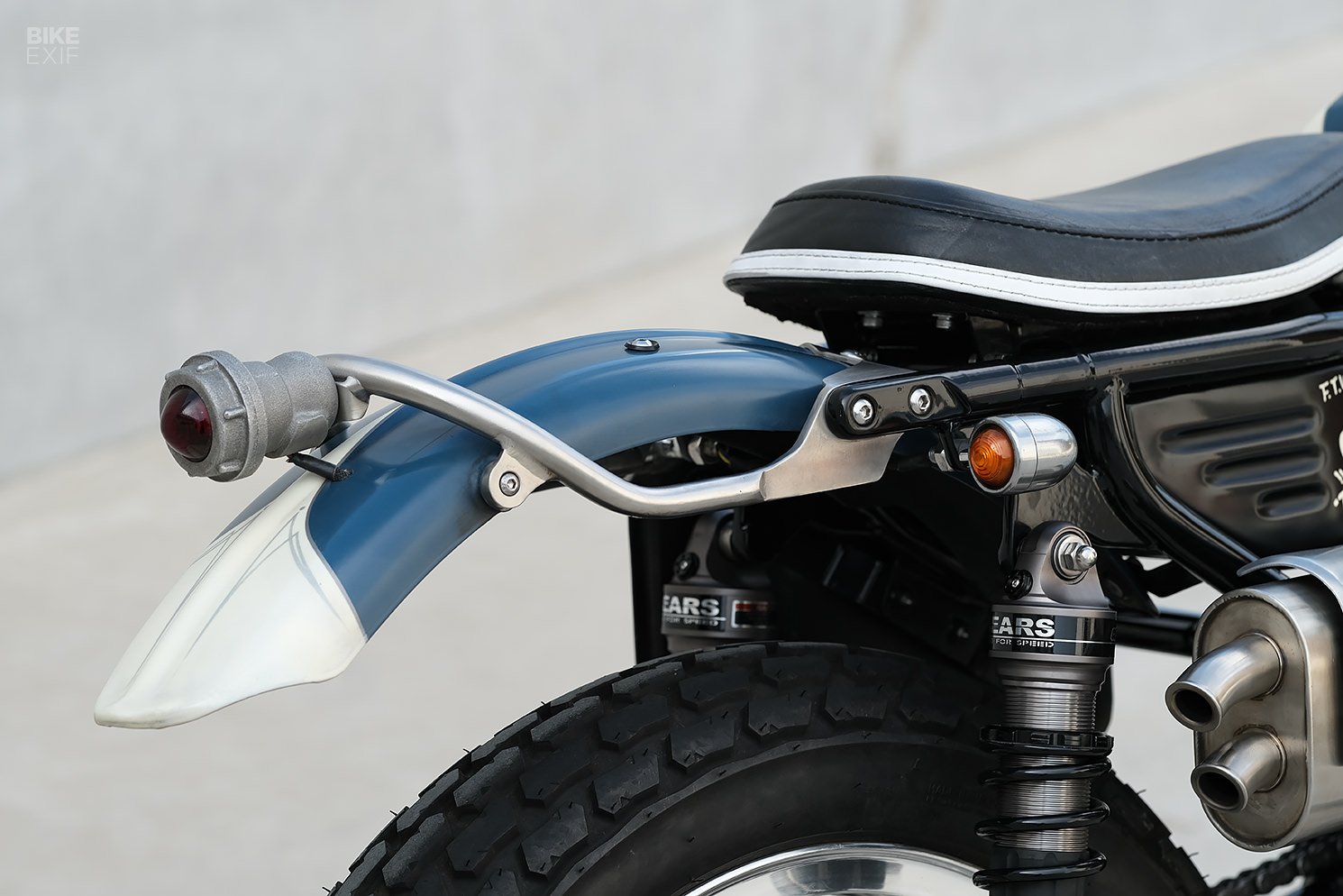
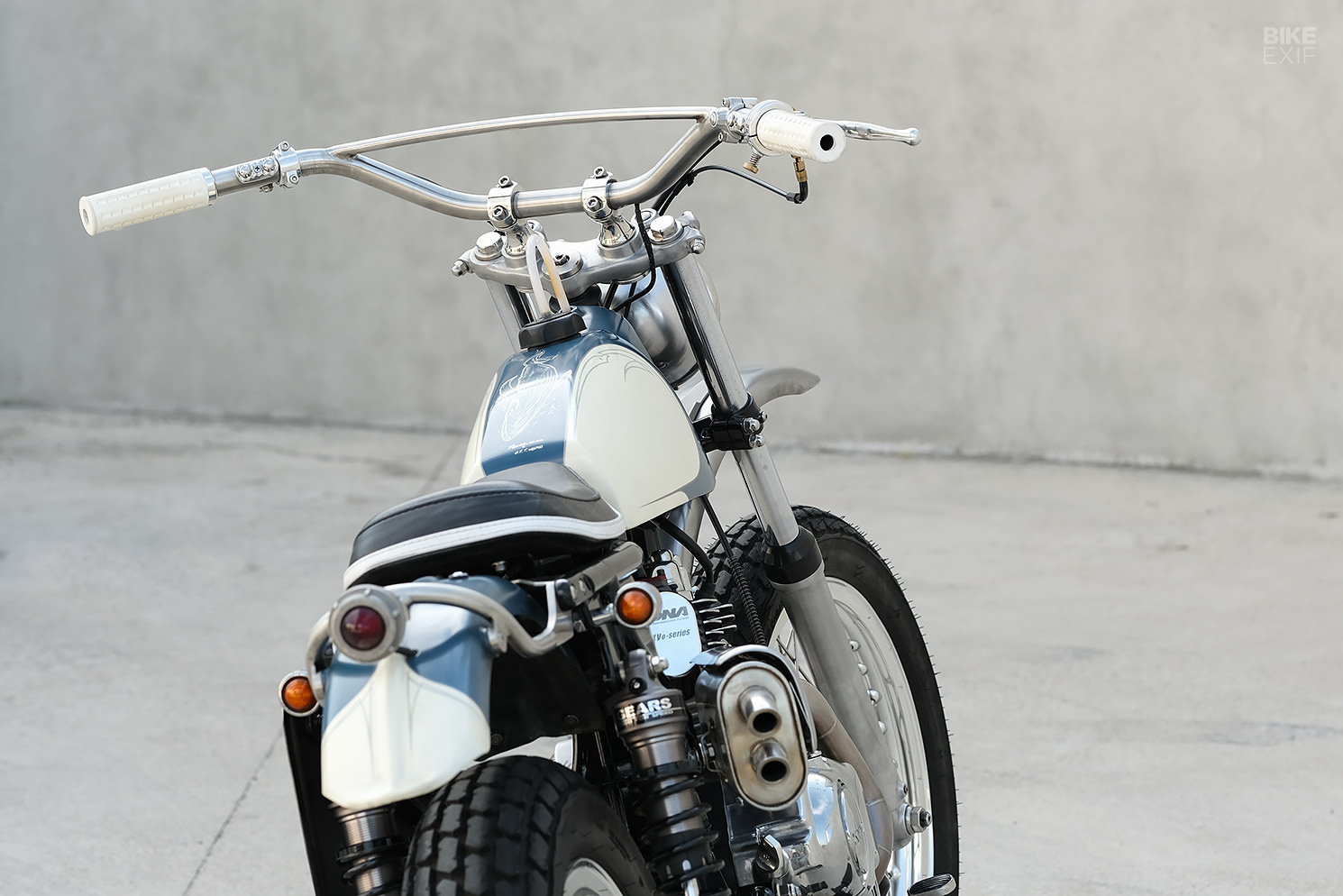
The overall design is tidy, cutting a straight line from the tank through to the tail. A solo seat sits up top, upholstered with a white stripe along the edge that makes it look skinnier than it physically is. A ribbed fender sits just behind it, while a cast taillight from Heiwa in Japan sits against the back of the rear loop.

Kymco KTR 150 scrambler by Fever Taiwan
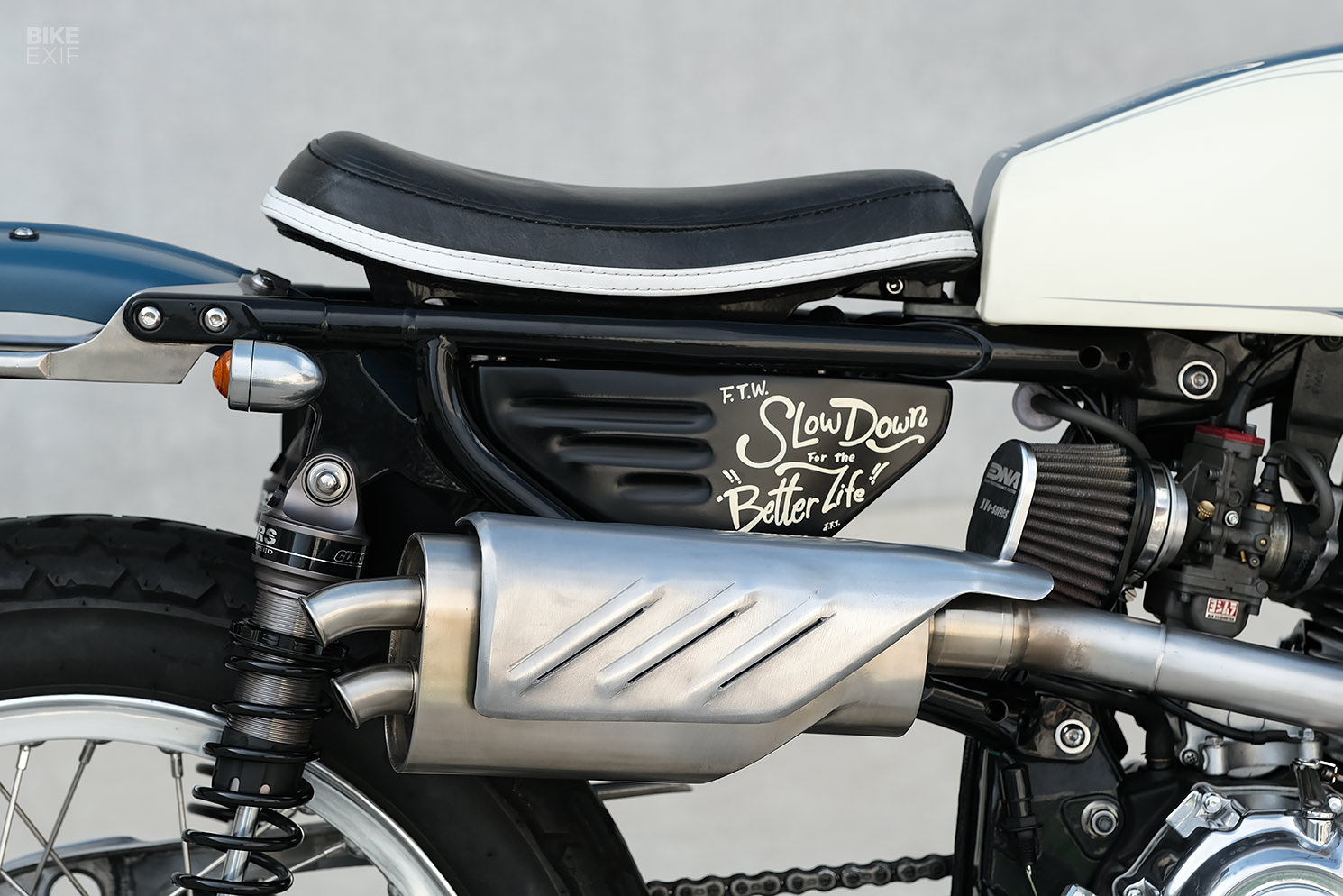
Fever also fabricated the trials-style front fender and bracket, voluptuous bash plate, sprocket cover, and chain guard A custom-made battery box sits under the seat, flanked by the exhaust on one side and a number board on the other.

The box hosts the main electronic components, along with a Bluetooth-enabled Motogadget controller. The KTR 150’s owner, Jia-Hong Xu, built the new wiring harness himself from scratch. The bike can be switched on from a smartphone now, with a secret key ignition offering a backup in case your battery dies.

Kymco KTR 150 scrambler by Fever Taiwan
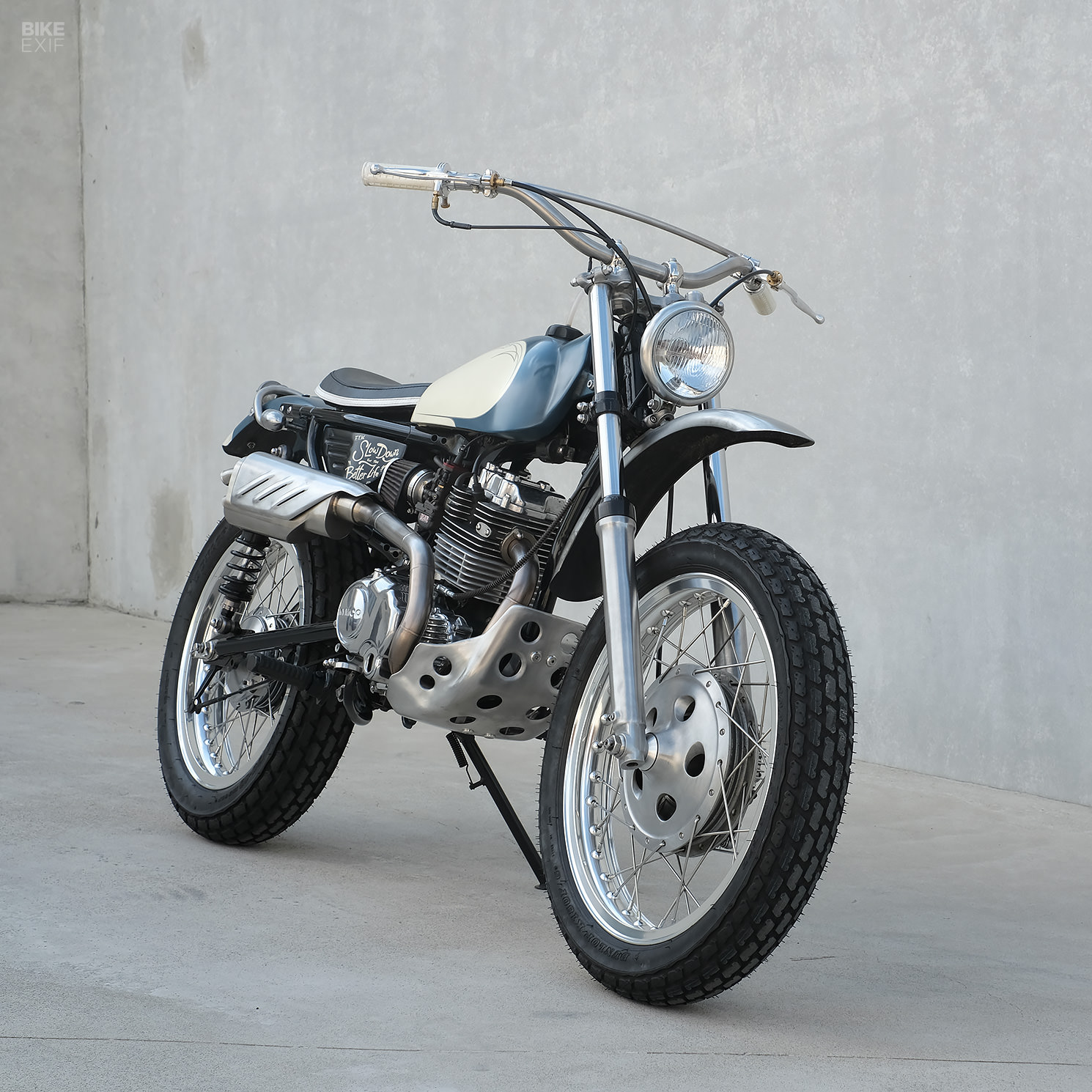
Moving to the suspension, Fever transplanted the forks, yokes, and front drum brake hub from a Yamaha SR400. The crew drilled out the front brake casing and treated it to a brushed finish, then laced it to a 19” rim. The front end also uses a custom axle, spacers, and fork caps.

An 18” rim does duty at the back, with new shocks from Gears Racing offering a better ride. The tires are Dunlop K180—street-specific tires with flat track looks.

Kymco KTR 150 scrambler by Fever Taiwan
The Kymco’s single-cylinder motor went under the knife too, with a full refresh inside and out. Its polished covers add to the bike’s retro charm, while its new Yoshimura carb and DNA filter free up an extra horse or two.

Fever is best known for its exhaust work, so they pulled out all the stops here. A single header snakes behind the sump guard and around the engine, before exiting in a boxy oval muffler. The design is remarkably well-considered; note how the heat shield echoes the shape of the muffler, right down to its perfectly parallel louvers.

Kymco KTR 150 scrambler by Fever Taiwan
For the controls, Hong and Fever pieced together a spec sheet of tasty parts from all over. The handlebar risers come from Biltwell Inc. in the US, while the bars themselves are from BAAK in France. The headlight comes from BAAK too, complete with an integrated Motogadget speedo.

It’s a tidy setup, with subtle push buttons integrated into the headlight, lever clamps, and custom-made housings on the bars, and all the wiring run internally. (Admittedly, Hong is probably the only guy that knows how to operate it all).

Kymco KTR 150 scrambler by Fever Taiwan
The paint job is another feature that demands closer inspection. It’s the work of Jeffrey’s Finishing Touch, who shot the bike in blue and white, then adorned it with subtle silver pin-striping. Extra touches include an illustration of a whale on the tank, and an appropriate slogan pasted on each side of the battery box; “Slow down for the better life.”

Fever’s Kymco KTR 150 is not only a testament to how much you can do with a simple commuter bike, but also a great reminder that small bikes can have big attitude.

Fever Taiwan | Images by Dong Lin

Kymco KTR 150 scrambler by Fever Taiwan


from Bike EXIF https://ift.tt/2QSZu3o

Thursday, 20 July 2023

Greatest hits: The best of Walt Siegl Motorcycles

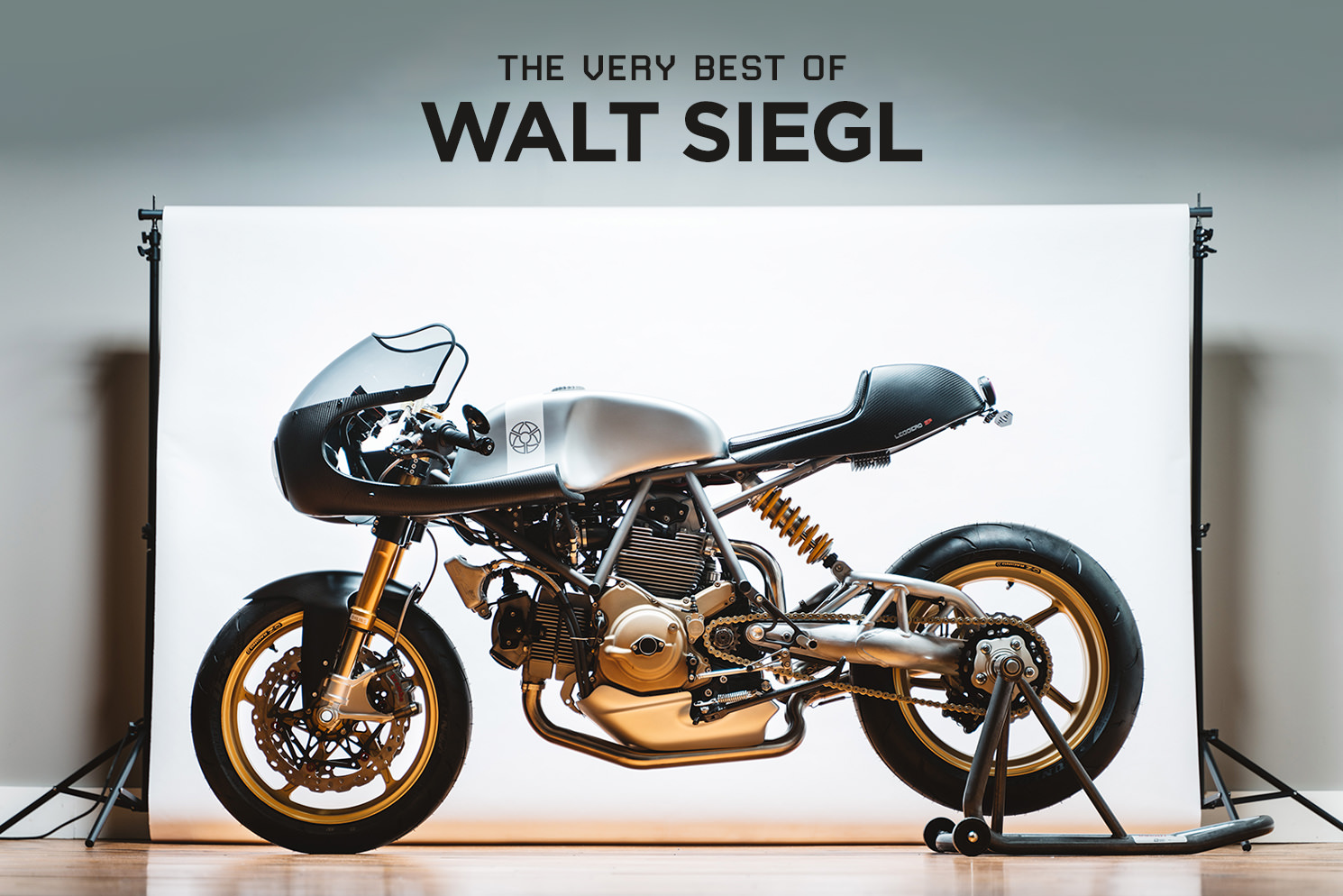
Top 5 Walt Siegl custom Motorcycles
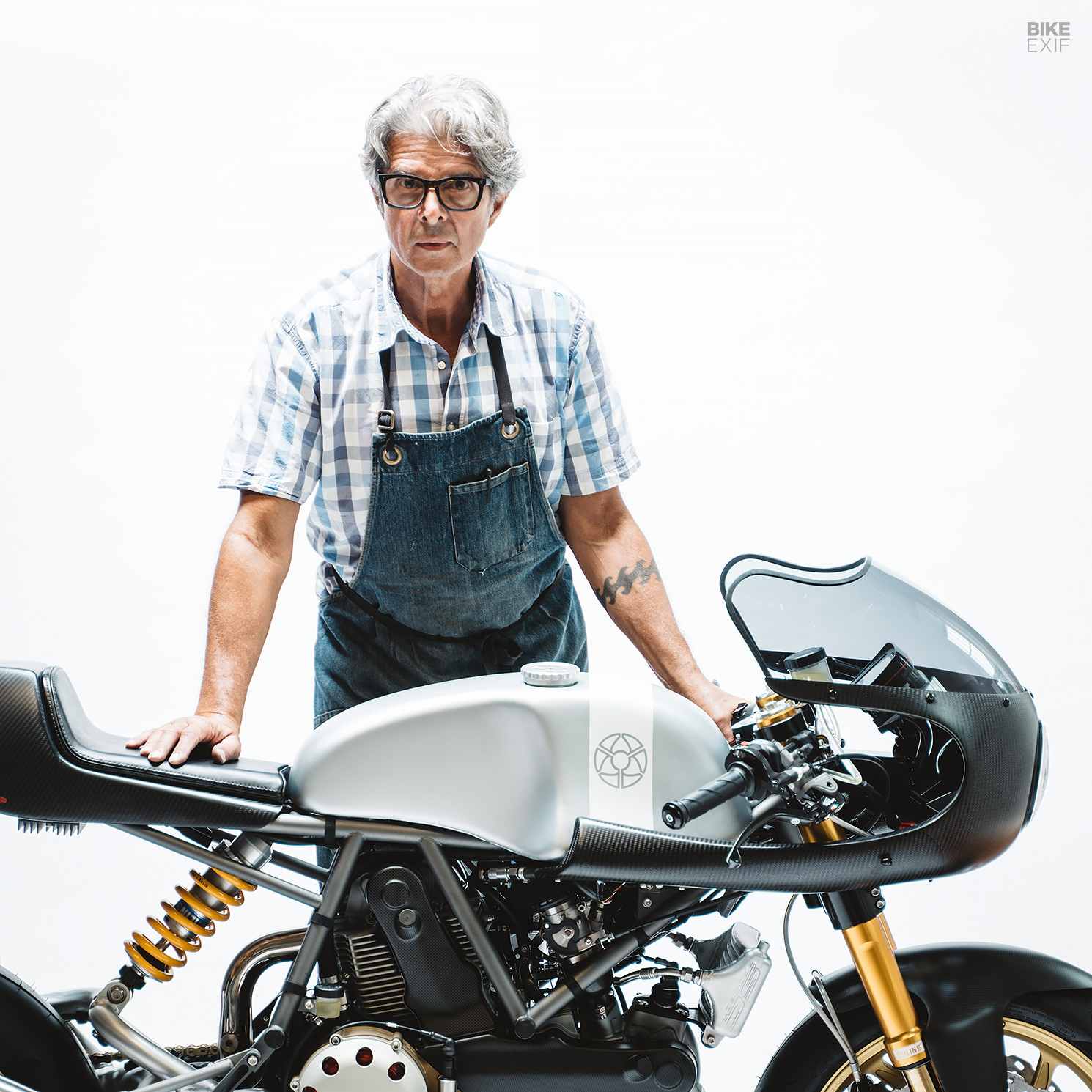
Walt Siegl’s work has graced the pages of Bike EXIF since the publication’s early days. Based in New Hampshire, USA, the Austrian-born designer and custom motorcycle builder specializes in high-end Ducati customs that exemplify good taste and expert craftsmanship.

With over a decade of Walt Siegl Motorcycles content to sift through, narrowing his portfolio down to just five motorcycles is no easy task. We could fill a book with our favorite WSM bikes—and we could wax lyrical for hours about what makes them so appealing. From one-off specials, to ‘series’ models that are built in limited numbers, Walt’s machines typically leave our jaws on the floor.

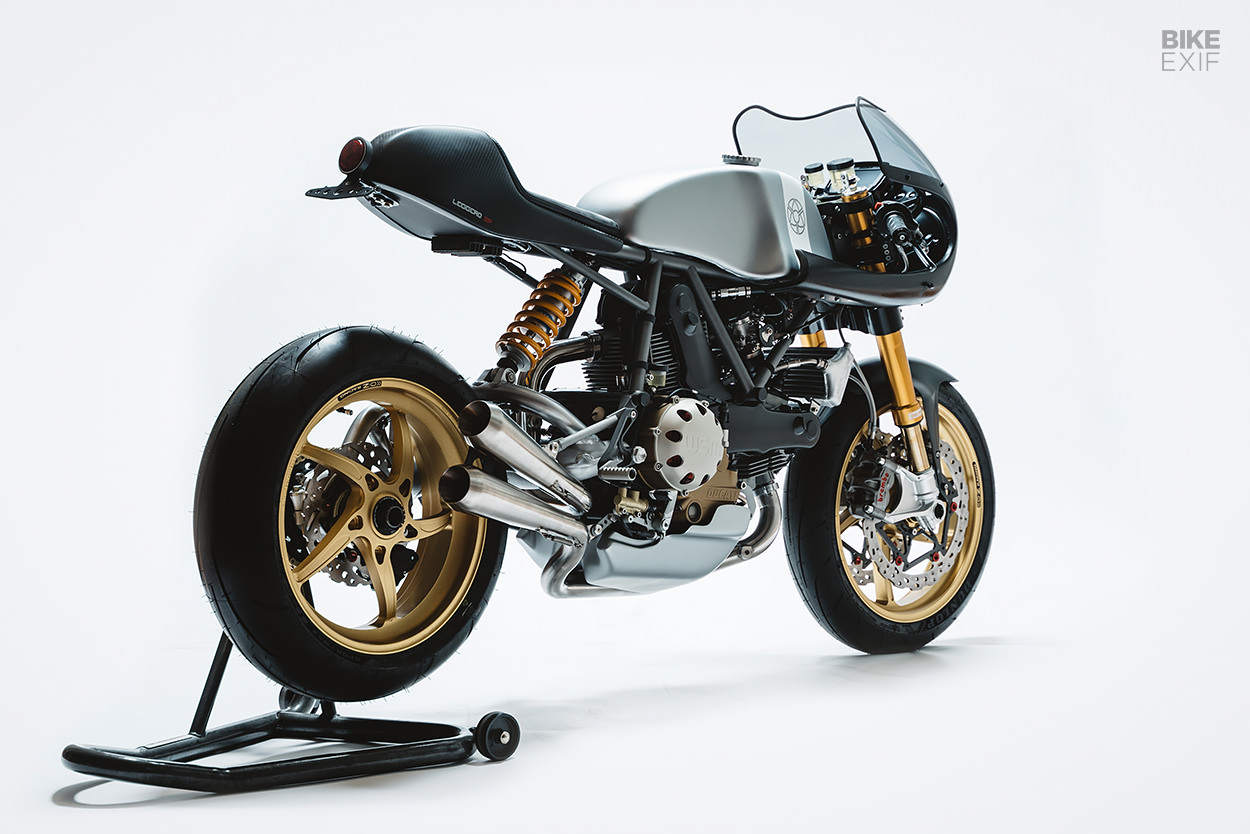
Custom Ducati Leggero by Walt Siegl Motorcycles
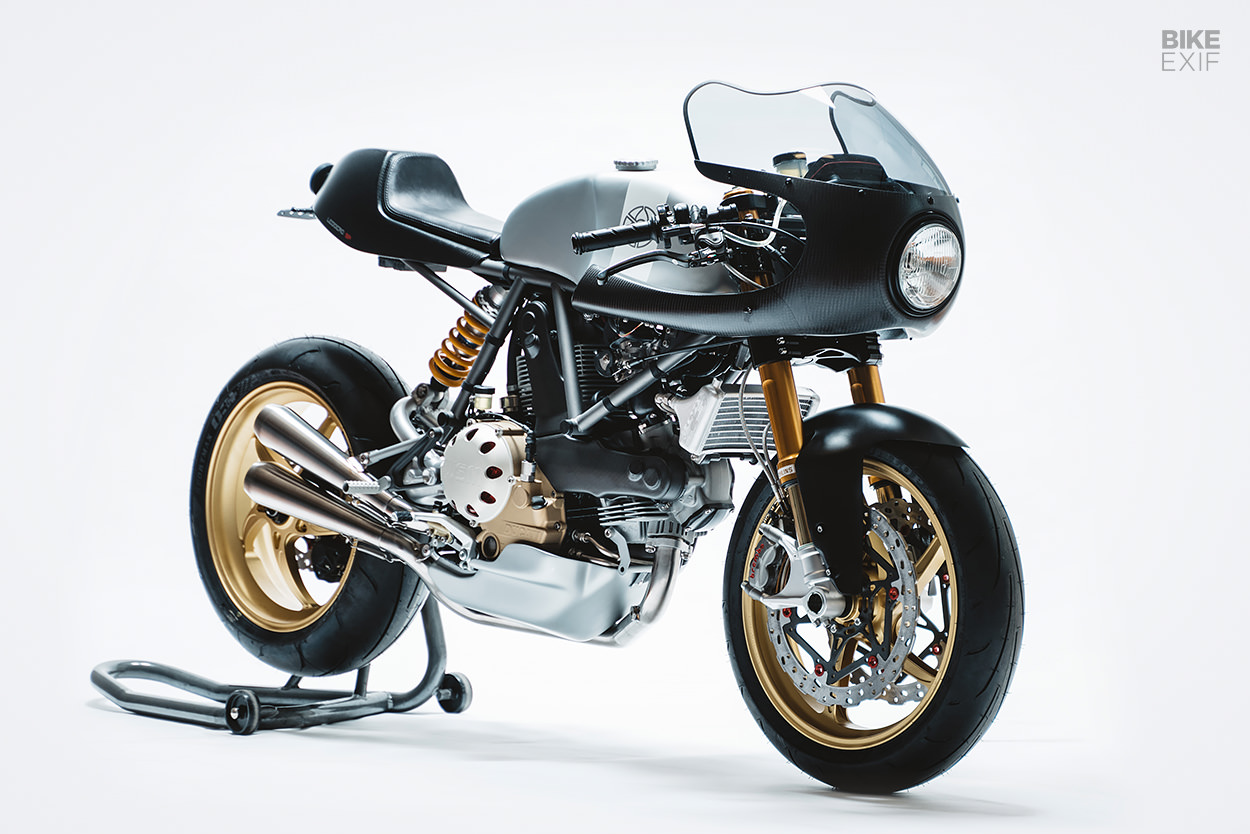
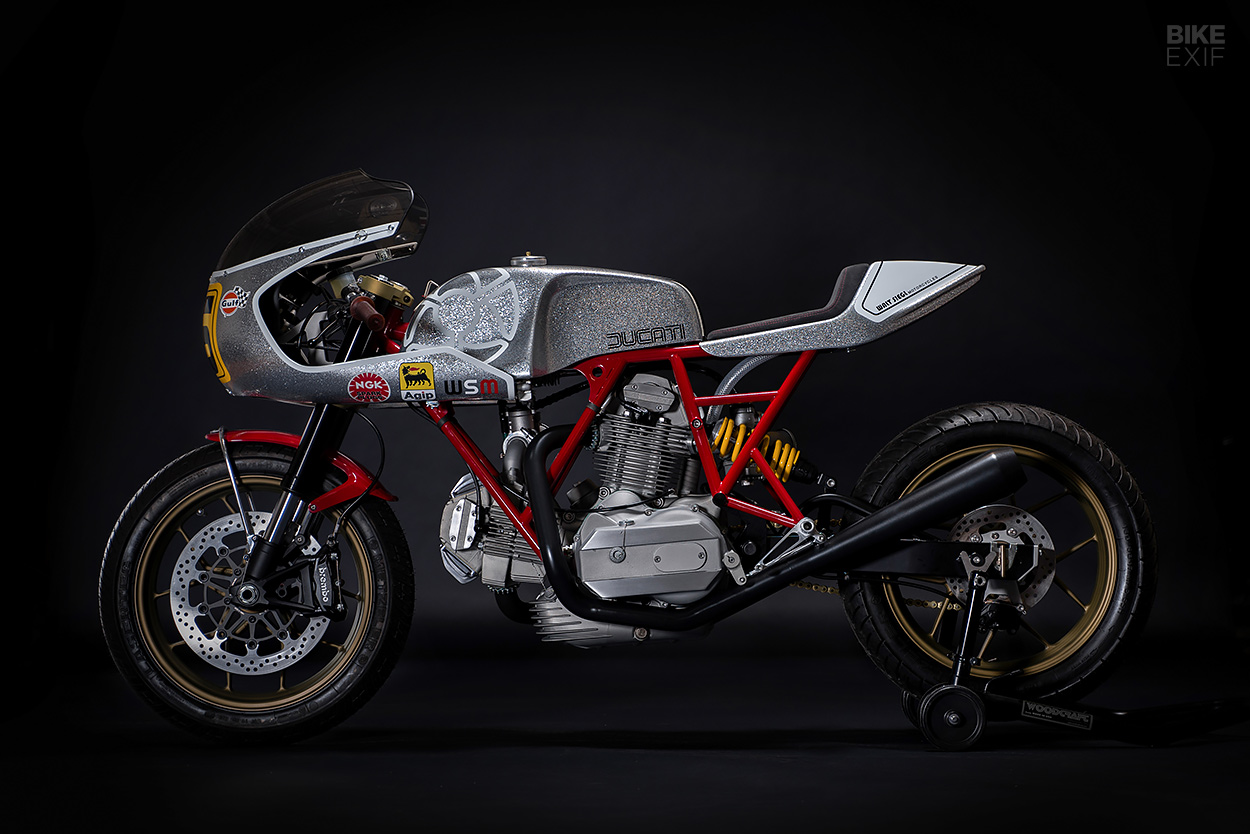
WSM Ducati Leggero If there’s one thing that Walt Siegl is known for above anything else, it’s his made-to-order ‘Leggero’ Ducatis. Few custom motorcycles strike the balance between form and function as well as a Walt Siegl Motorcycles Leggero, and few are as instantly recognizable.

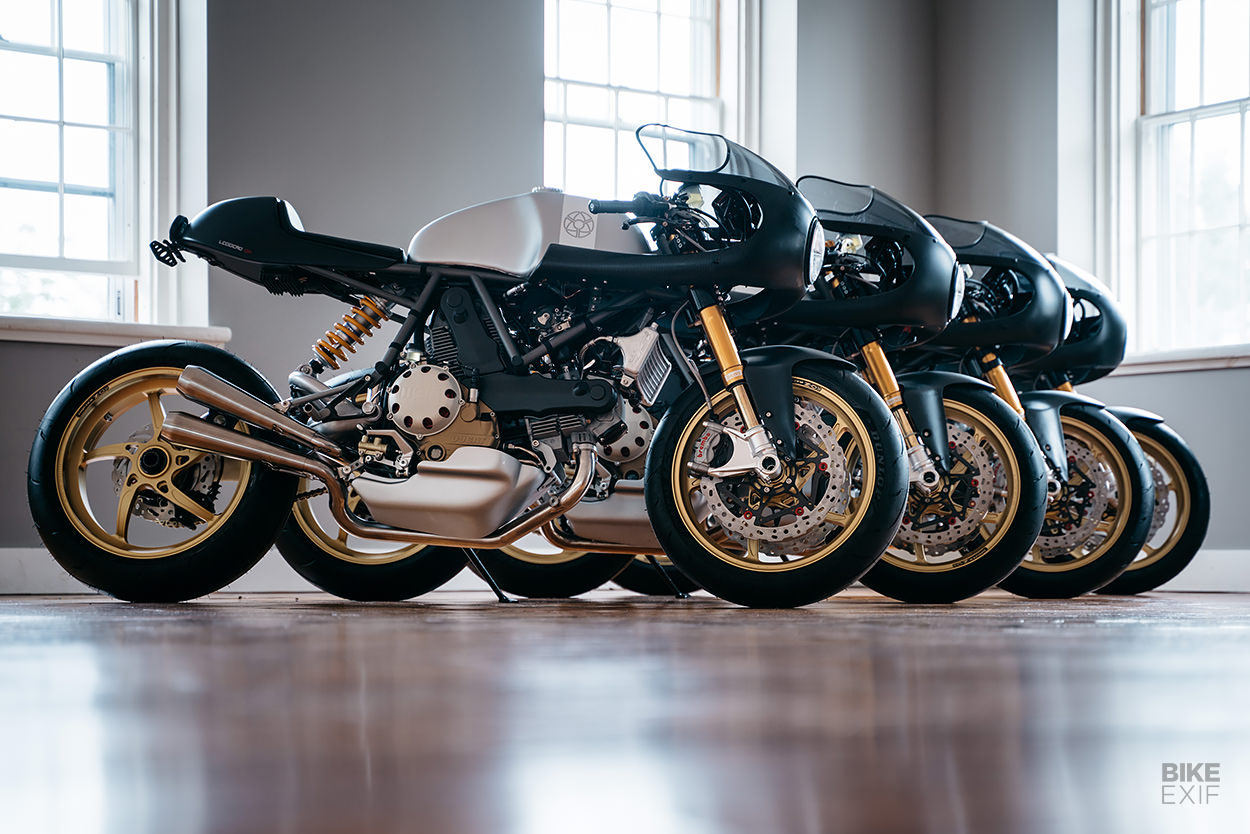
Effortlessly blending vintage looks with modern performance, and finished to Walt’s typical exacting standards, the Leggero is the stuff of dreams. What’s better than a WSM Leggero then? How about four Leggeros, each built according to Walt’s own specifications, to store as inventory for potential buyers?

Custom Ducati Leggero by Walt Siegl Motorcycles
Walt built these four bikes with the same template he uses for all of his Leggero Ducatis. Each features a chromoly WSM frame, fitted with Öhlins suspension, forged OZ Racing wheels, and Brembo brakes. It then gets a special Ducati motor built by Bruce Meyer—a known Ducati specialist, and Walt’s go-to engine guy.

Two of the bikes built in this production run sport Ducati 900 SuperSport engines, while the other two use GT1000 mills. As is customary, they boast a laundry list of upgrades and are aided by modern custom-specced electronics packages.

Custom Ducati Leggero by Walt Siegl Motorcycles
Visually, Walt’s Leggeros are love letters to the late 70s and early 80s Ducatis that he loves. The signature bodywork is equal parts muscular and flowing, tracing a graceful line from the fairing through to the tail. The finishes are well-considered, serving to accentuate the craftsmanship at work here.

Building four motorcycles at once presented a unique set of challenges for Walt, but he overcame them. If there’s one motorcycle that effortlessly embodies performance and style, it’s the WSM Leggero. [More]

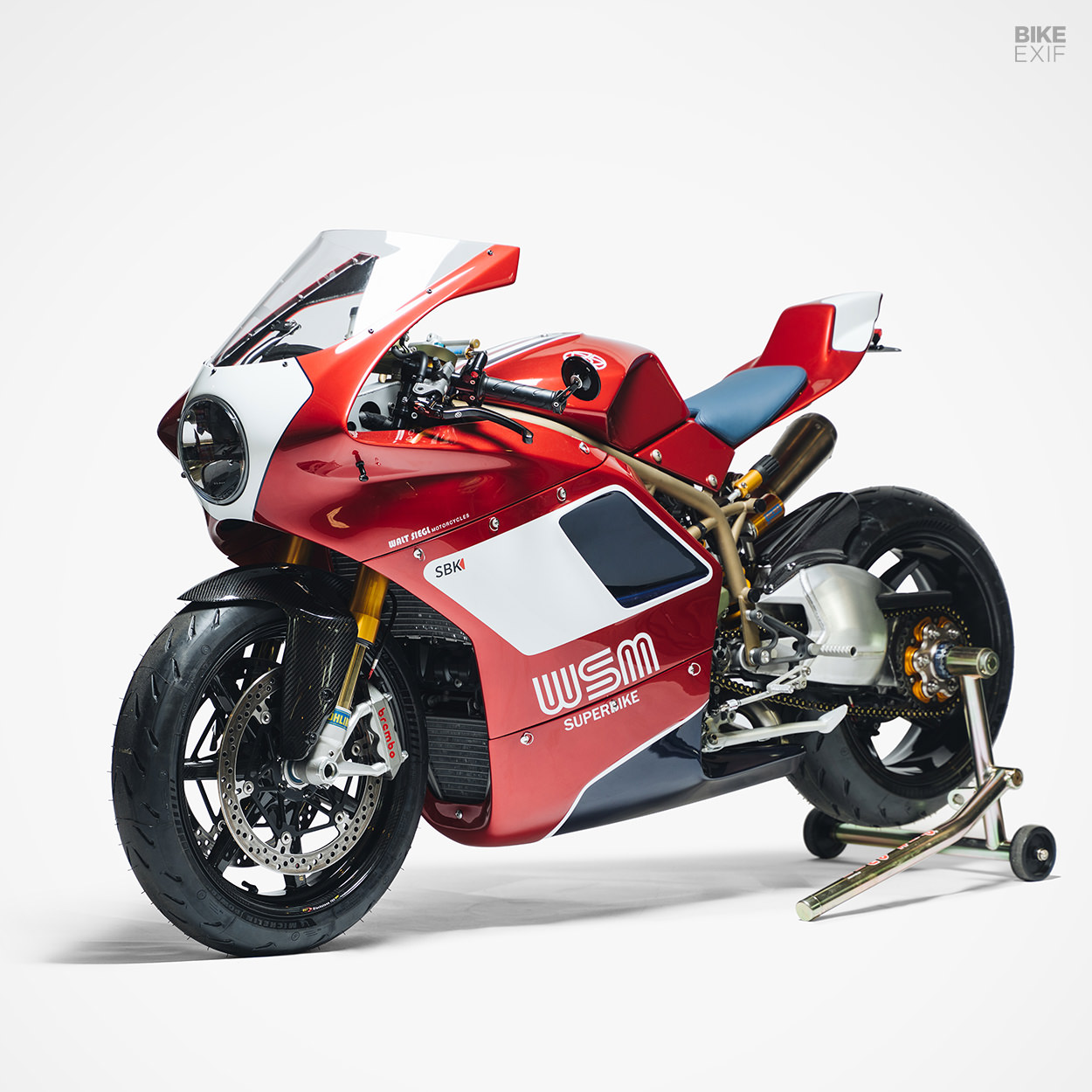
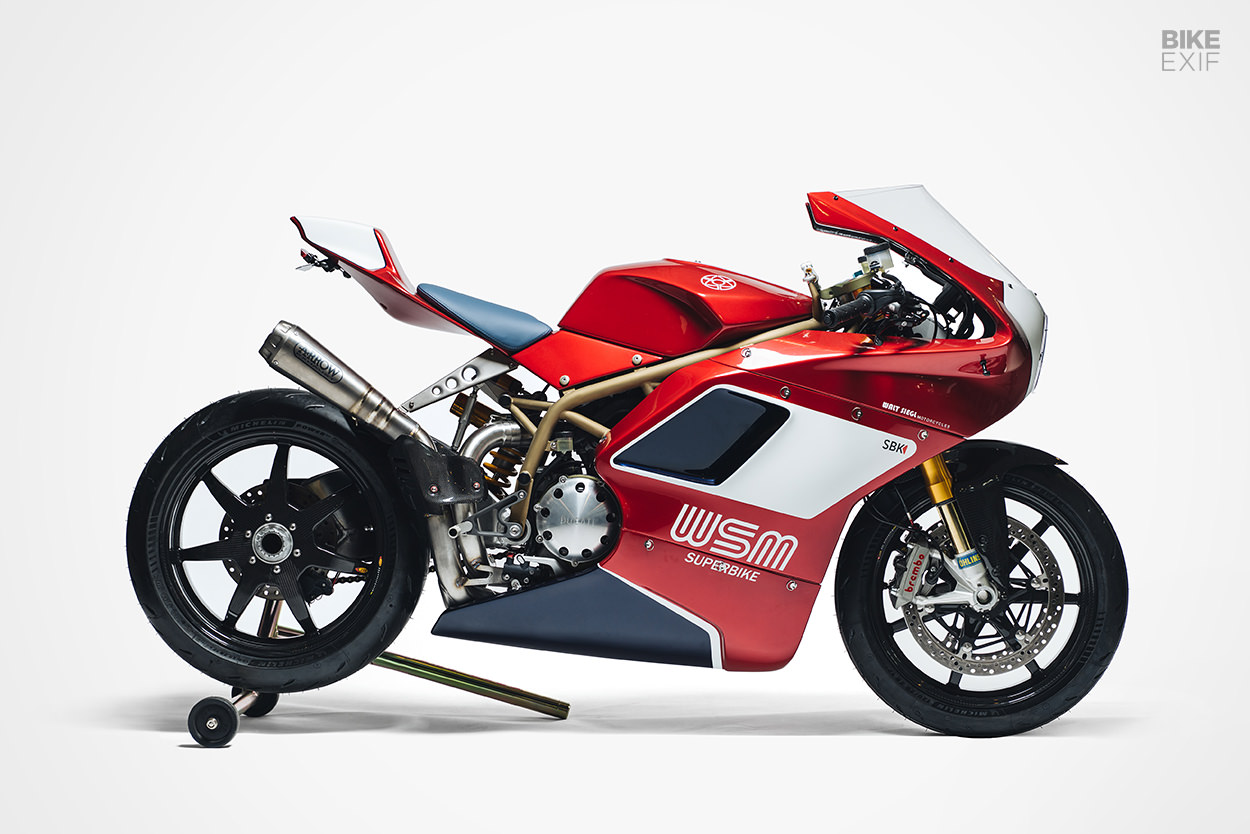
Ducati SBK custom superbike by Walt Siegl
WSM Ducati SBK Series Most modern superbikes leave us cold, but Walt’s idea of a superbike warms our hearts. His ‘SBK’ series builds are made-to-order Ducati superbikes that combine modern performance and timeless style. Pictured here is Walt’s fourth SBK build, and one of the best.

The SBK philosophy is not unlike the Leggero’s. Each WSM SBK starts with an aircraft-grade chromoly frame, powered by a bespoke engine built by Bruce Meyers. It then gets carbon fiber bodywork and a bunch of components that operate at (or above) the level you’d expect from a high-end performance motorcycle.

Ducati SBK custom superbike by Walt Siegl
This SBK’s motor is particularly special, featuring a Ducati 848 crankcase and a 1,040 cc big bore kit with Pistal race pistons. Ported and flowed heads, titanium connecting rods, and a lightened and balanced crank; the motor’s spec sheet is exhaustive. Other performance mods include a WSM airbox, a custom-programmed ECU, and a quick-shifter.

The wheels are carbon fiber items from BST, the suspension is Öhlins and the brakes are Brembo. Finished in a Ferrari-inspired livery, SBK #4 is an absolute beast. If only all superbikes looked this good. [More]

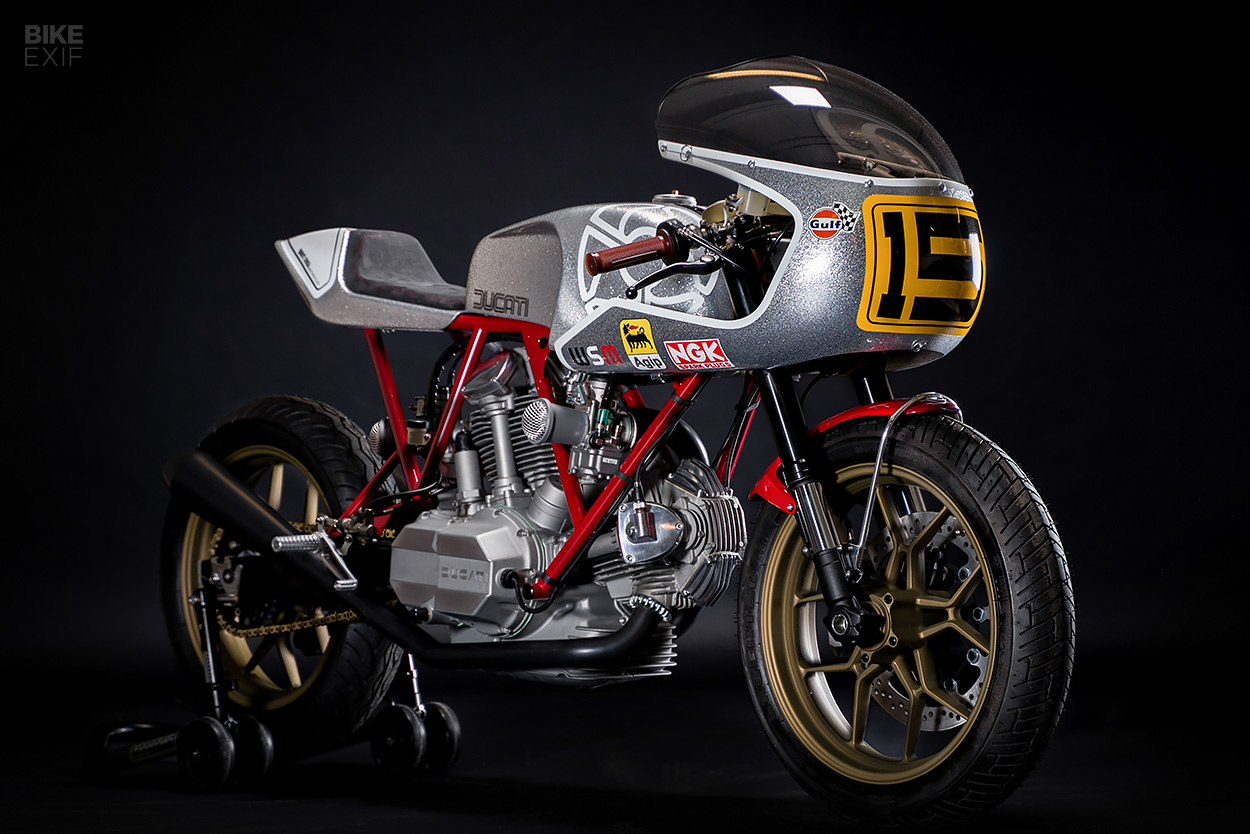
Square case Ducati bevel engine custom by Walt Siegl
1980 Ducati 900 SS ‘Bedeveled’ When the late Bobby Haas commissioned a custom bike from Walt for the Haas Moto Museum in Texas, Walt hit back with an ambitious idea. He wanted to use the oft-maligned ‘square case’ bevel Ducati engine, “to prove that one can still build a sexy machine around that engine design.” And he succeeded.

Walt started with a 1980-model Ducati 900 SuperSport and turned it into a pure track machine. Even though the bike was destined for a museum, he wanted to know that it could perform if it ever needed to, so the engine went off to Bruce Meyers for a smorgasbord of upgrades. It now makes between 85 and 90 hp, running with 40 mm Dell’Ortos and a free-flowing stainless steel exhaust system.

Square case Ducati bevel engine custom by Walt Siegl
The sculpted bodywork feels vintage, but it was all made using very modern materials; namely carbon fiber. Everything is assembled around a custom-built chromoly frame, with upside-down forks, a mono-shock rear end, and MV Agusta wheels rounding out the chassis package.

Finished in a Paul Smart-inspired silver with a pop of red on the frame, this square case would surely look just as good on the track as it would in the Haas Museum. [More]

The Walt Siegl Bol d'Or: a modern MV Agusta with a dash of retro style.
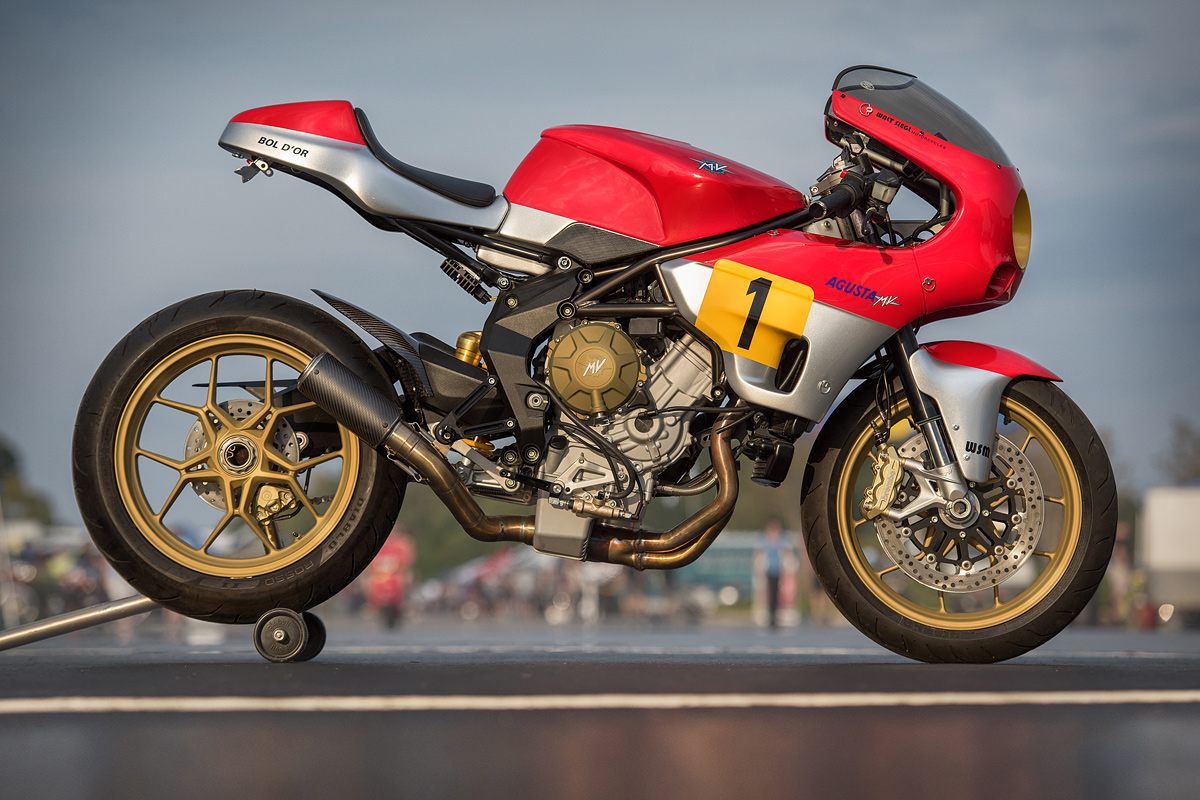
MV Agusta Brutale 800 ‘Bol d’Or’ Walt might be best known for his Ducati customs, but he’s no one-trick pony. On this project, he applied his signature style to the MV Agusta Brutale 800—proving that he’s as versatile as he is talented.

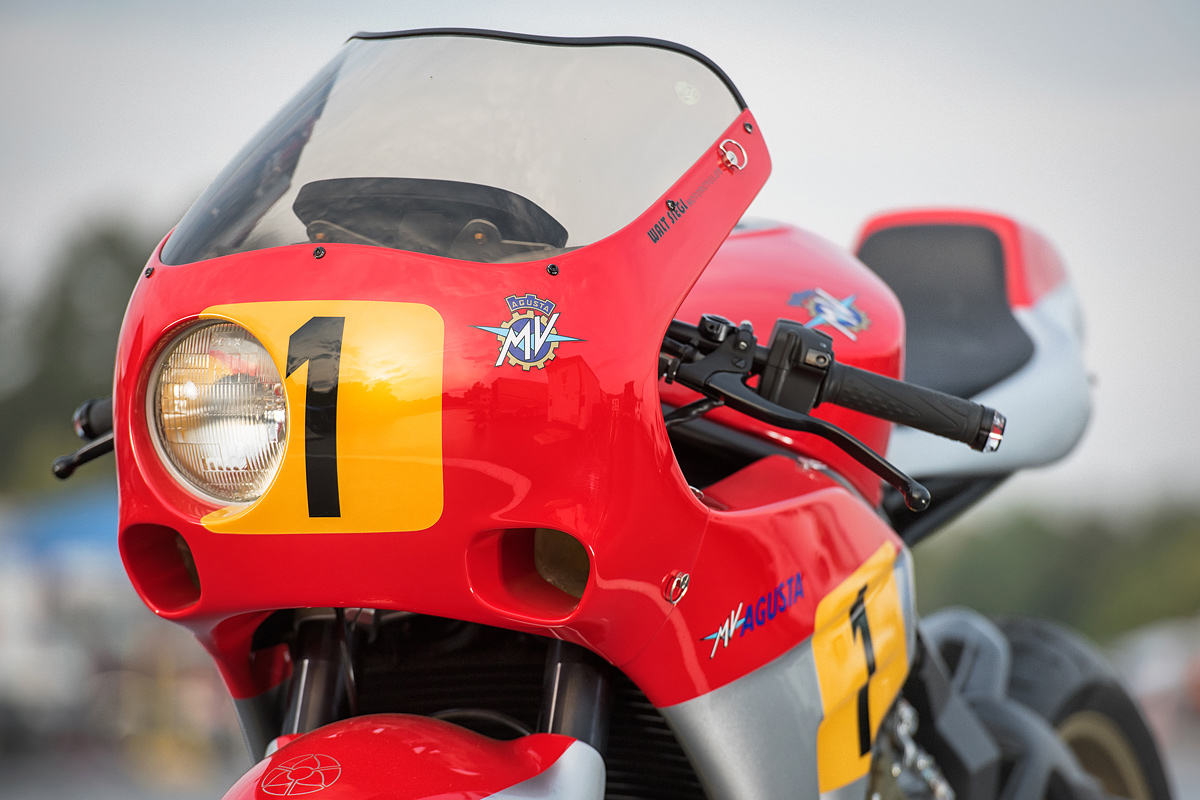
Named ‘Bol d’Or,’ the bike was heavily inspired by vintage endurance racers. To nail the aesthetic, Walt used a mix of shaping foam and automotive clay to form the MV Agusta’s new bodywork, then had a third party build the final parts out of Kevlar composite. The weight saving was considerable; the 5-gallon fuel tank, for example, weighs just 3.5 lbs.

The Walt Siegl Bol d'Or: a modern MV Agusta with a dash of retro style.
Even though a new chassis is standard issue on a WSM Leggero build, Walt left the Brutale’s frame alone, citing that he “didn’t want to undo something that’s so good.” Small performance mods included an ECU flash and a new SC-Project exhaust, with an aluminum subframe and WSM rear-sets adding further weight savings.

Walt nailed the design, finishing the fairing off with an offset headlight and ram air vents that aren’t just for show. The vibe is part endurance racer, part track bike, with a livery that is both simple and impactful. And according to Walt, it’s a ferocious animal out on the track too. [More]

PACT: A custom Alta Redshift by Walt Siegl Motorcycles
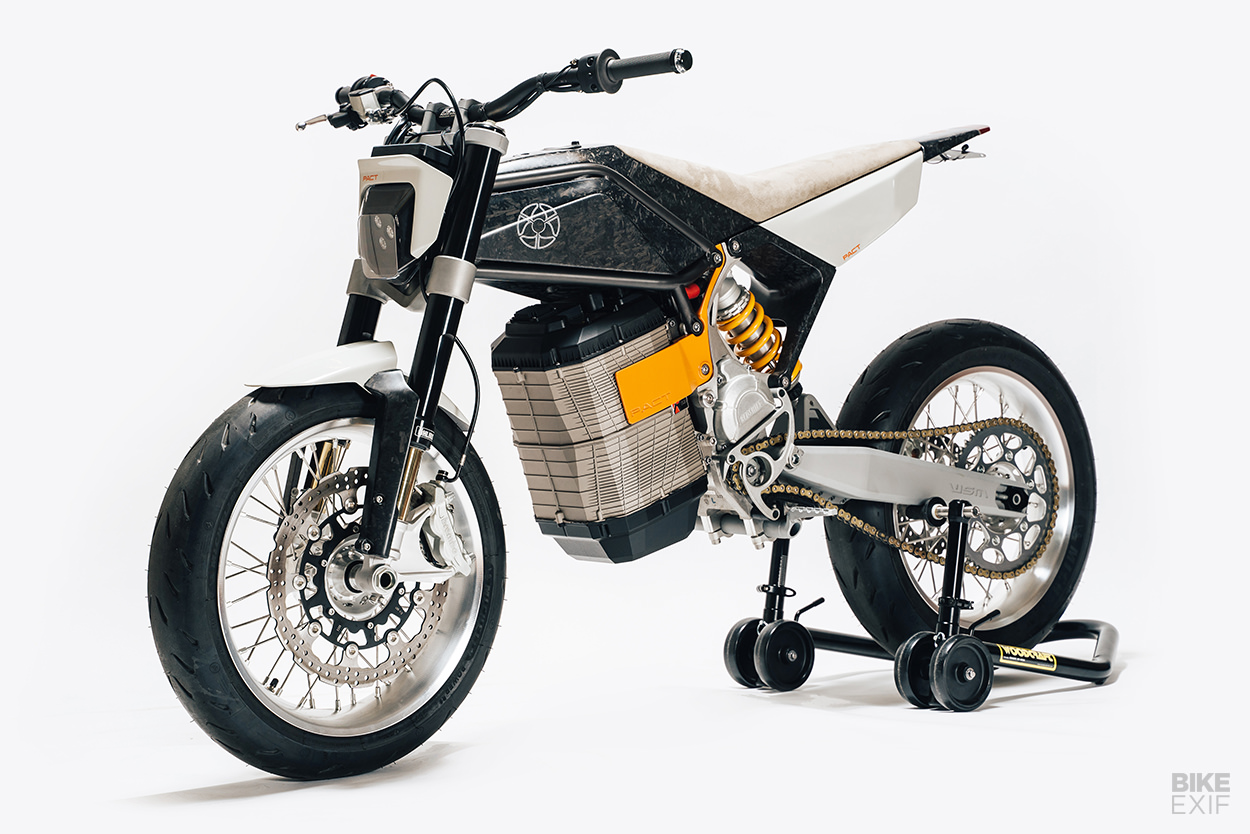
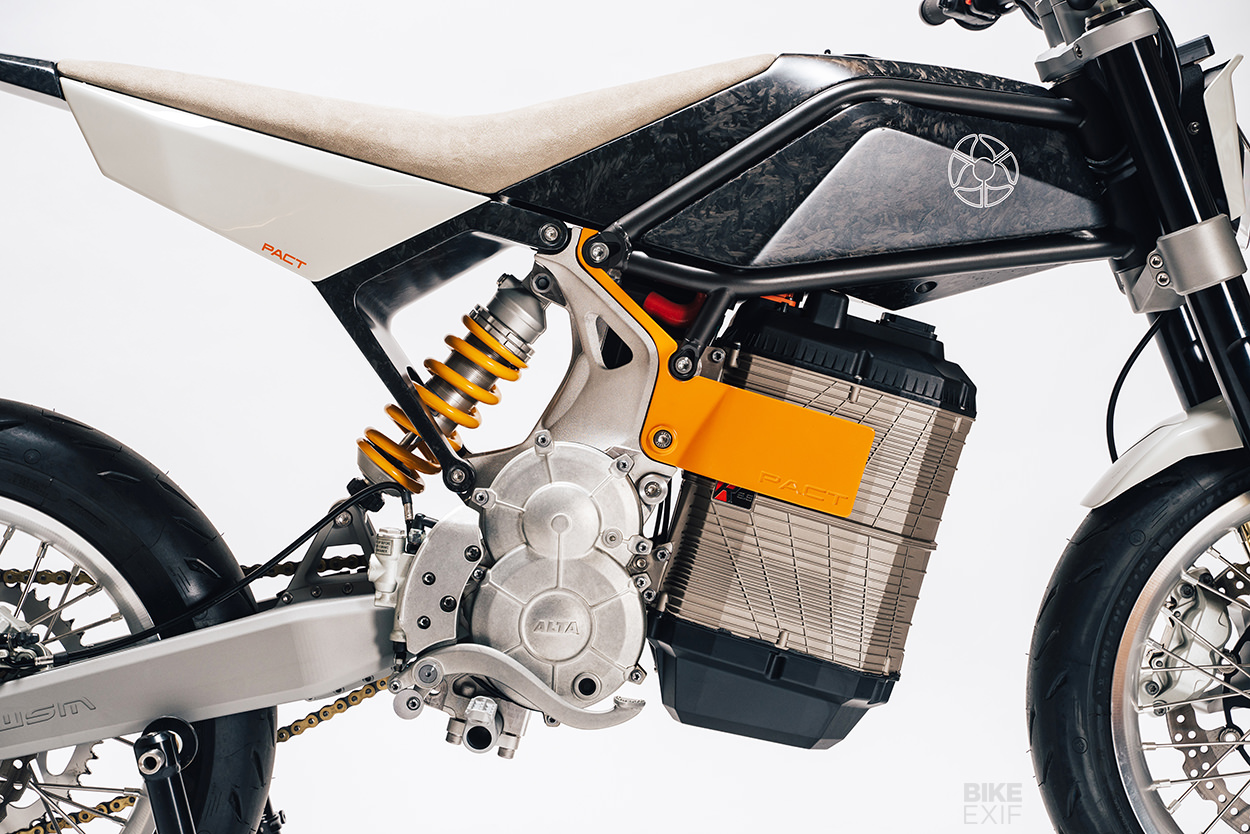
Alta Redshift ‘PACT’ If you think that all electric motorcycles are sterile, soulless machines, this alluring custom offers evidence to the contrary. Walt partnered up with industrial designer Mike Mayberry, one of the co-founders of Ronin Motorworks, to build it. They started with the drivetrain from an Alta Redshift—the now-defunct company’s lauded electric dirt bike.

Almost everything else was built from scratch, including a new chromoly frame with street-biased geometry. The swingarm is custom too, and the bike rolls on custom-machined 17” wheels, with Öhlins suspension and Brembo brakes.

PACT: A custom Alta Redshift by Walt Siegl Motorcycles
Then there’s the PACT’s tantalizing bodywork. Walt prototyped it all using cardboard and paper rather than a computer so that he could get a sense of its real-world dimensions. Prototype parts were shaped out of carbon fiber sheeting, but the final parts were made using forged carbon fiber and compression molds.

Complete with more tasty goodies, like a carbon fiber subframe, PACT looks like no other motorcycle out there—electric or otherwise. [More]

Walt Siegl Motorcycles | Facebook | Instagram

Walt Siegl and the WSM Leggero


from Bike EXIF https://ift.tt/Ew8UH4i

Wednesday, 19 July 2023

Cobalto: A custom Honda CB750 from sunny Portugal

Custom Honda CB750 by Maria Motorcycles
There was a time when we couldn’t open our inbox without seeing another custom Honda CB750. Honda’s revered four-cylinder UJM was one of the original darlings of the new-wave custom scene—and even though its popularity has waned somewhat, it’s still adored by customizers the world over.

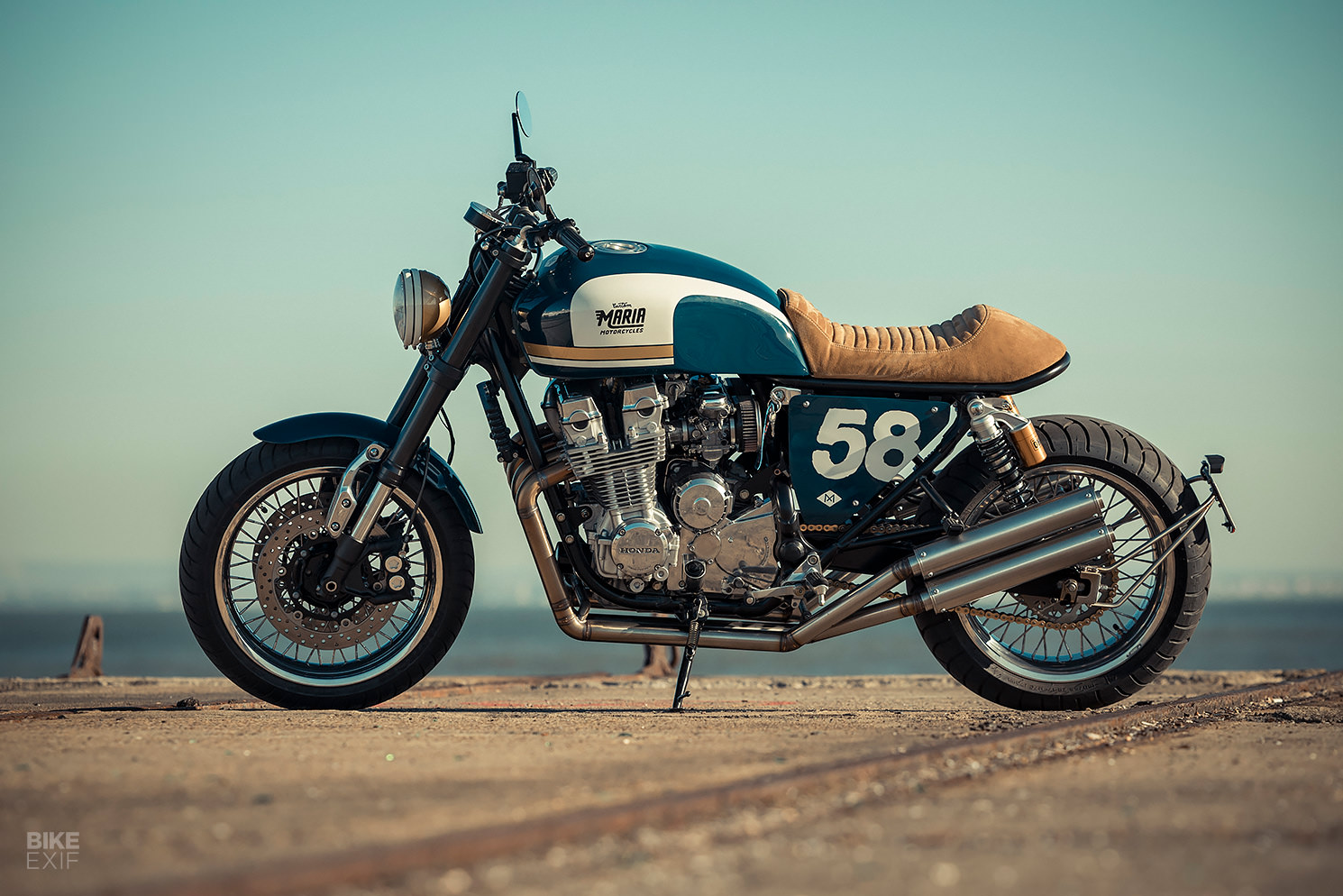
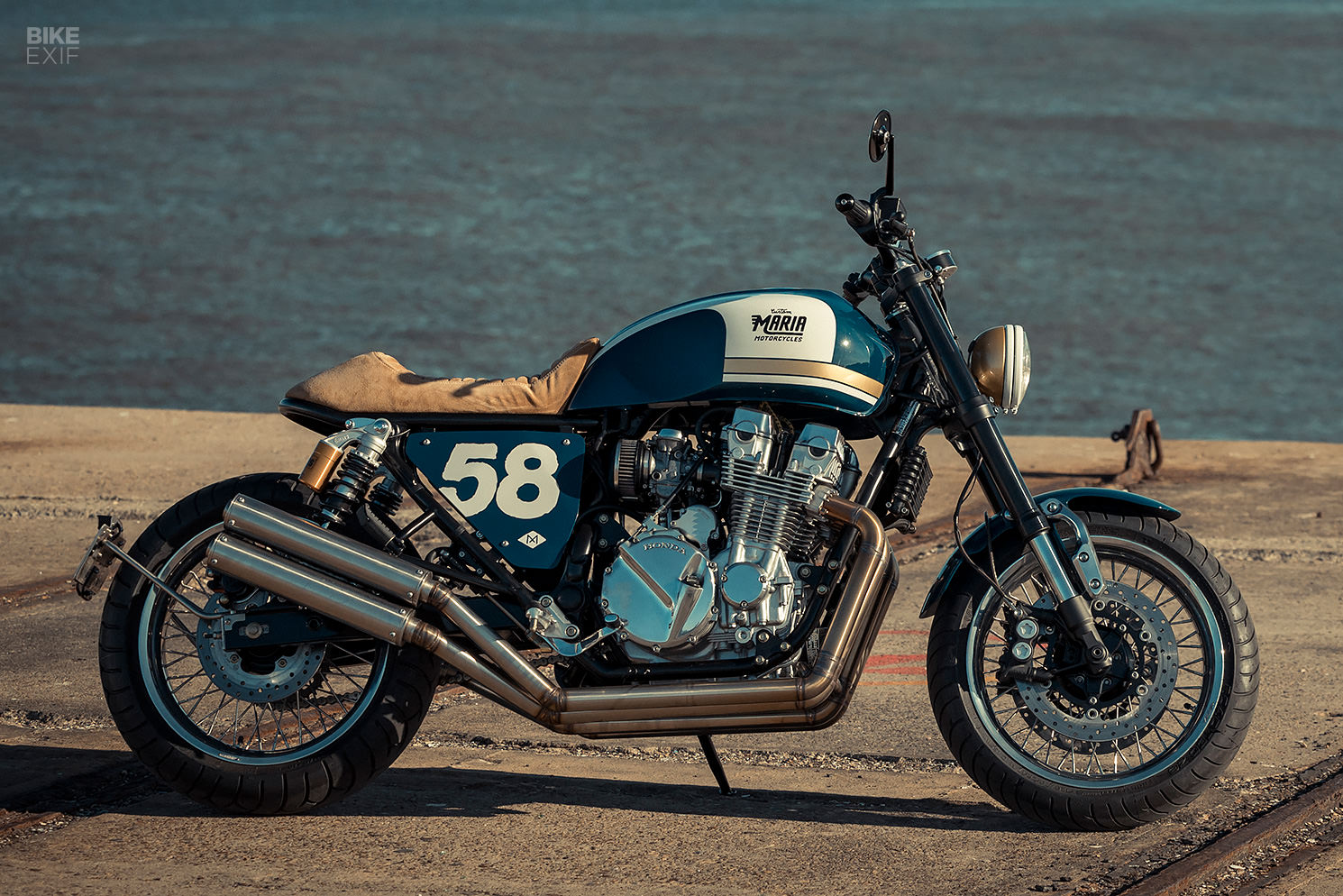
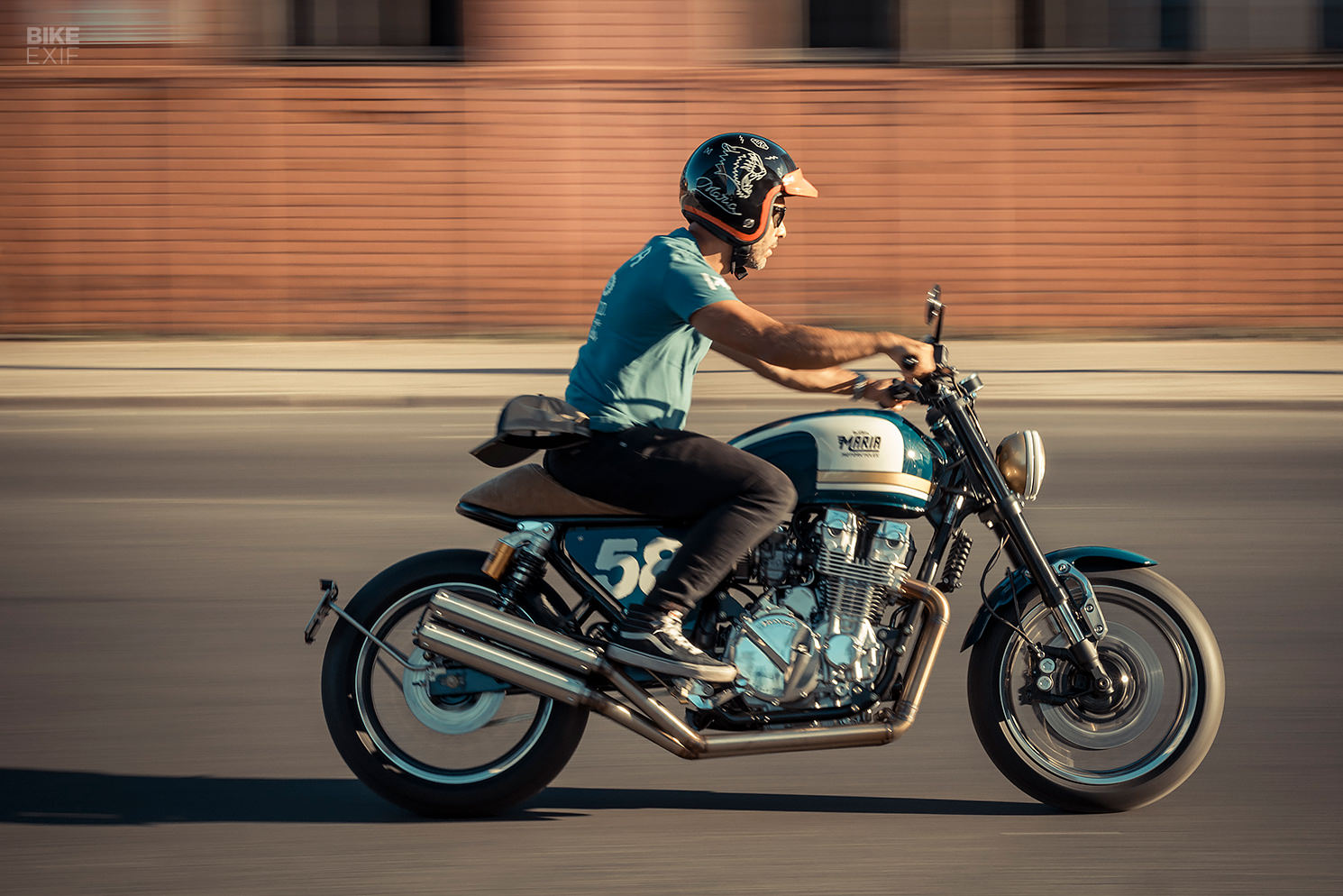
This custom Honda CB750 is a testament to the Seven-Fifty’s enduring appeal. It comes from Maria Motorcycles in Portugal, and it’s dripping with the laid-back coastal style and vivid colors that the workshop is known for. And if you look closer, you’ll spot an assortment of modern upgrades too.

Custom Honda CB750 by Maria Motorcycles
“This motorcycle was commissioned by one of our special clients who we had previously built a 125 cc bike for,” says shop boss Luis Correia. “He was a young man who had just started riding motorcycles, and now, years later, he contacted us to build him a bike with a larger engine that was also more daring and unique.”

Maria started with an extremely tidy 1993-model CB750 F2 donor. Thanks to its condition, and Honda’s legendary reliability, the engine needed nothing more than a quick once-over. The only significant engine work happened on the outside, where Maria cleaned and polished the covers for a better-than-new finish.

Custom Honda CB750 by Maria Motorcycles
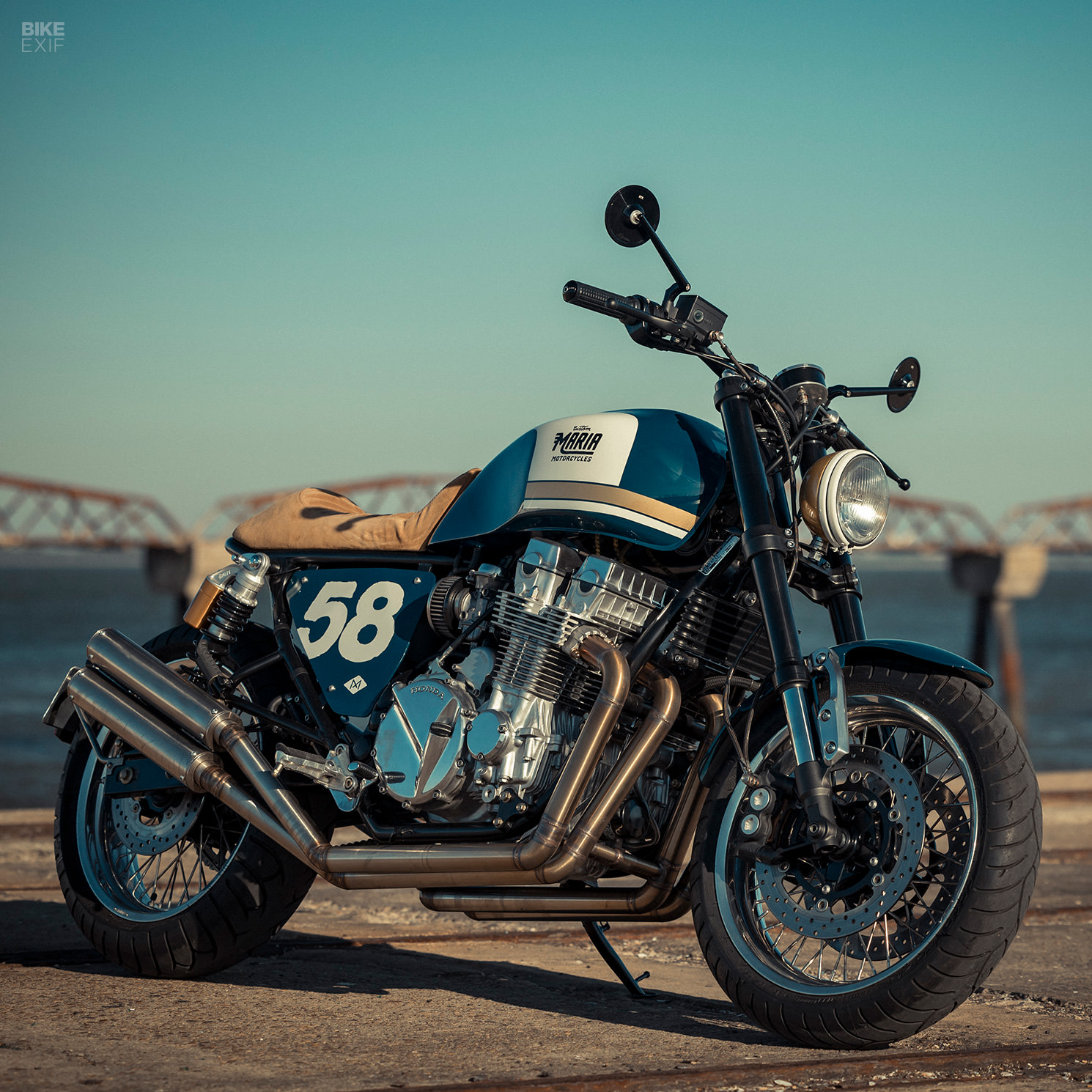
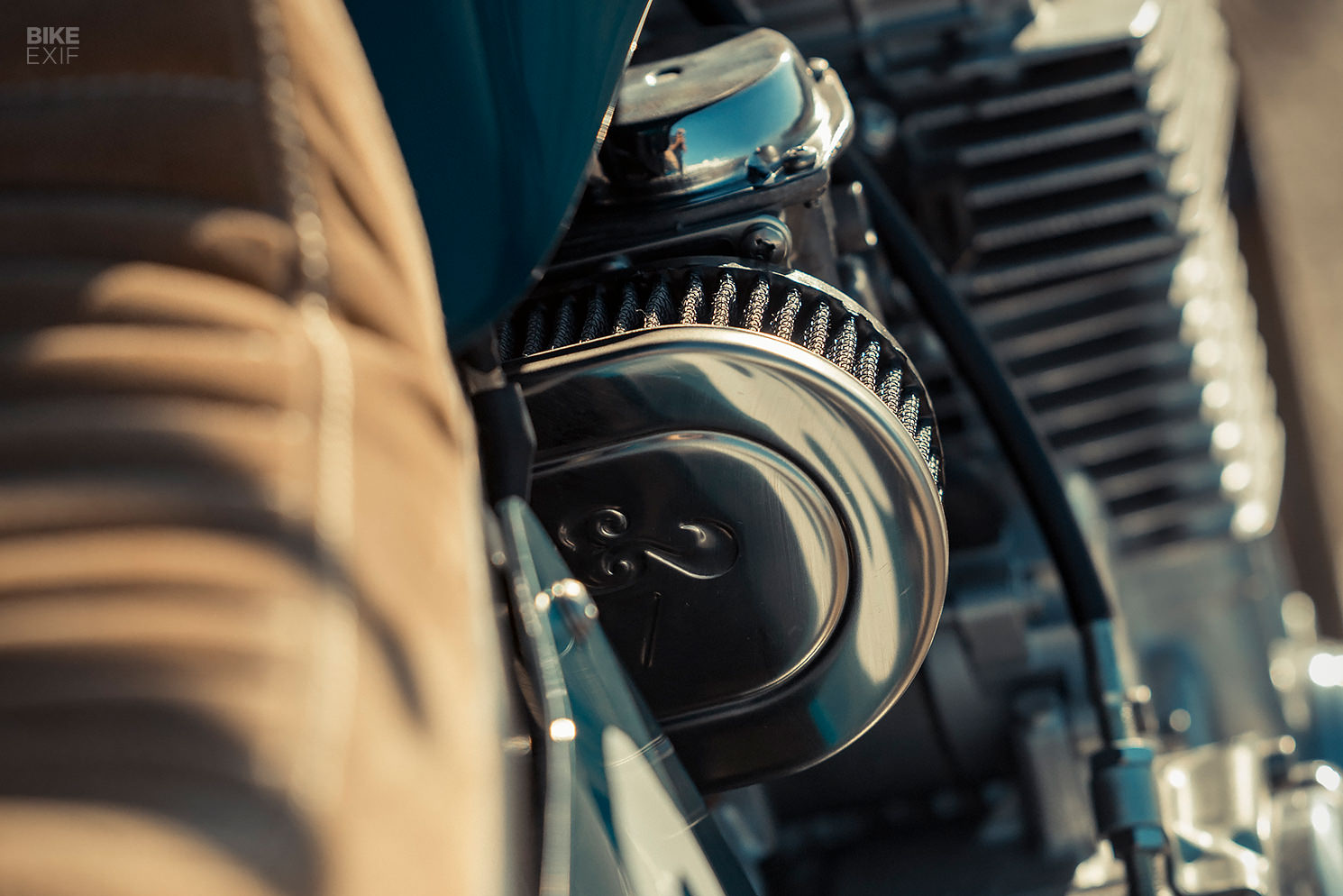
The OEM airbox was ditched in favor of not four, but two K&N filters. Each oval filter accommodates two carburetors, and each wears a chrome cap that perfectly complements the freshened-up engine. The burly four-into-four exhaust system is completely bespoke, and the perfect fit for the CB750’s hunk of an engine.

Under the hood, Maria ripped out all of the CB’s wiring and started over. A fresh wiring loom now runs off Motogadget’s ubiquitous Mo.unit controller, which helps to keep things clean and simple.


Luis and his team wanted to bring the 30-year-old CB750’s handling into the modern age, so they grafted on the entire front end from a Yamaha MT-09. The Yamaha’s upside-down forks, yokes, steering stem, brakes, and even its front fender, were all adapted to the Honda. Maria trimmed the fender to give it a more classic feel and upgraded the brakes with a pair of Brembo discs.

A set of Öhlins piggyback shocks sit out back, set up specifically for the bike’s owner. The 17” laced wheels are from Jonich in Italy and feature polished alloy rims, with modern Metzeler Roadtec Z6 tires.


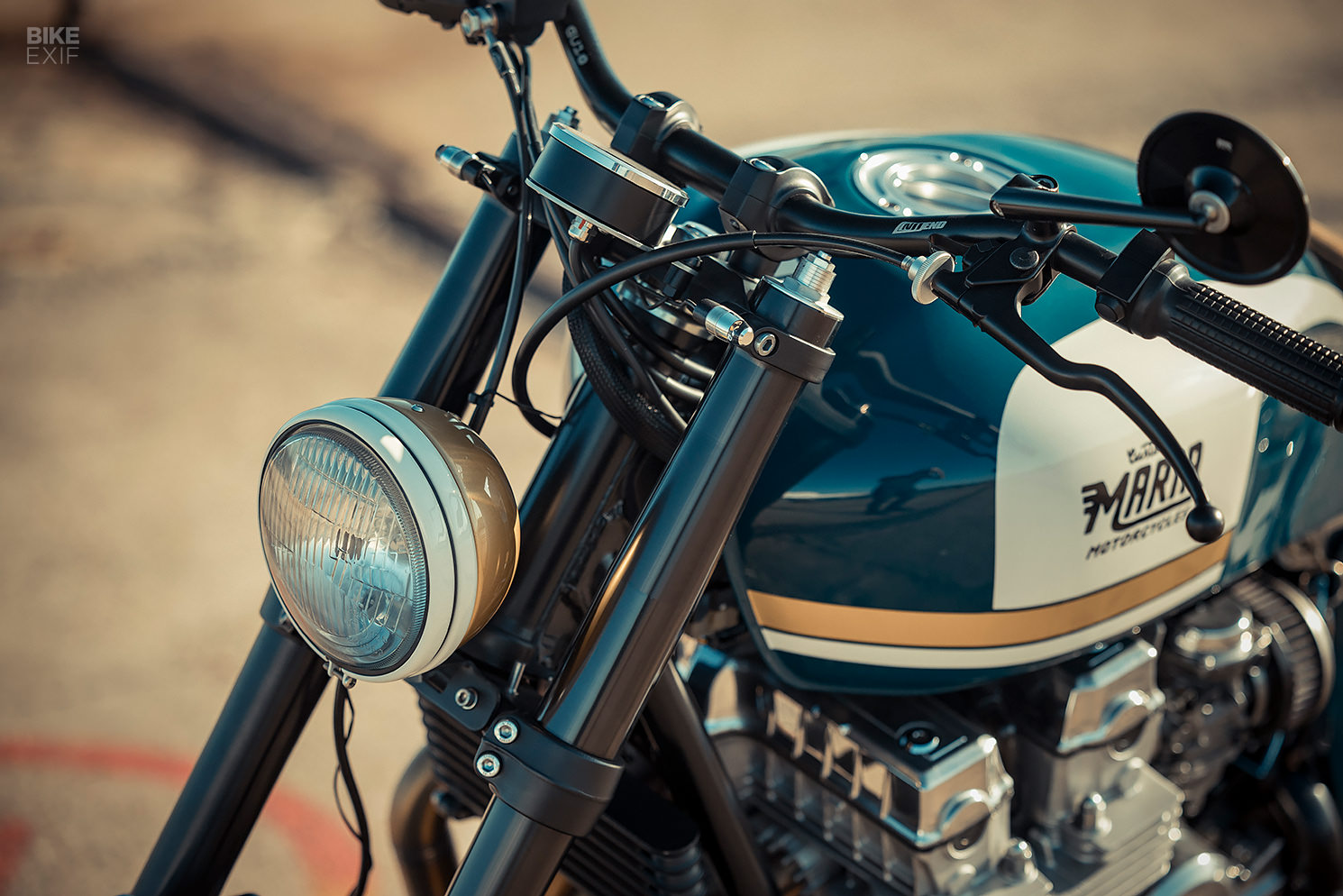
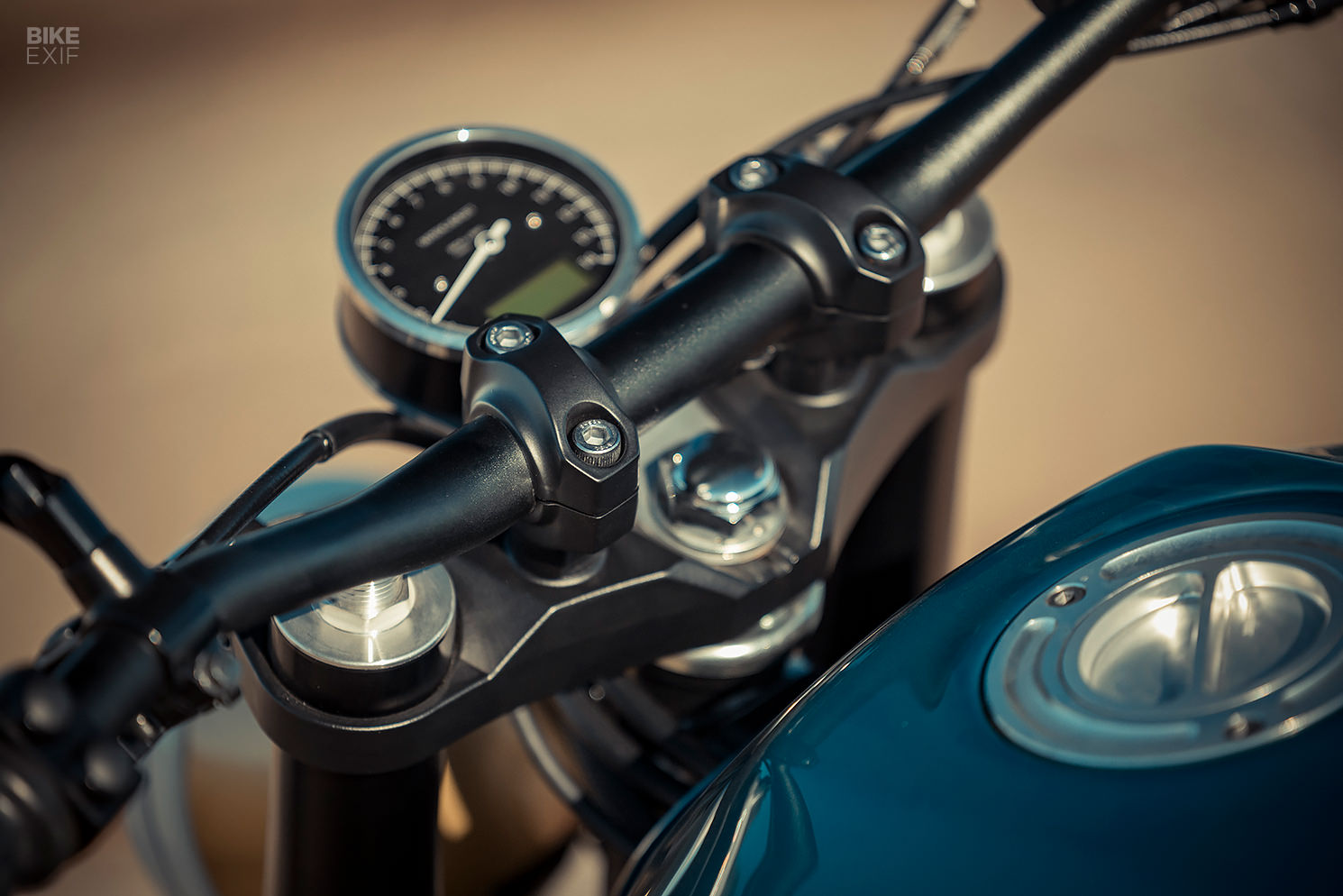
Shifting their focus to the bodywork, Maria ditched everything but the Honda’s original fuel tank. “We decided that the original shape was good,” says Luis, “except for the attachment ‘wings’ for the side covers. We decided to remove them, resulting in a tank with cleaner and simpler lines.”

A CNC-machined fuel cap was retrofitted too, and new side covers were shaped from aluminum. Maria also fabricated a new battery box, license plate holder, and mounting points for a custom seat.


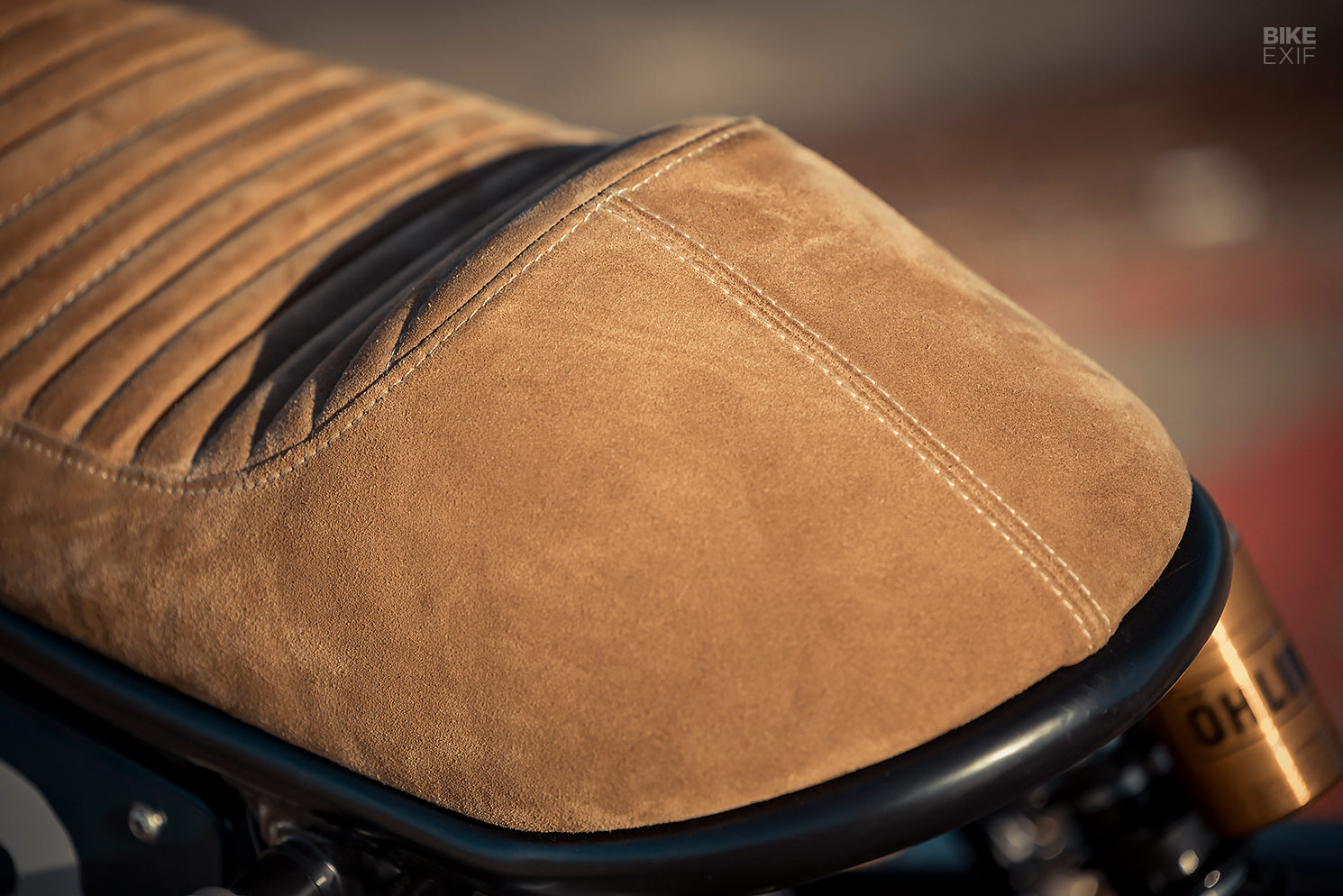
The stubby café racer-style seat was requested by the client. Maria shortened the subframe to match it, then finished it off with a slightly kicked-up rear loop. Beige suede might seem like an odd choice for a motorcycle seat, but there’s no denying how well it picks up the subtle gold highlights in the CB’s new livery.

The paint job even extends to the headlight; an up-cycled Harley-Davidson part. Behind it, the cockpit is dressed with new handlebars, and an assortment of Motogadget bits that include the speedo, grips, and mirrors. The ignition has been relocated to the side of the bike, and tiny Motogadget LED turn signals sit sneakily at both ends.


Maria has nicknamed the bike ‘Cobalto’ (the Portuguese word for Cobalt) as a nod to its blue base coat. We’re not quite sure if we’d call this a bobbed café racer or a beach-cruising street tracker. But one thing we do know is that it sure looks like it would be fun to ride—especially with the sun on your face and the salty smell of the Atlantic in the air.

Maria Motorcycles | Facebook | Instagram | Images by Manuel Portugal

Custom Honda CB750 by Maria Motorcycles


from Bike EXIF https://ift.tt/hOXgWIt