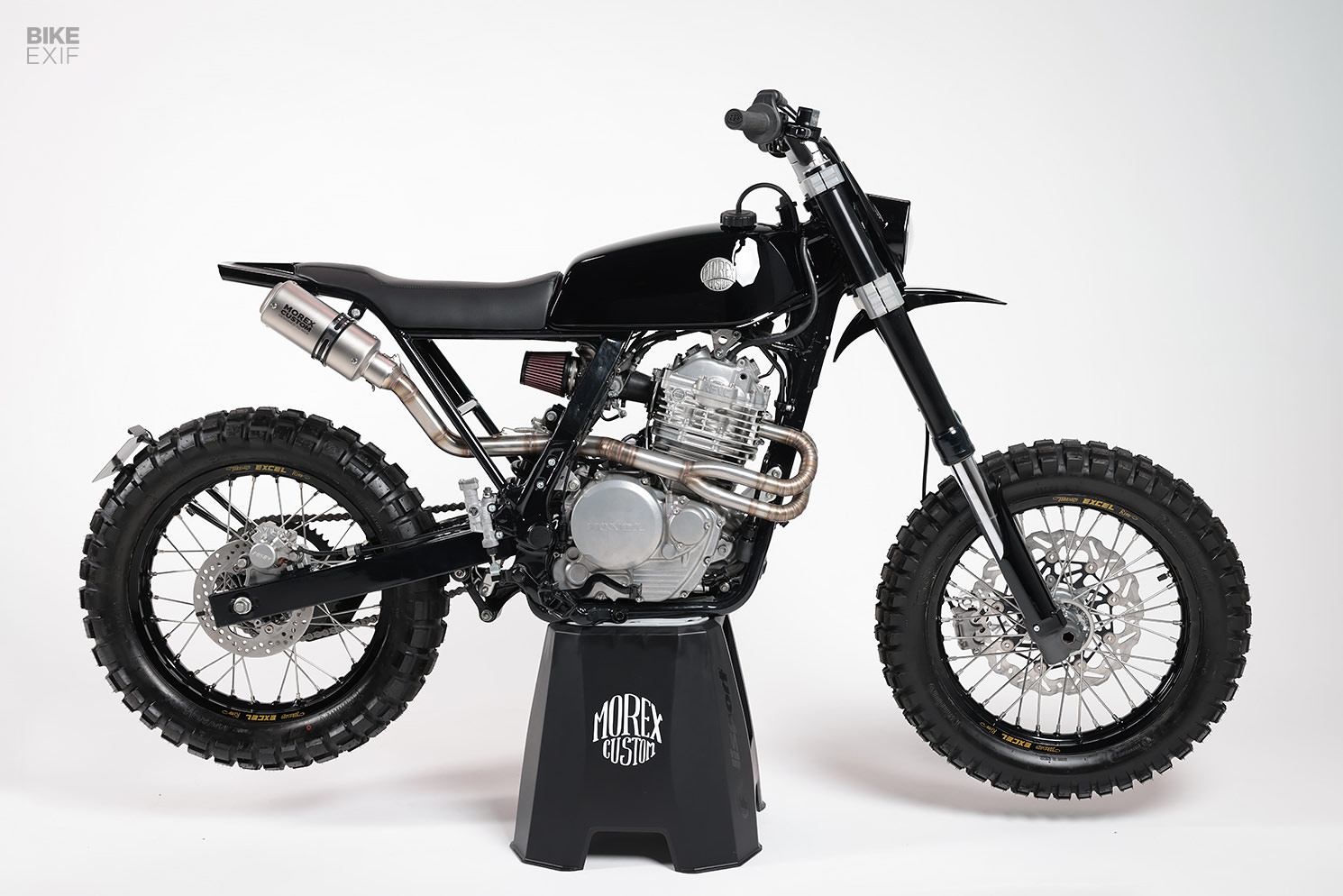
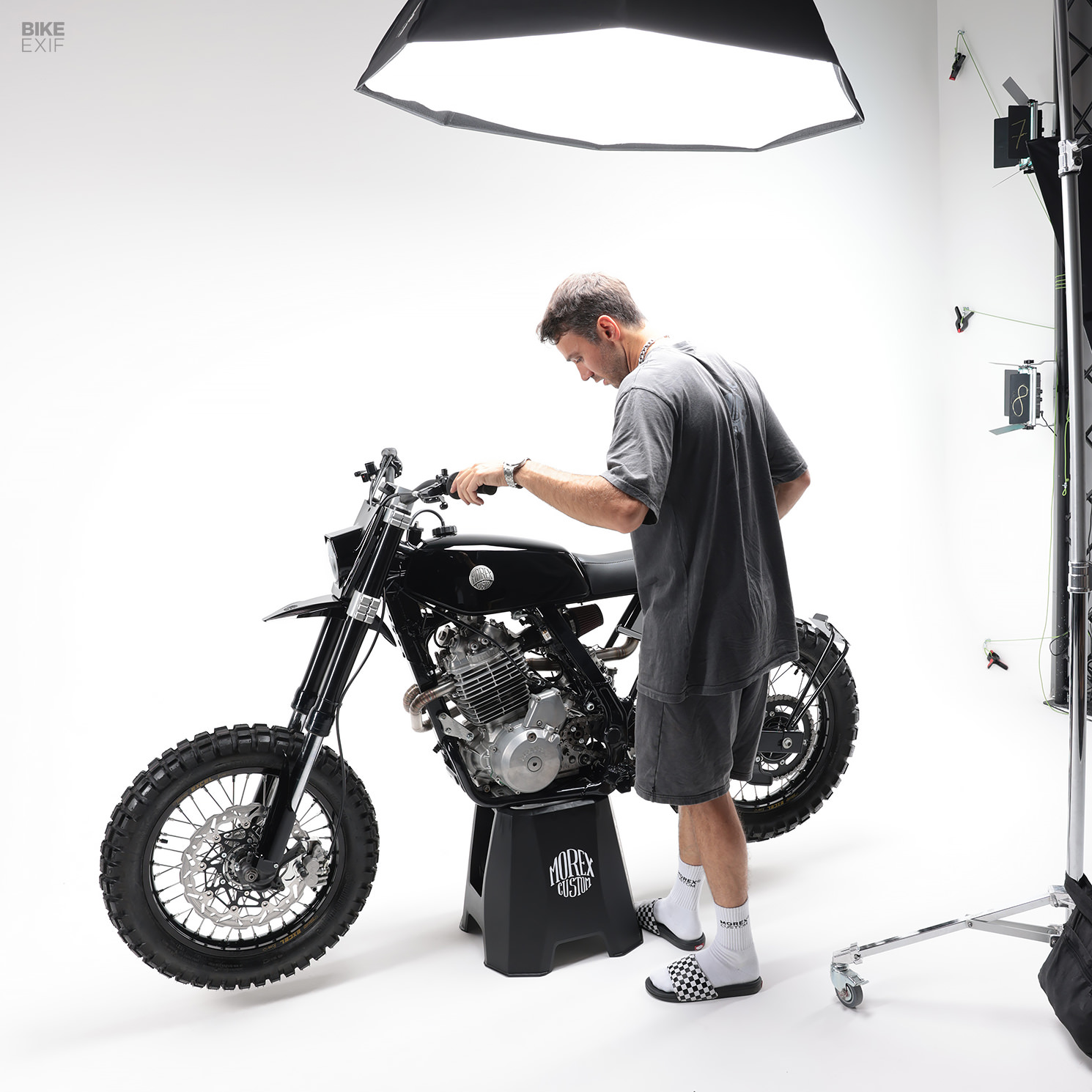
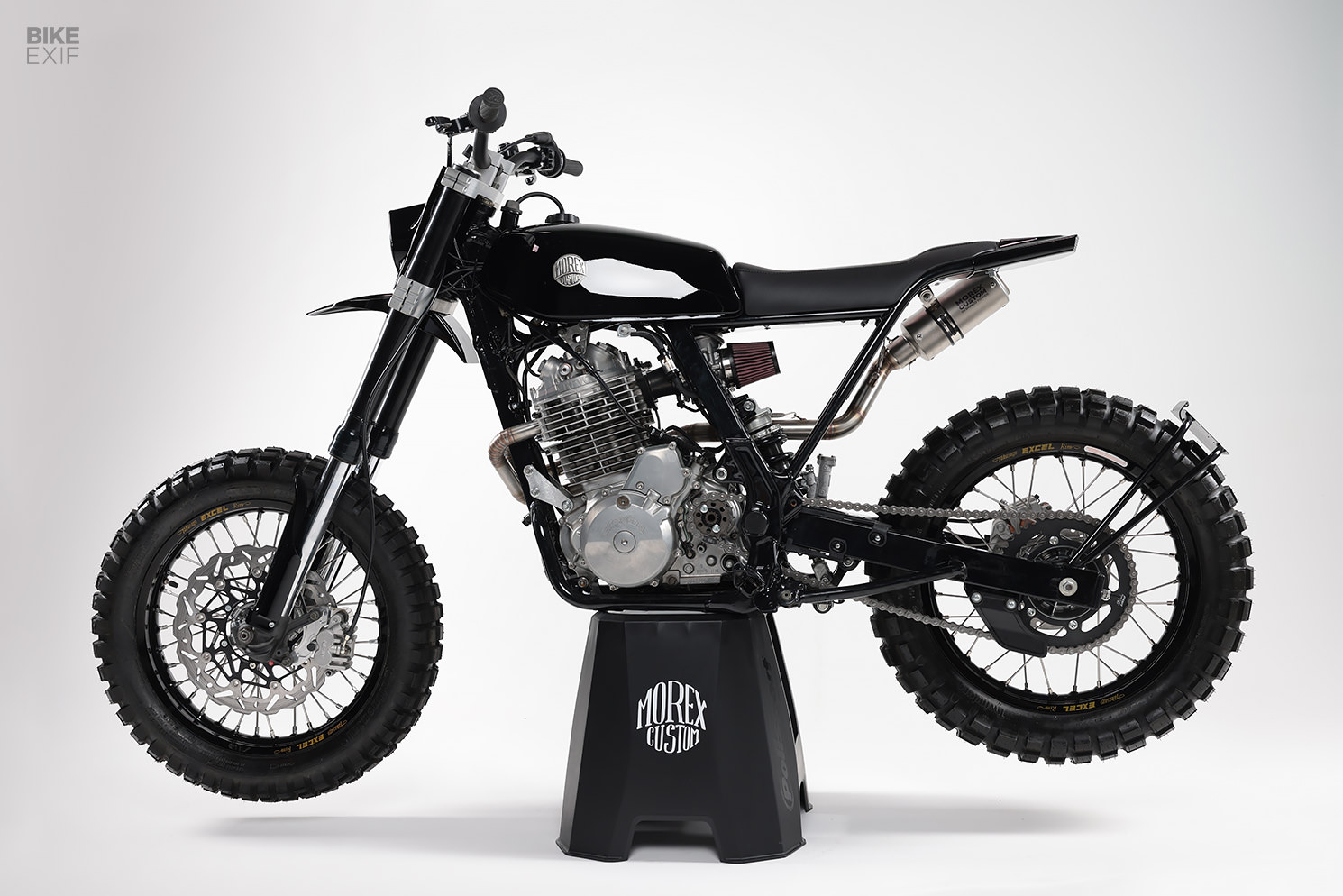
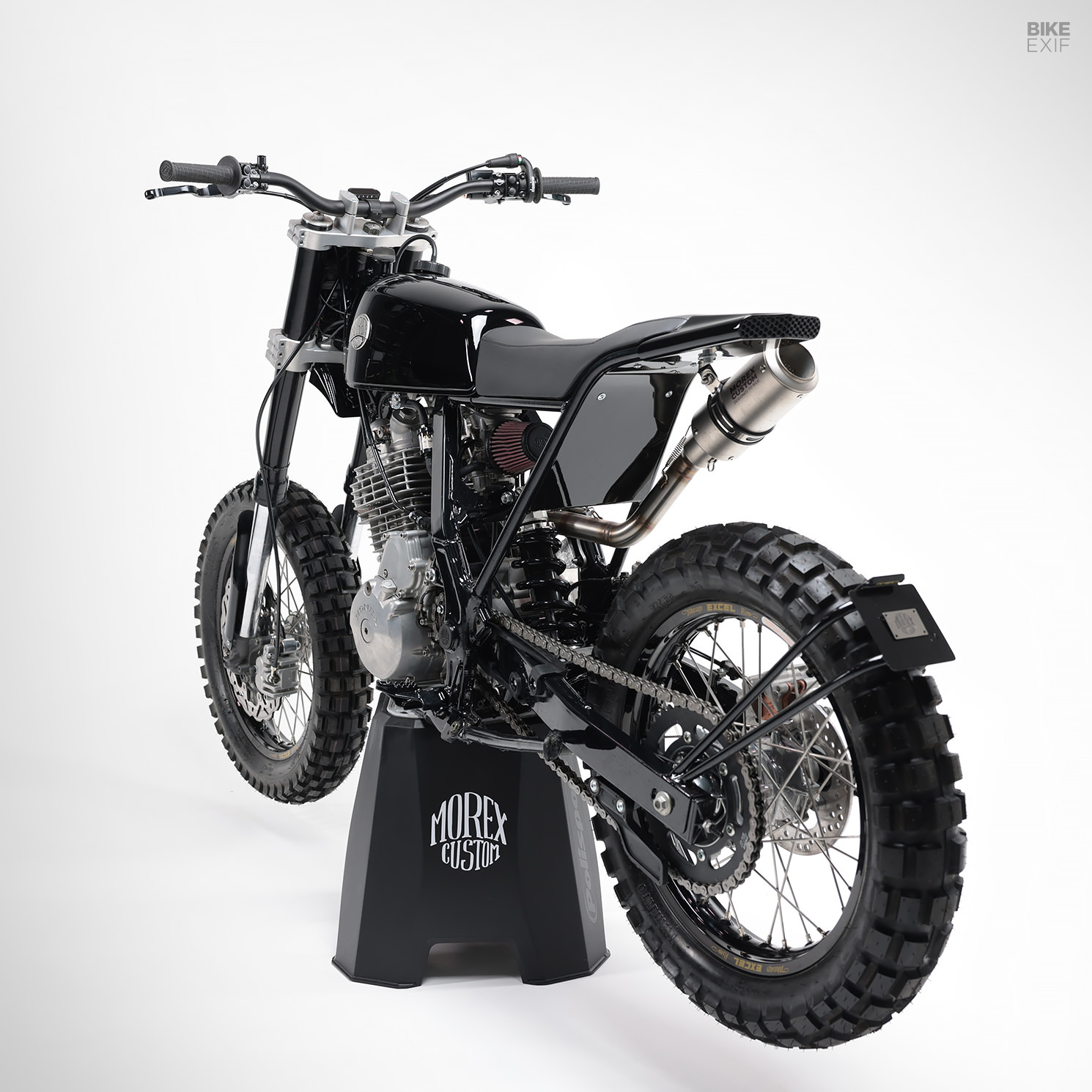
There’s a plethora of reasons to pick the Honda Dominator as a donor for a custom build. But for the crew at Morex Customs in France, it was one particular attribute that sealed the deal; its reliability. Honda thumpers are notoriously bulletproof, and the guys wanted to build a custom scrambler that would not only look great, but run forever.
Based in Vezin-le-Coquet, a commune in Brittany in the northwestern region of France, the Morex workshop is run by brothers Joan and Kévin Morel, with their friend, Valentin Pointeau. Since all three are motocross riders, they wanted to imbue the Dominator with a little modern off-road racing style.
“The idea was bold,” Kévin tells us. “We wanted to take the robust and reliable heart of a legendary motorbike, and rethink the running gear with high-performance parts. The result is a perfect blend of eras—a bike with character and modern lines.”
Transforming the bike from a bone stock Honda NX650 Dominator into the sharp street scrambler you see here took the trio almost a year. They employed a wide range of techniques too—from 3D design, to good old-fashioned mechanical work.
Since reliability was top of the list, and since the donor bike was in a shoddy condition, Morex decided to split the engine open and rebuild it. The cylinder went off to Revaltec to be honed, before everything was put back together with a new piston and a full complement of gaskets, seals and bearings. The transmission is factory fresh, too.
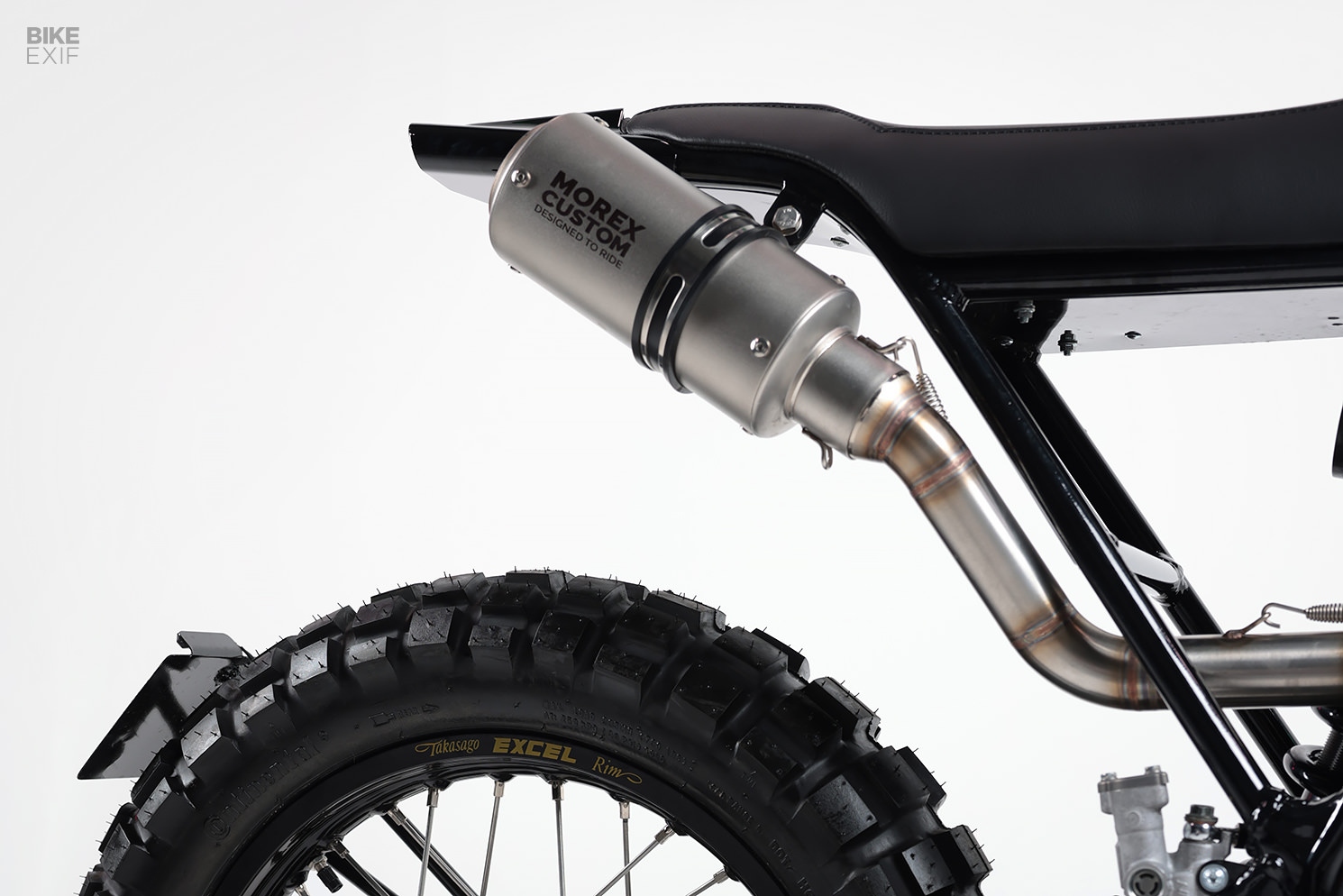
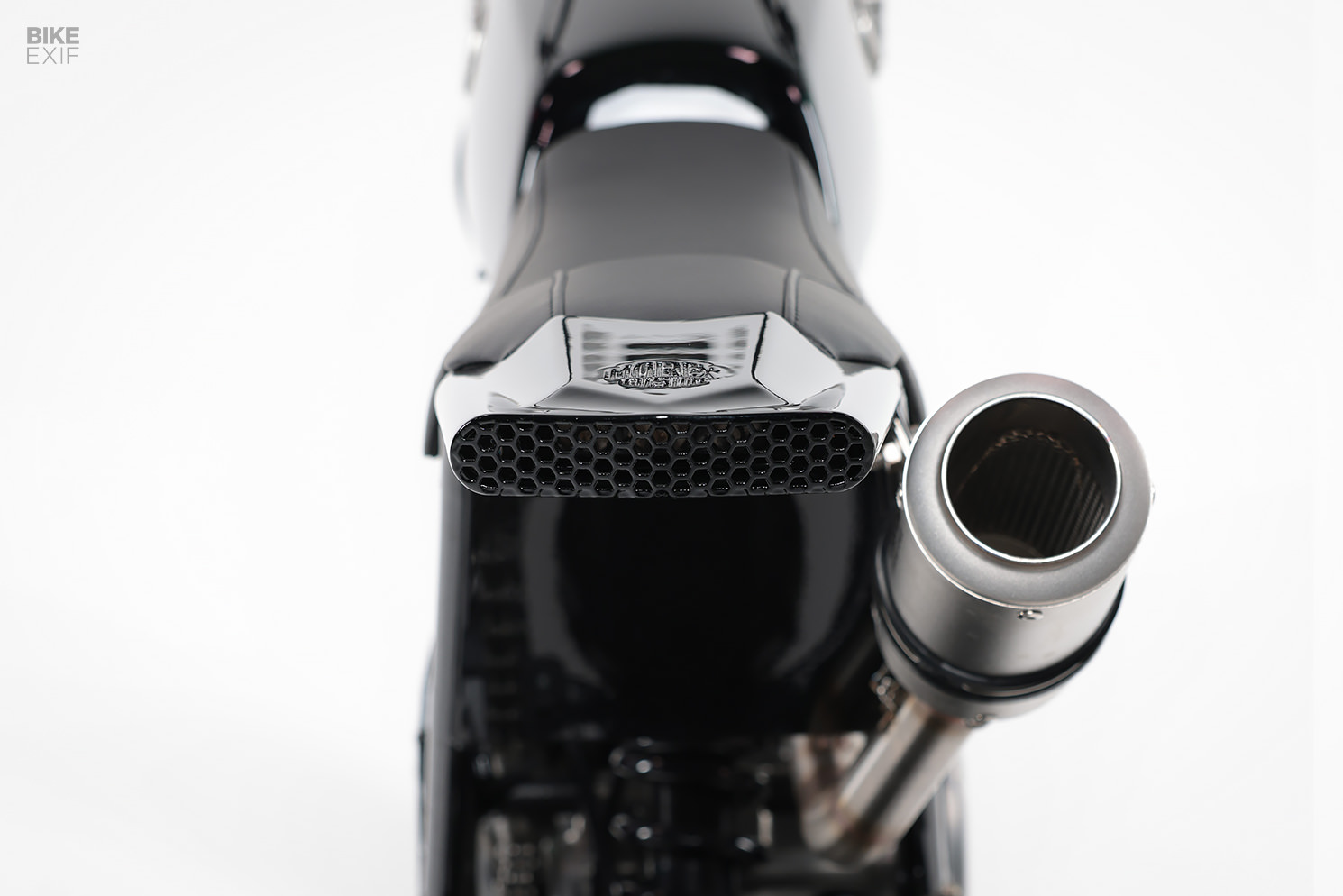
On the outside, everything was cleaned up and vapor-blasted to the point that it’s no longer recognizable. A BMC air filter was installed to replace the airbox, before Kévin fabricated an all-new two-into-one exhaust system.
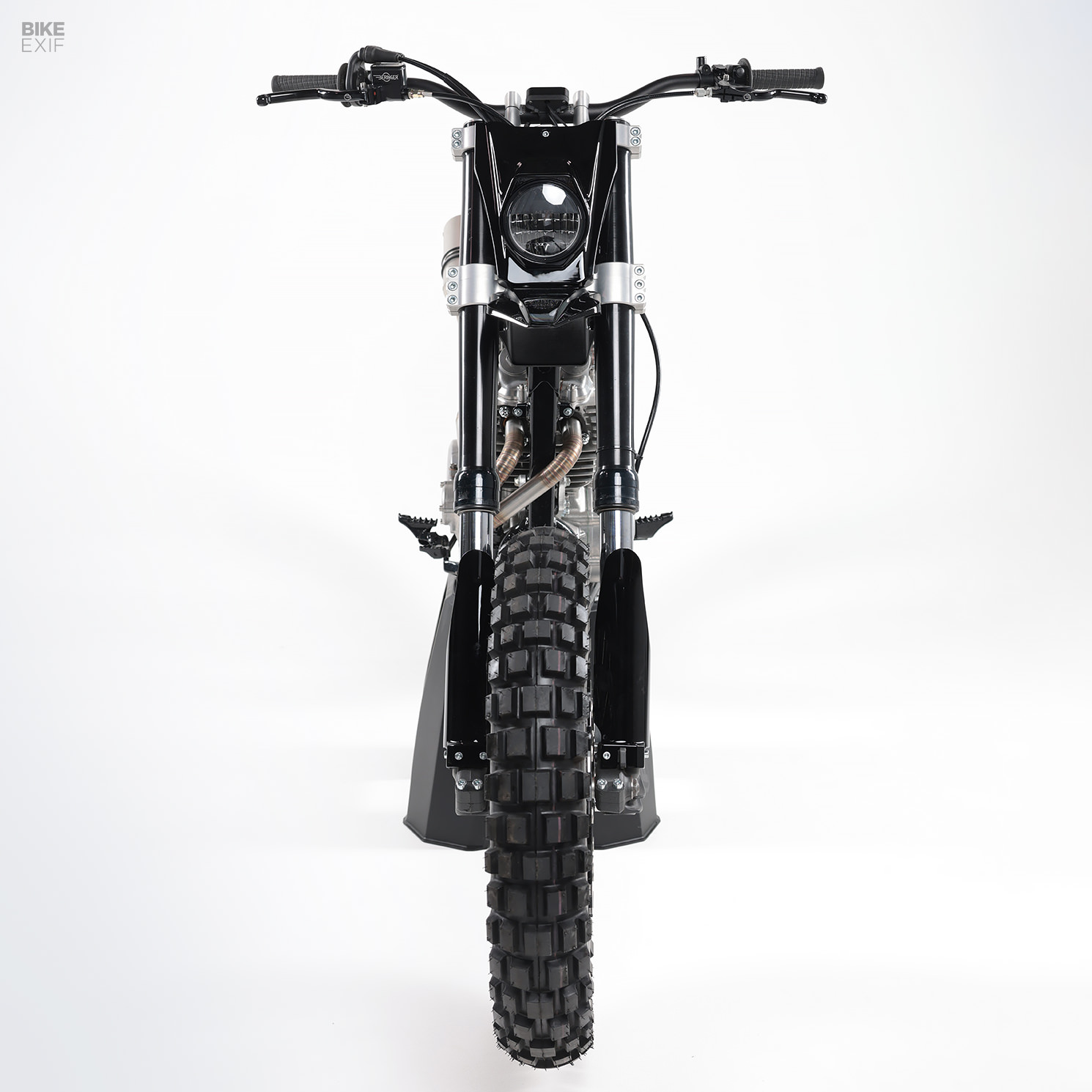
Most of the Honda’s running gear is new too. Morex re-laced the Honda hubs to 18” Excel rims with new spokes, then wrapped them in Continental TKC80 rubber. The original brake calipers were refurbished, but the front now grips an oversized disc from Braking, with a custom-made carrier to make sure everything lines up.
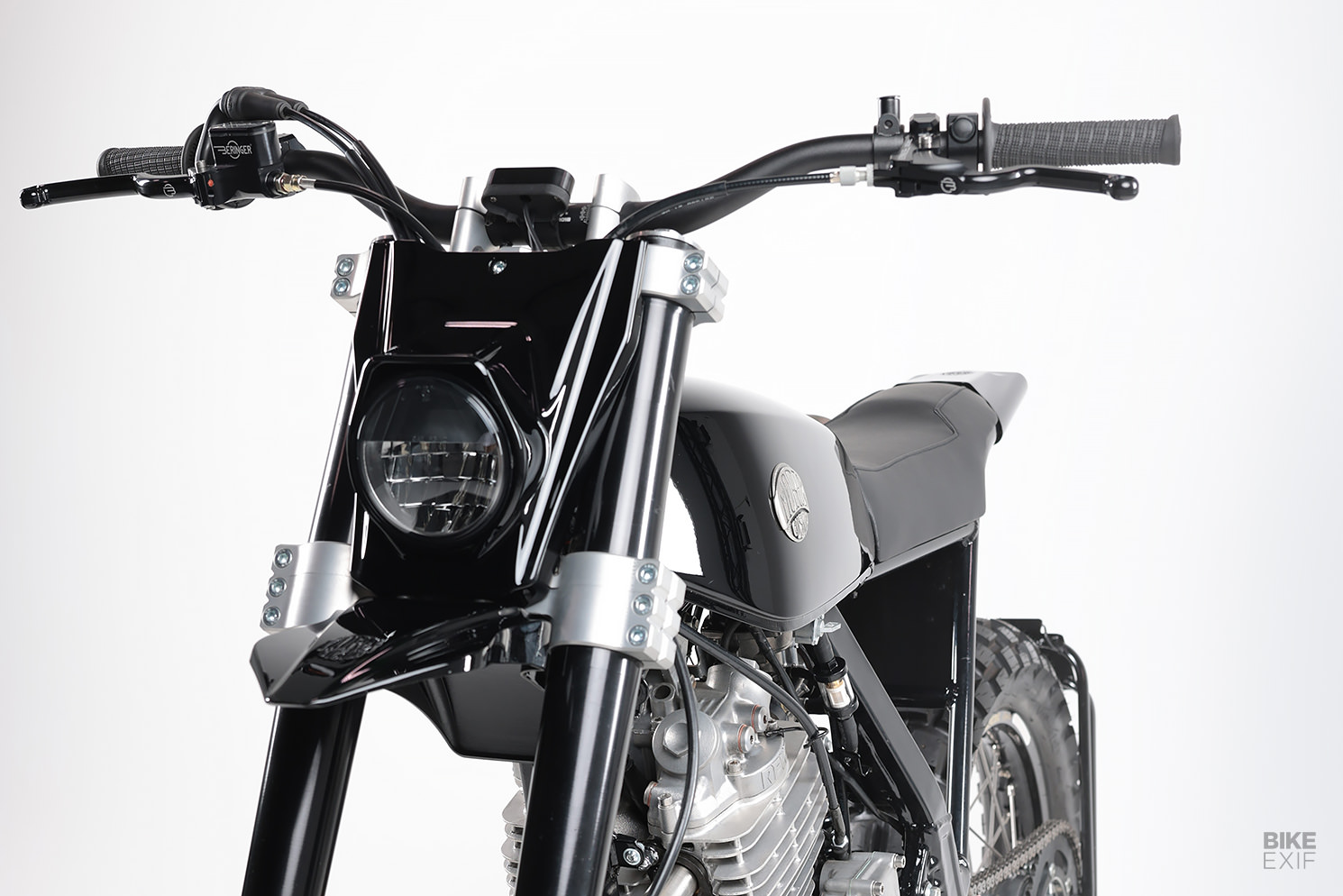
Also fitted up front are the yokes and upside-down forks from a Yamaha WRF450, shortened to suit a supermoto stance and riding style. A YSS shock does duty at the back.
The Dominator’s new bodywork is remarkably svelte. The set includes a repurposed Yamaha 125 DTMX fuel tank, modified to fit the Honda. Behind it, Morex redesigned the subframe to create a stepped profile.
The supermoto-inspired headlight nacelle and front fender, and the tapered rear cowl, were designed using CAD software. The final parts were then 3D printed in a robust nylon material, and finished in gloss black. LED lights are embedded at both ends.
The work is incredibly tidy, and loaded with neat details. Morex’s logo is embossed into each 3D-printed part, and the back end is finished off with a honeycomb grill over the taillight, and a discreet inner fender lower down. A blank-off plate under the seat hides the wiring, which has been redone around a Motogadget controller.
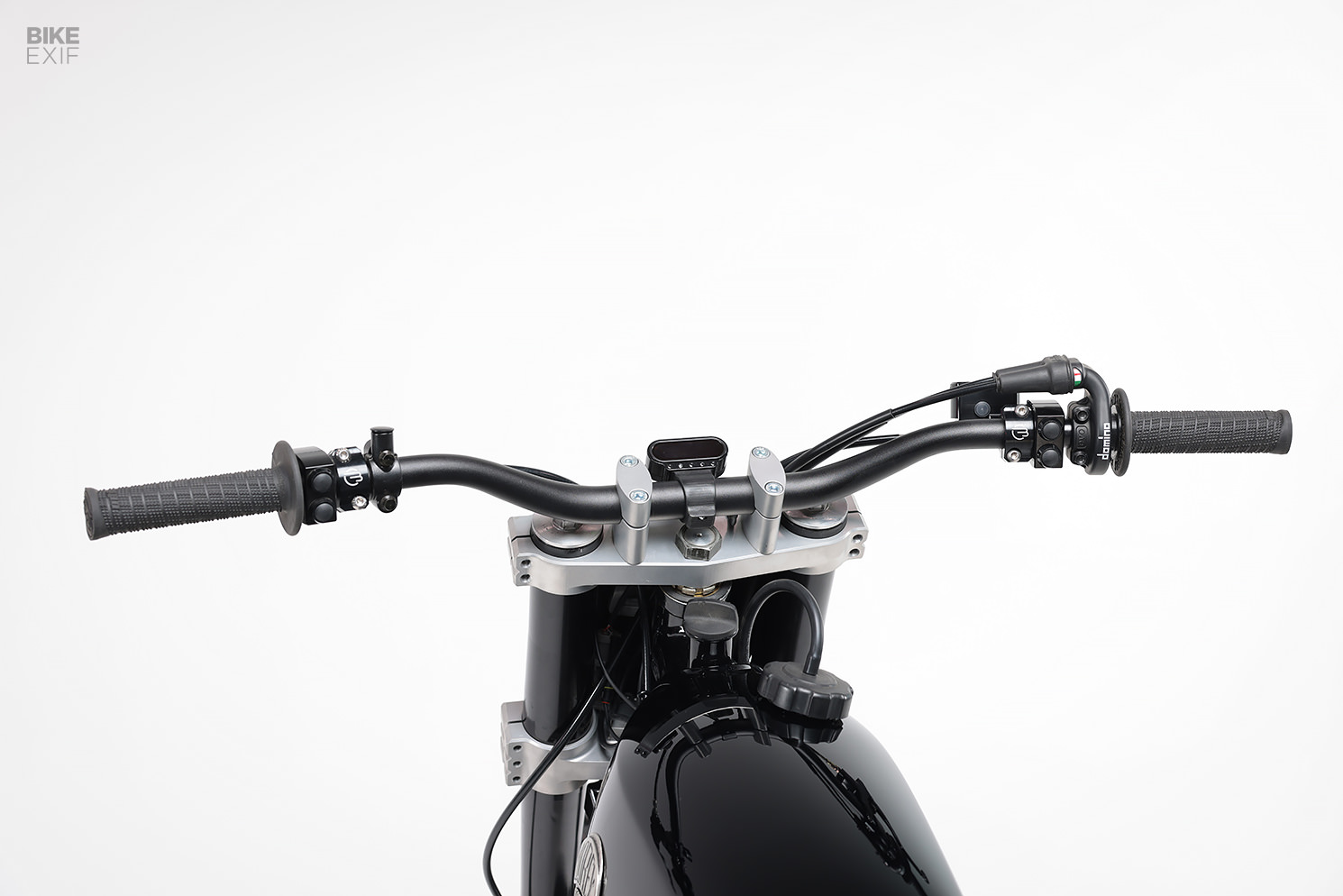
Equal consideration went into the super-sparse cockpit. Neken motocross handlebars sit front and center, fitted with new grips and Beringer clutch and brake controls. There’s even a single mirror perch on the left side, for when you’re riding the bike instead of taking photos of it.
The push button switchgear, and the tiny digital speedo, come from Motogadget. The latter is mounted on a clever little bracket that clamps directly to the handlebars, along with a discreet warning light array.
Finished in gloss black with custom Morex badges on the tank, the Dominator now goes by the apt nickname, ‘Phantom.’ Kévin is also happy to report that it rides just as good as it looks.
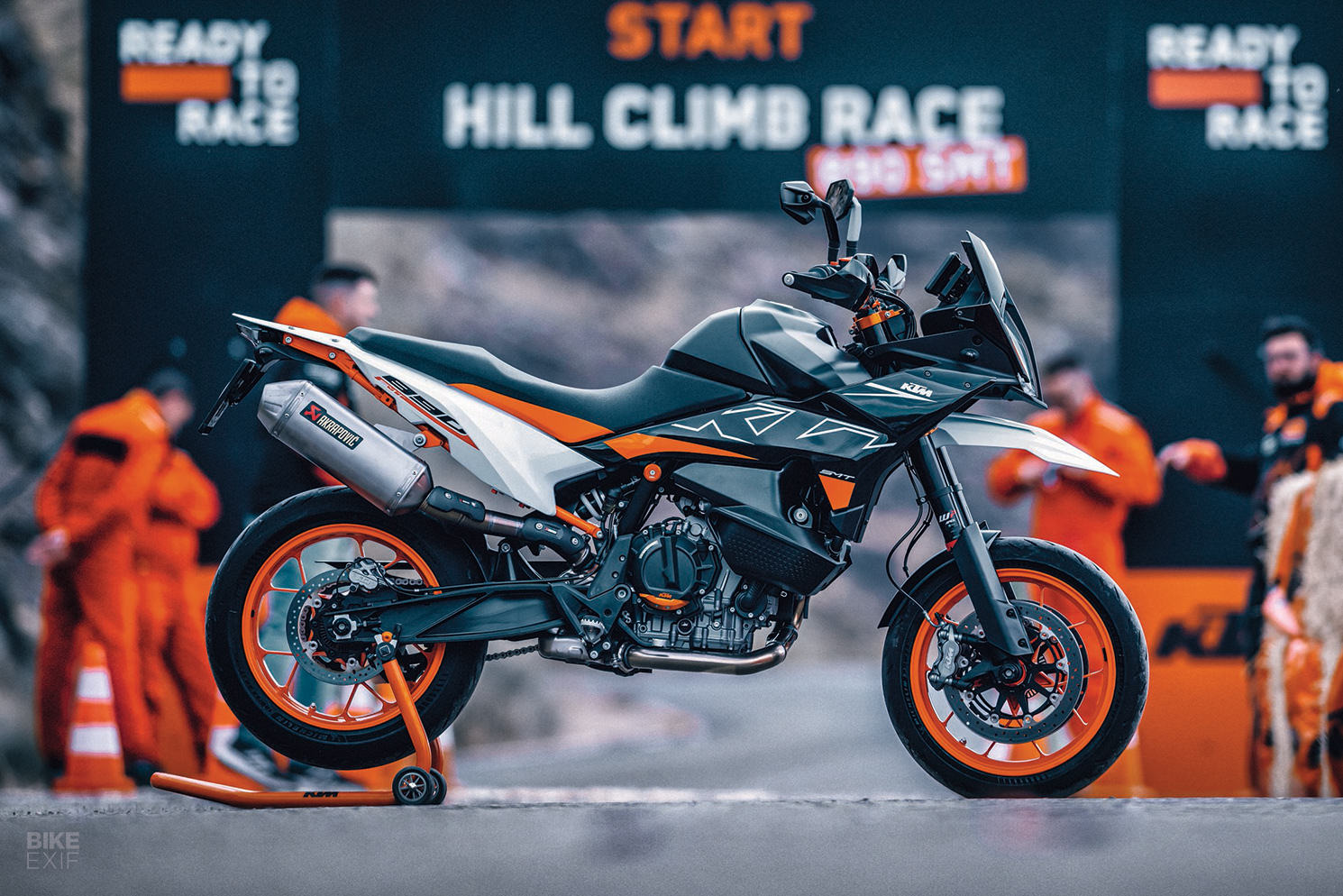
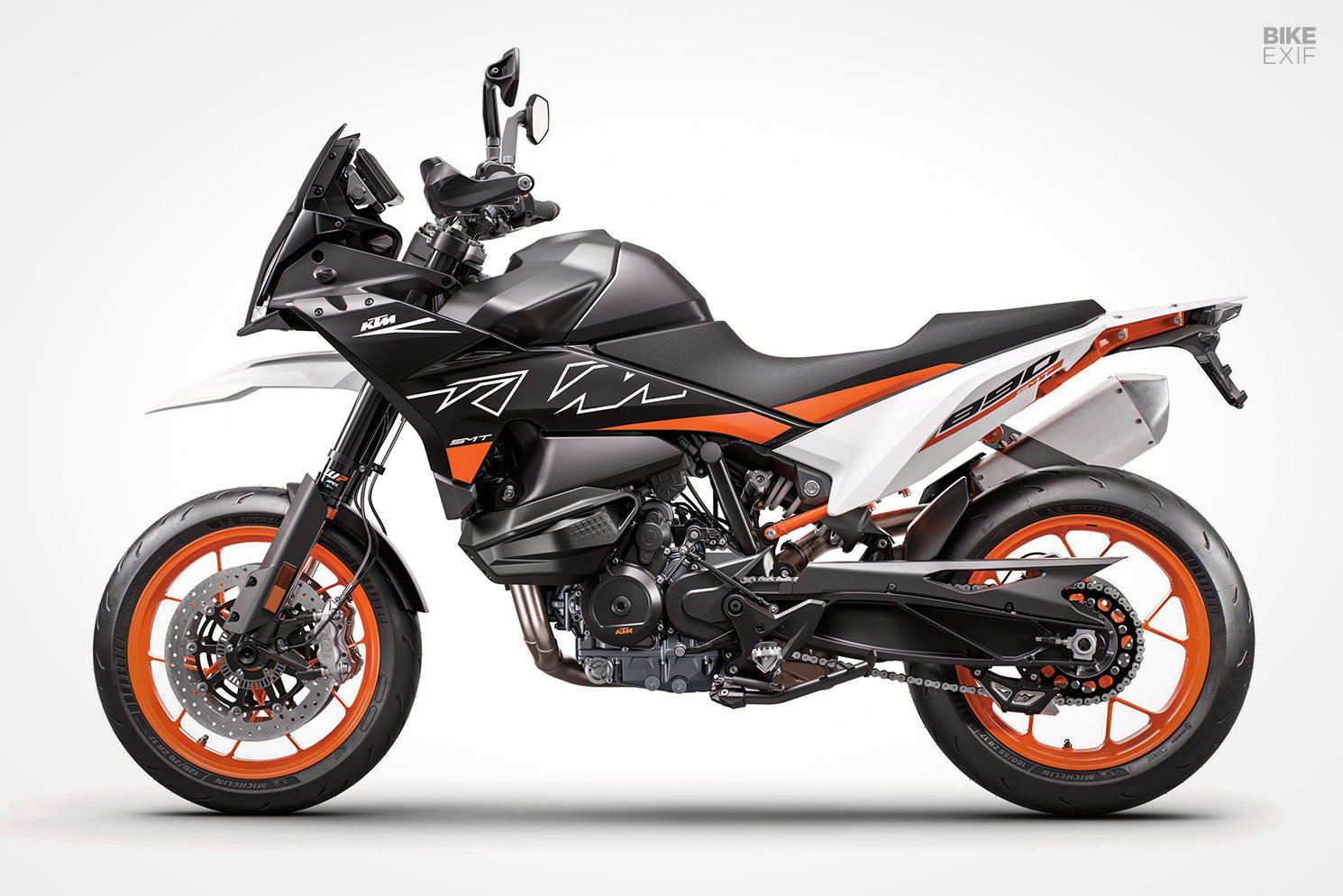
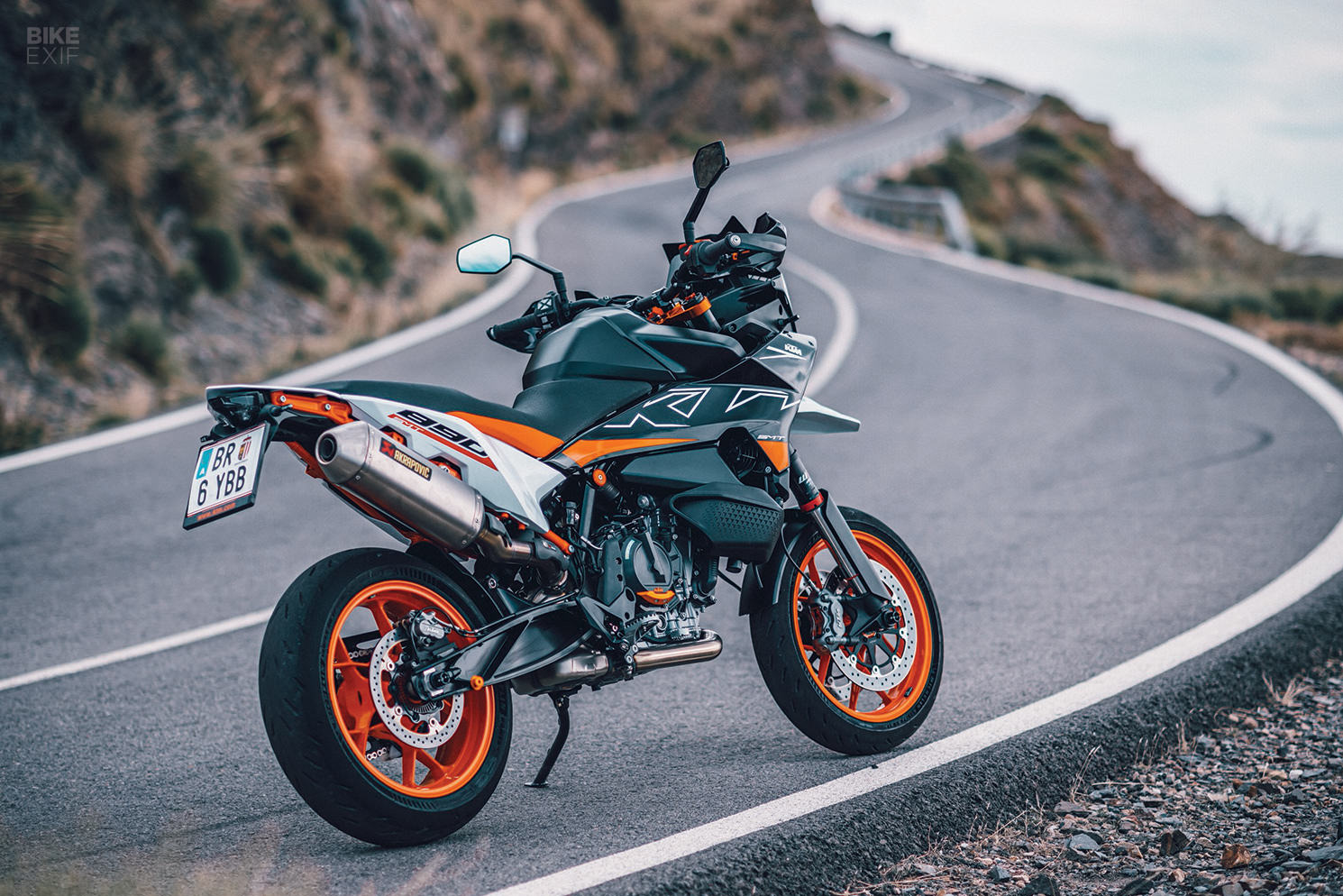
Supermotos and touring bikes are built for very different purposes, but no-one bothered telling KTM that. They’ve just brought the SMT (Supermoto Touring) designation back to their line-up, in the form of the new KTM 890 SMT.
It’s been a decade since the KTM 990 SMT fell from KTM’s line-up. A capable, if awkward-looking bike, it was effectively a bulked-up version of the 990 SMR. The idea was to meld the performance and agility of a supermoto, with the comfort and distance riding capability of a touring bike.
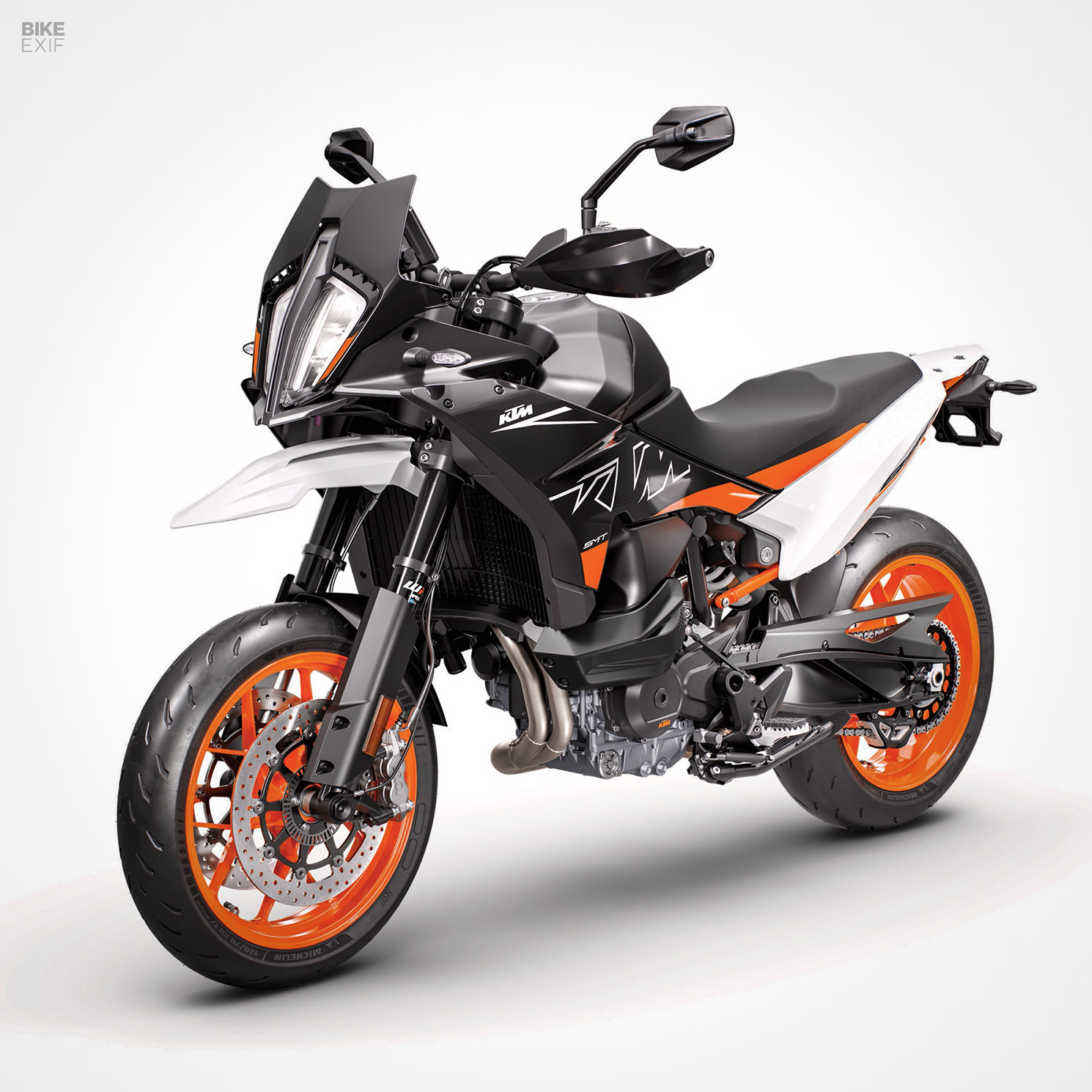
The KTM 890 SMT follows that exact same formula, with a look that’s sharper and less gawky than its predecessor. As is the norm for most modern KTMs, it’s still ugly—but in an intriguing mechanical alien sort of way.
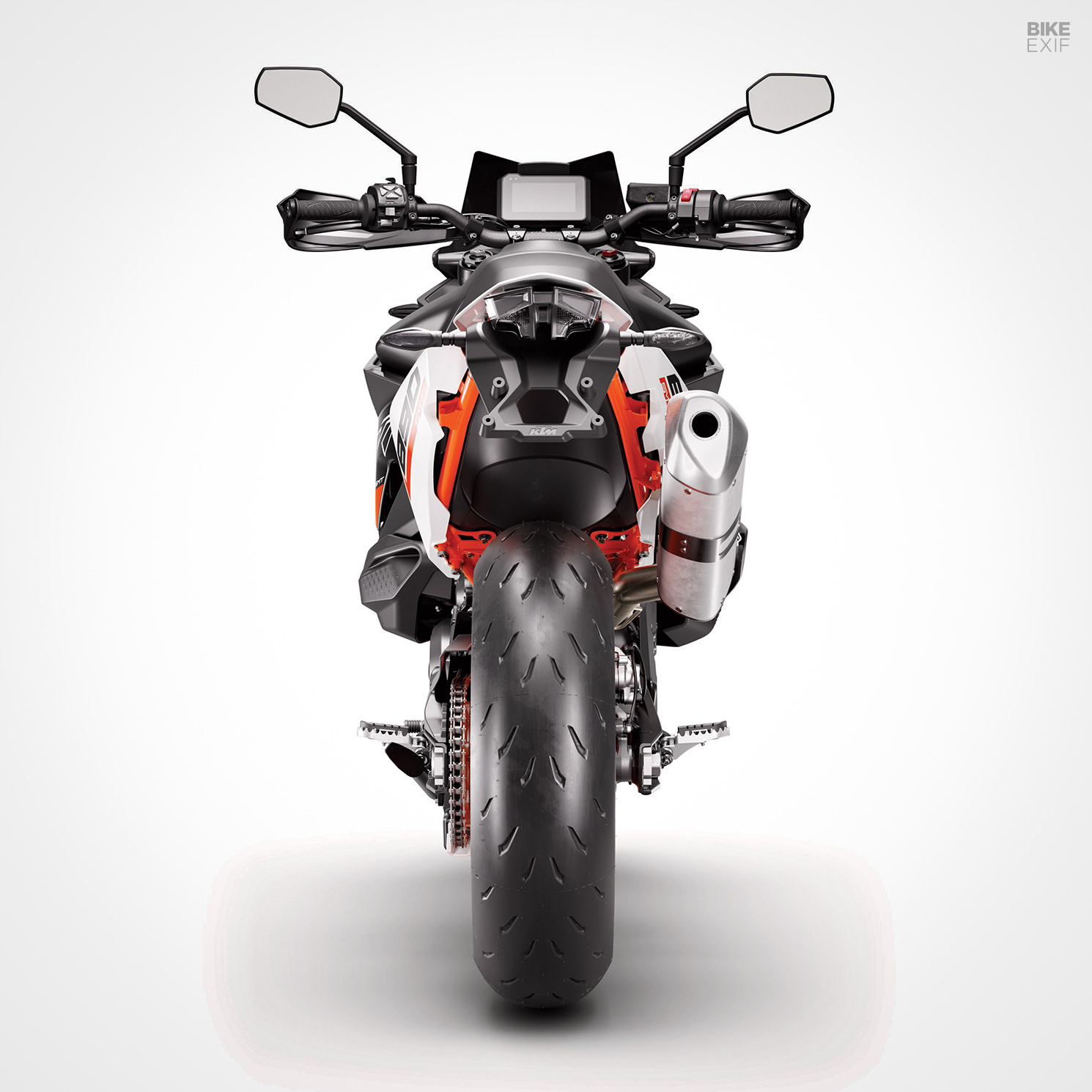
At a glance, the KTM 890 SMT sits between the Austrian marque’s 890 Adventure R, and the 890 Duke R. Though it does lean more towards the former, visually, albeit in a more trimmed package. The 15.8 l [4.17 gal] tank is slimmed down, while the 860 mm-high seat traces a similar line to the 890 Adventure R’s, tweaked to suit the SMT’s intended usage.
The SMT gets the same LED headlight cluster as the 890 Adventure R, with a short windscreen and a ‘double’ front fender; the front half is a high-mounted affair, with a stubby rear section mounted near the wheel.
KTM also states that the 890 SMT’s chassis is similar to the 890 Adventure R’s, but with “tighter geometry.” Tweaks include a longer swingarm and a revised rear shock angle, all to pitch the rider into a more aggressive riding position.
The SMT is obviously more squat than its dual-sport sibling, with considerably less suspension travel. WP APEX suspension components sit at both ends, offering 180 mm of travel, front and rear. The SMT rolls on the same 17” alloy wheels as the 890 Duke R, with Michelin PowerGP tires specced as standard. Twin 320 mm brake discs sit up front, with a 300 mm disc at the back.
Powering the SMT is KTM’s 889 cc LC8c parallel twin engine, featuring a unique tune. Numbers come in at 105 hp at 8,000 rpm, with 100 Nm of torque on hand.
There’s a full suite of electronic aids, including switchable rider modes, a customizable ‘track’ mode, cornering ABS and traction control, and a special ‘supermoto ABS’ setting. The cockpit sports a TFT display, and the handlebars are adjustable through six different positions.
Optional extras include heated grips, a ‘Motor Slip Regulation’ software add-on, a quick-shifter and cruise control. Plus KTM will no doubt have a plethora of look-fast parts (and apparel) in their catalog too.
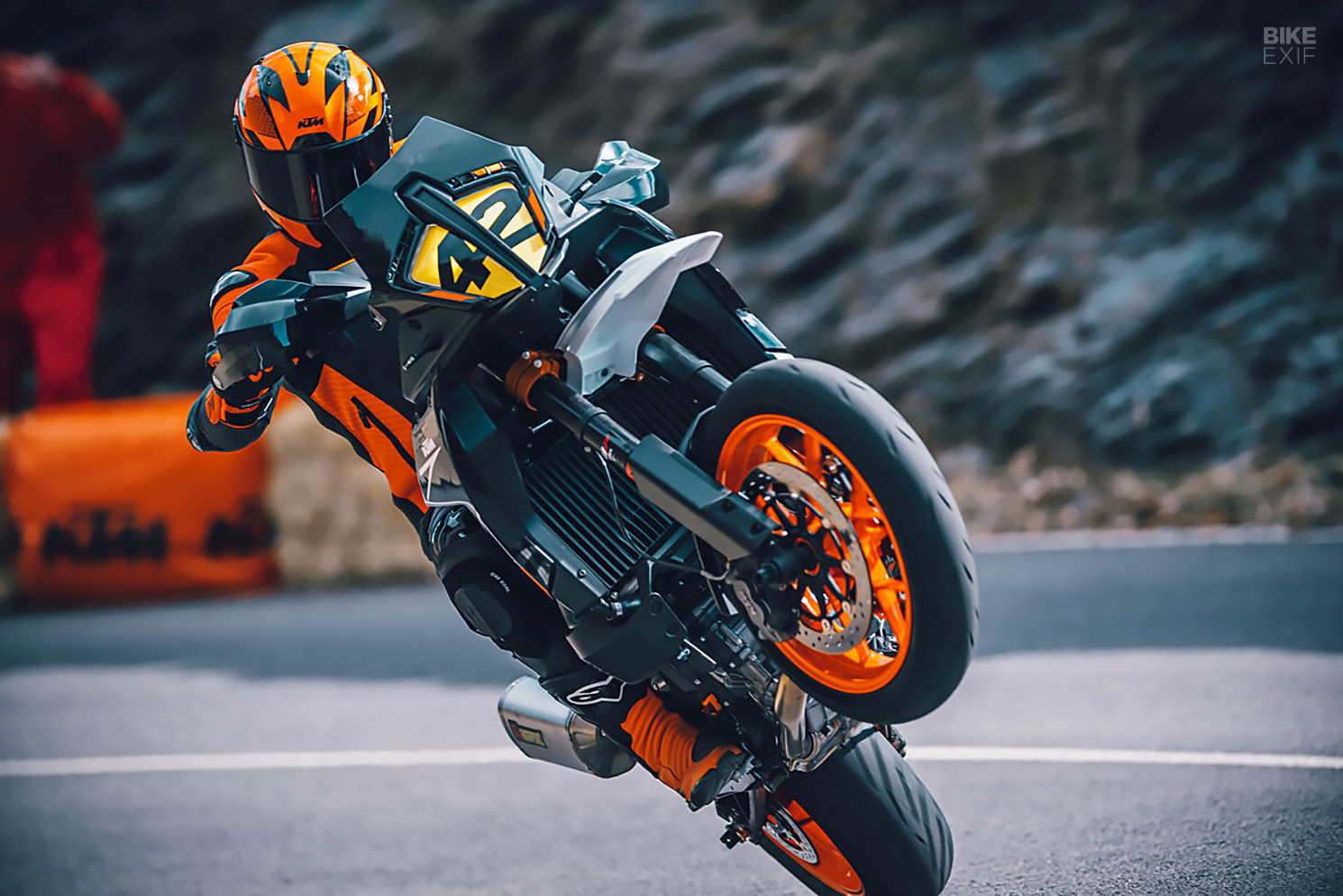
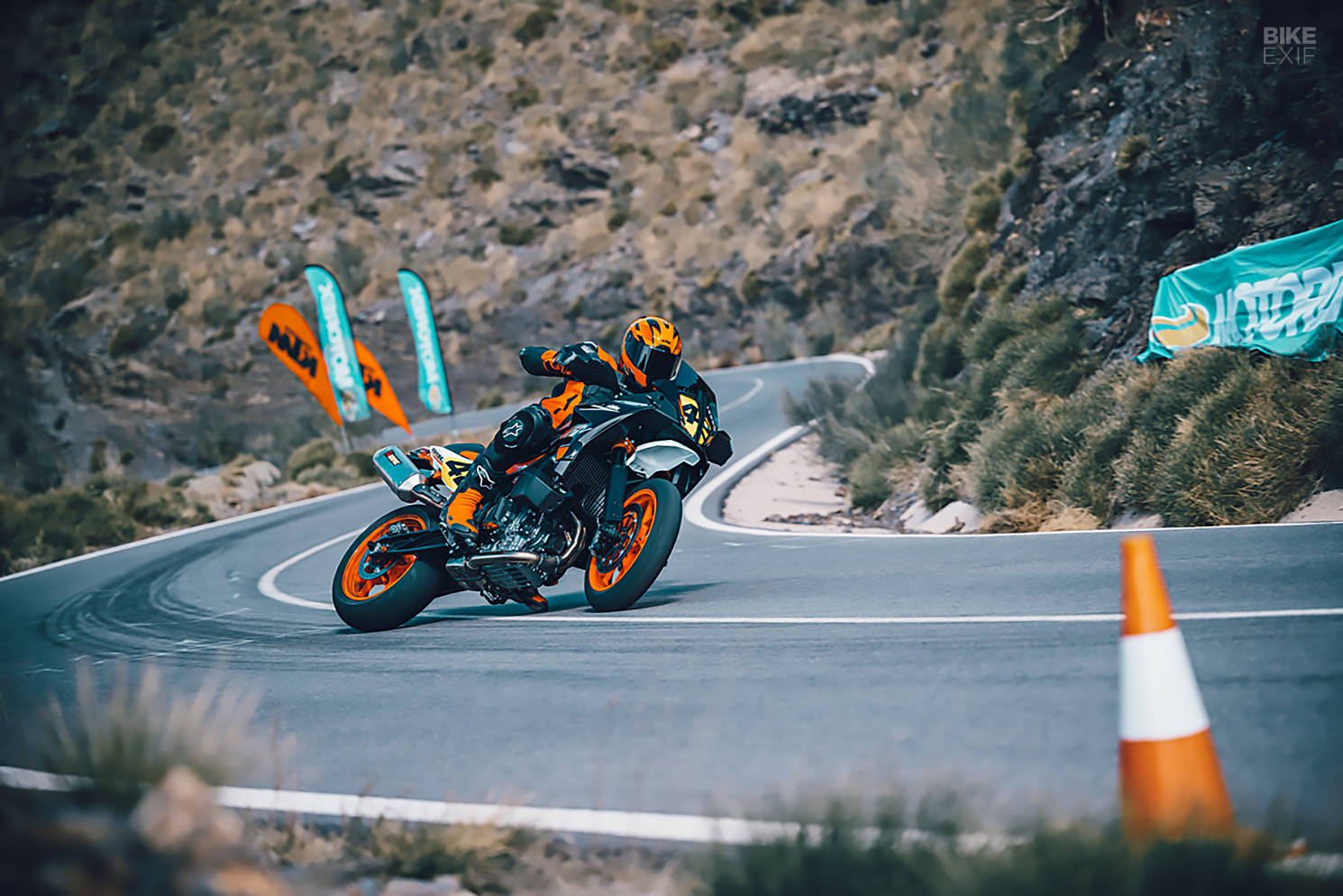
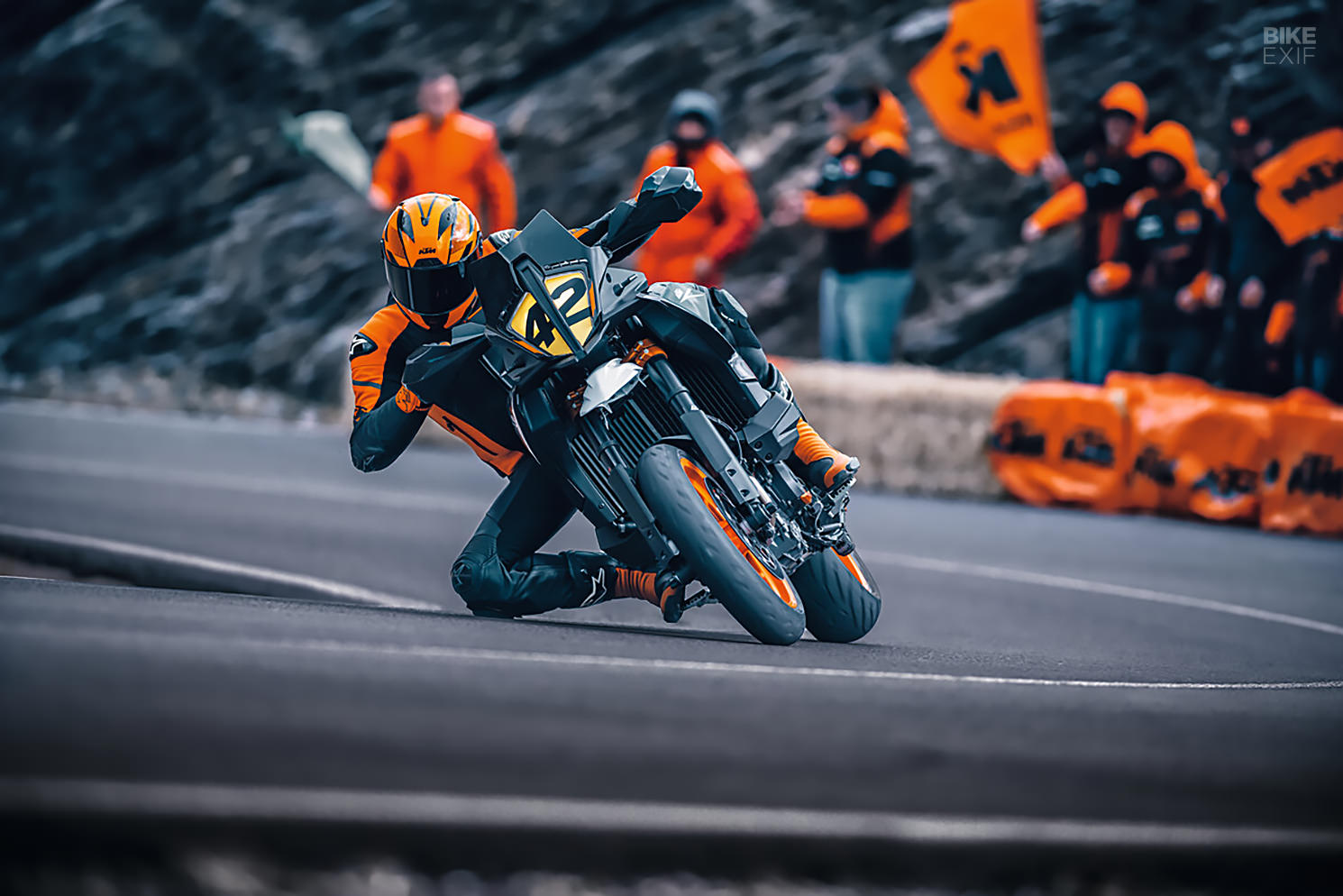
To launch the SMT, KTM handed it over to former AMA Superbike and Supermoto racer, and Pikes Peak Hillclimb winner, Chris Fillmore, who let it loose on a mountain climb in Sardinia. KTM say this is what they made the 890 SMT for; railing corners, but also being able to cover the distance between them.
We’re certainly tickled. The KTM 890 Duke R is tons of fun to ride—but it’s also extremely focused, which makes it rather uncomfortable for bigger riders, or for long days in the saddle. The 890 Adventure R adds off-road capability, but not everyone needs or wants that.
The SMT sits neatly in the middle, as an alpine weapon that’s sure to go down a treat in Europe, where most of the riding happens on well-groomed tarmac. North Americans need not apply just yet though—KTM say the 890 SMT won’t be available there this year.
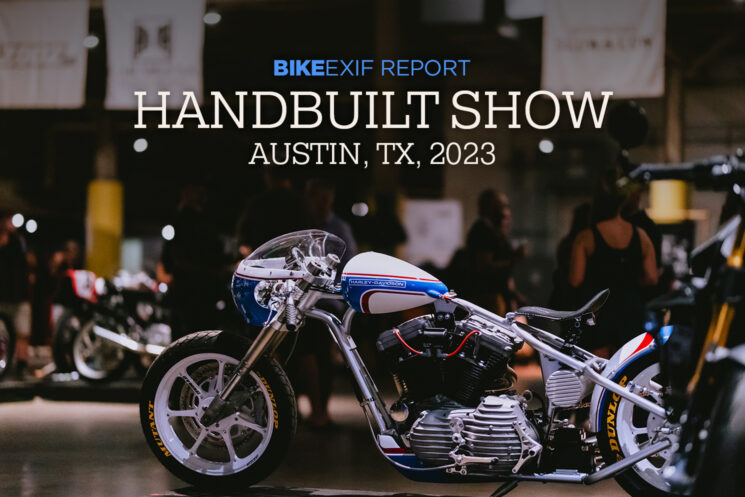
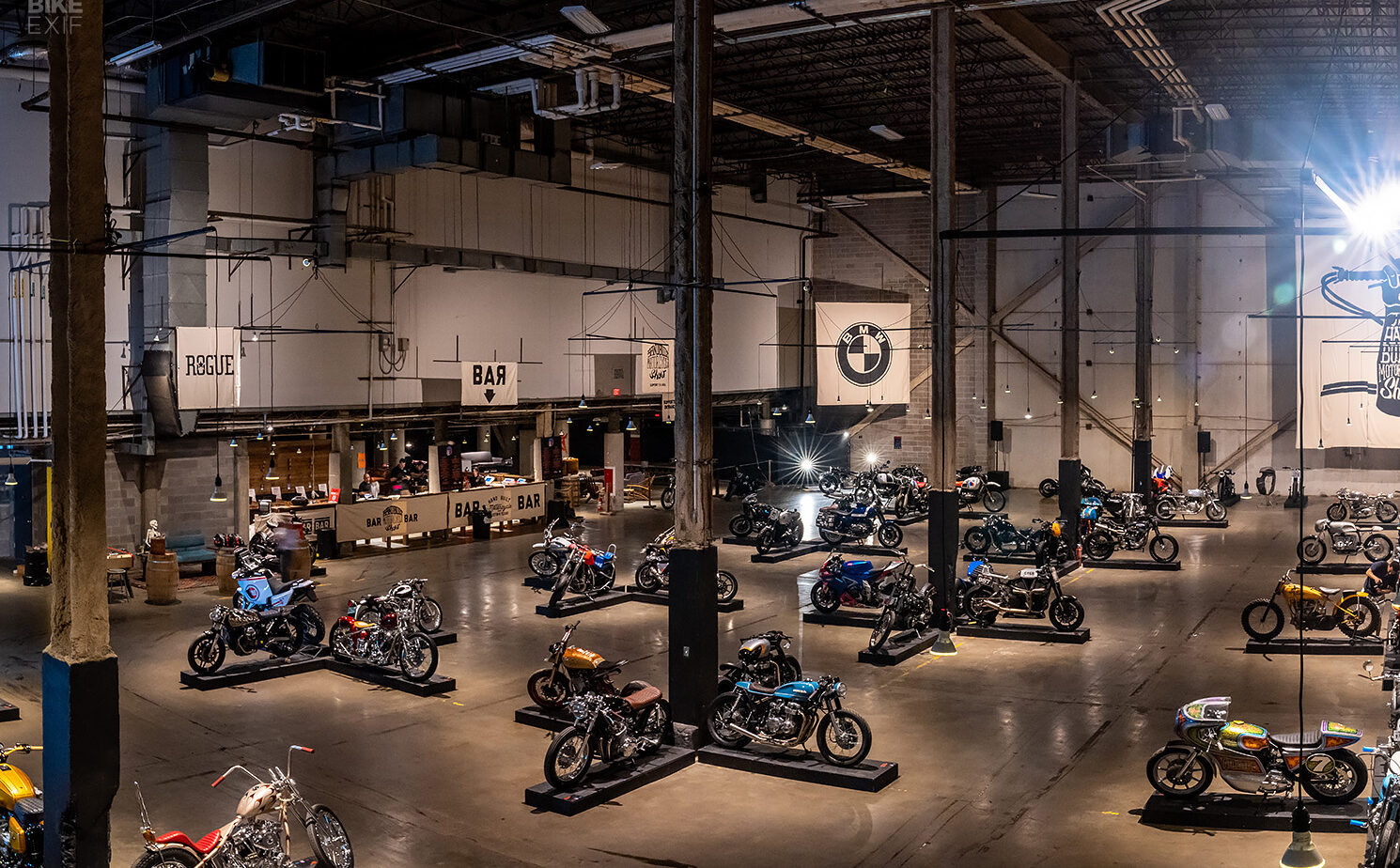
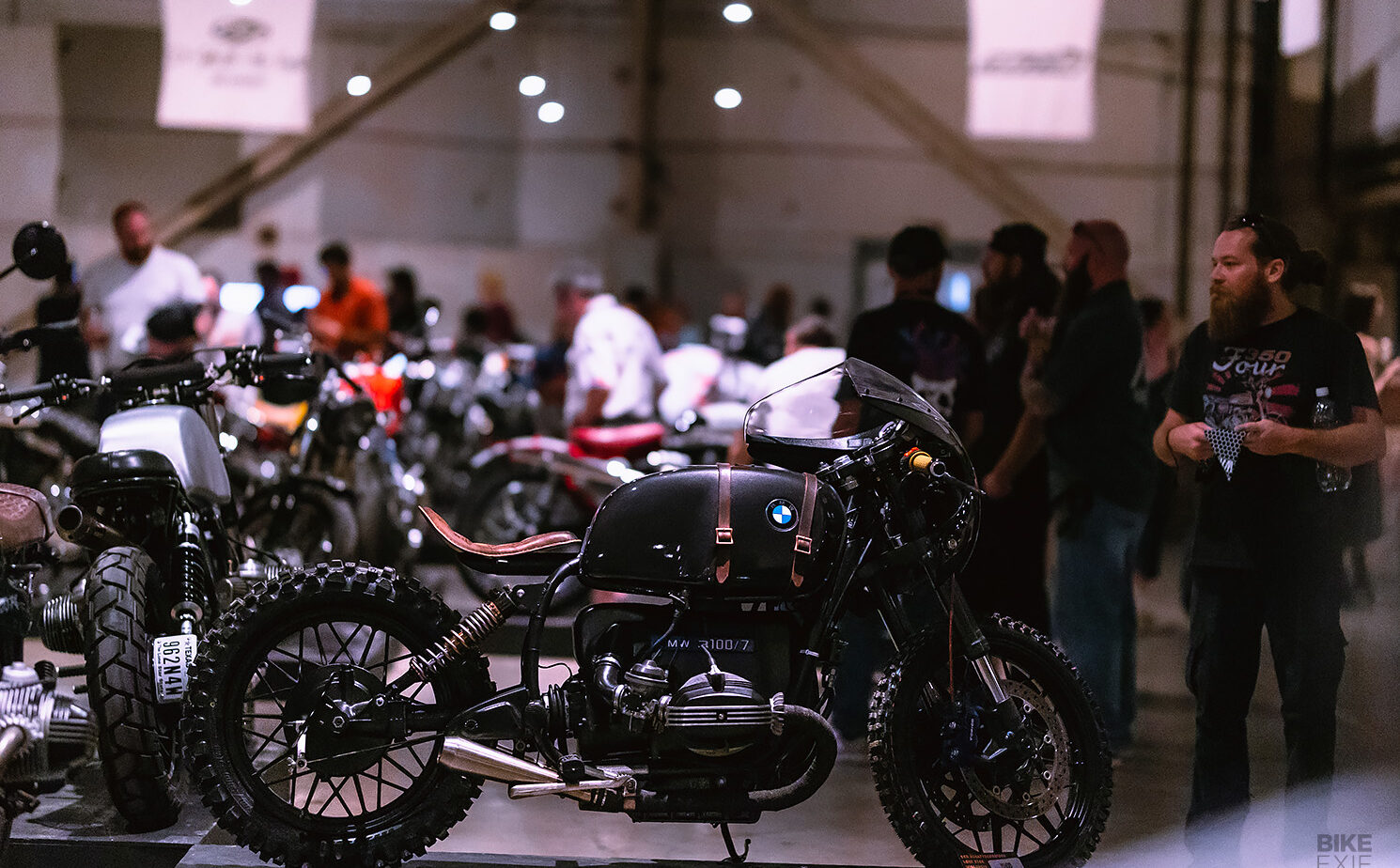
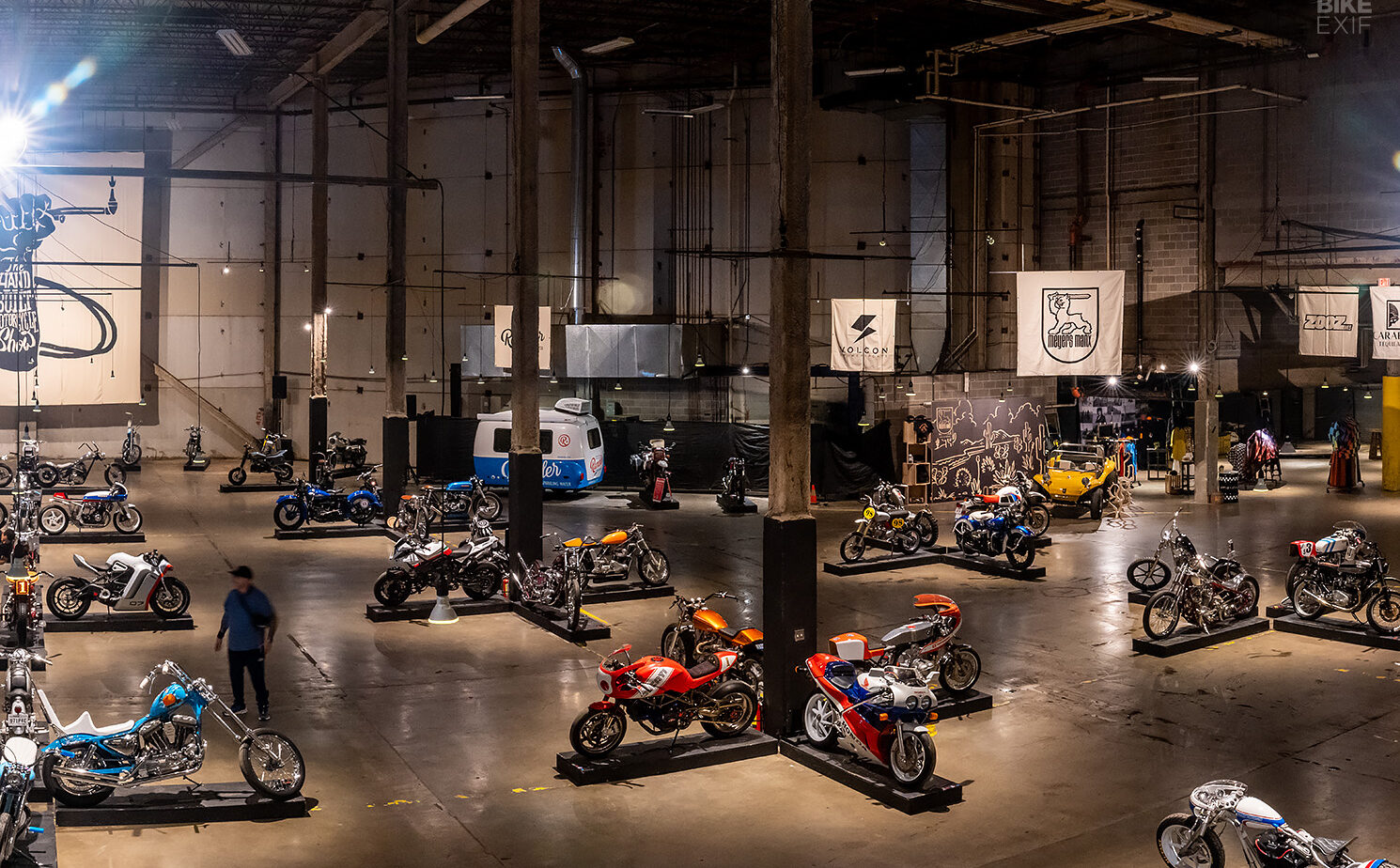
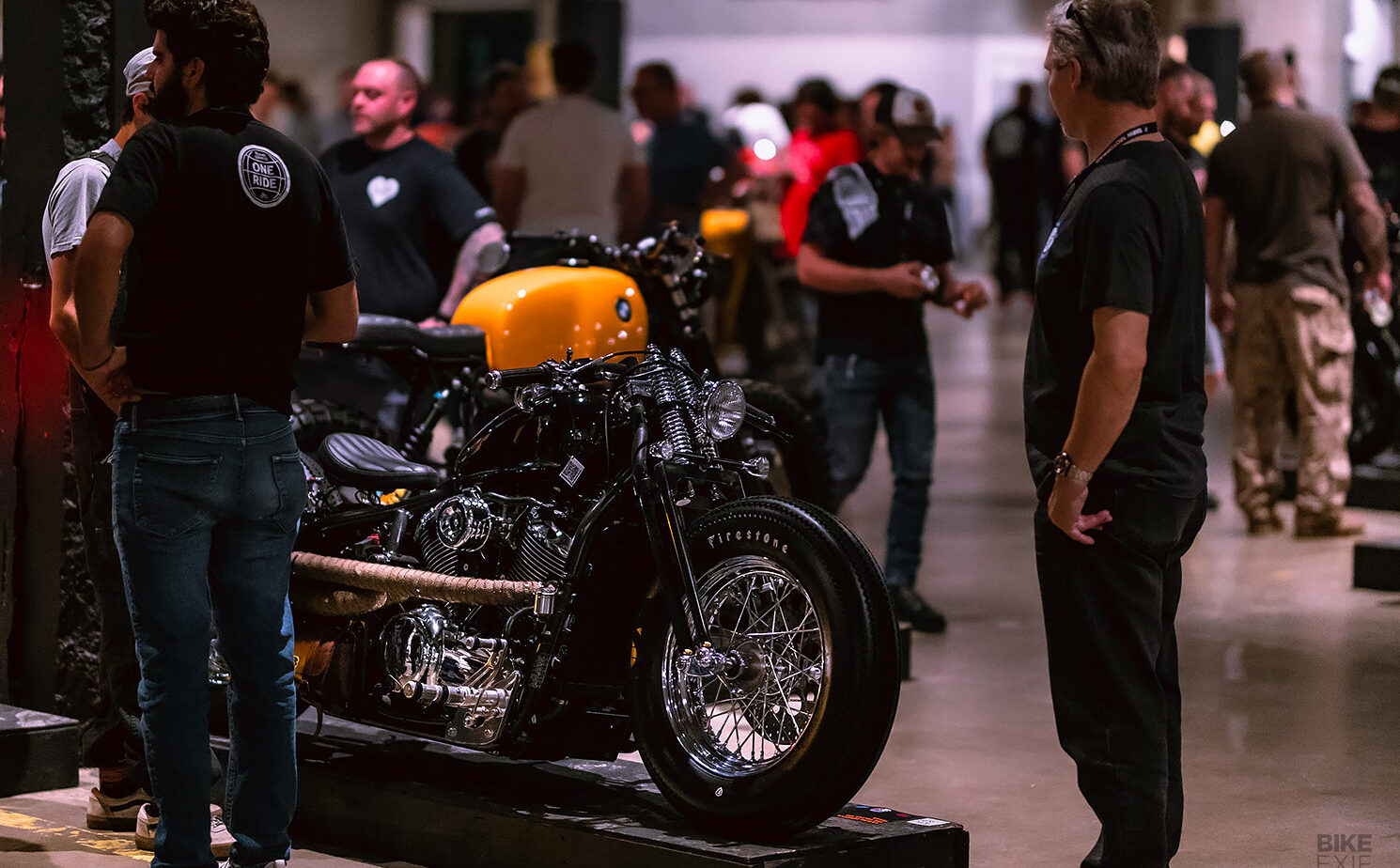
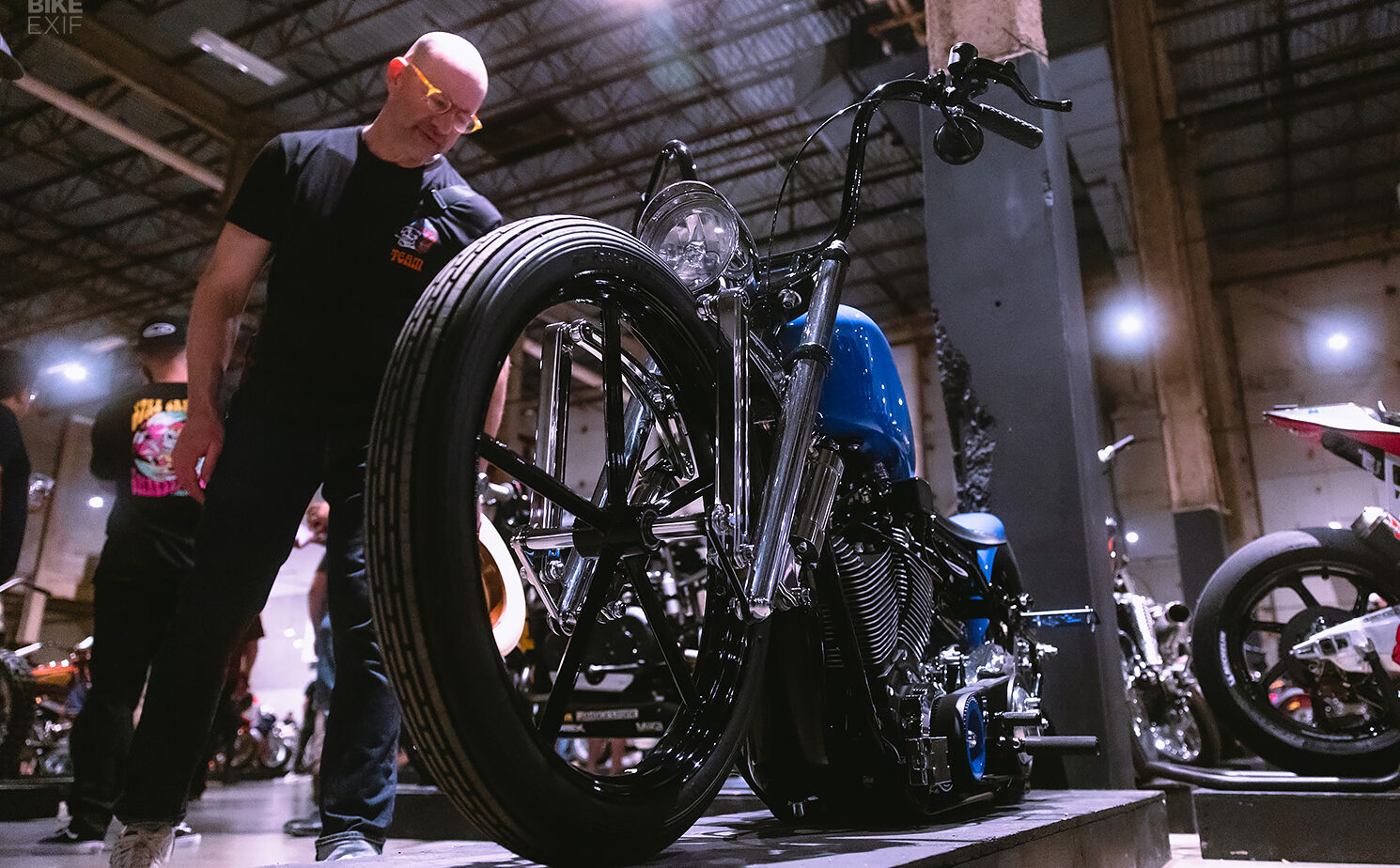
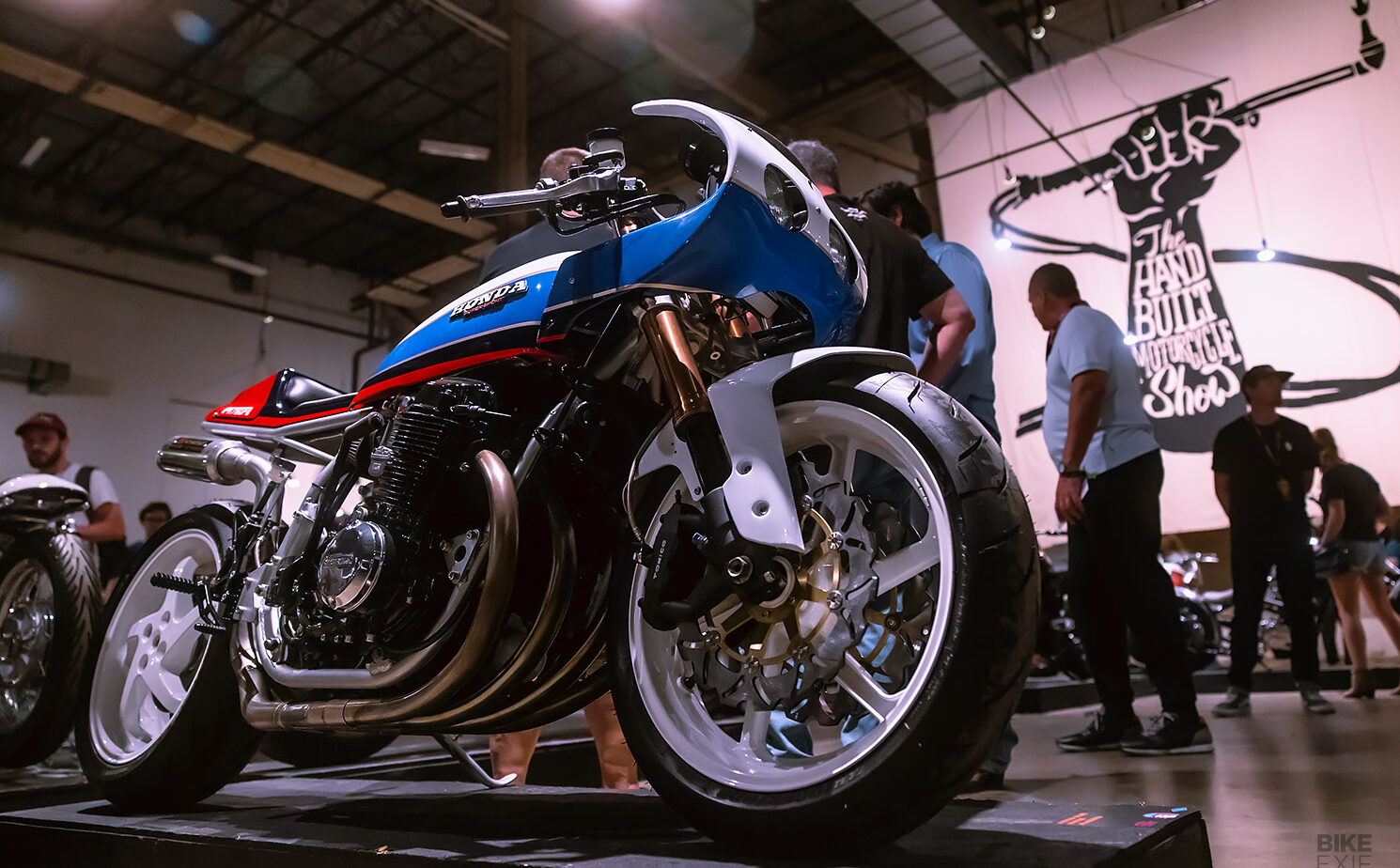
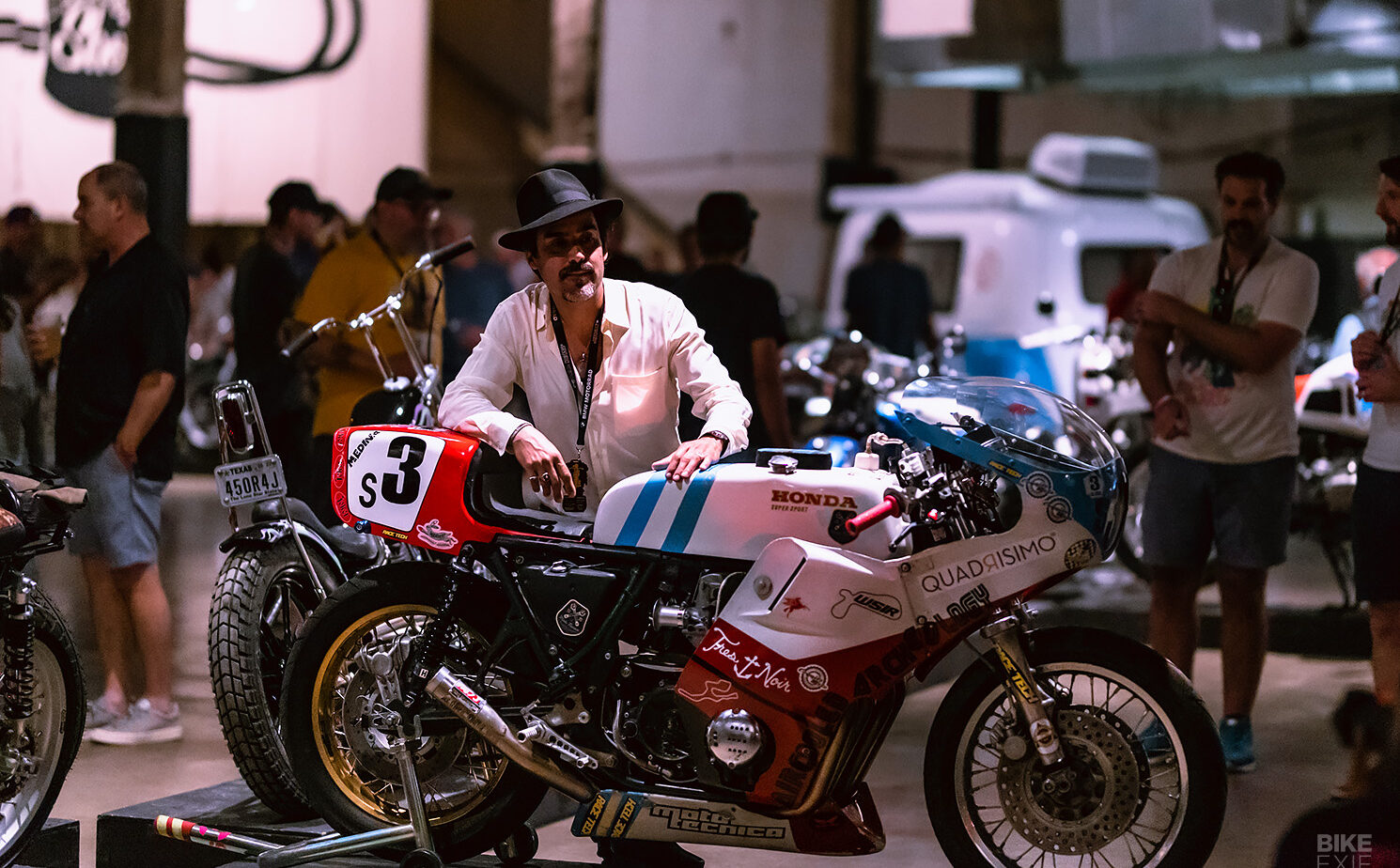
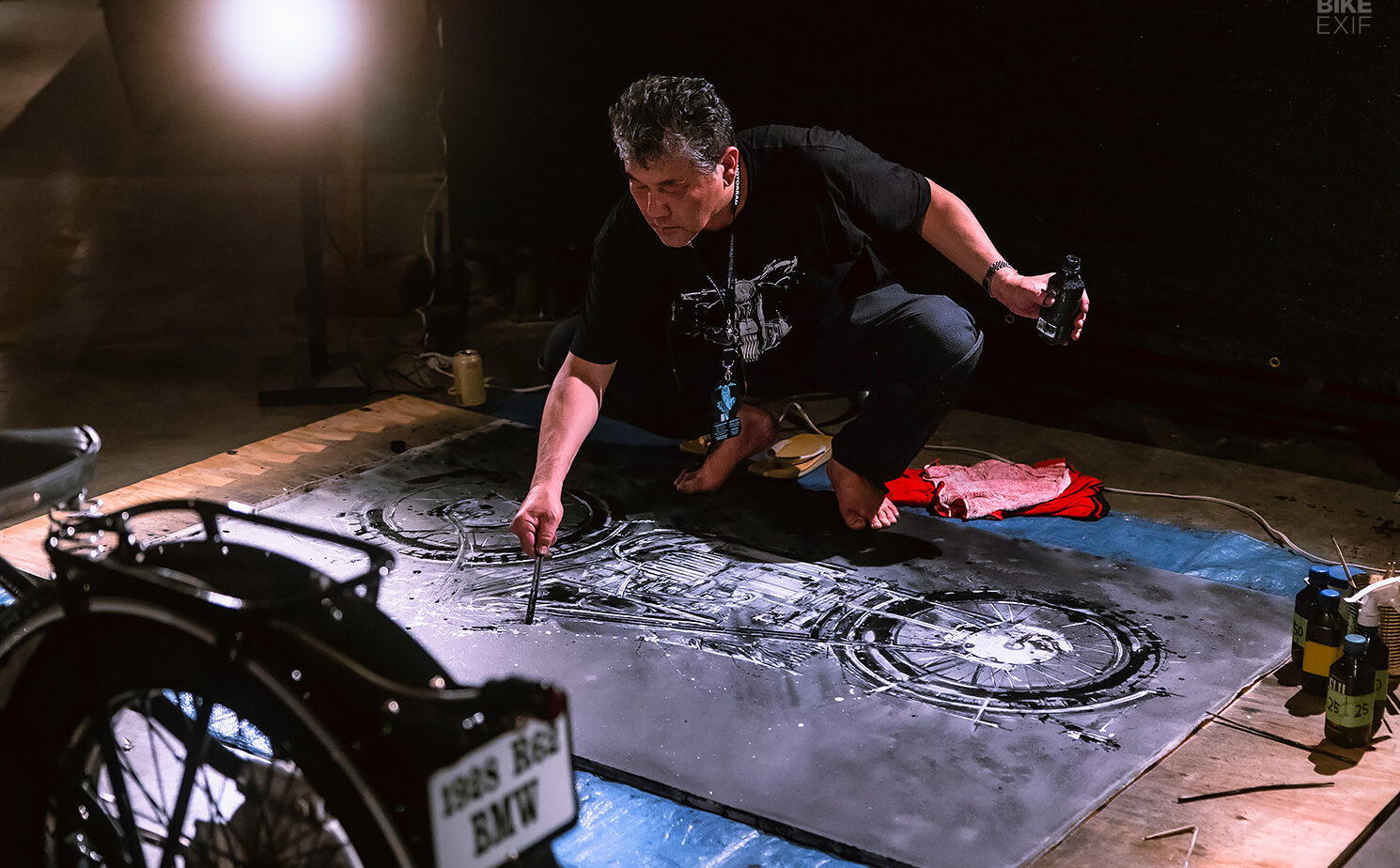
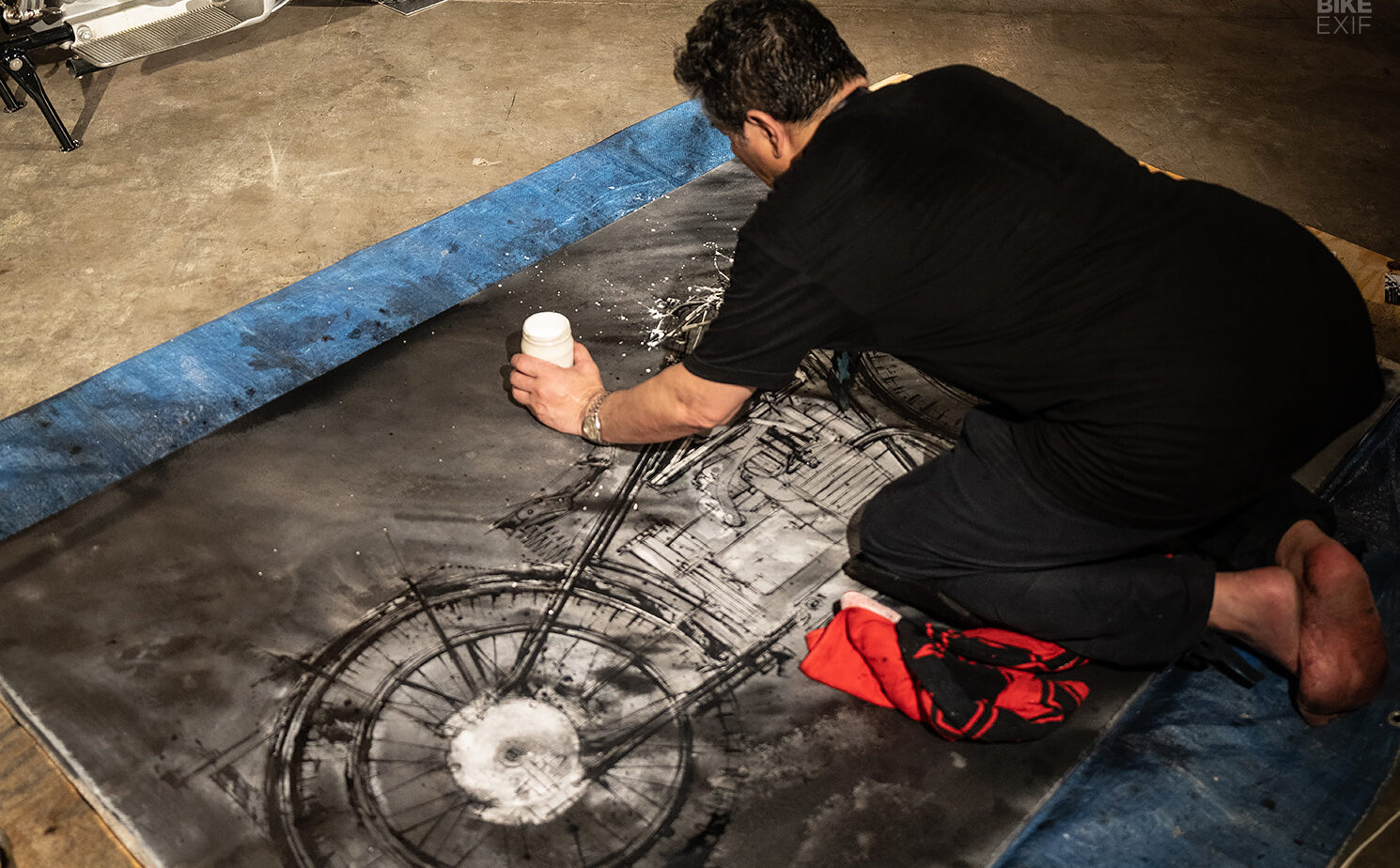
Three days of live music, art and over 150 handbuilt motorcycles and custom cars—it definitely took a bit to get our you-know-what together after a fun weekend in Austin. Its eighth year running, Revival Cycle’s Handbuilt Motorcycle Show is one of the most diverse motorcycle events around, not to mention serious sensory overload.
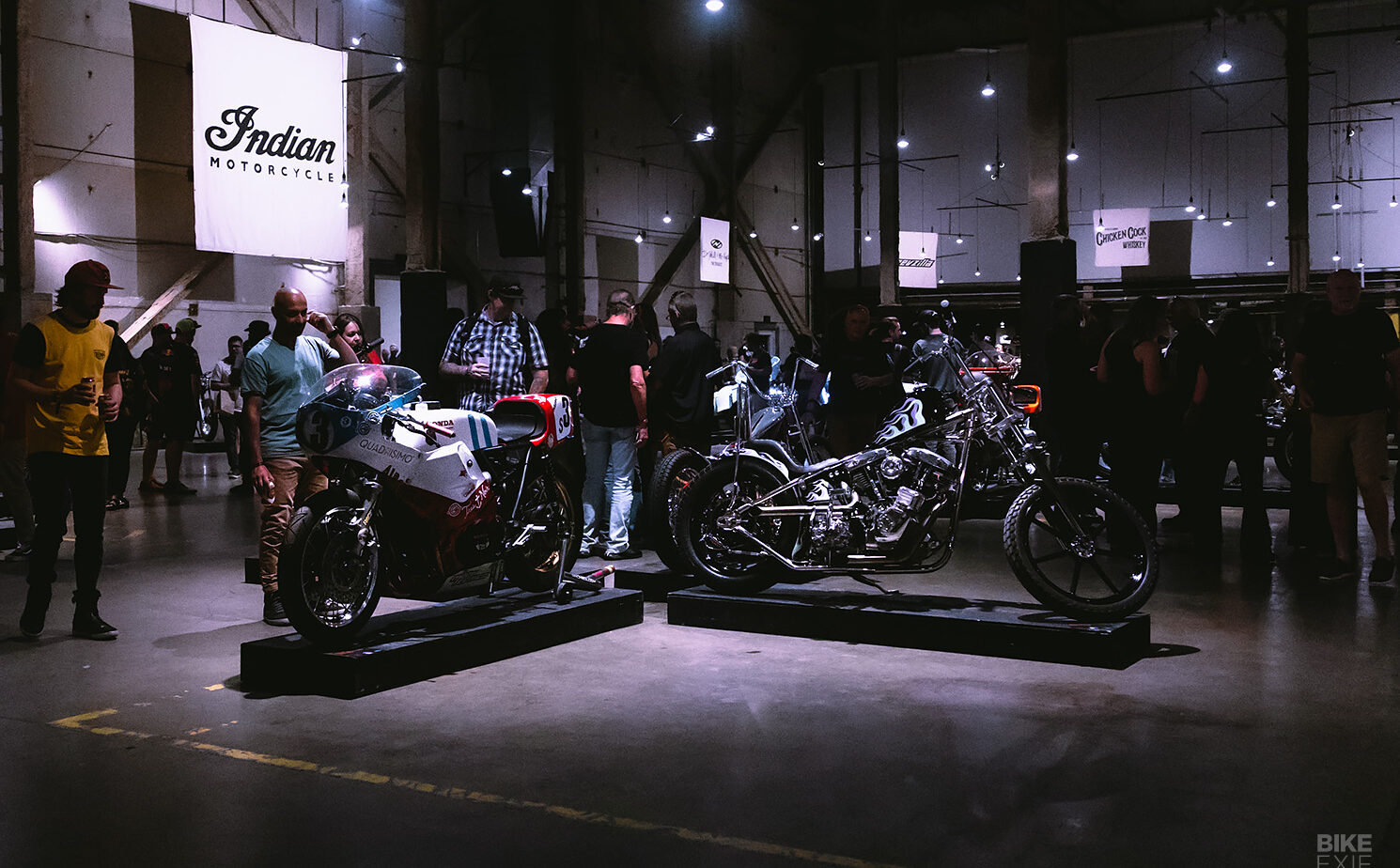
Citing a lack of connectivity in our modern digital world, Revival Cycles held the first Handbuilt Motorcycle Show in 2014 with the goal of getting people out to appreciate craftsmanship in custom bikes. The show has become a massive attraction since, and Revival estimates that roughly 20,000 people attended over the course of the weekend. The 100,000 sq-ft Austin American Statesman is the center of the event, which gives you plenty of breathing room to appreciate what’s on display.
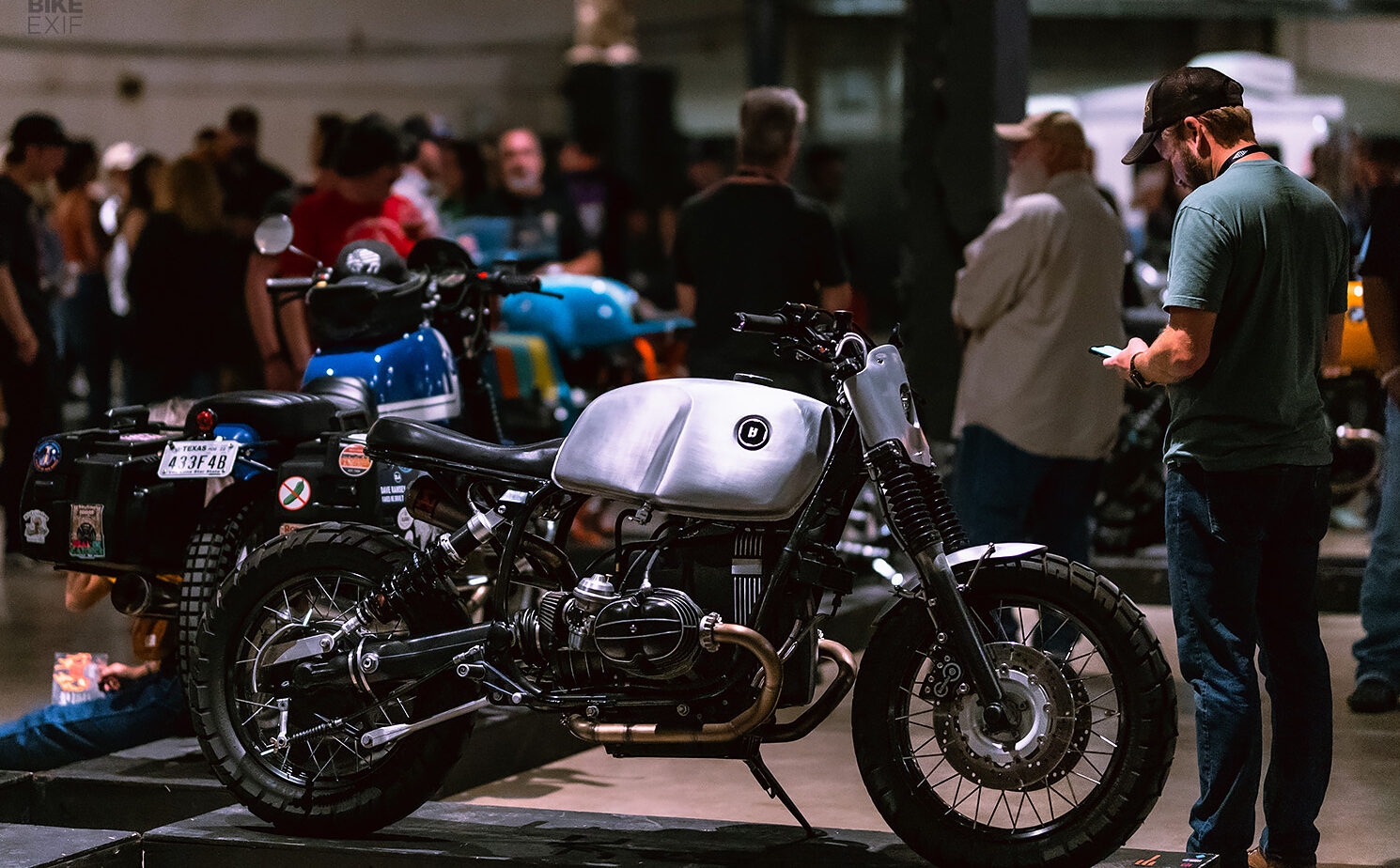
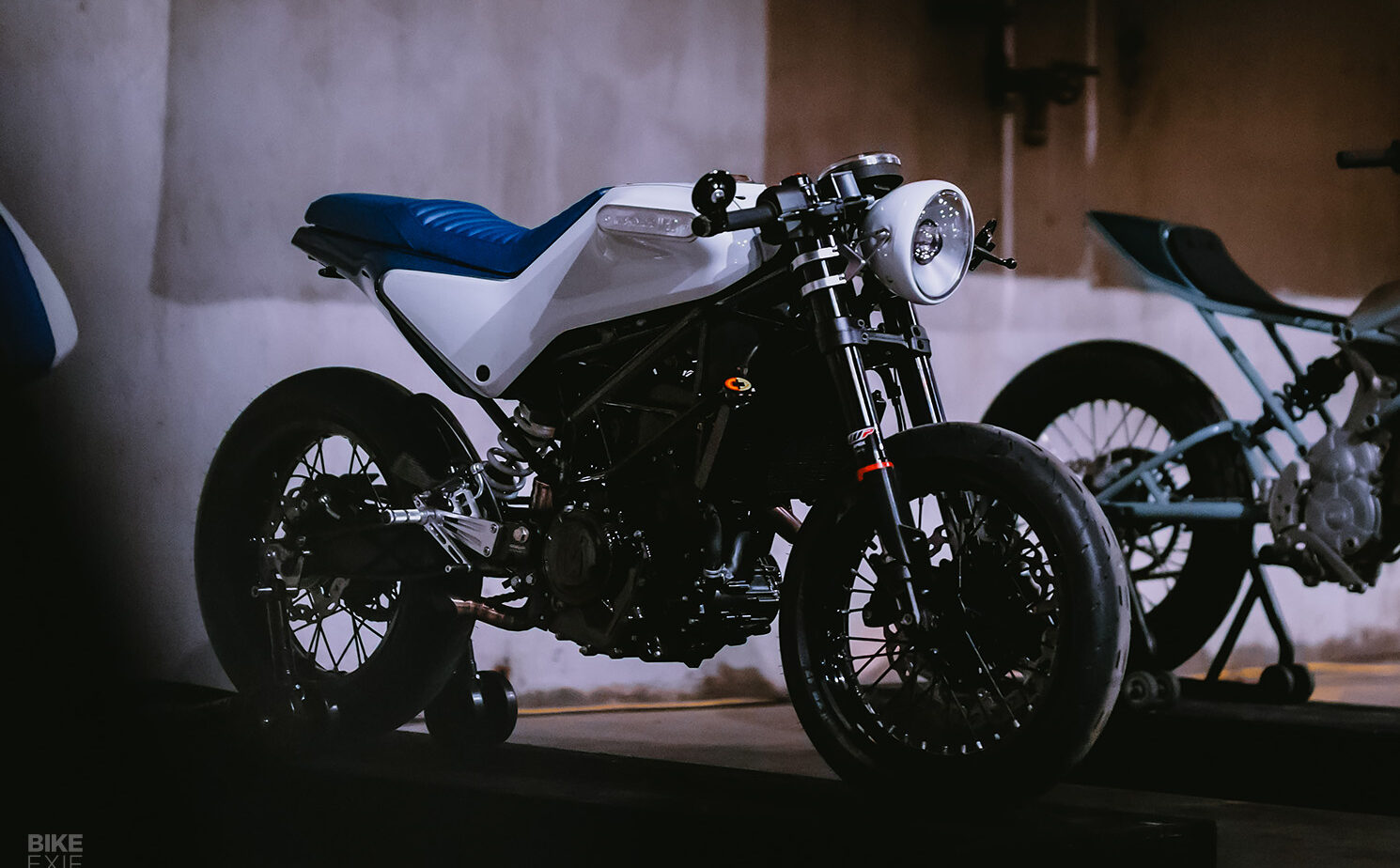
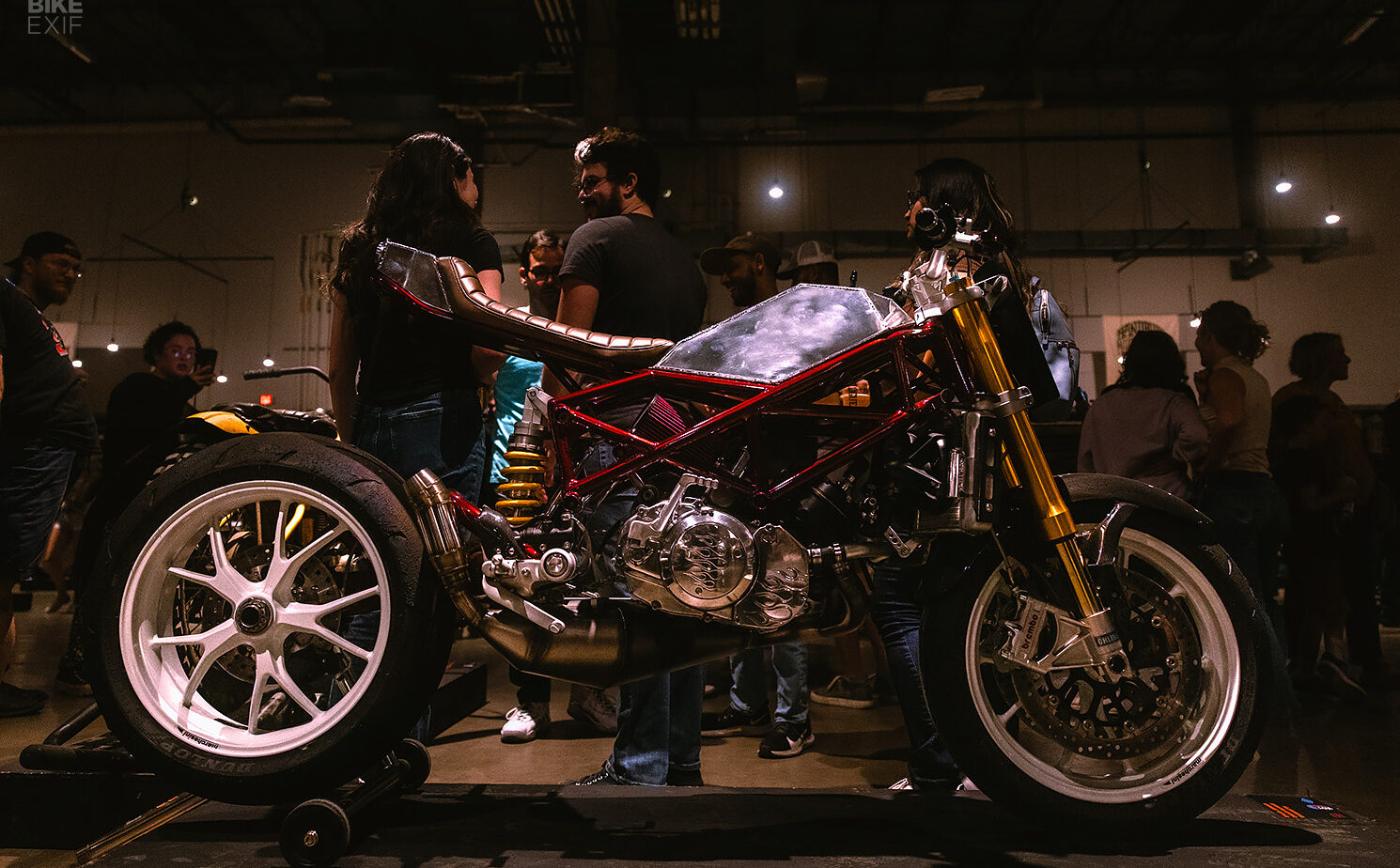
It’s a pretty immersive experience, and the crew at Revival does a great job creating a setting that inspires you to dig into the details of every custom bike. You’ll find everything from traditional choppers, to cutting-edge street bikes and classic cafes at the show, with each one being selected for its unique brand of handcrafted character.
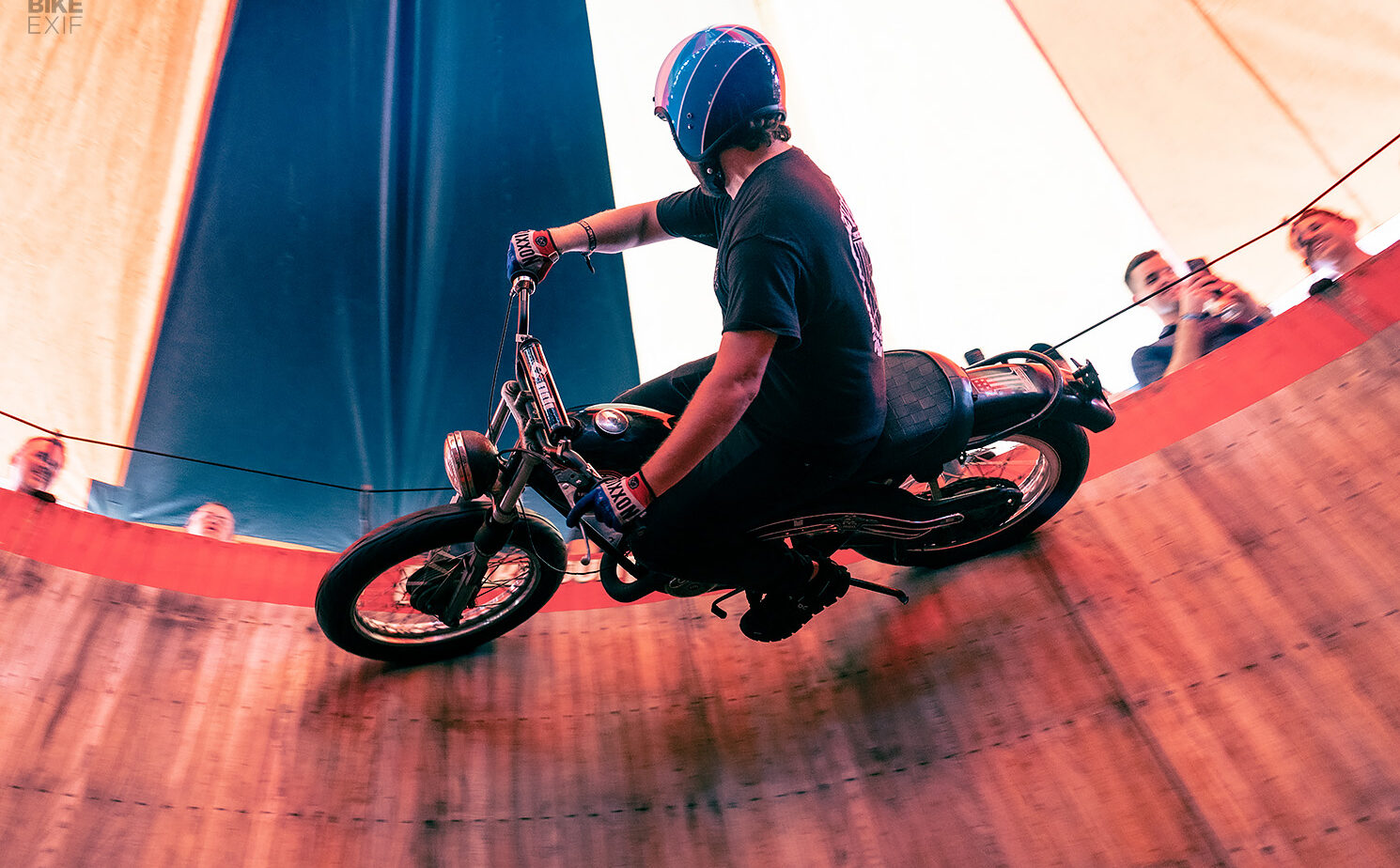
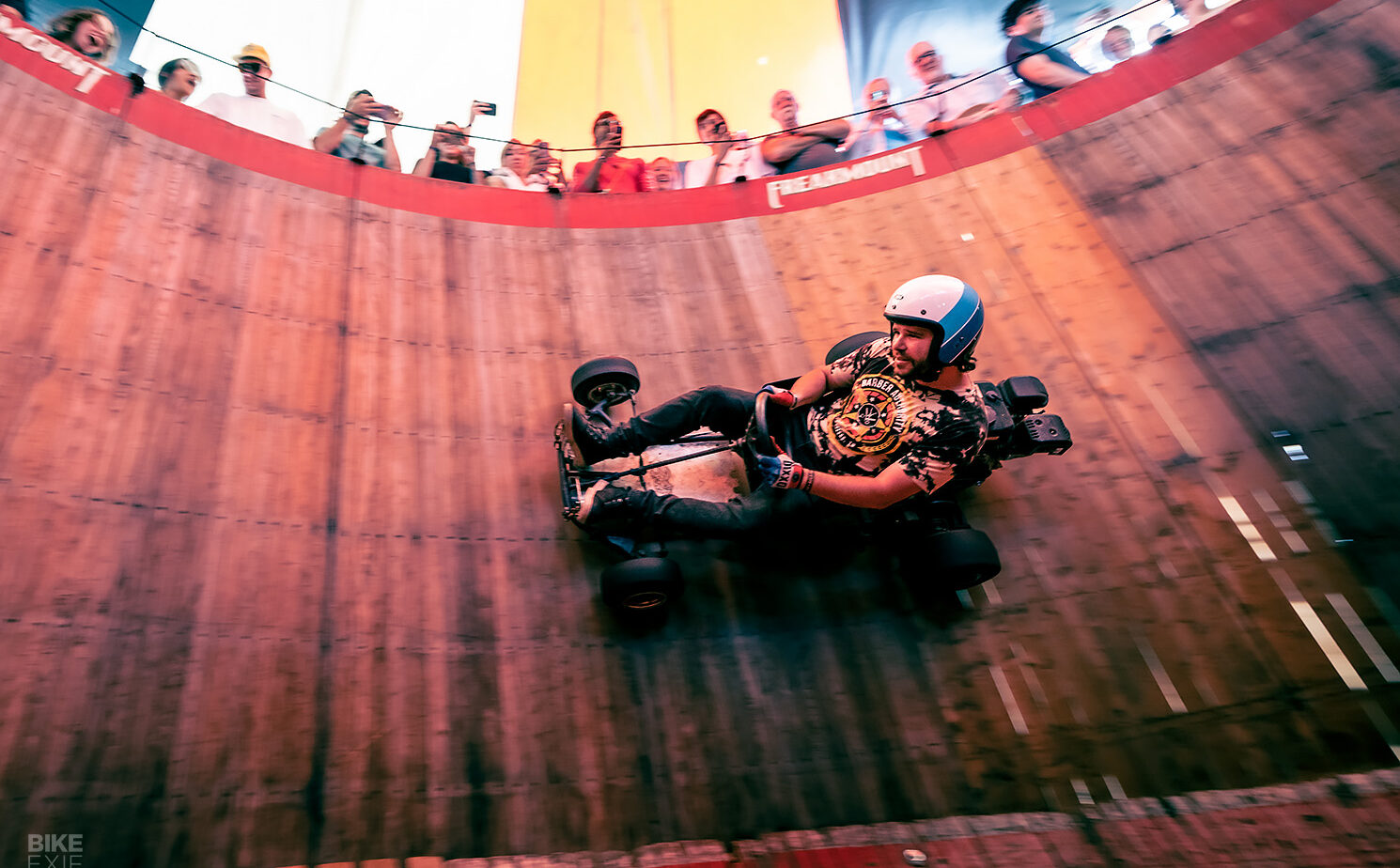
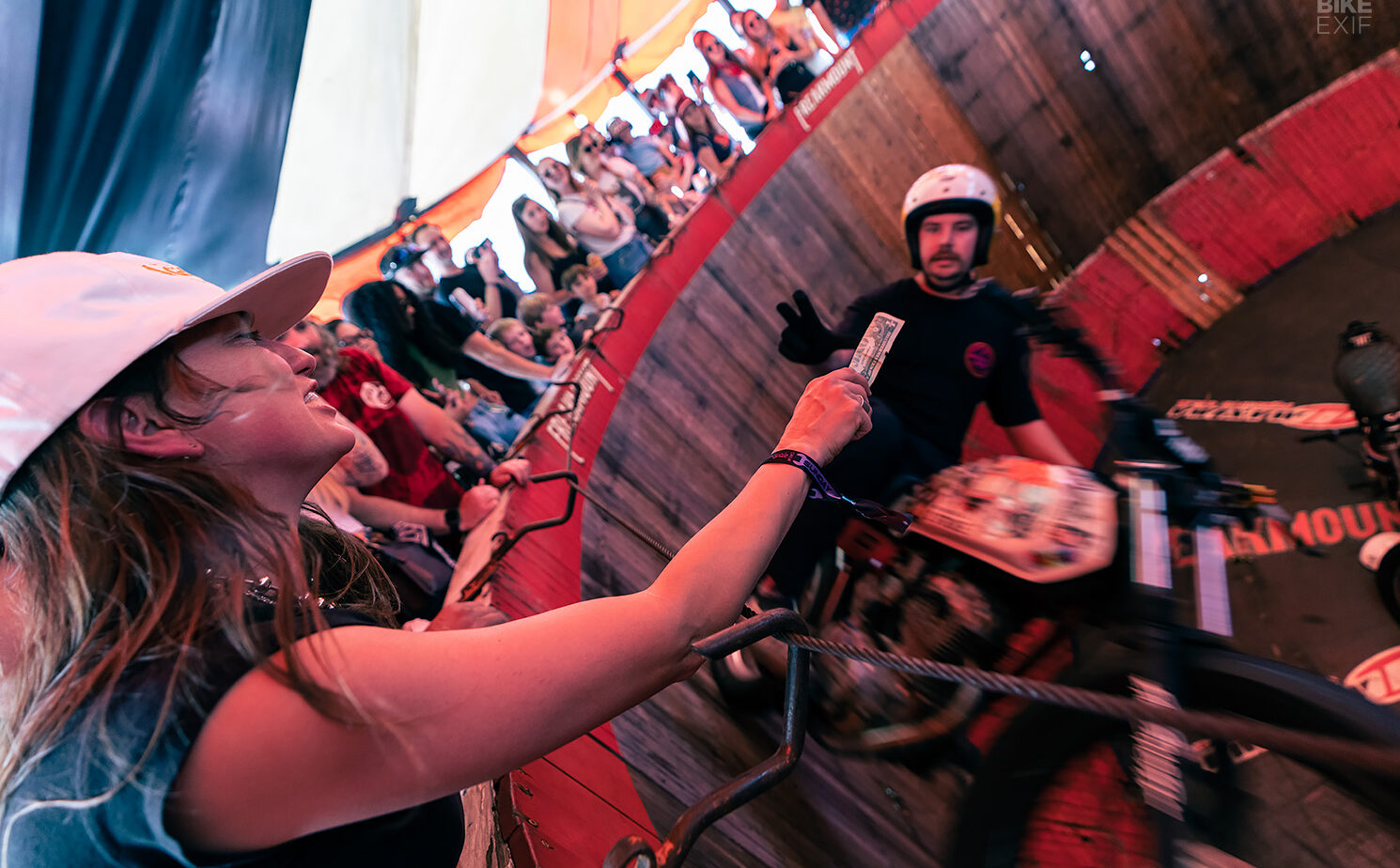
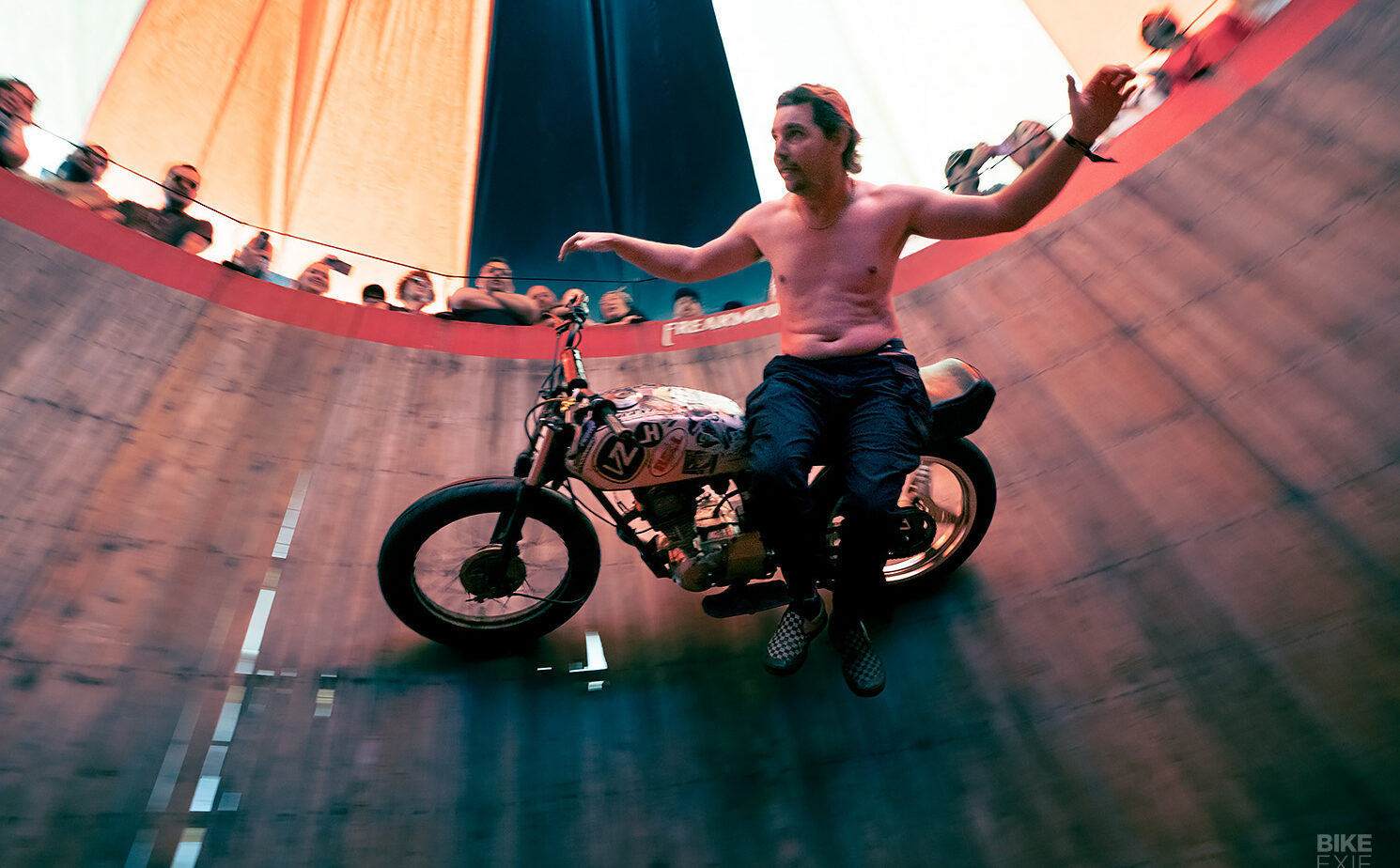
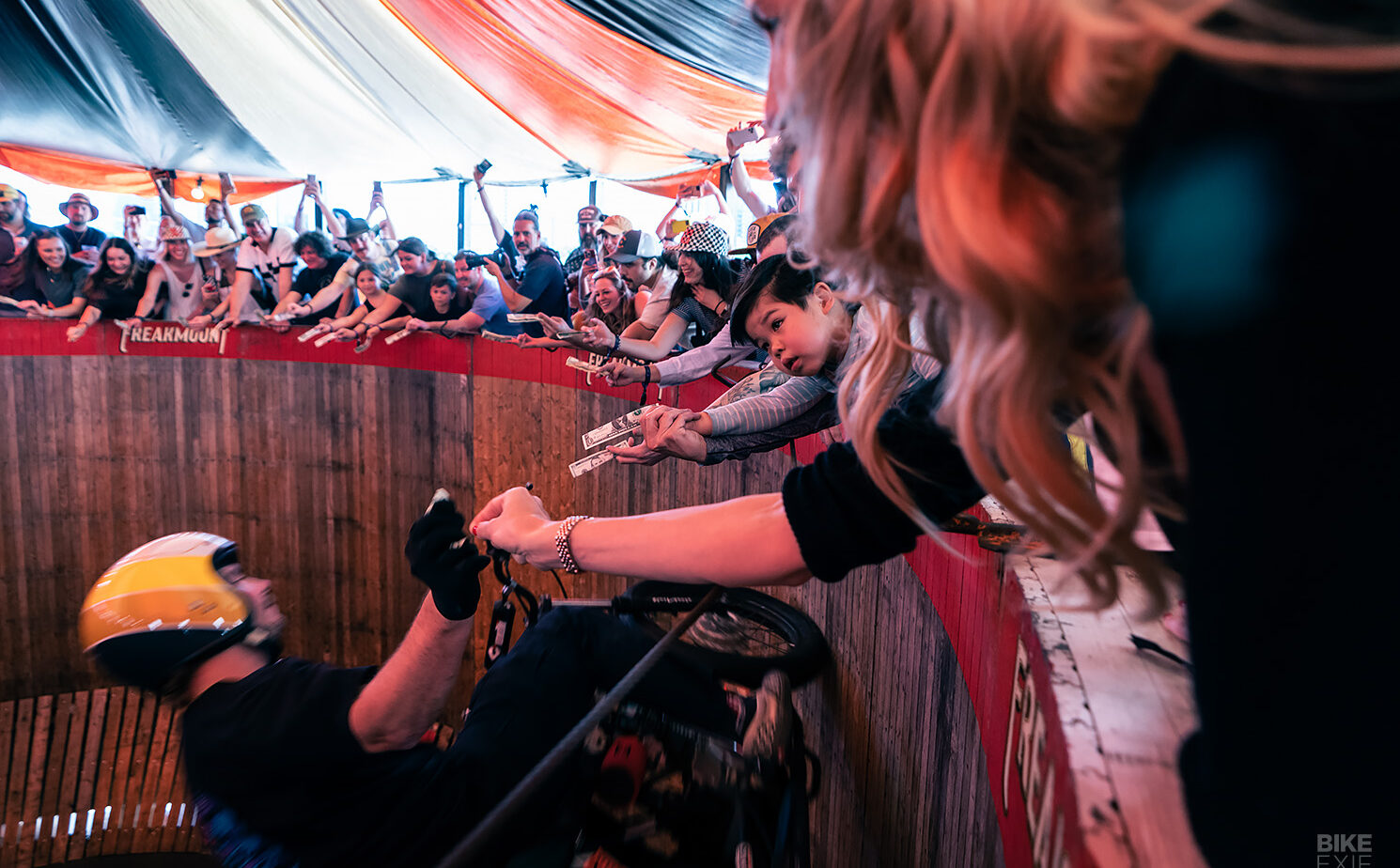
After you take in the static entertainment, the Ives Brothers’ Wall of Death show is something you have to see in person. Where else do you get to throw $1 bills at guys riding motorcycles and go-karts around a vertical pit? And as always, the show coincides with the MotoGP event at the Circuit of the Americas to fill your need for speed.
This year’s show brought more of the great things we’ve come to expect from Revival, including live music. 15 or so bands played throughout the weekend, which is definitely more than previous years. It was also a big year for BMW Motorrad, as the brand is celebrating 100 years of building bikes. Not only was BMW one of the show’s biggest sponsors, but they also brought a diverse fleet of custom motorcycles to display.
But for us, the highlight of the weekend was being selected to give three awards for best design, best paint and best of show. Picking favorites out of a pool of 150 awesome bikes was like trying to pick a favorite child, but we eventually we hashed out three winners.
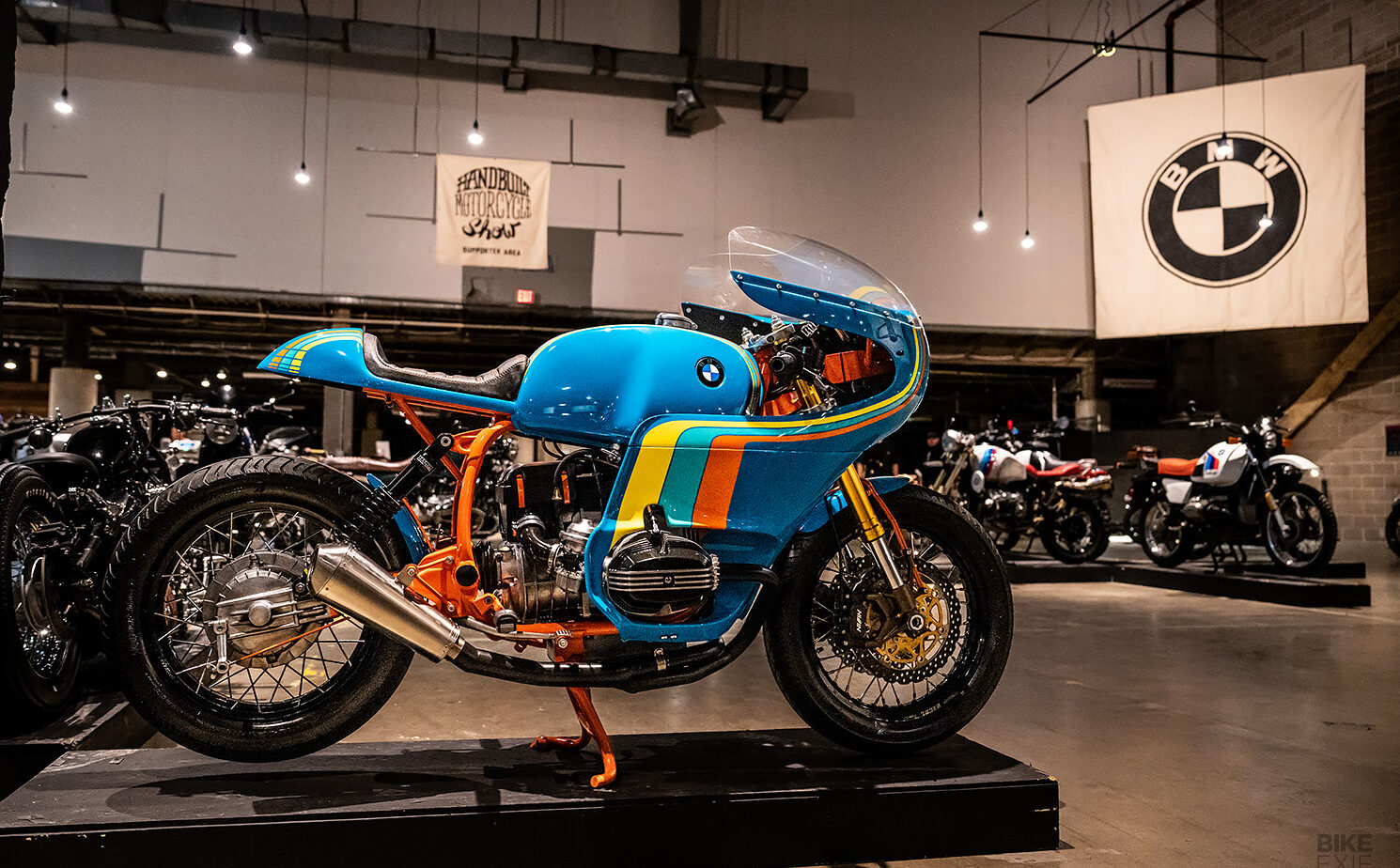
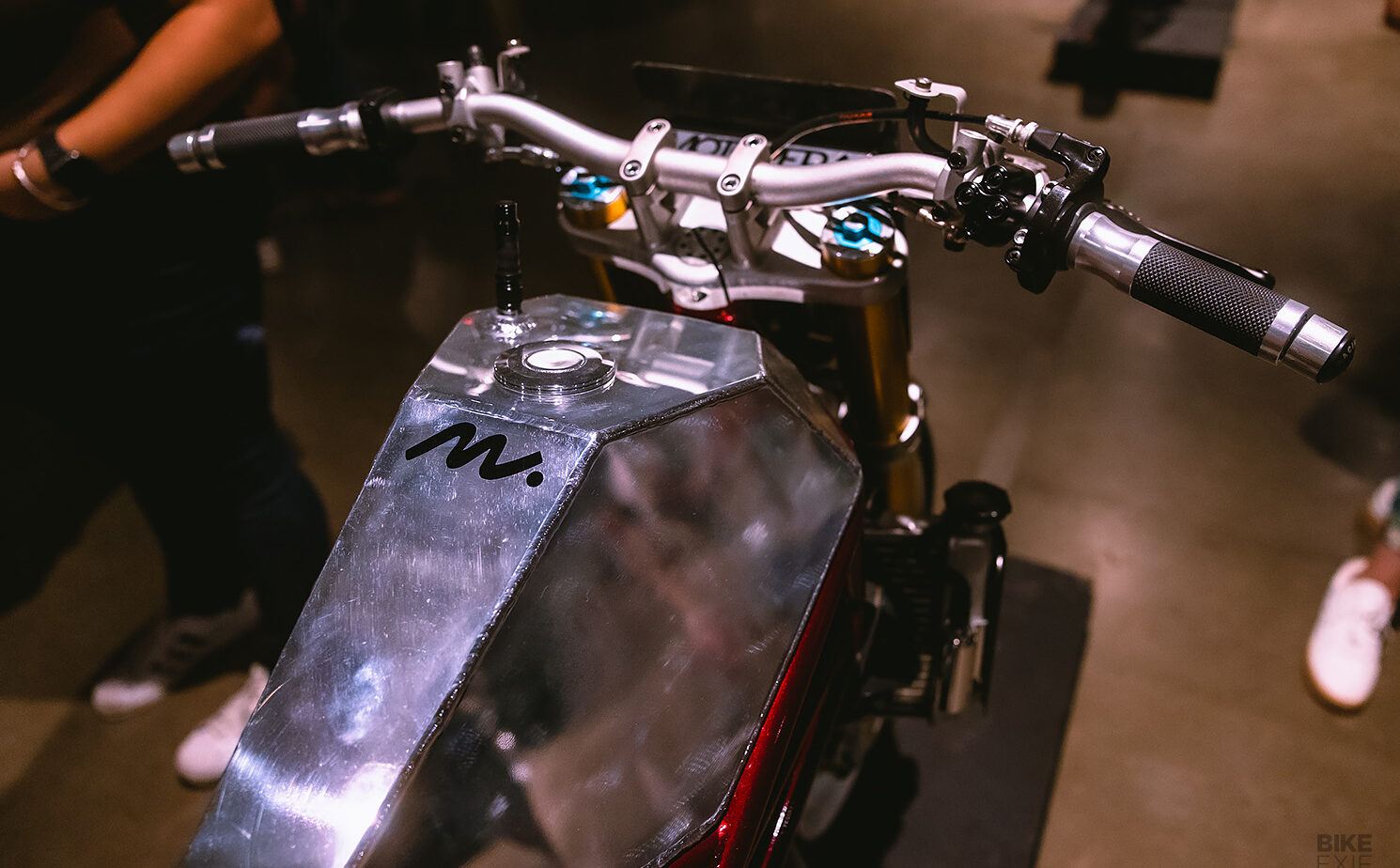
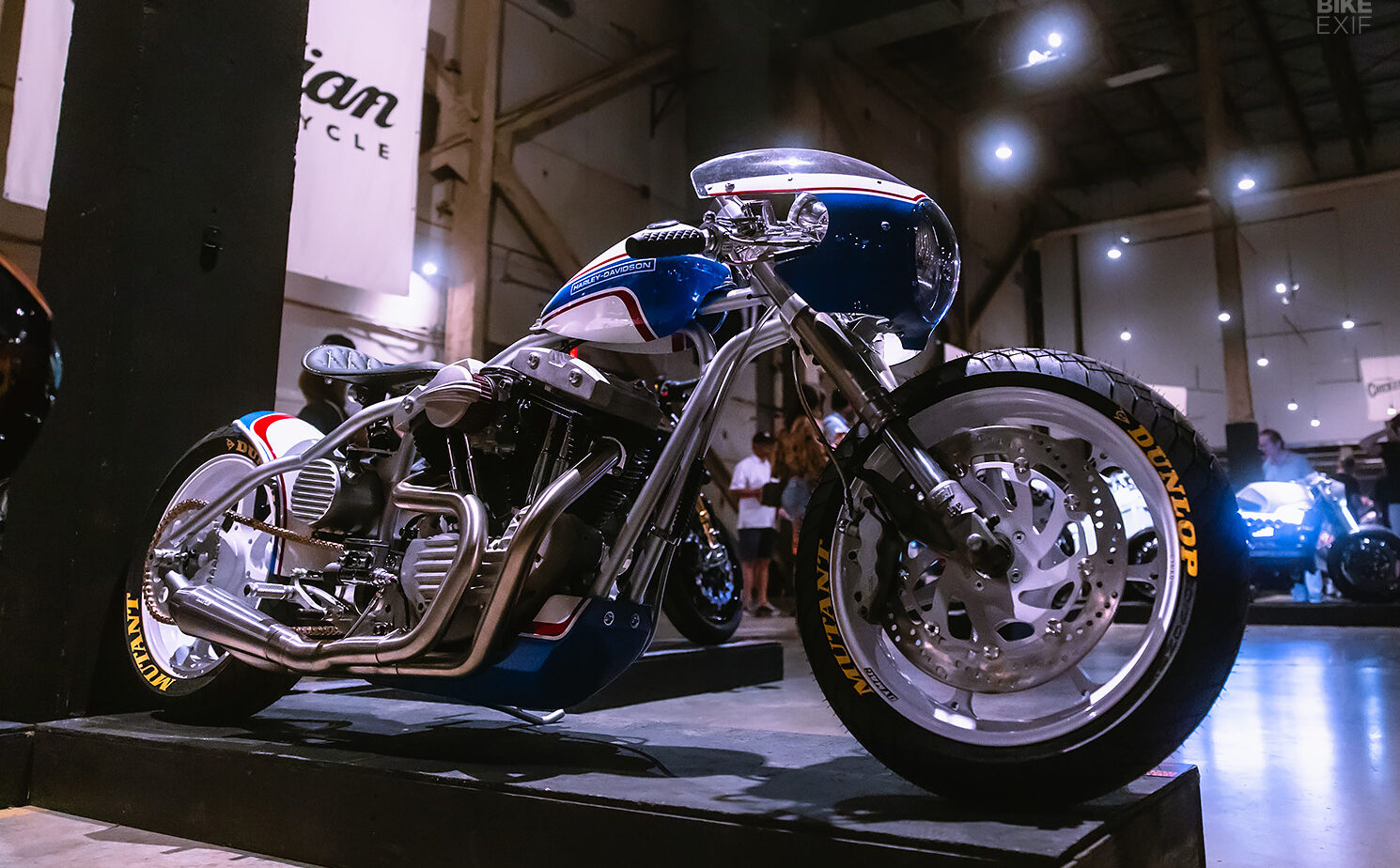
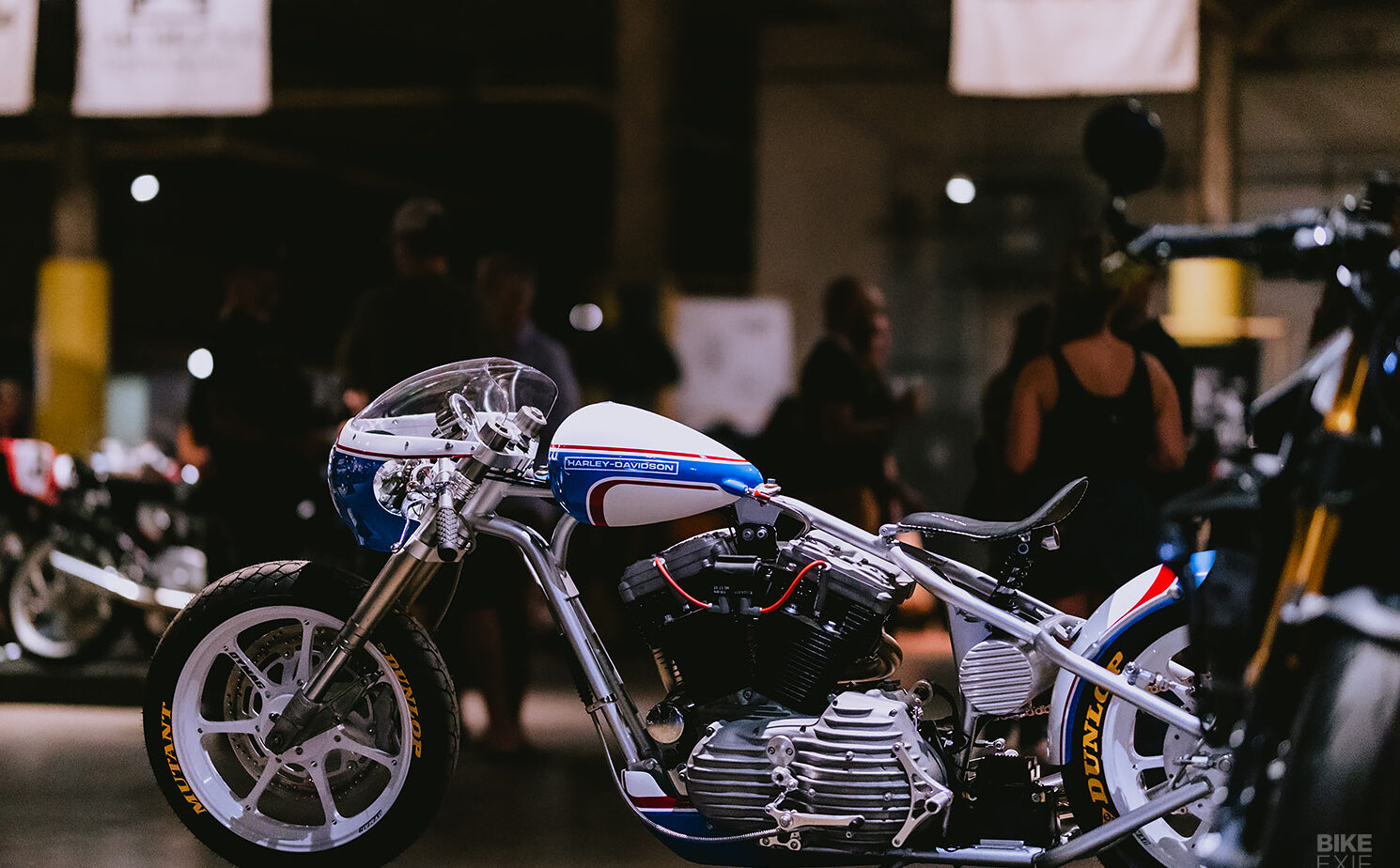
For best design, it was hard to beat Rick Dozer’s Harley board tracker with a handbuilt tank, front end and aluminum frame. Eli Carver brought home best paint with an eye-catching BMW cafe that screamed 1972. Helmut Siepman never skimps on details, and his BMW bobber named Brunhilde was our pick for best in show. Stay tuned, as we’ll be profiling all three of our winners in upcoming features.
Two very different 90s Hondas—a CB750 and a Shadow—take the lead in this week’s Speed Read. Then we change gears with a rare Magni Australia, and a short film documenting Jared Mees’ campaign for a ninth AFT SuperTwins flat track racing title.
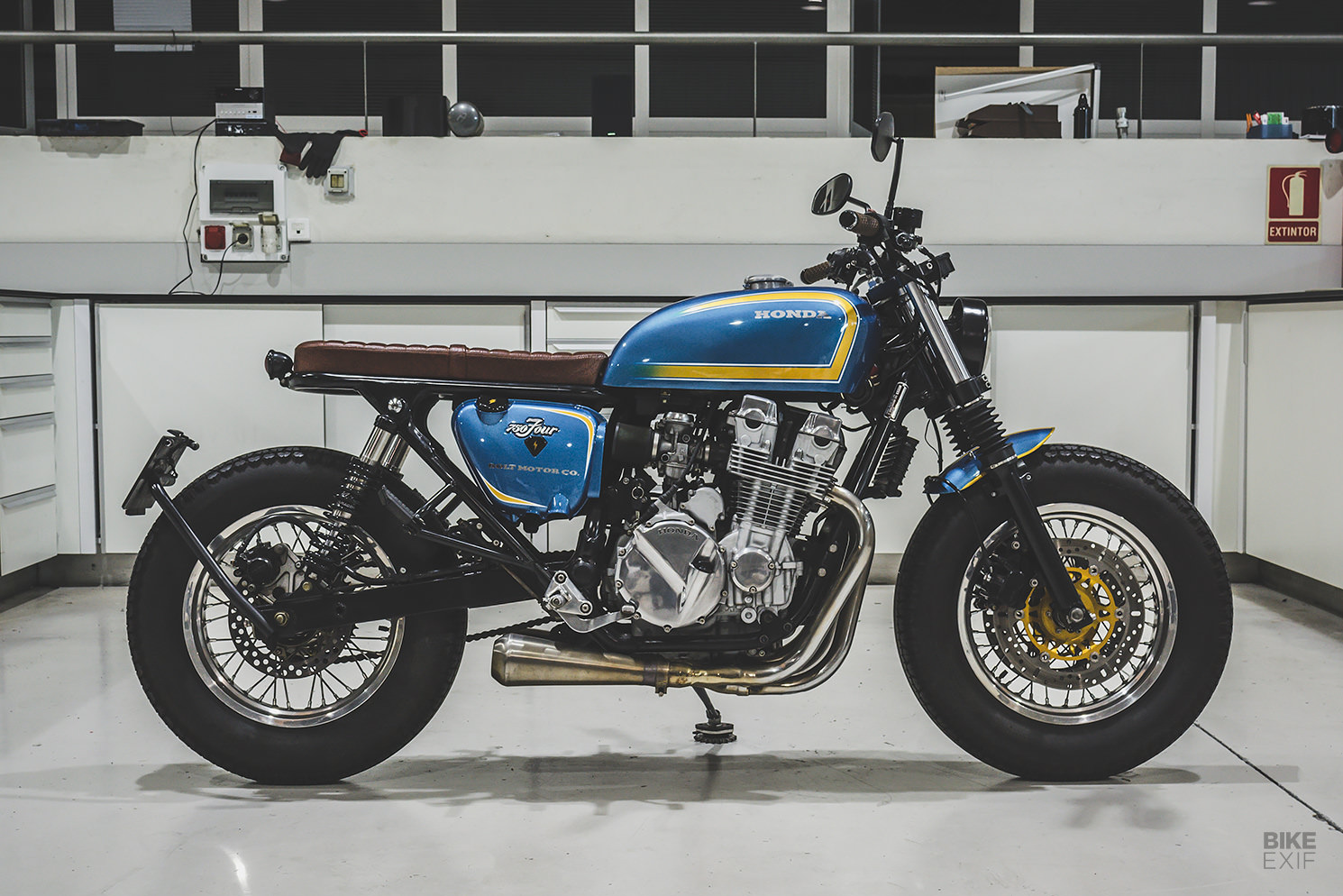
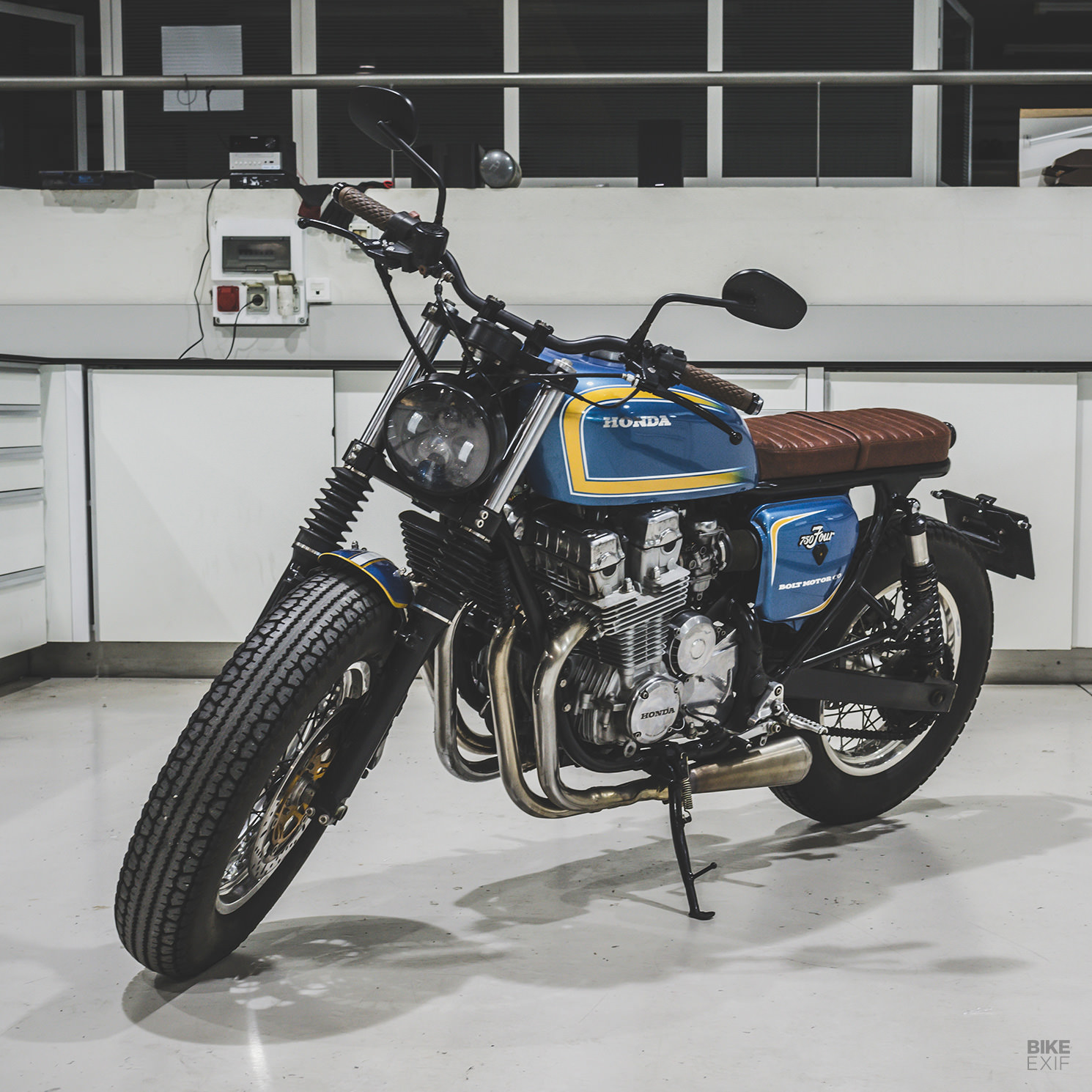
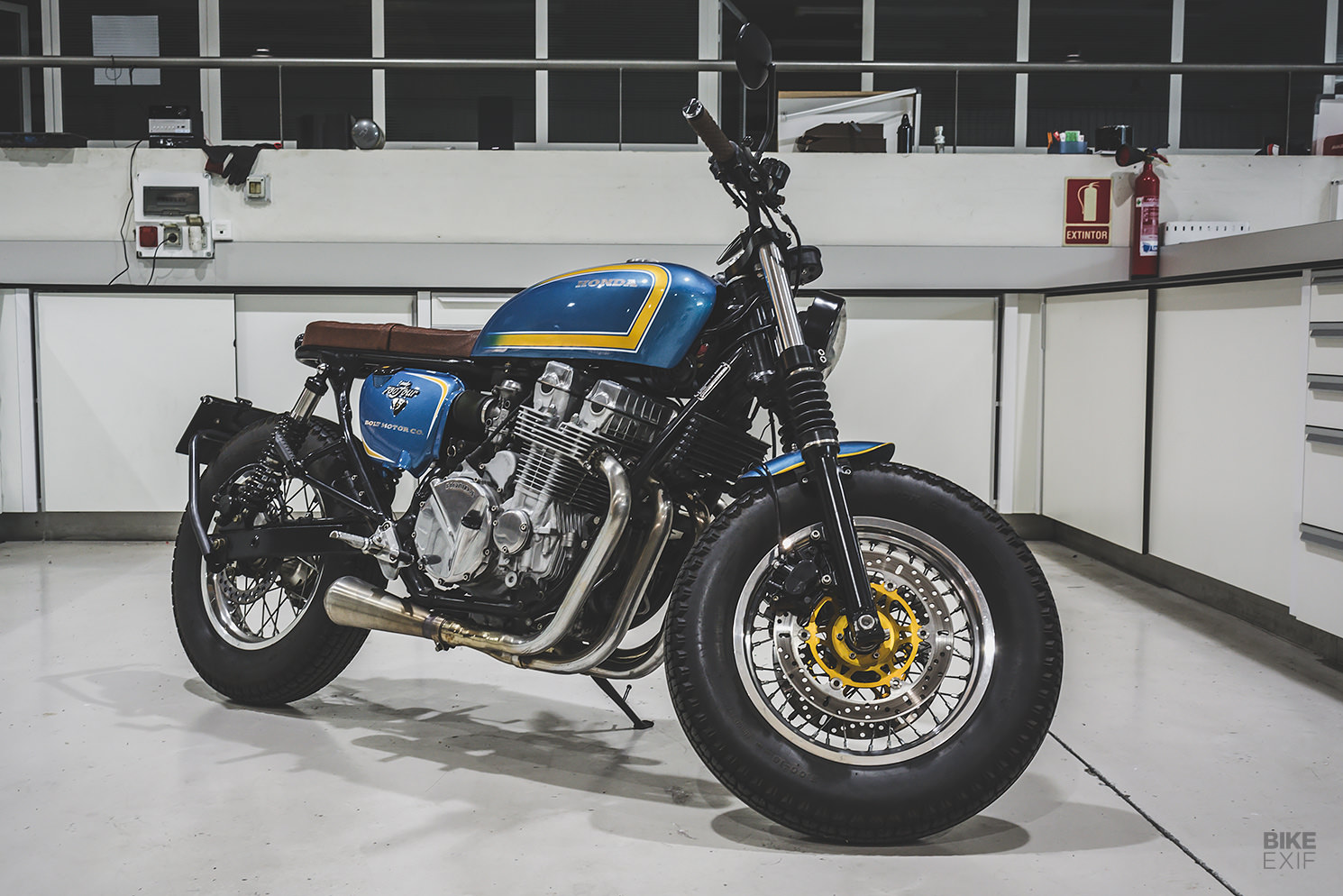
Honda CB750 by Bolt Motor Co. Bolt is back in another week’s Speed Read with this; a tasteful modified 1992 Honda CB750F2. Built for a client who wanted a no-fuss daily runner, this CB has shed its 90s styling—but also sports a number of stealthy upgrades.
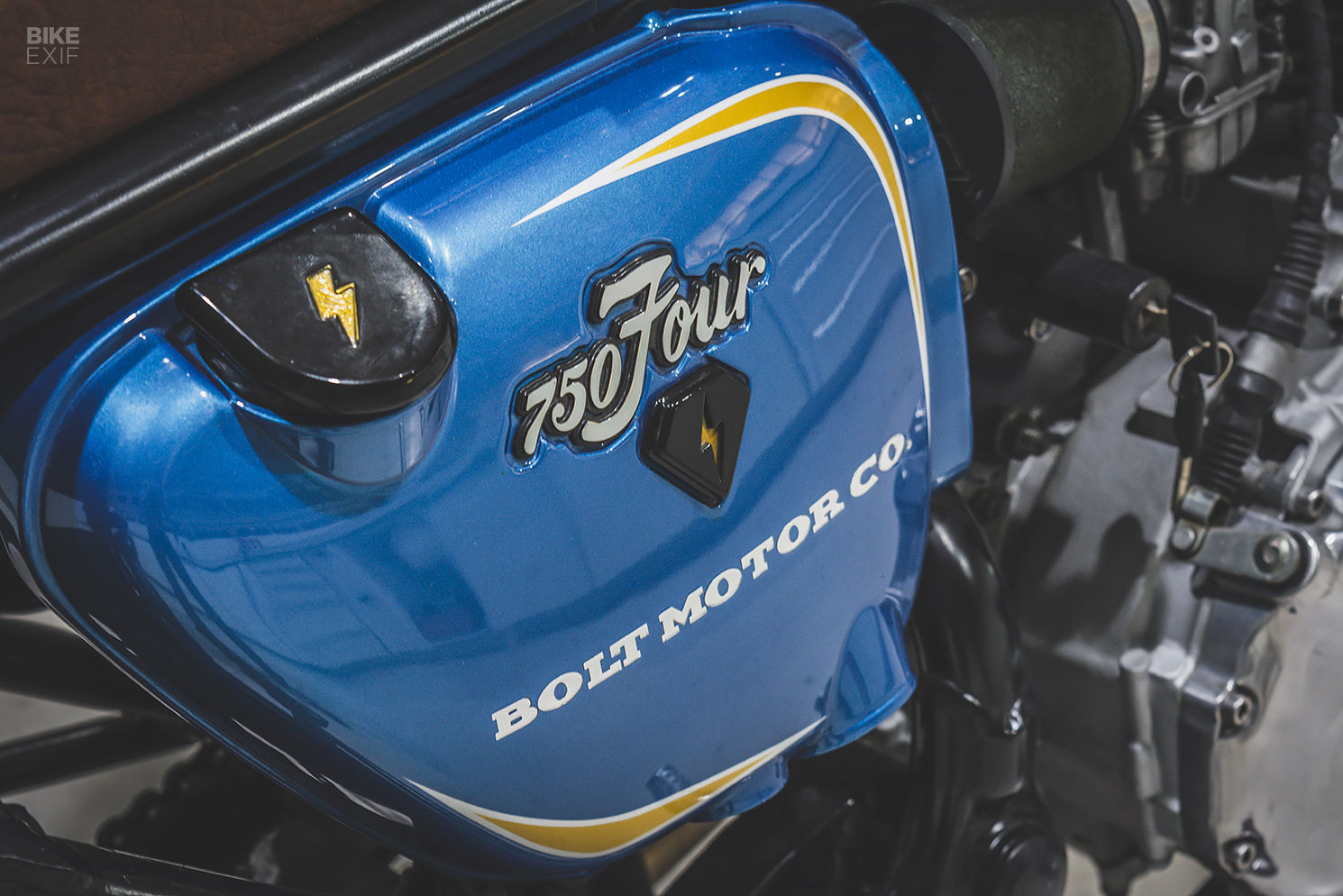
First up is the stunning 1970s CB750K2 bodywork. Bolt transplanted the older oil and fuel tanks, adapting them to fit the later model frame.
For the wheels, wider rims were laced onto the factory hubs to allow for the fitment of the chunky tires. The front end was rebuilt, and the brakes were swapped for a mix of Honda and Brembo parts with Goodridge brake lines. The entire electrical system was replaced to ensure decades of problem-free motoring, the new lighting is all LED, and the cockpit wears a simple Motogadget speedo.
Bolt tore the engine down too, then cleaned and rebuilt it from the ground up. With every nut and bolt replaced, the engine was ready to receive a brace of clean Keihin carbs, complete with custom filters. The exhaust is from Supertrapp, and, being nice and short, would surely unleash the most almighty burble from the big inline-four.
The subframe was chopped, leveled out and looped, then topped with a brown leather seat from Tapizados Llop, an upholsterer who Bolt trusts with a lot of their seat work. A classic tail light sits alone on the back of the subframe, with a custom bracket cantilevered from the swingarm supporting the license plate and turn signals.
The blue paint job, done by Airbrush Custom, takes cues from the original factory paint, with a hefty dose of California style mixed in. It’s another fresh build from Bolt Motor Co., and we’re excited to see what they come up with next week! [Bolt Motor Co.]
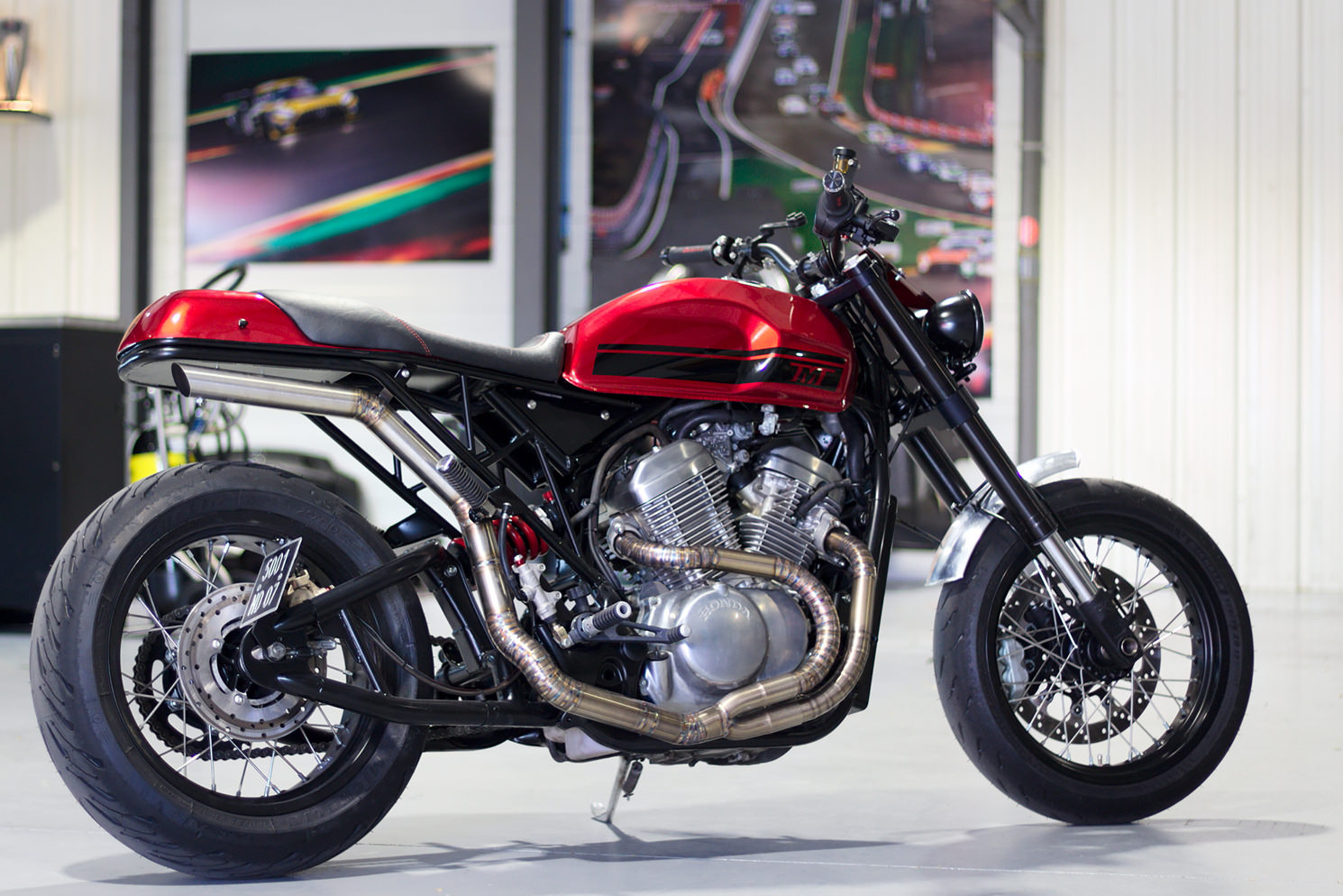
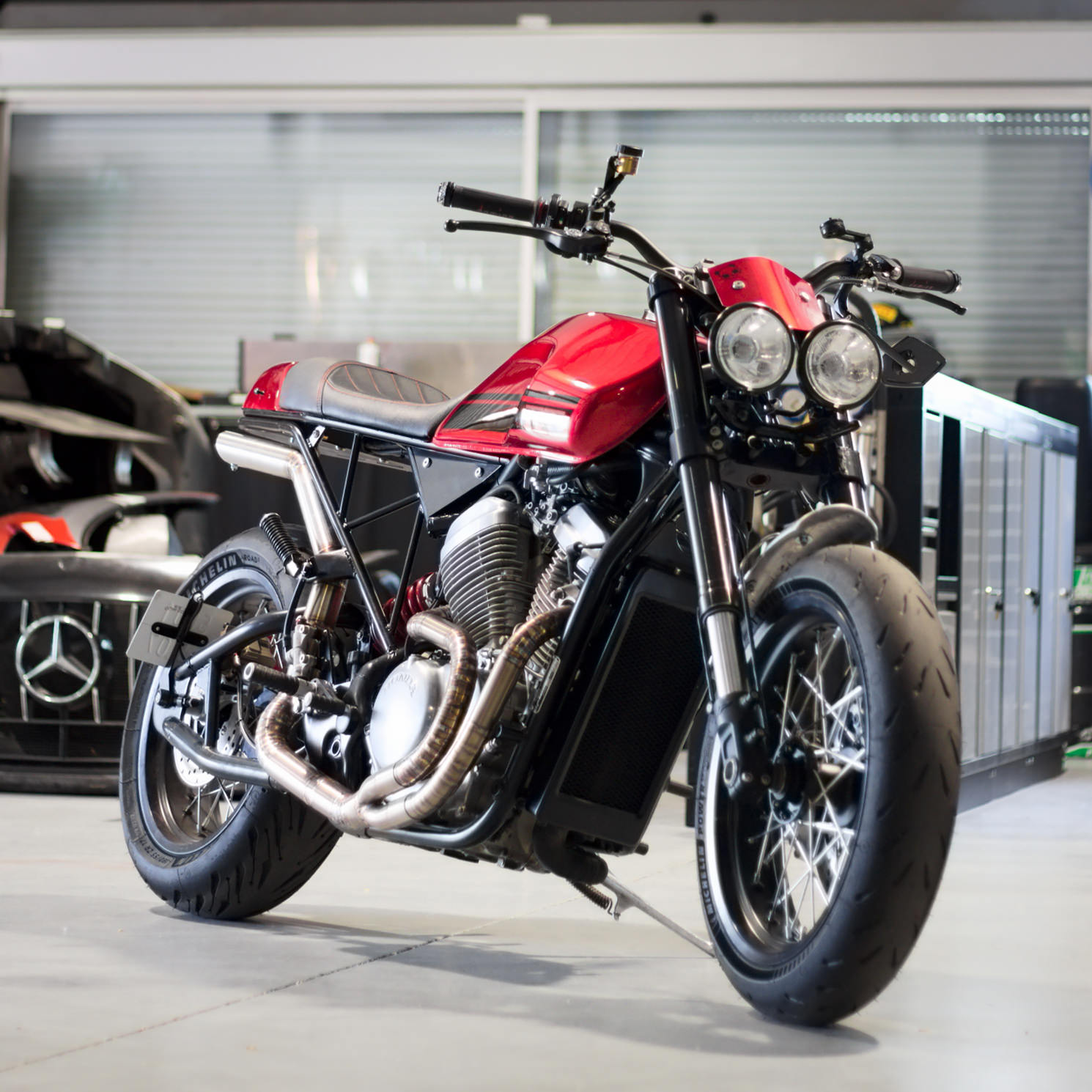
Honda VT600C Shadow by Tumulte With a raked-out front end, low seat and cruiser styling, the obvious route to take when customizing a Honda VT600C Shadow would be to build a chopper. Well, former GT race engineer Frédéric Lagarde of Tumulte didn’t follow this trend—and we’re glad for it.
Frédéric was approached by a customer (a factory driver for AMG Mercedes, no less) with a 1990-model Honda VT600C Shadow cruiser. Why a VT600C? Well, the bike had been a birthday gift to his mother back in 1992, so it had a lot of memories associated with it. Instead of trading it in for another bike, the customer decided he would rather turn it into something a little more ‘performance-oriented.’
To give the Shadow a second lease on life, Frédéric tore down the entire thing, and tossed the front end, back end, wheels, exhaust and fuel tank all in the bin. Then he got down to business.
The Honda now wears the front end from a KTM 690 Duke, complete with custom twin headlights and small windscreen. There are new bars, grips, mirrors and switchgear. The electrics were replaced by a Motogadget setup with a tiny Lithium-ion battery. The lighting is a mix of Motogadget and Kellermann components.
A much less cruiser-y fuel tank was sourced and massaged to fit, and the subframe was made from scratch. The rear cowl was made by hand from fiberglass and houses all the electronics beneath the hump. The seat is also custom; black leather with red stitching to match the new paint.
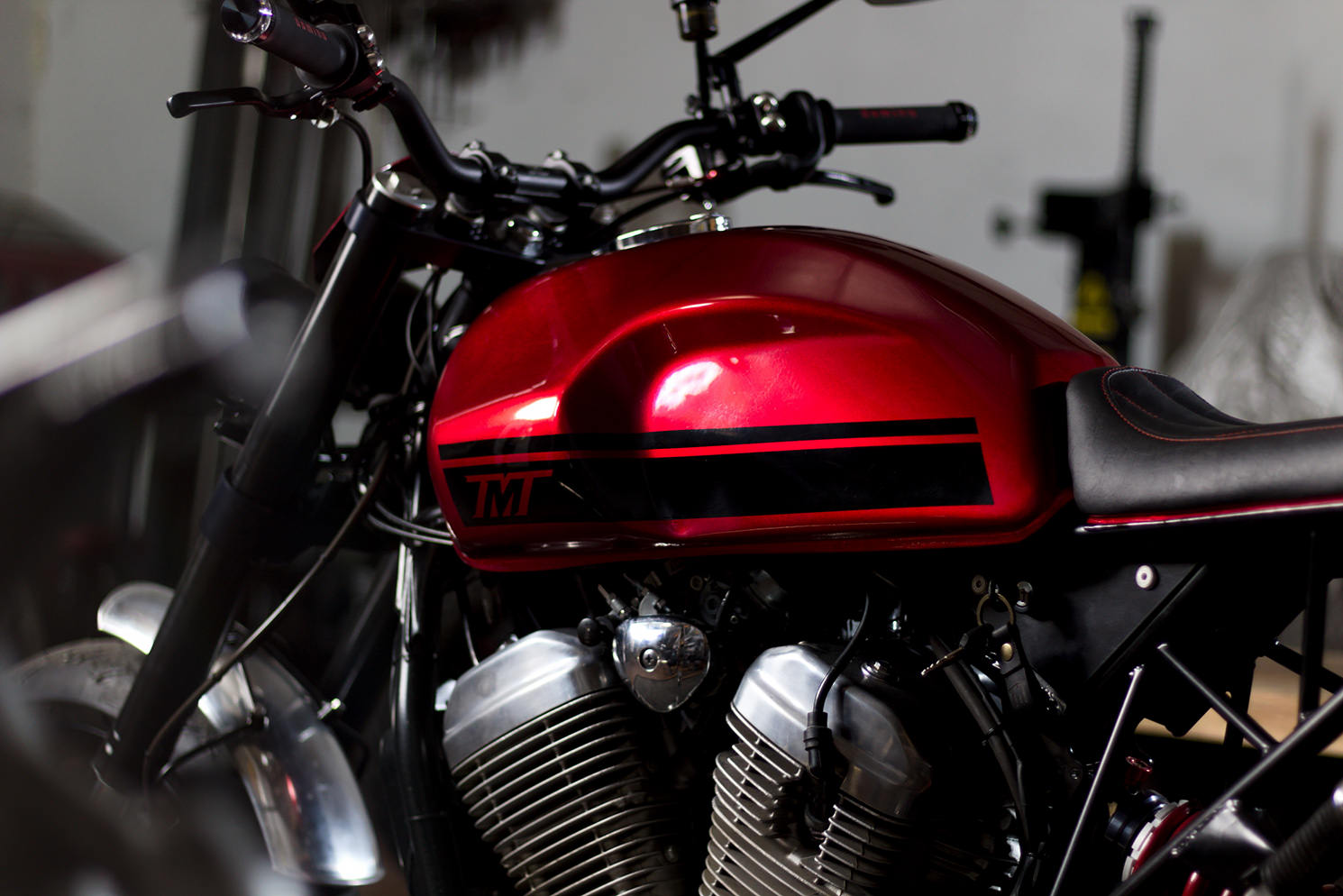
The candy red paint was taken from an Alfa Romeo 8C Competizione, while the speed lines on the tank got their inspiration from AMG Mercedes GT cars.
The engine was overhauled and a pie-cut stainless steel exhaust was made by hand. The swingarm was lifted from an early Honda Transalp, and the rear wheel was retrofitted with a disc brake. A custom Shock Factory rear shock completes the package, with 17” wheels at both ends.
When it was all said and done, the Honda rolled out as the most heavily customized motorcycle to ever leave the Tumulte workshop. It’s a stunning build with a great story, and we’re betting its owner is one happy chap. [Via]
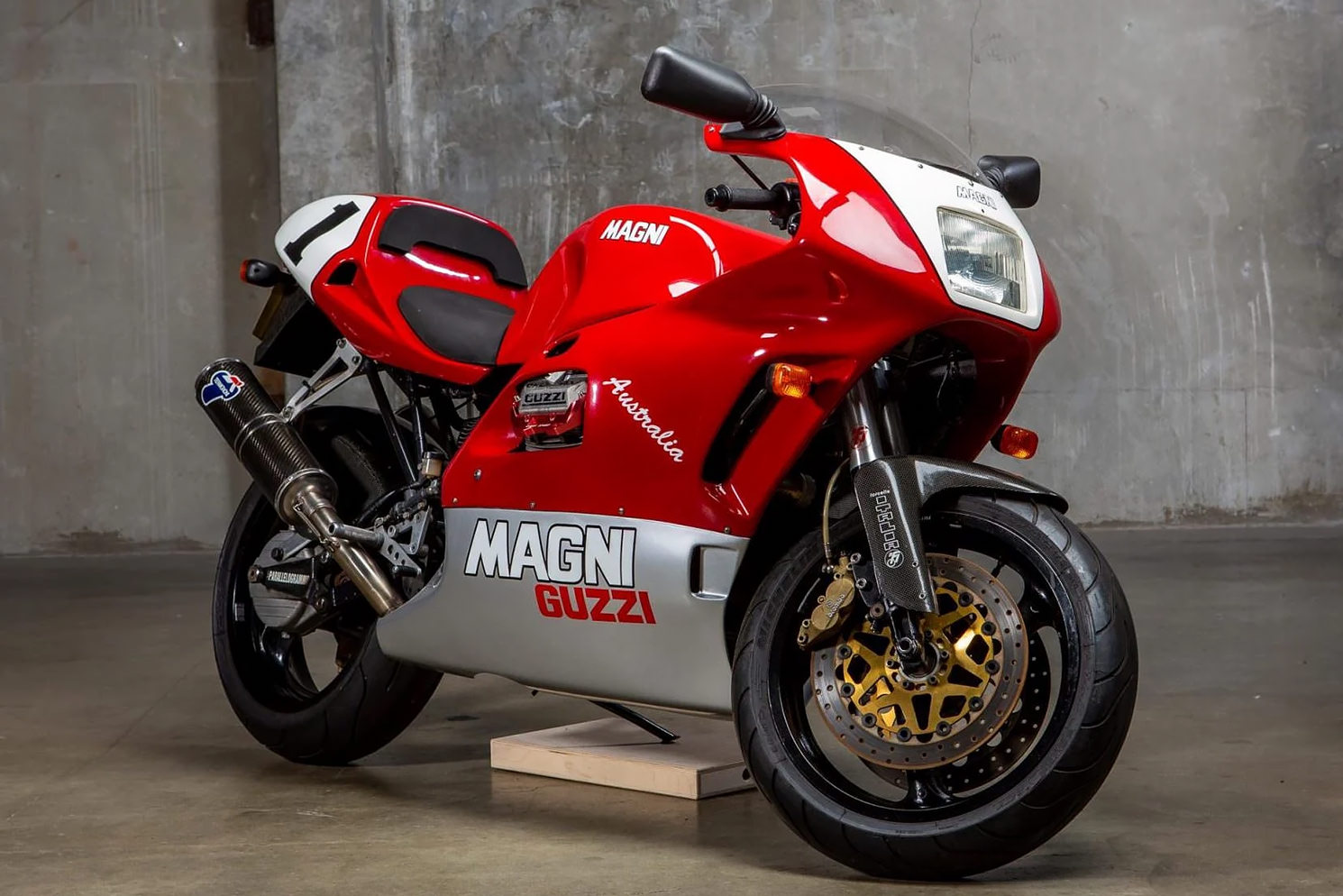
1994 Magni Australia The story of the Magni Australia is one that I’ve always felt a particular affinity to. Not because I have one, but because I live mere kilometers from where the Magni Australia story began. That, and I’m a Moto Guzzi owner and fanboy.
In the early 1990s, there was a man with a Moto Guzzi dealership here in Perth, Western Australia. His name was Ted Stolarski, and as well as selling bikes, he also had a racing team. It was through this love of racing that Ted got his hands on a pair of new Moto Guzzi 4V-OHC racing engines, directly from the factory in Mandello del Lario. This was a testament to the contacts that Ted had at the Moto Guzzi factory—even the most renowned motorcycling journalists of the day didn’t know the factory was thinking about new engines, let alone building them.
Ted and his team of mechanics (which included Mario Poggioli, Ted’s apprentice who bought the shop when Ted passed away) built two modern race machines around these special engines, collaborating with the storied Italian company, Magni, and fitting top-of-line components to each bike. It helped that Ted was Australia’s official Magni importer.
If you don’t know the Magni story, here’s a quick refresher. Arturo Magni ran the highly-successful MV Agusta racing team from the late 50s right up until the 70s, most notably winning 17 consecutive 500 cc World Championships between 1958 and 1974. When MV Agusta retired from racing, Arturo went off by himself and started his own company; Magni.
Suffice to say, Arturo knew a thing or two about building race bikes. Magni originally made performance parts for MV Agusta, but would eventually go on to build their own bikes.
Fast forward to the 90s, and Ted’s Moto Guzzi 4V-OHC bikes, which had been finding success on the track, caught the attention of Arturo Magni himself. He was so inspired by the Aussie-made machines, that he decided to make his own version—which he aptly named the Magni Australia.
Magni originally made 75 first-generation bikes, and they are every bit the glorious, sporting motorcycles of the 90s that they were meant to be. A second run of 50 bikes came a few years later.
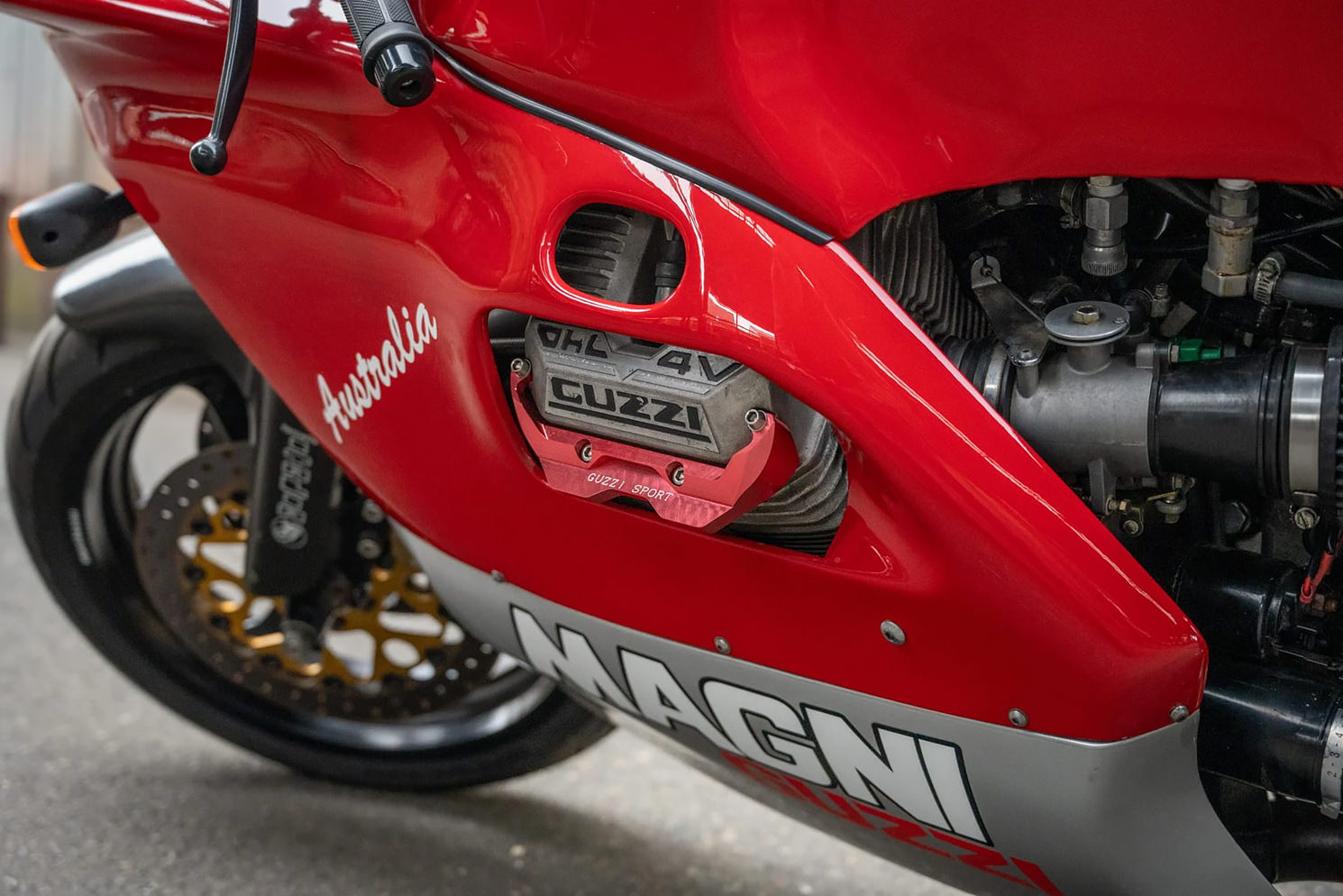
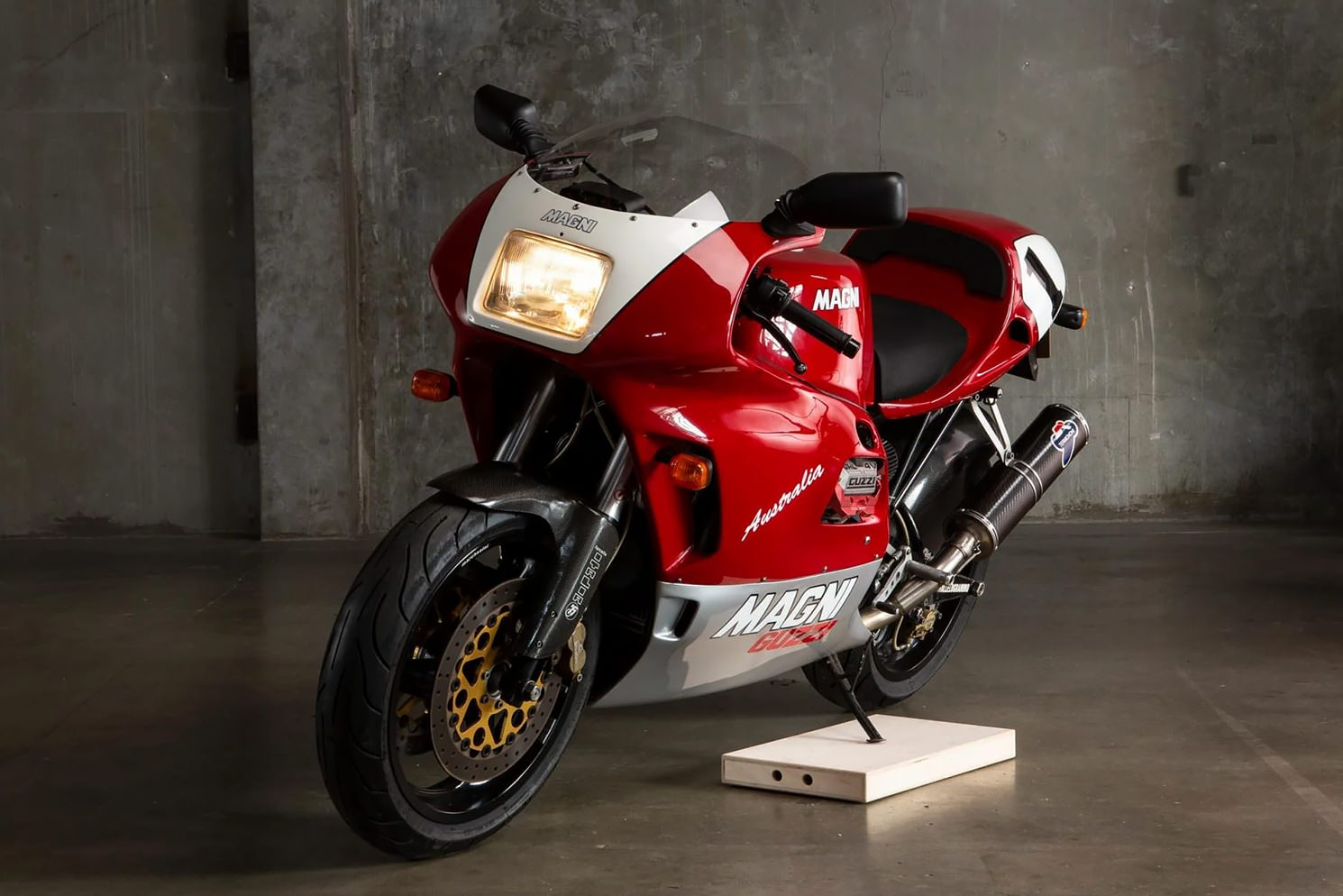
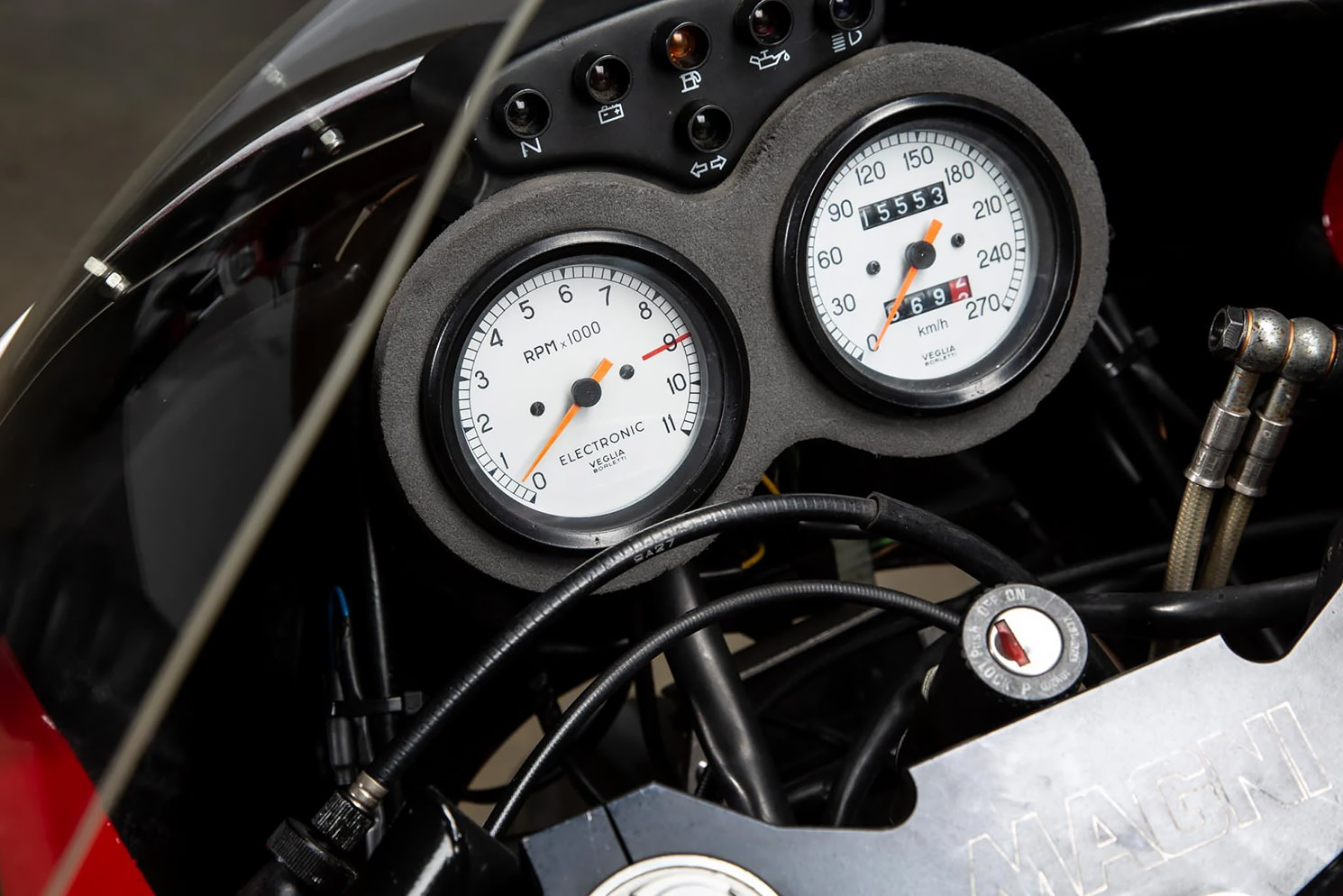
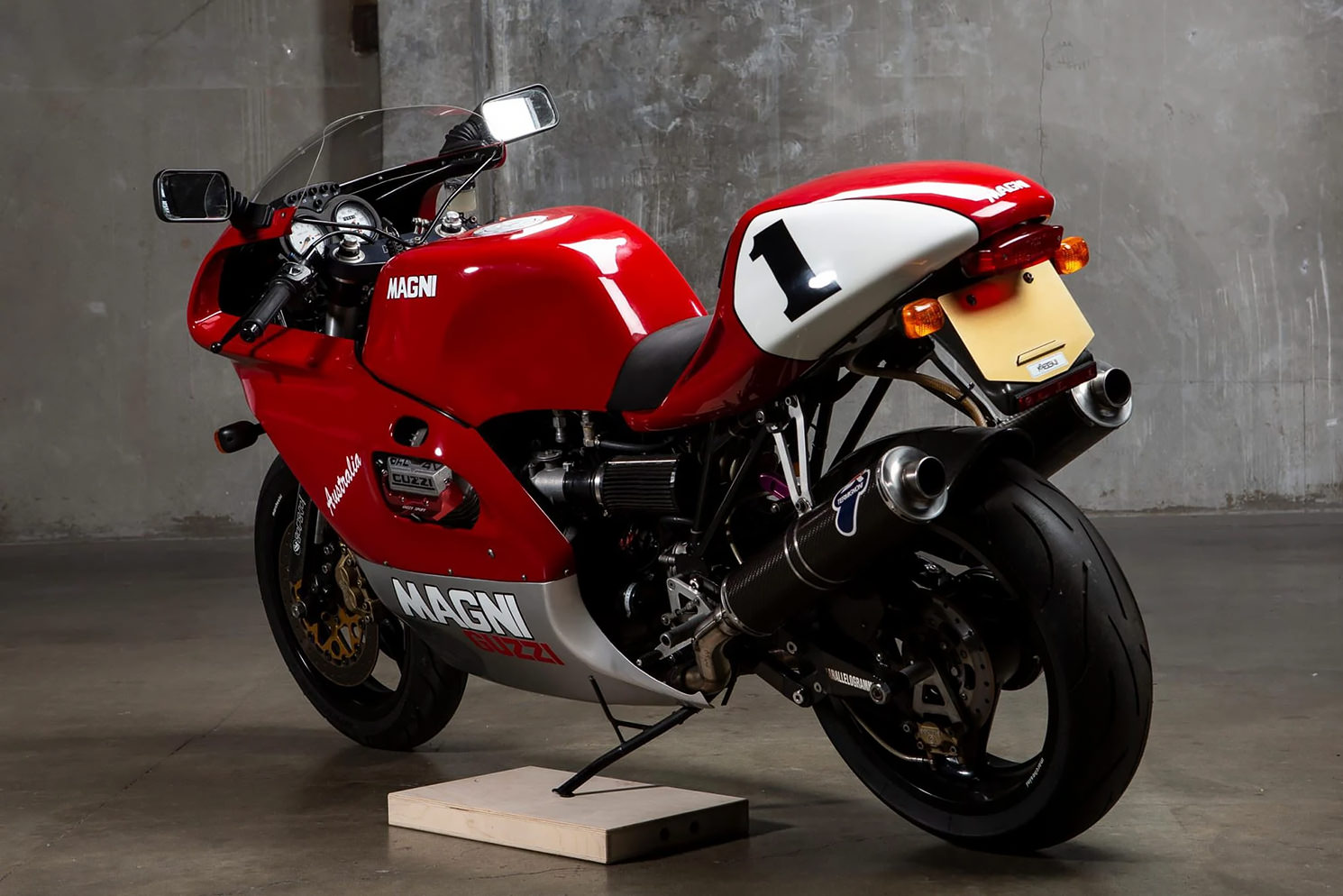
This particular Magni Australia is one of those original 75 first-gen bikes. The inverted Forcelle Italia suspension, full fairing and race numbers are just to die for. The red paint, big white gauges and Termignoni exhaust complete the look.
The 4V-OHC Moto Guzzi engine, just visible through the gaps in the fairing, went on to run in the Moto Guzzi Daytona. But the fact that Ted had them first is wild, considering how far away Perth is from the rest of the world.
It’s hard to put a price on this sort of heritage, but someone has. This particular Magni Australia just sold for $15,250 on Bring A Trailer. [Via]
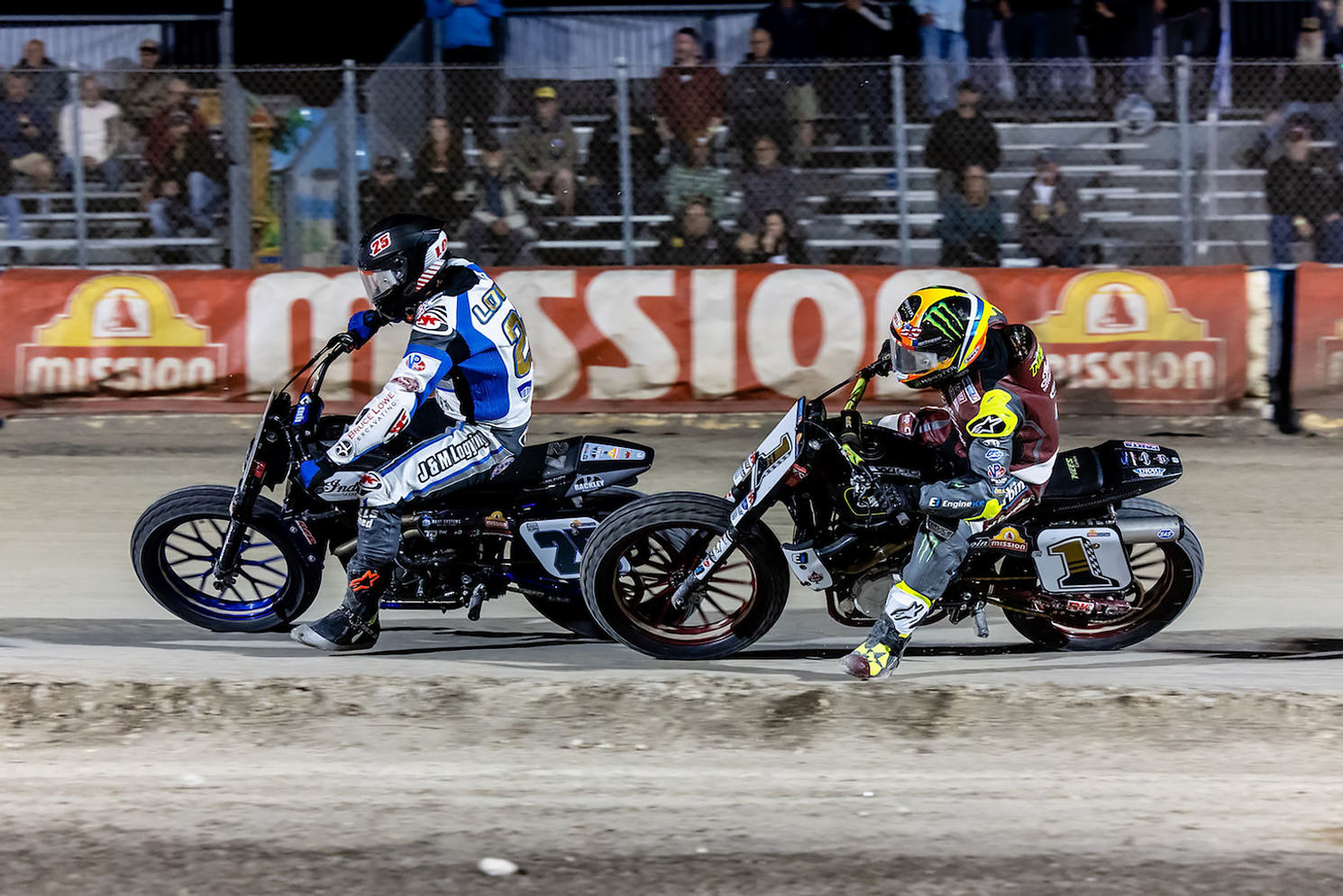
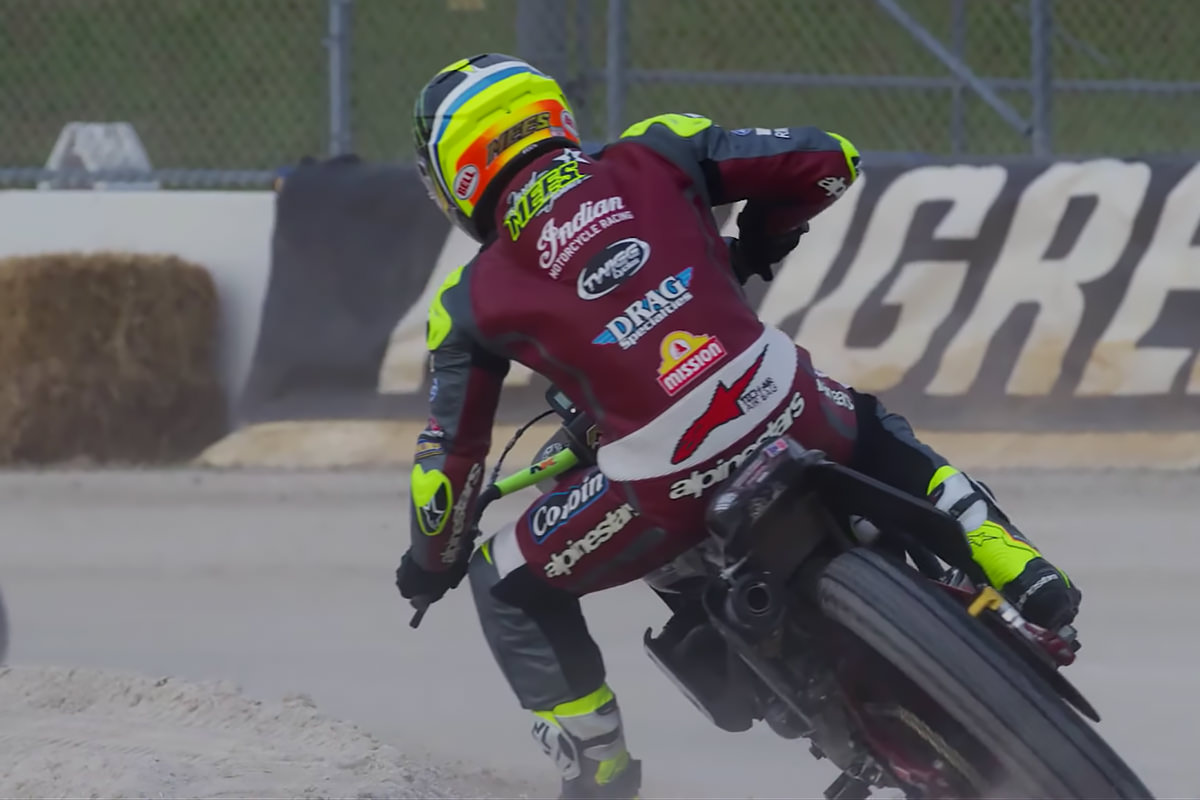
Chasing 9 Jared Mees documentary Although Indian Motorcycle has disbanded its official American Flat Track team, it would seem they still have a few fingers in a few pies. Jared Mees is an Indian-supported flat tracker who is chasing after his ninth title. If Mees achieves his goal, he will equal the record set by nine-time champion Scott Parker in 1998.
As the video alludes to, Mees is a contrasting kind of guy. He has a lot of fans, but there are also many other fans who would prefer to see someone else win. The Indian-made video shows the first few races of the season, where Mees misses out on the podium’s top spot each race so far.
AFT SuperTwins flat track racing looks brutal, and the video does a great job of showing how physical the sport is. When you think about it, riders are wrestling twin-cylinder, 110-plus horsepower, purpose-built lumps of metal around a dirt oval, while literally rubbing knees and elbows with each other. The sport is dangerous and exciting and the riders themselves are incredibly brave and skilled.
Close championship battles make for even more exciting racing and we wish Jared Mees luck on his way to a potential ninth title. [Via]