Thursday, 23 March 2023

Lakeside Racer: A Sportster inspired by the Riva Aquarama

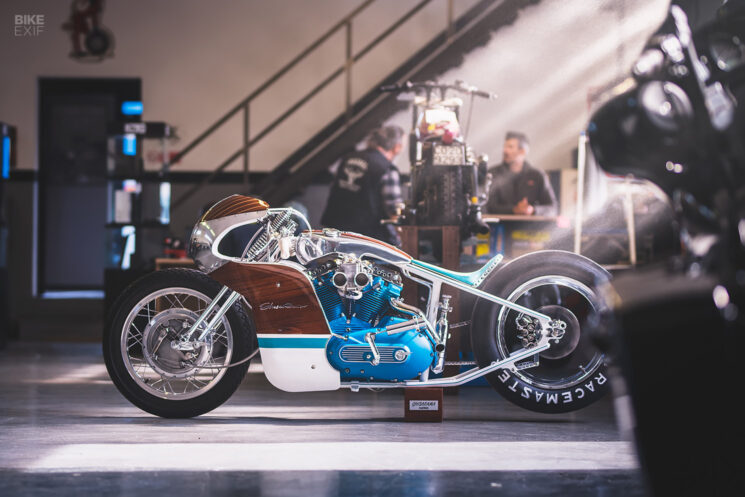
Riva-inspired Harley Sportster by Hazard Motorcycles
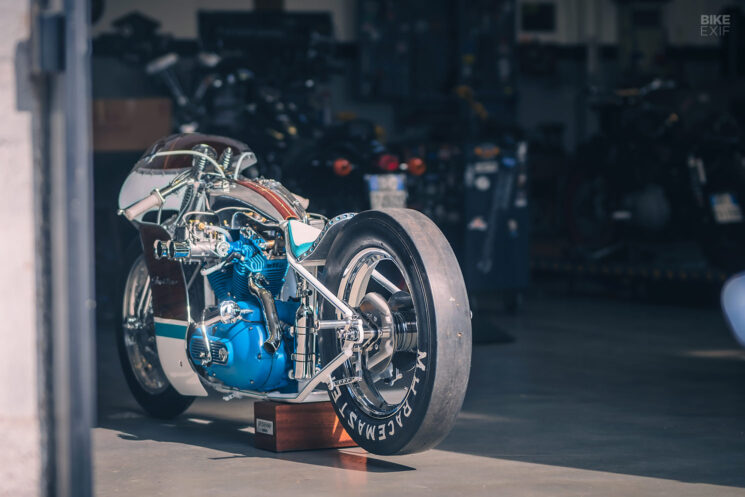
If you’re a classic watercraft aficionado, this custom Harley-Davidson Sportster should feel familiar to you. That’s because it’s modeled after one of the most exquisite and unique boats ever built: the Lamborghini Riva Aquarama.

The storied Italian boat maker Riva started out building ferries, and has since graduated to super yachts. But they’re best known for their classic wooden boats—specifically, the iconic Aquarama, in production from 1962 to 1996. One of the most notable Aquarama boats, is the one that Riva built in 1968 for Ferruccio Lamborghini.

Riva-inspired Harley Sportster by Hazard Motorcycles
The legend goes that Sig. Lamborghini ordered an Aquarama for himself, but wasn’t too keen on the American-made V8 engines that powered it. So he supplied Riva with a pair of V12 Lamborghini power plants, as used in the Lamborghini 350 GT. Thus, the fastest Aquarama ever was built.

It’s a story that Matteo Fustinoni at Hazard Motorcycles knows very well. He grew up on Lago d’Iseo—the home of Riva boat works—and recalls time spent on a family friend’s own Aquarama as a kid. So he’s built this Sportster as a tribute to Ferruccio Lamborghini’s special order Riva.

Riva-inspired Harley Sportster by Hazard Motorcycles
The homage goes a lot deeper than just the bike’s livery and trim. Matteo’s paid his respects to the Lamborghini Aquarama in myriad ways, with many details that you’d easy miss on the first pass.

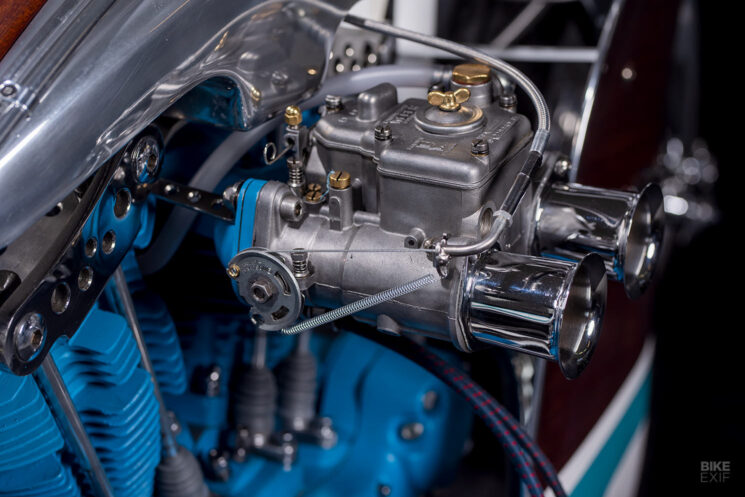
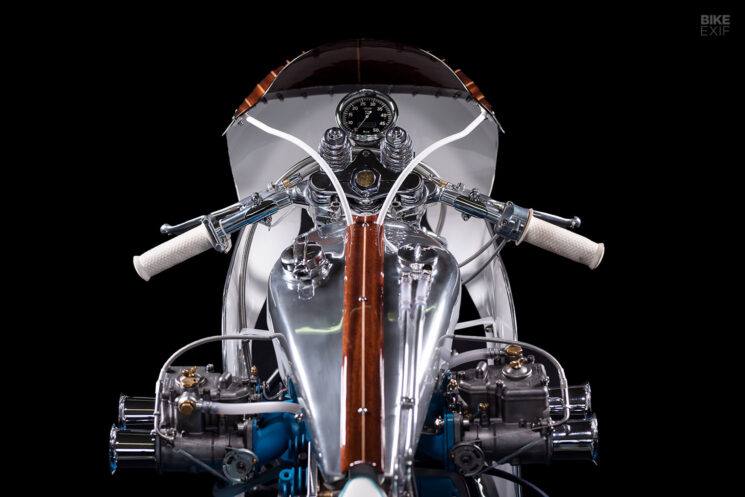
For starters, he went to the trouble of rotating the ironhead motor’s front cylinder by 180 degrees. Why? So that he could install two Weber carbs—just like the ones found in the Lamborghini Aquarama.

Riva-inspired Harley Sportster by Hazard Motorcycles
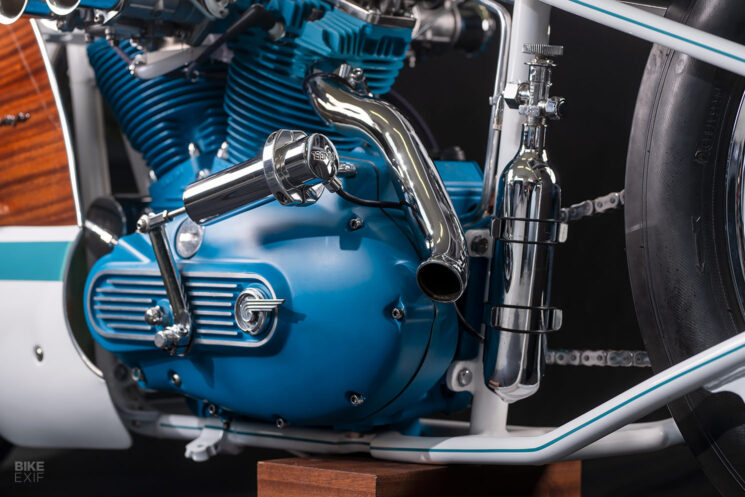
The engine also features hot cams, S&S Cycle pistons and a modified Morris magneto. And it’s fitted with a Pingel electric gearshift kit; gear shifts are now handled by a pair of buttons on the handlebars. Exhaust gases exit via a pair of scarily short pipes.

Riva-inspired Harley Sportster by Hazard Motorcycles
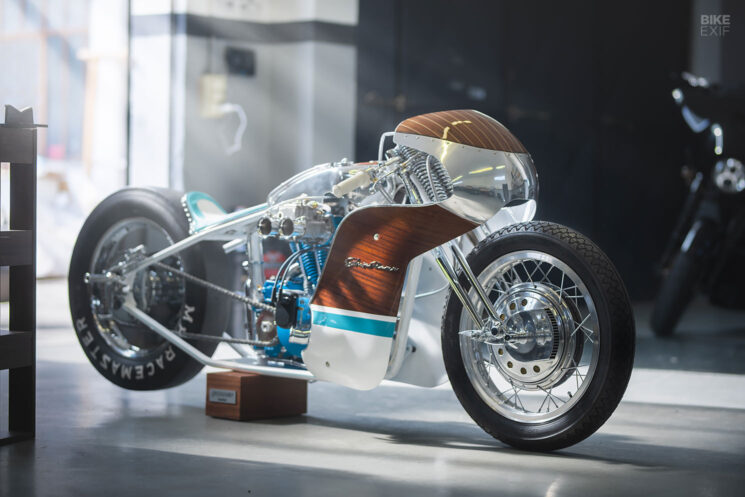
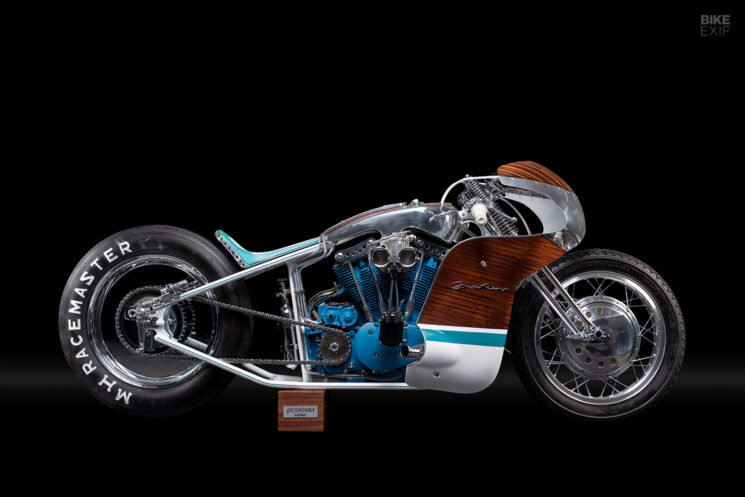
The Harley’s overall layout recalls that specific boat’s most distinguishing feature: its speed. Matteo went for a drag bike silhouette, starting with a hand-built, stretched-out rigid frame. A shortened aftermarket springer fork does duty up front, gripping the 18” front wheel (and drum brake) from a Laverda 750.

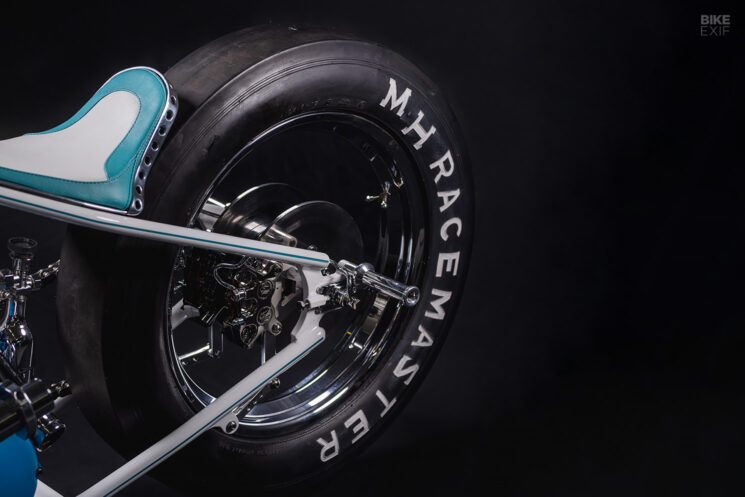
Out back, a MH Racemaster drag slick wraps around a solid 16” wheel. Keen eyes will spot a disc brake caliper here too, alongside the bike’s foot pegs.

Riva-inspired Harley Sportster by Hazard Motorcycles
At the opposite end, vintage Tomaselli Matador levers are fitted to clip-on bars, with a single Jaeger tacho sitting front and center. But what the rider is more likely to stare at while aboard this magnificent machine, is the alluring fuel tank design.

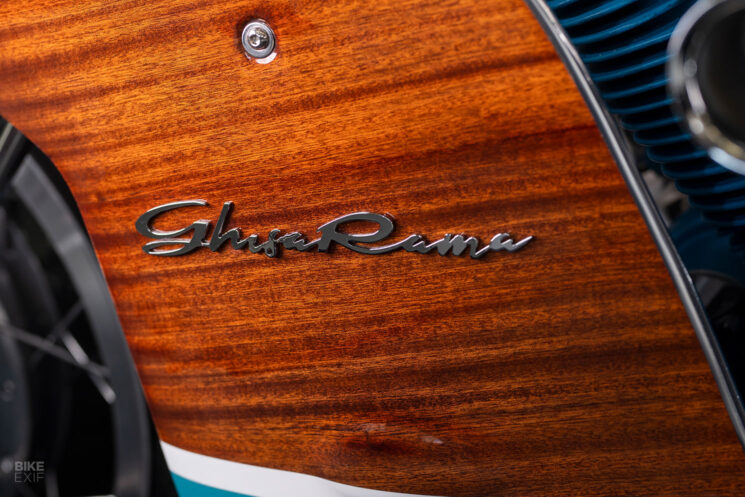
It’s the work of Andrea Pozzoli, who was roped in to handle all the metal-shaping jobs on the project. Andrea fabricated the split fuel and oil tanks, and the Harley’s generous front fairing. Then master cabinetmaker, Davide Aresi, added a generous helping of rich mahogany to the build.

Riva-inspired Harley Sportster by Hazard Motorcycles
But it’s the overall color scheme that really drives the point home. Ivan Motta handled the paint, delicately balancing the original Riva’s white and blue tones. The engine was finished in the same blue as the engines in the Lamborghini Aquarama, while Luca Ronzoni upholstered the seat using original Riva materials.

Marvel at the finer touches—like the polished drillium bits, the contrasting fins on the outside of the engine, and the tiny carved winglets that pop up in various places. It’s a clear sign that this project was close to Matteo’s heart.

Riva-inspired Harley Sportster by Hazard Motorcycles
Considering that the Aquarama is widely considered the most beautiful runabout ever made, building a motorcycle as a tribute to it is a bold move—but it’s a move that’s certainly paid off.

Bravo, Matteo!

Hazard Motorcycles | Instagram | Images by Daniele Grassi

Riva-inspired Harley Sportster by Hazard Motorcycles


from Bike EXIF https://ift.tt/zAYGFed

Wednesday, 22 March 2023

Exif Picks: Mecum Glendale 2023 Auction

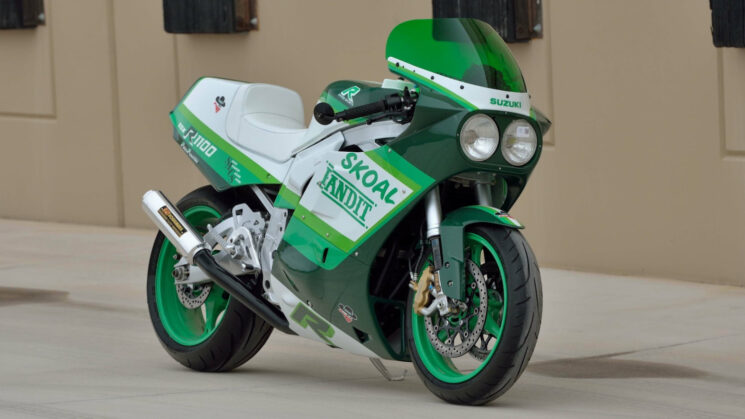
Skoal Bandit Suzuki GSX-R 1100
Big auto auctions are good at a few things, namely presentation and drumming up some serious dream machines. But in the case of the upcoming Mecum Glendale, Arizona, auction (March 28 to April 1), we felt there were a few fantastic bikes that didn’t receive due credit. Either underrepresented, or a bit inaccurate, it was our duty to give these rides their time in the spotlight.

1987 Honda VFR400
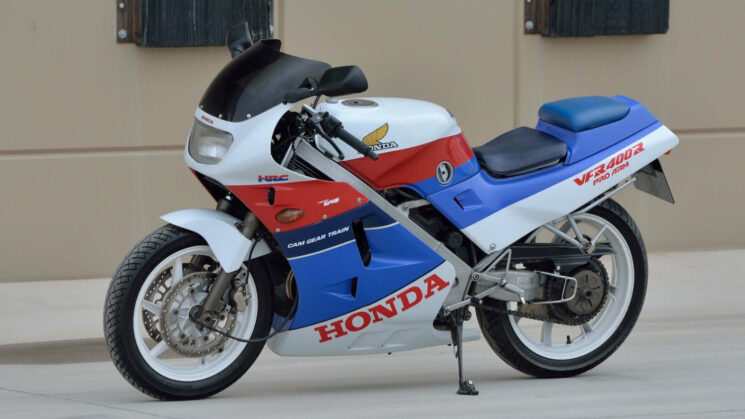
1987 Honda VFR400 NC24 If you were a fan of sportbike racing in the late 1980s, you probably knew, and longed for, Honda’s VFR750R RC30. With multiple Sportbike World Championship titles, Grand Prix victories and a lap record at the Nürburgring’s Nordschleife loop, the RC30 had more than proven its mettle, even into the early 1990s. Expensive and built in limited numbers, the RC30 wasn’t the most practical street machine for everyone. Honda had a solution for the motorsport masses, though, in the form of the scaled-down VFR400.

Honda unveiled the NC21 VFR in 1986, powered by a 399 cc, 16-valve V4 built in the spirit of the RC30. The bike was designed primarily for the Japanese market, where the sub-400 cc engine skirted tougher licensing regulations for higher cc bikes. But don’t let that statistic fool you, as the VFR400 has plenty of bite to match its bark.
1987 Honda VFR400
The 90-degree V4 is good for 59 hp at 14,000 rpm (in the NC24 version), and its valvetrain is operated by straight-cut gears that produce a significant whine throughout the rev range. Honda also went to great lengths to incorporate all the 750’s attitude into the VFR400, utilizing similar geometry that placed the rider right over the top of the 17-inch front wheel. Clip-on bars, rearsets and minimal upholstery meant that you rode it like a proper sports bike, and huge dual-discs up front provided confidence in the bends.

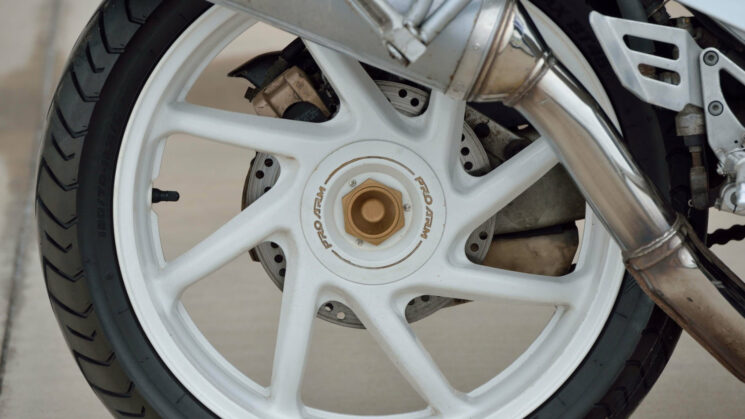
Out back, Honda incorporated a single-sided “Pro-Arm” swingarm, making it one of the first companies to do so in a production bike. The rear wheel was affixed with four bolts (sometimes hidden by a plastic cover), and the exhausts were routed high to avoid obstructing the eight-spoke cast wheel. Mecum’s Lot W7 looks to be a very original, rider-quality NC24 VFR with just over 36,000 miles on the clock. This gray-market example is a rare sight in the United States, and its hammer price will certainly outpace your average 400 cc bike of the day.
1978 Harley-Davidson MX250
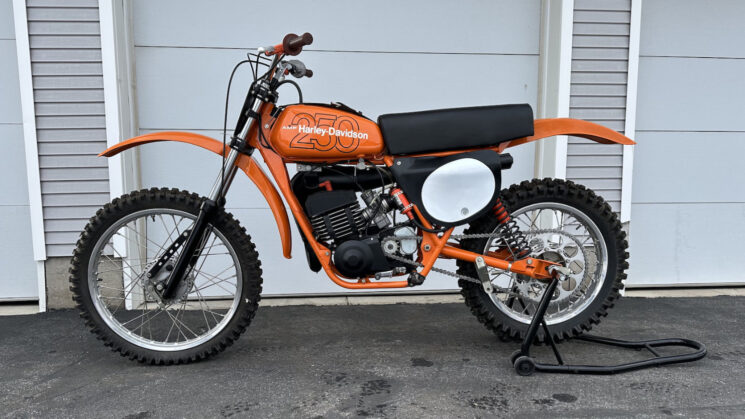
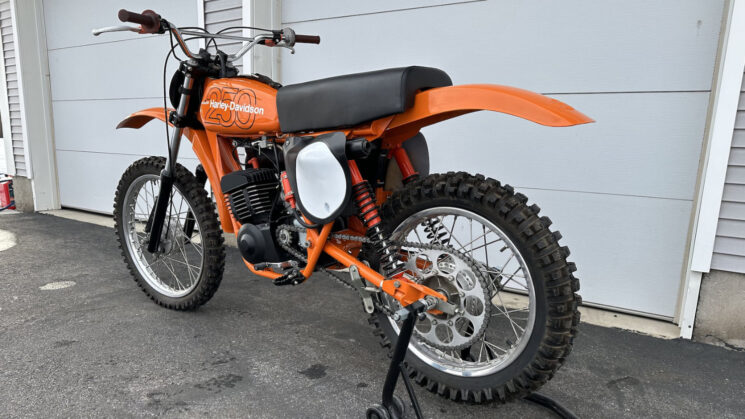
1978 Harley-Davidson MX250 It’s no stretch to say that Harley-Davidson has characteristically been set in its ways, but that wasn’t always the case. Back in the 1970s, dozens of small cc bikes carried the HD nameplate from the acquisition of Italian Aermacchi, and snowmobiles hit the trails wearing AMF-HD decals. Attempting to cash in on the booming motocross scene, Harley-Davidson poured a hefty investment into an all-out 250 cc motocrosser for 1978, dubbed the MX250.

Like any other two-stroke HD of the era, Aermacchi was tasked with the construction of the MX250, but it proved to be an uphill battle. Initial attempts in 1976 resulted in a clumsy looking bike, with an underpowered engine and a set of modified forks grafted onto the rear swingarm. Harley and Aermacchi returned to the drawing board with motocrosser Rocket Rex Staten on board to improve the program, resulting in the new ’78 MX250.
1978 Harley-Davidson MX250
Looking like a much more serious contender, the new MX utilized a more powerful, 242 cc Aermacchi engine with a 38 mm DellOrto carburetor — good for 32 hp. The previous rear suspension was ditched in favor of more conventional remote reservoir shocks in the rear, and KYB forks boasted 9 inches of travel up front. A lightweight aluminum fuel tank was held on with a leather strap, and the chassis was reinforced throughout.

The all-new Harley-Davidson MX250 was good, but unfortunately not all that good. Your 32 hp allegedly came on like a lightswitch between 7,000 and 9,000 rpm, making it a bit unwieldy, and it was heavier and more expensive than Japan’s competitive 250s. Even with a team of factory-sponsored pros on board, the MX250 failed to perform, and Harley abandoned its motocross dreams (and Aermacchi all together) after 1978. Just 900 MX250s were built for the ’78 model year, and rumor is that many went unsold.

While it wasn’t a win on paper (or on the podium), the MX250 is cool in my book for what it could have been, and its flashy ’70s MX looks. Mecum’s Lot W264 is said to be a ground-up restored example using NOS parts, and is probably one of the nicest out there. Barring any unforeseen issues, this one’s probably worth north of $7,000 today.
1948 Indian Chief
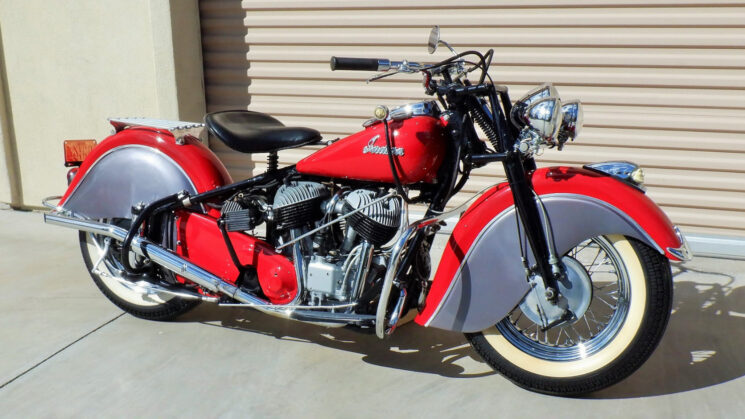
1948 Indian Chief An early Indian Chief is one of those bikes that totally defies brand loyalties. Stunning art deco influence shines through in its flowing bodywork and enveloping fenders, and chrome features abound. But as much as the 1948 Chief exudes American excess, the marque and model were in decline.

Despite numerous attempts at military contracts, Indian emerged from World War II with comparatively little to show for its efforts. Changes in leadership followed, and the Chief was the company’s only offering for a couple years. The Chief was dropped from Indian’s lineup for 1949 in favor of smaller, more affordable offerings, before making a brief comeback from 1950 to 1953.
1948 Indian Chief
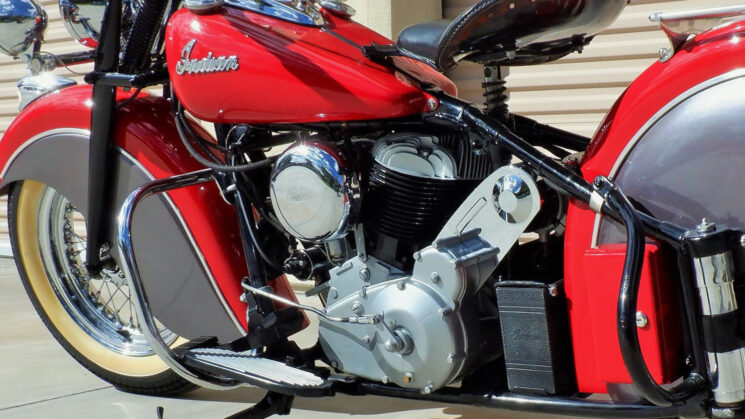
Examining a late ’40 Indian Chief from tip to tail, it’s difficult to fathom the company’s financial struggles. Enveloping finders and bodywork outclassed its competition, along with all the chromework, lighting and road-going features you could ask for. Throw a leg over the Chief, and you were met with a large sprung saddle, graceful right-hand tank shift, full floorboards and a girder front end. And until Harley-Davidson unveiled the Panhead in 1948, the Chief’s 74 ci twin was good for the same 40 hp as the Knucklehead, and the Chief boasted a sprung plunger rear end over the HD’s rigid.

Maybe the Chief wasn’t prepared for things to come, as Harley’s ’48 Panhead would adopt telescoping front forks and another 10 hp. But these days the Indian Chief is as cool as it gets, and an instant “in” anywhere. A crown jewel fit for any collection, Mecum’s Lot T12 is a beautifully restored example with a numbers-matching engine and stunning two-tone paintwork.
Skoal Bandit Suzuki GSX-R 1100
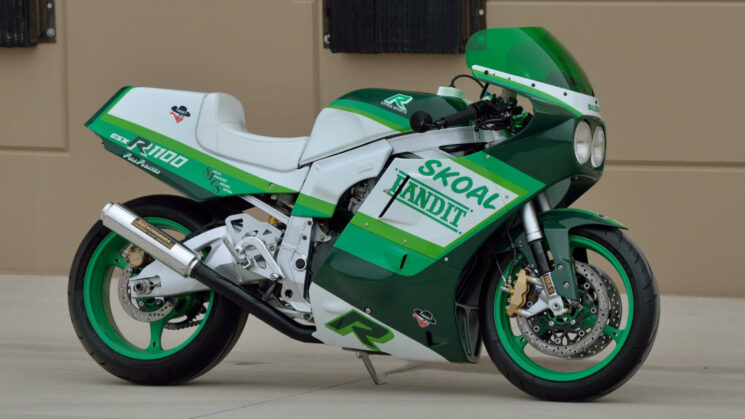
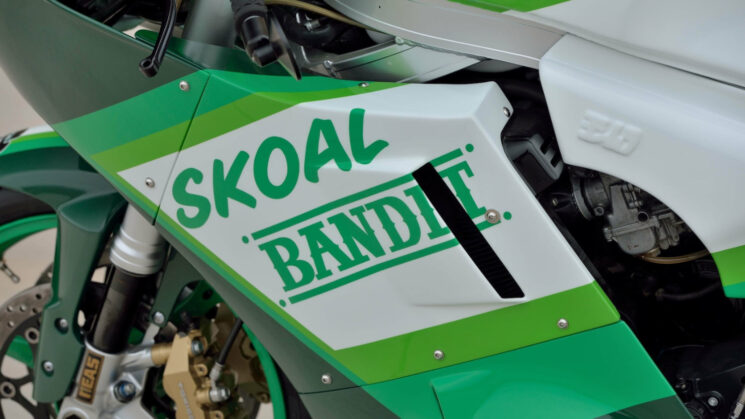
1986 Suzuki GSX-R 1100 Skoal Bandit There’s a grin-inducing effect that happens when you apply liquor and tobacco sponsorships to a ’80s speed machine — and that’s no Skoal reference. This 1986 GSX-R 1100 pays tribute to one of the most iconic Suzuki Grand Prix liveries of the era — the Skoal Bandit.

When it comes to two wheels, the Skoal livery is most often associated with the Heron Suzuki team in 1985 and 1986. And while the team didn’t triumph over the other manufacturers in championship standings, the Skoal bandit was worth celebrating, and a limited number of Suzukis left showroom floors graced by the Bandit’s signature green and white. These bikes are very sought after today, commanding prices north of $50,000 in some instances.

The appearance of this 1986 Suzuki GSX-R 1100 was transformed over a two year period into a faithful Bandit tribute you see today, along with tasteful performance mods from Yoshimura, Öhlins and Tokico. Most notable is the livery, hand-painted by Scott Johnson in Skoal team style. This GSX-R 1100 is offered by Mecum as Lot T16, if you can swallow the off-highway use title. [Photos Courtesy of Mecum Auctions, Inc.]
Skoal Bandit Suzuki GSX-R 1100


from Bike EXIF https://ift.tt/ohPgFIC

Tuesday, 21 March 2023

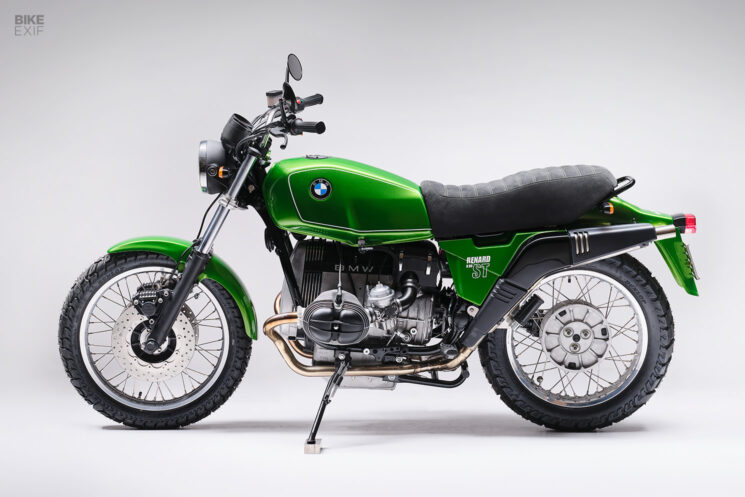
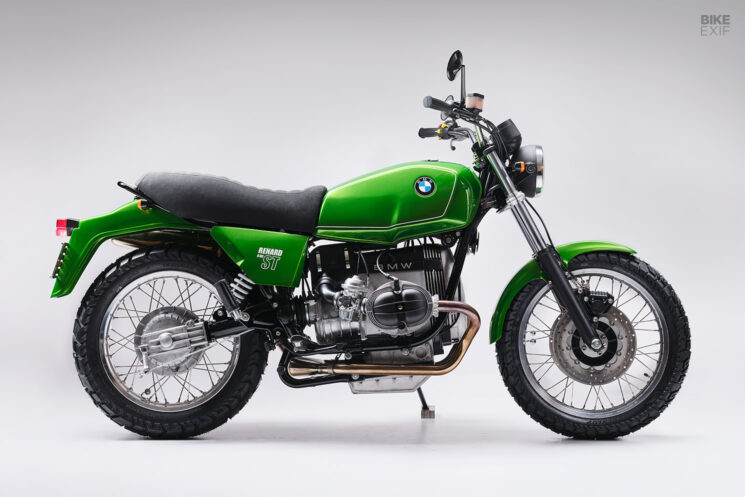
Factory Finish: A BMW R80ST built from OEM parts

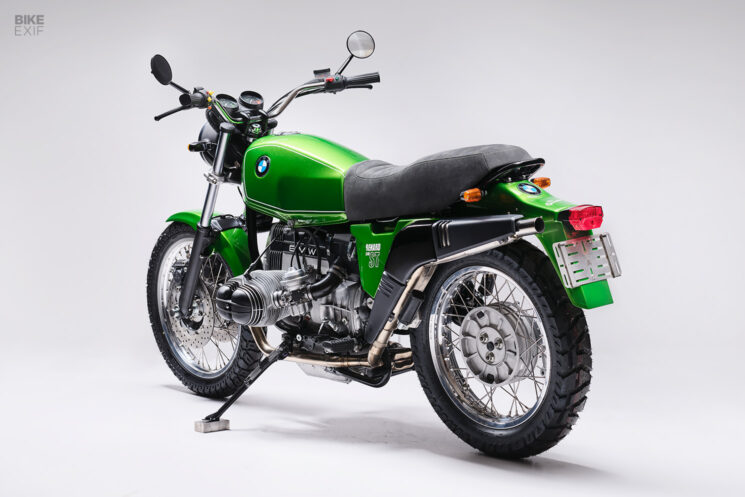
BMW R80ST restomod by Renard Motorcycles
We’ve featured some wild customs over the years, and truth be told, we’ve come to expect the unexpected. In the last year alone, we’ve seen car engines shoehorned into motorcycle chassis, electric choppers masquerading as air-cooled V-twins, and even scooters converted into proper off-road machines.

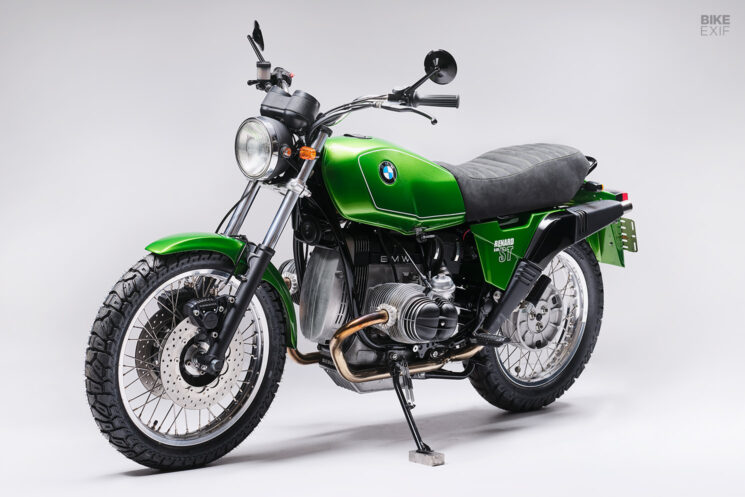
So when this sleek little 1983 BMW R80ST came our way, we were almost shocked to hear that the number of custom parts featured in the build could be counted on a single hand.

BMW R80ST restomod by Renard Motorcycles
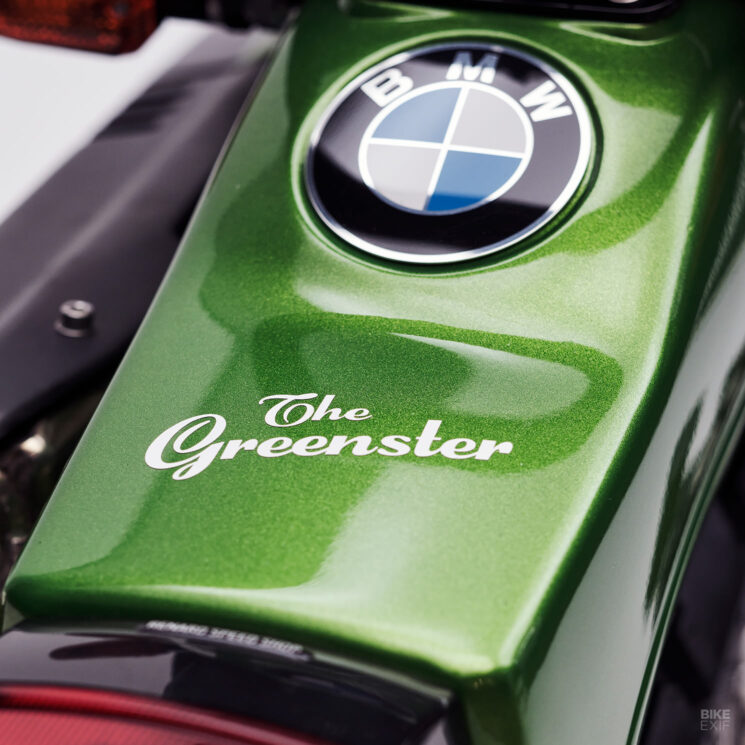
Dubbed ‘The Greenster,’ it’s the work of Estonia-based Renard Motorcycles, who deliberately set out to nail that classic OEM vibe. “The concept was to build a better bike than came out of the factory, with only BMW original parts.” says William Sarevet, who handles all things media for Renard.

We’re no strangers to Renard’s creations; roughly a dozen of their uber-clean customs have graced our pages in the past. Renard builds everything from Hondas to hogs when called upon, but vintage Beemers like this are undeniably their bread and butter.

BMW R80ST restomod by Renard Motorcycles
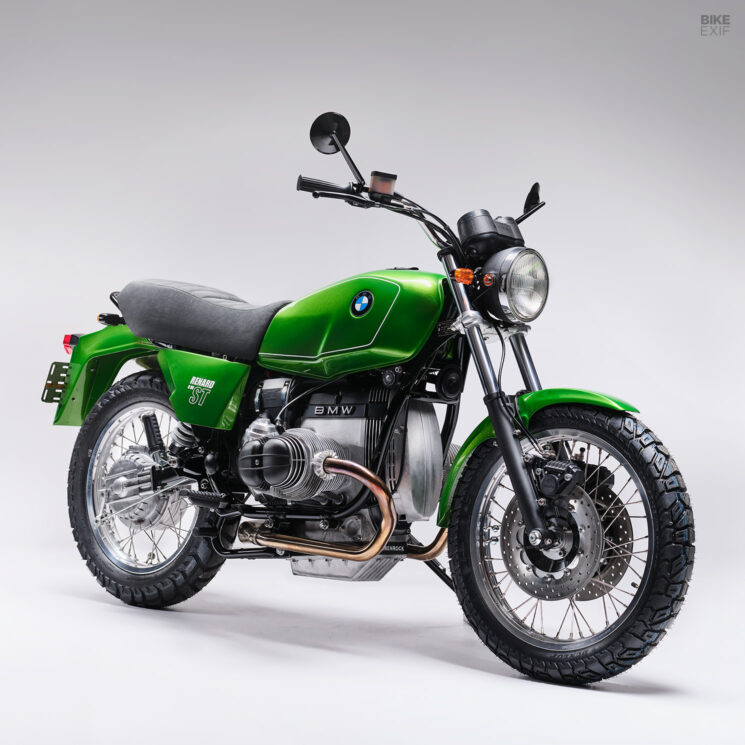
At a glance, The Greenster could easily pass for a top-down restomod, as all the tell-tale signs of a factory BMW R80ST are intact. There’s the distinctive gas tank, that long angled rear fender, and even the original BMW switchgear. And who could miss the upswept two-into-one exhaust that blends so seamlessly into the lines of the bike?

Truth be told, Renard’s new custom isn’t actually too far off from a factory restoration, and nothing on the bike has been chopped, shaved, or welded. We can’t say we’re disappointed, considering that fewer than 6,000 of these beauties were ever built during their short production run between 1982 and 1984.

BMW R80ST restomod by Renard Motorcycles
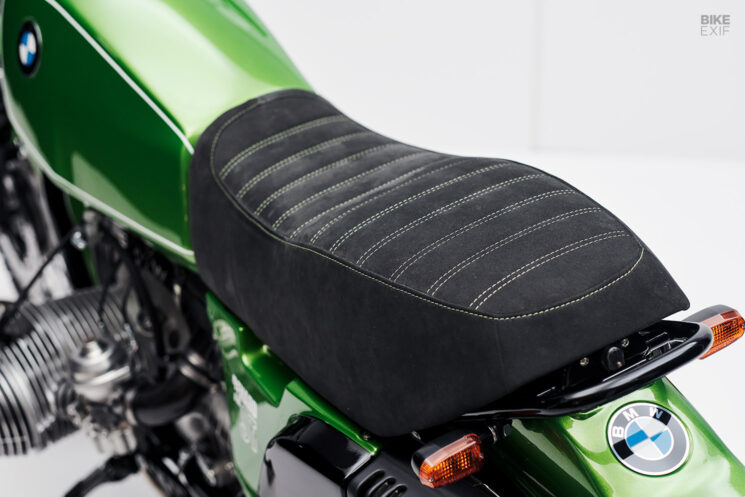
The angle of the subframe is tweaked slightly, only to allow for the new turn signals and the custom Alcantara seat. But other than that, the frame is entirely unmolested. The same goes for the engine, which remains fully stock—save for a minor overhaul while The Greenster was apart in the shop.

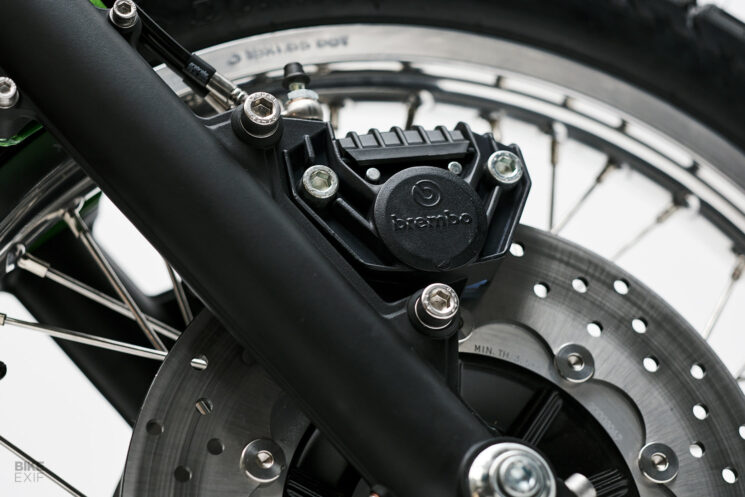
In keeping with their goal of building a better bike from factory parts, the team at Renard sourced a larger 38 mm diameter front end from a 90s-era R100RT. William tells us that the fork improves the ST’s handling, but also comes with the benefit of a Brembo dual-disk front brake setup—a fitting factory upgrade that still looks the part.

BMW R80ST restomod by Renard Motorcycles
Unfortunately those 90s model RTs all came with cast aluminum ‘snowflake’ wheels, and abandoning the ST’s classic spoked look was simply out of the question. A custom solution was needed, and Renard found their fix by lacing an R80R hub to the ST’s wheel—allowing for a dual disk setup without looking out of place.

The remaining modifications followed the same ‘tread lightly’ approach. The original clocks were swapped for a smaller and more elegant dash from a standard R model of the same generation, a less conspicuous set of signals replaced the big blocky OEM indicators, and a taller Lucas touring handlebar was bolted on to improve ergonomics.

BMW R80ST restomod by Renard Motorcycles
Believe it or not, that handsome metallic green paint that the Greenster takes its name from is also a purely OEM inspiration. Renard’s client wanted the bike painted in “the most radical original BMW color” they could find. After some extensive research, this custom color, dubbed ‘Nürburgring Green,’ was modeled after the rare metal flake green BMWs of the early 1970s.

Paint, decals, and pin-striping were all laid down by Jarmo Nuutre of One Eyed Morse customs, whose name you may recognize from previous Renard builds. Jarmo is known for his impressively intricate kustom kulture-influenced designs. If you’ve seen the absolutely bonkers paint on the ‘Anaconda Honda’ we featured a while back, you’ll know this is just a tad more subdued than his usual fare.

BMW R80ST restomod by Renard Motorcycles
The build was finished off with a set of Dunlop’s new Trail Mission tires. It’s another fitting upgrade for the ST, which BMW always intended as a street-focused cousin of the GS that still knew its way around a dirt road.

Renard’s clean take on this rare airhead may not be the wildest custom we see this year, but we’d bet the farm that BMW would have sold a lot more STs if they had come from the factory looking half as clean as this.

Renard Motorcycles | Facebook | Instagram | Images by Kalle Veesaar

BMW R80ST restomod by Renard Motorcycles


from Bike EXIF https://ift.tt/J36fWtI

Monday, 20 March 2023

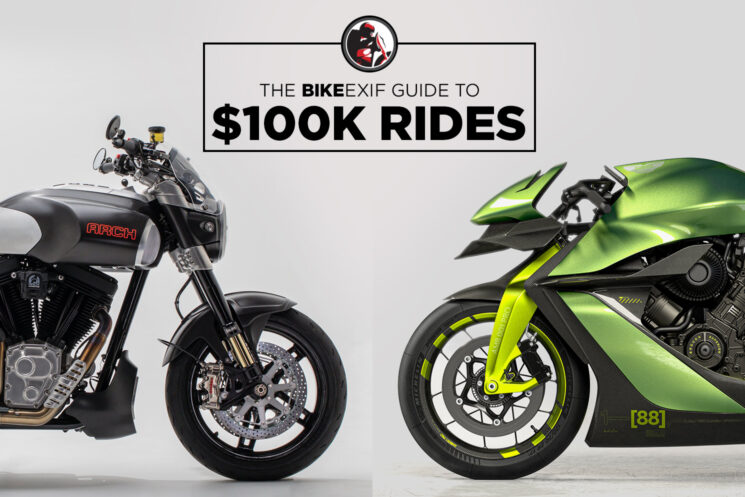
The $100k Club: Three Boutique Motorcycles with Six-Figure Prices

Arch 1s and Aston Martin and Brough Superior AMB 001 Pro
Motorcycles have long
been the cheap way to go fast, but in today’s world of excess and insane tech, the concept of a bike with a six-figure MSRP is old news. Consider the Ducati Superleggera V4, Honda RC213V-S, Mike Hailwood NCR MH TT and numerous others. Across the majority of these machines, novelty and trickle-down race technology abound. But these days we’re seeing a new w
ay to build a motorcycle worthy of $100k. These three fresh six-figure offerings from Praga, Arch and Aston Martin & Brough Superior vouch for a new boutique bike experience, boasting exclusivity, image and varying levels of technology.

Which begs the question: which (if any) of these rides is worth punching a six-figure ticket?
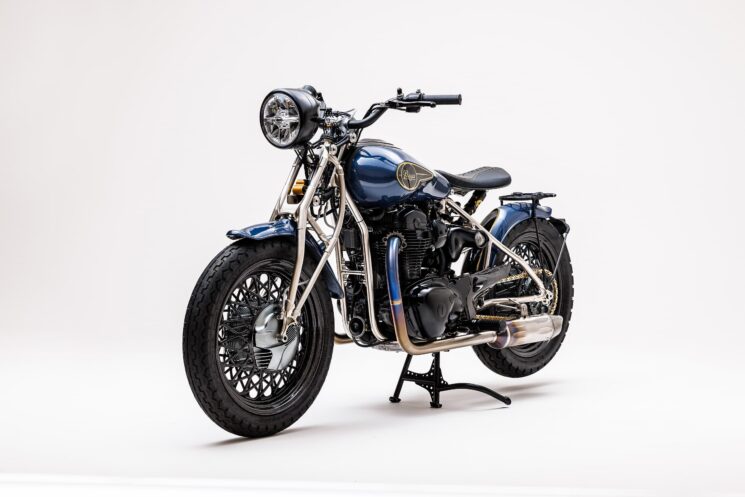
Limited Edition Praga ZS 800
Praga ZS 800 
Everything old is new again, and in the case of a sultry, record-setting 500 cc twin-cam from the 1930s, history was worth repeating for Czech Republic-based Praga. In the wake of Praga’s new high-tech Bohemia supercar, the company also unveiled the new ZS 800 as a limited-edition bobber packed with exotic materials and trick engineering, all wrapped up in an evocative package.

The price of entry? $92,000. 
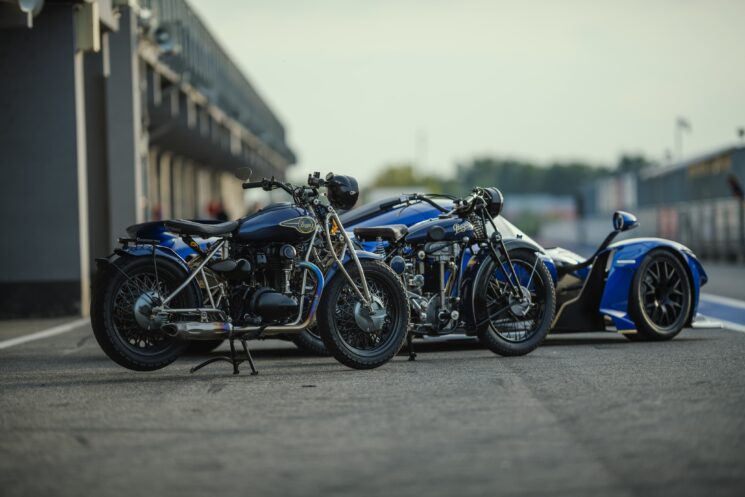
Praga ZS 800, Praga BD 500, Praga Bohemia
There’s a thin line when mixing nostalgia and modern technology, and the crew at Praga have done a tremendous job at creating a modern bobber that hasn’t forgotten its roots. In spirit, the ZS 800 is a modern interpretation of the first bike to wear the Prada badge — the storied BD 500. Praga had been building automobiles and components in Prague since 1907. But in 1929, the company purchased ÄŒKD’s motorcycle business, and along with it came the work of a bright young designer named Jaroslav FrantiÅ¡ek Koch.

Koch had designed a brilliant 500cc dual overhead cam, single-cylinder bike back at ÄŒKD, and Praga readily rebranded it as the Praga BD 500. The 15 hp single allowed the BD 500 to reach 65 mph, and Koch himself set a record on the bike by traveling from Rome to Prague in 35 hours and 40 minutes. 
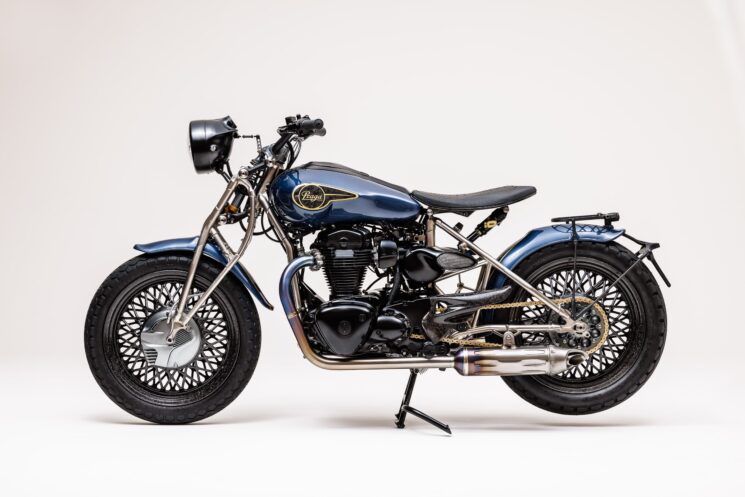
Praga ZS 800 Motorcycle
Fast forward nearly 100 years, and Praga is back to building cars, this time the high-tech Bohemia supercar. While he wasn’t working on the Bohemia, engineer ​​Jan Žuži dabbled with the concept of a modern ode to the BD 500, and somewhere along the way, the higher ups at Praga got on board with the project. No stranger to two wheels, we can see Žuži and his fellow designers threw all of Praga’s technical resources into the project, and religious application of carbon fiber, titanium and CNC-machined chromoly immediately suggests that this bike is more than just a throwback. 

Remember when we said the Praga ZS 800 hasn’t forgotten its roots? The ZS 800 is based on a rigid frame, so there’s no rear suspension other than the Öhlins shock under the seat. It also uses a girder-style front fork, drum brakes and an air-cooled Kawasaki parallel-twin, sourced from the W800 model. 
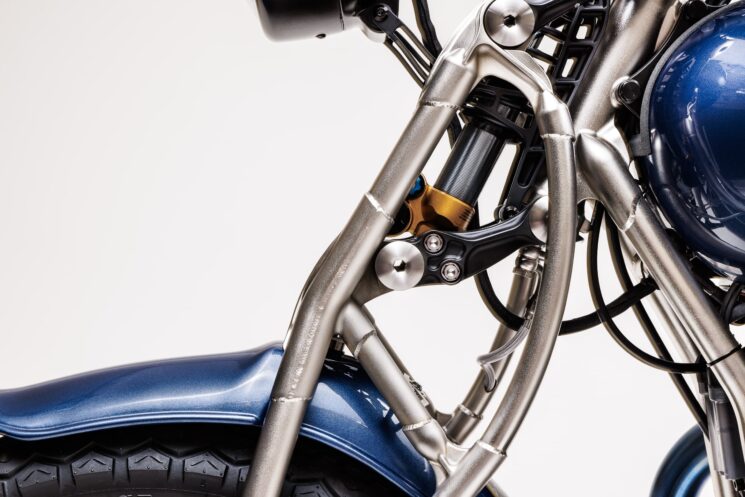
Praga ZS 800 Girder Fork Öhlins Shock
But dig a bit deeper and the tech hits you like a speed bump at 60. The frame and girder fork are chromoly steel, and loaded with beautiful CNC-cut joints. Like the saddle, the fork is suspended by an Öhlins shock with a titanium spring, and the whole piece is alloy art on its own.

The fuel tank was crafted from forged carbon fiber, but that’s somewhat of an illusion, as the actual fuel tank looks to be a CNC-cut aluminum component, used as a structural part of the chassis. The carbon tank covers compliment carbon fender struts and the chain guard, but most notably, the wheels. 
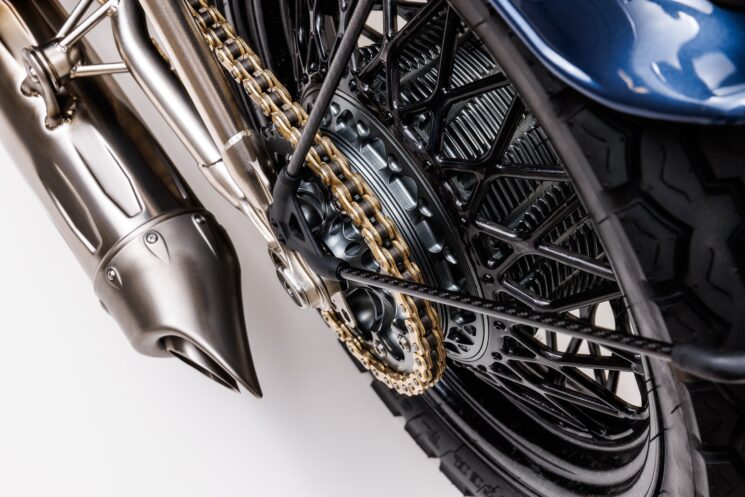
Praga ZS 800 Carbon Fiber Wheels
While they emulate an old-school wire, the wheels are also constructed from forged carbon fiber, laced with tensioned carbon spokes — talk about making a statement. Trick machined covers direct air across the hydraulic drums, and vintage-looking, 18-inch Dunlop rubber completes the look. 

Under the saddle, a Kawasaki-sourced 800 cc air-cooled twin supplies 50 hp to a five-speed transmission. Praga cites that the Kawasaki’s bevel-gear cam drive pays tribute to the period, and it’s certainly the most approachable engine on our $100k list, but needless to say underpowered among its peers. Its published dry weight of 313 lbs makes it the lightest, however, and weight distribution is said to be 50/50. 
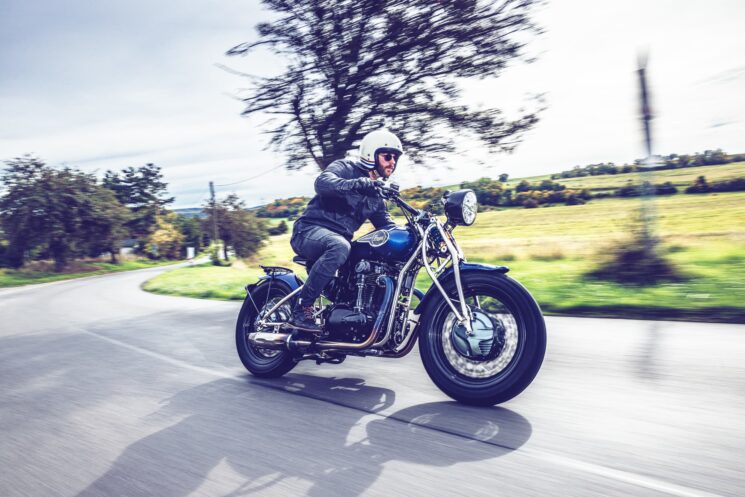
Riding the Praga ZS 800 Motorcycle
Just 28 Praga ZS 800s will be built, and you’ll have to shell out $92,000 to get one. For its part, we’ll admit that the ZS 800 is the most affordable bike on our list, and certainly the easiest to hop on and ride — especially for less experienced pilots. If it’s nostalgia that trips your trigger, the Praga is sure to make a statement wherever it goes, and we’re willing to bet you won’t find another one in the parking lot.
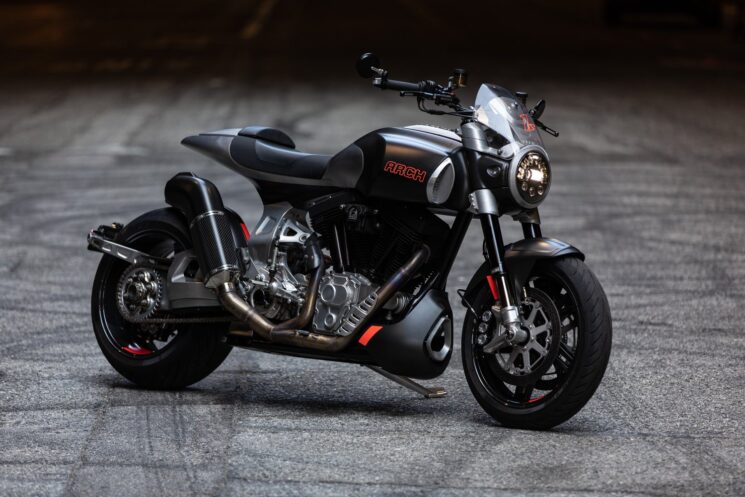
Arch Motorcycle 1s
Arch Motorcycle 1s
The sport cruiser market is hotter than ever, with Indian, Buell and Harley Davidson unleashing more aggressive bikes targeted at the performance-minded masses. But California-based Arch Motorcycles takes its stab at the top 1% of the market with the new 124 ci S&S-powered Arch 1s.

The boutique experience that starts long before the first weld bead, and ends with you writing a check for $128,000. So what do you get for the money? Let’s dig in.
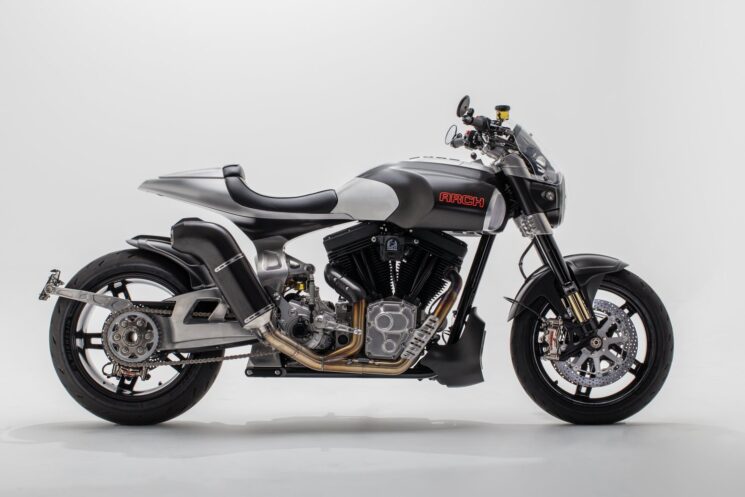
S&S-powered Arch 1s
Arch Motorcycle formed in 2011 as a somewhat of a meeting of the minds, between famed actor and enthusiast Keanu Reeves and bike builder Gard Hollinger. The two had met several years prior, when Reeves tasked Hollinger with building a fully custom Harley Davidson, with nearly every aspect of the bike reworked. Reeves was
floored over the bike’s performance, and he eventually convinced Hollinger to go into business together.

Since then, the duo has made a name for themselves perfecting what they call the “American performance cruiser” ever since. Their razor-sharp designs emphasize performance through mechanical simplicity, and the most trick raw materials money can buy. 
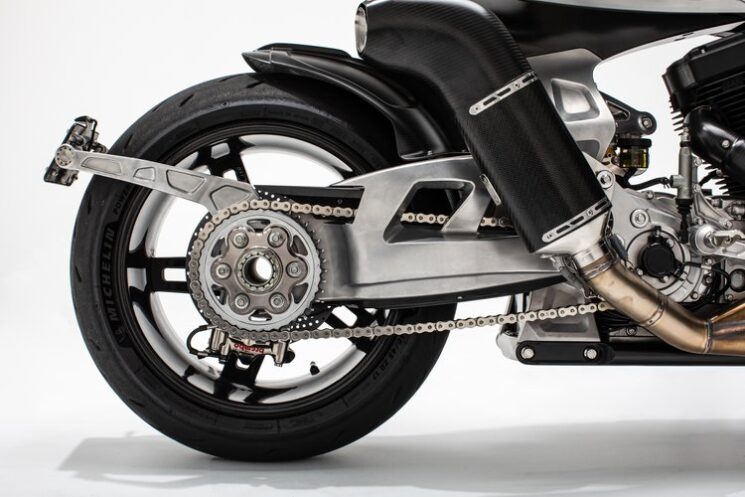
Arch Motorcycle 1s Single Sided Swingarm
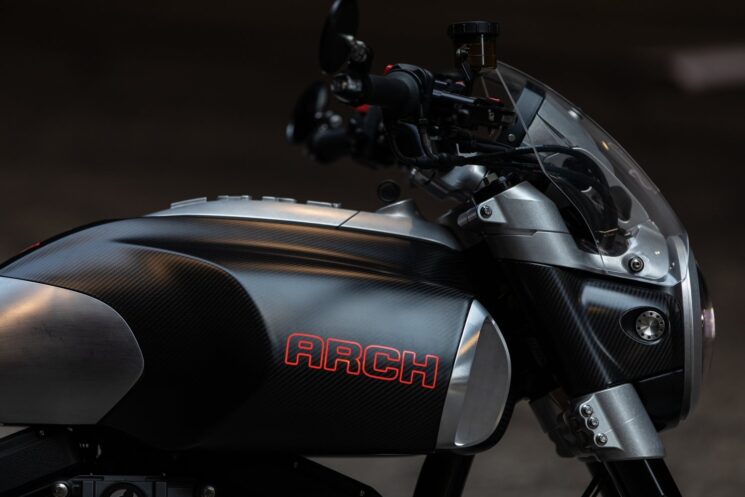
The new Arch 1s builds on the previous KRGT-1 model, with more aggressive geometry and ergonomics, and the same thundering S&S 124 ci v-twin. The whole package is much tighter than the KRGT-1, with a shorter wheelbase, more aggressive rake and a chiseled new single-sided, billet-aluminum swing arm. The bodywork is made up from various carbon fiber and aluminum bits, and facilitates more aggressive ergonomics than the KRGT-1, as does the switch from forward to mid-mounted controls.

Underneath the skin, a steel mainframe supports the neck and air-cooled mill, while a billet-aluminum subframe supports the rear suspension. Fully-adjustable Öhlins suspension keeps the bumps in check, and ISR four- and six-piston brakes with standard ABS should provide more than adequate braking for spirited riding. 
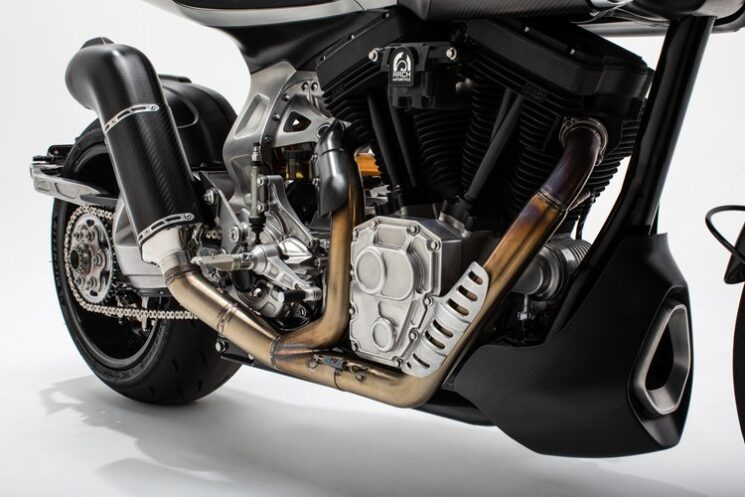
Arch 1s 124 ci S&S Engine
Thinking back on the company’s earliest days, it comes as no surprise to see an S&S-sourced, air-cooled v-twin between the frame rails. The 124 ci, T124 engine was designed as a nice upgrade for 2007 to 2016 HD big-twin models, and Arch turns the heat up a bit with a custom stainless exhaust and intake system. Arch reports 115 lb/ft from the 2,032 cc v-twin, routed through a proprietary six-speed transmission to the 530 O-ring drive chain.

17-inch BST carbon fiber wheels are wrapped in Michelin Power RS rubber, sized 120/70 and 240/45 respectively. Dry weight comes in at 563 lbs, roughly 30 lbs lighter than the KRGT-1, but definitely the heaviest bike in the $100k club by a significant margin. 
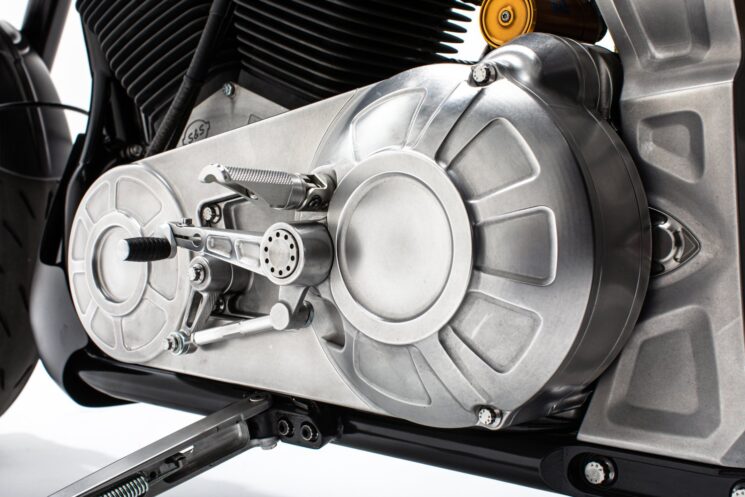
Arch 1s CNC Aluminum Foot Controls
Naturally it takes more than trick materials and a torquey v-twin to command a six-figure price tag, and the Arch 1s makes up the difference with unique flair. The ignition key is made from billet aluminum, and activates a full-color LCD dash. Want to make fuel stops more fun? How about an exotic billet aluminum fuel cap that hinges up from the fuel tank?

Also hidden in the carbon fuel tank, is a unique induction system that funnels fresh air through filters and down into the throttle body. The kickstand, controls and the belt drive cover are all made from billet aluminum as well — all pieces of functional art in their own right. Your investment in the Arch 1s also includes the opportunity to customize the appearance and ergonomics of the bike with the design team, ensuring the seat and controls are set up for your riding style. 
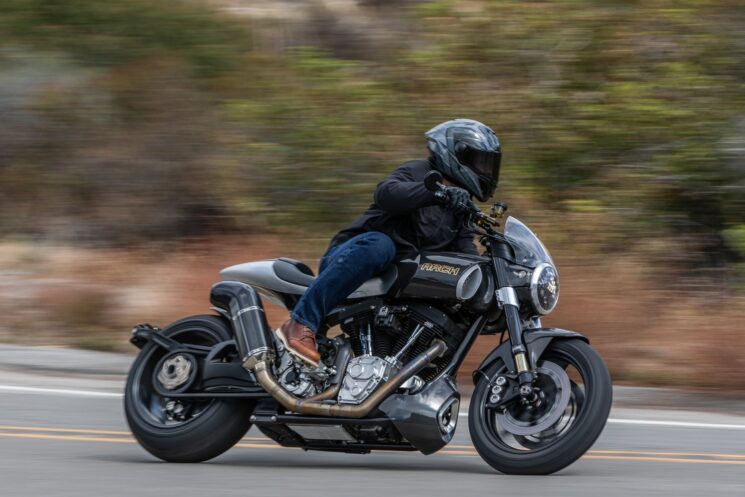
Riding the Arch 1s Motorcycle
The Arch 1s leads the class in terms of a boutique buying experience, and we’re down with the all-American performance cruiser image. Sure, the 1s could stand to lose a few pounds for the price, but on our list, the Arch is the most rideable bike. Rideable as in, hop on and watch the odometer climb, and that’s what it’s about, right?
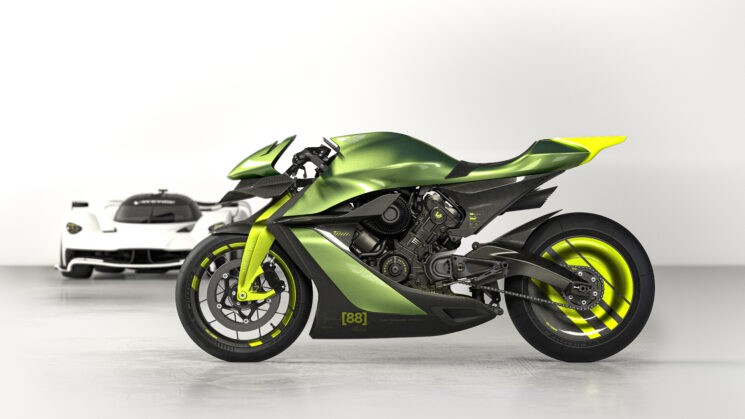
Aston Martin and Brough Superior AMB 001 Pro
Aston Martin & Brough Superior AMB 001 Pro A luxury automaker teams up with a motorcycle manufacturer to build a hypercar-inspired track bike. That sounds expensive, and it is.

But in the case of the Aston Martin & Brough Superior AMB 001, these two historic English names seem to have brought out the best in each other with the limited-edition, 180 hp AMB 001, unveiled in 2019. With all 100 limited-edition bikes sold, the duo has now upped the ante with the new 225 hp AMB 001 Pro, limited to just 88 units.
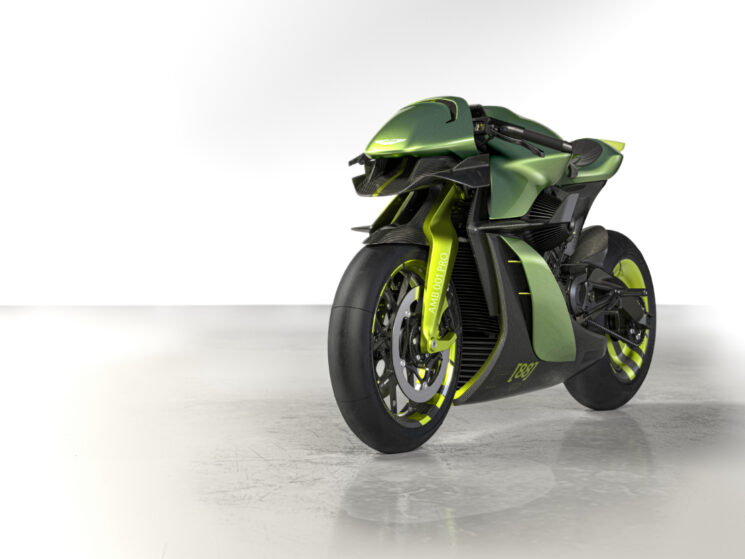
Aston Martin and Brough Superior AMB 001 Pro Front Aero
If the Brough Superior name is unfamiliar, here’s a quick refresher. Brough Superior was founded in 1919, after George Brough left his father’s company, Brough Motorcycles. Seeking to maximize quality, each Brough Superior product was allegedly assembled twice. 

After initial assembly, the bike was torn back down for the required paint and plating work. Also every finished bike was tested and personally certified by Brough himself, and if the bike failed to meet his approval, it was sent back to the factory until it did. Brough Superior motorcycles were considered the Rolls-Royce of the bike world before production ended in 1940, when the facility was retooled to build crankshafts for Rolls-Royce Merlin engines during the war effort. 
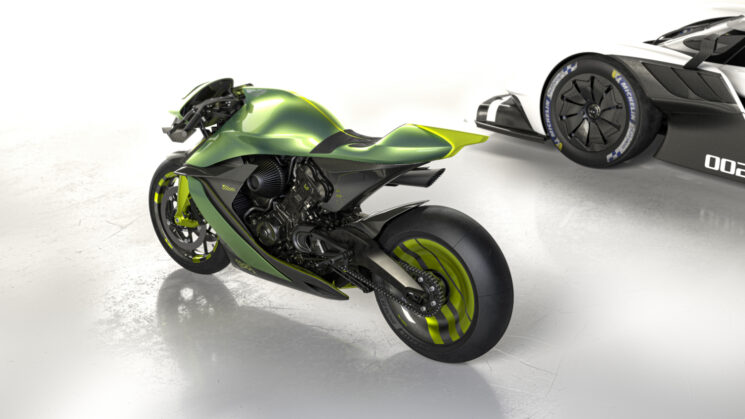
Aston Martin and Brough Superior AMB 001 Pro
Fast-forward to 2008, and the Brough Superior name was acquired by enthusiast Mark Upham, who met with French designer Thierry Henriette to design a new line of Brough Superior bikes. Production began in 2016 under Thierry’s ownership, and several high-end cruiser models have debuted since.

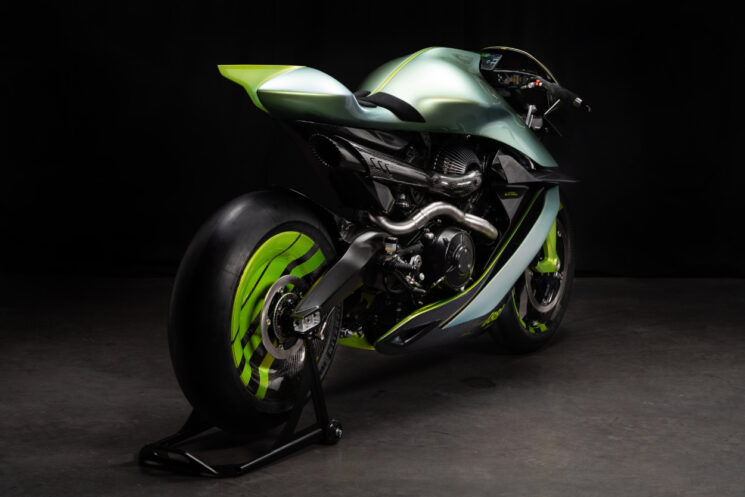
While Brough Superior’s recent offerings have become increasingly exotic, the 2019 partnership with Aston Martin, and the resulting AMB 001, is a significant leap in performance for the marque. Taking inspiration from Aston Martin’s Valkyrie AMR Pro hybrid supercar (of which only 25 are to be built), the AMB 001 Pro is the next level for the Aston and Brough Superior partnership, boasting new aero and a more powerful 997 cc v-twin. 
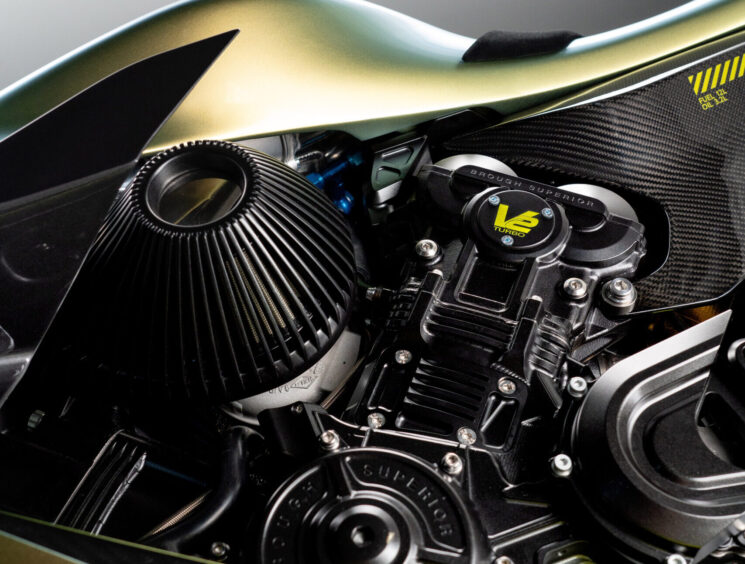
Aston Martin and Brough Superior AMB 001 Pro Turbocharger
While the AMB 001 Pro looks a lot like its predecessor, performance is said to be a new extreme, given a 25% increase in power that puts it on par with a Formula One car in terms of power to weight. The heart of the matter is a new turbocharged 997 cc DOHC v-twin, that’s CNC machined from a solid block of AL5000 aluminum.

More detailed specifications on the engine are few, but we would assume a variable geometry turbocharger and intercooler were used, as in the AMB 001. Power is reported at 225 hp, delivered through a six-speed transmission with a slipper clutch, and dry weight is listed at 386 lbs. 
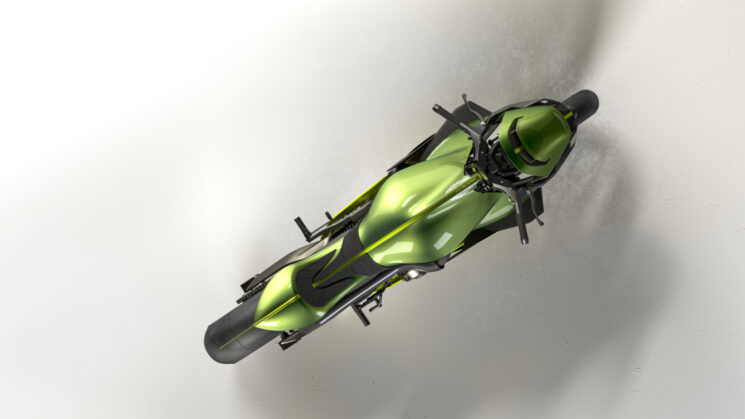
Aston Martin and Brough Superior AMB 001 Pro Fuel Tank
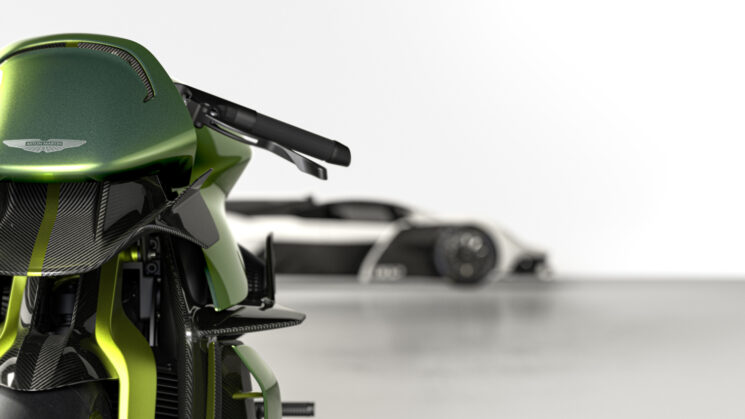
The (presumably) all carbon fiber bodywork is very similar to the AMB 001, with the exception of new front aero. A carbon front spoiler is affixed to the body, along with stabilizing wings to improve downforce. Other aero features along the body are said to create a tunnel effect, directing air around the rider, along with a rear fin to improve stability.

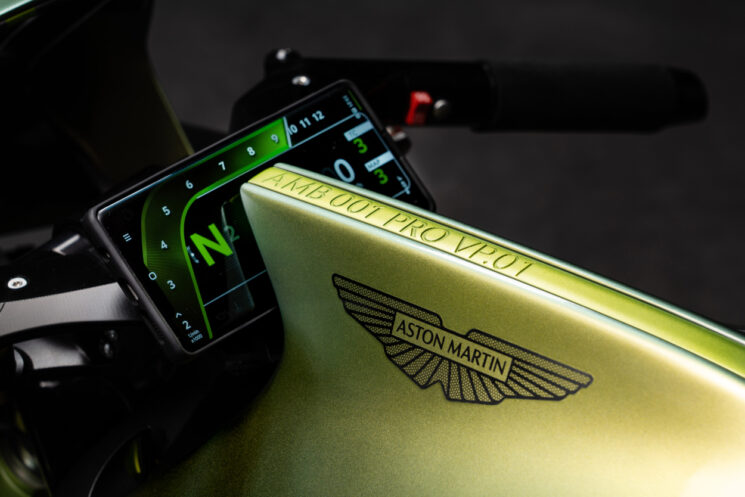
Aston and Brough Superior also wax poetically about how thin (in microns) the badging is on the bike. I suppose there’s a level of performance where that’s relevant, but I question it here.
Aston Martin and Brough Superior AMB 001 Pro Back Wheel
There’s clearly plenty to talk about with the AMB 001 Pro, without even touching on the other mechanicals. In broad strokes, the bike’s based on a full CNC-machined aluminum chassis with the engine as a stressed member. A Fior-type fork is used up front, while the rear swingarm pivots from the engine cases — both made from CNC-cut aluminum with adjustable mono-shocks.

Michelin track slicks wrap the 17-inch carbon fiber wheels, with the rear being a solid carbon disc. A pair of radial four-piston brakes and a single two-piston rear provide clamping force. Just one livery is offered, denoted as Aston Martin Verdant Jade, with matte-finish carbon fiber and Cerakote mechanicals. 
Aston Martin and Brough Superior AMB 001 Pro Dash
Billed as an even more exclusive ride than the previous AMB 001, it should come as no surprise that just 88 AMB 001 Pros will be built, and the price hasn’t really been published. Considering the 100 AMB 001s built sold out at $120,000 a piece, expect to pay significantly more for the Pro.

We can confidently assume that the AMB 001 Pro is the most expensive bike on the list, but then again, it really should be. Dollar for dollar, the Pro really feels like a six-figure bike with six-figure technology and image. The downside, of course, is that it’s built for the track only.
Aston Martin and Brough Superior AMB 001 Pro Front Aero
All three of these boutique motorcycles are an exclusive experience in their own way, and it all comes down to what you want to show for your six-figure investment. Nostalgia, techy road performance or the nth degree of engineering attainable in a “production” bike.

For your money, I’d buy the Aston. For mine, I’d have the Arch.
Arch Motorcycle 1s Fuel Tank


from Bike EXIF https://ift.tt/lI9x7g4