Tuesday, 25 January 2022

Testastretta Tracker: Alex Earle’s custom Monster S4RS

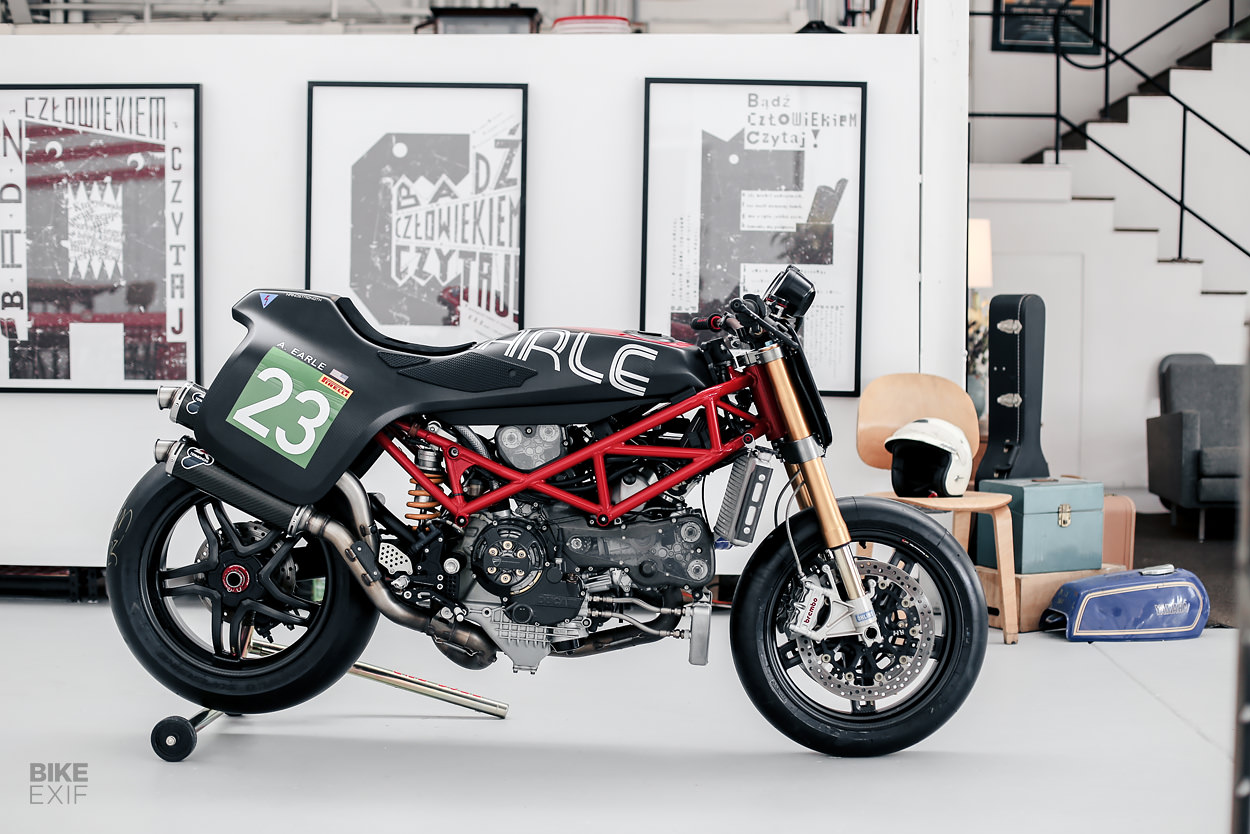
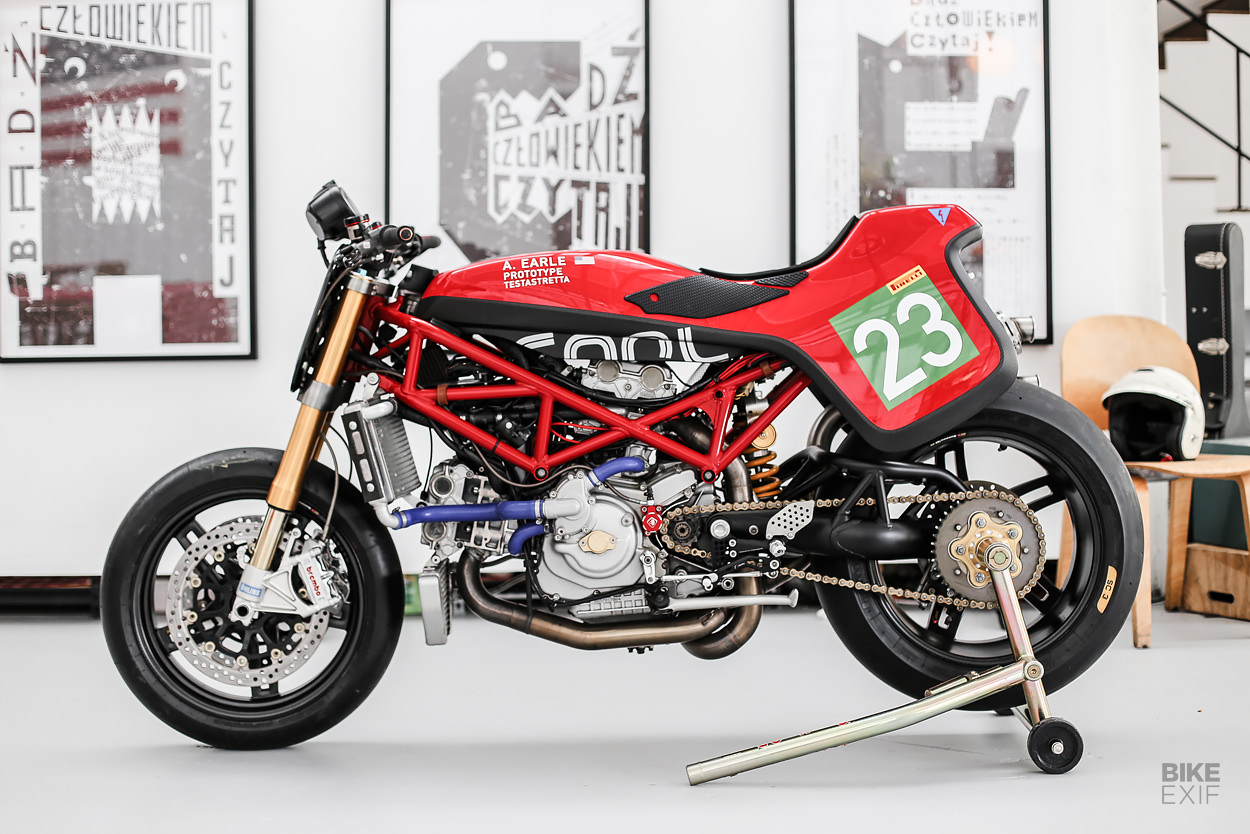
Ducati Monster S4RS track racer by Earle Motors
Alex Earle broke onto the custom scene emphatically ten years ago, when he designed a monocoque carbon fiber body for the iconic Ducati Monster M900. The first Earle Motors build was a stunner with 19” wheels, wide bars and oversized number boards; a street tracker before street trackers were cool.

Alex has replicated that kit a number of times since, in both fiberglass and carbon fiber variants, and even adapted it to fit Suicide Machine Co.’s mental Harley Softail. But he’s always wanted to revisit his original Ducati design, with a twist: a much bigger emphasis on performance. So he’s built another signature Earle Motors bike—only this time, it’s a track-focused brute.

Ducati Monster S4RS track racer by Earle Motors
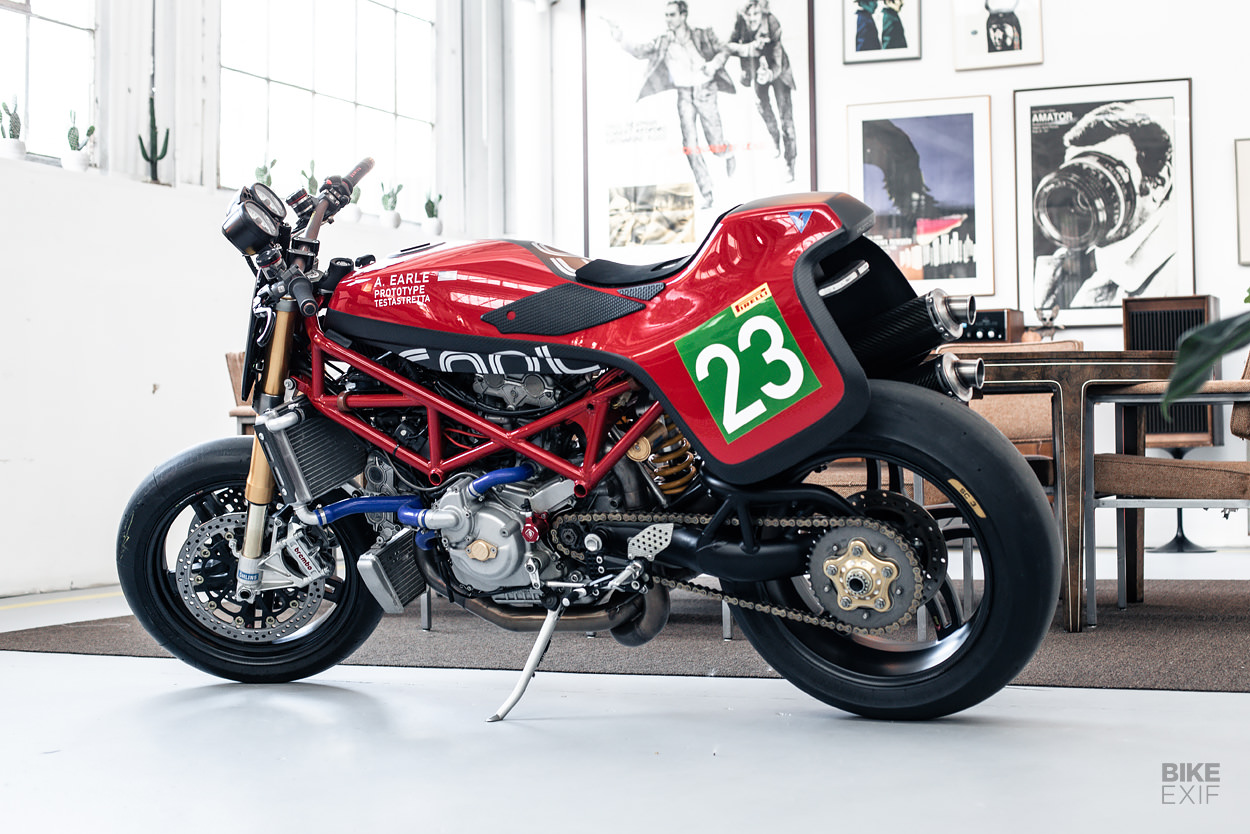
Alex chose the 2007 Ducati Monster S4RS for this project, for its legendary Testastretta motor and worthy parts spec. His goal was to reimagine his original Monster street tracker as an upright, high-bar superbike.

“After building several carbureted M900’s I really wanted to step up on power,” he tells us, “and I was suspension-shamed at a few track events! I really wanted fully adjustable suspension and great brakes, and the S4RS has all of that stock.”

Ducati Monster S4RS track racer by Earle Motors
“I reached out to Victor at Moto Club Santa Monica to keep an eye out for a solid donor, and he found one that a customer was looking to move on to a good home. It was well loved and already had myriad performance enhancing mods. The previous owner was an airline mechanic who took meticulous care of the bike and gave her a name.”

Ducati Monster S4RS track racer by Earle Motors
It’s worth revisiting how Alex originally designed his monocoque Monster body. He first sculpted a 1/5 scale model of the bike, 3D scanned it, rebuilt it to scale digitally, then CNC-milled a foam master to produce the final mold. It’s a process he’s familiar with, given his extensive experience as an automotive designer.

Alex managed to adapt the M900 bodywork design to the S4RS chassis with little fuss, and with minimal changes to the frame beneath it.

Ducati Monster S4RS track racer by Earle Motors
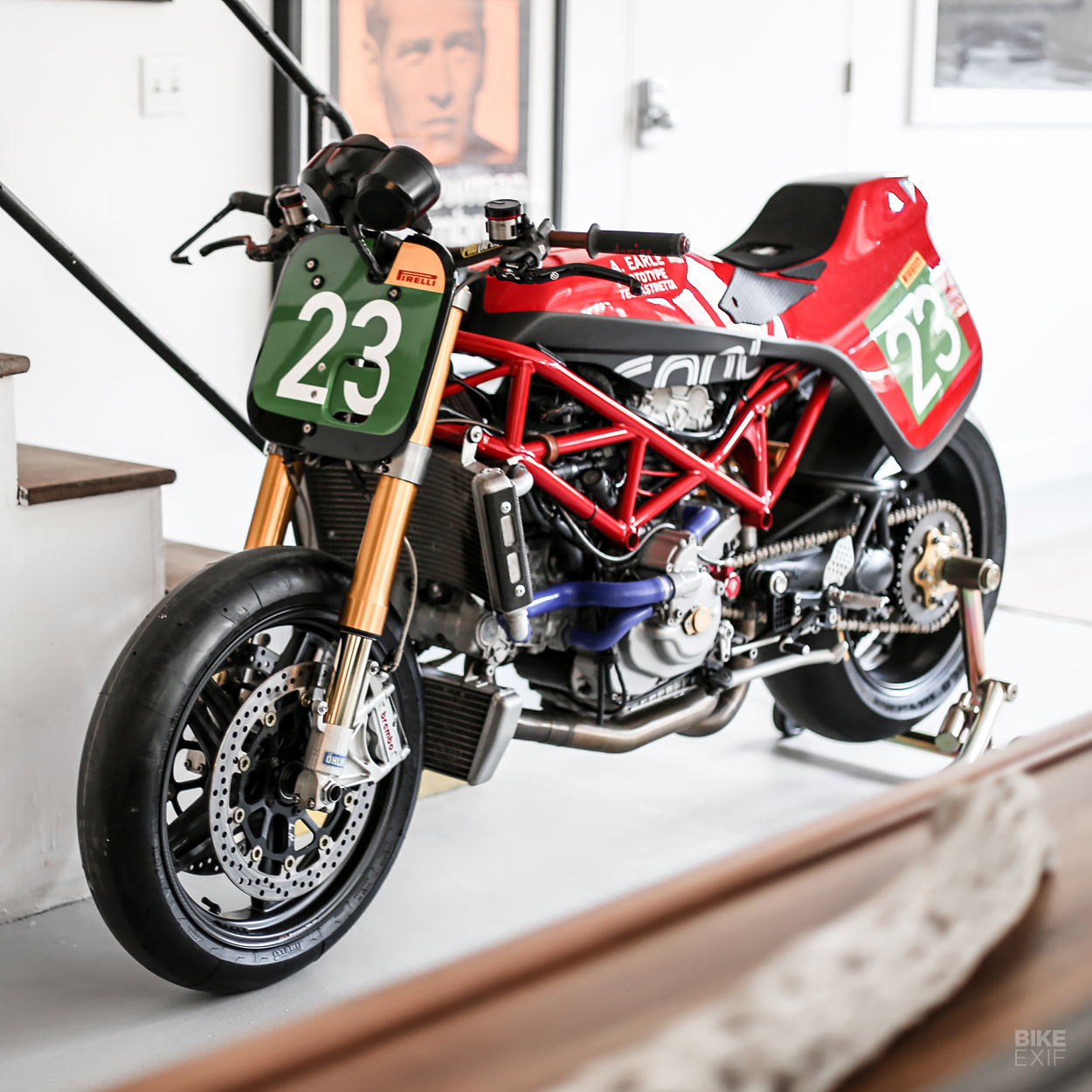
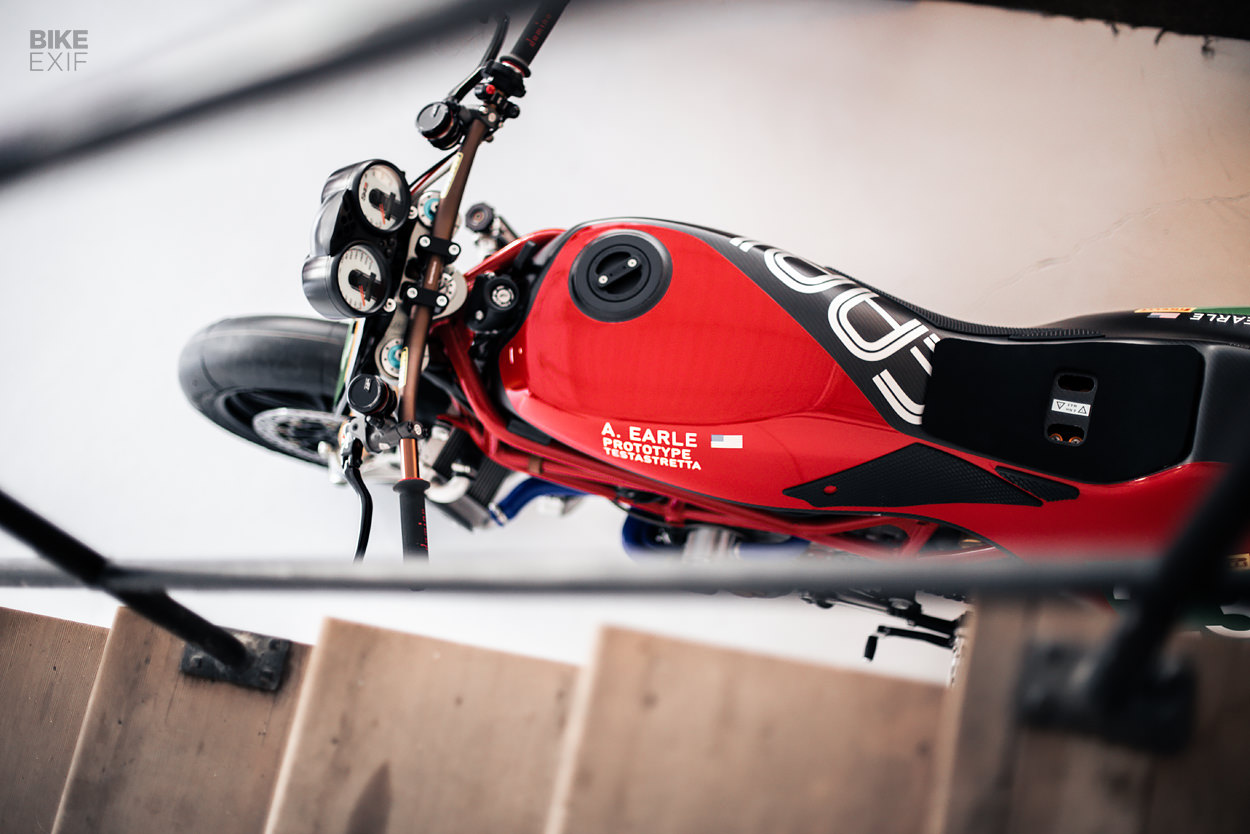
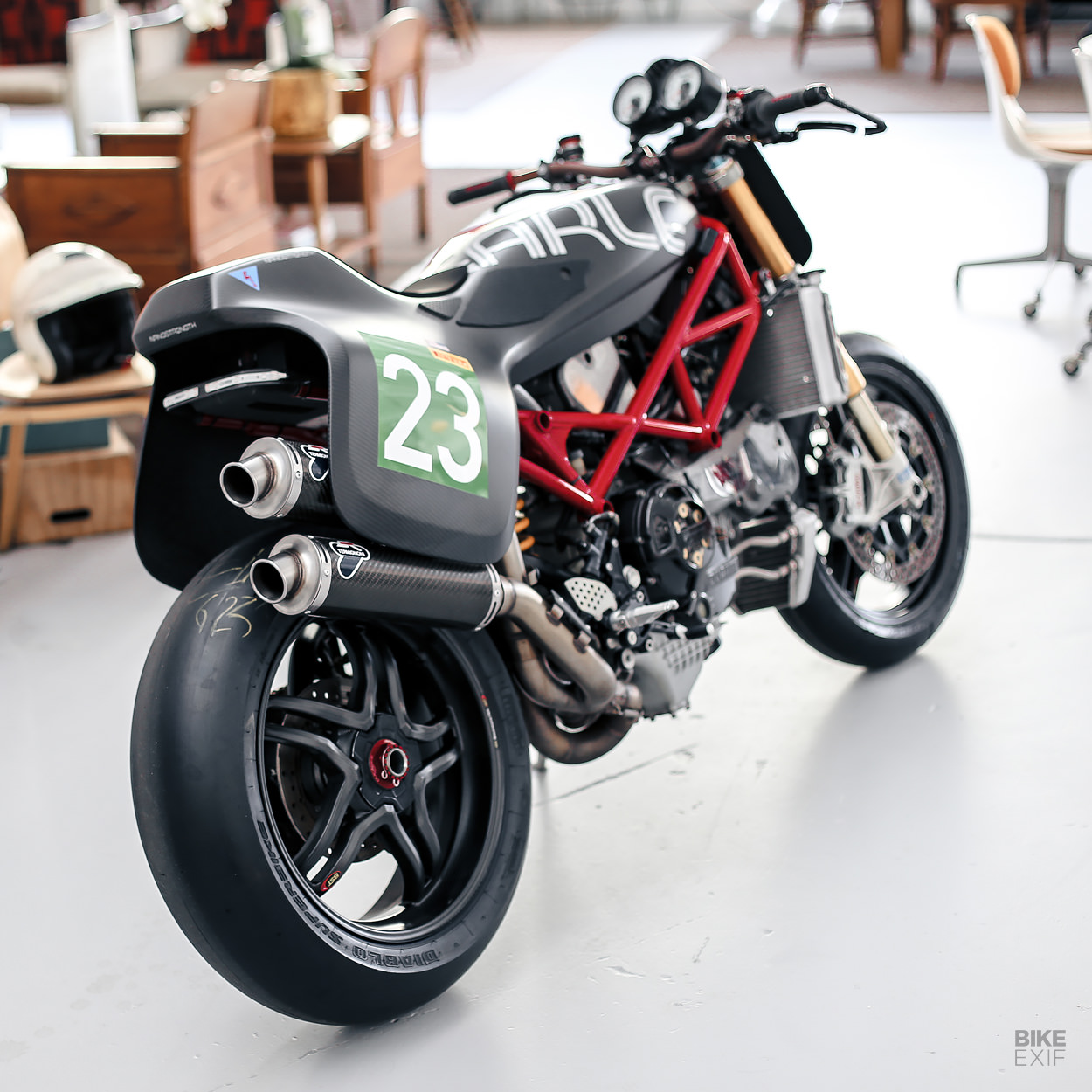
The body has an integrated fuel cell, with an aviation fuel cap that’s been bonded in rather than bolted down. The entire thing can be removed in mere minutes via four bolts, a rubber pull down at the front and quick-disconnect fuel lines.

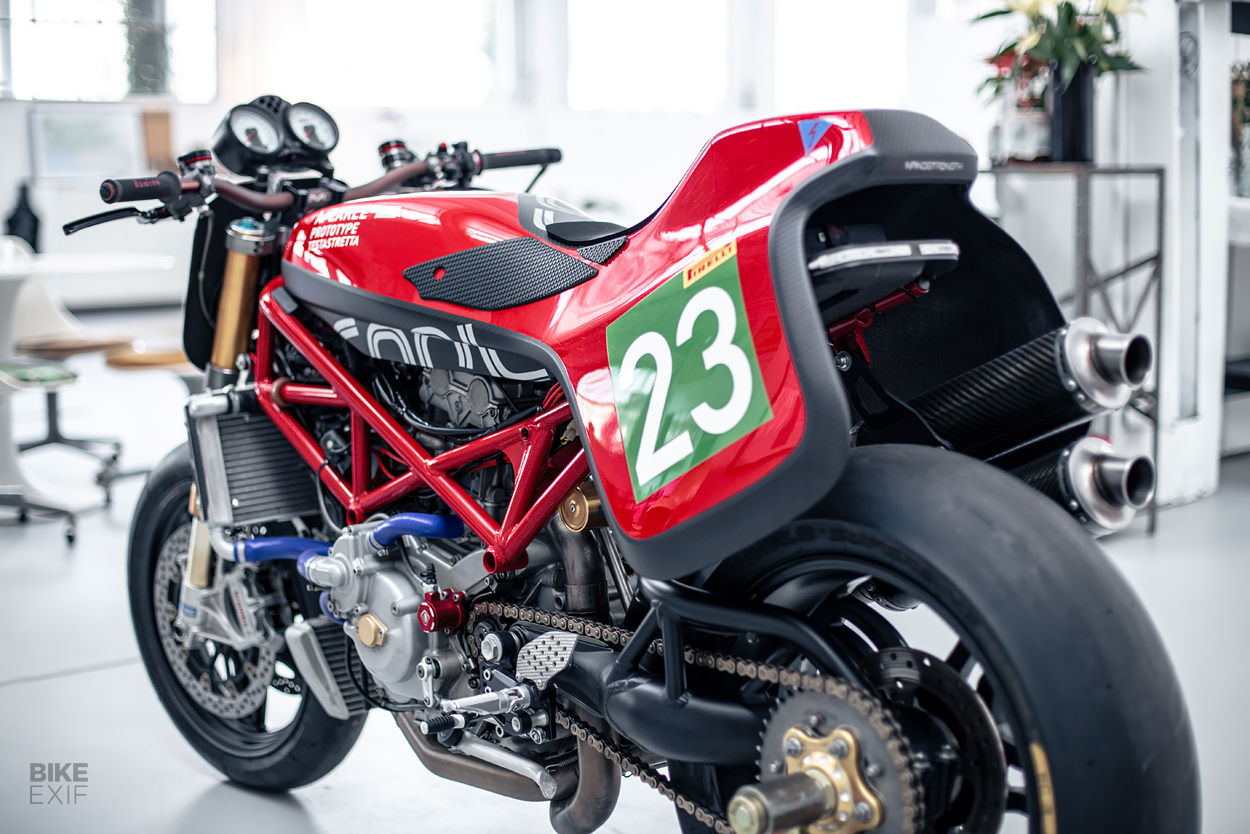
Hiding underneath everything is a carbon fiber inner fender and battery tray, with LED marker lights mounted out back. Alex deleted the airbox too, so the Ducati now inhales through a pair of K&N filters, housed in the front part of the monocoque. A slim racing pad and knee grips focus on control rather than comfort.

Ducati Monster S4RS track racer by Earle Motors
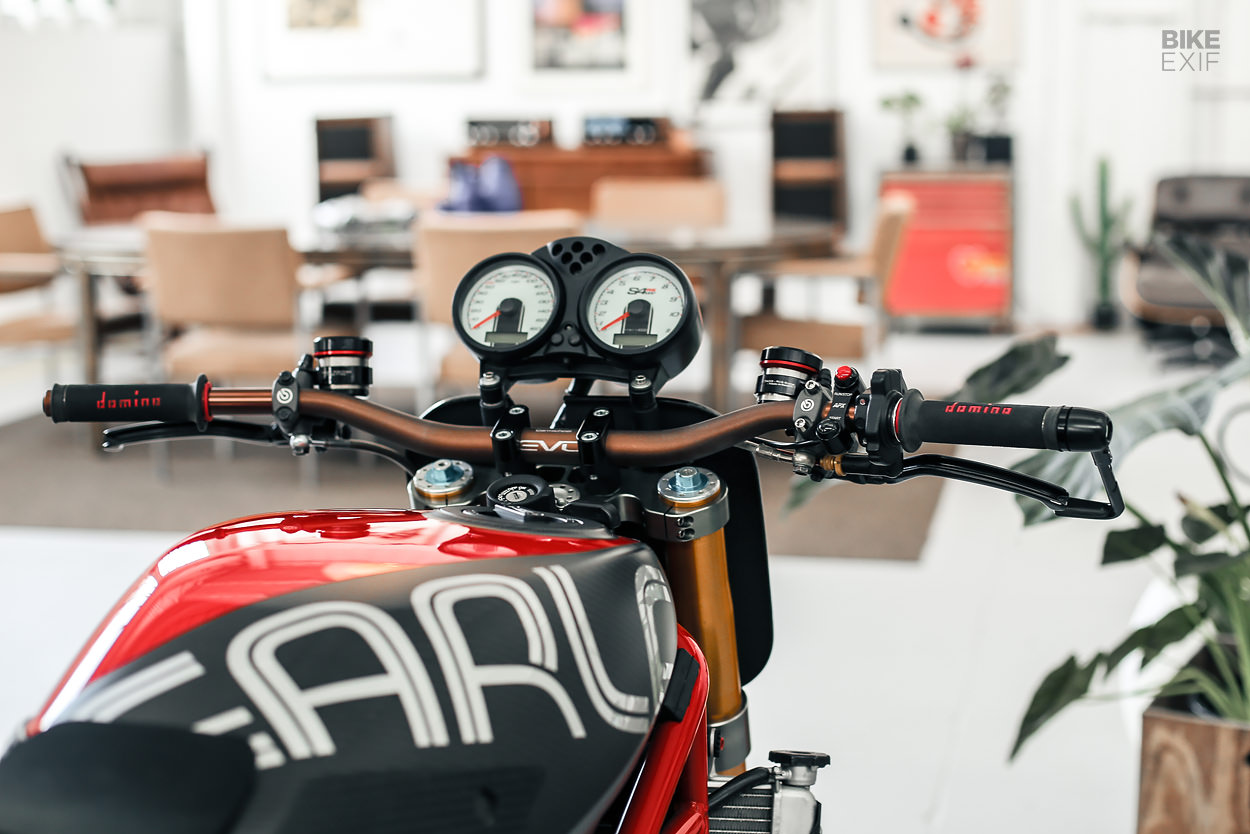
Up top are a set of wide ProTaper Evo handlebars, with adjustable Rizoma rear sets lower down. The cockpit also features Domino grips, Brembo RCS levers with AEM reservoirs, a track-spec starter switch from APX, and the stock dash remounted on a custom bracket.

According to Alex, the ergonomics are now spot on; “the body shape is wonderfully suited to rider movement and input on the track,” he confirms.

Ducati Monster S4RS track racer by Earle Motors
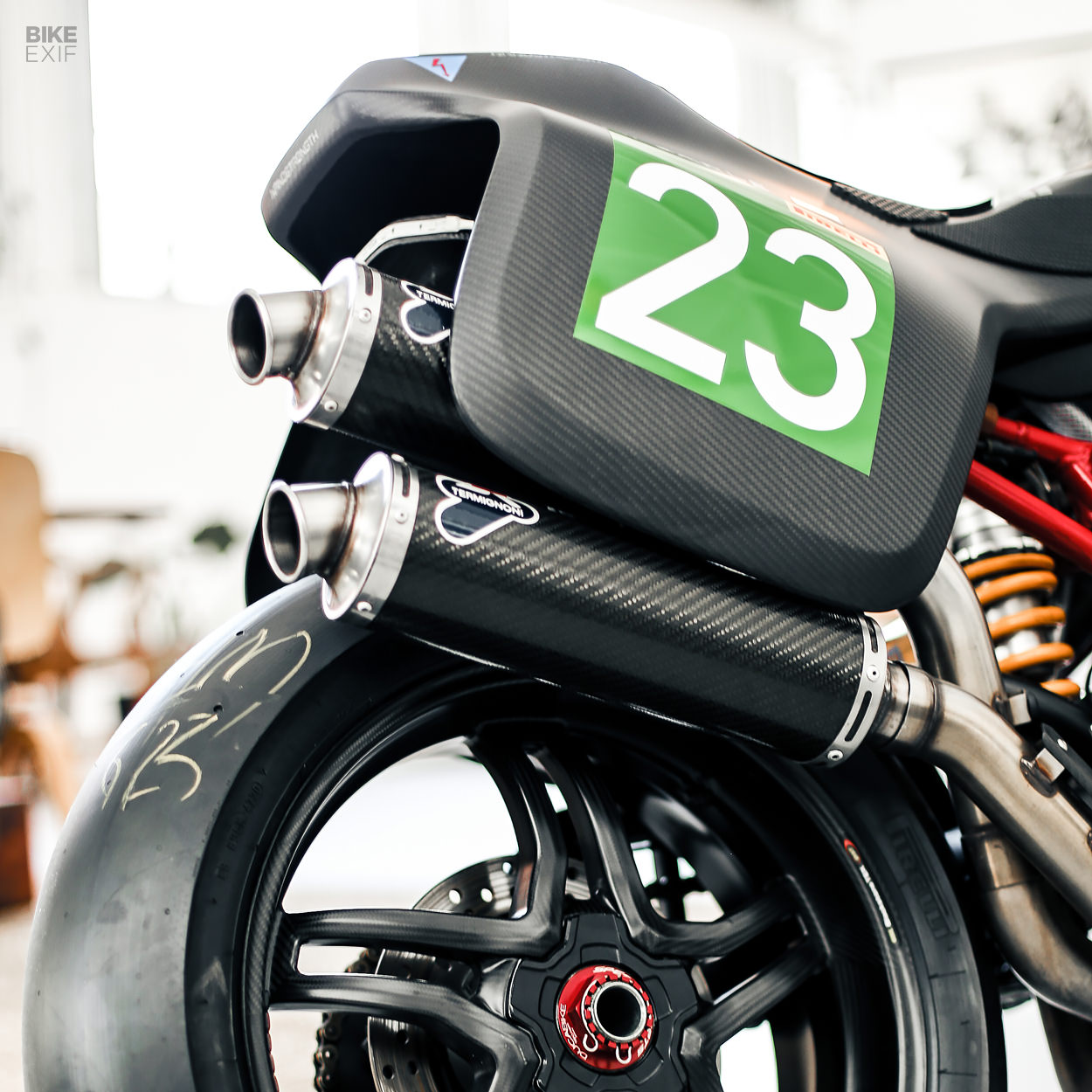
The Monster’s 130 hp lump is plenty powerful (especially considering the diet this bike’s been on), and with Öhlins and Brembo parts standard issue on the S4RS, Alex didn’t need to add much more. But he did anyway, in the form of twin carbon Termignoni pipes, and a pair of lust-worthy 17” carbon fiber hoops from BST.

Alex’s new Monster takes everything from his original design, and dials it up to eleven. And as you’d expect from a man with his sharp eye, it’s draped in a classy endurance racing-inspired livery. With raw, satin-finished carbon fiber on one side, and glossy Ducati red on the other, this S4RS looks potent from any angle.

Ducati Monster S4RS track racer by Earle Motors
It’s been a decade since Alex first penned these lines, but they still feel fresh here. And probably still will ten years from now.

Earle Motors | Instagram

Ducati Monster S4RS track racer by Earle Motors


from Bike EXIF https://ift.tt/3fTGsuA

Saturday, 22 January 2022

Electric Motorcycles: The state we’re in

2022 electric motorcycle industry analysis
We’re beyond debating whether or not the future of personal transportation is electric. Government bans on internal combustion engines are no longer decades-away concepts; they’re right around the corner. Harley-Davidson spun off its electric future into an entirely separate company, BMW recently released a slew of intriguing concepts, Husqvarna is teasing a number of battery-powered vehicles, and Triumph and Kawasaki both have concepts in the pipeline.

It’s a watershed moment for the electric motorcycle industry, and, by extension, the motorcycle industry at large. And it’s a moment worth taking a snapshot of—so we rounded up a handful of experts in this space, and hurled a few basic questions their way.
2022 electric motorcycle industry analysis
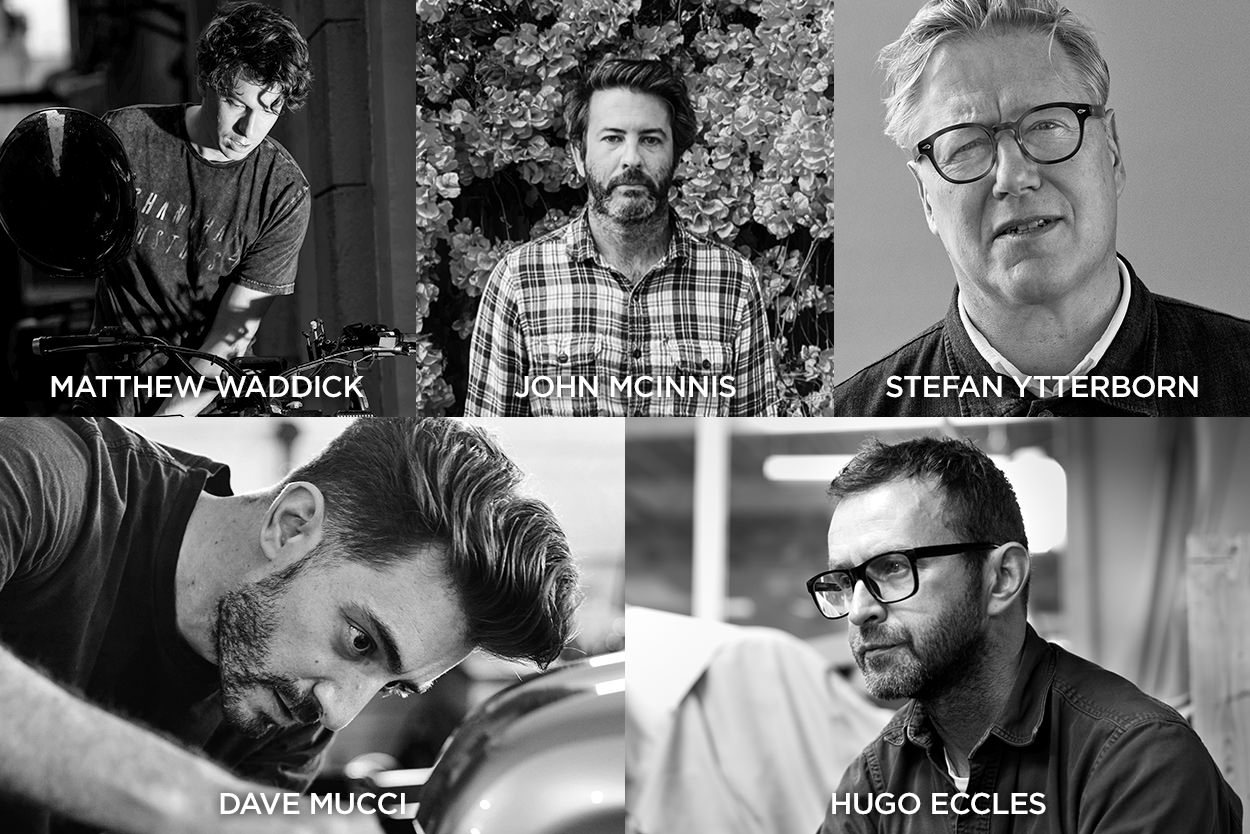
Our panel includes Dave Mucci, one of the most gifted industrial designers and custom motorcycle builders we know, and who is now senior designer at Zero. It also includes ex-Alta designer turned senior industrial designer at LiveWire, John McInnis, who has a sharp eye and an ever-fresh perspective.

There’s also Hugo Eccles, the U.S.-based half of Untitled Motorcycles, who is a design professor and an industry consultant with a number of tasty projects under his belt and in the works. Joining them are Matthew Waddick, who just launched his own electric motorcycle company, Switch, and Cake founder and CEO, Stefan Ytterborn.
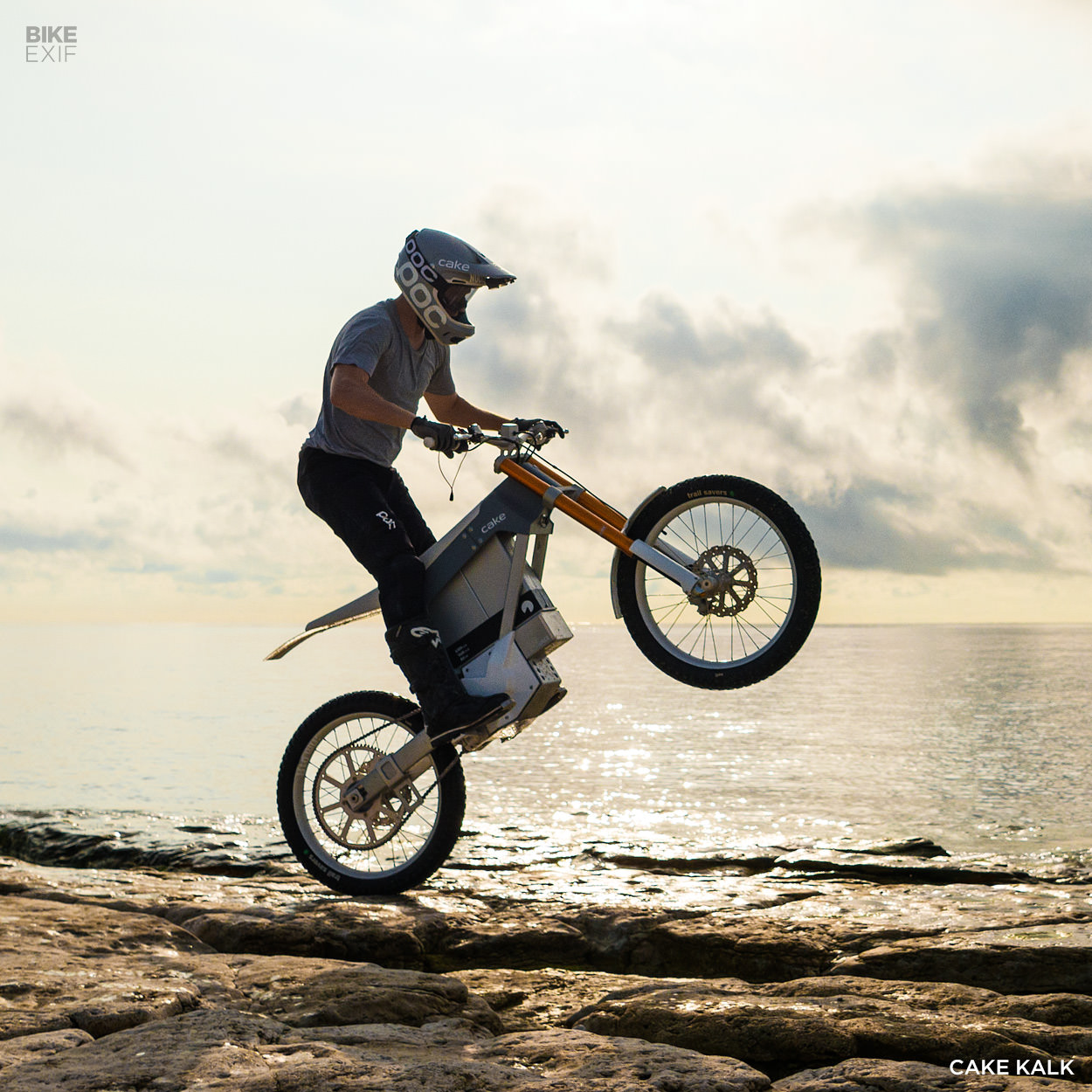
Cake Kalk electric motorcycle
Currently, what are the biggest hurdles to the growth of the electric motorcycle market?

Stefan Ytterborn: The main hurdles are related to a general lack of maturity. From a user perspective, changing the attitude from the current motorcycling market and its attributes, developed through decades, is a tough one. With the love for the smell of gasoline, noise, and relative complexity, accepting something that’s pretty much the opposite doesn’t come easy.

It’s also important to underline that they are two completely different animals; trying to replicate and copy the character of a gasoline bike is not the way. Optimizing a two-wheeled motorized electric vehicle in conjunction with its constitution—the result is a unique and different riding experience. Society and lawmaking is a different story, being far behind the rapid development; in some countries and states, you can’t even register an electric motorcycle.
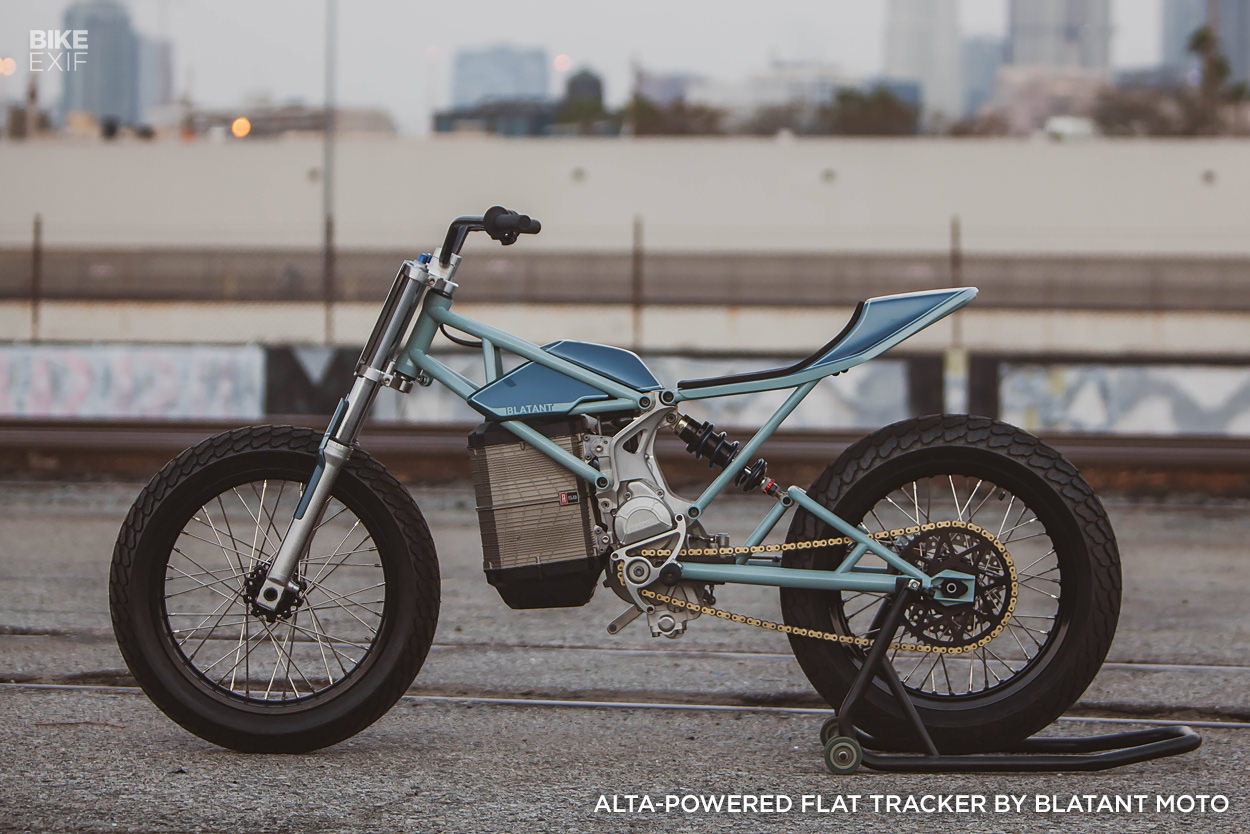
Custom electric flat tracker by Blatant Moto
John McInnis: The most obvious hurdle is the cultural aspect, which is largely due to age demographics and what you grew up with, and I think that will exist until the last generation to use gasoline is gone. This is merely anecdotal, but I personally know a far greater number of people that are older than I am that are resistant to EV adoption than younger folks. However, having witnessed it firsthand, it is pretty entertaining watching someone’s mindset shift in real time as they demo an electric motorcycle for the first time.

The other huge hurdle is range. It’s scary thinking about where you’re going to get your next charge-up from if you can’t refill down the street. I will say, having made the shift myself, it does take some getting used to. I have absolutely forgotten to plug my bike in and ended up in a bad spot in the morning.
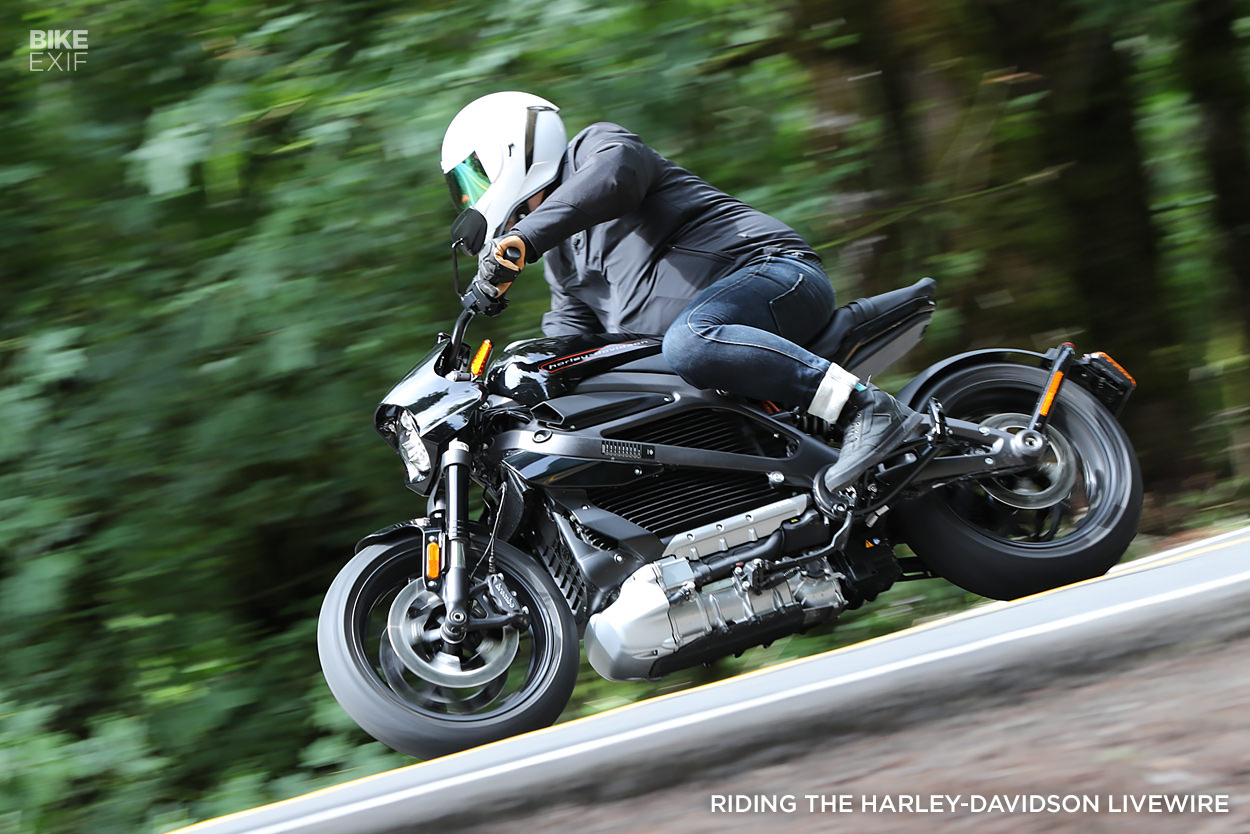
Riding the Harley-Davidson LiveWire
But level-three DC fast-charging is also making electric motorcycling far more accessible than it was even just five years ago. I’ve done 136 miles on a LiveWire, DC fast-charged back up to 80 percent in 35 minutes, and rode another 80 miles. No, it won’t make it to Sturgis, but for most of the riding I do, that’s pretty dang good. Imagine what we’ll be able to do in another five years.

Matthew Waddick: The costs of electric motorcycles are too high, and the electric motorcycle market—and the motorcycle market in general—is significantly smaller than widely perceived. There are many obstacles and barriers to entry, including the high costs of production, a lack of understanding about getting a bike to market, design development and product issues, plus supply chain, sourcing, and manufacturing issues. That all makes it hard to produce a bike for a reasonable price.
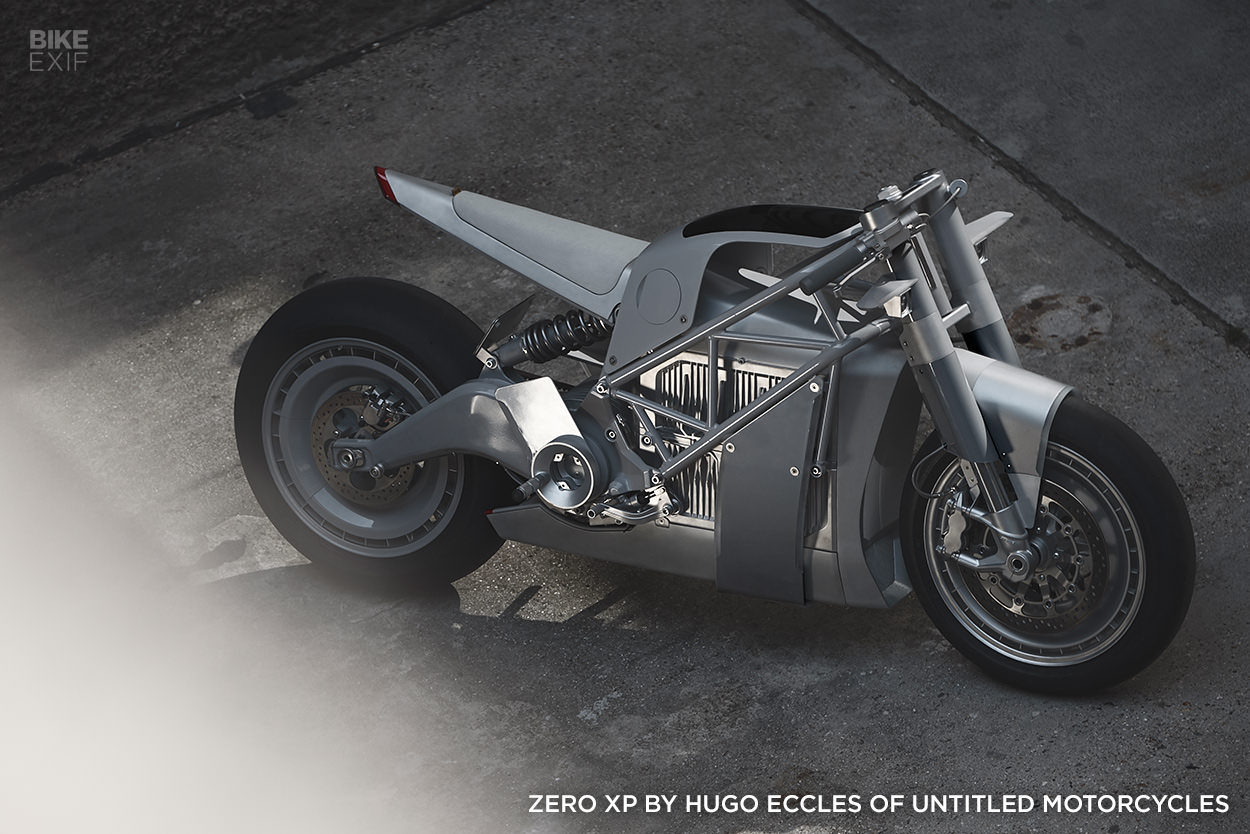
Zero XP electric custom by Untitled Motorcycles
Hugo Eccles: There’s a hesitancy among some current riders who think going electric means giving something up. Range anxiety is a great example. For the majority of riders, it’s a non-issue. For the rest, improvements in things like battery technology, charging technology, energy density, and infrastructure will make it a non-issue. As more people become familiar with the technology and the different experience that electric can offer, we’ll see whole new audiences get onboard, and I think the growth will be explosive.

But there’s some onus on motorcycle manufacturers here, too. They have to resist the tendency to do what’s always been done, and show their customers what, up until now, we could only imagine. The motorcycle industry is entering one of the most consequential disruptions of transportation in history. With the first new propulsion technology in 130 years, we have an opportunity to reinvent the category, engage new audiences, and reinvigorate the industry.
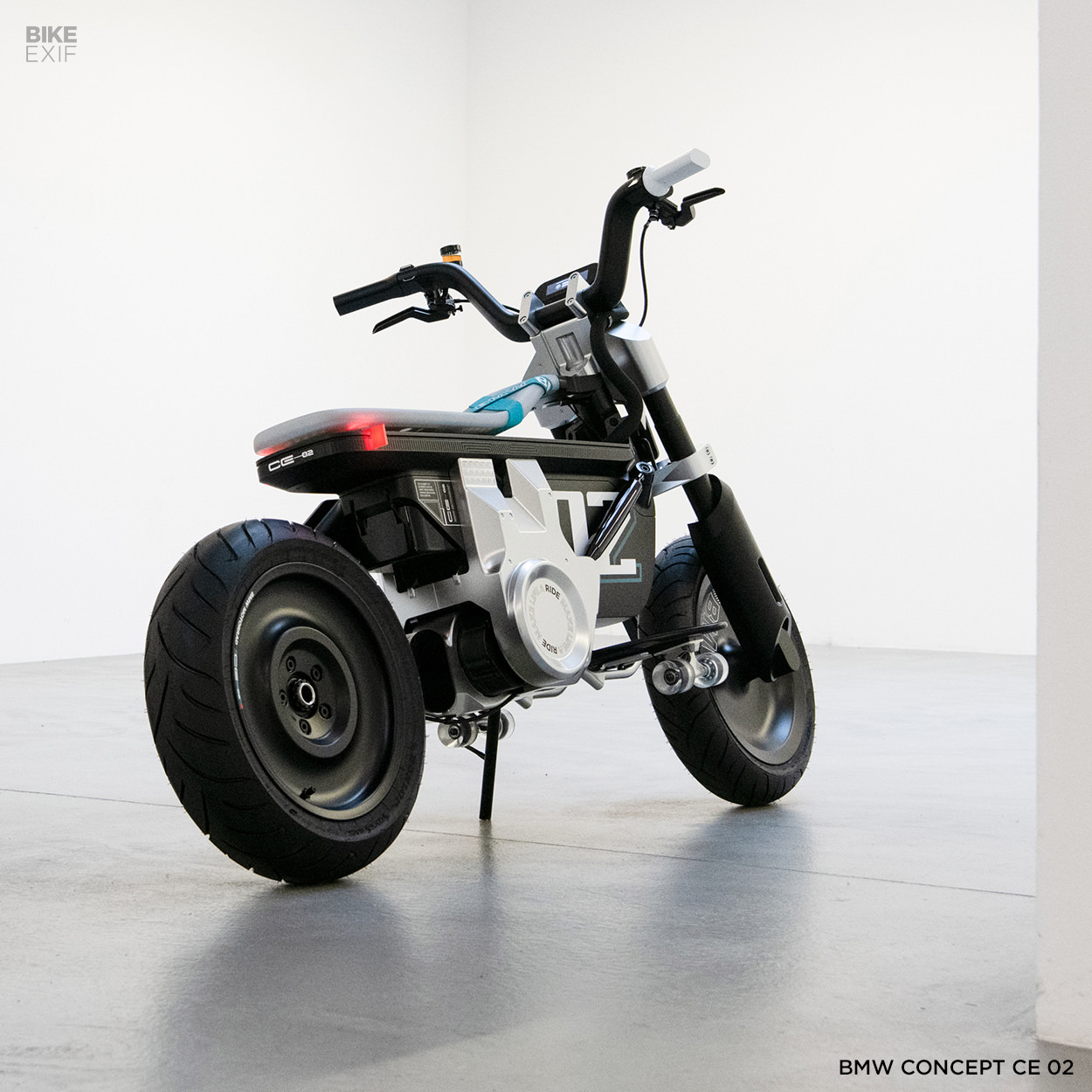
BMW Concept CE 02 electric motorcycle
Dave Mucci: The biggest hurdles are cost, range, and weight. Right now it costs OEMs in the ballpark of two to three times for an electric powertrain over an internal combustion motor. That drives the price of the vehicle up, and it’s why so many companies have struggled to turn a profit in this segment.

Do you match prices for the category and sacrifice margin, or do you build a super expensive bike and only sell a handful to the high rollers? That powertrain cost comes down to volume; the bigger the order you place with the factory, the cheaper each unit is. As more people start adopting a torque-centric lifestyle, the more affordable it will become.
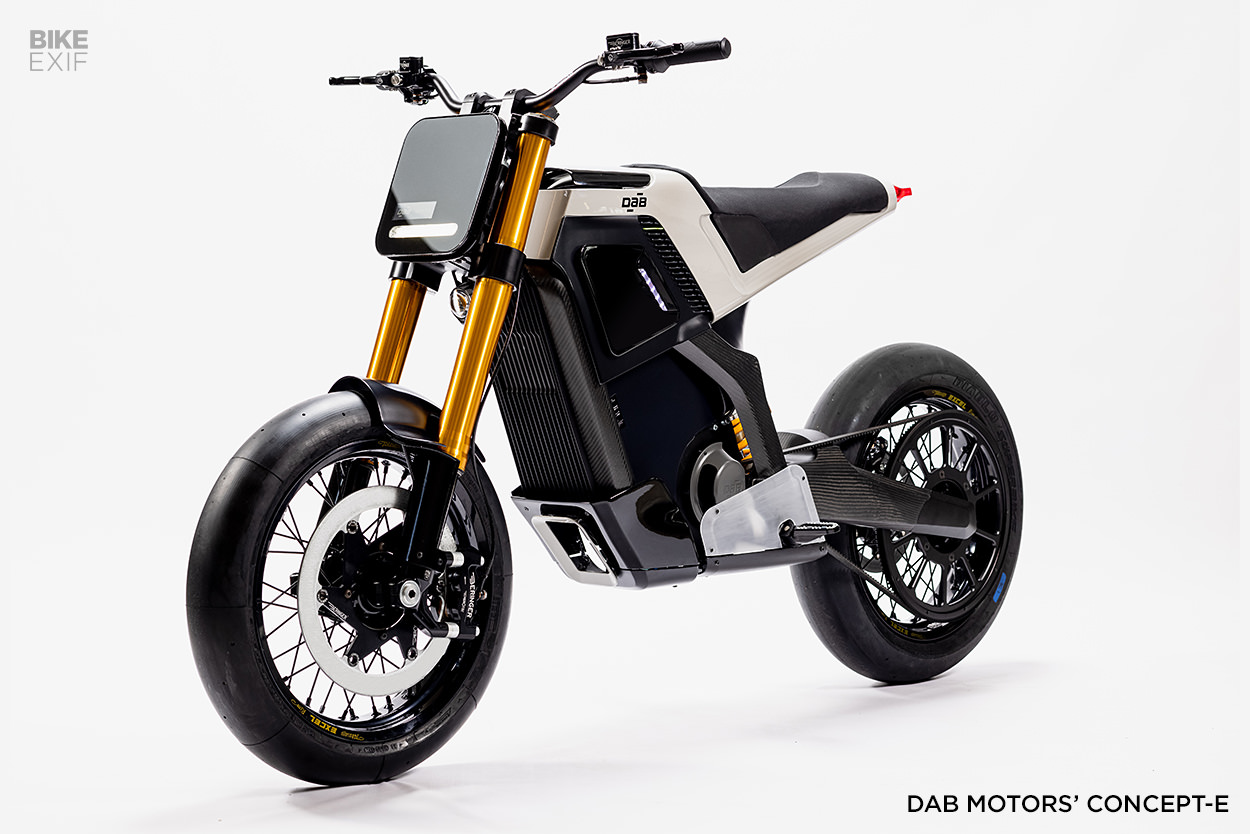
DAB Motors' Concept-E electric motorcycle
The other hurdle is weight versus range; the bigger the battery, the farther you can go, but at the cost of weight. With current lithium-cell technology, the “range per pounds” just doesn’t match up with gas bikes, but that could change with solid-state battery technology. It’s still in its infancy, but cells have been developed that are half the size of current lithium cells and store 10 times the capacity.

Let’s say you have a 500-pound bike with a 200-mile range carrying a 14kW battery, and you make the switch to this new solid-state cell. That 14kW battery now weighs about 150 pounds less and is half the size, which in turn gives heaps more range. That kind of advancement could lead to motorcycles that are lighter and more powerful than we’ve ever seen.
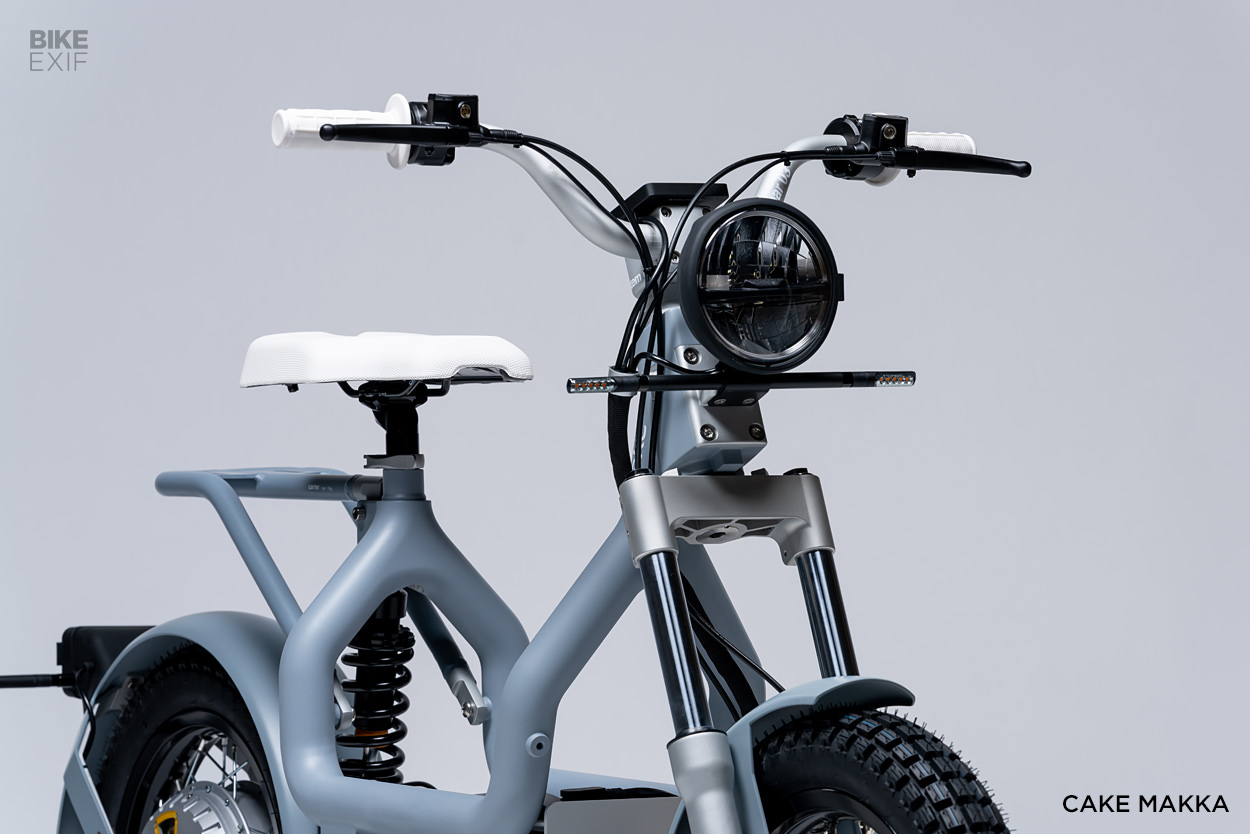
Cake Makka electric motorcycle
Will electric bikes ever become mainstream?

SY: Yes, it will become one of the most frequently used vehicles for short-haul urban transportation.

DM: Yes, absolutely. Will they entirely replace gas bikes? I hope not, but I imagine that will be in the hands of future generations who grow up creating memories with electric vehicles at a young age. I’ve almost exclusively owned vintage carbureted bikes over the past 12 years of riding. My mindset was that noise and character are motorcycling, so how could an electric bike ever hope to compare? Then I got an hour on an electric bike and realized that the flaw in my mindset was thinking they were comparable—it is a completely different experience.

I had this inner identity attached to who I was when I was out on one of my gas bikes. In the gas bike world there’s a lot of emphasis put on being heard or seen, whether for safety, personal expression, or just straight up vanity. On the electric I found myself in a familiar position on a familiar shape, but now I was silent. My internal identity shifted from vintage motorcyclist to stealth operative on a mission to thrash as hard as possible without being detected. Or obnoxious.
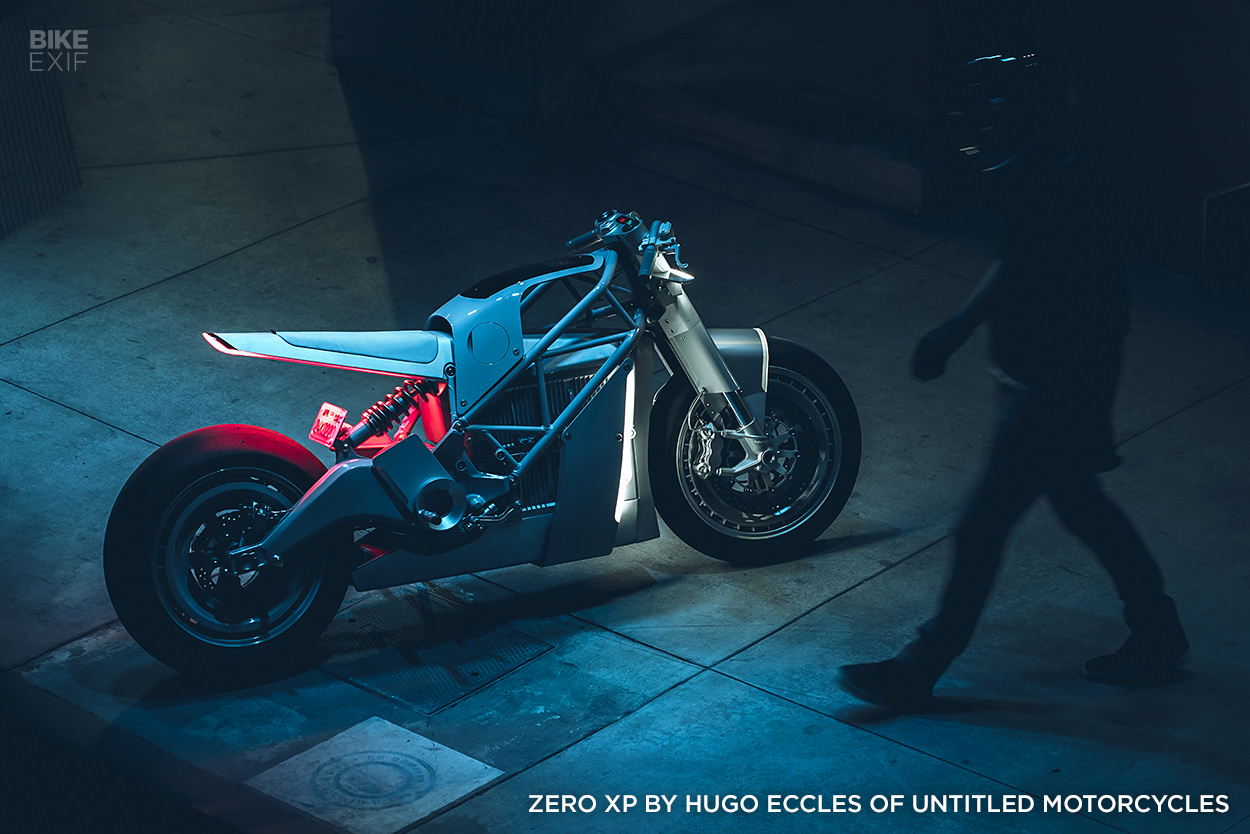
Zero XP electric custom by Untitled Motorcycles
HE: Unequivocally, yes. The climate crisis is real and humans are responsible, and we must make changes to avoid more catastrophic damage to the environment, which will adversely affect everyone’s quality of life. If we want motorcycling to continue to exist, we must abandon combustion engines. In 2030 we’ll see the end of gasoline vehicle sales in Europe, and California will stop selling gas-powered vehicles in 2025.

Is electric propulsion the future? While it’s difficult to categorically state that electric, specifically, is the future, we can categorically say that gasoline isn’t. Electric may end up being a bridge technology, but it will play a critical role. There’s a reason all motorcycle manufacturers are currently developing electric platforms—some overtly and some covertly. Nobody wants to be left behind.
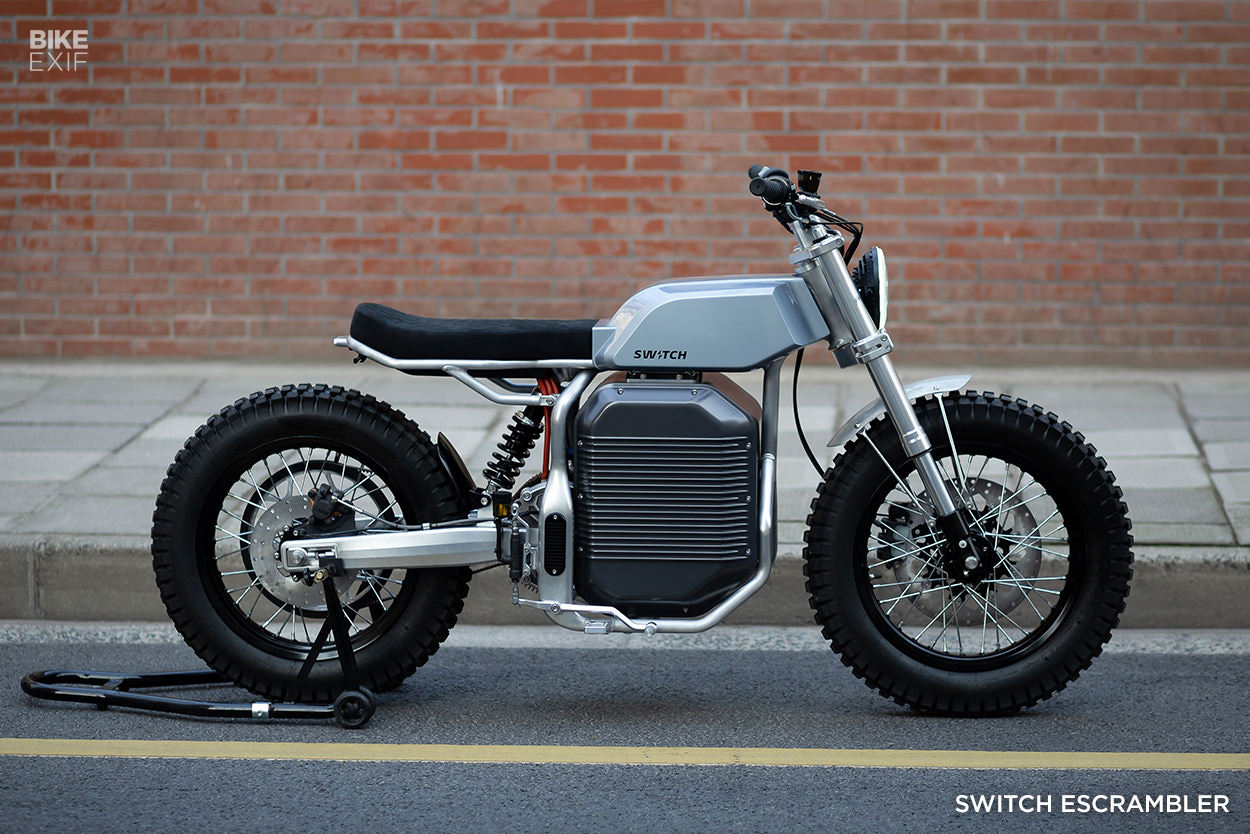
Switch eScrambler electric motorcycle
MW: I think they will, but it will be driven by governments and regulations; I have a long list of bans and incentives on file. Electric bikes will be there, but until forced, they will always be city or secondary bikes.

JM: I think depending on where you live, they either are, or they’re just about to be. And when I think “mainstream,” I’m not considering that they’ll replace ICE bikes, but that we’ll just see them with similar frequency. I live in the San Francisco Bay Area, so I might have some rose-colored glasses on, but I see Zero, Energica, and LiveWire motorcycles commuting on the freeway almost daily. In the sense of replacing internal combustion bikes as the more favorable option for the majority of riders for daily use, I think that will happen in our lifetime, if not the next 10 to 15 years.
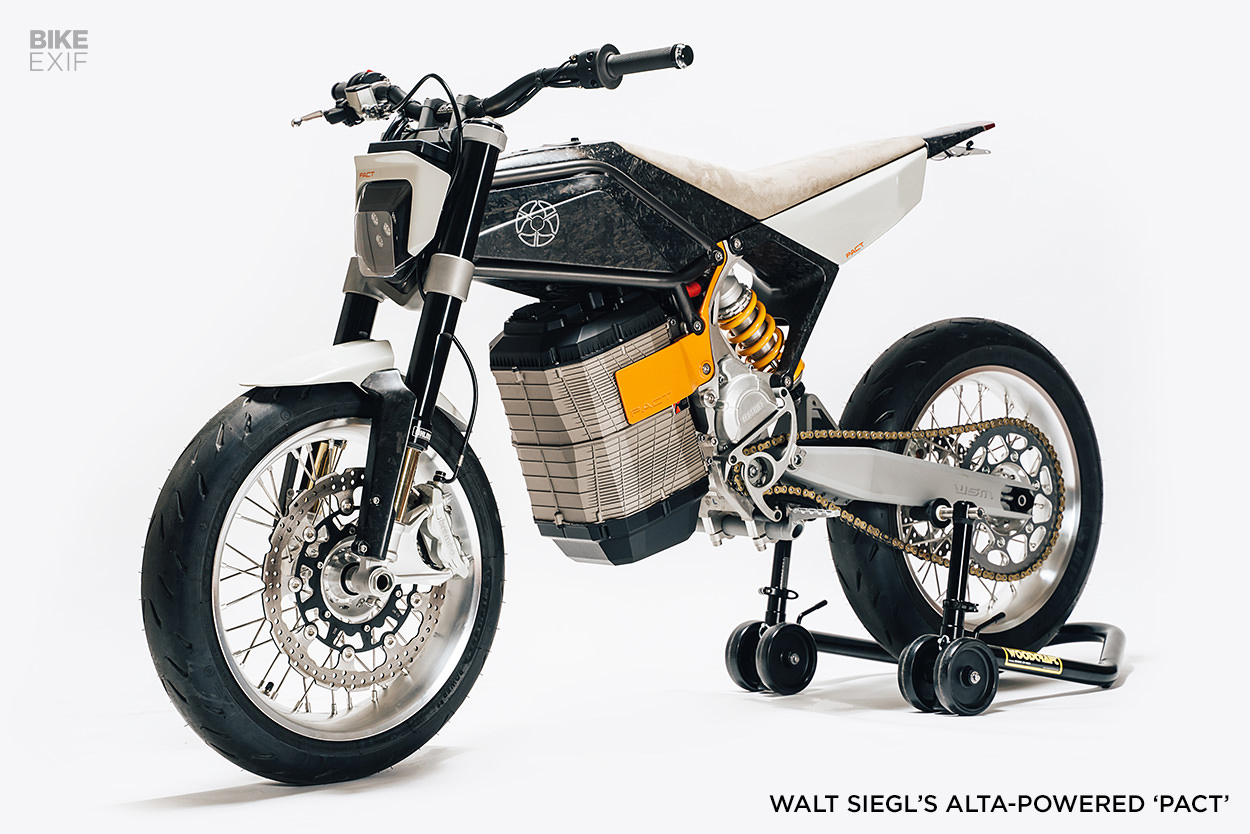
Custom Alta Redshift by Walt Siegl
What impact do you think the rise of electric vehicles will have on the custom scene?

MW: It already is having a big impact, creating a whole new platform. EVs are actually more fun to build from a custom perspective—so clean—and they force builders to move away from the cut-and-weld-style builds to a more advanced approach to custom design and development.

SY: To some extent the easiness of customizing an electric motorbike versus a combustion one will probably accelerate the interest. Dynamics and customization from a functionality perspective was always deliberate in the design of our bikes—and also promoting the idea of individual add-ons.
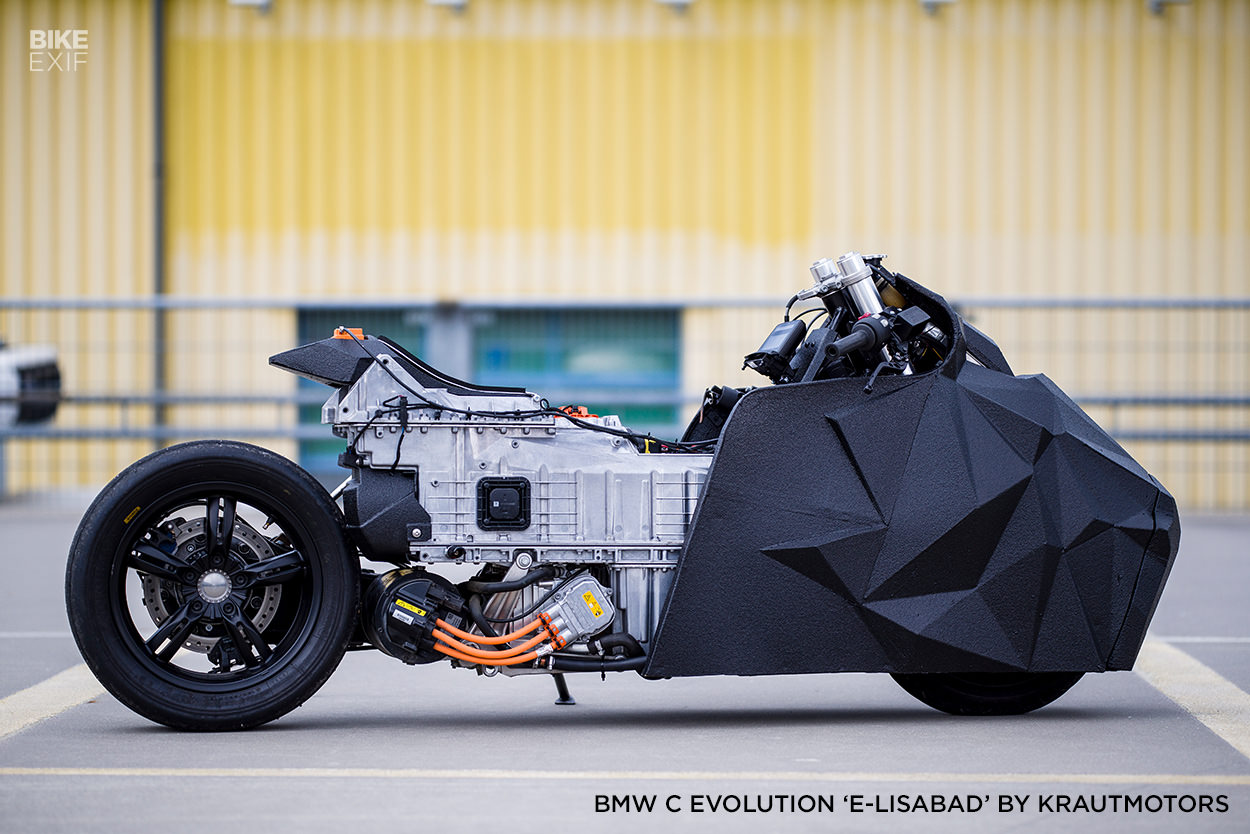
Custom BMW C Evolution by Krautmotors
HE: I think we’ll see interest in custom work grow as new riders are brought into motorcycling through electric, especially with younger generations who are used to on-demand products and deeply personalized experiences. While it’s my hope that manufacturers will make the most of the opportunities this new technology brings, I suspect that some will swap batteries for combustion engines and call it a day. And when they do, custom designers will be ready to meet the need for an electric motorcycle that lives up to the modern consumer’s expectations.

I also see an unprecedented opportunity for manufacturers and custom designers to work together to evolve the industry. Established motorcycle manufacturers are being challenged by disruptive start-ups. These incumbent brands, hampered by legacy or an entrenched design language, are struggling to escape their own orthodoxy and respond to the challenge of electric. Custom designers think and work outside of these constraints, which puts them in the perfect position to challenge the status quo and push the vision further.
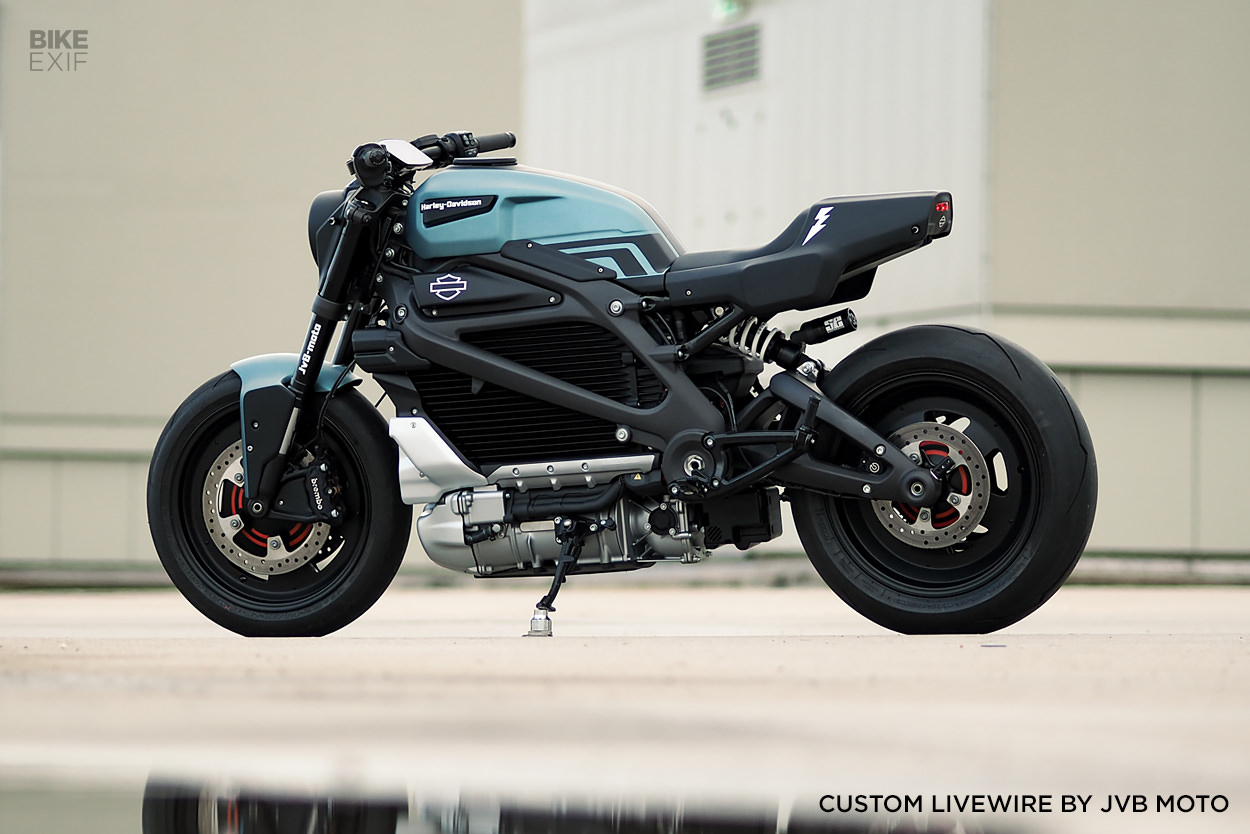
Custom Harley-Davidson LiveWire by JvB Moto
JM: I think given what we’ve seen so far in the scene, the electric motorcycle will not hinder the creative spirit of current and future custom motorcycle builders. Part of my mission while at Alta Motors was to get out in front of this with the customs that we did—both before and after closing the company doors. I wanted to showcase the versatility of the platform, as well as break the ice by ripping one of these robots apart and making something different with it. There’s actually a bit more freedom for expression when customizing an electric motorcycle. It’s a big electric drill on wheels—go have fun with it.

DM: Hackers will be the new hot-rodders. The administration of power is done digitally, so those who know code will have immense tuning flexibility compared to gas engines. I’m really looking forward to seeing the state of the custom scene down the road, when today’s technology can be picked up at the salvage yard for a few dollars, and everyone has their own mini-manufacturing plant at home in the form of rapid prototyping machines. Mad Max and Tron are about to collide, and I’m into it.

Featured above: Electric flat tracker by Blatant Moto, Zero XP by Untitled Motorcycles, Concept-E by DAB Motors, eScrambler by Switch, PACT by Walt Siegl, E-Lisabad by Krautmotors, and JvB Moto’s custom LiveWire.

With special thanks to our panel of guests | Article originally featured in Iron & Air Magazine. Subscribe here.
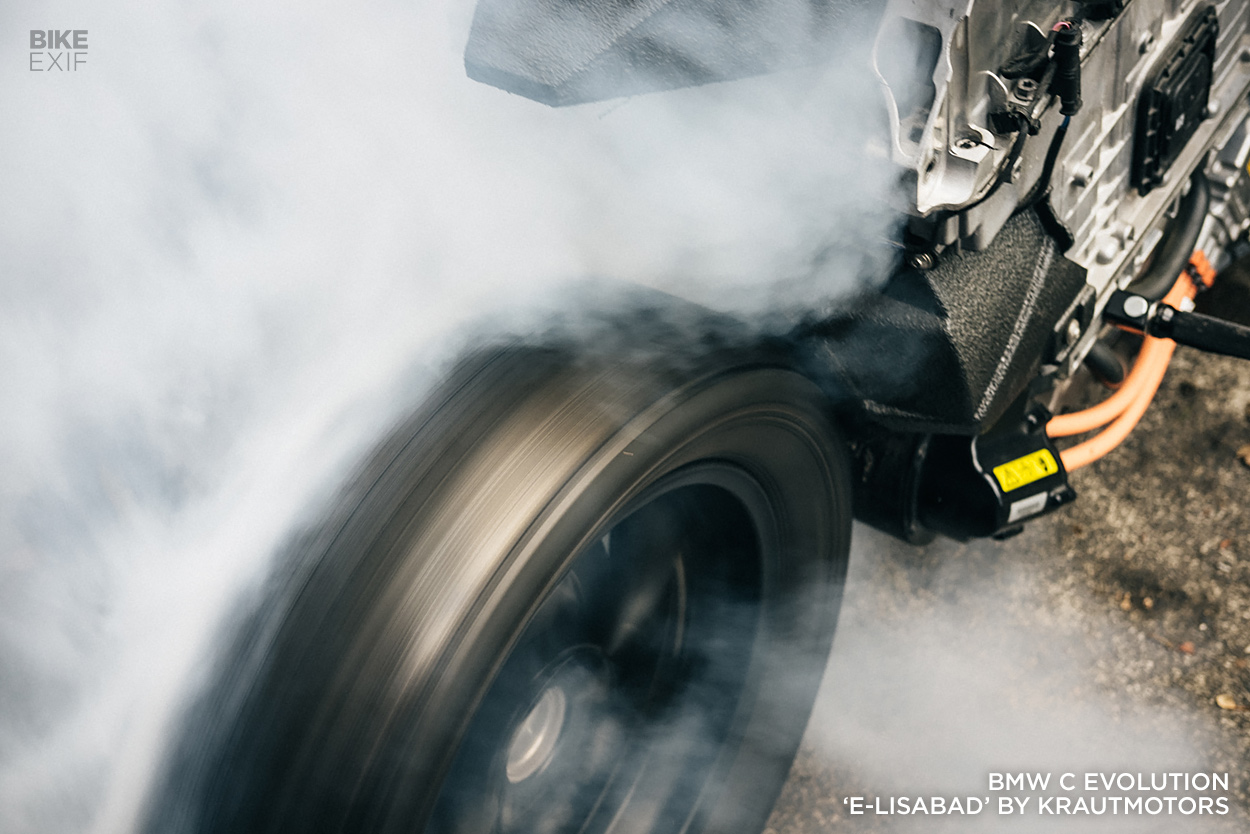
Custom BMW C Evolution by Krautmotors


from Bike EXIF https://ift.tt/3Ky1blK
Wednesday, 19 January 2022

Super Fly: A custom Suzuki TS185 with 90s steeze

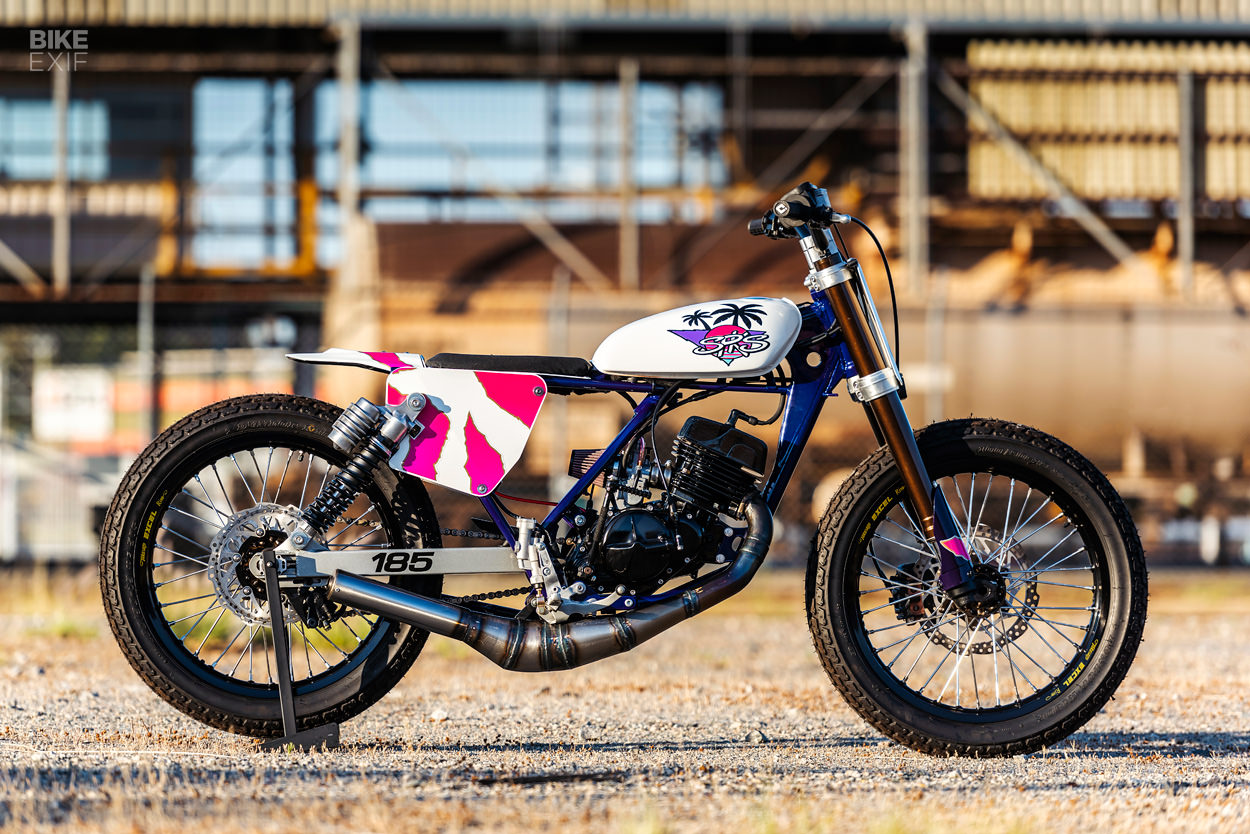
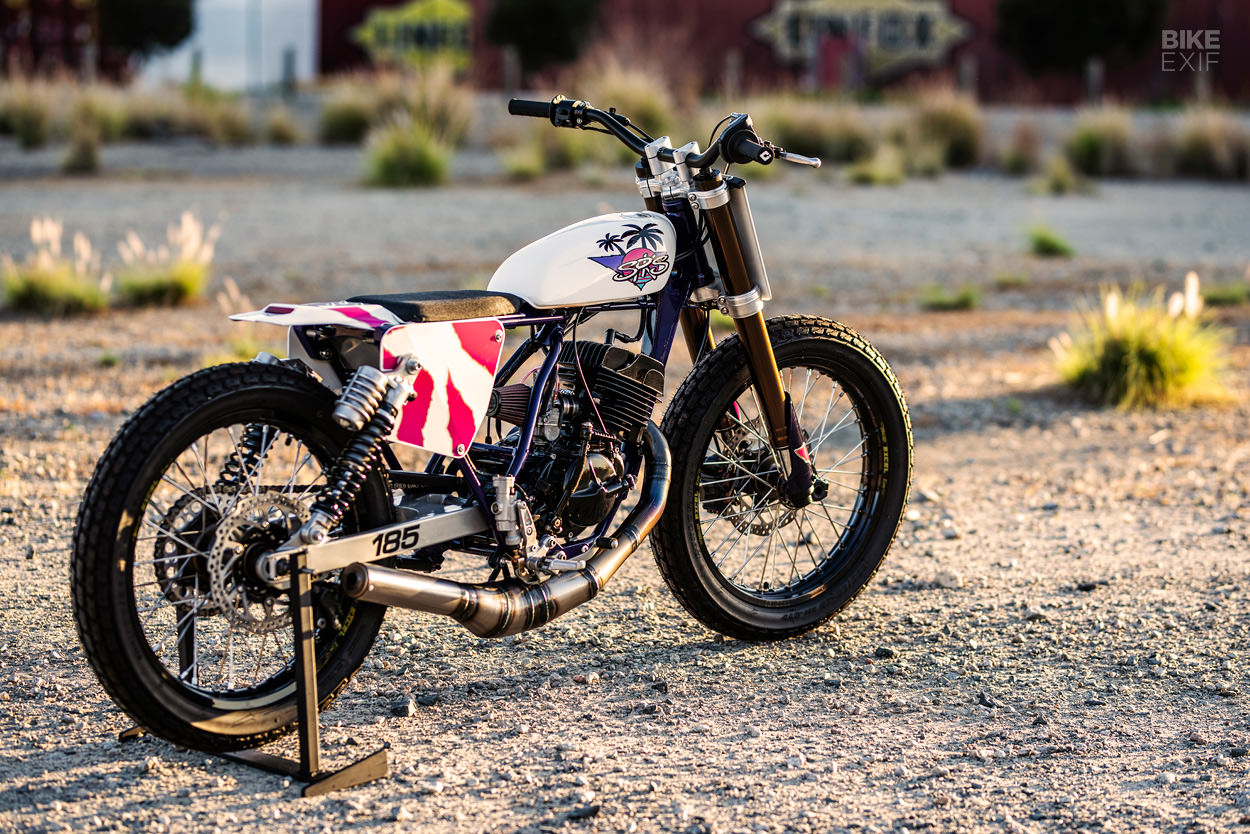
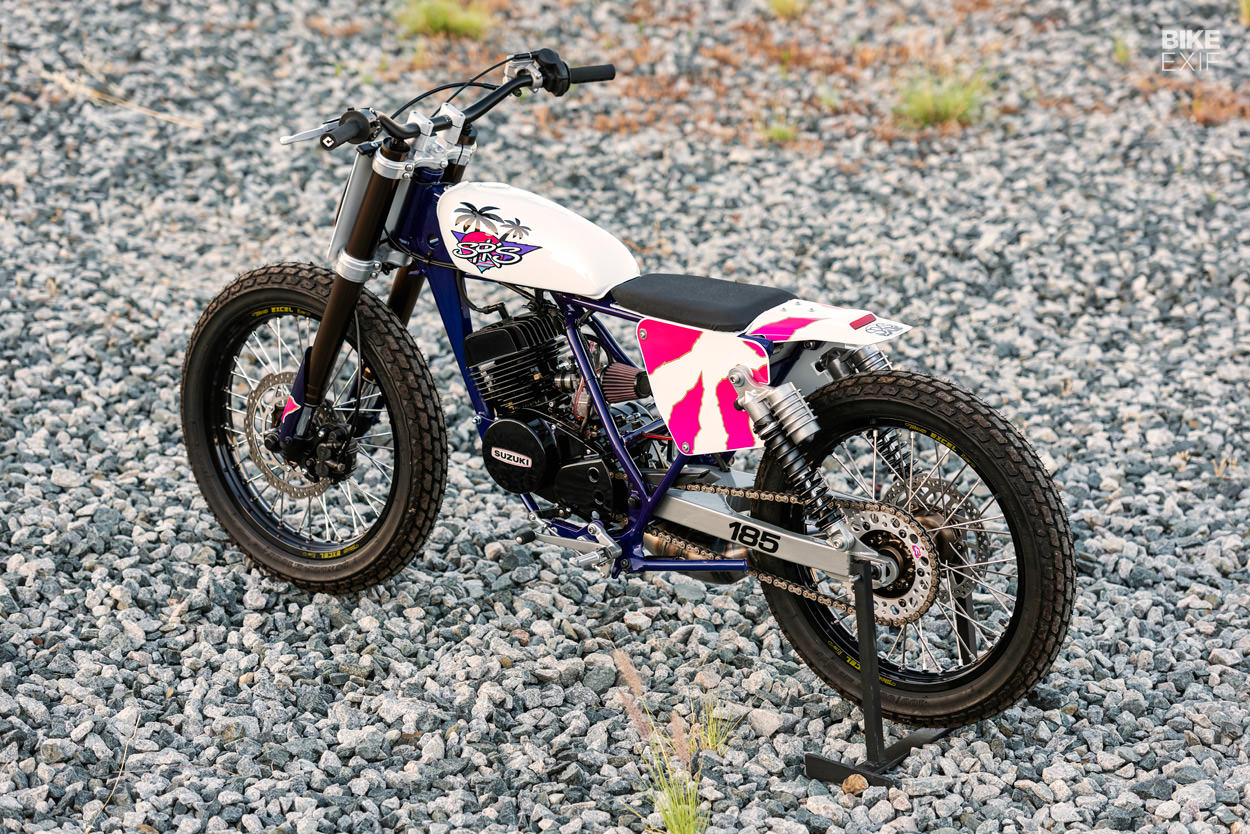
Suzuki TS185 street tracker by SPKS Lab
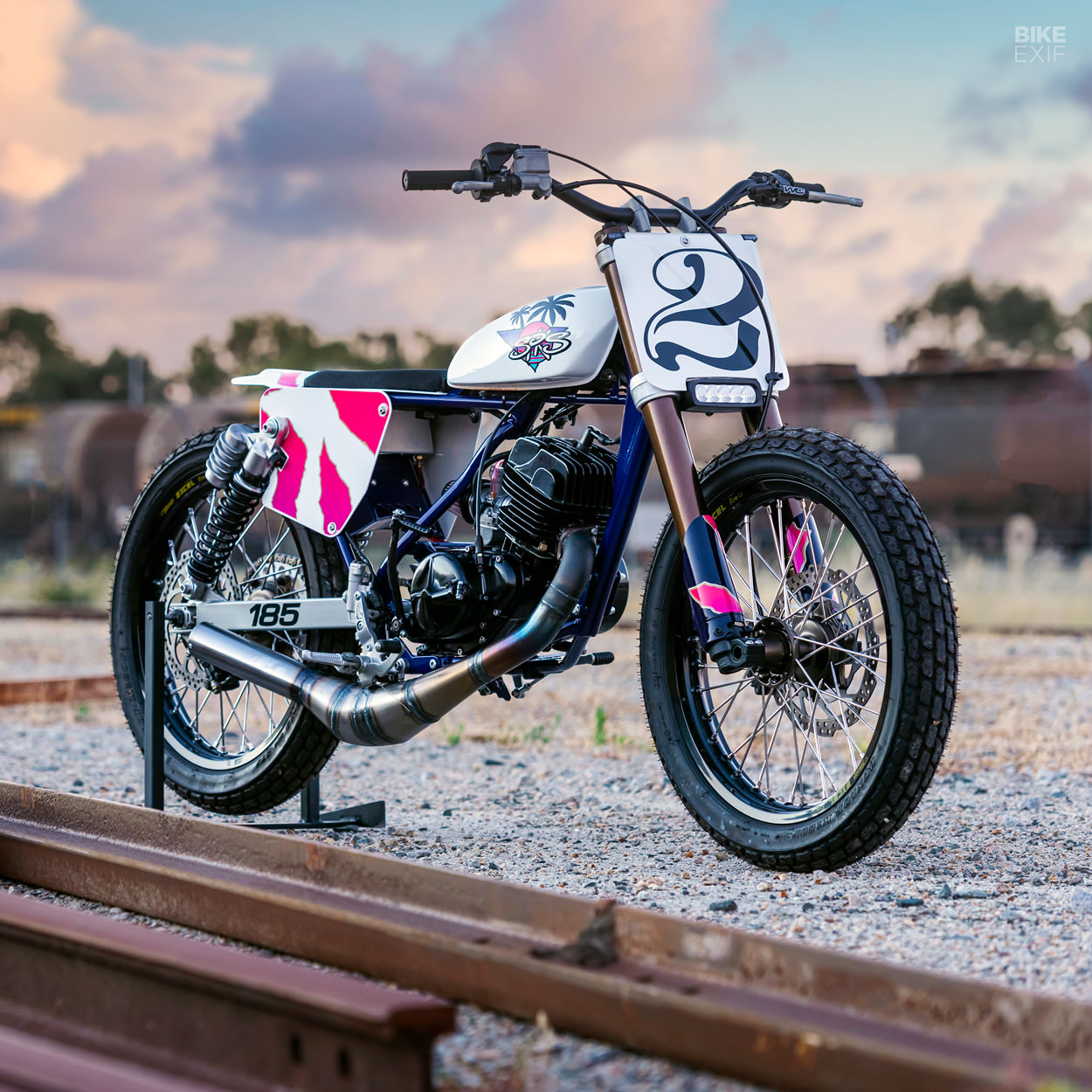
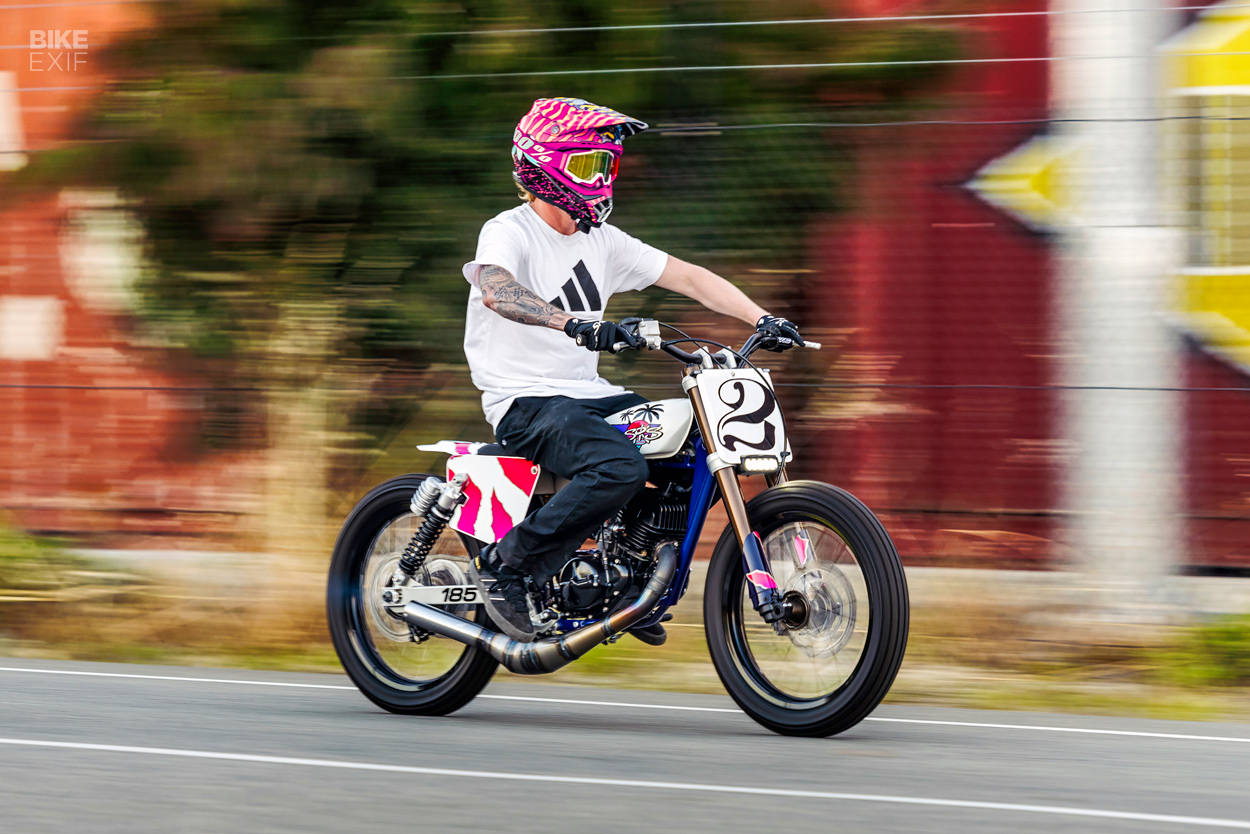
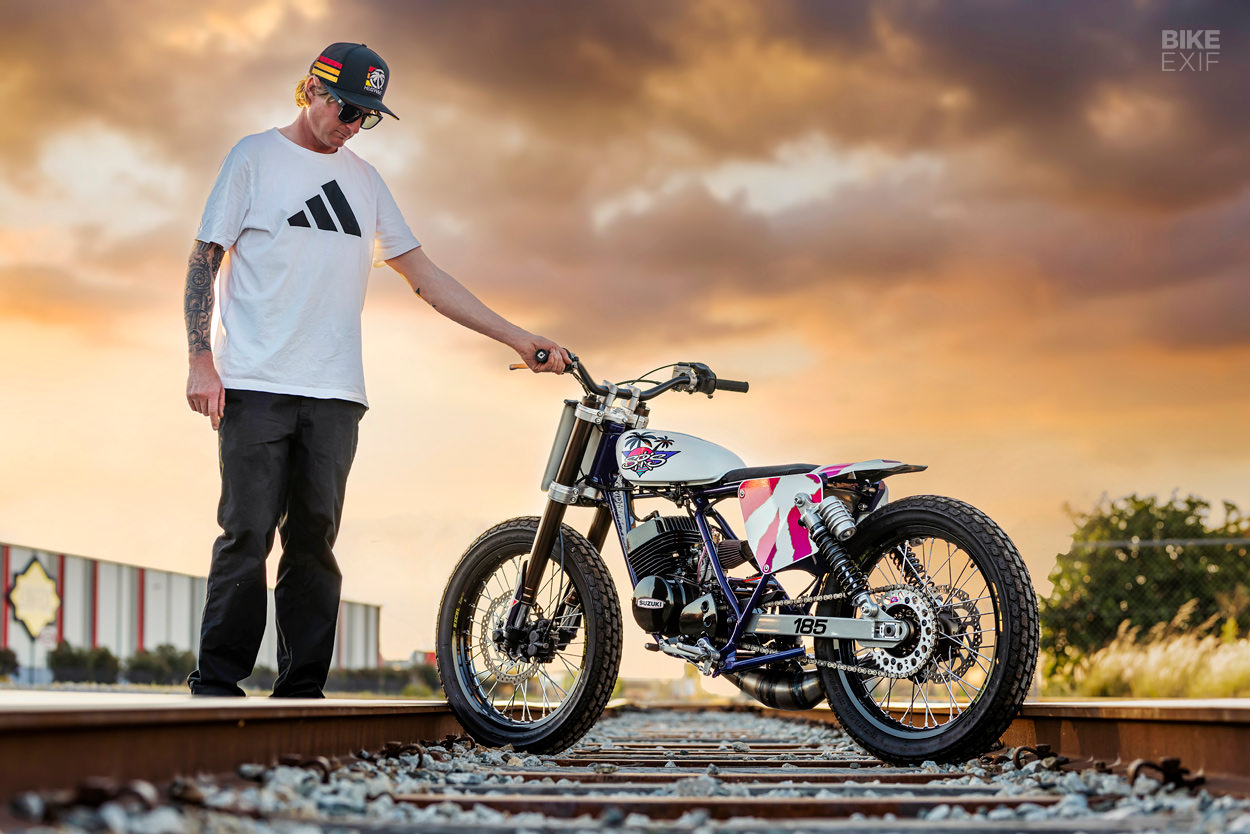
The 90s was a weird and wonderful time for graphic design. And nowhere was this more pronounced than in the motocross scene, where bikes and gear were slathered in retina-searing colors and chaotic patterns. Australian custom builder Cheyne Speak has captured a little bit of that vibe with this Suzuki TS185 street tracker, and we’re all for it.

Cheyne’s based in Perth, where he works as a motorcycle postie (that’s a postal delivery officer, if you’re not familiar with Aussie slang). He’s been into motocross, BMX and hot rods all his life, but this is a first time he’s built a custom street bike. And it’s a stellar effort.

Suzuki TS185 street tracker by SPKS Lab
Starting with a basket case 1976 Suzuki TS185, Cheyne kicked off the project with no particular direction in mind. “I stripped it down to a bare frame, put it on the bench and let the bike develop organically from there,” he says. “I basically just designed and fabricated as I went along, just doing I though looked right.”

Cheyne did everything except for powder coating himself, working out of his home garage without any particular sense of urgency—so the project took 18 months to complete. It only cost him about $2,500 though, because none of the parts on it were particularly expensive. “It was a combination of parts I had in my workshop leftover from my MX bike builds, marketplace finds, and parts friends had laying around,” he explains.

Suzuki TS185 street tracker by SPKS Lab
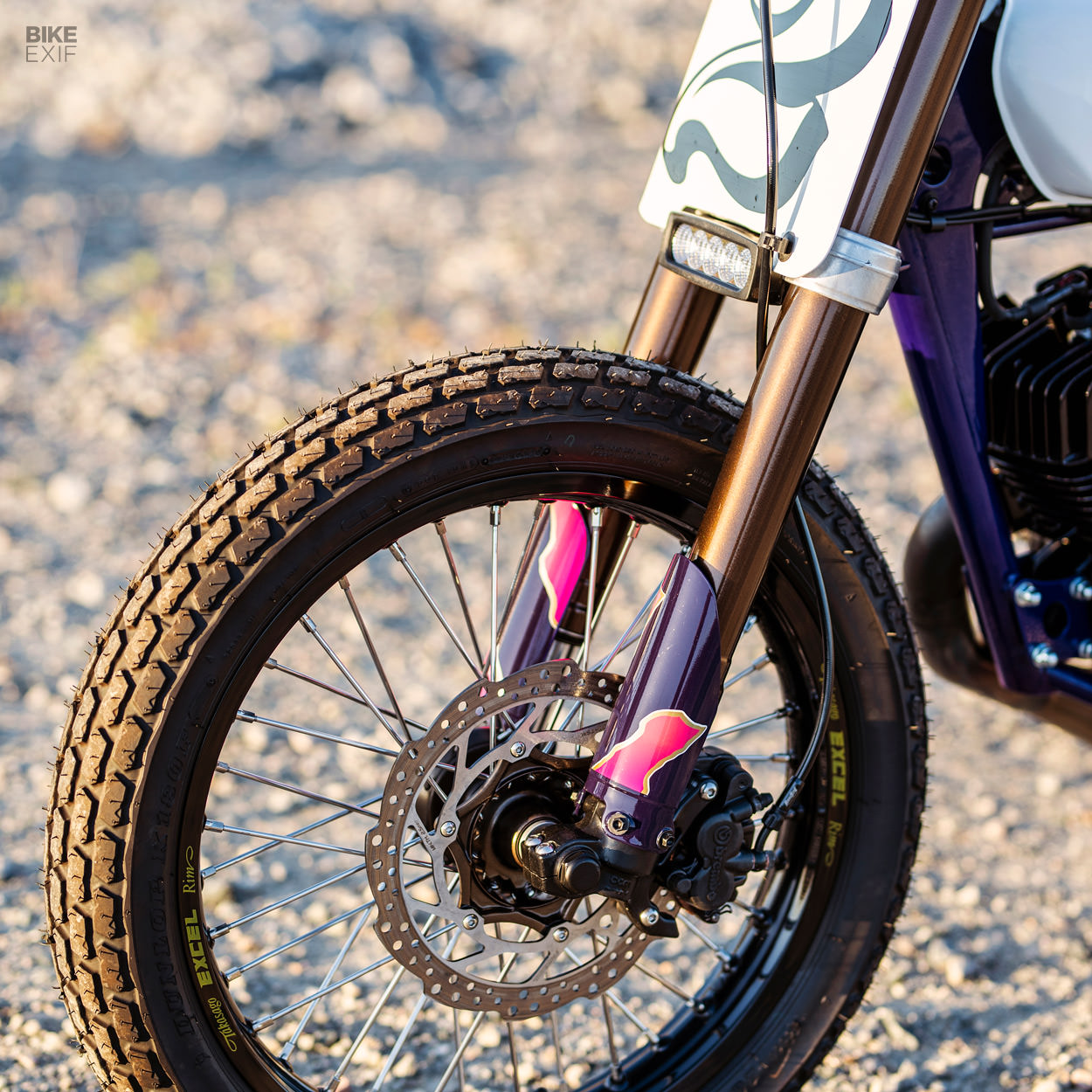
Up front are the forks, yokes, hub and brake from a KTM 450 SX-F, traded from a friend for a case of beer. Cheyne welded the KTM’s head tube to the TS frame, and slammed the forks with internal spacers and new springs. The conversion’s steepened the Suzuki’s head tube angle by about 6 degrees.

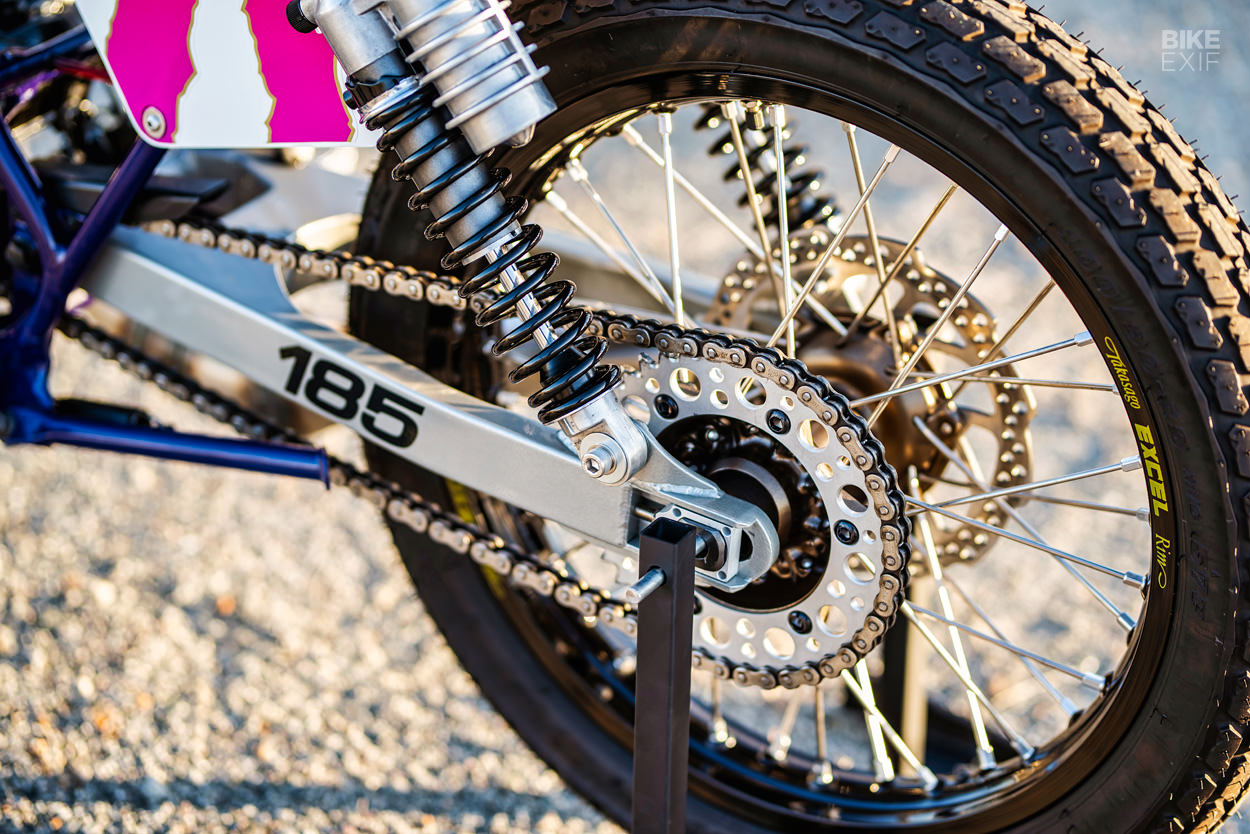
Out back is a custom swingarm, measuring almost 2” longer than stock. Cheyne fabricated it himself, using the pivot tube and bearings from Yamaha YZF-R15, and the axle blocks from a YZ250. It’s connected to a pair of Kawasaki Zephyr 750 rear shocks; a cheap secondhand find.

Suzuki TS185 street tracker by SPKS Lab
The rims are 19” Excel items, wrapped in Dunlop K180 flat track tires. Cheyne used the YZ250 brake caliper out back, mounting it upside-down and routing its hose through the swingarm. Other changes include custom wheel spacers, Zeta wave discs and Renthal sprockets.

It’s a drastic change to the overall geometry, but Cheyne says it’s paid off. “Even with the extended swing arm, the wheelbase is close to stock due to the steepened head tube angle. As a result the steering is more responsive and the weight of the bike is now more centralized, and with the low ride height it feels like riding a BMX with an engine.”

Suzuki TS185 street tracker by SPKS Lab
Under the hood, Cheyne treated the two stroke Suzuki mill to what he describes as “a bare minimum rebuild with a half-assed port job.” It runs with a no-name-brand flatslide carb and a DNA Filters filter, and the bike’s been rewired with a 12V conversion and a Yamaha TTR110 battery.

The exhaust was pieced together from scratch, using Pro Circuit internals for the silencer. “I didn’t use any software when designing and building the pipe,” Cheyne tells us, “I just welded a bunch of cones together into a shape that I thought looked like it would work. It made a big increase in power in the mid-high rpm range and it sounds like a 125 cc motocross bike.”

Suzuki TS185 street tracker by SPKS Lab
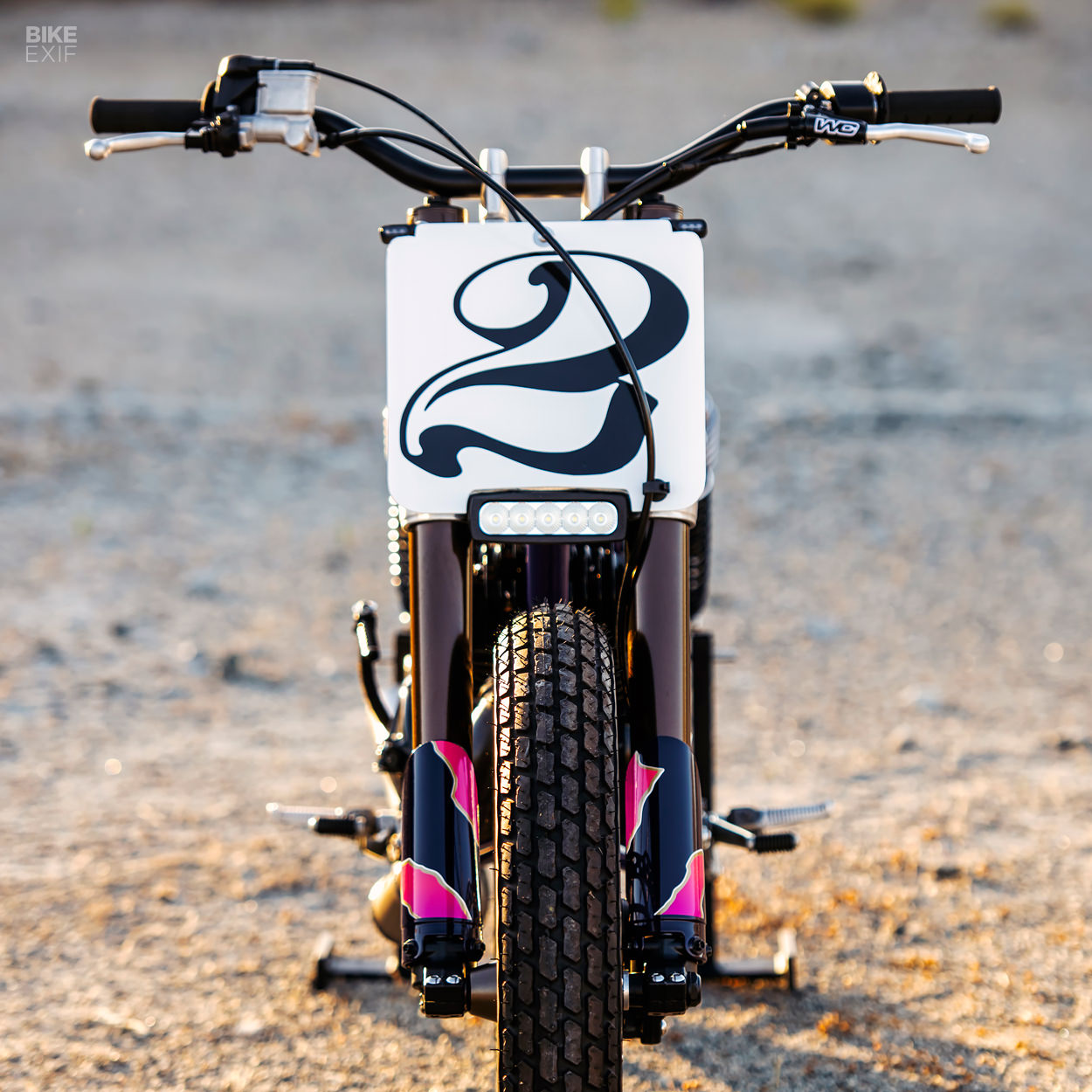
There are more changes up top, where he installed a smaller 1975 Suzuki TM75 fuel tank, retrofitted with a pop-up gas cap. Out back is a custom subframe, carrying a barely-there seat covered in high density foam and a recycled KTM 250 SX-F seat cover. The seat pan and number plates were shaped from aluminum, along with the custom oil tank hiding behind them.

The rear fender and LED taillight are from a Honda CRF, chopped and shaped to fit the Suzuki. An LED light bar handles headlight duties, with tiny LED turn signals fitted at both ends.

Suzuki TS185 street tracker by SPKS Lab
Controls include new Renthal bars, a modified Yamaha YZ250 throttle assembly, ODI lock-on grips and a Works Connection clutch perch. The foot pegs and controls are Yamaha YZF-R15 units, hooked up with a custom-made adjustable shifter linkage.

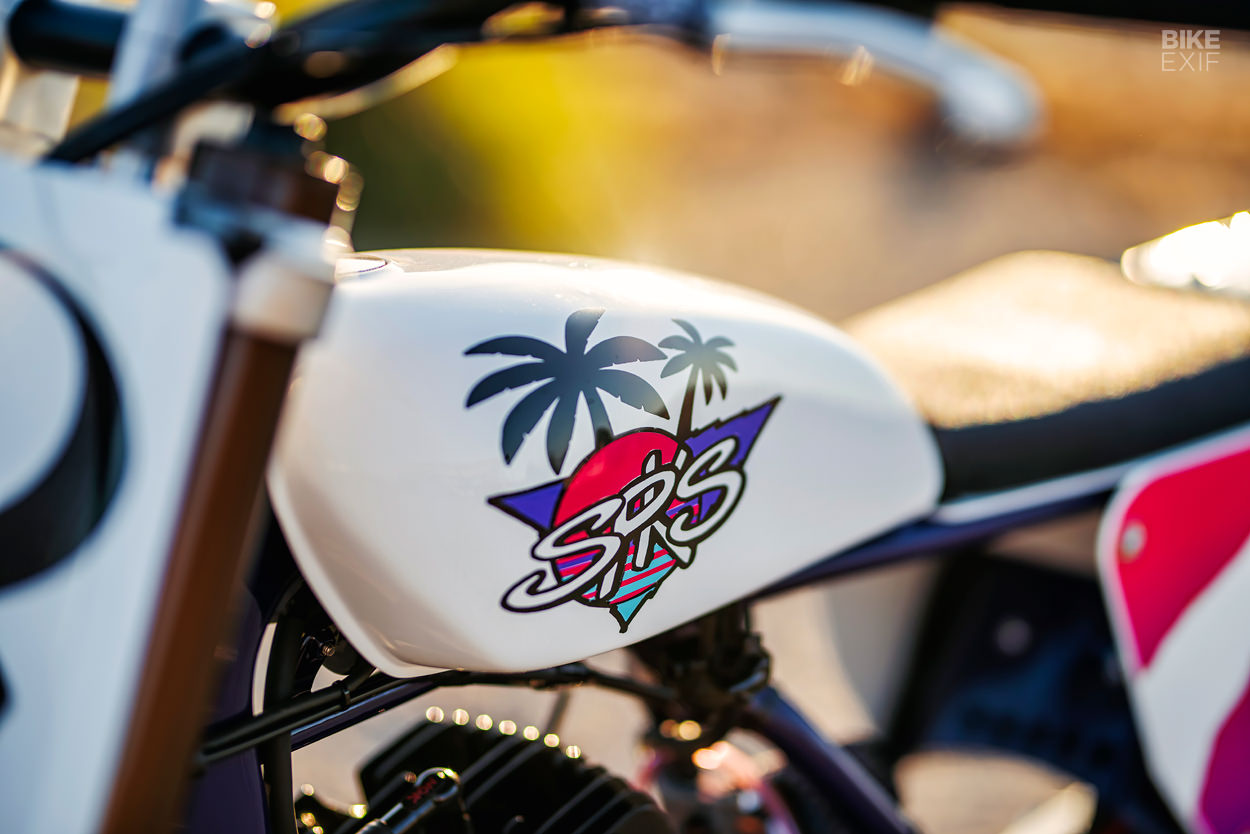
As for the throwback 90s livery, that was something that happened by accident. “When I dropped the frame off at powder coat I asked for it to be royal blue,” Cheyne explains. “When I went to pick it up I saw it had been done in purple instead.”

Suzuki TS185 street tracker by SPKS Lab
“Rather than get them to re-coat it, I decided to base the rest of the paint and graphics theme around the purple frame.”

The number boards and rear fender wear 1992 Suzuki RM125 vinyls, cut and shaped to match. Cheyne did the tank graphics himself, pulling colors from the frame and RM stickers. The “SPKS” motif is for the name of his workshop: SPKS Lab.

Suzuki TS185 street tracker by SPKS Lab
Weighing in at around 90 kilos [198 lbs] now, and looking slightly sketchy and super fly all at once, Cheyne’s TS185 probably won’t appeal to everyone. And he’s totally fine with that.

“I wanted to build this bike one hundred percent for myself. If other people like it too, that’s cool—but if they don’t, that’s cool too.”

SPKS Lab Instagram | Images by Jordan Leist

Suzuki TS185 street tracker by SPKS Lab


from Bike EXIF https://ift.tt/3tDMR55

Tuesday, 18 January 2022

Day and Night: Radically improving the CB750 Nighthawk

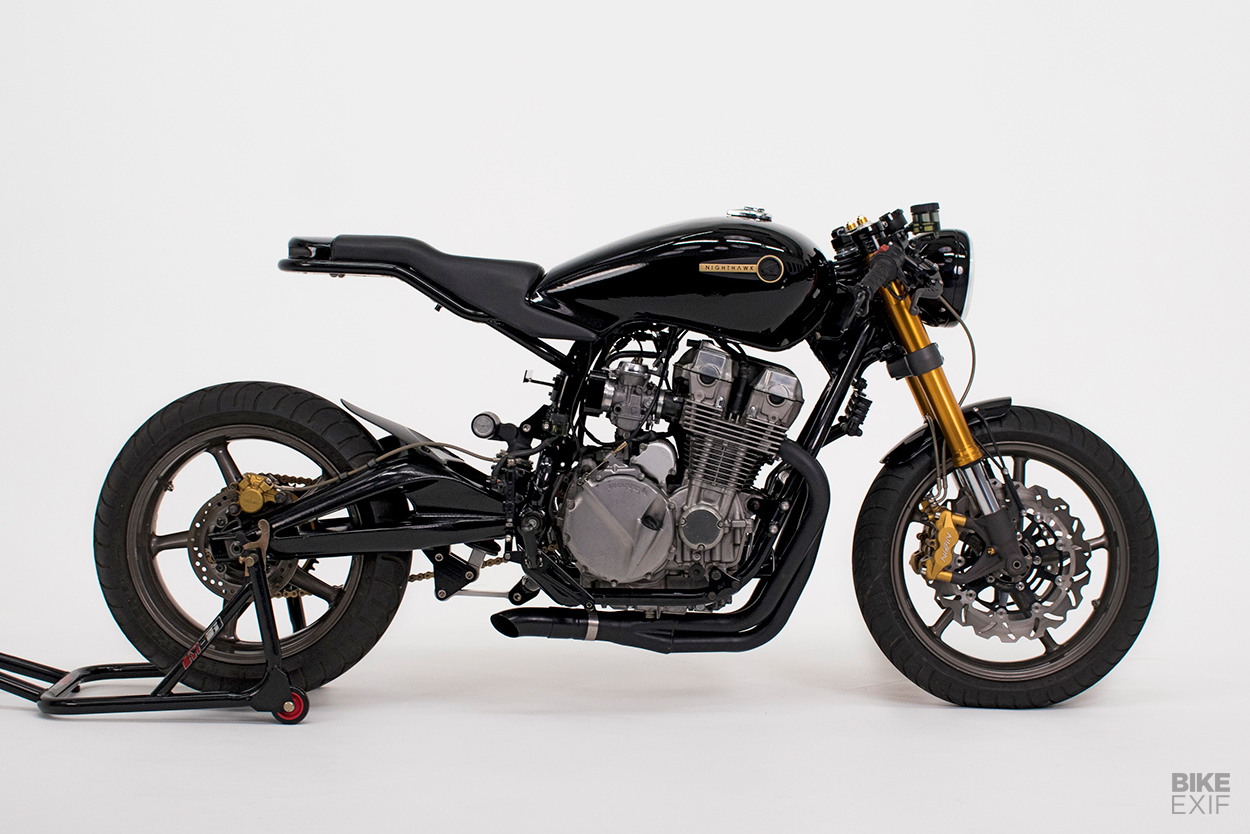
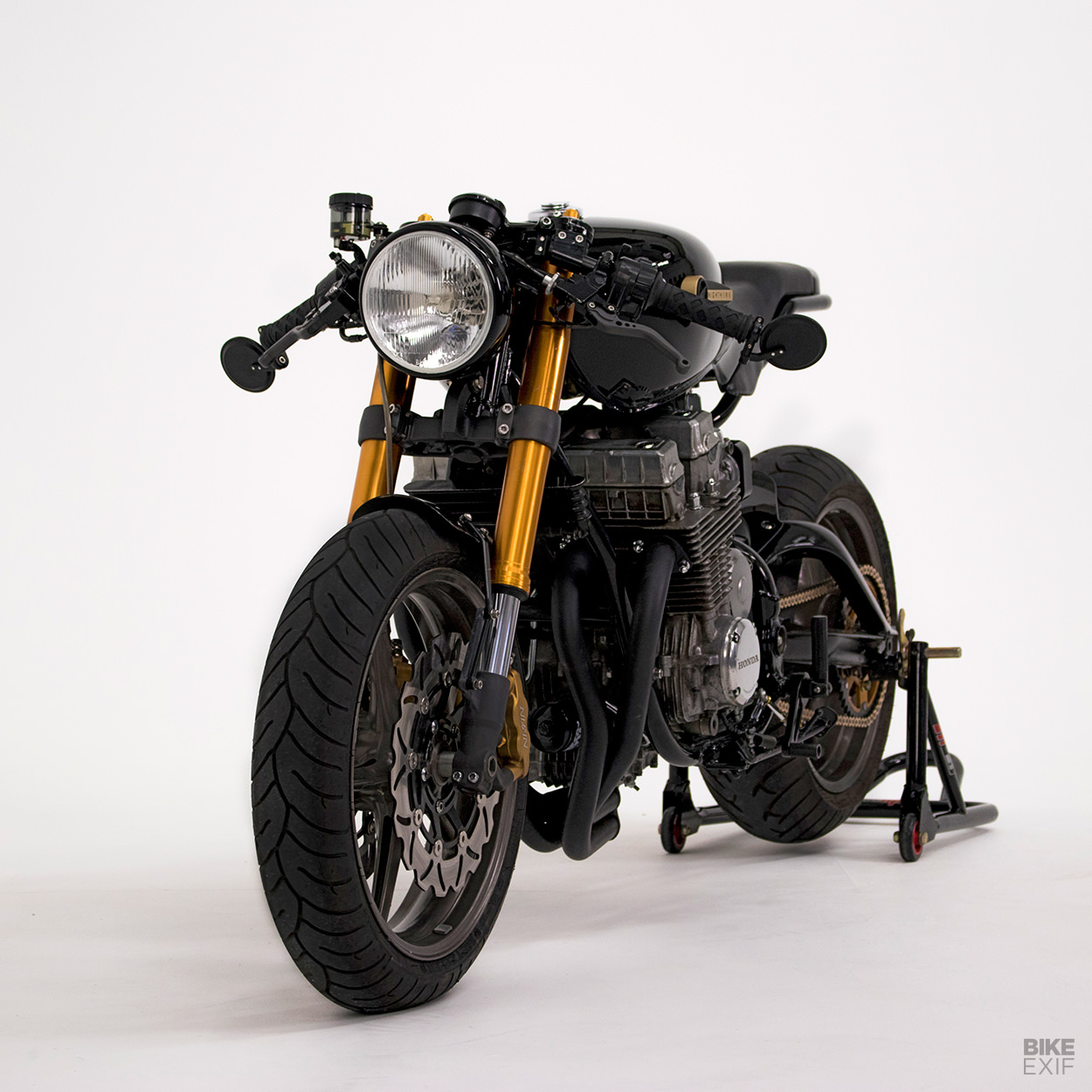
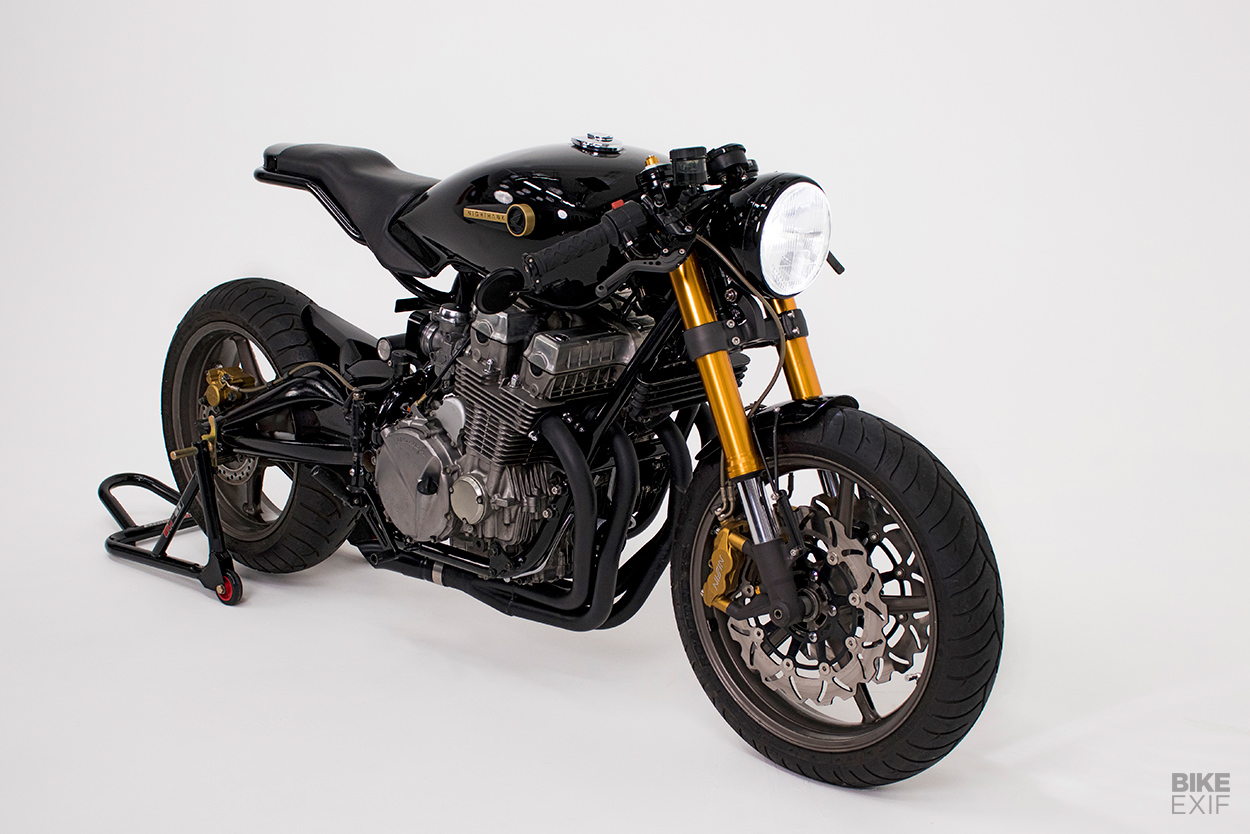
Honda CB750 Nighthawk cafe racer by Darling Cycles
The first generation Honda CB750 has a peerless reputation. It’s one of the all-time greats, and was a game-changer for the Japanese motorcycle industry.

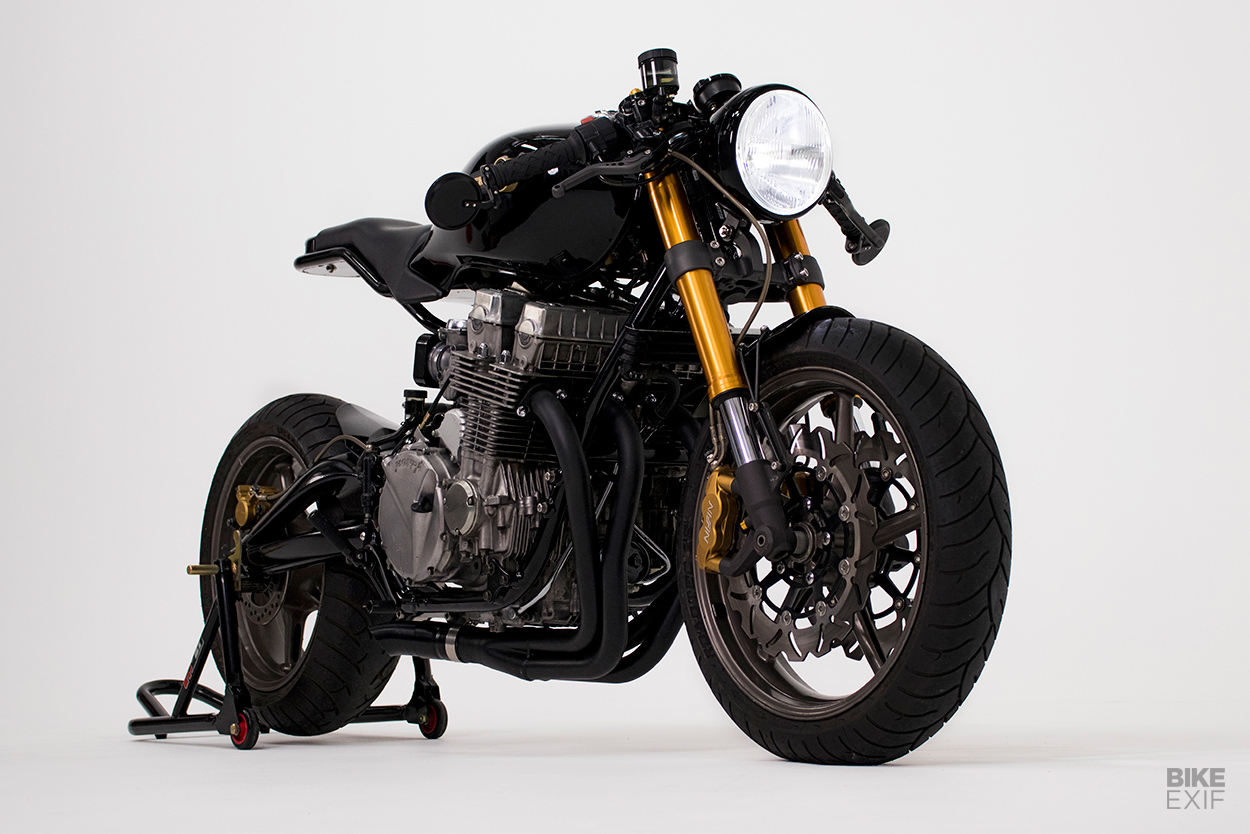
You wouldn’t want to mess with a good condition SOHC machine from the 70s, but the later generations were a bit of a mixed bag. In particular, DOHC bikes from the 90s are fair game—like this 1993 CB750 Nighthawk.

Honda CB750 Nighthawk cafe racer by Darling Cycles
This café racer comes from Colin Darling, a mechanical engineer from Ashland, Oregon, who likes to build customs in his spare time. “It lets me step away from life as a carpet walker for a bit, get my hands dirty, and use engineering in a very creative way,” he tells us.

“This is a personal build, for the time being. I sold my last build shortly after it was finished, and immediately regretted it. So I’m going to hold onto this CB750 for a few seasons.”

Honda CB750 Nighthawk cafe racer by Darling Cycles
The donor bike was a bone stock 1993 CB750 Nighthawk picked up in Texas. “I’ve always been a sucker for Honda engines. They’re only as complicated as needed, and just seem to work,” says Colin. “I knew this bike was going to have a deep overhaul, but I wanted it to still exude that simplicity.”

“The CB750 from that era was odd—in that it was a bitchin’ engine wrapped in tame geometry and mushy, uninspiring components.” Colin wanted his creation to ride like a modern sportbike, so he started with new suspension and brakes from the Triumph Daytona 675.

Honda CB750 Nighthawk cafe racer by Darling Cycles
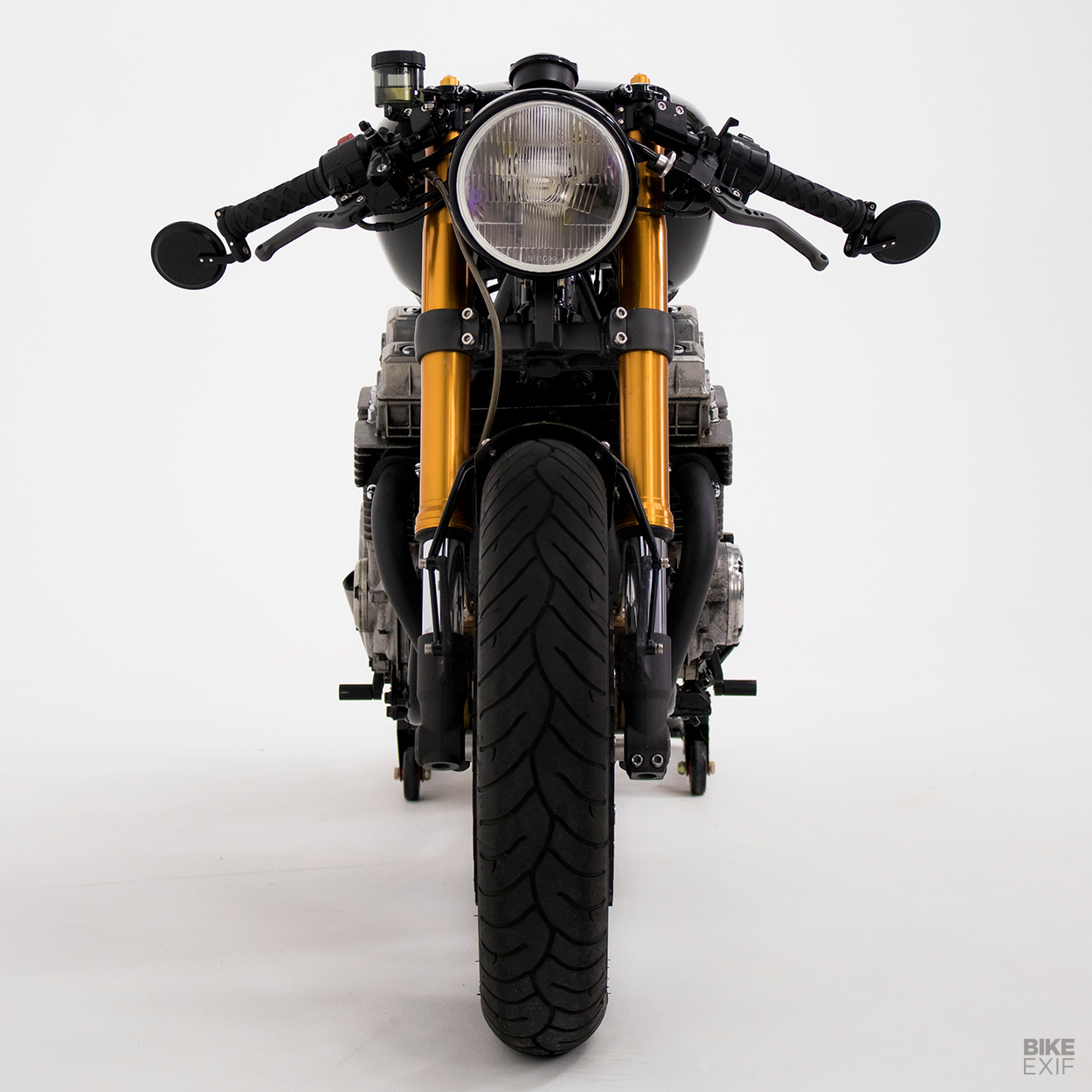
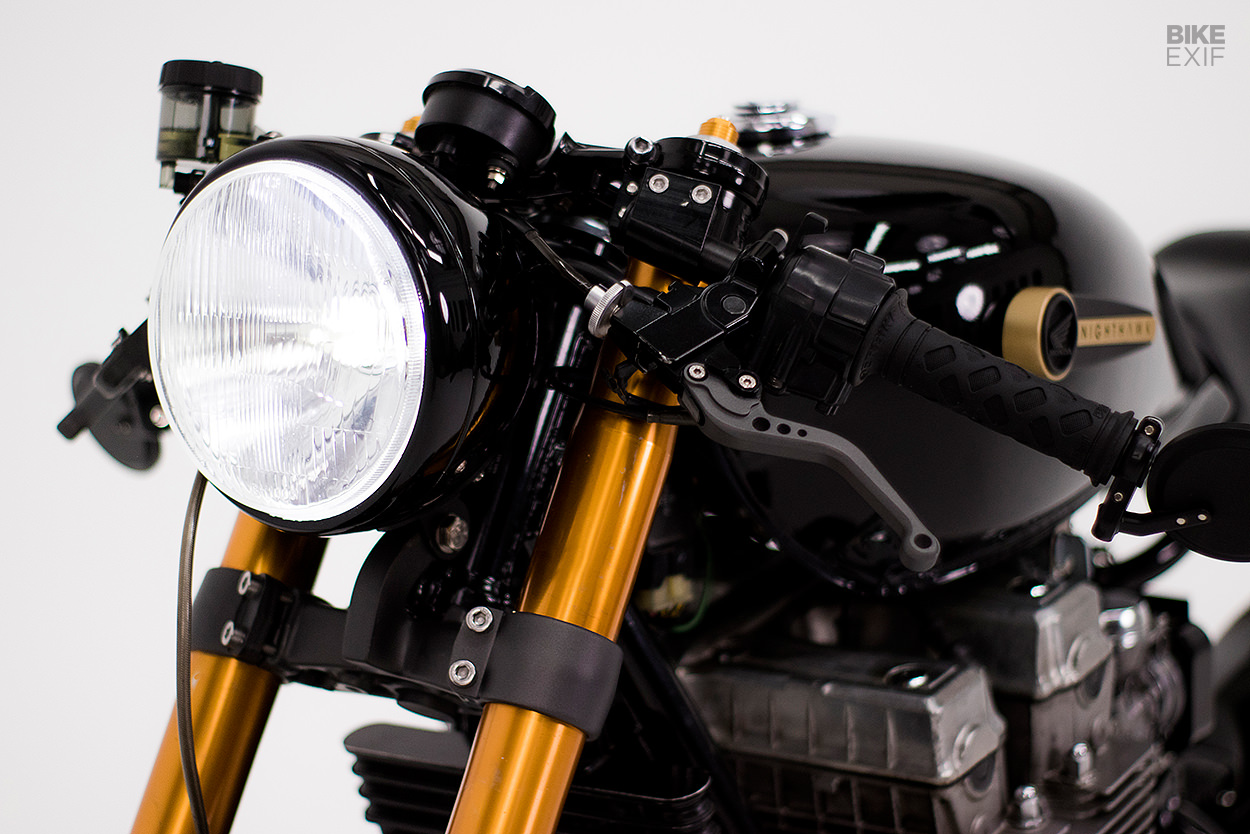
The forks are 41mm USD units, with twin disc brakes and four-piston calipers to match. Colin modified the Daytona yokes to get the forks to fit, added new turn stops, and built a beefy headlight mount into the lower triple.

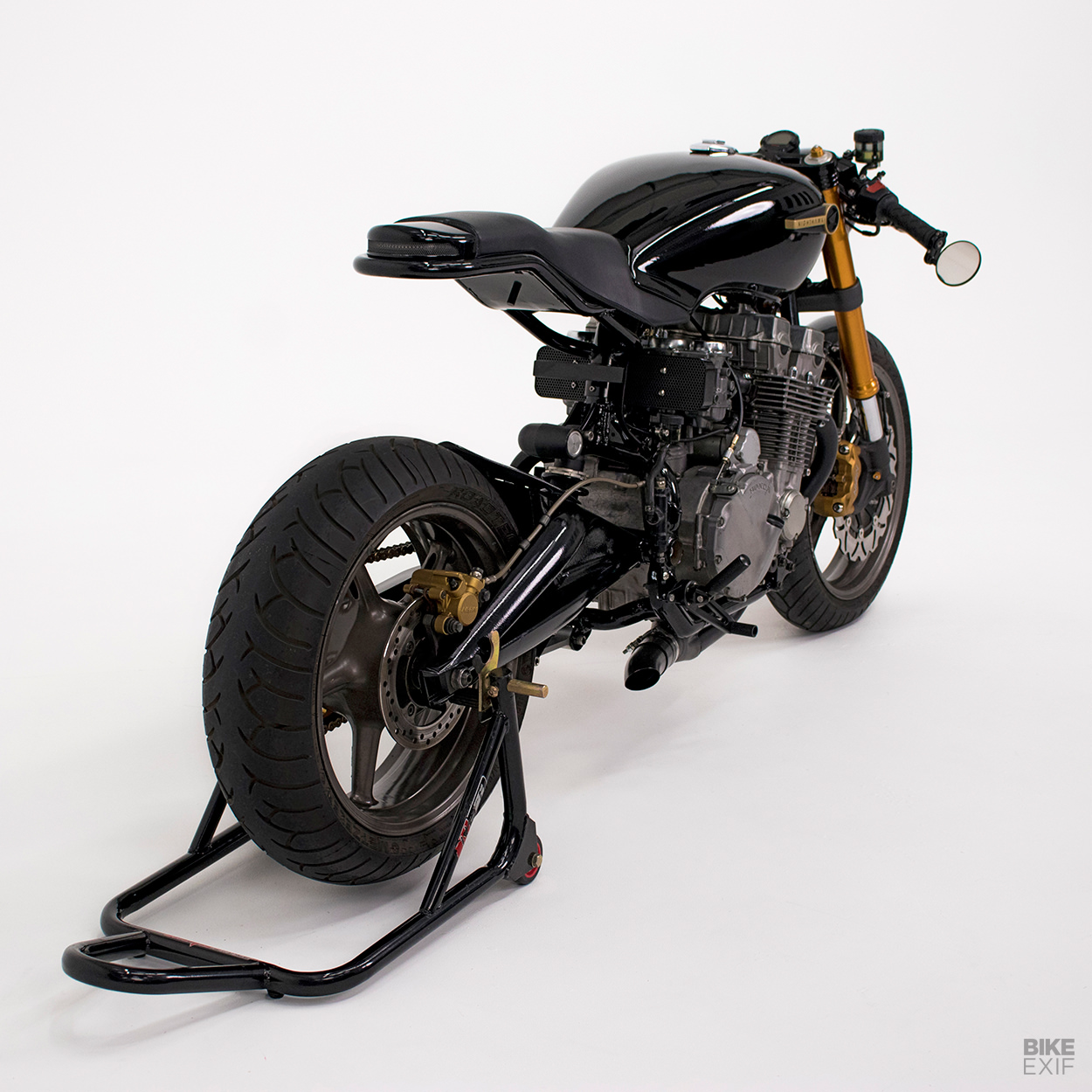
Installing the rear suspension was much more complicated. “The 1993 CB750 has a dual shock setup, so converting to a monoshock is pretty much a ground-up effort,” says Colin.
Honda CB750 Nighthawk cafe racer by Darling Cycles
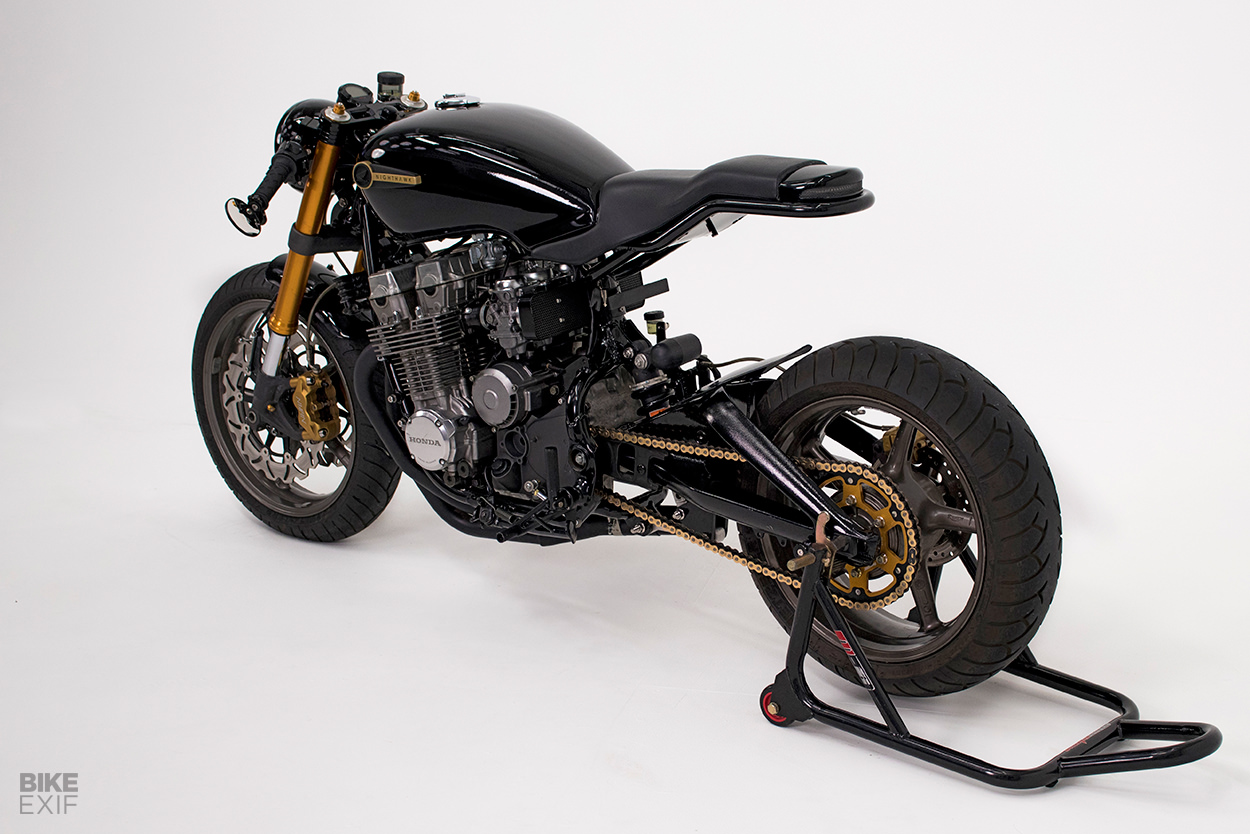
Once the Daytona swingarm was mated to the CB750 frame pivot, Colin made a simple pivot point diagram in CAD so he could get an idea of where the mounting points needed to be. Then he CNC-machined new steel mounting tabs, and aluminum rocker arm plates.

The shock itself came from a 2014 Suzuki GSX-R750, and is a huge upgrade over the original Nighthawk suspenders.

Honda CB750 Nighthawk cafe racer by Darling Cycles
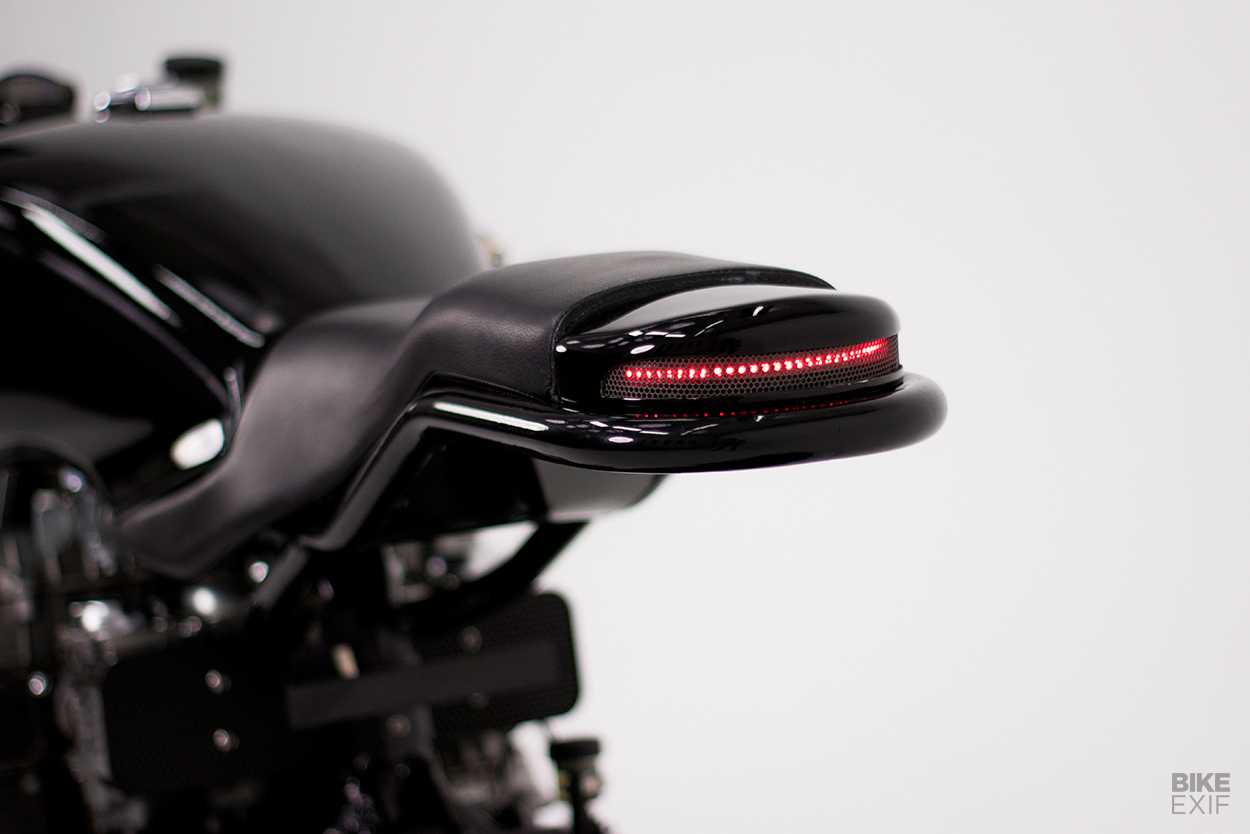
The monoshock conversion also meant a new rear subframe. So Colin designed and fabricated one that also neatly houses the electronics and the battery, despite the slim silhouette. The taillight is an integrated LED hidden behind the perforated plate in the tail section.

The subframe is now carrying a custom seat wrapped in Spinneybeck’s ‘Volo’ leather, an ultra premium European cowhide. The upholstery was handled by Don Desroches of Austin, Texas, and Colin has raised the rear tank mounting point slightly to meet the new seat—and deliver the lines he wanted.

Honda CB750 Nighthawk cafe racer by Darling Cycles
Honda did get it right with the Nighthawk engine, which delivers a smooth 75 horses with the help of four Keihin carbs. Colin has added CNC-machined air filter boxes and an aftermarket 4-into-1 exhaust with a slash cut tip, which he modified a little.

The carbs have been re-jetted to suit, and for a little more fun around town, Colin has nudged the final drive up to 2.76 with a new rear sprocket. A D.I.D. VX3 chain helps minimize drivetrain losses.

Honda CB750 Nighthawk cafe racer by Darling Cycles
For lighting, Colin opted for a classic Bates headlight with a conversion lens running a 6K LED bulb. And the bulky instrument cluster was simplified with a Koso 72mm digital gauge.

New rear sets, clip-on handlebars, new levers and new throttle and clutch cables from Motion Pro complete the control system upgrade.

Honda CB750 Nighthawk cafe racer by Darling Cycles
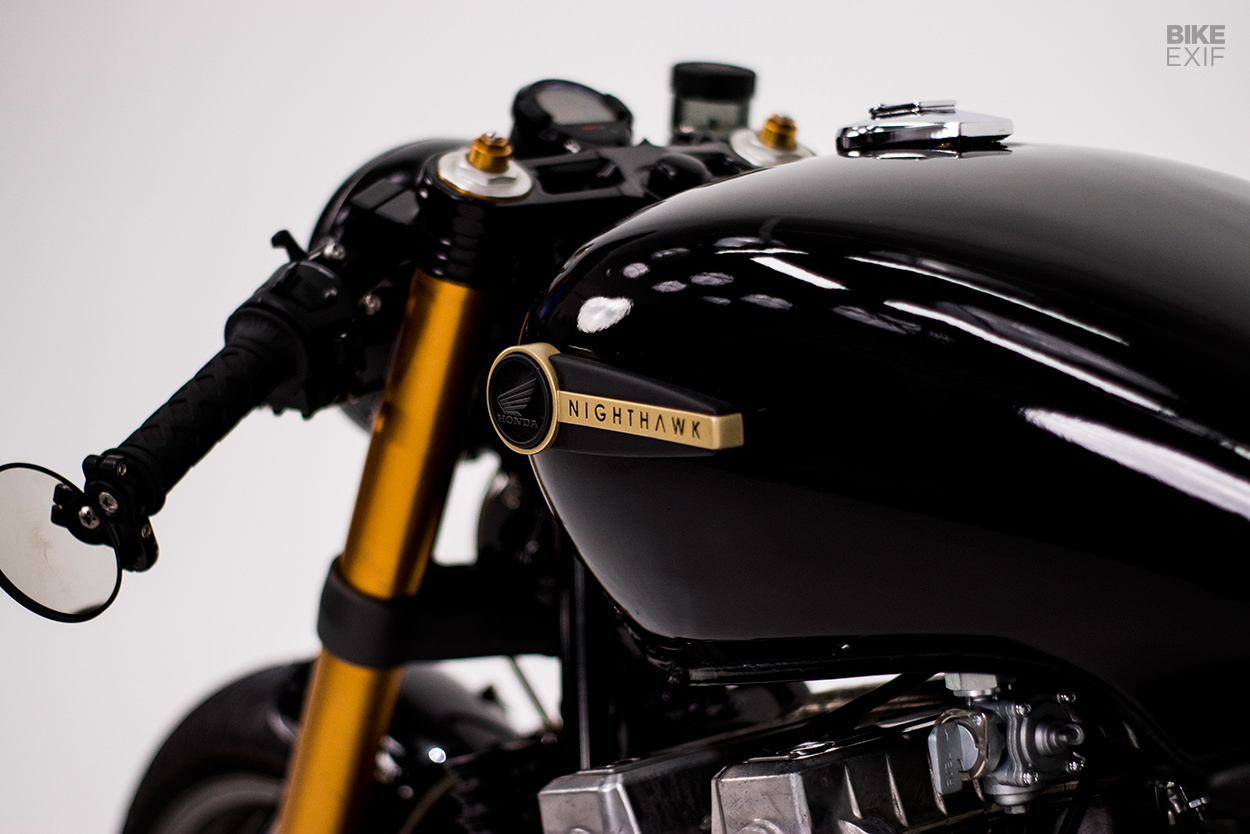
The paint proved to be tricky. “I tried a few different paint jobs on the bike—two tone, stripes and so on,” Colin reveals. “They all made it appear too busy, and I didn’t want the focal point to be paint.”

The solution was a simple non-metallic black, with a gloss clear coat. “It fits the rest of the bike incredibly well. Subtle color was added back with 3D-printed tank badges and ceramic coated bits throughout.”

Honda CB750 Nighthawk cafe racer by Darling Cycles
These days, if you’re in the States you can pick up a good Nighthawk for just two or three grand. That makes it one of the bigger bargains on the custom scene, especially when you factor in the quality (and longevity) of Honda engines.

Anyone else feeling inspired to have a go?

Darling Cycles Instagram | Images by Pretty Sweet Studios

Honda CB750 Nighthawk cafe racer by Darling Cycles


from Bike EXIF https://ift.tt/3qEAXpP