Tuesday, 30 March 2021

Volkswagen Rebranding to “Voltswagen” for the United States Market

A new era for VW is upon us. Volkswagen Group of America has announced the official change of its U.S. brand name from Volkswagen of America to Voltswagen of America. The name change, which coincides with the arrival of the new ID.4, is meant to reflect the automaker’s commitment to electrification. 

“We might be changing out our K for a T, but what we aren’t changing is this brand’s commitment to making best-in-class vehicles for drivers and people everywhere,” said Scott Keogh, president and CEO of Voltswagen of America. “The idea of a ‘people’s car’ is the very fabric of our being. We have said, from the beginning of our shift to an electric future, that we will build EVs for the millions, not just millionaires.” 

Global EV Initiative

VW aims to sell at least one million EVs globally by 2025 and launch more than 70 electric models across all VW group brands by 2029. The Volkswagen Group was the first major automaker to support the Paris Climate Agreement, with an added target of a 30 percent reduction in its carbon footprint by 2025 and net-carbon neutrality by 2050. VW was also among the manufacturers in 2019 that supported California’s proposed fuel economy regulations to combat climate change. 

Voltswagen logo.
Voltswagen logo.

New Logos & Branding

VW will retain its traditional Dark Blue logo for gas-powered vehicles, while Light Blue will differentiate the new, EV-centric lineup. Exterior and interior signage will soon appear at all Voltswagen dealerships across the United States, although the automaker has already updated its website and social media channels. “This name change signifies a nod to our past as the peoples’ car and our firm belief that our future is in being the peoples’ electric car,” Keogh added.  

The Automoblog staff covers automotive industry news, trends, and technology along with new vehicle releases. Automoblog is owned and operated by Gearhead Media LLC., based in Detroit, Michigan and Berlin, Germany.

Original article: Volkswagen Rebranding to “Voltswagen” for the United States Market


from Automoblog https://ift.tt/3rCUcgA

Tamarit builds a Bonneville you can rent—and also win

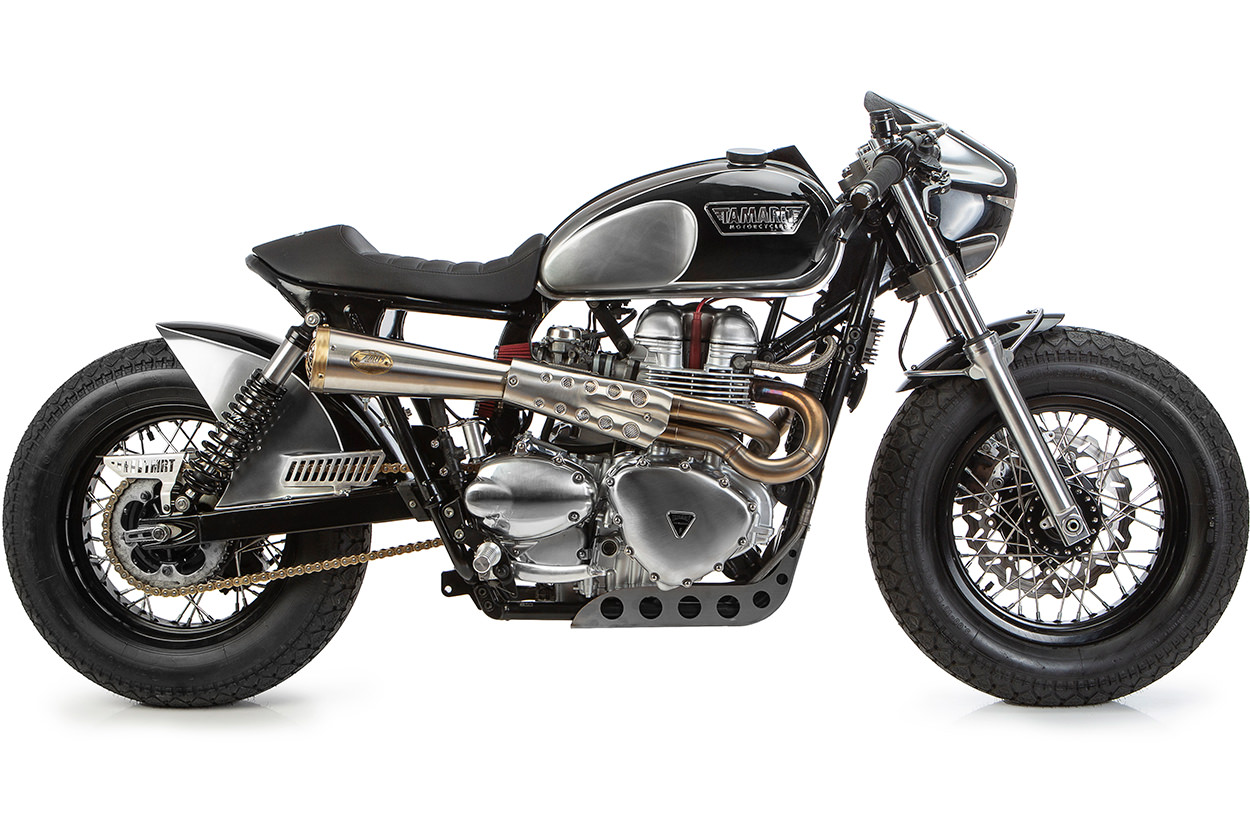
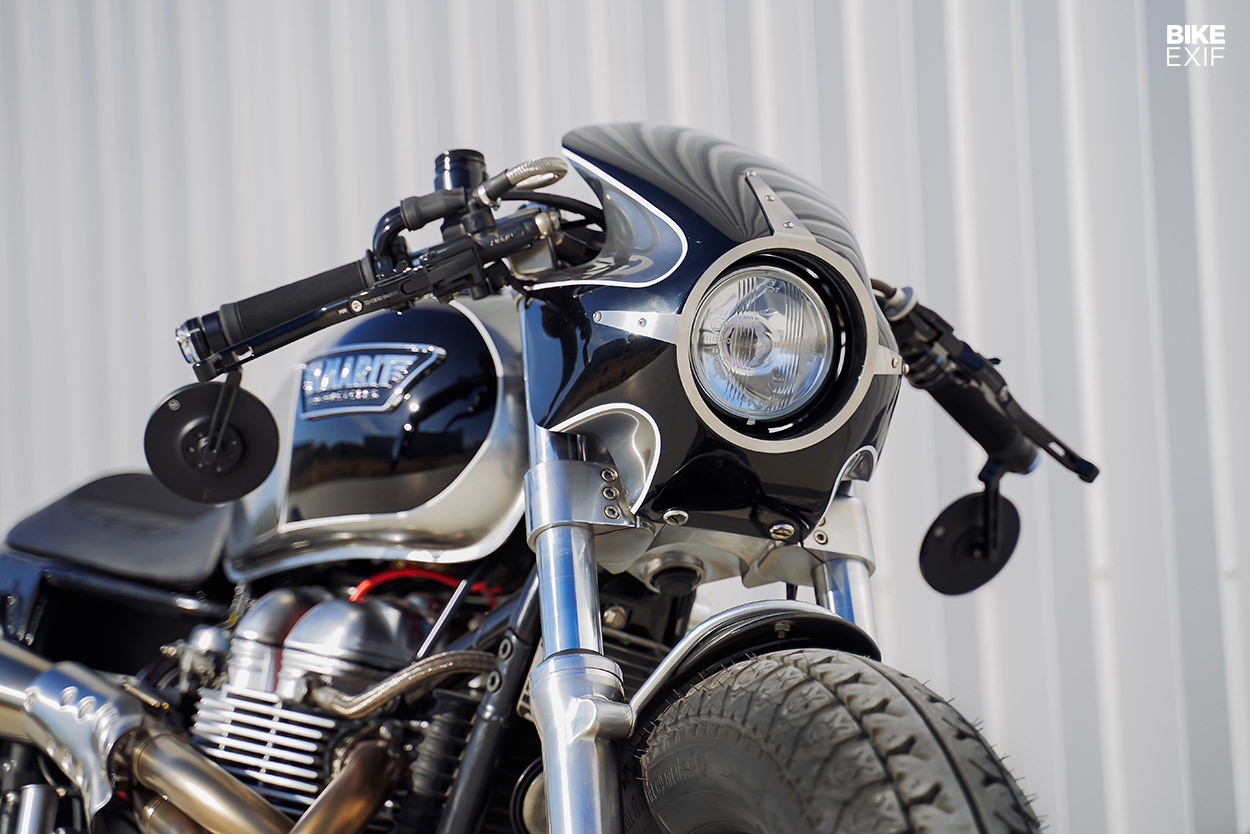
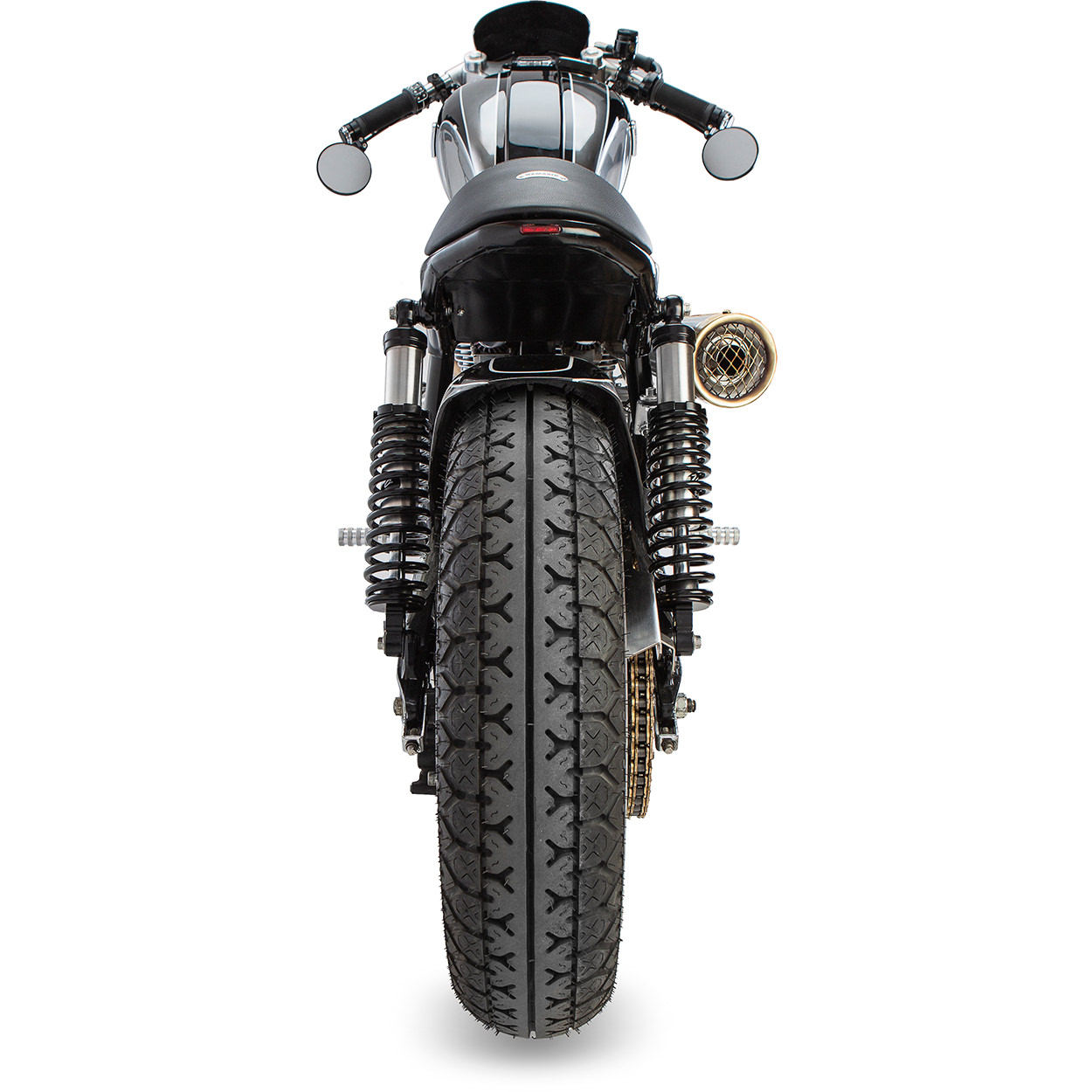
Rent or win this Triumph Bonneville cafe racer from Tamarit
Unless you’re handy with a grinder and welding gear, it’s not cheap to put a custom bike in your garage. But if you live in Spain, you can get a taste of high-end custom culture without draining the Euros from your bank account.

That’s because Spain is one of the countries where the rental company Motoshare operates. It has over 3,000 motorcycles on its books, across four nations, and the latest addition to the roster is ‘Gotham’—a beautiful Bonneville 865 from the Spanish specialists Tamarit.

Rent or win this Triumph Bonneville cafe racer from Tamarit
The Tamarit workshop is tucked away in the town of Elche, about 13 miles inland from the ancient Mediterranean port city of Alicante. But despite the remote location, owners Quique and Matías have built up a reputation that extends right across the continent.

Like most savvy builders, they offer a big selection of parts to keep the cashflow humming along—and the hook-up with Motoshare proves they’re willing to inject new ideas into their business model.

Rent or win this Triumph Bonneville cafe racer from Tamarit
But back to the bike. It’s a café with a twist, and a machine we’d love to swing a leg over for a day or more.

Tamarit describe their latest Bonneville as a combination of several styles, with elements from the scrambler, cafe racer and Brat Style genres. It’s a curious blend of the familiar and offbeat, but it works well. “We wanted to make a sporty bike, but with aggressive lines,” they say.

Rent or win this Triumph Bonneville cafe racer from Tamarit
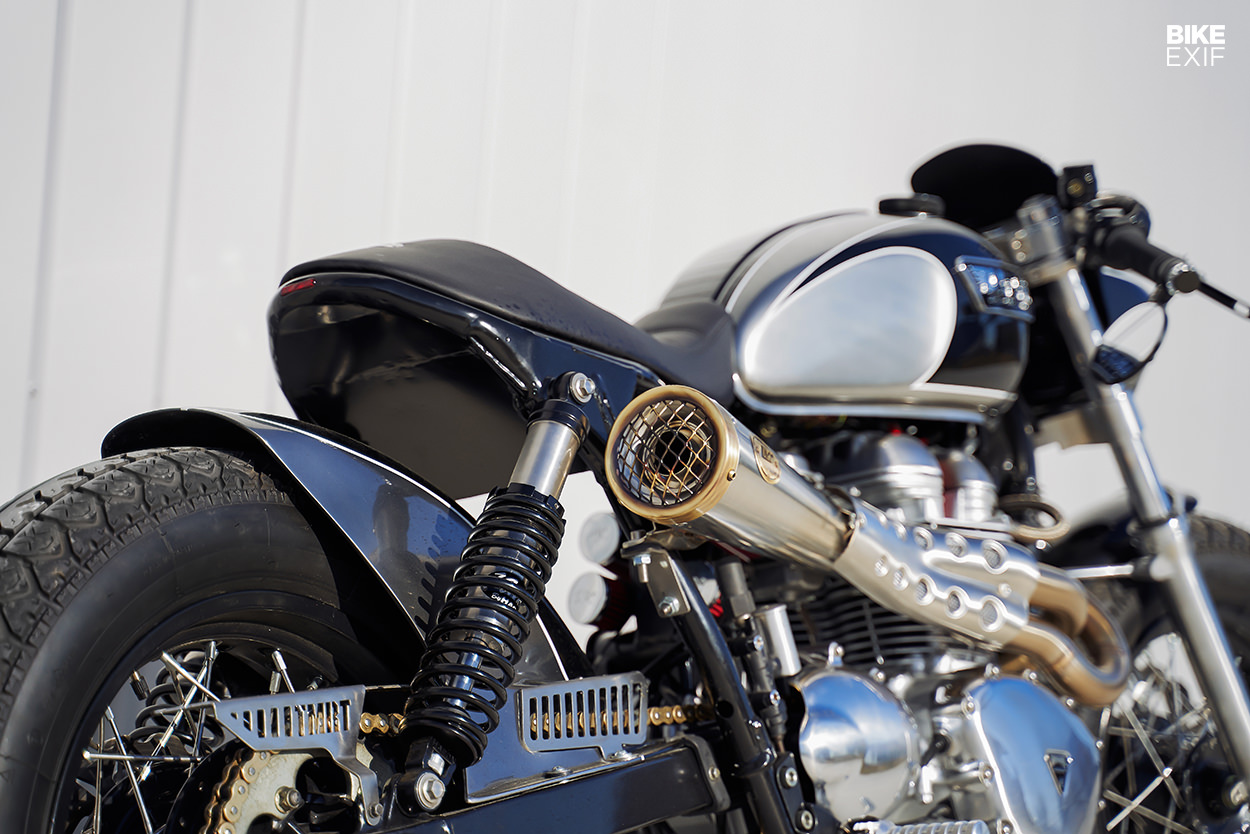
Tamarit had a free rein, since this is not a customer commission. One of the first mods they made was to extend the swingarm, to add a dragster vibe and lengthen the look of the bike. It also throws focus onto the unusual rear fender, which is big enough to keep riders squeaky clean in the worst of weather.

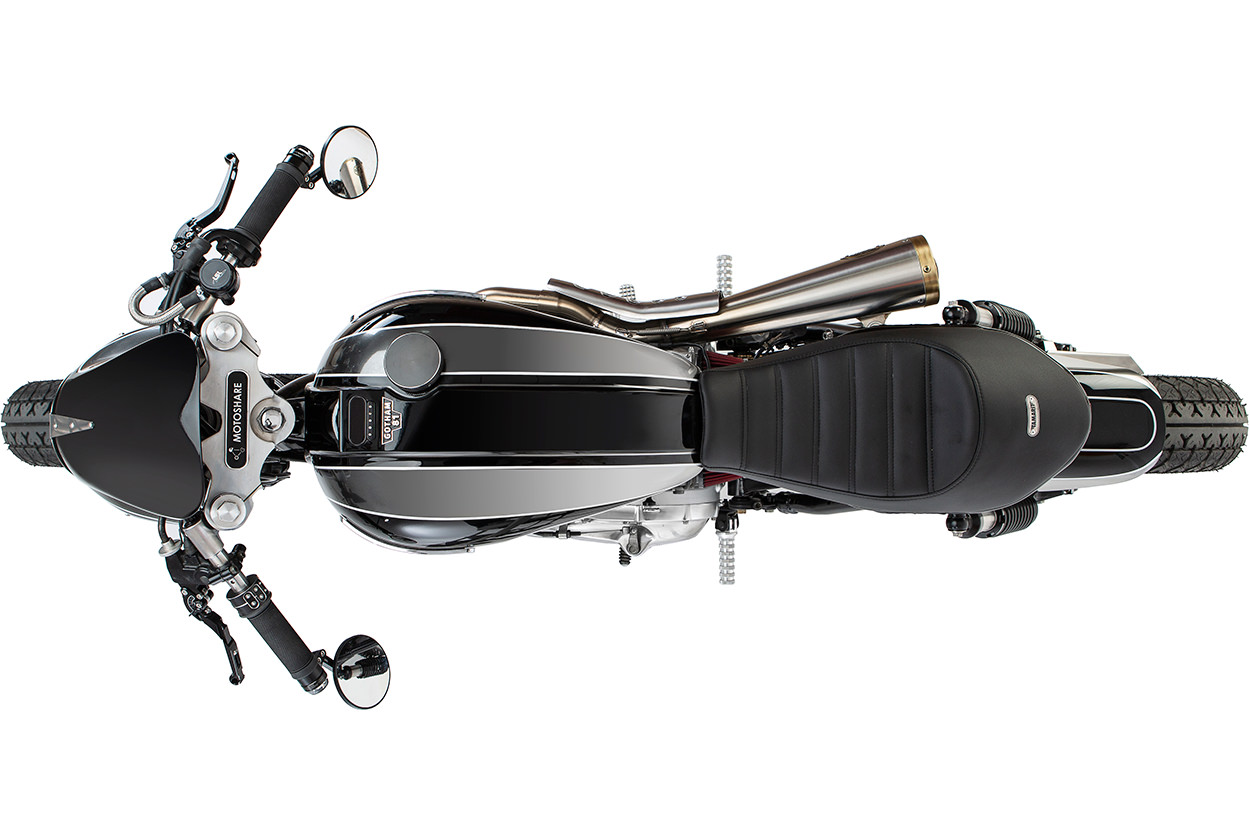
The back end of the frame is completely new too, and topped off with a plush new seat. A new set of Hagon Nitro shocks makes the ride even more comfortable.

Rent or win this Triumph Bonneville cafe racer from Tamarit
The 865cc engine is the carburetor version, treated to K&N filtration and a Zard Tiger 70 exhaust system. This 2-into-1 setup has been designed for the modern Street Scrambler and weighs around six kilos less than the stock system—but it can be adapted to older ‘modern classics,’ which is what Tamarit have done here.

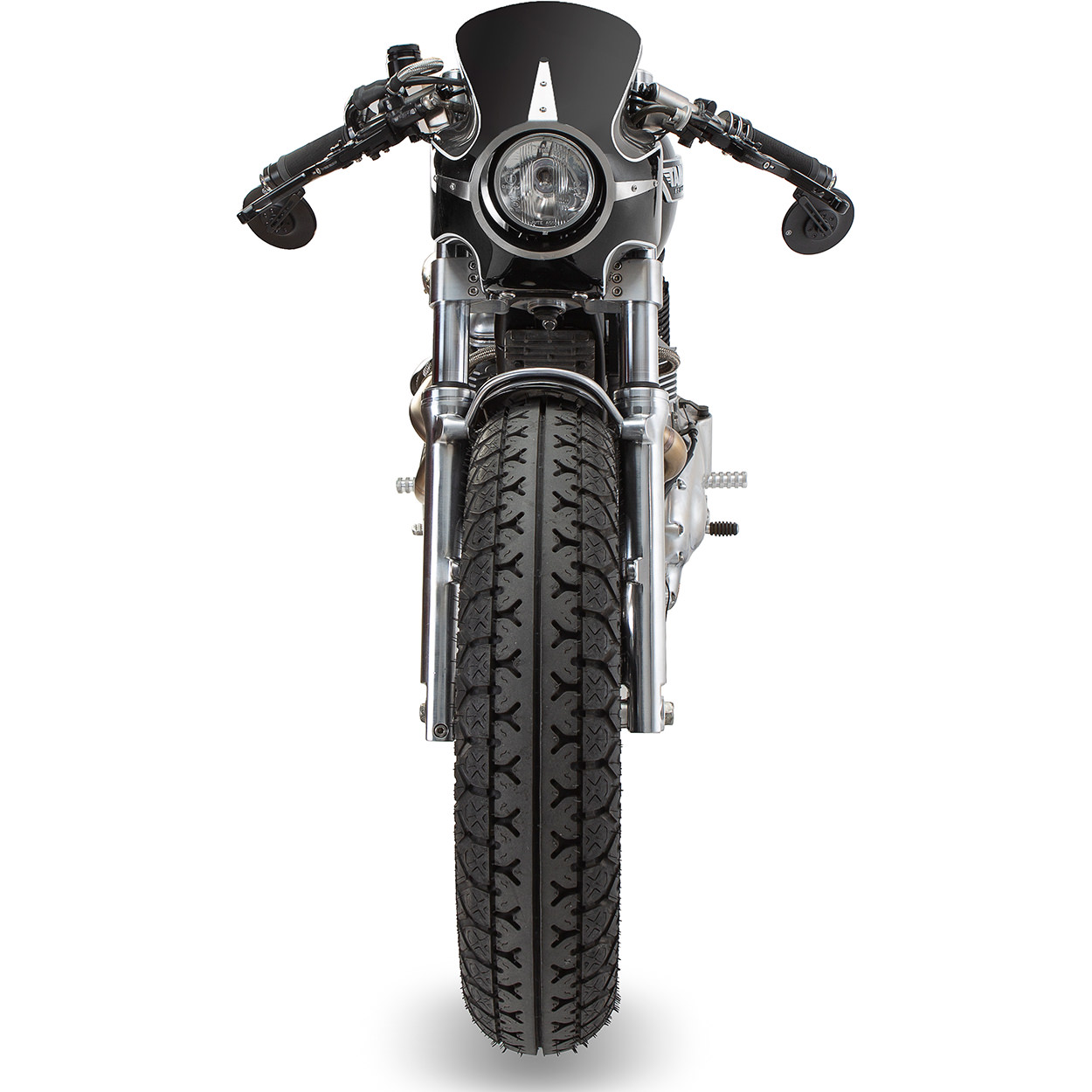
The vintage look is accentuated by new 16-inch spoked rims and Continental K112 tires—which take tread patterns from classic superbike tires and match them to modern rubber compounds.

Rent or win this Triumph Bonneville cafe racer from Tamarit
The compact fairing is a version of the unit developed for Tamarit’s stunning ‘Gullwing’ Thruxton. A custom aluminum top triple tree cleans up the cockpit, with the speedo replaced by a Motogadget unit embedded in the tank.

Most of the wiring and electrics have been relocated to a discreet box underneath the seat unit.

Rent or win this Triumph Bonneville cafe racer from Tamarit
There are some pretty heavy mods here, but this Bonneville is street legal and has the necessary paperwork—an aspect increasingly hard to get in Europe, and often ‘overlooked’ by some builders.

If you’re within distance of the magnificent roads of rural Spain and not locked down, you can rent this beauty here. Even better, if you rent it you go into a draw to win it, too …

Tamarit Motorcycles | Facebook | Instagram

Rent or win this Triumph Bonneville cafe racer from Tamarit


from Bike EXIF https://ift.tt/2QIz9MS

Monday, 29 March 2021

Vehicle Title Fraud Explained & 6 Proven Ways To Avoid It

Selling a totaled or stolen vehicle with fraudulent documents – known as vehicle title fraud – to make the title appear clean is more common than you might think. This comprehensive guide explains how sellers commit vehicle title fraud along with six proven ways to avoid purchasing a car with a fraudulent title.

What is a Vehicle Title?

The vehicle title is the state-issued document giving you proof of ownership over your car. If your name is not on the title, you do not own the car from a legal standpoint. It can either be a physical piece of paper or an electronic document. Besides telling who owns the car, it includes a variety of important notes about the vehicle itself. The information on the title varies from state to state. However, the title generally includes:

  • Paint color.
  • Title issue date.
  • Make, model, and production year.
  • Name of the owner or owners and their address.
  • Odometer reading and the date when it was recorded.
  • VIN or Vehicle Identification Number, which is unique to the car.

The title includes information about the physical state of the car as well. Based on the vehicle’s condition, the DMV classifies it into one of the following types:

  • Clear: The vehicle does not have a lien against it, and there is no financial liability concerning it.
  • Clean: There has never been a large accident involving the car, and insurance agencies have not labeled it as “totaled.”
  • Rebuilt: The car once had a salvage title, but an owner has rebuilt it.
  • Salvage: The physical condition is severe because of an accident, vandalism, flood, or another disaster. The DMV or insurance company give the salvage designation when the cost of repair is higher than the vehicle’s value. Some states also declare stolen cars as salvage.

Types of Vehicle Title Fraud & How They Work

Some of the most common scams related to vehicle title fraud revolve around the salvage status. Since vehicles with a salvage title almost always sell for less money, there is motivation to hide the salvage designation with the appearance of a clean and clear title. There are many methods of tampering with the title, but we can group them into three general categories. 

Title Washing

Title washing is the most common type of vehicle title fraud. Carfax estimates there are 800,000 cases in the United States alone, including a prominent case in Texas in 2011. Here are some common ways owners wash titles:

  • Printing a counterfeit title.
  • By altering the title document to hide the salvage record.
  • Registering the totaled car in a state where recording the salvage status is not mandatory.

Title Jumping

The next type of fraud is title jumping, a common practice of buying a vehicle without registering it in your name and then selling it to someone else. Title jumping is commonly used by unlicensed car dealers to avoid paying taxes and other fees.

VIN Swapping, Switching or Cloning

This is a relatively new method of vehicle title fraud. It involves altering the VIN number of the vehicle to hide its past from the buyer. Usually, scammers will swap the salvaged VIN with a clean one. Thieves may also use this method to disguise a stolen car. According to the National Highway Traffic Safety Administration, a vehicle is stolen about every 40 seconds in the United States, although there are ways to protect yourself.

If you suspect the car you are looking at might be stolen, the National Insurance Crime Bureau offers its free VINCheck service for consumers. A maximum of five searches can be conducted within a 24-hour period per IP address.

Is Vehicle Title Fraud Legal?

The fraud examples described above are generally illegal. We use the term “generally,” as sometimes existing laws do not cover all the schemes, and not all state jurisdictions are consistent in their definitions of vehicle title fraud. These legal gray areas allow bad actors to hide the “unfortunate” past of a damaged vehicle, and they often make a considerable profit out of doing so.

For example, in 2005, Hurricane Katrina left a vast number of cars underwater. Insurance companies paid the claims to their owners and ended up with a fleet of severely damaged cars. They passed these cars to the wholesale market. However, not all the players in this market followed the ethical rules of branding these vehicles as salvage or rebuilt. They re-registered the cars in states with lax salvage rules and resold them under clean titles.

Gray areas in the law make it possible for scammers to commit vehicle title fraud.

How to Detect Vehicle Title Fraud

Here are six simple ways to check the authenticity of your future car’s title before purchasing it.

#1: Owner has registered the car in a different state

Although there might be a valid reason they did the registration elsewhere, still be careful when buying that car. Being registered in another state is one sign of title washing. You should ask the seller for a reasonable explanation.

#2: Print quality is suspicious

Sometimes there is nothing to worry about as the title could be a genuine document that is simply old. If it’s an older model vehicle, chances are it has already changed hands several times before reaching you. Still, pay careful attention to the print quality and any signs of physical tampering. If the printing looks unnatural, it could be a counterfeit title.

#3: Title was issued recently

This is another potential red flag. It will look unnatural if someone is selling you a 12-year-old vehicle with a title issued several months ago. Ask for a reasonable explanation from the seller.

#4: Information in the vehicle history report does not match that on the title

While the scammers might have meddled with the title, the Vehicle History Report also lists important information about the car in question. This report is much harder to fake as it is a digital document stored on secure servers. If you have compared the information on the title with this report and found significant differences, it may be another indicator you are dealing with a scammer.

#5: Watermark is odd or missing

For security reasons, states issue salvage title documents with a watermark. It is difficult to counterfeit a title with a watermark that looks authentic. So an easy method to detect a fake title is comparing it with another one issued by your DMV.

#6: Refusal to meet at the DMV

Possibly the best way to protect yourself against vehicle title fraud is asking the seller to accompany you to the local DMV to complete the transfer of ownership. Naturally, no scammer would be willing to take illegal or incomplete documents to the authority that issues and checks those. So if your seller insists on completing the ownership transfer outside the DMV, consider that as another red flag.

What to do if You Suspect Vehicle Title Fraud

If you suspect your car has a fraudulent title, immediately report it to your local police department, your insurance company, or the National Insurance Crime Bureau.

Patrick Peterson is a writer/editor at AutoDetective. Born and raised in the automotive world, he’s a passionate writer who crafts exquisite content pieces about everything related to cars and bikes.

Original article: Vehicle Title Fraud Explained & 6 Proven Ways To Avoid It


from Automoblog https://ift.tt/3rFe8je

From The Red Pig to Fast Boats: 10 Interesting Facts About Mercedes-AMG

Did you know AMG is a combined abbreviation of its founders’ surnames and the place where the company was first established? Who would have thought that Mercedes-AMG started as a simple two-person operation in the 1960s? From humble beginnings to becoming a respected global performance brand, here are 10 interesting facts about Mercedes-AMG.

#1: Mercedes-AMG: What’s in a Name?

As previously mentioned, the AMG moniker is derived from the surnames of company founders Hans Werner Aufrecht and Erhard Melcher. The G stands for Großaspach, the birthplace of Aufrecht. Incidentally, Aufrecht and Melcher were working on a racing engine for the 300 SE sedan while employed in the Development Department at Daimler-Benz in the 1960s.

However, everything came to halt. Daimler-Benz decided to end all Motorsports activities, but this didn’t deter the two men from developing their racing engine at Aufrecht’s house in Großaspach. In there, Aufrecht and Melcher created something special.

In 1965, a former colleague at Daimler-Benz signed up for the German Touring Car Championship. Manfred Schiek won the event ten times using the 300 SE engine that Aufrecht and Melcher developed at home. This not only cemented the reputation of Aufrecht and Melcher as brilliant engine builders, but it also led to the eventual formal partnership of AMG with Mercedes-Benz.

#2: The Red Pig

The famous "Red Pig" racing car, a Mercedes-Benz 300 SEL 6.3, helped secure AMG's reputation in Motorsport.
The famous “Red Pig” racing car, a Mercedes-Benz 300 SEL 6.3, helped secure AMG’s reputation in Motorsport. Photo: MBUSA.

The first AMG vehicle was not a fire-breathing supercar or convertible, but it comes close. The Mercedes-Benz 300 SEL 6.3 is a full-sized luxury car built from 1968 to 1972. It came with a majestic 6.3-liter V8 engine to make it the fastest four-door car in its heyday with 247 horsepower and 369 lb-ft. of torque.

But for Aufrecht and Melcher, it was not enough. The men soldiered on by increasing the motor’s displacement to 6.8-liters. After all was said and done, the engine was producing 428 horsepower and 448 lb-ft. of torque. The vehicle underwent a massive weight loss program to make the most of its newfound power, but it was still the heaviest car on the grid when it debuted at the 24 Hours of Spa in 1971.

That car, which is now famously referred to as the Red Pig, secured a class win and placed second overall at the 24 Hours of Spa. From then on, the AMG name became well-renowned in the Motorsports arena.

#3: Mercedes-AMG in the USA

The first jointly developed vehicle from Mercedes-Benz and AMG was the C 63 AMG in 1995. It became the first AMG car to be officially sold in the United States. It had an extensively modified inline-six engine with 276 horsepower and 284 lb-ft. of torque mated to a five-speed automatic transmission.

Daimler eventually acquired a majority stake in AMG in 1998.

#4: Black Means Serious Business

Mercedes-AMG GT Black Series.
Mercedes-AMG GT Black Series. Photo: MBUSA.

For buyers who want the wildest and most exclusive AMG high-performance vehicle, the Black Series is a perfect choice. AMG Black Series models are dialed to 11 and have exceptionally modified engines, suspension systems, aerodynamic components, and chassis settings.

So far, only five vehicles have earned the privilege of being named into the mythical Black Series of AMG cars: the CLK 63 Black Series; C63 Black Series; SL 65 Black Series; SLS Black Series; and the SLK 55 Black Series – the latter of which was not sold in the USA. The latest car to earn the Black Series distinction is the Mercedes-AMG GT, which set a new record on the Nürburgring last year.

#5: Explosive Power: Mercedes SLS AMG

The first Mercedes-Benz vehicle developed from the ground up by AMG is the SLS AMG, the reincarnation of the iconic 300 SL Gullwing from 1954. It came with a burly 6.2-liter V8 engine with 622 horsepower, but that wasn’t the car’s only explosive force. Literally.

The SLS AMG has exploding capsules on the roof. Apparently, the mini-explosion is strong enough to blow off the doors if the vehicle were to flip on its roof.

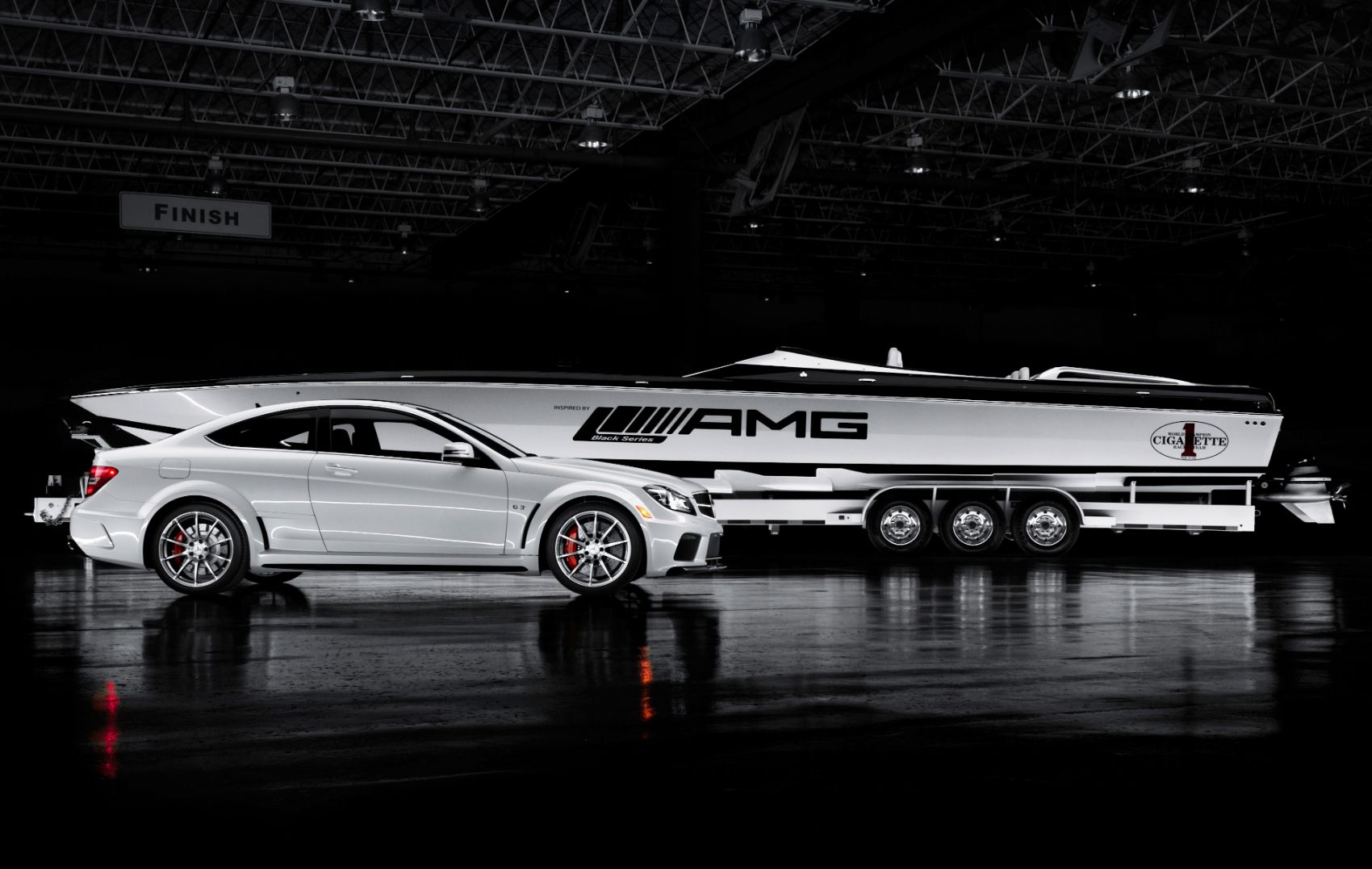
#6: AMG & Cigarette Racing

Mercedes-AMG and Cigarette Racing
Photo: MBUSA.

AMG’s passion for speed is focused primarily on road-going vehicles, but the company has kept a strong relationship with the Cigarette Racing Team since 2007. This unique partnership has resulted in no less than 12 limited-edition high-performance racing boats, the latest being the 59-foot Tirranna AMG Edition showcased in Miami in early 2020.

The Tirranna AMG Edition by Cigarette Racing has six outboard V8 engines with a combined 2,700 horsepower. It has a top speed of 80 mph (pretty fast for a boat) and is large enough to ferry 26 passengers in the utmost luxury.

#7: One Man, One Engine

Mercedes-AMG engine room.
Photo: MBUSA.

All AMG engines are built using the “One Man, One Engine” philosophy. This means a single craftsman is responsible for assembling each AMG engine by hand from start to finish. Every finished motor is given a special plaque signed by the builder that is bestowed on the engine after completion.

#8: From Großaspach to Affalterbach

Mercedes-AMG is headquartered in a small town northeast of Stuttgart in Affalterbach, Germany. The company employs about 1,800 people to handle the sales, management, administration, development, and design of AMG vehicles. It is also in Affalterbach where each handcrafted AMG engine is built.

#9: Driver-Focused Technology

Mercedes-AMG is all about utilizing the best technology to deliver exceptional performance. The AMG Dynamic Select feature is one such example. Using this feature, drivers can easily alter between various modes to enhance the car’s on-road behavior. From Comfort to Sport or Race, you can tune your AMG vehicle on the fly by pressing a toggle button.

#10: Race Cars & Hypercars

Mercedes-AMG ONE

The title of the most powerful AMG vehicle ever produced (for now) goes to the Mercedes-AMG One hypercar. Utilizing the latest in Formula 1 hybrid technology, the Mercedes-AMG One is capable of producing 1,000 horsepower. It goes from zero to 124 mph in under six seconds and has a top speed of 217 mph.

Mercedes-AMG is only building 275 units with base prices starting at an eye-watering $2.7 million. Production was initially delayed in 2019, but Mercedes-AMG is set to make the first deliveries in 2021.

What is your favorite Mercedes-AMG vehicle? Share your thoughts with us on Twitter

Alvin Reyes is an Automoblog feature columnist and an expert in sports and performance cars. He studied civil aviation, aeronautics, and accountancy in his younger years and is still very much smitten to his former Lancer GSR and Galant SS. He also likes fried chicken, music, and herbal medicine. 

Original article: From The Red Pig to Fast Boats: 10 Interesting Facts About Mercedes-AMG


from Automoblog https://ift.tt/3m6HlCf

Sunday, 28 March 2021

Speed Read, 28 March 2021

The latest motorcycle news and customs
The next phase of Triumph’s electric motorcycle project broke cover this week. Plus we look at a tasty Yamaha RD400 restomod, and original condition BSA Gold Star flat tracker, and a classy R18 from BMW experts VTR Customs.

Triumph TE-1 electric motorcycle prototype
Triumph’s Electric Motorcycle Triumph’s been very covert about their electric motorcycle program, ‘Project TE-1.’ They announced the project two years ago, with help from a few outside partners and a dollop of government funding.

Then they went quiet… until earlier this week, when they announced that phase two of the four-phase project had just wrapped. It includes two big reveals: the battery and drivetrain prototype, and concept sketches of the motorcycle they’re building. And the fact that it basically looks like an electric Speed Triple has us giddy with excitement.
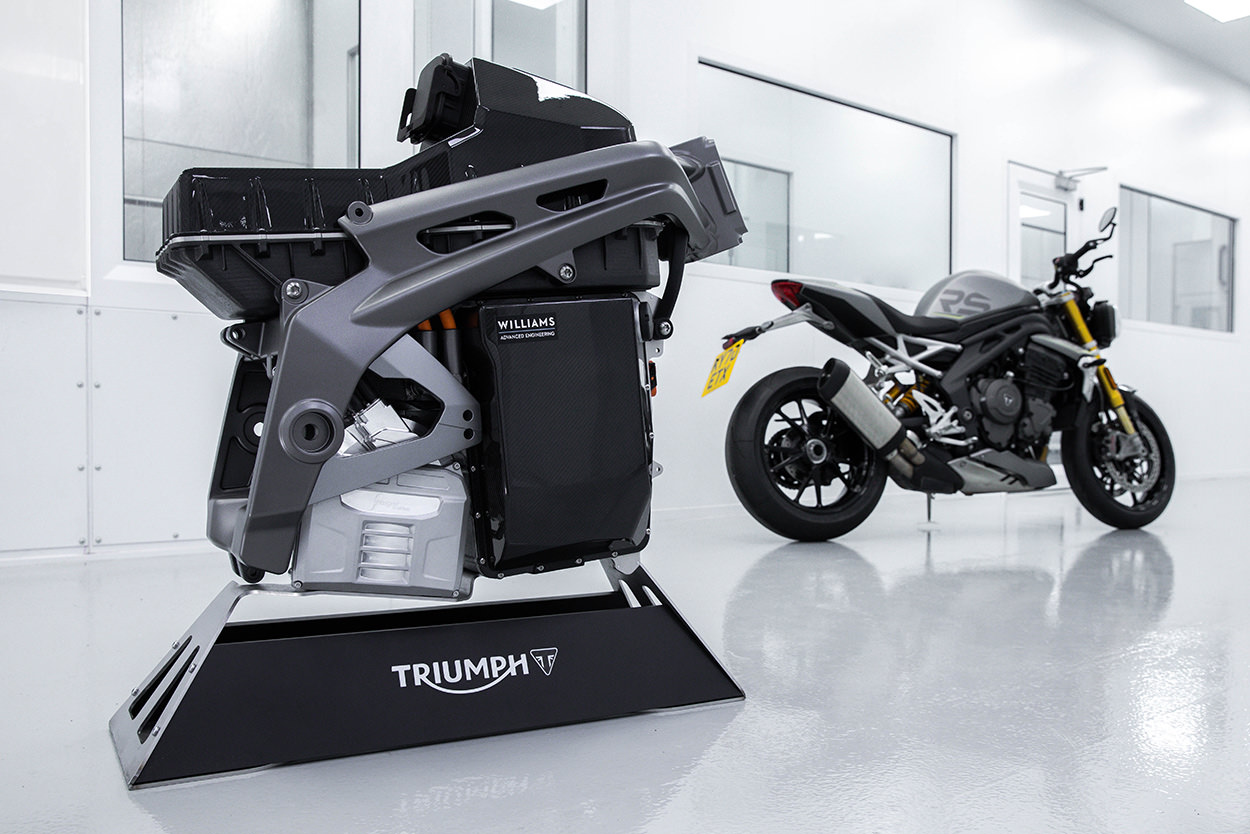
Triumph TE-1 electric motorcycle prototype
The keyword here is innovation, so everyone is going all-out. F1-assciated Williams Advanced Engineering is focusing on reducing battery mass, partially by integrating the control unit into the battery pack. Integral Powertrain Limited has worked on compacting the motor, and is claiming 130 kW (almost 180 hp) from a ten-kilo powerplant.

Triumph TE-1 electric motorcycle prototype
Triumph has said a lot about the tech, but not much about the final spec—which is to be expected this early on. What we do know is that the prototype frame has already been developed, along with most of the control systems and rider aids. So the Speed Triple-inspired design is probably close to what we’ll see in the flesh when the project wraps.

If you’re interested in the finer details, it’s worth heading over to Triumph’s website to read more.
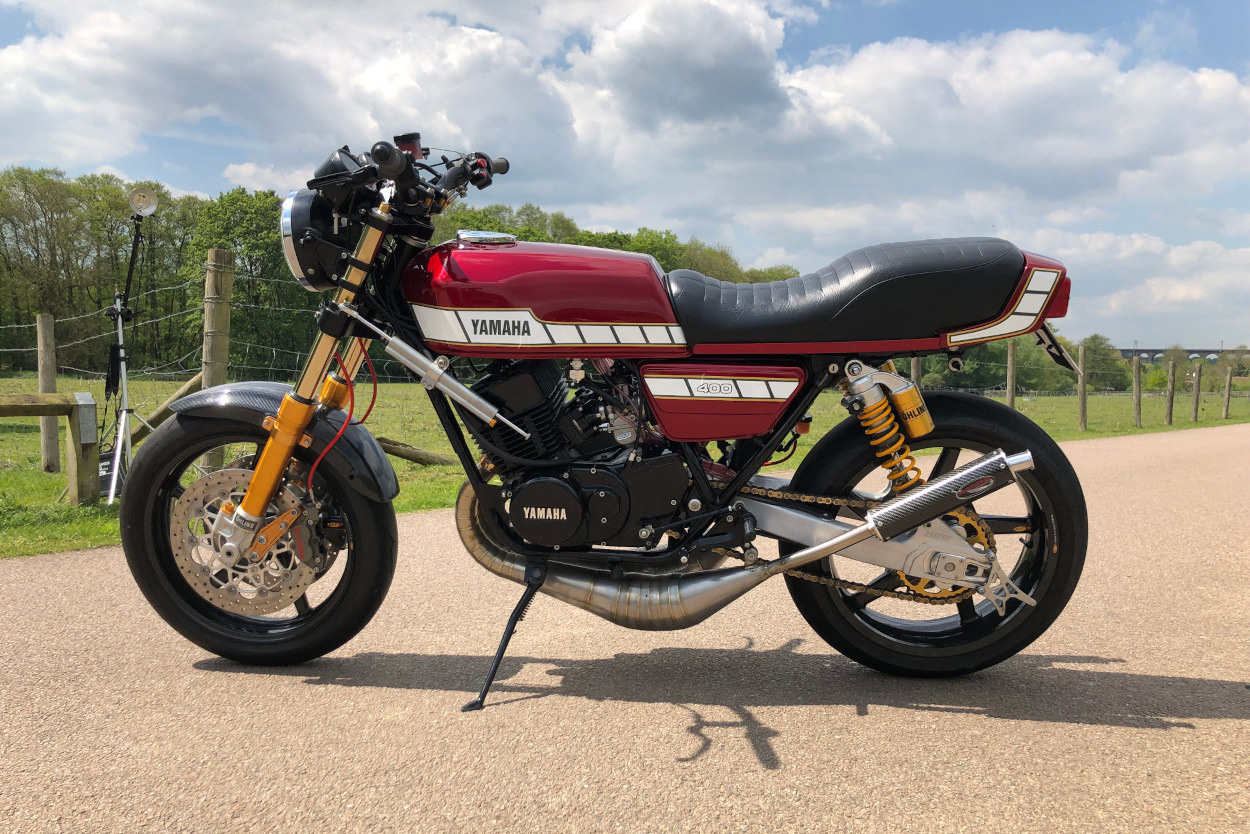

Yamaha RD400 restomod Alan Phillips takes fanaticism to a whole new level. He’s owned multiple noteworthy two-strokes since the age of 19, and he’s the founder of Two Stroke Heaven—a Facebook page for two-stroke enthusiasts with over 30,000 followers. This 1987 Yamaha RD400 Daytona is his, and it’s one of the wildest restomods we’ve ever seen.
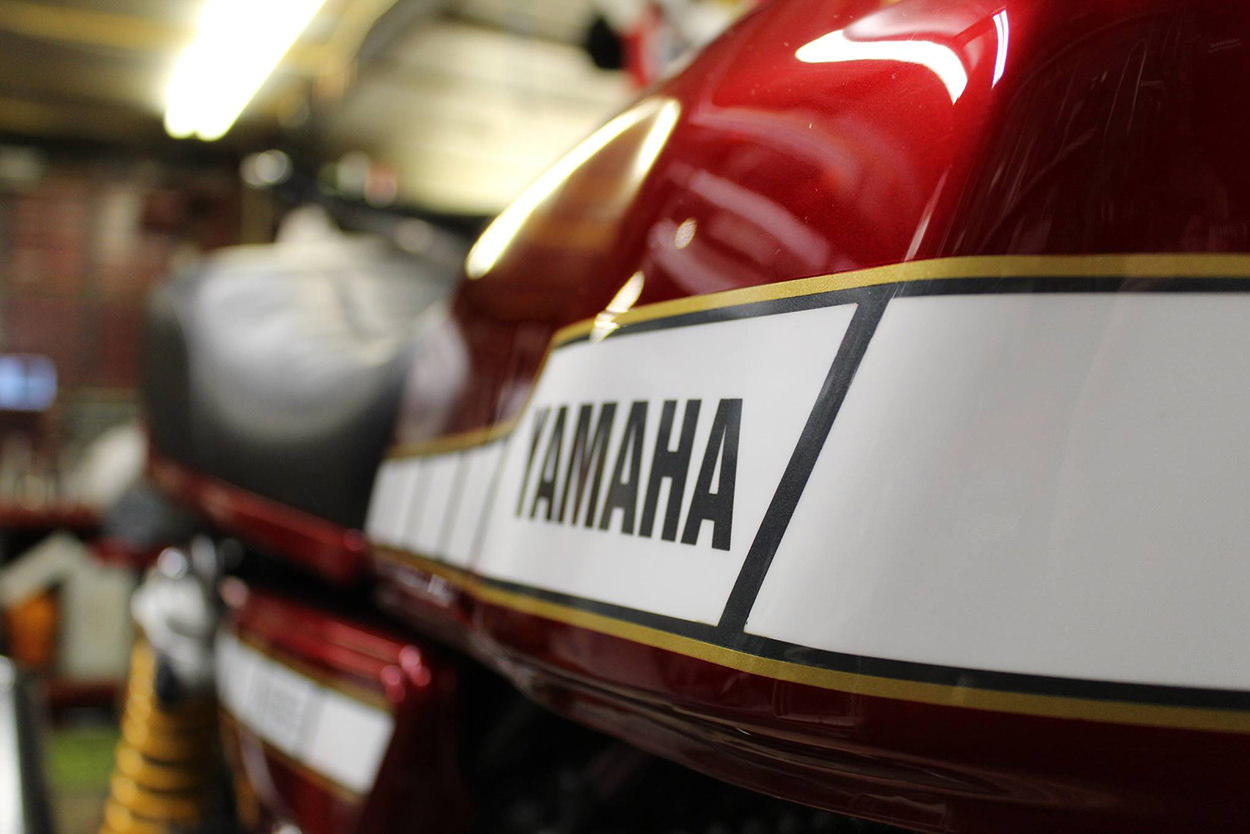

Alan’s goal here was to push the legendary RD400’s performance to the maximum, but still keep it recognizable as an RD. He had some pretty heavyweight help too: Lester Harris of Harris Performance, and Mark Dent of Performance Fabrications.

Like all good restomods, the RD400 looks stock from a distance—even if the yellow paint job it came with has been traded for a much more tasteful red. But up close, it’s a smorgasbord of real tasty upgrades.
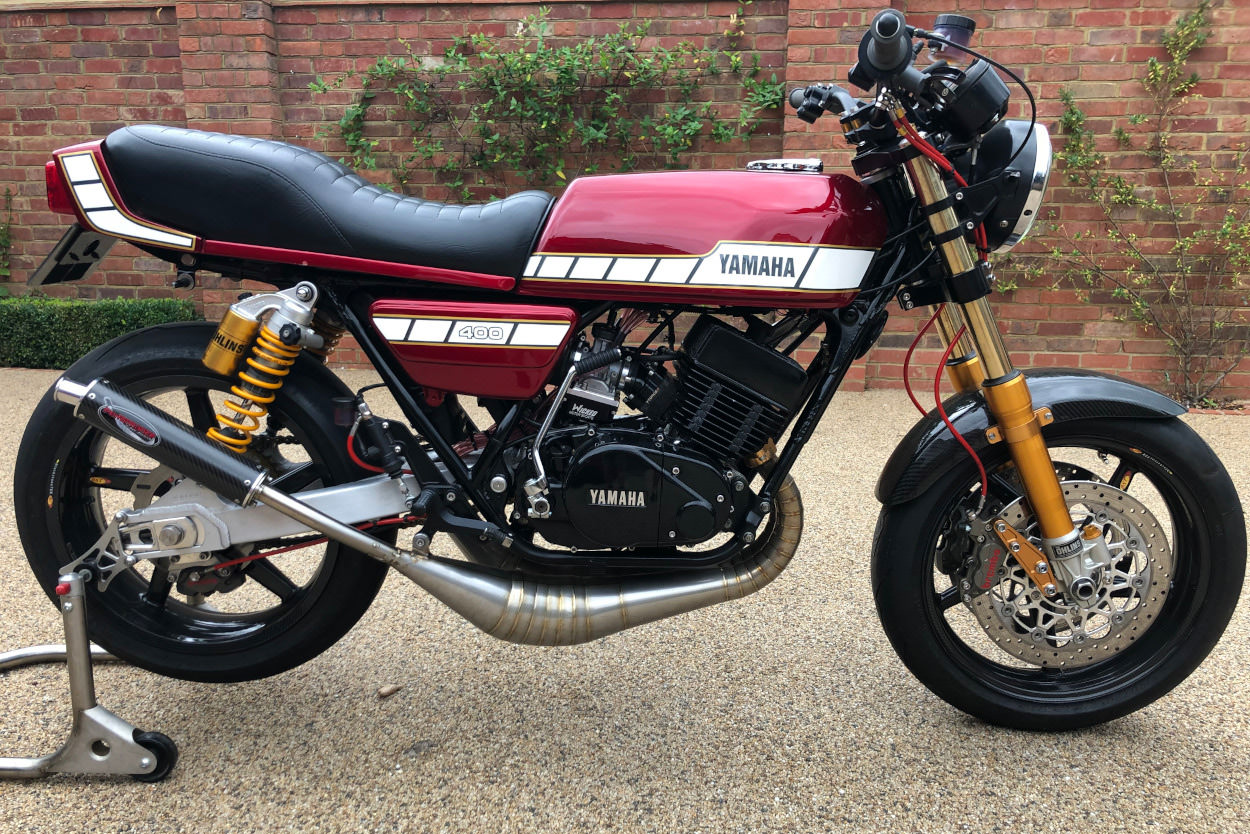

The frame’s had the Harris touch applied to it, and is matched to a Harris swingarm, with Öhlins suspension at both ends. The wheels are carbon fiber units from BST, fitted with Pirelli Super Corsa tires and Brembo brakes. Custom bits are sprinkled all over, like the yokes, foot controls and brake caliper mounts.

On the engine side, the RD’s running twin 35 mm Keihin PWK carbs, a VForce 4 reed block system and pod filters. There’s also an Ignitech ignition, and a custom-made Performance Fabrications exhaust system. Alan’s run the numbers too: 120 hp, 60 Nm and 264 pounds [120 kg] dry. [More]
BSA Gold Star flat tracker
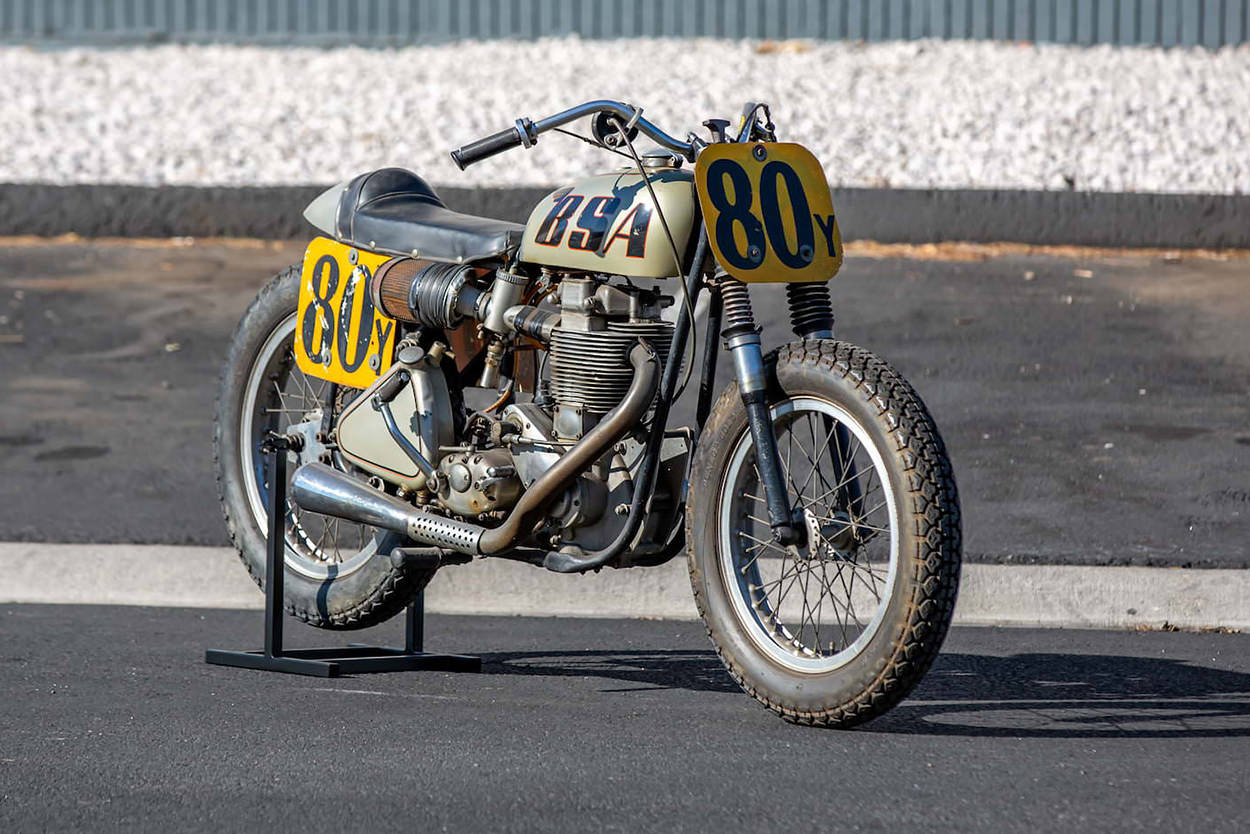
BSA Gold Star flat tracker If you’ve watched On Any Sunday, you’ll remember flat track racer Jim Rice’s scene. He famously crashed out of a race, broke his nose, bandaged it up, and raced his next heat. He also took this exact BSA Gold Star to victory, off camera, at the 1967 Sedalia Mile in Missouri.

With a 25-year production run and 11 Isle of Man TT wins to its name, the Gold Star was a big success for BSA. It was considered a high-performance production bike, and each model that left the factory did so with certified dyno results.
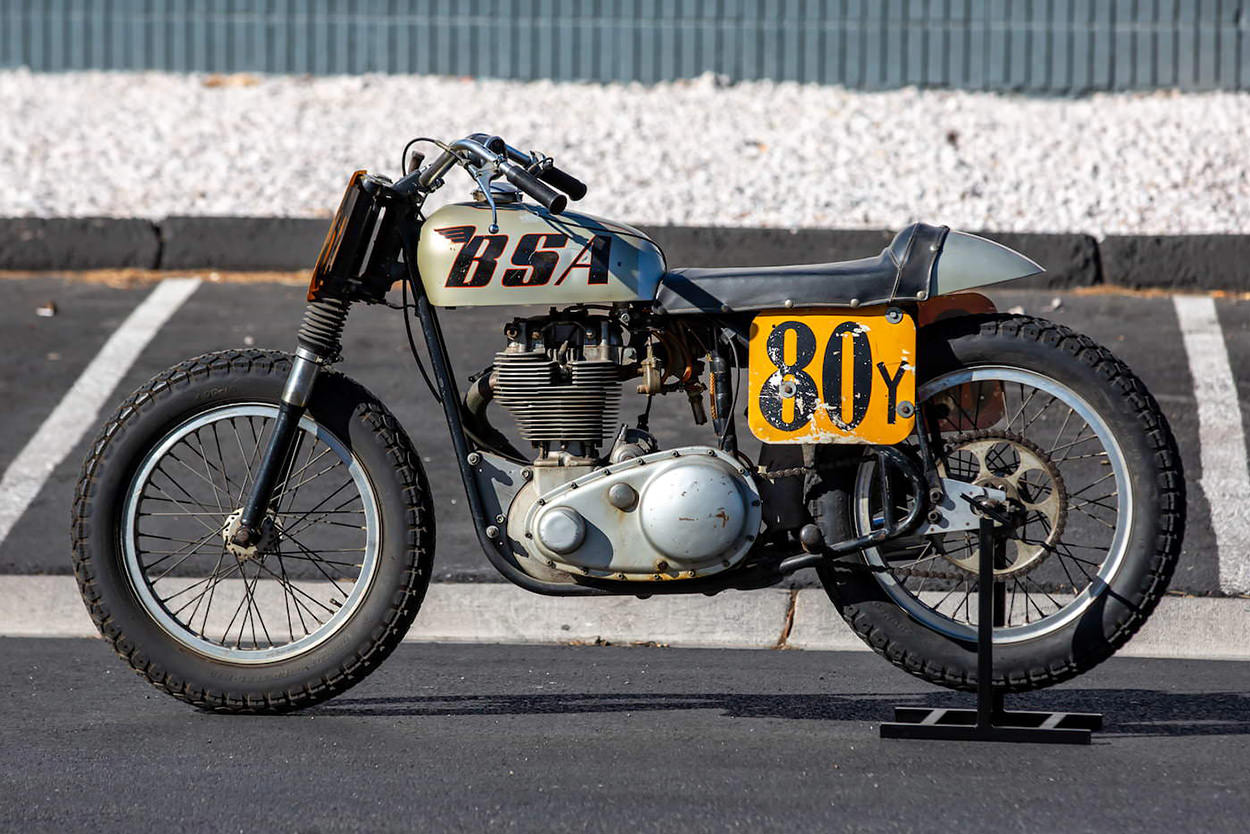
BSA Gold Star flat tracker
This particular Gold Star was modded for flat track racing. It’s been set up with no rear suspension or front brake, an oversized rear sprocket and a right-side exhaust. It’s also sporting wide, swept-back flat track handlebars, a solo seat, number boards, and no lighting, since it was built purely for track use.
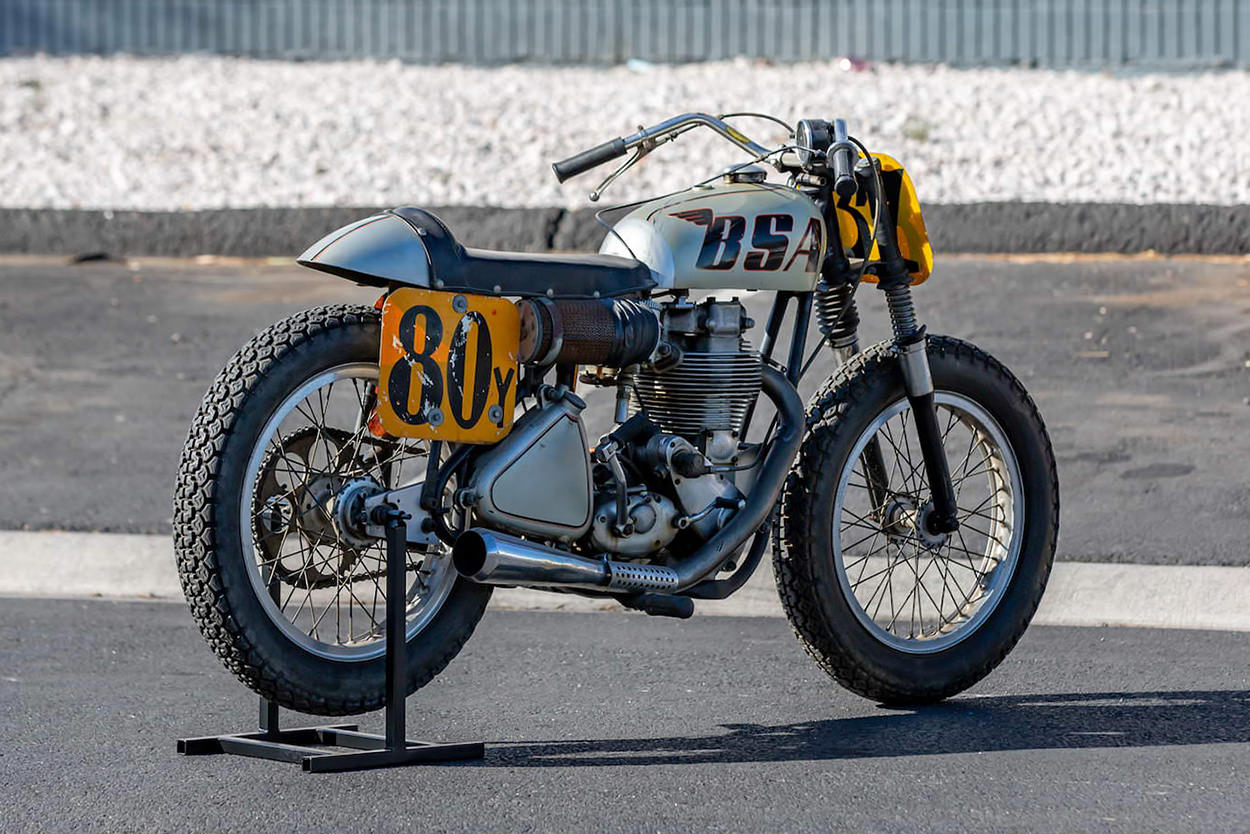
BSA Gold Star flat tracker
But since its last race it’s been left alone—dust and all.

Mecum will be auctioning it off in April, along with a set of photographs to certify its authenticity. And we’d love nothing more than to see it bought, tuned up… and put back on the track. [More]
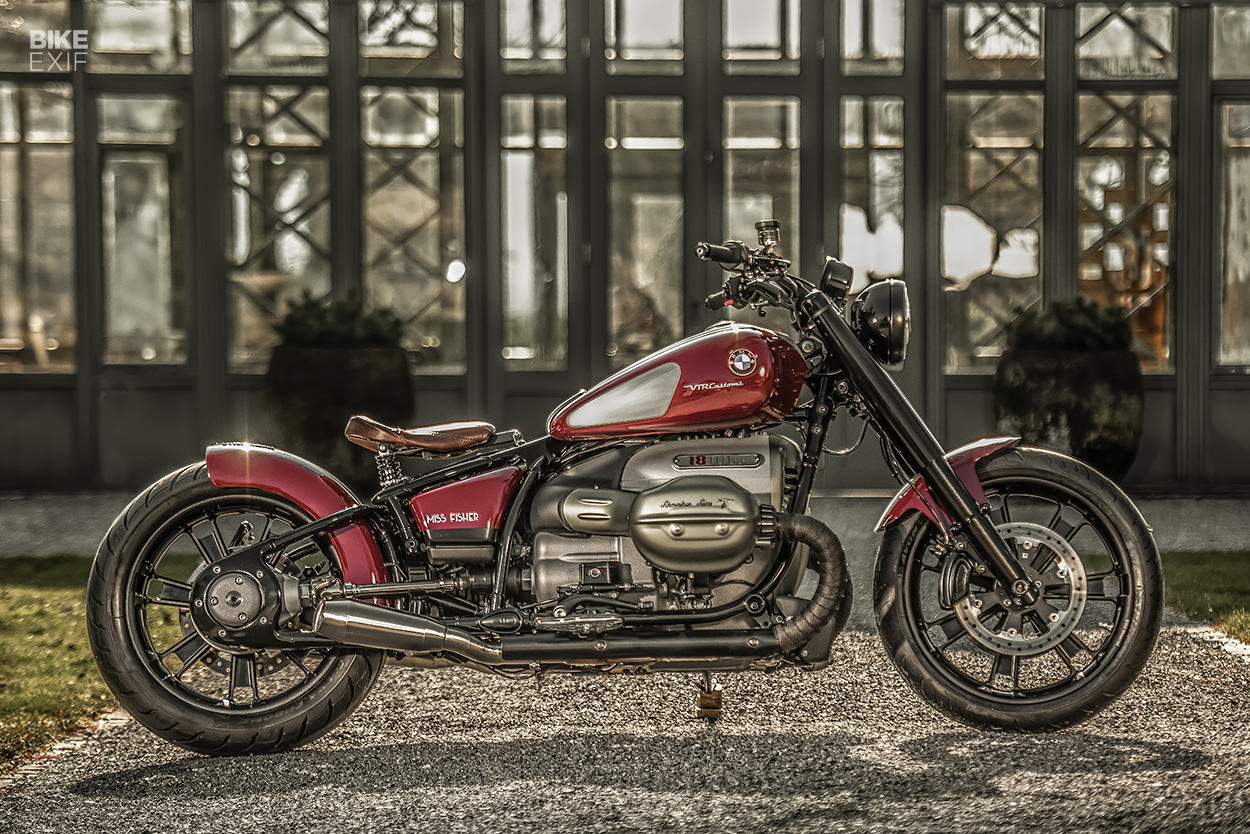
BMW R18 by VTR Customs
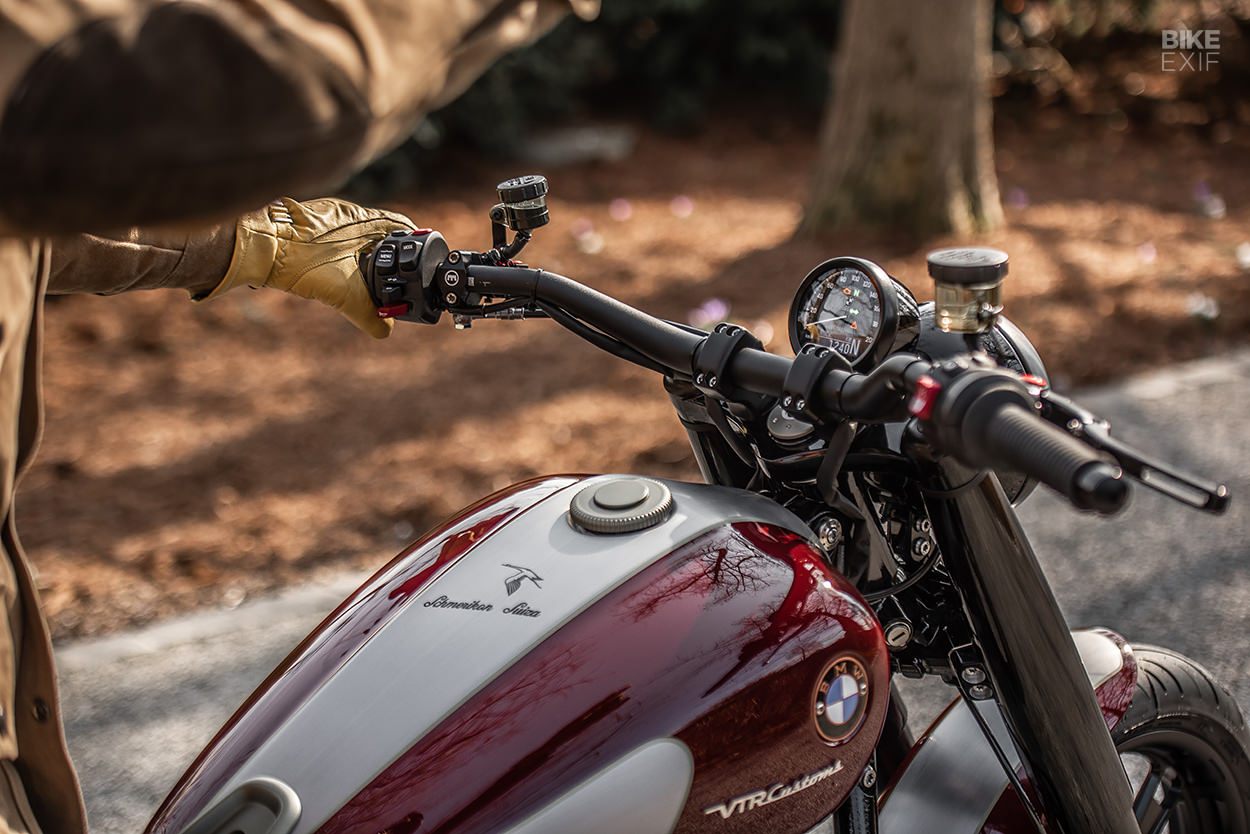
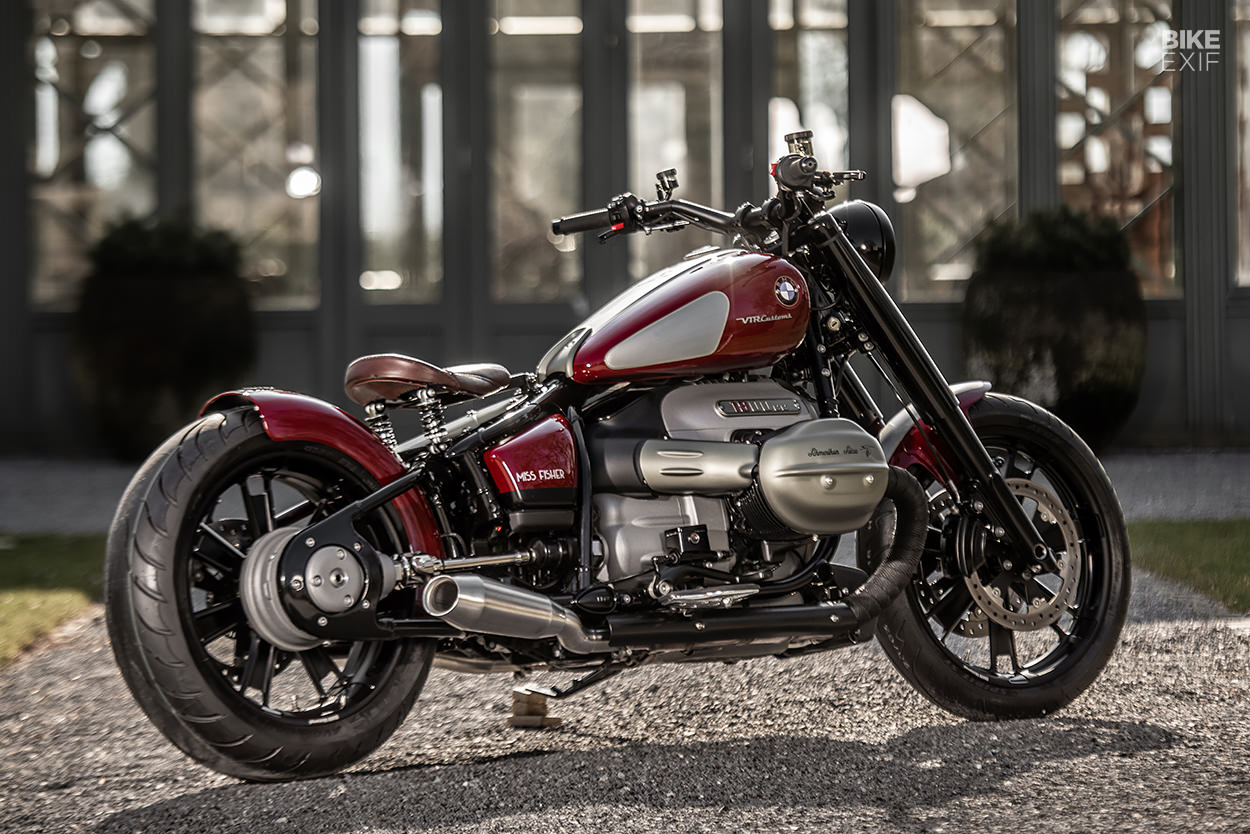
BMW R18 by VTR Customs Now that the bike’s hit dealership floors, BMW R18 customs are coming in hard and fast. This one comes from our friends at VTR Customs in Switzerland, and it’s another classy example of how just a few tweaks can transform the big boxer.

VTR’s transformation is a smart mix of bolt-on and custom parts. The wheels are 19F/18R billet aluminum items from the BMW aftermarket catalog, and the handlebars are off a BMW R1250GS. The brake and clutch controls are from Magura, and the LED turn signals and taillight combos are from Kellermann, with the rear units tucked in under the fender.
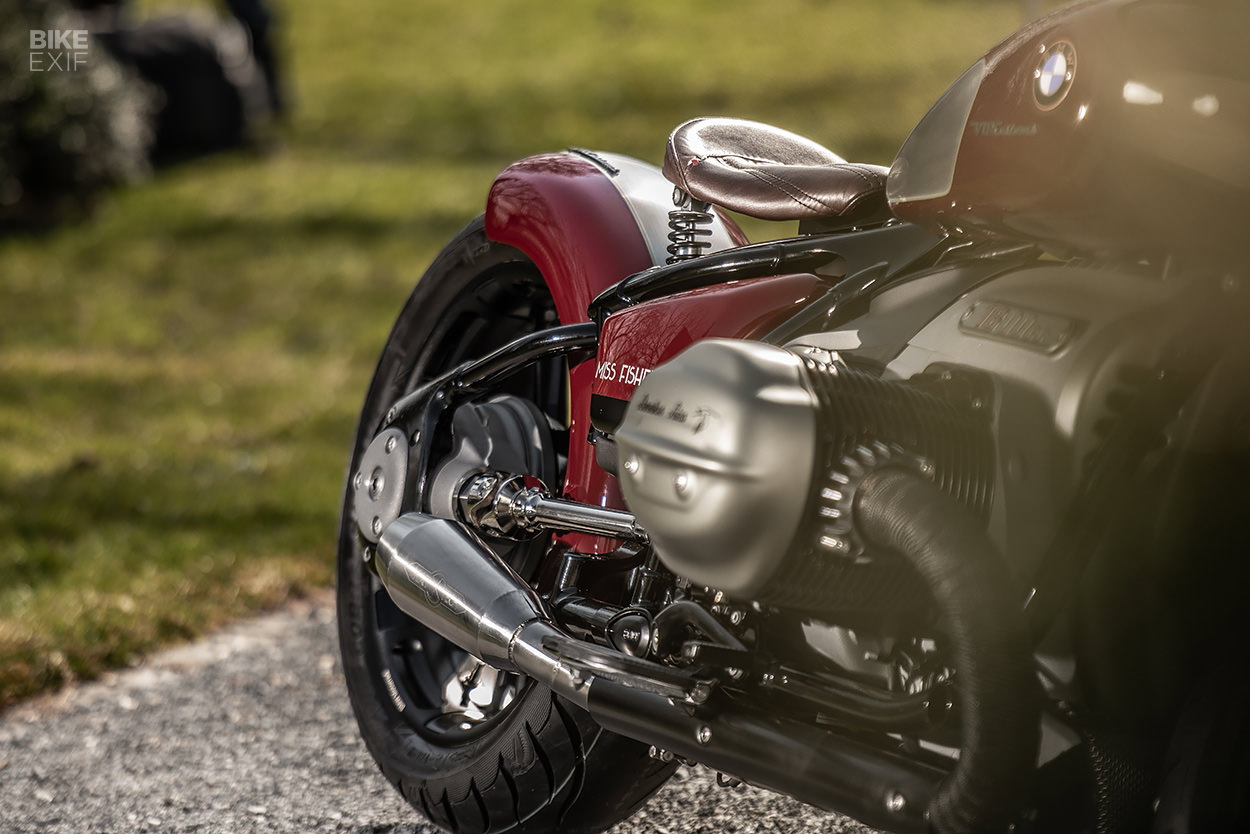
BMW R18 by VTR Customs
VTR designed their own solo saddle for the bike, with Yves Knobel handling the brown leather upholstery. It’s mounted on springs, with a blank-off plate to hide the bike’s inner workings below. Lower down are a pair of Hattech silencers, and a number plate holder from Berham Customs. The front fender’s been trimmed, and the bobbed rear fender is custom.
BMW R18 by VTR Customs
But the big trick here is the R18’s über-classy paint job. VTR took inspiration from the Australian TV show ‘Miss Fisher’s Murder Mysteries,’ which is set in the 1920s. The titular character drives a Bordeaux Red Hispano-Suiza—so VTR borrowed the color, with brushed metal knee inserts as a hat tip to classic Husqvarna enduros.

As an extra visual touch, some of the chrome bits were redone in a custom hue that sits between copper and titanium, and others in black. A handful of custom logos and badges sprinkled throughout the build add the finishing touches. [VTR Customs]
BMW R18 by VTR Customs


from Bike EXIF https://ift.tt/3creWUm