Friday, 29 March 2019

AutoSens Returning To Detroit: Conference Plays Vital Role In Autonomous Tech

  • AutoSens, a leading and influential global summit on autonomous driving, is returning to Detroit.
  • Technical sessions and presentations from from Microsoft, Sony, General Motors, and MIT are planned.
  • AutoSens takes aim at the biggest challenges facing autonomous driving by encouraging collaboration. 

Not long ago, self-driving cars were figments of science fiction; the ideal centerpiece of a quasi-Utopian yet technologically-advanced society in the far away future. For over a century, we humans have piloted our own automobiles to theaters and bookstores alike to indulge our imaginations with these stories of a distant time. Yet, the reality is different. Self-driving cars? “Not in my lifetime,” one might say.

But you’d be surprised what you might see in your lifetime.

Big Dreams & Grand Visions

Autonomous cars are no longer science fiction but science fact. They are coming to our roads; it’s only a matter of time. However, the decisions we make now as an industry beforehand are vitally important. Because once they’re here, they’re here. And consumers are already skeptical of the technology. We either get it right now or we pay a substantial price in the long run. Indeed, there are many concerns, from the supply chain and infrastructure, to the legal and financial. Yet the biggest should be this: if our autonomous cars miscalculate, someone dies.

When our goals, as an industry, include zero traffic fatalities, it’s not hard to see why right now matters. And one of the best ways to achieve such a remarkable goal? By working with and learning from each other.

Content & Collaboration

These are central themes of AutoSens, and why it remains the world’s most influential summit on autonomous driving. When AutoSens returns to Detroit on May 14th, the conference will explore the biggest challenges facing autonomous cars. By combining cutting-edge academic research, industry R&D, and OEM insights, AutoSens is an invaluable resource for the engineering community.

“Engineers can ‘take the boxing gloves off’ for three days and just be engineers and scientists working on shared challenges and pursuing high-quality technical work,” said Robert Stead, Managing Director, Sense Media, the parent company of AutoSens. “We strive for high-quality technical presentations at AutoSens every year, so all attendees will go back to their office or lab with some new solutions, food for thought, or novel information.”

Organizers say returning to Detroit is essential when it comes to facilitating those types of outcomes.

“From sensors to software; systems to simulation, hardware, testing and services; there’s plenty to see over the three days,” Stead continued. “Detroit has the dual advantage of its history and future potential; recent developments combined with the scale of the existing automotive expertise in the region makes it the perfect melting pot for discussions driving the future of automotive product development.”
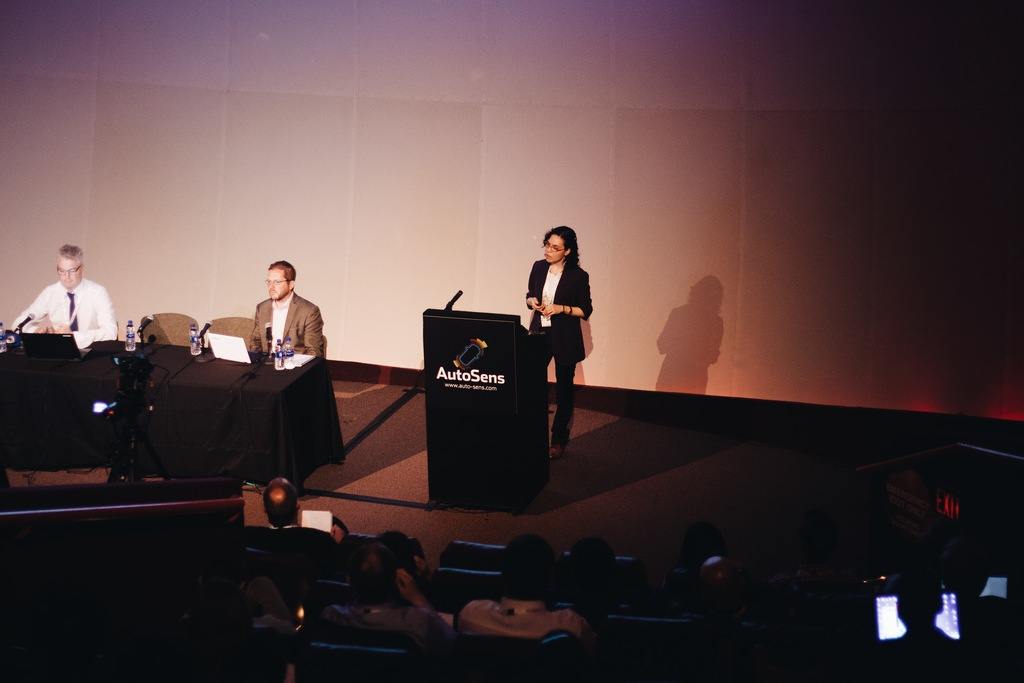
Cognitive scientist Dr. Mónica López-González, Co-Founder and Scientific & Artistic Director of La Petite Noiseuse Productions, speaking at AutoSens Detroit last year. Photo: Alex Hartman for Sense Media.

Robust Agenda

The Michigan Science Center will host AutoSens Detroit for the second year with another robust agenda. Highlights include the opening plenary with presentations from the U.S. Highway Loss Data Institute on the impact of current ADAS technologies on road safety. Technical workshops include a session from Osram about infra-red sensing and a hands-on demonstration from 3M regarding material-sensor interaction systems. Microsoft will host a tutorial on the Robot Operating System, while DeepScale will present energy-efficient approaches to autonomous driving.

“The technical presentations focus on these topics, but we also cover the wider issues facing development of ADAS and autonomous vehicles in the conference plenary sessions that open and close the event,” Stead said. “This might include the regulatory, financial, or legal context for the development of vehicle perception systems.”

“I would say the biggest challenge for people is trying to understand the different technologies,” explained Phil Magney, Founder and Principal Advisor, VSI Labs, during AutoSens Detroit last year. “This conference has been good for us because we meet like-minded people that are facing similar challenges; we talk, we exchange our views, and we learn from each other.”
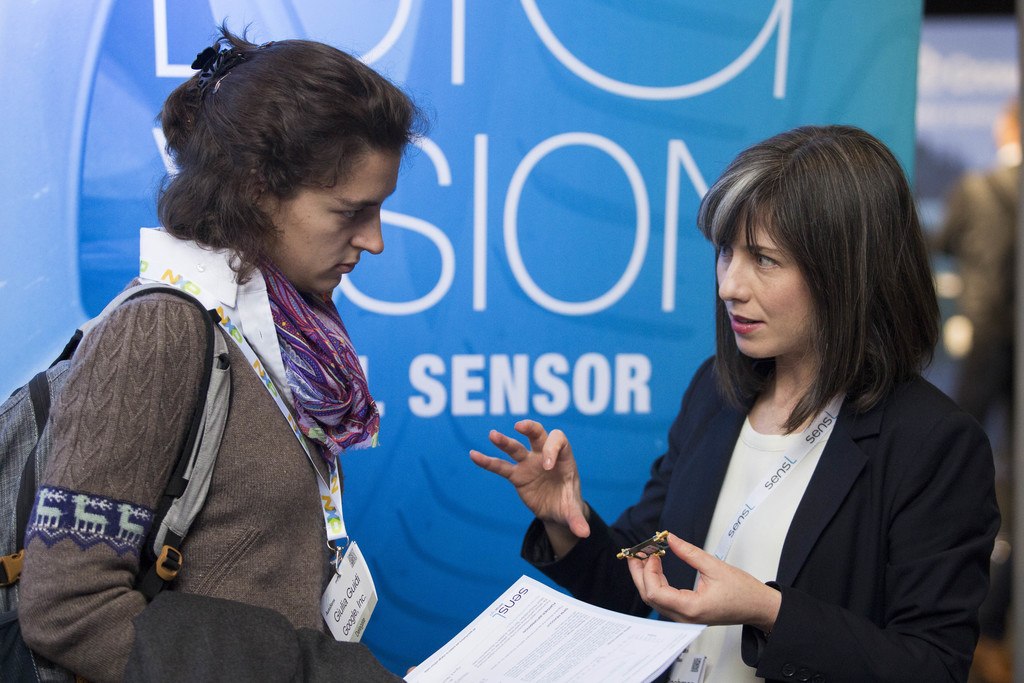
During a past AutoSens event in Brussels, Belgium, Senior Applications Engineer Edel Cashman (right) from SensL Technologies demonstrates how the company’s sensors can be utilized for LiDAR applications. Photo: Sense Media, © Bernal Revert/BR&U.

Going Deeper

Those curious to learn more about the inner-workings of an autonomous car will be in good company. For example, the Detroit Autonomous Vehicles Group is planning a hackathon for future engineers to learn the basics of self-driving cars. As is common at AutoSens, attendees can see how an autonomous car works, piece by piece.

“By this we mean the sensors, cables, processors, other hardware and software that give a vehicle’s computer a picture of its environment so it can make decisions,” Stead explained. “These technologies are applied in many currently available road-going models, but they are also used in R&D for more advanced systems that will hit the market in the future, including fully autonomous vehicles.”

“We wanted to talk to the sensor companies because cars are getting a larger chunk of sensors now, especially for advanced driver assistance systems, autonomous applications, and for next-generation cockpits,” said Soshun Arai, Director of ADAS and Automated Driving Platform Strategy for the company. Arai and his team attended AutoSens Detroit last year to look more specifically at the individual components that affect their overall business.

“We came to AutoSens because we wanted to understand the technology and trends of sensors,” he said.

Attendees sit in during one of the many technical presentations that took place at AutoSens Detroit last year. The conference will return to the Michigan Science Center beginning on May 14th. Photo: Alex Hartman for Sense Media.

For Engineers, By Engineers

Keynote for AutoSens Detroit this year is Ed Bernardon, VP of Strategic Automotive Initiatives at Siemens. Bernardon will examine how autonomous technology will impact the future of transportation. In preparation, he and his team interviewed experts working on 3D-printed autonomous shuttles, intelligent traffic systems, and even flying cars. In addition, technical presentations from General Motors, Changan, Aptiv, Daimler, NVIDIA, Valeo, Sony, and TomTom are planned. Academic sessions include those hosted by Wayne State University, University of South Carolina, and MIT.

“AutoSens exists simply to support and help engineers and scientists, and when we hear stories from attendees about the new people they met, the things they learned, the business connections made – that’s what keeps us motivated,” Stead said. “It’s about creating a meeting place and community that can be a catalyst for others, in their pursuit of good science.”

For conference organizers, sometimes it’s about what attendees won’t experience.

“I’ve run more conferences than I can remember during my 14-year career in this sector, and sadly I’ve seen some of them suffer from an overly protective and pushy sales approach,” Stead continued. “I can understand the individual motivations for this, but it’s counterproductive at learning and networking events like this.”

“It’s a great community and we are very happy to be part of this ecosystem; it’s an excellent event,” added Paul Fleck, Founder of Dataspeed.
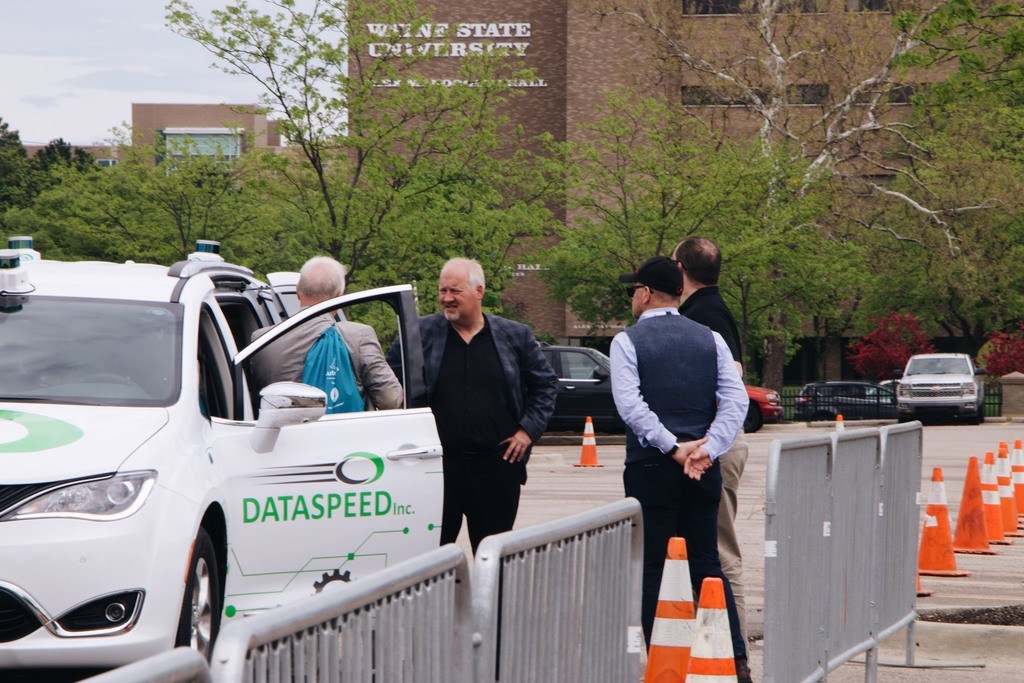
Dataspeed Founder Paul Fleck (black shirt, jacket, middle) talks with AutoSens Detroit attendees in May 2018. Dataspeed showcased the company’s ADAS Kit which helps engineers maximize their development of autonomous systems in the field. Fleck, an engineer himself, lost a loved one in an auto accident. The experience led him to develop technology he believes will save lives. Photo: Alex Hartman for Sense Media.

Tickets, Location & More Information

AutoSens Detroit 2019 begins on Tuesday, May 14th at the Michigan Science Center and runs through the 16th. Organizers say they are happy to see so many returning exhibitors alongside plenty of new brands. A demonstration event is also planned for the 14th, where attendees can take laps in vehicles equipped with autonomous technology.

Tickets, including discount packages for females in the engineering community, are available now.

“AutoSens is all about nurturing the global community of bright minds who are driving forward this revolution in automotive,” Stead said. “A truly international audience will assemble in downtown Detroit to collaborate and learn from each other’s experiences, meet new people, and catch up with old friends.”

Carl Anthony studies mechanical engineering at Wayne State University, serves on the Board of Directors for the Ally Jolie Baldwin Foundation, and is a loyal Detroit Lions fan. Before returning to school, he simultaneously held product development and experiential marketing roles in the automotive industry. 


from Automoblog.net https://ift.tt/2I0Ca4O

The Keeper: Gasoline builds a BMW R series for Cam Elkins

BMW R series cafe racer by Gasoline
You may not know the name Cam Elkins, but there’s a good chance you’re familiar with his work. He’s the man behind the brilliant short films called Stories of Bike, which explore the relationships between custom motorcycles and their owners.

After several years filming other people’s bikes, Cam decided it was time to get a custom of his own. He selected a 1986 BMW R65.

BMW R series cafe racer by Gasoline
“I’ve always loved boxer engines,” he tells us. “I think they’re reminiscent of old WW2 airplanes, which had such a sleek but utilitarian look to them.”

“And when I first got into the cafe racer scene, it was the custom R80s and R65s that tended to catch my eye. So in short, it’s been a dream for a long time.”

BMW R series cafe racer by Gasoline
The R65 is a wise choice for a custom from the R series. It’s light, the handling is quick, and steering stability is good—thanks to a beefy upper triple clamp. So it’s the perfect airhead for twisty roads, especially if it’s a post-‘85 model with the monoshock configuration.

Cam got to know Jason Leppa and technician Sean Taylor at Gasoline while filming a promo video for their custom Harley Sportster, the A-15. So when he’d saved up enough to buy the R65 and put some money toward customizing, he knew whom to call.

BMW R series cafe racer by Gasoline
“I knew Gasoline would do a great job, having seen their custom work up close.” So Cam delivered the BMW to Gasoline’s workshop in south Sydney, Australia. And as a style guide, he pointed them towards a super-clean R80 from the Spanish shop ROA.

“The brief was to build a forever bike,” says Gasoline’s Jason Leppa. “One with timeless style and clean lines, with modern controls and handling.”

BMW R series cafe racer by Gasoline
Gasoline have absolutely nailed that brief, and delivered one of the cleanest looking R-series BMWs we’ve seen. There’s not a line out of place, or a sliver of pipewrap—and even the 18-inch cast alloy wheels look good.

To counter the age of the R65, Gasoline started by dismantling the original engine and gearbox. They vapor blasted and rebuilt the drivetrain with all new bearings, seals and gaskets, and then restored and powder coated the final drive unit.

BMW R series cafe racer by Gasoline
The carbs were overhauled too, and new jets installed to match the improved breathing: there’s a DNA filter upstream, and a custom-made 2-into-2 stainless exhaust system, with a balance pipe between the cylinders.

The get the stance right, the front suspension has been lowered 40mm and the rear raised 50mm, with the help of a new shock.

BMW R series cafe racer by Gasoline
There’s a new top clamp from Retrofit Collective, which fits neatly with a headlight bowl mount and fork brace from TinWorks.

Purpose Built Moto supplied the small profile headlight (and control unit) to complete the modern retro aesthetic.

BMW R series cafe racer by Gasoline
Gasoline added clip-on bars, with Beringer hand controls and switch blocks (and brake calipers). Motogadget supplied the speedometer, grips and m.view mirrors—which have a polished aluminum rather than glass surface.

And there’s more German engineering in the shape of discreet Kellermann brake and signal lights.

BMW R series cafe racer by Gasoline
It’s all hooked up to a new wiring loom and, at Cam’s request, an electromagnetic cruise control device connected to a custom throttle tube.

It’s one of those almost impossibly clean builds, with paint to match—a deep royal blue and a subtle matte grey, colors with a clear link to BMW’s history.

BMW R series cafe racer by Gasoline
But as we all know, simplicity can be deceptive. “The style looks easy to achieve, but the build process wasn’t!” Jason admits. “Nearly all the modern components had to be modified to fit, and took longer than expected to source.”

The effort was worth it, and reflected in the name of the bike: The Keeper. “It preserves its 1980s history, but will be ridden well into the future,” says Jason.

BMW R series cafe racer by Gasoline
Cam Elkins now has a bike that can hold its own against all the beautiful machines that pass in front of his camera. And if you’re lucky enough to be going to the fabulous Machine Show in Braidwood, Australia this weekend, you can see it in the metal.

The rest of us will have to drool over this (very fine) photoset instead.

Gasoline | Facebook | Instagram | Images by Rob Hamilton

BMW R series cafe racer by Gasoline


from Bike EXIF https://ift.tt/1elNyER

Wednesday, 27 March 2019

Not your typical custom: A Kawasaki ER-6n from France

Custom Kawasaki ER6n from Duke Motorcycles
Every time I consider getting myself a super-sensible daily runner, the Kawasaki ER-6n pops up on my radar. It’s cheap, makes decent power and handles well. Smiles for dollars, it’s hard to beat…if you don’t mind the looks.

Given the limited pool of ‘acceptable’ custom donors these days, the ER-6n is not a bike you often see. But Lionel at Duke Motorcycles in Nice, France, is a believer. Until recently, his commuter bike was a white 2011-model ER-6n. Then he bought a Ducati Monster 600—and wondered what to do with his middleweight naked Ninja.

Custom Kawasaki ER6n from Duke Motorcycles
Lionel dragged the ER-6n onto the bench to service it, clean it up, and figure out his next move. Then, while waiting for the oil to drain out, he started tidying up his workshop. In no time he’d dug out a set of handlebars, some tires and a speedo—enough to make a good start on a custom.

An hour later, all that was left on the worktable was the frame and motor. And Lionel started transforming his commuter bike into the aggressive street fighter you’re looking at now.

Custom Kawasaki ER6n from Duke Motorcycles
The first changes were all hidden tweaks. He removed the airbox, then fitted a set of pod filters. He also installed a Lithium-ion battery, and relocated a bunch of electrical components.

The ER-6n’s radical bodywork is a mix of custom and OEM bits. Lionel liked the tank, side panels and belly pan—so he kept those. But he ditched the bulky seat unit, fabricating a sharper aluminum piece to fit in its place.

Custom Kawasaki ER6n from Duke Motorcycles
It sits on a custom-built subframe, and is capped off with an Alcantara saddle, upholstered by NMB Design. The stitching pattern is mimicked on the underside of the tailpiece, where Lionel also built in a red LED, with tiny holes for the light to poke through. It’s not the official tail light though—that’s further down, on the custom-made license plate bracket.

Custom Kawasaki ER6n from Duke Motorcycles
There’s more metalwork up front—notably a new headlight cowl with integrated fork guards. And an LED covered by a striking aluminum grill. Both the custom front and back ends were shaped to complement the stock bits, resulting in a fluid design throughout the bike.

Custom Kawasaki ER6n from Duke Motorcycles
That headlight grill is also a nod to the Bugatti Veyron. It’s a weird connection, but Lionel’s always liked the thousand-horsepower French supercar, and it spoke to the futuristic style that he was going for.

It’s also where he got the Kawasaki’s new livery from: the white and blue is a riff on Bugatti’s ‘white gold’ scheme. Lionel executed the paint himself, then redid the cylinder heads, crank cases and rear shock spring to match—and even the wheels.

Custom Kawasaki ER6n from Duke Motorcycles
The Kawasaki’s suspension and brakes perform well enough out the box, so Lionel left them alone. He did refresh the brakes though, and upgraded the system with new braided hoses. The tires are Continental TKC80s.

Up top are a set of CNC Racing handlebars, new grips, a Koso dial, and a single bar-end mirror from Highsider. Lionel shortened the OEM levers, then engraved his logo into them. The bike’s also sporting new rearsets from Valter Moto.

Custom Kawasaki ER6n from Duke Motorcycles
A new silencer from the Italian company Giannelli rounds out the package. It’s mounted on the stock headers, and yes—they’re wrapped in titanium pipe wrap. (But it’s such a neat job, we’re letting Lionel off the hook).

Street fighters aren’t usually our thing, but Lionel’s ER-6n hits all the right notes. And since even the most jaded of moto journalists tend to laud the naked Ninja as a rock-solid best buy, maybe it’s time we all started scanning the classifieds …

Duke Motorcycles | Facebook | Instagram | Images by Julien Giauffret

Custom Kawasaki ER6n from Duke Motorcycles

Custom Kawasaki ER6n from Duke Motorcycles


from Bike EXIF https://ift.tt/2uwoA1e

Longest-Lasting Vehicles: New Data Reveals 14 of Them

A study from iSeeCars on the longest-lasting vehicles to reach 200,000-miles is an eye-opener for potential car buyers. If you’re in the market for a new vehicle, this study might be of huge help. It not only covers SUVs, sedans, and pickups, but also offers insight on the longest-lasting luxury vehicles and sports cars. The study ultimately shows that while vehicles today benefit from modern advances in technology and manufacturing, some are simply better than others.

SUVs, for example, are among the most reliable vehicles today.

“A few patterns stood out when we completed this study,” explained Julie Blackley, iSeeCars Communications Manager. “The first is the dominance of full-size SUVs with body-on-frame or truck-based platforms. Also, American vehicles have a strong showing on the overall list, with six full-size SUVs earning the distinction of the longest-lasting vehicles.”

And if you think squeezing 200,000 miles out of your car is absurd, the study also includes the highest percentage of vehicles likely to reach 300,000 miles. Yes, these cars do exist. They are out there somewhere, churning more miles than Forrest Gump on a depression-fueled running binge. Let’s take a closer look.

Combing Through The Data

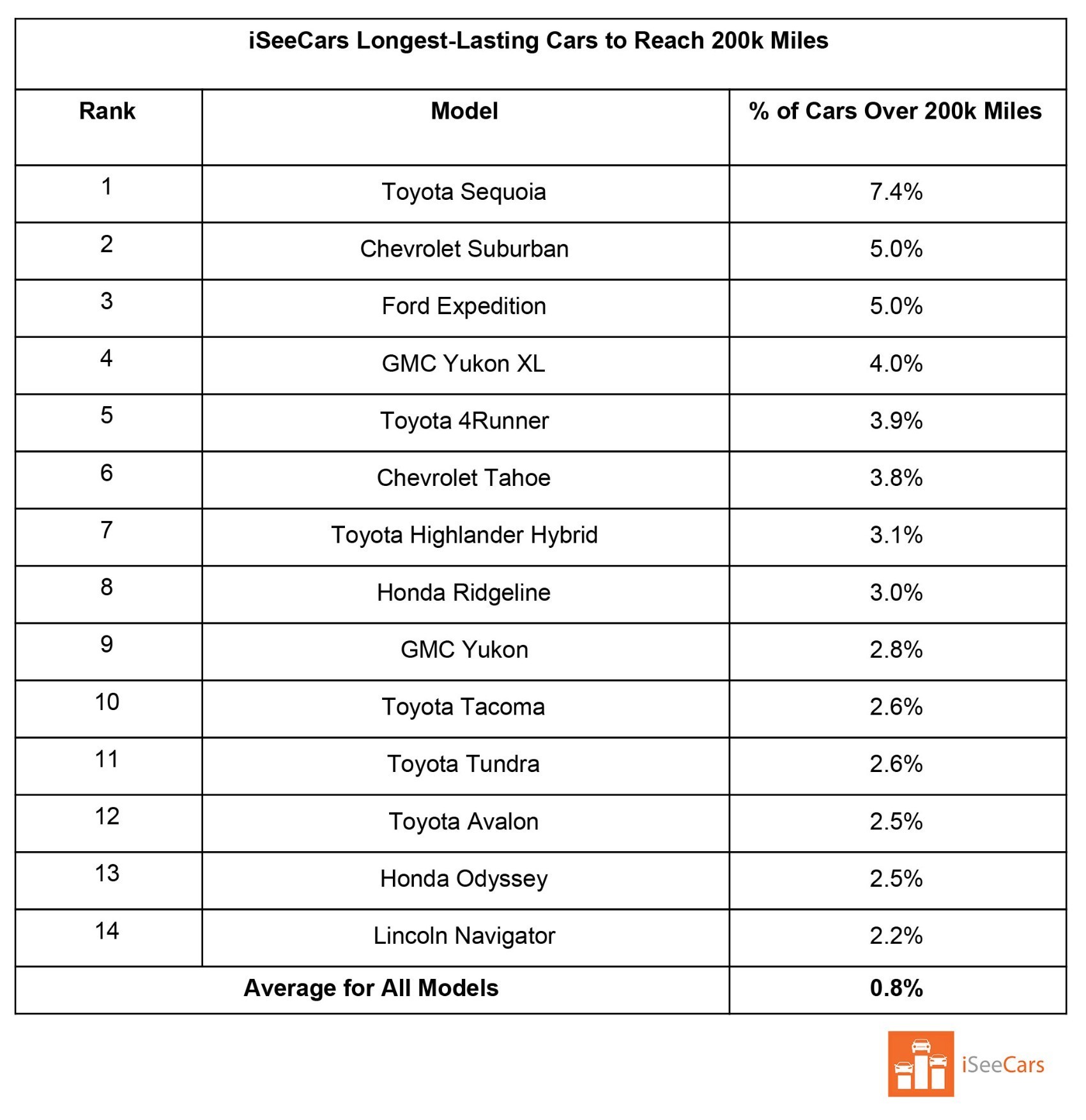
The study involved over 13.8 million cars sold last year. Using that data, iSeeCars found 14 vehicles most likely to eclipse the 200,000-mile mark. The average nameplate has .8% of its vehicles achieving 200,00 miles or more, but car shoppers can increase their odds by considering one of the 14 entries on the list.

“This is a very important topic, because regardless of if you plan on keeping your car for 200,000 miles, most car shoppers want a reliable and durable vehicle,” Blackley said. “It’s important for consumers to have unbiased information to help them make an informed purchasing decision, which is why we analyzed over 13 million listings to develop this study.”

Big SUVs Stand Out

Earning the top spot is, unsurprisingly, the Toyota Sequoia full-size SUV. The study shows 7.4 percent of Sequoias have logged 200,000 or more miles on the odometer. Tied in second and third place respectively are the Chevy Suburban and Ford Expedition. Next is the GMC Yukon XL (4.0%), Toyota 4Runner (3.9%), Chevy Tahoe (3.8%), and Toyota Highlander Hybrid (3.1%).

Further down the list we see the Honda Ridgeline (3.0%), GMC Yukon (2.8%), Toyota Tacoma (2.6%), and Tundra (2.6%). Also included are the Toyota Avalon, Honda Odyssey, and Lincoln Navigator.

iSeeCars analyzed over 13.8 million vehicles sold in 2018 to find which ones are most likely to hit 200,000 miles. The top 14 have at least 2.2 percent (almost three times the overall average) of their vehicles reaching 200,000 miles. According to the data, SUVs are among the longest-lasting vehicles.

Longest-Lasting Vehicles: Pickup Trucks

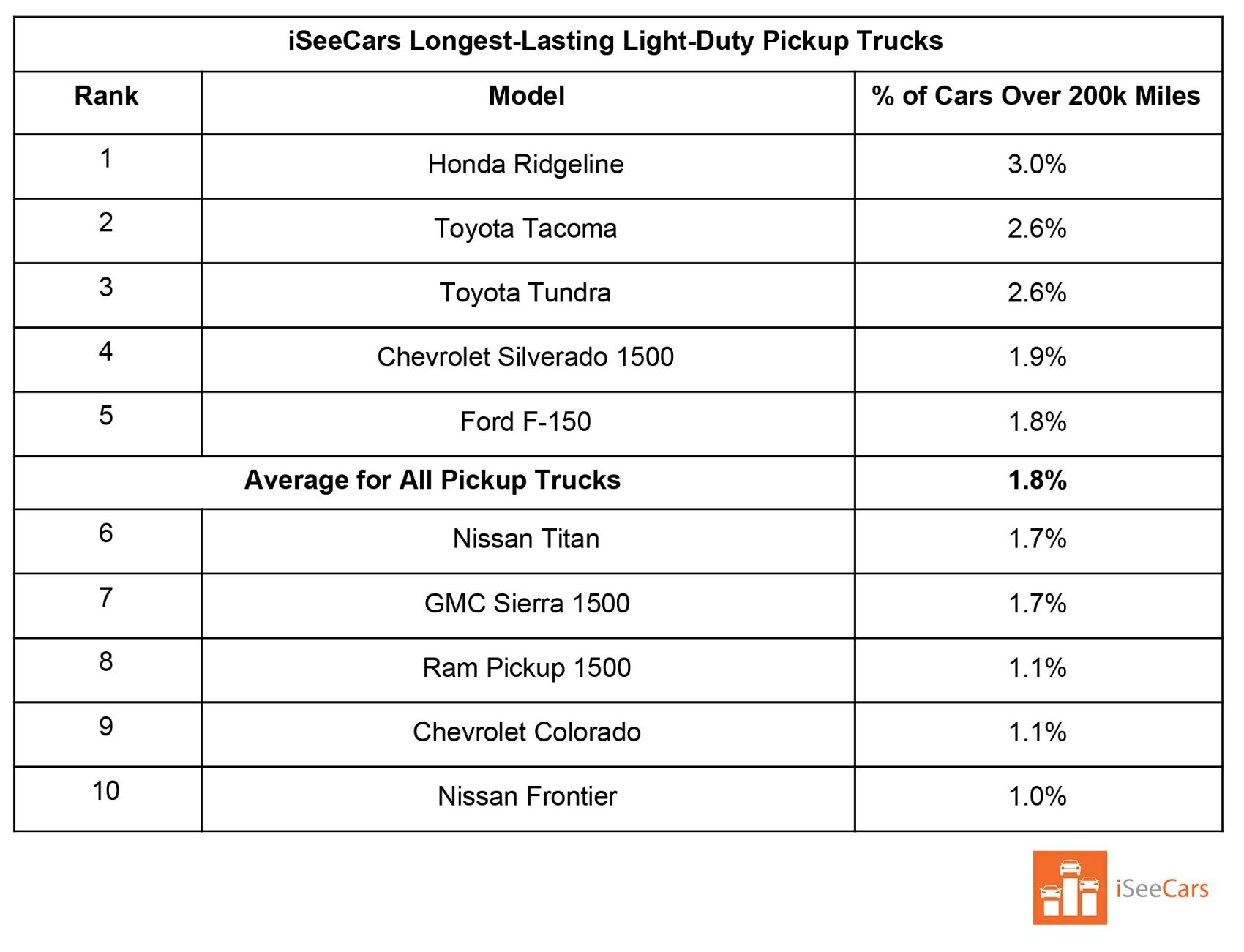
According to the study, the top five trucks are the Honda Ridgeline (3.0%), Toyota Tacoma and Tundra (2.6%), Chevy Silverado 1500 (1.9%), and Ford F-150 (1.8%). The Nissan Titan, GMC Sierra 1500, Ram 1500, Chevy Colorado, and Nissan Frontier each bring up the rear. The Silverado ranks higher than the Sierra, something we find odd since both come from the same Fort Wayne, Indiana assembly line. Suffice to say, both trucks are mechanically identical, albeit targeted at different buyers.

“We were surprised by this too,” Blackley said. “The Chevrolet Silverado is more of a working truck, while the GMC Sierra markets itself as more luxurious. As such, the Silverado may log more miles since it’s more likely to be used for work purposes.”

A Steel Horse

On this particular list of tough workhorses, the Honda Ridgeline sticks out like a sore thumb. It is the only one with a unibody (unit-body in Honda speak), or a car-like platform. And yet, it manages to be the study’s top truck, besting its more rugged body-on-frame competitors.

“While we weren’t surprised to see this vehicle on the list as Honda has a strong reputation for reliability, we found it interesting that the unibody Ridgeline was the longest-lasting pickup,” Blackley said.

The Honda Ridgeline utilizes six different grades of steel, including high-strength and ultra-high-strength steel in the unit-body. An aluminum hood and front bumper-reinforcement beam combines with a cast-magnesium steering hanger beam. These materials and their placement were determined by strength, safety, and overall performance, according to Honda. Versus the prior generation, the new Ridgeline has 28 percent greater torsional rigidity, meaning it’s more rugged than it looks.

“The success of the Ridgeline has paved the way for other automakers to develop similar pickup trucks,” Blackley added. “These vehicles fill a void by attracting a consumer who wants the function of a pickup truck with the comfortable handling of a crossover.”

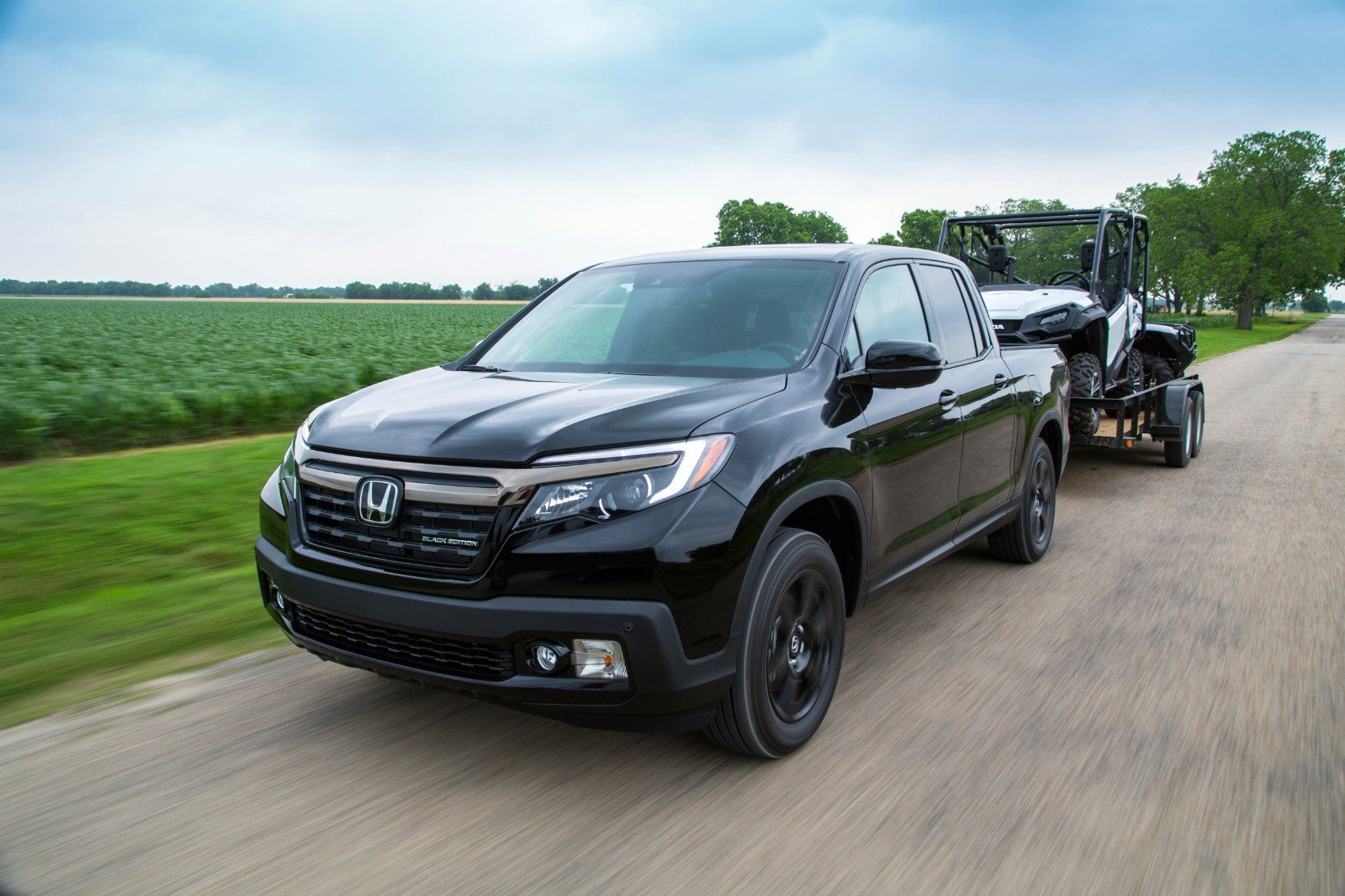
The Honda Ridgeline utilizes six different grades of steel, a contributing factor to its longevity. Photo: Honda North America.

Truth In Toyota’s Pudding

Six of the 14 vehicles in this longevity study carry a Toyota badge. The results mirror a similar study conducted by iSeeCars that focused on ownership; specifically cars that original owners were most likely to keep for 15 years or more. After analyzing over 750,000 vehicles sold last year, iSeeCars found that Toyota owners went the distance in terms of ownership. Although revealing, these findings are not exclusive to research conducted by iSeeCars either. Toyota vehicles remain the creme of the crop in other similar studies.

“Toyota performs well in most of our studies related to longevity and reliability,” Blackley said. “These rankings are consistent with other vehicle reliability rankings from other companies like J.D. Power and Consumer Reports.”

“Honestly, I think this is about resale value as much as it is anything else; reliable cars have a higher resale value with all things being equal,” added Tom Blackman, Parts Director at Olathe Toyota Parts Center in Olathe, Kansas. “I also think a lot of older Toyotas are on the road because people have more invested in them.”

Toyota was named for a third year as the Best Brand in Kelley Blue Book’s Best Resale Value Awards. Kelley Blue Book said of the award that Toyota has a reputation for building high-quality vehicles. On KBB’s list, the Tacoma received top honors for resale.

“You don’t scrap an old Tacoma that needs work. The same can’t be said for an old Ford Ranger or Chevy Colorado,” Blackman explained. “If you buy an old Ford Taurus for $1,200, and it needs a $1,000 repair, you probably just scrap the car; but if you buy an old Toyota Camry for $3,500 and it needs a $1,000 repair, you fix it.” 

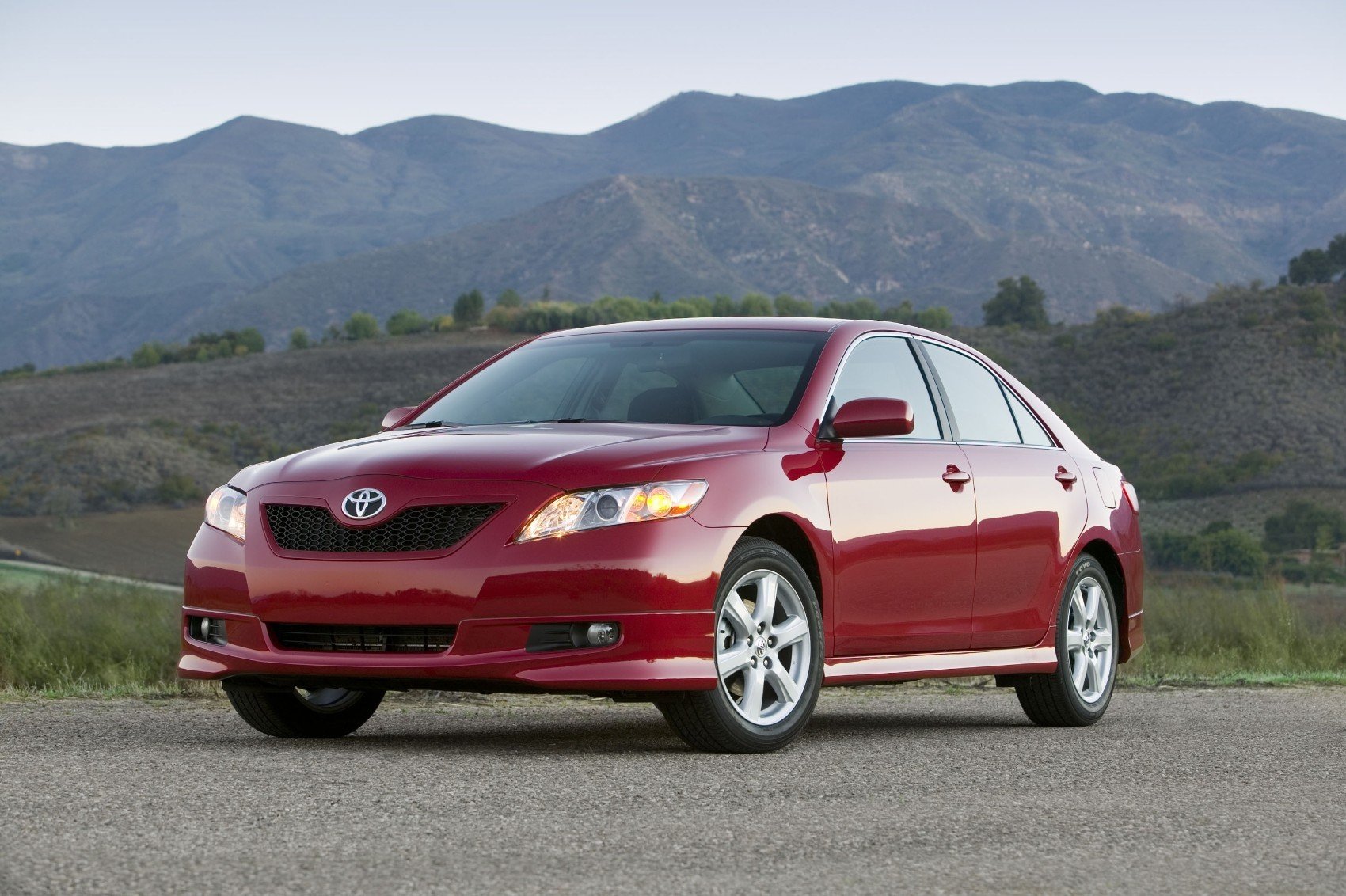
2007 Toyota Camry. Photo: Toyota Motor Sales, U.S.A., Inc.

Engineering Innovations & Customer Commitments

Perhaps one reason why Toyota tops this study from iSeeCars (and other similar ones) is the company’s commitment to quality and innovation. In 2017, for example, Toyota opened their $80 million, 235,000 square-foot Production Engineering and Manufacturing Center (PEMC) in Georgetown, Kentucky.

The facility serves as a home base for more than 600 Toyota production engineers with a 50/50 split between desk and collaboration space. All desks are sit-to-stand and engineers regularly meet with other teams. The goal? All 600 boffins are there to brainstorm and solve problems before a potential issue becomes a huge headache to the consumer.

“Our production engineers are at the top of their game and help shape the future of Toyota,” said Jim Lentz, Chief Executive Officer of Toyota Motor North America. “They push the limits every day on what’s possible in manufacturing to produce ever-better vehicles.”

Blackman believes Toyota “sweats the little stuff” and will always go the extra mile.

“I’ve worked in this business for 30 years, and Toyota is the only automaker I know of that sends engineers out into the field to ask questions,” he said. “If a Toyota vehicle or part has a problem, Toyota sends engineers out to see for themselves. They ask questions and listen to the response. Most of the other brands I’ve worked with are too cheap or too arrogant to send engineers out to look at something.”

“This not only speaks to the quality of Toyota vehicles, but also to the consumers who buy them,” Blackley added.

In addition to production engineering, supporting teams at PEMC include indirect purchasing, information systems, strategic business management, human resources, and talent development. Photo: Toyota Motor Sales, U.S.A., Inc.

Longest-Lasting Vehicles: Sedans, Hybrids & Minivans

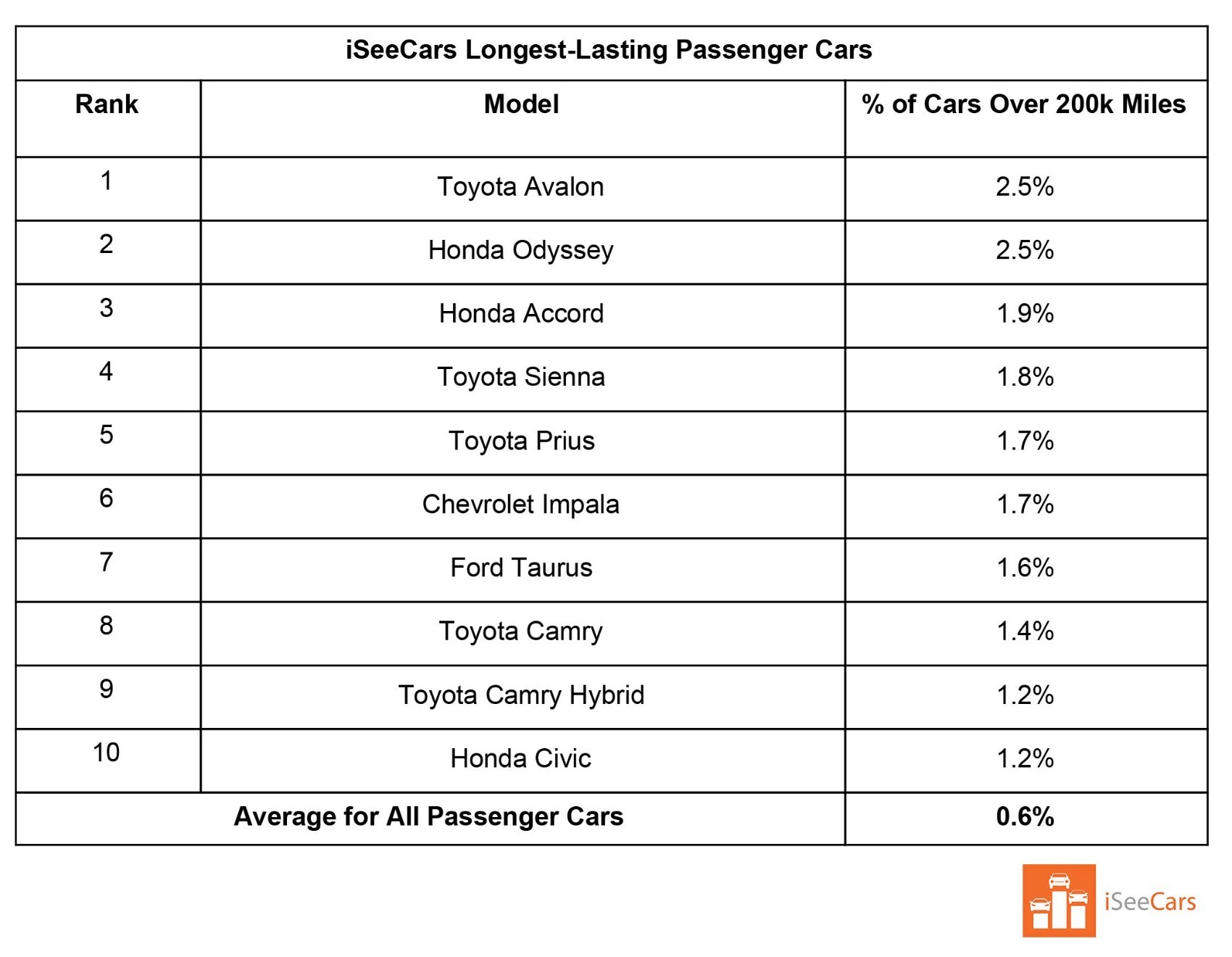
iSeeCars examined passenger cars, green vehicles, and minivans, where Toyota again held most of the list. The Toyota Avalon is first, then the Honda Odyssey, Accord, Toyota Sienna, and Prius. Rounding out the top ten are the Chevy Impala, Ford Taurus, Toyota Camry and Hybrid, and the Honda Civic. The Toyota Highlander Hybrid, Lexus RX 450h, and Lincoln MKZ Hybrid also made the list of longest-lasting vehicles.

We’re not surprised to see the Impala and Taurus here. Both are common fleet/rental cars and are more likely to pile up the miles. With regard to everyday family vehicles, Honda takes the gold.

“The Honda Odyssey represents the vehicle segment most commonly associated with family hauling,” Blackley said. “If they do choose to keep a minivan for the long haul, it is most likely to be the Odyssey.”

Tips & Advice: Keep It Simple

There’s a general consensus that – compared to older ones – newer vehicles are less prone to breaking down. But whether old or new, every vehicle has the potential to reach 200,000 miles with proper care and diligent maintenance. While the iSeeCars study points overwhelmingly to Toyota, there are things you can do to keep your vehicle running like clockwork, regardless of make and model. Basic things like regular oil, fluid, and filter changes, and checking the tire pressures and tread depths will benefit your vehicle in the long haul.

“Regardless of whether or not they appeared on this list, every vehicle made today has the potential to reach 200,000 miles with the proper maintenance and care,” Blackley said. “Routine oil changes and following the manufacturer’s suggested maintenance schedule are behaviors that can help a car last longer.”

Tips & Advice: Seasonal Factors & The Power of DIY

Varying weather conditions also affect the longevity of your vehicle. As the seasons change, certain parts in your vehicle can wear faster than others. It’s important to be aware of these top seasonal car repairs to help you cope with the unexpected. The more you know about car maintenance, the more likely your car will stay running for 200,000 miles and beyond.

“My advice is always the same: do the scheduled maintenance, drive it like you want it to last forever, and do as much work as you can yourself,” Blackman said. “It can be a hassle to change your own oil or replace your spark plugs, but it helps you stay on top of things.”

“Don’t forget regular car washes either,” Blackley added.


from Automoblog.net https://ift.tt/2TYjWZ9