Wednesday, 30 October 2024

Understanding Different Headlight Technologies Today

Driving under starry sky with the headlights of my car on a long and winding road ahead is a small delight in life. These days, car headlights have a story of their own to tell. I grew up around cars, so it’s always interesting to see how things like headlights changed over and over through the years. So, I wanted to share with you what I have learned with regards to the various headlight technologies that we have at our disposal now.

The Basics of Halogen Lights

The first car I had came with halogen headlights. They are like the reliable friend that’s there when you need them. Today, a lot of vehicles use halogen lights because they are inexpensive and easy to replace. They work pretty straightforward as well. Their light output is steady because the tungsten filament sits inside a halogen gas. But these lights use more power and generate a lot of heat compared to other kinds. It’s one of the reasons some of my friends already made the switch to newer technologies.

Halogen lights are an interesting thing because they are so readily available. You can find them almost anywhere—local auto shops to online stores—and they are the chosen option for many. Oh, and for the person like me that likes to tinker in the garage over the weekend this simplicity and accessibility make them a continuous favorite of mine. Sure, they might not have as many of the cool features of newer technologies, but they do what they’re supposed to do for most drivers.
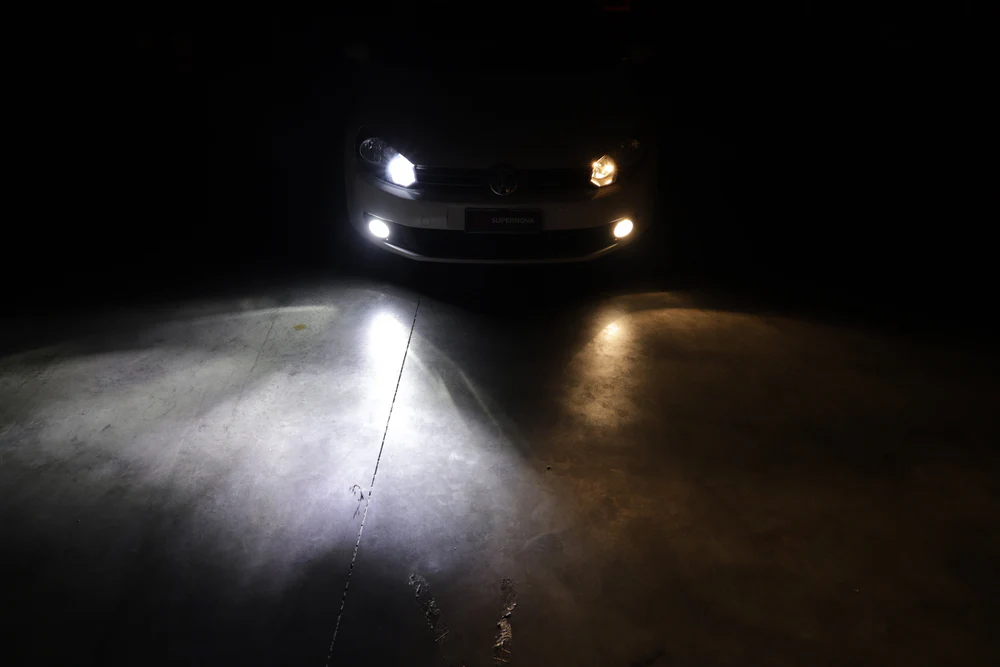
Car Lights Halogen vs Xenon

HID Lights for the Birthing of Brighter Roads

The first time I got High-Intensity Discharge (HID) lights, I was literally in a different dimension of visibility. These type of lights harvest xenon gas to produce bright and intense light like daylight effect on roads. Halogen lights consume less energy and last longer than them. Of course, there’s always a flip side. While driving a friend’s car with HID lights I noticed that they are often criticized for blinding oncoming drivers if not properly adjusted. Plus, they can be a little pricier to replace too. are one type of HID lights that are becoming popular. Those who have tried them out say they’re good enough to make the dark driving conditions way easier.

I’ve had some drivers tell me about how HID lights have made all the difference in weather conditions like fog or when driving along country roads with dim lighting. They can reassure with their ability to light up a significant part of the road. The catch is, however, that they need to be installed correctly and you just need to aim the right way to ensure that you do not cause discomfort to other road users. To do this, there needs to be a perfect balance, something amateurs would be better off leaving to the professionals, many would agree.

LED Lights of the Laser Precision

It was quite the leap, from halogen to light emitting diode (LED) headlights. Going from bicycle to motorcycle. All the rage is LEDs in the automotive industry and for good reason. They are less power consuming, and they last for a long time, and they are bright almost instantly. The first thing I noticed when switching from a car with halogen headlights to a car with LED headlights is how crisp their brightness is and how much energy they need. While they do cost more to install initially, they are able to save money in the long run due to their durability and energy efficiency.

I have another benefit that I’m starting to like with LED lights and that’s the flexibility of them. They can be designed into all sorts of shapes and sizes, allowing you to create any look you are wanting from sleek to aggressive to sophisticated. This fluidity, however, has allowed automakers to extend the boundaries of car design while maintaining top tier functionality. This is a win-win for car enthusiasts who care just as much about the look as the performance.

Future-Forward Laser Headlights

I haven’t personally had a vehicle with laser headlights myself, but I have seen them once at a couple car exhibitions. These are cutting edge technology, claiming unprecedented brightness and range. While they rule in the compact and efficient department and often carry a hefty price tag, they are affordable in luxury vehicles. Standard technologies only light up the road 10 times that of standard technologies and laser headlights will light up the road up to ten times that distance. What might future long road trips look like with these light beams to guide us?

Laser headlights are, still, very much a luxury feature, but they also make you wonder what kind of headlight technology we may be able to see in the future. They are definitely the future of automotive lighting, capable of producing creative lighting effects as well as providing ultra precise illumination. Laser headlights could end up being an important factor for diehard luxury vehicle watchers to consider when they’re buying a new car.

My Final Thoughts

From my love affair with cars, I learned that technology is not only making things look differently; it’s making things feel differently. Halogen headlights have their comfort, but LEDs are great too. He said as electric cars become more popular and new regulations are put into place, headlight technology should continue to shift. For the time being, though, I marvel at how far we’ve come from the easiest of glows that existed back then to the dazzling lights that illuminate the road today.


from Auto Blog | Latest Car News and Reviews, Trucks, Bikes, and Motorcycles https://ift.tt/OX62Lyc

Tuesday, 29 October 2024

How to build a Harley Sportster street tracker, the Mule way

Custom Harley Sportster street tracker by Mule Motorcycles
Like most skilled craftsmen, Richard ‘Mule’ Pollock can turn his hand to myriad custom motorcycle build styles. But there’s one particular type of bike that sits closest to the center of his wheelhouse; the street tracker.

Mule has extensive experience building and racing flat track bikes, and he knows just how to repackage them for street use. So if you’re looking for a Harley Sportster street tracker with a nostalgic American flat track racing vibe, specced for spirited road use, he’ll deliver it with his eyes closed.

Custom Harley Sportster street tracker by Mule Motorcycles
That was pretty much the brief for Mule’s latest project—with a few special considerations added to the mix. “The customer wanted a Mule-style street tracker with a motor that wasn’t too wacky or high-strung,” the Idaho-based one-man band tells us. “Great for everyday riding, and with the Harley XR750 orange and black paint scheme.”

Other requests were gold billet wheels and front forks from an MV Agusta F4. From there, Mule was free to execute his motto; “Every single part gets the attention it deserves, which is a lot.”

Custom Harley Sportster street tracker by Mule Motorcycles
The donor was a 1991-model Harley-Davidson Sportster 1200. It’s a vintage that Mule favors, because the earlier Sportsters have much lighter frames than the newer rubber-mount variants. (It’s more or less a 4.5-kilo [10-pound] weight saving, straight out the crate.)

Even though the bike had been featured in a magazine previously, the motor was in a less-than-desirable condition. So Mule tore it down to its nuts and bolts, and rebuilt it from the ground up with his go-to engine mods.

Custom Harley Sportster street tracker by Mule Motorcycles
“This would be new rods and lower-end bearings, with balancing by Dark Horse Crankworks in Milwaukee,” Mule tells us. “The top-end got my standard treatment, with porting, big valves, and proprietary pistons from Branch & O’Keefe. The cams came from Andrews.”

“The stock CV carb was retained with detailed upgrades by Randy Troy’s Carb Restorations. My friend Chuck Connell and I built the exhaust with tubing and a megaphone muffler supplied by Cone Engineering. A ForceWinder intake and K&N filter finish off the air entry, and an RSD one-piece Rocker box cover replaces the stockers.”

Custom Harley Sportster street tracker by Mule Motorcycles
The chassis mods are also typical Mule fare. He shortened and looped the tail, fabricated an electronics tray (which hosts a Shorai Lithium-ion battery), and installed new exhaust mount bungs. There’s also a new side stand mount with a Mule chromoly side stand fitted.

Other changes include new tank and seat mounts, and adjustable fork stops. Mule also moved the lower shock mounts six inches forward and wedged in a set of adjustable K-Tech shocks.

Custom Harley Sportster street tracker by Mule Motorcycles
Next up, Mule saw to his client’s specific requests. 58 mm Showa MV Agusta forks were fitted via oversized yokes, spread wide to accommodate Dunlop DT4 road-legal tracker tires. 19” CNC-machined flat track race wheels from Lowery Racing ticked the final box.

The Sportster’s new braking setup is the stuff of dreams. Twin front Braketech discs sit on custom carriers, gripped by six-piston Nissin calipers from the same MV Agusta as the forks. They’re controlled by a Brembo master cylinder off a Ducati, via Crown Performance brake lines that flow through a custom splitter mounted to the front of the lower yoke.

Custom Harley Sportster street tracker by Mule Motorcycles
Mule picked a Beringer caliper and a KTM master cylinder for the rear brake. The CNC-machined right-hand-side foot control mounting plate is a ‘standard’ Mule part. Classic Bates rubber pegs poke out from either side of the Harley.

Up top you’ll find an LED headlight, tiny LED turn signals, and a Trail Tech gauge. The stainless steel handlebars are Mule items, fitted with a Motion Pro throttle and cables, a Buell clutch lever, and Renthal grips.

Custom Harley Sportster street tracker by Mule Motorcycles
For the bodywork, Mule paired a classic XR750-style tank with a flat track tail from First Klass Glass, topped with a Saddlemen seat pad. Lurking underneath the seat is a Mooneyes oil tank, modified for more capacity.

SBK Paint handled the livery; a classic H-D racing orange-with-black affair. The Barnett Harley-Davidson sponsor graphics might seem out of place, but there’s a story behind them.

Custom Harley Sportster street tracker by Mule Motorcycles
“They were a long-time racing sponsor of Mearl Barnett (no relation) and myself in our Hooligan series exploits,” says Mule. “I had one spare set of tank graphics and the customer really liked them, plus they honor the XR750 race tradition.”

As always, Mule has delivered a Sportster street tracker that sacrifices neither function nor form—tipping its hat to the track while tearing up the streets.

Mule Motorcycles | Instagram | Outdoor images by Olivier de Vaulx

Custom Harley Sportster street tracker by Mule Motorcycles


from Bike EXIF https://ift.tt/RrIb5Sg

Monday, 28 October 2024

Beach Brick: The Wagon You Can’t Help but be Seen In

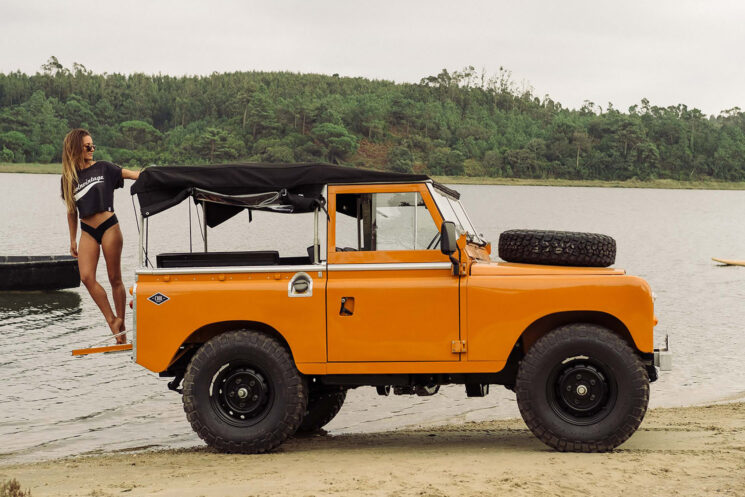
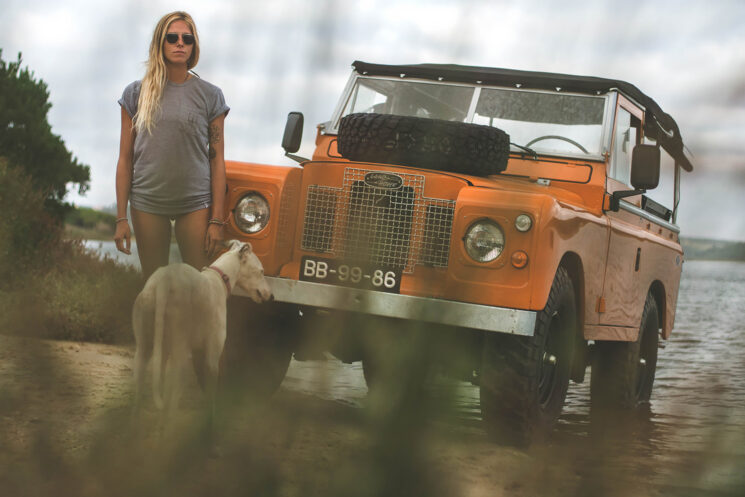
Cool & Vintage Land Rover Series 2A
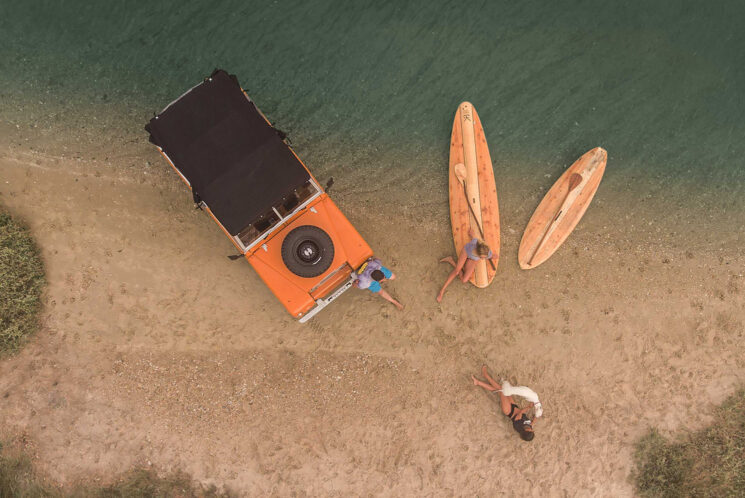
This 1971 Land Rover Series IIA is a hot-for-yore millennial’s wet dream, nestled between an imagined, carefree, “things were just better” past and a fantastic present where a 20-something can afford one of these fashionable Brit-boxes. It’s a revisionist history and rose-tinted present we can play along with.

Cool & Vintage Land Rover Series 2A
This go-everywhere auto comes to us by way of the folks at Cool & Vintage of Lisbon, Portugal. It’s a simple name, and a simple idea: essentially, a used car garage — but cooler and vintagier. Their model isn’t just to buy, build, and trade on the classic car market; they’ve committed to documenting and creating a lifestyle around their endeavor by taking the autos, using them, and highlighting their potential producing beautiful video and photographic content in the process. It’s a welcome change from the “move units” style of marketing that’s typically associated with used cars.

Cool & Vintage Land Rover Series 2A
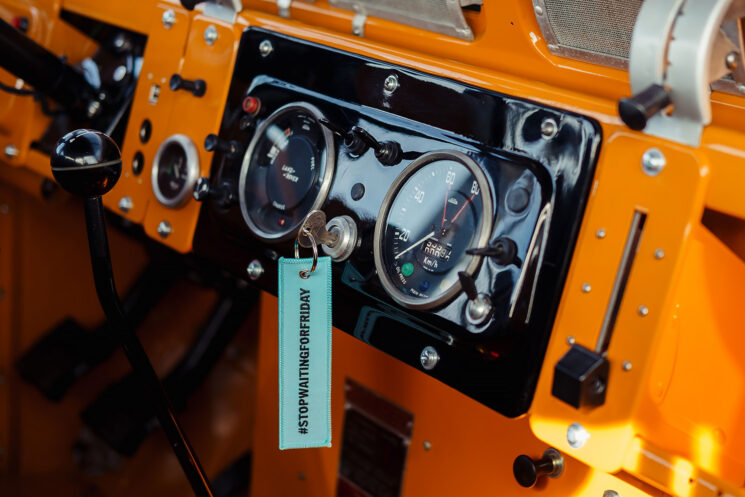
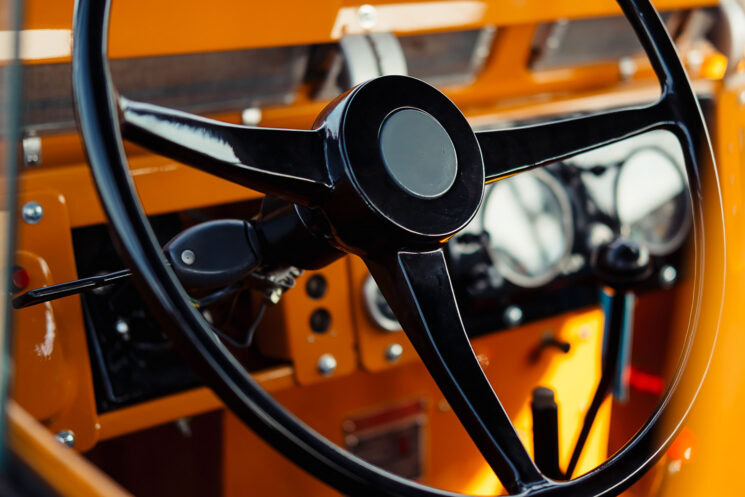
This particular Land Rover was restored four years ago and was outfitted with Wolf Wheels, BFGoodrich Mud Terrains, black mohair canvas soft top, black vinyl seat upholstery, and a few contemporary creature comforts like a built-in USB charger. OK, maybe “a few” is exaggerating; there’s a USB charger — everything else is difficult to operate, loud, old, and slow, but the challenge of ownership is part of the allure.

Cool & Vintage Land Rover Series 2A
The Series IIA is notoriously tough, and according to the crew at Cool & Vintage, “three out of every four [Series IIAs] ever built are still on the road somewhere in the world.” The retina-searing orange paint, a special-order factory option, makes this one hard to miss, and certainly helps prevent you from getting shot in the brush.

Cool & Vintage Land Rover Series 2A
Though the design of the Series IIA basically amounts to a brick with half of another brick stacked on top, it remains one of the most iconic 4×4 designs in history. It is utilitarian design at its finest, completely devoid of ego (well, at one point it was), and lusted after by anyone with bit of taste, eyes too big for their bank account, and an inclination to get away from the grid.

Cool & Vintage Land Rover Series 2A
This article first appeared in issue 025 of Iron & Air Magazine, and is reproduced here under license
Words by Gregory George Moore | Images by Ricardo Lopes & Daniel EspĂ­rito Santoe | coolnvintage.com

Sidecar Subject: 1971 Land Rover Series IIA

Engine:
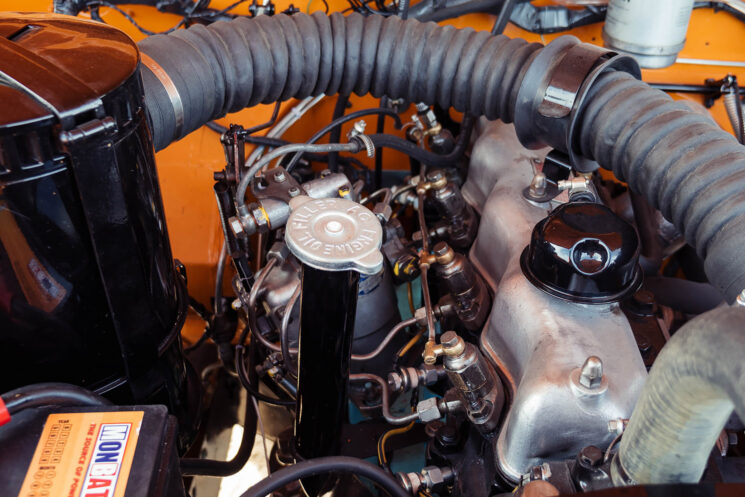
A larger 2,285 cc, 2.3-liter diesel engine (code 10J) was debuted in the Series IIA Land Rover.
Many parts were carried over from its petrol counterpart, but a stronger forged crankshaft and different pistons were required.
Max power output from the 2.3-liter diesel was rated at 62 hp at 4,000 rpm and 103 lb. ft. at 1,800 rpm.

Chassis:
Classic Land Rovers like the Series IIA were built with box-welded frames and aluminum alloy bodies.
Body configurations ranged from a short-wheelbase soft-top to a five-door station wagon.

Production:
During Series IIA production, Land Rover built its 660,000th vehicle, 70% of which were built for export markets.
In export markets like Australia, Africa and the Middle East, Land Rovers accounted for as much as 90% of 4x4s sold.
Sales of utilitarian Land Rovers peaked from 1969 to 1970, with around 60,000 vehicles selling annually.

Timeless Design:
The Series IIA is regarded by many to be the most true-to-form and rugged of the classic Land Rover variants.


from Bike EXIF https://ift.tt/6uBWP0M

Sunday, 27 October 2024

Speed Read: A custom Vespa from SIP Scootershop and more

The latest custom Vespa scooters, café racers, choppers, and adventure bikes.
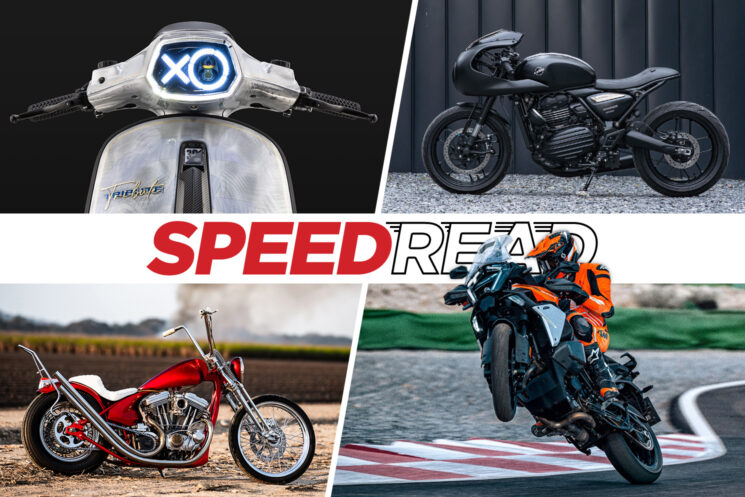
The German scooter specialist SIP Scootershop has built a bonkers custom Vespa to celebrate three decades of business. On the other side of the world, K-Speed has turned the new Triumph Speed 400 into a svelte cafĂ© racer, while a pro fabricator from down under has built a retina-searing Sportster chopper. We conclude the weekend’s proceedings with news of the 2025 KTM 1390 Super Adventure S EVO.

Custom Vespa scooter by SIP Scootershop
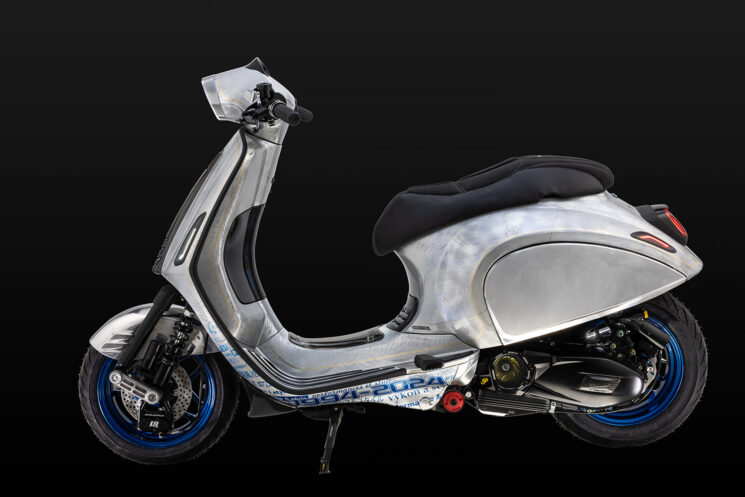
Vespa ‘Tribute’ by SIP Scootershop Spend five minutes anywhere in Europe or Asia and you will realize that it’s scooters—not motorcycles—that rule the roost. They are incredibly convenient, cheap to buy, cheap to run, and easy to ride. We have a few scoot-curious members on the Bike EXIF team, so it’s about time we featured another sexy step-through.

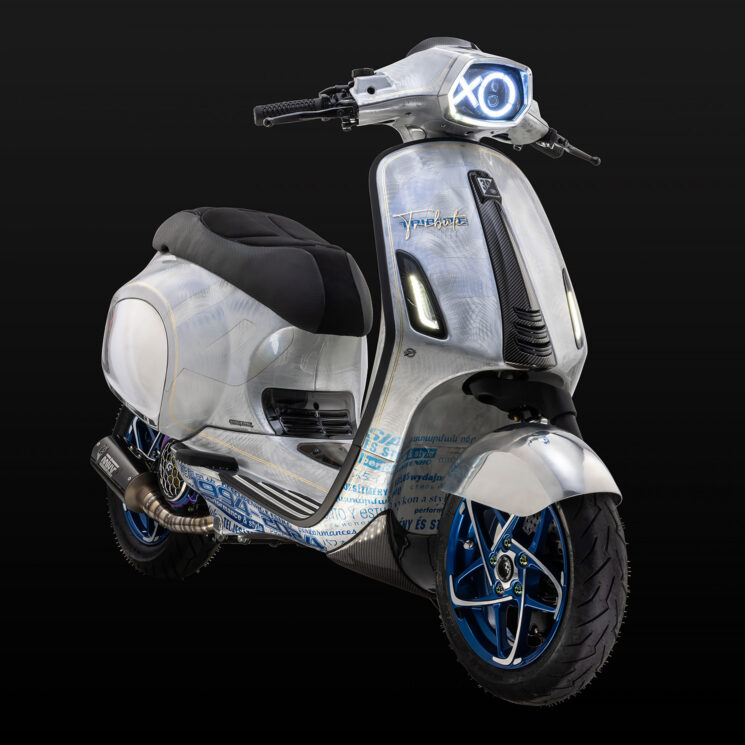
This custom Vespa comes from SIP Scootershop, which has been supplying myriad scooter parts to the world for over 30 years. Based in Germany, the team has been hard at work on a 30th birthday present to themselves; the Vespa ‘Tribute.’

Custom Vespa scooter by SIP Scootershop
When ideas were being thrown around the SIP Scootershop office, co-founders Alex and Ralf originally set about shoehorning a larger engine into a small-frame Vespa. But thanks to the limitless options available to the team, they thought it would be better to just punch out the smaller Vespa Sprint engine from 150 cc to 260 cc. (That’s almost the same capacity as the engine in the larger Vespa GTS 300.)

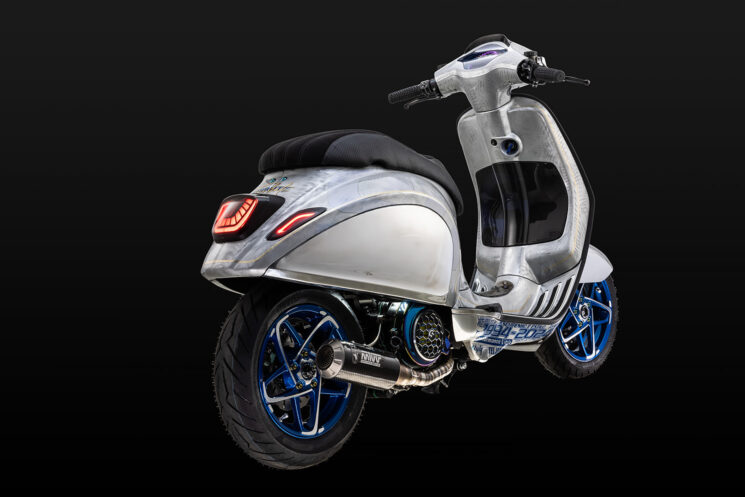
They went to town on the engine (inside and out), finishing it with titanium fasteners, a custom MIVV exhaust, and a whole load of lightweight bling.

Custom Vespa scooter by SIP Scootershop
The side panels were designed to open like a classic Vespa and the front fender was handcrafted from aluminum. SIP Mk II aluminum rims were fitted, with a disc brake conversion kit at the rear.

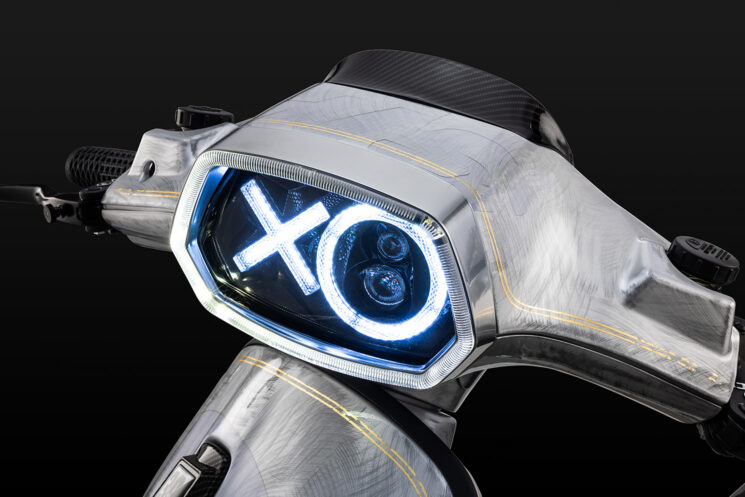
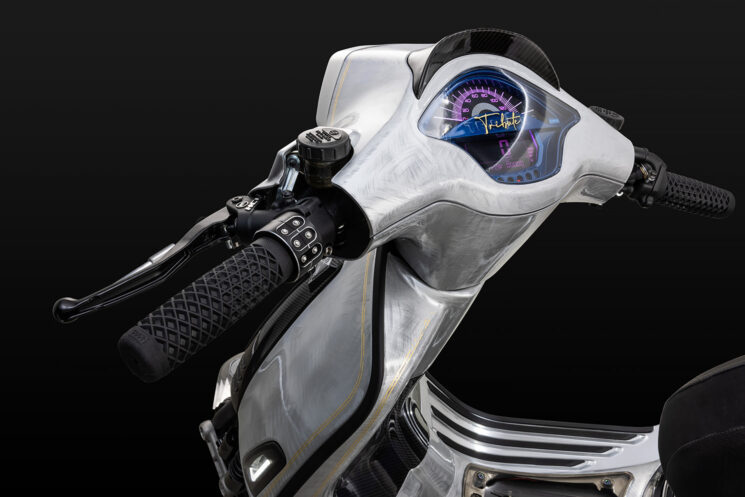
The striking XO headlight is a hugely popular bolt-in part (particularly in Asia) that looks incredible. The front end was upgraded further with a new set of SIP drop bars, SIP performance shock, and a huge four-piston radial brake caliper kit. It’s overkill, but we love it.

Custom Vespa scooter by SIP Scootershop
The LED indicators and tail light are from KOSO, the latter of which was developed just for SIP Scootershop before being offered to the general population. A custom seat from the Italian firm NISA uses sweeping lines and a slimmer profile for a sporty look. The bike was rewired with a Motogadget unit, running with Motogadget switchgear and Vans x Cult grips.

Custom Vespa scooter by SIP Scootershop
The brushed steel design is actually a painted effect and was laid down by a friend of the shop, Marcus ‘Pfeili’ Pfeil. The metal-effect paint is finished with blue lettering (SIP’s ‘performance & style’ motif repeated in different languages) and matches the engine and wheels perfectly.

As far as 30th birthday presents go, this is bloody awesome. [SIP Scootershop]

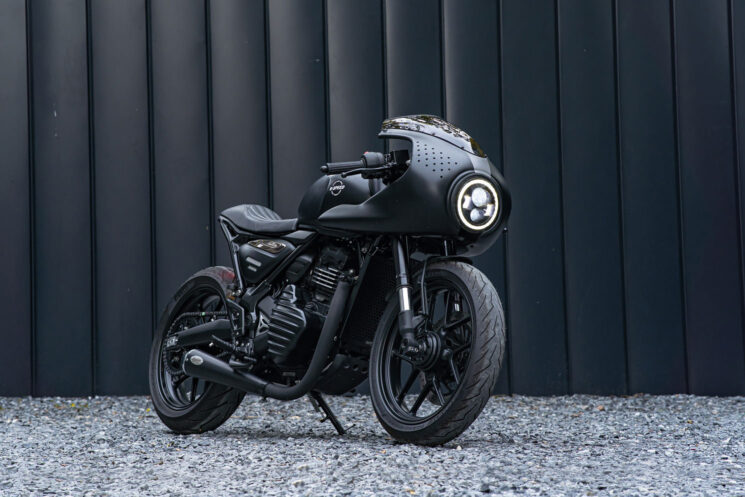
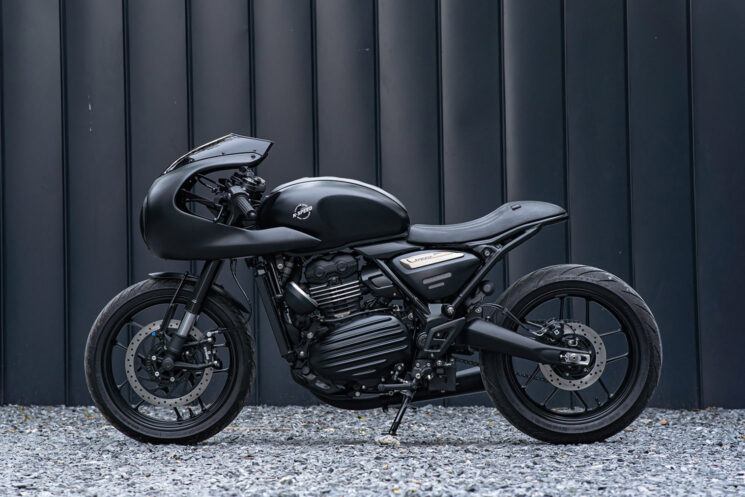
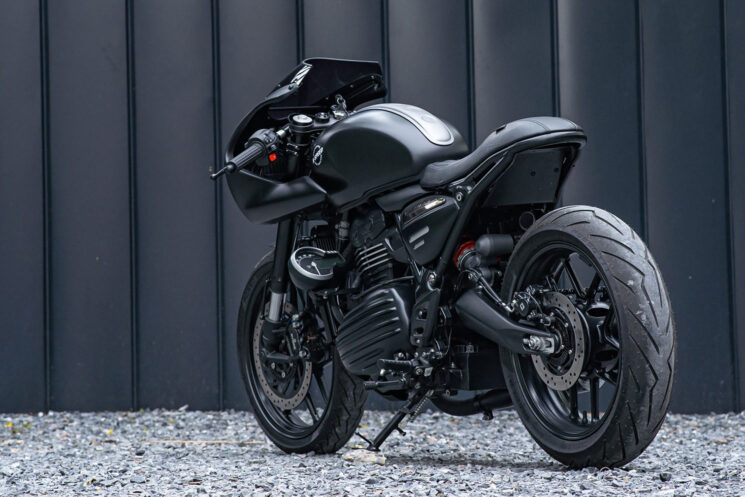
Triumph Speed 400 café racer by K-Speed
Triumph Speed 400 by K-Speed Triumph’s recent foray into smaller bikes with the Triumph Speed 400 and Scrambler 400 has been a good thing for markets like Thailand. Government taxes on large-capacity motorcycles are so horrendously expensive there that many brands don’t even consider selling their bikes.

Know who else is in Thailand? That’s right—our friends at K-Speed. They’ve just turned their hand to the new Triumph Speed 400, using it as a test bed for parts that will be available for sale.

Triumph Speed 400 café racer by K-Speed
Putting the ‘speed’ in Speed 400 is a new fairing, which takes inspiration from the Triumph Thruxton 1200 R. Perfectly proportioned and sitting nice and low on custom hardware, the fit is fantastic. The LED headlight, tinted screen, and speed holes are particularly nice touches, while new clip-on bars are mounted nice and low for an aggressive riding stance.

The rear subframe was modified to accept a K-Speed ‘wasp’s tail’ cafe racer-style seat, upholstered in black leather. The front fender is from the Diablo catalog (K-Speed’s in-house line of custom parts), suspended on a custom bracket.

Triumph Speed 400 café racer by K-Speed
The suspension has been slightly lowered and the dashboard has been relocated down low on the left-hand side of the bike. The ribbed engine covers are new, with the design becoming somewhat of a K-Speed trademark. Final touches include hidden turn signals and taillight, and a shorty exhaust capped with a Diablo muffler.

From a city commuter to a low, lithe cafĂ© racer finished in Henry Ford’s favorite, it’s absolutely stunning. [Source]

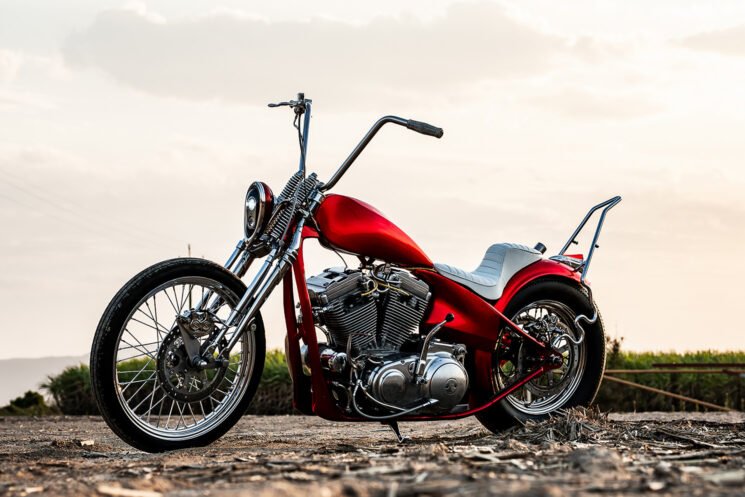
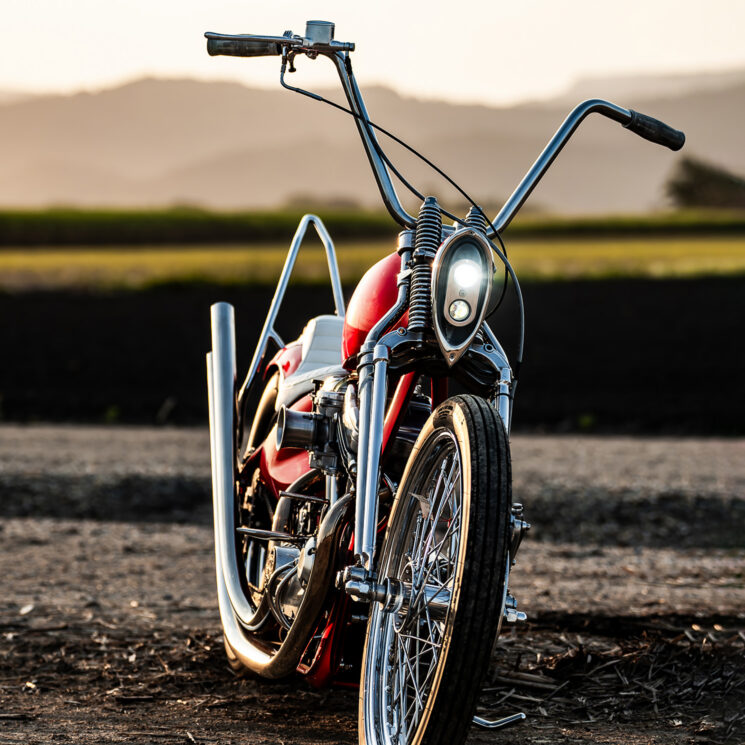
1992 Harley Sportster chopper by Cody Jermyn
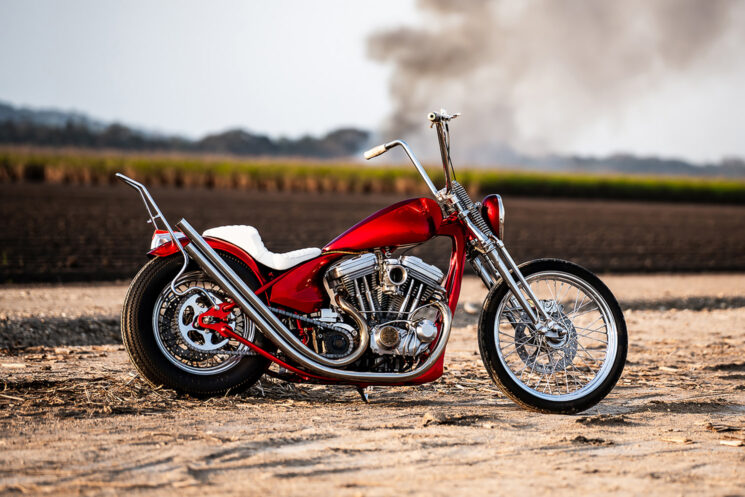
1992 Harley-Davidson XL1200 Sportster by Cody Jermyn Like a lot of us, Cody Jermyn grew up watching shows like Biker Build-Off. The young Australian is a fabricator and panel beater by trade and has been mucking about with bikes for some time. To keep his bike-building muscles well-honed, he recently bought a 1992 Harley-Davidson XL1200 Sportster—and promptly cut it up.

Cody rode the bike home, parked it in his shed, and ten minutes later the whole front end was taken off with a springer front end mocked up in its place. The creative juices were flowing, so he didn’t stop there.

1992 Harley Sportster chopper by Cody Jermyn
Using a Paughco rigid frame as the foundation of the chopper, Cody got the springer mounted, along with a set of new wheels and vintage-style rubber. A tank design had been floating around in his head for years, so Cody took the chance to bring his idea into the real world.

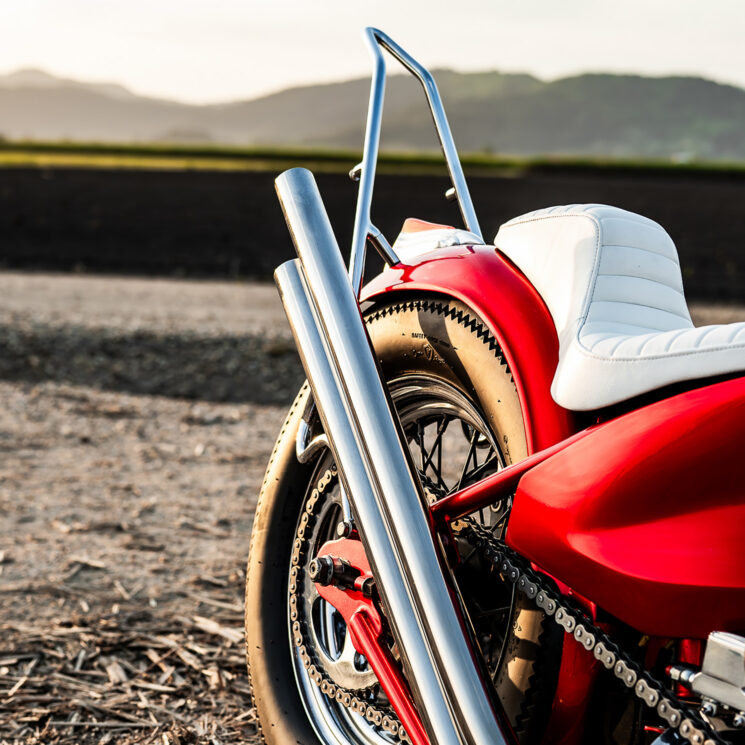
After the tank was made from scratch, he turned his attention to the custom oil tank, sissy bar, rear fender, and striking custom headlight. The idea was to flow each part of the build into the next, and we think Cody has nailed it.

1992 Harley Sportster chopper by Cody Jermyn
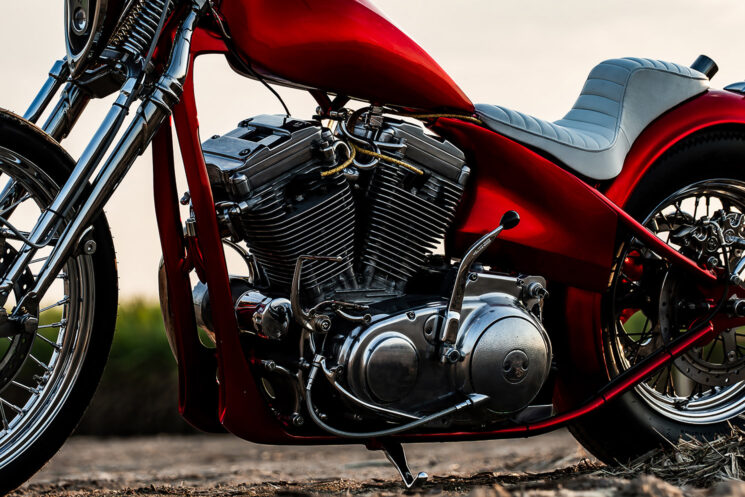
The engine was left mostly alone, save for new Andrews N2 cams, and a CV carb bejeweled with a velocity stack. As a man of obvious skill, Cody spent some time practicing the art of sand bending to get the exhaust perfectly shaped. The results speak for themselves.

The points cover is from Hypnic Jerk and it runs a Daytona Twin Tec ignition. The belt final drive was converted to a chain for a classic chopper look, and the custom seat pan was sent to Bad Arse Trim Co. for the upholstery.

1992 Harley Sportster chopper by Cody Jermyn
For a large, bright red chopper, the delicate footpegs are a delight to our eyes. Cody wanted a foot clutch, so he spent over 80 hours making the pegs and linkages from scratch. To finish the engine off, Cody adapted a Hurst gear selector from an HQ Holden to use as a hand shifter—which is about the most Australian thing you can do to a chopper (other than a Vegemite livery).

1992 Harley Sportster chopper by Cody Jermyn
18 months into the build, Cody scored an invite to the Choppageddon Show in Marrickville, Sydney. He pushed like heck to get everything finished (including the candy apple red paint, which we laid down himself). When it was all said and done, he took home four trophies—including ‘Best in Show.’

At just 26 years old, we reckon Cody is just getting started. Onya, cob! [Source]

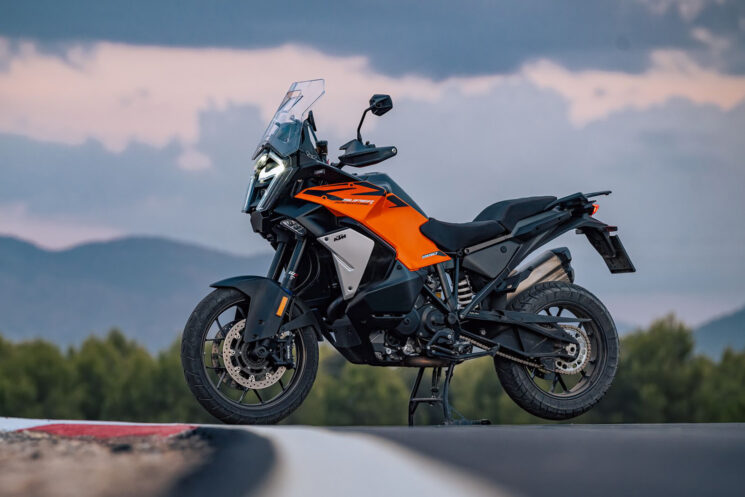
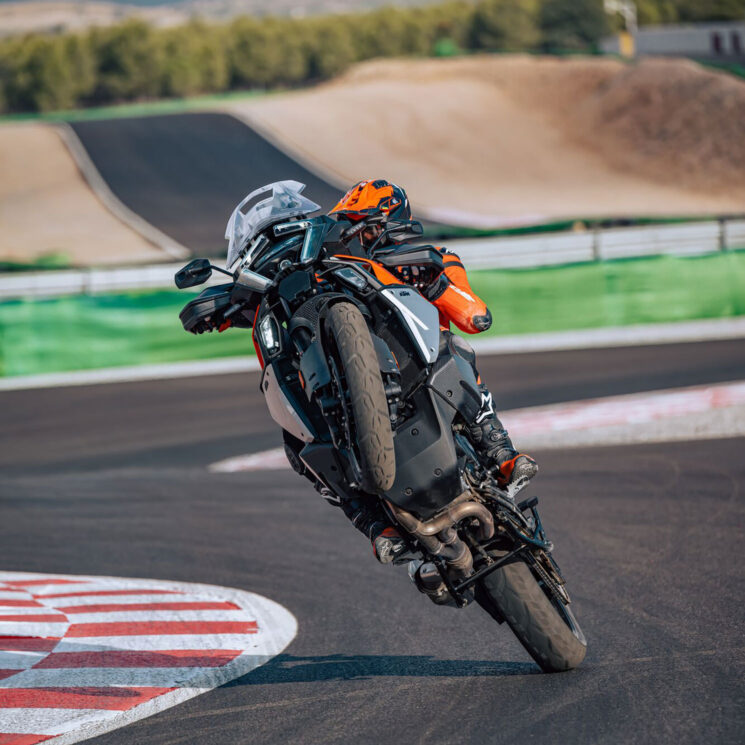
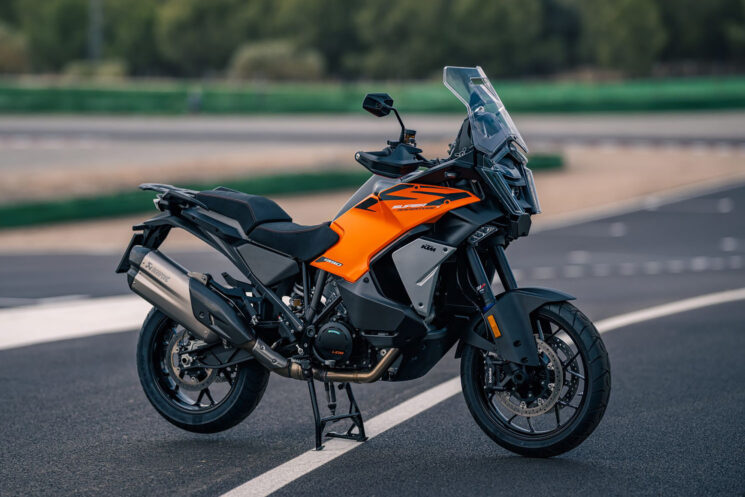
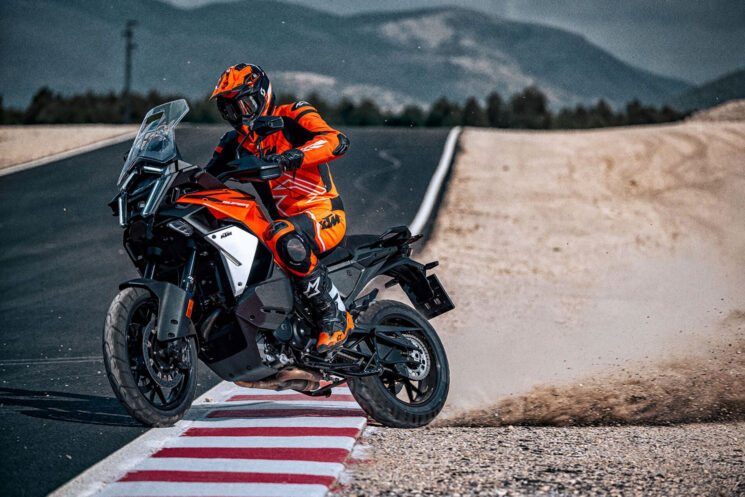
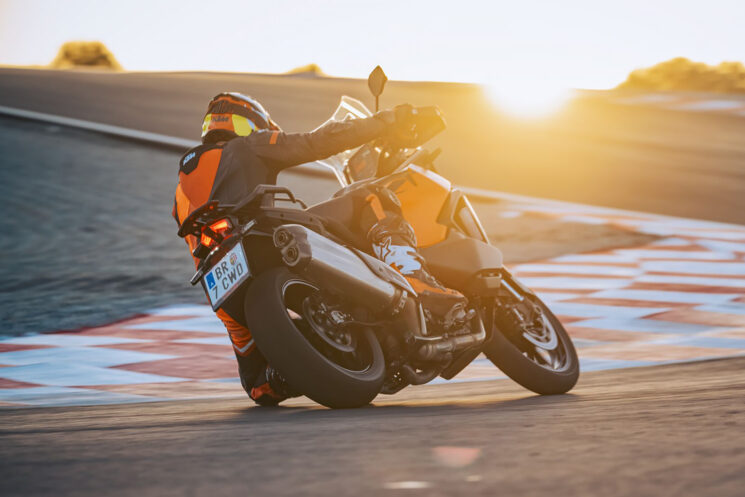
2025 KTM 1390 Super Adventure S EVO
2025 KTM 1390 Super Adventure S EVO Have you ever sat down in your garage, gazed upon your 1,300 cc adventure bike, and wished it had more power? Yeah, us neither. Regardless, KTM has updated their bonkers adventure touring flagship with more capacity, power, tech, and a really long name. Meet the 2025 KTM 1390 Super Adventure S EVO.

First up is the updated engine. Capacity has been bumped up from 1,300 cc to 1,350 cc, for an output of just over 170 hp at 9,500 rpm and 145 Nm of torque at 8,000 rpm.

2025 KTM 1390 Super Adventure S EVO
The new engine contains KTM’s all-new ‘camshift’ technology. Not to be confused with BMW’s ‘shiftcam’ system, it shifts the inlet cams sideways at higher RPMs. The cams open for longer and have a higher lift, resulting in more top-end power, but with reduced emissions.

The other big ticket item is the new automated manual transmission, exclusive to the KTM 1390 Super Adventure S EVO. You can shift using the foot lever (A.K.A. the traditional way) or via shift paddles on the handlebars. And if you want to relax fully and eat up the miles, you can pop it into fully automatic mode.

2025 KTM 1390 Super Adventure S EVO
Johnny Aubert used the prototype KTM auto transmission at the Red Bull Erzberg Rodeo, so it’s certainly been put through the wringer before hitting the showroom floor.

The enormous 8-inch touchscreen display is extremely impressive and will no doubt fill all your fellow adventure nerd friends with screen envy. One optional extra is the latest version of KTM’s adaptive cruise control, which now includes braking assistance, collision warning, and distance warning.

2025 KTM 1390 Super Adventure S EVO
As you’d expect from the Austrian marque, the 2025 KTM 1390 Super Adventure S EVO is still about as attractive as a bucket full of smashed crab. But when the throttle is wide open, who cares what it looks like? [KTM | Images by Rudi Schedl]

2025 KTM 1390 Super Adventure S EVO


from Bike EXIF https://ift.tt/Sxnf5qv

Saturday, 26 October 2024

Big Red: A cheeky Honda Monkey with miles of retro rally style

Honda Monkey rally replica by Dirtshop Thailand
Ek Chalermphol’s Instagram bio lists his interests as “cars, trucks, bikes, bicycles, and taking photos.” But he neglects to mention his unwavering love for retro rally racers.

We’ve featured two of Ek’s custom motorcycles before (a BMW R nineT Urban G/S and a Honda XR600R), and both were heavily inspired by classic Dakar Rally bikes. The man has a taste for 80s and 90s off-roaders, and he knows how to capture that vibe. This time, he’s done it with an unlikely donor—a Honda Monkey.

Honda Monkey rally replica by Dirtshop Thailand
The modern-day Honda Monkey is as cute as a button in stock trim, but Ek’s version of it is on another level. He describes the overarching philosophy behind the project as “Turn Monkey into Mighty!”

“My idea was to make this Monkey like a mini rally raid bike,” he continues. “Inspiration came from the 1980s Honda XR and XL series; the Paris Dakar look, with a big tank and that Honda ‘Flash Red’ color with the orange tone that I’m in love with.”

Honda Monkey rally replica by Dirtshop Thailand
Most of the heavy lifting was handled by Wicham Pikutong at Dirtshop Thailand in Bangkok, which Ek founded over three decades ago. But before Wicham could swing his spanners, Ek had to find a suitable fuel tank for his project.

In an inspired move, he chose the tank from a Honda XR125R Paris Dakar—a limited edition rally-inspired model that came out in 1983. It took a few mods to the Monkey’s frame to accommodate the new unit, but the juice was worth the squeeze. The bubbly tank atop the pint-sized chassis perfectly captures the retro rally vibe that Ek was after.

Honda Monkey rally replica by Dirtshop Thailand
The Monkey’s enduro-style plastics are also Honda items of a 1983 vintage, but the blocky saddle is completely bespoke. With traditional Flash Red plastics and blue vinyl on the seat, Ek designed a brilliant throwback Honda livery for the fuel tank. AR Carbody laid down the paint, while BoonSport handled powder-coating and re-assembly duties.

The Honda’s new bodywork is supremely clever, but it only tells part of the story. According to Ek, he wanted his new Monkey to not only look like a dirt bike but perform like one too. That called for a judicious overall of the bike’s stock running gear.

Honda Monkey rally replica by Dirtshop Thailand
Ek’s Monkey now sports Ă–hlins rear shocks, with an Ă–hlins cartridge kit buffing up the forks. Keen eyes will also spot a set of Brembo brake calipers, which are connected via new hoses from HEL Performance. Is it all overkill? Probably, but we’re here for it.

Ek naturally specced several engine mods too. Night Mechanic did the engine work, which included a billet aluminum SMR crankcase, a double overhead camshaft big-bore kit, and a Takegawa clutch cover. A custom-made exhaust header terminates in a classy Supertrapp muffler.

Honda Monkey rally replica by Dirtshop Thailand
At the front of the bike, you’ll find a pair of KC lights, mounted in a custom roll cage. Hiding behind them is the curved oil cooler from a Honda XR250R, wrapped around the Monkey’s headstock. The handlebars are Zeta parts, the bar pad is from Renthal, the brake and clutch lever have been upgraded, and the hand guards are period-correct Honda pieces.

The full spec sheet also includes an aluminum swingarm, and laced wheels to replace the Monkey’s modern-looking alloy hoops. Grippy foot pegs, upgraded foot controls, carbon fork guards, and a Scotts steering damper complete the package.

Honda Monkey rally replica by Dirtshop Thailand
Ek’s dirt-munching Honda Monkey rally replica now shares a garage with his matching XR600R and the smorgasbord of other dirt- and adventure bikes he owns. We’re not sure how he picks which bike to ride each weekend, but it’s an enviable problem to have.

Dirtshop Thailand | Facebook | Instagram | Images by Ek Chalermphol

Honda Monkey rally replica by Dirtshop Thailand


from Bike EXIF https://ift.tt/lVxHfAL