Tuesday, 6 August 2024

Tweener: Vagabund Moto tackles the electric BMW CE 02

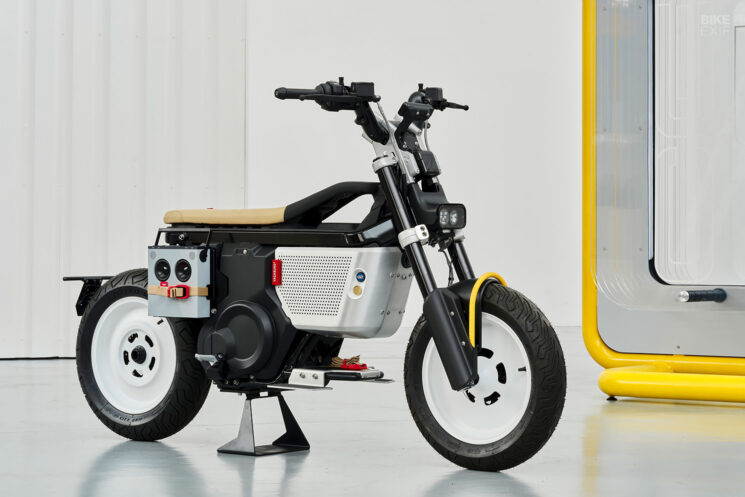
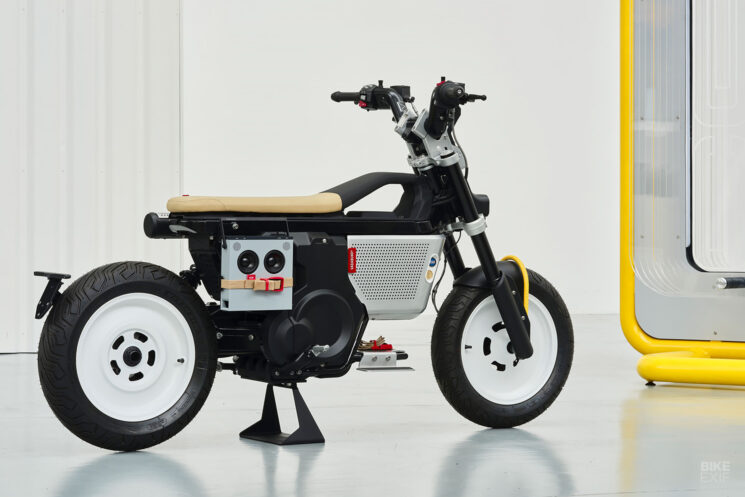
Custom BMW CE 02 electric bike by Vagabund Moto
Despite what the futurists say, an all-electric motorcycle future is still far off. For motorcyclists to adopt electric mobility en masse, battery-powered bikes must strike the same balance between price, performance, and range that petrol-powered bikes nail so effortlessly—and that’ll take time.

Until then, the uptake from dyed-in-the-wool motorcyclists will remain slow. This is why the electric motorcycle industry’s most promising niche is small, approachable machines designated for urban use and pitched at new riders, rather than the old guard—bikes like the quirky BMW CE 02.
Custom BMW CE 02 electric bike by Vagabund Moto
Sitting somewhere between a motorcycle and a scooter, the CE 02 offers 11 kW of power, 55 Nm of torque, a top speed of 95 km/h [59 mph], and a claimed minimum range of 90 km [56 miles] in its top spec. At $7,599 for the base model in the US, it’s by no means cheap. But if you look past the blistering price tag, those are respectable numbers for a compact city bopper.

It’s also a dandy canvas for customization, according to the fellas at Austria’s Vagabund Moto. Paul Brauchart and Philipp Rabl are best known around here for their avant-garde custom bikes, but they’re more likely to call themselves designers than custom bike builders. They’ve dabbled with several product designs, and have an ever-expanding catalog of custom automobiles that includes a Land Rover, a Lada, and multiple Porsches.
Custom BMW CE 02 electric bike by Vagabund Moto
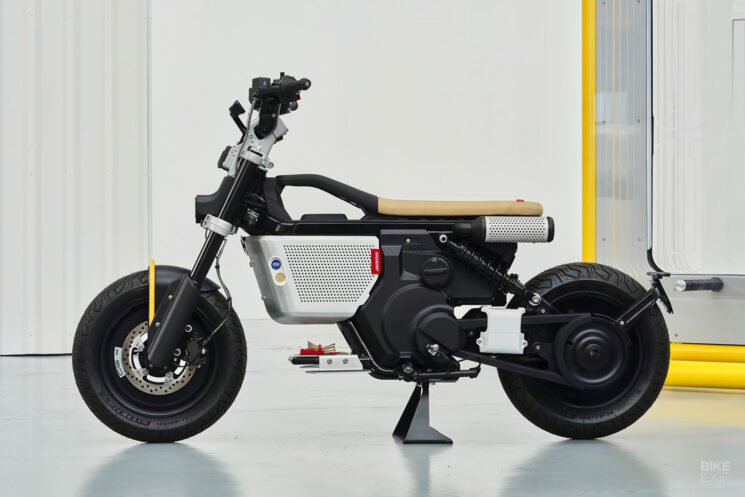
To apply their crisp signature style to the BMW CE 02, Vagabund first stripped the bike down and 3D-scanned it. Key components like the drivetrain, suspension, wheels, and control area were left alone, but the rest of the CE 02 was redressed in a mix of aluminum and 3D-printed parts. (Vagabund used polyamide 12 for their 3D printing, to ensure OEM levels of durability.)

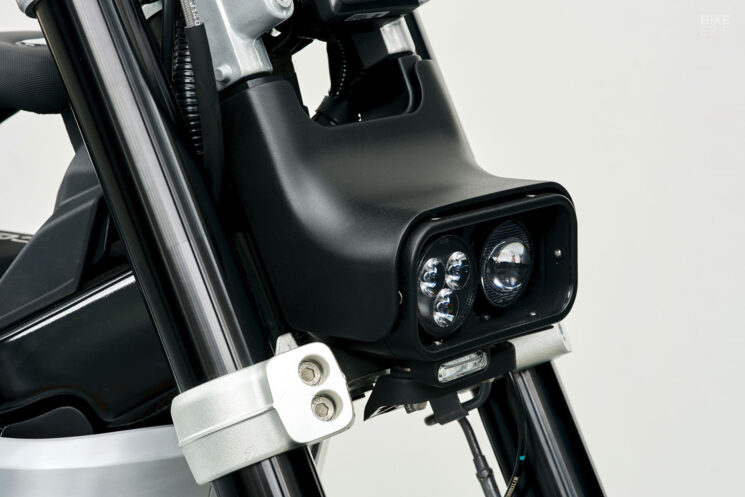
The changes start up front, where the guys designed a new headlight nacelle and housing, with two LED projectors lighting the way. If we had to guess, we’d say that modern motocross bikes and Futurama’s Bender were both on Vagabund’s inspiration board when they penned the new headlight design.
Custom BMW CE 02 electric bike by Vagabund Moto
The new headlight is flanked by tiny 3D-printed LED turn signals, mounted where the original turn signals were; on each side of the enclosed handlebars. Lower down, a 3D-printed fender and fork guards replace the stock plastics.

Moving to the center of the CE 02, Vagabund blacked out the main drivetrain covers, helping them disappear into the chassis, visually. They also reupholstered the seat and repainted the wheels—eliminating any traces of the original graphics in the process, and bringing the CE 02 in line with the stark monochromatic vibe that the studio is known for.
Custom BMW CE 02 electric bike by Vagabund Moto
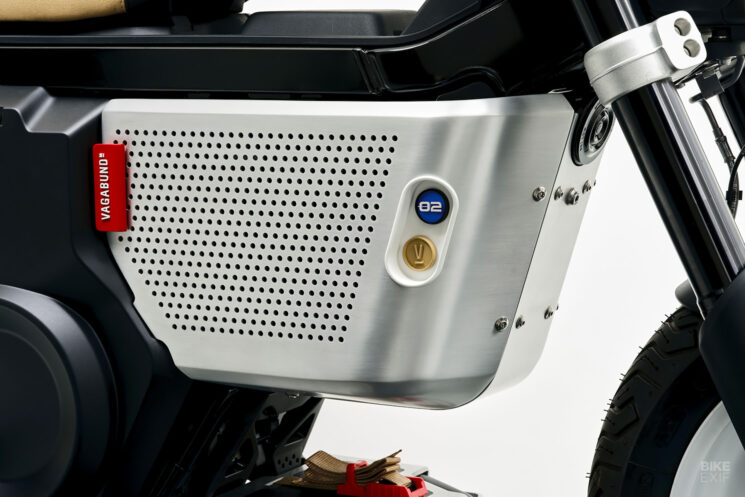
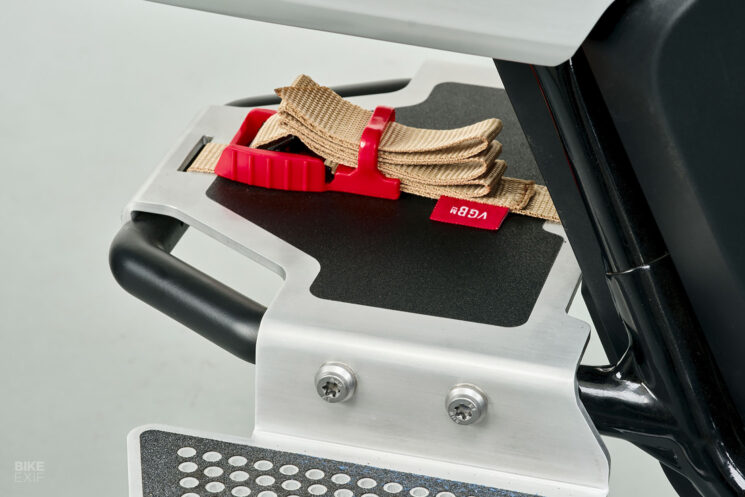
Next, the guys fabricated a pair of perforated aluminum shells to replace the CE 02’s plastic side panels. There’s more aluminum work lower down, where a hand-shaped baseplate does double duty as a small luggage rack and footboards. It’s trimmed with skateboard grip tape and features a custom strap to lash down small items.

The perforated motif is repeated further back, where a custom-made storage tube cheekily mimics an exhaust muffler. (It currently holds a small umbrella).
Custom BMW CE 02 electric bike by Vagabund Moto
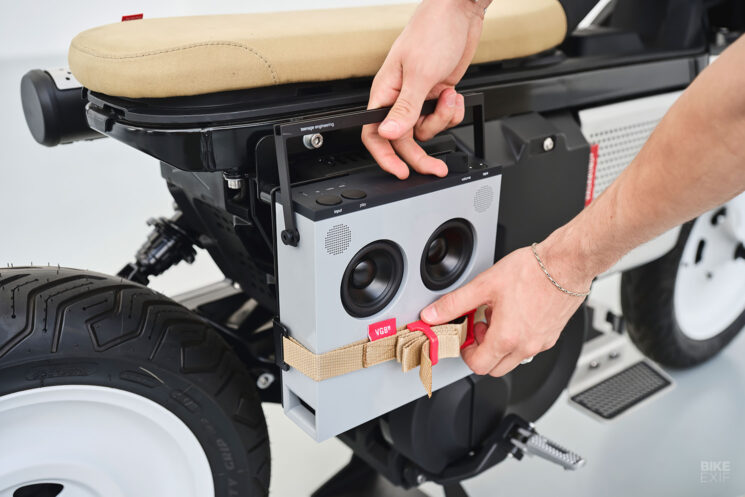
On the other side of the bike hangs a retro-futuristic Bluetooth speaker from the Swedish electronics company, Teenage Engineering. It’s attached to a custom mounting rack, and secured by a custom strap. Given how quiet electric bikes are, it’s probably quite effective too.

Moving to the smaller details, the swingarm-mounted license plate holder was stripped of its lighting, and kitted with a slim 3D-printed taillight and turn signal strip. The rear shock cover went into the bin too, leaving the rear suspension area looking a little tidier.
Custom BMW CE 02 electric bike by Vagabund Moto
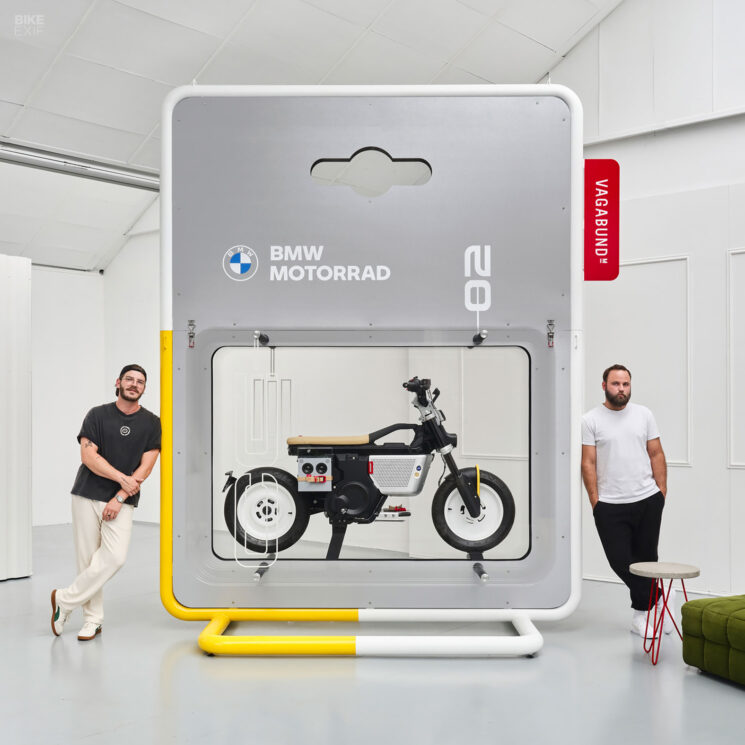
In true Vagabund fashion, the BMW CE 02’s final accessory came in the form of life-sized toy packaging. Designed as a complete display case, the whole thing can be disassembled and transported, and sports built-in LED lighting worthy of an art gallery.

If the stock BMW CE 02 doesn’t appeal to you, then Vagabund’s vision of it is unlikely to float your boat. But if you think the CE 02 is rad, their version has just made it that much more rad.

Vagabund Moto | Instagram | Images by Stefan Leitner
Custom BMW CE 02 electric bike by Vagabund Moto


from Bike EXIF https://ift.tt/jNVgeyr

Monday, 5 August 2024

8 Mistakes to Avoid When UTV Riding

Riding a UTV is an exhilarating experience unlike any other. With an expanding global industry valued at over $4.54 billion, all-terrain vehicles take you deeper into the natural world than you’ll ever get on foot. Adored by nature lovers and speed racers alike, ATVs, UTVs, quads and side-by-sides are your ticket to the ultimate off-road adventure.

However, unlike other modes of off-road transportation, UTVs can seat up to four to six passengers, so you and your friends or family can enjoy each other’s company along the way. They keep everyone together and are perfect for taking group expeditions, private safaris, nature tours and scenic stopovers on camping trips. If you want everyone to have their own vehicle, .

Whether renting or buying a UTV, you don’t need a lot of experience to captain your crew through the wilderness, but driving off-road will throw more curveballs your way. Here are eight mistakes to avoid when UTV riding:

Mistake #1: Not Wearing Protective Gear

Riding over bumpy, uneven ground can increase your risk of injury. Intense vibrations can lead to head bumps, and sharp turns can flip the vehicle. You and your passengers should wear helmets in case of turbulence or a fall. UTVs lack the safety components of motor vehicles. Wearing a helmet is the off-road version of wearing a seat belt.

Mistake #2: Using Hand Signals

Communicating with other riders keeps your group together. The people in the back can navigate the map while you focus on bucking obstacles, but taking your hands off the handlebars to signal reduces response times. to talk to other drivers or passengers hands-free. They connect automatically when in range, so you don’t have to reset the device manually. You can use it to narrate your adventure and ensure everyone is headed to the same destination.

Mistake #3: Riding on the Street

UTVs aren’t designed to drive on public roads. They need turn signals, safety provisions and other features to obey traffic laws. Driving an unlicensed off-road vehicle on public roads will incur a steep fine. Keep your all-terrain ride in the dirt where it belongs to avoid getting in trouble with the law.

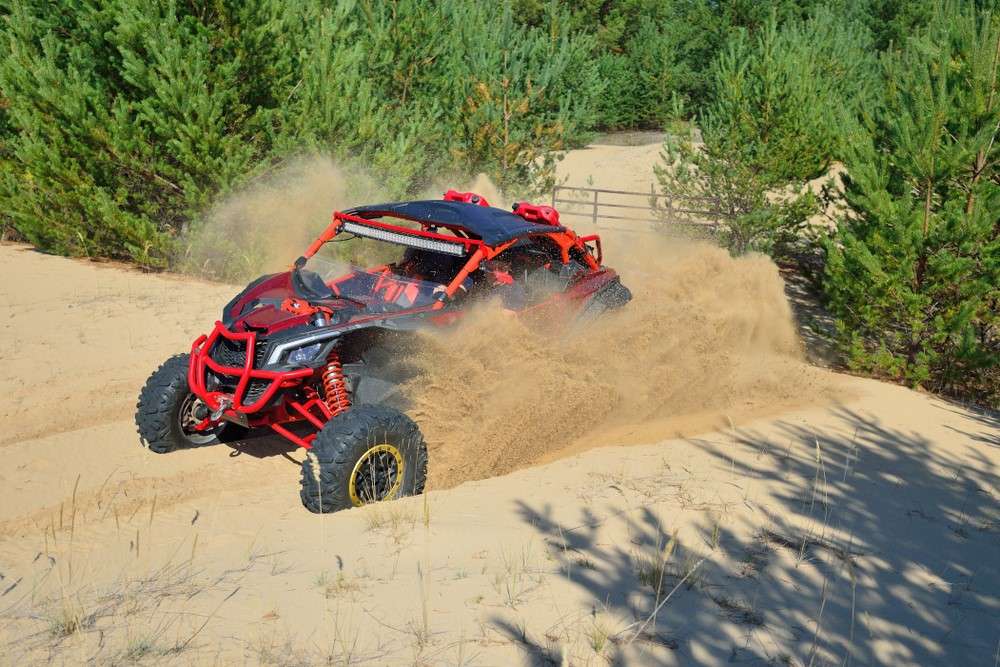
8 Mistakes to Avoid When UTV Riding 1

Source: Anton Tolmachov/Shutterstock.com

Mistake #4: Riding Off Trail

ATV and UTV parks have clearly marked trails to prevent riders from venturing into hazardous or protected areas. Deviating from the path can wreak havoc on local ecosystems, endangering wildlife and flora. You’ll also encounter more obstacles and impasses that can leave you stranded. Bring a paper map and compass and stick to the designated course to leave the environment as you found it.

Mistake #5: Riding with More Than the Allotted Number of Passengers

UTVs can hold two to six passengers. Overloading the vehicle will damage it and overheat the engine. The extra weight will also cause it to sink in the sand, dirt or mud, increasing your risk of getting stuck. Check the manufacturer’s guidelines to see how much weight the UTV can support. Bring more than one vehicle to transport larger groups.

Mistake #6: Braking When Driving Uphill or Through Obstacles

Novices are much more likely to lose traction in slippery situations than experienced riders because they wade too deep into the mud. The best way to avoid getting stuck is to steer around potential pitfalls. If you need to drive through a rough patch or uphill, keep moving and forge a path of least resistance. Braking will sap your momentum, which could cause your tires to spin out.

Driving off-road means knowing your limits. Tackling steep hills, aggressive rock formations and flooded valleys can put your entire crew at risk. Err on the side of caution to help everyone enjoy the trip.

Mistake #7: Not Bringing a Winch or Tow Kit

If you’re driving after a rainstorm or don’t know what to expect from the trail, bring a winch if you’re riding solo or a tow kit when driving multiple vehicles to get out of a sticky situation quickly.

Mistake #8: Not Maintaining Your UTV

Driving a poorly maintained UTV can be just as dangerous as riding blindfolded. UTVs need regular oil, coolant and transmission fluid changes, as well as brake, tire and suspension inspections. The more aggressive the terrain or riding style, the more the vehicle needs to be maintained.

Once they reach the 10,000-mile mark, off-road vehicles are considered high mileage. Afterward, their performance drops precipitously without frequent repairs. Nothing stings worse than abandoning your UTV because of a mechanical issue. A winch or tow kit won’t be enough to get it home. The professionals will need to drive a pick-up truck to come collect it.

Clean off the vehicle after every ride to prevent mud and dirt from turning into rust, and store the UTV indoors when it’s not in use. Test older models before taking off into the woods to ensure they’re up to the challenge.

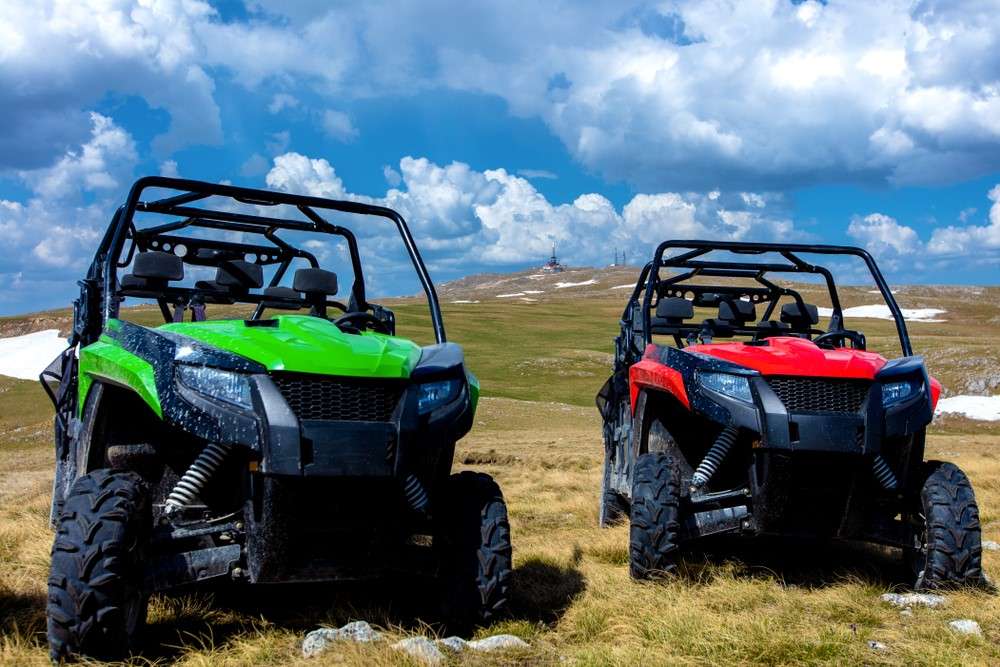
8 Mistakes to Avoid When UTV Riding 2

Source: FS Stock/Shutterstock.com

UTVs are helping millions of people get closer to nature, but they come with steep learning curves that can throw some adventurers for a loop. Avoid these crucial mistakes to make the most of your first voyage into the unknown.


from Auto Blog | Latest Car News and Reviews, Bikes and Motorcycles https://ift.tt/dX60R7q

Sunday, 4 August 2024

Speed Read: A carbon-clad Ducati 900SS café racer and more

The latest café racers, restomods, classics, and racing bikes.
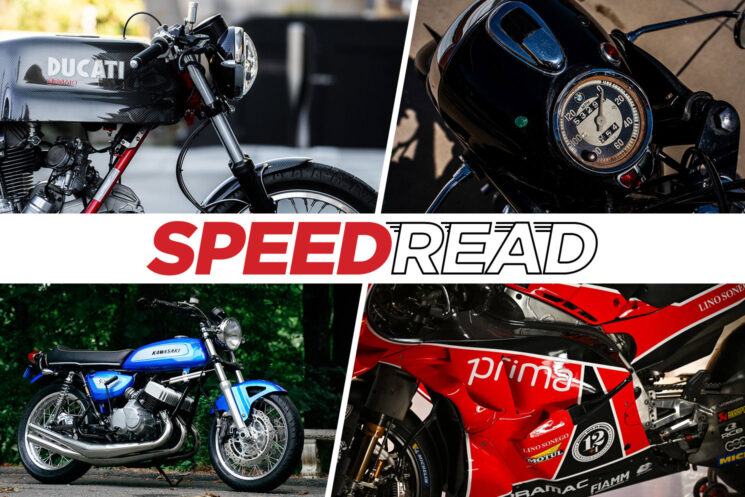
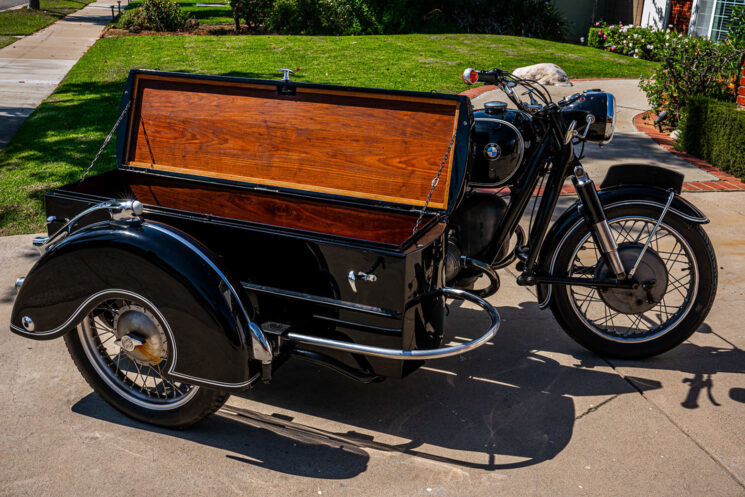
We’ve cast the net wide this week, with a selection of tasty motorcycles that are worlds apart. Purpose Built Moto kicks us off with a slick Ducati 900SS café racer, then we look at a stunning Kawasaki H1 Mark III restomod from the USA. Our fastest candidates are this week’s 75th anniversary MotoGP bikes, and our slowest is a 1965 BMW R60/2 with a very peculiar sidecar rig.

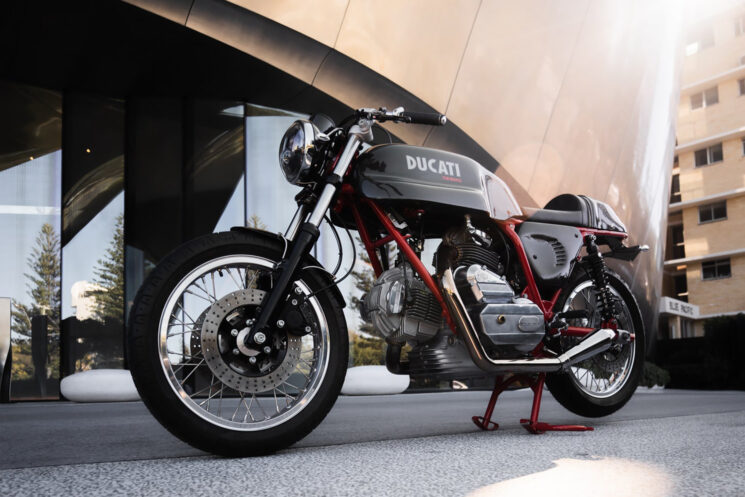
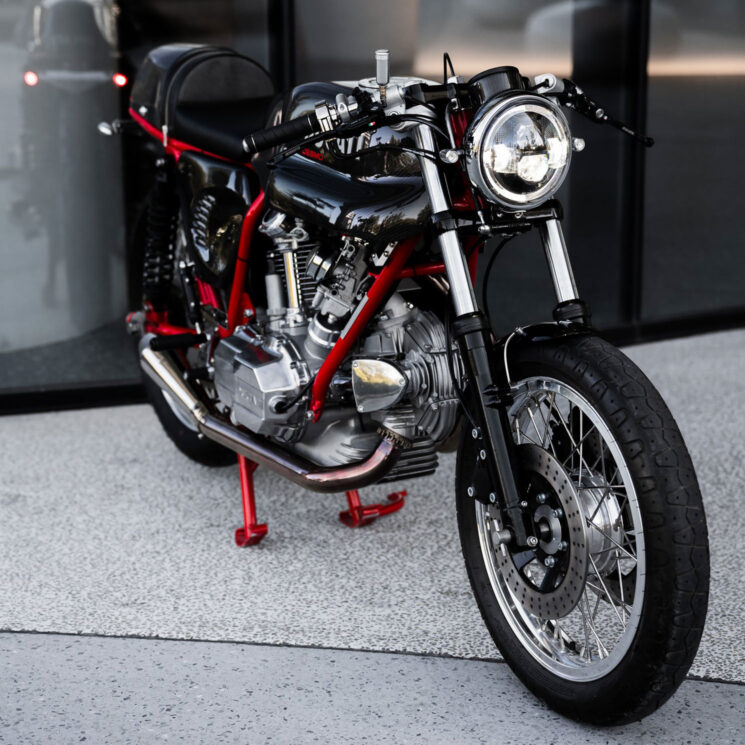
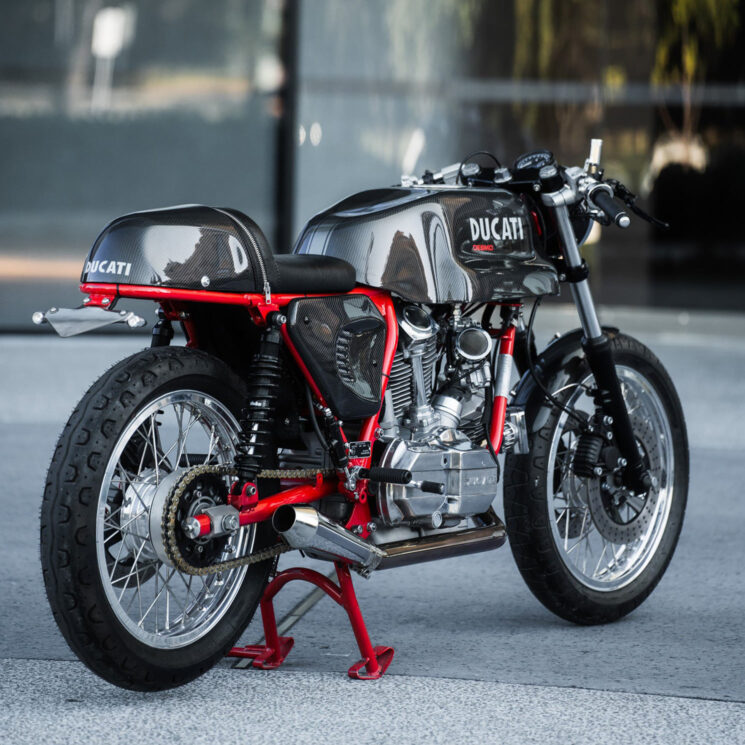
Ducati 900SS café racer by Purpose Built Moto
Ducati 900SS by Purpose Built Moto Our friends at Purpose Built Moto in Gold Coast, Australia have built plenty of ground-up custom bikes, but they’re not opposed to taking on smaller jobs too. The owner of this Ducati 900SS café racer brought the bike in with a solid set of mods as a foundation—but needed Tom Gilroy and his team to take it over the finish line.

Although the Ducati looks like a modified 900SS, it’s technically a replica. Since it came to the shop with most of the cosmetic and engine work done, Tom’s not entirely sure what the donor bike was—but the numbers indicate that it might have started life as a Darmah.

Ducati 900SS café racer by Purpose Built Moto
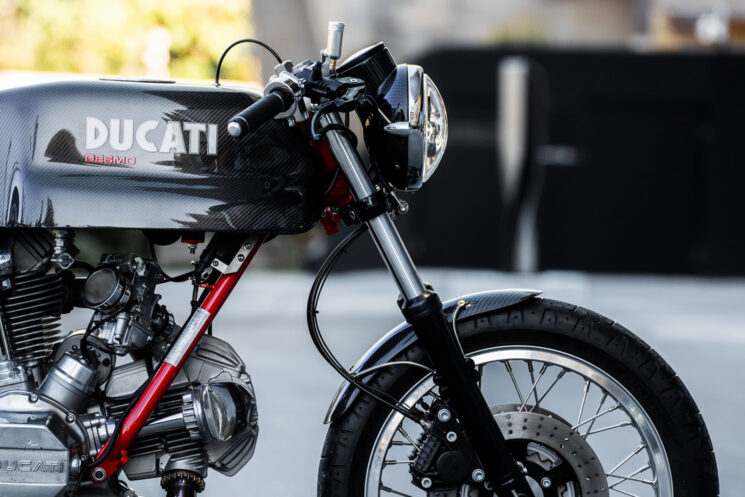
The shop that had worked on it previously had already treated it to a carbon fiber body kit, a bright red frame, rebuilt 18” wheels, and a fully rebuilt motor. PBM was tasked with adding a custom exhaust and front fender, finishing off the lighting, and rewiring the bike from head to toe. While they were at it, they nipped and tucked a couple of things to tighten up the overall package.

Tom’s not exactly sure what’s happening inside the engine, but he can confirm that it runs with Mikuni carbs and a new ignition system. From there, PBM fabricated a pair of two-into-two headers that trace the engine cases before terminating in a pair of stainless steel mufflers. (The barely-visible silencer mounts are particularly neat.)

Ducati 900SS café racer by Purpose Built Moto
Wiring is a dark art (and a chore), but it’s something that’s core to PBM’s business. The Ducati 900SS was given a full rewire, with the shop’s own ‘Black Box’ unit at the heart of the new system. Everything’s been tucked away carefully; the horn, ignition, and coils are under the fuel tank, and the Black Box sits under the seat hump.

Moving to the bodywork, PBM tweaked the subframe and tail unit for a more compact fit, before finishing the rear loop off with a custom tail tidy setup. PBM turn signal and taillight combination LEDs flank the license plate mount.


At the opposite end of the bike, the crew took an aftermarket carbon fiber front fender designed for a Harley, trimmed it, and set it on bespoke fairing stays. Higher up, they repurposed an old headlight bucket to build an all-in-one housing for a PBM LED headlight and the speedo, and then had it wrapped in carbon fiber. The headlight, front turn signals, and neat push buttons that adorn the Tarozzi clip-ons are all PBM parts.

Tom and his crew might not have started this project, but they finished it in style. And as anyone who’s ever built a custom motorcycle will tell you, the last yards of a project are often the hardest. [Source | Via]

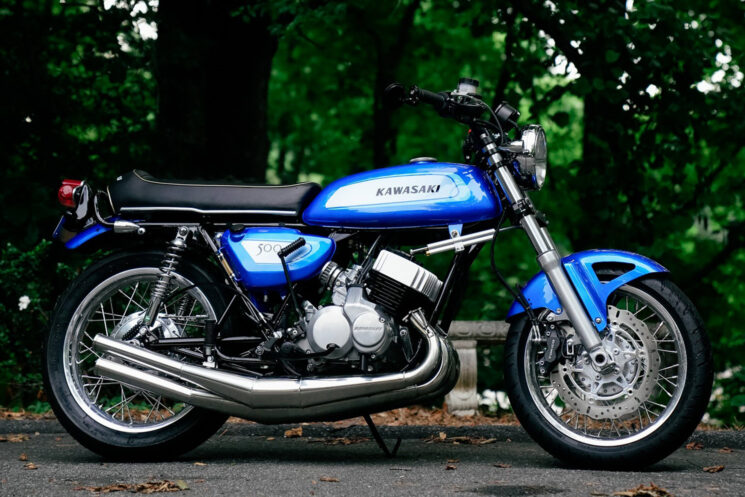
Kawasaki H1 Mach III restomod by Atlanta Motorcycle Works
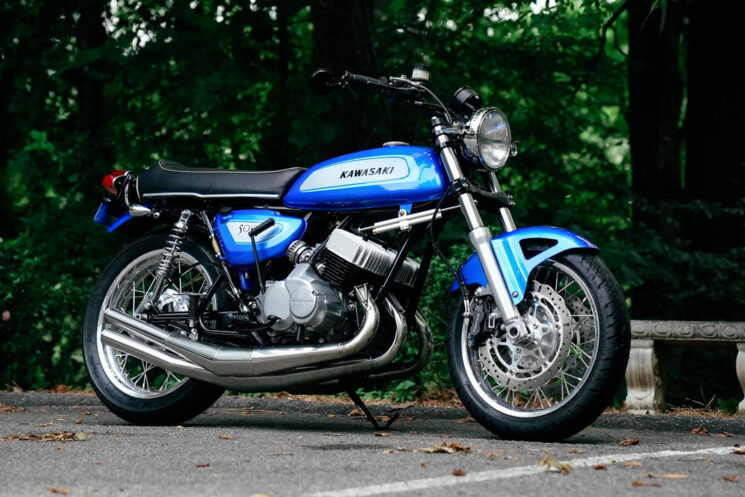
Kawasaki H1 Mach III restomod by Atlanta Motorcycle Works The Kawasaki H1 Mach III needs little introduction. A veritable banshee on two wheels, the 500 cc triple-cylinder two-stroke was a hit—sketchy handling and all. Over half a century later, it’s a bonafide icon.

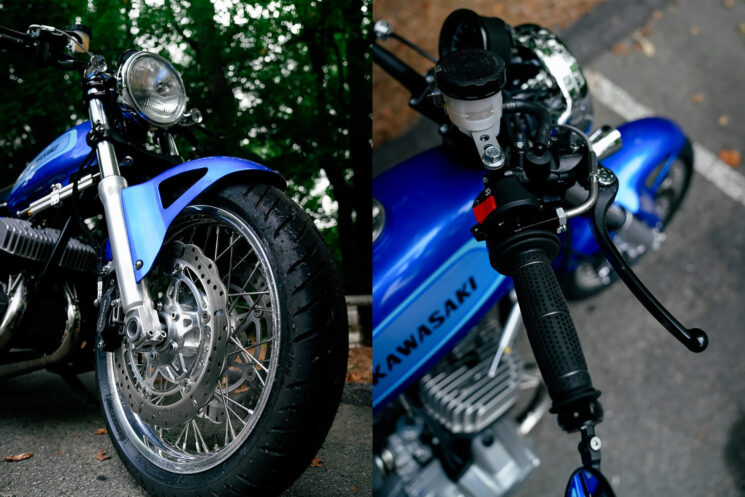
This crisp 1971 Kawasaki H1 Mach III restomod from Atlanta Motorcycle Works in the USA is notable for a few reasons. It came to the shop in boxes—an unfinished project undertaken by their client’s late father. By the time AMW was done with it, it had been upgraded in every conceivable way.

Kawasaki H1 Mach III restomod by Atlanta Motorcycle Works
Piecing the H1 together involved rebuilding its motor with custom-ported billet heads, bored cylinders, new pistons from Wossner, and a rebuilt and balanced crankshaft. AMW also added a bank of Mikuni VM34 carbs, and a three-into-three Higgspeed exhaust system. The electrical system was overhauled too, with a fresh wiring harness built around a NWT Cycletronic hub.

Kawasaki H1 Mach III restomod by Atlanta Motorcycle Works
Next, AMW focused on bringing the notoriously twitchy H1’s handling up to modern standards. The bike’s new forks and twin front brakes are from a mid-90s Suzuki GSX-R, while 17” Excel rims are wrapped in new Bridgestone road touring tires. A steering stabilizer adds peace of mind, with a reinforced swingarm doing duty out back.

Other additions include new grips, bar-end mirrors, and a Koso speedo. A blue pearl paint job ties it all together, complete with factory graphics. Atlanta Motorcycle Works didn’t just rebuild this legendary two-stroke—they elevated it. [Source]

Ducati MotoGP 75th birthday livery
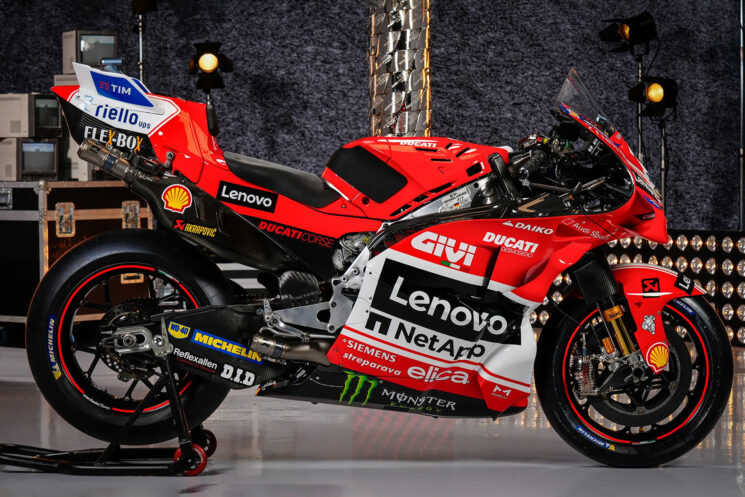
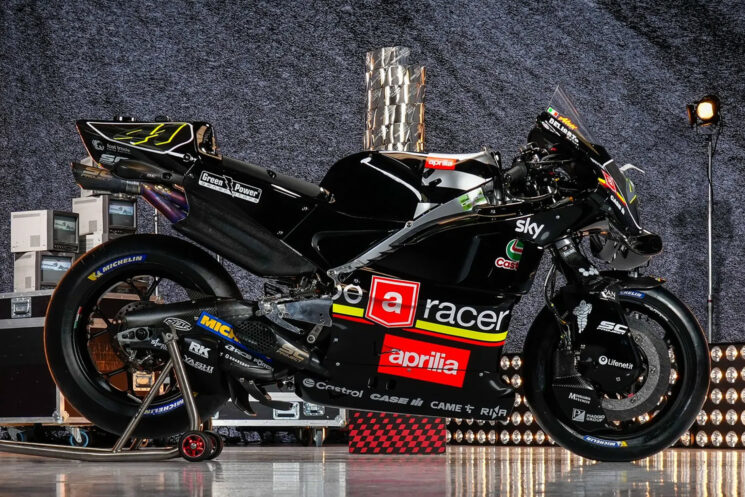
Classic MotoGP liveries at Silverstone Today’s MotoGP race at Silverstone in the UK marked the 75th birthday of motorcycle Grand Prix racing. To celebrate the occasion, all of the premier class MotoGP teams wrapped their bikes in special one-off liveries, paying tributes to the bikes and riders of yesteryear.

Aprilia MotoGP 75th birthday livery
The factory Ducati team’s 75th-anniversary design was a simple red and white affair with a brighter red than their current design; a nod to Loris Capirossi and Troy Bayliss’ 2003 Marlboro-sponsored Ducati.

Yamaha hit their bike with the white and red design that adorned their race bikes through the 60s and 70s, while the VR46 team looked to Valentino Rossi’s iconic ‘sun and moon’ design. Aprilia [above] opted for a sharp black paint job with minimal graphics; a nod to Max Biaggi’s 1994, 1995, and 1996 250 cc title-winning Aprilia RSV 250.

Red Bull KTM MotoGP 75th birthday livery
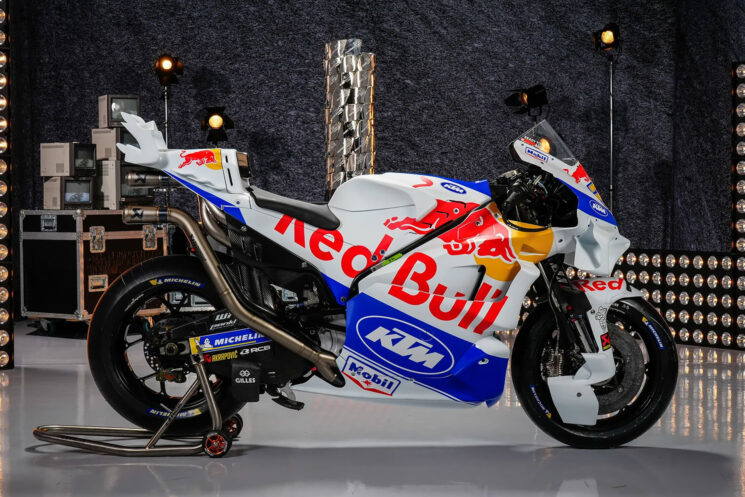
A handful of the day’s bikes stood head and shoulders above the rest though—like the KTM RC16 [above]. Although the RC16’s special edition livery wasn’t a direct replica, it was loosely based on the KTM LC4 that KTM’s current VP of Road Racing Technology, Wolfgang Felber, won the German ‘Sound of Singles’ championship on in 1989. Regardless of its origins, the stark colors and crisp, bold graphics are a cut above KTM’s regular RC16 livery.

Gresini Ducati MotoGP 75th birthday livery
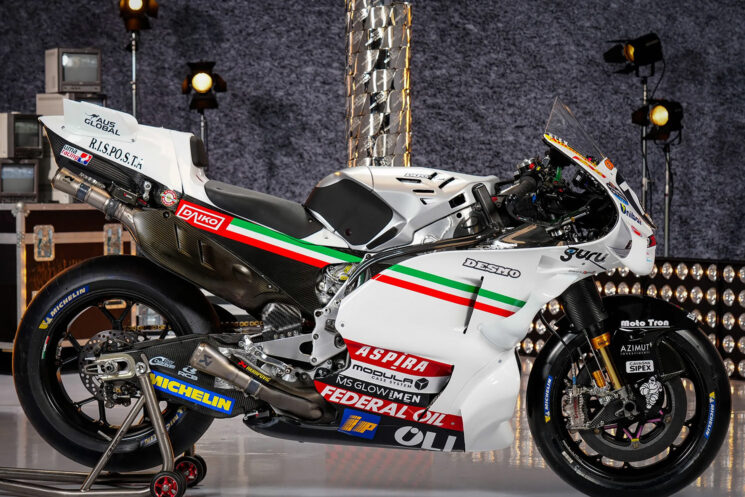
The best-looking bikes on the grid, hands down, were the Gresini Ducatis [above] ridden by the Marquez brothers. In an emotional tribute to Gresini’s late founder, Fausto Gresini, the bikes wore the minimalistic ‘il Tricolore’ design as the Garelli bike that he won the 1985 and 1987 125 cc titles with. Simple, but iconic.

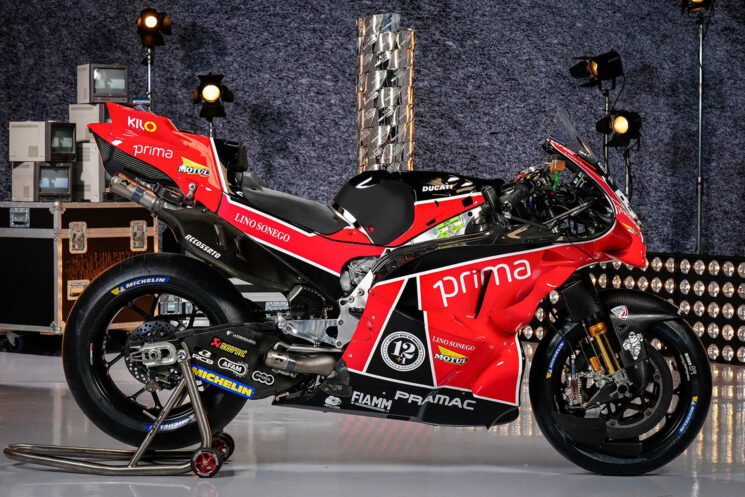
Also notable was the Primi Pramac Ducati GP24 [below] that Jorge Martin put on the second step of the podium, while also regaining his lead in the 2024 championship standings.

Primi Pramac Ducati MotoGP 75th birthday livery
Slathered in chunky red and black graphics, it paid homage to the legendary Spanish racer Ángel Nieto—specifically the Garelli that he won the 1983 125 cc championship with. (Ángel was also the uncle of Primi Pramac Racing’s current sporting director, Fonsi Nieto.)

The temporary redesign was a breath of fresh air, with Pecco Bagnaia even quipping after the race that he preferred today’s livery to his Ducati GP24’s regular dress. But it has us wondering why MotoGP bikes can’t always look this good. [Source]

1965 BMW R60/2 with a Steib transport sidecar
For sale: A 1965 BMW R60/2 with a Steib transport sidecar 1960s BMW boxers and Steib sidecars go together like peas and carrots—but have you ever seen an old Beemer with a Steib delivery sidecar? Us neither.

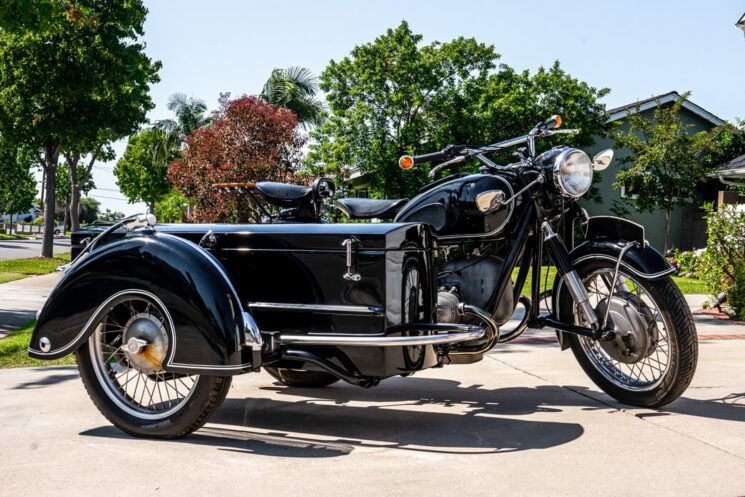
At first, we thought we were looking at the world’s most stylish custom-built hearse. But as it turns out, the famed German sidecar manufacturer did in fact produce a sidecar designed for transporting things rather than people.

1965 BMW R60/2 with a Steib transport sidecar
It was officially called the ‘LT200 transport sidecar,’ and it was built on the same base as the company’s LS200 passenger sidecar.

Measuring 146 cm [57.5”] long, 40 cm [15.7”] wide, and 50 cm [19.7”] deep, the LT200 could carry up to 120 kilos [265 lbs] of goods. This one’s lined in black walnut and features a lockable lid.

1965 BMW R60/2 with a Steib transport sidecar
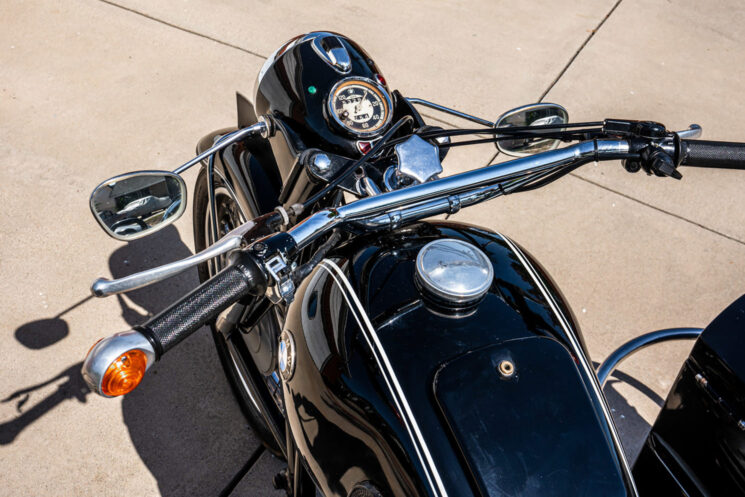
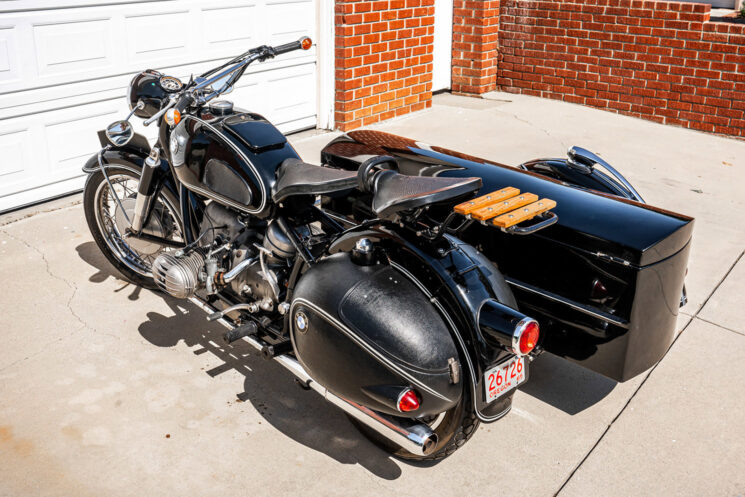
Of course, the motorcycle it’s attached to is nothing to be scoffed at either. The BMW R60/2 had all the goodies back in the day; a 30 hp motor, Earles forks, and a shaft drive. This one still has matching Denfeld seats and has been outfitted with BMW saddlebags, a larger ‘sport’ tank with a toolbox compartment, Albert mirrors, and genuine Hella bar-end turn signals.

If that sounds like your bulk order of tea, Iconic Motorbikes currently has this vintage oddity, which is presently located in California, listed for just $19,260. This leaves only one question: what would you cart around in it?

1965 BMW R60/2 with a Steib transport sidecar


from Bike EXIF https://ift.tt/ZGUQIik

Saturday, 3 August 2024

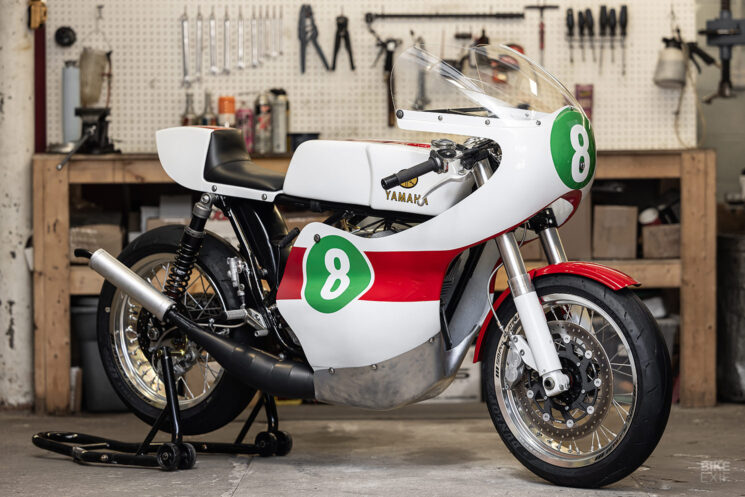
Big Dreams: An RD250-based Yamaha RD56 replica from Canada

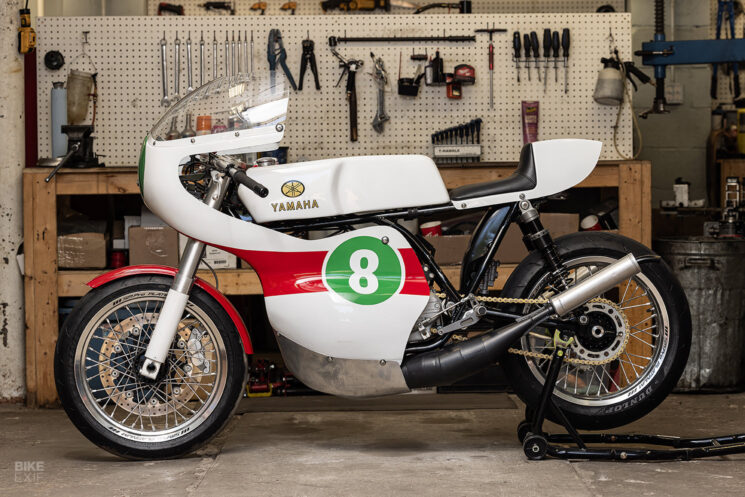
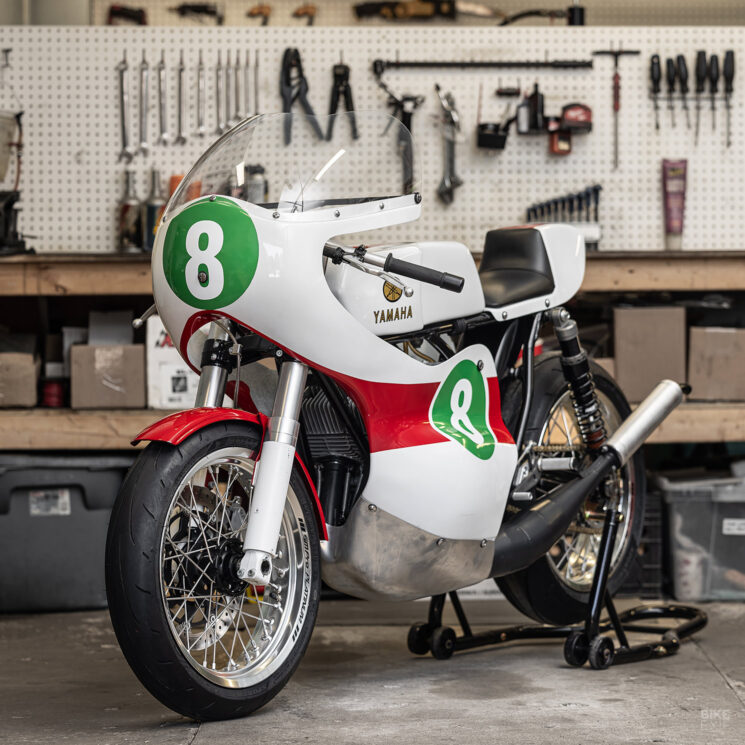
Yamaha RD56 replica by Big Dream Motorcycles
The Yamaha RD56 cemented itself in the annals of motorcycle racing history when it carried Phil Read to Yamaha’s first-ever Grand Prix championship title in 1964. But that wasn’t the RD56’s only accolade that year; it was also the bike that Canadian racer Michelle ‘Mike’ Duff claimed their first Grand Prix race win on.

Duff would go on to win another race in the following season, finishing second overall in the 1965 250 cc Grand Prix championship behind Read. They retired four years later, but remain the only Canadian motorcycle racer ever to win a Grand Prix. And it’s that legacy that inspired Canada’s Matt Wieckowski to create this nostalgic Yamaha RD56 replica.

Yamaha RD56 replica by Big Dream Motorcycles
“I was inspired after re-reading the book ‘Make Haste Slowly’ by Michelle Duff, which chronicles her time (she was ‘Mike’ back then) as a factory Yamaha racer in the early 60s,” Matt tells us. “It’s a great read, by the way, for anyone who enjoys motorcycle racing.”

Based in London, Ontario, Matt customizes and services bikes under the banner of Big Dream Motorcycles. He races classic bikes too, so projects of this ilk are right up his alley.

Yamaha RD56 replica by Big Dream Motorcycles
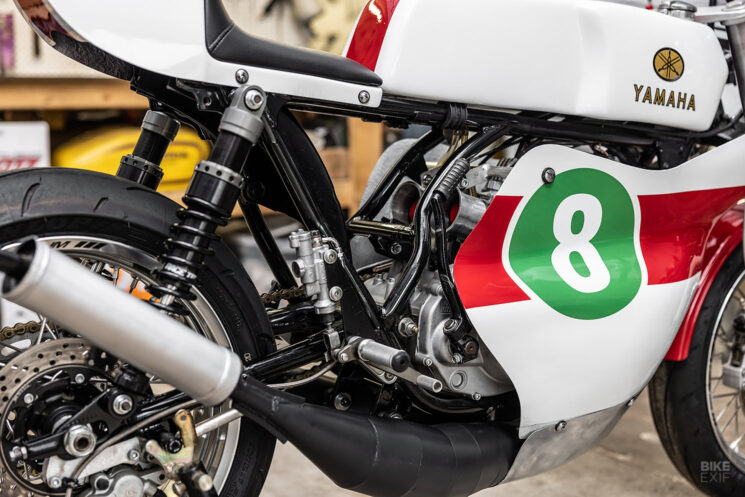
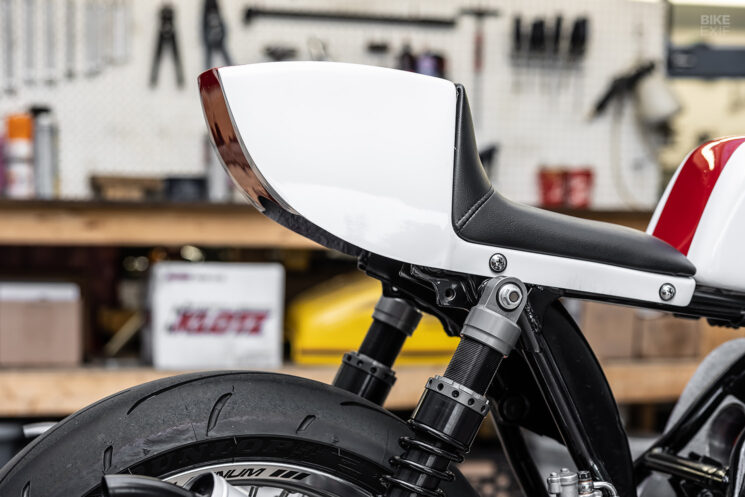
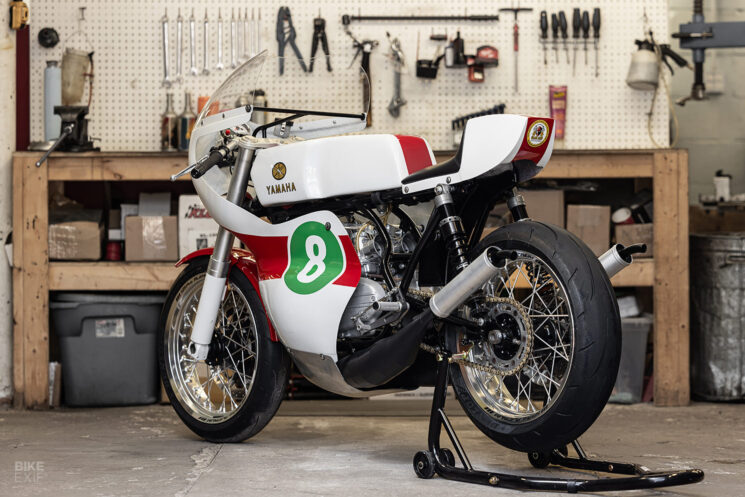
Nicknamed the ‘RD256,’ Matt’s retro race replica started as the frame, swingarm, and most of the engine from a 1974 Yamaha RD250 two-stroke. The frame and swingarm were stripped, de-tabbed, and reinforced, and the swingarm was lengthened and modified to accommodate a wider rear tire.

Next, Matt massaged the forks, yokes, and front Brembo brake caliper from a 2001 Cagiva Mito into place. “It went on surprisingly easily—other than that I had to make and install a new steering stem, and cross-reference the steering head bearings,” he says.

Yamaha RD56 replica by Big Dream Motorcycles
The rolling chassis was finished off with custom rear shocks from Race Tech, and a set of KTM supermoto wheels from SM Pro in the UK. Matt mounted a Brembo front caliper off another KTM for the rear brake, hooking it up to a Nissin master cylinder from a Yamaha YZF450. The brake discs are Goldfren parts.

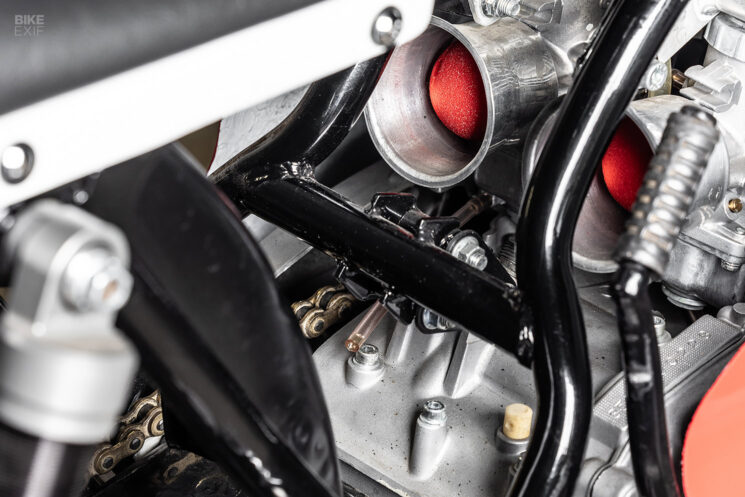
The RD250’s engine was far from running when Matt got his hands on it, so he set about rebuilding it from the ground up. Highlights include a Vape ignition, a rebuilt crank, modified outer covers, ported and polished heads, and a modified VForce reed valve system from a Yamaha YZ80. Matt did most of the work himself, save for the cylinder work, which was outsourced to a friend—Tanner at Sib’s Performance Machine.

Yamaha RD56 replica by Big Dream Motorcycles
The engine runs race fuel, fed by 34 mm Mikuni round-slide carbs. For the exhaust, Matt initially fabricated expansion chambers that he refers to as “unsilenced.” Those clearly proved too loud, as the exhaust system now consists of aftermarket Yamaha RZ350 chambers and cans.

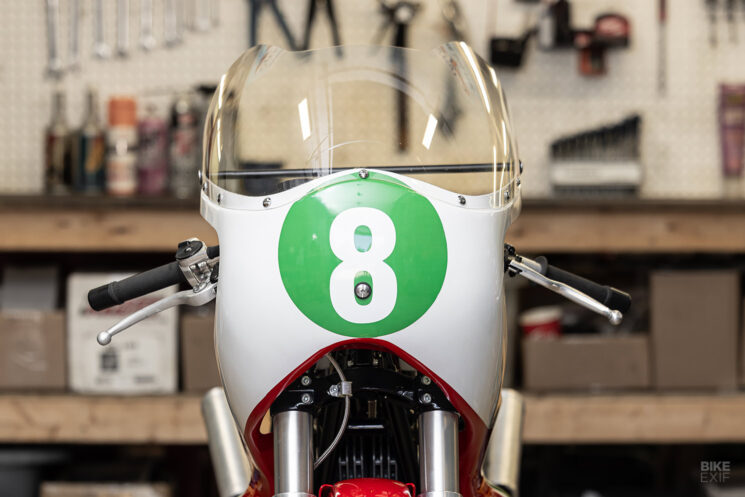
Moving to the bodywork, Matt put an order in at Ragged Edge Racing for a set of RD56 replica parts. They supplied the fairing, belly pan, tail section, and windshield, while the handmade fiberglass fuel tank came from a supplier in Toronto.

Yamaha RD56 replica by Big Dream Motorcycles
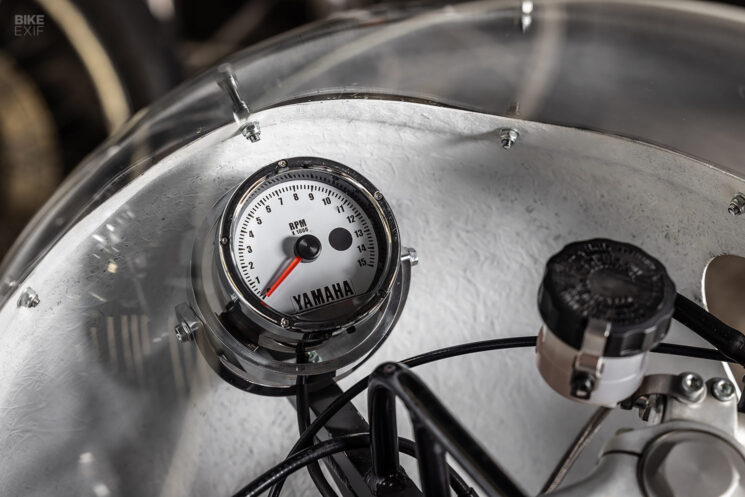
“Once I had all the parts I went through the slow and tedious process of mounting them to the bike,” Matt tells us. “I made a front fairing stay that also holds the tacho, as well as all the other brackets and mounts to hold everything in their proper positions.”

“My goal was to always stay as true as possible to the RD56 as far as the look. That meant doing some things I hadn’t done before—like making fork covers out of aluminum tubing, and polishing the anodizing out of the fork tops to give the appearance of conventional forks, even though they’re inverted.”

Yamaha RD56 replica by Big Dream Motorcycles
Matt finished the bodywork off with the RD250’s original front fender, which he shortened to suit the build. Then he took a Koso tachometer, stripped it, and added Yamaha branding for a period-correct look. Other finishing kit includes Motion Pro grips, a YZ250 clutch perch and lever, a Suzuki GSX-R600 front brake master cylinder, and HVC Cycle rear-sets.

Once everything was in place, Matt stripped the Yamaha back down for paint and finishes. The frame and swingarm went off to Chris at Crashburn Cycles for fresh powder-coating, while Blair at Fibernew added foam and upholstery to the raw seat pan.

Yamaha RD56 replica by Big Dream Motorcycles
“The bodywork and fuel tank went to another friend of mine, Mike Murray, who absolutely hit it out of the park,” Matt adds. “I basically showed up with unfinished bodywork, a raw fiberglass fuel tank, and a few pictures of an RD56. It came back spot on.”

“I put a lot of hours into this bike, but was also blessed to have an amazing group of people who I couldn’t have done this without. One other shoutout I would give is to my welder, Doug Cloutier.”

Yamaha RD56 replica by Big Dream Motorcycles
Matt’s Yamaha RD56 replica is a picture-perfect tribute to one of motorcycle racing’s best eras. But even though it looks too good to get dirty, he assures us that it’s no garage queen. “Even though I don’t get it out as much as I would like,” he adds, “it does get some track time at an annual event that I help sponsor, called the Grand Bend Festival of Speed.”

What we wouldn’t give to see this graceful machine ridden in anger.

Big Dream Motorcycles | Facebook | Instagram | Images by Red Button Photography

Yamaha RD56 replica by Big Dream Motorcycles


from Bike EXIF https://ift.tt/oDBZsXW

Thursday, 1 August 2024

The North Star: Deus ex Machina’s stunning Yamaha XT500 restomod

Yamaha XT500 restomod by Deus Ex Machina Australia
In the world of classic thumpers, the Yamaha XT500 reigns supreme. It pioneered the concept of four-stroke dual-sport bikes, won the first two Paris Dakar rallies, and garnered legions of fans along the way. It’s hard to meet someone who hasn’t owned an XT500, known someone who’s owned one, or dreamt of owning one.

Given its legendary status, the Yamaha thumper begs to be subtly and judiciously tweaked, rather than drastically modified. If you can crank up the elements that made it iconic in the first place, while nipping and tucking it in all the right places, you’re on the right track. And that’s exactly what Jeremy Tagand at Deus ex Machina Australia has done with this Yamaha XT500 restomod.

Yamaha XT500 restomod by Deus Ex Machina Australia
Dubbed ‘The North Star’ after the bike’s owner, Fred North, this 1981-model Yamaha XT500 is a textbook example of how to honor a classic, while also dragging it into the modern age. The XT’s icon status isn’t lost on Jeremy, so retaining as much of the original’s DNA as possible was never a question.

“If we had a dollar for every story we’ve heard about the Yamaha XT500, we could probably buy this bike back,” he quips. “Tales of adventure and her wily sister, misadventure. Of duct tape and zip tie repairs. Of broken ankles, nostalgia, and running out of skill… we’ve heard it all.”

Yamaha XT500 restomod by Deus Ex Machina Australia
Jeremy’s first port of call was to give the old XT500 a rolling chassis worthy of its legacy. New Yamaha WR450F forks went onto the front—but first, they were shortened, re-sprung, and re-valved. Deus also had the uppers anodized, and the lowers treated to a black DLC coating.

CNC-machined yokes hold the forks in place while maintaining the stock front-end geometry. A modified alloy swingarm from a Kawasaki KLX250 does duty at the back, connected via a pair of fully adjustable piggyback shocks from YSS.

Yamaha XT500 restomod by Deus Ex Machina Australia
Next, Jeremy ditched the 43-year-old wheels for a set of matching 19” Buchanan’s hoops, laced to billet hubs from Haan Wheels. (Sending the rims off for period-correct gold anodizing was a no-brainer.) Modern amenities include a cush drive, and modern hydraulic disc brakes that were borrowed from the same WR450F that donated its forks.

With the rolling chassis now sorted, the XT’s unkillable single-cylinder lump rose to the top of the list. Reliable performance was the goal, so Jeremy tapped Carl Batey—who’s been working on XT’s since they came out in 1979—for the perfect XT500 blueprint.

Yamaha XT500 restomod by Deus Ex Machina Australia
The rebuilt motor now features high-compression pistons, a balanced crank, a ported and flowed head, a modified camshaft, and heavy-duty valve springs and retainers. Deus also installed a high-flow oil pump and oil cooler, and stuck a high-performance K&N filter into the OEM airbox, while also slotting the airbox cover for better airflow.

The intake utilizes a Keihin FCR39 carb, with a custom exhaust header and SC-Project can at the opposite end. Finally, Jeremy added an XSTART electric starter kit to the XT, with a rewound stator, flywheel, digital ignition, and 12 V conversion from Rex’s Speed Shop.

Yamaha XT500 restomod by Deus Ex Machina Australia
Jeremy showed supreme restraint with the Yamaha’s bodywork. The original fuel tank and rear fender are still in play, but the latter has been moved forward to match the trimmed and looped subframe. A new seat tops it off, covered in Alcantara and perforated black vinyl, with red stitching to add contrast.

A JVB-Moto headlight shroud was tweaked to fit the Yamaha, and now houses an LED headlight from Koso. Just below it, you’ll find the original XT500 front fender, trimmed for a more aggressive look.

Yamaha XT500 restomod by Deus Ex Machina Australia
The Yamaha’s finishing kit is all brand new and thoroughly modern. Flat track bars are held in place by Rizoma clamps and wear Motogadget’s latest switches, which feature backlit color-coded LEDs. The German electronics specialists also supplied the speedo, grips, and keyless ignition.

The North Star wears fresh paint too, but Jeremy and Fred opted to replicate the XT500’s unmistakable factory livery. The polished tank sections are echoed in the polished bits on the swingarm, while everything else has been done in gloss black.

Yamaha XT500 restomod by Deus Ex Machina Australia
Deus ex Machina’s Yamaha XT500 restomod deftly balances nostalgia and modernity. If you must spin spanners on a vintage Yamaha XT500, do it like this.

Deus Customs | Facebook | Instagram

Yamaha XT500 restomod by Deus Ex Machina Australia


from Bike EXIF https://ift.tt/qX7lSpL