Wednesday, 6 March 2024

Direct Hit: A 1968 Harley-Davidson FL hardtail from Japan

1968 Harley-Davidson FL hardtail by Sureshot
Takuya Aikawa is on a roll. There hasn’t been a running of the Yokohama Hot Rod Custom Show in the last few years that he hasn’t brought at least one medal home from. His accolades include two ‘Best of Show’ awards, a ‘Best Detail Work’ award, and a whole bunch more.

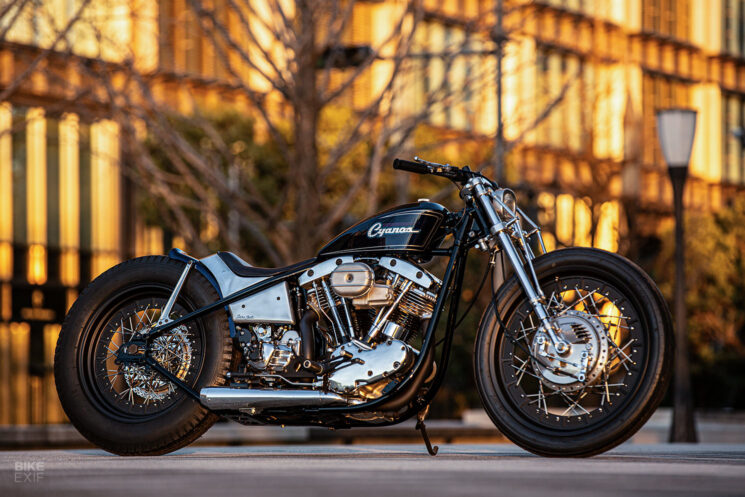
And in case you’re wondering—yes, this 1968 Harley-Davidson FL is a medal-winner too. Aikawa-san built it last year, took it to Mooneyes, and came home with the ‘Best Motorcycle American’ trophy. And it’s easy to see why.
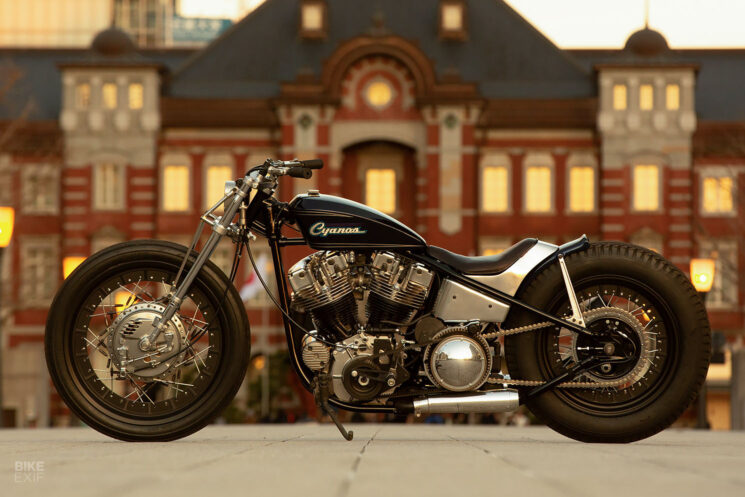
1968 Harley-Davidson FL hardtail by Sureshot
Takuya runs Sureshot—a workshop situated in Chiba, just east of Tokyo. Sureshot repairs, services, and customizes Harley-Davidsons, but their main focus is dyno tuning. That performance angle has shone through on their last few customs; lithe machines that look fast, even if they’re built using vintage donor bikes.

This old Harley shovelhead is a beguiling (and deliberate) mix of old and new. Takuya wanted to build a custom bike loaded with classy details, but he wanted to use the modern manufacturing techniques that Sureshot has employed recently to create them. The result is a stunning bike that hides an astonishing amount of ingenious details.
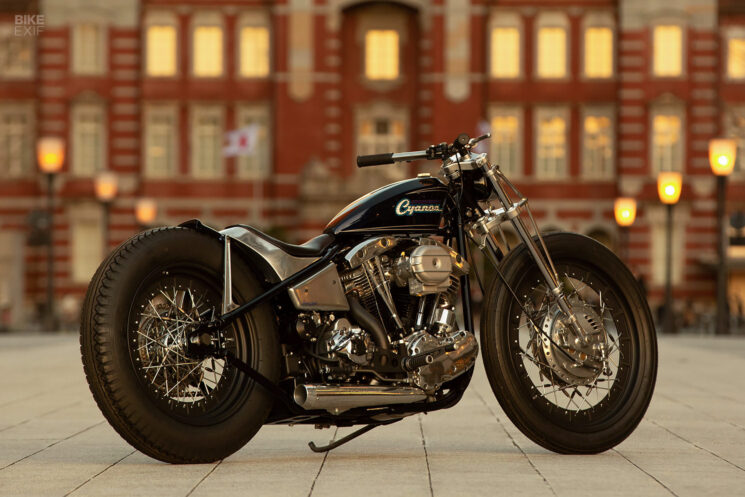
1968 Harley-Davidson FL hardtail by Sureshot
Most of those details are straight from Takuya’s imagination, since Sureshot’s client left the styling up to the workshop. His only requests were that the bike should have a rigid frame, an electric starter, and a regular foot shifter rather than a hand shifter. (He ultimately wanted the bike as easy to ride as a skinny, vintage-styled hardtail can be.)

If you’re thinking that the bike looks a lot skinnier than a 1968 Harley-Davidson FL, you’re right. Takuya mated the front half of a shovelhead frame to a rigid rear triangle, then narrowed the whole thing.
1968 Harley-Davidson FL hardtail by Sureshot
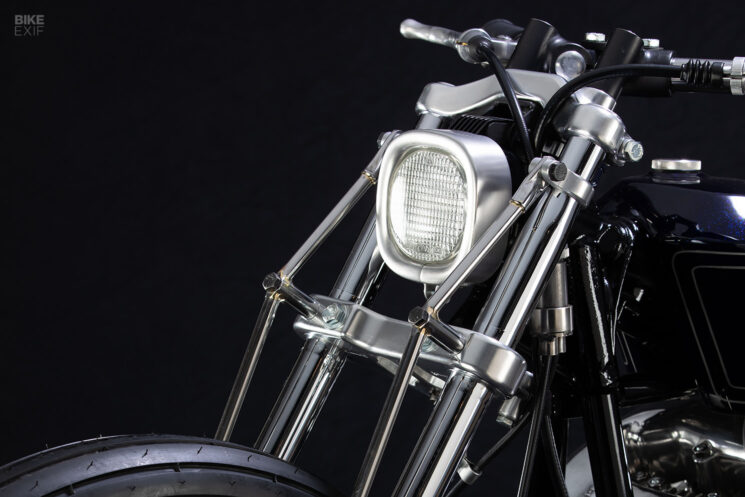
The front forks are from an ‘Auto Race’ bike. Auto Race is a Japanese form of flat track-slash-speedway racing, but it’s held on asphalt instead of dirt. As you’d imagine, transplanting the forks from a skinny Auto Race bike to a chunky vintage shovelhead was hardly a plug-and-play affair.

First, Takuya had to liberate the forks from their bottom yoke (the system is a one-piece arrangement), then lengthen the legs to suit the Harley’s ride height. Once everything was put together, he fabricated new triangular braces to sit against the forks; a direct nod to the original Auto Race fork designs.
1968 Harley-Davidson FL hardtail by Sureshot
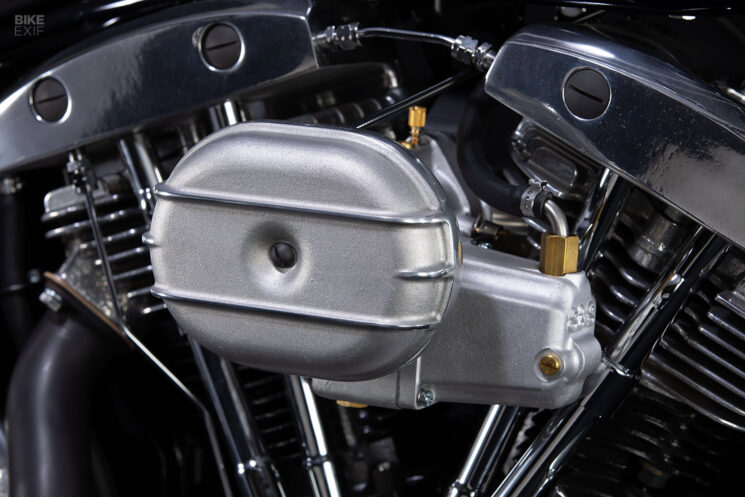
The heart of the beast is a rebuilt 1,200 cc shovelhead engine, kitted with upgraded pistons, an Andrews camshaft, and Kibblewhite valves. The brief called for a bike that would run smooth rather than hot, but Takuya still couldn’t resist tossing a beefy S&S Cycle L-carb, and a Dynatek Dyna 2000i ignition system with a bespoke map, into the mix.

“A carburetor is a functional part,” he adds. “But for Harley-Davidson, it is also a strong exterior element that evokes performance. And I’ve always been performance-oriented.”
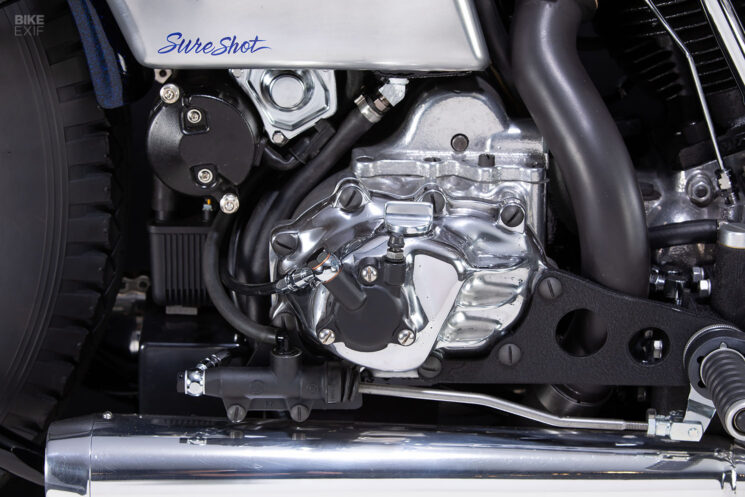
1968 Harley-Davidson FL hardtail by Sureshot
Not only did Sureshot’s client request an electric start system, but he also signed off on the removal of the kick-start lever altogether, in a bid to simplify the layout and save a little weight. That left Takuya free to experiment with an idea that he’d been sitting on for a while—relocating the transmission.

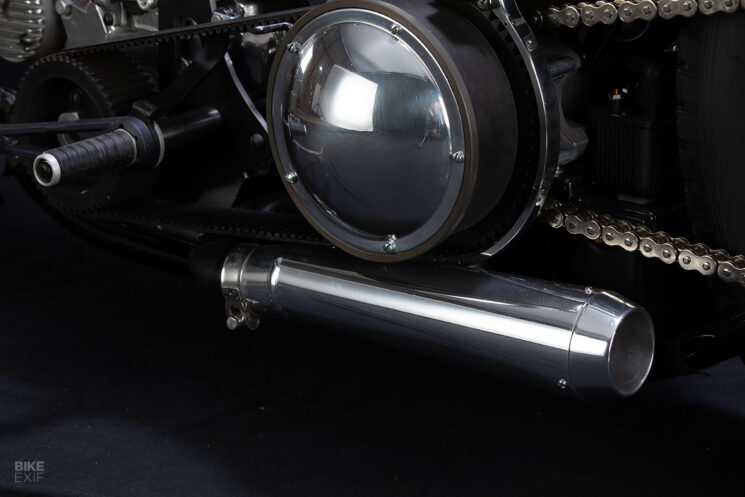
“I’ve always wanted to build a custom bike that is fun to ride,” he said. “Increasing the power of the engine is important, of course, but weight reduction and mass centralization can also make a big difference in the handling of the bike. The reason for this is that I believe that if the transmission, which is the second heaviest component after the engine, is placed closer to the engine, the mass will be more concentrated and the bike’s dynamic performance will be improved.”
1968 Harley-Davidson FL hardtail by Sureshot
Takuya tucked the transmission in by shifting it up and forward while maintaining the length of the drive belt. That caused issues with the position of the clutch release arm, so Sureshot converted the clutch to a hydraulic system. Not wanting to stick a fluid reservoir on the handlebars, Takuya mounted the clutch master cylinder to the side of the crankcase, connecting it to a Tomaselli lever via a cable.

In a bid to optimize mass centralization even further, he also fabricated a set of matching mufflers, tucking them in tightly underneath the bike. Given the inherent architecture of the American V-twin engine, getting the mufflers to sit perfectly across from each other was no mean feat—but Sureshot pulled it off by snaking the headers tightly around the motor.
1968 Harley-Davidson FL hardtail by Sureshot
One of the shovelhead’s coolest features is also the hardest one to spot. The bike is loaded with billet aluminum parts that don’t look like billet aluminum parts. “The reason for this, is to follow a classic style,” says Takuya.

“I removed the cut marks that are characteristic of billet aluminum parts, and instead gave them a cast surface look, polished them, and rounded the edges. All of this was done by hand.”
1968 Harley-Davidson FL hardtail by Sureshot
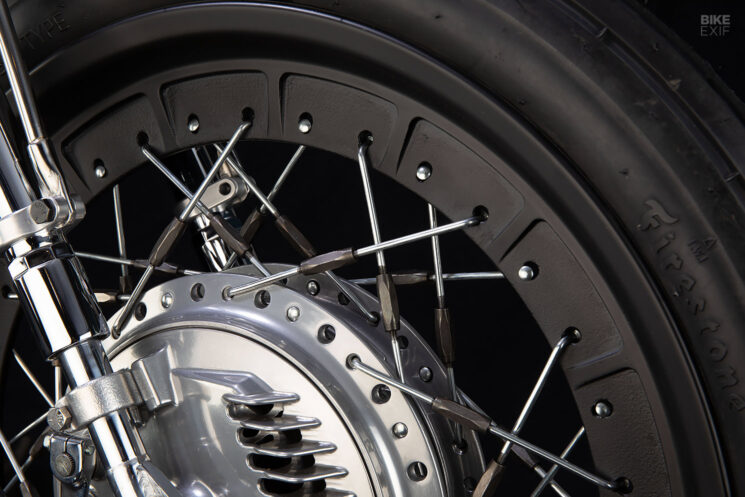
The same philosophy was applied to the wheels. Takuya started with a set of solid billet aluminum units, measuring 21” up front and 18” out back. He then cut out the middle of each wheel, machined a ridge to accommodate spokes, and then smoothed everything down to erase all traces of the machining work.

Taking inspiration from vintage Montesa trial bikes, Takuya built a set of spokes with handmade turnbuckle tensioners to lace up each wheel. The front wheel uses a twin leading shoe drum brake from an old Suzuki ST400 Tempter, while the back uses a hydraulic drum brake with a Brembo master cylinder.
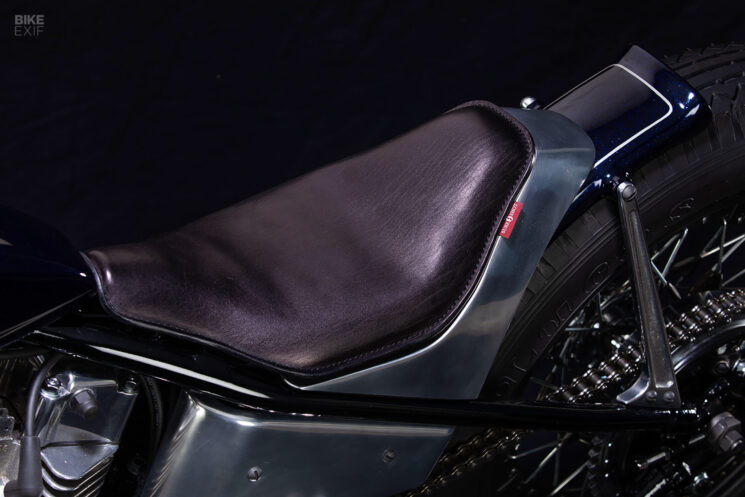
1968 Harley-Davidson FL hardtail by Sureshot
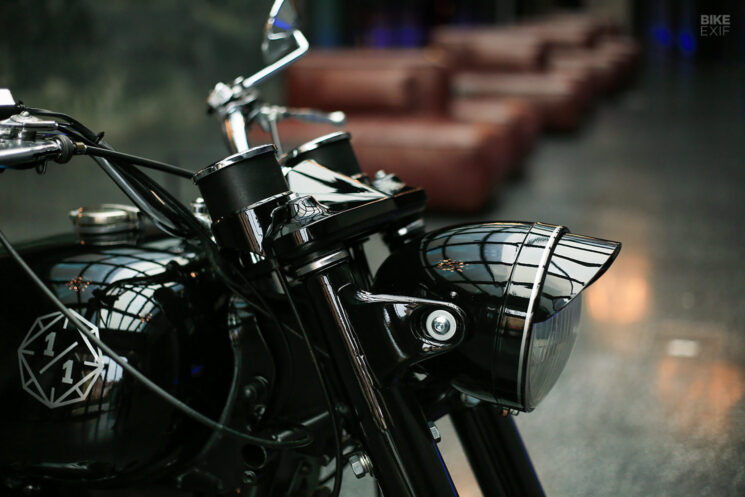
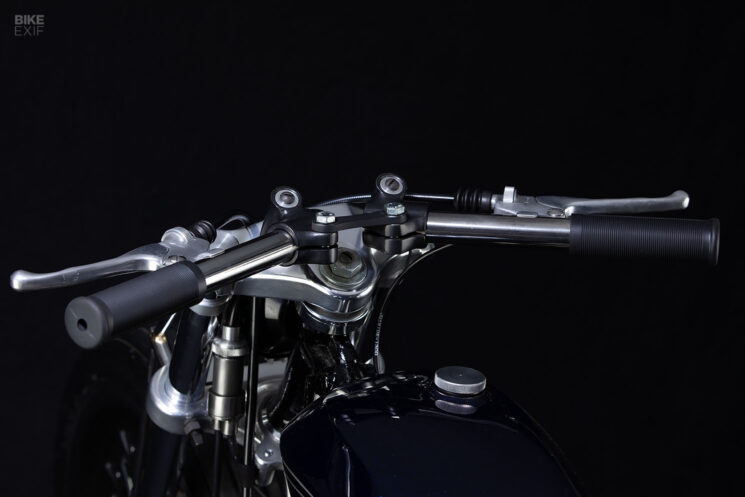
Sureshot was also responsible for the shovelhead’s sleek new aluminum bodywork—and for smaller parts like its headlight housing and unique split handlebars. The levers are welded directly to the bars for a super sano effect, while Tarozzi foot controls sit further down.

Rods Design handled the paint, Rio Studio was responsible for the logos and pin-striping, and Manabu Yamaguchi Art Craft covered the scooped bobber seat in horse hide. And this vintage shovelhead excels in all three of those areas.
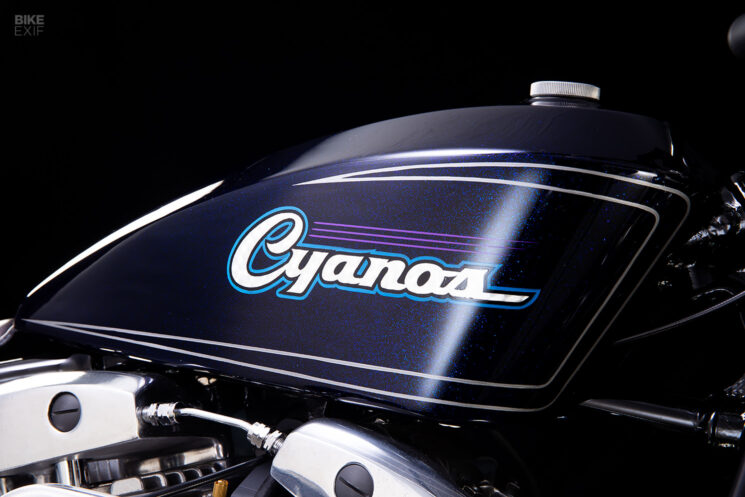
1968 Harley-Davidson FL hardtail by Sureshot
With motorcycles that look this good, is it any wonder that Aikawa-san’s trophy cabinet is getting crowded? All that’s left to do now, is wait and see what he comes up with for this year’s Mooneyes show.

Sureshot | Facebook | Instagram | Images by Makoto Morichika
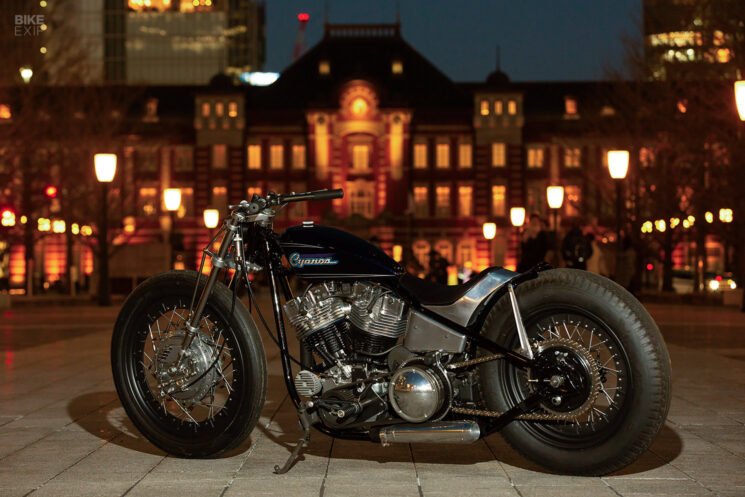
1968 Harley-Davidson FL hardtail by Sureshot


from Bike EXIF https://ift.tt/fqzFiCP

Tuesday, 5 March 2024

It’s official: The 2024 Husqvarna Svarpilen 801 is coming

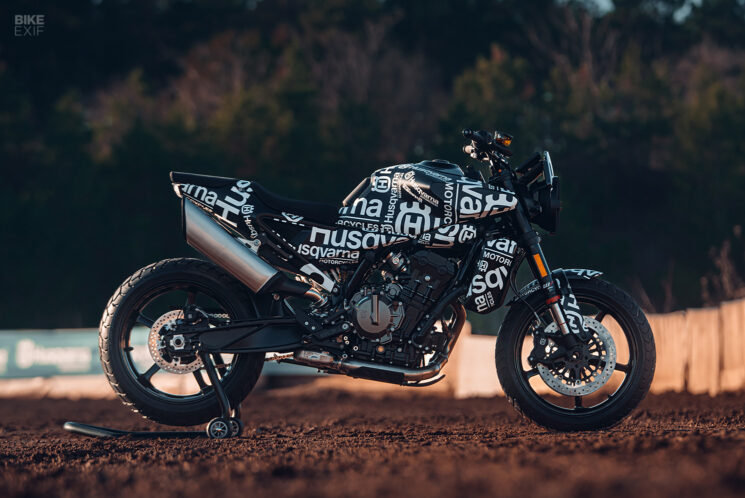
2024 Husqvarna Svarpilen 801 teaser
It’s no secret that Husqvarna has had a twin-cylinder Svartpilen in the works, but now they’ve officially made it official. Get a load of the 2024 Husqvarna Svartpilen 801.

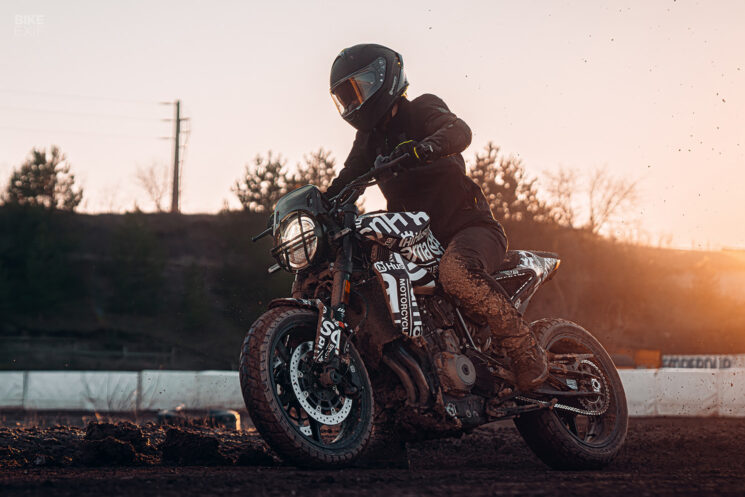
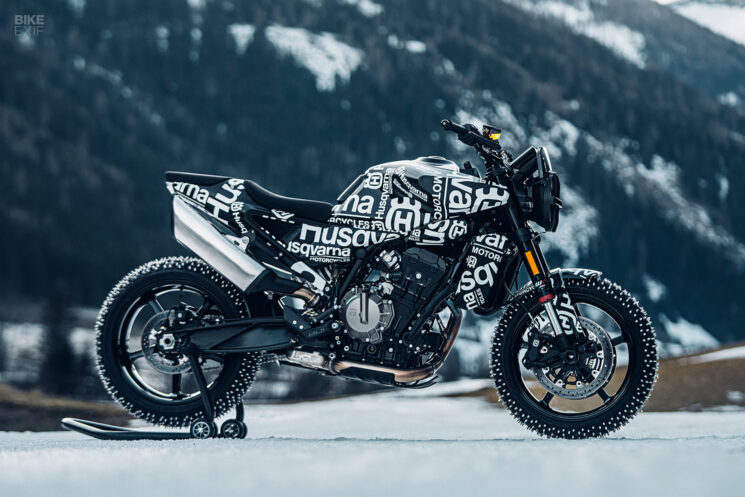
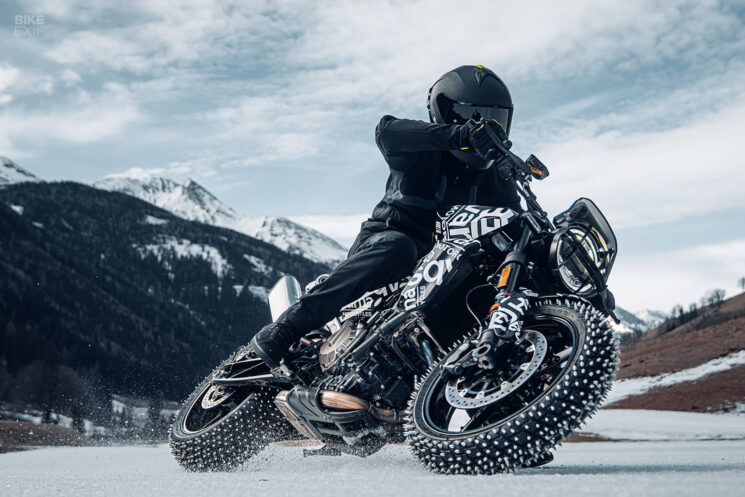
Husqvarna would have you believe that you’re looking at a prototype—but in OEM-speak, that just means the actual factory bike in disguise. This is likely the production-ready Husqvarna Svartpilen 801, plastered in sticker camo to make it look all prototype-y.

2024 Husqvarna Svarpilen 801 teaser
Technical details are slim, but there’s a lot that we can garner by filling in the blanks. It’s safe to assume that, like the Svartpilens that came before it, the Svartpilen 801 is based on a KTM, since the two companies exist under the same umbrella. It’s standard operating procedure within the Svartpilen model range to add 11 to the model designation of the KTM that has donated its frame and engine; in this case, the KTM 790 Duke.

2024 Husqvarna Svarpilen 801 teaser
That’s confirmed by one of the few details that Husqvarna has confirmed for the Svartpilen 801—its output. The 105 hp produced by its parallel-twin mill matches the 790 Duke’s power, although the Svartpilen is a little heavier at 181 kilos [399 lbs]. That’s likely due to its unique bodywork and accouterments.

It’s also been confirmed that the Husqvarna Svartpilen 801 will come with a full suite of electronic rider aids, including a quick-shifter, but that’s all we know for sure. It also shares the 790 Duke’s WP suspension and open-lattice swingarm, while its bodywork follows the neo-retro flat track theme set by existing Svartpilen models.

2024 Husqvarna Svarpilen 801 teaser
We’re seeing a gorgeous set of five-spoke wheels and an exhaust that harks back to the first Svartpilen concept that was teased eons ago. (Added up, it’s pretty much exactly what you’d imagine a Svartpilen 801 would look like.)

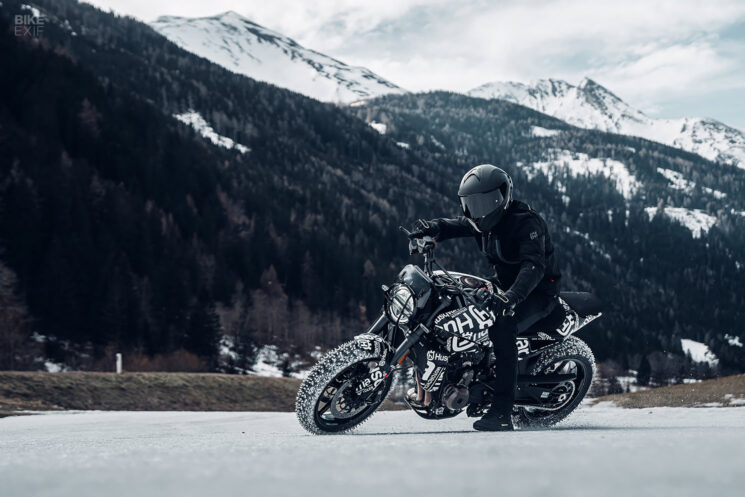
Husqvarna will make us wait another two weeks before unveiling the Svartpilen 801 completely, but they’ve thrown us a bone in the form of a video of it being ridden in anger.

2024 Husqvarna Svarpilen 801 teaser
As for now, we have questions. Like, are we getting a Vitpilen 801? Is a KTM 890-based Svartpilen 901 on the way? And, most importantly, when do we get to ride this?

Source: Husqvarna


from Bike EXIF https://ift.tt/36vOzYI

Sunday, 3 March 2024

Speed Read: A razor-sharp BMW R1300GS from Switzerland and more

The latest custom motorcycles and bike news.
The Swiss maestros at VTR Customs deliver the first custom BMW R1300GS that we’ve seen, while Radical Speedshop builds a bespoke Moto Guzzi café racer like no other. We also look at a tidy Yamaha XT500 restomod and a stunning 1949 Triumph Speed Twin bobber.

BMW R1300GS by VTR Customs
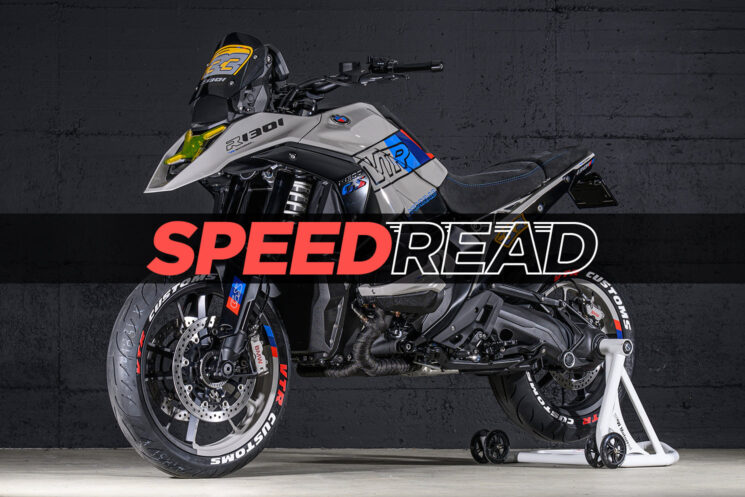
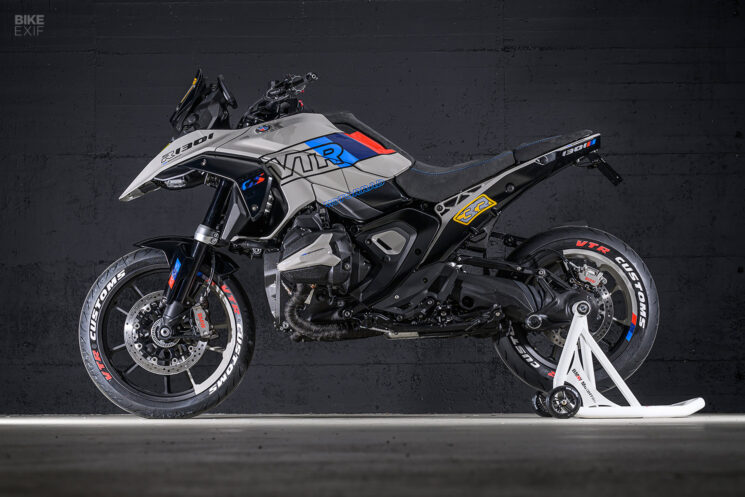
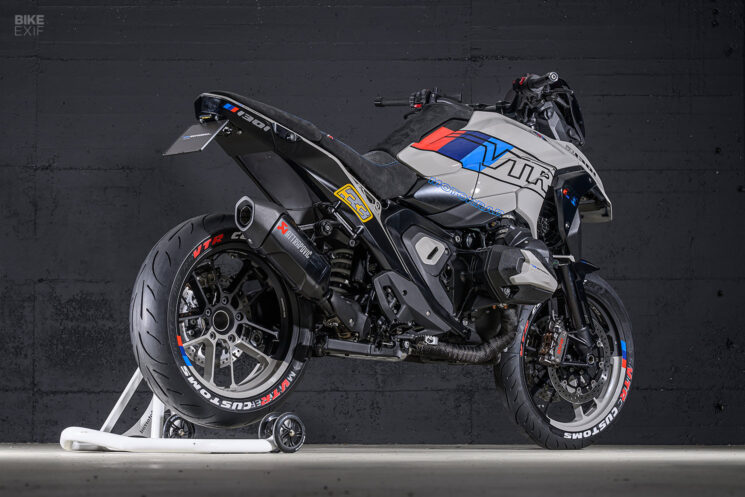
BMW R1300GS by VTR Customs When BMW announced its new flagship adventure motorcycle, the BMW R1300GS, we knew it was only a matter of time before we saw it customized. Thanks to Switzerland’s VTR Customs, we didn’t have to wait too long.

Big adventure-style bikes with go-fast bits are all the rage right now. Machines like the Ducati Multistrada V4 RS and BMS M1000XR are primed for riders who want adventure bike ergonomics in a performance-orientated road-going package. This is probably what inspired the mad scientists at VTR Customs.

BMW R1300GS by VTR Customs
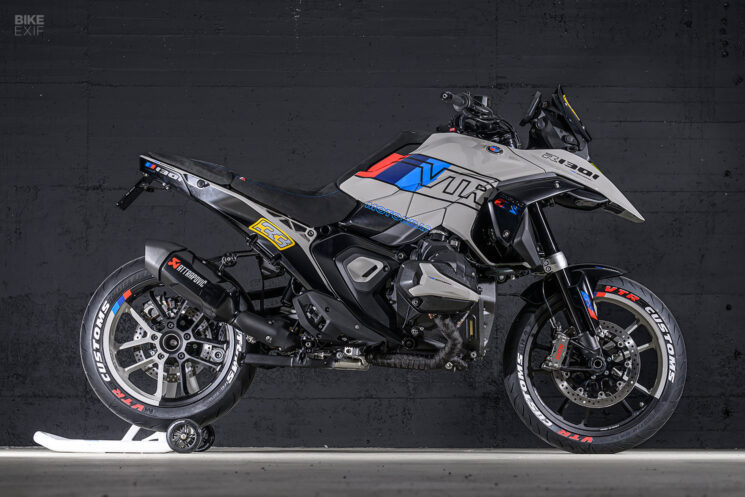
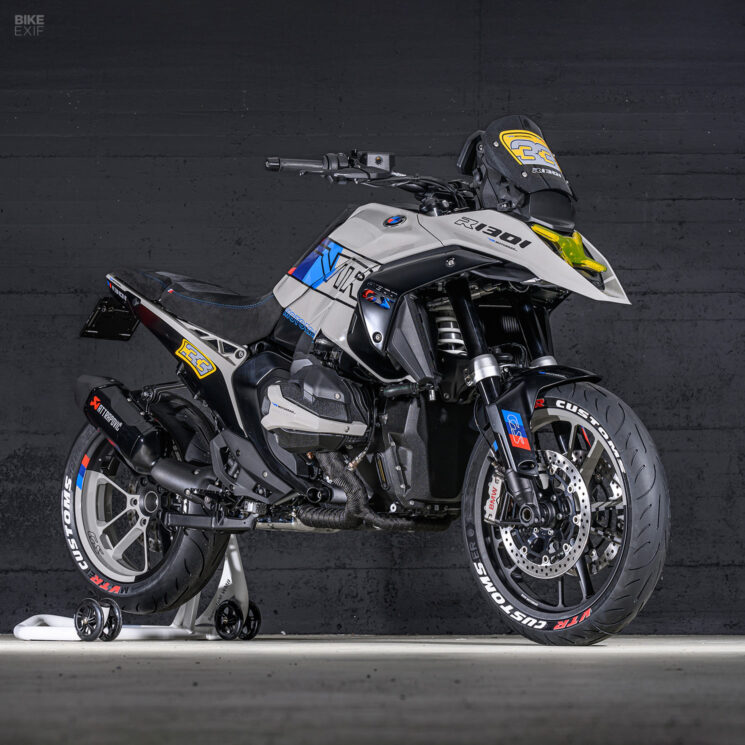
Their build still resembles a BMW R1300GS, but it’s much leaner. To pare down the front, they replaced the windshield with the shortest one available, removed the hand guards, and fitted short brake and clutch levers. A short front fender was fitted under the BMW’s signature beak, providing the engine with a touch more protection from anything sloughing off the sticky Metzeler Supersport tires.

BMW R1300GS by VTR Customs
Kellermann Atto turn signals were fitted up front, with a matching set of three-in-one units added to the rear. The rear section has been slimmed down considerably, thanks to a custom-made cowl that replaces the OEM grab handles and license plate bracket. Along with a custom saddle by Yves Knobel, VTR’s changes have made the already waspish tail of the R1300GS even more so.

The primer grey M-inspired paint was laid down by Freuler AG, and goes a long way to cut down on visual bulk further. The rocker covers have been coated in wrinkle black, the exhaust headers are covered with black heat tape, and the muffler’s been finished in black (although we’ve never heard of ‘Attrapovič’).

BMW R1300GS by VTR Customs
In stock form, the BMW R1300GS lacks some visual cohesion. But VTR’s version trims the fat to reveal the muscular, road-focused machine underneath. Their R1300GS wouldn’t be our pick for off-rad excursions—but we’d sure love to carve canyons on it. [VTR Customs]

Moto Guzzi café racer by Radical Speedshop
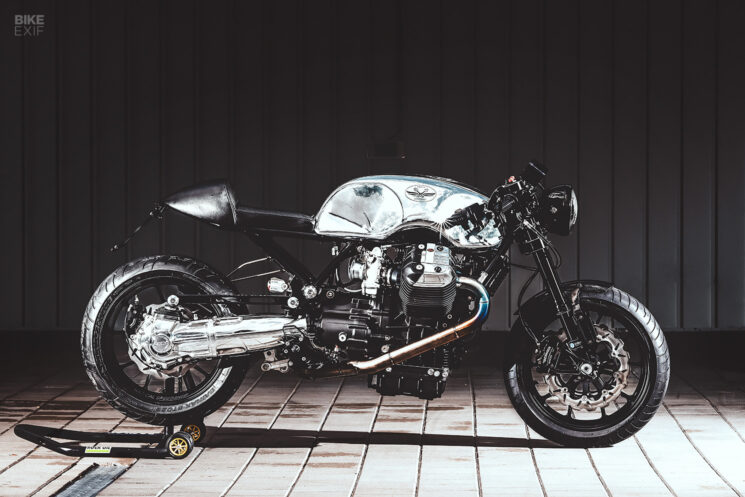
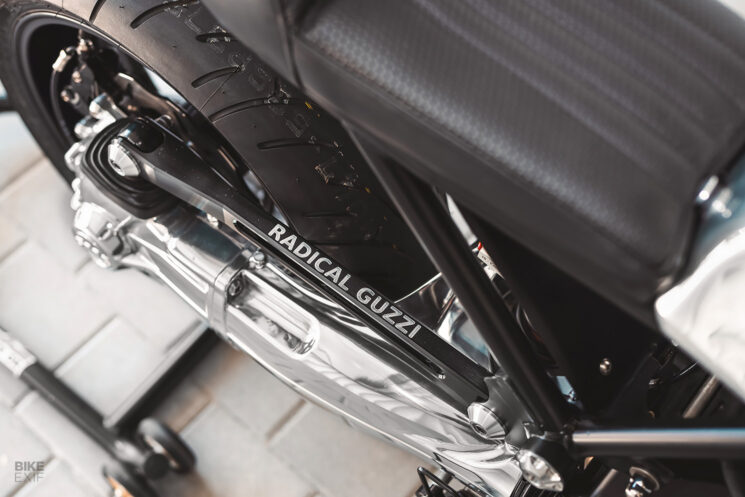
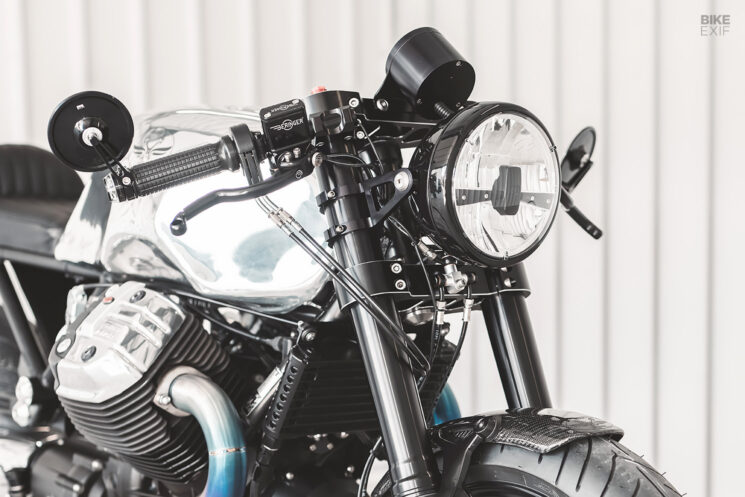
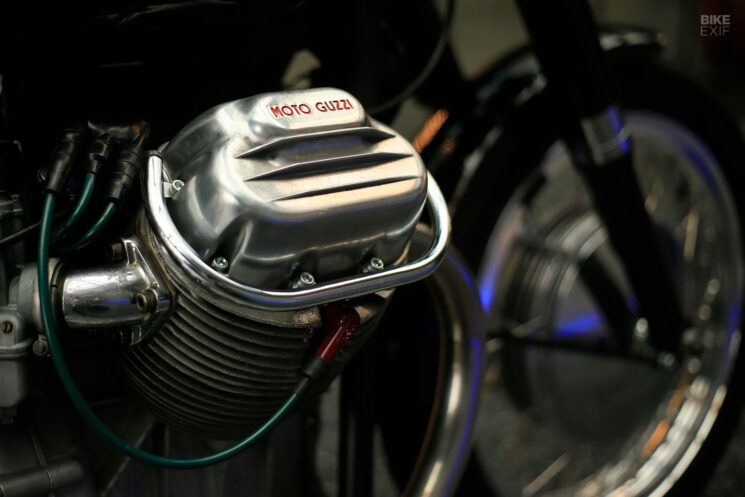
Moto Guzzi café racer by Radical Speedshop We’ve been big fans of Stefan Bronold’s work since he first launched Radical Guzzi. His workshop may have changed its name to Radical Speedshop, but he’s still pumping out some of the best modern Moto Guzzi customs in the world.

The Bavarian started tinkering with Moto Guzzis as a teenager and has never looked back. His specialty is tuning Moto Guzzi’s 8-valve engine to within an inch of their lives—which is exactly what he’s done on this build, the ‘Fugitive MK2.’

Moto Guzzi café racer by Radical Speedshop
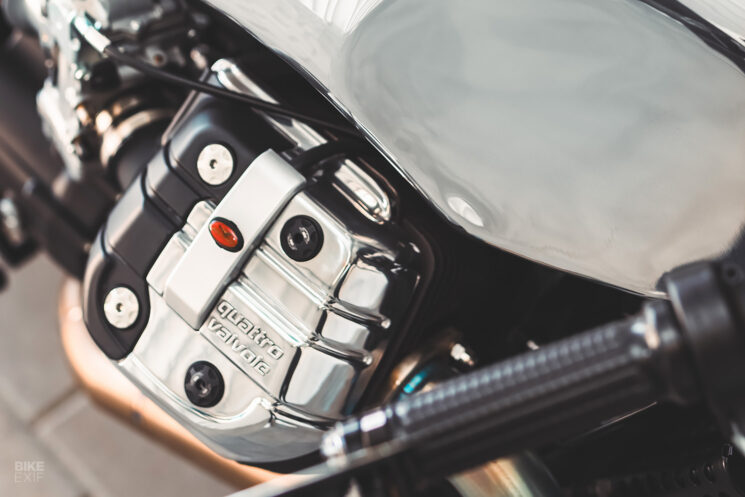
At the heart of the bike sits a 1,200 cc four-valve Moto Guzzi engine—one of the more powerful motors produced by the Mandello del Lario factory. Stefan doesn’t do things by halves, though.

First, he bumped the capacity to 1,400 cc by transplanting the cylinders and pistons from a California 1400. Then, he modified the intake and exhaust channels and installed a new cam with a sharper performance profile. There’s also a pair of stonking huge Keihin carburetors throwing fuel down the Guzzi’s gullet.

Moto Guzzi café racer by Radical Speedshop
This Italian Stallion was popped into a Moto Guzzi Bellagio frame. The Bellagio started life as a 940 cc two-valve cruiser, but the frame shares more than a little DNA with Lino Tonti’s masterpiece—the Le Mans 850. With a huge power and torque bump, the Bellagio frame now has the engine it deserves.

The bike also got Marzocchi front forks from an MV Agusta F3 (with Wilbers internals), a fully adjustable rear shock from YSS, and a custom swingarm. Beringer brakes provide stopping power for the beast, which now weighs under 440 lbs.

Moto Guzzi café racer by Radical Speedshop
The front fender is carbon and the exhaust is a custom piece from Mass Moto. The long aluminum tank has been polished to a perfect shine, which suits the overall vibe perfectly. The modern café racer aesthetic continues at the back, with a custom seat perched upon the trimmed subframe. A smattering of Motogadget parts helps keep the cockpit beautifully simple.

By this point, we don’t just want to ride a Moto Guzzi built by Radical Speedshop… we need to. [Radical Speedshop | Images by, and with thanks to, Sacha Nagel]

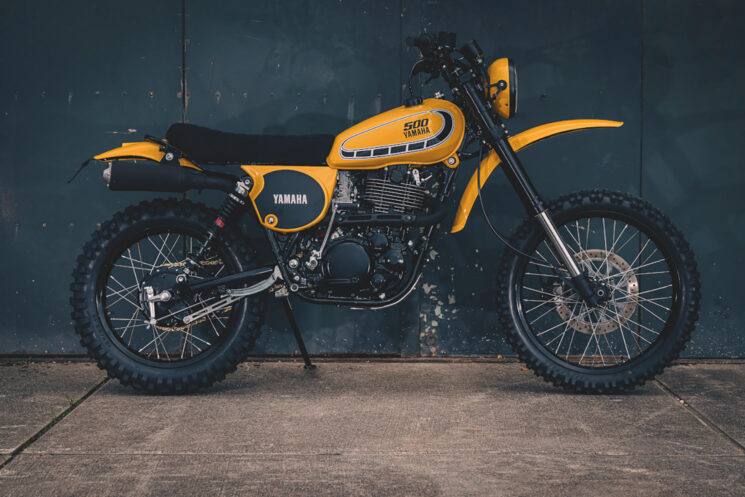
Yamaha XT500 restomod by Motogadgets
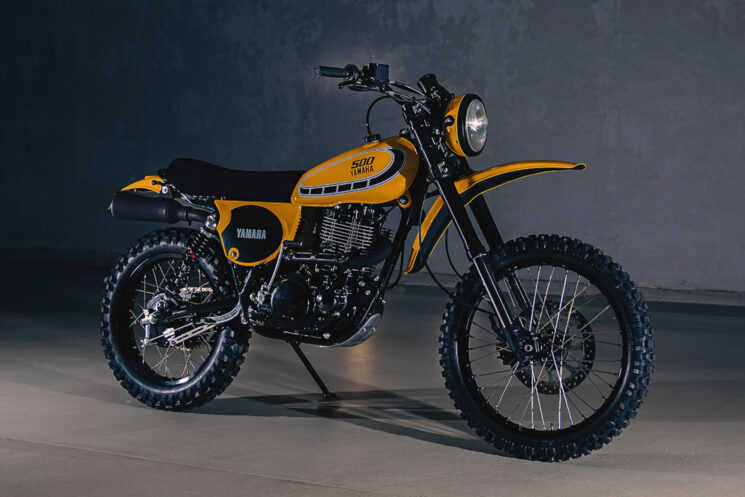
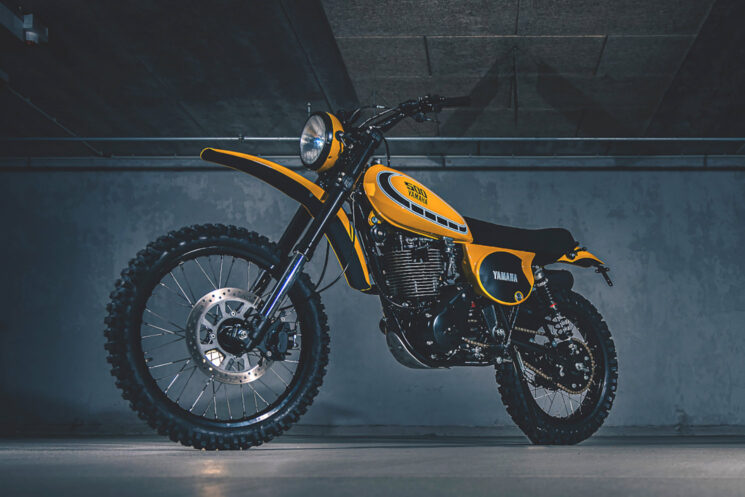
Yamaha XT500 by Motogadgets The Yamaha XT500 didn’t really have any competition when it splashed onto the scene. Yamaha had set its sights on creating a big-bore trail bike that wasn’t horrible to ride on the road, making the XT500 a dual-sport motorcycle before dual-sport motorcycles existed. It was also a very good-looking motorcycle and the design still holds up today.

This 1981 Yamaha XT500 is the work of Jeffrey Wardenaar—a Dutchman with a penchant for big singles.

Yamaha XT500 restomod by Motogadgets
Jeffrey started his workshop, Motogadgets (not to be confused with the German electronics brand, Motogadget), back in 2003. He’s made a name for himself specializing in Yamaha singles, the Yamaha XS650 twin, and the Honda XR and XL series—so he knows a thing or two about improving Japanese trail bikes.

The XT’s 499 cc single-cylinder mill was never easy to start with a kick starter, so Jeffrey fitted an electric start. The engine was also treated to a complete rebuild with upgrades made along the way. The work has boosted output to 40 hp—a 25 percent increase over stock.

Yamaha XT500 restomod by Motogadgets
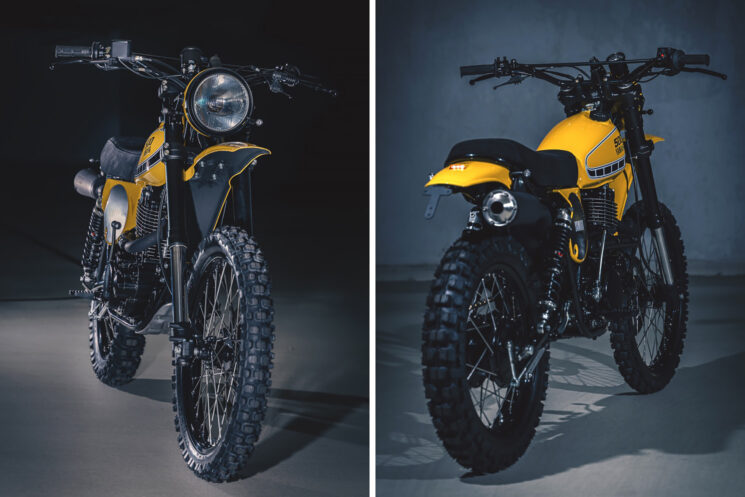
Up front, Jeffrey has fitted the upside-down forks and disc brake from a Honda dirt bike. A high-mounted front fender was carried over from the original bike, sitting below a new headlight and a full suite of new rider controls.

The subframe was trimmed down by a few inches and the stock seat pan was shortened. XT500 seats were well-padded and Jeffrey has maintained this old-school rally bike aesthetic in this regard, which we love. Making the ride even more plush is a set of new, longer YSS shocks.

Yamaha XT500 restomod by Motogadgets
The rear fender was shrunk down too, and has an integrated LED tail light, with the turn signals relocated on either side of the seat. A race muffler, knobbly tires, and a fresh TZ Yamaha-inspired paint job complete the build.

What’s not to love? [Source]

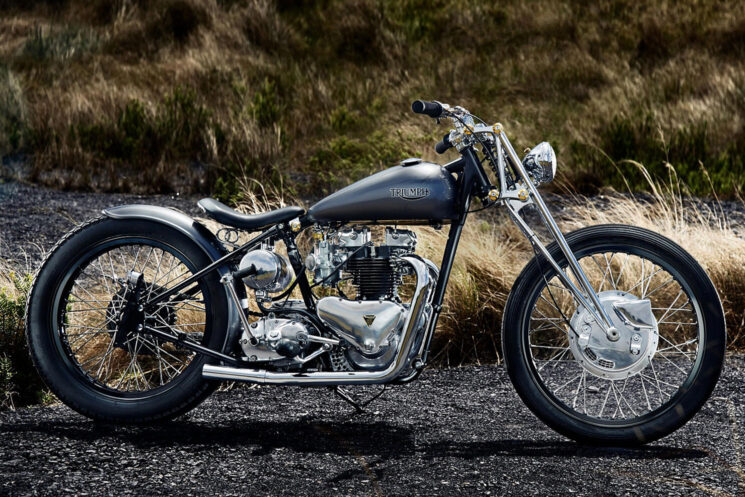
1949 Triumph Speed Twin bobber by Paul Berger
1949 Triumph Speed Twin bobber by Paul Berger Even as an Aussie, Paul Berger has always loved British bikes. The trait was carried over from his father—so when his mother passed away 11 years ago, Paul bought a 1949 Triumph Speed Twin that he and his old man could rebuild together to keep them busy.

Starting with just a frame, engine, and gearbox, Paul knew they had their work cut out for themselves. The two blokes settled on a hotrod bobber style, with an emphasis on simplicity. Paul’s father was kept occupied with the extensive engine and gearbox rebuilds, while Paul himself focussed on the rest of the bike.

1949 Triumph Speed Twin bobber by Paul Berger
“Getting something to look simple and just right is incredibly difficult,” says Paul. “I think the greatest challenge was not what to do, but what not to do.”

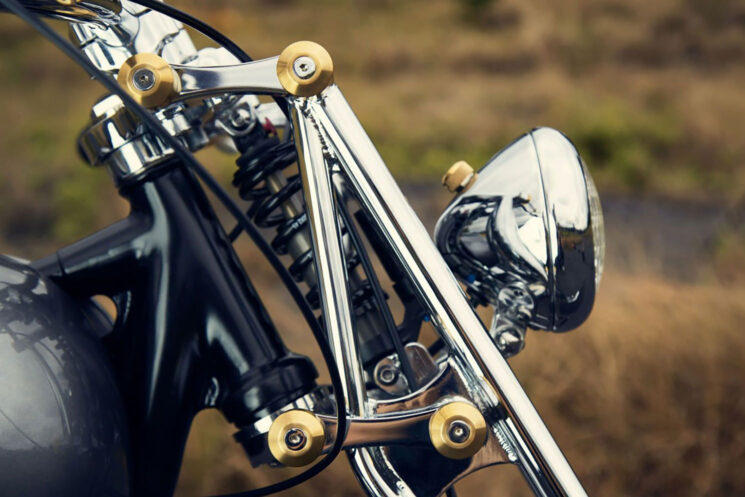
Spitfire Motorcycles in California hooked the guys up with a resized Harley-style girder front fork, with a Fox mountain bike shock ironing out the bumps. A fresh set of 21F/19R Borrani rims and classic Avon tires allowed Paul to fine-tune the stance, while a twin-leading shoe brake was fitted to the front for extra stopping power.

1949 Triumph Speed Twin bobber by Paul Berger
Roland Sands Design bar risers hold the 32-inch-wide handlebars in place, which are fitted with Kustom Tech controls. Being a vintage bike, the lack of switchgear makes for a clean look—but there is a tiny GPS speedometer fitted. The bike retains its original six-volt electronics.

The split tanks are another Harley-Davidson part, but they were extensively modified to fit the Triumph frame and flow beautifully with the lines of the bike. Since it’s a hardtail, the only suspension is the springs under the Biltwell Slimline seat. Cooper Smithing Co are the legends behind the tidy rear fender.

1949 Triumph Speed Twin bobber by Paul Berger
The engine was slotted in with a pair of 26 mm Amal carbs and a Mooneyes oil tank slung under the seat. The beautiful exhaust was made by Bob at Classic All Parts while the experts at Blu-Chrome did the extensive plating and polishing.

Finished with silver paint from the modern Triumph Thruxton, this vintage bobber is low, lean, and incredibly clean. [Source]

1949 Triumph Speed Twin bobber by Paul Berger


from Bike EXIF https://ift.tt/azEh8Zt

Saturday, 2 March 2024

Exquisite Taste: A classic Moto Guzzi V7 restomod by Unikat Motorworks

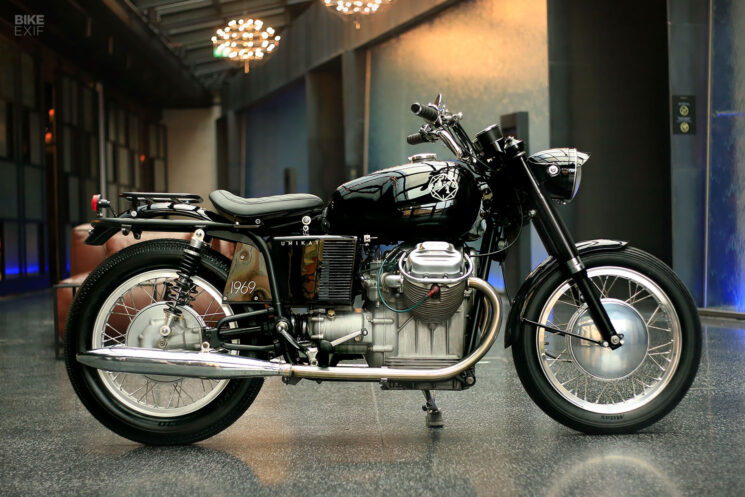
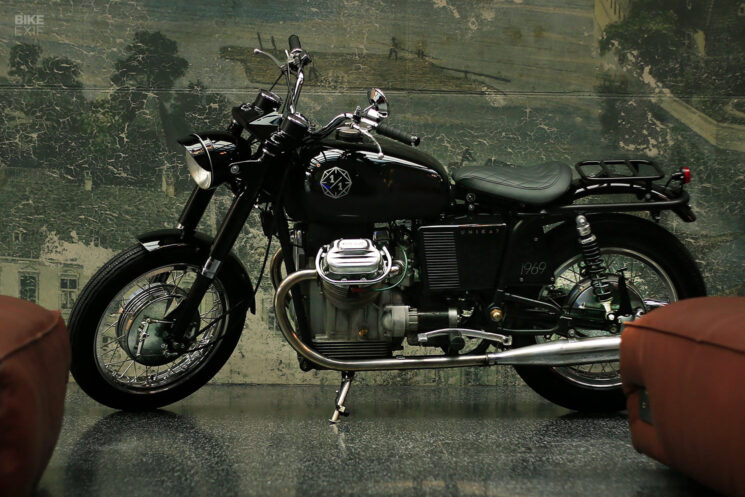
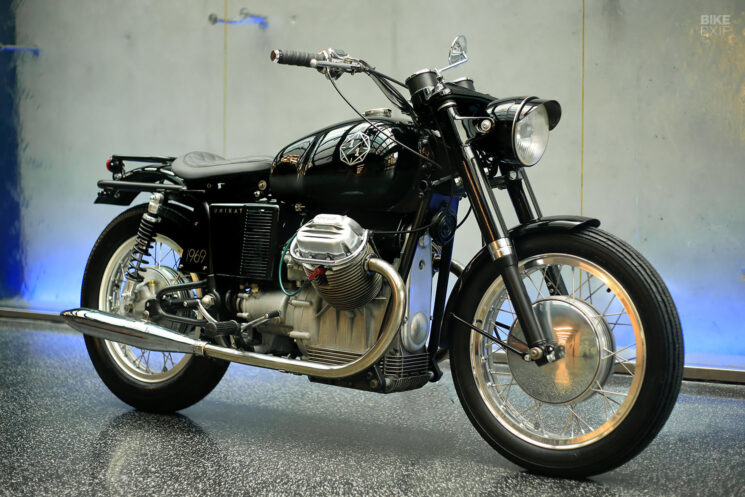
Classic Moto Guzzi V7 restomod by Unikat Motorworks
Restomods by their very nature appear simpler than fully customized motorcycles, but they’re usually harder to get right. Customization leaves you free to change whatever you want, but a restomod demands good judgement and even better taste. You need to know when to zig and when to zag—treating the original bike with respect while making just the right number of changes.

It’s a dark art that Unikat Motorworks has mastered. Based in Wroclaw, Poland, the custom workshop’s latest project is a classic Moto Guzzi V7 that’s been nipped and tucked to great effect.

Classic Moto Guzzi V7 restomod by Unikat Motorworks
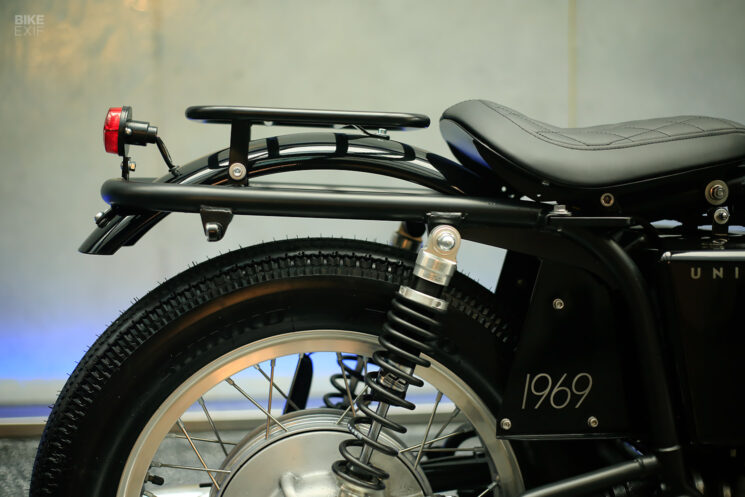
The job came from a returning client, who had previously asked Unikat to build a Godden GR500 speedway bike as a gift for his wife. This time around, he decided to treat himself with a restrained and stylish restomod. Picking the 1969 Moto Guzzi V7 Special as the donor was an easy choice since the bike and owner share a birth year.

Unikat imported the V7 in classic police bike trim from Italy, complete with its cop-spec fairing and panniers. It looked to be in good condition—although the team soon realized just how much work would be needed to make it mechanically sound.

Classic Moto Guzzi V7 restomod by Unikat Motorworks
Unikat’s first port of call was the classic Moto Guzzi V7’s bulky bodywork. The police fairing and panniers came off immediately, as did the engine crash bars, and the humungous front and rear fenders. The crew kept the fuel tank, but it needed cleaning and resealing before it was good to go.

The vintage V7 was built back up again with a pair of slim handmade fenders, and a smart leather saddle. Unikat kept the OEM side covers, but fabricated additional panels to sit where the toolboxes used to. A custom-made luggage rack sits out back, just in front of an LED taillight, with LED tail signals attached to custom mounting tabs on the subframe.

Classic Moto Guzzi V7 restomod by Unikat Motorworks
Next, Unikat refurbished the front suspension and swapped out the shocks for a set of modern units, measuring a little longer than stock. They opted to retain the original wheels and brakes, but eventually decided that the rims needed replacing. So they rebuilt the wheels with new San Remo rims, before wrapping them in modern tires with vintage looks.

Old parts and new parts sit side-by-side all over this build, but it’s hard to tell them apart. Whatever wasn’t upgraded or replaced, was at the very least restored to better-than-new condition.

Classic Moto Guzzi V7 restomod by Unikat Motorworks
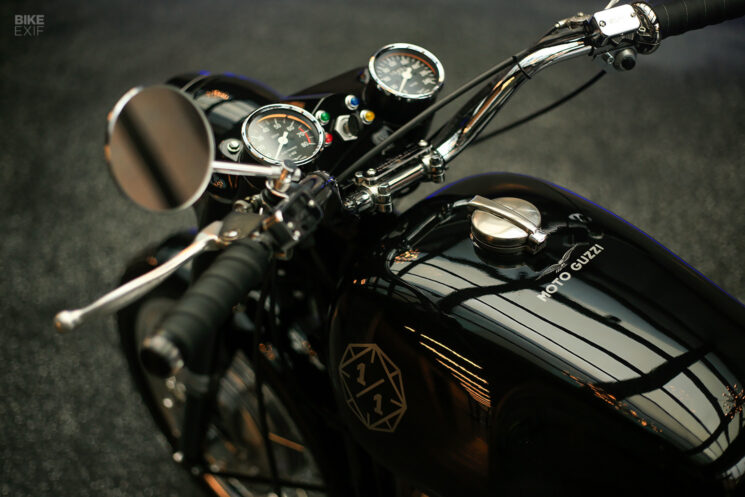
It’s the same story in the cockpit, where the original handlebars and controls are matched to leather-wrapped grips, Motogadget LED turn signals, and vintage-style switches. The dashboard is an original Moto Guzzi part too, although it’s the type that was most commonly found on civilian V7 models of the time.

The original Moto Guzzi headlight and headlight brackets sit up front; a subtle consideration that has a big impact on the overall aesthetic. Fresh wiring runs under the hood, ensuring a reliable ride.

Classic Moto Guzzi V7 restomod by Unikat Motorworks
Although the 1969 Moto Guzzi V7 Special never came in black, the V7 Ambassador did. But while the Ambassador featured pin striping and chromed knee sections on the fuel tank, Unikat went for a more muted, all-black paint scheme here, augmented by delicate graphics. And it looks exquisite.

If there’s a perfect formula for resto-modding a beloved classic, Unikat has it.

Unikat Motorworks | Facebook | Instagram

Classic Moto Guzzi V7 restomod by Unikat Motorworks


from Bike EXIF https://ift.tt/jbUDLQE

Tips When Buying A Rolls Royce Ghost For Your Chauffeur Business

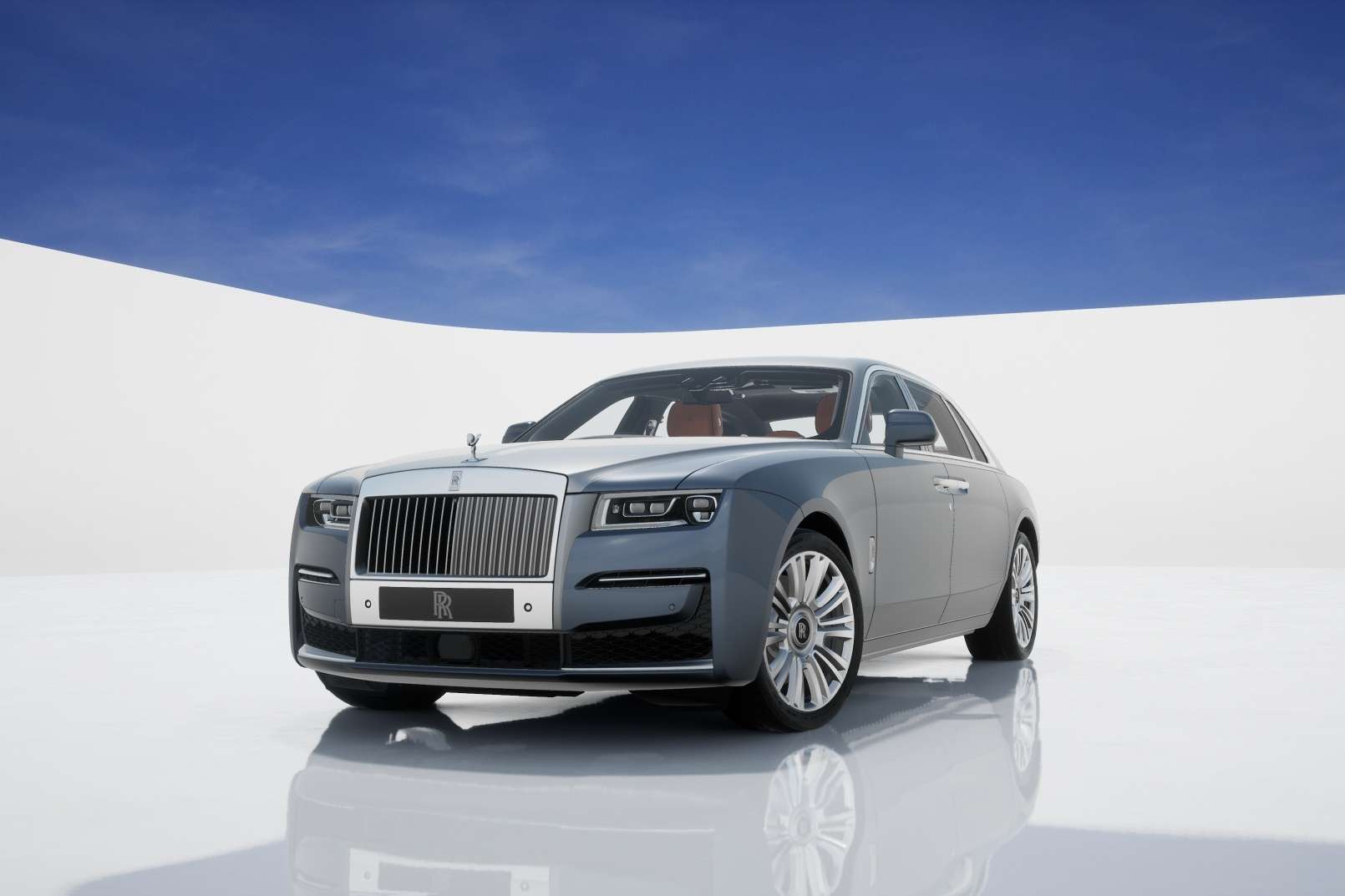
Investing in a Rolls Royce Ghost for your chauffeur business is a significant step that speaks volumes about the quality and luxury you intend to offer your clients. The is not just a car; it’s a statement of sophistication, comfort, and unparalleled service. Here are essential tips to guide you through the purchase, ensuring you make a decision that enhances your business’s prestige and client satisfaction.

1. Understand Your Clientèle’s Expectations

Before purchasing a Rolls Royce Ghost, gauge your clientèle’s expectations and preferences. The Ghost caters to a niche market that values luxury as highly as an exceptional level of service and discretion. Ensure that your target market aligns with the statement and service level this vehicle embodies.

Tips When Buying A Rolls Royce Ghost For Your Chauffeur Business 1
Rolls-Royce Ghost

2. Consider the Total Cost of Ownership

Beyond the purchase price, consider the total cost of ownership, including maintenance, insurance, and fuel consumption. Rolls Royce vehicles demand high maintenance standards to keep them in impeccable condition, reflecting on your brand’s commitment to quality.

3. Choose the Right Specifications

Customisation is key with Rolls Royce. Tailor your Ghost’s specifications to suit your chauffeur business needs, considering interior finishes, comfort features, and technology that enhance the passenger experience. Remember, the details will set you apart from competitors.

4. Invest in Chauffeur Training

Owning a Rolls Royce Ghost requires your chauffeurs to understand and appreciate the vehicle’s capabilities and care needs. Invest in specialised training for your drivers, ensuring they can provide a driving experience that matches the car’s luxury and performance standards.

5. Leverage the Brand’s Prestige

The prestige of the Rolls Royce brand is a powerful marketing tool. Highlight your fleet’s inclusion of a Rolls Royce Ghost in your marketing materials, emphasising the unparalleled luxury experience it offers. This can attract high-end clients looking for exclusive services.

6. Prioritise After-Sales Service

Establish a strong relationship with the Rolls Royce dealership or a specialised mechanic who understands luxury vehicles. Excellent after-sales service ensures your Ghost remains in pristine condition, ready to impress clients at every turn.

7. Plan for Depreciation and Resale Value

Luxury cars like the Rolls Royce Ghost depreciate differently than regular vehicles. Plan your finances considering the resale value and how long you intend to keep the car in your fleet. This planning ensures you maximise the investment’s value over its lifespan.

8. Network with Luxury Partnerships

Leverage the Rolls Royce Ghost to build partnerships with luxury hotels, event planners, and other high-end service providers. Such collaborations can enhance your brand’s visibility among potential clients who value and seek luxury experiences.

Final Thoughts

Purchasing a Rolls Royce Ghost for your chauffeur business is more than an investment in a vehicle; it’s an investment in your brand’s image and commitment to luxury. By carefully considering these tips, you can ensure that this significant addition to your fleet not only meets but exceeds your and your clients’ expectations, setting a new standard for luxury travel in the chauffeur industry.


from Auto Blog | Latest Car News and Reviews, Bikes and Motorcycles https://ift.tt/K49uDw3