Saturday, 24 February 2024

Road tested: TFX Suspension Xtreme adjustable rear shocks

TFX Suspension review
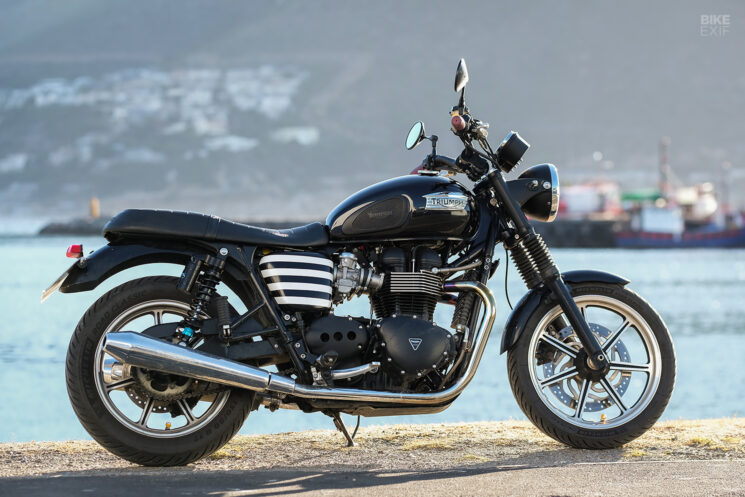
I got lucky when I bought my 2012-model Triumph Bonneville SE last year. A single-owner bike with less than 1,500 miles on the dial, it had spent most of its life trickle-charging in a garage. What’s more, the previous owner had thrown a handful of tasteful factory accessories at it (and a few that were less well-judged).

There was one key ingredient missing though; good suspension. Most modern classics roll out of the factory with suspension components that are adequate at best, but the older air-cooled Bonneville’s setup is downright poor. Small LED turn signals and a fancy sprocket cover might make your bike look prettier, but new shocks—like the fully adjustable TFX Suspension Xtreme units now gracing the tail end of my Triumph—will make it ride better.
TFX Suspension Xtreme rear shocks review
Based in The Netherlands, TFX Suspension is run by a small and passionate team, led by founders Hans-Dieter Fischer and Alex Meijs. The two of them formed TFX fourteen years ago when the suspension company that they were working for folded. Now they produce components on their terms, with the sort of hands-on approach that’s often missing from larger companies.

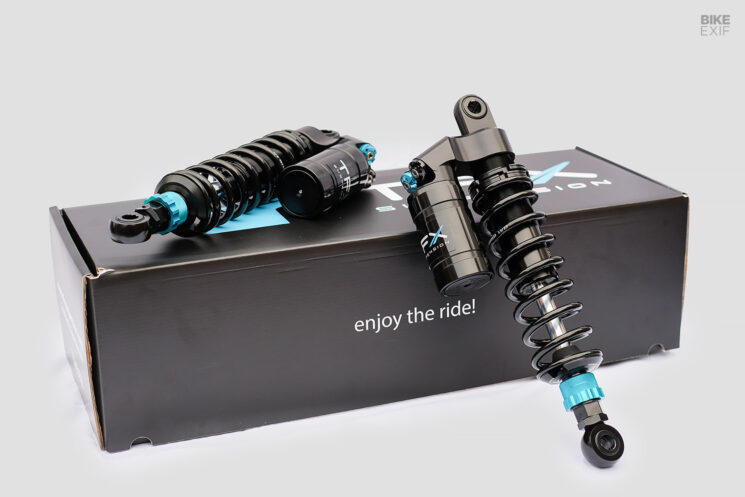
Their catalog includes various mono- and twin-shock items, suitable for a wide range of on- and off-road applications, plus a handful of front suspension upgrades. (We’ve seen their parts on custom bikes from Bottpower, Powerbrick, CNCPT Moto, and more.) They sent me a set of their Xtreme shocks to test out on my Triumph Bonneville; fully-adjustable units that retail for €1,399 [$1516].
TFX Suspension Xtreme rear shocks review
Full disclosure As is the norm with our riding gear reviews, TFX Suspension sent these shocks free of charge. They haven’t paid us for this review, nor do they expect me to only say wonderful things about their product. As always, our opinions are unbiased and our own.

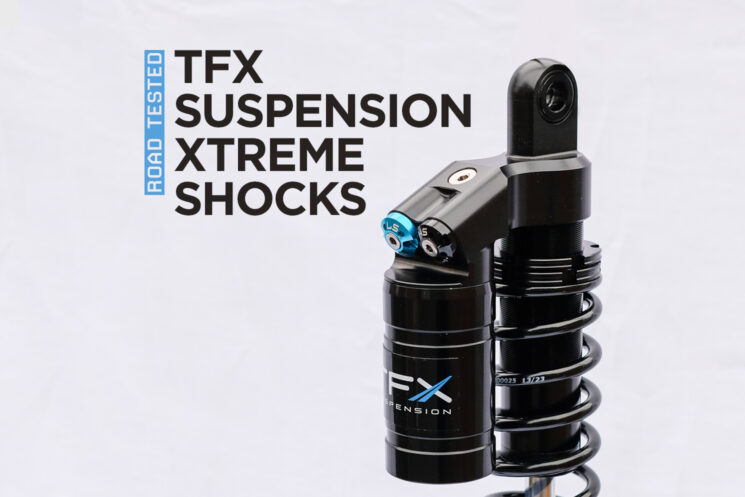
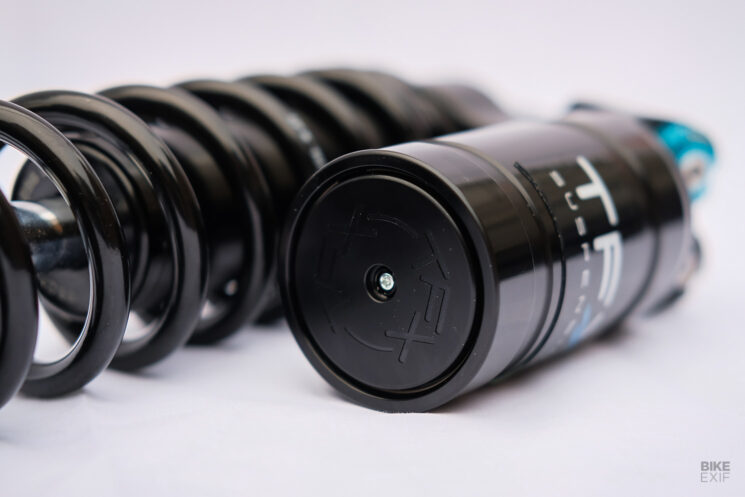
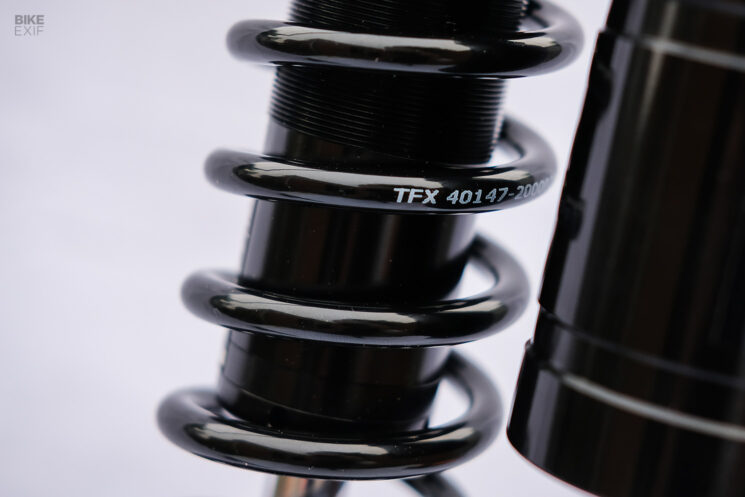
The TFX Xtreme shocks feature an oversized 16 mm shaft, and a 46 mm high-flow piston with a low-friction seal. The shock body is made of 6082 aluminum, with the entire top section (including the mounting eye and the connection to the remote reservoir) machined from a solid block of 7075 aluminum. They are stunning in the flesh, featuring mostly black anodized finishes that are punctuated only by heavy-duty TFX decals and a couple of blue anodized parts. And if blue isn’t your color, TFX can customize these bits to suit your bike’s palette (for an additional fee).
TFX Suspension Xtreme rear shocks review
TFX uses a modular construction for their shocks, enabling them to assemble each unit by hand while tailoring it to their customer’s needs (and making each unit fully serviceable). Before Hans-Dieter built and sent my shocks, he quizzed me on everything from the make and model of my motorcycle to my weight and riding style. He then built the shocks accordingly, with springs suited to my weight and custom valving.

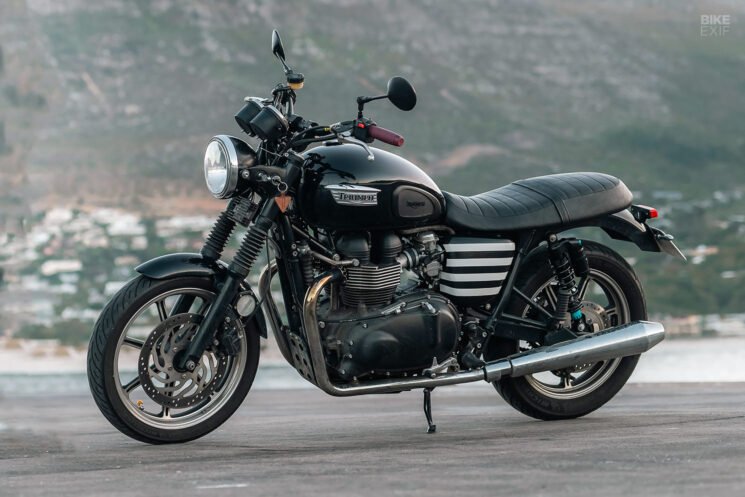
The Bonneville SE is hampered by rear shocks that are shorter than those on other Bonneville models from the same era, resulting in handling that’s best described as lazy. Hans-Dieter honored my request for shocks that were an inch or so longer than stock. Then he made me measure the shock mount diameter on my bike, to make sure that he would send me the right size bushings.
Triumph Bonneville with TFX Suspension Xtreme adjustable shocks
Installing new rear shocks is a fairly simple procedure, but without a lift, a torque wrench, or sufficient space in my home garage, I had my friends at Triumph Cape Town bolt the TFX units to my Bonneville, rather than doing it myself. (Dean is likely very ashamed of me right now.)

There was only one hiccup during installation; the supplied bushings were marginally too tight. It could have been that the powder coating on the bushings was a little thick, or that the factory tolerances were off. Either way, a few minutes of light filing solved the problem.
TFX Suspension review
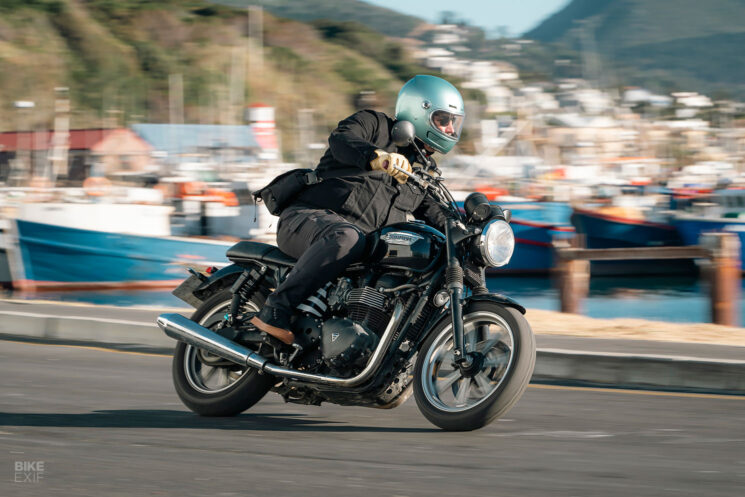
The difference between the OEM and TFX shocks was tangible from the first ride; borderline ridiculous, even. Granted, the stock Bonneville shocks don’t set too much of a benchmark, and the slight geometry tweak from the longer TFX shocks will go a long way to improving the ride. But that doesn’t take away from the fact that the ride quality offered by the TFX units is exponentially better than before.

It’s not just the length, spring rate, and valving that’s custom. The TFX team also set up the shocks according to my preferences before boxing them—and then recorded those settings in the manual. The Xtremes feature adjustable preload, rebound, and low- and high-speed compression adjustment, and each one of those was tweaked according to the information I had sent.

Suspension adjustment can seem like a dark art if you’ve never done it, but it needn’t be. The TFX manual is extremely helpful, outlining what each setting does, how to adjust it, and how to troubleshoot a variety of unwanted ride characteristics. Not only are the shipped settings recorded here by the engineer who built each shock, but there’s a section set aside for you to record your own tweaks and note the results.

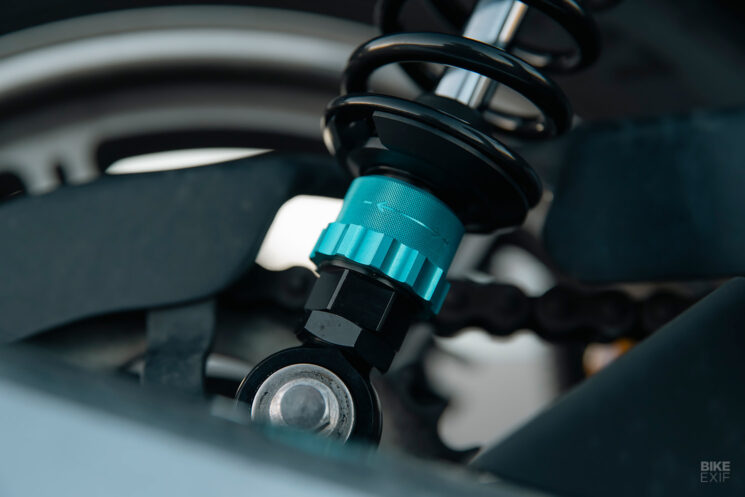
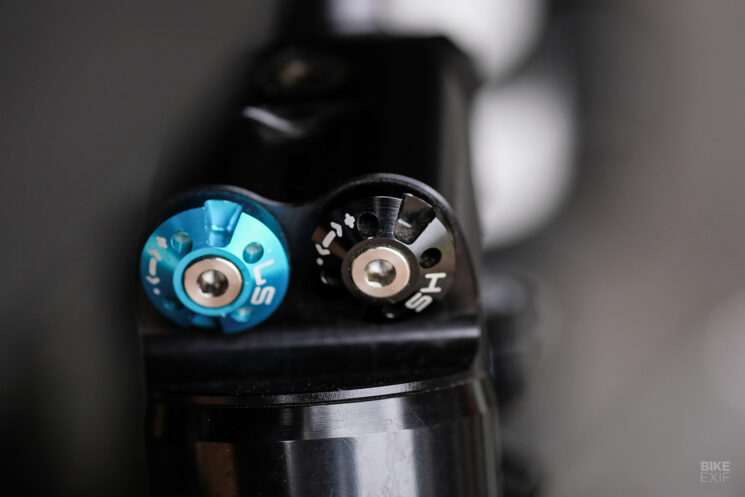
Rebound is adjusted by turning the blue hand wheel at the bottom of each shock, while low- and high-speed compression are each tuned with an Allen key at the top of the shock. Adjusting preload takes a little more work; you need to use the included C spanner to disengage the locking ring, and then set the preload according to your preference.
TFX Suspension Xtreme rear shocks review
Some of TFX’s shocks ship with a remote hand-wheel preload adjuster, and some can be fitted with an add-on preload adjustment hand-wheel. The shocks on my bike also have a limited range of height adjustment, although I opted to leave that setting alone. If you’re on a budget, the brand’s more entry-level Traveler model ditches the remote reservoir, and pares the adjustments down to just preload and rebound.

Having two hand-wheel preload adjusters on a neo-retro bike with twin shocks just isn’t viable, but using the C spanner to set preload is hardly a chore, so it’s a non-issue. The rebound adjustment hand wheel is dead easy to dial in—there’s a laser-engraved graphic on it that shows you which way is more or less, and each level of adjustment is marked by a tangible click.
TFX Suspension Xtreme rear shocks review
The compression knobs, on the other hand, don’t click into place as much as they cycle through what feels like notches. These adjustment stops are noticeably less solid-feeling than the rebound adjuster’s, so you need to pay attention to feel them out.

For all of the options available to me, I found myself falling back onto the settings that TFX had calculated for me. Most people don’t realize how much the older Bonneville SE can hustle when it’s set up right, and the base settings of my new shocks ended up being the biggest piece of that puzzle. The baseline settings had the bike feeling firm and planted, and while I could still feel shittier road bumps beneath my wheels, the bike would recompose itself quickly and smoothly.
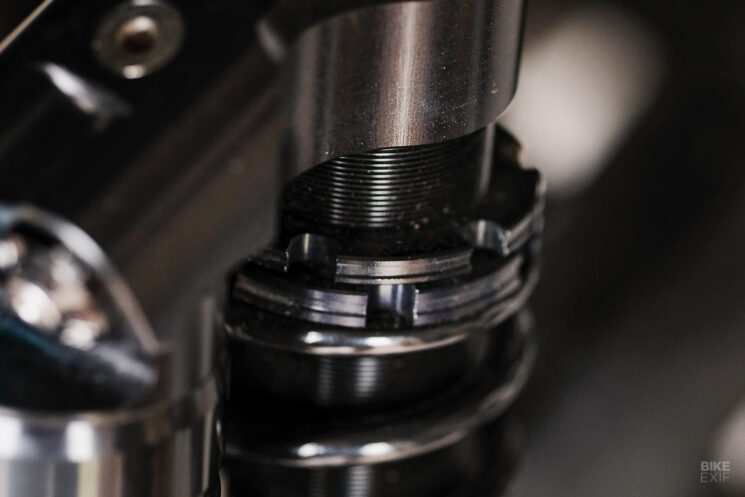
TFX Suspension Xtreme rear shocks review
I fiddled around, accidentally over-cooking the rebound and low-speed compression settings to the point that the bike felt jittery, then dialing them back too far. I ping-ponged back and forth for a bit, recording each setting and the consequent ride feel, before finding myself back at the baseline again. With a couple of extra clicks of rebound damping from there, the Bonneville was exactly where I wanted it; responsive, a little stiff but not harsh, and planted in corners.

There’s also the benefit of having a pair of shocks sprung specifically for my (not unsubstantial) heft. The rear fender of my Bonneville SE now floats above my back wheel, rather than hovering millimeters away from my rear tire.
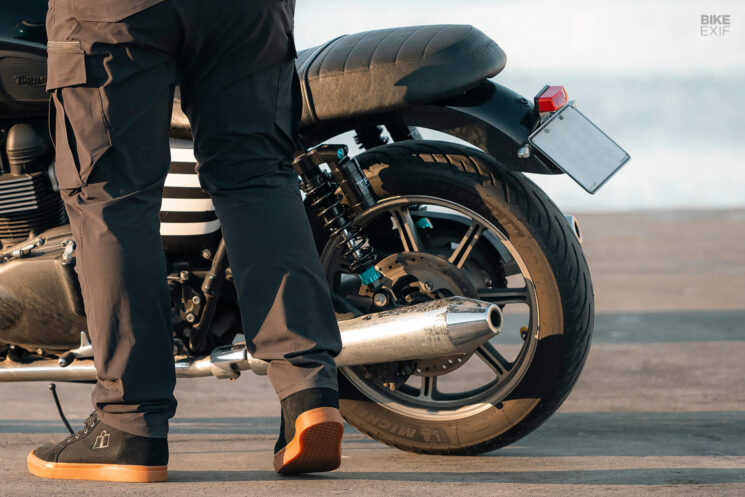
TFX Suspension Xtreme rear shocks review
Although I promised myself (and my significant other) that I wouldn’t turn my Bonneville into a project bike, the opportunity to upgrade its rear shocks was a no-brainer. It feels like a new motorcycle—which is not only a testament to TFX’s product, but also a strong argument for the benefits of upgrading your running gear before you fuss with making your bike look pretty.

All I need to do now is upgrade the front suspension to match.

TFX Suspension | Facebook | Instagram | Images by Wes Reyneke and Devin Paisley
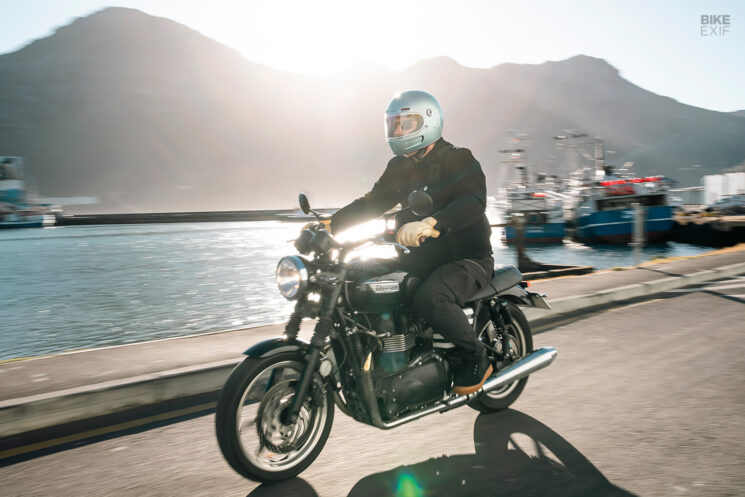
Triumph Bonneville with TFX Suspension Xtreme adjustable shocks


from Bike EXIF https://ift.tt/IHN9rZu

Friday, 23 February 2024

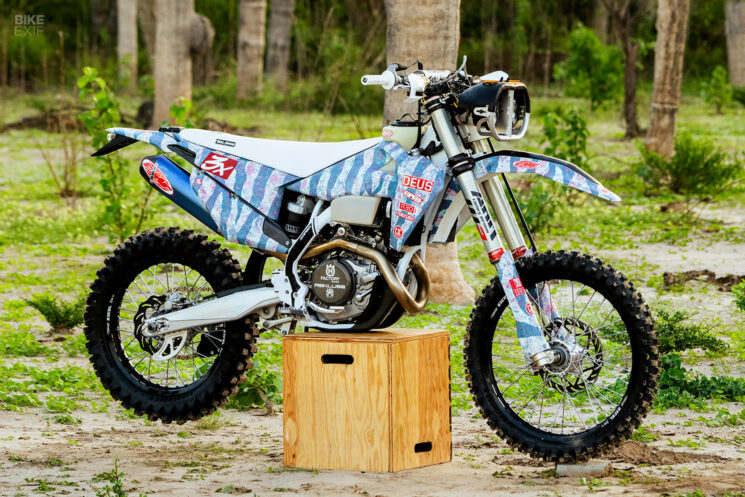
The Paloma: Deus ex Machina’s Husqvarna FE 450 Baja 1000 race bike

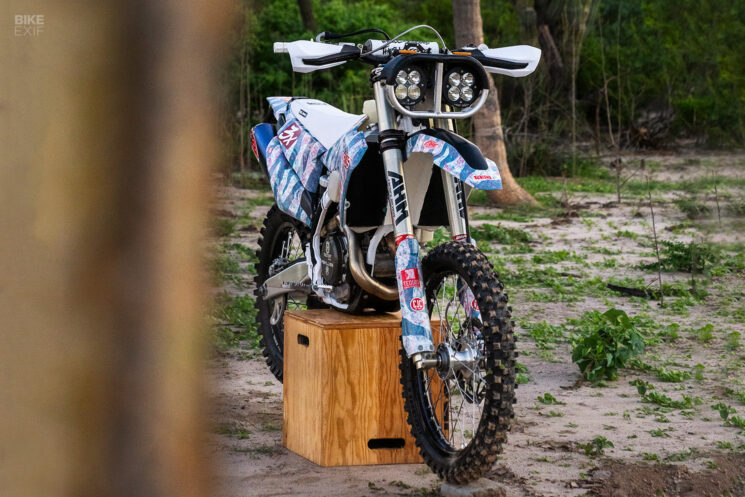
Husqvarna FE 450 Baja 1000 race bike by Deus ex Machina
Held on Mexico’s Baja California Peninsula since 1962, the Baja 1000 is a desert race like no other. As mythical as it is grueling, finishing it requires skill, willpower, and a little luck; finishing on the podium, even more so.

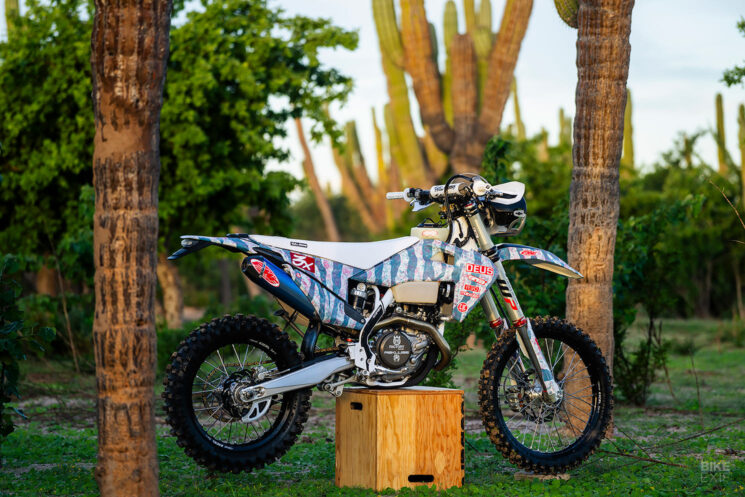
You’re looking at the motorcycle that took second place in last year’s running of the Baja 1000. Built and fielded by a team from Deus ex Machina’s American operation, it’s a well-prepped Husqvarna FE 450 with a livery that’s all fun—and a parts-spec that’s all business. Affectionately nicknamed ‘The Paloma,’ the bike not only boasts a second-place finish in the Pro Moto Unlimited class of the Baja 1000, but it also bagged second overall in the 2023 World Desert Championship.

Husqvarna FE 450 Baja 1000 race bike by Deus ex Machina
The man responsible for the build was Ciaran Naran, who shared race duties with Forrest Minchinton, Nick Lapaglia, and Derek Asserbauer. A previous Baja 1000 winner, Ciaran’s been racing dirt bikes since he was eight years old—and he’s figured out how to make them faster along the way. Working out of Deus’ Venice Beach workshop, Ciaran put countless late nights into turning the 2023-model Husqvarna FE 450 Heritage Edition into this wily, silver medal-winning desert sled.

Even in stock form, the Husqvarna FE 450 is a beast. Thanks to its chromoly frame and carbon fiber subframe, it weighs a paltry 108.3 kilos [238.8 lbs] dry—which is no match for its punchy four-stroke motor. Add a smorgasbord of high-end parts, and you have the beginnings of a race-winning machine.

Husqvarna FE 450 Baja 1000 race bike by Deus ex Machina
Deus’ Husky is galaxies away from its stock trim though, with a build sheet that would make any aspiring desert racer jealous. The mods are not as much about making the bike go faster, as they are about making it go fast for longer. Ciaran and his teammates piloted the Husky to a finishing time of 26 hours and 50 minutes—that’s a lot of punishment for both man and machine.

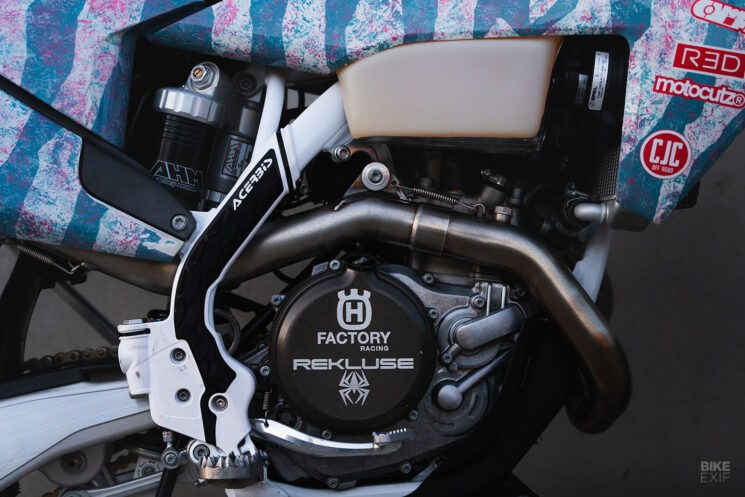
The engine benefits from a 44 mm Keihin throttle body and a Vortex ignition, plus hours of dyno testing. There’s also a Husqvarna factory carbon fiber air filter intake boot, and a transmission prepped by the gearbox specialists at Xtrac. Other add-ons include Dirt Tricks sprockets, a DID chain, and an FMF exhaust muffler.

Husqvarna FE 450 Baja 1000 race bike by Deus ex Machina
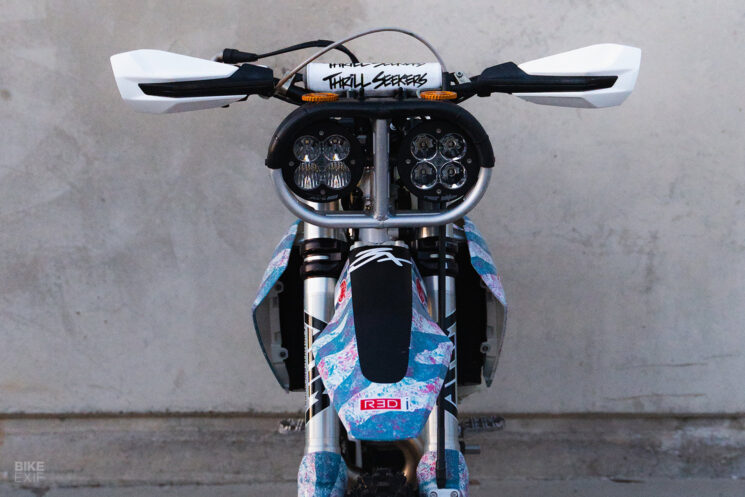
The cockpit features Renthal Twinwall handlebars with a Motion Pro throttle tube, ODI grips, and KTM hand guards. The brake and clutch perches are Brembo parts, upgraded with CNC-machined levers. Elsewhere, Ciaran installed a Rekluse clutch cover and hydraulic actuator.

The stock Husqvarna headlight nacelle sits in front of the bars, fitted with a MotoMinded headlight housing, and a Baja Designs XL80 headlight. When the sun goes down, that setup gets swapped for a custom-built twin-light arrangement.

Husqvarna FE 450 Baja 1000 race bike by Deus ex Machina
AHM Factory Services overhauled and upgraded the Husky’s WP Suspension forks and shock, and Ciaran added an Öhlins steering damper to the mix. The yokes are WP factory 24 mm offset units, and the swingarm comes from a KTM 450 SX-F.

Moving to the wheels, Deus built a new set with DID DirtStar rims (although it’s pictured with an alternate set of Excel wheels in some of these photos). Custom-made wheel spacers and a modified Honda rear axle enable speedy wheel changes. The tires are Dunlop AT81s, with Nitromouse foam inner tubes inside.

Husqvarna FE 450 Baja 1000 race bike by Deus ex Machina
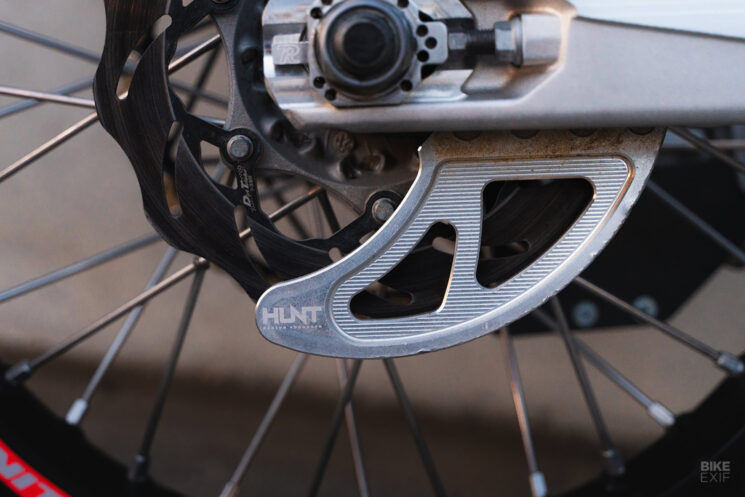
Brembo brake calipers grip Dirt Tricks brake discs, with a Hunt Racing Products ‘shark fin’ to keep rocks away from the rear brake. Other protective parts include Acerbis frame guards and an Akrapovič skid plate. In between all the bolt-ons, you’ll find a handful of clever custom 3D-printed parts.

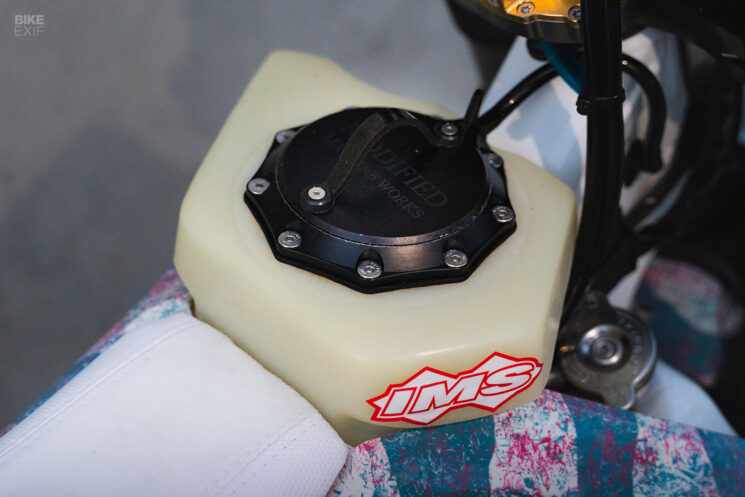
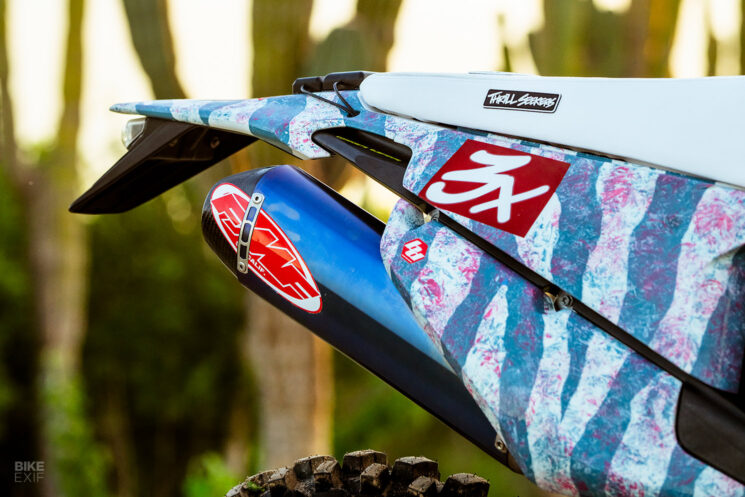
A larger-than-stock IMS fuel tank maximizes the FE 450’s range, while a modified Machine Works dry break filler enables faster pit stops. The seat uses a factory carbon-reinforced seat pan, Guts Racing foam, and a white suede cover from Thrill Seekers. Ultra-sharp foot pegs from IMS keep the riders’ feet where they need to be.

Husqvarna FE 450 Baja 1000 race bike by Deus ex Machina
The Husqvarna FE 450 Heritage Edition comes with a fetching white frame, and a white, yellow, and blue livery that tips its hat to Husqvarna’s vintage colors. It’s an attractive design, but Deus is Deus, and the Baja 1000 is the Baja 1000—so something special was in order.

Deus tapped the legendary Nicolai Sclater, better known as Ornamental Conifer, to create a one-of-a-kind livery for their desert racer. As usual, he knocked it way out of the park.

Husqvarna FE 450 Baja 1000 race bike by Deus ex Machina
Now that the Husky has done its job—and done it well—Deus is letting it go to the highest bidder. Ciaran has refreshed it with a new chain, tires, grips, and hand guards, and put it up for auction on Iconic Motorbikes. You’d better be quick though—the auction’s almost over.

We’d bid, but we’re pretty sure we wouldn’t be able to unleash its full potential.

Deus ex Machina | Facebook | Instagram | Images by Jack Fraser


from Bike EXIF https://ift.tt/diJaCV5

Work in progress: A peek at the Janus Gryffin 450 scrambler prototype

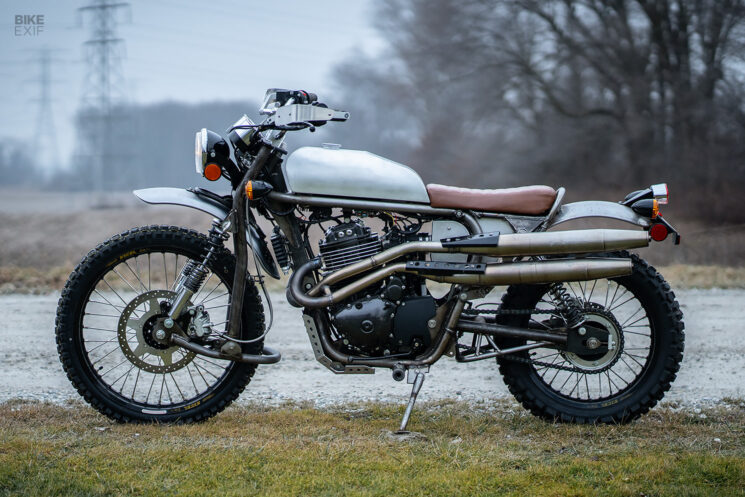
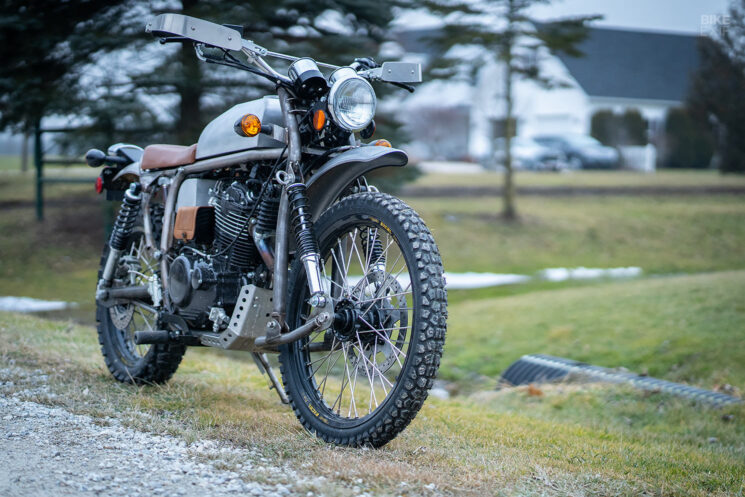
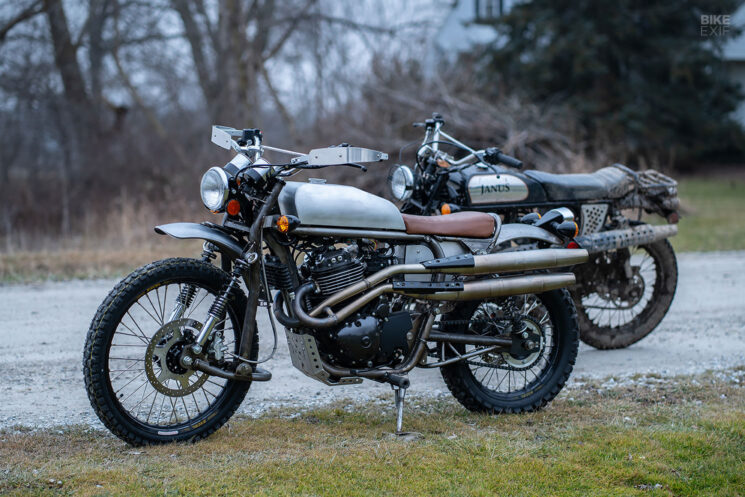
Janus Gryffin 450 scrambler prototype
Mention motorcycle brands and the American Midwest in the same sentence, and a particular Motor Co. springs to mind first. But there’s a smaller company 146 miles away, across Lake Michigan, producing small bikes with big attitudes. They’re called Janus Motorcycles, and this is their latest offering—the Janus Gryffin 450 scrambler.

Based in Goshen, Indiana, Janus Motorcycles specializes in vintage-styled, made-to-order motorcycles. Using engines from the Italian brand SWM, their bikes can be specced with myriad color and accessory options, before being assembled by hand and shipped to their new owners. Only a handful of parts come from external suppliers—the rest are made in-house, or by Janus’ local network of craftsmen, many of which are Amish.

Janus Gryffin 450 scrambler prototype
The Janus Gryffin 450 shows off the same scrambler styling as the existing Gryffin 250, but uses the engine from the company’s bigger Halcyon 450 bobber. You’re looking at the prototype build, devoid of any paint and finishings. Janus is in the thick of finalizing development, with the Gryffin 450 expected to go into production in July.

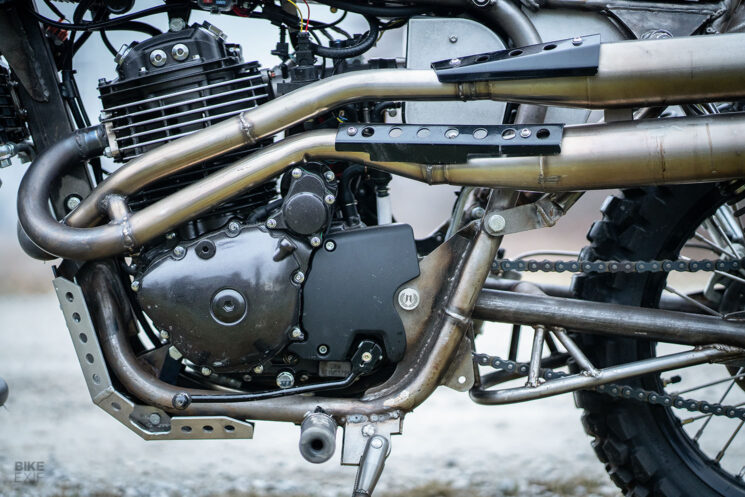
Derived from the single-cylinder donk in the Honda XR400, the 445 cc SWM motor makes around 30 hp. It’s not likely to set any land speed records, but that’s just fine for the Janus team. Their philosophy is building bikes that are not just gorgeous, but approachable too.

Janus Gryffin 450 scrambler prototype
In pursuit of that goal, Janus prioritizes weight over power. With its proprietary chassis and bodywork, the Gryffin 450 tips the scales at just 330 pounds [149.7 kilos], making it a bonafide lightweight. So even though it’s not particularly fast, it should be rather fun to ride.

As per Janus’ standard operating procedure, the frame, swingarm, and leading-link front fork are all designed and built by the company and their network. But while we’re used to seeing these parts painted or powder coated, this prototype offers a rare look at the raw craftsmanship.

Janus Gryffin 450 scrambler prototype
Visually, the Gryffin design is a throwback to the classic scramblers of the 50s and 60s. A handmade fuel tank and solo seat sit up top, with a kicked-up tail loop abbreviating the rear section. Hand-formed beaded fenders sit at either end, with lighting that recalls the OEM parts of yesteryear.

The Gryffin 450’s wheels feature Excel rims, measuring 21” at the front and 17” at the back. This prototype also wears Dunlop D650 adventure rubber, because the Janus team has been getting it dirty during testing. Ikon supplied the shocks that prop up both ends of the bike, while Brembo sorted out the braking setup.

Janus Gryffin 450 scrambler prototype
Scrambler accouterments include tall bars with hand guards, a burly sump guard, and an unapologetic two-into-two exhaust system. But that’s just the tip of the iceberg. Since the Gryffin (and all of Janus’ other bikes) is made to order, you can customize it to your liking straight from the factory.

You can pick hundreds of combinations of hand-painted colors and designs for the bodywork’s base coat, graphics, and pin-striping. There are various add-ons too, ranging from leather and canvas bag options to a headlight guard, motocross foot pegs, pannier racks, a pillion seat, and a whole bunch more.

Janus Gryffin 450 scrambler prototype
According to Janus, they want to give customers the freedom to tweak the Gryffin to suit not only their individual tastes, but their ideal ratio of dirt-to-road riding. “The longer suspension travel, wheel size, lower seat height, and larger fuel tank will be really welcomed by our off-road riders,” says Janus’ senior design engineer, Charlie Hansen-Reed, who led the design on the project.

“And trimming another 30 pounds off our already feather-weight 450 chassis will be a huge bonus for trailering, van-lifers, and for any adventuresome rider’s peace of mind and confidence.”

Janus Gryffin 450 scrambler prototype
Even though the Janus Gryffin 450 is presented here unfinished, it still has the same disarming charm that we’ve come to expect from the plucky American company. If you simply must have one, Janus’ order book is officially open, with prices starting at $13,495 (depending on how you spec it). $2,995 reserves your spot in the build queue—and if you book yours in the next 30 days, it’ll be part of a limited and numbered ‘First Edition’ run that comes with a few extra bits.

For our money, we’d kit it with enough protective parts to enable reckless off-road shenanigans, and wrap it in a vintage motocross yellow.

Janus Gryffin 450 | Janus Motorcycles on Facebook | Instagram | Images by Mark Foster


from Bike EXIF https://ift.tt/0M2chsC

Wednesday, 21 February 2024

Cult classic: A Harley XR1200 street tracker from Taiwan

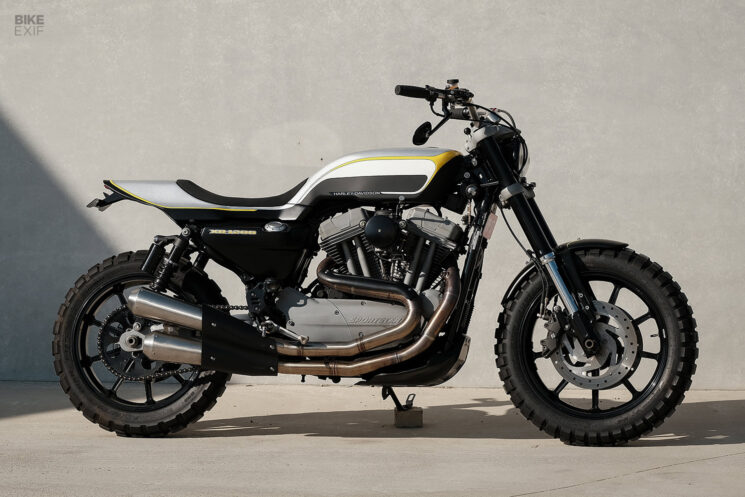
Harley XR1200 street tracker by Fever Taiwan
There must be something in the water, because this is the second Harley XR1200 street tracker that’s popped up on our radar in as many weeks. We’re not complaining though. Even though it wasn’t a big sales hit, we’re fans of Harley-Davidson’s sportiest Sportster—mainly because it was such a hoot to ride.

It’s hard to pinpoint exactly why the Harley XR1200 didn’t stick around longer, but we have our theories. One is that the market simply wasn’t ready to accept a Harley that actually handled well. The other is that the styling was a mish-mash of too many influences.

Harley XR1200 street tracker by Fever Taiwan
The Motor Co. pitched the XR1200 as a flat tracker for the street—and gave it an XR750-inspired livery and upright seating position to match. But the XR’s tail section and goofy split-spoke wheels felt like 90s sportbike throwbacks. Still, it was nothing if not bold, and its awkwardness was arguably part of its charm.

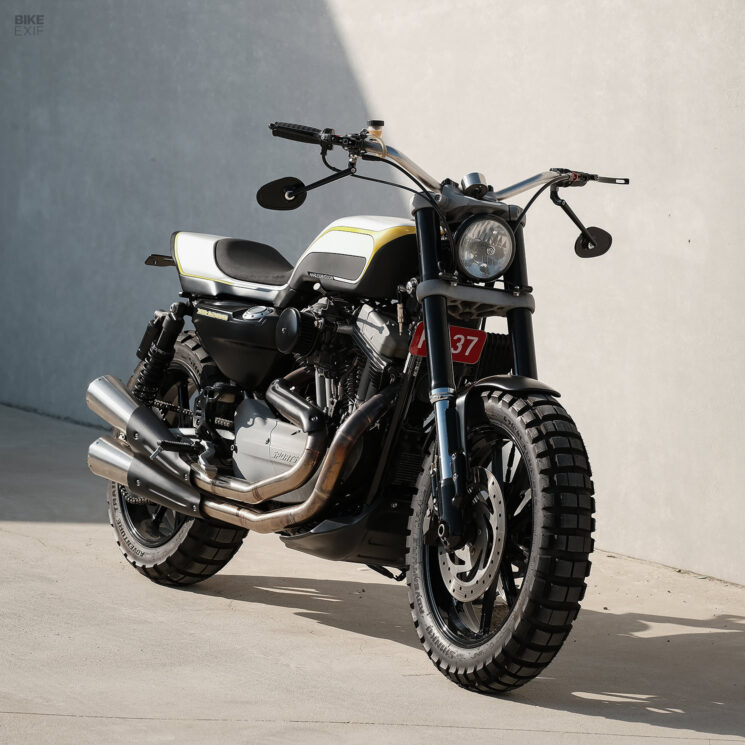
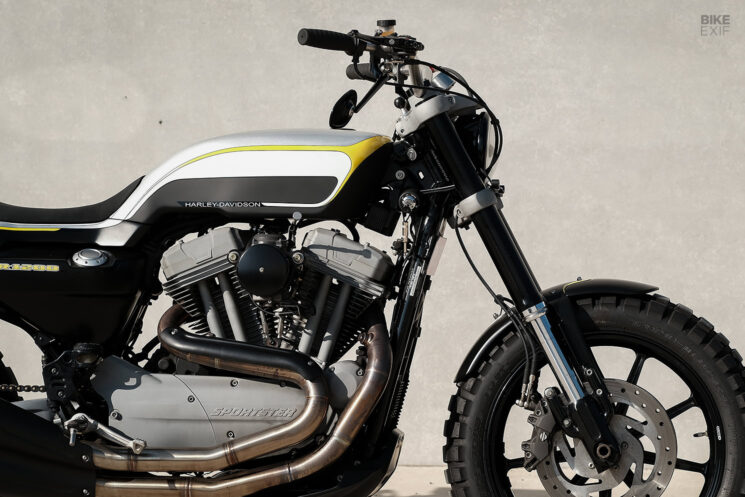
This custom Harley XR1200 comes from Fever—a custom workshop based in Taoyuan City, just outside of Taipei in Taiwan. Their take on this cult classic is refreshing because it pushes the styling in one clear direction instead of trying to ride the line between multiple genres.

Harley XR1200 street tracker by Fever Taiwan
The bike’s owner is a big XR fan, so he initially just wanted Fever to tweak the shape of the fuel tank. But the more they went back and forth on ideas, the more the idea of building a modernized street tracker came to the fore.

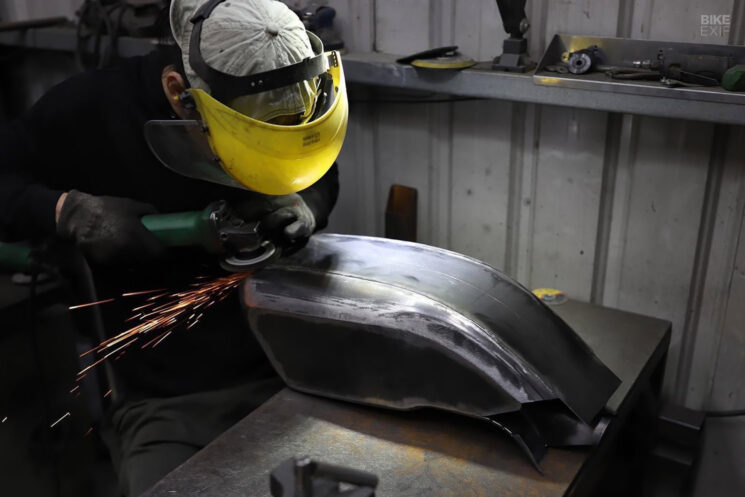
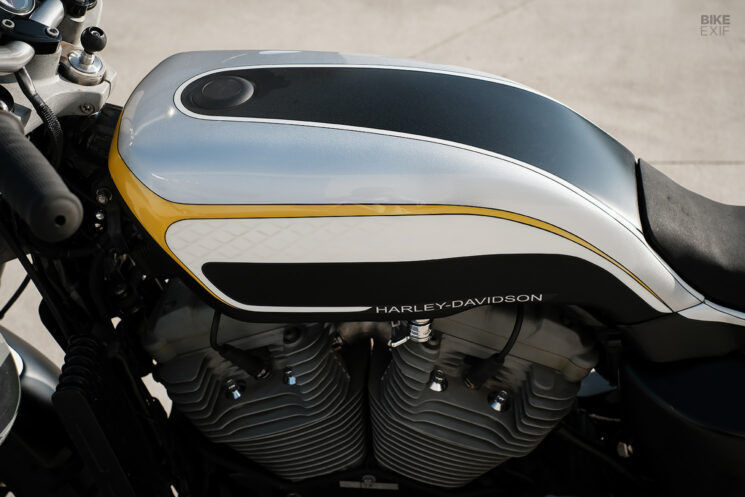
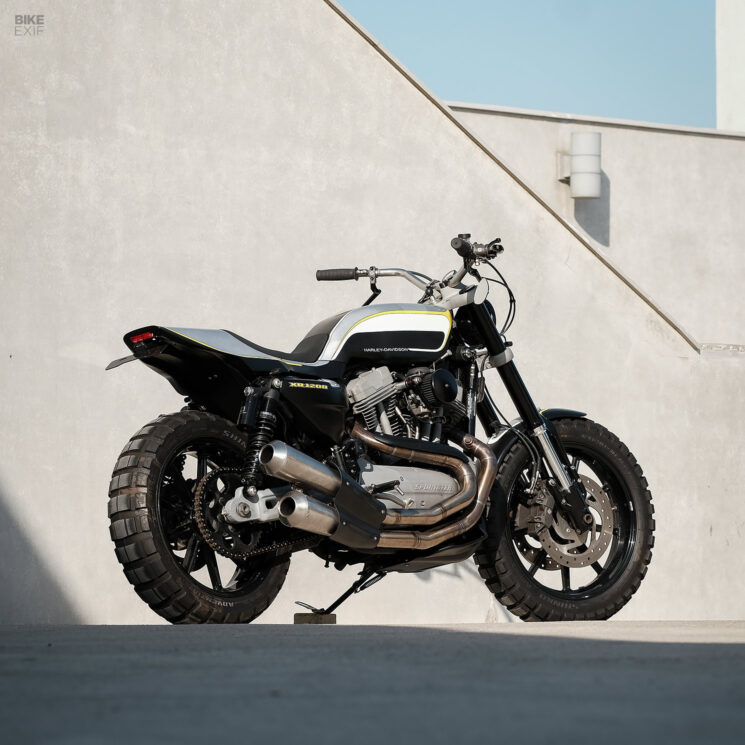
High on the list of priorities was fixing the stock bike’s disproportionate (and disjointed) tank and tail combo. Fever scrapped the OEM parts altogether, opting instead to hammer out a new tank and tail from sheet metal. Not only does the tail section now sport a far more distinctive flat track aesthetic, but the whole arrangement feels more cohesive too.

Harley XR1200 street tracker by Fever Taiwan
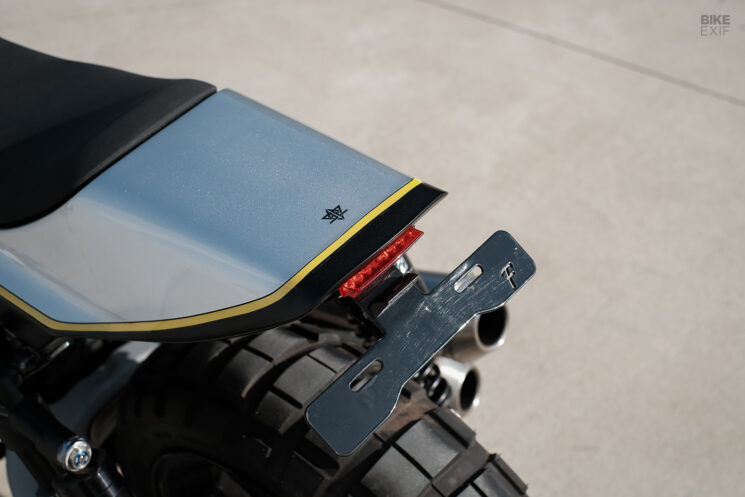
The slight dip between the tank and tail recalls the XR’s original silhouette, but the two parts now flow neatly into each other. Fever designed the tailpiece to work with the stock oil tank and side cover, and built a hidden (and removable) subframe to mount it to.

An LED taillight and custom-made license plate mount sit at the back, with a slim race-style seat pad perched up top. Further forward, a flush-mount filler cap keeps the fuel tank looking tidy.

Harley XR1200 street tracker by Fever Taiwan
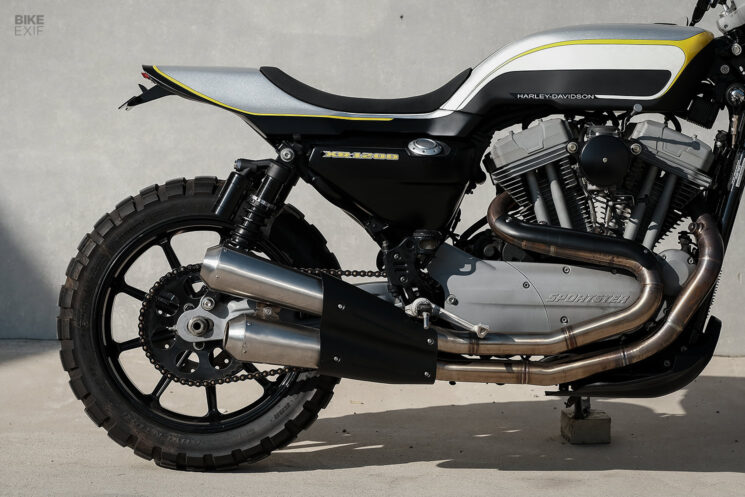
The XR’s wheels had to go, so Fever replaced them with new alloy units in a classic nine-spoke design. Measuring 18” at the front and 17” out back, they’re shod with Shinko Adventure Trail tires. A new set of Racing Bros shocks props up the rear.

Keen eyes will notice that the Harley XR1200’s unique downdraught air intake is gone. The job called for a more traditional Sportster look, so Fever converted the bike from fuel-injected to carburetted, leaving them free to install a classic side-mounted air cleaner.

Harley XR1200 street tracker by Fever Taiwan
The two-into-two exhaust system is new—handmade from front to back. Fever worked tighter bends into the header design for a more aggressive look, and built a new heat shield to protect the rider’s foot from the twin reverse cone mufflers. A tidy sump guard underscores the bike.

The cockpit wears a new set of flat track-style handlebars, fitted with Brembo controls, micro switches, and under-slung mirrors. The OEM headlight and its signature cowl are both still in play.

Harley XR1200 street tracker by Fever Taiwan
An incredibly well-judged black, silver, yellow, and white livery finishes this handsome Harley XR1200 street tracker off nicely and displays Fever’s exquisite taste and sharp eye. We’re left with just one question; is this the motorcycle that Harley-Davidson should have built sixteen years ago?

Fever Taiwan | Images by Dong Lin

Harley XR1200 street tracker by Fever Taiwan


from Bike EXIF https://ift.tt/NmHQyk7

Tuesday, 20 February 2024

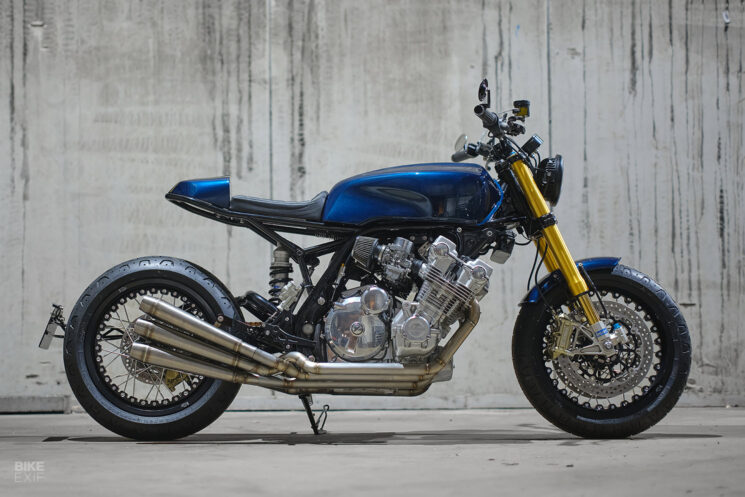
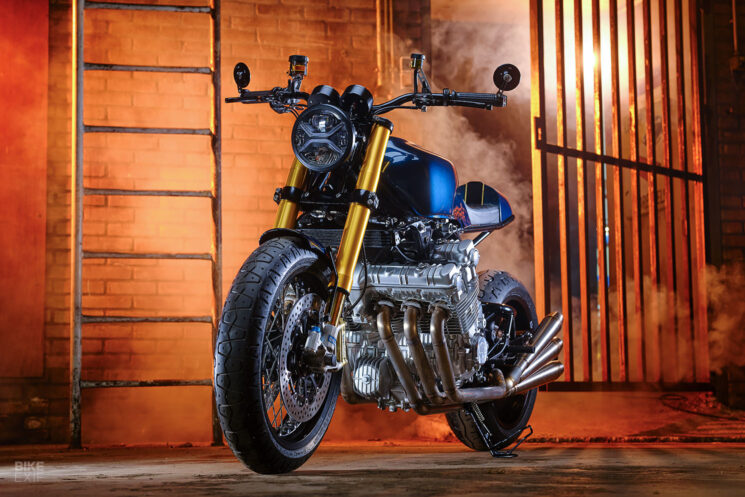
The Mighty Six: A brutal custom Honda CBX from The Netherlands

Custom Honda CBX 1000 by Moto Adonis
An email commissioning a new project is good news for any custom motorcycle workshop. But the crew at Moto Adonis in The Netherlands was particularly giddy when their latest project hit their inbox. The brief read like most others, save for one key detail—the client specifically requested a custom Honda CBX 1000.

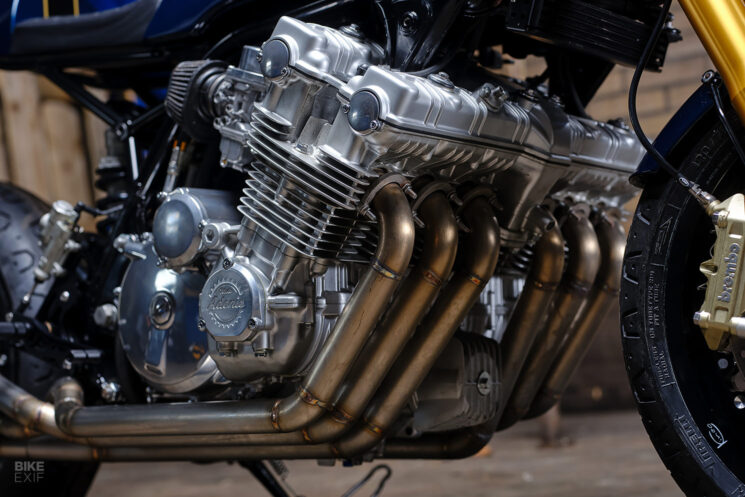
Like many of us, Moto Adonis co-owners Arthur Renkema and Job Leussink idolize the mighty CBX. “It’s undoubtedly one of the most legendary machines ever built,” Job proclaims. “The sound of this beastly inline six-cylinder engine, skillfully crafted by Honda masters, is more than just noise; it’s a symphony of brute force that resonates as pure rebellion on two wheels.”

Custom Honda CBX 1000 by Moto Adonis
Despite their love for this 80s icon, Moto Adonis had no intention of simply creating a tidy Honda CBX 1000 restomod. “The bike was craving a contemporary, rugged touch,” explains Job. “And we didn’t just add a hint; no, we went all-out.”

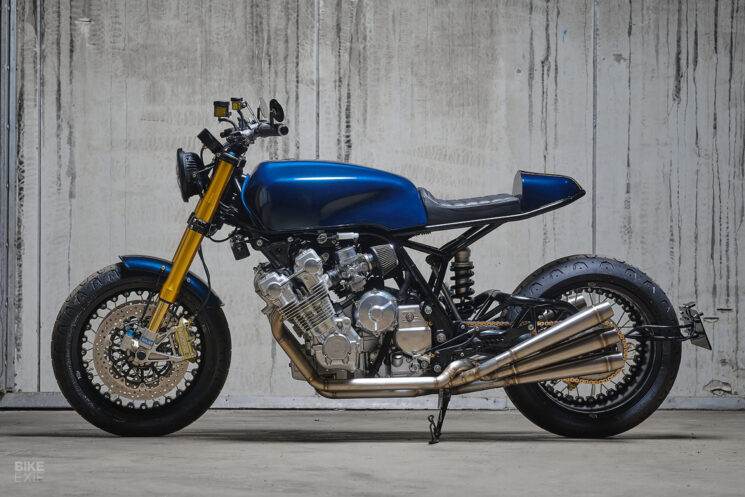
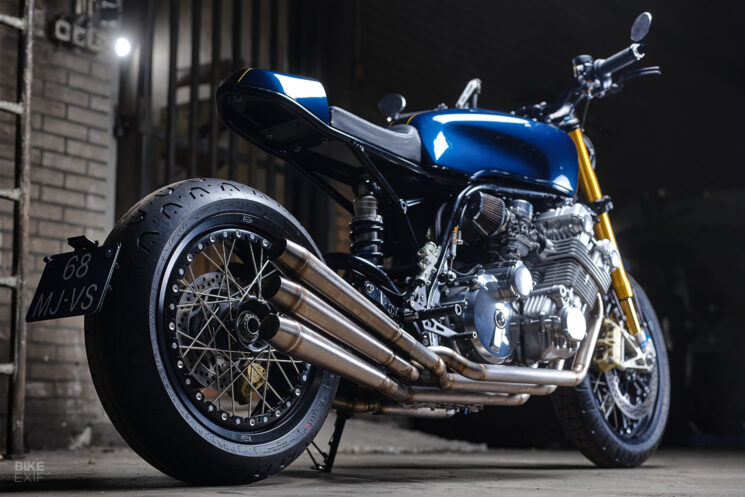
Paying tribute to the CBX’s legacy, Arthur and Job kept the bike’s OEM fuel tank—but everything else was fair game. The guys set out to modernize the bike, while stripping back as much as they could to highlight its gargantuan engine. While we wouldn’t go as far as calling a six-cylinder superbike from the 80s ‘lithe,’ this CBX is one of the leanest we’ve seen.

Custom Honda CBX 1000 by Moto Adonis
Moto Adonis started by fine-tuning the classic Honda’s chassis. The stock 19F/18R Comstar wheels were tossed in favor of a burly set of 17” hoops from Kineo, now shod with Pirelli Phantom Sportscomp rubber.

The front end wears a set of upside-down forks from Öhlins, with twin Brembo brake calipers in play. Out back, the CBX’s twin-shock suspension has been taken out of the equation. Instead, the bike now employs an Öhlins mono-shock, hooked up to the single-sided swingarm from a Ducati Monster S4R (a mod that reportedly took forever to get right).

Custom Honda CBX 1000 by Moto Adonis
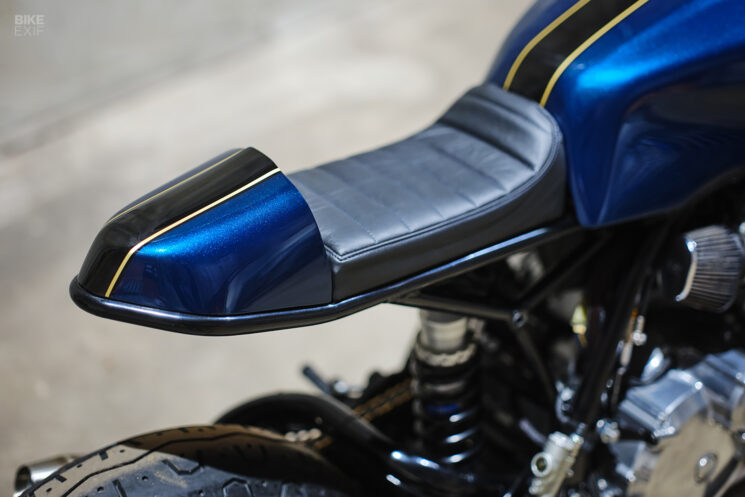
Take a closer look, and you’ll spot custom linkages tucked into the bespoke subframe. Moto Adonis fabricated an aluminum tail cowl to sit behind the solo seat, taking care to give it a blocky appearance that complements the classic CBX fuel tank. Marcel Miller finished the seat off with a sporty leather cover.

If you’re looking for the taillight and license plate, they’re way out back, attached to a custom-made bracket that bolts to the swingarm.

Custom Honda CBX 1000 by Moto Adonis
Having gone down the rabbit hole with the chassis mods, Moto Adonis wasn’t about to skimp on the engine work. Luckily, help wasn’t too far away. “We discovered that the biggest six-cylinder guru in Europe happens to be just 25 km [16 miles] away,” says Job.

“Bert from SixCenter helped us fully overhaul the engine, down to every last bolt. Some things are better left to the specialists!”

Custom Honda CBX 1000 by Moto Adonis
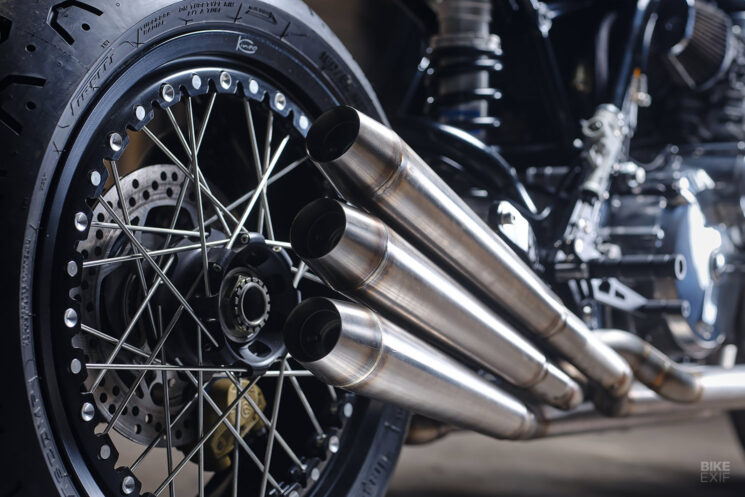
Equally important was giving the Honda CBX 1000 a soundtrack worthy of it. Moto Adonis and their client agreed that a six-into-six exhaust system was the only way to go, so the team made it happen. Three headers run down the side of each bike, before kinking at the swingarm and exiting via a set of mufflers from MAD Exhausts.

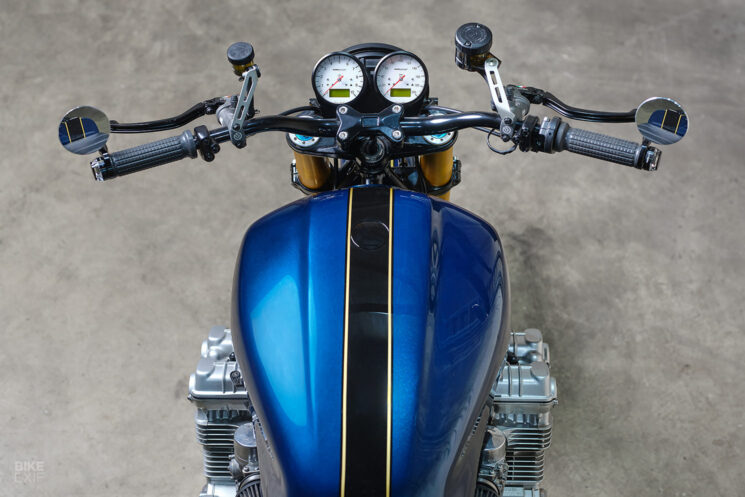
After converting the clutch to a hydraulic system, Arthur and Job fitted the handlebars with brake and clutch master cylinders from Brembo. An LED headlight sits up front, with not one, but two Motogadget dials behind it—a fantastic throwback to the distinct style of the 80s. The bars also sport micro switches, and Motogadget grips, bar-end turn signals, and mirrors, while the bike’s wiring has been redone with a Motogadget control box.

Custom Honda CBX 1000 by Moto Adonis
The bike’s new livery is as simple as it is befitting this two-wheeled hot rod. Metallic blue dominates the bodywork, with a black stripe, flanked by gold pinstripes, running front to back. It’s the perfect finish for this brutal masterpiece.

The only question is whether this custom Honda CBX 1000 rides as good as it looks. “Test riding a custom monster always remains an exciting experience,” says Job. “We’ve built a lot over the years—but this fully-customized CBX, with its Öhlins suspension and six-in-six exhaust system, sits at the top of our list!”

Moto Adonis | Facebook | Instagram | Images by Martin Hogeboom

Custom Honda CBX 1000 by Moto Adonis


from Bike EXIF https://ift.tt/3kAw9qj