Saturday, 4 November 2023

Morlaco: A savage Fireblade-powered superbike by Bottpower

Custom Honda CBR954RR Fireblade by Bottpower
The custom scene is full of motorcycle designers, artists, mechanics, fabricators, welders, and metal-shaping wizards. But David Sánchez wears another badge that very few confidently can; engineer.

David runs the motorcycle workshop Bottpower in Valencia, Spain, best known for its gnarly Buell customs and frame kits. He’s also an experienced motorcycle racing engineer with numerous European Superbike and Supersport seasons under his belt. So that experience trickles down to the purposeful machines that he and his talented team create.
Custom Honda CBR954RR Fireblade by Bottpower
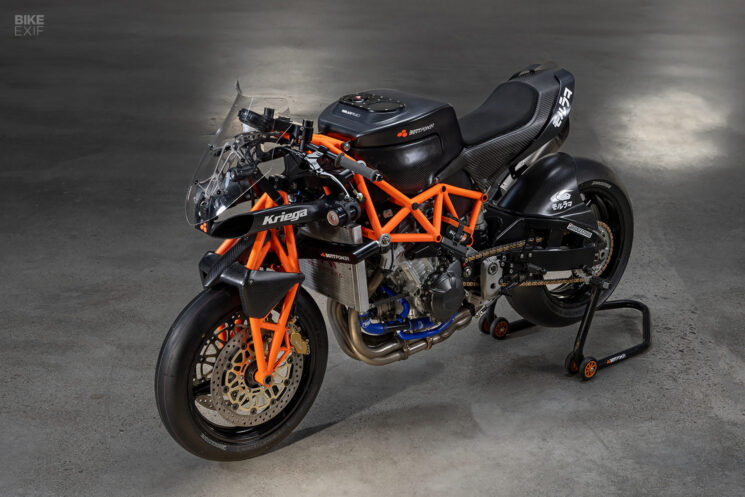
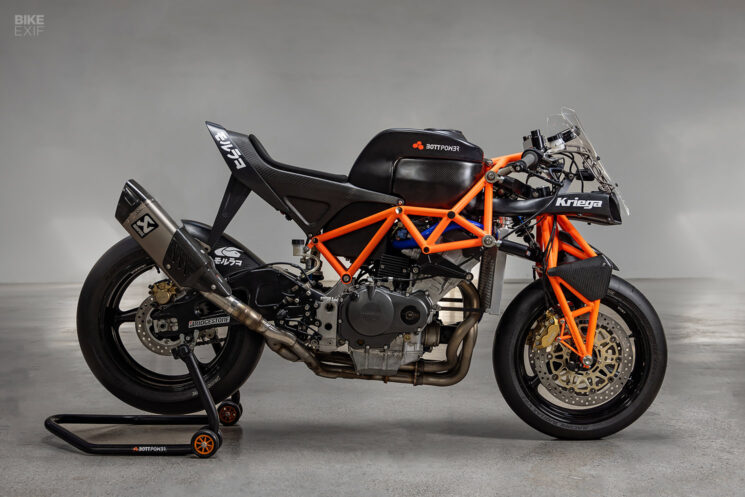
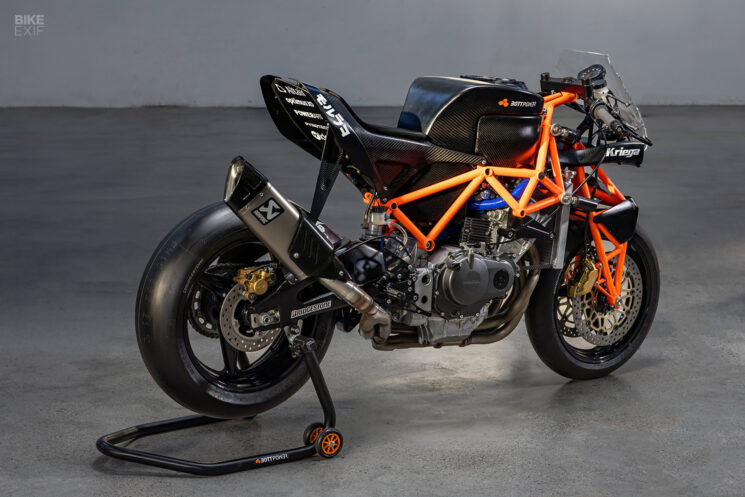
Things get even wilder when David isn’t working to a set brief or a deadline, as evidenced by this savage custom superbike. Built from the bones of a Honda CBR954RR Fireblade, this Bottpower special features a bespoke chassis, a unique front suspension system, and miles of carbon fiber. It’s also taken David two decades (plus change) to bring it to life.

The project kicked off in 2002 with a brand new Honda CBR954RR Fireblade and a very specific concept. Together with Bottpower co-founder and experienced automotive designer, Hugo van Waaijen, David envisioned a bike with a trellis frame to suspend the motor from, a unique front suspension system, and an exposed airbox and fuel tank.
Custom Honda CBR954RR Fireblade by Bottpower
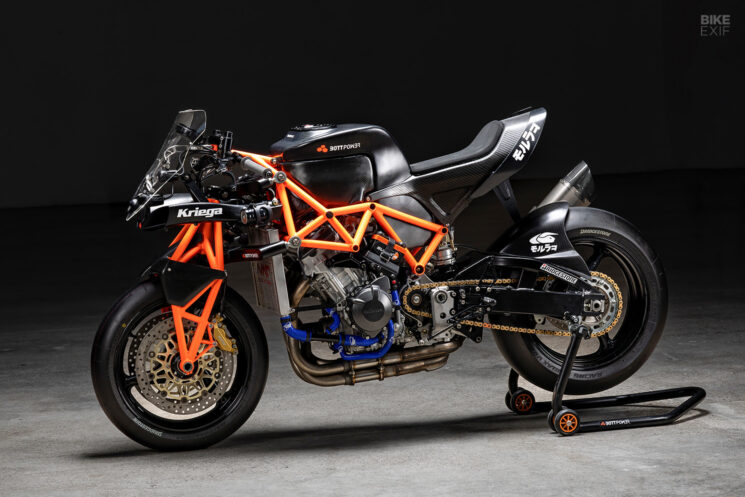
Using just the Fireblade’s engine, wheels, and swingarm, the duo designed the foundation for the motorcycle you see here. But as soon as the rolling chassis was complete, the project stalled for reasons unknown.

“The bike sat disassembled for many years, gathering dust,” David tells us. “In fact, a few years ago I considered selling off any valuable parts and forgetting about it. The thing is, when we started this project, we had very little experience with bikes—and if we were to build this type of bike now, we would do everything very differently.”
Custom Honda CBR954RR Fireblade by Bottpower
“Fortunately, we ultimately decided to finish this version before creating a new one. Now that I see it completed, I’m glad we made that decision.”

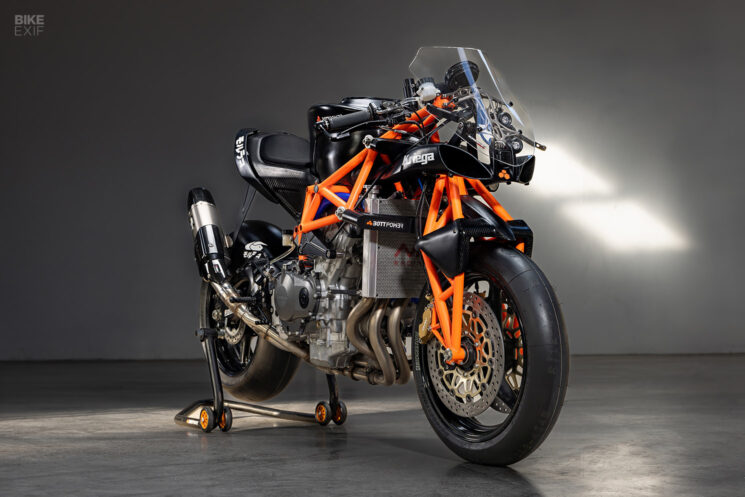
We’re glad too. It might have taken David and Hugo 21 years to get this one over the finish line, but it certainly doesn’t look dated. It’s a sharp machine that deliberately leaves very little to the imagination by putting its myriad technical features on full display.
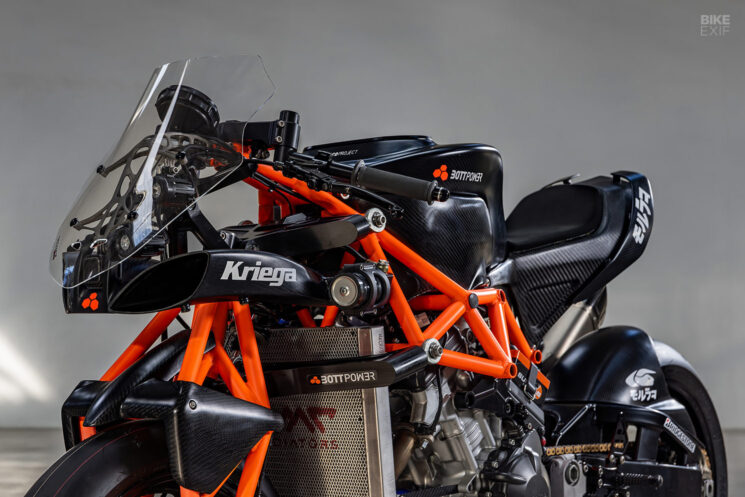
Custom Honda CBR954RR Fireblade by Bottpower
The Hossack-like front suspension example alone is worthy of further study. “It’s similar to a Hossack design,” David points out, “but it has some differences, like the suspended steering head—an idea from Hoyt McKagen. “This design allows us to use bearings in the steering head instead of the typical ball joints used in the Hossack system.”

“The advantage is that bearings have a much lower friction coefficient and also allow for a greater steering angle. The front end is designed to dive considerably less than a telescopic fork (and the dive level is adjustable). This leaves us with extra travel for the suspension to work during braking, and it also improves braking ability because the rear wheel maintains better contact with the asphalt.”
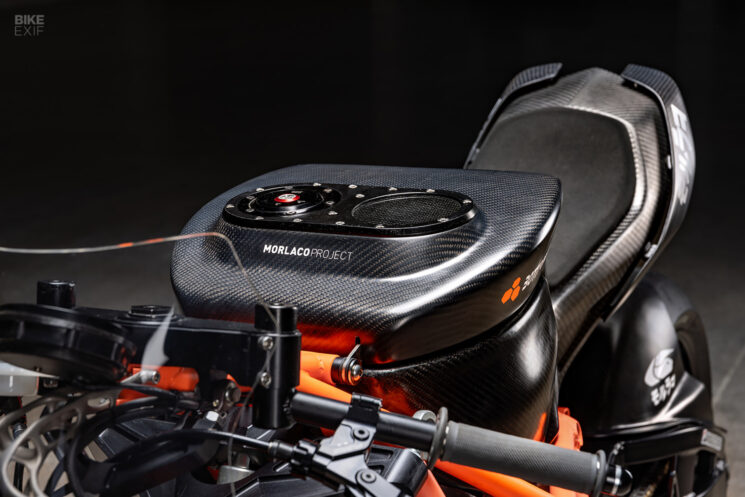
Custom Honda CBR954RR Fireblade by Bottpower
Moving to the trellis frame that forms the nexus of the bike, David explains that the goal here was to optimize size and weight. “We wanted to create a chassis that was much narrower and lighter than the original Honda frame, along with a much narrower fuel tank in the area between the legs. Essentially, our idea was that once you’re on the bike, it should feel like a 600 rather than a 1000.”

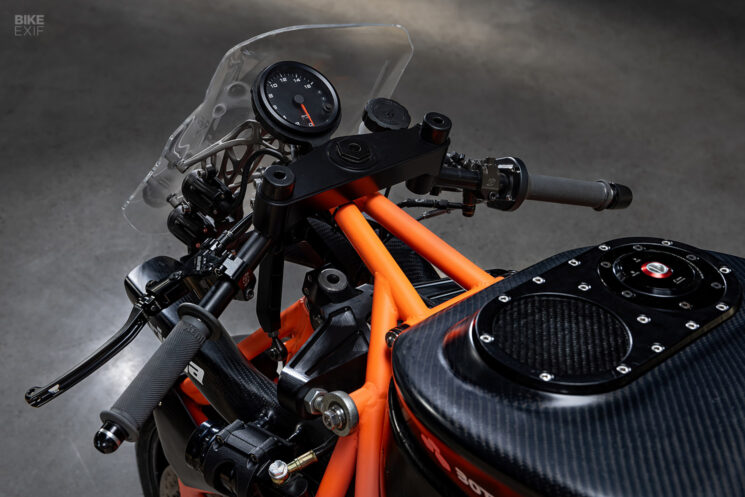
Hiding under the swathes of carbon fiber is a fuel ‘bladder,’ built for this project out of composite materials by Pyrotect in the US. It’s the same type of system that’s used in race cars, capable of withstanding big impacts and fires. The tank covers, airbox, intakes, and fenders were all 3D printed by Optimus3D in Spain, and then covered in carbon fiber to add structural strength.
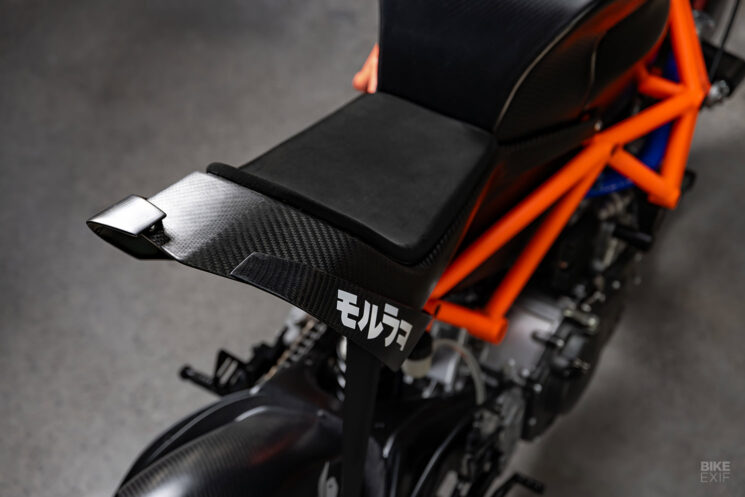
Custom Honda CBR954RR Fireblade by Bottpower
There’s no subframe as such—instead, the carbon fiber tail section supports itself. It also weighs a paltry 800 grams, which is impressive enough to forgive the minimal seat padding.

At the opposite end of the bike, a small windshield is held in place by a 3D-printed titanium bracket. It has an organic look that seems at odds with the rest of the build, but that’s entirely deliberate. Bottpower designed it digitally using topology optimization—a mathematical method that optimizes the distribution of material, based on factors like space and how much load the part needs to sustain.
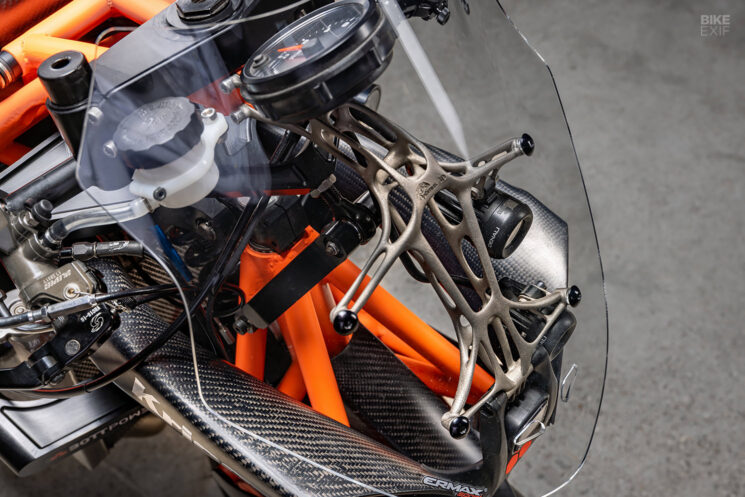
Custom Honda CBR954RR Fireblade by Bottpower
A ton of work also went into the bits that you can’t see. The bike features an all-new electrical system, complete with a data acquisition setup. A small Lithium-ion battery sits on the side of the bike, placed right next to the starter motor to eliminate the need for any superfluous wiring.

The custom-made housing that contains it also hosts the ignition and start buttons, and the fuses. With no other switches required, the cockpit wears little more than a set of clip-ons, the brake and clutch levers, and an analog tachometer. Rounding out the list are a pair of custom-made shocks from TFX Suspension in The Netherlands, and an Akrapovič muffler to complement the Fireblade’s titanium exhaust headers.
Custom Honda CBR954RR Fireblade by Bottpower
Appropriately dubbed ‘Morlaco’ (translated as ‘large fighting bull’), Bottpower’s Honda-powered superbike is as intoxicating as it is audacious. If you agree, you’ll be glad to know that plans are already underway to build a worthy successor.

“We’re initiating a small testing program,” David explains, “to work on developing and fine-tuning the front end and to gather information for developing the next version, which we want to build with a modern engine. It will be interesting to apply all the experience we’ve gained over these two decades and see the differences between this bike and the next one, which we hope to complete in two years and not twenty!”

Bottpower | Facebook | Instagram |Images by Moonbay Films
Custom Honda CBR954RR Fireblade by Bottpower


from Bike EXIF https://ift.tt/j9pqlZ5

Thursday, 2 November 2023

Heavy Hitters: Top Sellers from Bonhams Autumn Stafford Sale

Top Sellers from Bonhams 2023 Autumn Stafford Sale
Bonhams’ Autumn Stafford Sale
wrapped up a couple weeks back, and while we covered several interesting Lots before the auction, the stars of the sale deserve their time in the limelight—accompanied by their eye-watering hammer prices. With the staggering number of pre-war British motorcycles in the docket, you’ll be surprised to find the list of top sellers includes a couple of prominent Japanese GP racers and Ducati race replicas to boot.

Kork Ballington's 1979 Kawasaki KR250
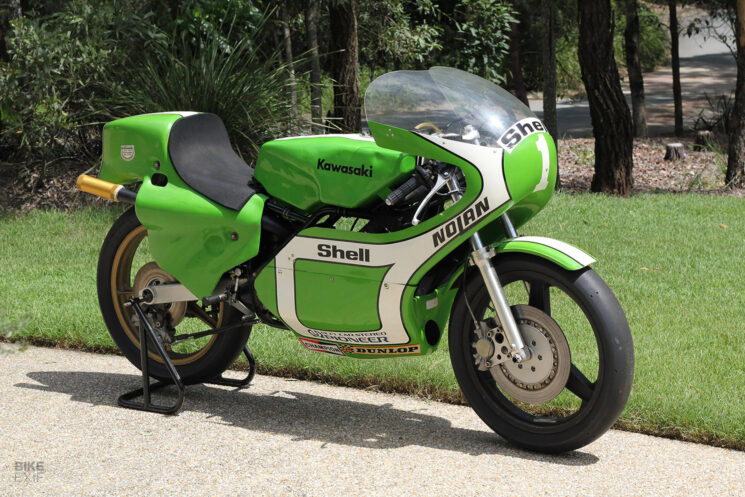
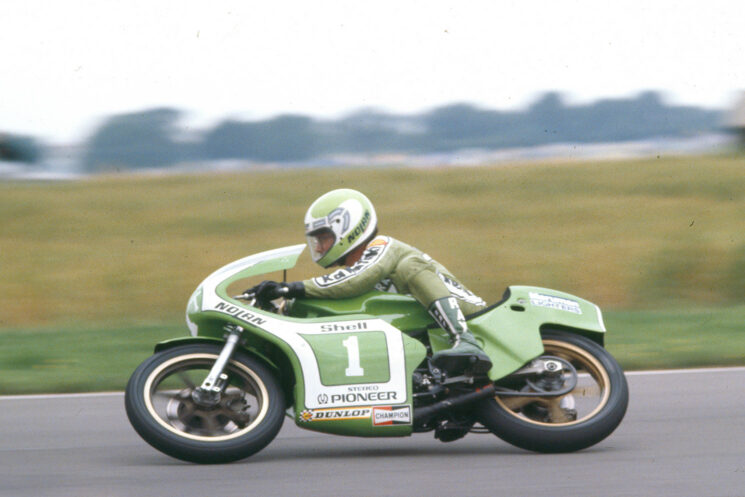
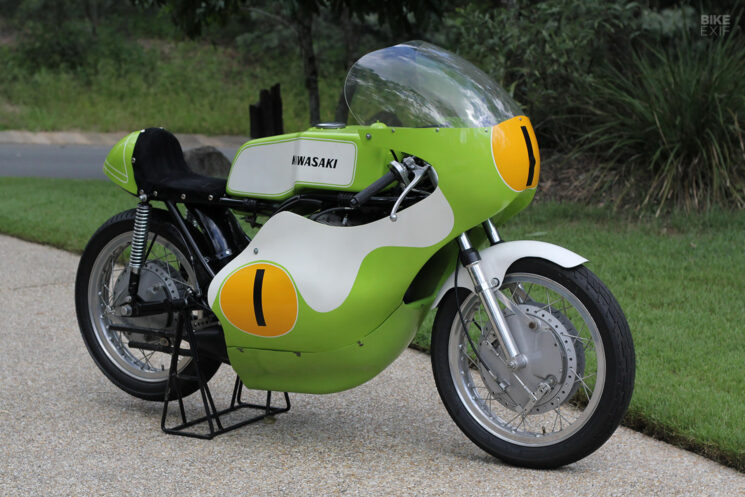
Kork Ballington’s Championship 1979 Kawasaki KR250 Equipped with the No. 1 plate and presented largely in as-raced condition, it’s no surprise that the top seller of Bonhams Autumn Stafford Sale was the 1979 championship-winning Kawasaki KR250 of Kork Ballington. Stored for years in a climate-controlled trophy room, and sold with rare factory spares and GP trophies from the 1980 season, the KR250 was hammered away for a staggering £92,000 [$112,305].

1979 Kawasaki KR250
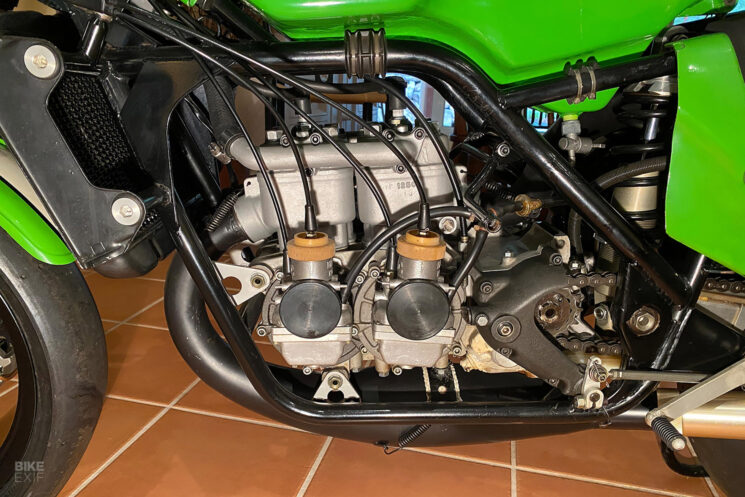
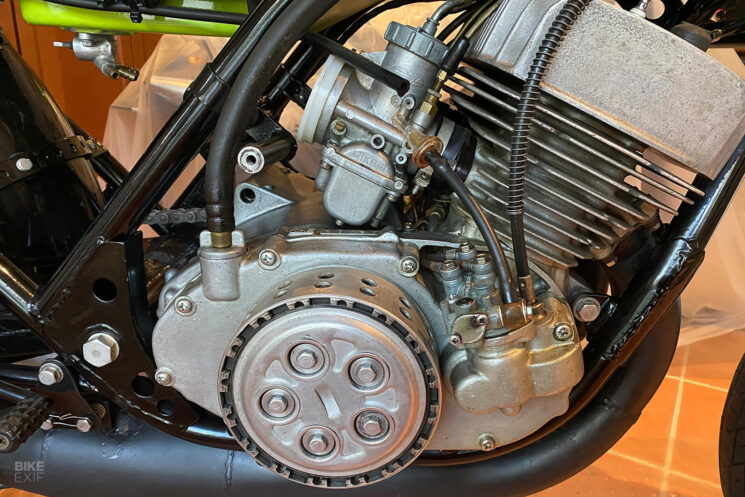
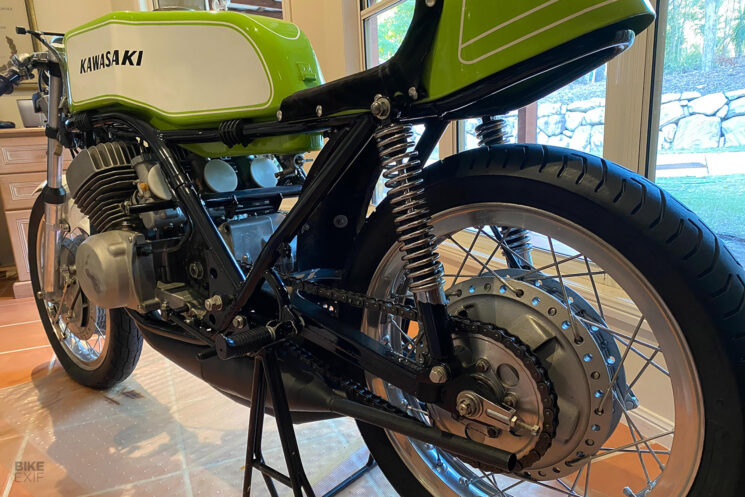
Kawasaki was largely absent from GP racing in the 1960s, and faced an uphill battle to make competitive small cc road-racing bikes in the coming years. Their parallel-twin two-strokes employed conventional rotary-valve induction, making the bikes considerably wider than the competition. That was until a young engineer named Nagato Sato drafted a new tandem-twin design, with one cylinder directly behind the other with their cranks joined by gears.

Sato’s design placed the rotary valves and carburetors on the left, offset by the ignition and primary drive on the right. In addition to slimming up the powerplant, the design also allowed for asymmetrical inlet timing and freed up room to increase the engine’s transfer porting. The new Kawi tandem twin didn’t outclass the competition’s output by leaps and bounds, but the finished KR250s and 350s were lightweight, had low frontal area and were piloted by some fantastic riders.

Kork Ballington's 1979 Kawasaki KR250
Kork Ballington got his shot on the new KR in 1978 and didn’t disappoint, bringing home the 250 and 350 World Championship titles in ’78 and ’79. Anton Mang would follow in his footsteps, taking the 250 title in ’80 and ’81, and the 350 title in ’81 and ’82—establishing the Kawi KR as the bike to beat.

Lot 455 is one of the two bikes that Ballington rode in the ’79 and ’80 seasons, and was verified to be his championship-winning machine from 1979. Ballington stored the bike in his trophy room after acquiring it from Kawasaki in 1982, where it sat unused, except for the occasional ride on the street outside his home. Trophies from the 1980 season and valuable works engine spares accompanied the sale.

1975 Ducati 750 SS
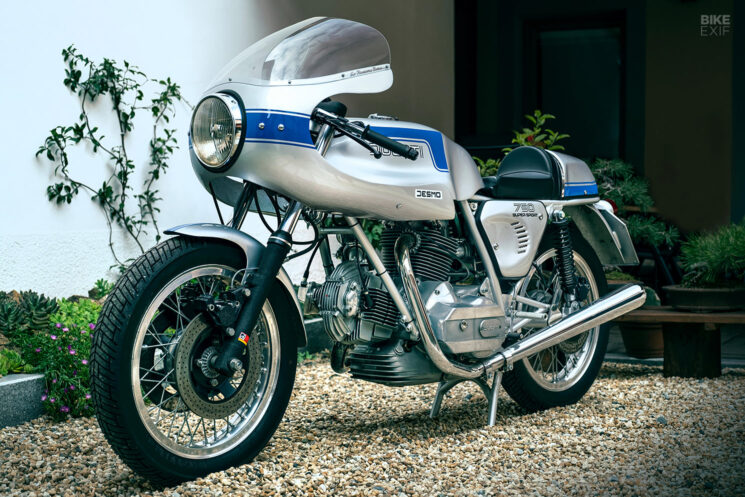
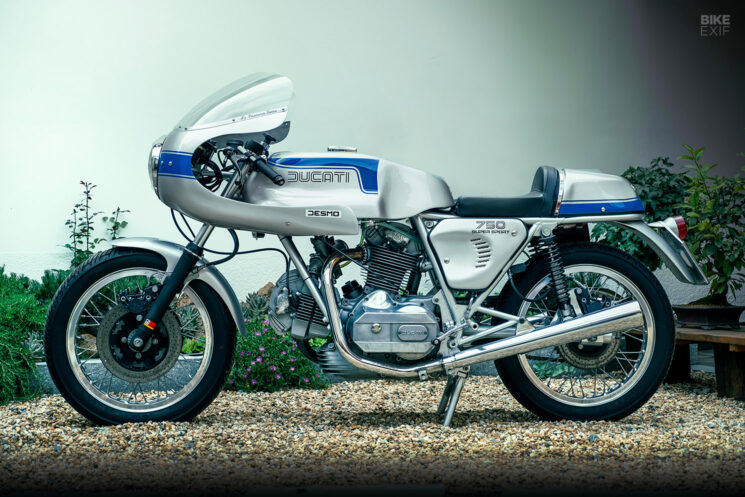
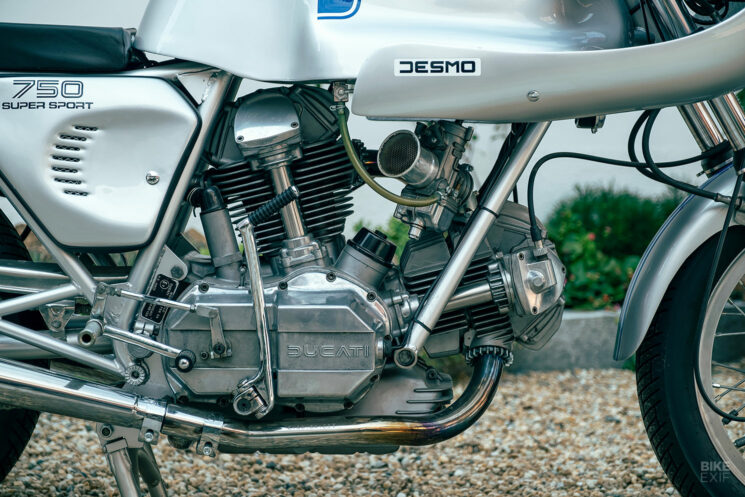
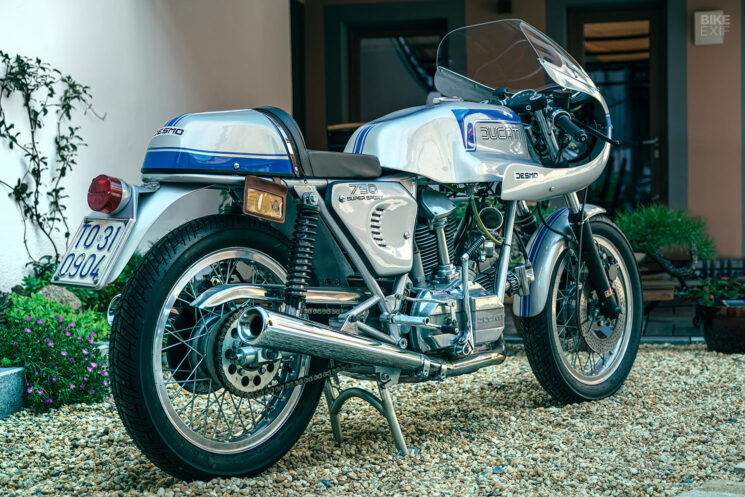
1975 Ducati 750 SS Street-legal examples of a brand’s finest road-racing machines have always appealed to collectors and boy racers alike, and as such a purebred example, the Ducati 750 SS has always been quite sought after. Few could afford the price though, considering the 750 sold for over $7,000 when new, and if you want one today, the price is roughly £59,800 [$72,916].

1975 Ducati 750 SS Engine
The story of the 750 SS starts with the 1972 750 Sport, Ducati’s most aggressive V-twin so far, and the basis for Ducati’s 750 cc road racers of the day. Paul Smart and Bruno Spaggiari rode two works 750s to a 1-2 finish at the Imola 200 in 1972, besting proven Triumph Tridents, Yamahas, Kawasakis and (notably) the 750 MV Agusta of Giacomo Agostini. The works bikes were fit with upgraded Lockheed brakes, full fairings and high-compression top ends with desmodromic cylinder heads, but were otherwise very similar to the production models.

1975 Ducati 750 SS
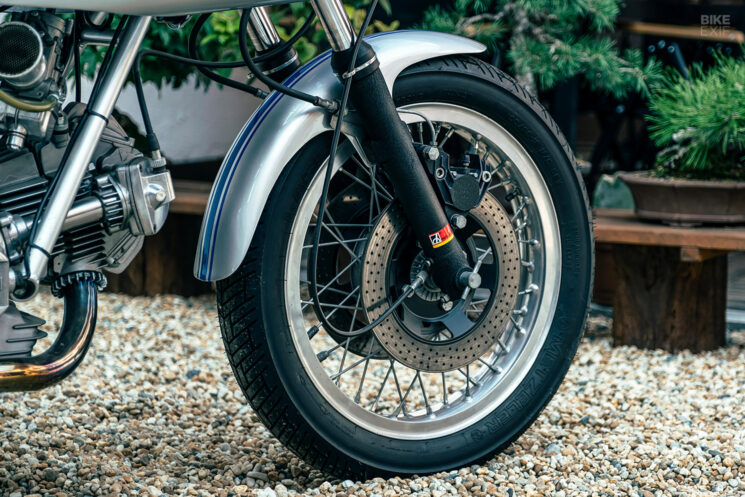
A landmark victory for Ducati’s V-twin, the brand quickly moved to capitalize on the success at Imola with the 750 SS. The model was essentially a legalized version of the ’72 racers, fit with a smaller cockpit fairing, a center-axle fork, Brembo brakes and just enough lighting for the street. The chassis utilized the 90-degree engine as a stressed member and was quite stiff, and cornered quicker by utilizing 18-inch wheels. The fiberglass fuel tank, right-hand shift and unfiltered Dell’Orto carburetors were carried over as well.

Top Sellers from Bonhams 2023 Autumn Stafford Sale
Lot 436 is a 750 SS model built late in December of 1975. It bounced around Italy for a while (always selling for a good deal over MSRP) before landing in the hands of an eclectic collector who painted the bike pink before placing it in storage for nearly 30 years. A comprehensive restoration was done in 2014, and the bike is said to retain all its original major parts.

1971 Kawasaki 500 cc H1RA
1971 Kawasaki 500 cc H1RA Kork Ballington’s KR250 wasn’t the only green machine from his personal collection at Bonhams’ Stafford Sale, and Lot 446 would go down as another top seller at the event at £57,500 [$70,181]. This 1971 Kawasaki H1RA was raced in-period by Ballington’s regular teammate Gregg Hansford, who rode the bike to victory in the 1973 Australian Championships.

1971 Kawasaki 500 cc H1RA Engine
Kawasaki debuted the new H1R as a racing version of the 500 cc Mach III roadster in 1970. While the 75 bhp three-cylinder engine showed promise, the chassis was outclassed by the competition, and Kawasaki had to settle for second behind MV Agusta’s Giacomo Agostini.

The H1R wouldn’t achieve major success until 1971, when Team Green veteran Dave Simmonds commissioned Ken Sprayson to design a better-handling chassis for his bike. With its Achilles heel addressed, Simmonds piloted the Kawi to victory at Jarama, and fourth in the World Championship after missing several rounds.

Top Sellers from Bonhams 2023 Autumn Stafford Sale
Fast forward to 1972, and the mother of the up-and-coming rider Gregg Hansford purchased this particular Kawasaki H1RA at Brisk Sales in Brisbane. While Hansford’s national career wouldn’t take stride until the late ’70s, it was on this Kawasaki H1RA that he won the 1973 500 cc and Unlimited Australian Championship titles. Years later, Kork Ballington was able to purchase the freshly restored H1RA with its original 500 cc engine, citing fond memories of his personal H1R from the 1972 South African National Unlimited Championship.

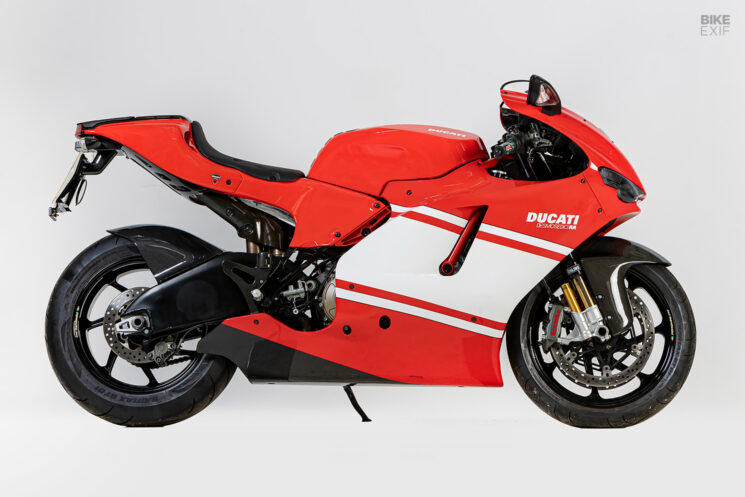
2008 Ducati 990 Desmosedici RR
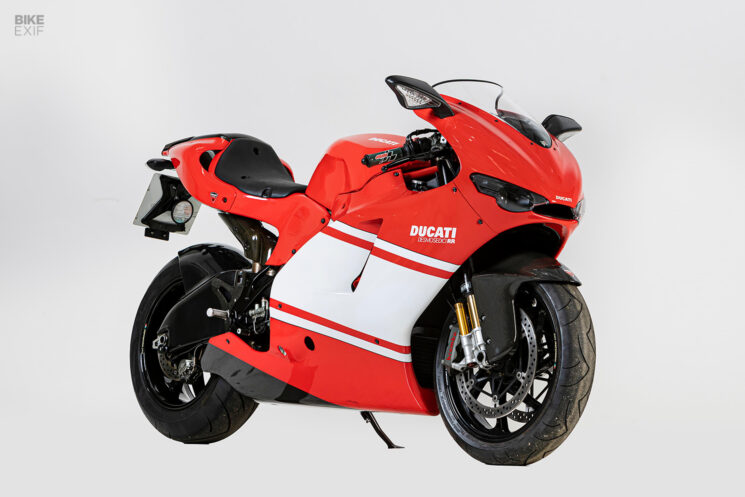
2008 Ducati 990 cc Desmosedici RR Not every machine graced with the Race Replica designation is built to the same grade, but if that suffix is attached to a Ducati namesake, it’s usually something right on the ragged edge. Boasting nearly 200 hp and the power-to-weight ratio of a fighter jet, the Ducati 990 cc Desmosedici RR is a machine that proved its pedigree.

The production version of the 990 Desmosedici RR was based heavily on the ’06 GP6 race bike, campaigned successfully by the likes of Loris Capirossi, Sete Gibernau and Troy Bayliss. It was powered by basically the same desmo 90-degree V4 engine, and used the GP6’s trellis frame with the engine as a stressed member and the swingarm bolted through the crankcase.

2008 Ducati 990 Desmosedici RR
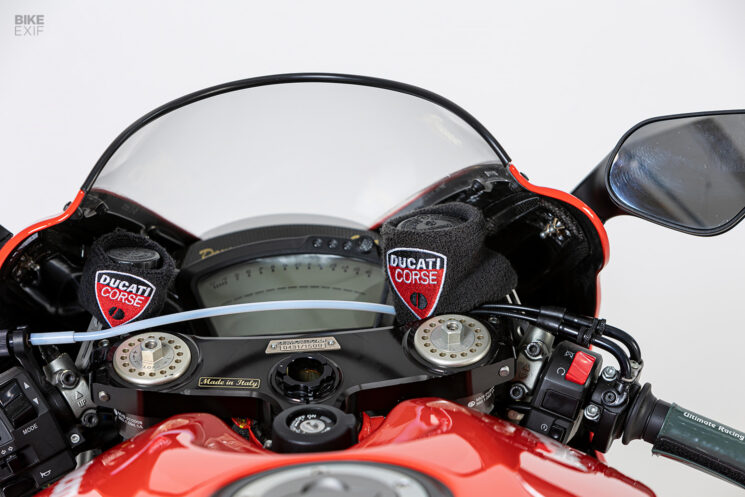
Achieving a number of ‘firsts’ for a production bike, the RR was equipped with a structural carbon-fiber seat and subframe, and lightweight Marchesini forged magnesium wheels. Öhlins suspension with race-caliber Brembo brakes and radial monoblock front calipers were fit, along with carbon-fiber bodywork and an aluminum fuel tank. The finished RR would rev to 14,200 rpm, returning 200 hp with track accessories fit, and weighed just 376 pounds with the extensive weight-saving measures.

2008 Ducati 990 Desmosedici RR
Ducati built just 1,500 examples of the 990 cc Desmosedici RR, and they sold for a whopping $72,500. Lot 418 was number 431 off the line, and lived a well-pampered life of dry storage and the occasional use, covering a total of 5,397 miles. Depreciating very little since new, the Ducati RR was sold for £49,450 [$60,329].

Top Sellers from Bonhams 2023 Autumn Stafford Sale
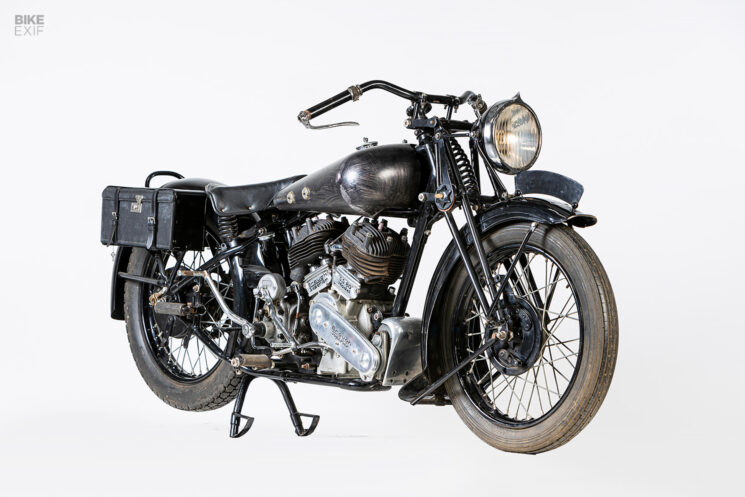
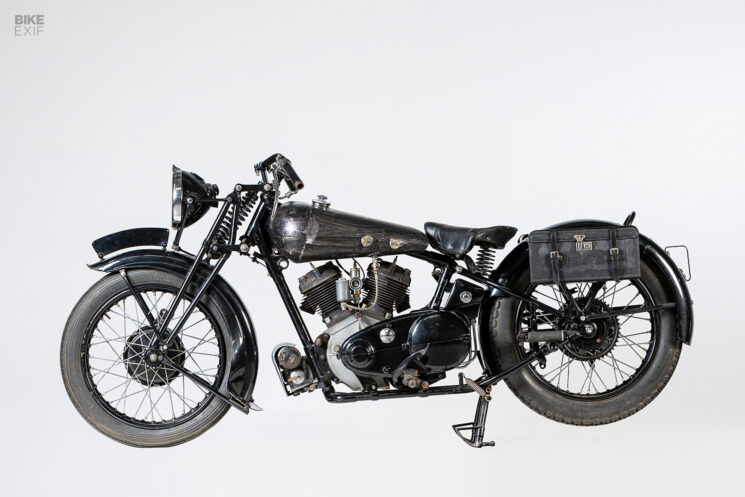
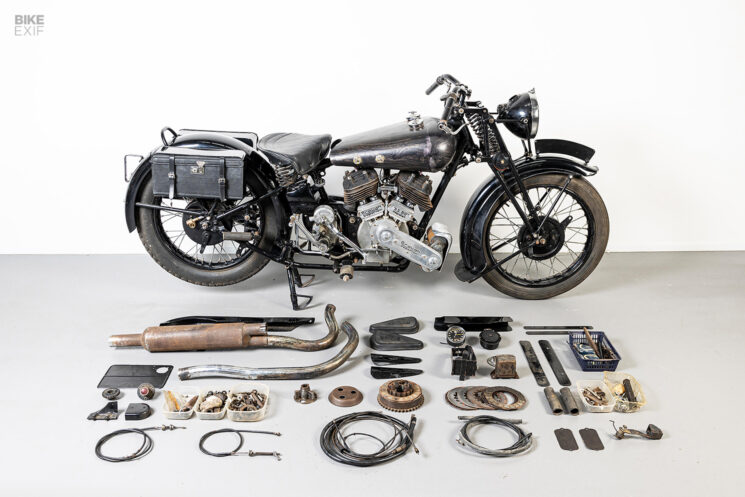
1938 Brough Superior 982 cc SS80 Project There’s never a shortage of brilliant early British motorcycles at the Stafford Sale, but one can’t help but notice the auction’s top sellers were a bit more contemporary. In fact, just one of the top-five hammer prices went to a pre-war bike, and it’s a project! Disassembled in the 1950s, and in need of a complete overhaul, this 1938 Brough Superior SS80 still managed a £49,450 [$60,364] hammer price.

1938 Brough Superior SS80
The SS80 was one of George Brough’s earliest successes, with production starting in 1922, and ending with the outbreak of WWII in 1939. Initially, the SS80 was powered by a side-valve J.A.P. engine, and Brough became the first person to top 100 mph at Brooklands on a side-valve with one of these machines. From 1935 on, Brough used 982 cc V-twins from Associated Motor Cycles, similar to the Matchless Model X, with modified bottom ends for the SS80. 460 SS80s were built in this configuration, including Lot 475, of which, around 300 are believed to still exist.

This 1938 SS80 has been owned by the same family since 1951, where it dutifully served side-car duty and occasional rally use before it was disassembled and boxed up in the mid-’50s. A restoration was started at Brooklands Classic Cars in the 1990s, and subsequent work was completed thereafter, but the Brough was never finished. The bike is only loosely assembled currently and will require a full restoration, but all the big-ticket items are said to be numbers-matching—confirmed by the Brough Superior Club. Winter project anyone? [Images courtesy of Bonhams]

1938 Brough Superior SS80 Project


from Bike EXIF https://ift.tt/AeNS9zK

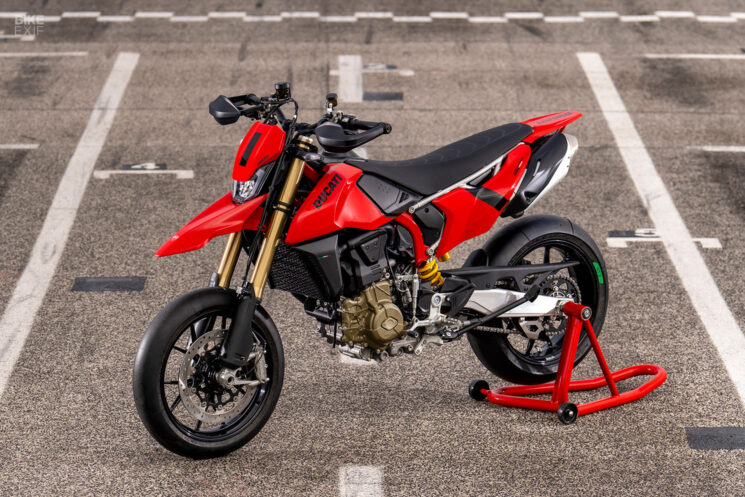
First look: The 77.5 hp Ducati Hypermotard 698 Mono supermoto

Ducati Hypermotard 698 Mono supermoto
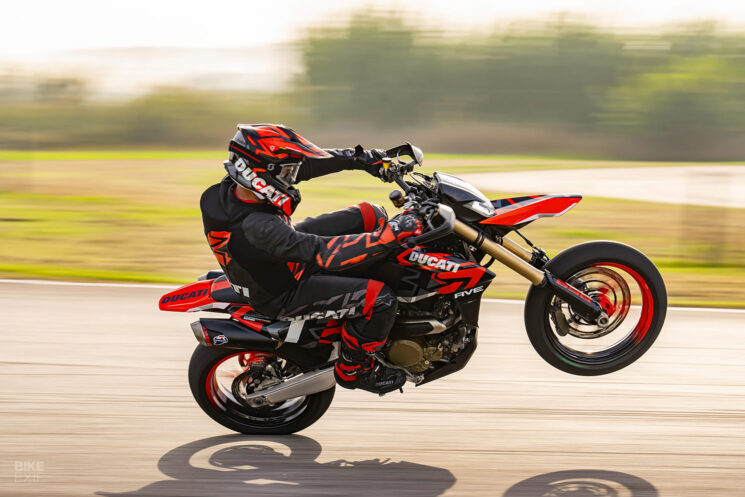
Well, that certainly didn’t take long. The ink has hardly dried on the press release for Ducati’s new Superquadro Mono engine, and the Italian marque has already unveiled the first bike that it’ll be powering. The new Ducati Hypermotard 698 Mono supermoto is here, and it’s wild (performance-wise, at least).

If you missed the news, the Ducati Superquadro Mono is Ducati’s brand new 659 cc single-cylinder engine; the first single they’ve produced since the Supermono broke cover 30 years ago. In crude terms, it’s half of a 1299 Panigale engine, inheriting the Panigales 116 mm bore, titanium intake and steel exhaust valves, and Desmodromic valve system. It also spins up to 10,250 rpm, and makes 77.5 hp at 9,750 rpm and 63 Nm of torque at 8,000 rpm.

Ducati Hypermotard 698 Mono supermoto
Slap the optional Termignoni exhaust system (for track use only, wink), and the power output jumps to 84.5 hp. According to Ducati, that makes this the most powerful, and highest-revving, single-cylinder engine currently on the market. With a dry weight of 151 kilos [332.9 lbs], it makes the Ducati Hypermotard 698 Mono a very enticing prospect.

Those numbers put Ducati’s new thumper ahead of the 74 hp KTM 690 SMC R and Husqvarna 701 Supermoto, with a negligible weight penalty of around 6.6 lbs. Where the KTM and Husqvarna beat it outright though, is on looks.

Ducati Hypermotard 698 Mono supermoto
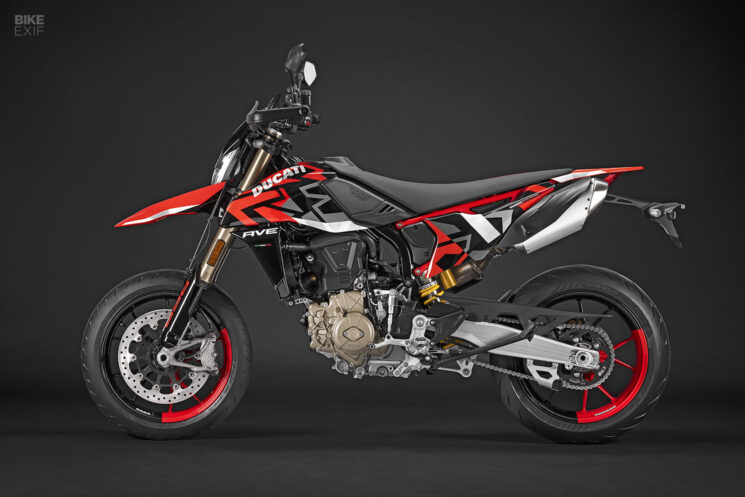
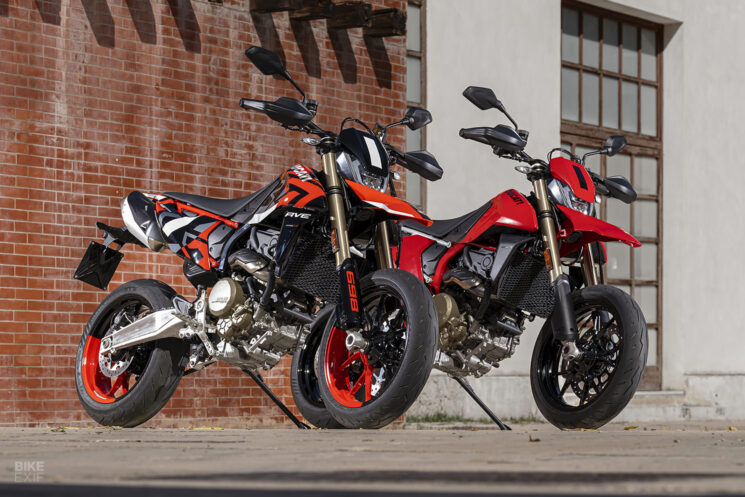
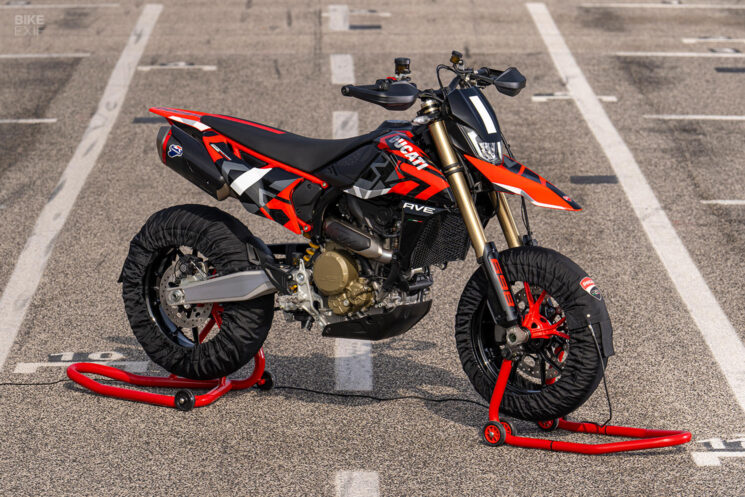
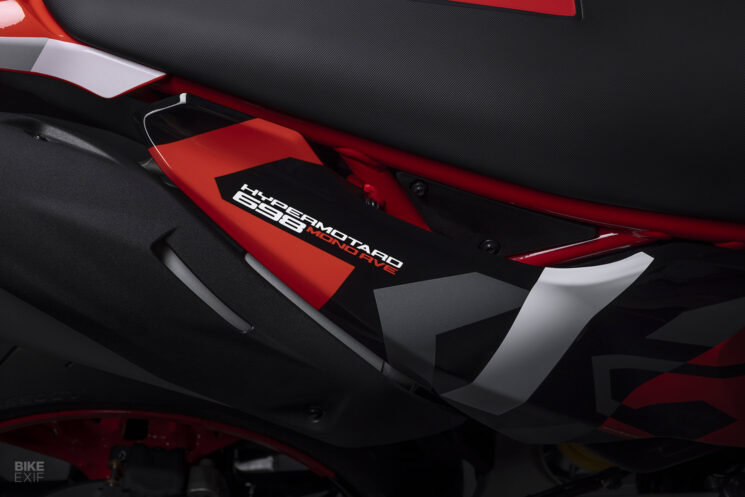
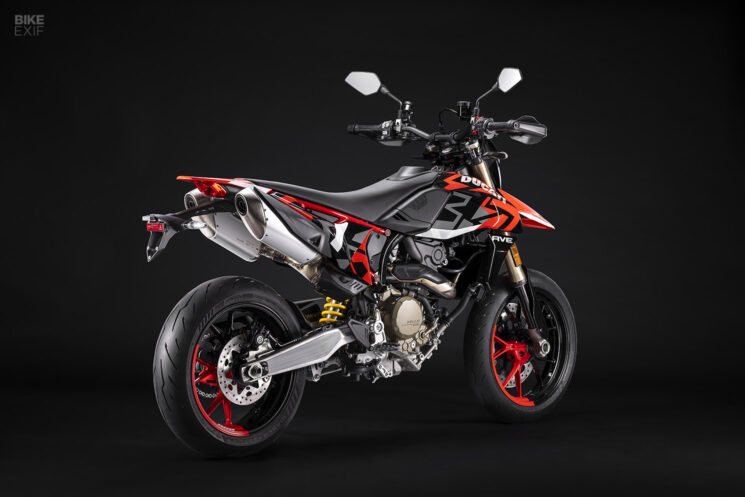
The Ducati Hypermotard 698 Mono looks cool enough in ‘RVE’ trim; an upgraded model that adds kinetic graphics and a quick-shifter. But the base model 698 denudes the bike of its graphics in favor of a traditional Ducati red paint job, leaving it looking rather bland. Generic, even.

Despite being identical to each other under the hood, KTM and Husqvarna’s supermotos each follow a distinct style guide. It’s easy to tell them apart—and it’s easy to see which marque each one belongs to. Conversely, if you strip away the Hypermotard 698 Mono’s Ducati logos, you’d be hard-pressed to identify it as a Ducati.

Ducati Hypermotard 698 Mono supermoto
Its closest relative—the Ducati Hypermotard 950—looks more like a distant relative than an older sibling. The 698 doesn’t have the 950’s visible trellis main frame, aggressively stubby front fender, or signature hand guard-mounted turn signals. It does have a nice twin under-seat exhaust design, and its subframe is a slick trellised affair—but those features are hidden under the bike’s generous heat shields and covers.

So while both the 950 and 698 feature a lot of plastic, only one of them looks plastic.

Ducati Hypermotard 698 Mono supermoto
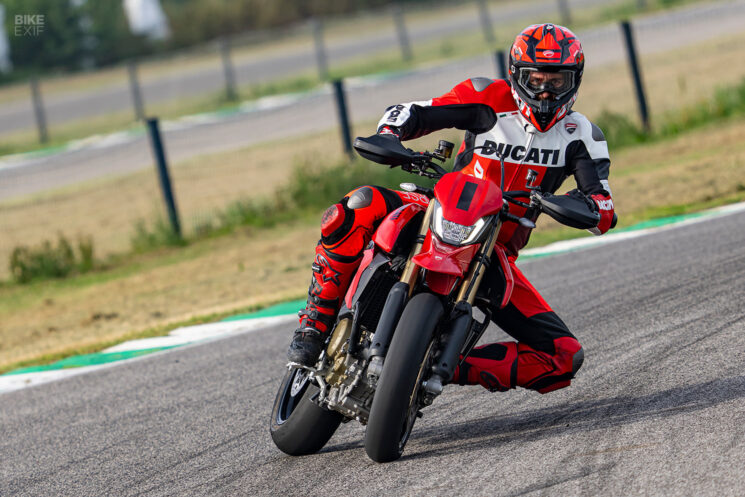
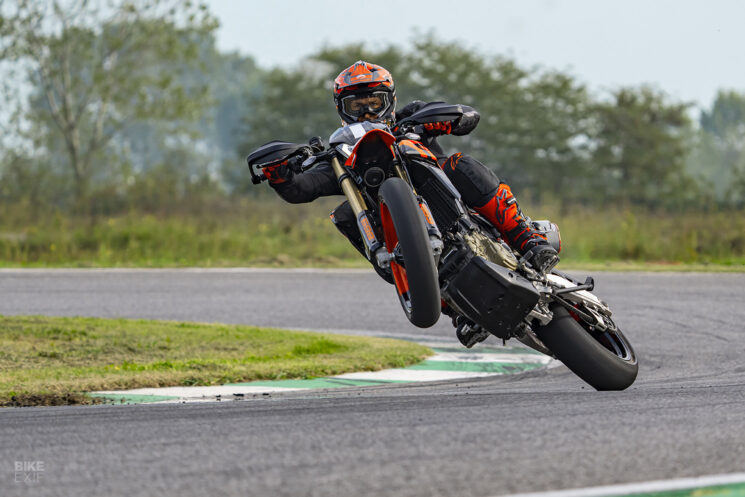
That doesn’t mean that I don’t desperately want to swing a leg over the Ducati Hypermotard 698 Mono though. The power-to-weight ratio guarantees shenanigans, as does the bike’s geometry and running gear. You get 17” alloy wheels, along with fully adjustable Marzocchi (front) and Sachs (rear) suspension components. Suspension travel measures 215 mm at the front and 240 mm at the rear.

Other highlights include an aluminum swingarm, Brembo brakes with a single 330 mm front disc, and Pirelli Diablo Rosso IV tires out of the box. The long bench seat and slim ergonomics allow maximum body movement, and therefore control. The foot pegs have removable rubbers if you prefer a grippier feel, and the handlebar clamps have an eccentric design that lets you move the tapered bars further forward.

Ducati Hypermotard 698 Mono supermoto
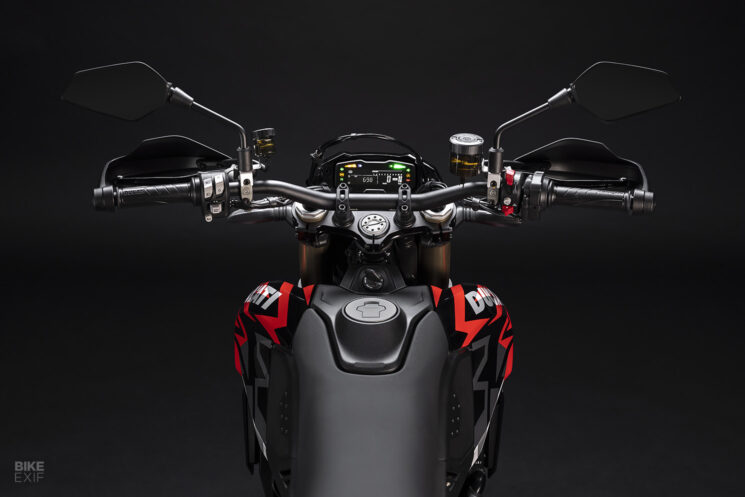
The Ducati Hypermotard 698 Mono’s electronics package is particularly impressive for a bike of its size. Borrowing myriad trickle-down features from the Panigale V4, it sports ABS, traction control, wheelie control, engine braking control, and launch control. Optional extras include a quick-shifter (which is standard on the RVE version), and an upgrade for the wheelie control that adds a ‘wheelie assist’ feature for danker wheelies.

There are four riding modes, each of which combines the aforementioned electronic aids with three engine modes to suit different scenarios. Those modes are customizable, all via the 698’s 3.8” LCD dashboard.

Ducati Hypermotard 698 Mono supermoto
The ABS system features a ‘slide-by-brake’ function too, which assists with brake-induced powerslides. The four ABS levels include a full beginner mode with much intervention, two intermediate modes with varying degrees of ‘slide-by-brake’ assistance, and a setting for experienced riders where ABS is only active on the front.

LED lighting and hand guards are standard equipment on the Ducati Hypermotard 698 Mono—and the range of add-ons is exhaustive. If you don’t want the race-use-only Termignoni exhaust, you can replace the mufflers with a pair of homologated titanium and carbon fiber items. There’s a plethora of carbon fiber and CNC-machined aluminum goodies on offer, plus a racing seat, racing foot pegs, crash bobbins, and engine protectors.

Ducati Hypermotard 698 Mono supermoto
There’s no word on the Ducati Hypermotard 698 Mono’s pricing yet, but we do know that it’ll be available from January 2024. And before the Ducatisti crucify me for disparaging the 698’s aesthetics, I will concede that it represents an exciting chapter for the Borgo Panigale company. If it rides half as good as its specs look on paper, it’ll be a force to be reckoned with in a niche that deserves far more attention than it currently gets.

Ducati Hypermotard 698 Mono supermoto
And then there’s the prospect of more Ducati 698 variants. Will we see a 698 enduro in the near future? A 698 Multistrada, perhaps? How about a 698 flat tracker or a single-cylinder alternative to the Ducati Scrambler? Only time will tell.

Source: Ducati

Ducati Hypermotard 698 Mono supermoto


from Bike EXIF https://ift.tt/H7QvAfT

Wednesday, 1 November 2023

Remix: Tamarit’s best designs in one Thruxton café racer

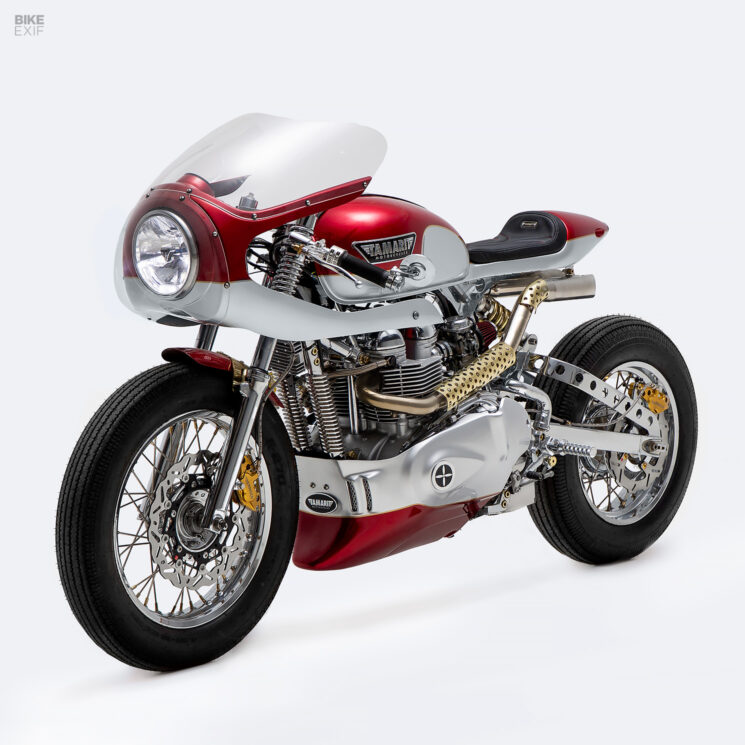
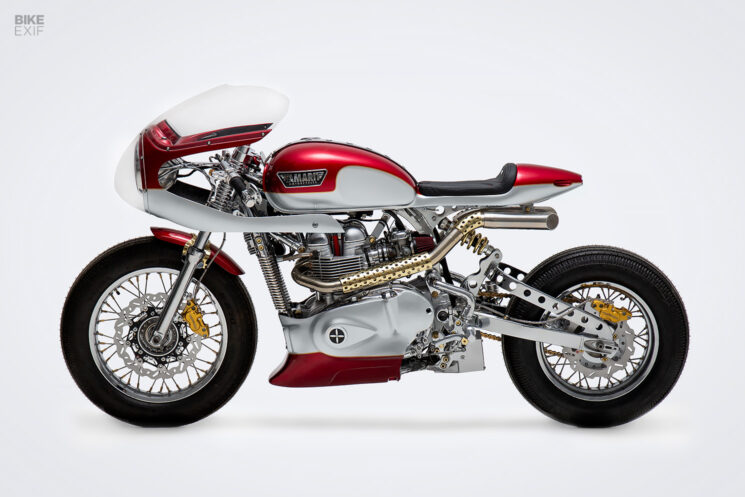
Triumph Thruxton café racer by Tamarit
Tamarit Motorcycles has enough parts in its catalog to transform a stock Triumph Thruxton into a passable café racer, with minimal fuss. But the Spanish workshop doesn’t just produce swish aftermarket parts. They also build an inordinate amount of custom Triumph modern classics each year—some of which require a more complex approach than their numerous plug-and-play options offer.

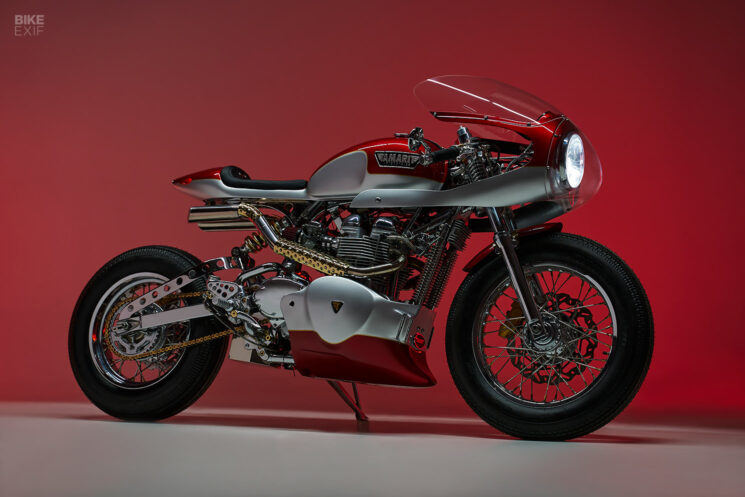
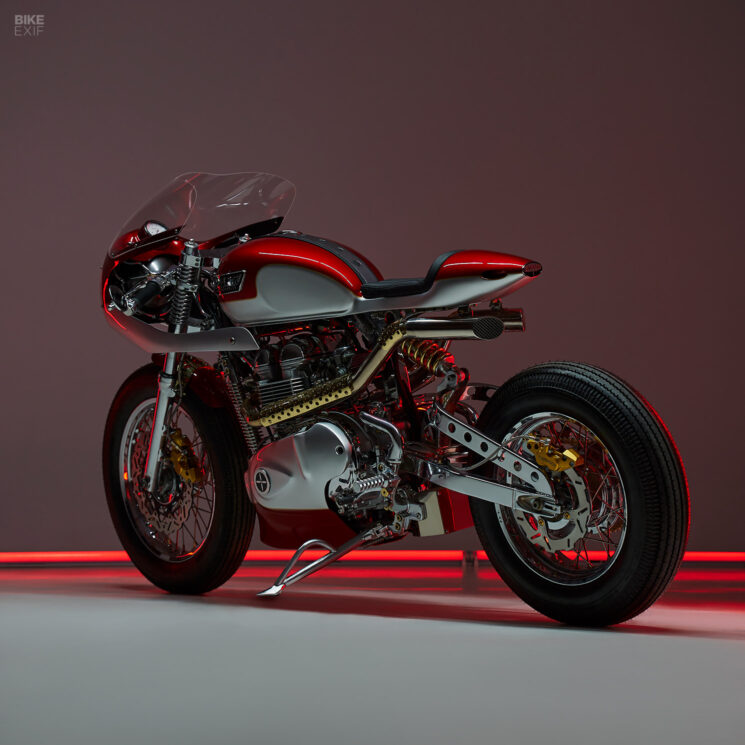
This alluring Triumph Thruxton café racer is Tamarit’s latest one-off special. It might feel strangely familiar to regular Bike EXIF readers, because it echoes some of the shop’s best builds. Tamarit’s client had referenced their ‘Jade,’ ‘Helios,’ and ‘Gullwing’ café racers as his favorites, so the team’s challenge was to cherry-pick the best elements from each and remix them to create something fresh.

Triumph Thruxton café racer by Tamarit
Tamarit used a carbureted Triumph Thruxton 900 as a base for the project, but the only recognizable parts left are the fuel tank and engine—and even those have been fettled.

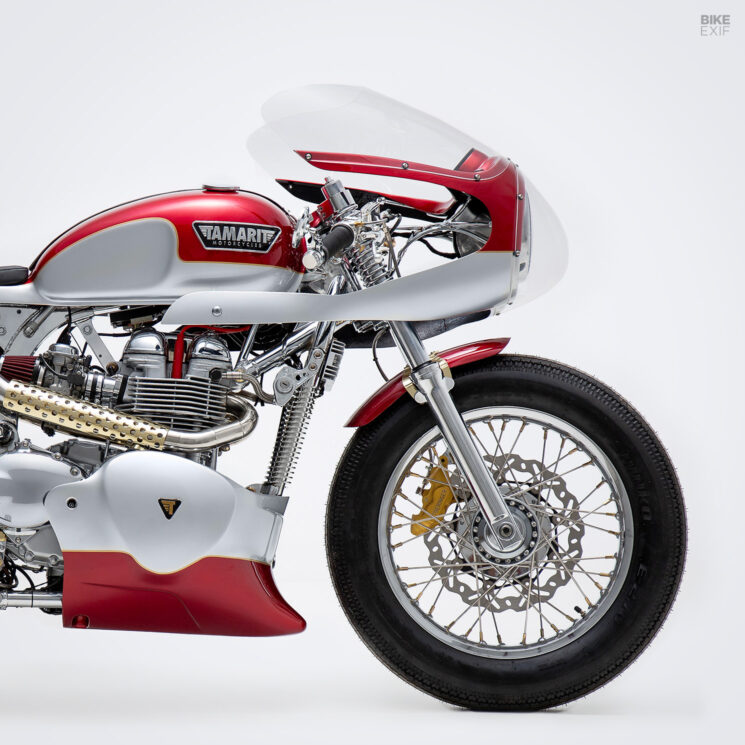
Much work went into getting the Thruxton’s stance and proportions just right, which meant changes to the frame, suspension, and wheels. Tamarit lowered the Thruxton’s front forks, and installed their spring-style upper fork ‘shrouds.’ CNC-machined yokes hold the forks in place, with an abbreviated fender sitting lower down.

Triumph Thruxton café racer by Tamarit
Out back, the Thruxton has shed its traditional twin-shock suspension for Tamarit’s tried-and-true mono-shock arrangement. The mods include a swingarm extension and significant bracing on the frame. The center-aligned rear shock attaches to the main frame via a pair of plates that do double duty as a subframe.

Tamarit stuck with the Thruxton’s OEM 18” front wheel, but laced up a 16” rim for the back. The brake discs and calipers are from Beringer, and the tires are vintage treads from Shinko.

Triumph Thruxton café racer by Tamarit
Moving to the bodywork, Tamarit took cues from their previous project, Jade, to sculpt a fiberglass fairing and belly pan. A web-like bracket secures the fairing, while the LED-equipped headlight from a newer Thruxton sits up front. The bespoke windscreen and nose cone add a neat vintage touch.

Lower down, the belly pan wraps around the Triumph’s motor with debossed sections that trace its engine covers. It’s an elegant part, complete with mesh-backed louvers to help with airflow.

Triumph Thruxton café racer by Tamarit
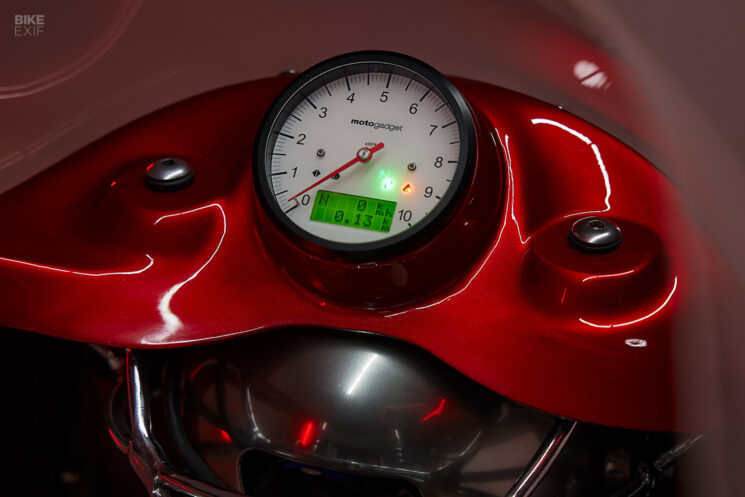
The rider’s side of the fairing is even more intriguing. Tamarit designed the piece with an integrated dashboard that also houses a Motogadget speedo. The cockpit also features new clip-ons, Kustom Tech levers, and Motogadget switches, turn signals, and mirrors.

Under the hood, Tamarit rewired the whole bike around a Motogadget control unit. The battery now sits in a custom-made box, tucked away just below the swingarm pivot.

Triumph Thruxton café racer by Tamarit
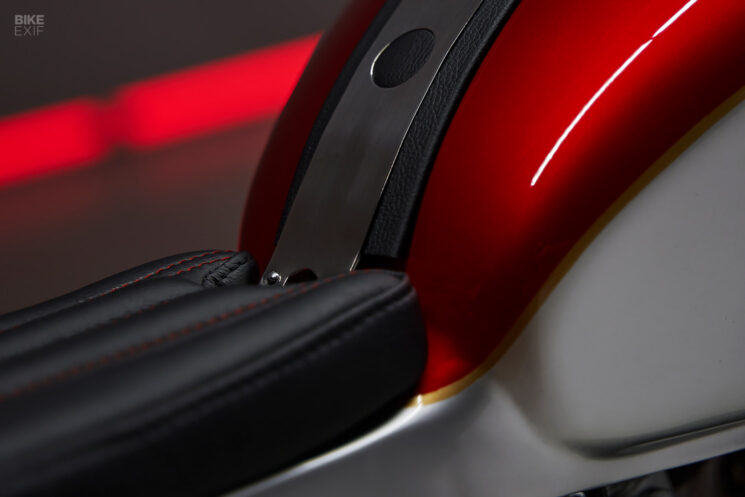
For the tail section, Tamarit recreated the design from their Gullwing build, but with a more compact form factor. It’s blended into the fuel tank at the front, to create the effect of a monocoque body. The seat’s covered in marine-grade vinyl with contrasting red stitching.

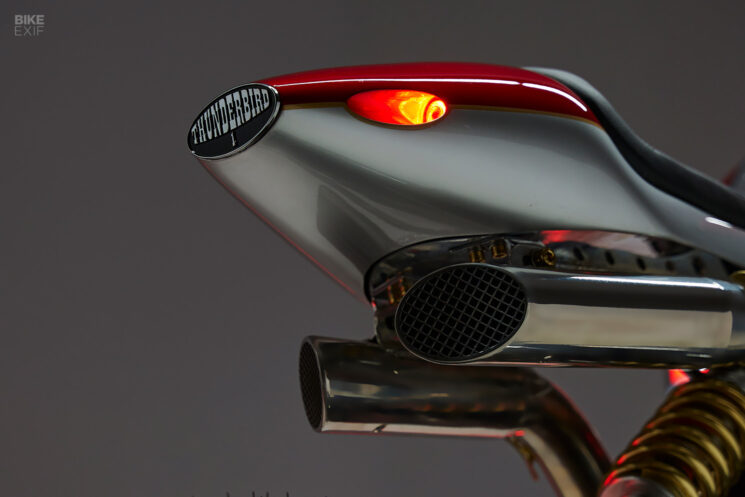
A matching strip of material runs over the top of the fuel tank, held in place by a chrome-plated tank ‘strap.’ Out back, a pair of LED taillights have been deeply recessed into the tail, flanking a custom-made plaque bearing the bike’s nickname, ‘Thunderbird 1.’

Triumph Thruxton café racer by Tamarit
Finally, Tamarit used their Helios café racer as a template for the exhaust. Twin headers run alongside the engine, before kicking upwards and exiting under the seat with slash-cut, mesh-covered tips. Handmade brass grills keep the rider’s legs from toasting.

The finishing touches are subtle, yet effective. The airbox has been traded for a pair of K&N pod filters, and the oil cooler has been replaced by an integrated design that utilizes the frame’s downtubes. A Joker Machine ignition relocation bracket moves the key to the right side of the bike.

Triumph Thruxton café racer by Tamarit
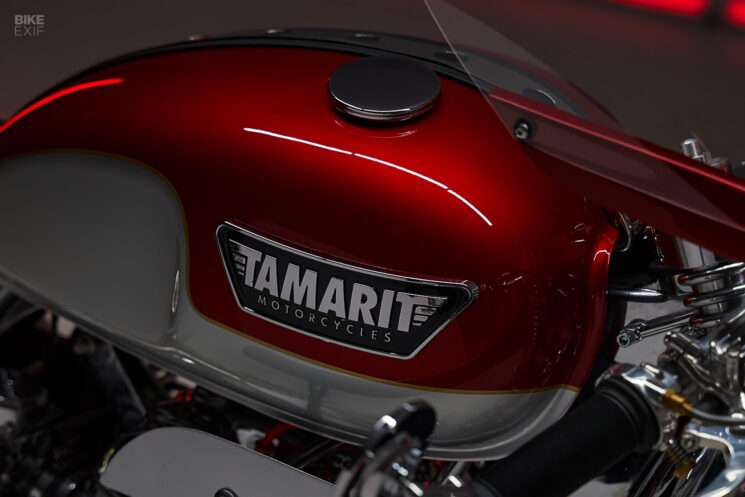
A sophisticated red and silver paint job drapes itself over Tamarit’s Thruxton, executed with a metallic finish and accentuated by subtle gold striping. The colors are a nod to classic Triumph liveries, as is the tank design. The bodywork is complemented by a judicious mix of chromed, nickel-plated, and brass parts.

This elegant Thruxton café racer not only stands as a tribute to the bikes that came before it, but it’s also a testament to the evolution of Tamarit’s style.

Tamarit Motorcycles | Facebook | Instagram

Triumph Thruxton café racer by Tamarit


from Bike EXIF https://ift.tt/EbQ2ygk