Wednesday, 13 September 2023

The BMW Motorrad ‘Storied’ Series: The photography of Yve Assad


Wanderlust and contentment seldom go hand-in-hand, but somehow Yve Assad manages to exude both qualities in ample measure. She wears the mantle of new mother with a reserved joy that speaks volumes of how madly in love she is with her family, even if she is a little tired. Yet when the conversation turns to motorcycles, travel, and the sentimental connection to her 1976 BMW R 90/6, another special part of her soul bubbles to the surface.

It’s right there in Assad’s photography. Her work covers myriad genres, yet there’s a common thread woven through all of it: everything she captures is imbued with a sense of adventure, a subtle urgency that compels you to go beyond the next horizon.


Assad’s propensity for storytelling through photography is so deeply ingrained that it’s uncertain whether it’s deliberate or automatic. She credits her upbringing. A child of a military father, Assad, who now resides in Nashville, was born in Monterey, California, but moved to Georgia at the age of three.

Her dad had a Nikon camera and would shoot with slide film, and he had an old Land Cruiser. Frequent road trips and weekly slideshows were a staple in the Assad household, and even if Yve was too young to remember some of those trips, she relived them over and over again through her father’s photographs.


“Seeing those pictures of the West definitely informed my wanderlust, and my desire to travel and see exciting new places,” she says, “because it was so different-looking to what we had in the Southeast. I had always wanted to drive since I was five years old. I begged to drive. I loved being in the car.”

“And so travel has definitely been a big muse for my photography. Even with commercial projects I like to incorporate some travel aspect, or the idea of being on the road.”


By around the 11th grade, Assad had casually started picking up her father’s camera and taking photos. By the time university rolled around, her long-standing plan to study chemistry gave way to a photojournalism major. Then she discovered the immersive documentary work of Danny Lyon, and his groundbreaking 1968 book, The Bikeriders.

“When I saw Danny Lyon’s work for the first time, it was so impactful because it was just a different subculture than I’ve ever seen before,” Assad explains. “Motorcycles were a part of my life growing up, but when I saw that, I was just magnetized to it. I did my senior project in photojournalism school on biker culture, and I didn’t even ride at that time.”

The BMW Motorrad Storied Series with Yve Assad
From that root, Assad’s path to motorcycling was set. Years later she met her husband, a motorcyclist and MotoGP enthusiast, who took her to the Indy Mile and the MotoGP race at Indianapolis. A couple of years down the line, Assad was living in Chicago and shooting flat track racing on a regular basis, while also growing tired of riding on the back of her partner’s bike. So she got her motorcycle license and went on the hunt for a ride of her own.

A visit to the International Design Museum in Munich years prior had planted a seed in Assad’s heart. The museum had a number of 1920s BMWs on display at the time, and the vintage R 47 had stopped her dead in her tracks.


She’d felt a pull towards vintage BMW boxers ever since. So when it came time to get her own bike, she was predisposed to Bavarian metal. But her partner was way ahead of her.

“When Will, my husband, proposed to me, he actually proposed to me with a 1976 BMW R 90/6,” she tells us. “That was my engagement ring. He was working at Motoworks in Chicago, and I had seen this R 90/6 there. It was in impeccable shape—but they said that it had sold, and I was so bummed. It turned out Will had bought it to propose to me.”


That the R 90 is basically a two-wheeled engagement ring is one reason that Assad can never part with it. The other is that she’s created so many memories on it, that it’s become a part of her, even earning the nickname ‘The Frau.’

Even though she’s added a second motorcycle to her garage since — one that’s newer, faster, and more polished—the R 90 is her old faithful. It’s the one that’ll never let her down, and the one that still gives her goosebumps every time she thinks about riding it.


Since getting the R 90, Assad has traveled far and wide on it, including a 5,000-mile journey from Nashville to Novia Scotia. “Literally, the only thing that broke on that trip was the speedometer,” she laughs. “It’s like a Led Zeppelin album—it’s just good the way it is. You don’t have to do anything to it. One volume, done, just put gas in it and you go. It’s ready.”

“I’ve felt on occasion like, oh, it’d be so cool to have this other bike, or maybe put a different seat on it, or maybe even repaint the tank, or whatever. But the imperfections are perfect on it. I love that there is a tiny little scratch from my jacket, and I know exactly when that happened. It happened on my trip to Nova Scotia.”


“One of my taillights has always been at 70 degrees, and I’ve tried taping it, I’ve tried to do all the band-aid things to fix it. But it’s cute to me. It tells a story, and I feel like I can share that with my daughter and it’ll be special.”

“If you repaint something or if you redo something, you’re getting rid of all of those stories. The patina speaks.”

The BMW Motorrad Storied Series with Yve Assad
Telling stories will always be central to Assad’s life, whether it’s the motorcycle she can never part with, or the photographs that she takes. She’s a conduit, immersing herself in different places and with different people, absorbing the moment, and transferring it into imagery to share with others.

Like her motorcycle, her images tell stories. And like the multiple battle scars her old BMW boxer wears, the patina in her photographs speaks.

Storied: 100 Years of BMW Motorcycling is a three-part video series and limited edition print piece by The Simple Machine, created with support from BMW Motorrad USA | Video directed and edited by Roberto Serrini | Additional images by Yve Assad and Heidi Ross

Advertisement


from Bike EXIF https://ift.tt/kf0MH8c
Tuesday, 12 September 2023

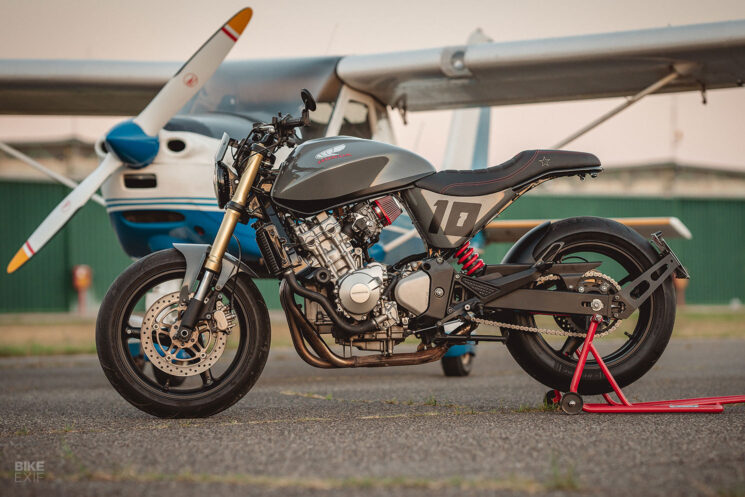
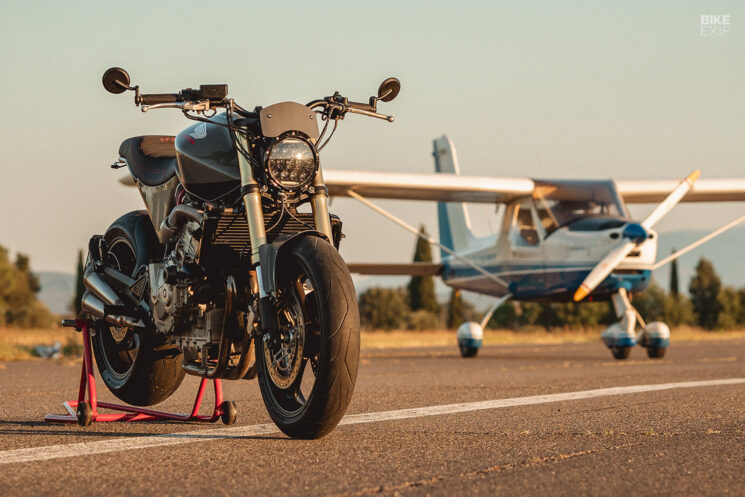
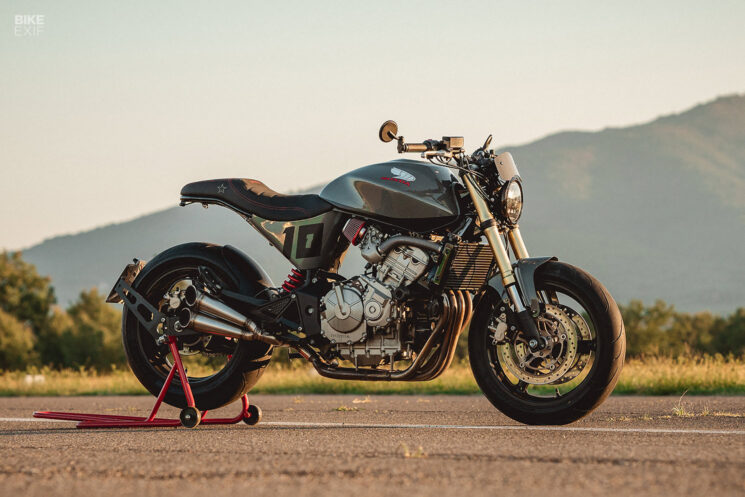
Take Flight: A custom Honda Hornet by Italy’s Francis Von Tuto

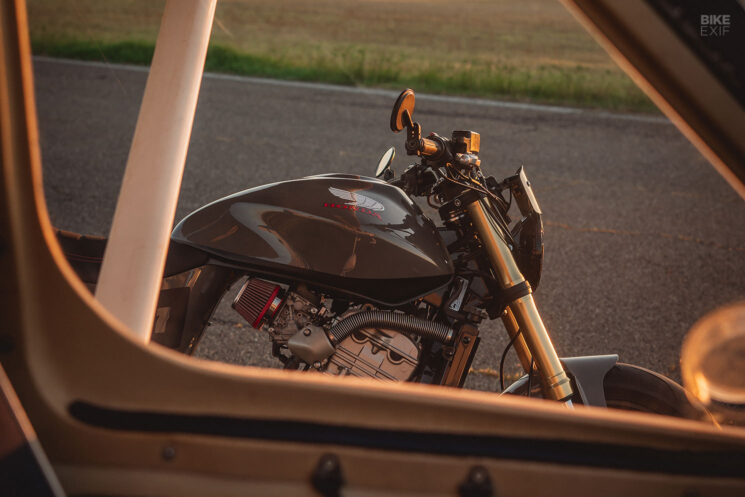
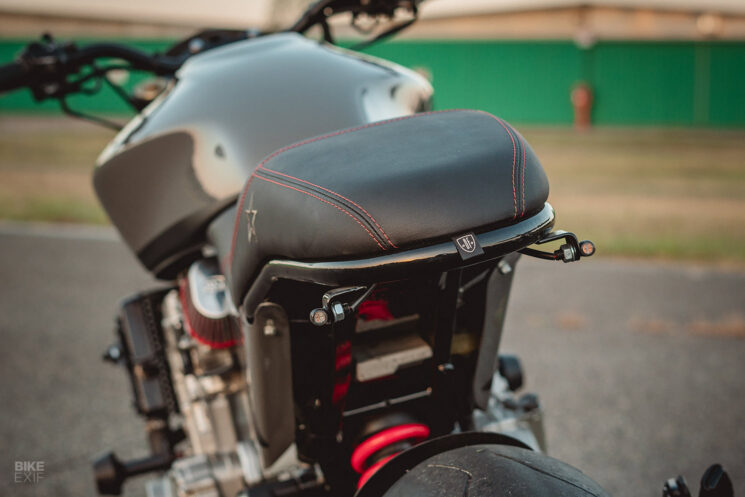
Custom Honda Hornet by Francis Von Tuto
Honda has a long-standing tradition of building middleweight bikes that are highly capable but visually dull. The mid-2000s Honda CB600F Hornet is a prime example. It makes just under 100 hp, handles well, and boasts Honda’s legendary reliability… but it’s ugly.

We don’t see a whole lot of custom Honda Hornets, which is a real shame. The punchy four-cylinder naked has tons of potential—if you know how to massage it into shape.

Custom Honda Hornet by Francis Von Tuto
This custom 2006-model Honda CB600F Hornet (known as the Honda 599 in the US) comes from Francis Von Tuto in Florence, Italy. Francis is no stranger to older Japanese sportbikes, so he came into the project with a clear idea of how to take it from bland to beautiful. But before he could bring this custom Honda Hornet to life, he had to get his client on board.

From the client’s perspective, the project had been off to a rocky start. He’d originally given the bike over to a different custom builder—a good friend of Francis’ who specializes in performance bikes and manages a WorldSBK race team. But, due to unforeseen circumstances, the workshop never got further than stripping the bike.

Custom Honda Hornet by Francis Von Tuto
Francis was called in to take the project over. The client agreed, but he was understandably frustrated at the prospect of having to explain all his ideas to a brand-new workshop. But one look at Francis’ portfolio set his mind at ease, and the two slowly started building a rapport.

“He initially had ideas that didn’t really match the style of the build, or in some cases that would compromise the rideability,” says Francis. “In many cases, it doesn’t help when you look for inspiration on the internet, since people post everything from six-figure builds to unrideable showpieces. It’s sometimes difficult for the average user to tell the difference.”

Custom Honda Hornet by Francis Von Tuto
“After a few mock-ups and meetings, we found a way to straighten things out. Let me say this is nothing uncommon, it happens more than you would expect… and I get it! Luckily in the end we found a compromise and it all started to make sense.”

“One of the downsides of the Honda CB600F Hornet, apart from its terribly long and tall rear frame section, is its voluminous tank. But the owner wanted to keep it—so first I had to create a new design to work around it. That meant the exhaust, dash, and headlight all had to go, and the whole rear section had to be shorter and narrower, but still comfortable for a pillion.”

Custom Honda Hornet by Francis Von Tuto
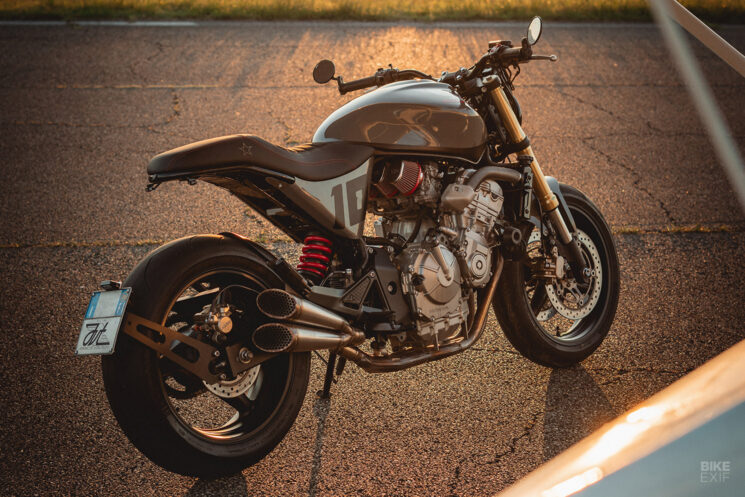
Francis started by reworking the Hornet’s subframe; a chore in itself. The OEM subframe is a rectangular tube affair that was designed to be hidden under bodywork—but the redesign was going to leave it exposed. So Francis cut the end off, did some judicious de-tabbing, and welded in a new rear loop, fabricated from round tubing.

Extra care was taken to ensure that the new setup wouldn’t affect the rear suspension geometry, and that there would still be room to squeeze a passenger on. Next, Francis shaped a seat pan out of fiberglass, then handed it over to BF Tappezzerie, an auto upholsterer in Florence, to finish it. It now wears double-density foam and a vinyl cover, with stitching details that were requested by the owner.

Custom Honda Hornet by Francis Von Tuto
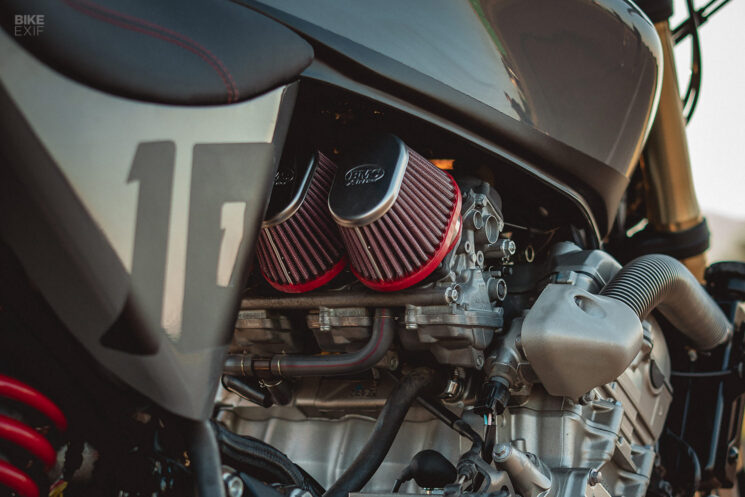
Lower down, Francis ditched the Hornet’s airbox to slim it down more. Alloy side panels now flank the bike, wrapping around the remnants of the rectangular subframe for a more cohesive aesthetic. Hiding behind the side panels are a Lithium-ion battery, a coolant reservoir, and the essential electrical bits.

A row of filters from BMC handle intake duties, with red bases that match the other red accents on the bike. Francis also installed a stage three performance kit from Dynojet, to make sure that the bike runs smoothly with the open filters.

Custom Honda Hornet by Francis Von Tuto
The Hornet’s upside-down forks and 17” alloy wheels were retained, but the forks needed a rebuild. A chic sculpted fender sits above the front wheel; it looks like it’s been borrowed from a modern sportbike, but Francis actually shaped it out of aluminum using an English wheel, a hammer, and a sheet roller.

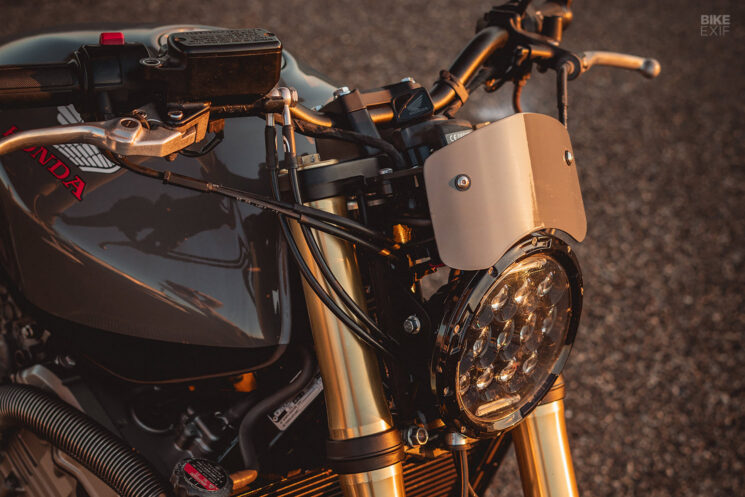
The bike’s owner supplied a new LED headlight, but the rest of the cockpit’s layout was up to Francis. He installed the light on aluminum stays, then added a laser-cut fly screen above it. A laser-cut dashboard sits flush with the screen and hosts a digital Motogadget speedo, while low-rise handlebars and bar-end mirrors complete the package.

Custom Honda Hornet by Francis Von Tuto
Since the bike needed to be street-legal and somewhat practical, Francis needed to create a few extra pieces to dress the rear. A fiberglass hugger keeps muck away from the rear shock, while laser-cut stainless steel brackets hold the license plate, bolted to new CNC-machined chain adjuster plates. There’s a custom-made chain guard back there too.

Highsider LED turn signals do duty up front, with three-in-one Highsider items doubling up as turn signals and taillights at the back. The Hornet’s finished off with a pair of gnarly stainless steel mufflers, hooked up to the OEM headers via a custom connector pipe.

Custom Honda Hornet by Francis Von Tuto
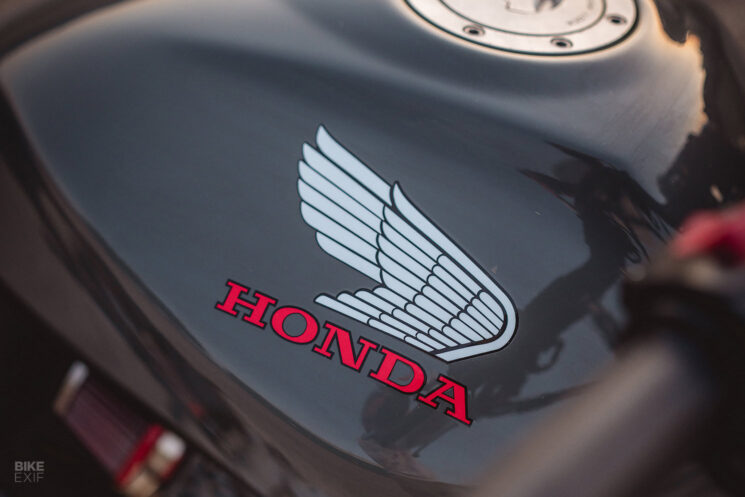
The Hornet’s owner wanted his bike to match his Jeep, so that took the guesswork out of picking a color. The livery needed a few small details though, so Francis enlisted the help of a friend—an illustrator who operates as The Junkers—to create a few renders. In the end, all the design needed was numbers on the side panels, a hint of black along the bottom of the tank, and classic Honda logos.

“I owe him,” says Francis, “because he hates this kind of work and never does it. So the fact that he did it for me is a big plus!”

Custom Honda Hornet by Francis Von Tuto
Like everything on this custom Honda Hornet, the livery is simple, tasteful, and striking. It’s proof that the vanilla donor bike has oodles of potential—and that Francis knows how to extract that potential.

Francis Von Tuto | Facebook | Instagram | Images by Rafael Montañes Ruiz | Francis would like to thank Aero Club Serristori and Etruria Volo

Custom Honda Hornet by Francis Von Tuto


from Bike EXIF https://ift.tt/REyda8w

Sunday, 10 September 2023

Speed Read: A rare 1997 Ducati 916 SPS and more

The latest motorcycle news, classics and customs
These four motorcycles prove that performance comes in all shapes and sizes. There’s a rare 1997 Ducati 916 SPS for sale in New York, a 1970s Kawasaki KZ1000 restomod from the legendary AC Sanctuary, and a Honda CB1000 customized by a racing enthusiast. We end off with a sneak peek at Triumph’s upcoming motocross race bike.

1997 Ducati 916 SPS at Moto Borgotaro
For sale: 1997 Ducati 916 SPS The Ducati 916 was Massimo Tamburini’s greatest gift to motorcycling. And that’s saying something, since he also penned the MV Agusta F4 and Brutale, the Bimota DB1, and a slew of other masterpieces.

1997 Ducati 916 SPS at Moto Borgotaro
Released in 1997, The Ducati 916 SPS was a special edition of the 916, built to homologate the new 996 cc engine for Superbike competition. The SPS version was built in limited numbers, so it demanded a premium price.

It included a new set of camshafts, and an upgraded fuel injection and ECU setup. This, along with an 11.5:1 compression ratio, lightened crankshaft, and larger combustion chambers with bigger heads, meant that the engine punched out more horses; 123, to be exact.

1997 Ducati 916 SPS at Moto Borgotaro
This particular Ducati 916 SPS is being offered by Peter Boggia of Moto Borgotaro in Brooklyn, New York. Peter has a gift for sourcing exotic and desirable European machines, so we keep his website bookmarked to feed our dreams.

Numbered ’59,’ this 916 SPS was originally sold to the current owner by the Ducati dealer Fast by Ferraci, in Willow Grove, Pennsylvania. It’s only been ridden 7,500 miles since then so it’s barely broken in, and it has a dyno sheet quoting 115.2 hp at the rear wheel.

1997 Ducati 916 SPS at Moto Borgotaro
The quick-release bodywork is still in tip-top shape, displaying the beautiful Ducati 916 Desmoquattro in the gold ‘Varese’ logotype. It has different wheels and a few extra carbon fiber accessories, but the original parts are included with the bike, along with an additional fairing.

The bike is currently located in Moto Borgotaro, where it’s on sale for $45,000. Given the beauty and rarity of the bike, we wouldn’t be surprised if that price rises over time. [More]

Kawasaki KZ1000 restomod by AC Sanctuary
Kawasaki KZ1000 by AC Sanctuary There’s no denying that AC Sanctuary builds some of the best restomods in the world. They’re most known for their early Kawasaki Z- and KZ-series builds. And if you think donors are getting harder to come by, you’d be right—which is why shop boss Hiroyuki Nakamura has a habit of stockpiling good examples for future projects.

On this project though, Nakamura-san was happy to use his customer’s personal bike—a Kawasaki KZ1000 that had been through the ringer. The bike was a victim of some shoddy ‘custom’ work, arriving at AC Sanctuary’s shop a little worse for wear. Sick of his sick motorcycle, the customer asked for the full AC Sanctuary treatment.

Kawasaki KZ1000 restomod by AC Sanctuary
The shop tore the bike down to its bones, then put it back together like only they can. To those well-versed in the mythos of classic Kawasaki Zeds, the most obvious change is the bodywork.

To those well-versed in the dark arts of the Kawasaki Z-series, the most obvious change is the bodywork. The boxy KZ tank, tail unit, and side covers were all replaced with the bodywork from the older 900 cc Zed. But the KZ needed extensive groundwork to get the new tins fitted.

Kawasaki KZ1000 restomod by AC Sanctuary
AC Sanctuary first set the frame up in a jig to be cleaned up and reinforced. The Kawasaki rolls on stunning 17” OZ Racing wheels, with Ă–hlins forks and Brembo brakes up front. An alloy swingarm from Sculpture sits at the back, hooked up to a pair of Ă–hlins shocks.

AC Sanctuary isn’t known for leaving engines along. The KZ1000 now sports flowed heads, Kent ST high-lift cams, and the full gamut of race-style valve train modifications. It’s also housing a new crank with forged pistons, taking it up to 1,166 cc.

Kawasaki KZ1000 restomod by AC Sanctuary
A brace of Mikuni TMR MJN dual stack 38 carbs was bolted on, complementing the increased flow rate. The hand-built titanium exhaust is a work of art in itself, terminating in a Nitro Racing muffler. The final color scheme is all-black without a lick of chrome, making this look like a thoroughly modern machine.

Given AC Sanctuary’s reputation, we’re sure it will keep pace with modern liquid-cooled bikes with ease too. Where do we sign? [Via]

Custom Honda CB1000 Big One Super Four
Honda CB1000 by Cus’Tom Motorcycle Tom Boissel grew up in rural France, and spent his weekends on a motorcycle chasing his father along narrow, winding roads, or racing on the track. They would spend evenings together pouring over the iconic Joe Bar Team comics, which is where he first experienced the Honda CB1000 Big One Super Four. Ridden by Edouard Bracame, one of the Joe Bar comic characters, the big CB firmly imprinted on young Tom.

Tom has always held onto the motorcycling dream—even after a big crash on the Dunlop Curve at the Le Mans circuit racing, and after the passing of his father. So when an opportunity to buy a Honda CB1000 presented itself, Tom jumped at the opportunity. He’s been tinkering with bikes from a very young age and already has a few custom builds under his belt under the moniker of Cus’Tom Motorcycle, so there was no way that the Big One would stay stock.


As a veteran racer, Tom knows the importance of good suspension—so the stock front end was replaced with one from an Aprilia RSV4 factory superbike, upgraded with Ă–hlins internals. Complete with twin radial-mounted Brembo calipers, it’s a big upgrade. Modified Ducati fork yokes grip the forks, while a round headlight with aluminum brackets gives the front end a retro-naked look.

A Ducati 996 wheel was bolted onto the front, with a Honda CBR900RR hoop out back. A Brembo caliper was added to the rear end via a custom bracket, with Ă–hlins shocks completing the setup. The carbs were treated to a re-jet, while a chunky carbon fiber muffler added a dose of 90s style.

Custom Honda CB1000 Big One Super Four
Tom reworked the OEM seat unit by cutting it down and remixing it, as he wanted to keep the original ducktail. Red Alcantara adds a little racing style, and complements the Ayrton Senna Marlboro McLaren F1-inspired livery.

Tom’s Honda CB1000 Big One Super Four is pure perfection. And judging by the melted rubber on those slick tires, it appears to be a strong runner too. [Via]

Triumph 250 cc motocross bike
Triumph teases their 250 cc motocrosser Motorcycle sales figures during the COVID-19 pandemic were obscene. All segments saw huge growth in those years—but we had to name a clear winner, it would be the off-road segment.

So it’s little wonder that Triumph are after a piece of that pie. Back in 2022, the British marque announced that it had teamed up with legendary motocross star Ricky Carmichael with a view to producing a motocross bike.

Triumph 250 cc motocross bike
Triumph has racing experience in Moto2, and their adventure bikes are widely lauded. But a dedicated motocross bike is an entirely different beast; it probably would have been easier to design a jet ski. Still, they’ve forged ahead, and now we’re finally getting glimpses of what Triumph’s upcoming 250 cc motocross contender will look like.

Triumph 250 cc motocross bike
Built from the ground up, the bike’s four-stoke engine was unveiled a few weeks ago. Now Triumph has set the bike loose on a motocross track, drawing praise from Carmichael and amateur motocross racer, Evan Ferry.

Sure, all dirt bikes basically look the same—but we’re still excited to see the finished product in all its dirty glory. [Triumph Motorcycles]


from Bike EXIF https://ift.tt/Ym76QVO

How to Buy a Used BMW: A Comprehensive Guide

When it comes to blending luxury, performance, and prestige, few car brands come close to BMW. Known not just for their sleek design, but also for their powerful and efficient , owning one is a rite of passage for many. It represents more than just a mode of transportation—it signifies a love for engineering, design, and the joys of driving. However, for some, the cost of a brand-new BMW can be prohibitive. Thankfully, the used car market presents a viable alternative. But, diving into the world of second-hand luxury cars can be a daunting task. Fear not! This comprehensive guide will navigate you through the process of buying a used BMW with ease, ensuring you get the best value for your money.

Every car’s journey from the showroom to a second or third owner tells a unique story. While some tales are of care, attention, and meticulous maintenance, others can be of neglect, accidents, or even abuse. It’s crucial to understand this story before you commit. Whether you’re a seasoned car buyer or a first-timer, understanding the specifics of purchasing a used BMW can save you not only money but potential headaches down the road.

With a brand as distinguished as BMW, it’s all about the details. Each model carries its heritage, features, and potential issues. Let’s break down the steps to help you buy the ultimate driving machine of your dreams.

Set a budget

Setting a budget is the foundation of any significant purchase. When it comes to buying a used BMW, it’s essential not just to account for the upfront cost, but also potential maintenance, insurance, and other ownership expenses.

Remember, luxury cars, even when bought second-hand, can have luxury-level maintenance costs. So, be realistic. If you’re stretching just to make the purchase, you might find yourself in a tight spot when unexpected repair bills pop up. Factor in a buffer for unforeseen costs to ensure a smooth ownership experience.

Choose a Model

BMW has an extensive range of models, from sporty coupes to family-friendly SUVs. Understand what you need from the car—is it daily commuting, weekend drives, or family trips? Each model has its unique set of features and potential concerns.

For instance, the 3-series is renowned for its balance between performance and practicality, while the 7-series is the epitome of luxury. Research the common issues related to specific models and years. Some might have recurring problems that you’d want to be aware of.

Do your research

Once you have a model in mind, dive deeper. Join BMW forums, read owner reviews, and understand the common problems and joys of owning that particular model. This will not only give you insights about what to look out for but also build your excitement for the impending purchase.

Also, consider factors like the average market price, cost of parts, and the availability of aftermarket support. Being informed is your most potent weapon against making a purchase you’ll regret.

Find a reputable dealer

While personal sellers can sometimes offer better deals, dealerships provide a layer of security and accountability. When choosing a dealer, look for ones with excellent reviews, a comprehensive service history for their cars, and transparent business practices.

Remember, buying a car is not just about the car itself. It’s about trust. Ensuring you’re purchasing from someone reputable can save you from many potential pitfalls down the line.

Inspect the car carefully and check the Vehicle History

The condition of a used car speaks volumes. Look for signs of wear and tear, mismatched paint, or uneven gaps—these could indicate accidents or shoddy repair work.

Furthermore, always get the Vehicle History Report. This document will tell you if the car has been in major accidents if it’s had multiple owners, or if there are any liens on it. Any discrepancies between the report and the dealer’s story should be a red flag.

Get a pre-purchase inspection

Even if everything looks good on the surface, hidden issues might lurk beneath. Hiring a professional to do a pre-purchase inspection can reveal problems you might not be equipped to identify.

This might seem like an extra cost, but in reality, it could save you thousands in the long run. If the seller hesitates or denies an inspection, consider it a warning sign.

Test Drive

A BMW is known as the ultimate driving machine for a reason. When test driving, pay attention to how the car feels and sounds. Check for any unusual noises, vibrations, or quirks in the driving experience.

Beyond the mechanics, ensure the interiors are to your liking, the electronics work correctly, and that the overall experience aligns with your expectations.

Negotiate the price

Armed with your research, inspection results, and the experience from your test drive, you’re in a strong position to negotiate. Remember, while it’s okay to want a good deal, it’s also essential to be fair. If a deal seems too good to be true, it probably is.

Buy the car and Paperwork

Once you’ve settled on a price, it’s time to handle the paperwork. Ensure all documents are in order—title, registration, and bill of sale. If you’re financing the car, make sure you understand the terms thoroughly.

Buying a used car also gives you a chance to purchase an extended warranty. Depending on the car’s age and condition, this might be a wise investment.

Post-purchase Maintenance

Congratulations on your BMW! Now, the key to enjoying it is regular maintenance. Stick to the service schedule, use quality parts, and don’t ignore small issues. A well-maintained BMW can offer you years of driving pleasure.

While buying a used BMW requires diligence, the joys of owning one make the effort worthwhile. Here’s to many happy miles ahead!

The post How to Buy a Used BMW: A Comprehensive Guide appeared first on Automotorblog: Daily news on cars and motorcycles.


from Automotorblog: Daily news on cars and motorcycles https://ift.tt/cJpo1m0

Saturday, 9 September 2023

Road Tested: The TCX Street 3 Air motorcycle riding sneaker

Road Tested: The TCX Street 3 Air motorcycle riding sneaker
I have a confession to make. Even though I have a closet full of motorcycle riding gear, I do sometimes skimp. And the one item I skimp on most often is shoes.

The importance of proper motorcycle boots can’t be overstated, yet I’m often guilty of throwing on a pair of Vans high-top sneakers and jumping on my bike, especially when it’s hot out. My only excuse is that I prefer the style and comfort of sneakers over boots. I blame it on my 90s skate-brat youth.

Road Tested: The TCX Street 3 Air motorcycle riding sneaker
It’s a lame excuse when you consider how the market for motorcycle riding sneakers has exploded over the past few years. The options are too endless to ignore—so I recently snagged a pair of TCX Street 3 Air riding shoes, to see if they can tempt me away from my faithful high-tops.

TCX is an Italian company that’s owned by Dainese, putting it in the same group of brands as AGV and Momo Design. But unlike their parent company, TCX only produces footwear. Their range includes everything from touring and off-road boots to vintage-style leather boots, but their sneakers caught my eye.

Road Tested: The TCX Street 3 Air motorcycle riding sneaker
The TCX Street 3 is part of the brand’s urban range and comes in ‘WP’ and ‘Air’ versions in multiple colorways. WP stands for waterproof—but since I’m based in Cape Town, South Africa, and summer is on the horizon, I picked the breezier Air model in camo green.

There’s probably a joke in there about a forty-something reformed skate punk wearing camo sneakers in an attempt to be cool (and failing), but I can take it. This particular version of the TCX Street 3 has olive green suede at the front, back, and edges, with a breathable mesh camo fabric at the sides, and all-black soles. There are black and grey options too, plus a couple of women-specific designs.

Road Tested: The TCX Street 3 Air motorcycle riding sneaker
The overall vibe is simple and timeless. The silhouette mimics classic high-top skate sneakers, with stitched padding around the ankle that’s reminiscent of the iconic Vans Sk8-Hi. That padding hides slim D30 inserts, and there’s extra reinforcement in the heel and toe areas.

Flip the TCX Street 3 Air over, and you’ll discover a rubber outsole covered in geometric lugs. The lugs are chunky enough to offer grip, but not so chunky that the shoe looks like a work boot.

Road Tested: The TCX Street 3 Air motorcycle riding sneaker
Hidden inside the outsole is a molded polymer reinforcement plate. TCX calls it ‘Zplate’ in reference to its Z-shaped curve, which is designed to follow the natural contour of your foot. The idea is that it’s compliant enough to walk in comfortably, but rigid enough to protect you.

Those features added up help the TCX Street 3 Air achieve a CE rating, putting it streets ahead of my Vans (or even a pair of Red Wings) in terms of safety. But do they make the Street 3 Air as comfortable as TCX claims it is? That’s a “yes” from me.

Road Tested: The TCX Street 3 Air motorcycle riding sneaker
A rigid sole isn’t just crucial in a crash—it also offers essential stability while riding. (The next time you see someone riding in tennis shoes, take note of how the soles droop over the foot pegs.) TCX has nailed the balance between on-the-bike stiffness and off-the-bike compliance so well, that I can spend a couple of hours riding and not feel the need to kick the Street 3 Air off the second I get home.

It helps that TCX has sized the riding shoe generously. I typically wear a US13, but I took a US12.5 this time and it fit with a little wiggle room to spare. It also helps that there’s a cushy Ortholite insole inside; as riding boots go, this is one of the most comfortable pairs I’ve ever worn.

Road Tested: The TCX Street 3 Air motorcycle riding sneaker
The Street 3 Air closure is a simple lace-up affair; no zips or straps. And it’s flexible enough to slip into without having to unlace the top couple of eyelets, which is not something that every pair of high-tops can boast. There’s a tidy leather pull tab at the back, and a clever elastic loop at the front that you can use to stash the ends of the laces.

Once it’s on, the Street 3 Air has a stealthy look that blends well with the rest of my semi-casual riding wardrobe. It sports minimal branding, with a tiny TCX tag on the side and the Italian colors on a strip of fabric that hides under the pull tab. There are no bulky shifter pads either—just some embossing on each shoe where a shifter pad would be.

Road Tested: The TCX Street 3 Air motorcycle riding sneaker
It’s worth noting that while the fabric that flanks the sneaker is breathable, it’s not as perforated as it looks in photos. It’s more akin to the mesh knit fabric you’ll find on a pair of trainers, albeit a little thicker. To be fair, TCX does market this as a ‘mild’ rather than ‘hot’ weather shoe, and it does run noticeably cooler than other riding shoes I’ve tested.

Is the TCX Street 3 Air as comfortable as a skate sneaker when you’re off the bike? Not quite. But it is damn comfortable, more stable while riding, and a heck of a lot safer. That makes it an easy choice over my Vans when I head out on two wheels—and at a very reasonable RRP of €169.99 [or $143.99 at Revzilla], it’s easy to recommend to friends too.

TCX Street 3 Air | Images by Devin Paisley

Road Tested: The TCX Street 3 Air motorcycle riding sneaker


from Bike EXIF https://ift.tt/SvGDBKn