Friday, 4 August 2023

Smoke Show: A svelte Yamaha SR500 flat tracker from Idaho

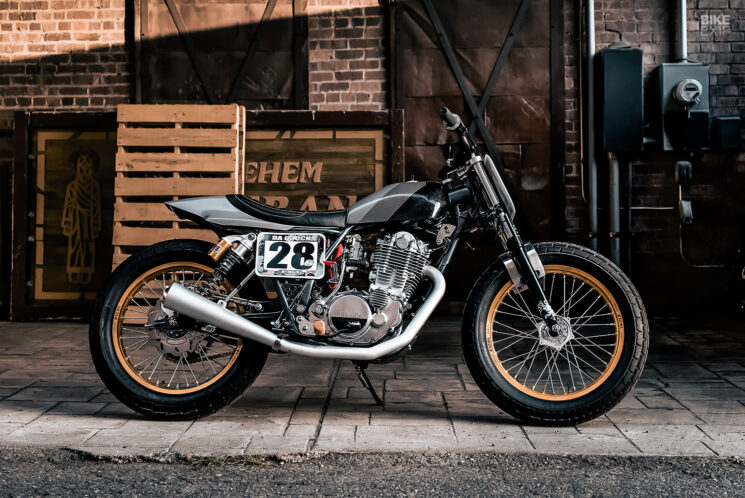
Yamaha SR500 flat tracker by Chad Daly
As soon as a particular motorcycle becomes popular among customizers, it becomes harder and harder to find clean examples of it. The Yamaha SR500 has been a darling of the custom scene since forever, and has been customized in every way imaginable. You’ve got a better chance of finding one that’s had heinous work done to it, than a minty stock one.

This shimmering Yamaha SR500 flat tracker was a “half-rate bobber thing” when Chad Daly first got his hands on it. So his first job was to undo some of the previous custom work, to make room for a far more tasteful set of mods.
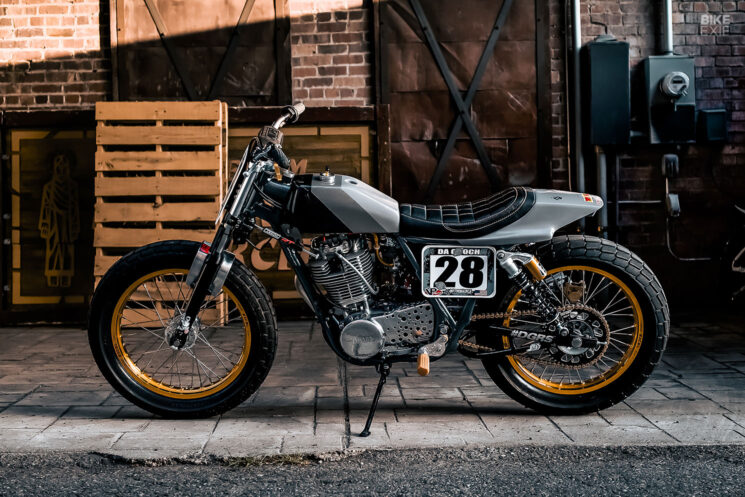
Yamaha SR500 flat tracker by Chad Daly
Chad lives in Idaho, wrenching on bikes in his spare time under the moniker DGRS (Down Grade Race Systems). He picked up the 1978-model SR500 intending to build a flat track race bike that could also rip around town. The trick was to make it competitive, but also include the bare necessities to make it street-legal.

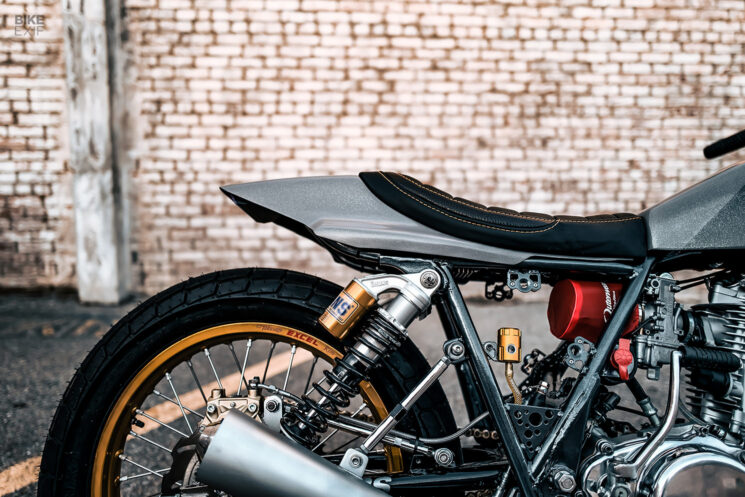
Reversing the existing bobber job meant completely redesigning the rear end of the bike. Chad hacked off the ‘bobbed’ subframe, then modified a Yamaha XS650 rear loop to replace it and welded it in place. The rest of the frame was de-tabbed and tidied up.
Yamaha SR500 flat tracker by Chad Daly
A shortened and braced XS650 swingarm sits lower down, installed with stainless steel needle bearings. Chad tuned a pair of Öhlins shocks to prop up the rear, then fabricated new upper shock mounts, so that he could dial in the rear geometry.

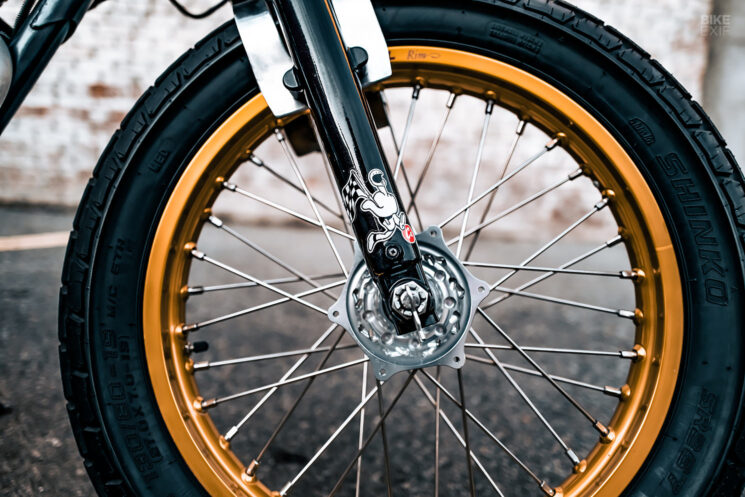
Showa forks do duty up front, held in place by aluminum triple trees from Cognito Moto. The forks benefit from Race Tech fork cartridges, progressive springs, custom-made lowering spacers, and 3D-printed fork guards. Other front-end upgrades include new sealed steering stem bearings from All Balls and a Kedo steering damper.
Yamaha SR500 flat tracker by Chad Daly
Chad ditched the SR500’s clunky wheels and laced up a new set of 19s. They use Excel rims and Buchanan’s spokes, with a Kawasaki KX250 hub at the back, and a Moose Racing KX250-specific hub up front.

Since this is a flat tracker, it runs with no front brake; the rear brake uses a Brembo caliper and master cylinder, with a PSR fluid reservoir and a Goodridge stainless steel line. The rear brake disc sits on an aluminum spacer that Chad cast himself. (Chad’s day job is in the metalworking industry, so he’s well-versed in the art of fabricating and sand-casting parts.)
Yamaha SR500 flat tracker by Chad Daly
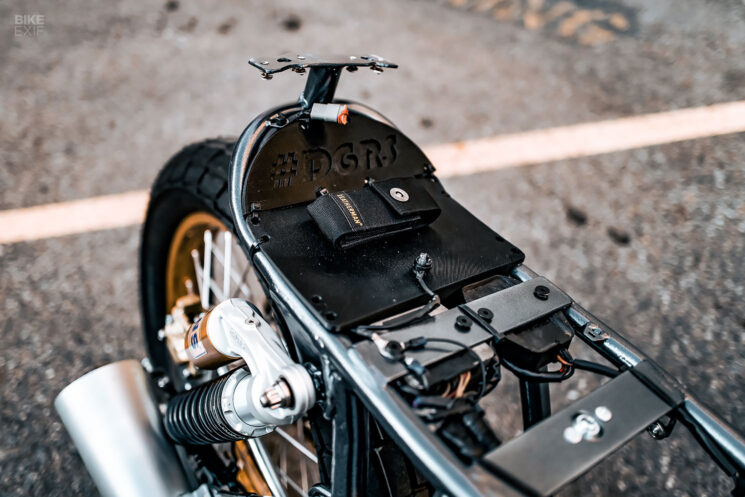
Gopher Glass in Minnesota supplied the fiberglass flat track bodywork. The tank, tail, and side covers all attach to the bike with DZUS quarter-turn fasteners, via custom mounting tabs that Chad added. The bike can be stripped down in a jiffy, and there’s a Leatherman multi-tool stashed under the seat in case of emergencies.

Chad’s big on 3D printing, so he leaned into the technology to create many of the SR500’s smaller parts. The rear inner fender and license plate mount, and the engine case guard, were printed using a flexible TPU material. The taillight housing was 3D printed using ABS plastic, with a cast resin lens that bears Chad’s DGRS logo.
Yamaha SR500 flat tracker by Chad Daly
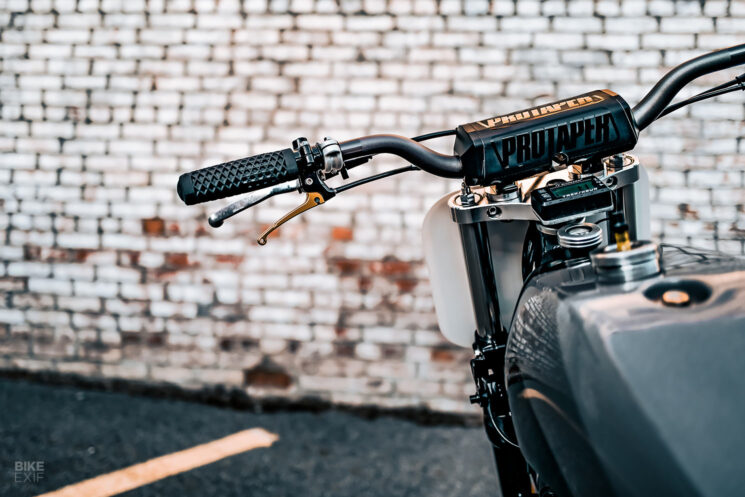
Tasty off-the-shelf parts and subtle custom touches are sprinkled throughout the build. The cockpit wears ProTaper handlebars, and a RunLeader tach and hour meter on a handmade bracket. ODI Vans x Cult grips adorn the bars, with Johnson Rubber pegs mounted on custom plates lower down.

The engine’s clean enough to make even the most critical classic bike restorer gush. It breathes in through a Mikuni flatslide carb, and out through a Cerakoted header and a Supertrapp muffler. Heavy-duty clutch springs from EBC add to the SR’s proven reliability.
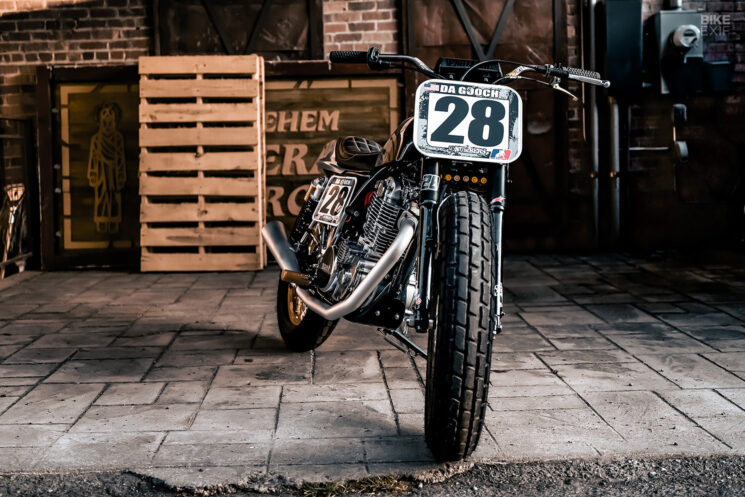
Yamaha SR500 flat tracker by Chad Daly
A Pro Comp headlight sits quietly below the front number board. It, and the taillight, can be removed in seconds when Chad takes the bike to the track.

The skid plate and oil cooler are from MotoLanna, and the dual oil delivery system comes from Kedo. The gas and oil caps are tidy aluminum items, with a temperature gauge embedded in the latter. Chad built the folding gear and brake levers himself then finished the bike off with a full set of titanium fasteners from Race Tech.
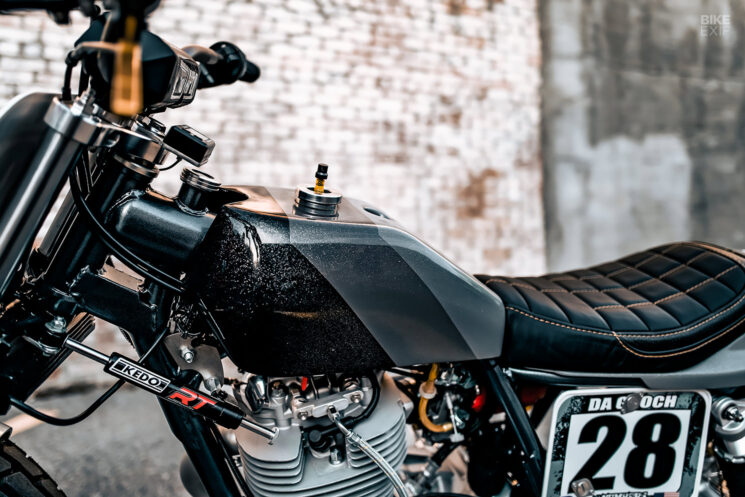
Yamaha SR500 flat tracker by Chad Daly
The bike’s finished in a sensational monochrome livery, with just the right amount of flake added to it, and gold details to make it pop. Chad did the paintwork himself but outsourced the powder-coating of the frame and the seat upholstery. Those were handled by Palmers Powders and Resurrection Upholstery respectively, while the number board graphics came from MXNumbers.com.

Chad’s Yamaha SR500 flat tracker looks sharp as heck, and is reportedly just as good to ride. Plus we’re giving him extra credit for bringing a sketchy custom job back from the brink.

Chad Daly Instagram | Images by Bryan Wood
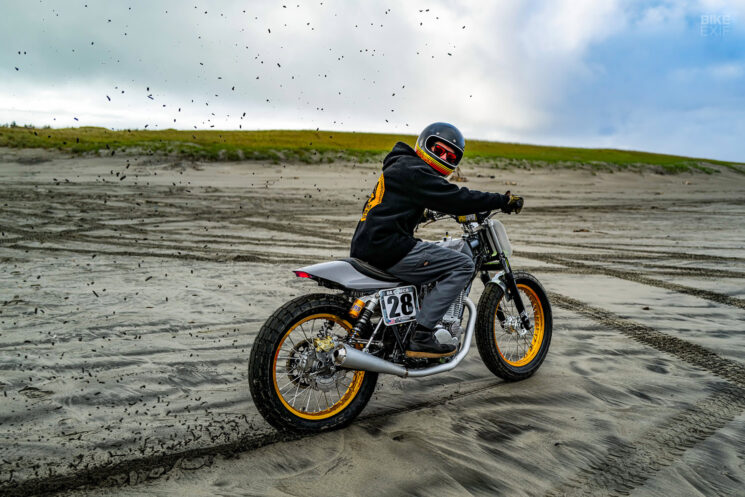
Yamaha SR500 flat tracker by Chad Daly


from Bike EXIF https://ift.tt/f4oSEia

Thursday, 3 August 2023

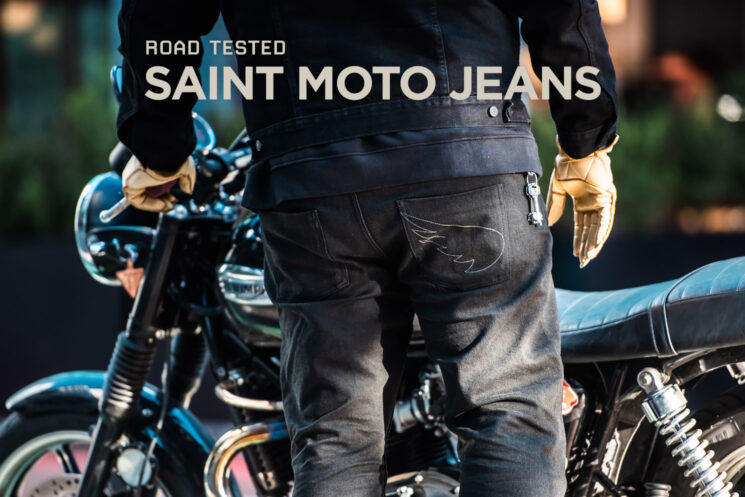
Road Tested: The new Saint Engineered armored motorcycle jeans

Saint Engineered armored motorcycle jeans review
Many motorcyclists don’t prioritize protective riding pants nearly as much as they should. It’s not uncommon to see riders kitted out in high-end helmets and leather jackets, but regular casual jeans. Or worse… shorts.

We get it—riding pants aren’t always as comfortable, or as affordable, as a pair of Levis. But the irony is that your legs are often the first thing to hit the asphalt when things go sideways. That’s why a good pair of abrasion- and impact-resistant motorcycle pants is just as essential as the rest of your gear.

Saint Engineered armored motorcycle jeans review
The Australian gear company Saint is all about this. Their schtick is single-layer protective riding jeans that score so high on comfort and style, that they could easily handle date night duty. But that combination of function and form comes at a price.

Saint’s flagship Unbreakable jeans use denim woven with an ultra-strong high-tech fiber called Dyneema, which isn’t cheap to source or work with. I’ve tested multiple iterations of their Unbreakable jeans and gushed over every single pair—but at $350 [AU$499 in Australia] a pop, I have trouble recommending them to my friends. The brand understands this, so they’ve hit back with the new, and more affordable Saint Engineered motorcycle jeans.

Saint Engineered armored motorcycle jeans review
Instead of using Dyneema, the Saint Engineered fabric uses a combination of cotton and nylon, with a little elastomultiester and elastane added for stretch. According to Saint’s e-commerce manager, Michael Baxter, this denim has a sixth of the Unbreakable fabric’s abrasion resistance, but is still at least 20% more abrasion resistant than regular denim.

In more tangible terms, the Engineered jeans, which ship with armor, score a CE class AA rating. And at $199 [AU$299 Down Under] they’re also significantly more affordable.

Saint Engineered armored motorcycle jeans review
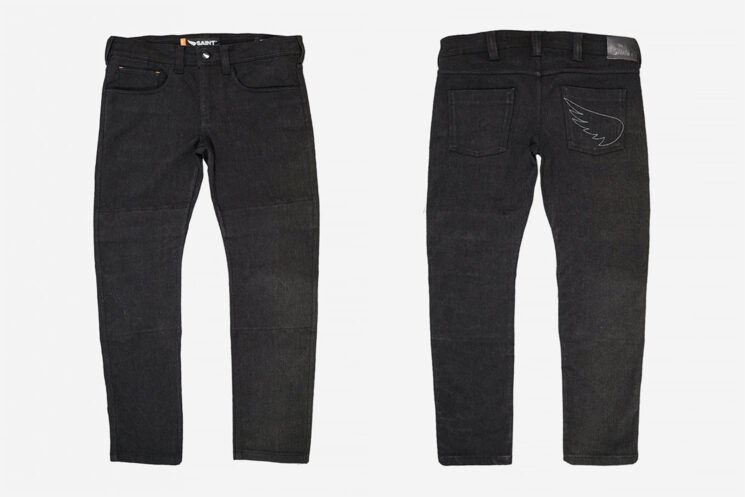
The Engineered jeans come in slim and straight options, in either black or black, and there’s a women’s fit too. I usually prefer slimmer jeans, but when Saint offered to send a pair of Engineered jeans over to review, I chose the straight fit for the sake of science.

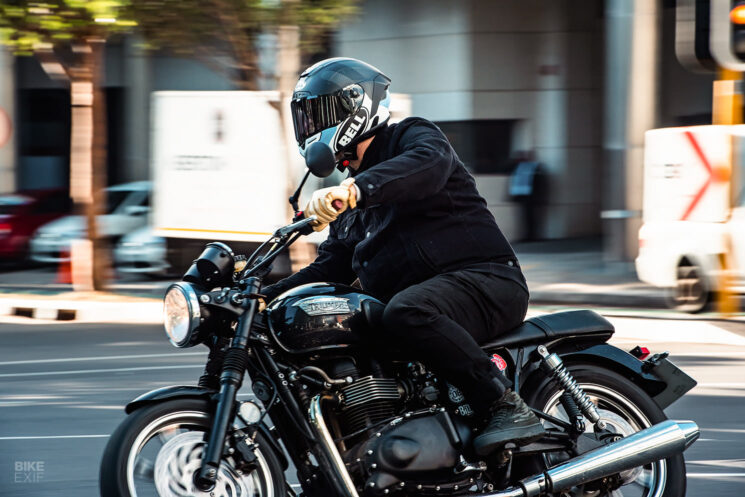
As with all my previous Saint jeans, these run true to my usual jean size. The straight fit is a boxy cut with zero taper in the leg, so it has a relaxed feel to it. It’s snug around the waist, with the right amount of rise in the seat to make it comfy on and off the bike.

Saint Engineered armored motorcycle jeans review
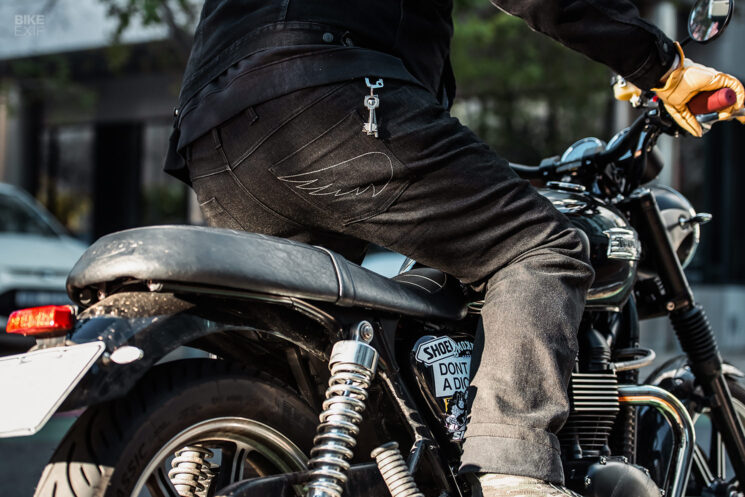
The overall style is classy and subdued; a traditional five-pocket affair with an embossed leather Saint tab at the back of the waist, and the brand’s wing logo stitched onto the back pocket in a reflective thread. The only additional details are the knee armor pocket seams that sit above and below the knees, but they’re barely visible against the black finish.

The denim itself has a fantastic hand to it, with a soft, brushed feel. And if you’re a denim head, I can testify that every pair of Saints that I’ve owned has faded beautifully over time—so I’m expecting the same here. (Text on the inside of the jeans even encourages you to wear them as long as possible without washing them.)

Saint Engineered armored motorcycle jeans review
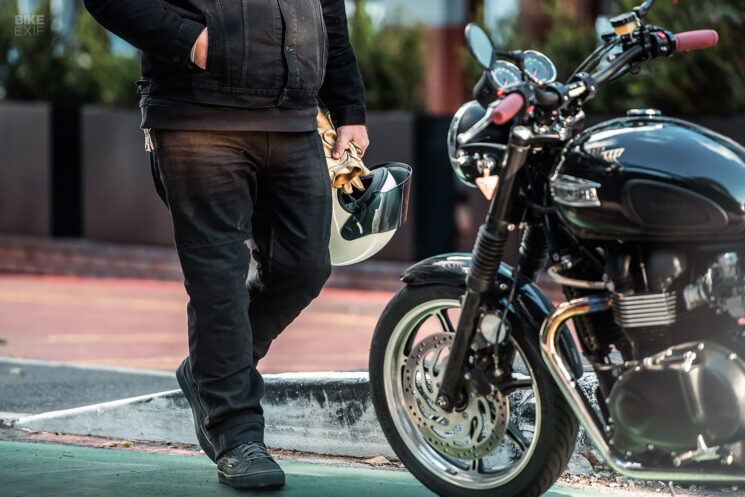
Even though this particular fit is a little more relaxed than I’m used to, it does make the Engineered jeans all-day-comfortable on the bike. And the fact that the denim has a measure of stretch to it helps too.

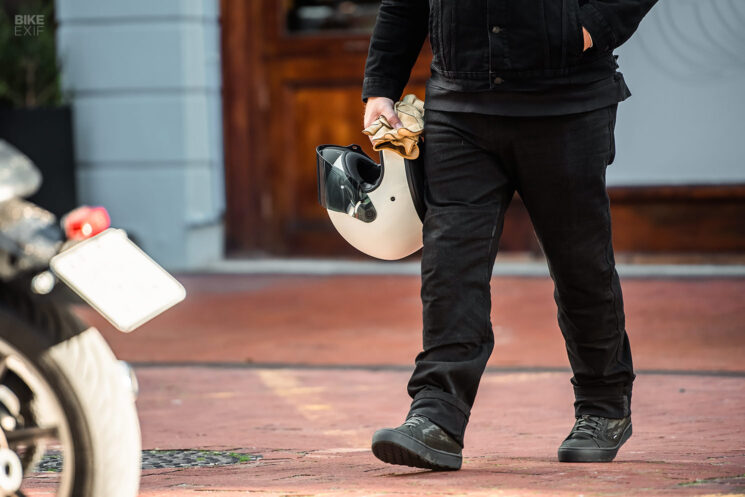
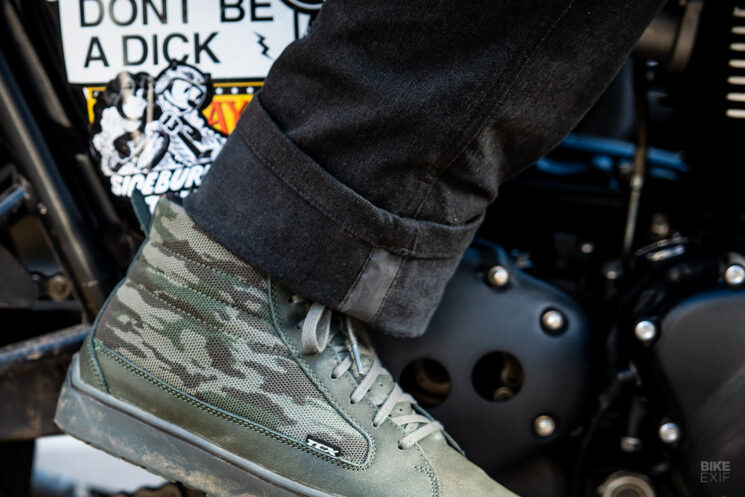
My one gripe is that Saint cuts their jeans very long, with a fixed inseam length for each size. I typically wear a size 38/32—but the size 38 Engineered has a 35” inseam, so chunky turned-up cuffs are compulsory. On the plus side, Saint has added reflective strips on the inside, which reveal themselves once you fold them over.

Saint Engineered armored motorcycle jeans review
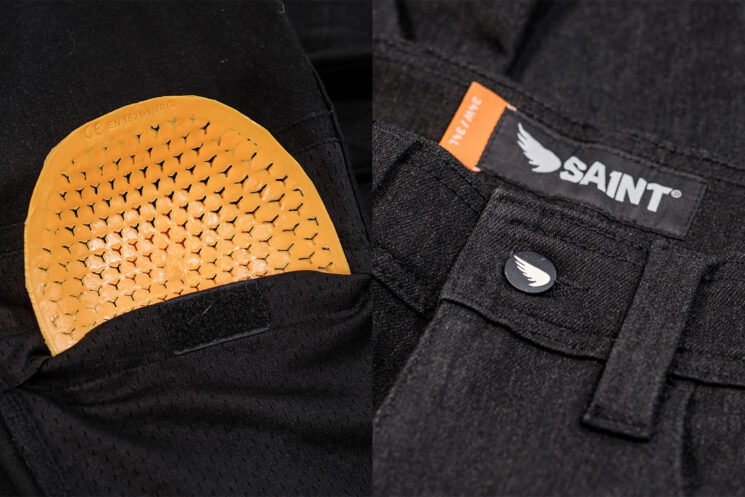
The Engineered jeans also come pre-fitted with CE Level 2 hip and knee protectors. They’re ultra-thin, which makes them barely noticeable while riding—but it also means that the hip protectors tend to fold over when you’re putting the jeans on or off. The last time I reviewed a pair of Saint riding jeans, the knee armor wasn’t quite sitting in the right spot—but these are a marked improvement, with velcro to help you fine-tune the fit.

Add all of those considerations up, and the Saint Engineered jeans score top marks on comfort and style. And at a more palatable price point, I can now recommend them with a straight face.

Saint Engineered jeans | Images by Devin Paisley

Saint Engineered armored motorcycle jeans review


from Bike EXIF https://ift.tt/akzRgDT

Wednesday, 2 August 2023

The 5 Most Thrilling Motorcycles of 2023 by Genre

Most Thrilling Motorcycles of 2023
Choosing the most thrilling motorcycles of 2023 by genre is certainly a matter of opinion, so, let’s stir this pot, shall we? Completely at random, we decided to take a look at superbikes, electrics, adventures, supersports and naked classes to hash out a few standouts. These are competitive categories loaded with exceptional rides, and we fully expect to ignite a little controversy here.

Ducati Panigale V4 R
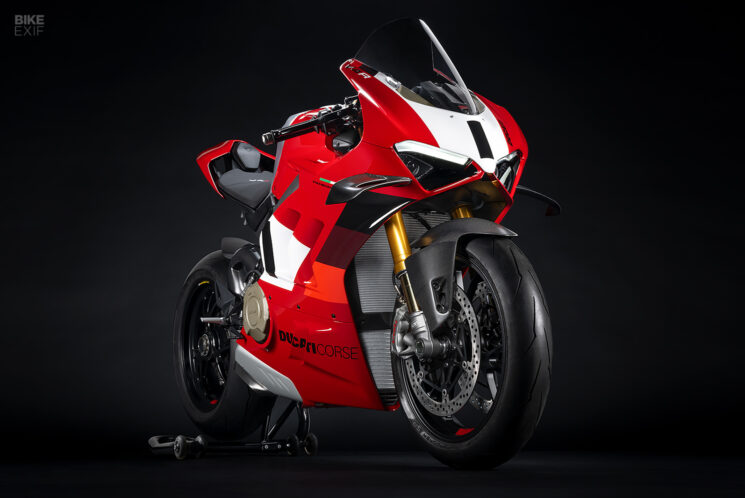
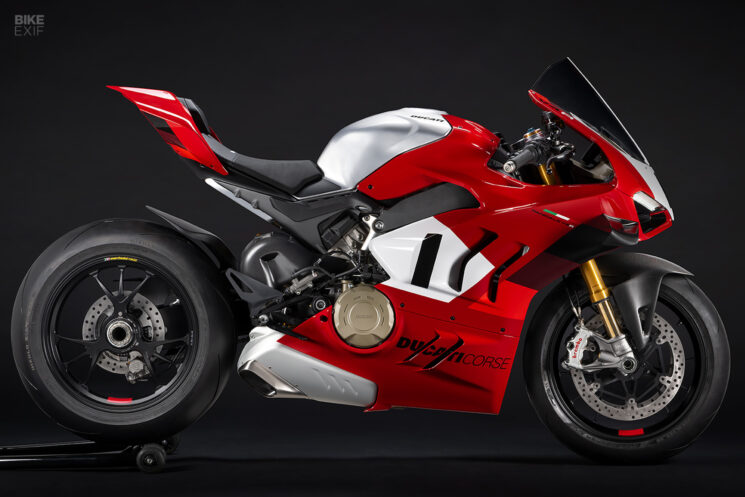
Superbikes—2023 Ducati Panigale V4 R When it comes to the realm of superbikes, the Ducati Panigale V4 R is the reigning champion. Equipped with a beastly 998 cc Desmosedici Stradale V4 engine, it unleashes nearly twice the horsepower (240.5 to be exact) of a Toyota Prius. Derived from Ducati’s MotoGP technology, the engine’s aggressive nature is enhanced by its counter-rotating crankshaft, reducing inertia and optimizing handling during aggressive cornering.
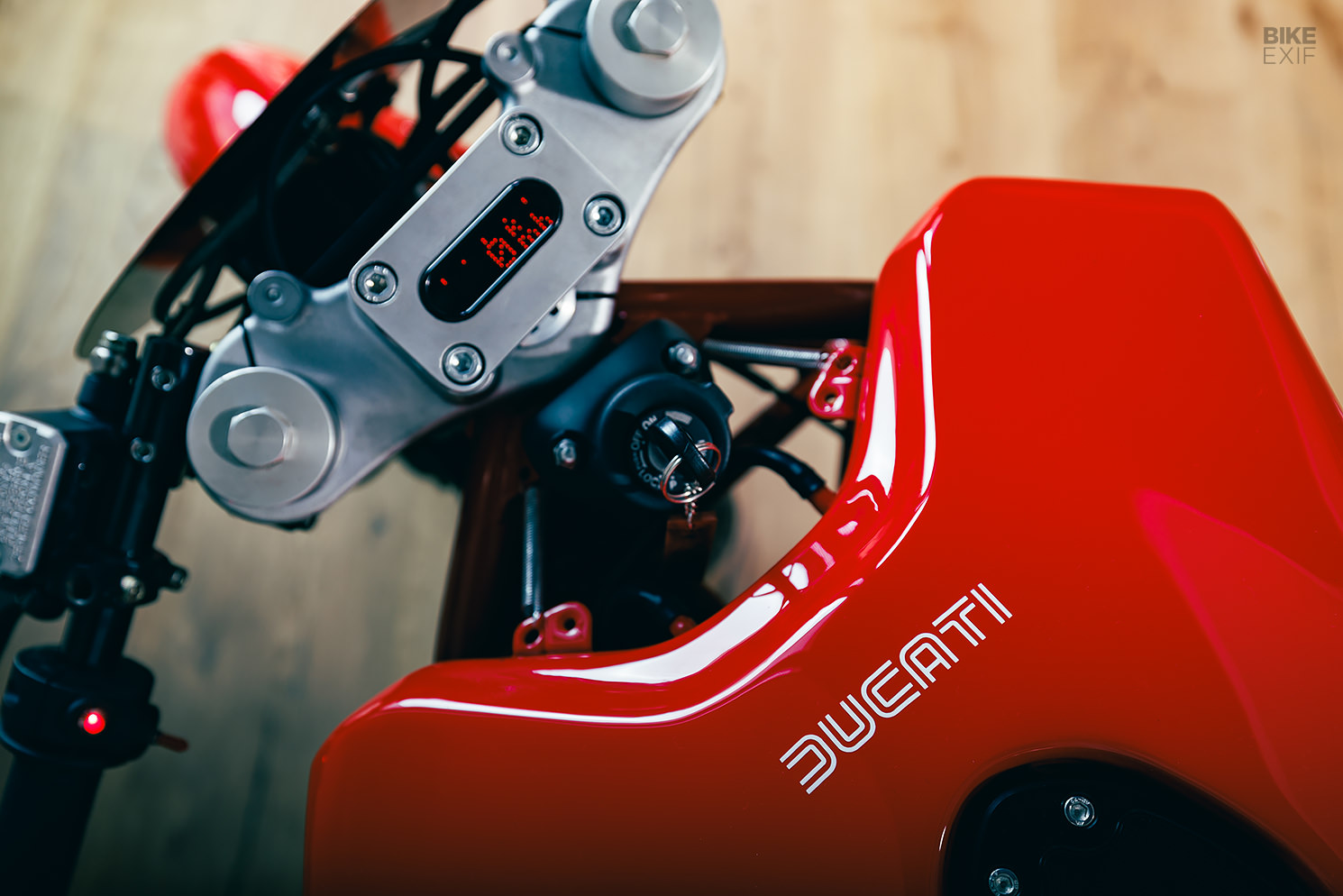
Ducati Panigale V4R
The Panigale V4 R is not just about brute power; it’s got a healthy resumé of engineering and design under it as well. The chassis is a combination of lightweight aluminum and magnesium, meticulously crafted to minimize weight while maximizing stiffness, lending to a mere 368-pound (167 kg) dry weight. The result is a bike that handles with unparalleled stability and agility.
To harness all that raw power, the bike features Ducati’s advanced electronics package, including traction control, wheelie control, engine braking control and a quick shifter. These systems work harmoniously to keep the bike in check and the rider (well most riders, anyway) in control, even during the most sanity-questioning riding scenarios. A multi-level riding mode system tailors the bike’s performance to rider preferences and road conditions—everything from rain to race.

Ducati Panigale V4 R
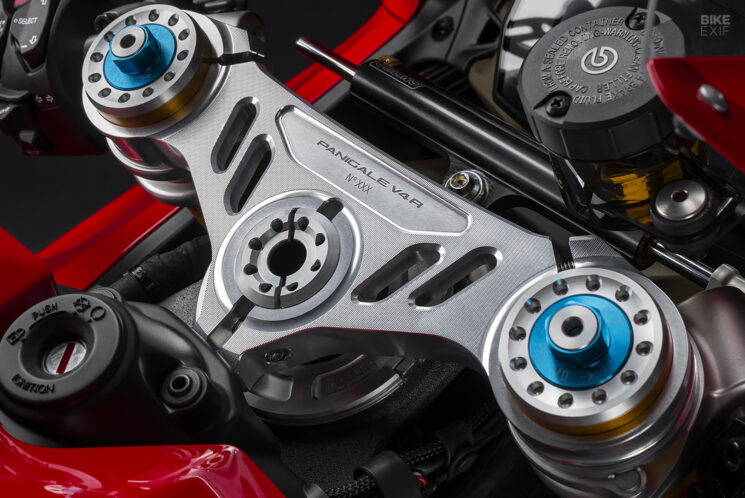
Fully adjustable Öhlins suspension, Brembo brakes and lightweight, forged-aluminum wheels provide the ultimate setup for precision handling and braking. Combined with the electronic aids and the engine’s explosive power, the Panigale V4 R becomes a formidable weapon that can outmaneuver and outpace competitors like the BMW S1000RR and Yamaha YZF-R1. [Ducati]

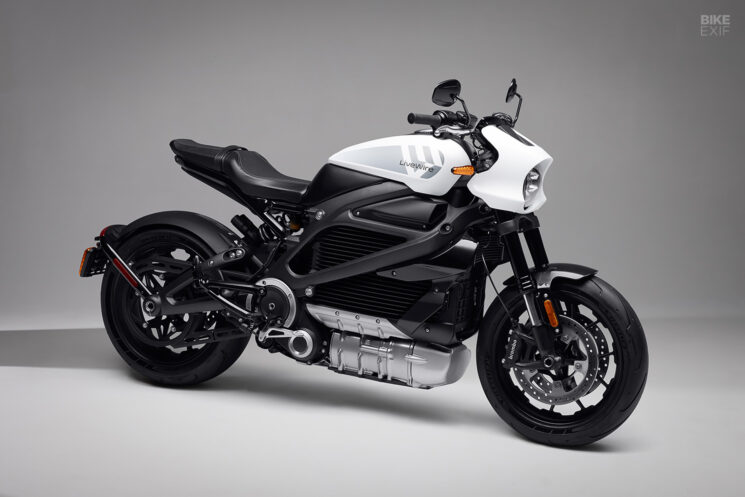
2023 Harley-Davidson LiveWire ONE
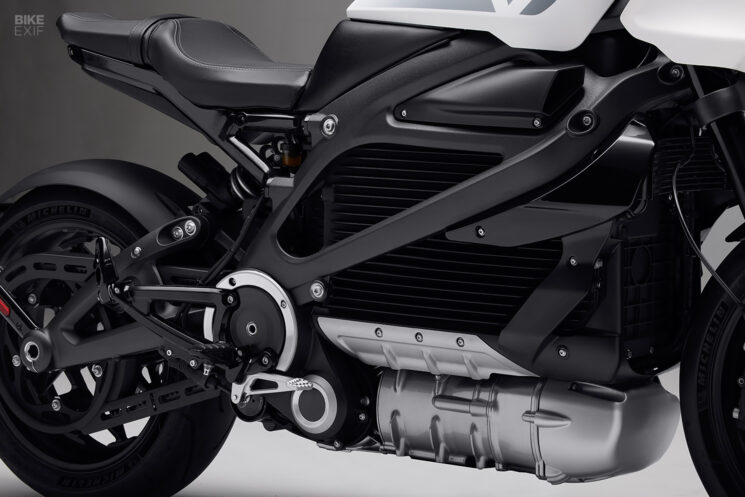
Electric Motorcycles—2023 Harley-Davidson LiveWire ONE For enthusiasts who yearn for the future, the Harley-Davidson LiveWire ONE earns our vote. Powered by a high-voltage Revelation electric motor, this cruiser hooks up with instant torque that propels from 0 to 60 mph in under 3 seconds. While the 100 horsepower might be considered middle class, an astonishing 84 lb-ft of torque from the Revelation definitely bumps performance up a class or two. With an electric motor, there’s no need for shifting gears. Riders control the power with merely a twist of the throttle, allowing for instant and precise acceleration.

LiveWire Revelation Motor
Absent the typical Harley V-twin roar, you could argue silence has never been more golden. Harley-Davidson has cleverly engineered a unique sound for the bike that is as distinctive as any traditional rumble. The bike emits a futuristic, almost science-fiction-like whirring sound, giving riders the sensation of piloting a machine straight out of the Jetsons.

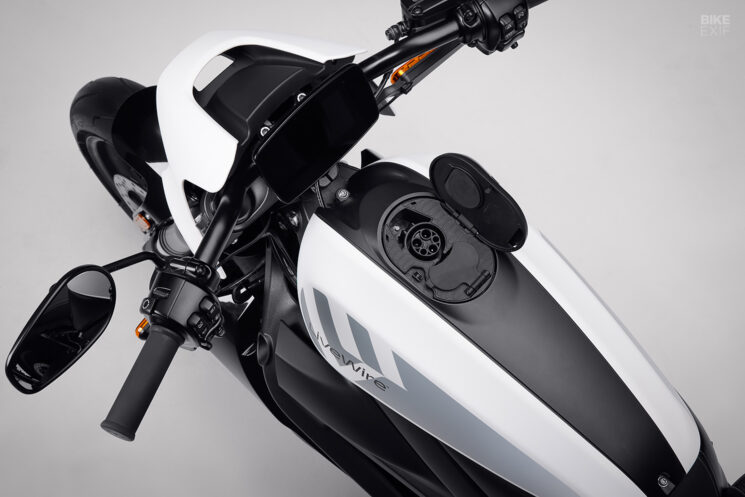
To further enhance the riding experience, the LiveWire ONE comes with a range of rider aids and electronic features. These include multiple riding modes, traction control, cornering ABS, and regenerative braking. The LiveWire features a large, full-color TFT touchscreen display that provides essential information such as speed, battery status, range, and navigation. The screen is also compatible with Bluetooth. Sounds like the stuff of Panheaders’ nightmares, but hey, that’s the future.

LiveWire ONE charging port
LiveWire advertises a range of approximately 146 miles (235 km) on a single charge in urban conditions, and charging the bike is straightforward with Level 1 and Level 2 charging options. Level 1 charging uses a standard household outlet, while Level 2 charging utilizes a dedicated charging station for faster back-on-the-road times.

While the LiveWire ONE embodies the classic Harley-Davidson spirit, its design is refreshingly modern and minimalist. A lightweight aluminum frame and fully-adjustable Showa suspension provide excellent stability and control in various riding conditions. Reinforcing its focus on electric machines, LiveWire is now its own brand, but we’ll miss the signature Harley-Davidson logo on the tank. That was good for jamming a little heritage back in your face. [LiveWire]

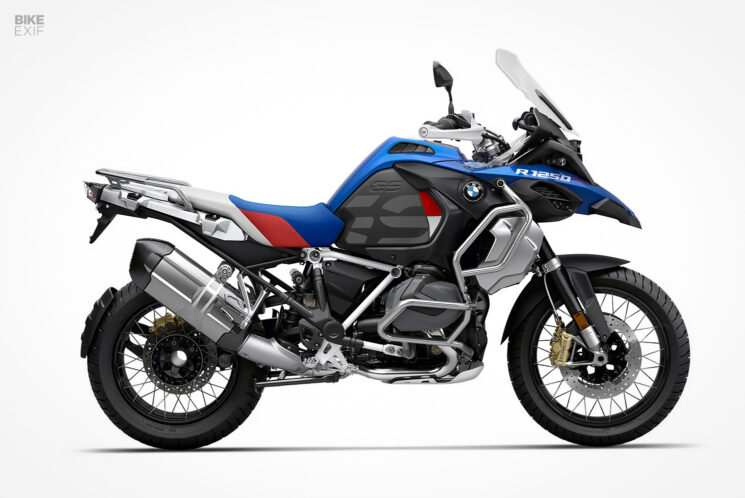
BMW R 1250 GS Adventure
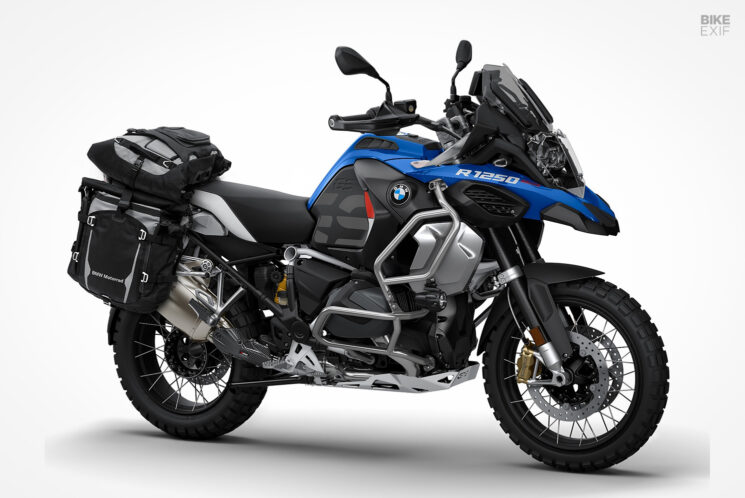
Adventure Motorcycles—2023 BMW R 1250 GS Adventure When it comes to adventure motorcycles the GS series have earned a reputation for being rugged, reliable, and capable. The BMW R 1250 GS Adventure is the flagship of the GS range, with a powerful 1,254 cc boxer engine delivering 136 horsepower and 105 lb-ft of torque. The R 1250 GS Adventure can accelerate from 0 to 60 mph in under 4 seconds on pavement and provides ample pebble-crawling power as well.

BMW has engineered a rugged and purposeful design, emphasizing its adventurous spirit. A 7.9-gallon (30-liter) fuel tank allows for long-range touring without the need for toting an extra can. The bike comes equipped with a high-mounted windscreen, robust crash bar, handguards and engine protection to protect both the bike and rider from off-road rigors.

BMW R 1250 GS Adventure
Adjustable suspension with options for dynamic electronic damping provides riders with the ability to tailor the bike’s handling to the terrain.

While the BMW R 1250 GS Adventure embraces its rugged roots, it also integrates modern technology to enhance the riding experience. The bike features a full-color 6.5-inch TFT display with navigation, trip data, and connectivity options. [BMW]

2023 Honda CBR600RR Grand Prix Red
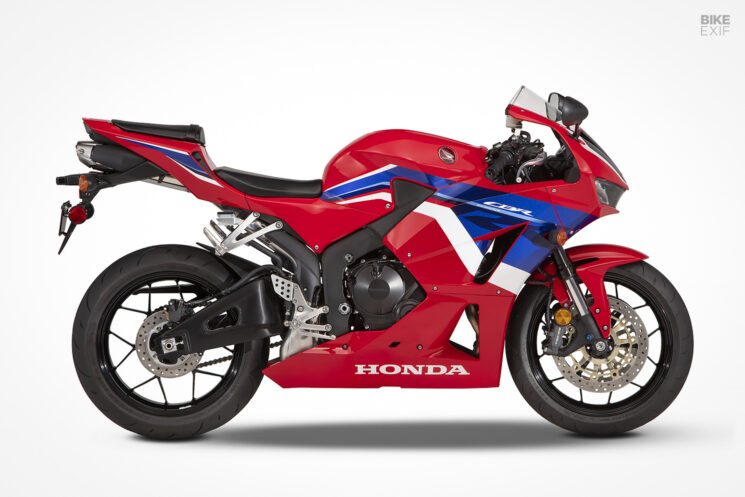
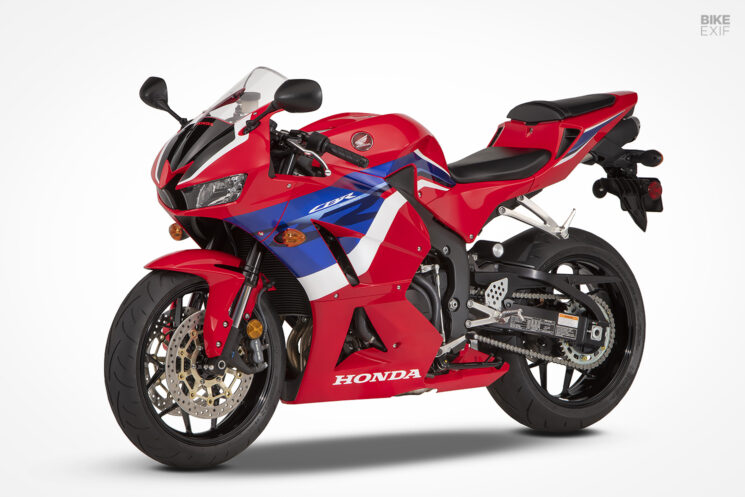
Supersport Bikes—2023 Honda CBR600RR When it comes to the world of sportbikes, Honda has always been at the forefront of innovation and performance. At the heart of the Honda CBR600RR lies a high-revving, 599 cc DOHC inline-four delivering 113 horsepower and 48.7 lb-ft of torque. The engine’s compact design and lightweight construction contribute to the bike’s agile handling and precise cornering abilities.

2023 Honda CBR600RR
With its race-inspired DNA to further solidify its track-focused intentions, the CBR600RR comes equipped with adjustable Showa Big Piston Forks in the front, and a fully-adjustable rear Pro-Link suspension out back. The bike comes equipped with Honda’s Dual-Stage Fuel Injection (DSFI) with 40 mm throttle bodies and Denso 12-hole injectors. One of the coolest features on the CBR600RR is Honda’s Quickshifter, enabling clutchless upshifts without lifting off the throttle.

The CBR bolts on dual, radial-mount, four-piston Nissin calipers, gripping 310mm floating discs in the front, and a single-piston caliper with a 220mm disc in the rear. Combined with Honda’s advanced Combined Anti-Lock Braking System (C-ABS), the bike provides an extra layer of safety and stability should you get a little wiley. [Honda]

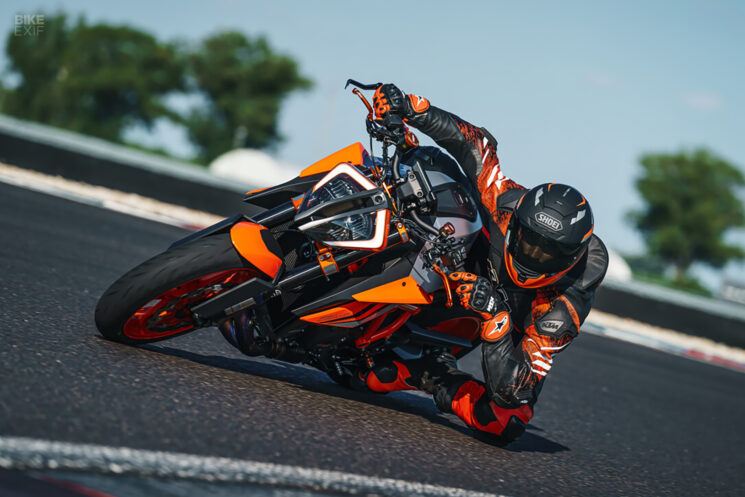
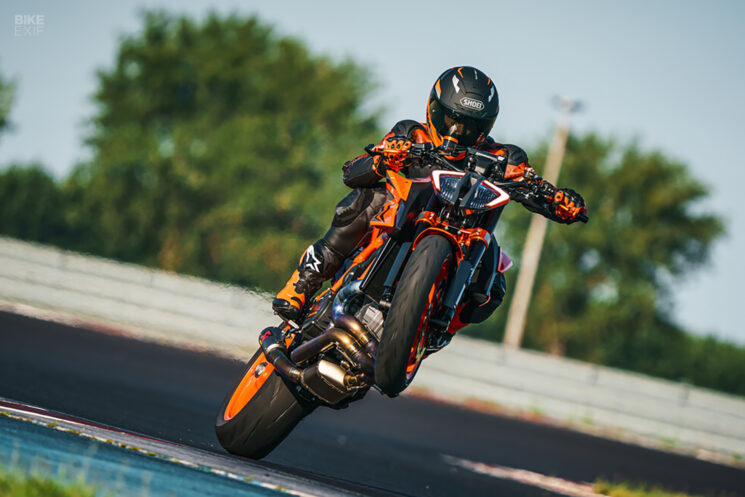
2023 KTM 1290 Super Duke R Evo
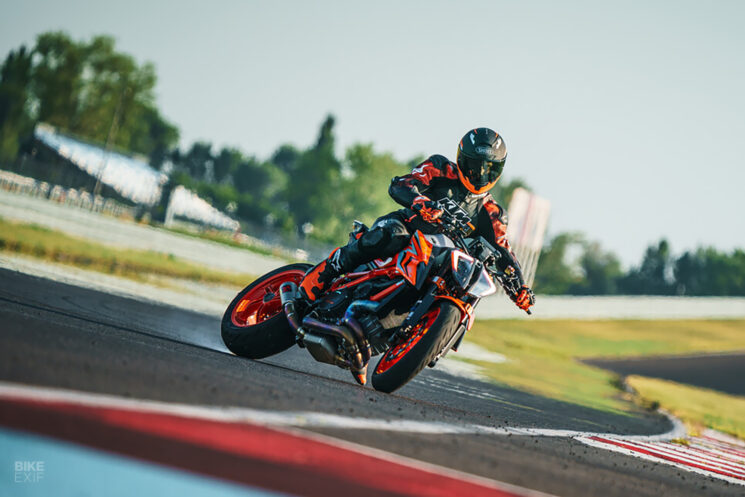
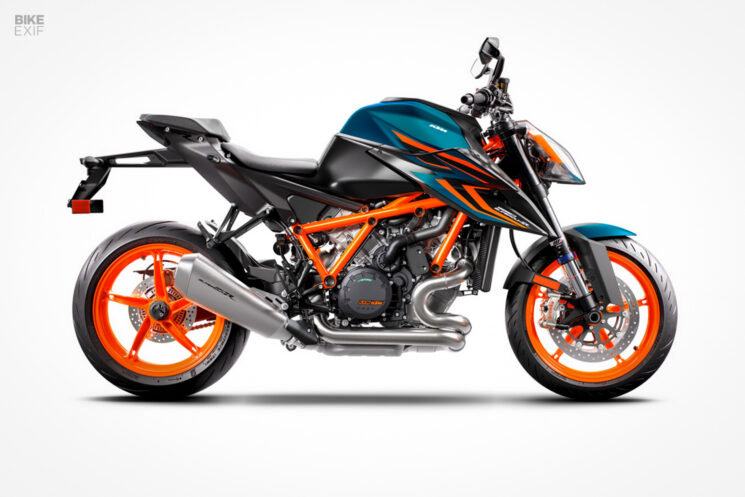
Naked Bikes—2023 KTM 1290 Super Duke R Evo There’s no discussing the naked bike segment without the Duke, and KTM’s 1290 Super Duke R Evo is certainly a mouthful. While there are certainly faster bikes out there, few challengers come from the naked bike segment, and fewer match the level of technology packed into the Duke.

Referred to in Team Orange parlance as “BEAST,” you’d better believe the Super Duke R Evo is powerful. The 1,301 cc LC8 V-twin in the Duke puts out a massive 180 hp and 103 lb-ft, and the engine is a stressed member in the reworked, lightweight trellis frame. For 2023, the V-twin has shed ounces here and there, has new bronzed copper coatings in the gearbox and reworked cylinder head geometry for low to mid range power.

2023 KTM 1290 Super Duke R Evo
With all that power on tap, KTM went to great lengths in the tech department to be sure the Duke reaches its full potential on any surface. To start, you’ve got all your standard stuff, like cornering ABS, a slipper clutch, riding modes, wheelie control and track modes. There’s a supermoto ABS feature and a performance street mode for your inner hooligan, and a semi-active WP suspension, allowing you to control suspension sag and preload from the TFT dash. [KTM]

Most Thrilling Motorcycles of 2023


from Bike EXIF https://ift.tt/CvWMwnf

From the ground up: Foundry’s latest Kawasaki Z650 café racer

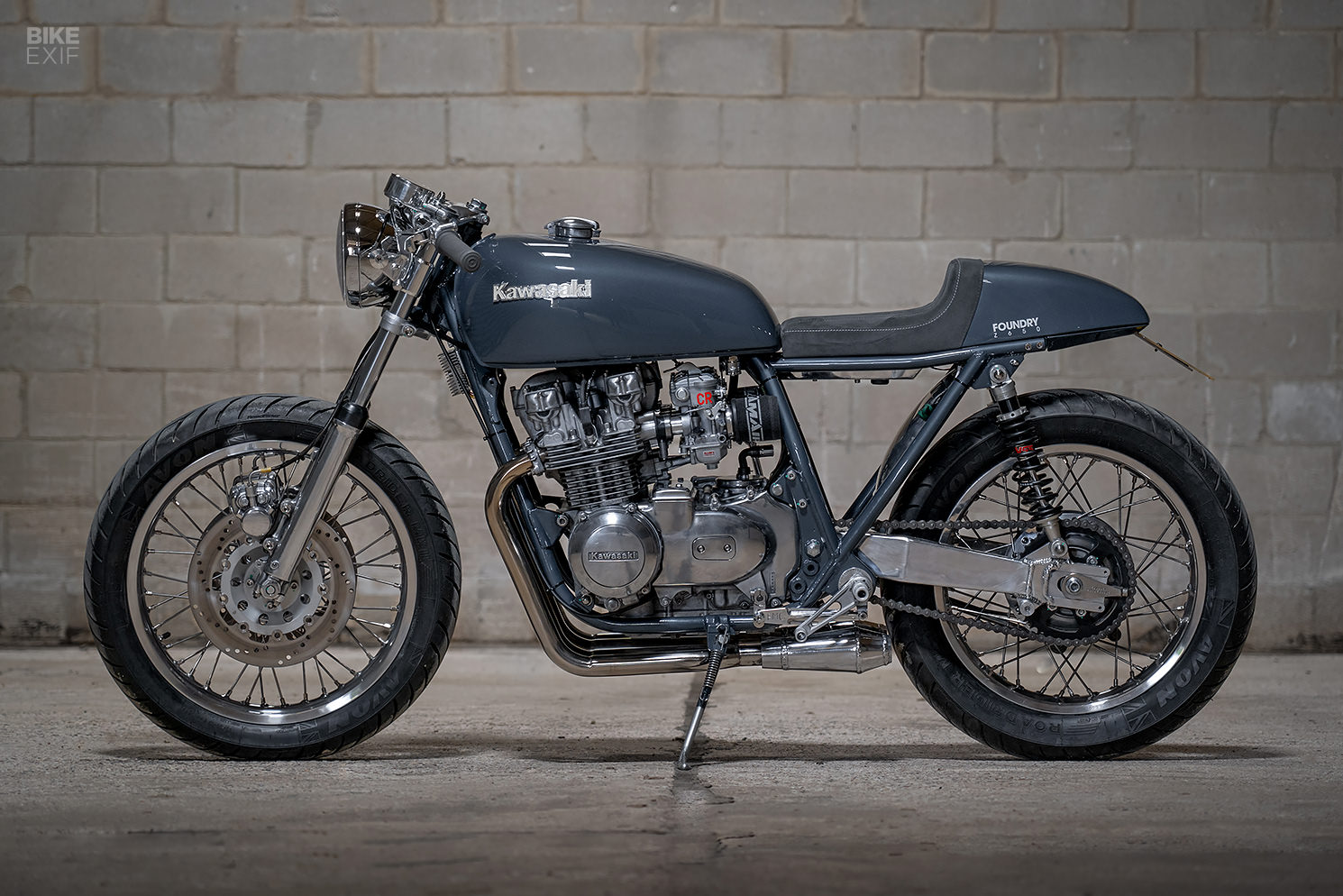
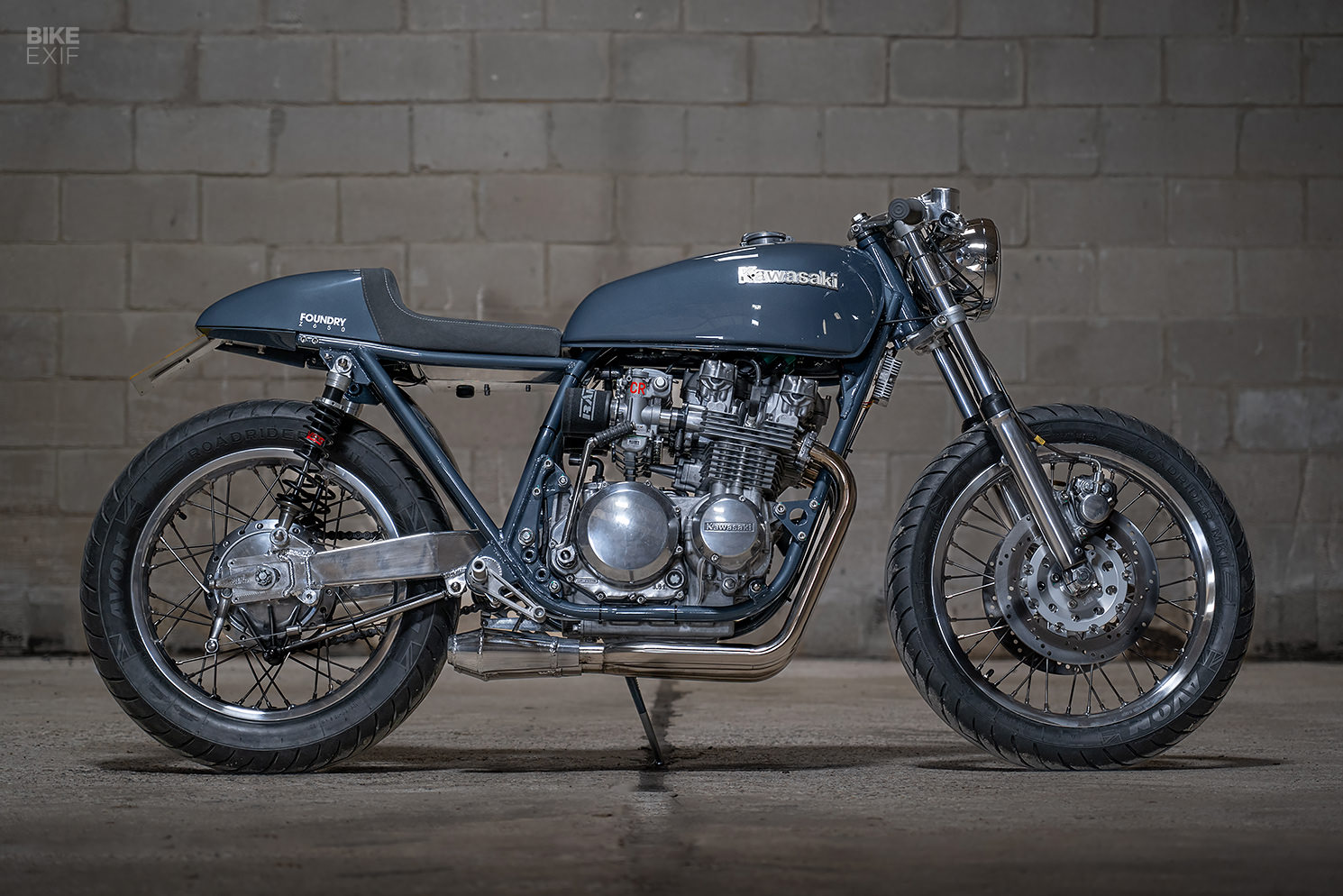
Kawasaki Z650 café racer by Foundry Motorcycle
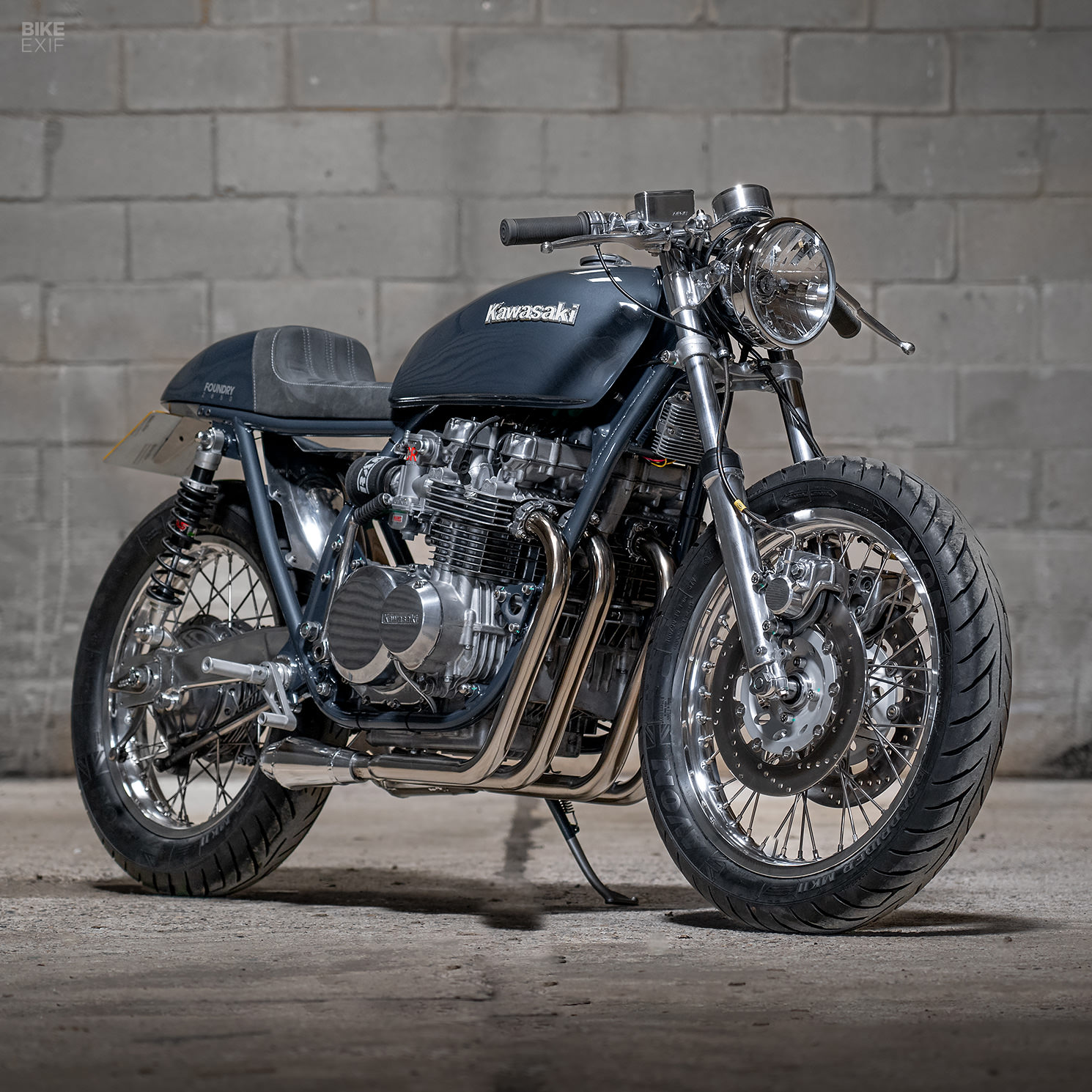
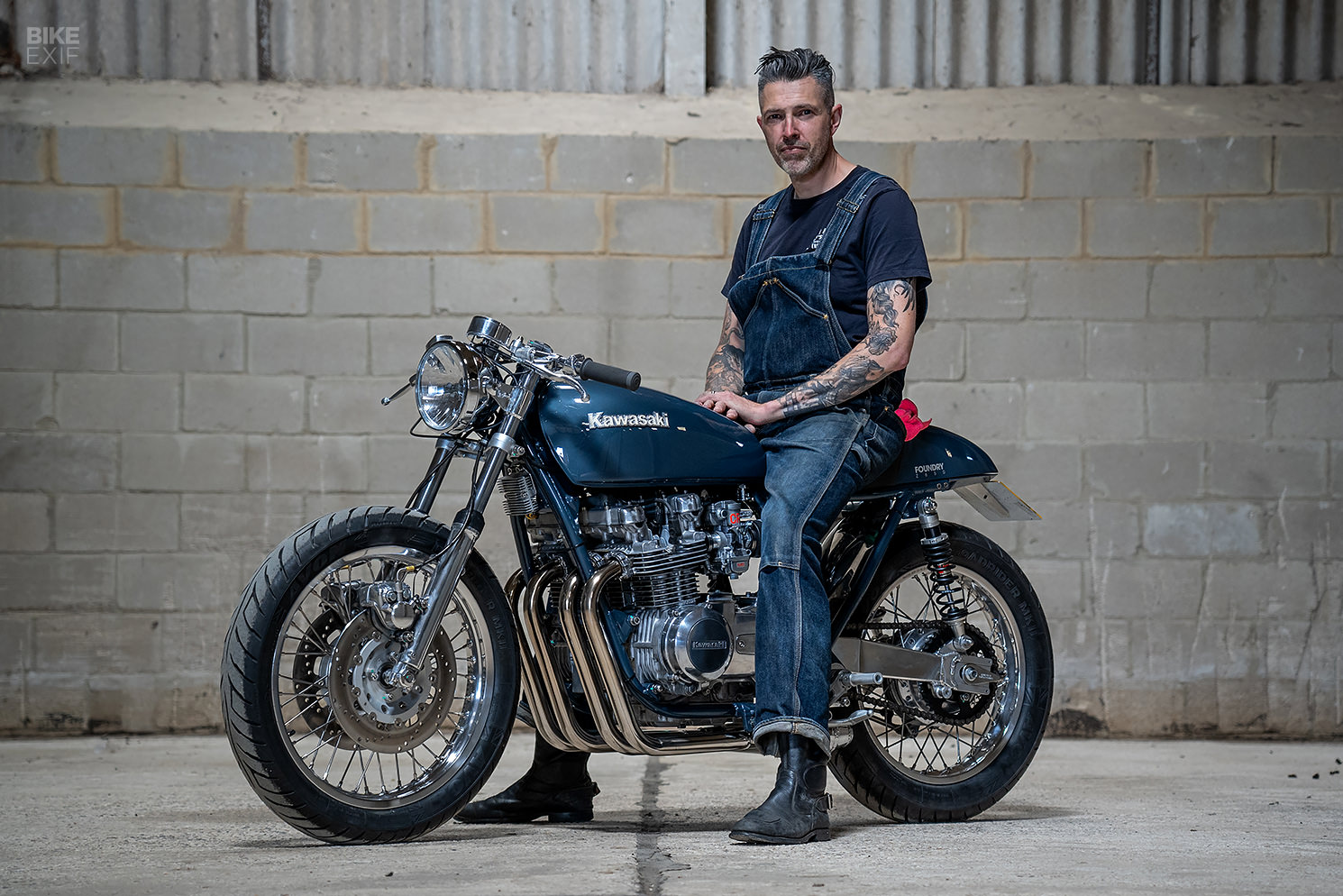
The problem with exceptionally tidy café racers is that they often belie the amount of work that’s gone into them. Just look at this Kawasaki Z650 café racer from the UK’s Foundry Motorcycle. On the surface, it shows the sort of considered craftsmanship that we’ve come to expect from Foundry’s Tom Simpson—but it took a lot of work to get to this point.

For starters, Tom didn’t have a whole lot to work with when the project kicked off. “Having seen our previous Kawasaki café racer, our customer got his build slot booked with us,” says Tom. “On schedule, he delivered the barest set of bones of any donor bike to date; a Z650 frame, forks, wheels, and a tank.”

Kawasaki Z650 café racer by Foundry Motorcycle
Tom didn’t even get an engine with the bike, because the client had chosen to rebuild it himself. So Tom borrowed an ’empty’ motor from his previous Kawasaki Z650 café racer customer and mounted it in the frame as a placeholder. “With that, I had pretty much everything I needed to make a start,” he adds.

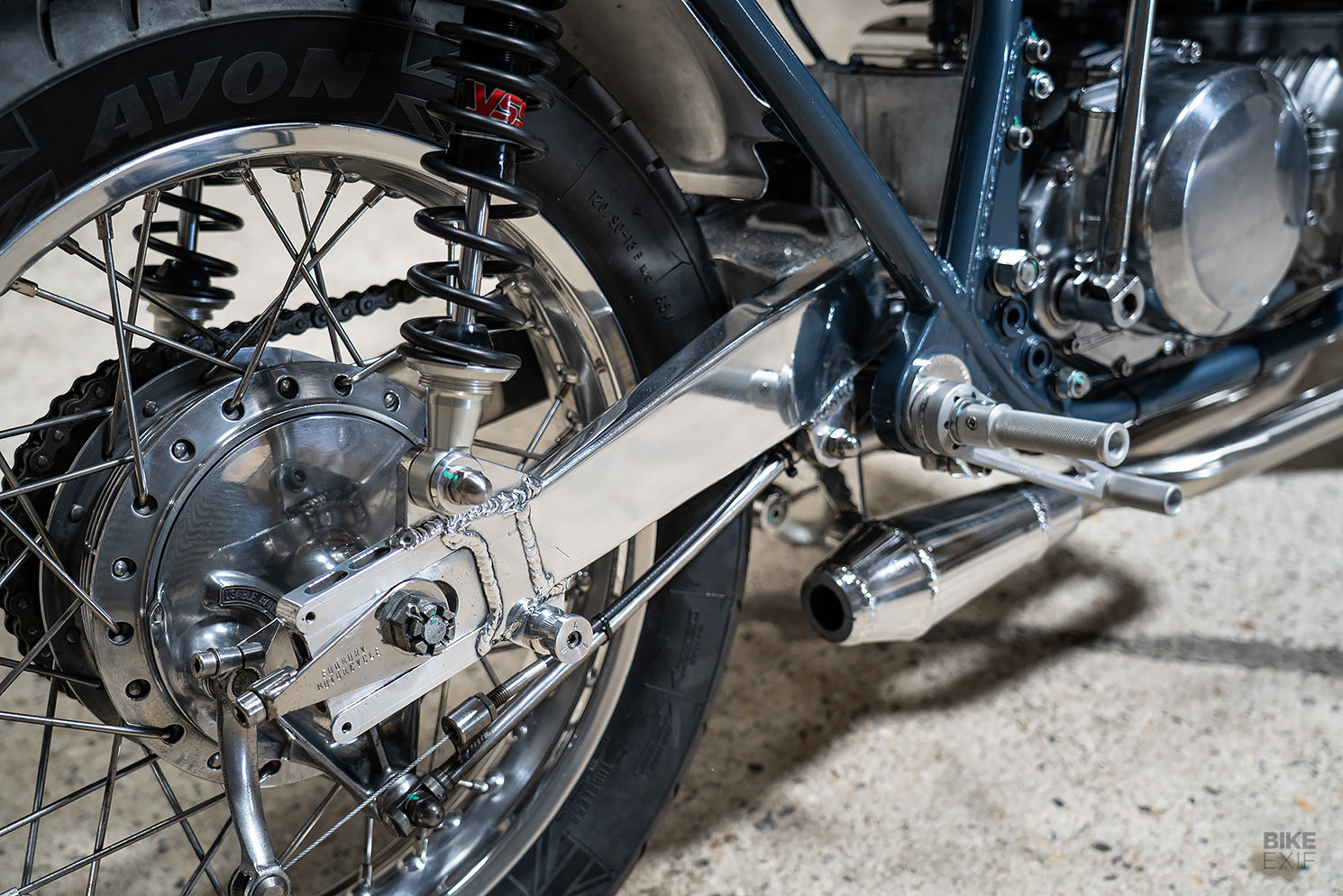
Working from a simple concept sketch, Tom managed to get the client to buy into the overall design. But the brief included some big asks. Foundry would have to fabricate a custom swingarm, an entirely new subframe, and a full stainless steel exhaust system.

Kawasaki Z650 café racer by Foundry Motorcycle
Tom was a blacksmith before he built custom motorcycles for a living—so whether he’s casting parts or beating them into shape, metalwork is his jam. He dropped the dummy engine into the donor frame and set to work creating a bespoke aluminum swingarm. “Even though I’ve built frames and bodywork several times before, I always underestimate how much time these follies soak up,” he quips.

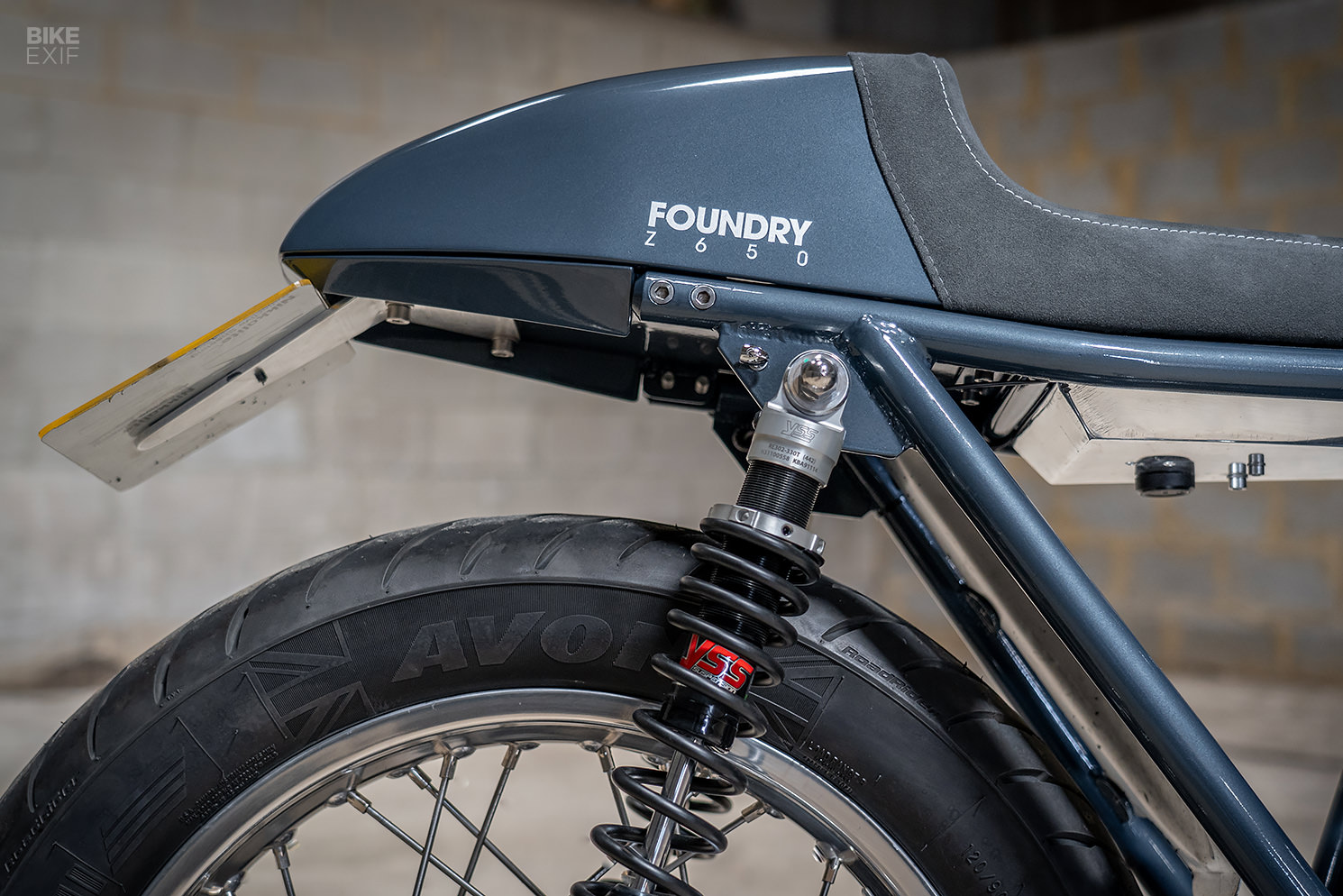
“That said, I’m very pleased with the result. Along with the YSS shocks, it meant that I was able to get the exact stance I wanted.”

Kawasaki Z650 café racer by Foundry Motorcycle
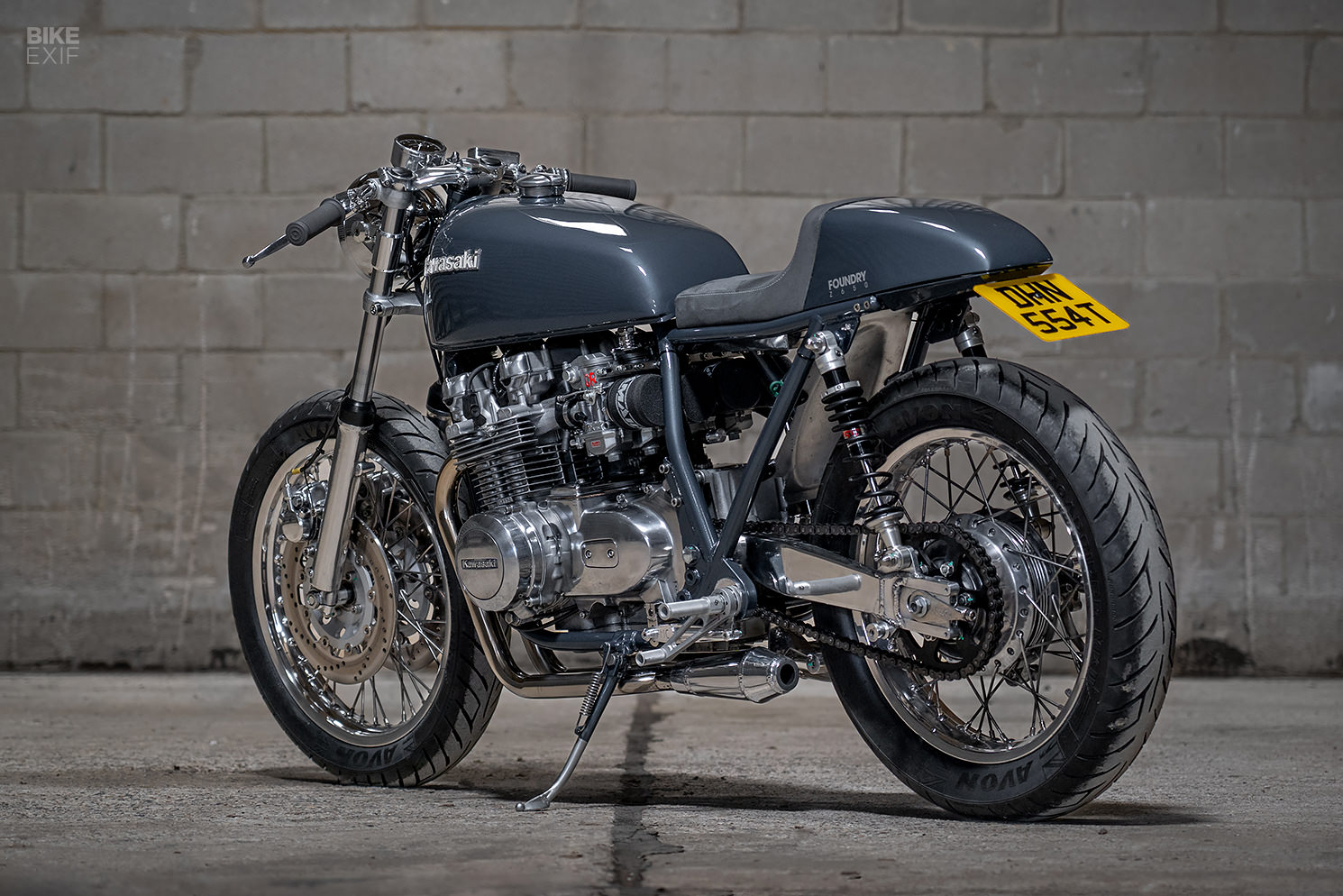
Moving to the subframe, Tom decided to avoid the typical cut-‘n’-loop style that so many café racers sport. Instead, he designed a tail hump that would integrate neatly with the rear frame rails. A set of custom brackets and bosses ensures that everything fits together well.

The tail section’s bodywork is divided into two sections. The traditional café racer hump forms the top half, while the bottom serves to blank off the underside of the tail, while also acting as an electronics tray. The overall effect is delightfully cohesive.

Kawasaki Z650 café racer by Foundry Motorcycle
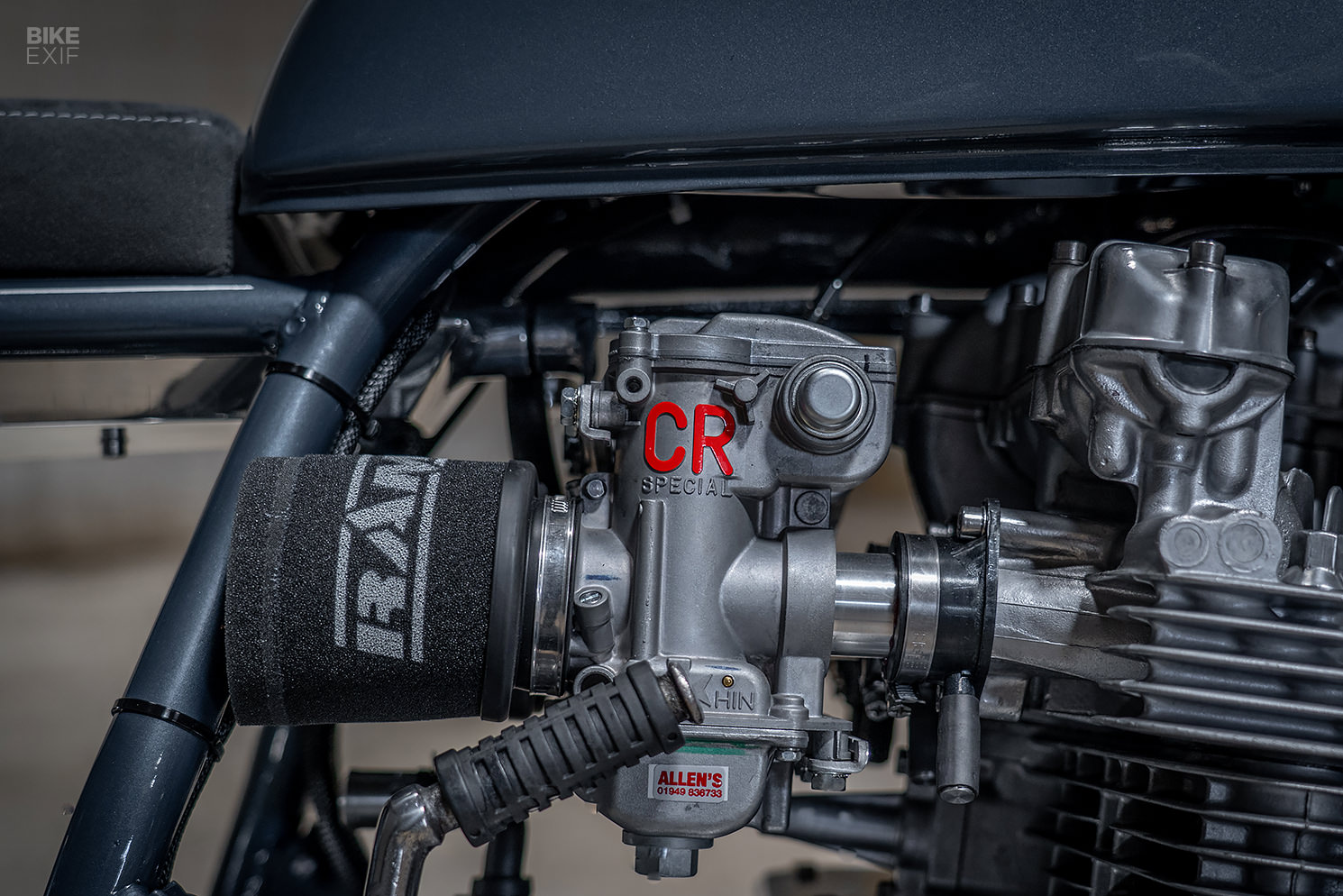
A Lithium-ion battery now hides under the tail bump, with a Motogadget mo.unit control box stashed under the seat. You can’t tell unless you get up close, but the front bit of the seat support also includes brackets to brace the new Keihin CR Special carbs. (Too often custom builders remove a bike’s airbox, only to leave the carbs, quite literally, hanging.)

Tom kept the OEM fuel tank but tidied it up significantly. It now wears a Monza-style filler cap and a ‘Click-Slick’ fuel petcock from Golan. Hiding under the tank are a Dyna S ignition and fresh Dyna coils.

Kawasaki Z650 café racer by Foundry Motorcycle
Next on the list was the 1978-model Z650’s aging running gear. Tom refurbished the stock forks and brakes, and added a second OEM disc brake to the front for added peace of mind. The original hubs were refurbished, but the stainless steel spokes, alloy rims, and Avon tires are all fresh items.

“The lack of front mudguard is a conscious design decision made with the customer,” Tom points out. “But just in case your readers are firing up their keyboards, I have deliberately left all the lugs on the fork lowers, so a mudguard can be fitted if ever desired. The number plate and tail unit act as a very effective rear guard, along with the aluminum baffle plate that stops the carbs and air filters from being in the firing line.”

Kawasaki Z650 café racer by Foundry Motorcycle
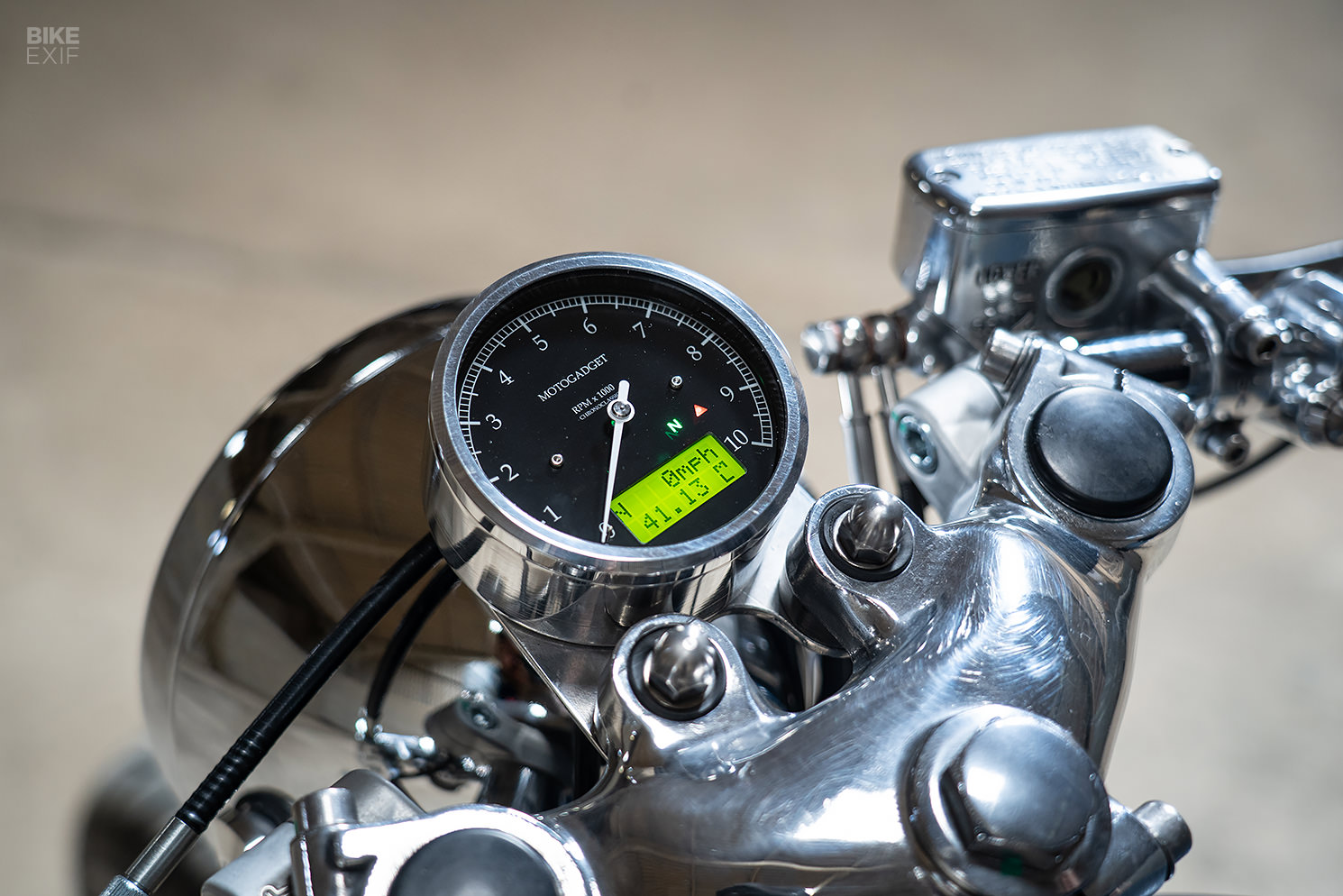
Up top, Tom installed a set of clip-ons complete with Biltwell Inc. grips, Motone switches, and levers that he scalped from an early-2000s Honda CBR600RR. With no more need for the stock handlebar clamps, Tom shaved those off. Finishing off the cockpit is a Motogadget Chronoclassic tacho and speedo, mounted on a handmade bracket.

A 7” headlight sits out front, sitting on custom mounts that also house a pair of Kellermann turn signals. Multi-purpose Kellermann units take care of taillight and turn signal duties out back.

Kawasaki Z650 café racer by Foundry Motorcycle
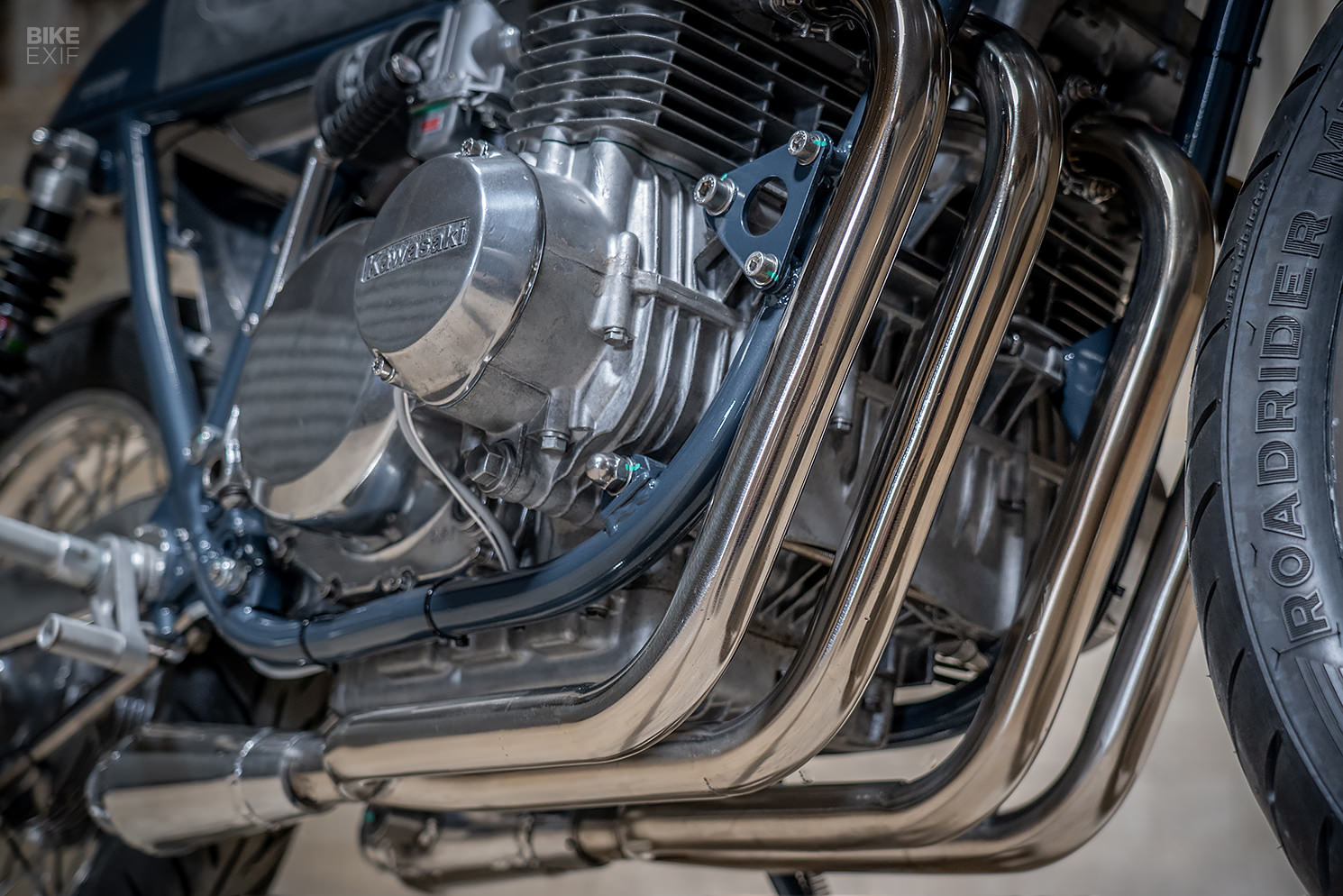
Tom’s signature is splashed all over this build, as long as you know where to look. The four-into-two exhaust system is an obvious touch; subtler details include parts like the rotating adjusters that hold the Tarozzi rear-set pegs. From the foot control linkages to the rear axle adjusters, there’s hardly anything that doesn’t bear a Foundry Motorcycle stamp.

The only tasks that happened outside of Foundry’s workshop—other than the engine build—were the paint and upholstery. S.Jago Designs laid down the stylish paint job, and Trim Deluxe added a touch of class to the seat.

Kawasaki Z650 café racer by Foundry Motorcycle
Between its restrained finishes and its flawless stance, this Kawasaki Z650 café racer is good taste personified. If anyone has an old Z650 basket case taking up space, we’re now accepting donations.

Foundry Motorcycle | Facebook | Instagram | Images by Marv Clarke

Kawasaki Z650 café racer by Foundry Motorcycle


from Bike EXIF https://ift.tt/GRPxJZL

Tuesday, 1 August 2023

Red Angel: An extra lean Ducati Monster 620 from Prague

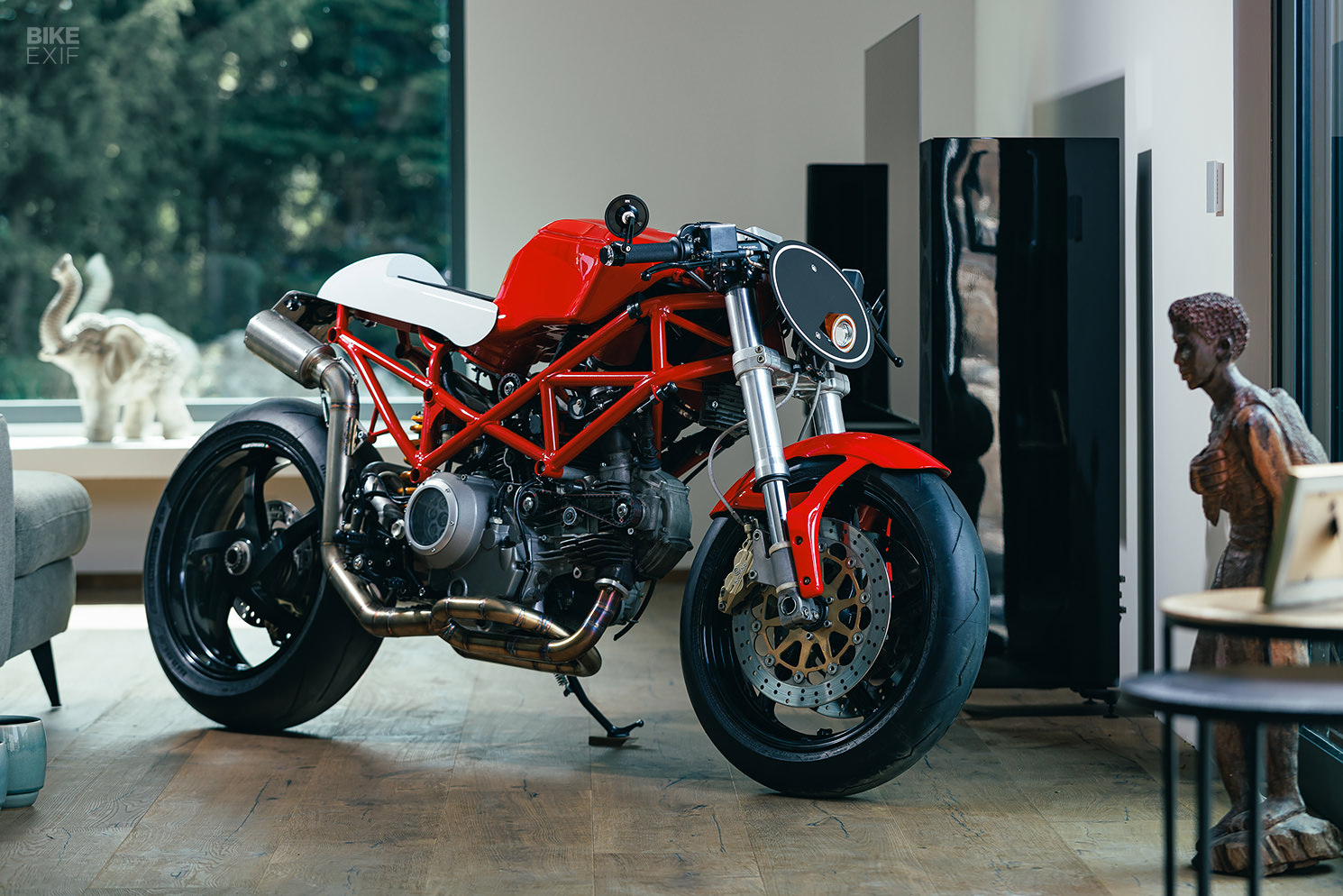
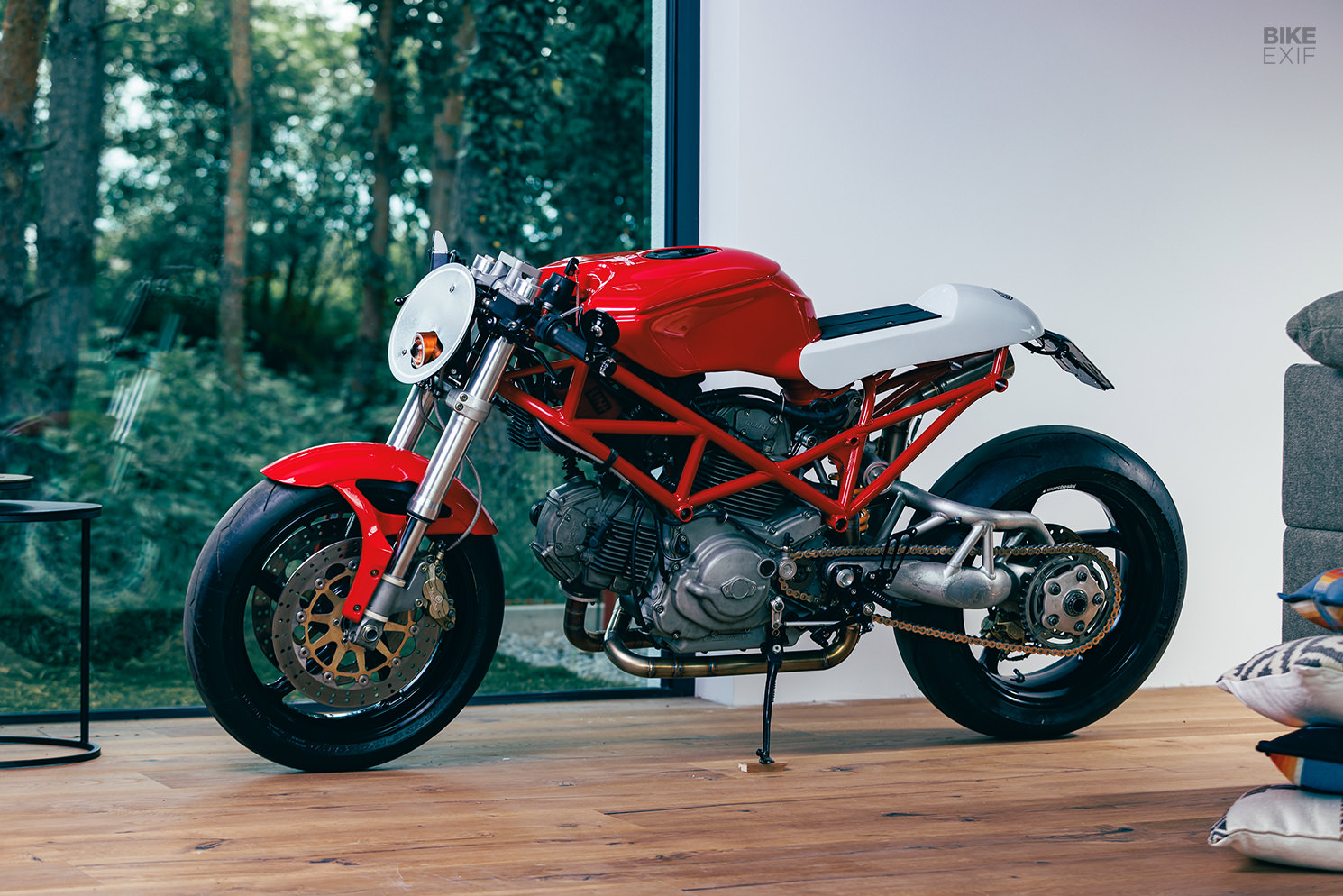
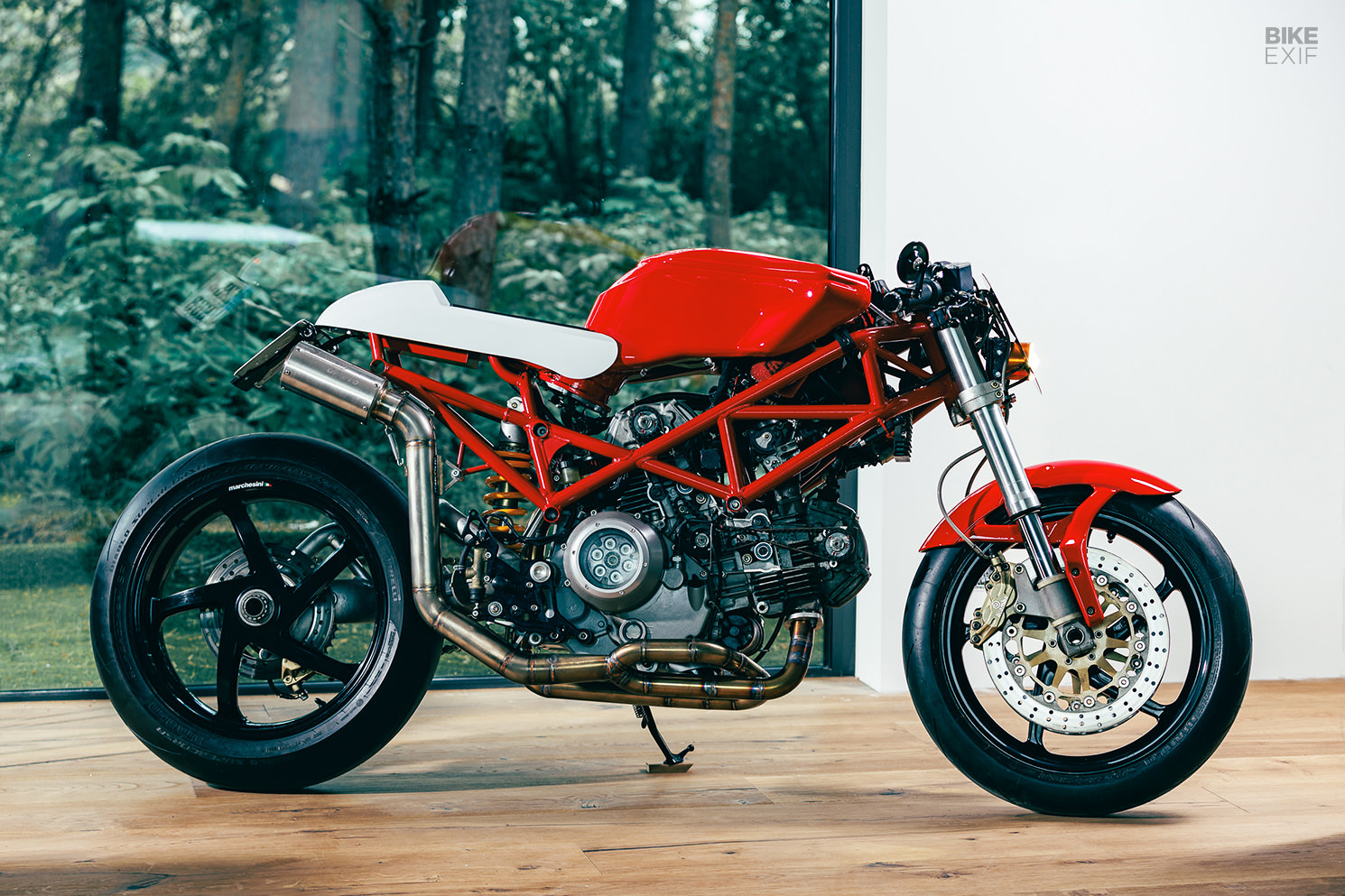
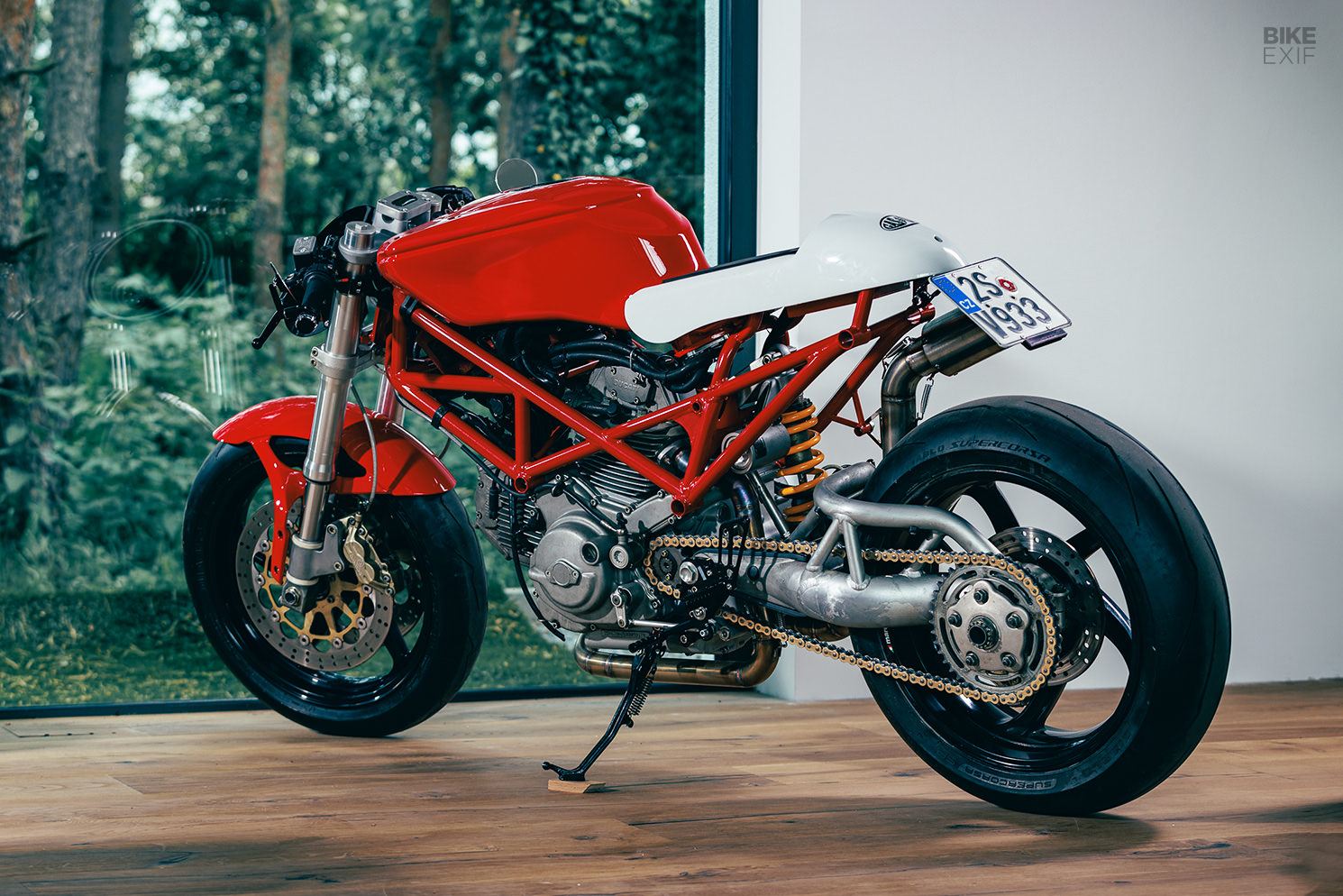
Custom Ducati Monster 620 by Gas & Oil Bespoke Motorcycles
Sacrificing a little comfort for style is not unheard of in the custom scene. But what happens when your goal is to throw comfort out the window altogether? This svelte Ducati Monster 620 from Gas & Oil Bespoke Motorcycles is the answer.

MatÄ›j Sysel and his band of custom bike enthusiasts at Gas & Oil are no strangers to our pages, or the Ducati Monster platform. The Prague-based workshop builds everything from rough and ready scramblers to slick café racers and everything in between. But while their last custom Ducati Monster was a rather restrained affair, this one’s a bit more… focused.

Custom Ducati Monster 620 by Gas & Oil Bespoke Motorcycles
“This is a bespoke build for a customer,” explains MatÄ›j. “The instructions were clear—to create a very minimalistic machine based on a Ducati Monster, with as little comfort as possible. We picked the most interesting parts of multiple Ducatis and combined them to create our idea of the ultimate fun machine.”

With a brief like that, we knew this Monster would look wild before the photos had even finished downloading. And we weren’t disappointed. Gas & Oil started with a stock 2005-model Ducati Monster 620, but by the time they were done, only the frame, engine, and front forks remained from the donor bike.

Custom Ducati Monster 620 by Gas & Oil Bespoke Motorcycles
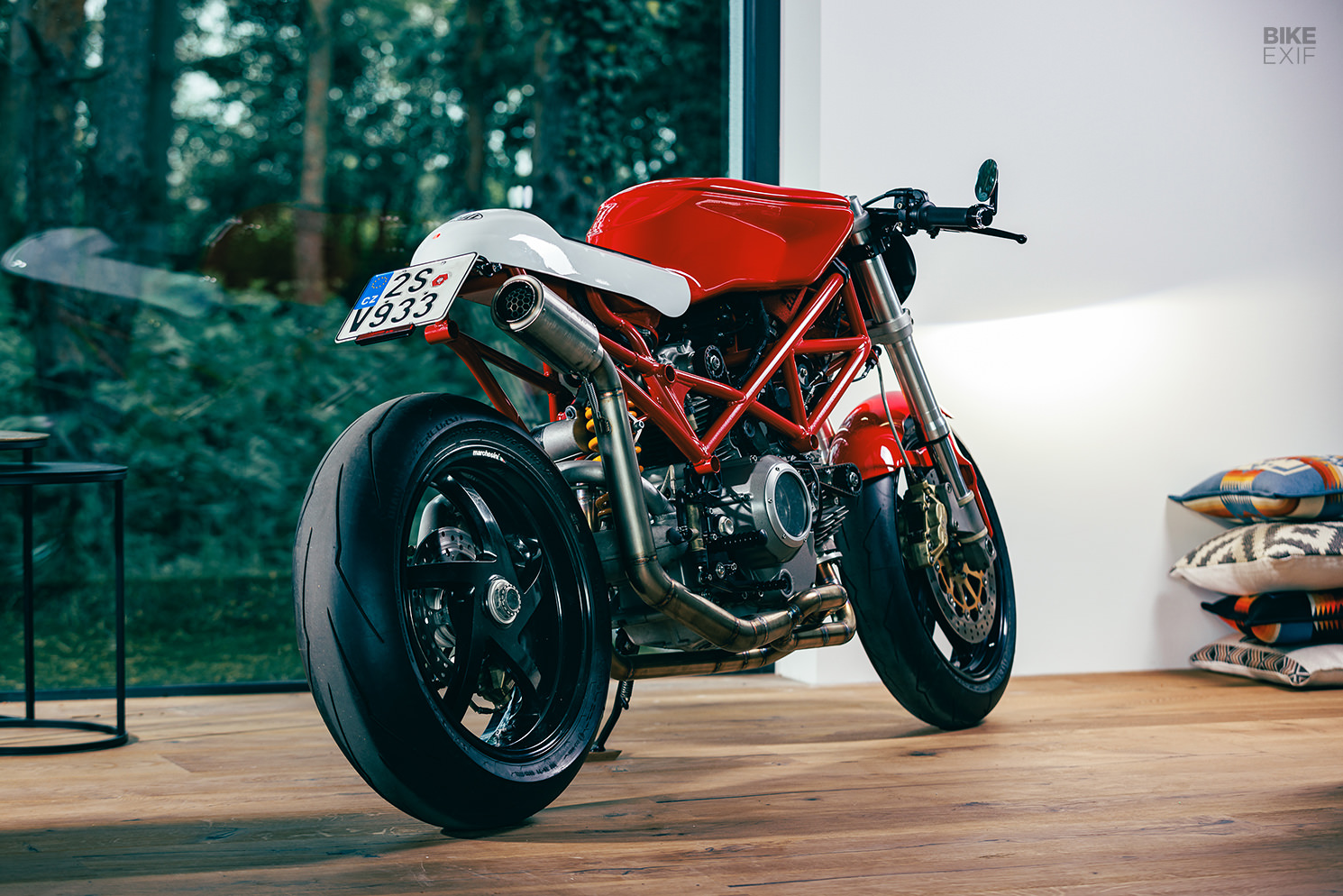
The biggest change is the new bodywork—most notably the fuel tank, which was taken from a Ducati 999. It’s a surprisingly good fit for the Monster, with the open space beneath it emphasizing the trellis frame and L-twin motor’s rear cylinder.

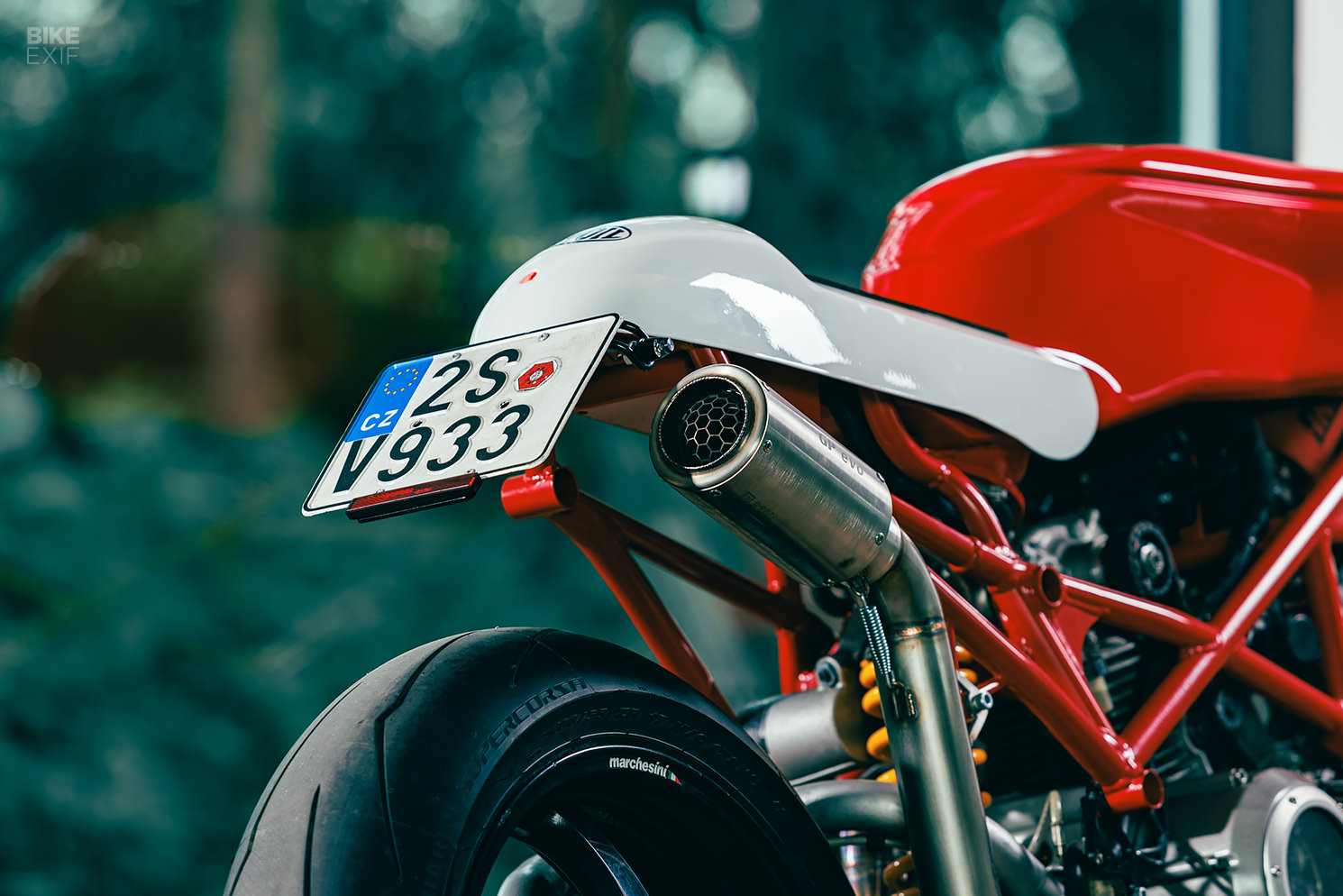
Gas & Oil tweaked the frame to accommodate the tank out front, and fabricated a new subframe out back. A fiberglass tail section sits up top, trimmed with the scantest of seat pads. Like the 999 tank, the tail unit feels slightly separated from the bike, giving the Monster a lithe, mechanical feel.

Custom Ducati Monster 620 by Gas & Oil Bespoke Motorcycles
There’s a tiny Kellerman LED taillight integrated into the back of the tailpiece, with a numberplate bracket featuring Motogadget LED turn signals to keep things street-legal. The rear hump hides all of the electronics, including a JMT Lithium battery and a Motogadget mo.unit.

Moving lower down, Gas & Oil grafted on the single-sided swingarm from a Ducati Monster S2R. The S2R also donated its Marchesini rims and Showa shock, making the bike even less recognizable as a Monster 620.

Custom Ducati Monster 620 by Gas & Oil Bespoke Motorcycles
At the front of the bike, the Monster’s large round headlight was ditched in favor of a tracker-style number plate. Protruding through the plate is a single LED projector from LSK Electronics—a local Czech supplier of electronic bike parts. The factory handlebars were replaced by M-Style clip-ons, fitted with Motogadget bar-end turn signals and mirrors. The throttle assembly, grips, and controls are also new.

With the handlebar risers no longer in use, Gas & Oil fabricated a housing for a tiny Motogadget speedo that doubles up as a blank-off plate. It’s a clever way to tidy up the cockpit without trimming the top yoke, and leaves the door open for a handlebar swap in the future.

Custom Ducati Monster 620 by Gas & Oil Bespoke Motorcycles
With around 60 hp on tap from its lively L-Twin, the Monster 620 is spritely enough to get your heart racing on twisty backroads. This one gets a little help from a pair of UNI foam filters, custom-made stainless steel exhaust headers, and a Sharon muffler. And since Gas & Oil’s mods have undoubtedly shaved a few pounds off the original 390-pound dry weight, it should be even more fun to ride.

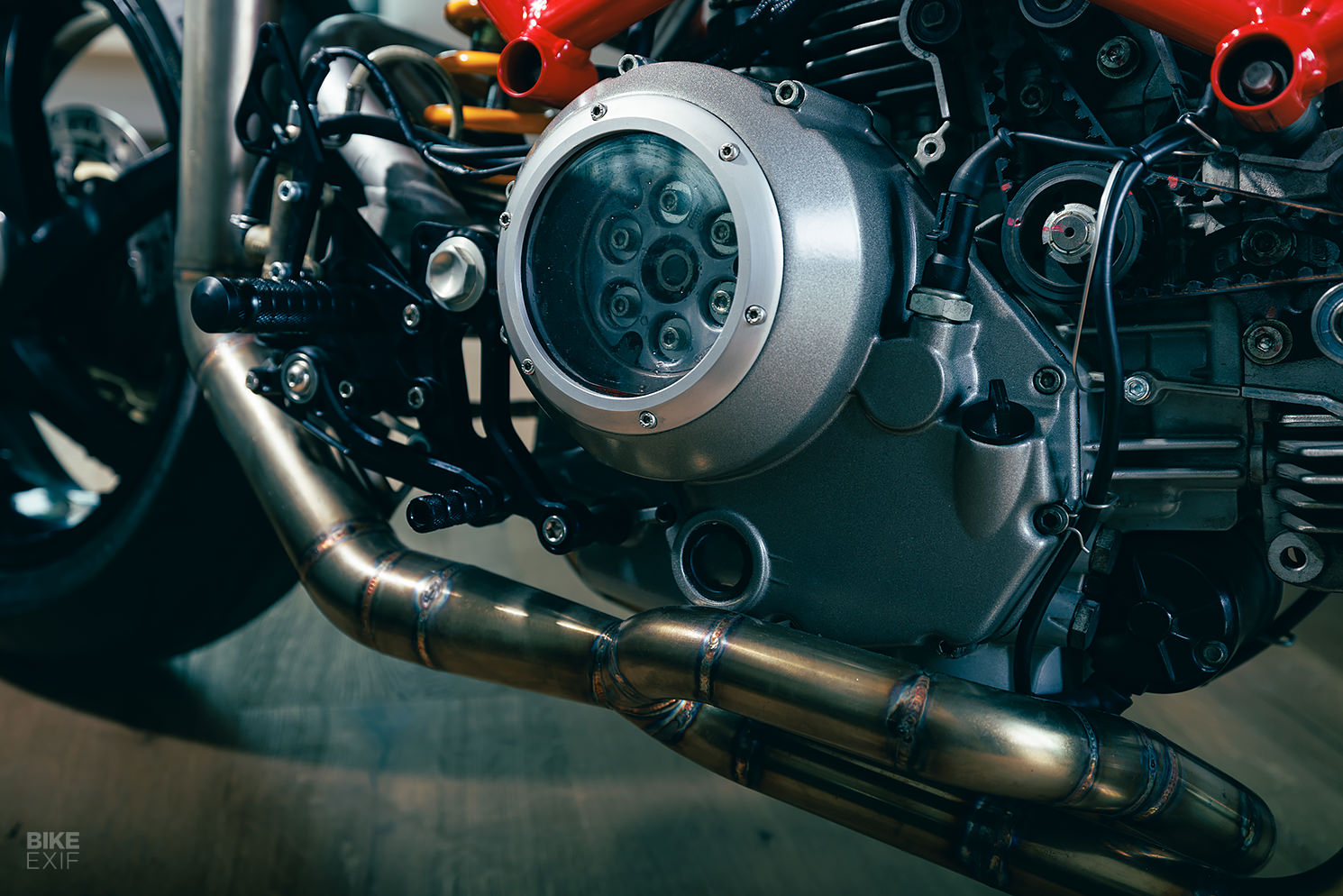
Pirelli Diablo Supercorsa tires add a sufficient amount of grip, while CNC Racing footpegs and a clear clutch cover (because it’s a Ducati) add an extra dose of style.

Custom Ducati Monster 620 by Gas & Oil Bespoke Motorcycles
The Monster’s livery is quintessentially Ducati. Gas & Oil settled on red for the frame, tank, and front fender, then painted the tail section white. It pops hard against the red base, further accentuating the 999 fuel tank’s sculpted lines.

Low weight, sticky tires, clip-ons, and a total lack of comfort; it sure looks like Gas & Oil’s client got exactly what he wanted.

Gas & Oil Bespoke Motorcycles | Facebook | Instagram | Images by Jakub Frey

Custom Ducati Monster 620 by Gas & Oil Bespoke Motorcycles


from Bike EXIF https://ift.tt/HguVxbe