Friday, 3 December 2021

Vintage Fresh: Slipstream’s Honda CL350 scrambler

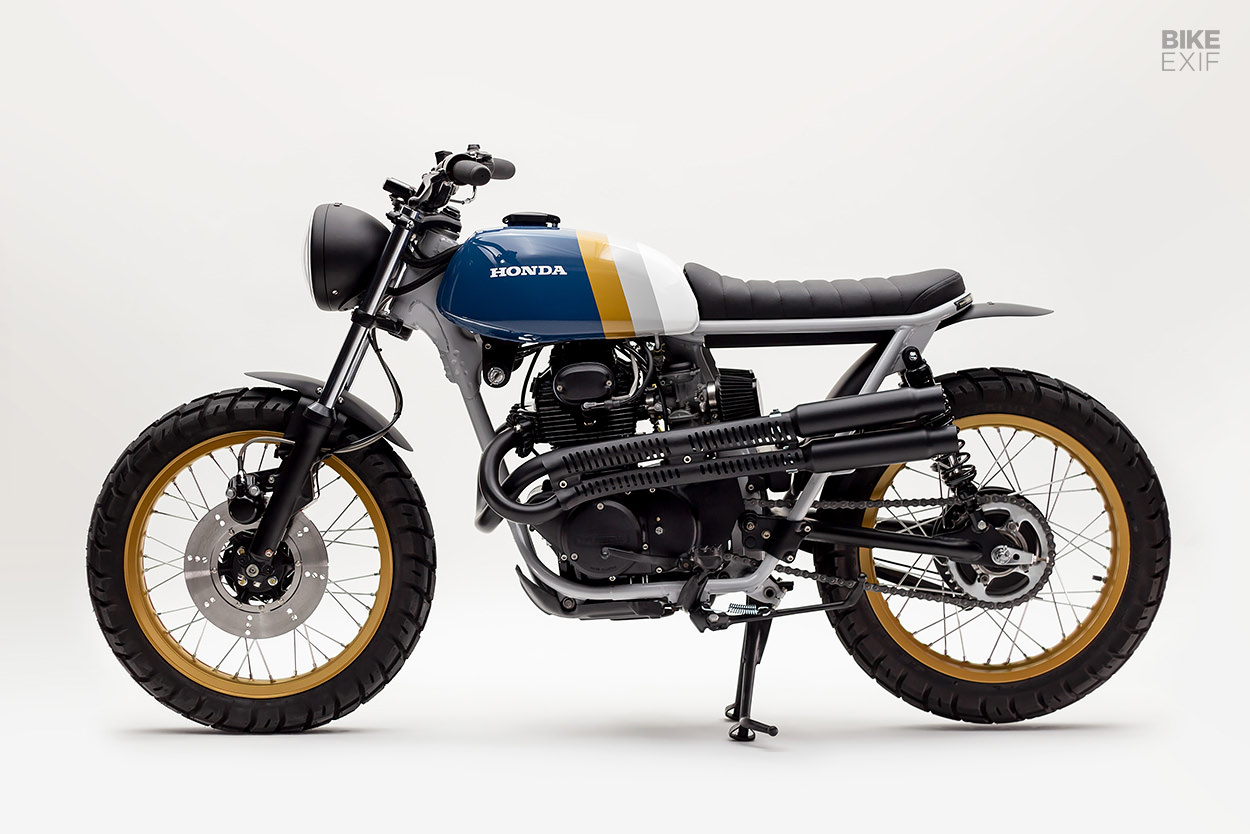
Honda CL350 scrambler by Slipstream Creations
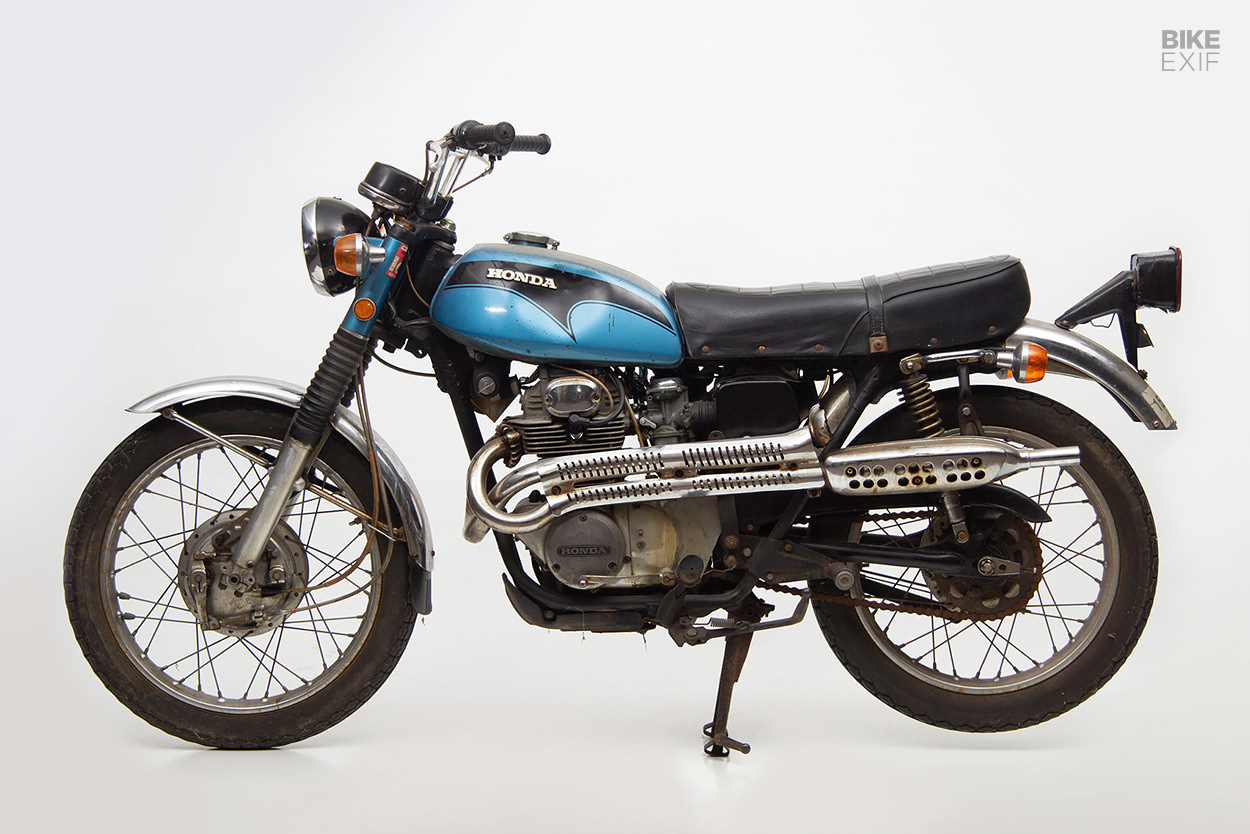
Honda motorcycles have a reputation for being unkillable, but whoever used to own this Honda CL350 sure gave it their best shot. By the time it ended up at Slipstream Creations, it had a missing muffler, a massive dent in the fuel tank and a Tupperware container for a taillight housing. But true to form, the 49-year-old engine still ran.

Based in St. Louis, Missouri, Slipstream Creations used to be a one-man band run by James Fawcett. His son’s recently joined the team, and the two take on anything from full bike builds to parts fabrication, paint and powder coating. They also make furniture, tackle metal fabrication jobs, and are currently building a custom overland trailer.
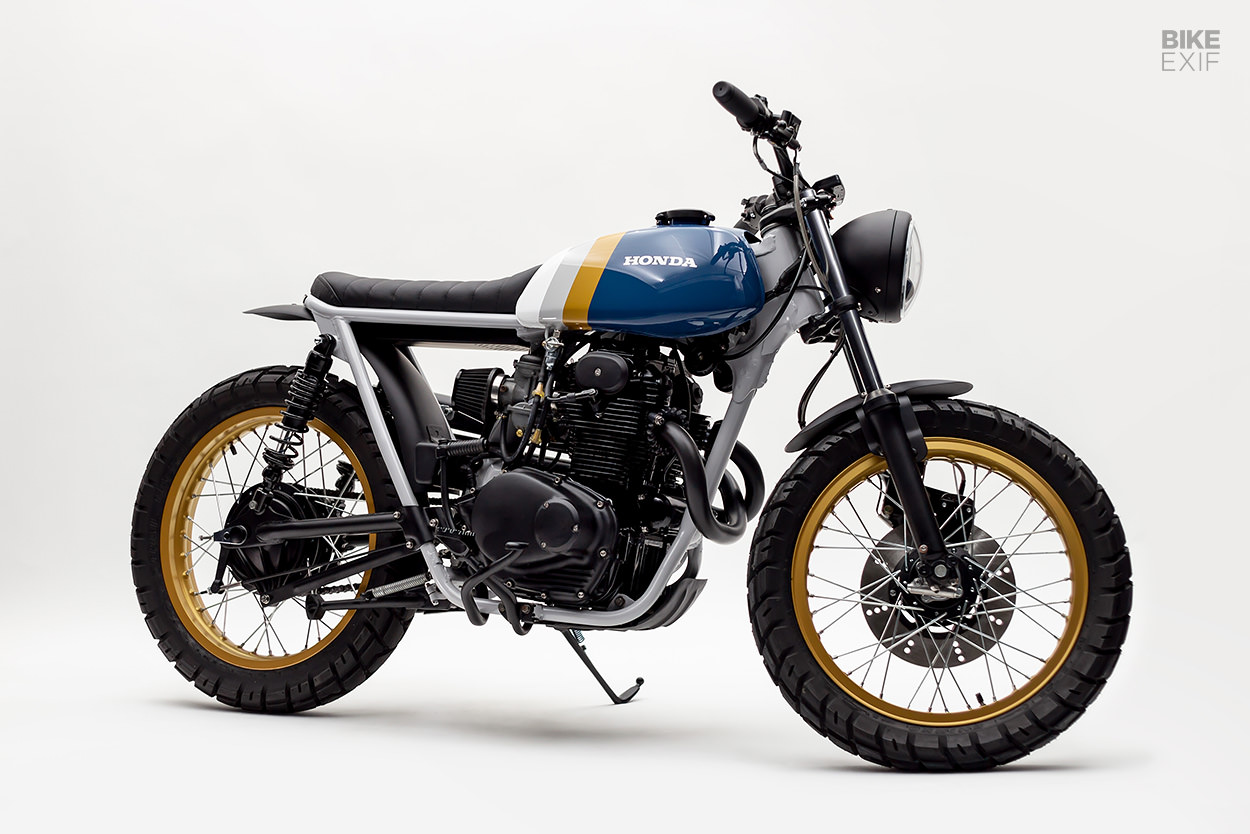
Honda CL350 scrambler by Slipstream Creations
When it comes to motorcycles, James has a thing for older small-capacity Hondas. So this CL350 project was right up his alley. “The 1972 Honda CL350 is the iconic 70s scrambler that gave thousands of riders a taste of fun and freedom in a versatile, reliable package,” he says.

“With a variety of restomod and custom scrambler ideas on the table, we knew the CL would be a great platform to build on. Working collaboratively with the customer, we started down the road together with a vague idea of where we were headed—and the final product began to reveal itself organically as we progressed.”
Honda CL350 scrambler by Slipstream Creations
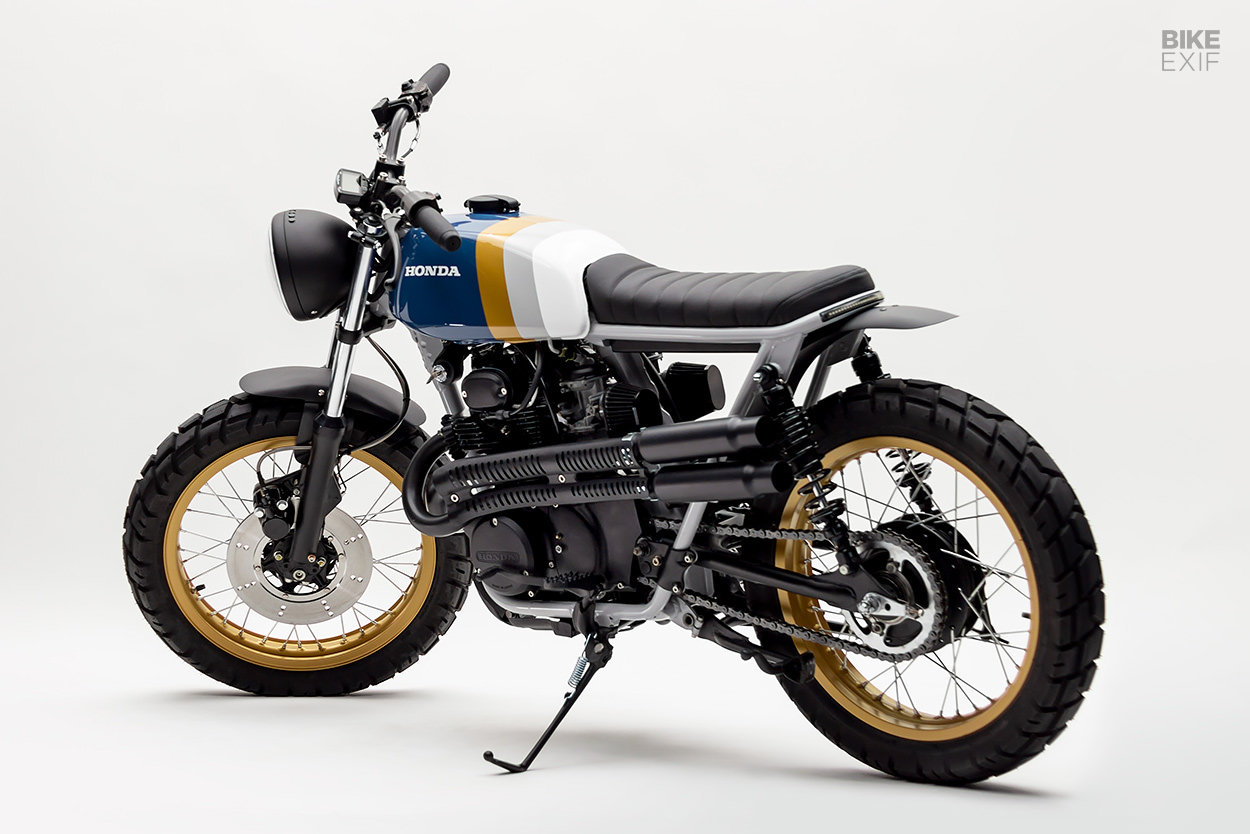
Slipstream started by ditching the CL’s stamped steel subframe, and replacing it with a more elegant chromoly unit. Since the customer plans to ride solo, the guys opted for a shorter rear end, and shaved off the OEM passenger peg mounts too. New tank brackets and shock mounts helped to even out the CL’s lines, for a sharper silhouette.

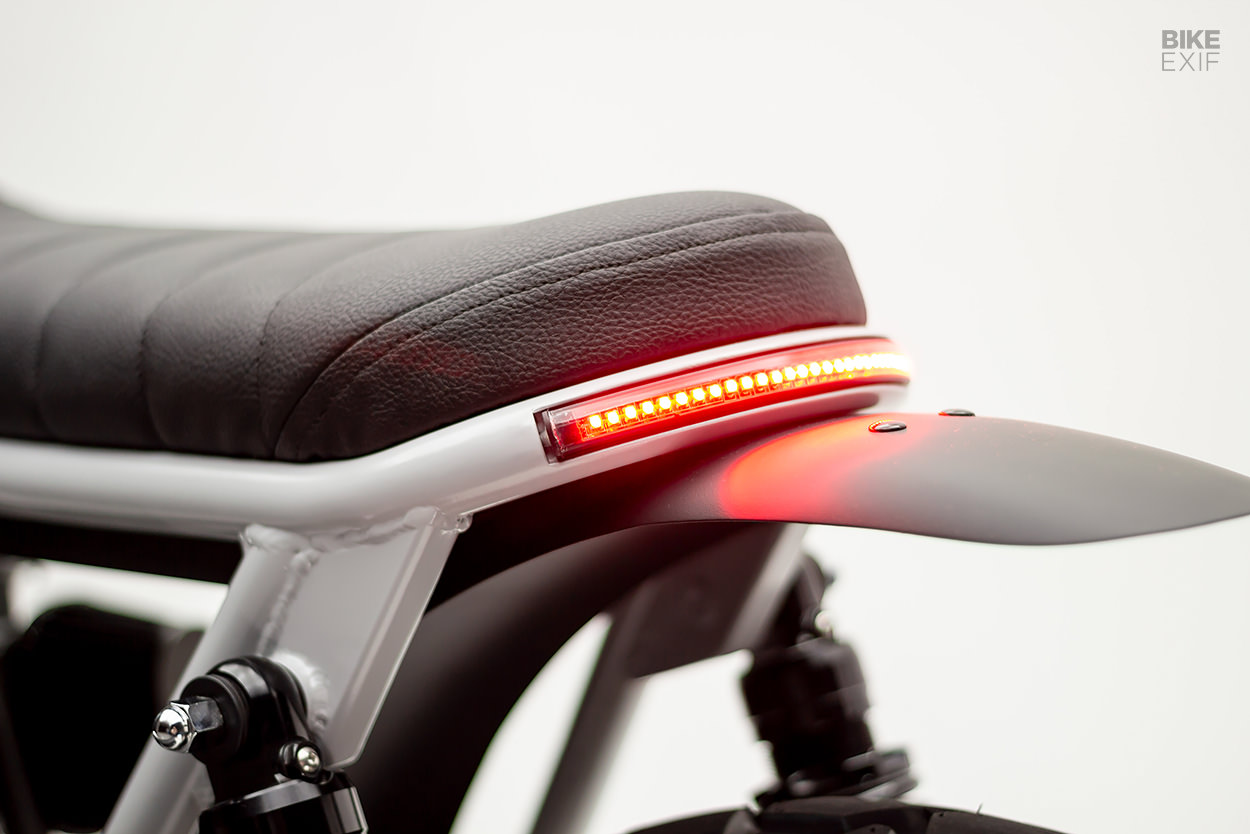
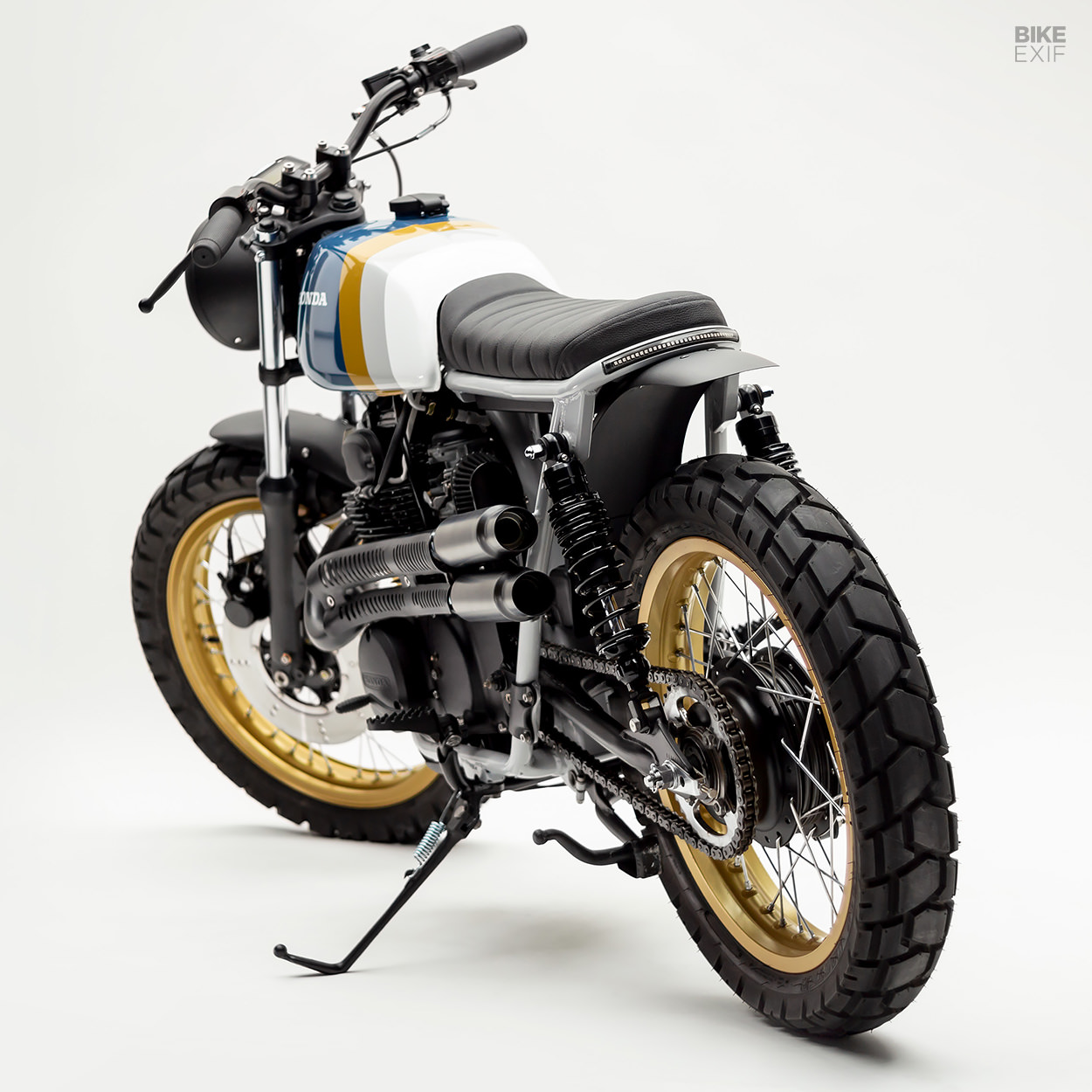
There’s a new seat up top, with a custom battery tray tucked away underneath. Out back is an integrated LED strip to handle both taillight and turn signal duties. A custom rear fender keeps muck at bay.
Honda CL350 scrambler by Slipstream Creations
Slipstream also installed a new pair of aftermarket shocks, then swapped the front end for the forks and disc brake from a Honda CB360. It was a relatively simple swap, with some cleanup work around the yokes to suit the new speedo and headlight mounts.

Lower down are a set of 18” rims, wrapped in dual-sport rubber.
Honda CL350 scrambler by Slipstream Creations
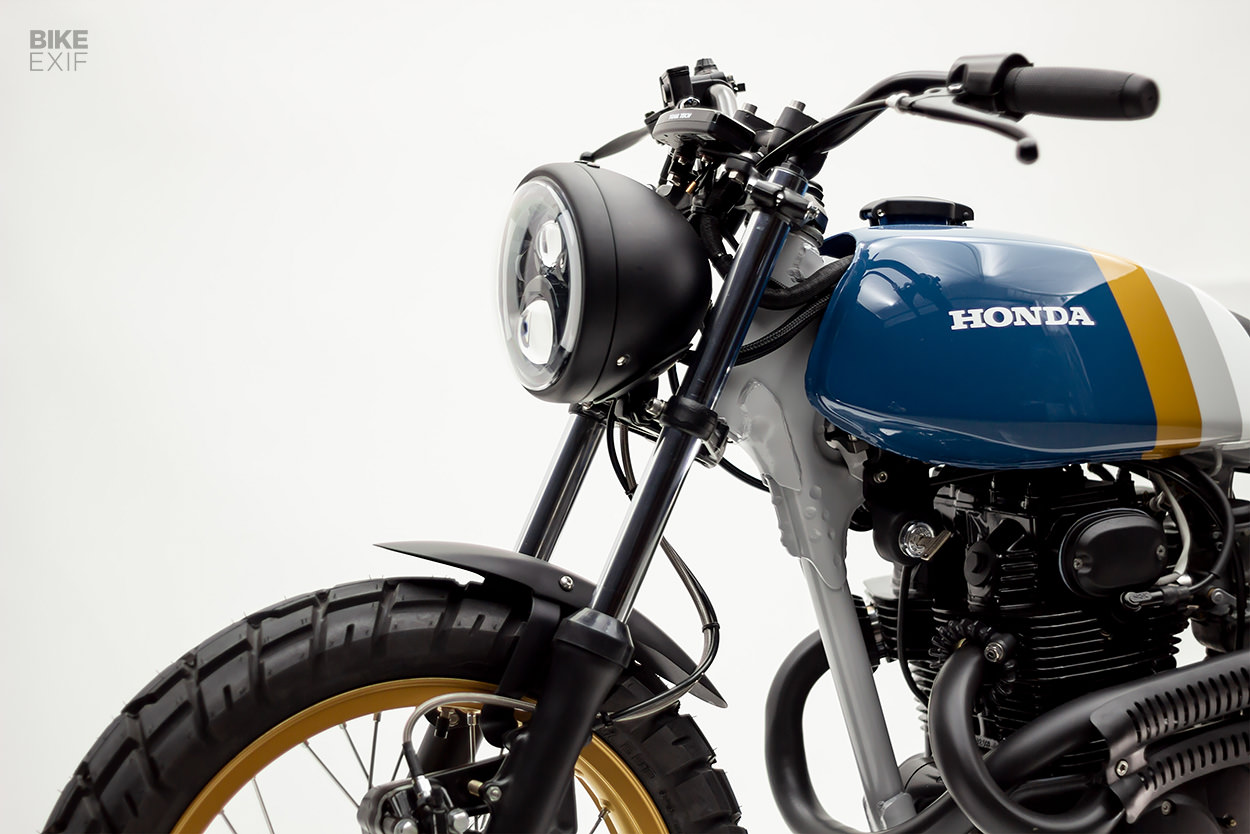
Remarkably, this CL350 still wears its original fuel tank. “It required a lot of massaging to straighten some massive dents,” says James.

It still has its OEM headlight bucket too, now fitted with an LED light with integrated turn signals. It also hosts a small array of LED idiot lights up top, which complement the ultra-slim Trail Tech Vapor dash. New handlebars and grips complete the cockpit.
Honda CL350 scrambler by Slipstream Creations
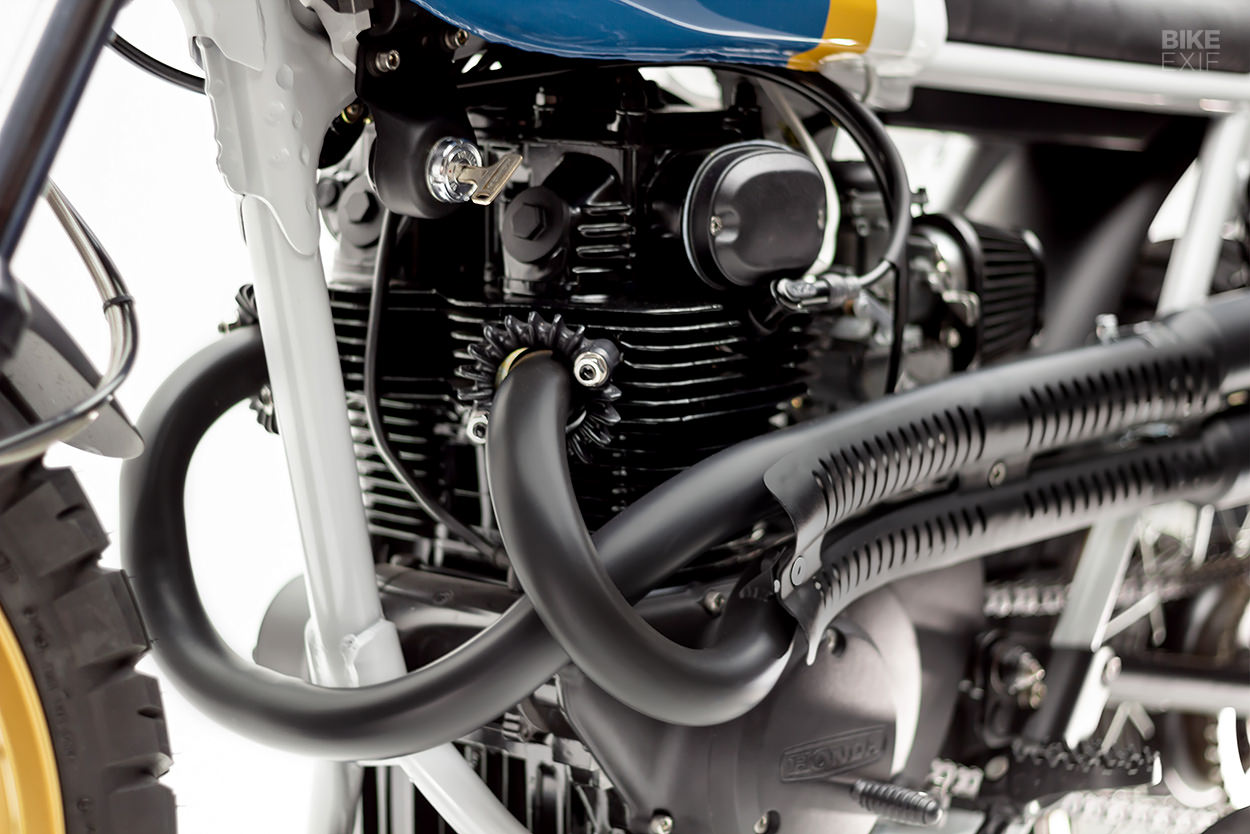
Given the healthy condition of the motor, it needed nothing more than a thorough service, with new gaskets and seals, to keep it ticking for another half century. “Our goal was never to turn this bike into a speed demon,” says James. “From a rider’s perspective, we still wanted the same fun and approachable experience that the CL350 had back in its day.”

The air box was ditched for a pair of pod filters, and the stock headers were capped off with a pair of off-the-shelf mufflers. Then the whole system was treated to a black Cerakote finish.
Honda CL350 scrambler by Slipstream Creations
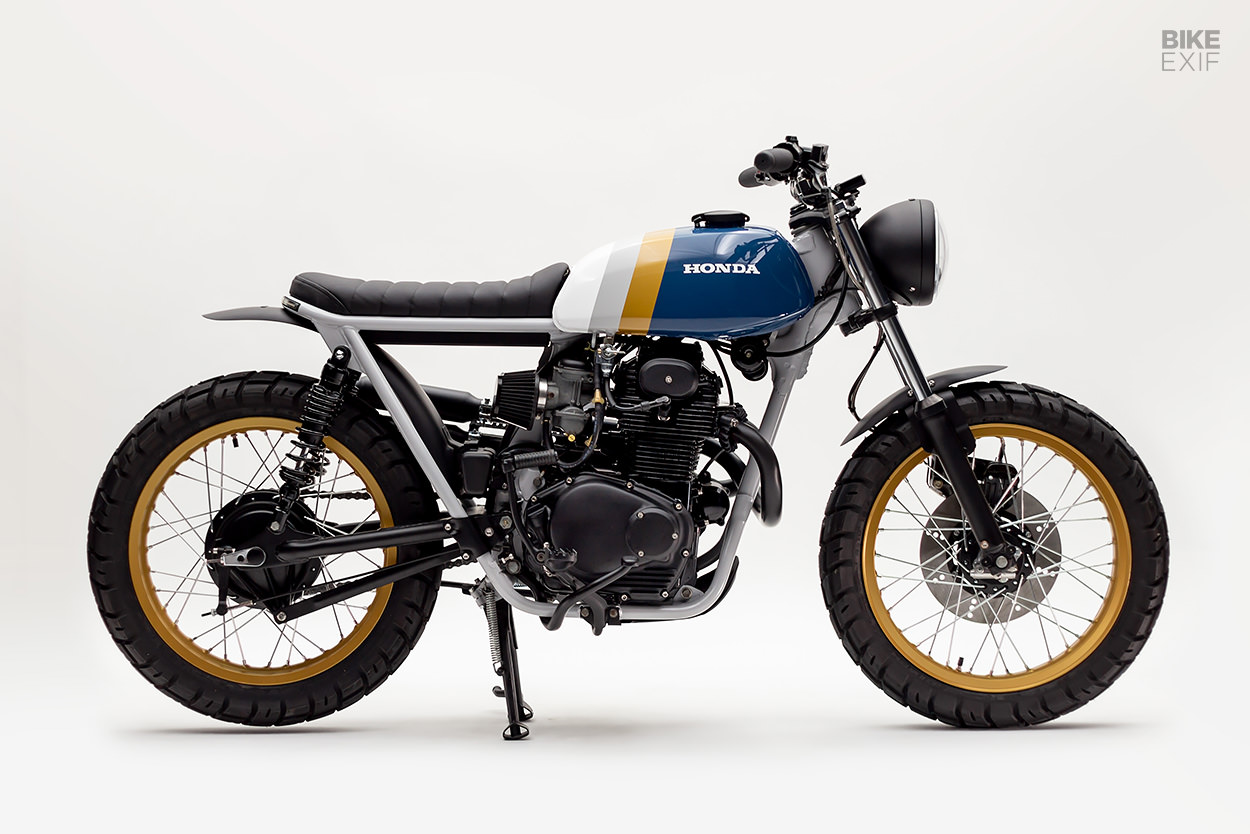
Then it was onto the CL350’s new livery. A coat of light grey on the frame, and gold on the rims, formed the basis for the rest of the color scheme. James is a stickler for details—so the stripes on the tank run parallel to the frame’s down tube, and are echoed in the stitching pattern on the seat.

Virtually everything else on the bike was finished in black, leaving this old Honda looking box fresh. And every last detail you see here was executed in-house, by Team Fawcett.
Honda CL350 scrambler by Slipstream Creations
We have a soft spot for the Honda CL350 and would take a stock one home in a heartbeat. But Slipstream Creations make a strong case for tweaking the iconic scrambler.

Equal parts modern and classic, this tidy little restomod is about as good as it gets… especially when you consider how far it’s come.

Slipstream Creations | Instagram
1972 Honda CL350


from Bike EXIF https://ift.tt/3IhUuTN

Cadillac Engineers Ready New LYRIQ EV for Production (Video)

Cadillac engineers recently completed the “80 percent” validation drive for the 2023 LYRIQ, a critical milestone for the automaker’s first EV. By confirming all components and technologies are at or beyond 80 percent, engineers can now focus on fine-tuning the LYRIQ before production (scheduled for early 2022 at GM’s Spring Hill, Tennessee, assembly plant).

Play the video to see how Cadillac engineers go about testing the LYRIC.

Original article: Cadillac Engineers Ready New LYRIQ EV for Production (Video)


from Automoblog https://ift.tt/3diHWxi

Thursday, 2 December 2021

Hyundai Seven Concept: All-Electric Family SUV Features Stunning Lounge-Like Atmosphere

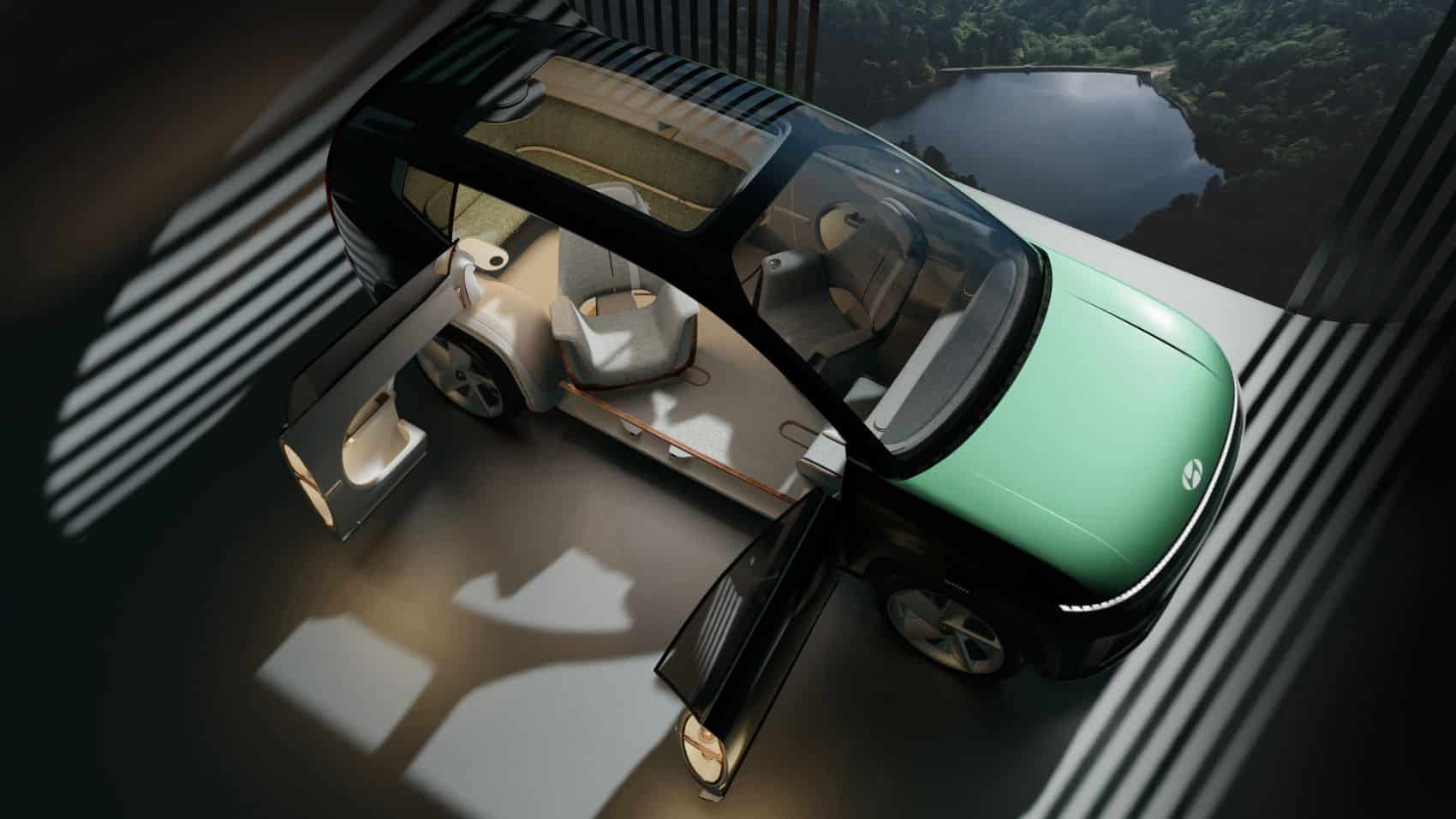
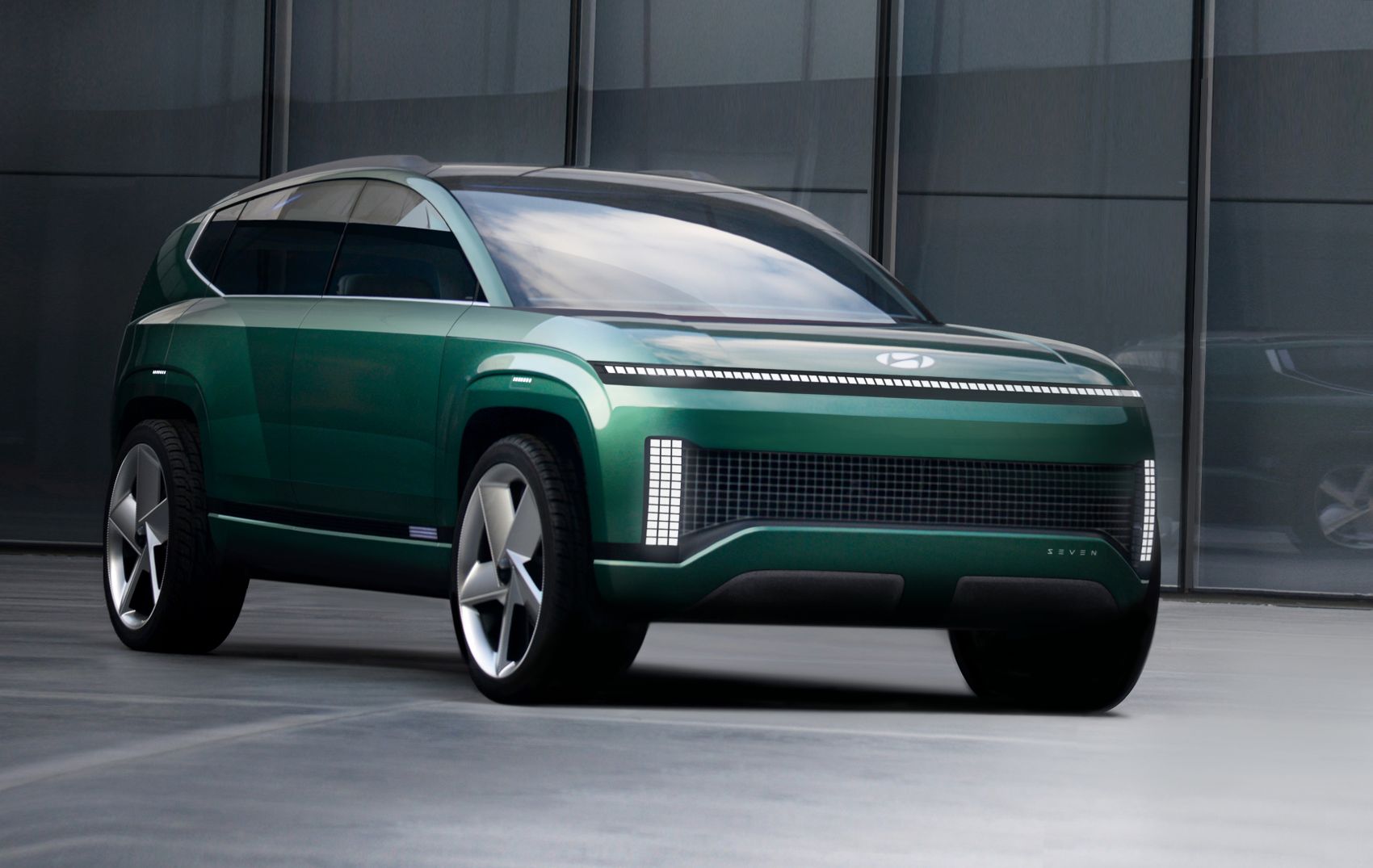
The Hyundai Seven Concept left a lasting impression at AutoMobility LA 2021. Dubbed as Hyundai’s sport utility electric vehicle (SUEV), the Seven Concept previews the incoming Ioniq 7, an essential part of the automaker’s electrification strategy. It started with the segment-busting Ioniq 5, an electric hatchback that drives as well as it looks (or so they say). As Hyundai fortifies its commitment to carbon neutrality by 2045, the Seven Concept is a sneak peek at what buyers can expect from a Hyundai flagship electric SUV.

“The Seven Concept demonstrates Hyundai’s creative vision and advanced technological development for our electrified mobility future,” said Jose Muñoz, President and CEO, Hyundai Motor North America. “Its innovative interior space, eco-friendly powertrain, and cutting-edge safety and convenience technologies reveal an exciting future for Hyundai SUV customers.”

Living Space On Wheels

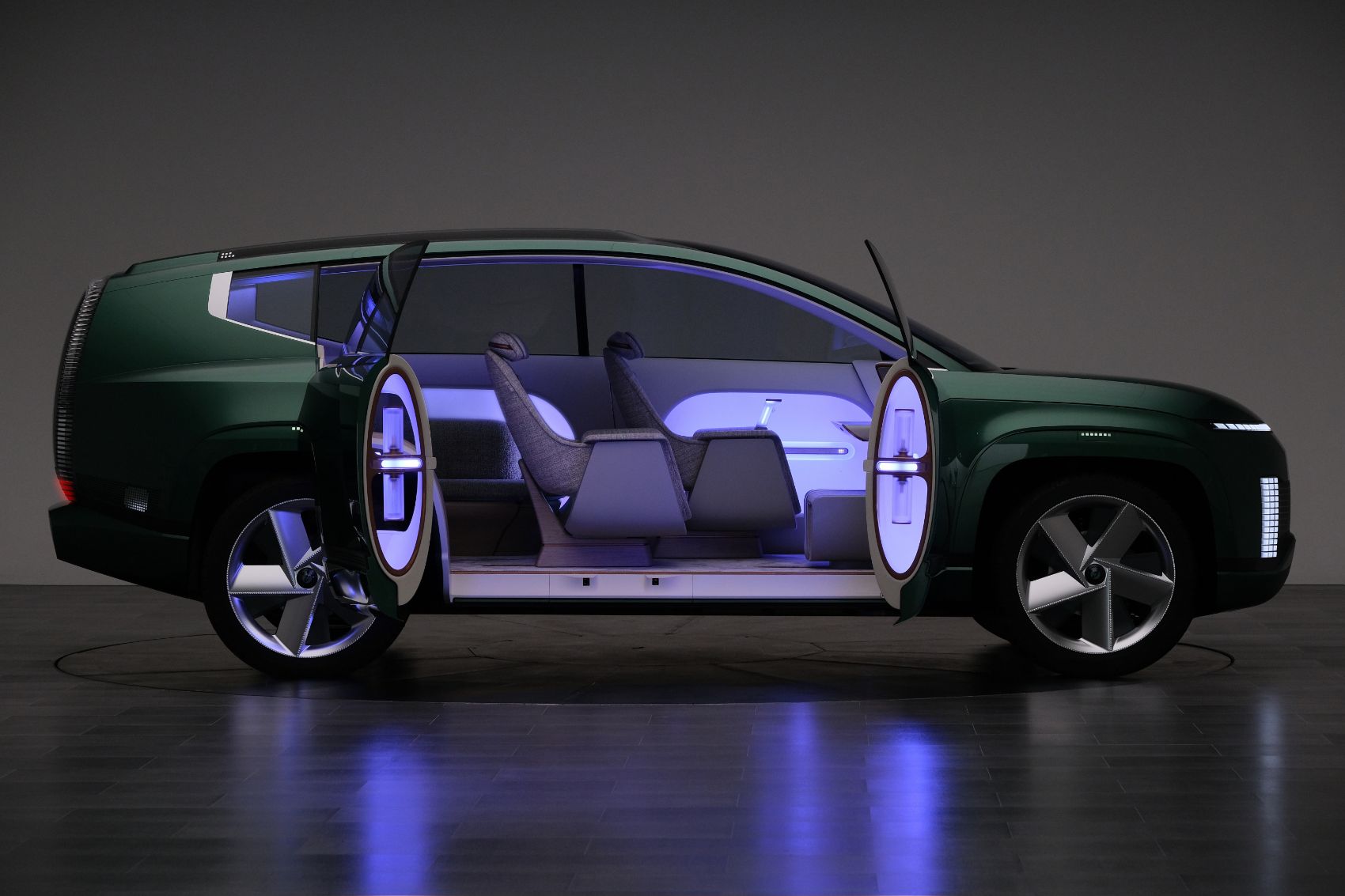
It may not look like it, but the Hyundai Seven is a big vehicle. We reckon it’s large enough for seven – maybe eight – seats, but Hyundai decided to present the Seven Concept as a “living space on wheels,” highlighted by its rear pillarless doors, lounge-like seats, and expansive interior room. And really, isn’t space the ultimate luxury of all?

With the Seven’s 3.2-meter wheelbase, flat floor (a significant benefit of Hyundai’s EV-dedicated E-GMP platform), and short overhangs, Hyundai had the freedom to furnish the interior unlike any other SUV on the road, electric or whatnot. “Seven represents our commitment to a human-centered approach to redefining everyday experiences,” said Thomas Schemera, Executive Vice President and Global Chief Marketing Officer, Hyundai Motor Company.

Since we’re talking about a concept, the Seven’s interior accouterments are slightly out of this world. Take the steering wheel, for instance. Instead of a conventional round steering wheel, the Seven has a tiller (literally), a retractable control stick that slithers away in full-autonomous mode. And those lounge chairs? They swivel gracefully depending on the chosen driving mode, including the front seats.

Hyundai Seven Concept.
Hyundai Seven Concept. Photo: Hyundai Motor America.

In-Car Appliances & Sanitation Tools

Yes, the Hyundai Seven Concept has in-car appliances to make the interior feel like the warm grasp of home. It has a mini-fridge, side door ambient lighting that resembles a small lampshade, and innovative shoe-care compartments with a deodorizing and sanitizing feature to keep your sneakers smelling like roses. In addition, the glass roof is a panoramic screen that can display your favorite media or wallpaper.

That’s not all. The Seven has a Hygiene Airflow System like what you’ll find in a sophisticated passenger aircraft. The system activates independently whether the vehicle is moving or not. It draws air from intakes in the roof rails to the exterior vents behind the rear wheels in vertical mode, while the air flows from the dash to the rear vents in horizontal mode. In this way, the system reduces cross-contamination among its occupants while isolating the airflow between the front and back.

Furthermore, the Hyundai Seven Concept has a built-in UVC sterilization system that automatically activates after all passengers are outside the vehicle, helping rid the cabin of harmful viruses and bacteria. In addition, the cabin is lined with hygienically-treated fabrics and copper surfaces to reduce bacterial and viral contamination.

Sustainable Construction

As expected from a modern EV concept, the Hyundai Seven is brimming with eco-friendly materials and construction techniques. Hyundai claims the bamboo wood, carpets, mineral plaster, bio-resins, and interior paint are from renewable sources to reduce pollution.

Hyundai Seven Concept.
Photo: Hyundai Motor America.

Futuristic Design

We’re not big fans of the Hyundai Seven’s design, particularly its boxy, station wagon-like rear end. However, we’re in favor of the stretched wheelbase and un-SUV design cues. Unlike conventional SUVs, the Seven has smoother lines, curvier proportions, and a streamlined roofline.

Modern design cues include Parametric Pixel front lights that display a welcome lighting sequence upon boarding the vehicle. Oh, and those wheels have active air flaps that retract for lower drag or deploy to cool the brakes.

Electric Performance

Hyundai failed to divulge the electric hardware under the sheet metal. Still, the automaker did mention it’s targetting over 300 miles of range when the Seven Concept enters production as the Ioniq 7 in the next year or two. It also said the Seven could recharge its batteries from 10 to 80 percent in around 20 minutes using a 350 kW DC fast charger. If we had to guess, it could have one or two electric motors pumping out no less than 450 horsepower in its most potent guise.

Hyundai Seven Concept.
The Hyundai Seven concept is built upon Hyundai Motor Group’s Electric-Global Modular Platform (E-GMP), a dedicated Battery Electric Vehicle architecture. Photo: Hyundai Motor America.

Full Steam Ahead Towards Electrification

Hyundai aims to sell 560,000 electric vehicles by 2025, and the automaker plans to introduce more than 12 EVs from here on end to achieve an eight to 10 percent global EV market share by 2040. Given the car-buying public’s current love affair with big SUVs, the Seven Concept leads Hyundai’s charge towards the industry’s most significant shift since Henry Ford invented the assembly line.

Alvin Reyes is an Automoblog feature columnist and an expert in sports and performance cars. He studied civil aviation, aeronautics, and accountancy in his younger years and is still very much smitten to his former Lancer GSR and Galant SS. He also likes fried chicken, music, and herbal medicine.

Photos & Source: Hyundai Motor America.

Original article: Hyundai Seven Concept: All-Electric Family SUV Features Stunning Lounge-Like Atmosphere


from Automoblog https://ift.tt/3pkAcjT

Ram & Lucchese Launch New Premium Boot Collection for Country Guys & Gals

The lyrics of I Love This Life by Locash suddenly come to mind. (“I love my boots broke in!” and “I love driving my truck across the railroad tracks”). Indeed, cowboy boots and trucks go together like Oreos and milk, and Ram is all about spinning their wheels and castin’ their reels way back on them old county roads (great Billy Currington song). Ram Trucks and Lucchese have launched a special boot collection inspired by the Limited Longhorn 10th Anniversary Edition

“With any partnership Lucchese enters, we look for shared values and common purpose,” explained Doug Hogue, vice president of product and marketing for Lucchese. “Ram clearly exemplifies a drive and desire to provide the highest quality and most premium experiences to their customers.” 

Available Boots

The handcrafted line includes five Ram-branded boots for men and women, with retail prices starting around $700. They include:

  • Tooled Western Boot: Men’s hand-tooled quarter and giant gator vamp ($2,495).
  • Caiman Horseman Boot: Men’s hand cut inlay quarter and giant belly caiman vamp ($995).
  • Ostrich Horseman Boot: Men’s fancy stitch quarter and hand stained ostrich vamp ($7,450).
  • Horseman Boot: Women’s side seam quarter and inlay with goat vamp ($695).
  • Giant Gator Western Boot: Women’s inlayed quarter and giant gator vamp ($1,395).

“We’re excited to launch our design collaboration with premium boot maker Lucchese, showcasing again how the Ram Truck brand takes great pride in delivering a high level of quality and craftsmanship in every product delivered to customers,” said Marissa Hunter, Ram Trucks vice president of marketing – North America. “This one-of-a-kind collection brings together these two high-end brands, drawing inspiration from the premium materials featured inside the Ram Limited Longhorn 10th Anniversary Edition.”

“We are honored and happy to be able to partner on a celebration this exciting,” Hogue added. “Together, we have been able to celebrate the beauty and craft that unites us through the western lifestyle.”

More From Ram & Lucchese

Ram’s “Behind the Badge” hub features an exclusive interview with Ryan Nagode, chief interior designer of Ram Trucks, and Trey Gilmore, director of product development for Lucchese. In the interview, Nagode and Gilmore share the creative process behind designing both trucks and boots.

Photos & Source: Ram Trucks, Lucchese.

Original article: Ram & Lucchese Launch New Premium Boot Collection for Country Guys & Gals


from Automoblog https://ift.tt/3IiHhKk

2023 Subaru Solterra: The Pleiades Star Cluster Has Gone Electric

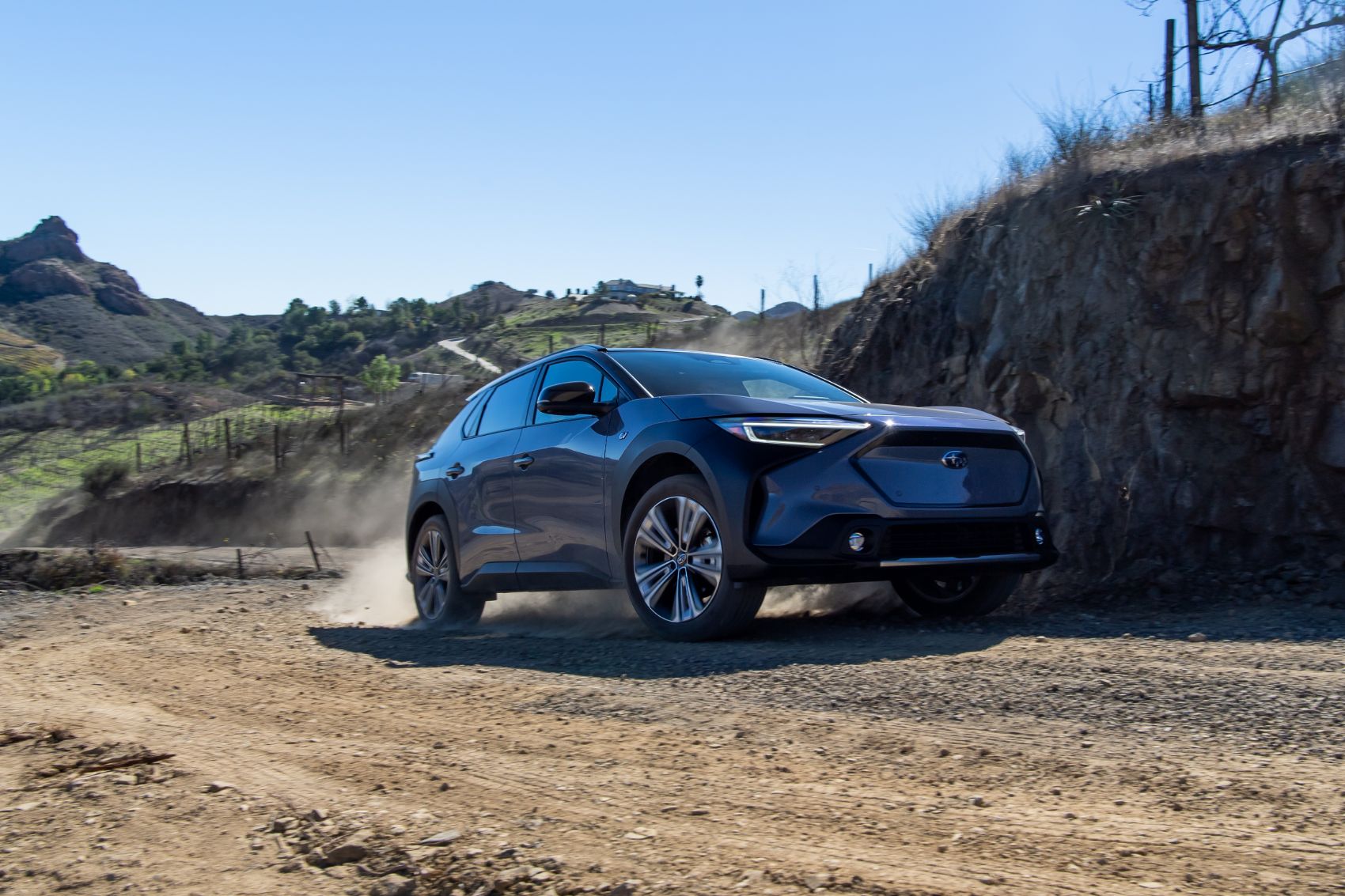
The 2023 Subaru Solterra is the Japanese automaker’s first attempt at an all-electric vehicle for the masses, but it didn’t do it alone. Similar to the BRZ sports car, Subaru got help from Toyota in the process. The result is a slightly high-riding crossover on a battery electric vehicle platform (or “BEV”) jointly conceived by Toyota and Subaru. It’s typically the same architecture underpinning the Toyota bZ4X, and the resemblance between the former and the Solterra is uncanny.

Nevertheless, the two vehicles have varying intents (in our eyes, at least). Whereas the Toyota has a more refined and premium vibe, the Subaru Solterra has a more rugged and outdoorsy attitude with its plastic-clad fenders, but that’s where the differences end. The Subaru Solterra and Toyota bZ4X have the same electric components underneath, so choosing between the two boils down to taste and brand loyalty.

2023 Subaru Solterra: What’s New?

The Solterra is an all-electric vehicle that made its global debut in Japan a week ahead of its official U.S. debut at the 2021 Los Angeles Auto Show. Subaru derived the Solterra moniker from the Latin words for “Sun” and “Earth,” a nod to the brand’s commitment to environmental preservation and sustainability.

The all-new Solterra is a five-seat crossover with 8.3 inches of ground clearance and dual electric motors. In Japan, the Solterra is available with a single electric motor and front-wheel drive.

Symmetrical All-Wheel Drive

The Solterra wouldn’t be a Subaru if it didn’t come with the brand’s mythical symmetrical all-wheel-drive system. All Solterras in the U.S. will have dual electric motors and standard all-wheel drive. Each motor churns out 80 kW of power for a combined output of 215 horsepower and 246 lb-ft. of torque. The drivetrain utilizes Subaru’s electric X-Mode system to deliver relentless grip when you need it most. At the same time, Grip Control with hill ascent and hill descent assist offers surefooted traction over loose or challenging terrain.

2023 Subaru Solterra
2023 Subaru Solterra. Photo: Subaru of America, Inc.

Subaru Solterra Range

The Subaru Solterra has a standard 71.4 kWh battery pack to deliver an estimated 220 miles (354 kilometers) of range. On the other hand, the Japanese market Solterra with a single electric motor and FWD is good for 330 miles (based on the Japanese testing cycle), which is more to our liking. We’re pointing this out because new EVs need to have more than 220 miles of range to entice buyers into taking the plunge.

However, Solterra’s estimated driving range is similar to competitors like the Audi e-tron (22 miles), Volvo C40 Recharge (210 miles), and Ford Mustang Mach-E (211 miles). Still, we’re living in a world where the cheapest Tesla Model 3 RWD offers 267 miles of range. If Subaru (and Toyota) want to draw attention, it needs to equal or surpass Tesla’s benchmark.

Speaking of range, the Subaru Solterra accepts Level 1 or Level 2 AC and DC fast-charging when the batteries go flat. According to Subaru, the Solterra can reach 80 percent in under an hour using a 150 kW DC fast charging station.

Go-Anywhere Design

Thanks to the Impreza WRX’s rallying genes, Subaru vehicles have always had a rugged, outdoorsy, and go-anywhere personality, and the Solterra is no different. Brandishing the evolution of Subaru’s Dynamic X Solid design concept, Solterra has the signature hexagonal grille with a low hood line and slim headlight clusters. Meanwhile, the rear design is unmistakably a Toyota, but Solterra has a dual spoiler on top and a sleek ducktail spoiler in the rear hatch to set it apart from the bZ4X.

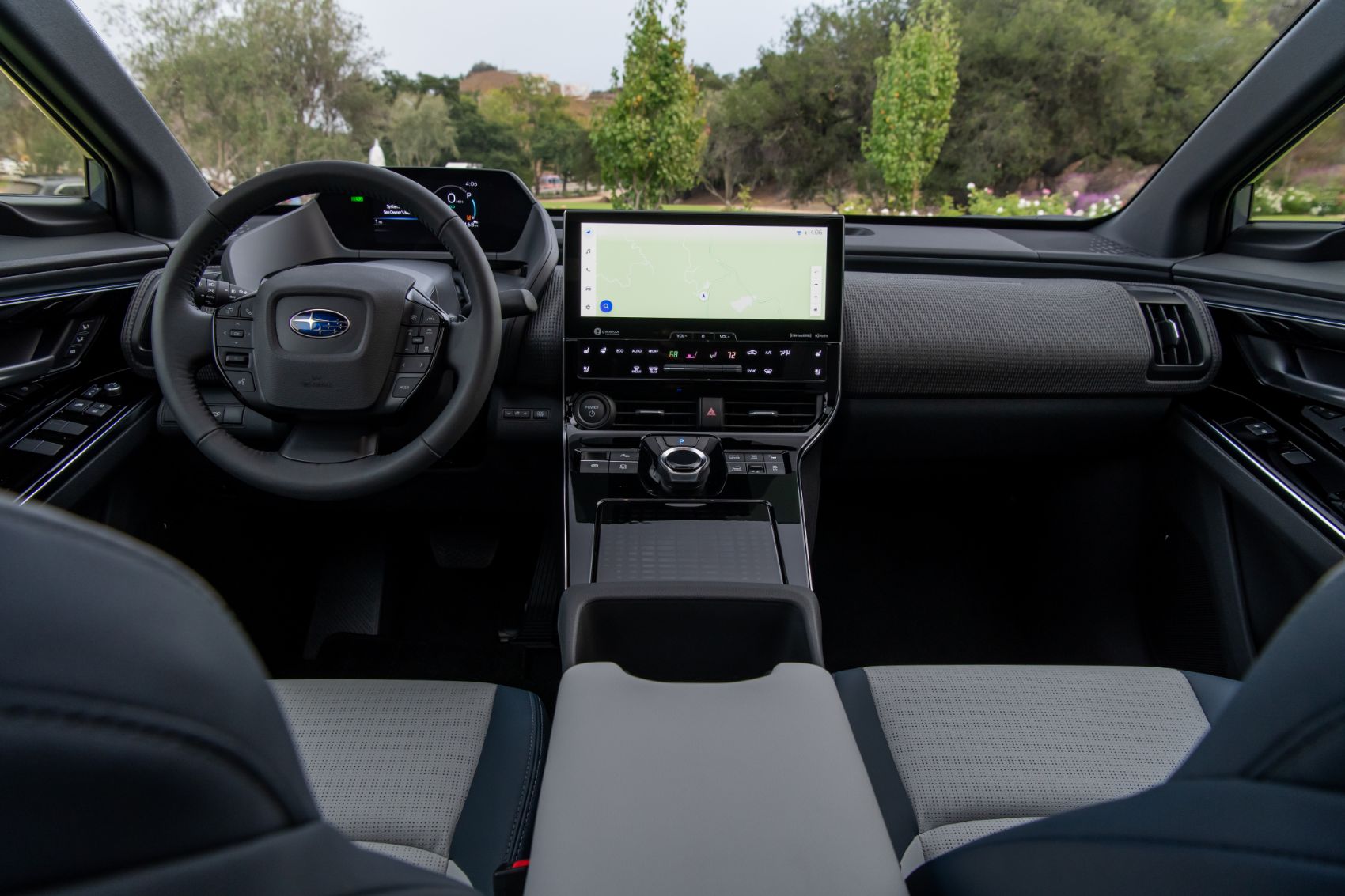
Inside, Solterra has a similar dashboard layout as the bZ4x. It has a digital instrument cluster and a large touchscreen infotainment display. In addition, you can choose the available 12.3-inch touchscreen with wireless Apple CarPlay, Android Auto, smartphone connectivity (with remote lock/unlock and remote climate control features), and wireless charging.

As expected from a crossover, the 2023 Subaru Solterra has more than enough living space to accommodate a small family. It rides on a 112.2-inch wheelbase with shorter front and rear overhangs and a nearly flat floor, enough to unravel up to 126 cubic feet of passenger and cargo space. And in case you’re interested, Solterra has the same length and height as the Toyota bZ4X, but the latter is 10 mm wider than the former.

2023 Subaru Solterra interior layout.
2023 Subaru Solterra interior layout. Photo: Subaru of America, Inc.

Numerous Standard Safety Features

The 2023 Subaru Solterra is home to the brand’s EyeSight driver assist technology with blind-spot monitoring, lane changing assist, rear cross-traffic alert, and many more. Solterra is the first Subaru to have a 360-degree surround-view camera system and a Safe Exit Assist system. Of course, it also comes standard with many airbags, including side-curtain, side pelvis/torso, and knee airbags.

2023 Subaru Solterra: Pricing & Availability

The 2023 Subaru Solterra arrives at U.S. dealerships in mid-2022 as a 2023 model. Pricing and other info remain forthcoming, but we reckon base prices to start around $35,000 to $37,000.

When the new Subaru Solterra does arrive, our free and easy search tools* will show you dealer inventory in your area. That tool will also help you obtain the invoice price, which is a good starting point for negotiations.

Alvin Reyes is an Automoblog feature columnist and an expert in sports and performance cars. He studied civil aviation, aeronautics, and accountancy in his younger years and is still very much smitten to his former Lancer GSR and Galant SS. He also likes fried chicken, music, and herbal medicine.

Photos & Source: Subaru of America, Inc.

*Although always free for you, Automoblog and its partners may receive a commission when you use the services provided through that link. MSRP figures are subject to change.

Original article: 2023 Subaru Solterra: The Pleiades Star Cluster Has Gone Electric


from Automoblog https://ift.tt/3GdvI5v

Inch Perfect: Close up with AC Sanctuary’s A16 demo bike

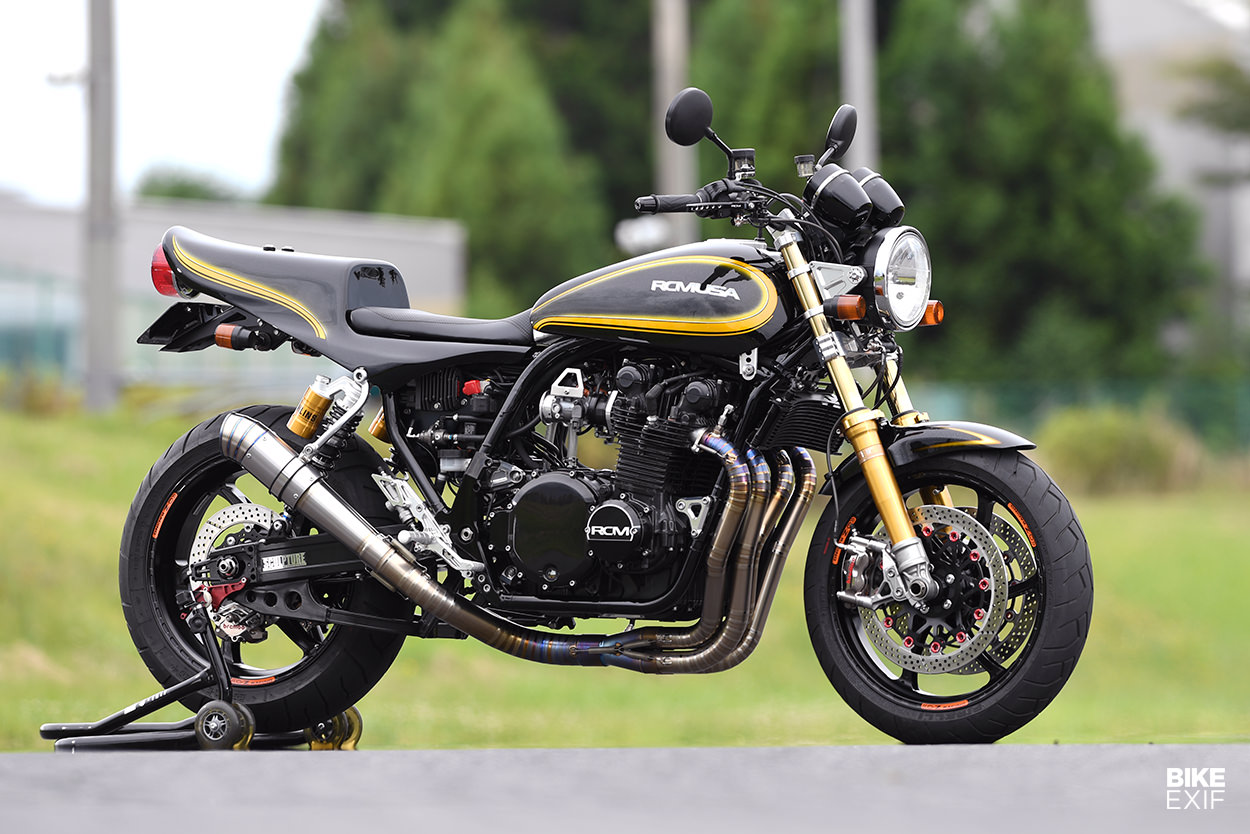
The AC Sanctuary RCM A16
If there’s any proof that motorcycling is a universal language, it’s the global fame of AC Sanctuary. Set up in the mid 90s by mechanic Hiroyuki Nakamura, the Japanese workshop rose out of obscurity to become a high water mark for fast and desirable retro racers.

That’s despite Nakamura-san and his crew speaking no English. The company website is mostly monolingual too, and until three years ago, AC had no overseas representation of any kind.

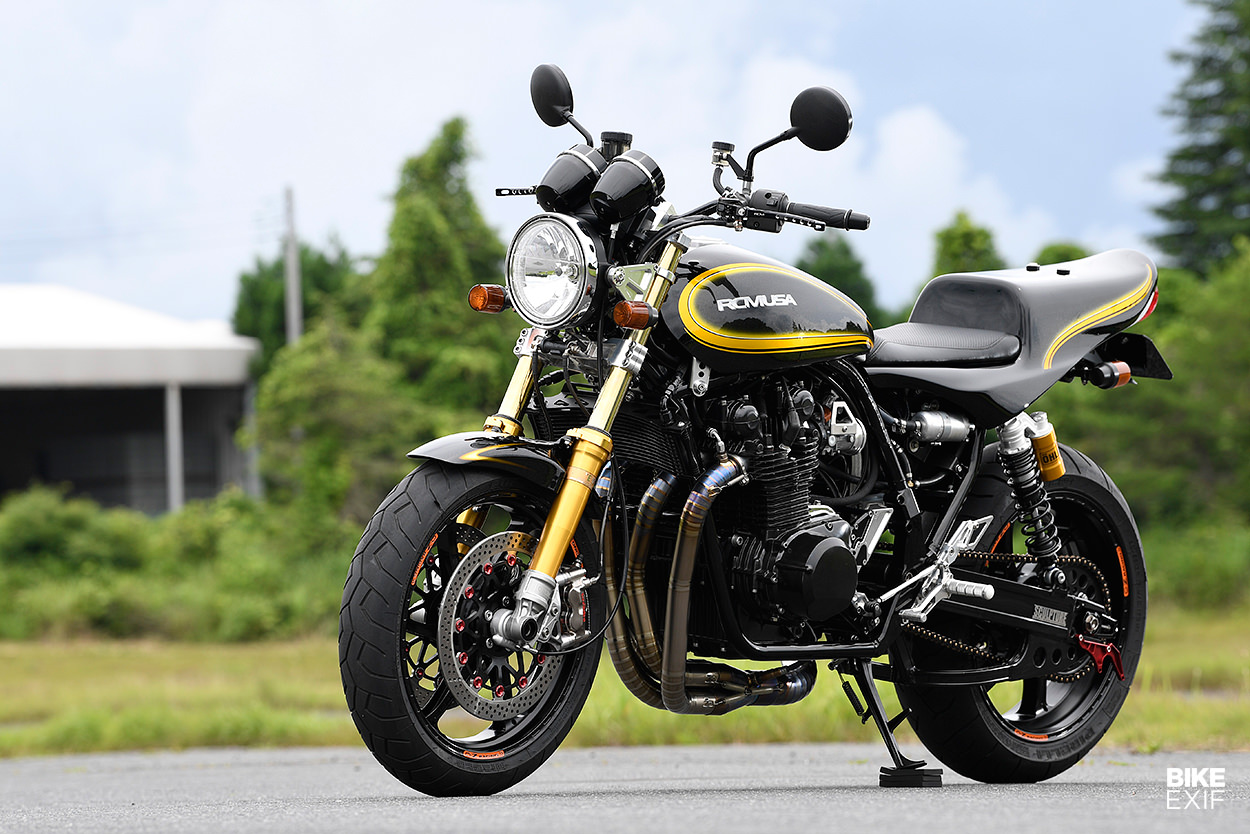
The AC Sanctuary RCM A16
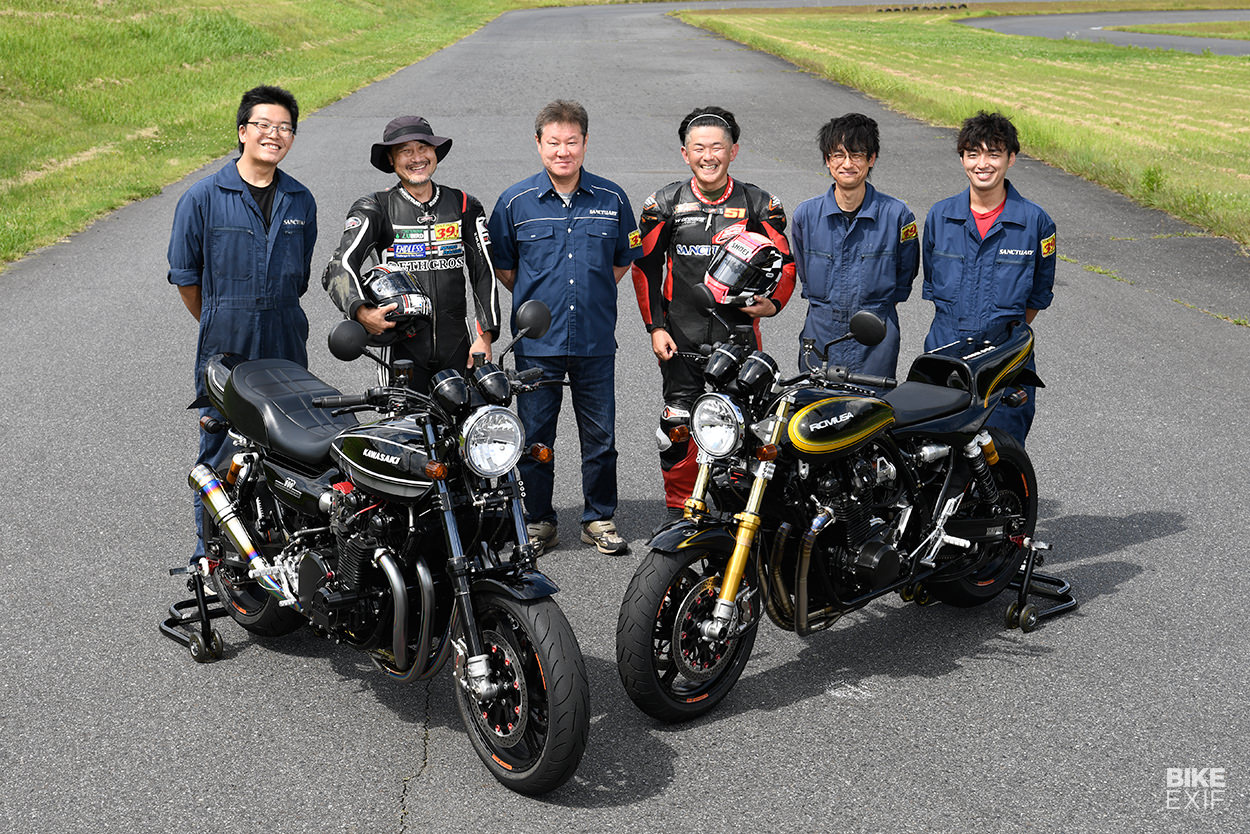
The Asphalt Cowboys opened a small office in Gardena, California, to ease the passage of parts and bikes into the States. And then they shipped over the bike shown here—for potential clients to test ride, presumably before wiring a few million yen to Japan to commission a replica.

This bike is based on the classic Kawasaki ‘Zed,’ the platform that AC built its name on. It’s one of a new series called A16, with a production run of 30 bikes planned, and it’s now back in Tokyo.

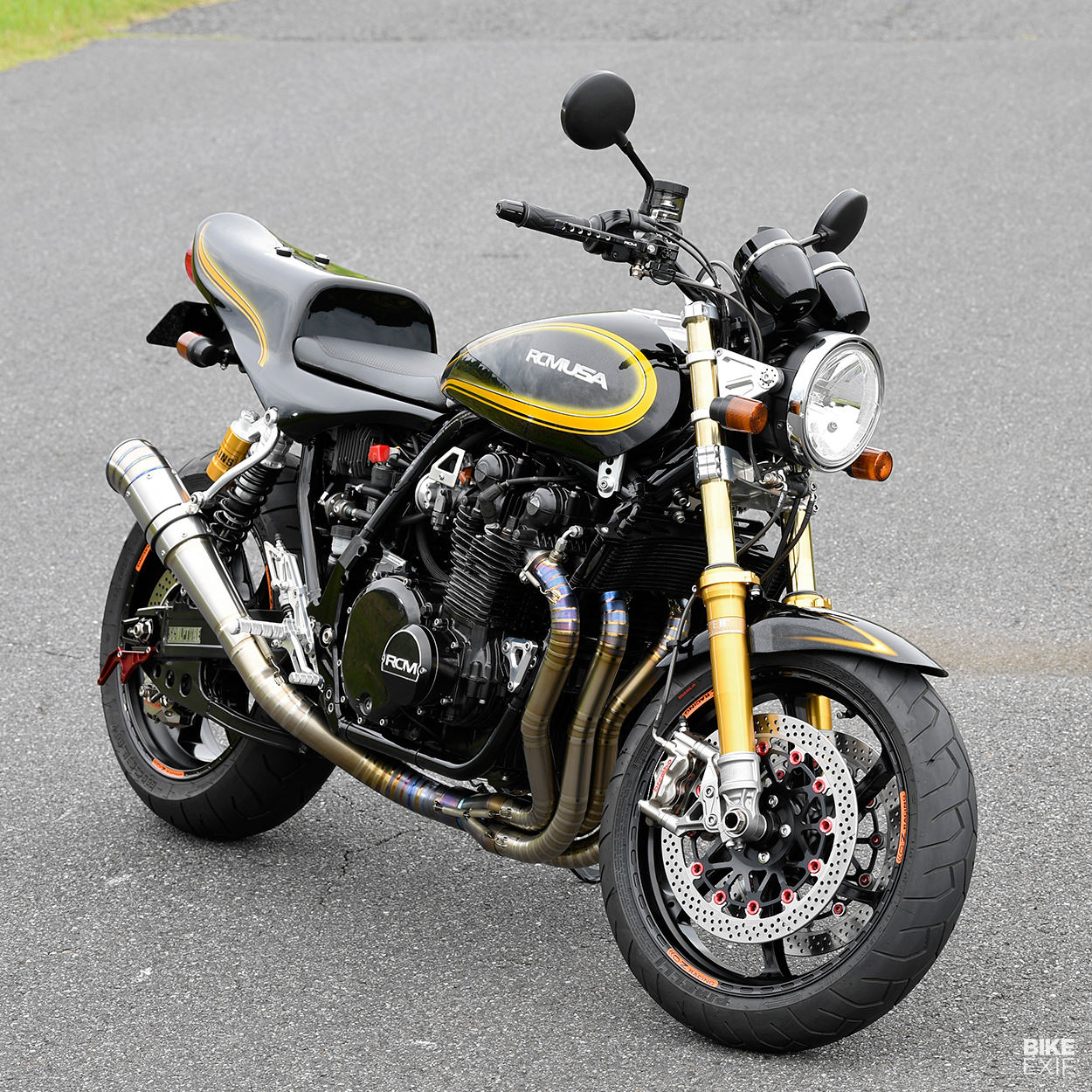
The AC Sanctuary RCM A16
Eight A16s have been built in Japan already. The machine shown here is #4 in the sequence, and it’s part test mule, part demo bike.

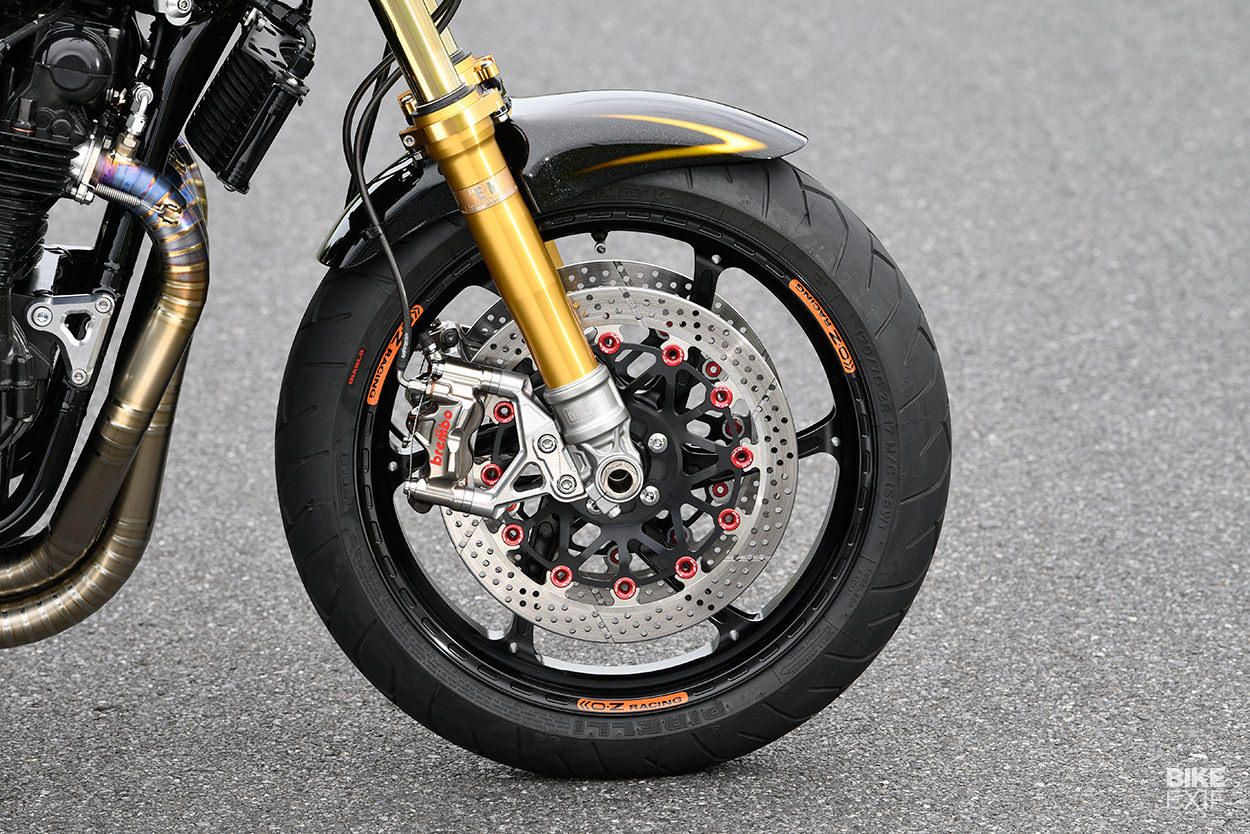
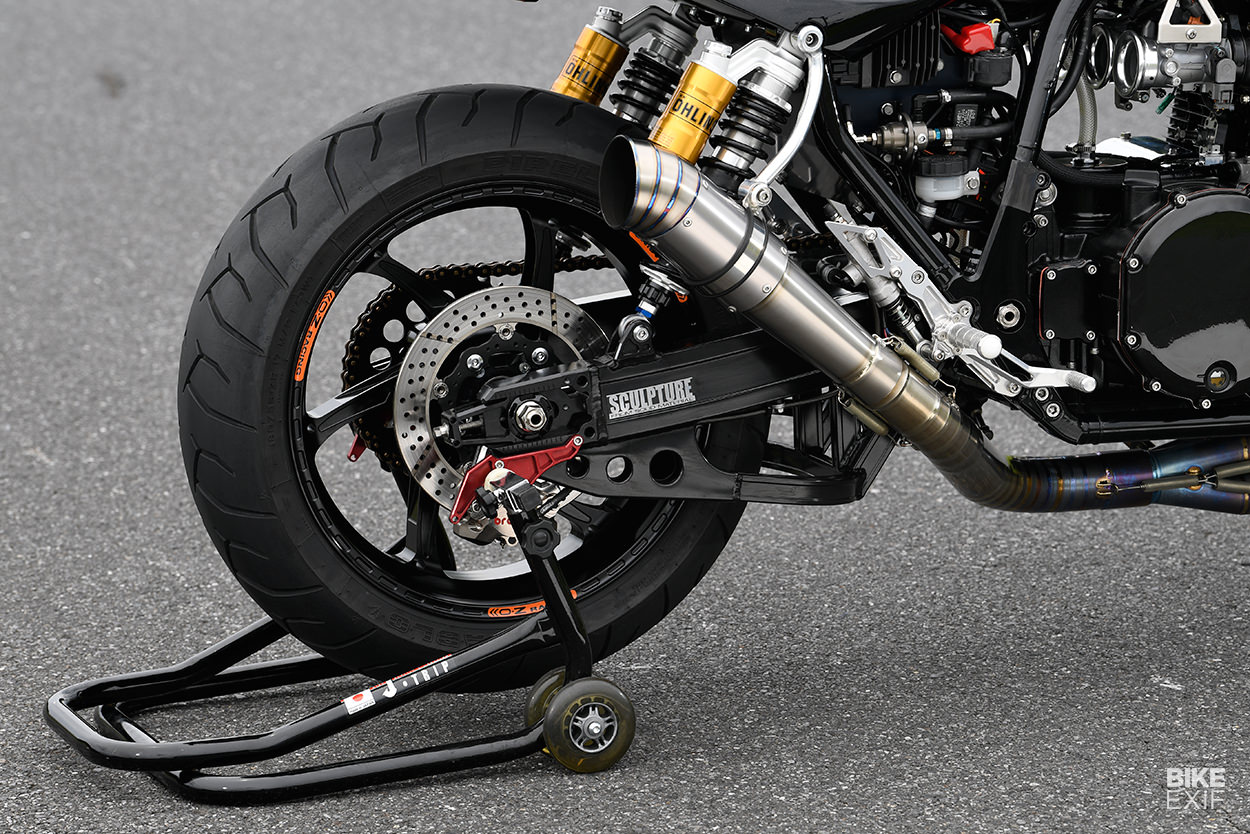
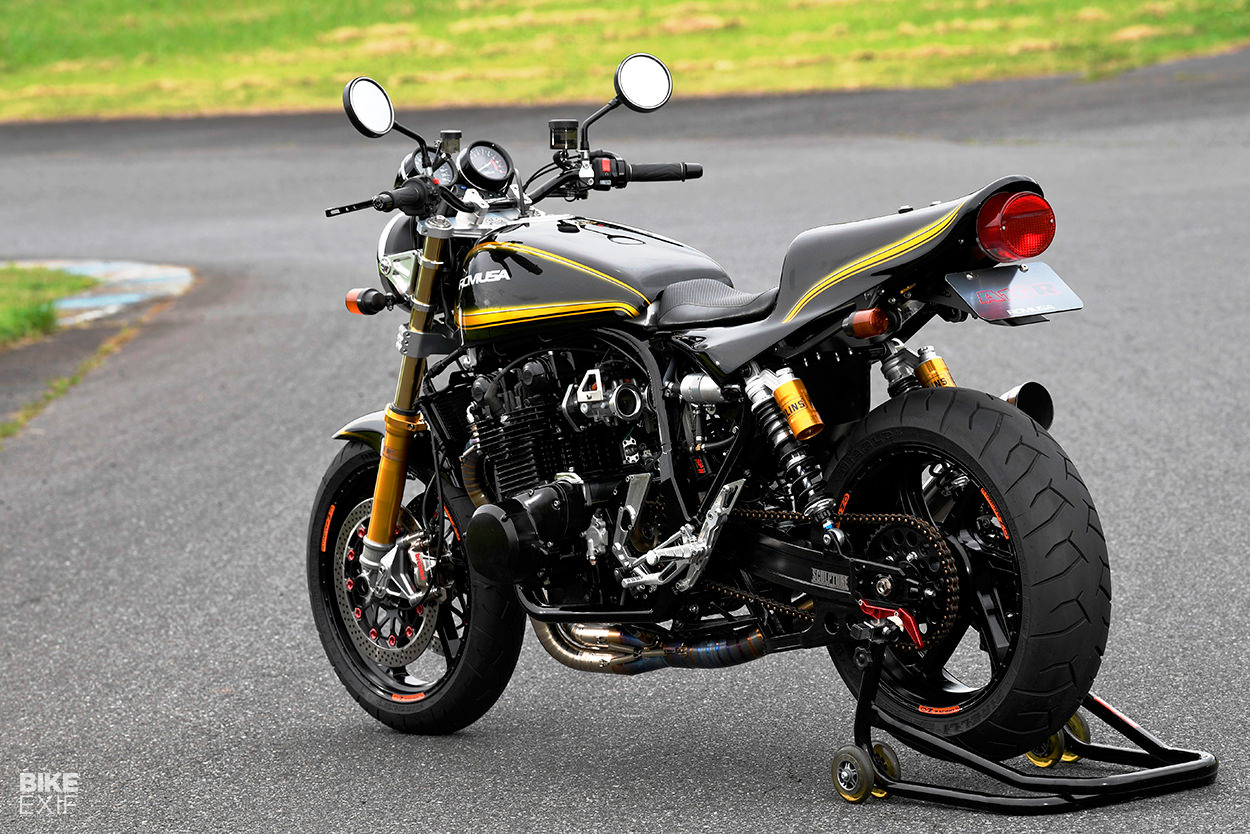
Like most of AC’s Kawasaki builds, this A16 is dripping with high-end parts. The recipe is familiar: a custom frame, albeit loosely based on the Kawasaki original, plus Ă–hlins suspension. The wheels are supplied by OZ Racing, the brake calipers are Brembo, the discs are Sunstar, and the exhaust system comes from Nitro Racing.

The AC Sanctuary RCM A16
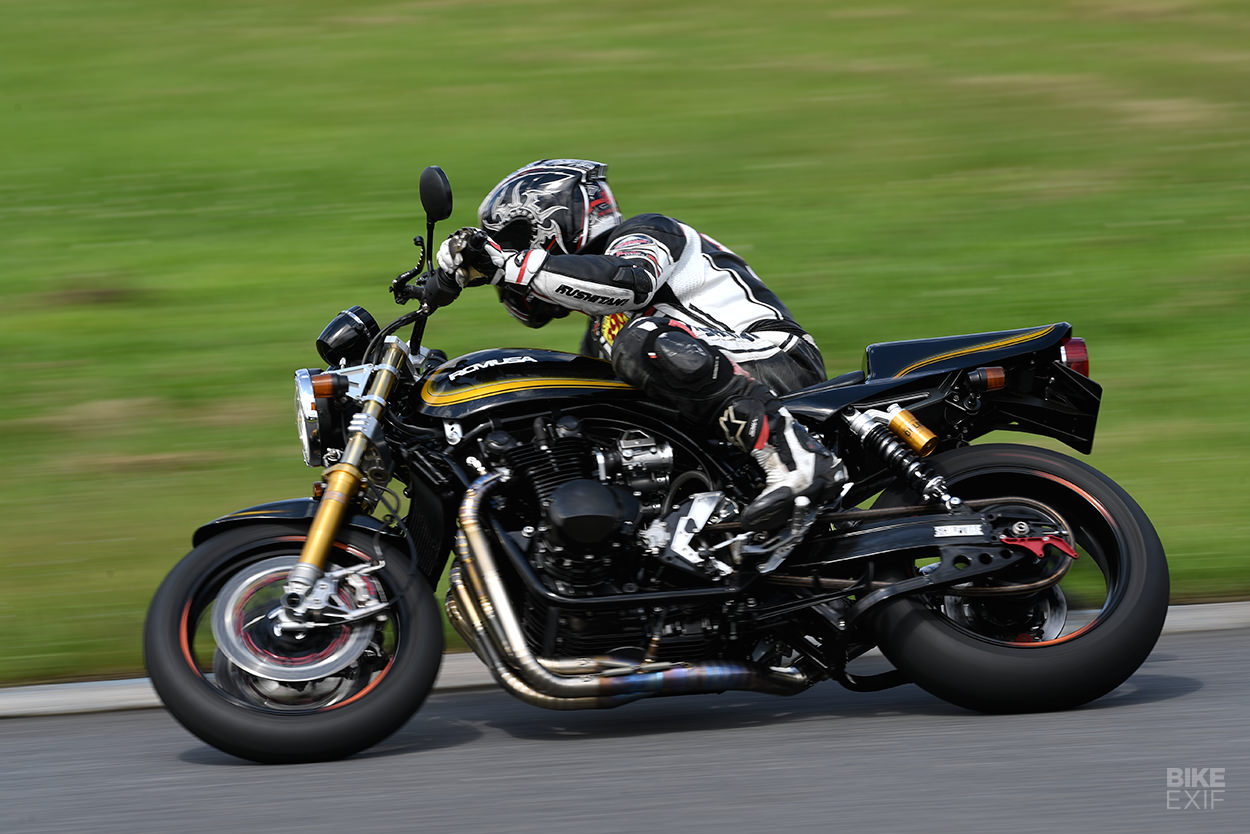
The A16 platform incorporates multiple new refinements, and many of them are subtle but effective amendments to the frame geometry. “The standard Sanctuary Z-type frame is not a chassis suitable for the properties of modern, high-spec radial tires,” Nakamura explains.

The big deal is that the A16 frames are specifically designed for 17-inch wheels and high-performance rubber. That means repositioned steering necks, better-optimized rigidity, and redesigned swing arm pivots. The swing arm itself is a classic double-sided unit, and has been given extra width and bracing.

The AC Sanctuary RCM A16
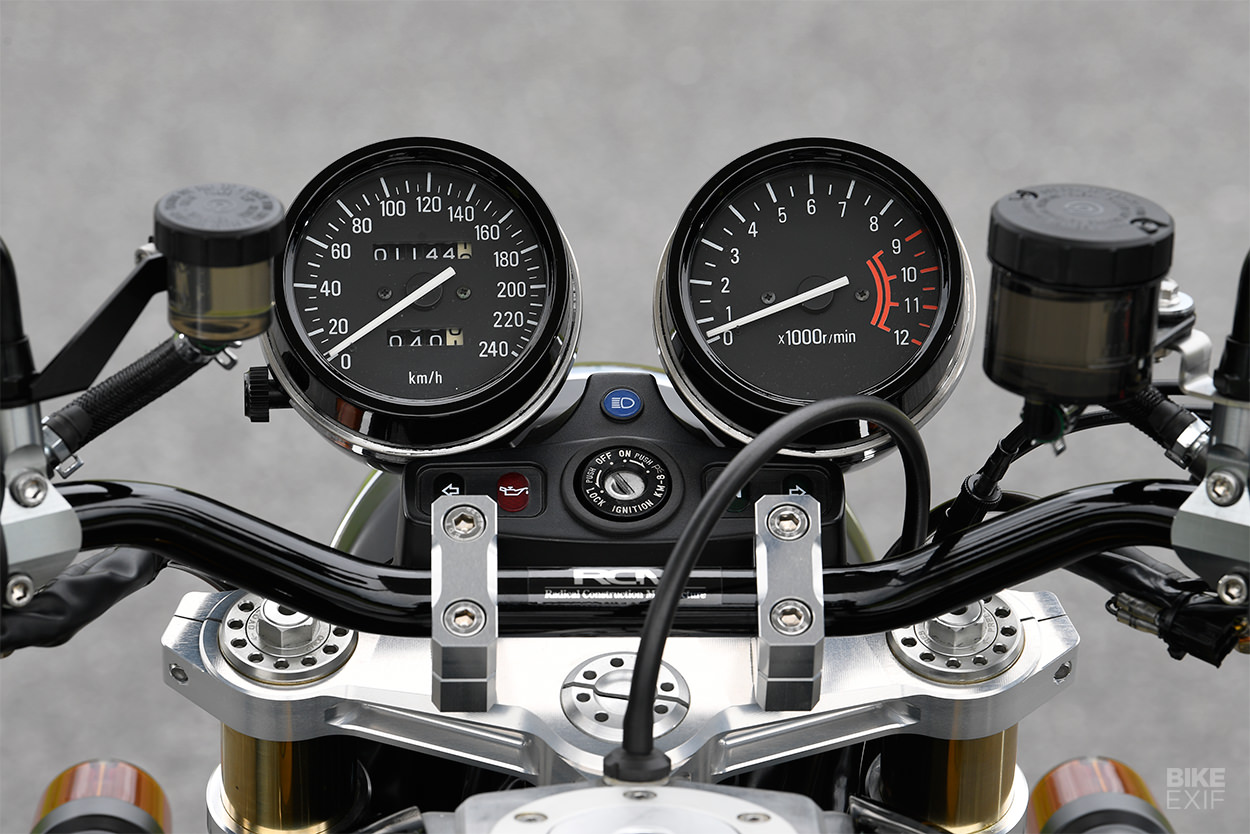
Multiple new parts have been designed in CAD, and are then machined out of SS400 steel ingots. Even the engine mounts have been redesigned, since racing experience has shown that the mounts can have a surprising impact on handling. The top nut on the steering stem is a modern Ducati item, chosen for its tight manufacturing tolerances, and the bars are a new, slightly upswept design.

The AC Sanctuary RCM A16
Nakamura describes the changes as a ‘transformation,’ and says that the handling of the A16 series is ‘practical.’ “It’s not just for racing,” he says. “It’s something that you can fully experience even at legal speeds. It feels ‘easy to ride’ even when touring or in the city.”

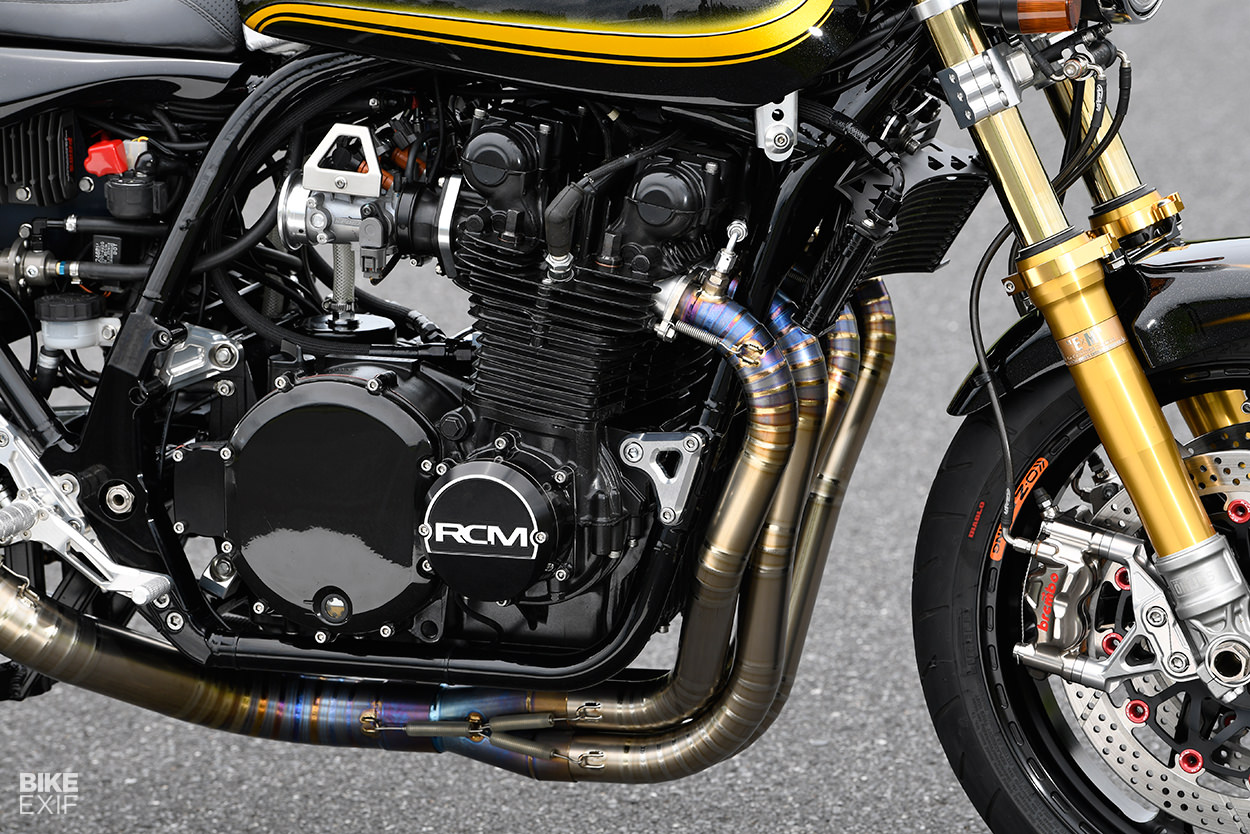
That easy-going nature is helped by smooth power from a heavily modified KZ1000 engine—an inline four that the AC Sanctuary mechanics are very familiar with.

The AC Sanctuary RCM A16
AC have traditionally replaced the stock carbs with sportier setups—such as 38mm Yoshimura Mikunis—but in this instance they’ve switched over to fuel injection.

Kawasaki’s own attempt at injecting the big air-cooled engine in 1980 didn’t go too well, but you can guarantee Nakamura’s crew will have done a good job. They didn’t have much choice in the matter: under Japanese law, this machine is technically a 2016 bike, and therefore has to meet the emissions regulations for that year. It’s a problem that AC will increasingly face, so they’ve tackled it head-on.

The AC Sanctuary RCM A16
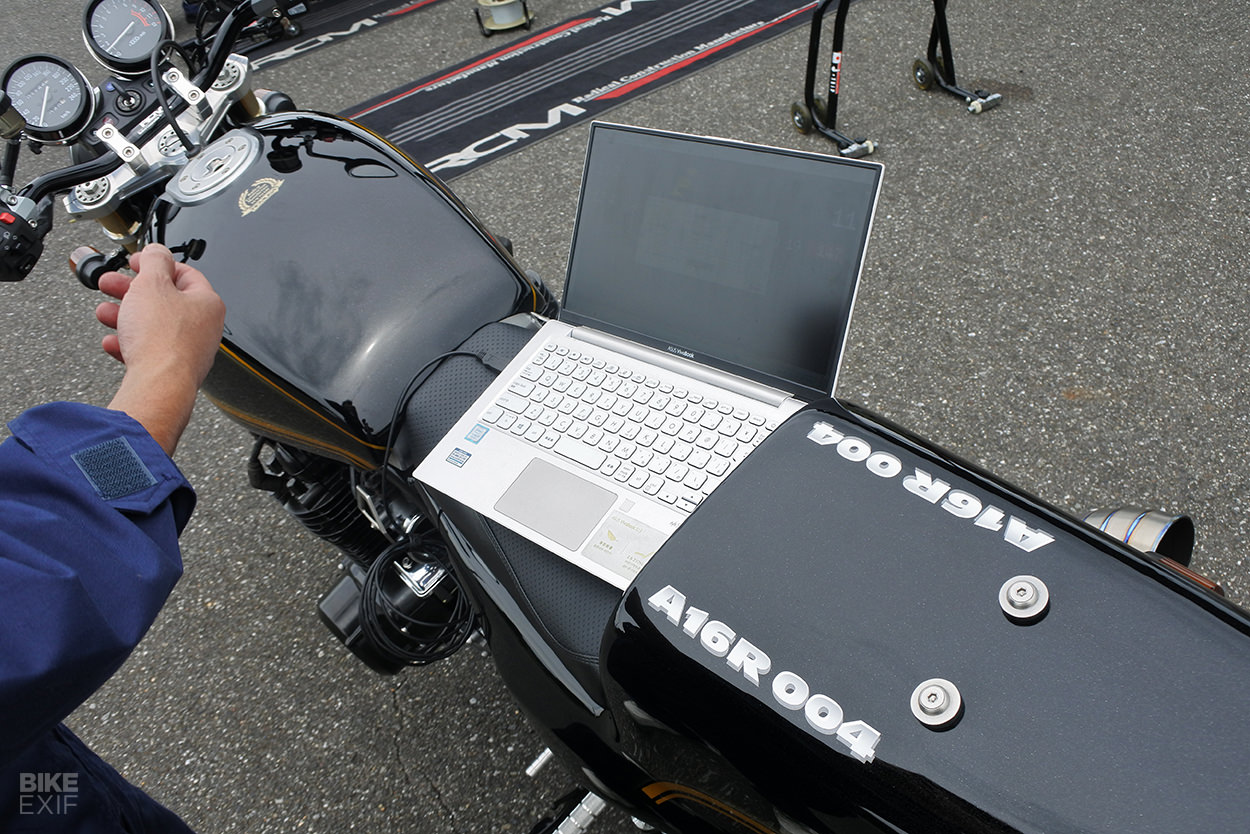
Not many shops would be inclined to develop an EFI system that works with an older engine, but AC have been hot-rodding these motors for over two decades now—and there’s nothing old school about their approach. At a recent shakedown test at the short track Tomin ‘mini circuit,’ the EFI programming on this A16 was repeatedly finessed after feedback from test riders.

On an A16, the metal parts of the engine are also in better condition than when they left the factory. Once a motor is sourced, it is stripped down, blueprinted, and refinished. Everything that is worn is replaced, with goodies including oversized valves and Vossner pistons. All the fasteners are new and uprated, and so is the entire clutch assembly.

The AC Sanctuary RCM A16
The frame modifications meant new bodywork. The GRP tank sits over a new design of fuel cell, and the seat unit is a one-piece assembly that lifts up at the turn of a key.

The A16 is at the cutting edge of custom tech, but Nakamura-san draws the line at things like LED lighting. The blinkers are chunky, and the brake light is enormous by modern standards. But everything feels ‘right.’

The AC Sanctuary RCM A16
This A16 might be back in Tokyo after its brief sojorn in California, but AC’s local office can still take your order. You’ll probably find yourself resorting to Google Translate rather a lot, but it’ll be worth it.

AC Sanctuary Japan | Facebook | RCM USA

The AC Sanctuary RCM A16


from Bike EXIF https://ift.tt/3rq0eF4

Wednesday, 1 December 2021

2022 Nissan Versa Overview: Trim Levels, Fuel Economy, Pricing & More

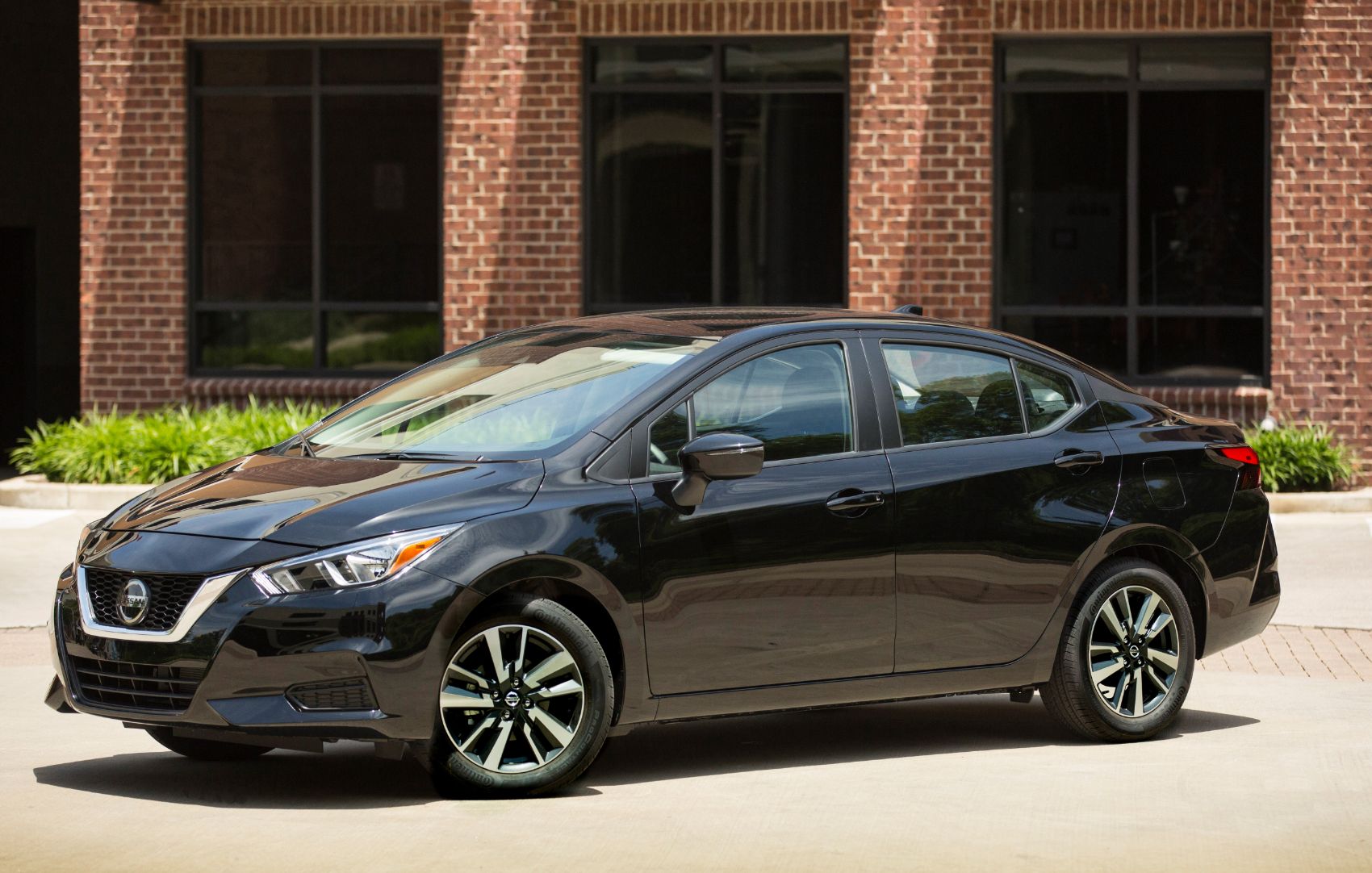
The 2022 Nissan Versa is the Japanese automaker’s prime contender in the subcompact segment. Regarded as one of the most affordable new cars in America, the third-gen Nissan Versa held onto its “reasonably priced” crown in 2020, despite a redesigned façade and refined driving manners. The 2022 Nissan Versa remains a budget-friendly option for families with an impressive lineup of class-exclusive features and standard safety technology.

2022 Nissan Versa: What’s New?

The 2022 Versa is part of the all-new, third-generation variant unveiled in 2020. There are no significant mechanical and styling changes for the 2022 Versa. Still, it does get a healthy dose of modern safety features like ten standard airbags and Nissan’s Safety Shield 360, which includes automatic emergency braking with pedestrian detection, lane departure warning, high beam assist, and rear automatic braking.

Modest Power, Excellent Fuel Economy

The Versa continues to be motivated by a 1.6-liter four-cylinder generating 122 horsepower and 114 lb-ft. of torque. It drives the front wheels via Nissan’s Xtronic continuously variable automatic transmission (CVT), but the base Versa S is available with a five-speed manual. The engine features a dual injection system with Twin CVTC (continuously variable valve timing control) on both the intake and exhaust valves to deliver better emissions while sipping less fuel.

Nissan says the updated CVT has sub-planetary gear arrangements with a revised D-step Logic control system to deliver better responsiveness and sportier virtual shifts. Furthermore, the new CVT gearbox has 20 percent wider gears to improve acceleration and fuel economy.

EPA figures come in at 32/40 city/highway and 35 combined with the CVT. The manual delivers 27/35 city/highway and 30 combined.

2022 Nissan Versa
2022 Nissan Versa. Photo: Nissan North America.

Styling & Design

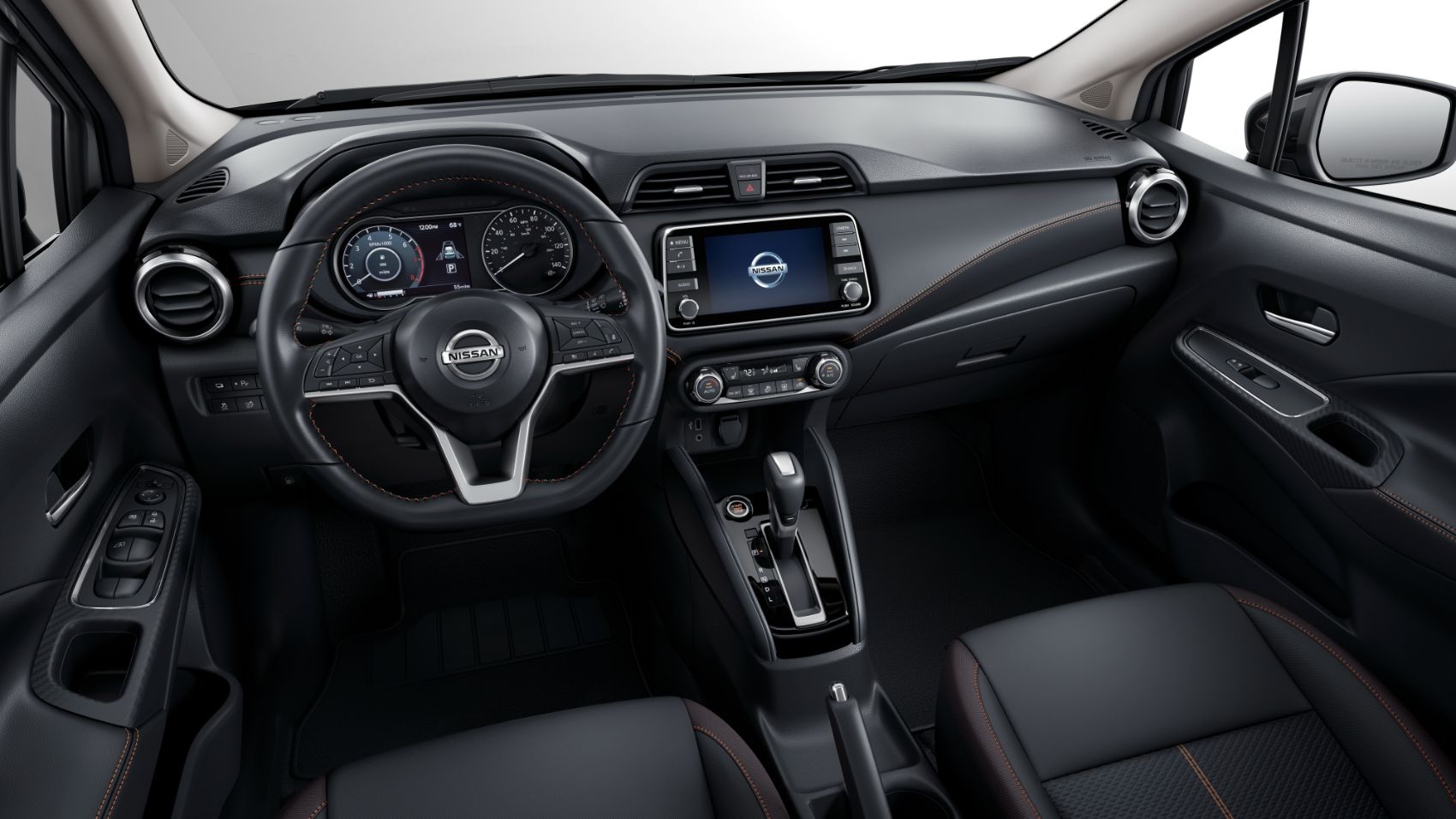
The Nissan Versa has never looked better. It has all the vital Nissan design elements like a V-motion front grille, boomerang-shaped headlights and taillights, kick-up C-pillars, and a floating roof design. Meanwhile, the interior has a “gliding wing” dashboard inspired by the Maxima and Altima and is available in three colors depending on the trim level. The Versa offers decent room with 14.7 cubic feet of trunk space.

The new Nissan Versa comes in eight curated paint colors: Electric Blue Metallic, Brilliant Silver Metallic, Gun Metallic, Super Black, Scarlet Ember Tintcoat, Aspen White Tricoat, and Fresh Powder.

2022 Nissan Versa Trim Levels

The 2022 Versa arrives in three trims: S, SV, and SR.

The base Versa S gets 15-inch steel wheels, three USB ports, a seven-inch touchscreen infotainment display, Bluetooth connectivity, front bucket seats, and an AM/FM audio system with four speakers. Other goodies include a one-touch auto up/down driver’s window, speed-sensing door locks, auto on/off halogen headlights, cruise control, illuminated steering wheel controls, keyless entry, a seven-inch display in the instrument cluster, and a rearview monitor.

The mid-grade SV adds 16-inch alloy wheels wrapped in all-season tires, steering wheel controls with voice recognition, a rear door alert system, Apple CarPlay/Android Auto, and SiriusXM.

The range-topping Versa SR has 17-inch alloy wheels, LED low and high beams, a dark chrome front grille, body-color trunk lid rear spoiler, remote start, and a six-speaker audio system. Nissan’s SR Convenience Package adds heated front seats, automatic climate control, and intelligent cruise control.

2022 Nissan Versa interior layout.
2022 Nissan Versa interior layout. Photo: Nissan North America.

Nissan Versa Warranty

The 2022 Nissan Versa has a three-year/36,000-mile bumper-to-bumper warranty and a five-year limited powertrain warranty. It’s worth considering a Nissan extended warranty if you do a lot of driving. Before you make a decision, this helpful guide will show you the ropes.

2022 Nissan Versa: Pricing & Availability

The Versa is on sale now at Nissan dealerships. The entry-level Versa S starts at $16,055 (M/T) and $17,725 (CVT), while the mid-tier Versa SV starts at $18,865. The range-topping Versa SR has base prices at $19,465. All prices include $975 destination fees.

Despite the 2022 Nissan Versa’s affordable price tag, our free and easy search tools* can help you land a better deal. Using that tool, you can view dealer inventory in your area and see the best price. That tool will also help you obtain the invoice price, which is a good starting point for negotiations.

Alvin Reyes is an Automoblog feature columnist and an expert in sports and performance cars. He studied civil aviation, aeronautics, and accountancy in his younger years and is still very much smitten to his former Lancer GSR and Galant SS. He also likes fried chicken, music, and herbal medicine.

Photos & Source: Nissan North America.

*Although always free for you, Automoblog and its partners may receive a commission when you use the services provided through that link. MSRP figures are subject to change.

Original article: 2022 Nissan Versa Overview: Trim Levels, Fuel Economy, Pricing & More


from Automoblog https://ift.tt/32FRDnc