Tuesday, 3 August 2021

Cobra Road Scout Review: Should You Buy or Skip This Radar Detector & Dash Camera Combo?

Cobra Road Scout 6
Cobra Road Scout
Pros
Compact
IVT Filtering
Two-In-One Functionality
Cons
GPS Lockouts
Detection Range
Meddlesome Overspeed Alerts (iRadar App)
60
Where To Buy

Affiliate Disclosure: Automoblog and its partners may be compensated when you purchase the products featured in this review. The Road Scout pictured in this review was supplied to Automoblog by Cobra Electronics at no charge. The opinions below are my own based on my personal experience with the product.


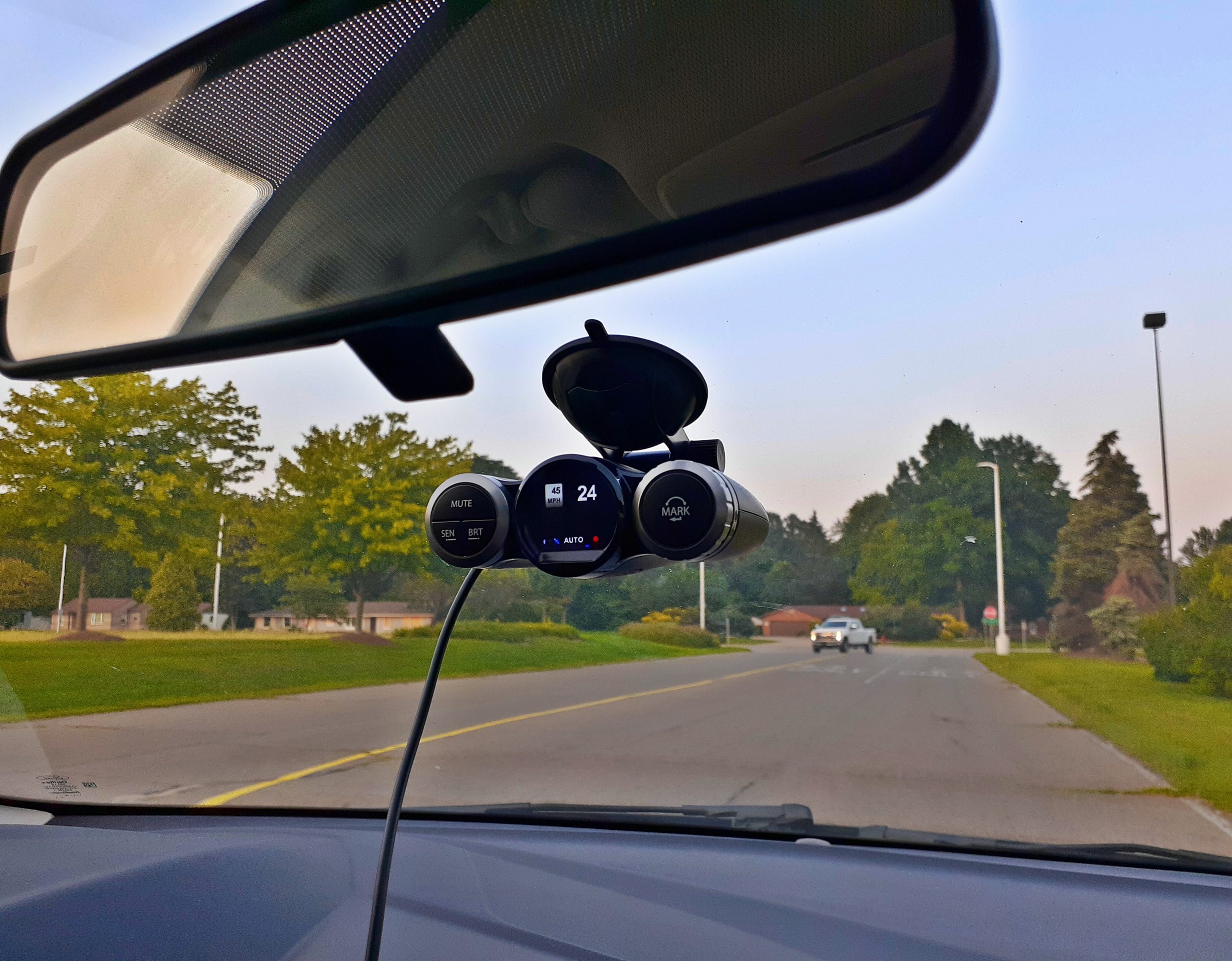
Radar detector or a dash camera? Decisions, decisions. How about both at the same time, integrated into one unit? That’s the idea behind the Cobra Road Scout, a two-in-one driving companion with a 1080p HD dash camera and a radar detector. With the radar detector portion of the Road Scout, you can adjust the sensitivity of the X and K bands, mute false alerts, and mark locations like speed traps and red light cameras. Meanwhile, the dash camera offers a g-sensor and an emergency recording feature.

We recently spent three weeks driving around metro Detroit with the Cobra Road Scout. Unfortunately, my overall opinion of this two-in-one combo is mixed at best. Having both a dash camera and a radar detector in one unit is an attractive proposition, but as far as the Road Scout is concerned, it’s an excellent idea with below-average execution. In this review, I will run through the Cobra Road Scout’s “spec sheet” and elaborate a little further.

Why Buy a Radar Detector/Dash Cam Combo?

Insurance providers and cable companies are always talking about the benefits of “bundling” your services. And in so many words, Cobra Electronics has done the same thing with the Road Scout. Opting for something like the Road Scout has three main benefits.

Purchase Price

Depending on which radar detector and dash camera you are considering, buying a “bundle” like the Road Scout may save you a little money. Instead of buying two separate units, you purchase one and hopefully avoid spending extra cash (a good example of this type of savings is with the Escort MAX 360c & M1 Bundle).

The Road Scout retails for about $400 on Cobra’s official website. 

Saves Space

Another benefit of the Cobra Road Scout is not having to slap two individual units on your windshield. Since the Road Scout incorporates both a radar detector and a dash camera, you will look at only one screen instead of two while driving.

Don’t Have To Decide

If you want or need a dash camera for your daily drive, it probably won’t hurt to have a radar detector as well, and vice versa. True, you can eat Oreos without milk, but it’s just not the same. It’s the combo of the two that’s really special, and it’s no different with a radar detector and a dash camera – at least in my view.

When I take my twice-yearly 900-mile drive from Michigan to South Dakota to visit family, I can make a case for mounting a dash camera to my windshield. Likewise, I can also make a case for wanting to have the protection and features afforded by a high-quality radar detector. The Road Scout gives you two desirable items in one package – a radar detector and a dash camera – for a long trip like this.
Cobra Road Scout
6/10 Our Score

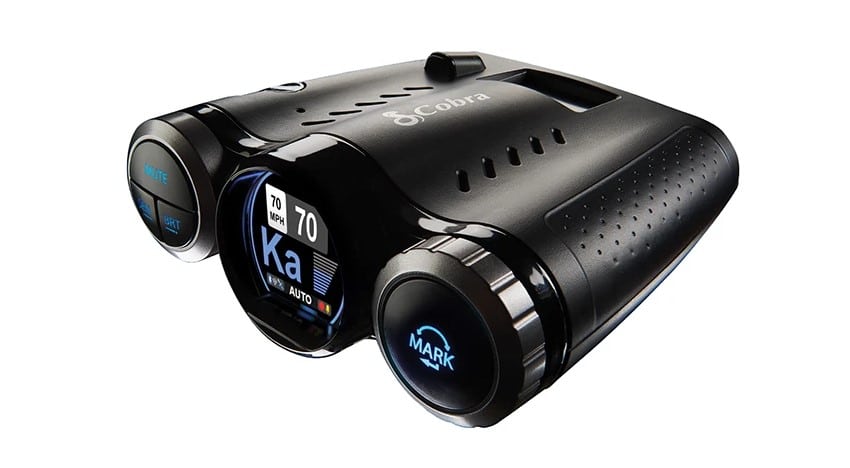
With the radar detector portion of the Road Scout, you can adjust the sensitivity of the X and K bands, mute false alerts, and mark locations like speed traps and red light cameras. Meanwhile, the dash camera offers a g-sensor and an emergency recording feature.

The Cobra Road Scout is also lightweight, which is beneficial when mounting the unit to your windshield.

Cobra Road Scout In-Depth: What It Offers

The Road Scout comes with a suction cup windshield mount (called the “EZ Mag Mount”), a 12-volt SmartCord USB power cord (so you can still charge your phone), and a 16GB SD card and micro USB cable for the dash camera. A handy travel case and a quick reference guide are also included.

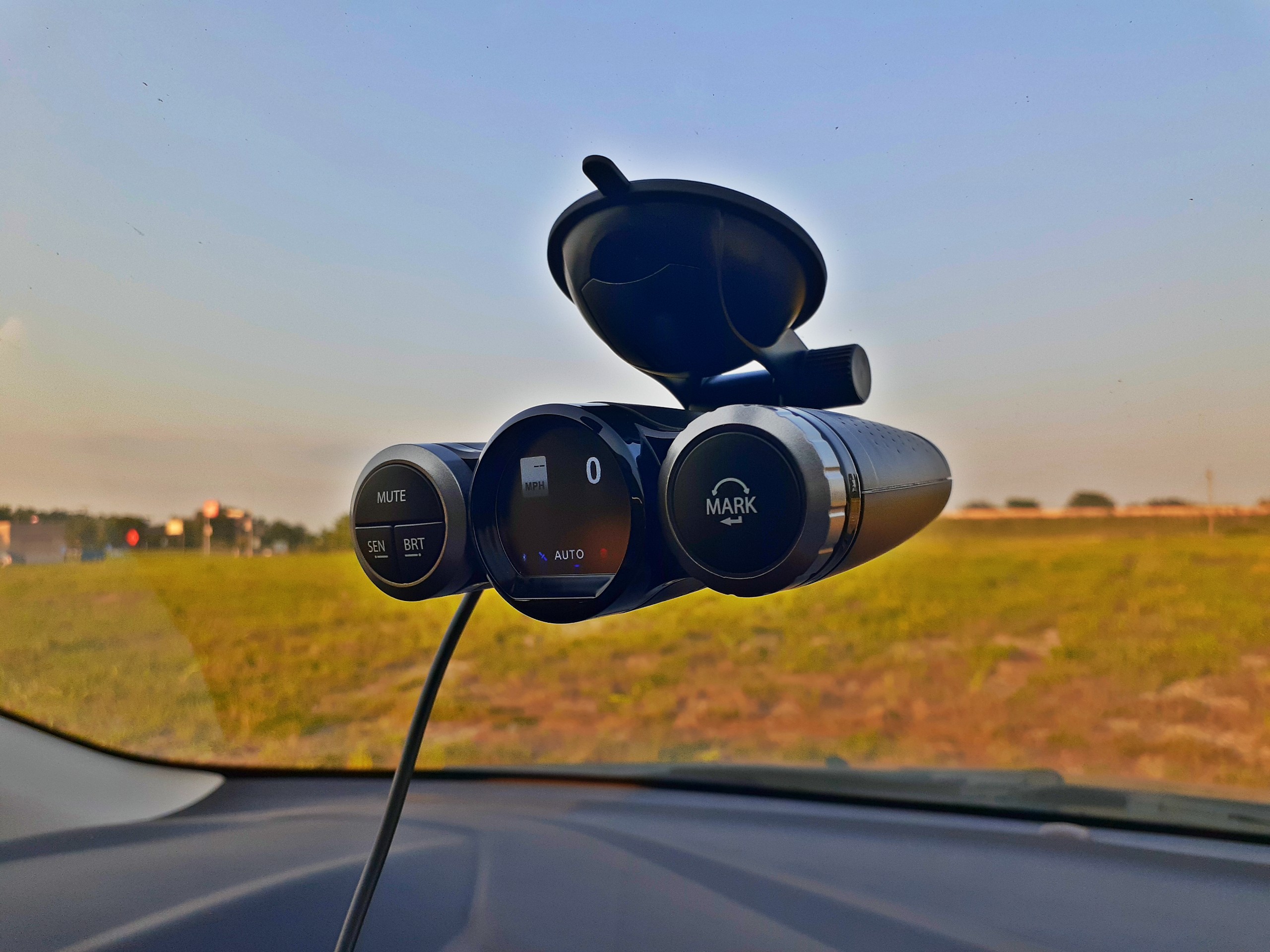
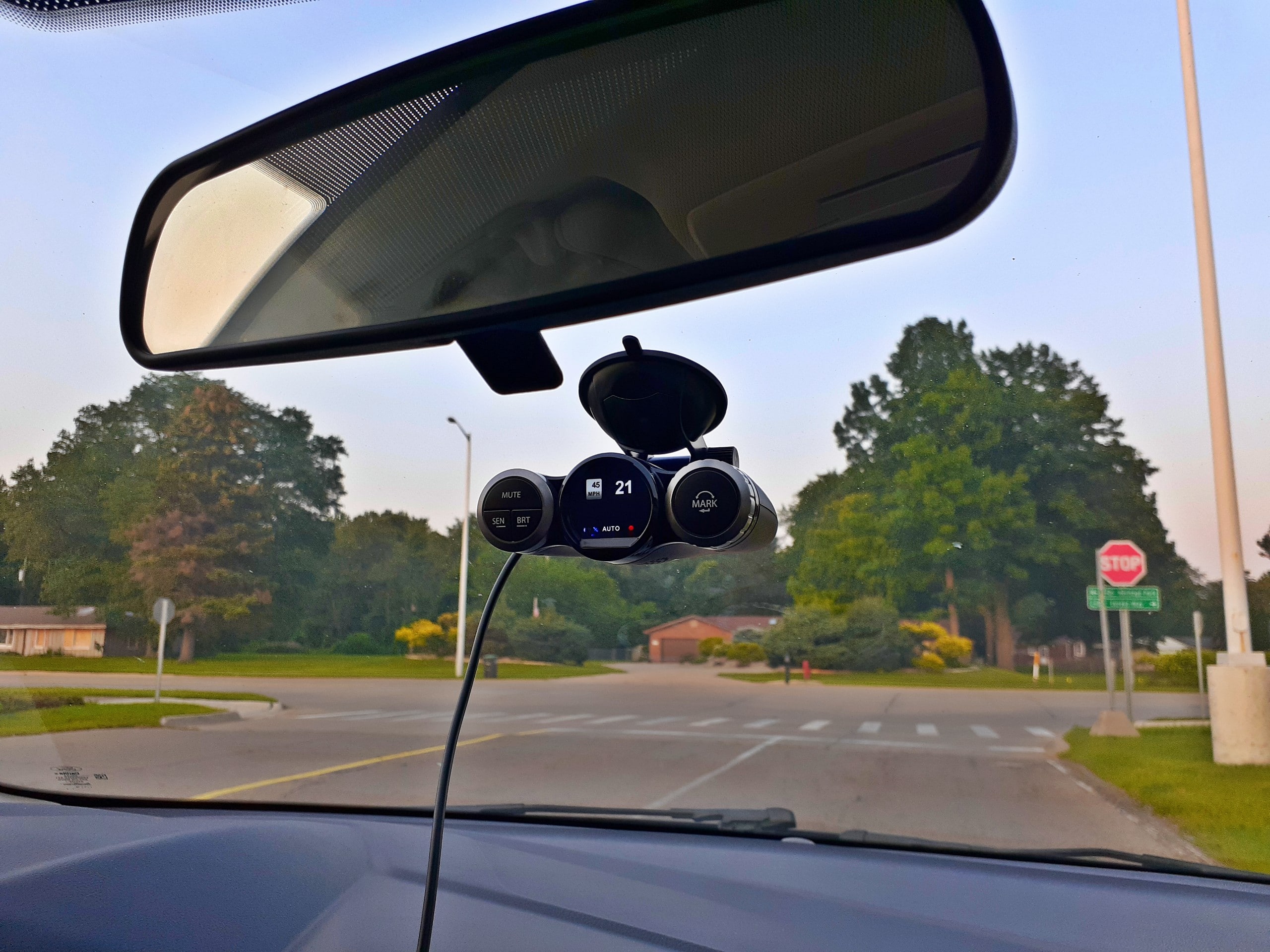
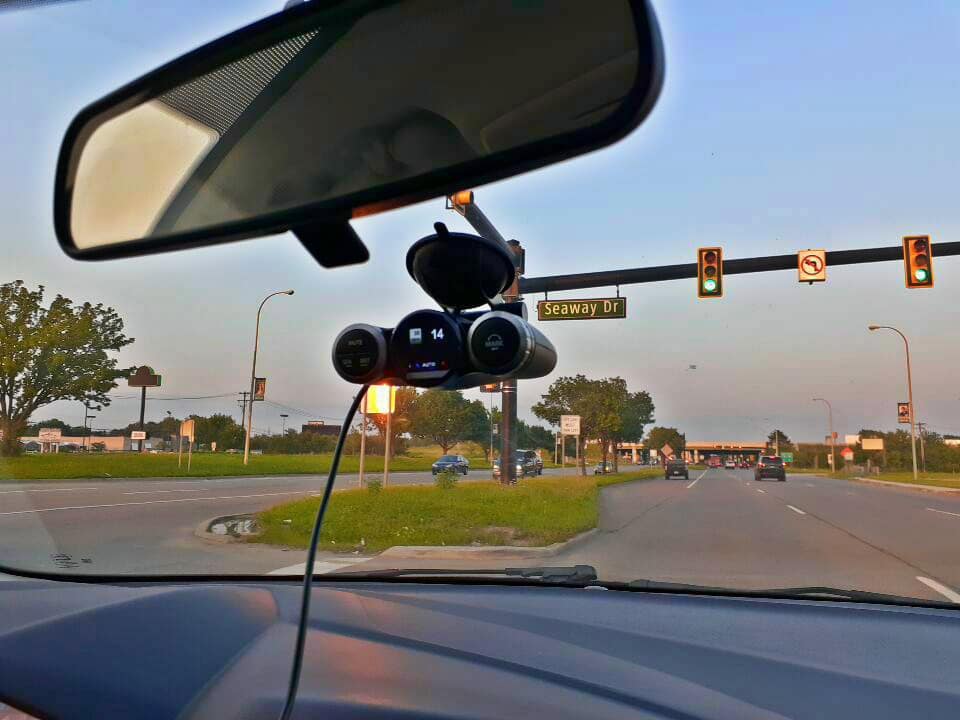
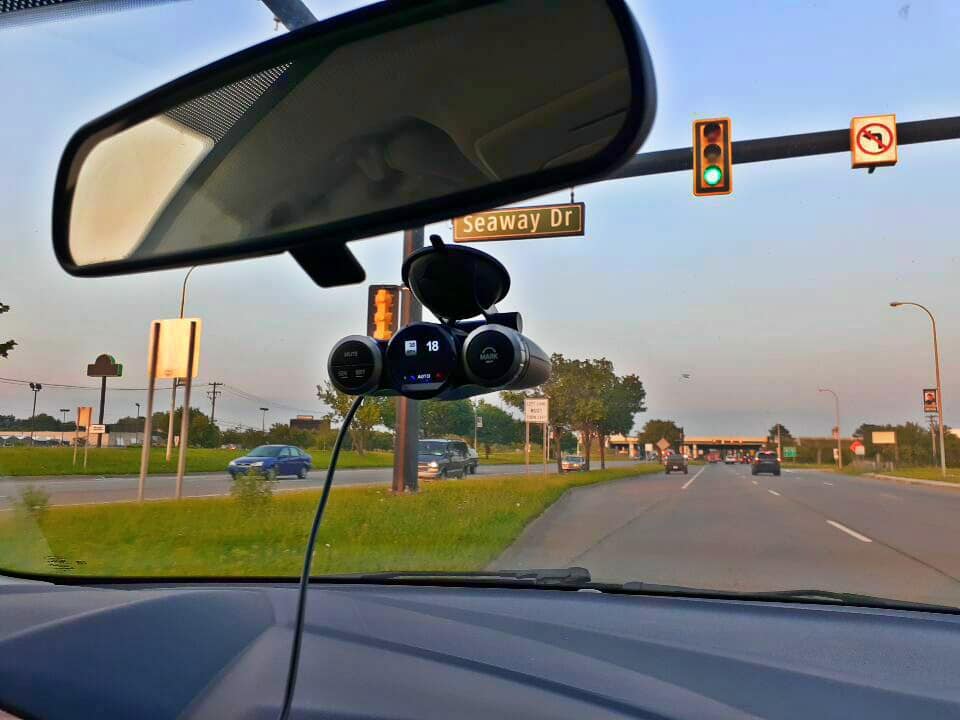
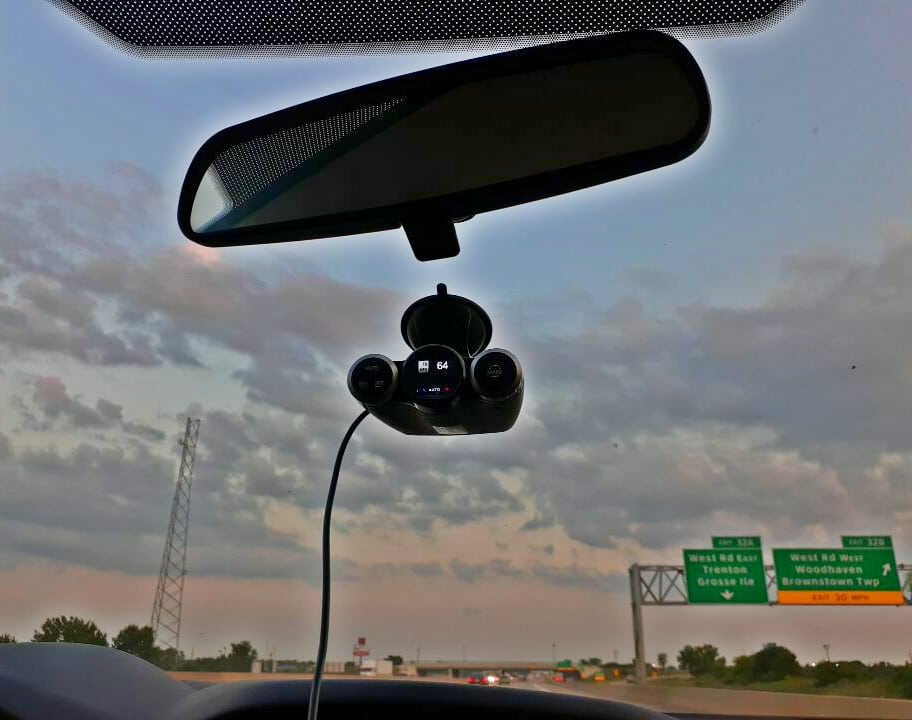
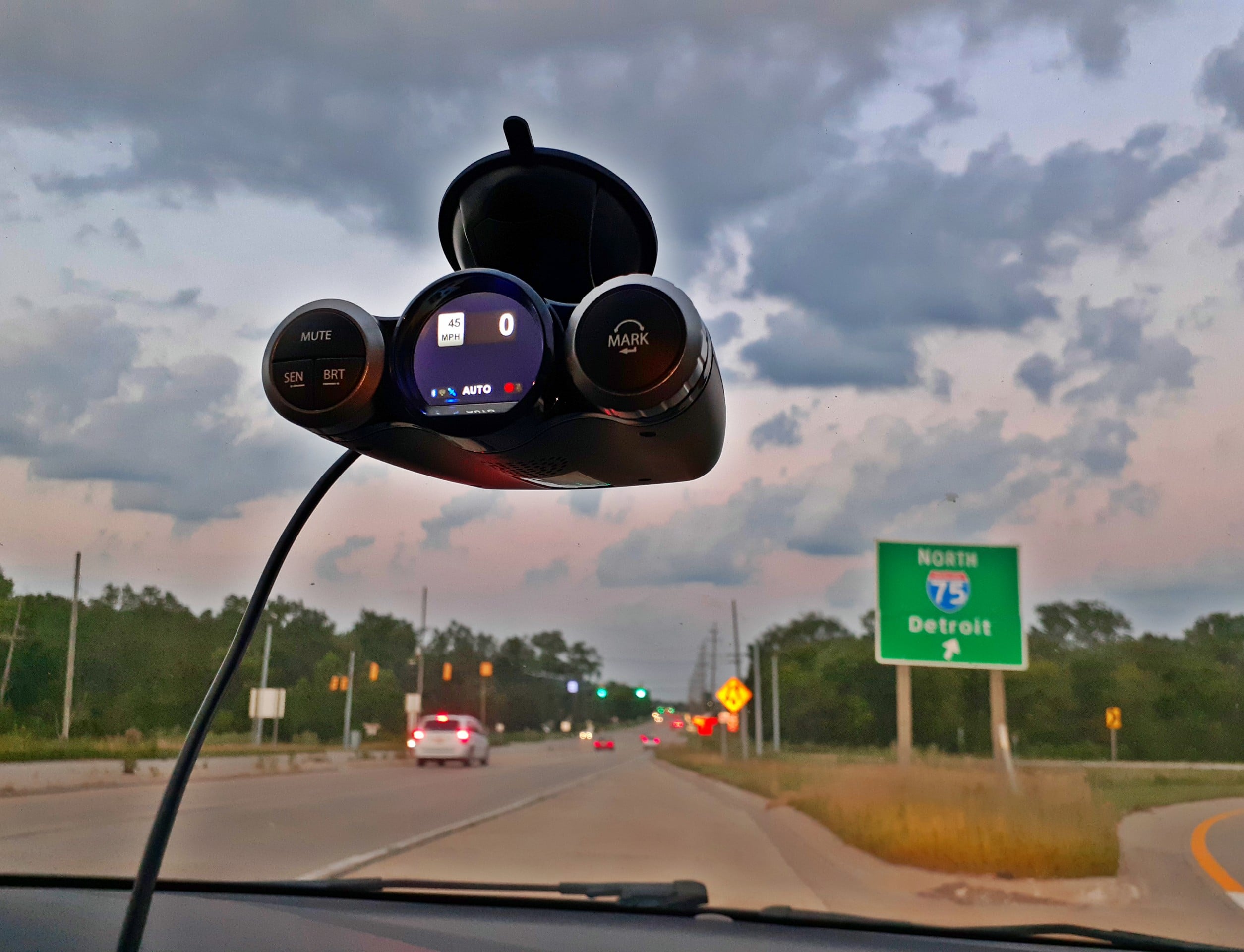
Installation is easy with the windshield mount and USB adaptor cord. Once the Road Scout has power, both the radar detector and dash camera are active. Despite having dual functionality, the unit is surprisingly lightweight at just eight ounces. The EZ Mag Mount is more than capable of securing the Road Scout to the windshield. It stayed put the entire time during my three-week drive.

The Road Scout is compatible with Cobra’s iRadar app. With the app, you can either report or receive real-time alerts generated by an entire network of users. iRadar alerts include red light and speed camera locations, speed traps, air patrols, photo-enforced locations, and other caution areas. In addition to the iRadar app, the Road Scout can also connect to an in-vehicle Wi-Fi hotspot for software and database updates.
Cobra Road Scout

Cobra Road Scout: Radar Detector

Outlined below are some key features of the Road Scout. We will start with the radar detector portion first, then cover the dash camera.

Sensitivity Modes & Display Indicators

The Cobra Road Scout will alert you to X, K, and Ka radar bands and laser (LiDAR) guns from both the front and the rear.

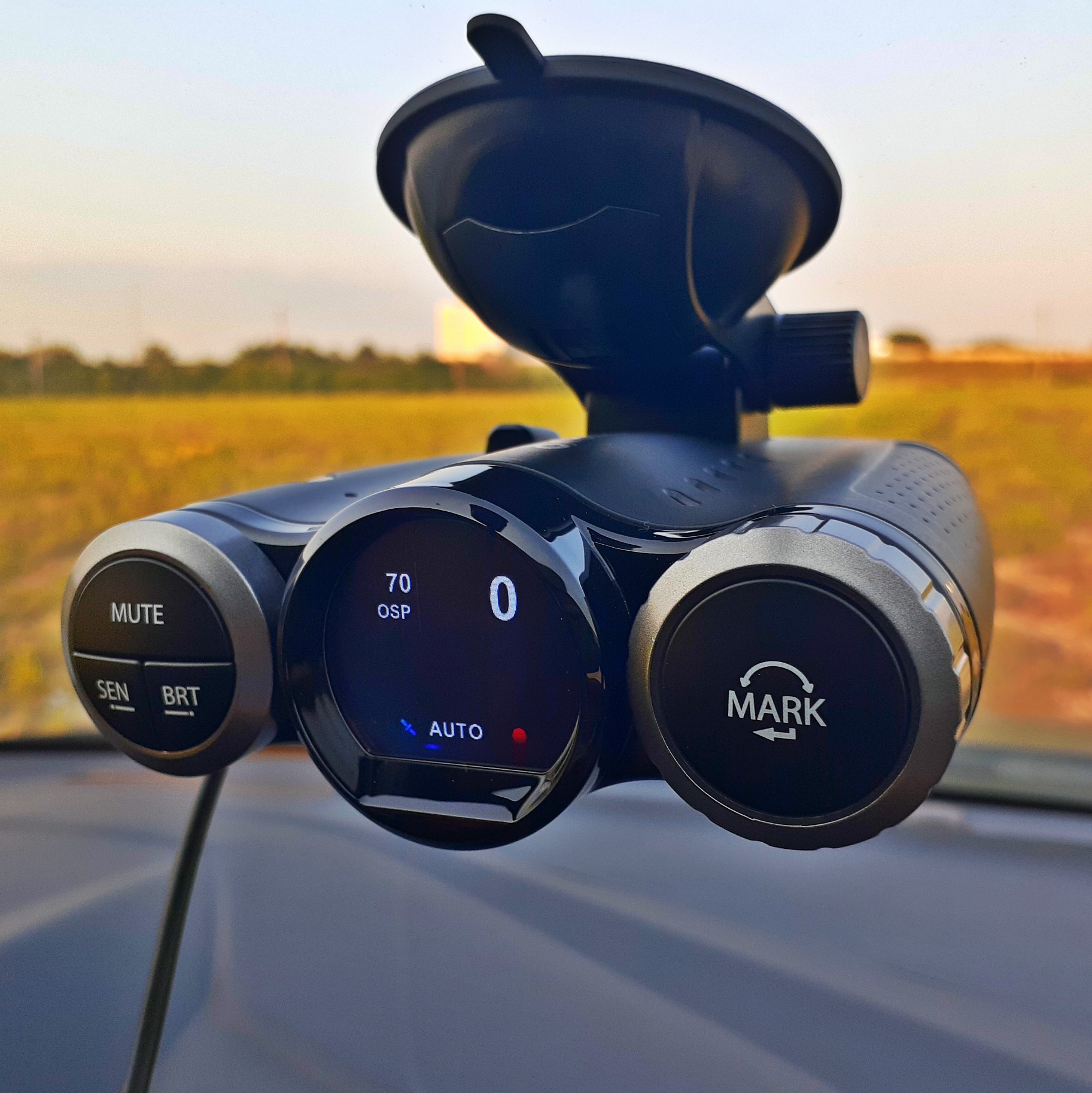
Pressing the SEN button will allow you to adjust between three different sensitivity modes: Low, High, and Auto. During our three-week drive, we stayed in Auto mode most of the time, which is speed adjusted. In other words, the slower or faster you travel, the shorter or longer the X and K band detection will be. According to Cobra, at 50 mph and above, X and K bands default to the maximum range while Ka band detection range is always at its maximum, regardless of the sensitivity setting.

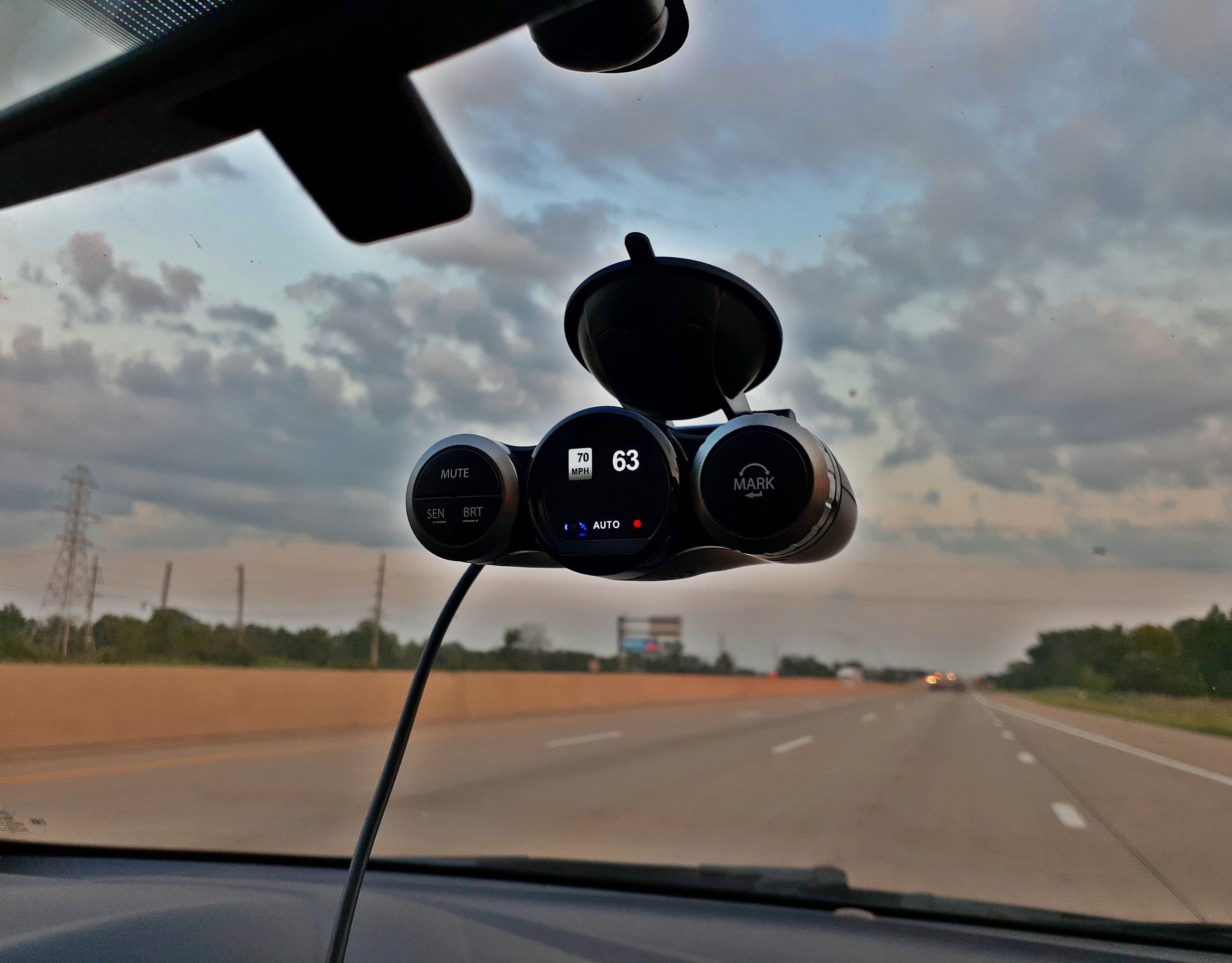
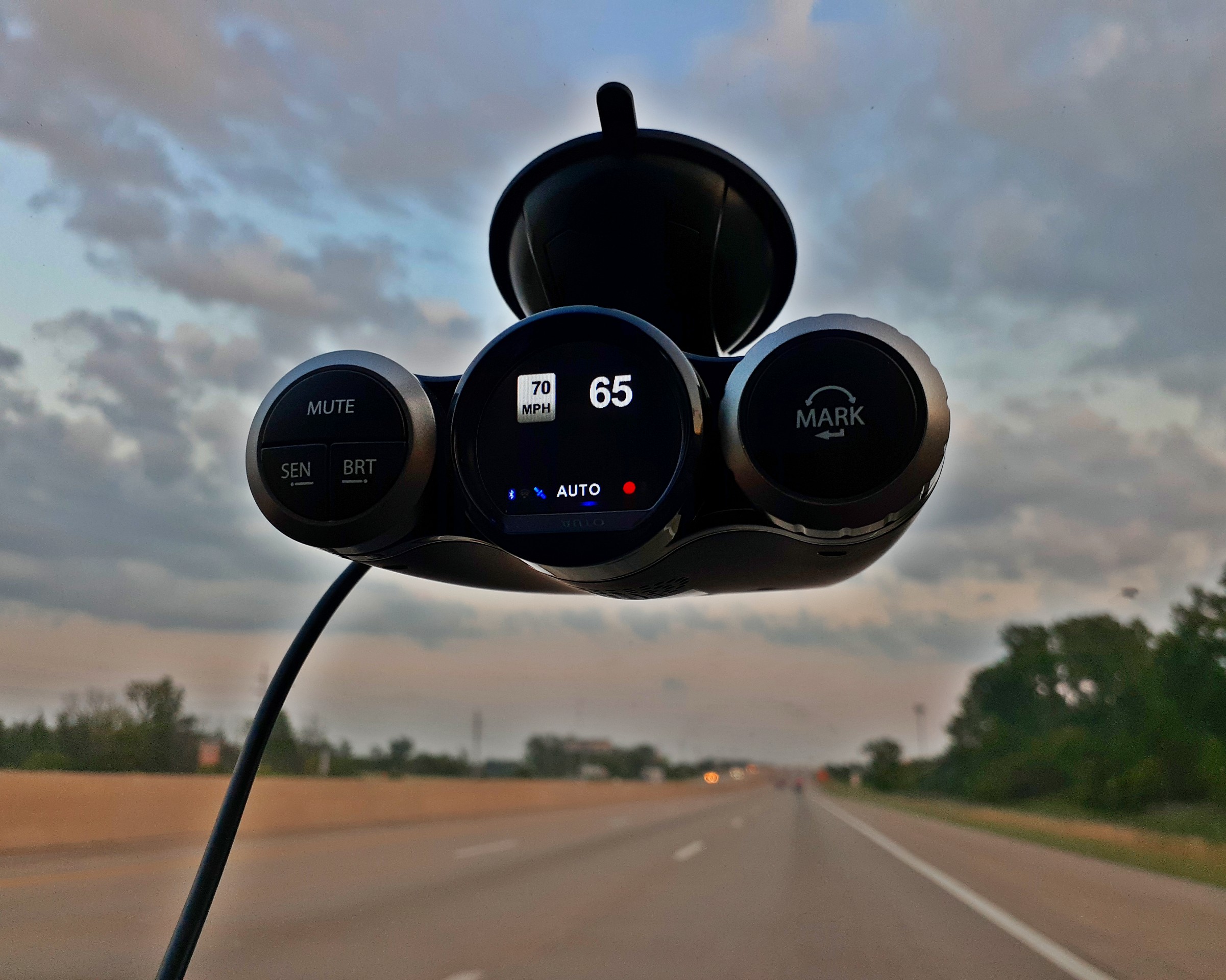
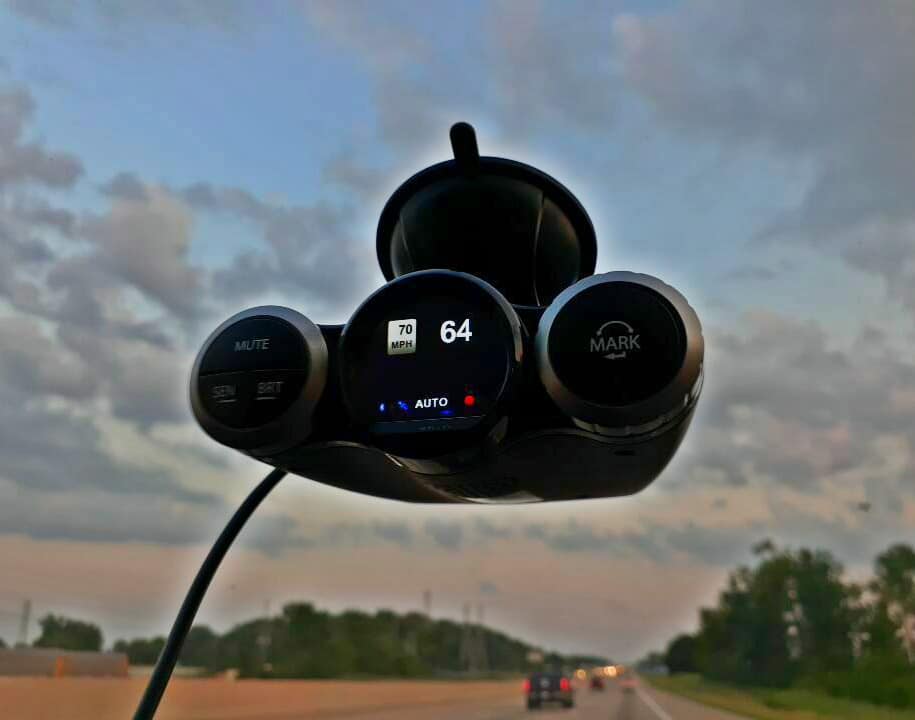
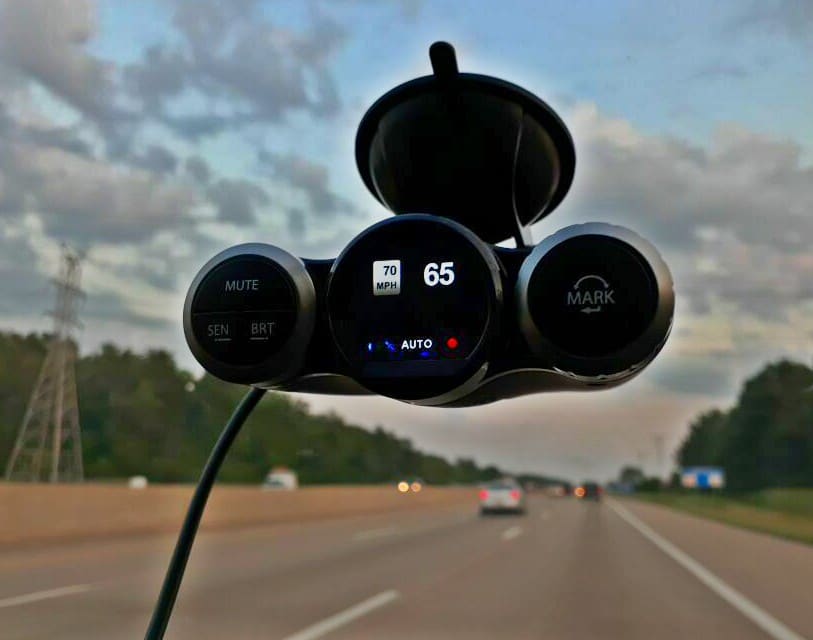
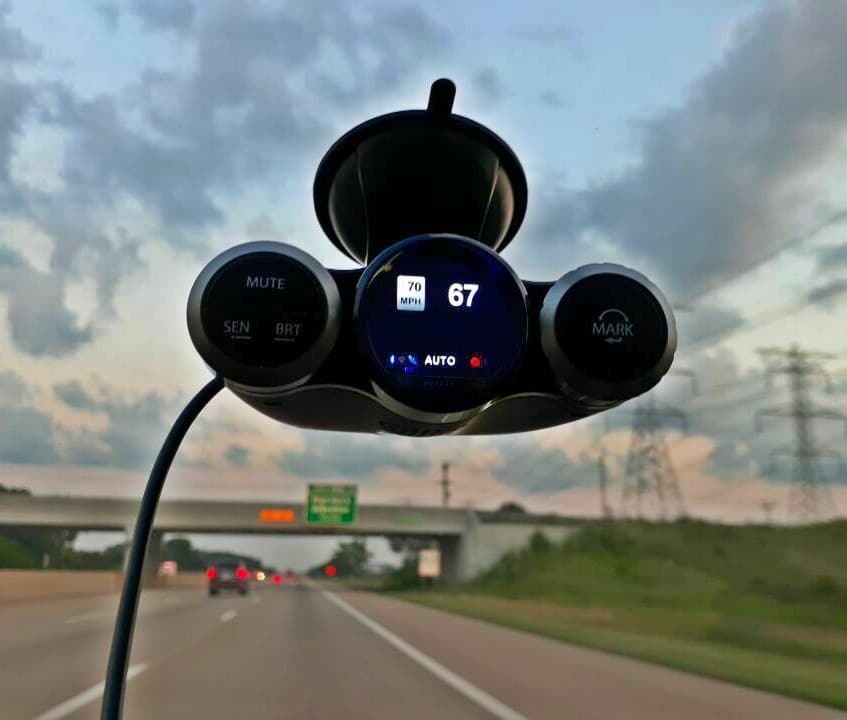
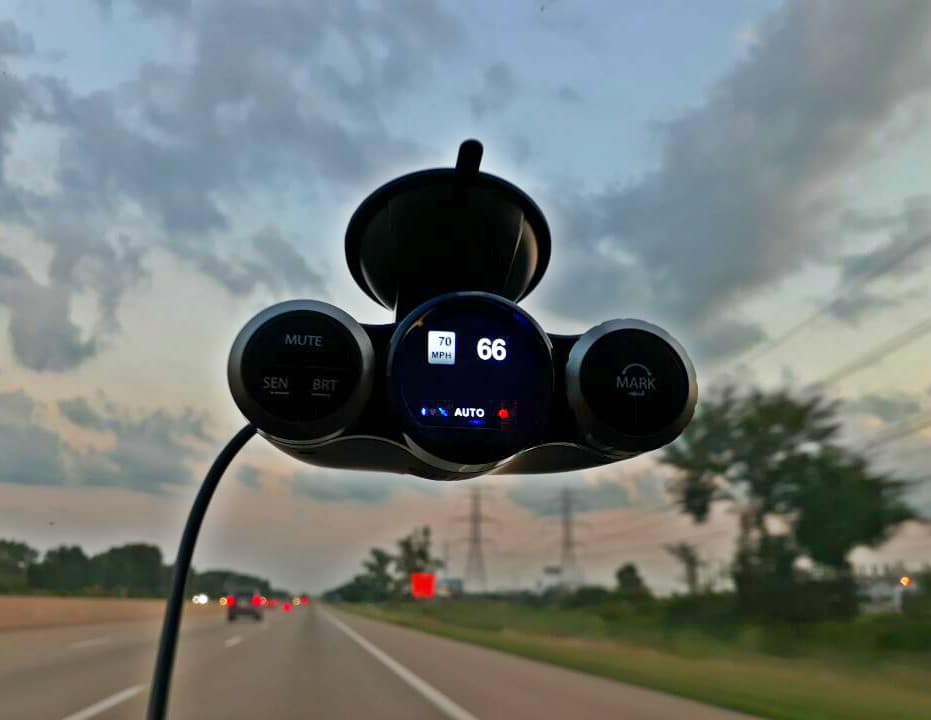
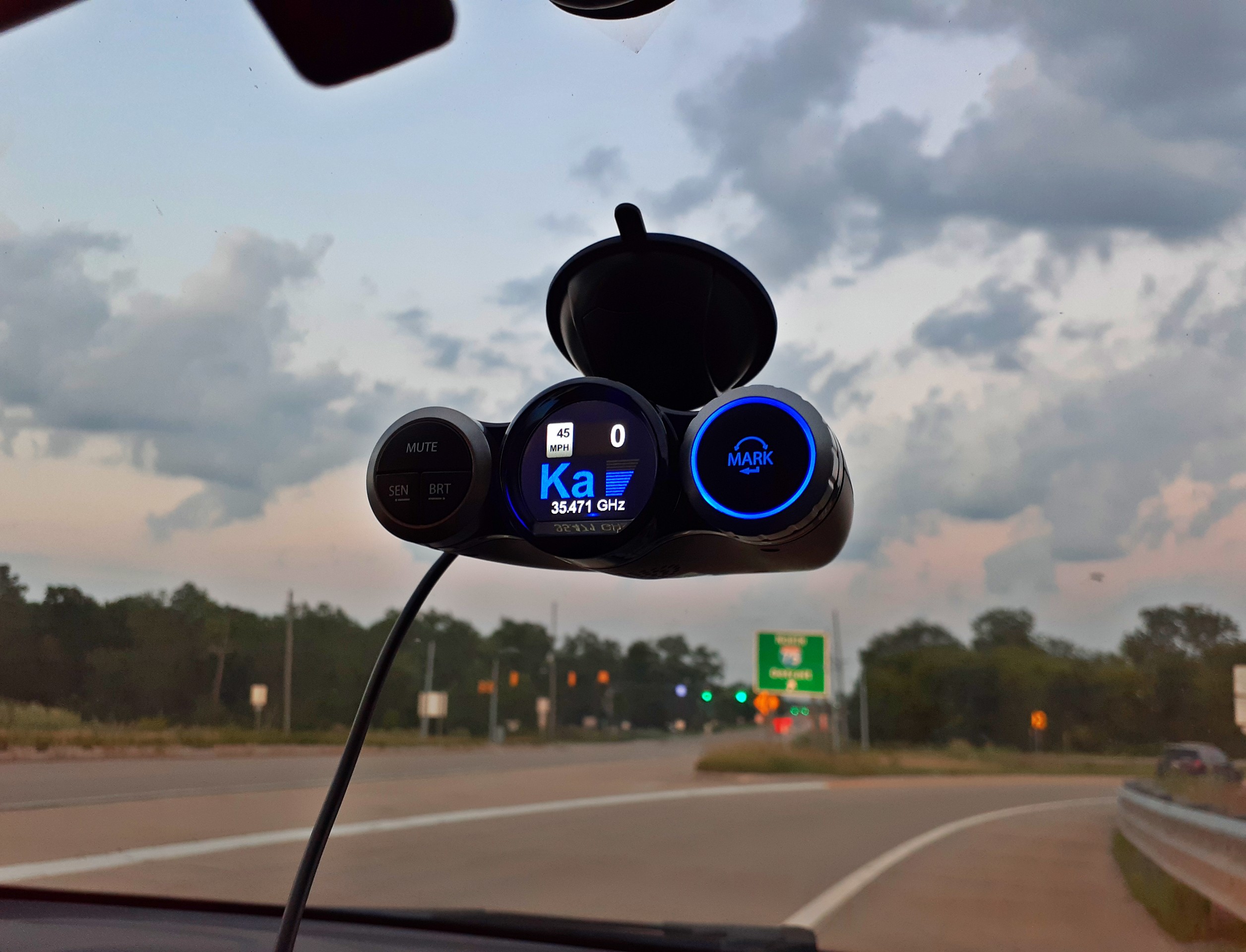
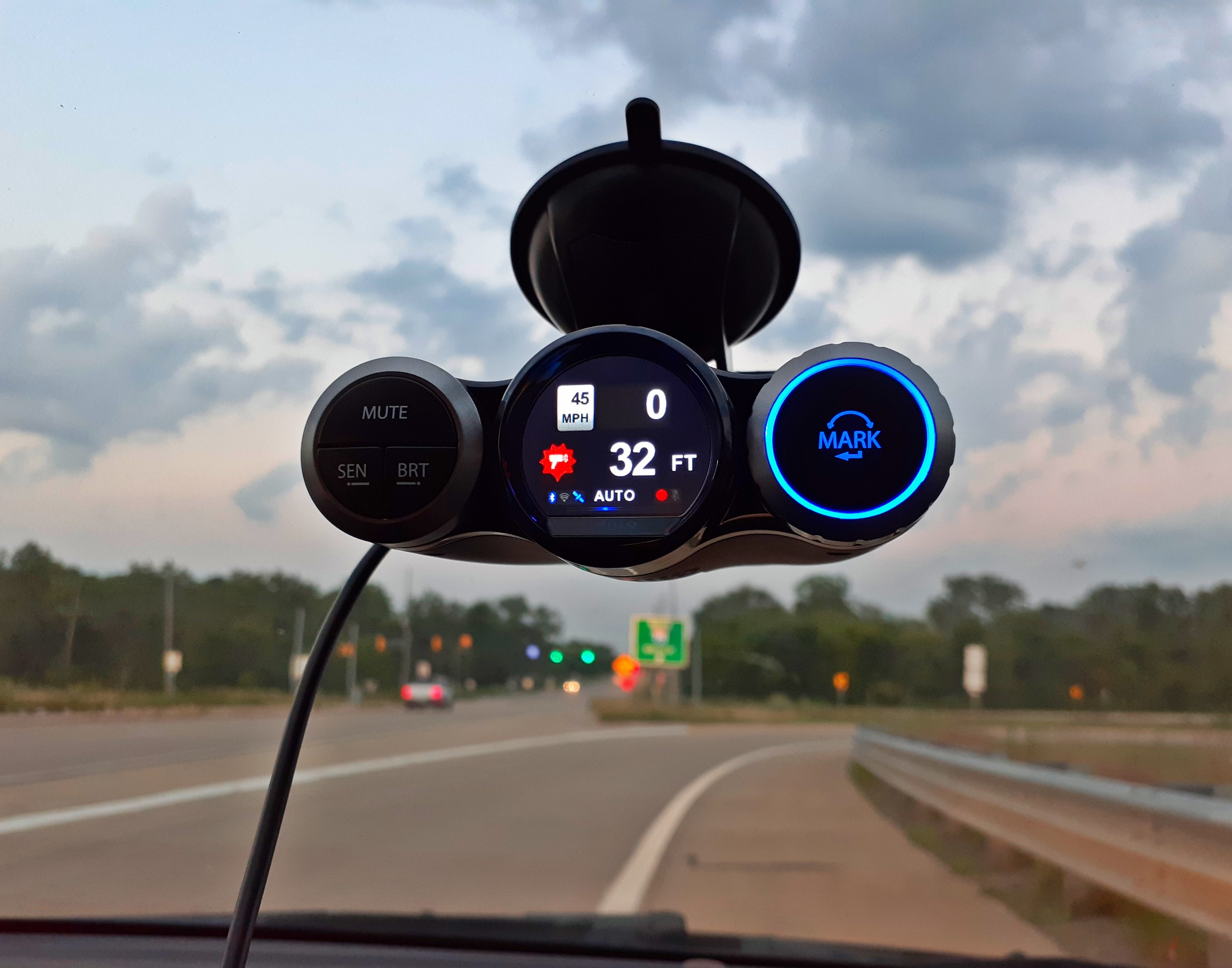
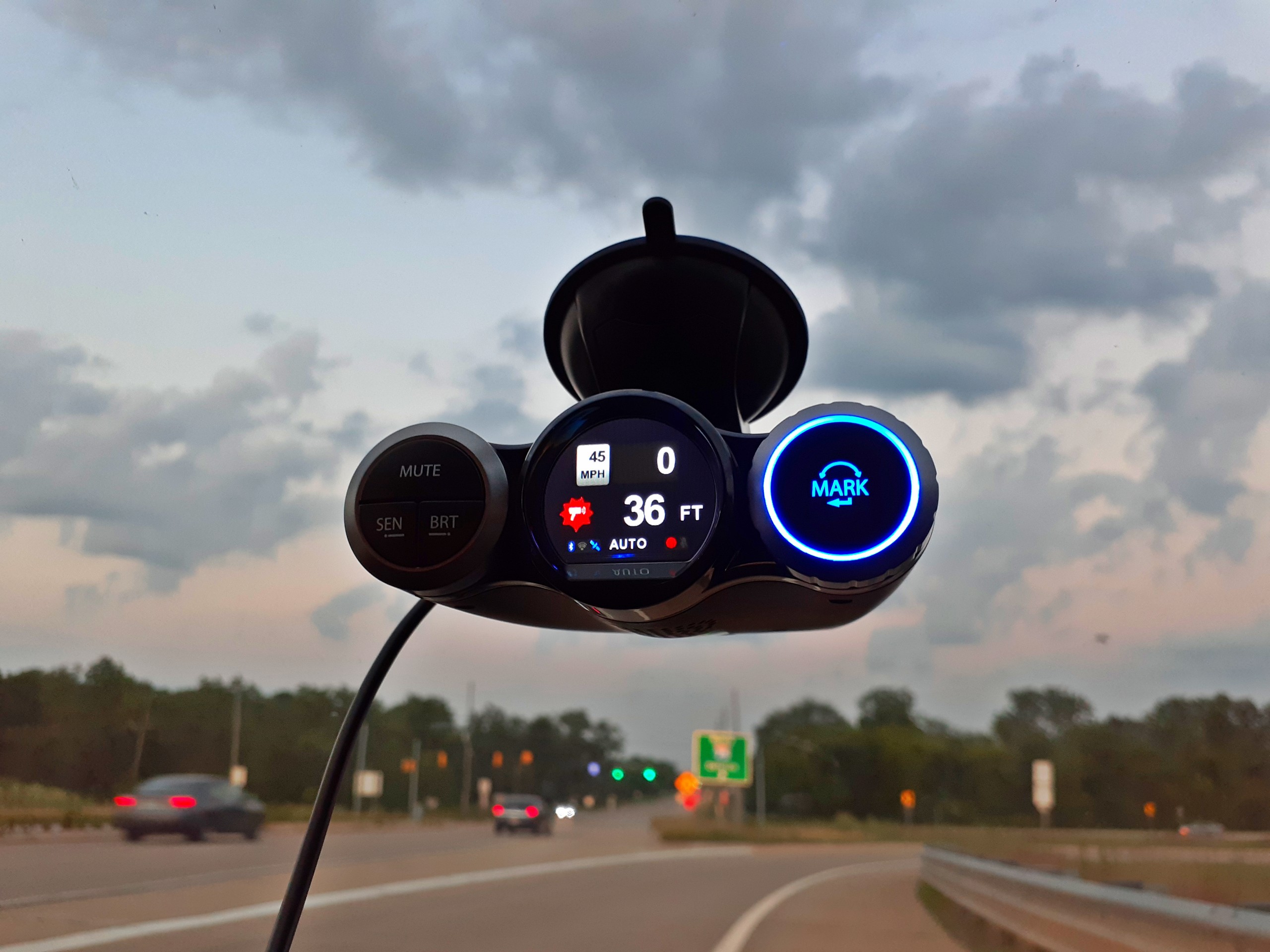
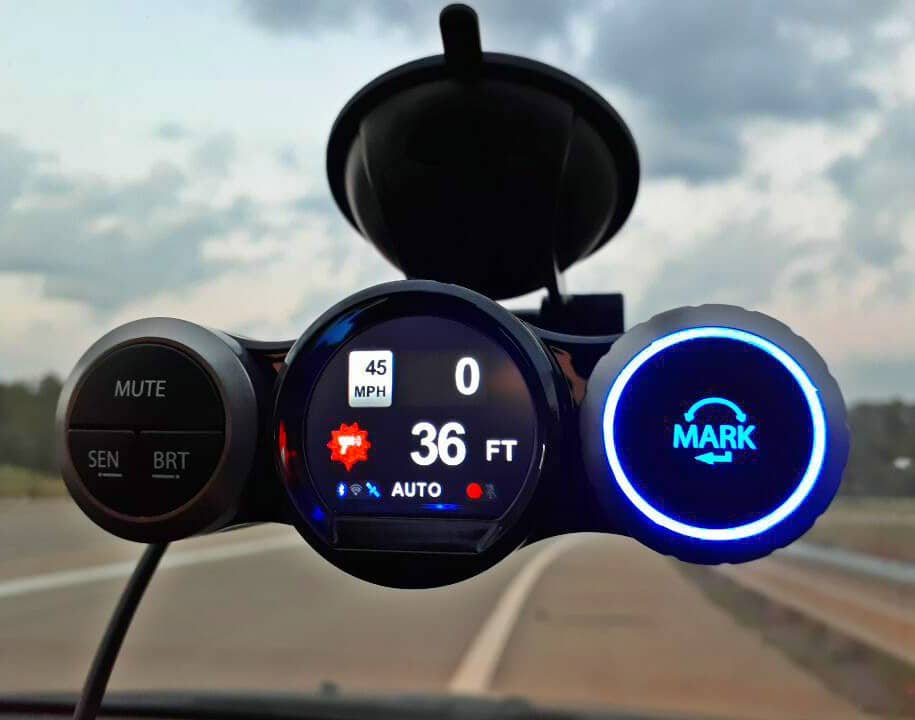
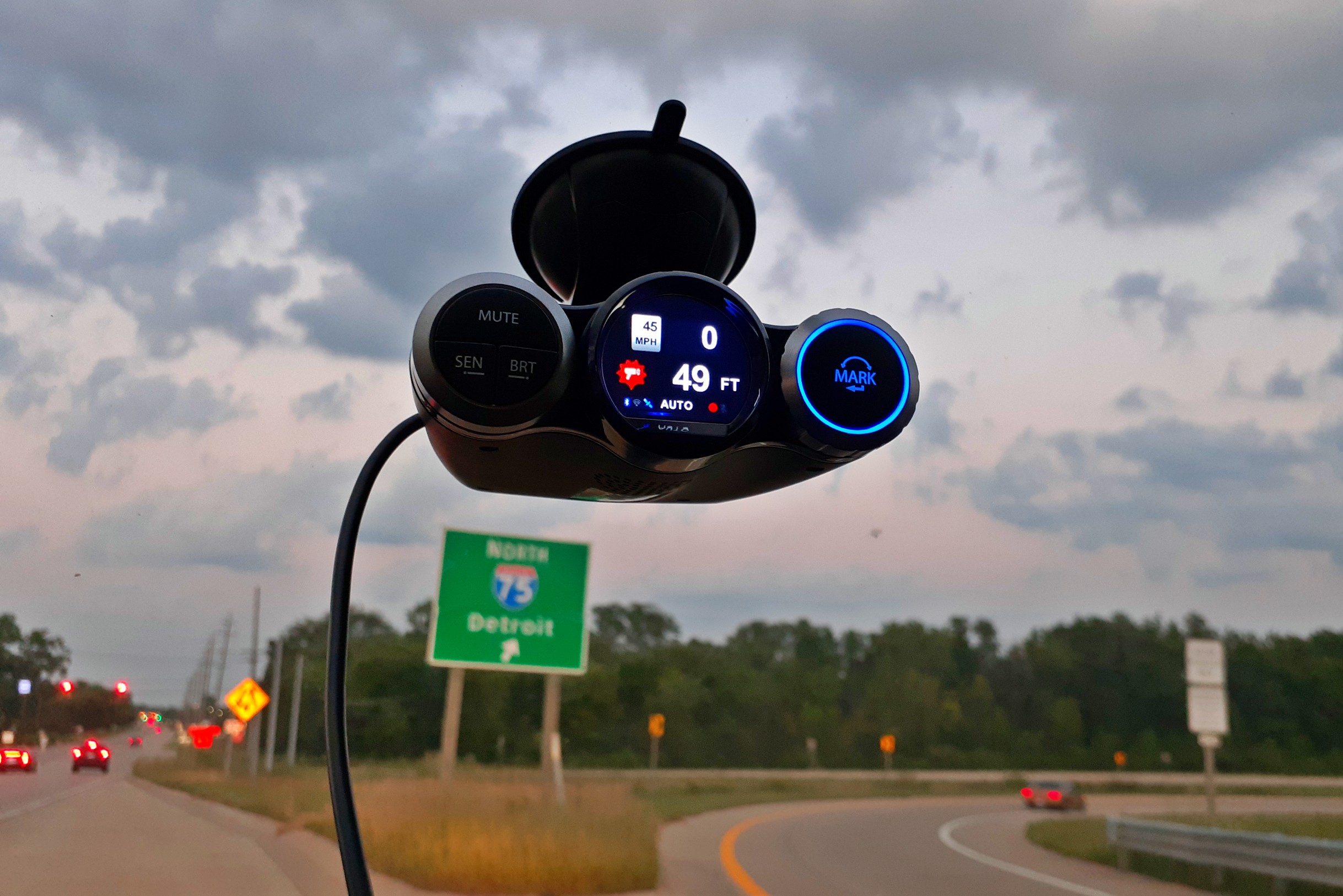
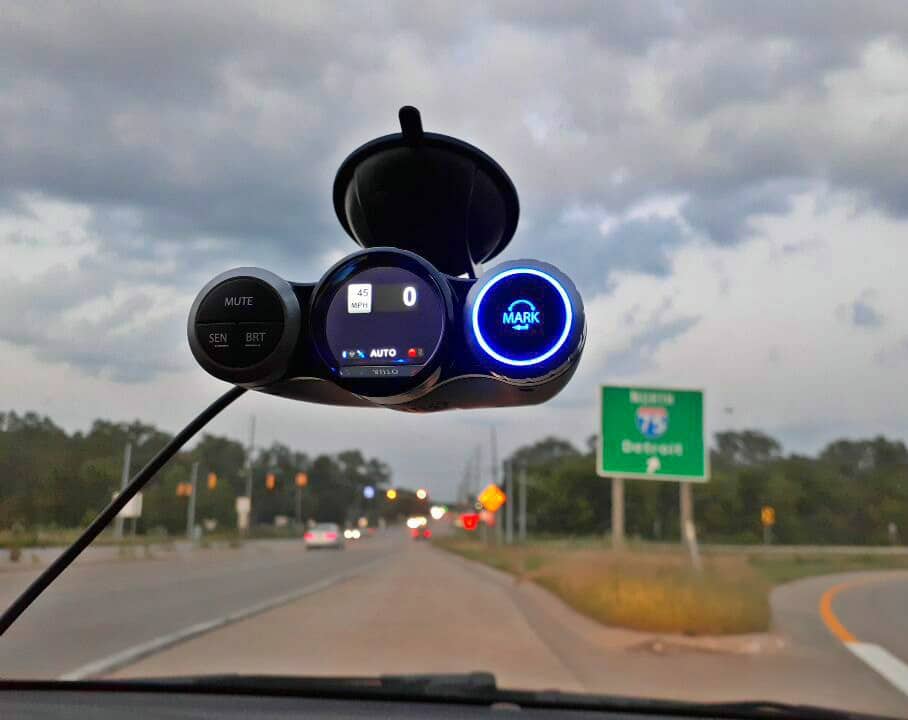
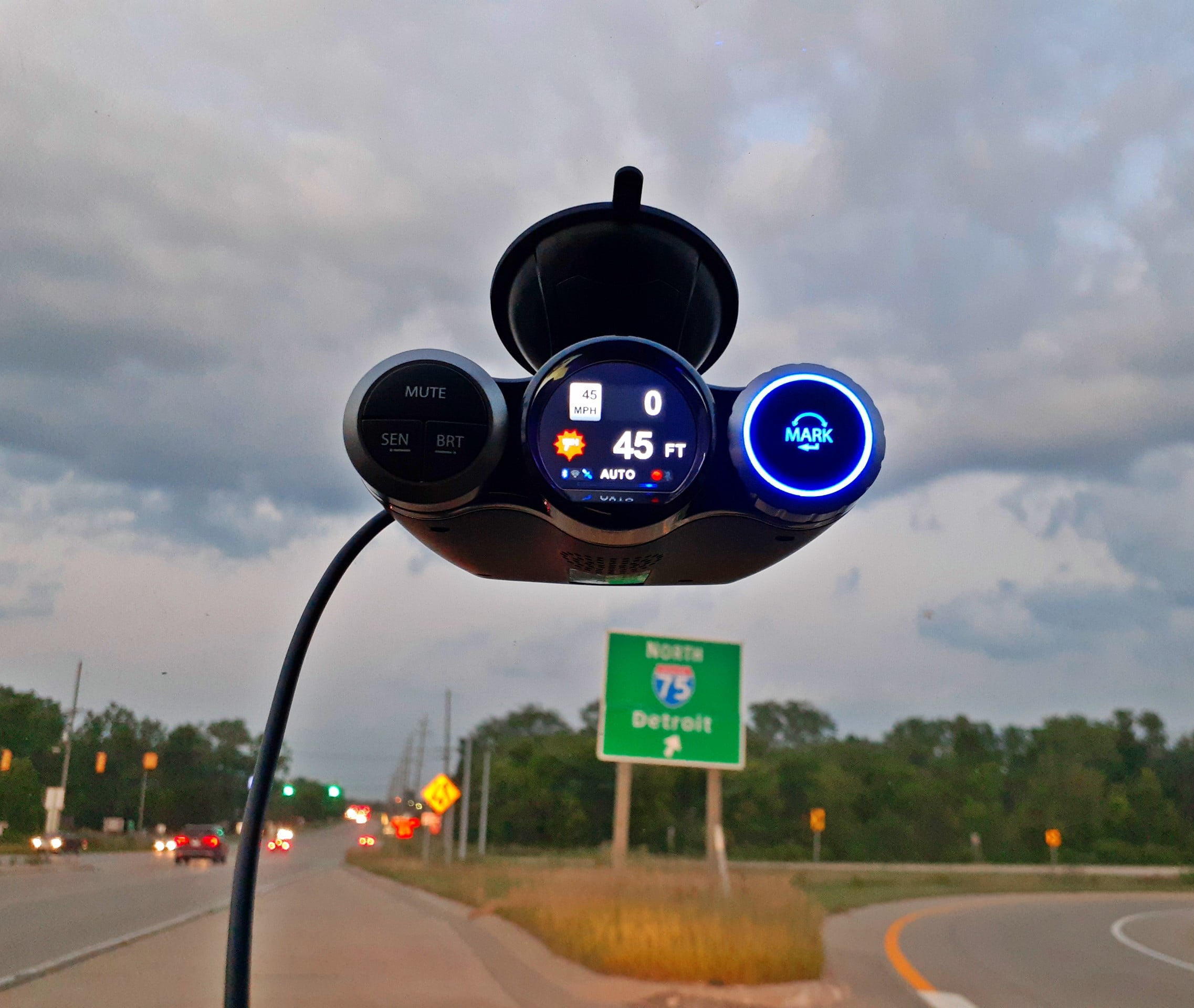
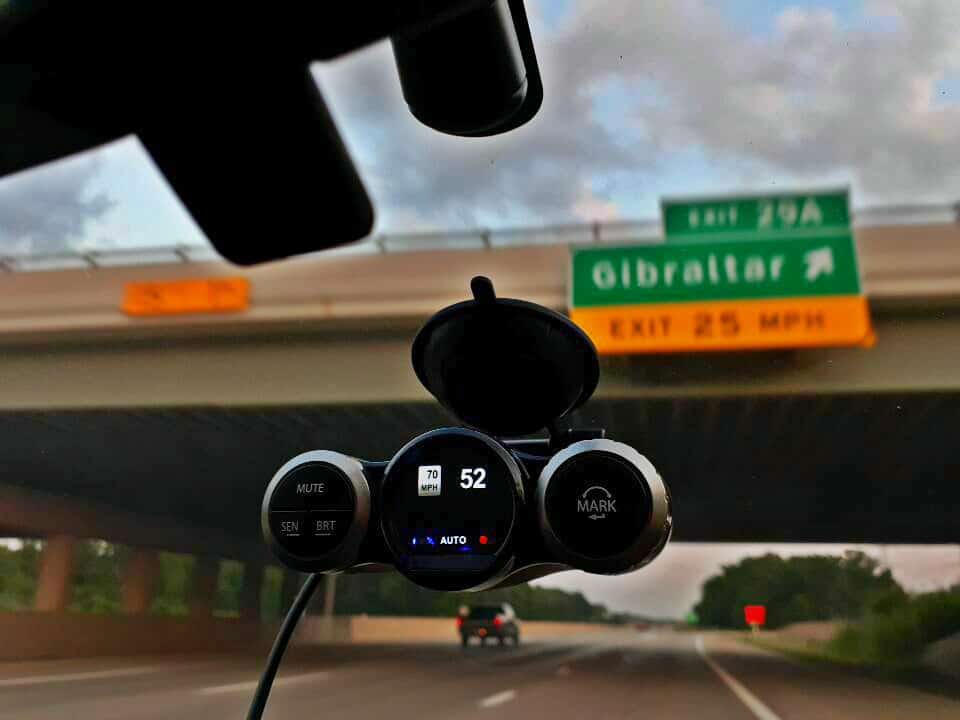
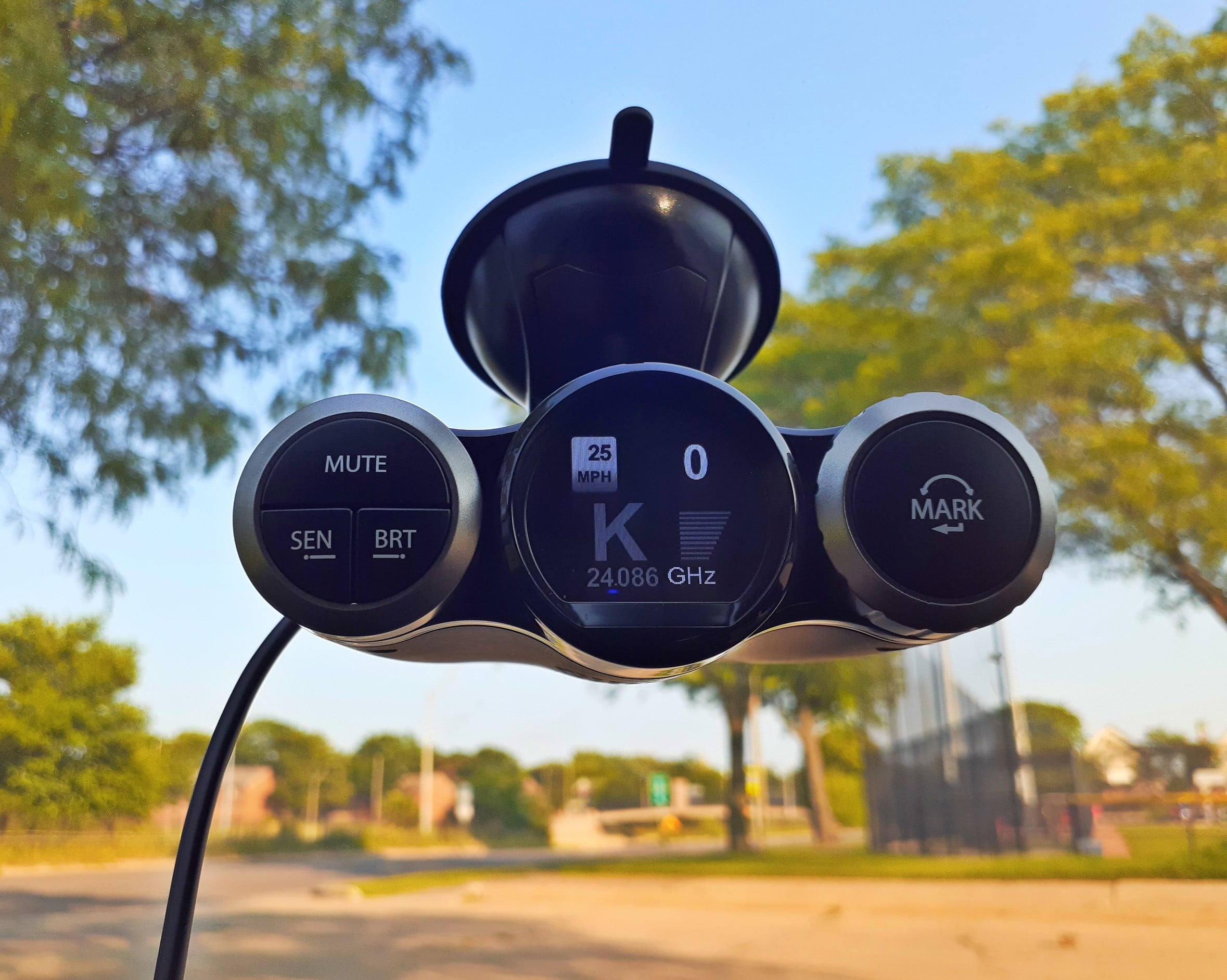
The sensitivity mode appears on the bottom middle portion of the Road Scout’s display. The colorful display is complete with several important “indicators” (as Cobra calls them). These indicators include GPS, signal band and strength, camera and microphone, a scanning bar, and speed alerts (when connected to the iRadar app). You can switch the frequency display feature on via the settings menu if you like. If so, the GHz measurement will appear below the signal band and strength indicator.

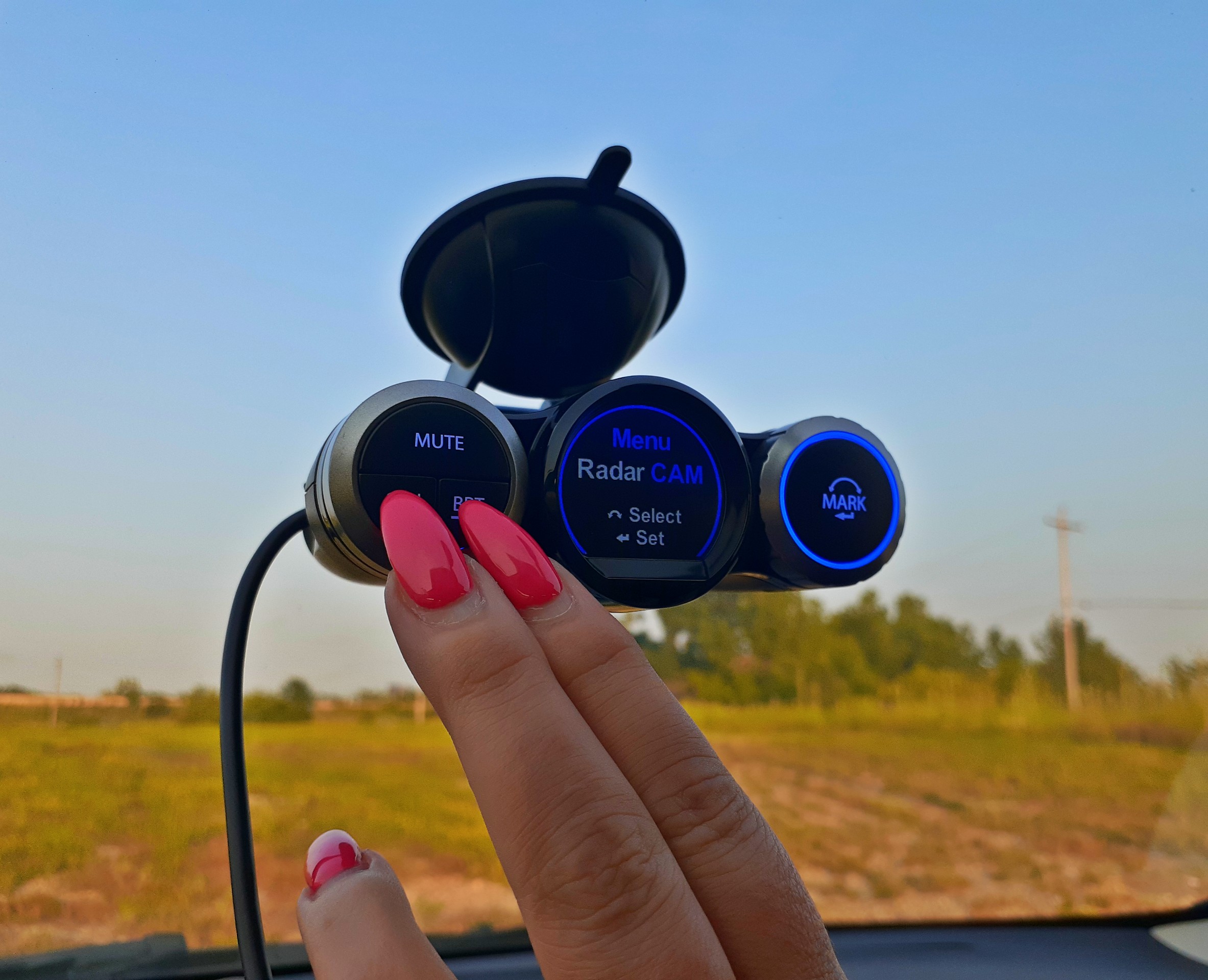
To access the menu, hold the SEN and BRT buttons at the same time. BRT is short for brightness, of which there are several settings.

Detection Range

One potential (if not significant) drawback is the Road Scout’s detection range. Based on my experience, it’s best to slow down immediately when you receive an alert, especially a Ka band notification.

On two separate occasions, I received Ka alerts to find the patrol cars were nearly on top of us. The first was a Michigan State Police car on M-10 through Southfield near Telegraph Road and the 696 interchange. The Road Scout picked up the officer’s Ka band from the rear, but only a few car lengths back. The second alert was from a Wayne County Sheriff deputy on Telegraph Road (also a Ka band). It was a similar situation: the deputy’s Chevy Tahoe patrol vehicle was only a short distance away. Even when picking up false alerts, like road construction signage, the Cobra Road Scout can feel like it’s late to the party.

Unfortunately, the Road Scout leaves a lot on the table in terms of long-range detection. I would hazard to guess this is because of the dash camera. It seems one of the compromises for such two-in-one functionality is detection range. If detection range is more important than having a dash camera, I recommend going with either the Uniden R3 or Uniden R7 over the Road Scout. 

False Alert & IVT Filtering

Although detection range is an issue, the Road Scout makes up for it by offering a solid false alert filtering system – at least at first glance anyway. The IVT Filter (or in-vehicle technology filter) prevents any potential false alerts that could be triggered by the advanced safety features on other vehicles around you. This includes radar-sensor-dependant systems like adaptive cruise control and blind-spot monitoring. Even in heavy Detroit traffic, the IVT filter works flawlessly.

Most impressive was how the Road Scout is impervious to malls, shopping plazas, grocery stores, and other similar fixed location false alerts. While driving through a Kroger or Meijer parking lot on my evening snack runs, the Road Scout never makes a sound. If you do receive a false alert, you can silence it via the MUTE button on either the USB power cord or the unit itself. The only issue is when you go to lockout false alerts . . .

GPS Filter & Lockouts

This feature never thoroughly worked for me, and it became one of the most frustrating things about the Cobra Road Scout during my three-week drive around Detroit.

In the owner’s manual, under the “GPS Filter” section on page 11, Cobra says the feature enables you to store and lockout fixed location false alerts in the Road Scout’s memory. To store a false alert location, press MUTE three times during said alert, either on the unit itself or the USB power cord. If you are connected to the iRadar app, you can also lock out these false alerts via your smartphone. Subsequent alerts to this signal will be muted and displayed in gray.

As of late, I have been making a daily trip to the Grosse Pointe area of Detroit. On my way, I encounter a pocket of ongoing road construction on I-94 with digital speed limit warning signage (the Road Scout flags it as a K band alert). No matter how many times I lock that false alert out, it never works. I have hit the MUTE button (three times as the owner’s manual says) on the USB cord and the unit itself. I also tried locking it out with my phone through the iRadar app. No luck.

Granted, the false alert did turn gray, just as Cobra says in the owner’s manual, but when I drive through the road construction zone again, the Road Scout alerts as normal. For whatever reason, the lockouts don’t stick.

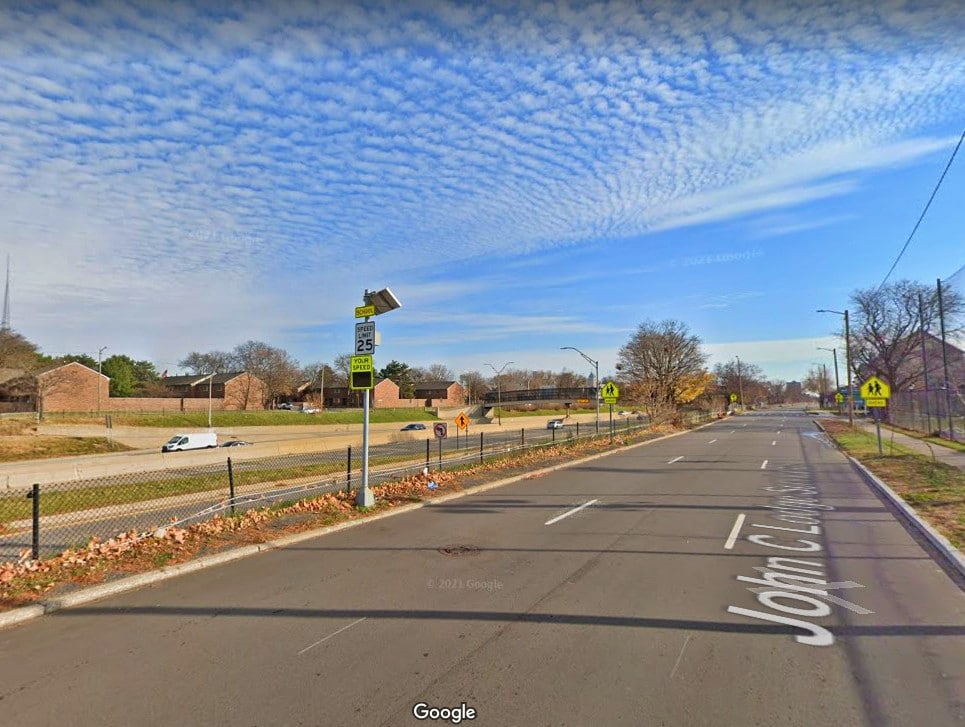
Based on my experience, the Cobra Road Scout struggles with digital signage. The gallery below includes three photos of the John C. Lodge Service Drive in Detroit, a one-way street that runs north and south above the faster-moving M-10. The first photo is an aerial shot from Google Maps, with the red arrows representing where two different digital speed limit signs are located (approximately). The other two photos, also from Google Maps, show the signs up close.
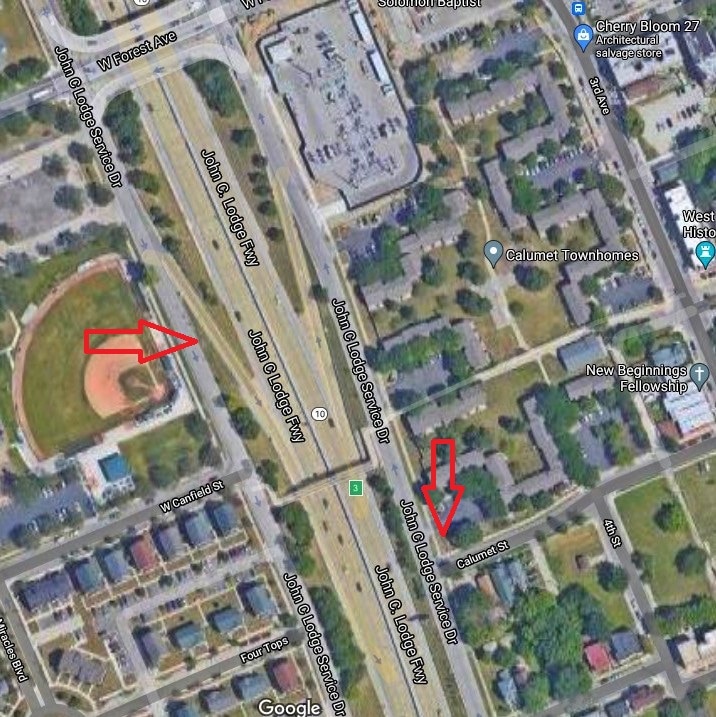
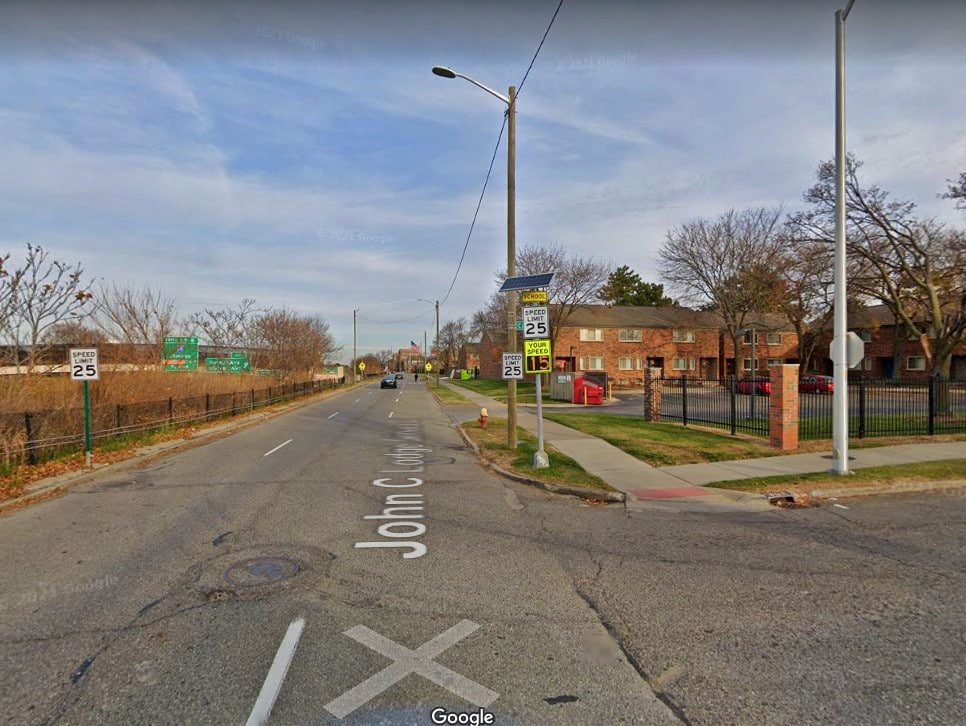
In this particular area, you can turn a perpetual circle on John C. Lodge if you drive up to Forest Avenue, then back down to Martin Luther King Jr. Boulevard. By doing so, you will encounter both the digital speed limit signs in the photo gallery above. And that’s precisely what I did.

I lost count of how many loops I did trying to get the Cobra Road Scout to lockout both of these signs. I believe it took about four or five passes to get the northbound sign to lockout and nearly 10 to finally lockout the southbound sign. Each time, the alert would turn gray as I locked it out. However, it would be back again on the next pass, lighting up in blue as if nothing happened.

Eventually, I was able to lockout both of the digital signs in the gallery above. For additional context, the loop I am talking about I made on a Friday afternoon. I waited until the following Monday to drive the area again to see if the lockouts stuck. To my surprise and disappointment, the Cobra Road Scout alerted to both of the signs, despite me locking them out the previous Friday.
Cobra Road Scout: Dash Camera

The dash camera portion of the Road Scout includes a handful of useful features. Here is a rundown.

SD Card

The Cobra Road Scout comes with a 16GB SD card to store footage as you drive. Via the settings menu, you can change the length of the recording loop between one, three, or five minutes (three is the default). Transferring video files from the Road Scout to your laptop is easy with the micro USB cord.

G-Sensor

The dash camera portion of the Cobra Road Scout includes a g-sensor with three different sensitivity levels (level two is the default setting). During an accident, the Road Scout uses the g-sensor to automatically lock and store the recording. Holding the MARK button also initiates an Emergency Recording Mode.

App Connectivity

With the Drive HD by Cobra app, you can see what you are recording in real-time on your phone. If you also want to use the iRadar app, you can switch back and forth between that and the Drive HD app. On the Road Scout, hold BRT until either “CAMERA” or “iRADAR” appears. However, it’s not necessary to download the Drive HD app. Although you won’t see it in real-time, the Cobra Road Scout is still recording to the SD card as long as the unit is on.

Date/Time Stamp & Watermark

As the Road Scout records, it will include a date and time stamp along with a Cobra logo watermark. You can remove them both via the settings menu.

Radar Band/Alert Integration

The dash camera portion of the Cobra Road Scout is truly separate from the radar detector, meaning it does not record or log any alerts to the SD card. Admittedly, I would like to see this functionality on a future version of the Road Scout. It would be nice to have the option to turn a feature like this on through the settings menu. I think it would be neat to see the radar band, frequency, and signal strength displayed near the date/time stamp on the video recording.

Should You Buy The Cobra Road Scout?

This is where my opinion and viewpoint on the Cobra Road Scout is mixed. Based on my experience, my answer is somewhere between “possibly, maybe” and a hard no. I don’t have a heavy right foot, so the Road Scout’s detection range, short though it may be, is probably enough for me. And I really like how the dash camera is integrated into the unit for the two-in-one functionality. Still, I have a hard time getting past the dismal GPS lockout capability of the Cobra Road Scout.

At the end of my three-week drive, I believe the dash camera is more than satisfactory. However, I am not entirely sold on the radar detector portion of the Cobra Road Scout. For a retail price of nearly $400, the limited detection range and lackluster GPS lockout performance leave me scratching my head. That’s a lot of money to spend for a radar detector that doesn’t cut the mustard.

If you don’t need a dash camera, then look elsewhere for a radar detector (this helpful video will point you in the right direction). Based on my experience, I would not rely solely on the Road Scout for radar detection duty. Other units on the market do a better job, and your money is best spent there. Having the dash camera is nice, but not at the expense of a dependable radar detector.    

When it comes to having both, the more I drive with my Escort MAX 360c and M1 dash camera, the more I like it. Granted, it’s a good deal more expensive, but the MAX 360c is head and shoulders above the Road Scout in terms of performance. While I was unable to use the GPS lockouts of the Road Scout, the MAX 360c with its AutoLearn Technology takes care of false alerts without being prompted. And the MAX 360c smokes the Road Scout when it comes to detection range. 

However, there are redeeming qualities to the Cobra Road Scout, especially with its compact and lightweight, two-in-one design. If you are sold on the Road Scout, you can grab it on Cobra’s official website for $379.95.

Carl Anthony is Managing Editor of Automoblog and a member of the Midwest Automotive Media Association and the Society of Automotive Historians. He serves on the board of directors for the Ally Jolie Baldwin Foundation, is a past president of Detroit Working Writers, and a loyal Detroit Lions fan.

Cobra Road Scout
6/10 Our Score

With the radar detector portion of the Road Scout, you can adjust the sensitivity of the X and K bands, mute false alerts, and mark locations like speed traps and red light cameras. Meanwhile, the dash camera offers a g-sensor and an emergency recording feature.

The Cobra Road Scout is also lightweight, which is beneficial when mounting the unit to your windshield.

Original article: Cobra Road Scout Review: Should You Buy or Skip This Radar Detector & Dash Camera Combo?


from Automoblog https://ift.tt/3jf4Yrk

Sled Heaven: Paul Hartman’s Triumph TR6 desert sled

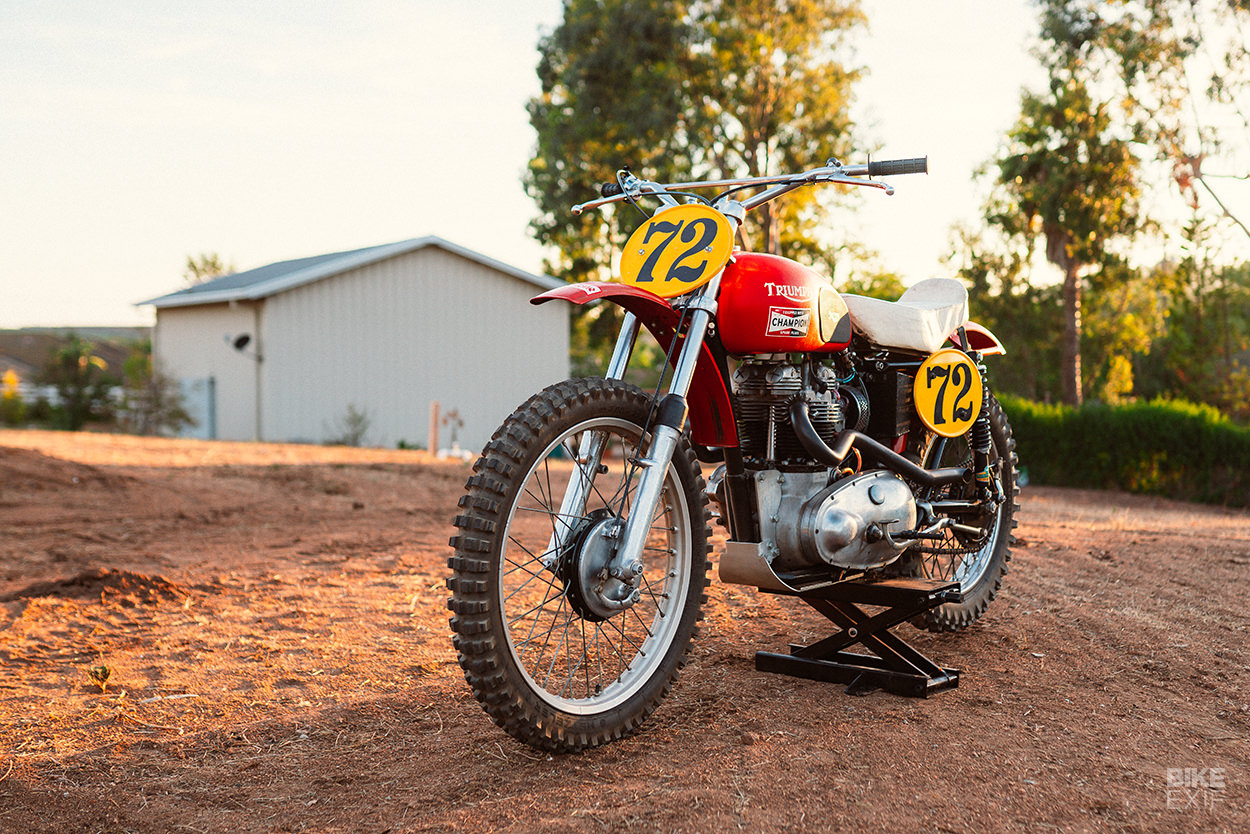
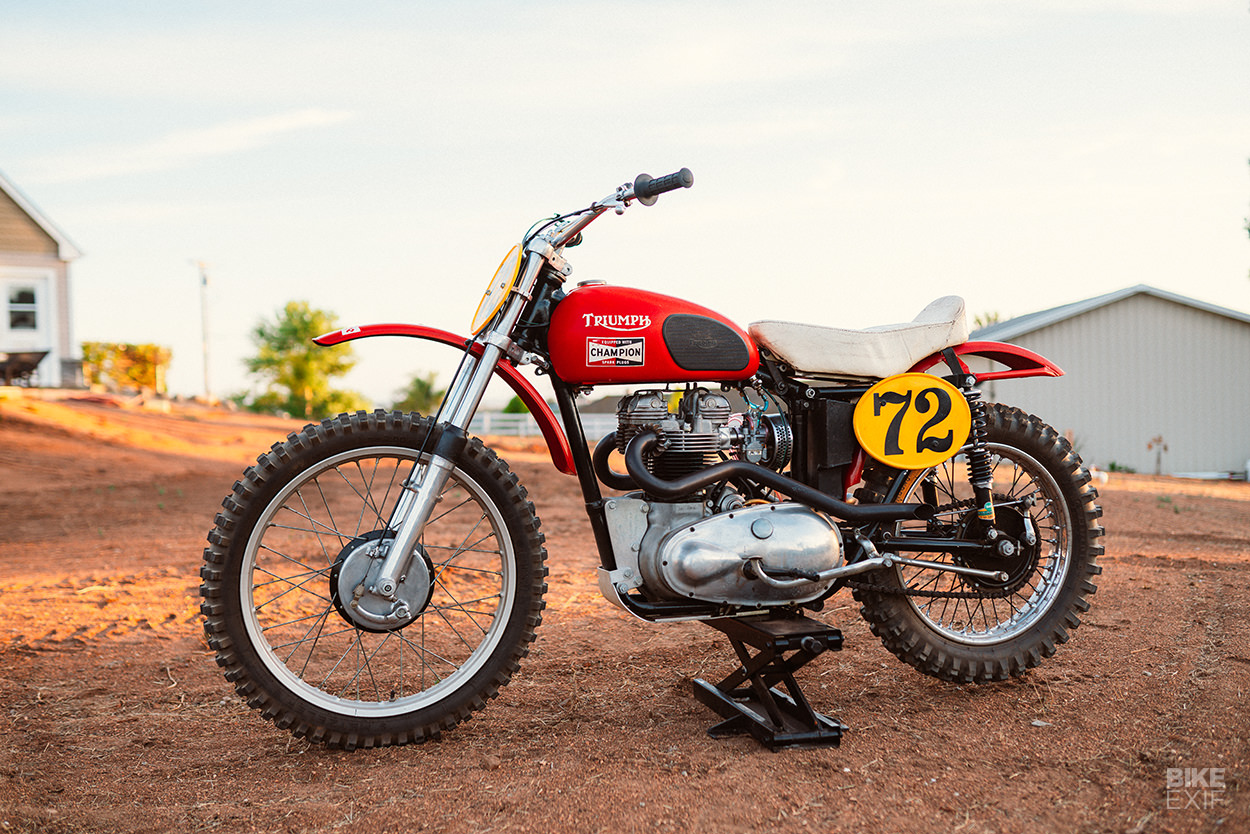
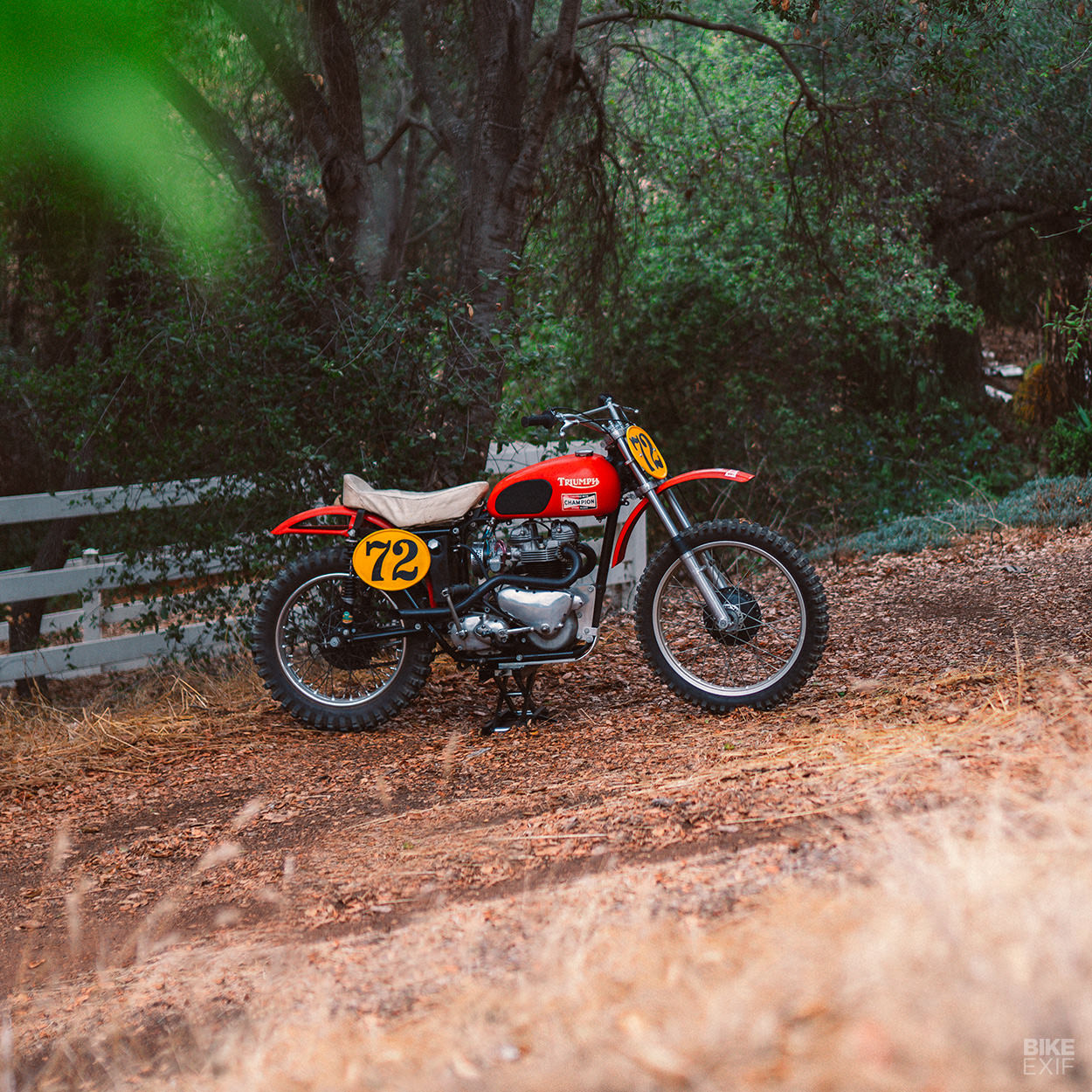
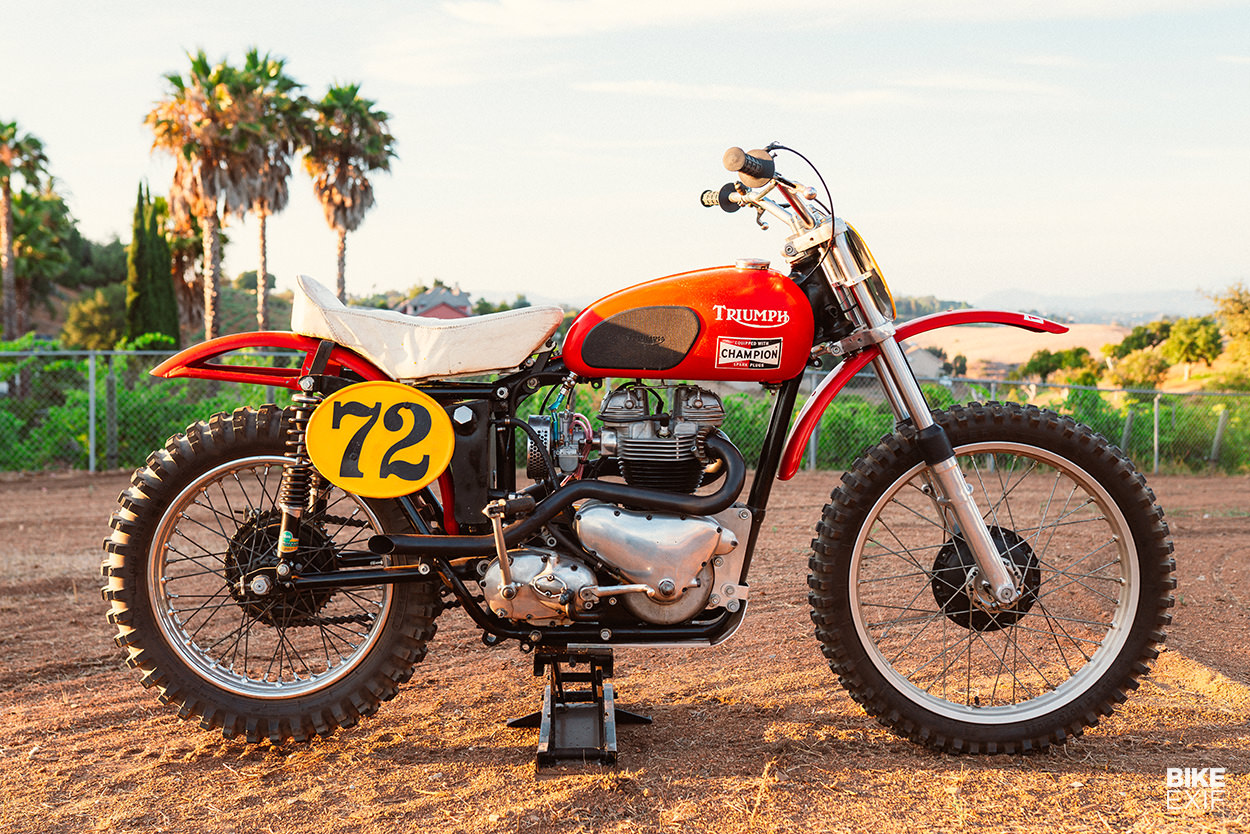
Paul Hartman’s 1959 Triumph TR6 desert sled
Is there any motorcycle genre more evocative than the ‘desert sled’? The very name conjures up images of blasting across the sandy shrublands of Baja. ‘Dual sport’ or ‘enduro’ just doesn’t cut it.

For Brit bike fans, the heyday of the desert sled was from the mid 50s to the early 70s. Triumph twins ruled the proverbial roost, taking over from stripped down Harleys and Indians—before Huskies and Yamahas became the weapons of choice for the high plains and dunes of the western United States.

Paul Hartman’s 1959 Triumph TR6 desert sled
This Triumph TR6 captures the vibes of those good times just perfectly. It’s mostly period correct, but a few well-judged mods elevate its performance beyond the norm for the air-cooled twin.

The builder is Paul Hartman, an art director for a skateboard manufacturer. But when he’s not designing decks, Paul is spannering on motorcycles. “Building bikes is a hobby for me,” he says.

Paul Hartman’s 1959 Triumph TR6 desert sled
“I live in Bonsall, California and I’m lucky to have a nice workshop at my house. I spend my down time restoring or building bikes—mostly vintage racing stuff.”

Paul’s San Diego County shop is currently home to a selection of in-progress flat trackers and desert sleds—plus this completed but appealingly rough-and-ready TR6.

Paul Hartman’s 1959 Triumph TR6 desert sled
“It’s a 1959 Triumph TR6,” Paul reveals. “In the 50s and 60s Triumph dominated the deserts and the ‘dirt bike’ scene, but around the mid 60s Husqvarna started coming into the mix.”

“Long story short: I’ve always loved the Husqvarna Cross bike—like the one Steve McQueen and Malcolm Smith rode in On Any Sunday. It’s such a cool bike, but I’m a Triumph desert sled guy. So I wanted to make my own personal version of that bike, on the Triumph platform.”

Paul Hartman’s 1959 Triumph TR6 desert sled
Paul picked up the pre-unit donor bike from a collection in Northern California. “I got it along with a couple of other British bikes at an auction earlier this year. The bike was clean, and a nice candidate for the motocrosser I wanted to build.”

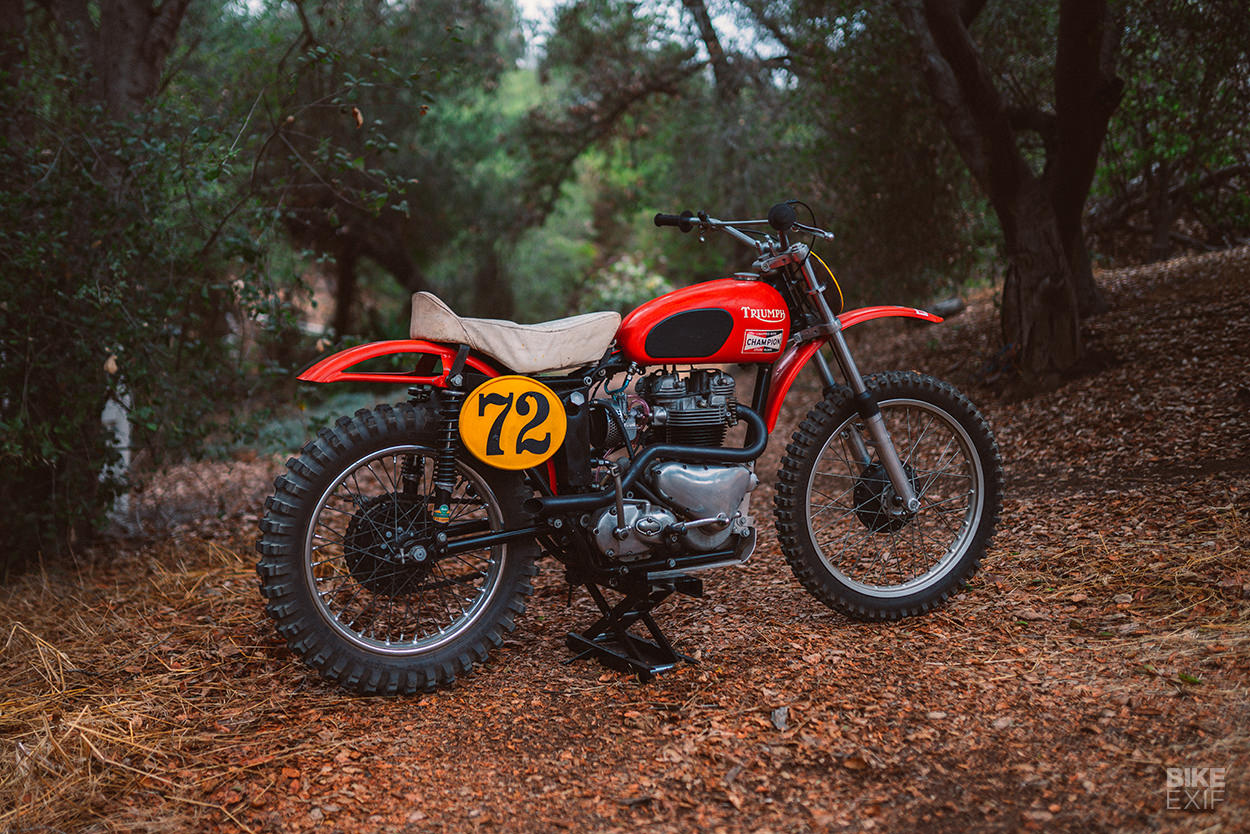
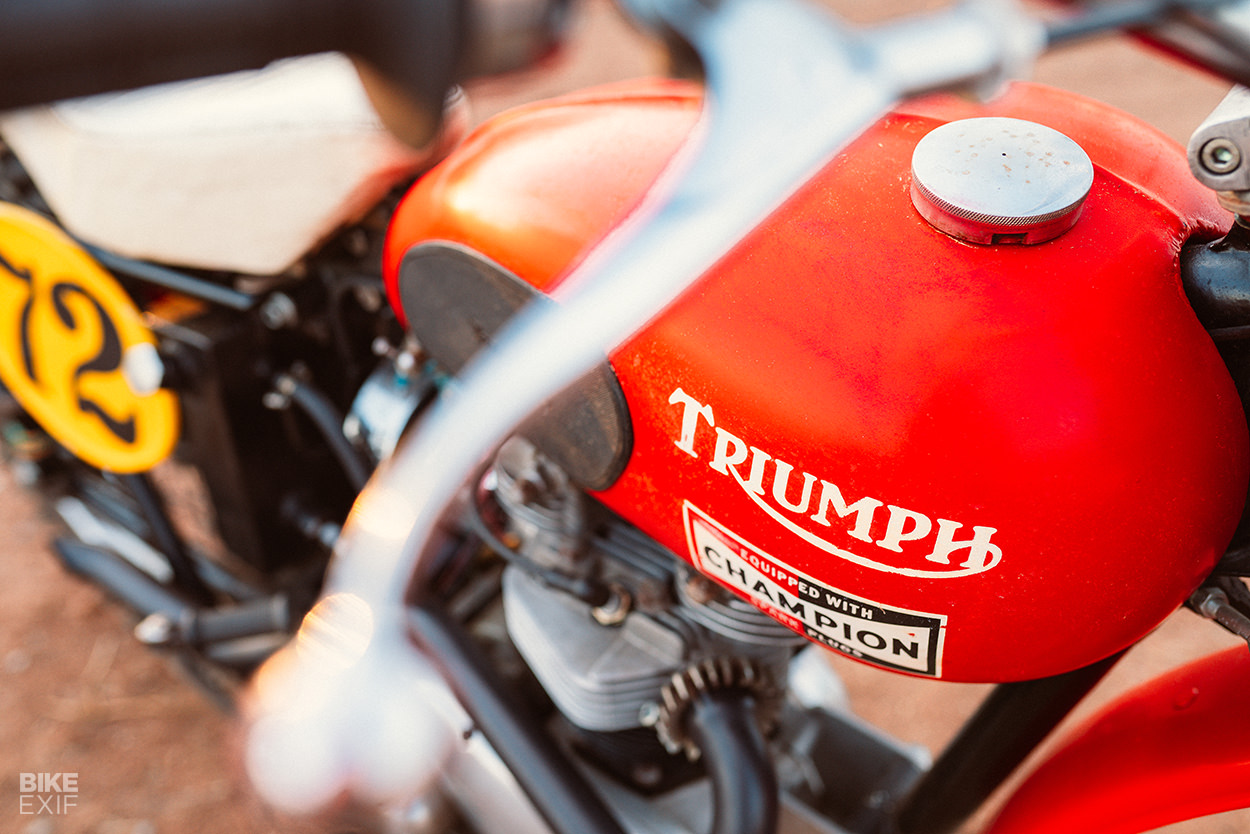
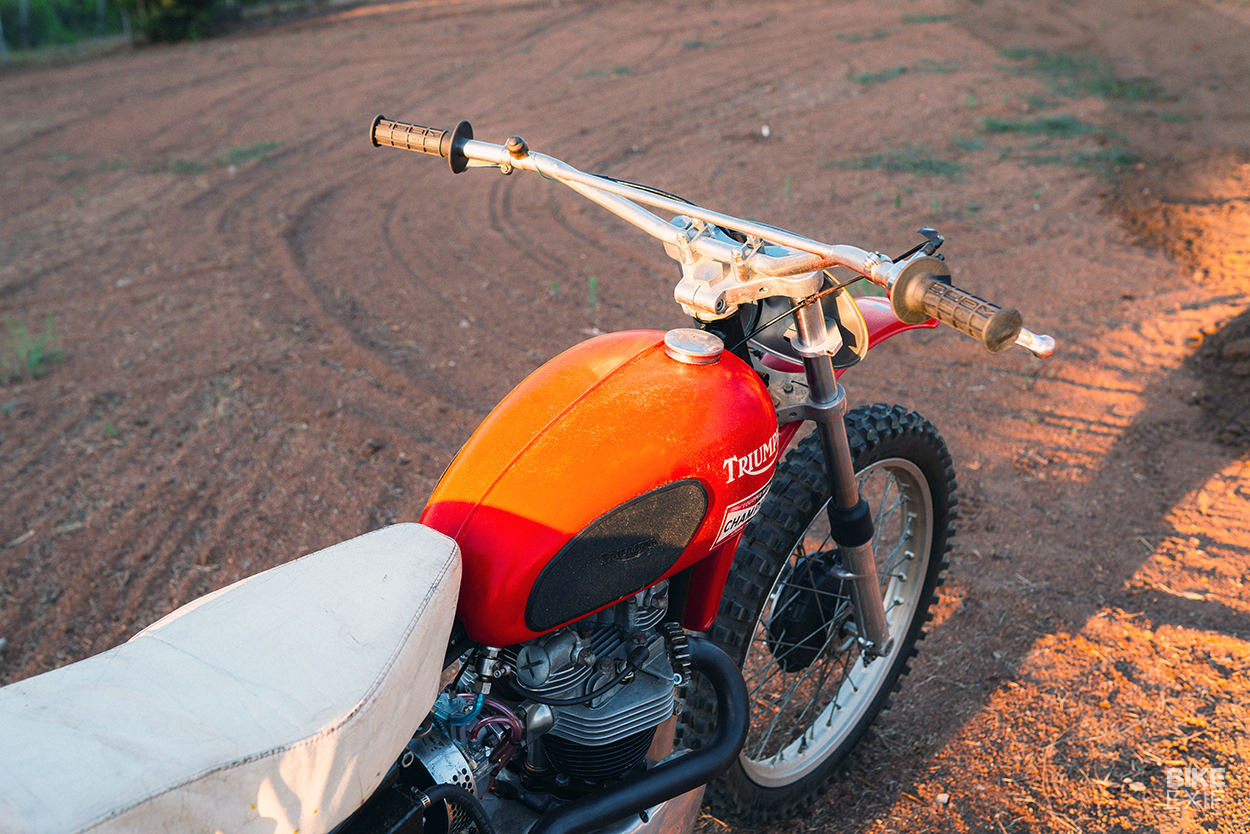
Paul has left the 649cc vertical twin in factory spec, aside from a few small Webco parts, but has given the fueling a major upgrade by fitting an Amal 930 series carb. Right above is a slim Triumph T120 tank of 1960s vintage, which will help with maneuverability on the loose stuff.

Paul Hartman’s 1959 Triumph TR6 desert sled
The seat doesn’t have the slick finish of modern custom upholstery, but it’s the real deal—an old Bates unit. “I got it at a swap meet in Texas, and it looked like new-old-stock.”

“These old desert seats are super hard to find and kind of fragile now, so you have to work some oil into them. And the white looks neat with the [Persian Orange] Allis-Chalmers tractor paint.”
Paul Hartman’s 1959 Triumph TR6 desert sled
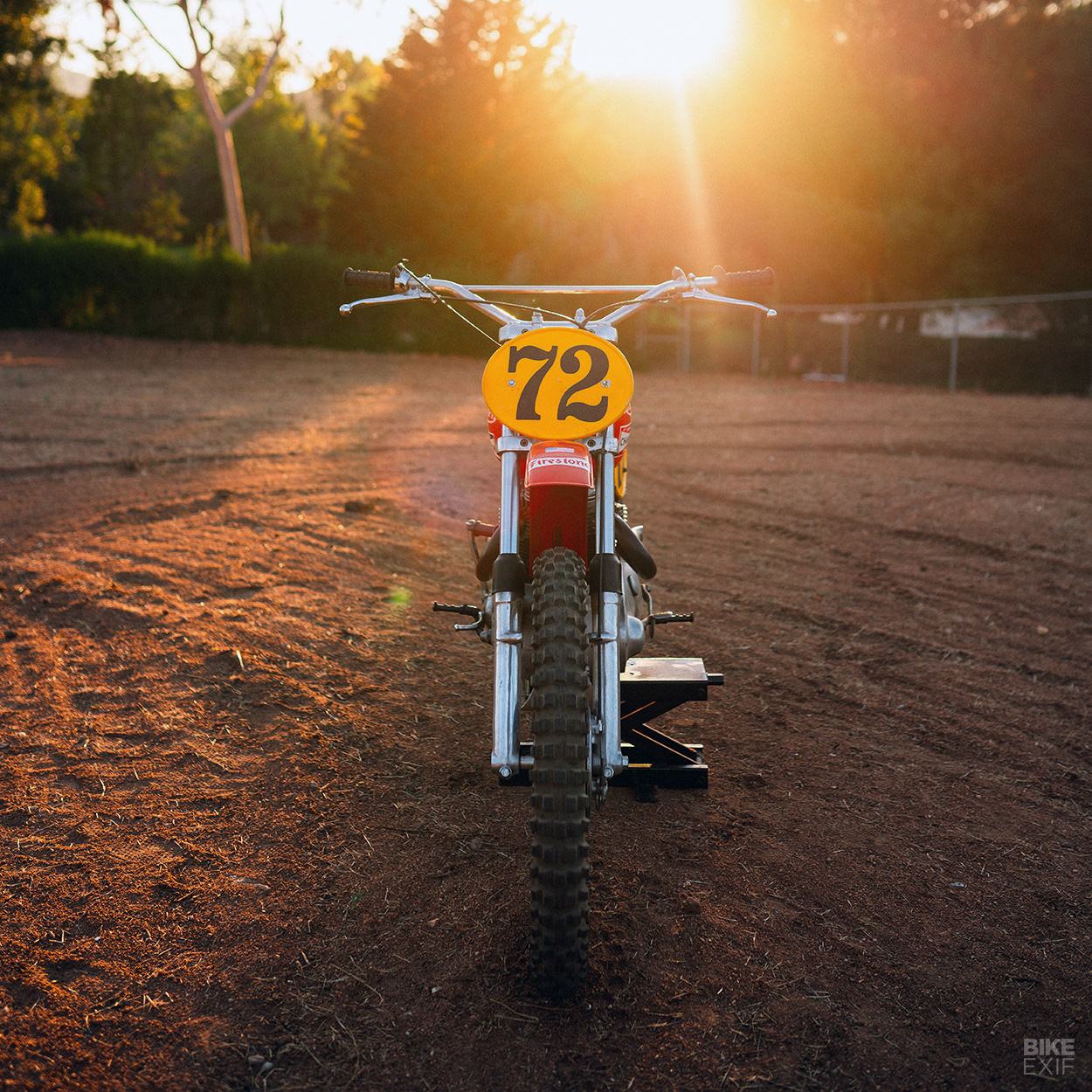
The front wheel is an early Husqvarna rim, and has gone up a couple of sizes to 21 inches, while the factory 18-inch rim stays at the back. The wheels are now shod with vintage Metzeler motocross tires.

The fenders are not standard: the front is a vintage aluminum motocross item of unknown provenance, and the rear fender is “a goofy homemade thing that came with the bike when I got it.”

Paul Hartman’s 1959 Triumph TR6 desert sled
The biggest upgrade is the suspension. The TR6 was always a good handling machine, aided by its 365 lb dry weight, but Paul has taken it to the next level with 14-inch Ikon rear shocks and Betor forks. “They’re made in Spain, and could be from a Bultaco—or a variety of early motocross bikes.”

After applying the paint and installing a set of wide vintage motocross bars—plus aluminum number panels on the side—Paul is ready to race his sled. “I plan to bring this out for the Hell On Wheels races,” he says. “This bike really boogies, and the suspension is the best I’ve ever felt on a Triumph.”

Paul Hartman’s 1959 Triumph TR6 desert sled
If you live on the west coast of the USA, you’ll also be able to see Paul’s bike on display at the Born Free show later this month.

But really…wouldn’t you rather be sitting astride this thing and blasting it down the beaches and sandy backroads of Baja California?

Images by Zachbox.

Paul Hartman’s 1959 Triumph TR6 desert sled


from Bike EXIF https://ift.tt/3ilhmXx

Monday, 2 August 2021

Lincoln Aviator Shinola Concept: The Design Experiment of Two Detroit Brands

A watch, a duffle bag, and a bike seat each served as inspiration for the Lincoln Aviator Shinola Concept. Shinola is one of Detroit’s most iconic brands, known for its luxury watches, fine leather goods, and a hotel downtown on Woodward Avenue. There is even a Shinola-themed Monopoly game. For this Aviator concept, Lincoln teamed up with Shinola to show each brand’s signature styling cues.

What Inspired It

Following a tour of Shinola’s flagship showroom in the Motor City, Lincoln designers went to work. The result is this Aviator concept that blends the design principles of Lincoln with the modern aesthetics of Shinola. The collaboration was an opportunity for Lincoln to explore different colors and new materials for designing vehicles.

“Shinola opened up their showroom to us as a playground – allowing us to explore how their brand’s lifestyle ethos could be woven into a new theme for one of our vehicles,” explained Kemal Curic, design director, Lincoln. “Our designers were handed a rare gift, and they made the most of it.”

“After our initial meeting with the Lincoln team, it was clear we shared the same passion for well-designed, beautifully crafted products,” said Shannon Washburn, Shinola CEO. “Designers from both brands came together to create an ultra-luxe vehicle that still embodies Shinola’s aesthetic of approachable luxury with thoughtful details.”

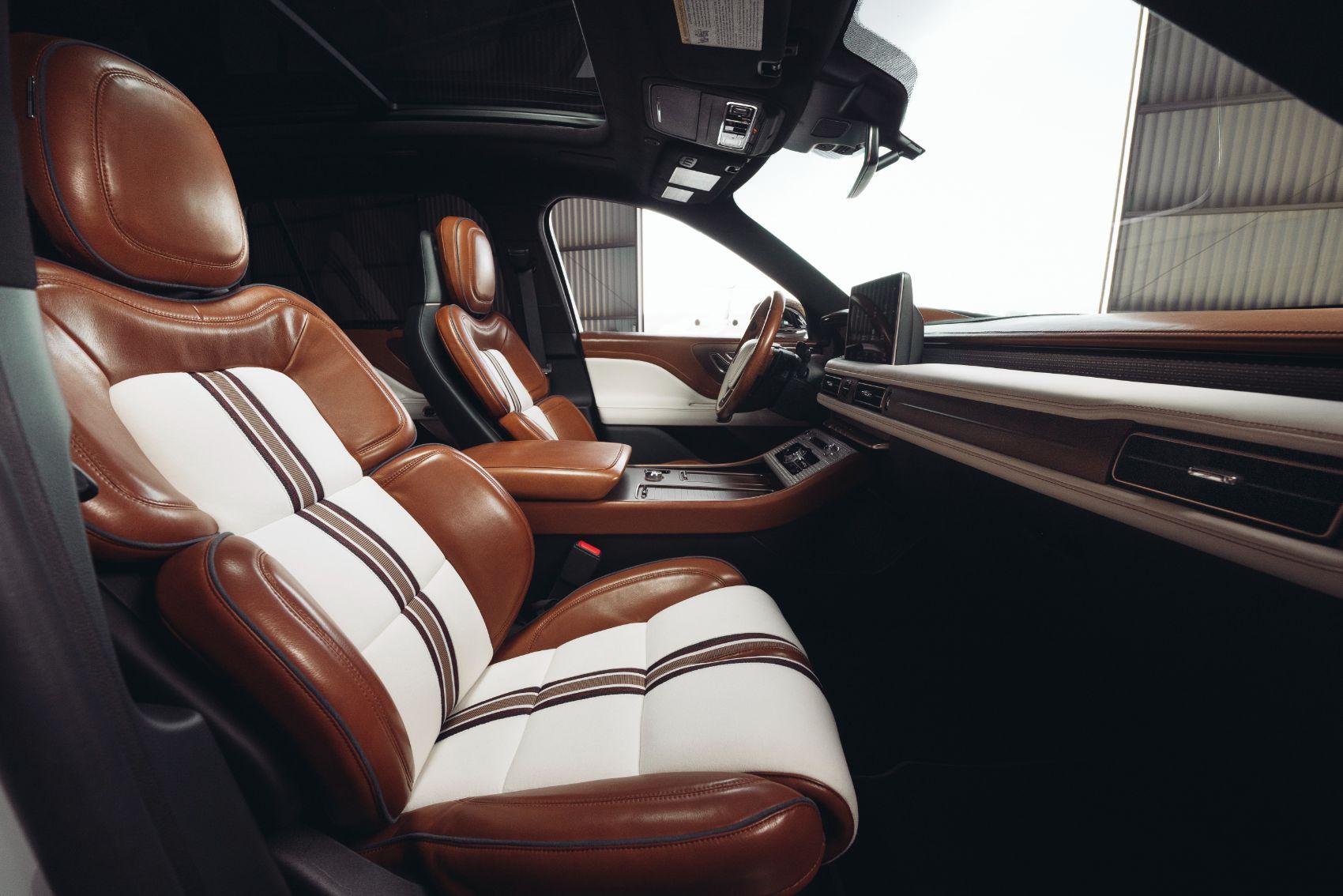
Lincoln Aviator Shinola Concept interior layout.
Lincoln Aviator Shinola Concept interior layout. Photo: Lincoln Motor Company.

Aviator Shinola Concept: Styling & Design

The white exterior is borrowed from Shinola’s mother of pearl stone watch dials, with hints of blue. Copper accents, inspired by the copper-plated structure that attaches to a Shinola Runwell bike seat, give off a rose-gold hue. On the inside is Shinola’s whiskey leather, which is described as having a touch and smell that will indulge even the most refined senses. The crème suede seats have a pearl hue to match the exterior color.

Meanwhile, the woven textile sewn into the seats was inspired by the Shinola brand stripe. Each stitch of the original stripe was scaled to proportion, adding a blue tone that acknowledges, according to Lincoln, its many signature blue colors. “The goal is to impress occupants with our very own expression of craftsmanship, showcasing our meticulous attention to detail,” said Liam Butler, Lincoln color and material designer. “This stripe is unlike anything I’ve ever seen sewn into a vehicle, so we wanted to make sure it was done with care.”

“The fresh insights our team gained studying popular design motifs make this new Aviator concept a true celebration of craftsmanship,” Curic added.

Lincoln Aviator Shinola Concept In Person

Lincoln will display the Shinola Aviator concept at the Pebble Beach Concours d’Elegance later in August.

Photos & Source: Lincoln Motor Company, Shinola.

Original article: Lincoln Aviator Shinola Concept: The Design Experiment of Two Detroit Brands


from Automoblog https://ift.tt/2WDlPfJ

2022 Hyundai Santa Fe XRT Offers Rugged Looks, Modest Starting MSRP

The 2022 Hyundai Santa Fe XRT is a little more rugged and stylish than the average Santa Fe. If you have the Santa Fe on your “test-drive list” but want something with a little more pizzazz, the XRT might be the ticket. The XRT adds new wheels and a unique exterior design without going over the top in terms of the starting MSRP.

2022 Hyundai Santa Fe XRT: Styling Upgrades

  • Matte-black grille
  • Black mirror covers
  • XRT-exclusive side steps
  • Black roof side rails and cross rails
  • Dark silver front and rear skid plates
  • XRT-exclusive black door side moldings
  • XRT-exclusive 18-inch dark alloy wheels
  • Front and rear black lower bumper fascia molding

2022 Hyundai Santa Fe XRT Pricing

The XRT is available on internal combustion models with or without all-wheel drive. Front-wheel drive models start at $32,300 while all-wheel drive models begin at $34,000. Hyundai did not specify what the destination and handling charges would be for the XRT.

If you are shopping for a new Santa Fe, this free and easy search tool* will help you get the best price. Via that search tool, you can see which Hyundai dealers in your area have Santa Fe vehicles in stock, including the XRT trim level.

Warranty & Maintenance

Hyundai also offers a complimentary maintenance program for the 2022 Santa Fe for three years or 36,000 miles. The program includes routine oil changes and tire rotations. To learn more about Hyundai’s factory warranty, see this helpful guide.

Photos & Source: Hyundai Motor America.

*Although always free for you, Automoblog and its partners may earn a commission if you use this search tool.

Original article: 2022 Hyundai Santa Fe XRT Offers Rugged Looks, Modest Starting MSRP


from Automoblog https://ift.tt/3zUQ7cm

Sunday, 1 August 2021

Speed Read, August 1 2021

The latest motorcycle news and customs
We’ve covered all the bases this week—from a 1980s Honda CB to a rendering of the new Aprilia Tuareg 660 adventure bike. Plus a pair of Aermacchis from J. Shia, a rare 1930s V-twin from a Russian museum, and a look at BMW’s new R18 tourers.

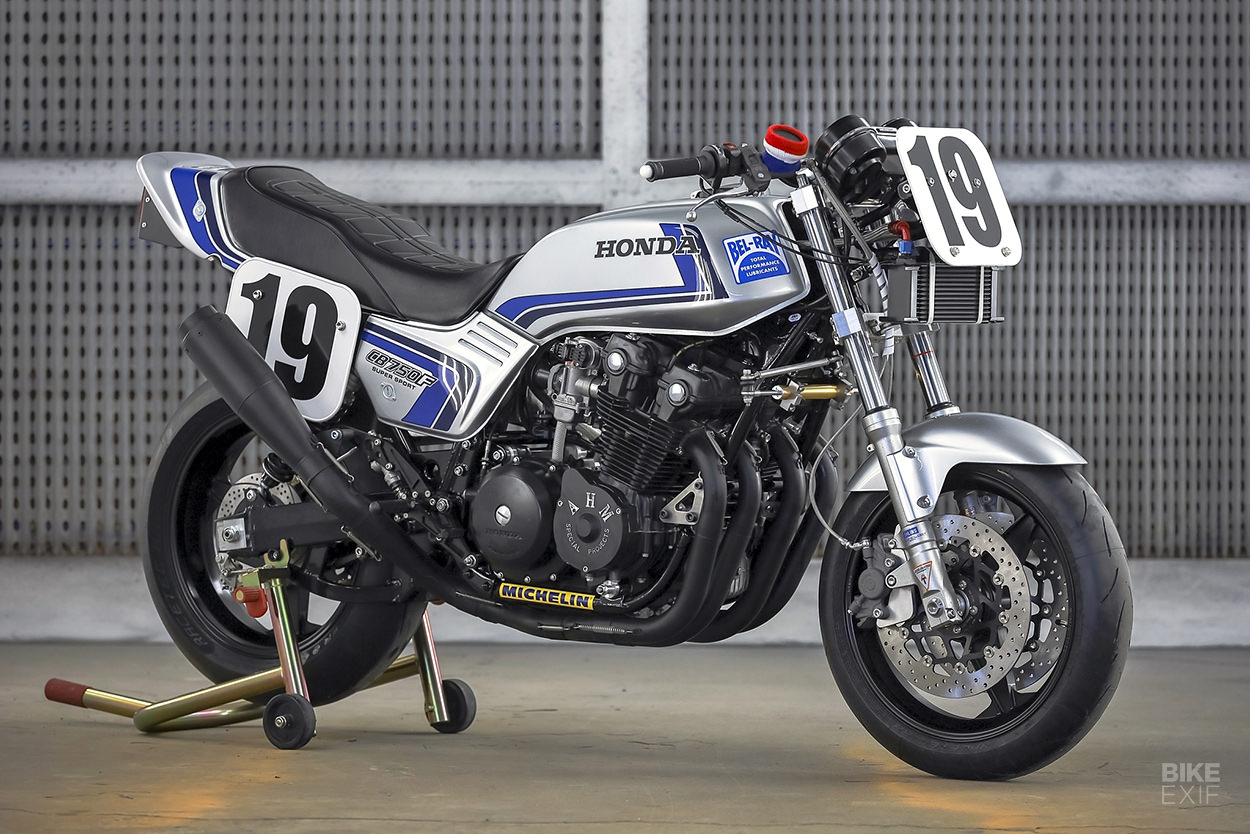
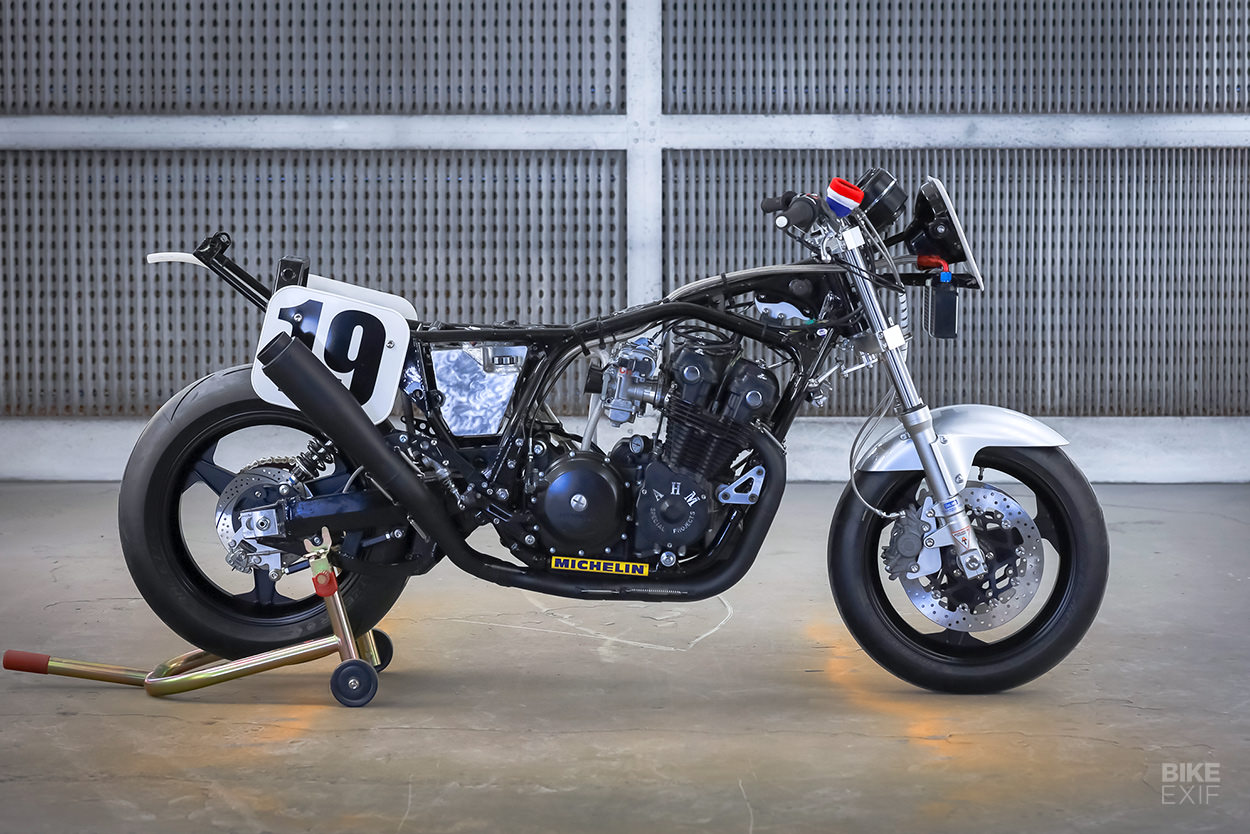
Honda CB750F track bike by dB Customs
Honda CB Superbike by dB Customs Darren Begg is clearly a busy man. The ink had hardly dried on our feature of his Suzuki XR69 replica, when he bombarded our inbox with this drool-worthy homage to the 1982 Honda CB750-F.

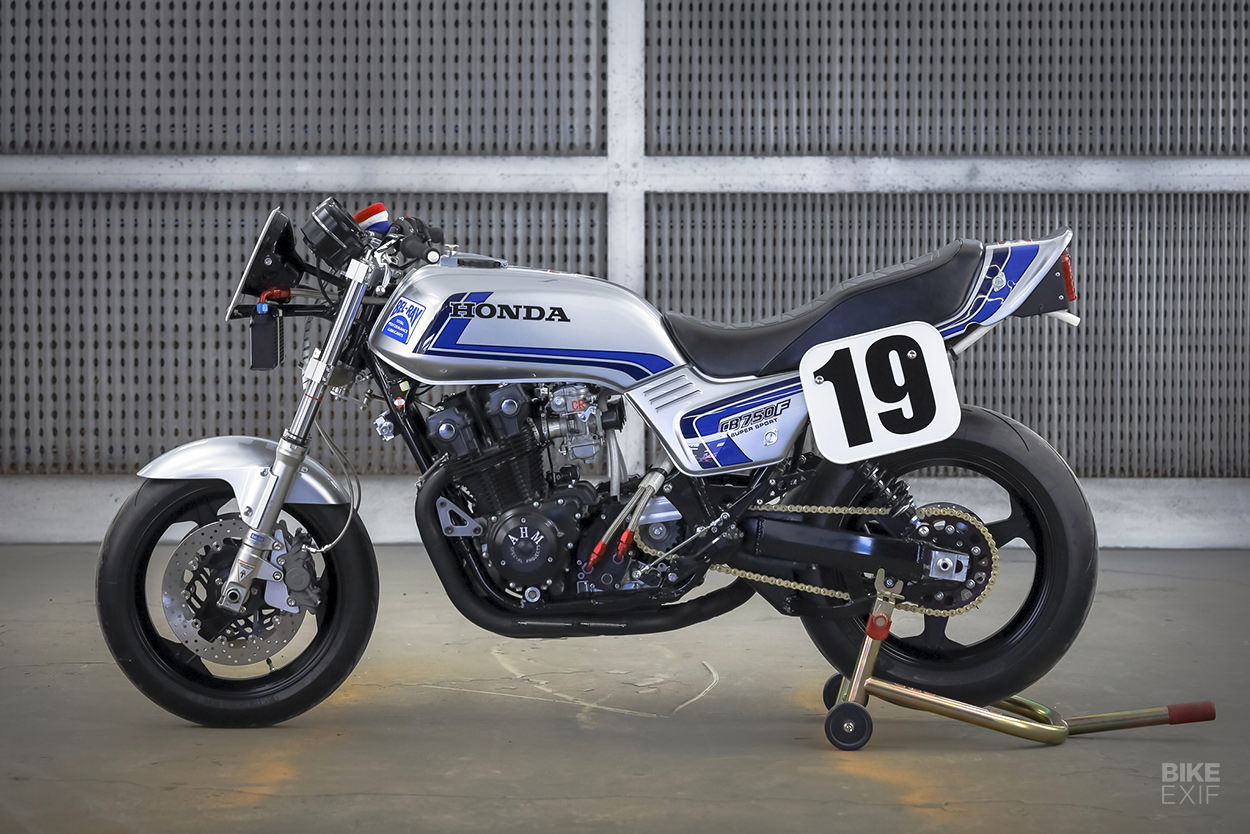
Darren’s forte is old school superbikes, and the CB750 ranks among his favorites—so this track-specific client build got the star treatment. And although it resembles the ’82 CB750, it’s actually been pieced together from other bikes in true dB Customs fashion.

Honda CB750F track bike by dB Customs
The chassis started out as a heavily modified 1982 CB900F frame, matched to a chromoly steering neck from Vince & Hyde Racing, welded in place by CMR Racing Products Inc. The subframe is a custom chromoly unit that mimics the geometry of the 80s superbike, with replica shock mounts from JES BUILT Motorcycles. A Suzuki TL1000R swingarm completes the setup—but it took some fettling to fit.

Honda CB750F track bike by dB Customs
Suspension is by way of Ă–hlins rear shocks and Honda VTR1000F forks, with AHM replica triple clamps. The wheels are from Dymag—they’re a new billet aluminum version of their classic CH3 series carbon wheels, and were the first set to roll off the line. AP Racing calipers, Brembo front rotors and braided lines are used for the brakes.

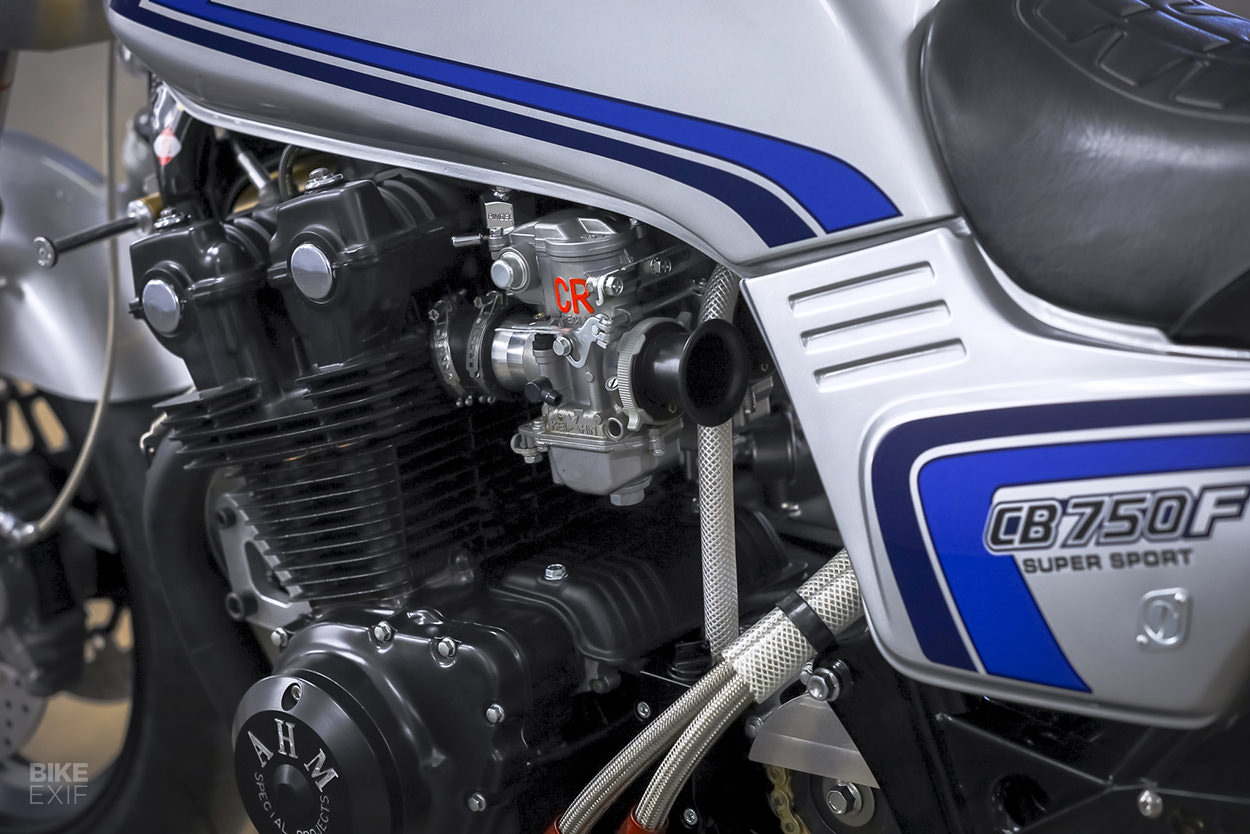
As you’d expect, the motor deserves an entire build sheet unto itself. It’s a 1,187 cc unit with lightweight aluminum pistons from Vince & Hyde Racing, CP-Carillo rods, a balanced and lightened crank and a CB1000 transmission. Ray Mancini of Xtreme Motorsports did the boring, crank and head work, along with some other wizardry.

Honda CB750F track bike by dB Customs
Everything from the valves to the springs, cams, chains and tensioners have been upgraded. There’s a set of Keihin carbs too, and four-into-two-into-one exhaust headers from JayGui. Dirk Langkamp fabricated the AHM replica silencer.

Darren’s listed all the work in detail on his website, and it’s well worth a read. Resplendent in a period correct paint job by Sketch’s Ink, with graphics by Mark Olan at AFE Graphics, this is one CB we’d love to ride… even if we’d be a little scared to. [dB Customs]

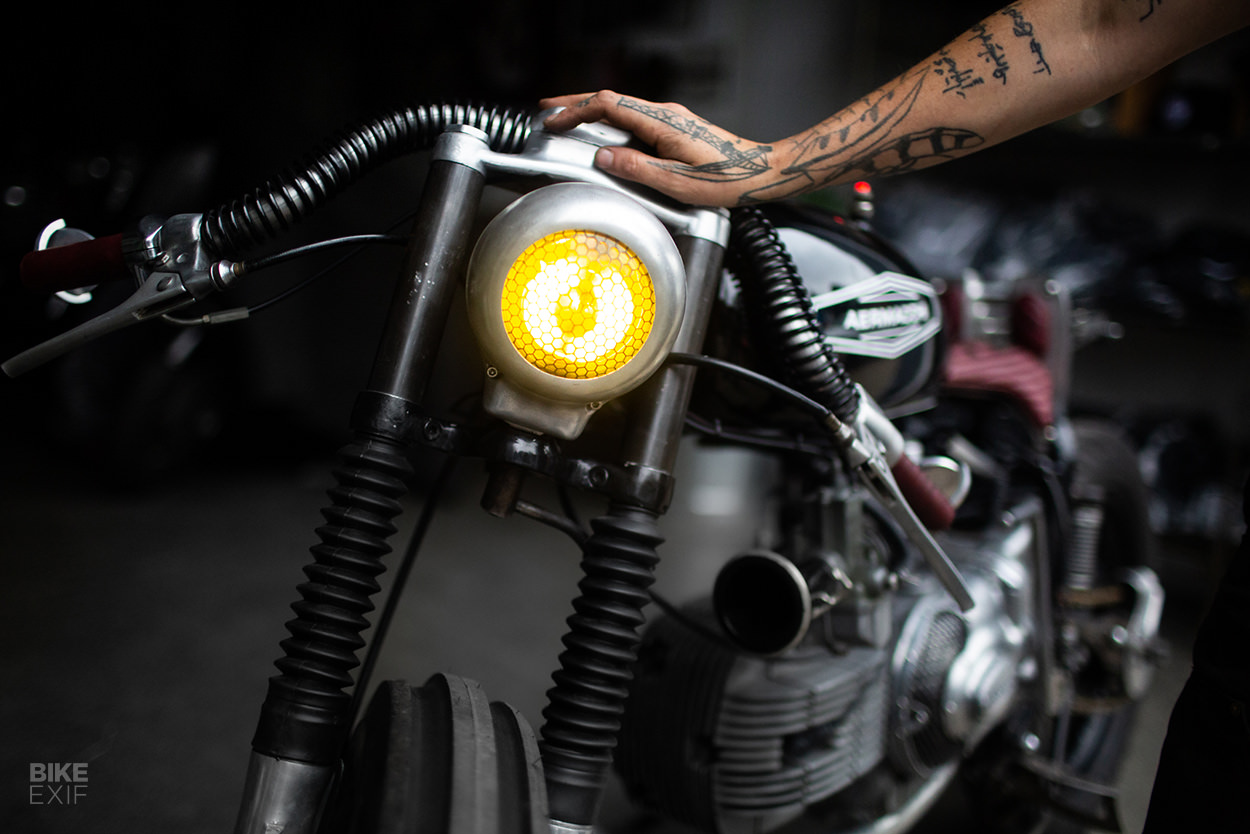
Aermacchi SS350s by J. Shia of Madhouse Motors
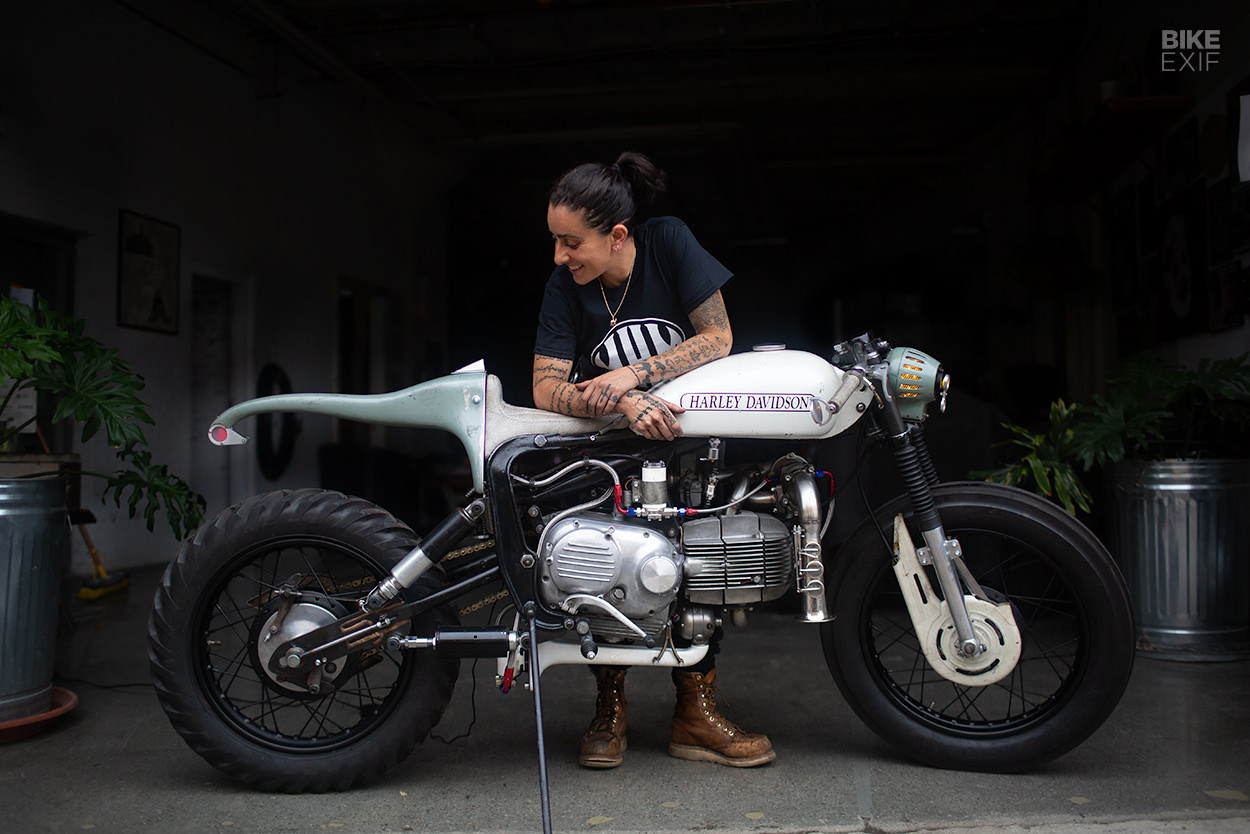
H-D Aermacchi SS350s by J. Shia The team at Madhouse Motors in Boston has their hands full with motorcycle maintenance, repair and customization, and even antique restoration. So owner J. Shia rarely has time to build anything for herself. When she does, she goes wild—tapping into her fine arts degree to build eclectic and unconventional machines.

Aermacchi SS350 by J. Shia of Madhouse Motors
J’s latest custom project is a pair of 1972 Aermacchi SS350s, which are remarkably only a few hundred VIN numbers apart. Both were built simultaneously, and share the same stance and general silhouette. Dubbed ‘The Optical Conclusions,’ J built them as the final entry in a series of four projects, called ‘The Pareidolia Series.’

Like the previous bikes in the series, the Aermacchis are loaded with unconventional and nontraditional details, all playing on the idea of pareidolia (Google it). They also reflect and complement each other in multiple ways.

Aermacchi SS350 by J. Shia of Madhouse Motors
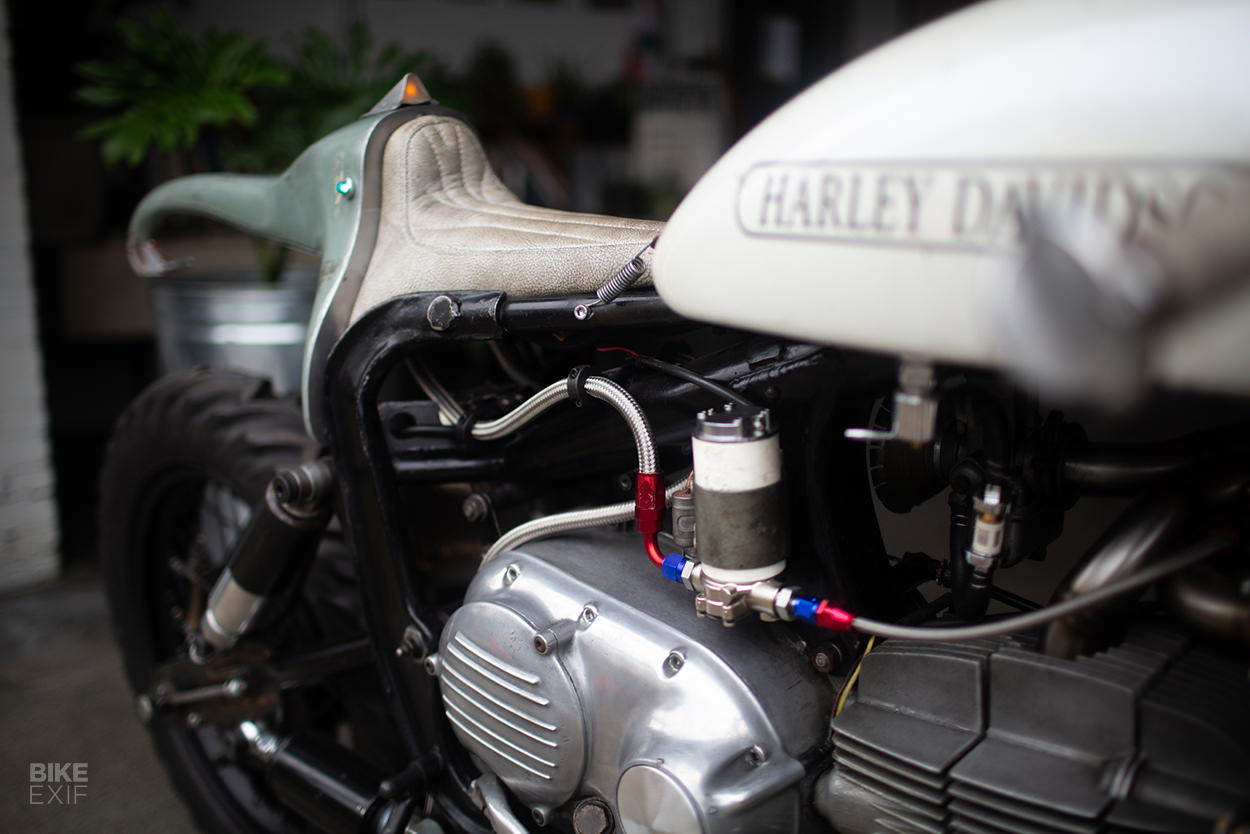
The swingarms have been stretched and fitted with single-sided suspension, using a gas tension spring and an opposing enclosed coil spring. The subframes are mirrored; the white one’s loops towards the front, and the black one’s flows to the rear. Both main frames have had their secondary down tubes removed, before being reinforced with gussets.

The white bike’s running a draw through turbo, set up with dual scavenge pumps, and oil stored in the green ‘tail’ out back. The black bike has the same part mounted under it to function as the exhaust, with a heat-shielded storage compartment built into it. And it has what J describes as “an absolutely adorable wet nitrous system.”

Aermacchi SS350 by J. Shia of Madhouse Motors
There are quirky touches everywhere, but the lighting’s particularly noteworthy. Each bike has a second wiring loom that bypasses the coils and battery, so that you can plug it into a standard outlet to operate just the headlight. So if you’re parking these in your living room (and why wouldn’t you?), they can function as lamps too. [Madhouse Motors | Images by Gretchen Devine]

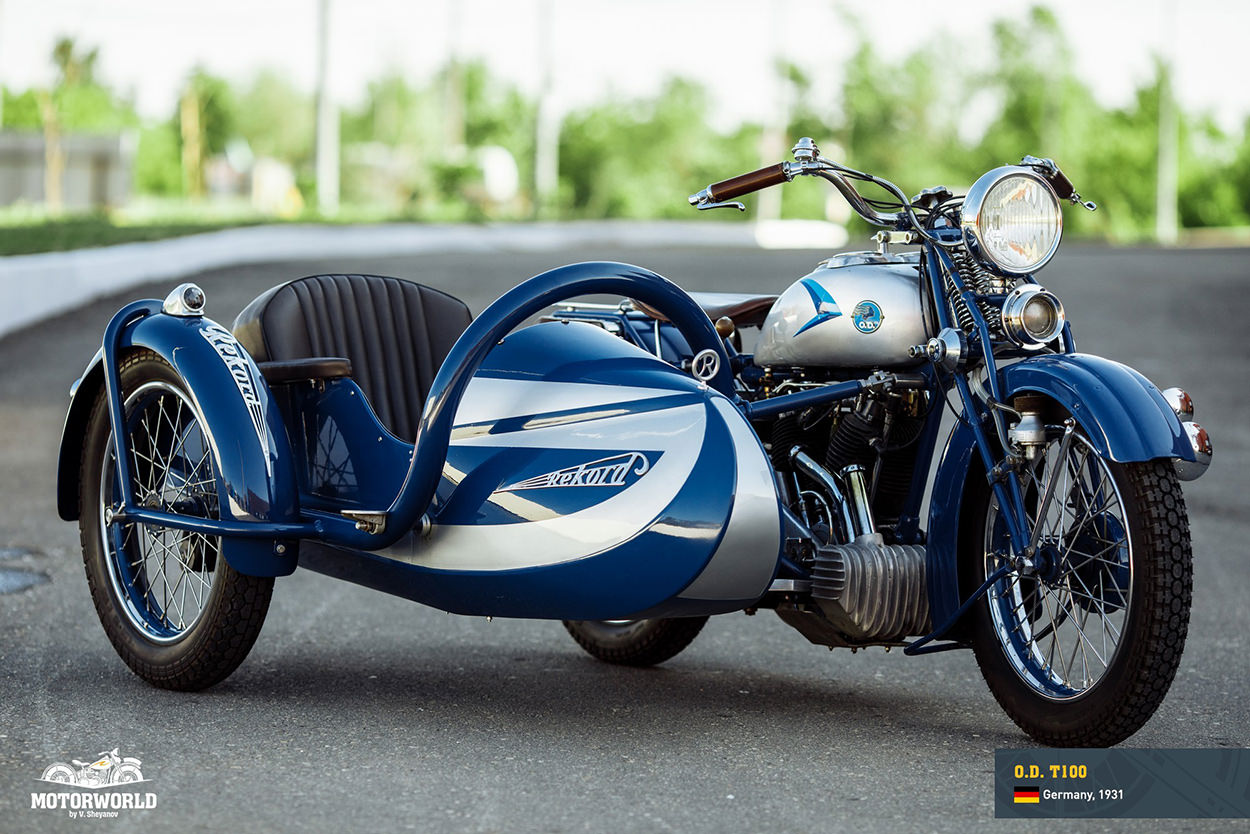
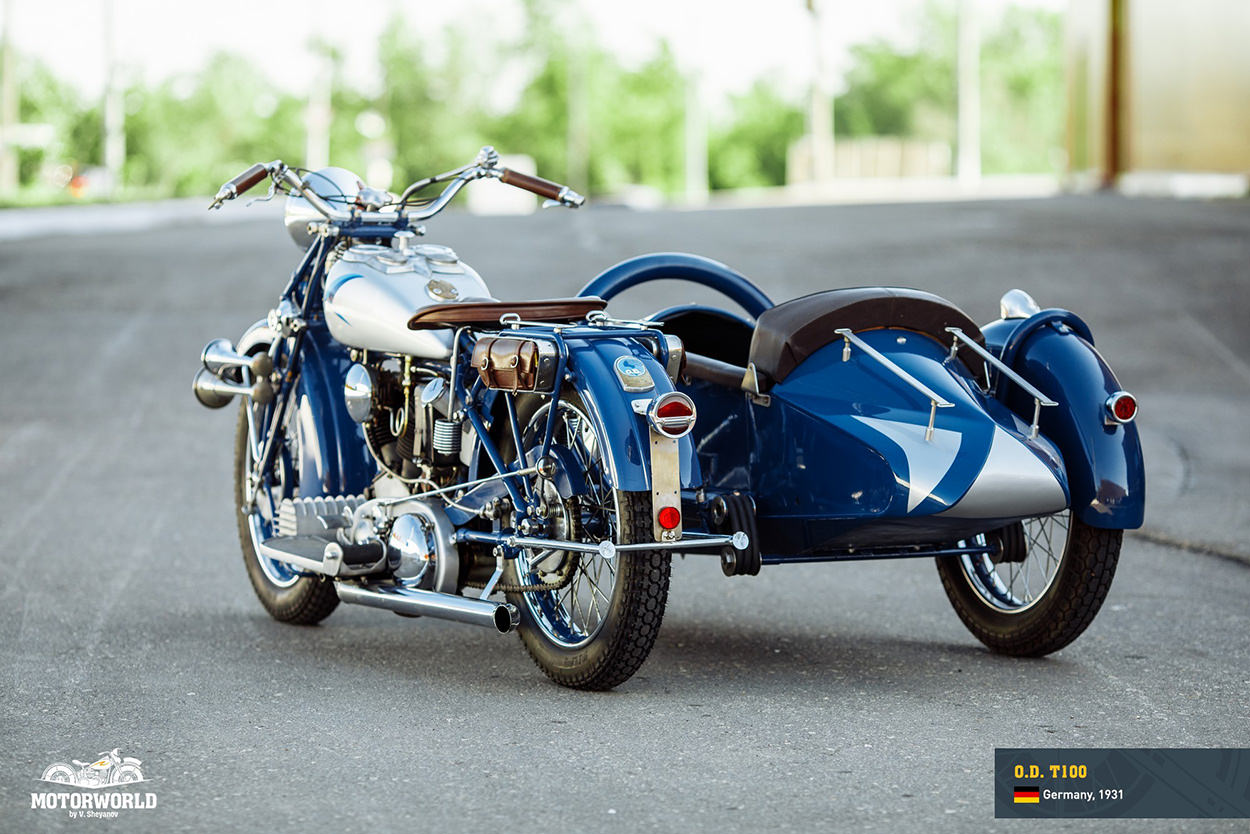
1931 O.D. T100 from Motorworld by V.Sheyanov
1931 O.D. T100 Motorworld by V.Sheyanov is a Russian motorcycle museum, with a knack for finding ultra-rare vintage motorcycles. So if anyone’s going to uncover a bike you’ve never heard of, it’s them. Meet the rather handsome O.D. T100.

The story goes that brothers Willy and Carl Ostner, who already had a company called Ostner & Co., decided to start manufacturing motorcycles in 1927. The brand eventually became known as O.D. Werk Willy Ostner—the O.D. standing for Ostner Dresden (which is where they were based).

1931 O.D. T100 from Motorworld by V.Sheyanov
The Ostner bros. prided themselves on building high-quality machines with chassis that they built themselves. The first O.D. bikes were singles, but in 1929 they debuted their flagship T100. It was a big deal at the time, with a 986cc v-twin engine from the Swiss company Motosacoche, who sold their engines to various motorcycle companies under the brand MAG.

Packaged in a tubular frame with a parallelogram fork and no rear suspension, the O.D. T100 was good for an eye-popping 22 horsepower—but at least the motor was known to be reliable. It used a three-speed transmission from Hurth, with a chain drive in an aluminum housing sending power to the wheel.

1931 O.D. T100 from Motorworld by V.Sheyanov
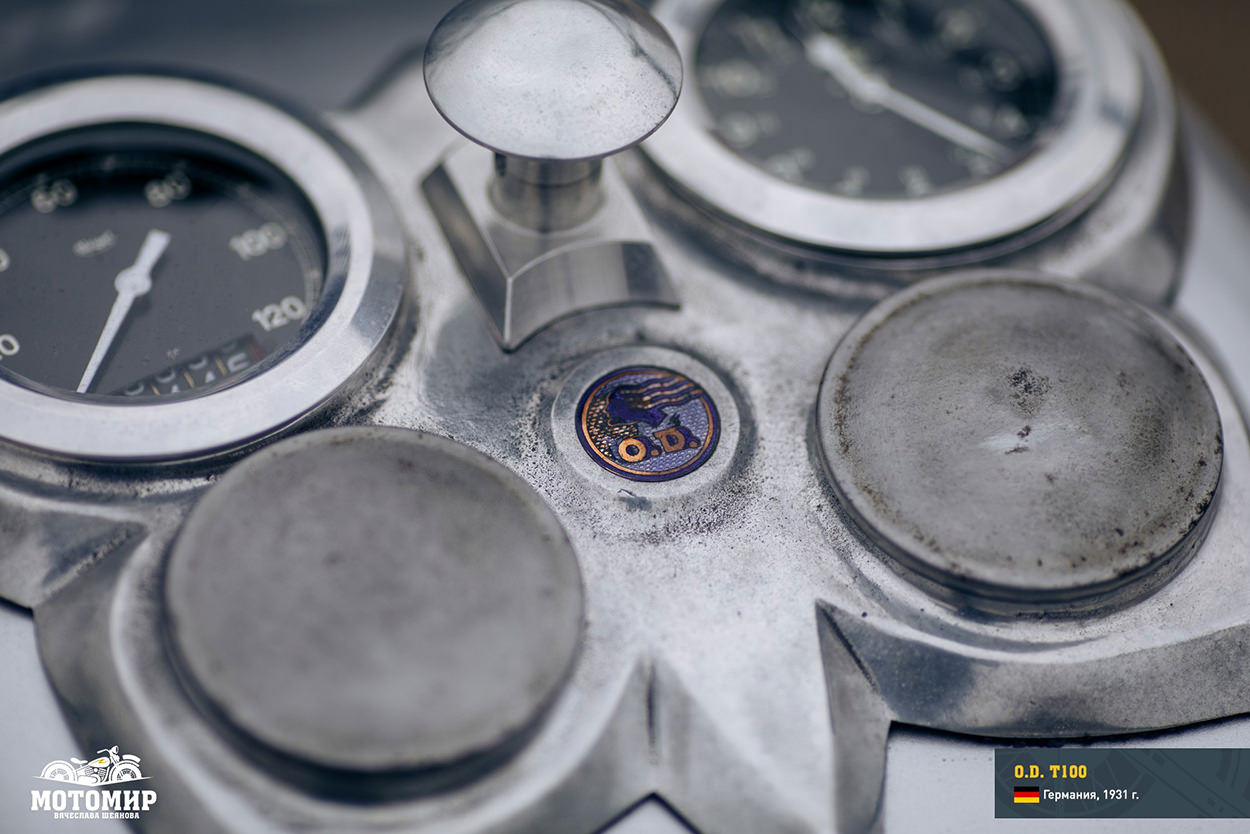
On top of the fuel tank was a stylish dash with its own lighting a speedo, a clock, and fuel and oil gauges.

O.D. eventually gave up on motorcycles and started building light trucks instead, and more’s the pity. The T100 is stunning, shown here with a sidecar of undetermined origin. Who knows what the company would be doing now if they were still around? [More]

BMW R18 Transcontinental and R18 B touring motorcycles
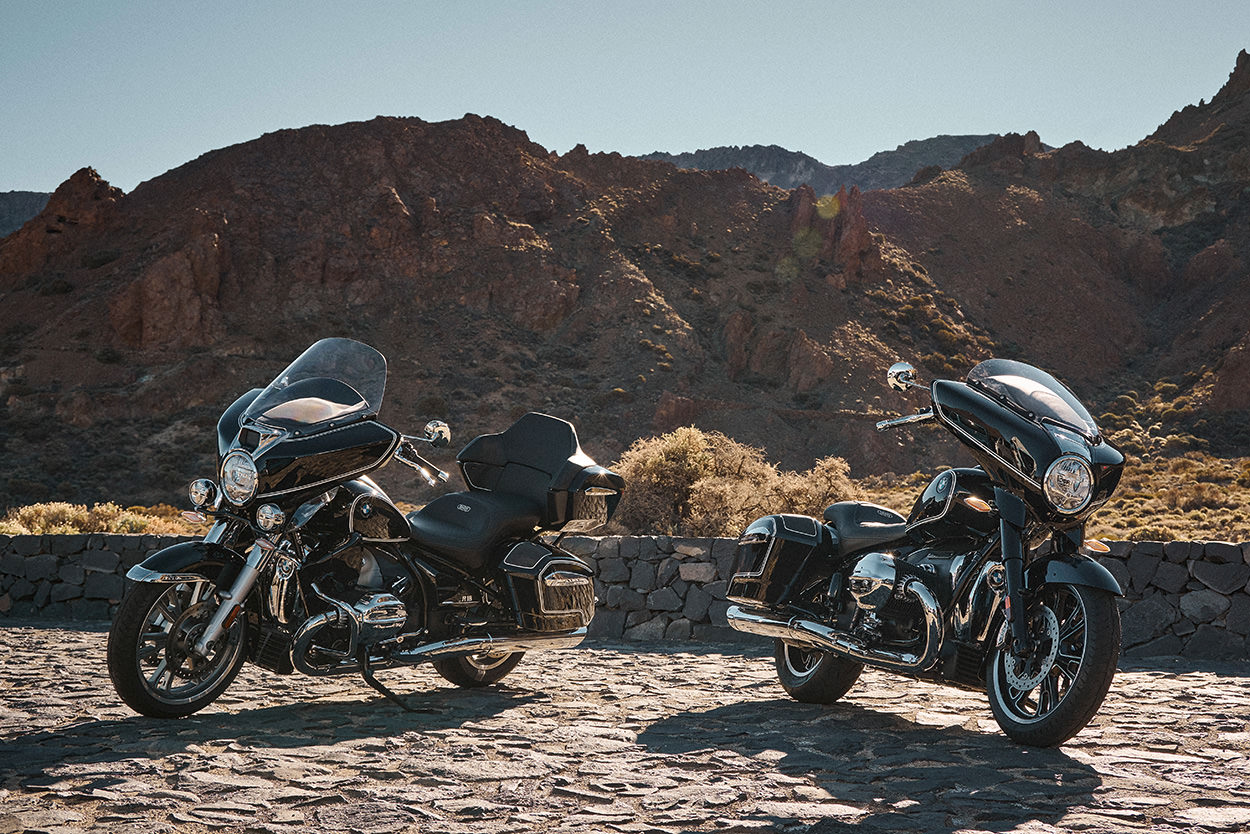
BMW R18 Transcontinental and R18 B We don’t usually go in for tourers and baggers around here, but this news from BMW Motorrad this week made our ears prick up. With the R18 Transcontinental and R18 B, it’s clear that BMW is gunning for a piece of Harley-Davidson’s pie (as if there was any doubt). But the surprise here is that both bikes look really good for what they are—as if this is what BMW’s mammoth retro boxer was always intended for.

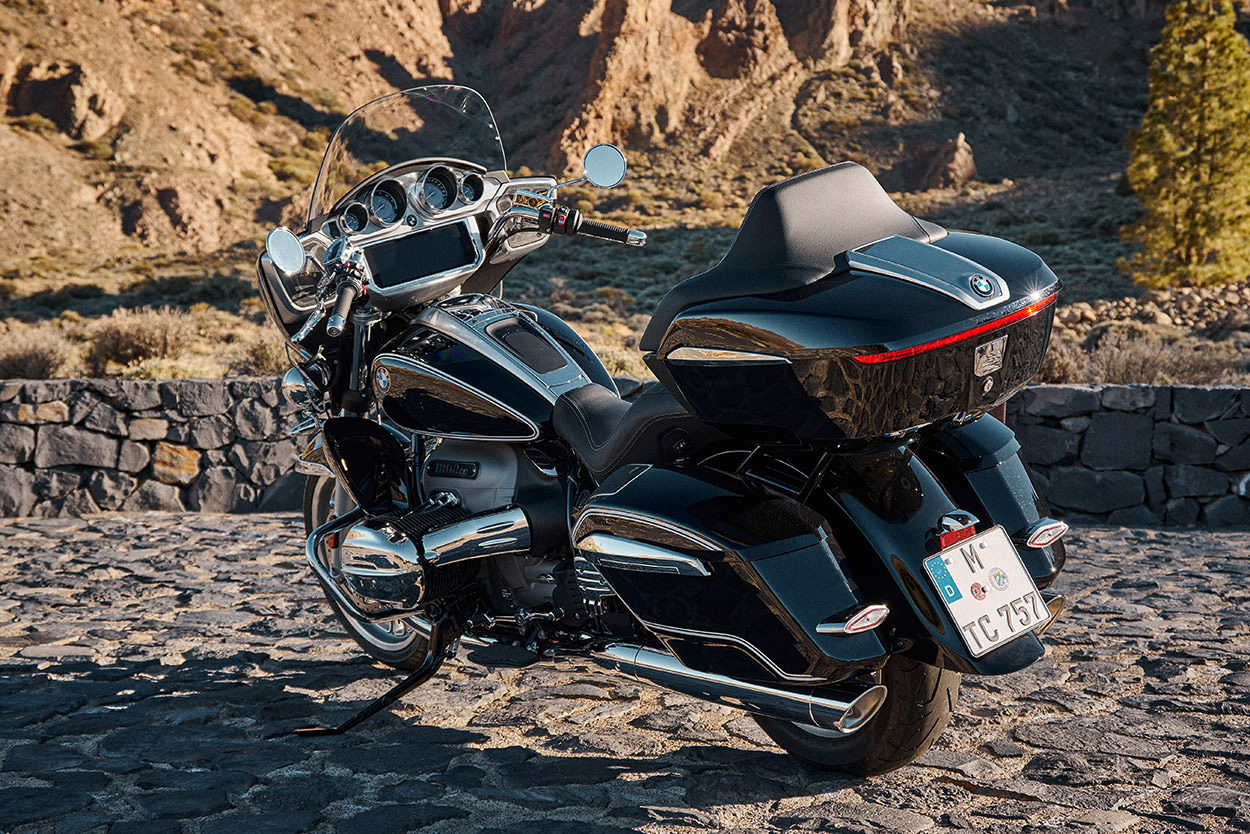
BMW R18 Transcontinental touring motorcycle
Both new models use the existing BMW R18 chassis and motor, and add fairings, hard panniers and more comfortable two-up seating. The Transcontinental [above] is pitched as a tourer, with a taller screen, additional wind deflectors and a top case with a generous passenger backrest.

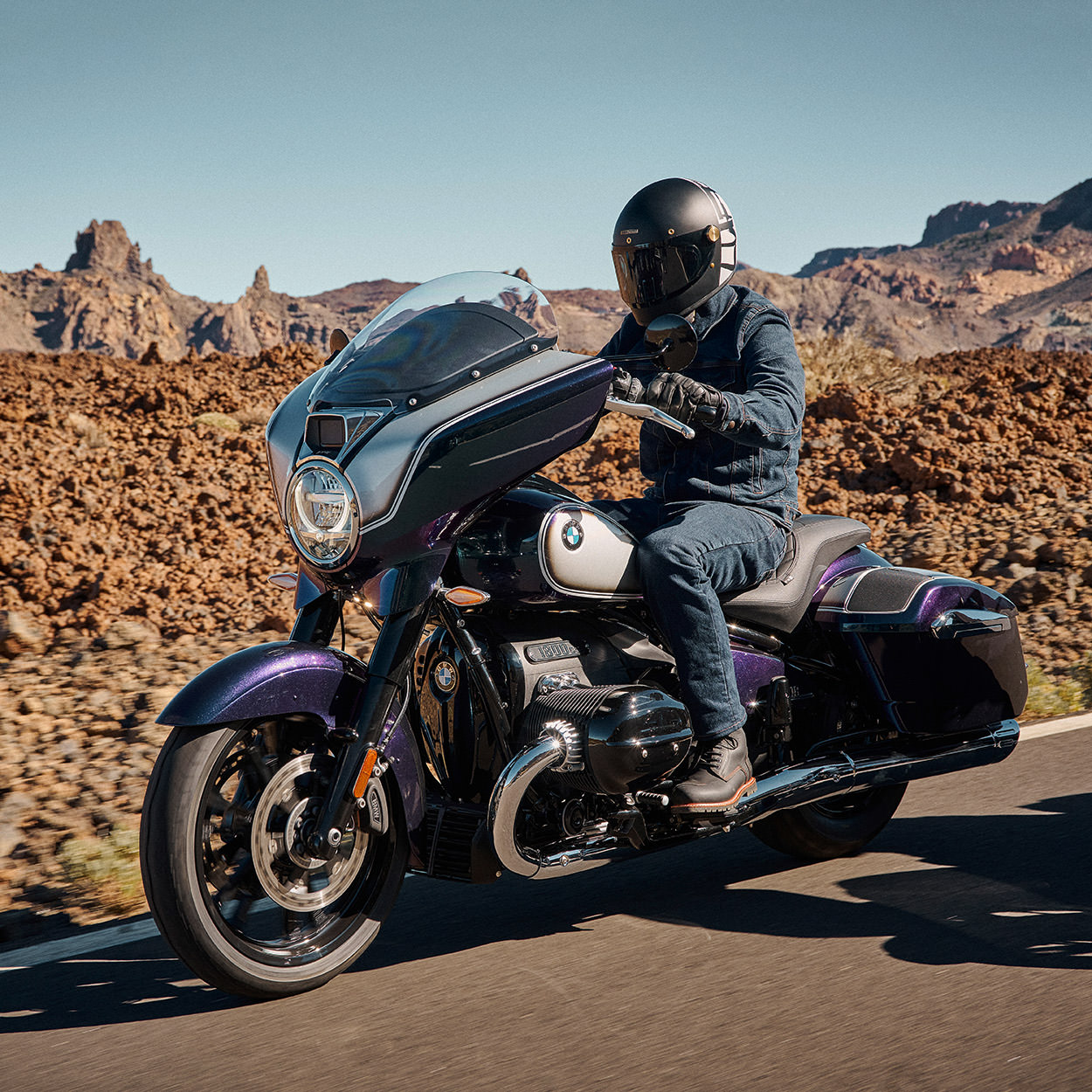
The B-model [below] is pitched as a slightly pared-back bagger, with a shorter screen, a trimmed seat and no top case.

BMW R18 B touring motorcycle
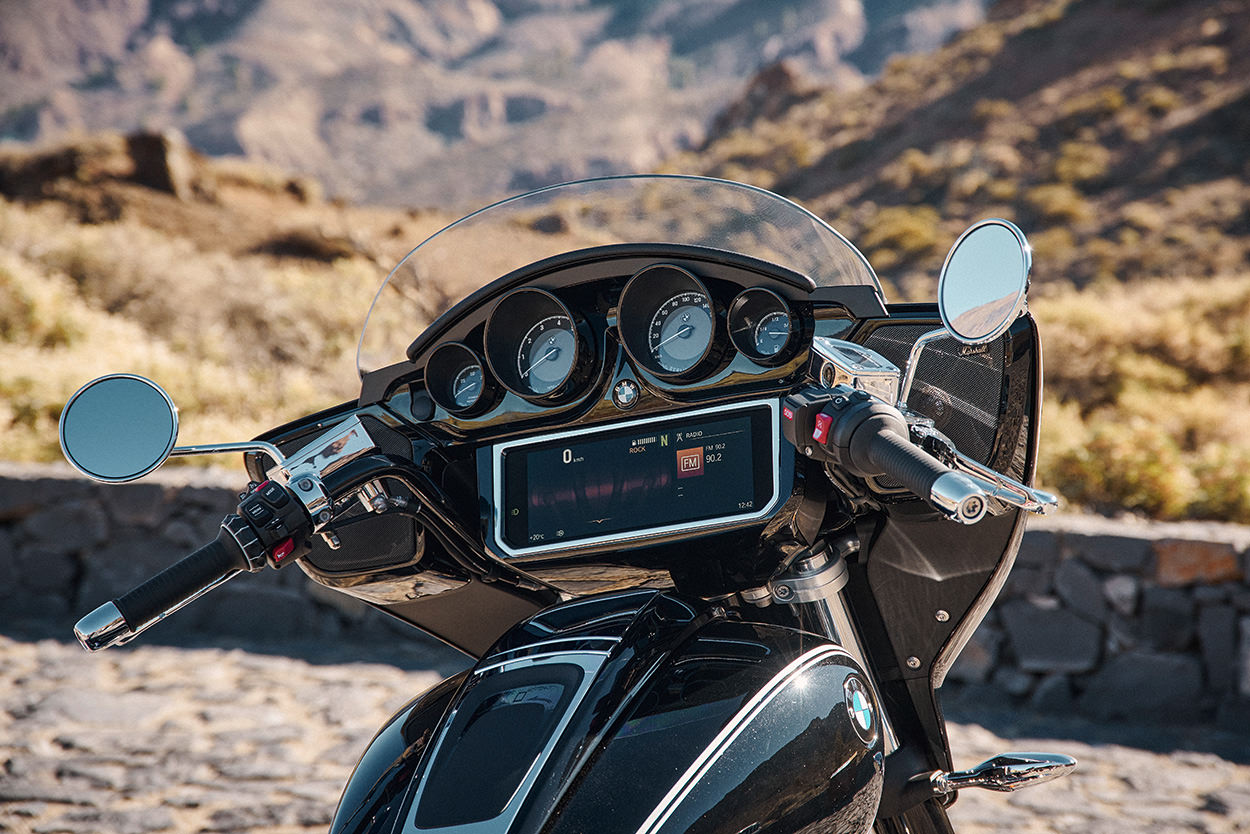
Both bikes also feature a row of analog dials behind their fairings, along with a massive 10.25” TFT display with full Bluetooth connectivity. And in true American touring motorcycle form, a built-in sound system is part of the package.

BMW partnered with Marshall Amplification here; a curious move from the British company, and their first foray into the moto industry. The two announced the partnership via a music video from the Southern rock band, The Cadillac Three—which, depending on your perspective is either a great piece of marketing, or hopelessly off the mark.

BMW R18 B touring motorcycle
Both bikes will come in BMW’s ‘First Edition’ black with white pinstripes, and in an ‘Option 719’ galaxy-themed flip-flop paint job [above].

Touring style aside, we wouldn’t mind having a go on these—our biggest gripe with the R18 was its ergonomics, and the comfier seats and additional wind protection might help here. [BMW R18 Transcontinental | R18 B]

Aprilia Tuareg 660 adventure bike concept
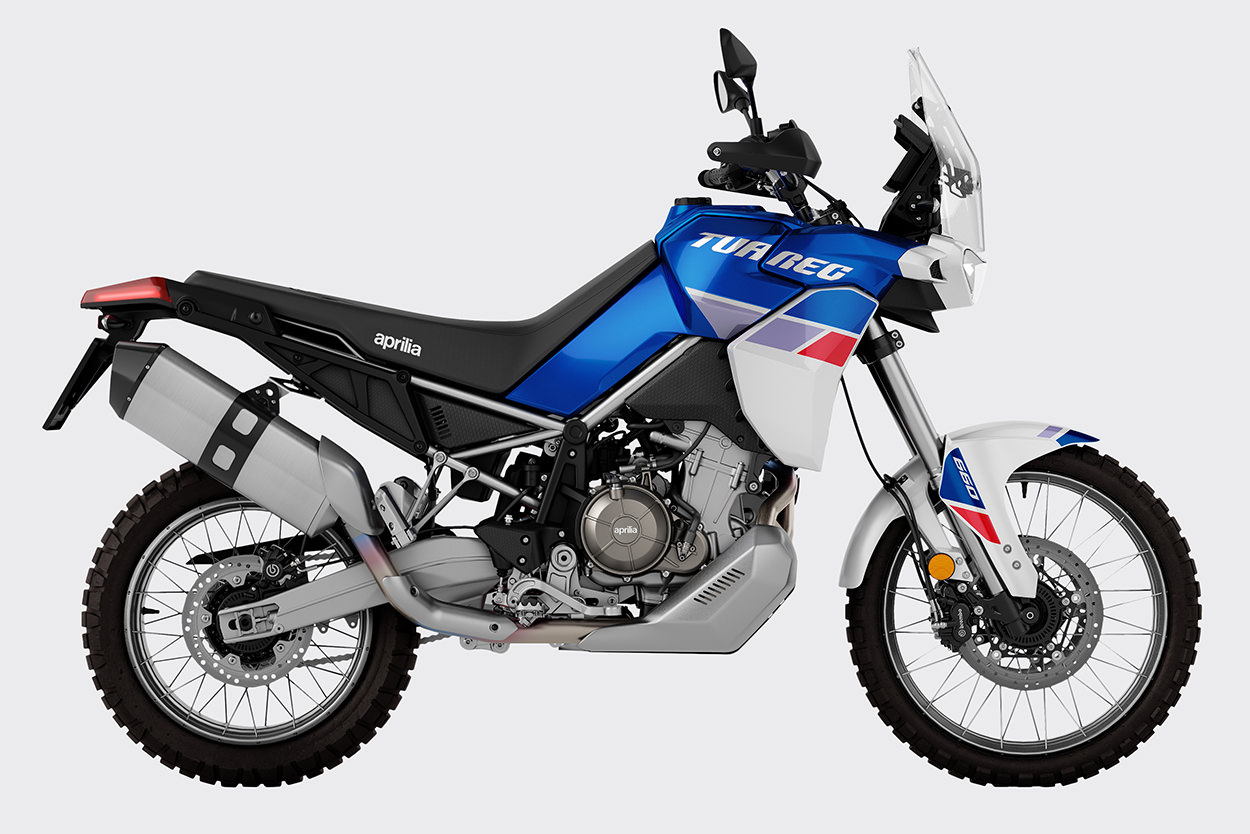
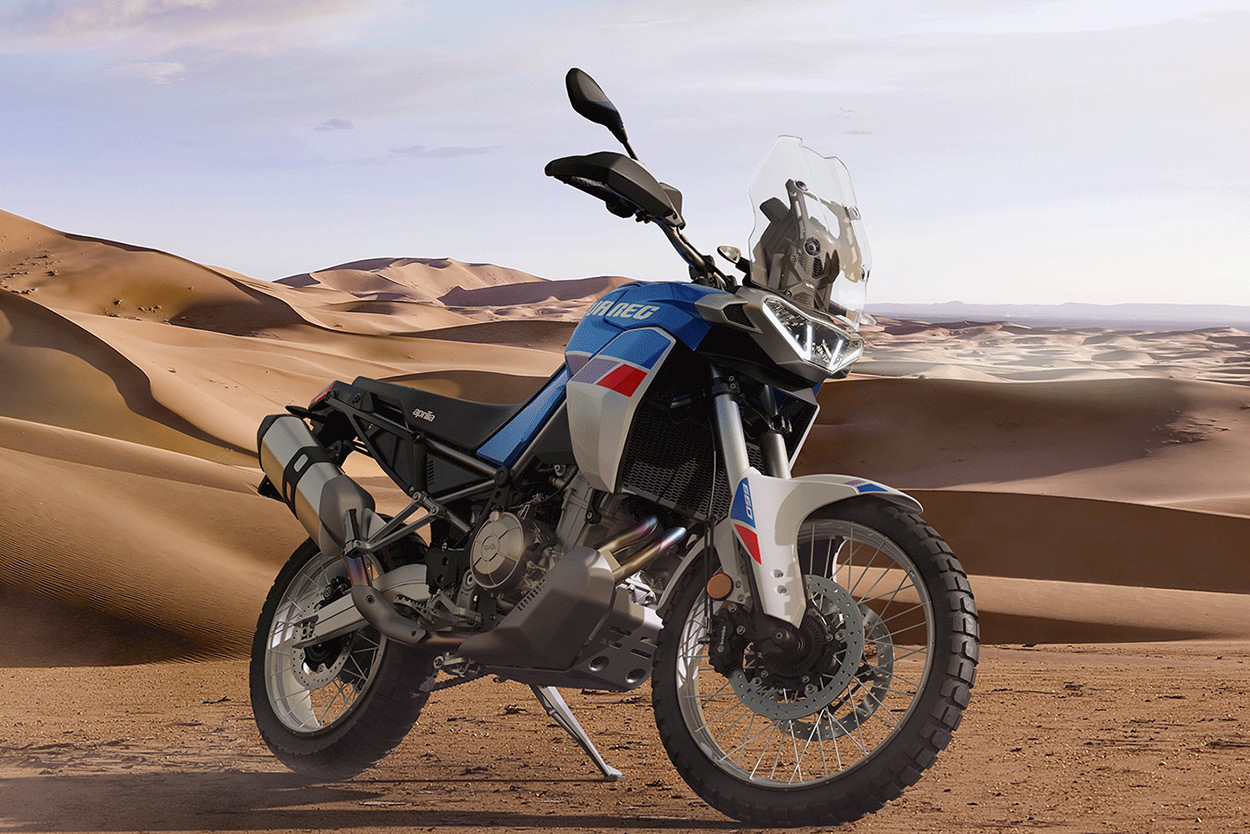
Aprilia Tuareg 660 More OEM news, as Aprilia give us a first taste of their long-awaited Tuareg 660 dual sport. All we get for now are renders and some basic specs—but so far, we’re into it.

The Tuareg will use a redesigned version of the parallel twin motor in the Aprilia RS 660, tuned to 80 hp and 70 Nm. It’ll get a full complement of electronic aids too, including switchable ABS and various rider modes, with a 5” TFT display. Aprilia are also listing a dry weight of 187 kilos [412 pounds], 240 mm of suspension travel, more than 240 mm of ground clearance, and a seat height of less than 860 mm.

Aprilia Tuareg 660 adventure bike concept
The teaser render reveals a few things that serious adventure riders will approve of. We’re spotting 21F/18R tubeless wheels, grippy foot pegs and removable passenger peg mounts.

Most importantly, the Tuareg 660 concept is really good looking, with hints of the 1994 Aprilia Tuareg and a similar vibe to Yamaha’s T7. It looks lean, aggressive and devoid of too many layers of plastic, and we’re digging the bold new graphics. Adventure bikes might not be our staple, but we’re keen to swing a leg over this one. [Aprilia Tuareg 660]


from Bike EXIF https://ift.tt/3fmH3oC