Friday, 3 April 2020

2021 Hyundai Elantra: When a Compact Sedan Grows Up

Just when we thought conventional four-door sedans were afterthoughts, along comes the 2021 Hyundai Elantra. From the onset, the Elantra is a bigger, sleeker, and wider car, which is great if you want to lead the supersized compact segment dominated by the Toyota Corolla and Honda Civic. I have an inkling for Elantras in general. I’ve driven lots of Elantras over the years, although I never had the chance of owning one.

And the introduction of the 2021 Hyundai Elantra makes me think I was missing out.

Elantras & Lancers: Setting The Stage

I’ve had the privilege of owning a bevy of Japanese cars, most particularly Mitsubishi sedans and coupes from the previous millennia. The Elantra started its life using a pair of Mitsubishi-designed 4G15 DOHC 1.5-liter and 4G61 1.6-liter DOHC engines. Back in the day, Hyundai Automotive was in its early stages of development, which meant the company had to rely on existing platforms and powertrains to kickstart a new generation of automobiles.

The first-generation J1 Elantra, on the market from 1990 to 1995, is mechanically related to the Mitsubishi Lancer (or Mirage in some parts of the world). And you know what, Mitsubishi was the bomb in the early and late 90s. You’ve heard of the Mitsubishi Lancer Evolution series? You see, the Evolution I (yes, the very first Lancer Evo) was born in 1992 and was based on the current-generation Lancer at that time. The original Evo rally car was based on the 1987 Galant VR-4, but Mitsubishi shifted to the Lancer as rally cars were becoming smaller to conquer tighter courses.

Since Elantras are Lancers in disguise, the former inherited the famed sharp and agile handling of the latter. Granted, Lancers were not as comfy as Corollas or Sentras from previous eras, but they sure were the sportiest and best-handling of the bunch. I’ve owned a Sentra, two Lancers, and a Galant from roughly the same eras (the eighth-gen Galant is the best-handling Japanese sedan I’ve ever driven, hands down).
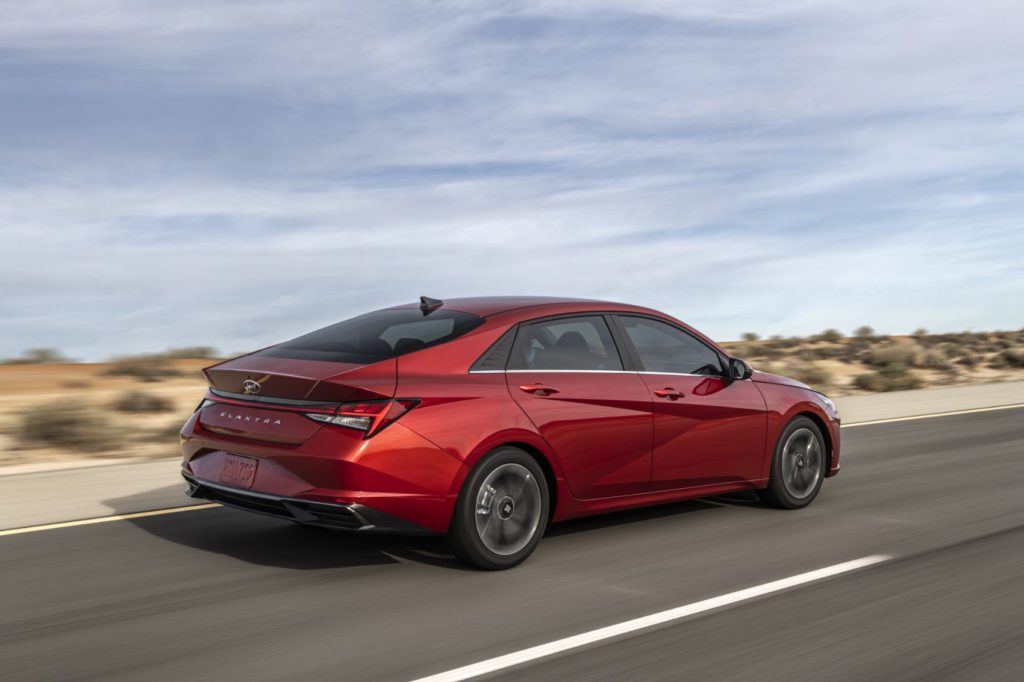
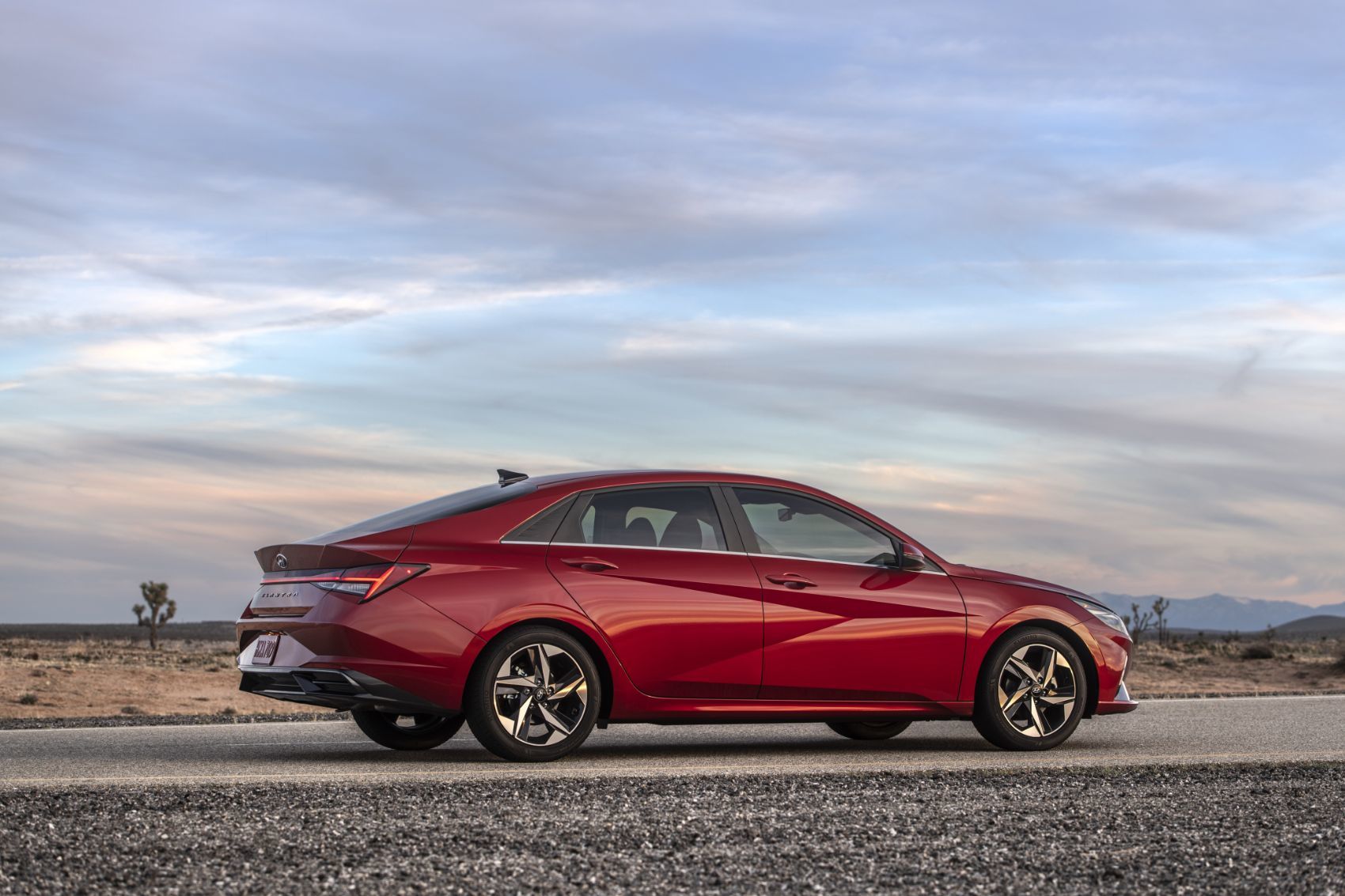
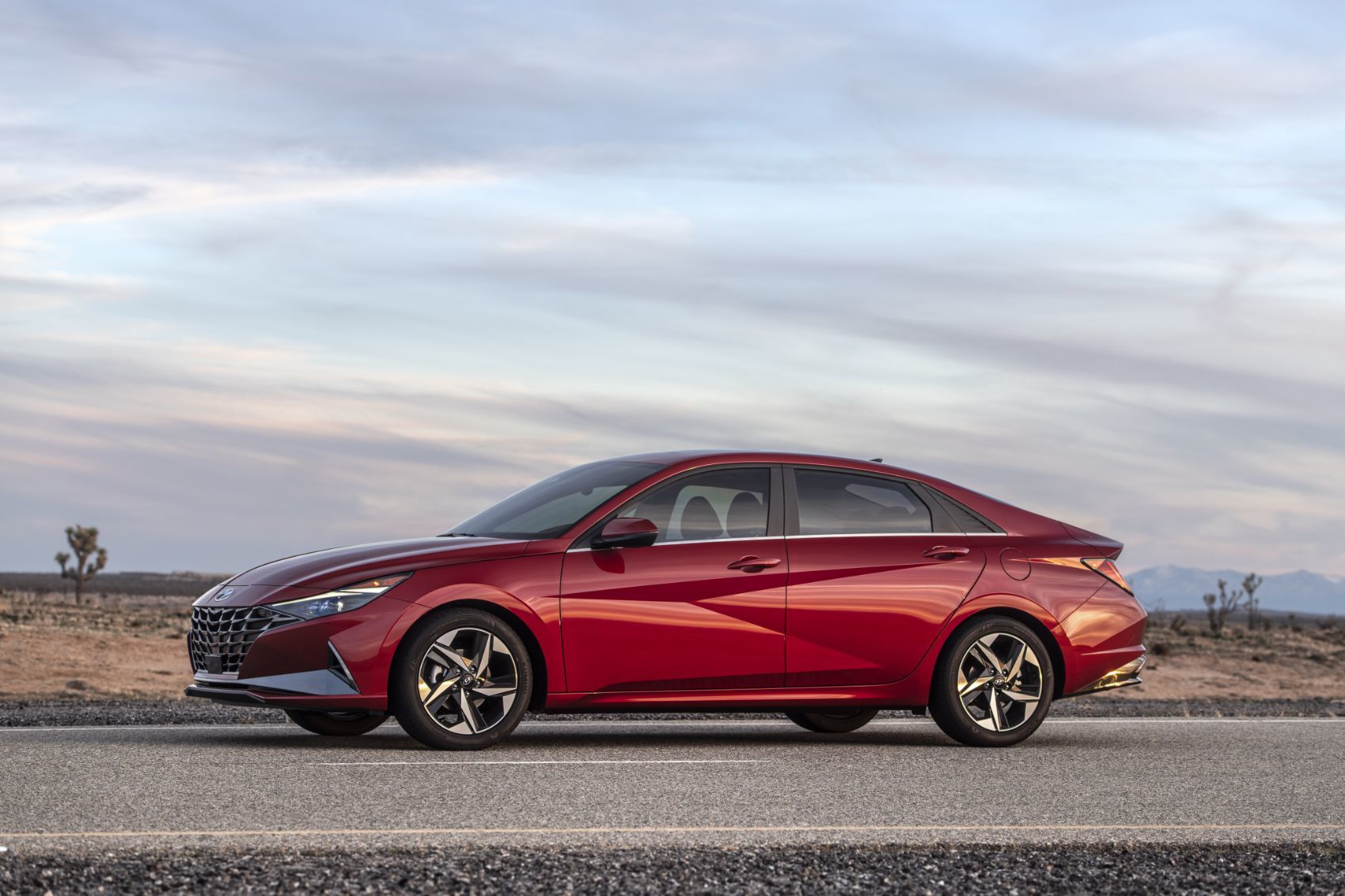
The 2021 Hyundai Elantra, now in its seventh generation, rides on an entirely new platform. The Elantra is called the Avante in the Korean domestic market. Photo: Hyundai Motor America.

2021 Hyundai Elantra: Looking The Part

Now that the new Elantra is here (and both the Lancer and Galant were discontinued), it made me reconsider my previous thoughts. Back then, if you were already behind the wheel of the original car, why bother with a clone? Everything changed when Hyundai came up with its Alpha and Beta series of engines for the second-gen J2 Elantra. Since then, Hyundai slowly began etching its own identity, but the Mitsubishi DNA was still there.

The outgoing sixth-gen Elantra is, without a doubt, the best-looking Elantra, and I’ve driven it many times. Dare I say it was more refined than any Mitsubishi Lancer, including the last ninth-gen model.  Also, I’m not sure if it’s a wise idea to bless the seventh-generation Elantra with the new Sonata’s daring silhouette. But the more I look, the more I’m convinced it works.

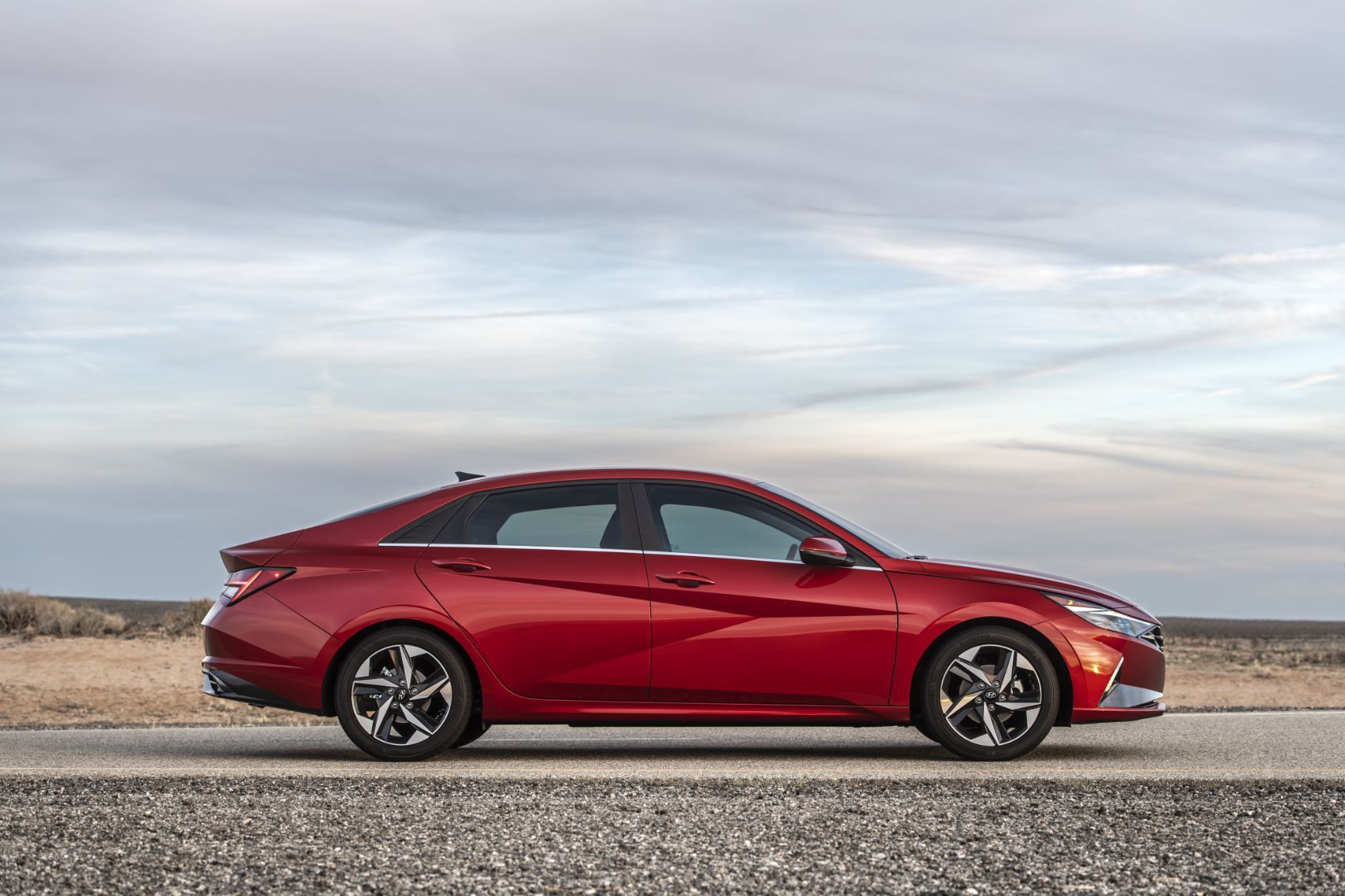
What’s not hard to notice is the Elantra’s bigger body. It’s longer (2.2 inches) and wider (one inch) than the outgoing Elantra, and it’s also riding on a longer 107.1-inch wheelbase. The new Elantra is longer and wider than both the Corolla and Civic. It even has the longest wheelbase among the current crop of compacts save for the new Mazda3. In short, the Hyundai Elantra is all grown up.

“We’ve sold more than 3.4 million Elantras here in the U.S. and more than 13.8 million worldwide,” said José Muñoz, President and CEO, Hyundai Motor America. “And the new, captivating look is going to bring excitement to a whole new generation of buyers.”
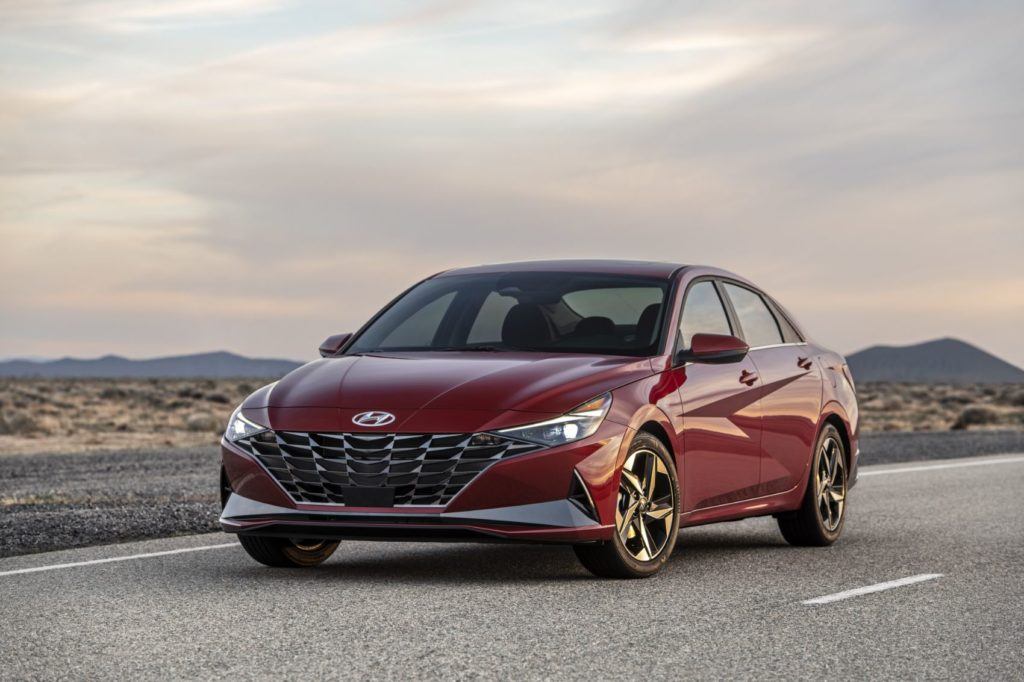
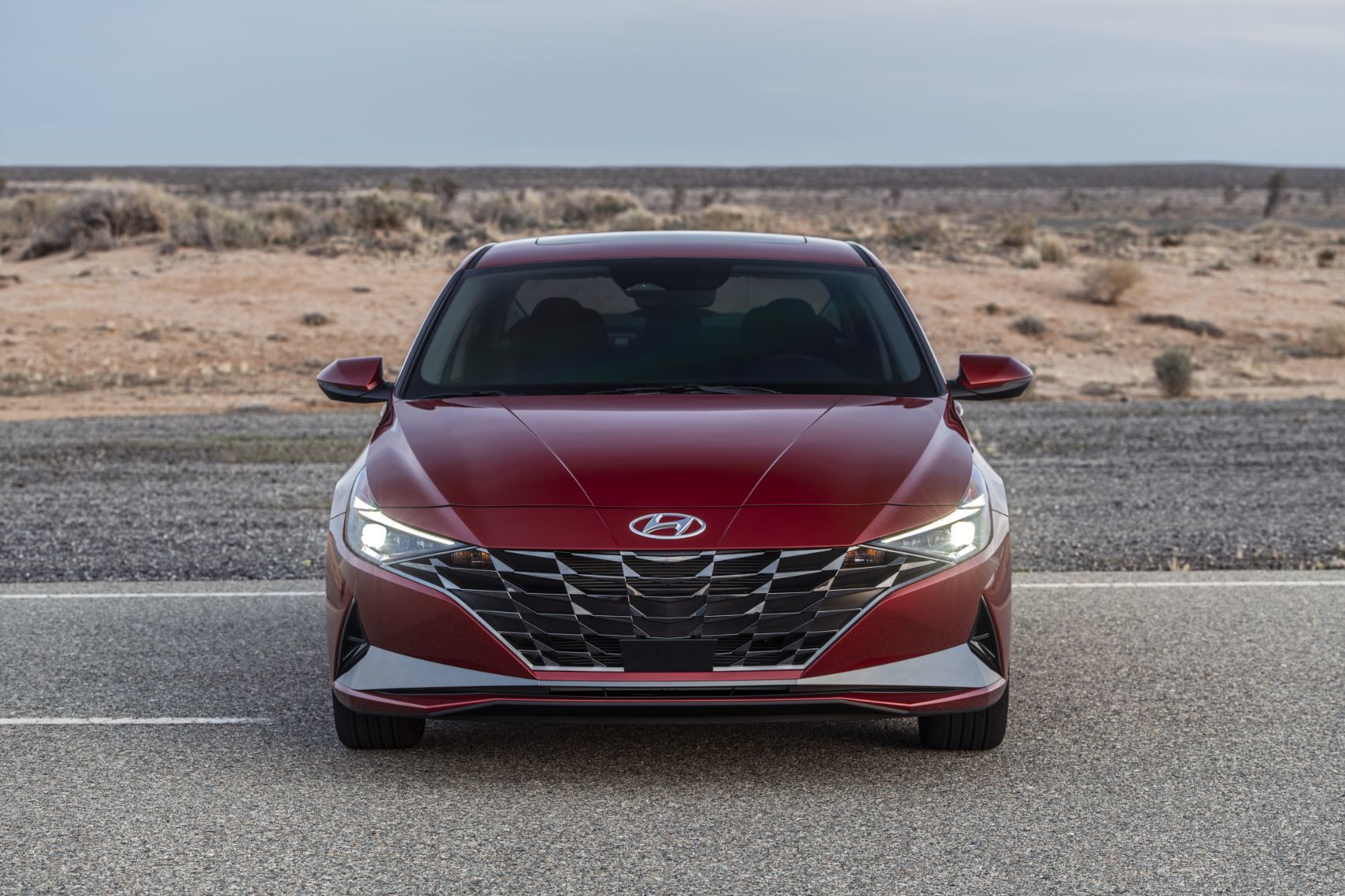
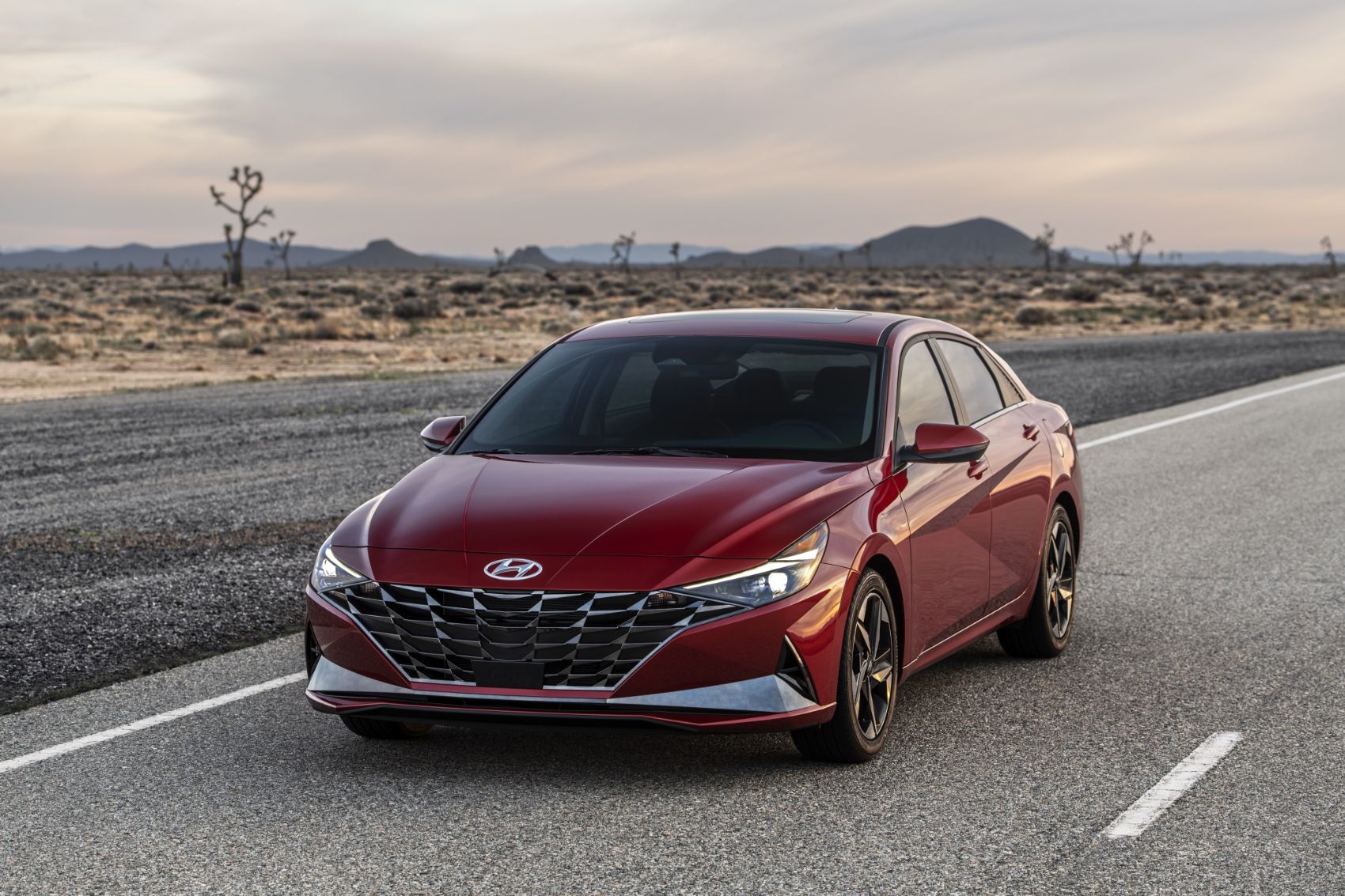
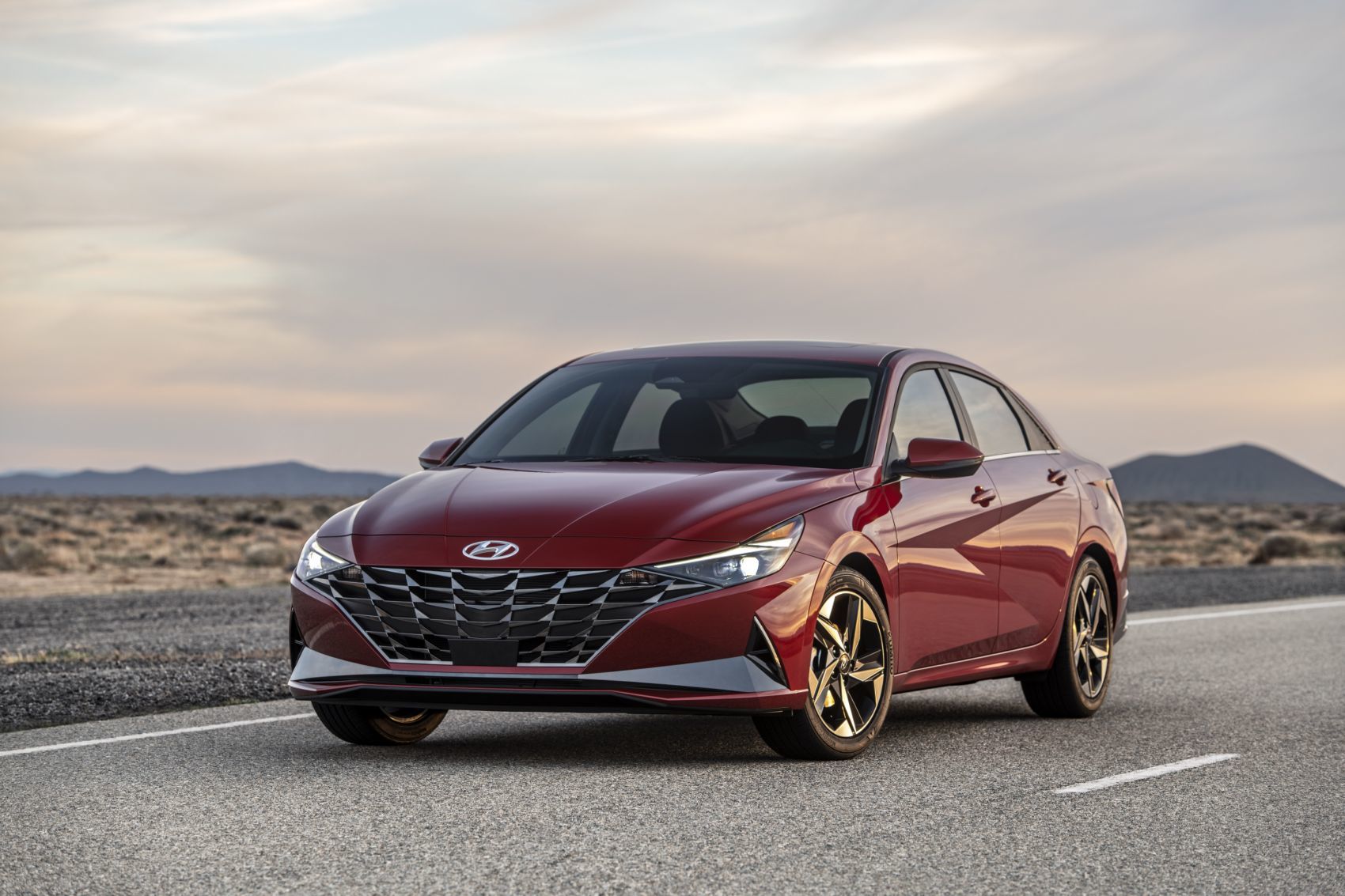
Hyundai says the grille of the 2021 Elantra has a "parametric-jewel-pattern." Photo: Hyundai Motor America.
Hyundai says the grille of the 2021 Elantra has a “parametric-jewel-pattern.” Photo: Hyundai Motor America.

“Parametric Dynamic” Styling

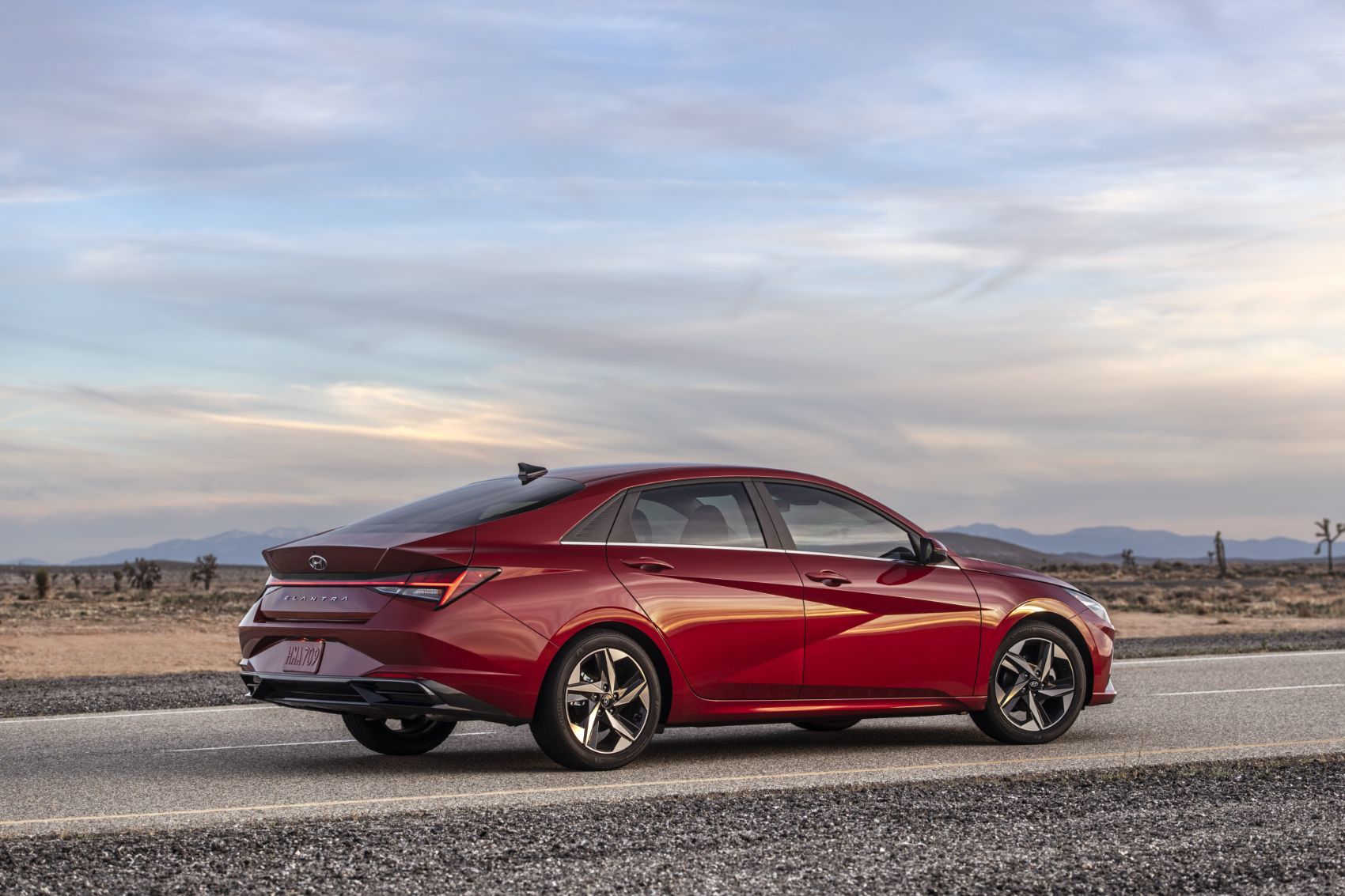
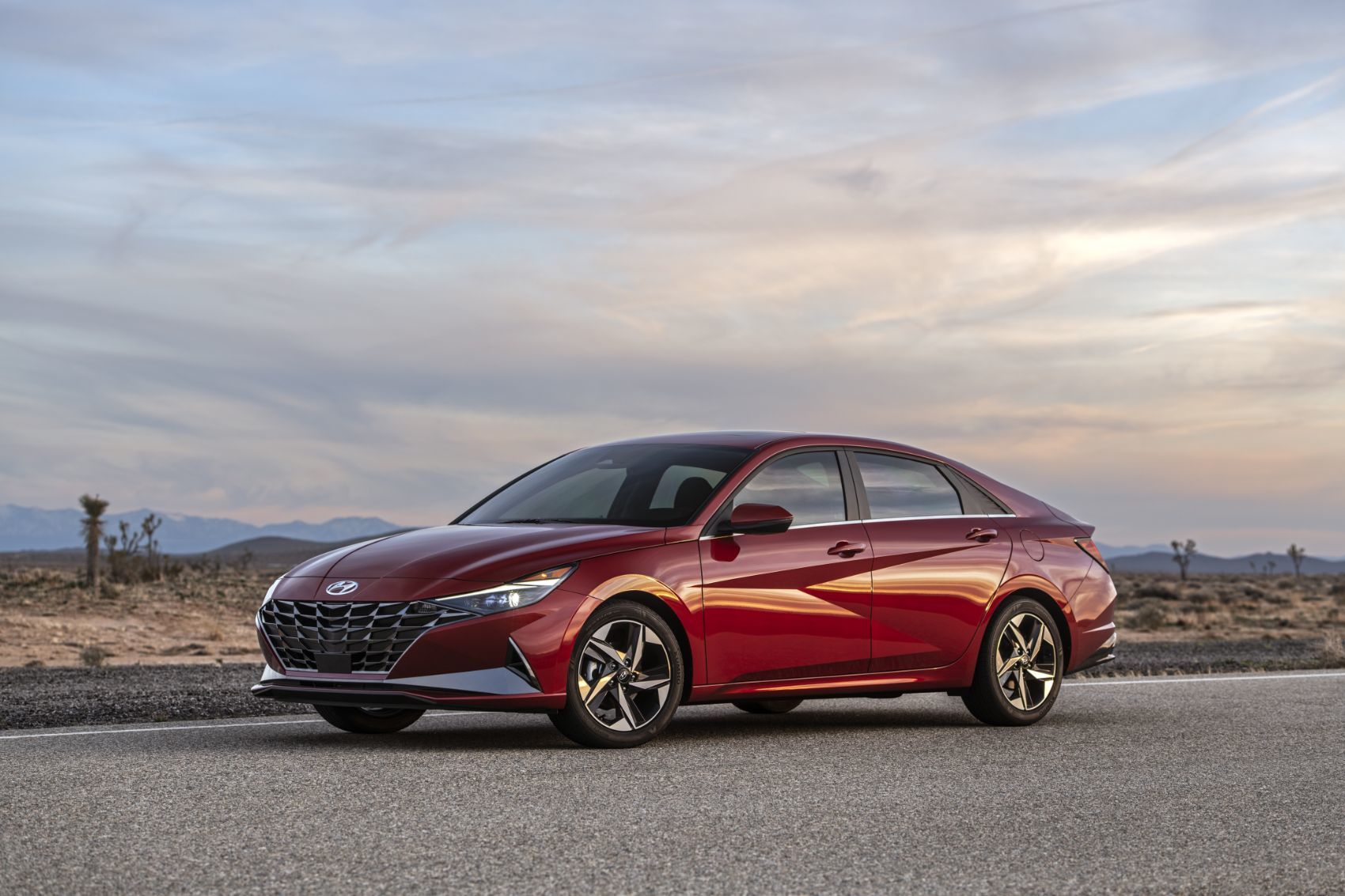
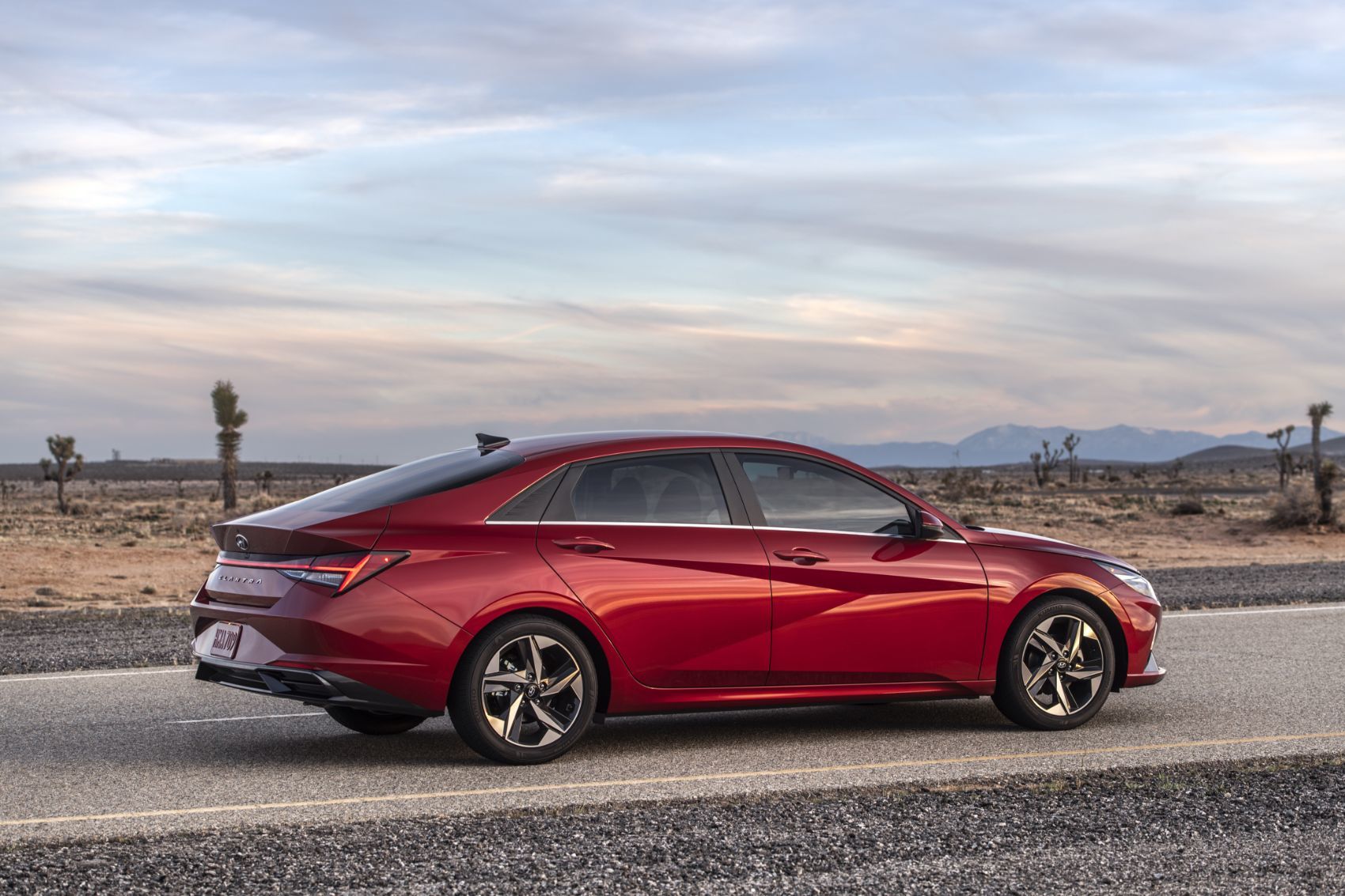
Hyundai refers to the new Elantra’s styling as a “Parametric Dynamic” design, but allow me to translate: The 2021 Hyundai Elantra is a four-door sedan with a coupe-like slanting roofline. It also happens to look similar to the new Sonata at times. Viewed from the sides, however, the new Elantra can look like a smaller Honda Accord (I swear it’s because of the sloping roof design).

And this is probably up for debate, but the strong fascia is a love-it or hate-it moment upon first glance.

Calling it “bold” is an understatement, but the wider and cascading grille design along with a pair of scowling headlights are enough to revolutionize the Elantra’s façade. Combined with strong creases on the hood and sharper body lines, the 2021 Elantra is either eye-catching or polarizing depending on your tastes, but the expressive styling is a welcome change.

“The fresh esthetic was completed through unconventional lines and a face that broke a taboo in automotive design,” said Luc Donckerwolke, Executive Vice President and Chief Design Officer of the Hyundai Motor Group. “Like the first generation, the seventh-generation Elantra has a bold character.”

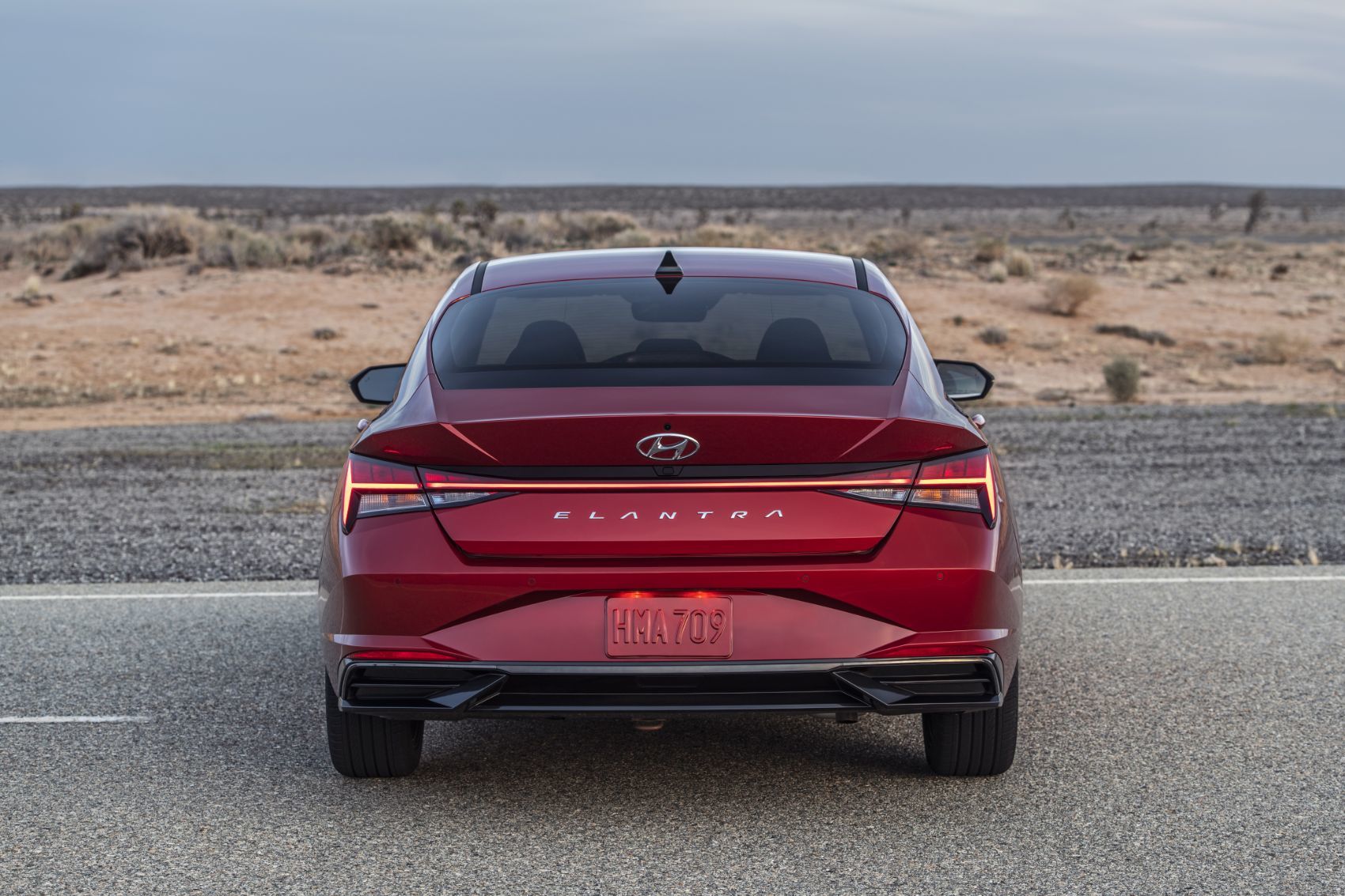
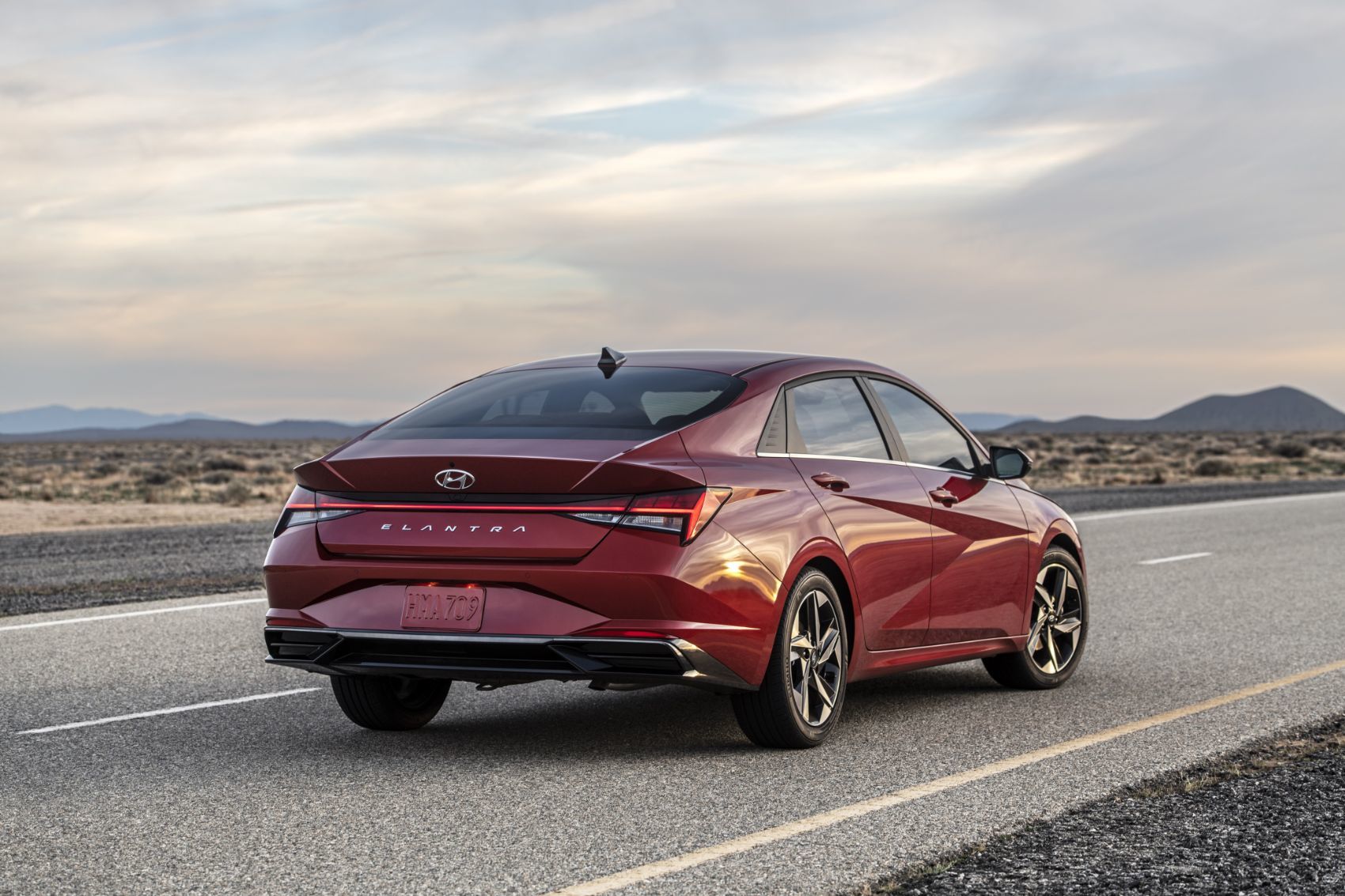
The rear is highlighted by a wide horizontal line extending across the center of the trunk, which stretches to the edges of the vehicle. From the back angle, the new Elantra gives the impression of a proper coupe, which is nice.
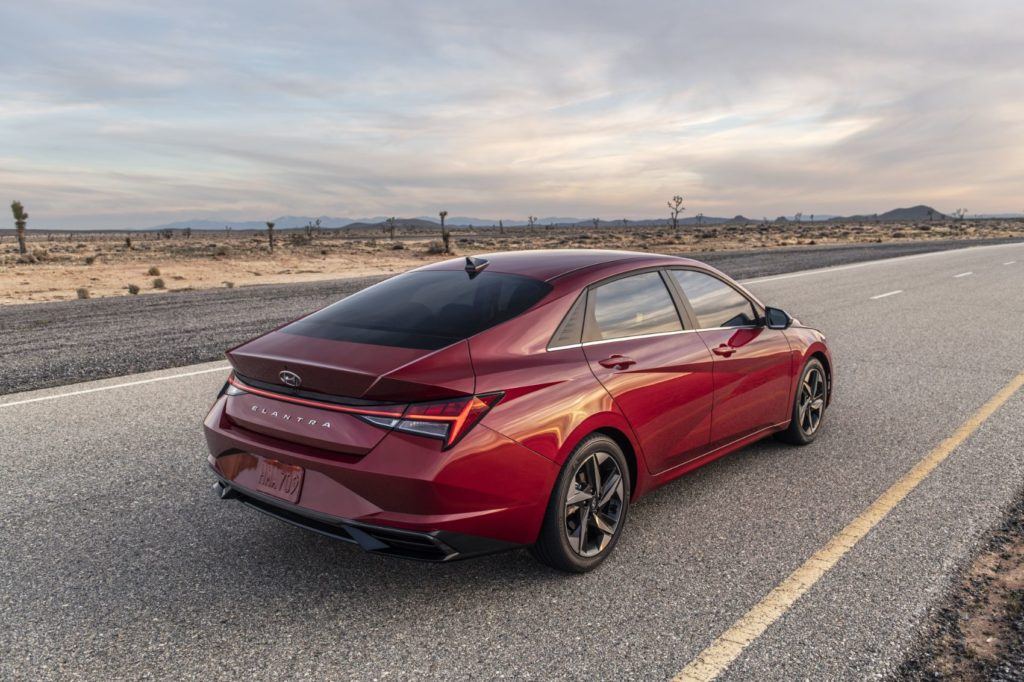
2021 Hyundai Elantra. Photo: Hyundai Motor America.

Roomier Interior? You Bet!

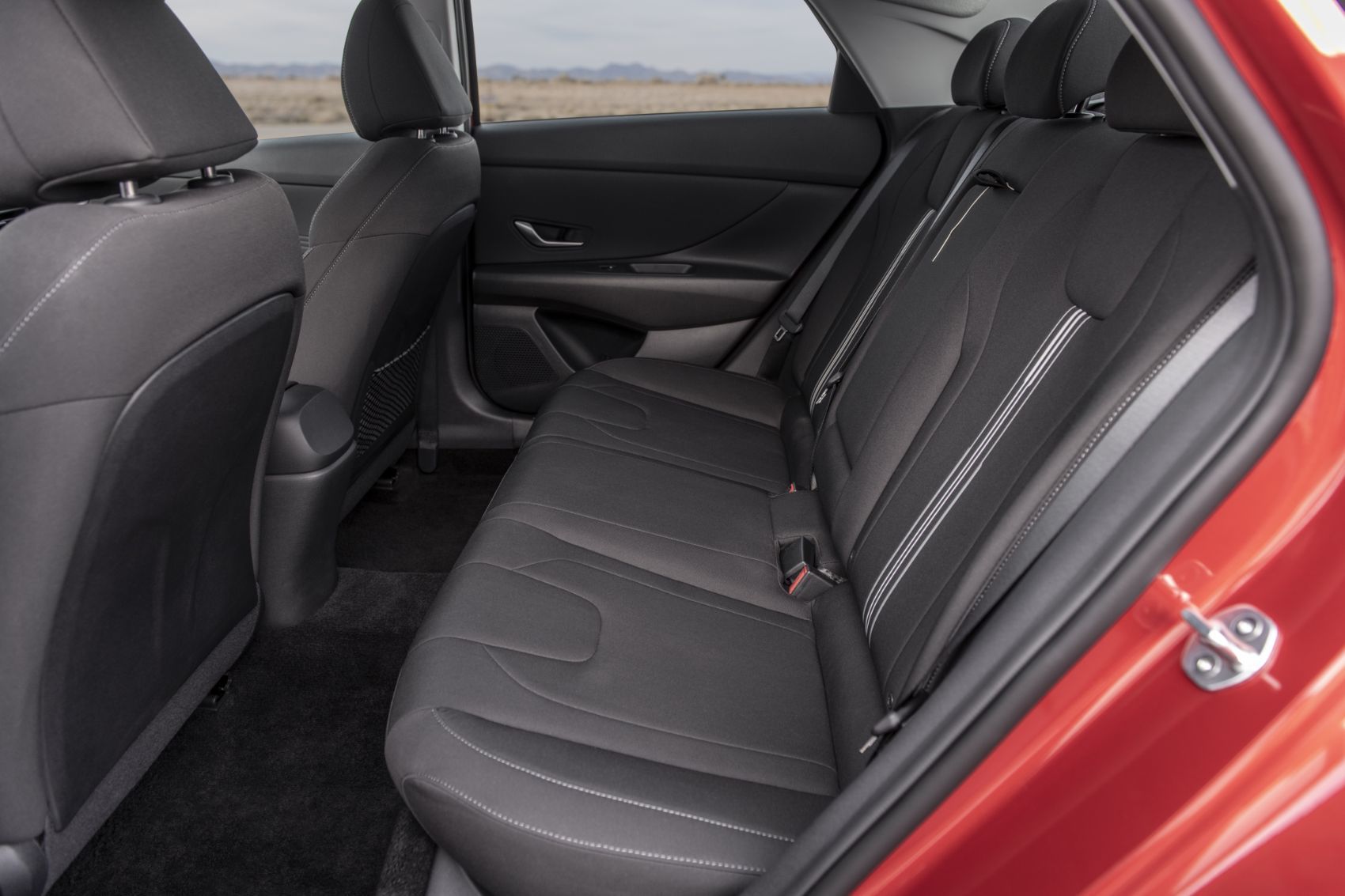
Along with a bigger body is a bigger cabin, and the Elantra gladly obliges. With 40.6 inches of front headroom and 37.3 inches in the rear, it bests the Civic, Mazda3 sedan, Nissan Sentra, and Toyota Corolla despite having a lower roof and coupe-like profile. The longer wheelbase and marginally longer rear overhang also mean loads of rear legroom and trunk space. The new Elantra has the most rear legroom (38.0 inches) among all compact cars. It also has a bigger trunk (14.2 cubic feet) than a Corolla or Mazda 3.

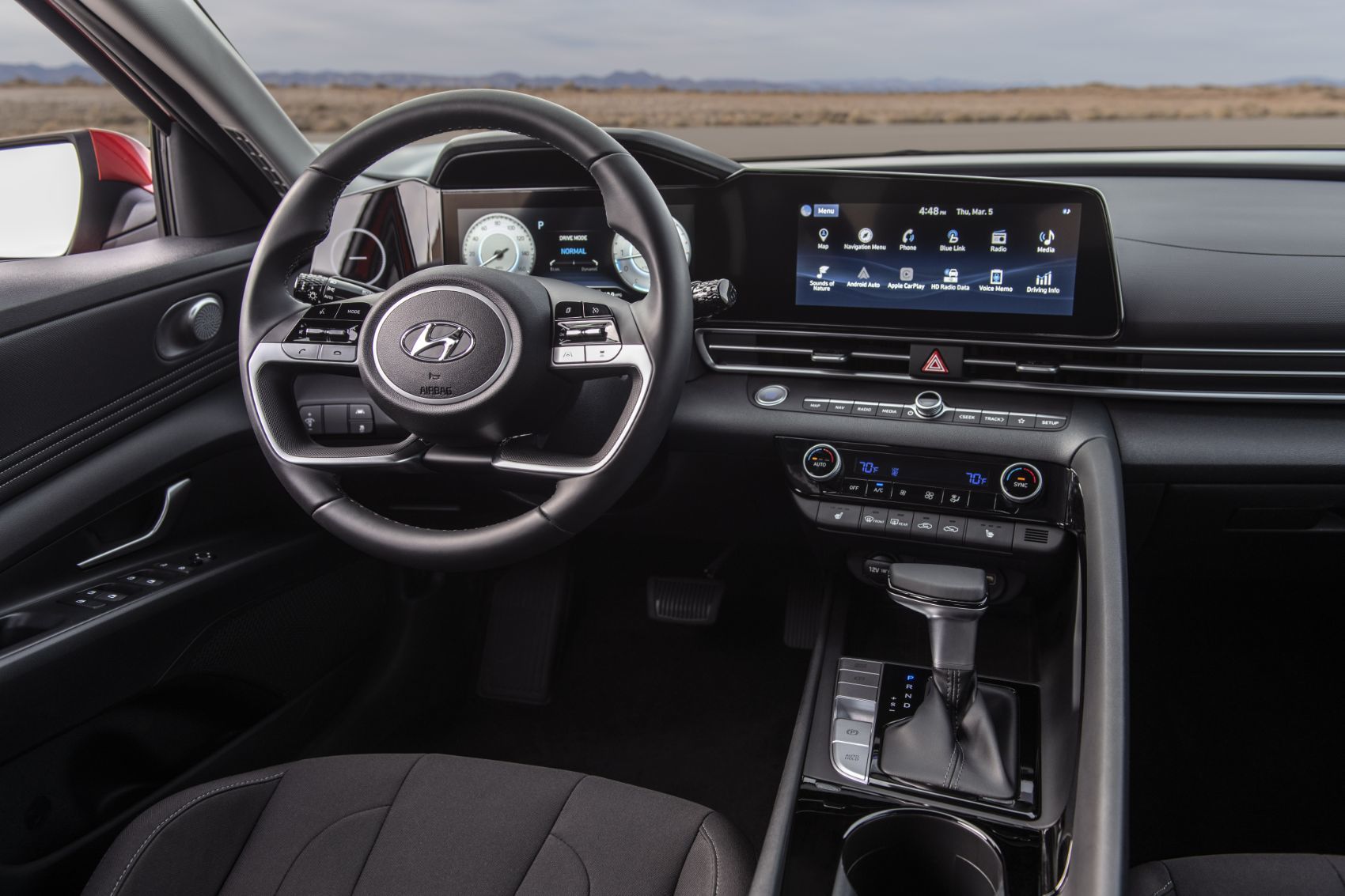
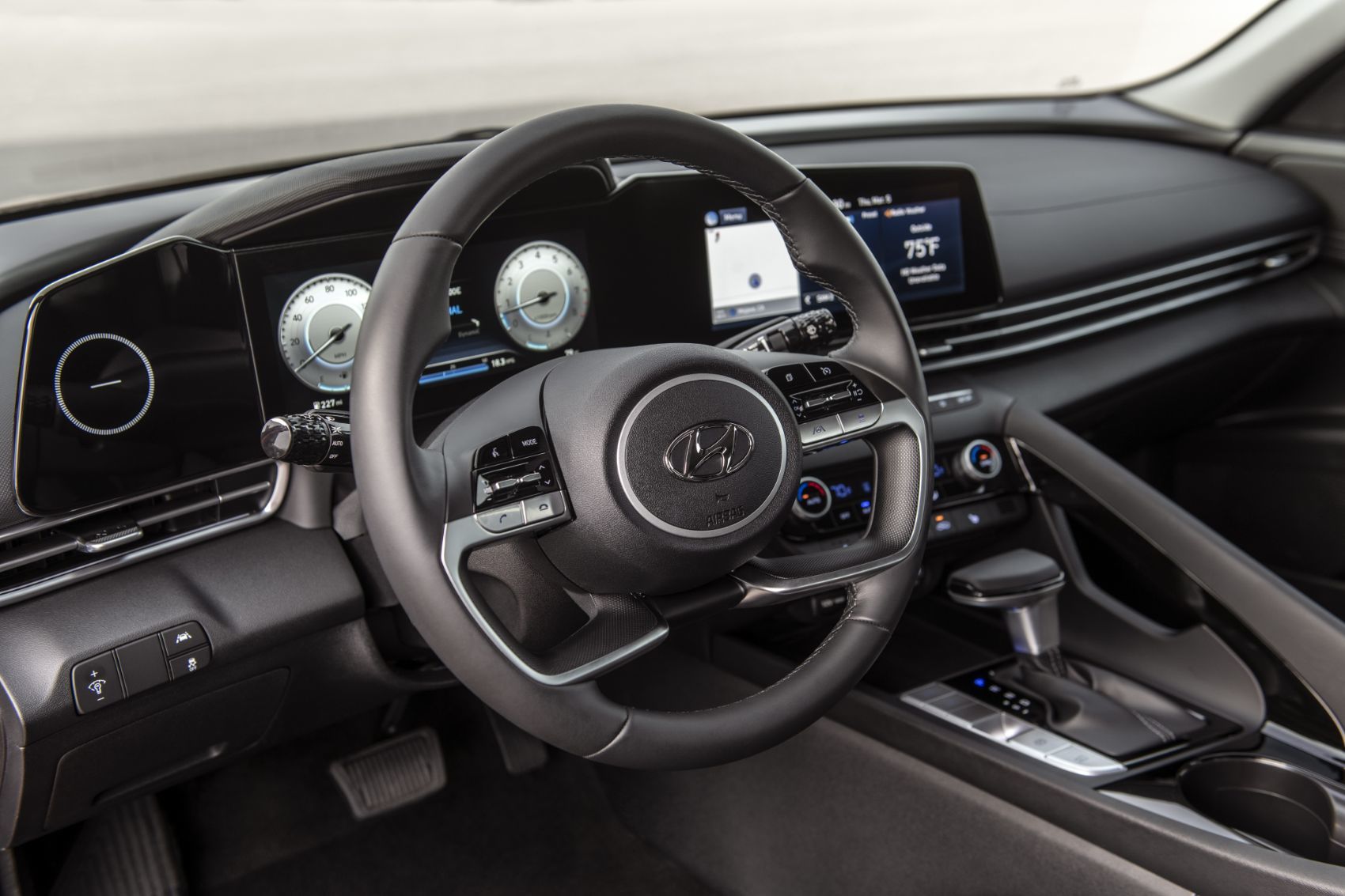
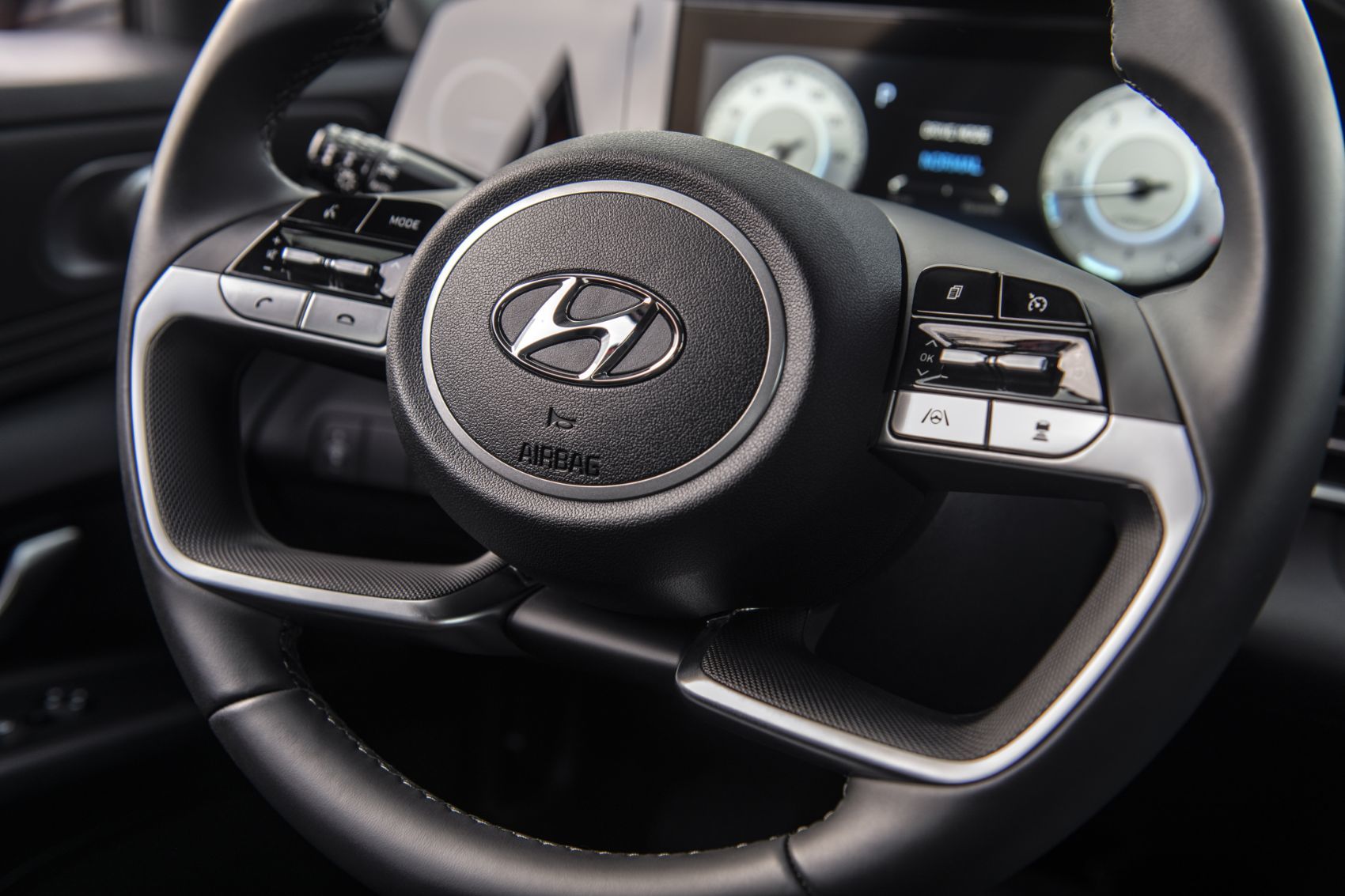
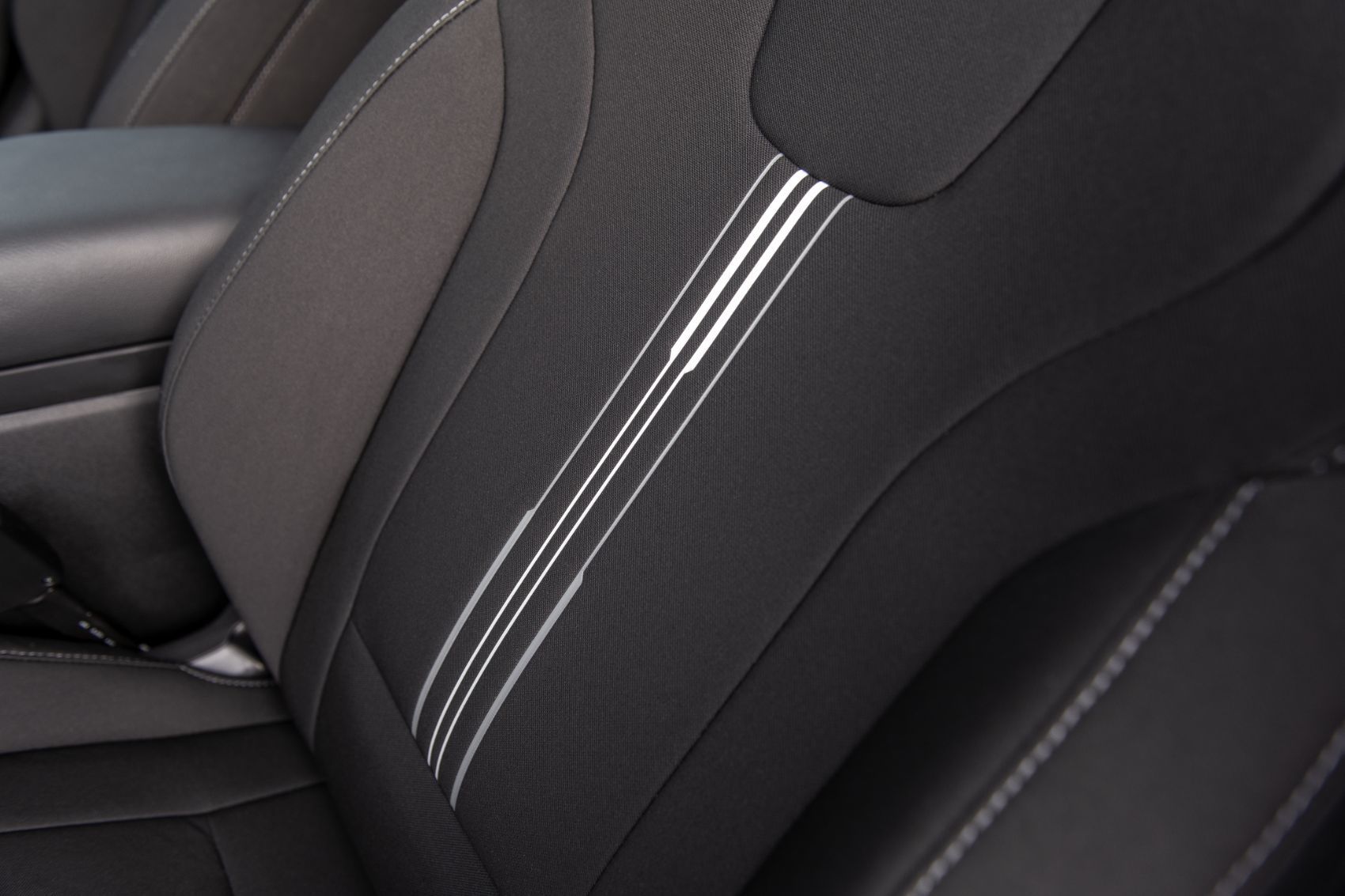
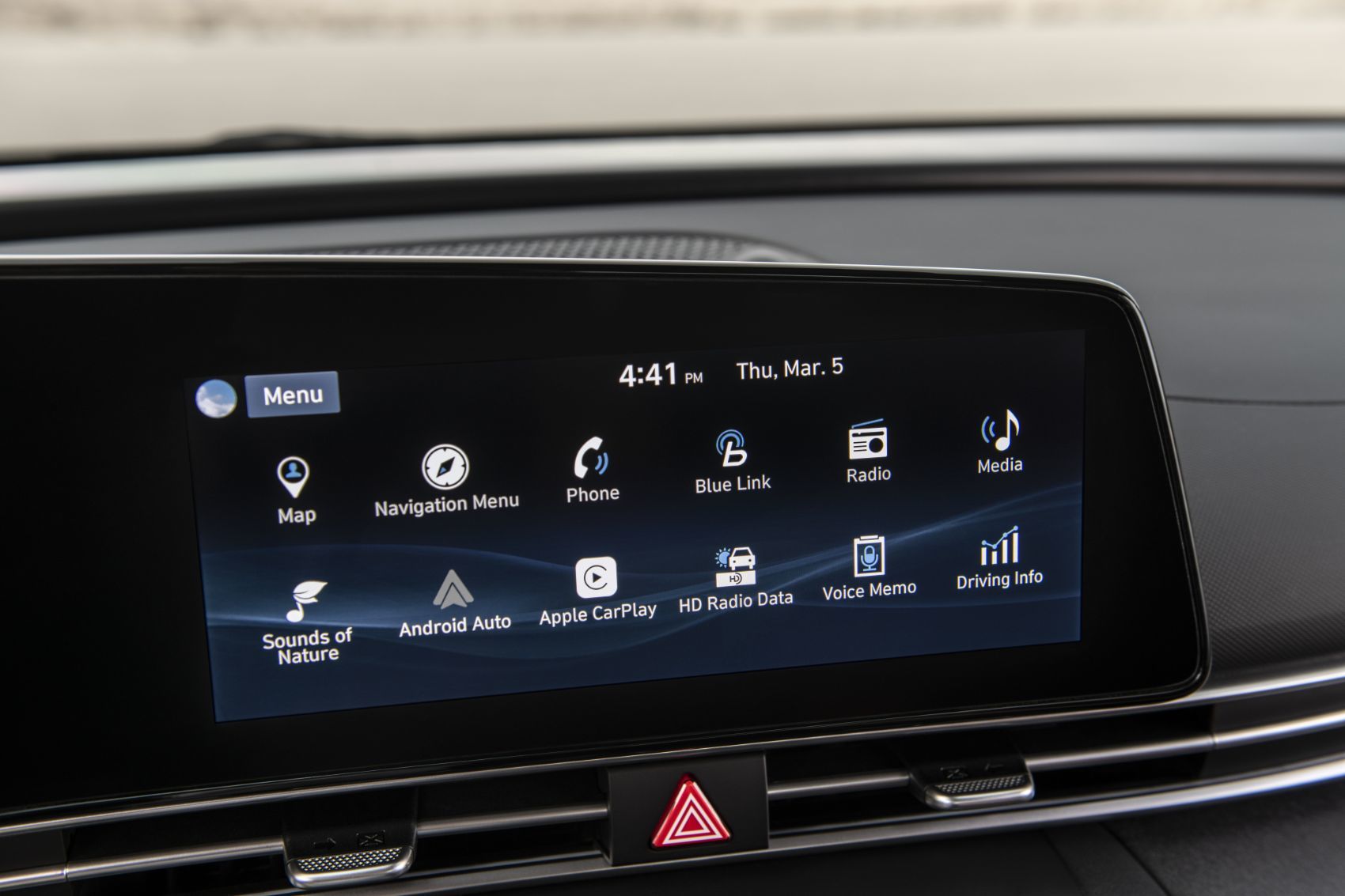
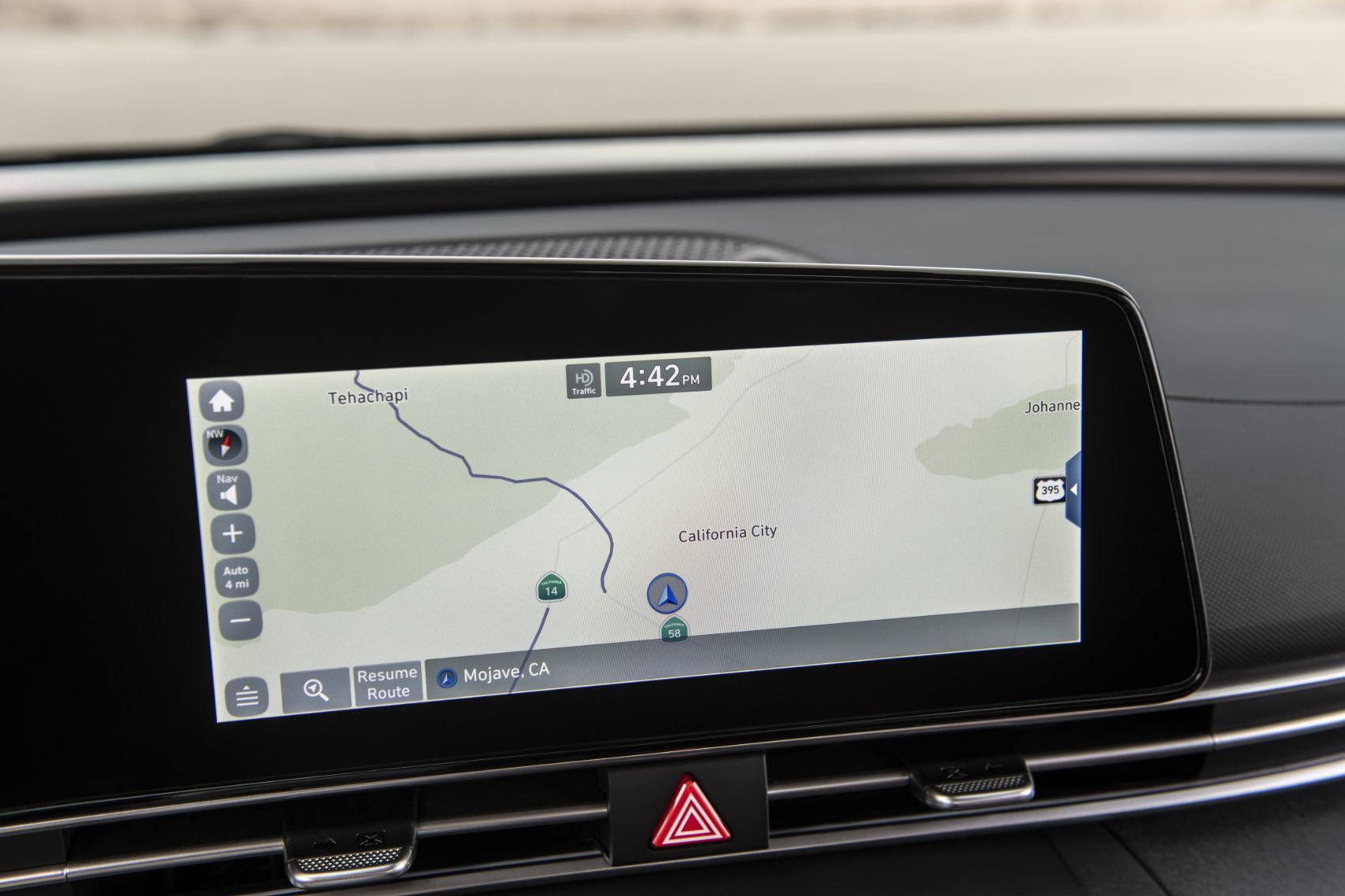
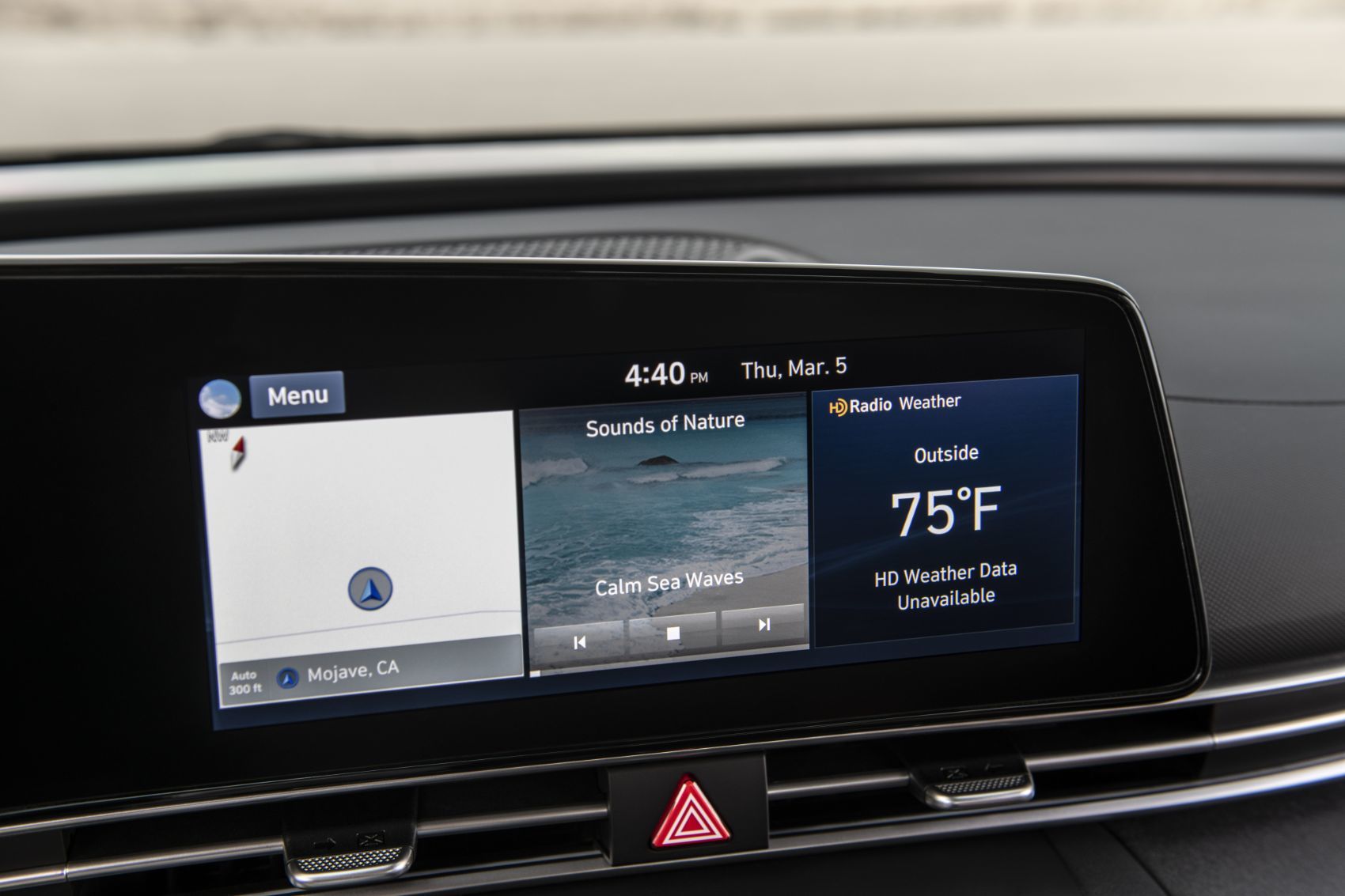
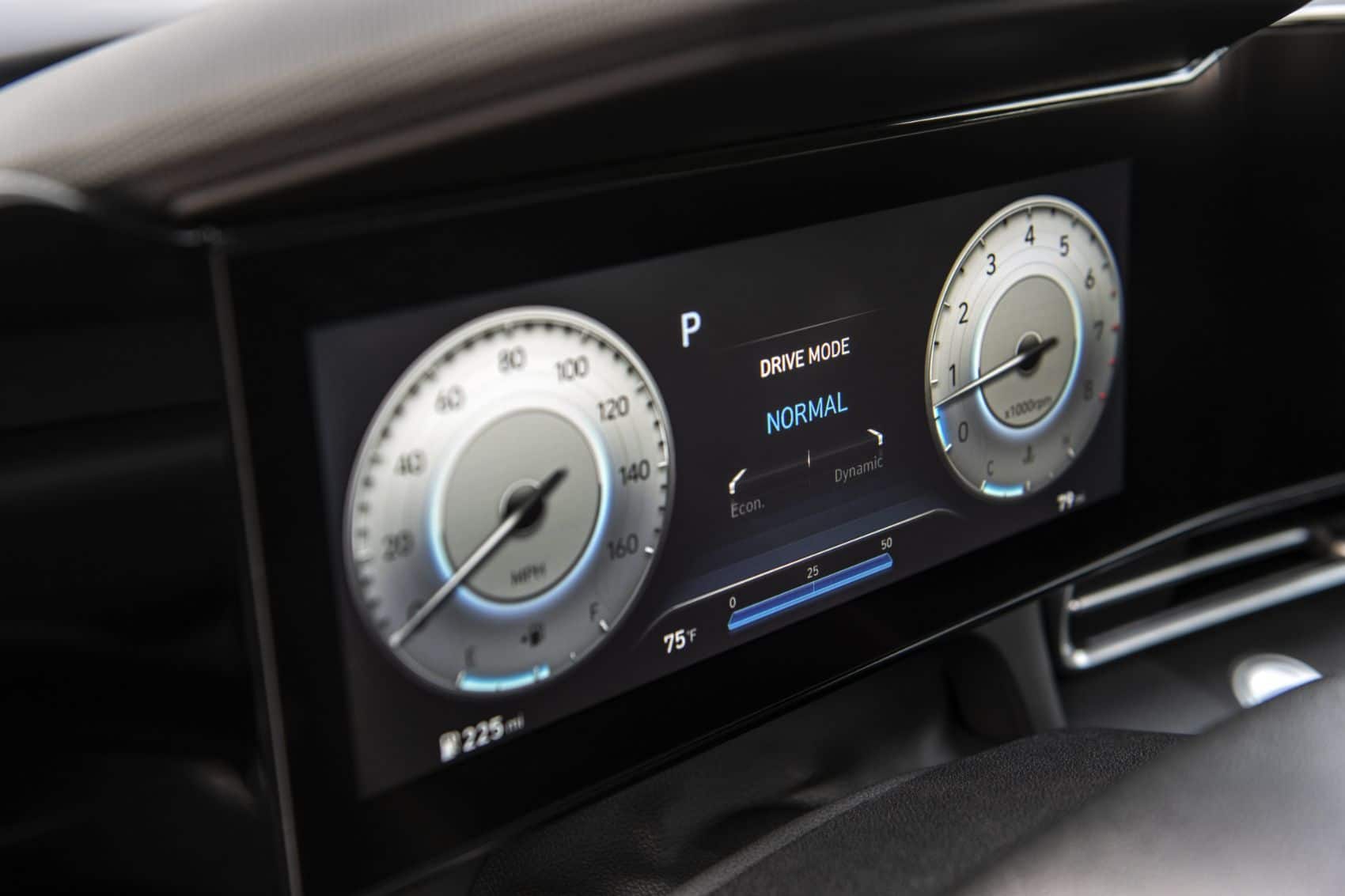
The all-new interior design is worthy of praise. Higher trim models receive a pair of 10.3-inch displays similar to the Mercedes-Benz MBUX system. You’ll also find slim air vents and a bevy of soft-touch materials – including a large grab handle for the passenger to hang on to. Is this a sign of things to come, namely a high-performance Elantra N-model?

2021 Hyundai Elantra: Gas & Hybrid Options

The Elantra SE, SEL, and Limited are powered by a 2.0-liter four-cylinder MPI Atkinson Cycle engine. This motor is good for 147 horsepower and 132 lb-ft. of torque, and is paired with a CVT transmission to achieve the highest possible fuel economy. Hyundai calls it an IVT or Intelligent Variable Transmission. It has a chain-design instead of conventional push belts. According to Hyundai, this new gearbox improves low-speed acceleration and fuel economy.

Meanwhile, the 2021 Elantra Hybrid has a smaller 1.6-liter four-banger paired with an electric motor. The combined system output is 139 horsepower and 195 lb-ft. of torque. The hybrid model makes good use of a six-speed dual-clutch automatic. It also has a sportier multi-link rear suspension than gasoline-only models.

“While some manufacturers no longer see the value in the car side of the business, we’re doubling down by offering an all-new model with both gas and hybrid powertrains,” Muñoz said of the 2021 Hyundai Elantra.

Hyundai has yet to release the official fuel economy numbers for both engines, but the Elantra Hybrid is expected to breach the 50 mpg barrier in the combined cycle.
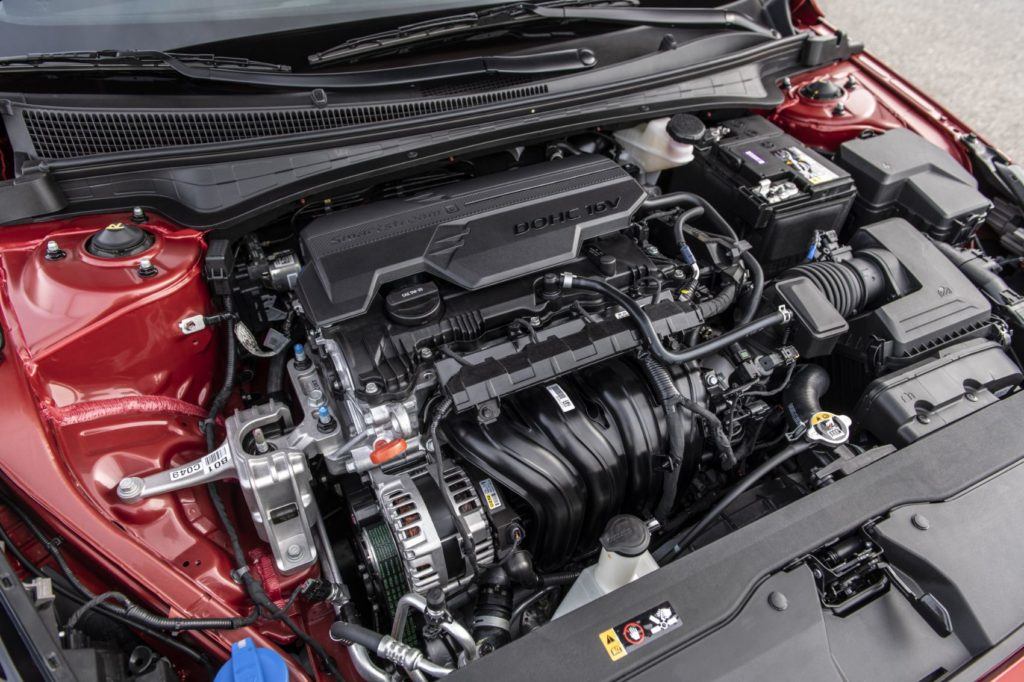
2021 Hyundai Elantra under the hood. Photo: Hyundai Motor America.

Fantastic New-Age Tech

Wireless Apple CarPlay and Android Auto are standard, even without the optional 10.25-inch display screens. The cabin is also governed by an on-board voice recognition system, accessed via the “push to talk button” on the steering wheel. You can use the feature to adjust a number of fan and climate settings, including turning on the heated seats.

Hyundai’s Blue Link Connected Car System for the Elantra uses embedded telematics. Drivers can remote-start their vehicle and control interior temperatures using the MyHyundai smartphone app. Via the Blue Link voice controls, you can ask your Elantra to find the nearest burger or coffee joint, or retrieve the scores from last night’s Red Wing’s game.

Also, the 2021 Hyundai Elantra is equipped with mood lighting with 64 colors to choose from. Why anyone would need 64 colors is beyond us, but there you go.

2021 Hyundai Elantra: Safety Features

Standard safety features for the 2021 Hyundai Elantra include lane-keeping assist; automatic emergency braking with pedestrian detection; automatic high beams; lane-following assist; and a driver attention warning system that chimes in if it senses the driver is tired, fatigued, or dozing off. These are part of the SmartSense package.

Optional features for the SmartSense package include blind-spot detection and collision avoidance; smart cruise control; Highway Driving Assist; Safe Exit Warning; and reverse collision avoidance. In terms of the 2021 Elantra’s architecture and chassis, Hyundai says the new platform improves safety by way of a multi-load path structure.
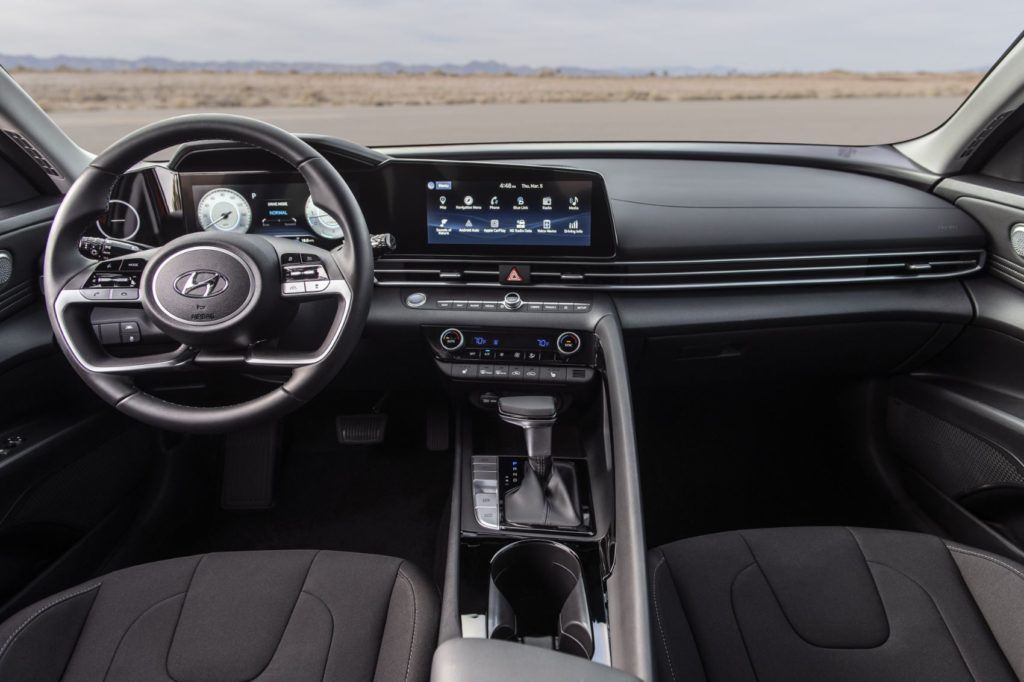
2021 Hyundai Elantra interior layout. Photo: Hyundai Motor America.
2021 Hyundai Elantra interior layout. Optional is a Bose premium stereo with eight speakers, including a subwoofer on the rear deck. Photo: Hyundai Motor America.

2021 Hyundai Elantra: Pricing & Availability

The 2021 Hyundai Elantra is slated to arrive near the end of 2020. Production is at Hyundai’s plant in Ulsan, South Korea and the Hyundai Motor Manufacturing Plant in Alabama. Pricing will be announced closer to the intended launch date.

Alvin Reyes is the Associate Editor of Automoblog. He studied civil aviation, aeronautics, and accountancy in his younger years and is still very much smitten to his former Lancer GSR and Galant SS. He also likes fried chicken, music, and herbal medicine. 

2021 Hyundai Elantra Gallery
Photos & Source: Hyundai Motor America.

Original article: 2021 Hyundai Elantra: When a Compact Sedan Grows Up


from Automoblog https://ift.tt/3dV7KhR

Thursday, 2 April 2020

Toyota Camry & Avalon AWD: Nice Option But Do You Need It?

  • Toyota Camry and Avalon now have all-wheel drive as a standalone option.
  • Different components from the RAV4 and Highlander were used for the sedans.
  • Although a nice option, all-wheel drive may not be necessary for some buyers.

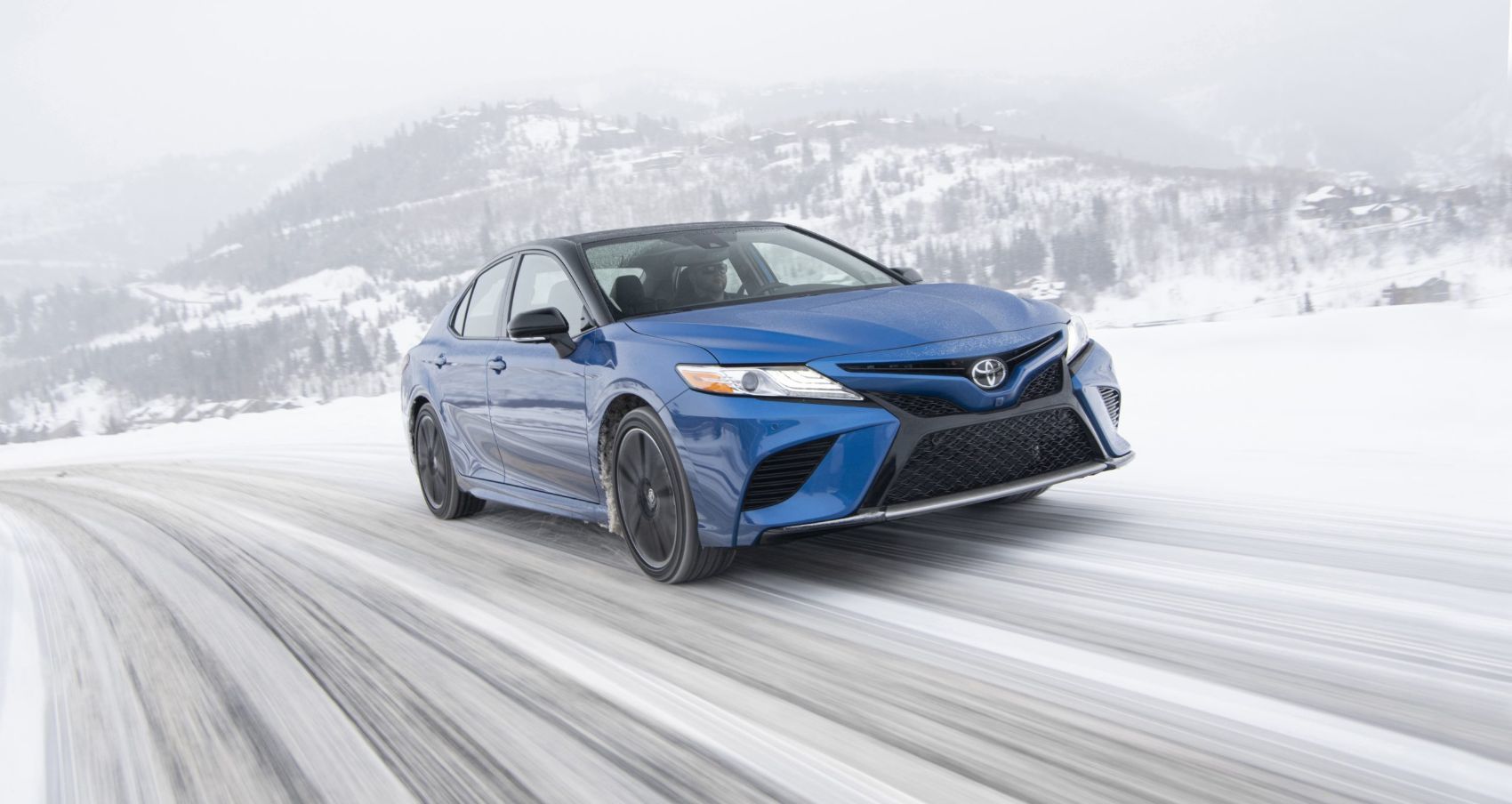
Toyota’s research team in Saline, Michigan came back from the drawing board with an all-wheel drive option for the 2020 Camry and 2021 Avalon. With more room in the market as players like Ford and GM exit, Toyota is making a seemingly simple but crucial addition here with all-wheel drive. In short, both cars will be more capable in snowy weather, but if you are a longtime Camry or Avalon buyer, is all-wheel drive worth it?    

How Does All-Wheel Drive Change Things?

According to Toyota, buyers will notice little, if any, change between the front-wheel drive and all-wheel drive Camry and Avalon. Toyota’s New Global Architecture (TNGA) allows the all-wheel drive models to retain the same suspension tuning, wheels, and tires as the front-wheel drive versions. In other words, you might only notice all-wheel drive in slippery or snowy conditions (if that, since most systems on the market today are fairly seamless).

Otherwise, for all intents and purposes, Toyota claims the cars ride like their front-wheel drive cousins. 

Blending Two Vehicles Together

Since TNGA is a flexible platform for Toyota, engineers had the freedom to incorporate the components necessary for the all-wheel drive Camry and Avalon. When Toyota started planning for the addition, they looked at the RAV4 as an eligible bachelor since it is also based on the TNGA platform. It may feel like an unconventional pairing, but Toyota seems to believe this true love encounter will produce the ruggedness of an SUV in an affordable sedan.  

Toyota took the upper body structure of the Camry and Avalon and combined it with the RAV4’s multi-link rear suspension. From there, the RAV4’s suspension was adapted with specific modifications and tuning to suit the sedans. The RAV4 wasn’t the only SUV on Toyota’s radar either. They put a modified version of the Highlander’s propeller shaft in both the all-wheel drive Camry and Avalon. 

2020 Toyota Camry XSE with all-wheel drive. The all-wheel drive components account for an additional 165 lbs. versus a front-wheel drive Camry. Photo: Toyota Motor Sales, U.S.A., Inc.

Engine & Powertrain  

Both the all-wheel drive Toyota Camry and Avalon have a 2.5-liter four-cylinder with a dual overhead cam. The engine, complete with an aluminum alloy block and aluminum alloy heads, is paired to an eight-speed automatic. The Camry delivers 202 horsepower which is more than enough for your daily routine. The Camry XSE and Avalon bump things up a little bit with 205 horsepower and dual exhaust. 

How Does AWD Work In The Camry & Avalon? 

Up to 50 percent of the engine’s torque can be directed to the rear wheels by the electromagnetic controlled coupling. This coupling engages and disengages the propeller shaft from the differential depending on if the situation demands all-wheel drive. During acceleration and slippage at the front wheels, all-wheel drive will kick in to distribute power more effectively, but then disconnect during long highway stretches or casual cruising to conserve fuel. 

2021 Toyota Avalon Limited with all-wheel drive. Photo: Toyota Motor Sales, U.S.A., Inc.

What Is The Fuel Economy?

EPA-ratings for the all-wheel drive Toyota Camry LE and SE are 25/34 city/highway and 29 combined; whereas the XLE and XSE return the same city/highway numbers, but one mpg less combined at 28.

A quick look at the Carmy shows it is a bit behind its all-wheel drive competitors like the Nissan Altima and Subaru legacy. Both the Legacy and Altima with all-wheel drive have a 2.5-liter four-cylinder, the same displacement as the all-wheel drive Camry. The 2020 Altima gets an estimated 26/36 city/highway and 30 combined. By comparison, the 2020 Legacy comes in at 27/35 city/highway and 30 combined.

Standard Safety Features

All 2020 Toyota Camry and Avalon models are standard with Toyota Safety Sense-P (often written as TSS-P). The package includes:

  • Automatic High Beams.
  • Dynamic Radar Cruise Control.
  • Lane Departure Alert with Steering Assist.
  • Pre-Collision System with Pedestrian Detection.

Blind Spot Monitor with Rear Cross Traffic Alert is available for the Camry, but standard on Avalon. Intelligent Clearance Sonar with Rear Cross Traffic Braking is available for both cars.

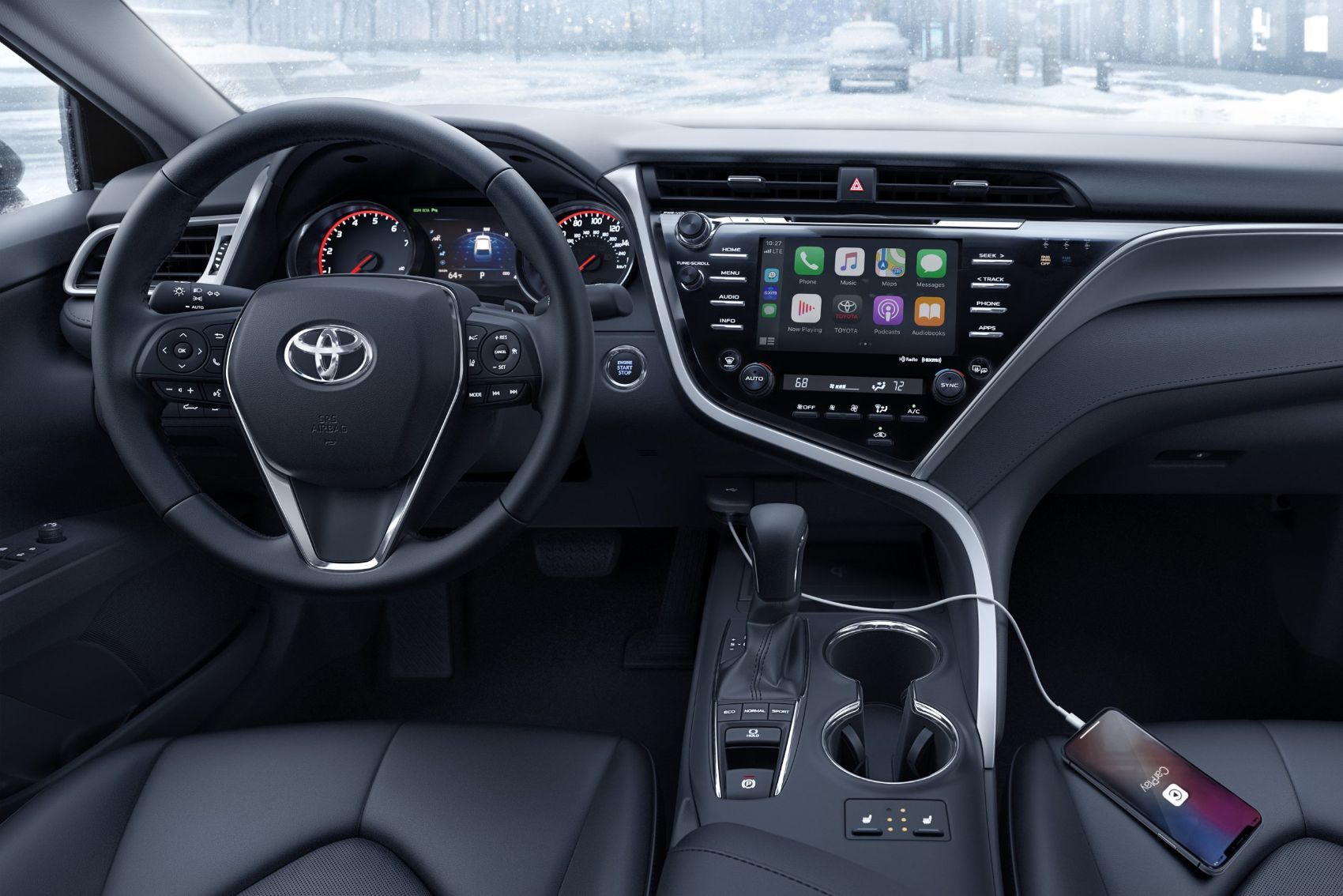
2020 Toyota Camry interior layout.
2020 Toyota Camry interior layout. While the contents varies slightly by trim level, a Cold Weather Package is available for the all-wheel drive Camry and Avalon. It adds things like heated seats and a heated steering wheel. Photo: Toyota Motor Sales, U.S.A., Inc.

Should I Buy My Camry or Avalon With AWD?

We know well in Michigan how desirable all-wheel drive sounds, especially when the forecast is predicting one winter storm after another. Drivers often gravitate toward trucks and SUVs for reasons like this. There is, after all, an added sense of security a 4×4 vehicle can provide.  

But if you are more at ease driving a car, a Camry or Avalon with all-wheel drive might be a better option. Versus a “normal” front-whee drive sedan, you will have more traction during snowy and icy conditions without having to make the switch to an SUV or a truck. If you live someplace where it doesn’t – or rarely ever – snows, then you probably don’t need all-wheel drive.

If you are on a shoestring budget like me, the front-wheel drive Camry is more attractive. The front-wheel drive version has the same 2.5-liter four-cylinder, and with some gasoline versions pushing 40 highway mpg, it’s just more affordable in the long run. Those with extended work commutes will benefit the most from the front-wheel drive Camry, as will weekend road-trippers.

2020 Toyota Camry XLE with all-wheel drive.
2020 Toyota Camry XLE with all-wheel drive. Photo: Toyota Motor Sales, U.S.A., Inc.

Pricing & Availability

The 2020 Toyota Camry is available now, with all-wheel drive as an option on four trim levels: LE, SE, XLE, and the sportier XSE. The all-wheel drive LE starts at $26,370, while the XSE begins at $31,405. The all-wheel Avalon arrives this fall as a 2021 model year. Pricing and fuel economy figures will be announced closer to that time.

Both the all-wheel drive Camry and Avalon are only available in North America, and are assembled at Toyota Motor Manufacturing Kentucky.

Emily Pruitt is fascinated by the current changes in the automotive industry, from electric cars and infrastructure, to fully autonomous vehicles. Outside of the automotive world, she can be found writing poetry or unraveling the latest mystery novel.

Photos & Source: Toyota Motor Sales, U.S.A., Inc.

Original article: Toyota Camry & Avalon AWD: Nice Option But Do You Need It?


from Automoblog https://ift.tt/2UziISy

Wednesday, 1 April 2020

Flat Out: Jillian Deschenes’ Royal Enfield flat tracker

A Royal Enfield Interceptor flat tracker built by racer Jillian Deschenes
Minnesota native Jillian Deschenes is not a pro custom motorcycle builder: from Monday to Friday, she’s a hospice nurse in the suburbs of Minneapolis. But on the weekends she’s a flat track racer—and a fierce one, too.

In just her second year of racing, Jillian’s already the number one plate holder in the women’s class in her AMA District. Her success piqued the interest of Royal Enfield, who invited her to test out their Himalayan-based flat tracker—the FT411.

A Royal Enfield Interceptor flat tracker built by racer Jillian Deschenes
Jillian’s affable nature left such a mark on the team, they earmarked her for future projects.

One of those projects was ‘Build. Train. Race.‘—a grassroots female-focused flat track program. Royal Enfield picked four North American women motorcycle enthusiasts, and hooked them up with a new Royal Enfield Interceptor 650 each—to transform into a race bike and ultimately take to the tracks.

A Royal Enfield Interceptor flat tracker built by racer Jillian Deschenes
Despite having no bike building experience, Jillian made the cut. In no time, she had a brand new Interceptor 650 in her garage—but she also had a three-month deadline, and an eight-year-old daughter and full-time job to juggle.

Through hard work and a significant lack of sleep, she delivered a flat tracker that looks like it rolled out of a pro shop.

A Royal Enfield Interceptor flat tracker built by racer Jillian Deschenes
Jillian had a pretty solid team supporting her, too. Her father Jim Deschenes owns Superior Tool Grinding, and helped to machine a number of custom parts. And she roped in her fiancé and fellow racer, Erik Moldenhauer.

What makes this a killer build is how Jillian’s nailed that classic flat tracker silhouette, and a lot of that is thanks to the bodywork. There’s a modern Harley-Davidson XR750 tank cover from Gopher Glass up front, and a Saddlemen tail section out back, trimmed to fit the Enfield frame. The frame was cut-and-shut to match the length of the new tail piece too.

A Royal Enfield Interceptor flat tracker built by racer Jillian Deschenes
Fuel now sits under the seat, in a one-gallon fuel cell from Boyd Welding with a modified flange for the OEM pump, installed with help from Retrodyne. Peek under the tank cover, and you’ll find a lightweight Lithium-ion battery from Antigravity.

Moving to suspension, Jillian swapped the Interceptor’s front end for a set of Yamaha R6 forks, with Race Tech Gold valves. They’re held in place by a pair of modified R6 bottom yokes. The rear shocks are stock, but they’ve been re-sprung and re-valved.

A Royal Enfield Interceptor flat tracker built by racer Jillian Deschenes
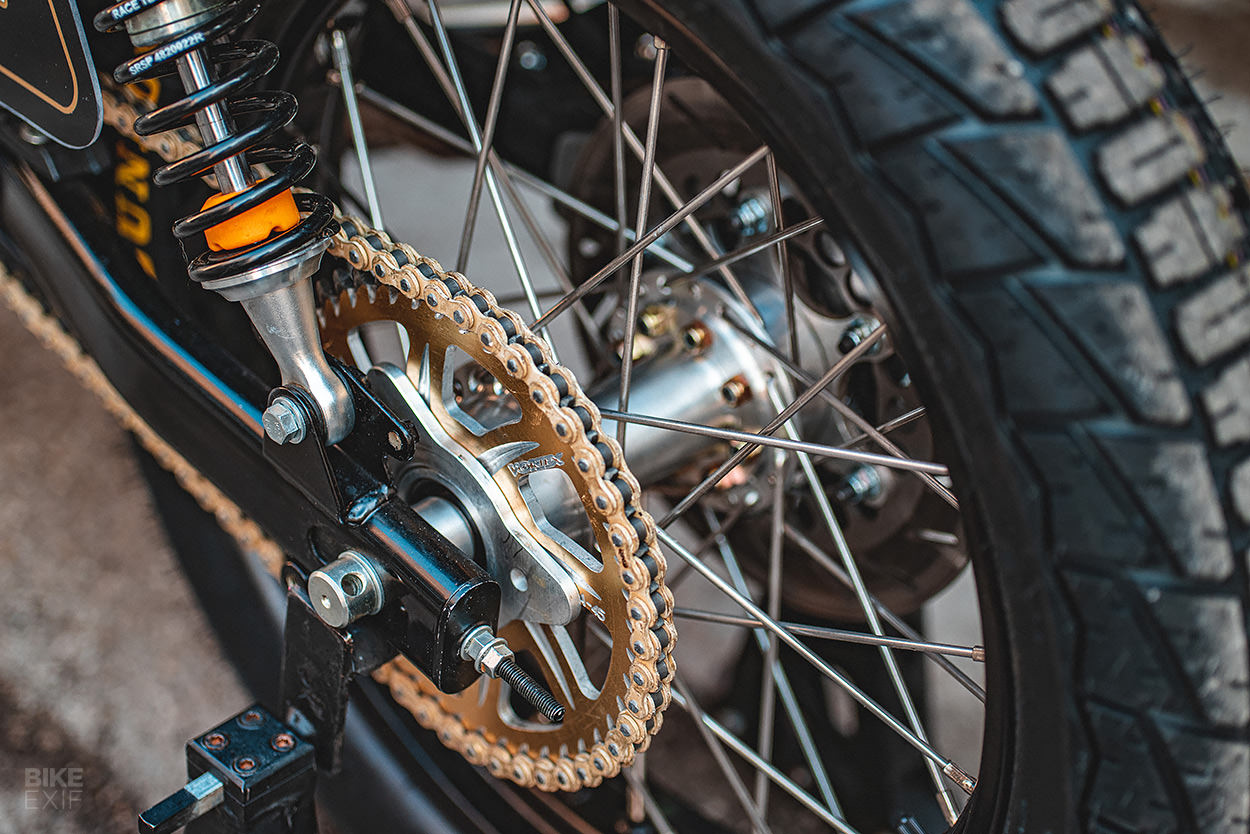
Both wheels are a pick-n-mix of suitable parts. The front uses a Suzuki Savage hub that’s been shaved down, with a 2.50×19 Warp 9 rim. The rear uses a Cheney quick-change hub, laced to a 3.0×19 Warp 9 rim. The tires are Dunlop DT4s

Getting everything to fit required a plethora of custom parts. So Dad Jim machined up a new 20 mm axle for the front, a set of wheel spacers for both ends, and a custom brake caliper mount at the back. There’s also a custom-made quick-change brake rotor adaptor for the 10 1.2” rotor.

A Royal Enfield Interceptor flat tracker built by racer Jillian Deschenes
The Enfield also features custom-machined handlebar clamps, a modified left peg bracket to sit higher (for more clearance in corners), and a machined front sprocket.

The cockpit is delightfully minimal; a set of wide tapered flat track bars, with a Motion Pro throttle housing and run/start switch. The ignition switch has been replaced with a simple ‘on/off’ toggle switch too.

A Royal Enfield Interceptor flat tracker built by racer Jillian Deschenes
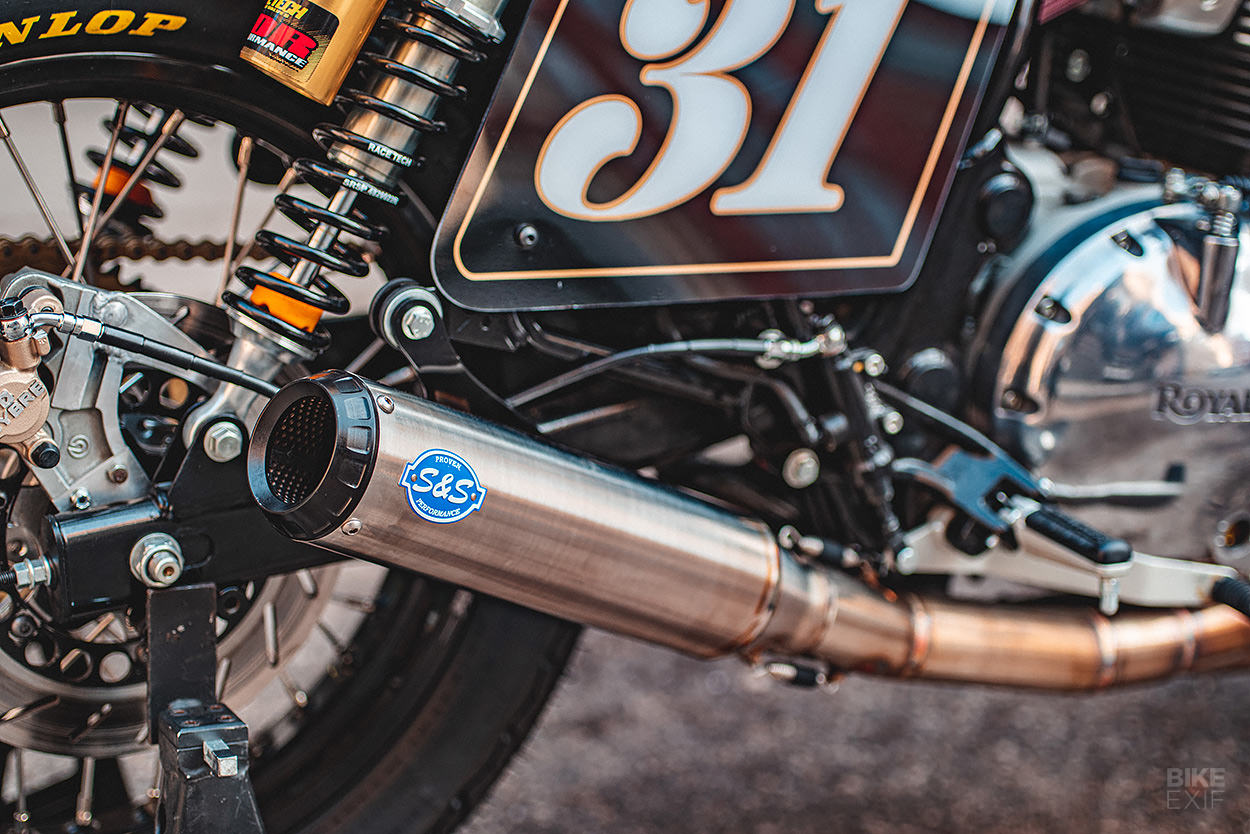
There’s nothing wild going on with the motor here, just an air box removal with a pair of K&N pod filters taking its place. Fellow American Midwesterners S&S Cycle came to the party too, with a stunning two-into-one exhaust system that’s sure to unleash a little more grunt.

Jillian kept her new race bike’s livery simple and extremely classy. The execution is robust too, with vinyls laid over a base of auto paint, and then clear coated. The race plates are actually clear acrylic, with vinyls stuck to the inside.

A Royal Enfield Interceptor flat tracker built by racer Jillian Deschenes
Jillian hit her deadline, and in the process delivered not only a hella neat flat racker, but also a great example of the Interceptor’s potential.

Unfortunately racing in the US is currently on hold, so she hasn’t had a chance to fire it up in anger yet. But we’re just as eager as she is to see it out on the track.

Royal Enfield NA Build. Train. Race. | Facebook | Instagram | Jillian Deschenes Instagram | Images by Brandon LaJoie

A Royal Enfield Interceptor flat tracker built by racer Jillian Deschenes
Partners: Dunlop, S&S Cycle, Saddlemen, Gopher Glass, Vortex, PDR Performance, Race Tech Inc., Superior Tool Grinding, Jacks of Spade, Retrodyne, Warp 9 /Amanda Wilson Design, Mike Holmgrem of Plugs Garage, Icon Motorsports, Moon Motorsports, Lightshoe, Moto Gear US, Go Moto, Fasthouse


from Bike EXIF https://ift.tt/343VU0v