Sunday, 5 January 2020

An Era Ends: Final Porsche 911 From The 991 Generation Assembled

English poet and author Geoffrey Chaucer is credited with the phrase “all good things must come to an end.” Chaucer’s words from Troilus and Criseyde ring especially true today for Porsche fans, some 640 years later. The 991 series, the most commercially successful generation of the Porsche 911, is ending. The final variant, a 911 Speedster bound for the United States, rolled off the assembly line recently in Baden-Württemberg, Stuttgart.

At The Drawing Board

Before its 2011 debut, the 991 generation was viewed by Porsche as a massive undertaking. Nearly 90 percent of the components were either brand new or subjected to further, more rigorous development. Porsche’s leadership focused on cutting fat through an involved benchmarking process that saw, for the first time, a 911 weighing less than its predecessor. The unique aluminum-steel composite body deserves much of the credit.
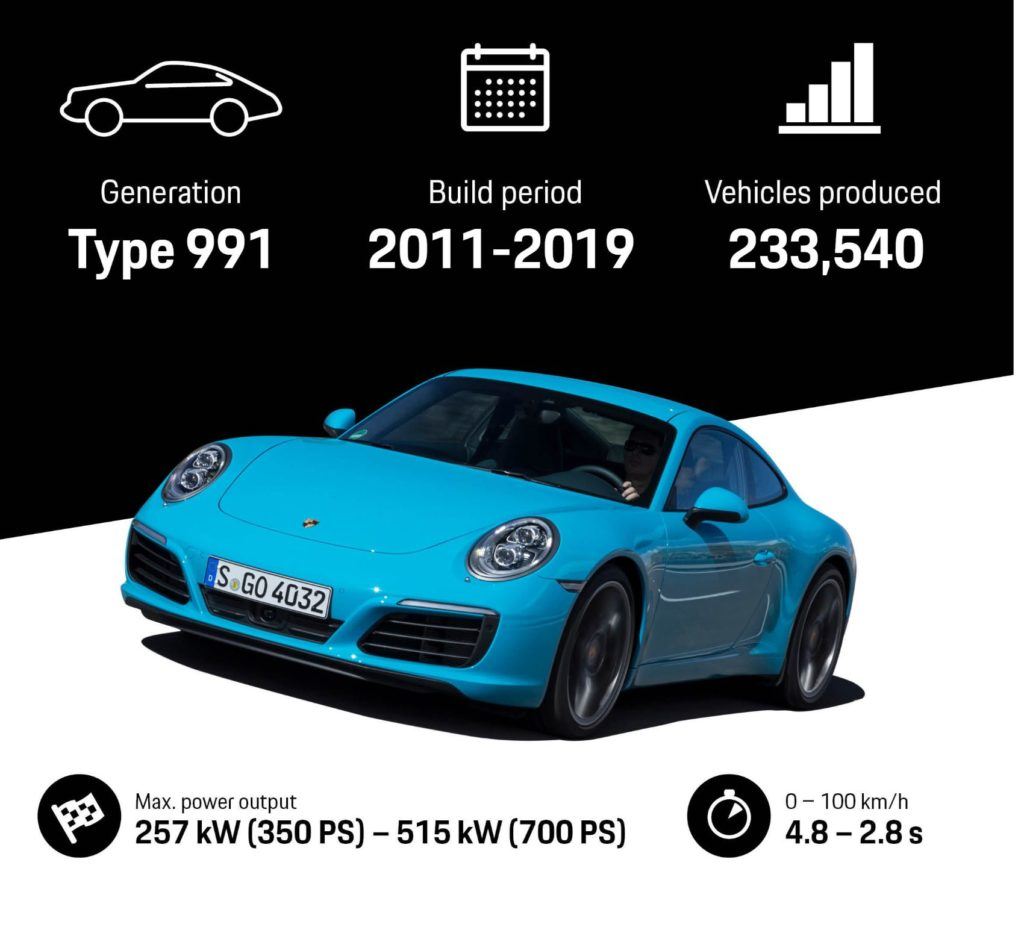
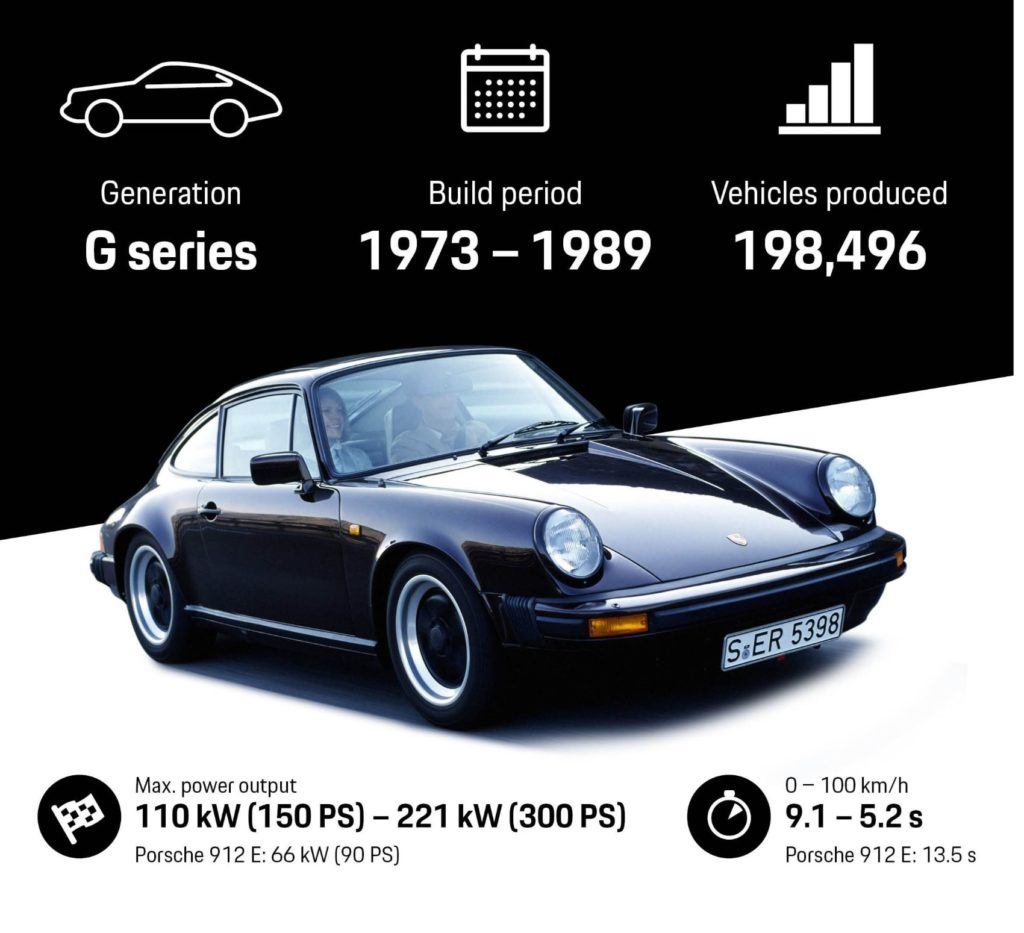
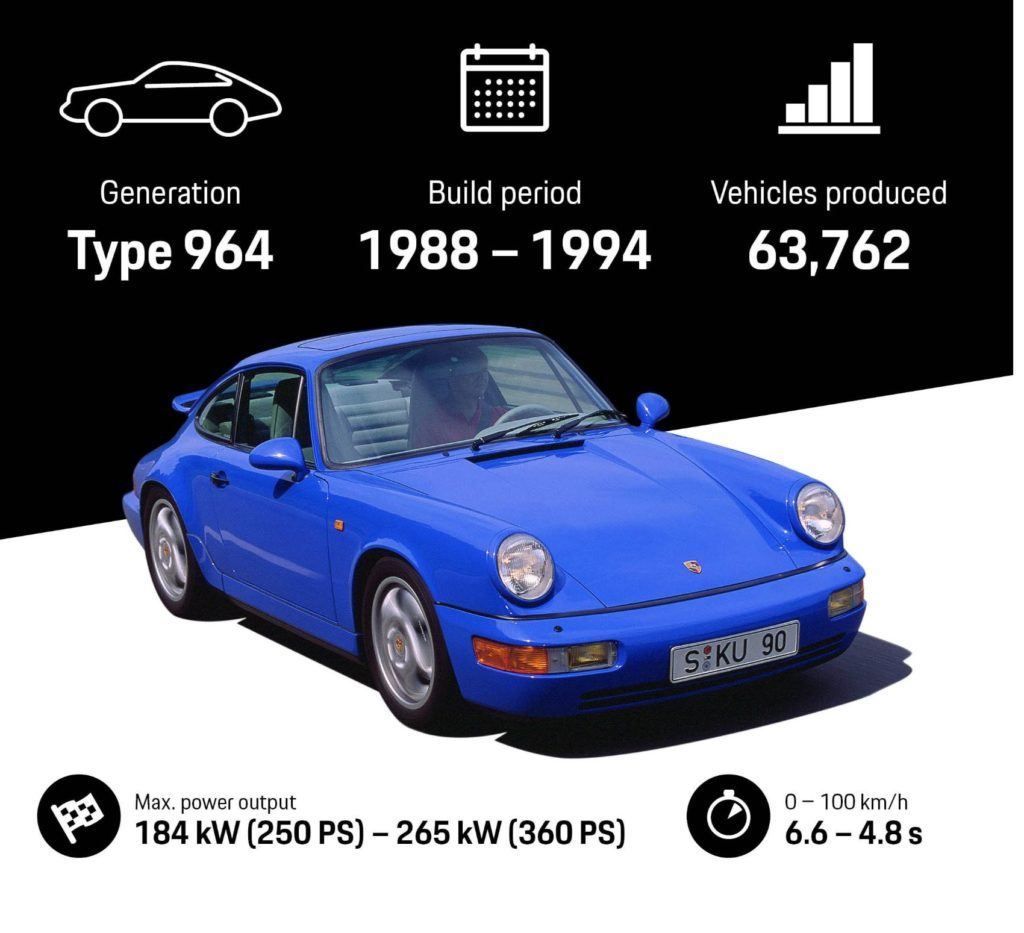
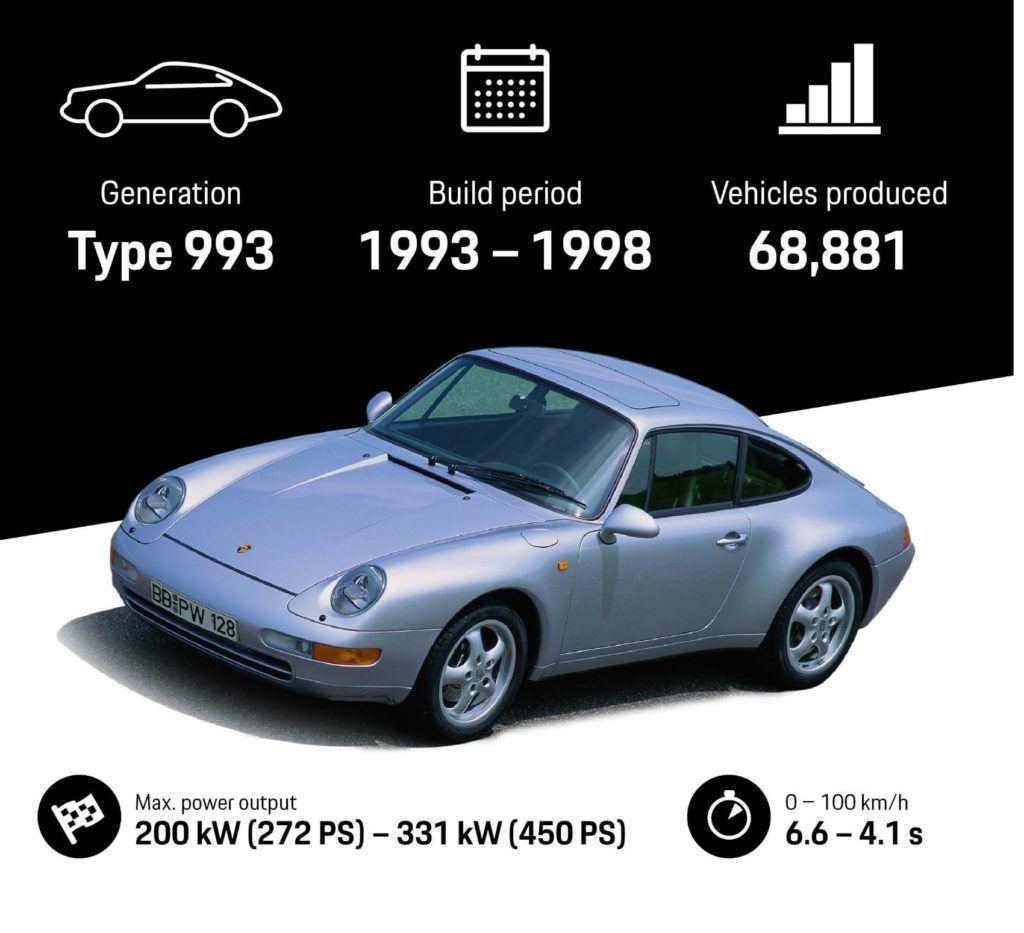
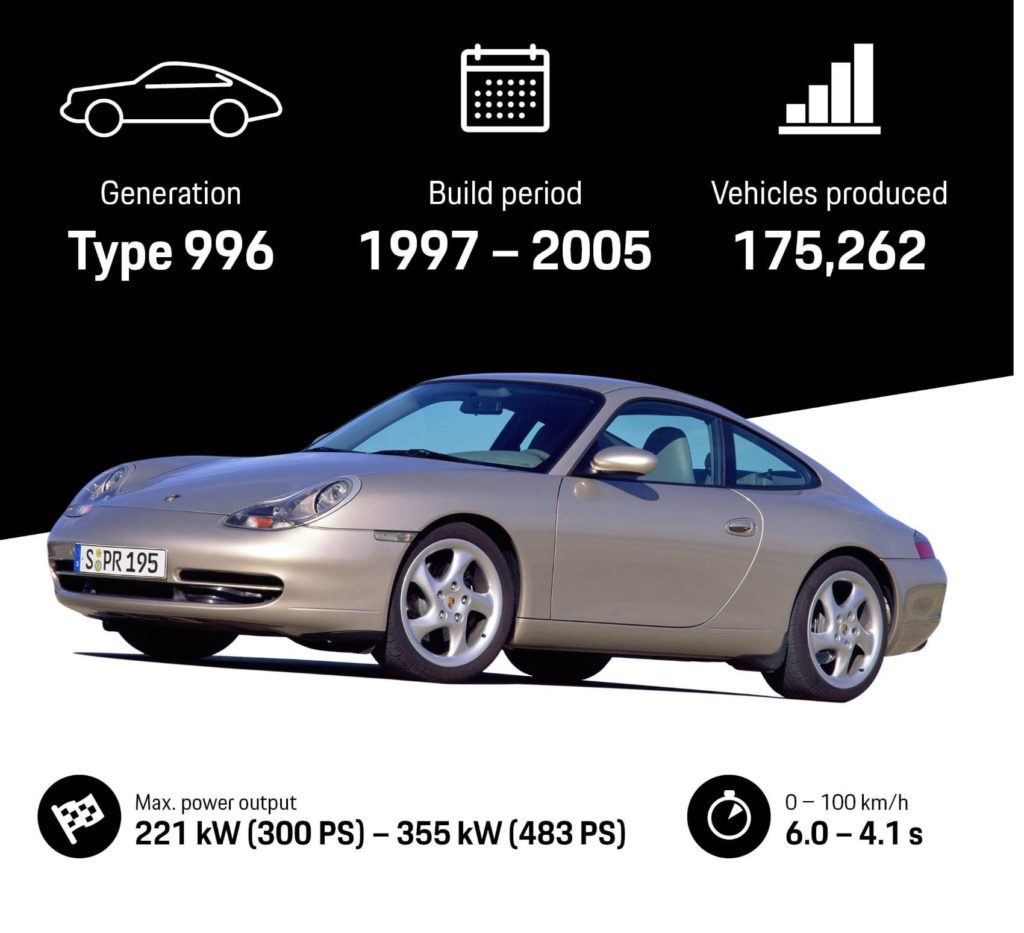
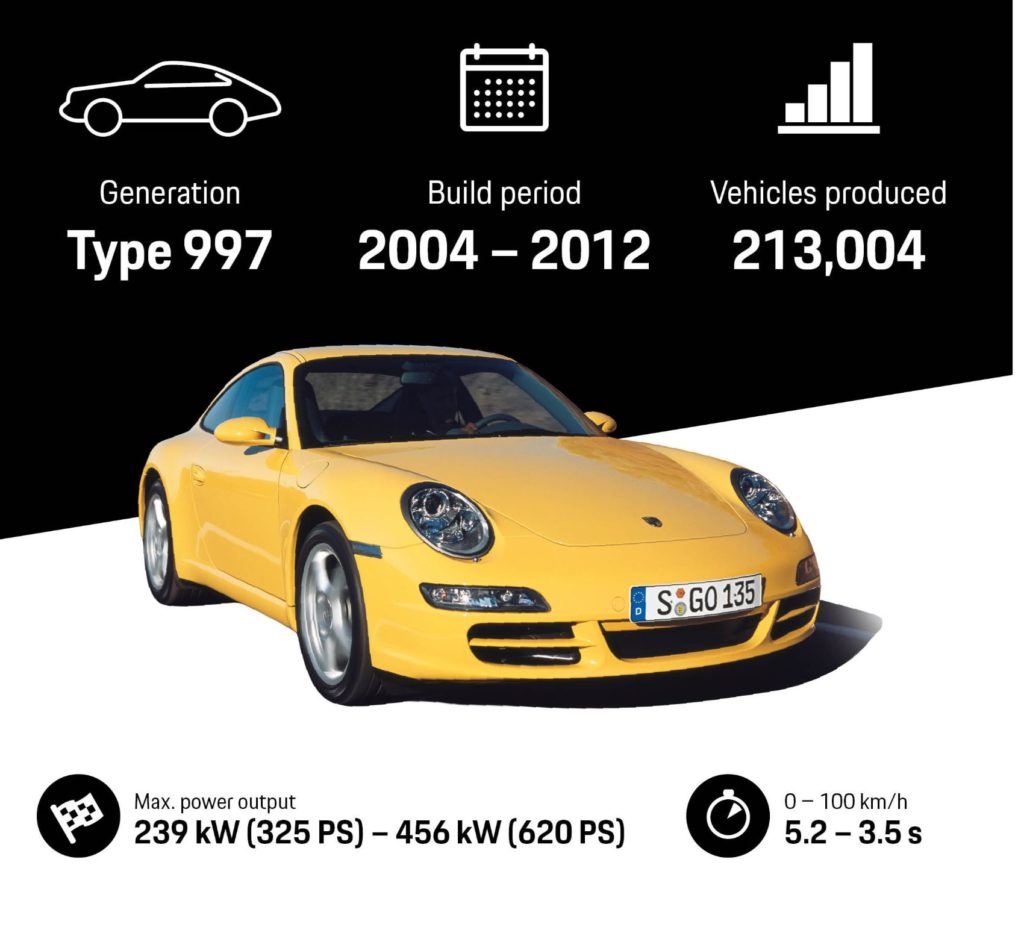
Porsche 911, type 991 graphic.
Graphic: Porsche Cars North America, Inc.

Essential Foundations

At the time, Porsche’s Dynamic Chassis Control (PDCC) was a key element of the Cayenne and Panamera. The technology is, as Porsche describes, an anti-roll system that suppress lateral body movement during cornering. PDCC also helps a given vehicle remain stable over choppy or uneven pavement. For Cayenne and Panamera buyers, this meant a more composed and comfortable ride; a good and worthwhile benefit – but slapping PDCC on a 911?

Not so fast.

PDCC is standard today on all 911 Turbo S models, but prior to 2011, there was simply no room. The Cayenne and Panamera could house it with their larger architectures. The 911 not so much. Chassis concerns aside, there was what one might call a philosophical argument, or the “we are going to do what?!” discussion.

Last Porsche 911 of the 991 generation comes off the production line in Baden-Württemberg, Stuttgart.
Last Porsche 911 of the 991 generation comes off the line in Baden-Württemberg, Stuttgart. Photo: Porsche Cars North America, Inc.

Longer, Wider & Faster

Author Randy Leffingwell, one of the most respected automotive historians today, documents this in his book Porsche 911: 50 Years. Beginning on page 179, August Achleitner, the 911’s longtime Chief Engineer, recounts the internal conversations to Leffingwell over the inclusion of PDCC. In so many words, Porsche’s engineers could not believe they were seriously considering Cayenne technology for the 911.

Achleitner reveals that, as far back as 2006, they batted around the idea of a longer chassis. At the time, Porsche was developing their PDK transmissions, and there was some thought a longer wheelbase would be necessary. Although considered, the 997 generation didn’t see the wheelbase increase when it hit the market. However, Achleitner did, as Leffingwell writes, “file the idea away” for a later date.

Fast forward to 2011 for the dawn of the 991 generation. The 911’s wheelbase has now grown four inches, enough for PDCC to take up residence. To say the longer wheelbase merely accommodated PDCC, however, is only part of the story (and Leffingwell tells it wonderfully in his book!) The 991’s longer wheelbase and wider track meant the new generation was faster around the Nürburgring than the 997; 14 seconds faster to be exact, but as Achleitner tells Leffingwell in Porsche 911: 50 Years “only four of those 14 come from PDCC.”

The longer wheelbase and wider track made up the additional 10 seconds.
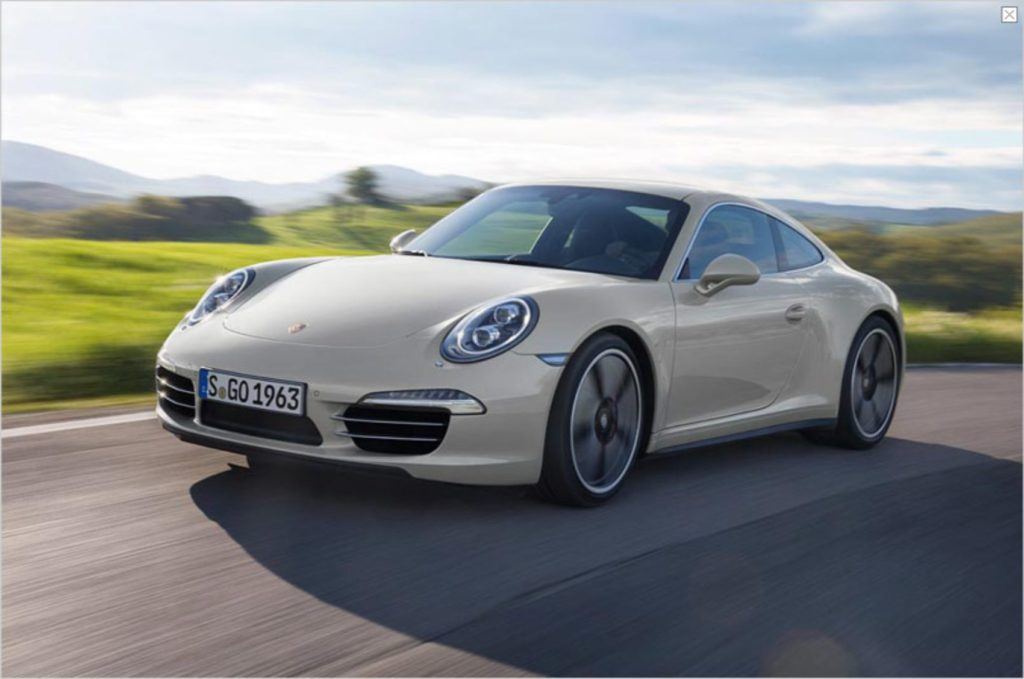
Porsche 911 50th Anniversary Edition
Porsche 911 50th Anniversary Edition. Photo: Porsche Cars North America, Inc.

991 Generation: An Ideal Platform

The Cabriolet followed in the spring of 2012 with a distinct character trait that might be easy to overlook. Despite being a convertible, the magnesium bows made it possible to achieve a more contoured, seamless and ultimately, coupe-like curve for the roof. Near the end of 2012, the 911 Targa arrived. Like the original Targa, the new one retained the signature “wide hoop” instead of B-pillars. The top section of the roof could be moved automatically and stored in the rear.

In September of 2013, Porsche showcased a 50th anniversary edition of the 911 at the International Motor Show in Frankfurt. This special 911 was a rear-drive coupé with a flat-six engine that made 400 horsepower. Only 1,963 were made in accordance with the car’s 1963 debut. Given the 911’s stature and legacy, a special edition was fitting for the golden anniversary, if not outright expected. What may not have been anticipated, however, is how well the 991 generation lent itself to special models. By Porsche’s own admission, it was the ideal platform.
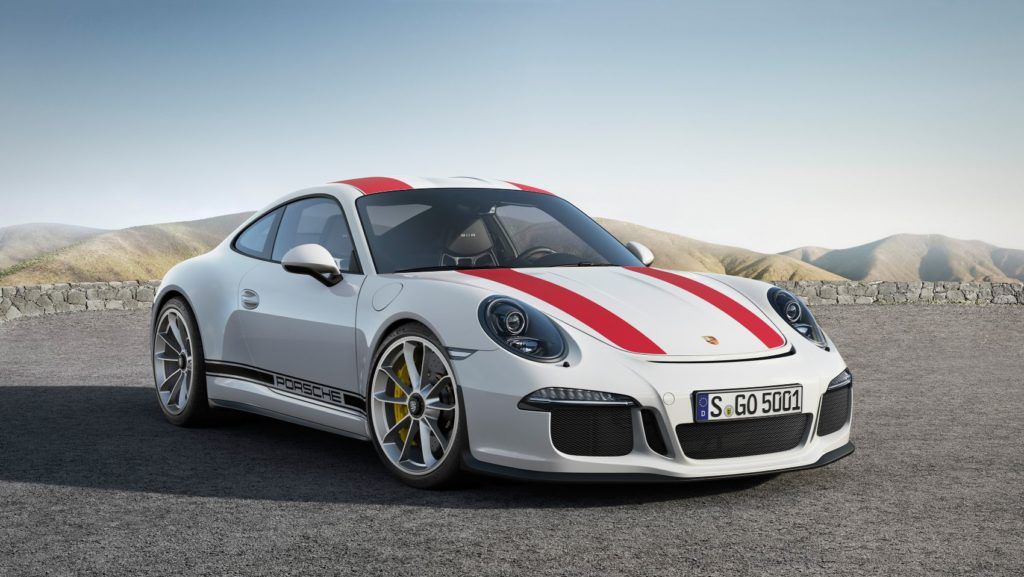
2019 Porsche 911 R
2019 Porsche 911 R. Photo: Porsche Cars North America, Inc.

Off To The Races

At the Geneva Motor Show in March of 2016, the 911 R was the belle of the ball. This special 911 had only the bare essentials: everything that wasn’t absolutely needed was tossed overboard. The 911 R, which payed homage to its 1967 predecessor, had to be light (and it was at 3,020 lbs.). The back seat was pitched, along with the air conditioning and radio. Porsche’s Ceramic Composite Brakes stayed put. And there was that four-liter, naturally-aspirated flat-six engine that pumped out 500 horsepower.

Two other purist sports cars with classic predecessors made their debut a year later: the 911 Carrera T and the 911 GT3. In 2017, Porsche also unveiled the 700-horsepower 911 GT2 RS. As 2018 arrived, the 911 GT3 RS demonstrated just how far Porsche could go in terms of engineering and design. The front and rear fascias of the GT3 RS were polyurethane, whereas the front trunk lid and fenders were carbon fiber. The roof was magnesium. A four-liter, naturally-aspirated flat-six engine delivered 520 horsepower and 346 lb-ft. of torque and could tolerate a red line of 9,000 rpm.

Translation: light and fast.
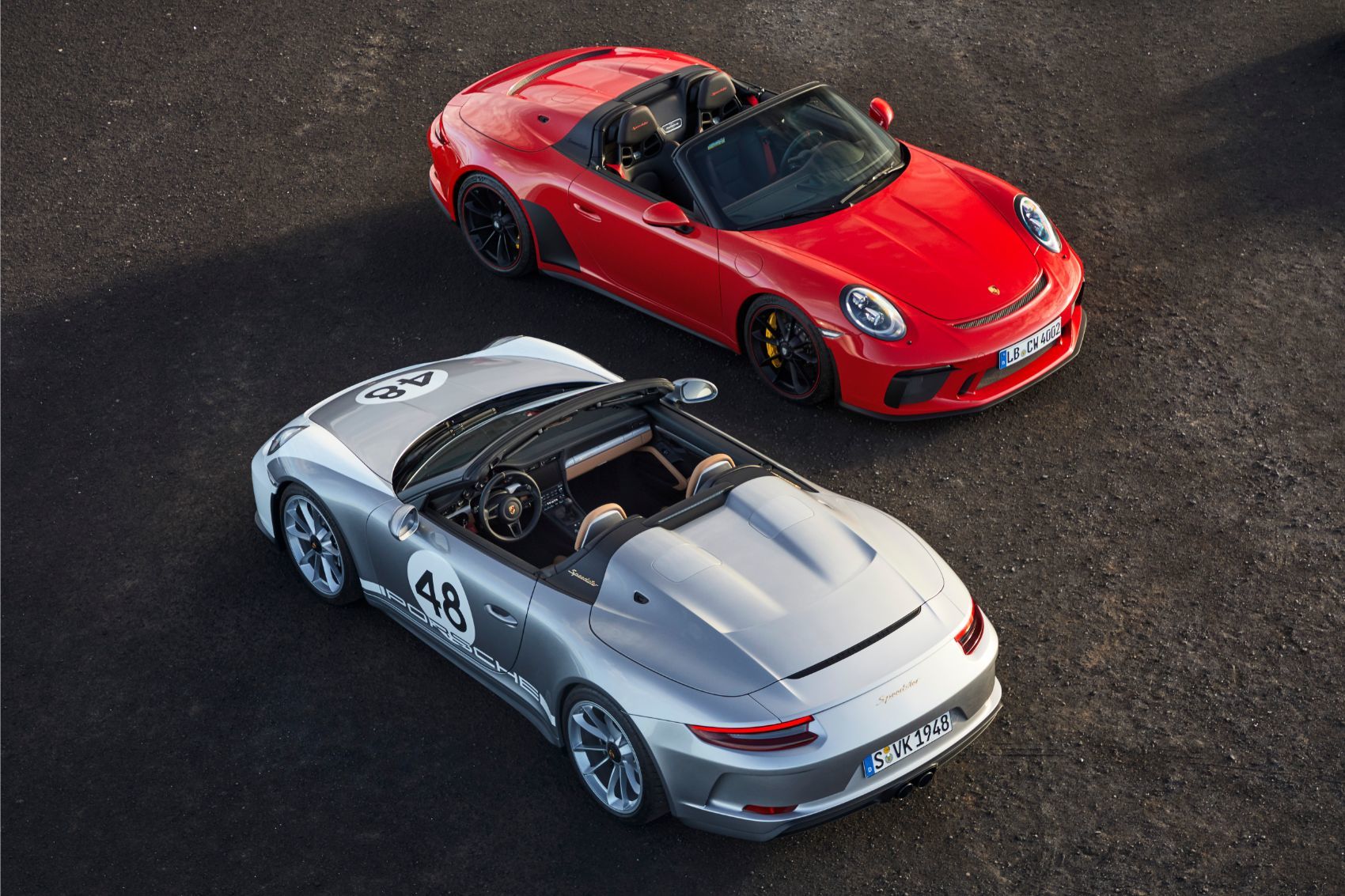
2019 Porsche 911 Speedsters
2019 Porsche 911 Speedsters. Photo: Porsche Cars North America, Inc.

Bittersweet Symphony

At the end the 991 generation stands the 911 Speedster, sharing the same impressive red line as the GT3 RS. The naturally-aspirated, four-liter flat-six engine strikes again, this time with 502 horsepower and 346 lb-ft. of torque. Living up to its Speedster name, the two-seater hits 60 mph in 3.8 seconds and tops out at 192.

Now it seems the 991 generation rides into the sunset just as quickly as it arrived. The current 911 Speedster is the last of the 991 generation to see production, but a model fitting enough to carry the final torch for the most extensively developed 911 in history. Like its ancestor, the 1948 356 No. 1 Roadster, Porsche says the 911 Speedster will become an ambassador of the brand. Still, it’s a bittersweet final chapter for fans and employees alike.

“The 911 replaced the 356 in 1963 and, in the decades that followed, our rear-engine model grew into an unrivaled sports car icon. The 991 generation in particular has set new standards in terms of performance, drivability and efficiency,” explained Michael Steiner, Chief Research and Development Officer, Porsche AG. “It fills me with pride, as well as a touch of sadness, to have to send it off into retirement. For myself, I can say that the 991 has given me enormous pleasure.”

Carl Anthony is Managing Editor of Automoblog and resides in Detroit, Michigan. He serves on the Board of Directors for the Ally Jolie Baldwin Foundation, and is a member of the Midwest Automotive Media Association and the Society of Automotive Historians. Anthony has worked in experiential marketing roles for Fiat Chrysler Automobiles, Ford Motor Company, General Motors, Mercedes-Benz, Honda, Volvo, and Local Motors over the years. 

Porsche 911 Through The Years Gallery
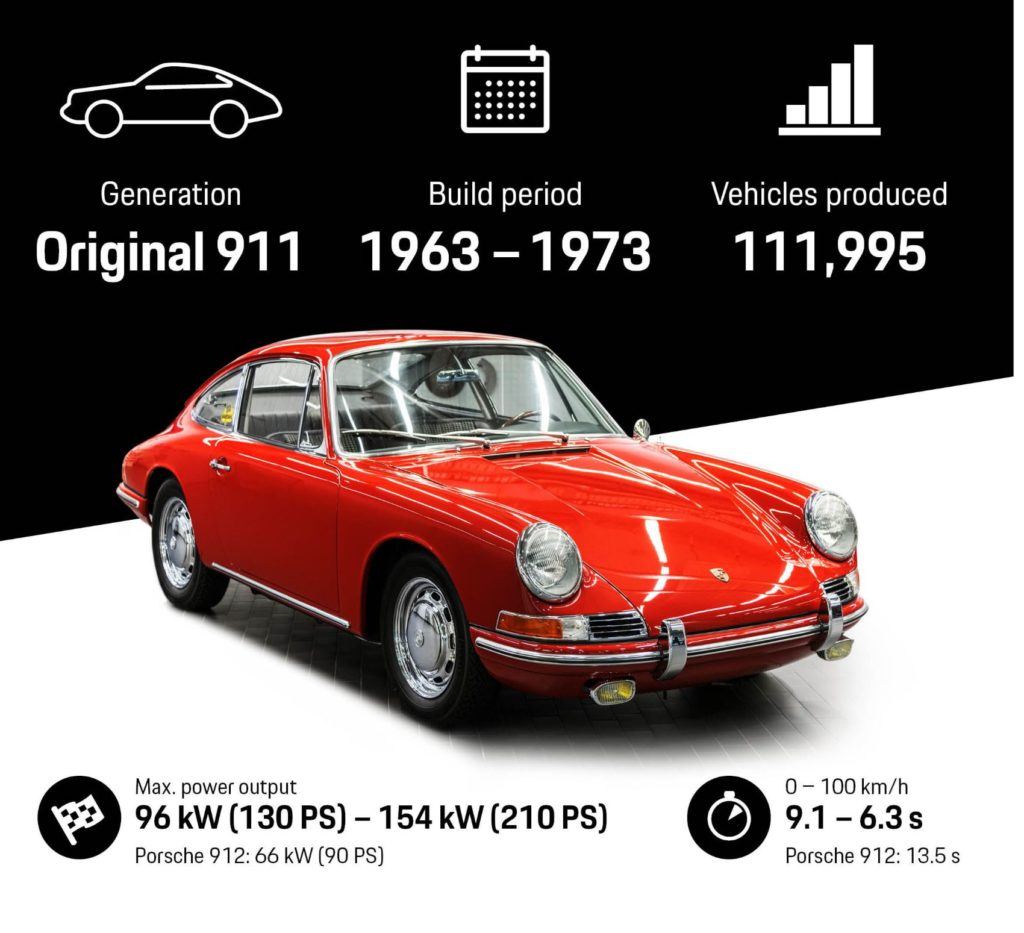
Photos, Graphics & Source: Porsche Cars North America, Inc., Porsche 911: 50 Years by Randy Leffingwell, published by Motorbooks, October 2013.

Original article: An Era Ends: Final Porsche 911 From The 991 Generation Assembled


from Automoblog https://ift.tt/39zVWPY

Saturday, 4 January 2020

Holy smoke! A radical BMW K1600 B from CW Zon

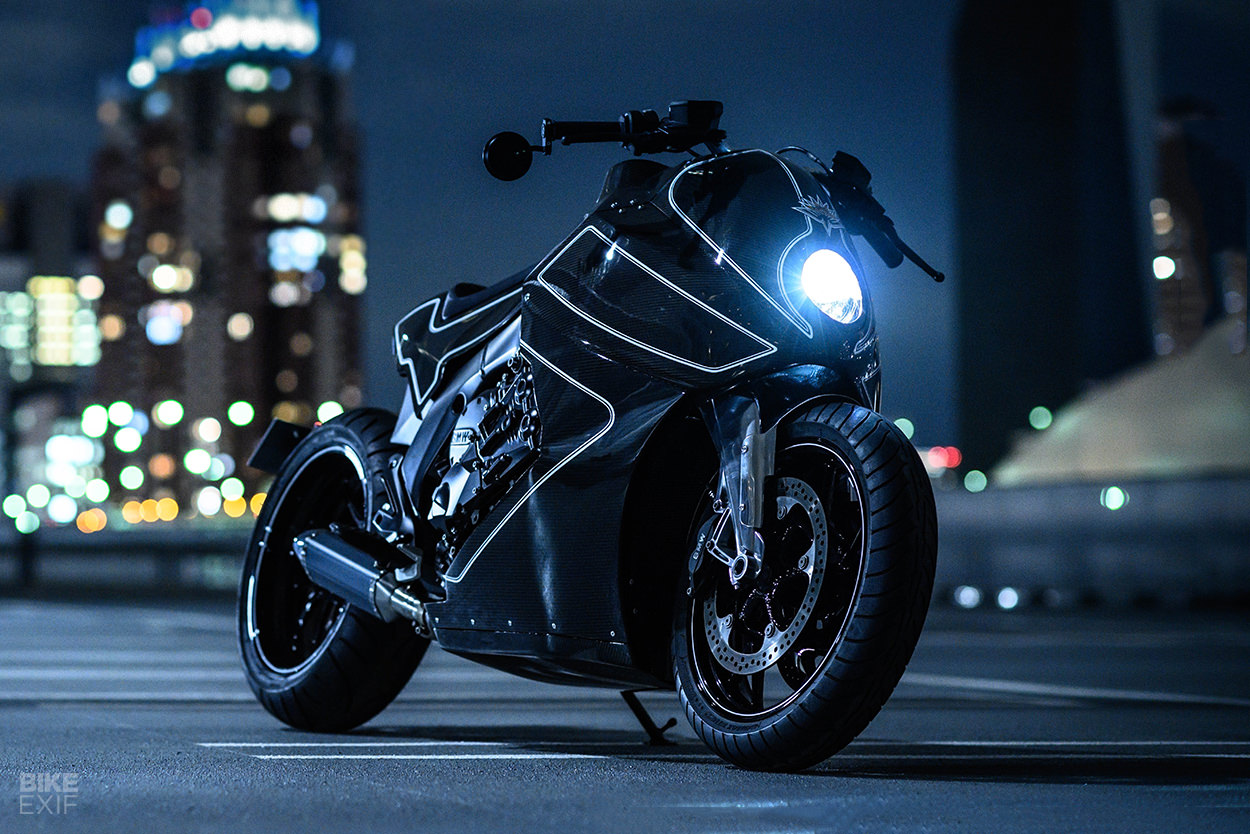
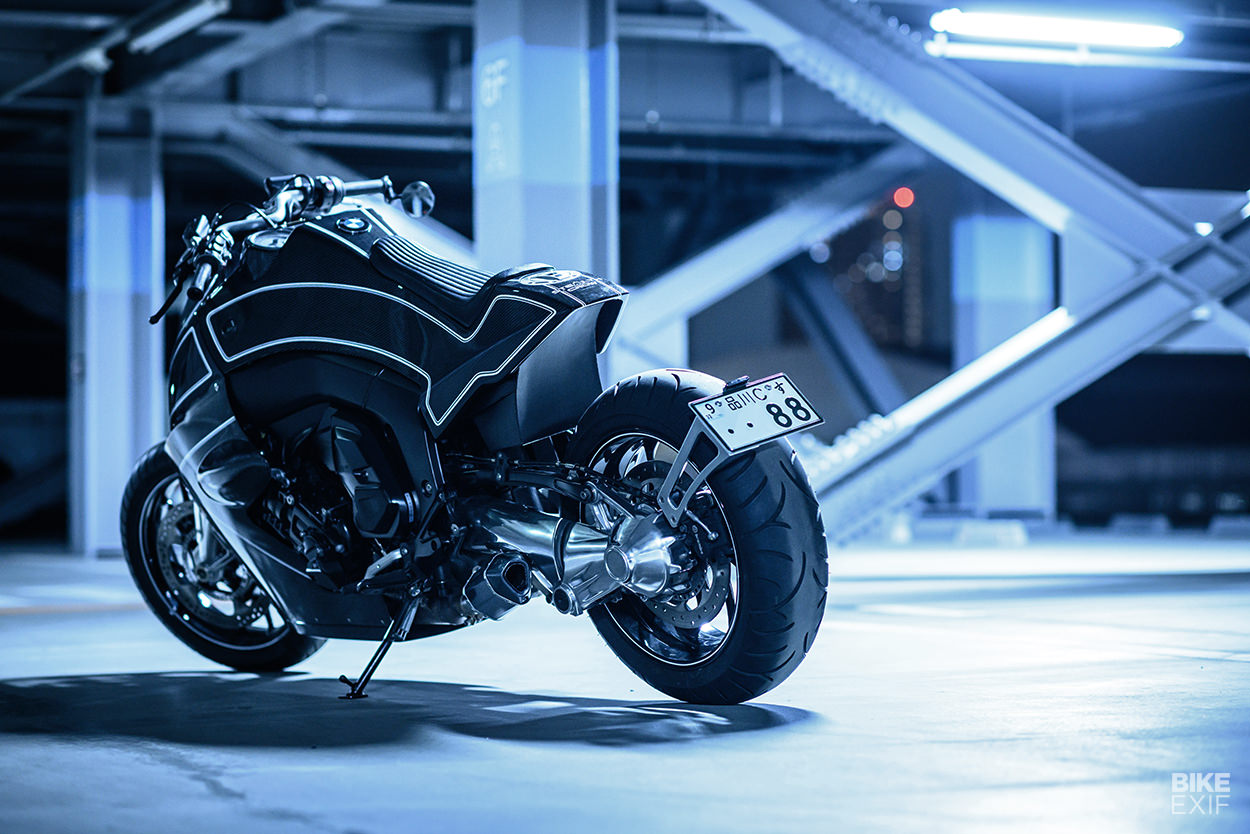
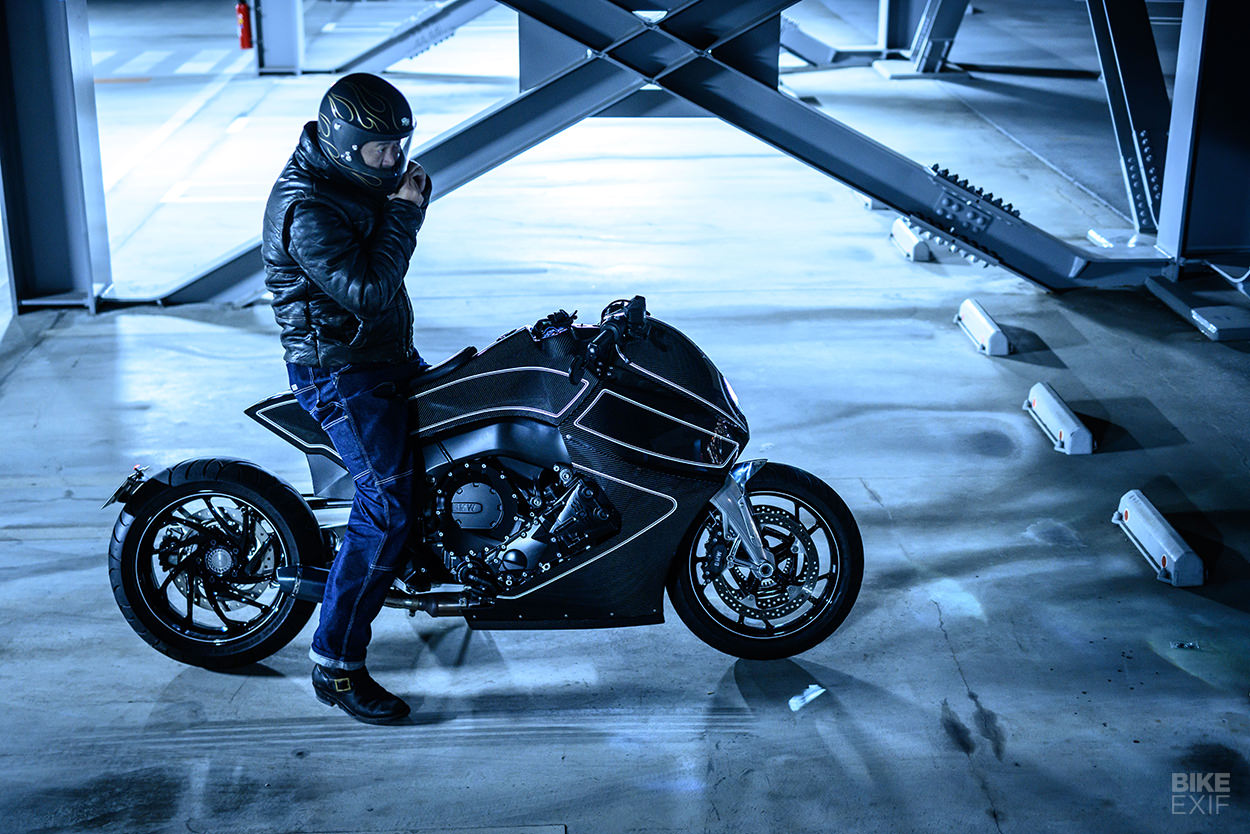
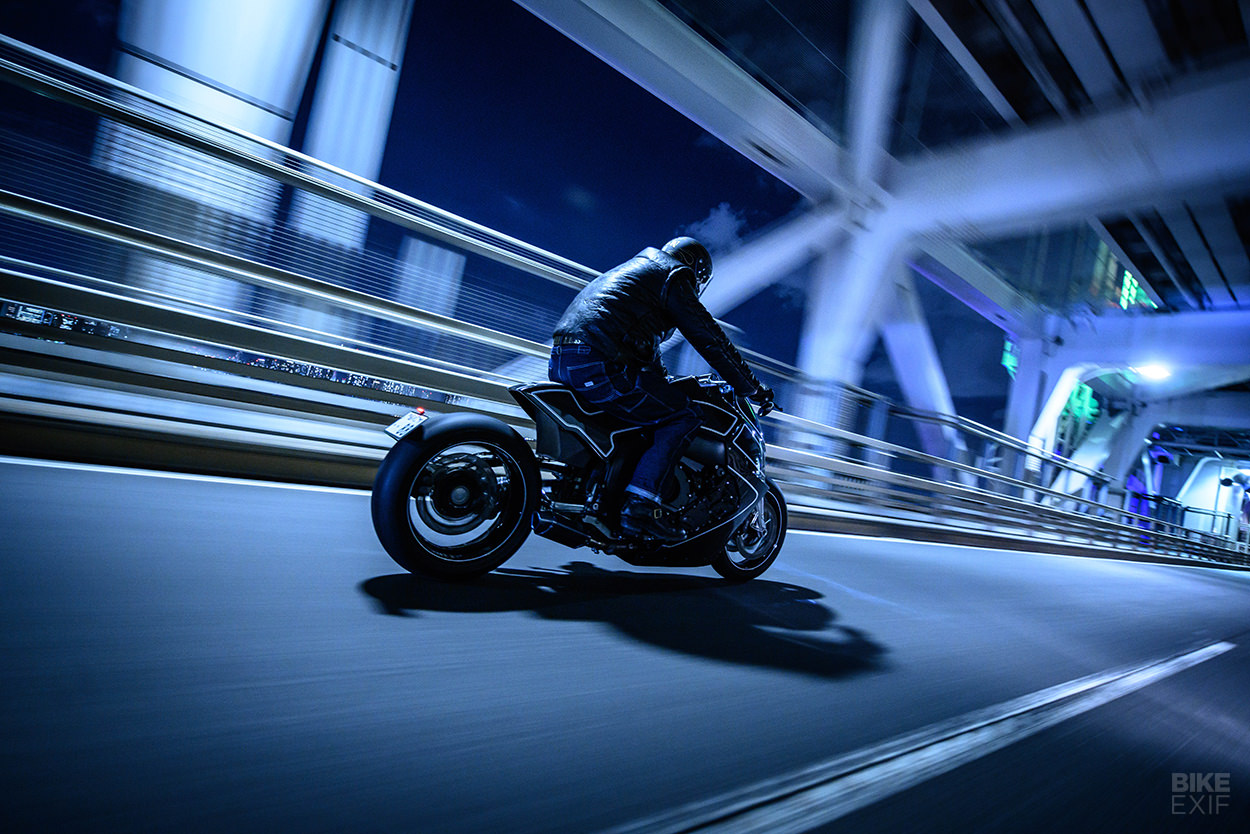
BMW K1600 B by Custom Works Zon
The BMW K1600 B is both odd and magnificent. Odd, because the ‘B’ stands for ‘Bagger,’ when it’s really just a low-slung variation of the brand’s popular K1600 GTL tourer. Magnificent, because it’s a totally bananas ride.

Powering it is a 1,649 cc inline-six, which makes 160 hp and absolutely howls at full chat. It sounds and feels like nothing else out there, and it doesn’t take long to get up to speed either (I’ve ridden the K1600 B, and can confirm).

BMW K1600 B by Custom Works Zon
This absolutely wild custom from Custom Works Zon looks like it’s ridden straight out of a Batman movie. It takes the K’s unique personality, and meshes it with radical new looks and ergonomics.

Based in the Shiga Prefecture in Japan, builders Yuichi Yoshizawa and Yoshikazu Ueda attracted global attention in 2018 with their BMW R18 concept ‘Departed,’ which debuted at the Mooneyes show. They call this latest BMW ‘Stealth Crow,’ and describe it as “a bolt-on custom that is easy and cool.”

BMW K1600 B by Custom Works Zon
It’s a flippant statement that belies how hard this custom would have been to pull off. But everything you see here bolts on to the stock frame. The idea, according to Yoshizawa-san, is to be able to replicate and export the parts for customers to modify their own K1600 Bs.

“I think this is an opportunity to take Zon’s custom motorcycles around the world,” says Yuichi.

BMW K1600 B by Custom Works Zon
With that goal in mind, CW Zon took a leap of faith and purchased a 2019-model K1600 B with their own money to base the project on. That’s right, this project had no client—just a couple of Japan’s top customizers with a zany concept.

“The concept of the design and tuning is a luxury racer,” Yuichi explains. “The image of a quickly flying crow, like a stealth machine.”

BMW K1600 B by Custom Works Zon
The project took the guys three months to complete, with the hardest part being designing everything to sit on the OEM frame.

In the process, the bodywork went through two iterations: an aluminum set that debuted with the bike at last year’s Mooneyes show, and the final carbon fiber set you see here.

BMW K1600 B by Custom Works Zon
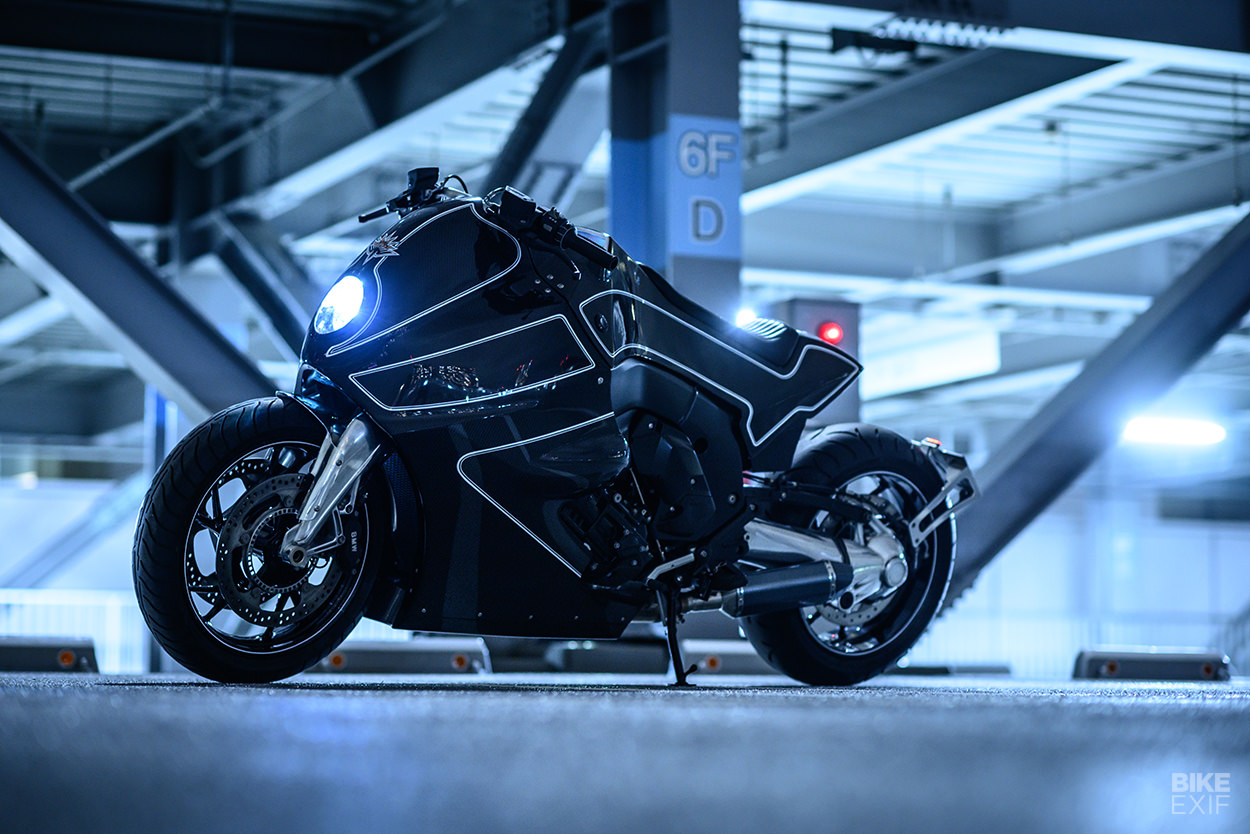
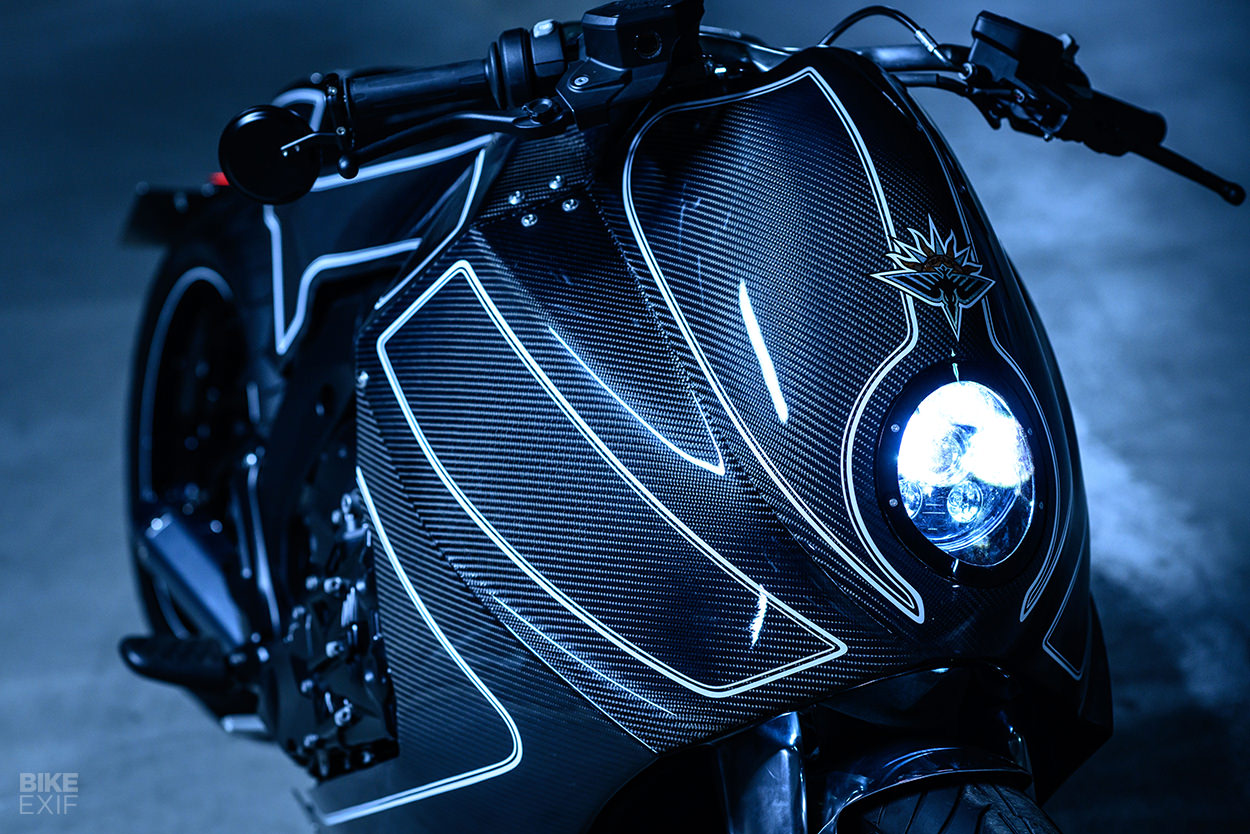
From a distance, the K looks like it’s somehow wrapped in a monocoque structure. But it’s actually covered in multiple panels that sit tightly together. Yuichi and Yoshikazu worked closely with Studio Allica, a nearby custom auto specialist, to create the carbon fiber forms.

It’s a huge departure from the K1600 B’s original silhouette—but it’s also clever how CW Zon have incorporated all the necessary accoutrements.

BMW K1600 B by Custom Works Zon
There’s an LED headlight embedded in the main cowl, and just behind it, a set of custom-made handlebars that mount directly to the steering stem.

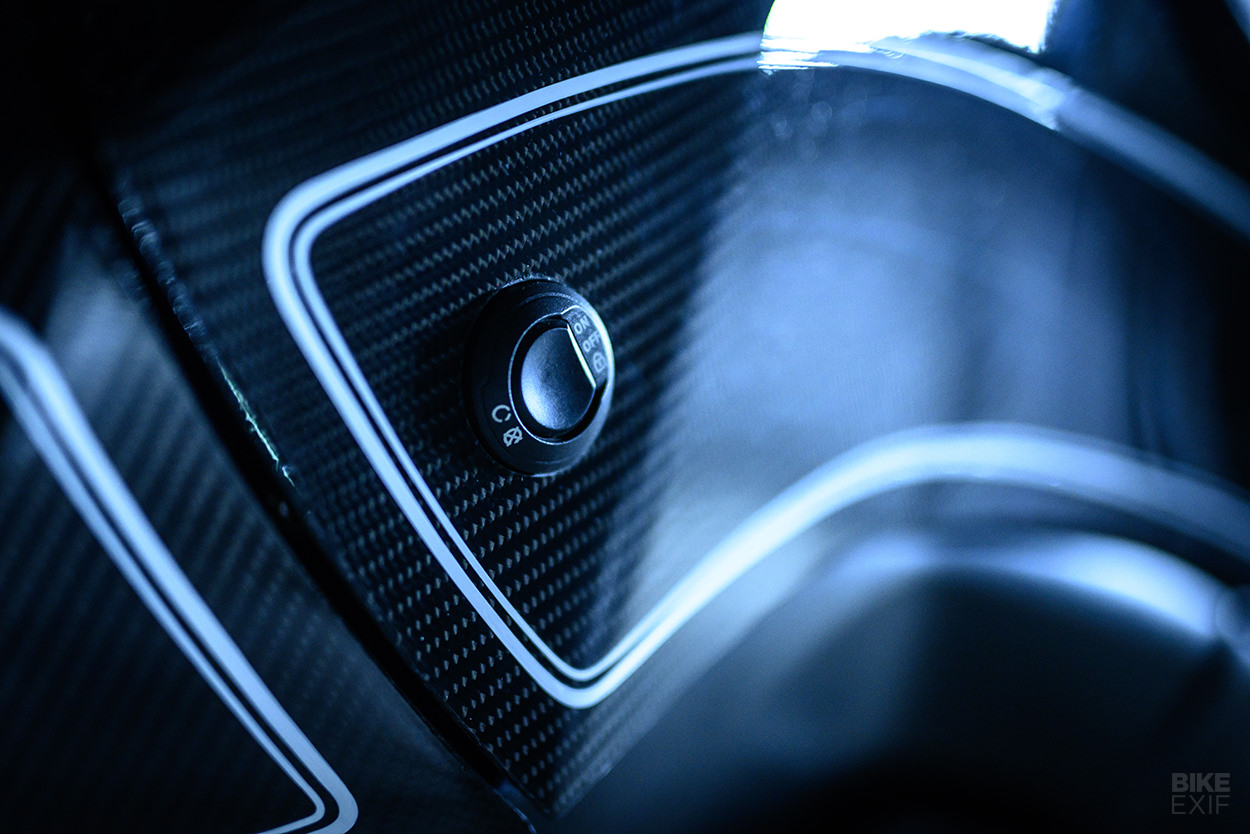
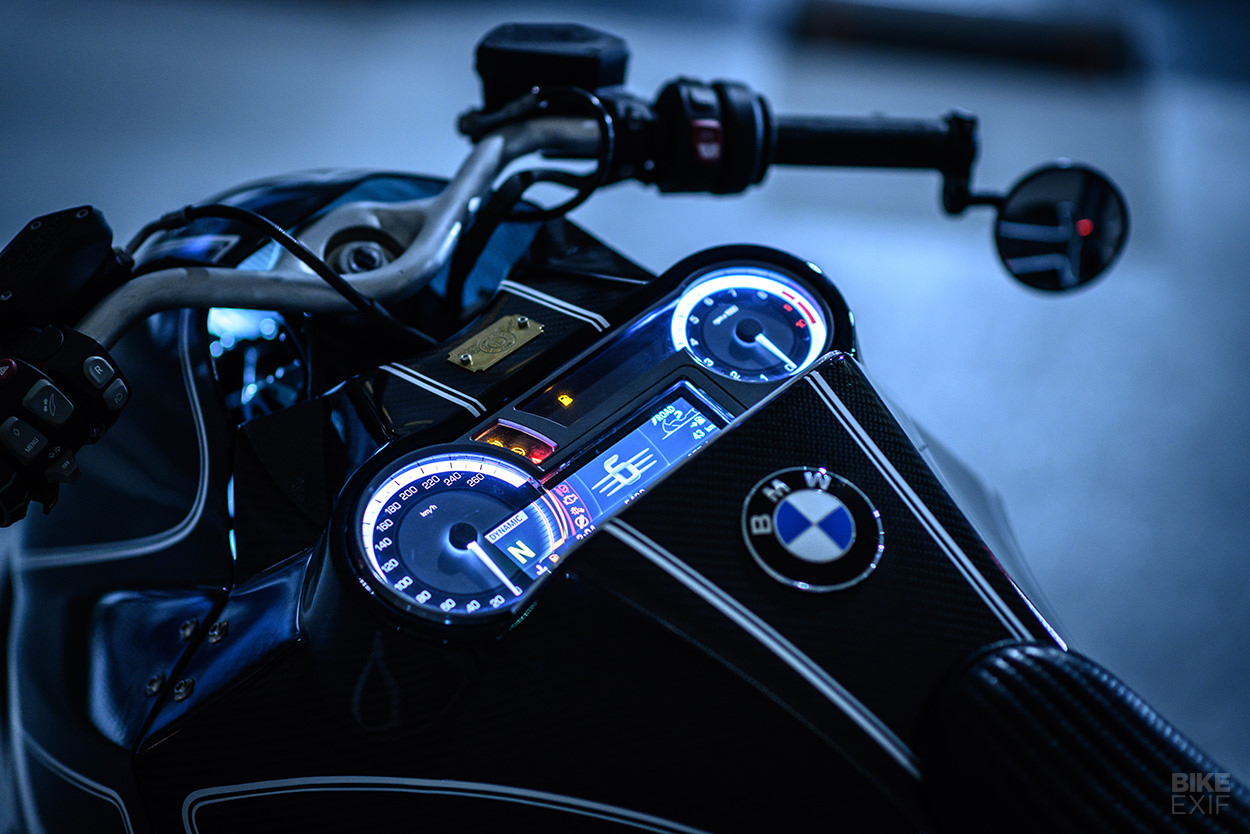
Further back, the original dash has been integrated into the area behind the bars. (The BMW’s keyless start button now sits on the left side of the bike.)

BMW K1600 B by Custom Works Zon
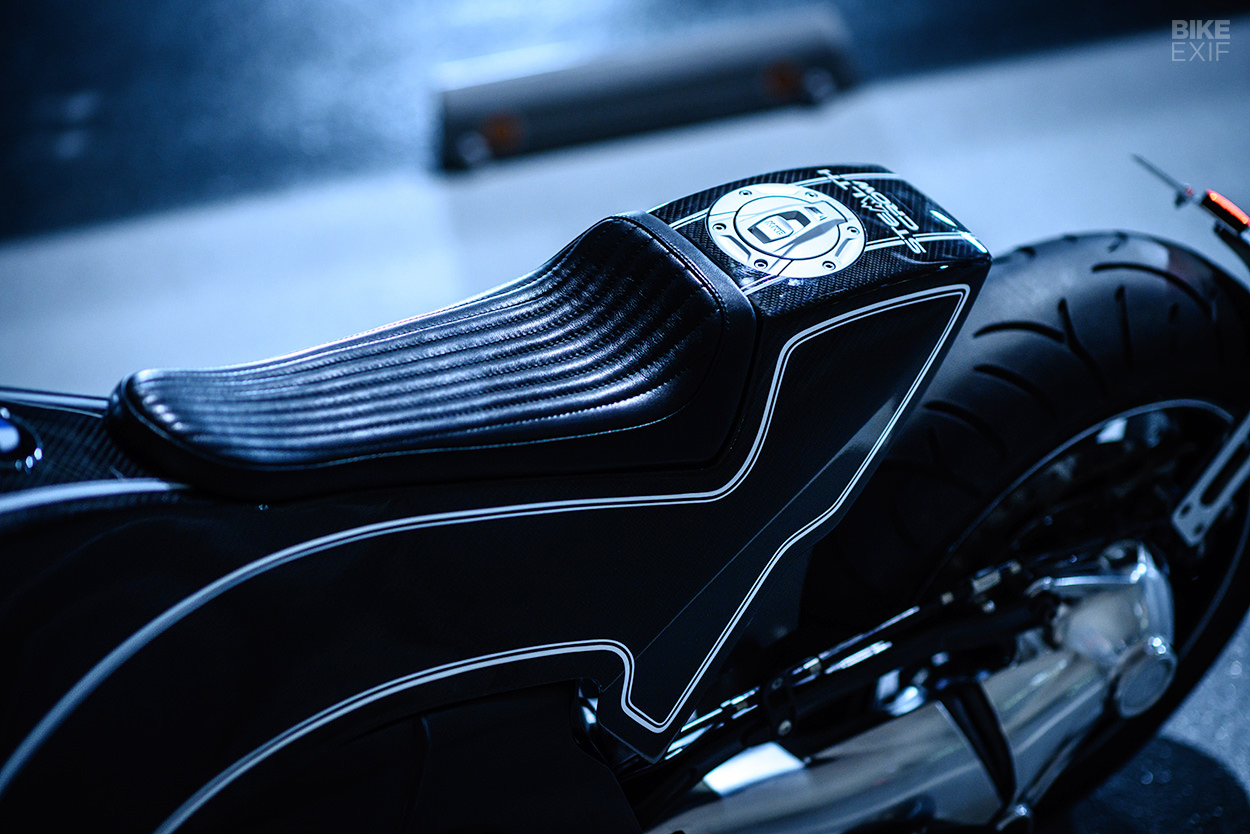
Next up is an original BMW roundel, followed by a slim, pleated seat from Skunk with a subtle kick in the rear.

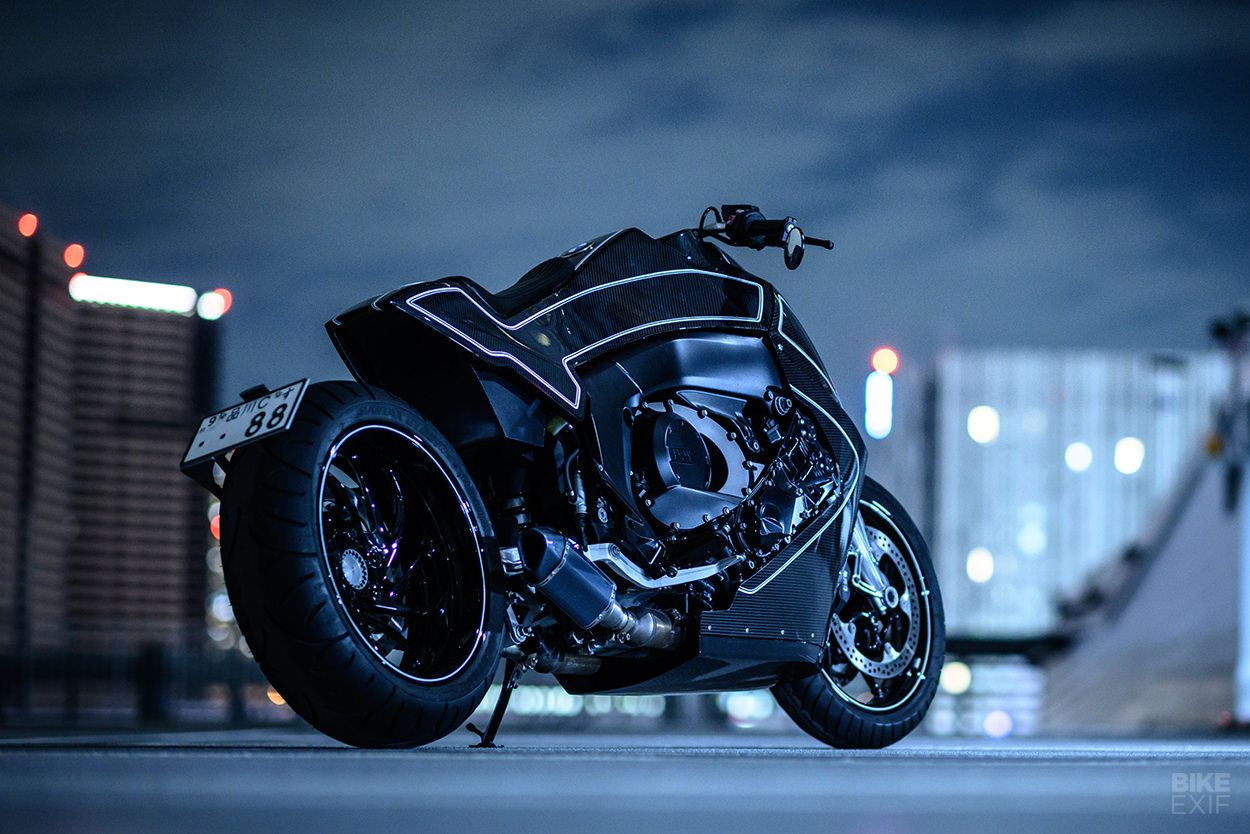
CW Zon have also built a new air intake under the hood, then capped off the stock exhaust headers with a pair of custom, sportbike-style mufflers. The tail end is capped off with the original BMW fuel filler cap, which provides access to a custom-built reservoir sitting under the bodywork.

BMW K1600 B by Custom Works Zon
There are a few smaller details that you might miss at first glance. CW Zon stripped the forks and swing arm of their black finishes, and polished them. Then they fabricated a new front fender, and a bracket out back to hold the plate and taillight.

M&K Custom Signs helped wrap up the build with quintessential BMW double white pinstripes, laid down over the exposed carbon weave.

BMW K1600 B by Custom Works Zon
CW Zon have a habit of building motorcycles that are way ‘out there’—like this Buell S1 Lightning from seven months ago—and Stealth Crow fits the mold. Its stance and riding position are far more aggressive than any other K1600—and it’s surely shed a few pounds too.

Sign us up for a test ride, please!

CW Zon | Facebook | Instagram | Photos by Hiromitsu Yasui | Thanks to Tadashi Kono

BMW K1600 B by Custom Works Zon


from Bike EXIF https://ift.tt/39DVfFs

Friday, 3 January 2020

2020 Toyota Tundra TRD Pro Review: Nice But Not The Best Truck Today

In Our Editorial Opinion:
The 2020 Toyota Tundra is a solid truck, but it's the oldest now in the segment and in need of a complete redesign. We like the Tundra - we really do - but consumers who are researching trucks may find GM, Ford, and Ram have better options. Toyota fans will likely stick with the Tundra, but this current model will do little to sway a Ford or Chevy buyer.
Exterior Styling
75
Interior Layout
85
Driving Dynamics
80
Safety & Tech Features
91
Everyday Functionality
80
Pros
Roomy Interior
Safety Technology
Off-Road Capability
Cons
Fuel Mileage
No Heated Seats
Outdated In General
82

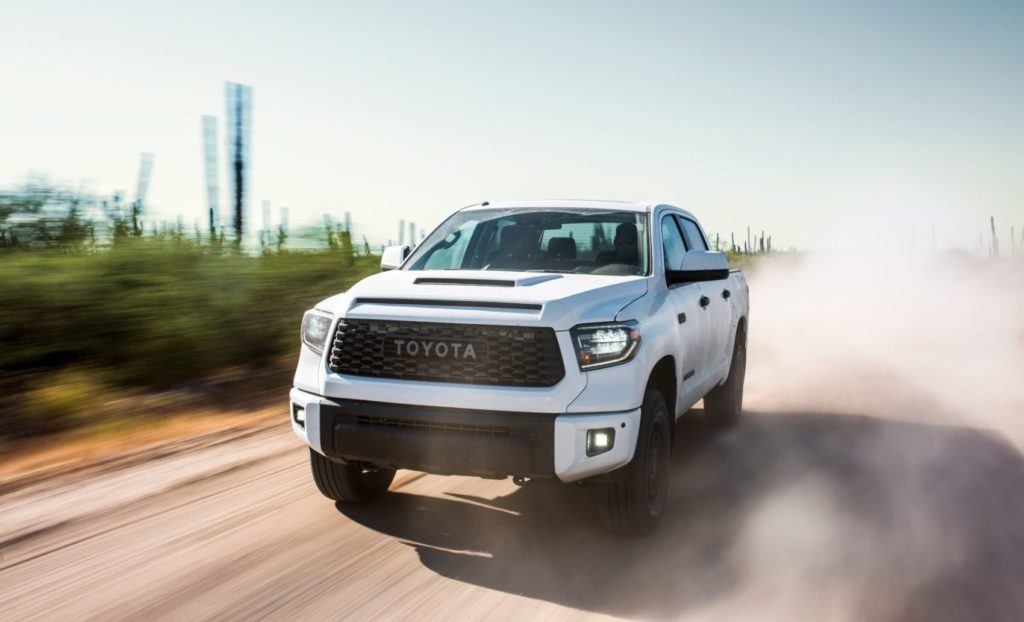
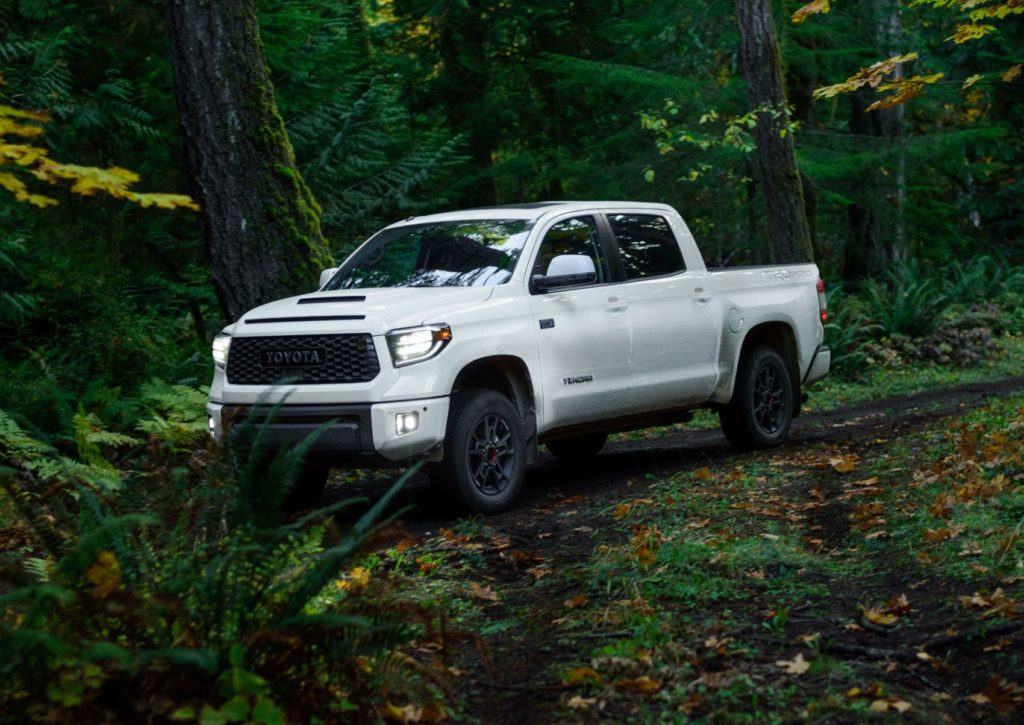
The 2020 Toyota Tundra TRD Pro is for those who want to have a little more fun in the dirt. Off-road enthusiasts will want this big truck for its extra off-road treatments and improved off-pavement performance. It’s the perfect truck for hunting, outdoor recreation, and getting off the beaten path. This week, we did plenty of that with the 2020 Toyota Tundra TRD Pro CrewMax.   

Toyota Tundra: What’s New For 2020?

The Toyota Tundra gets an upgraded audio system that now includes Apple CarPlay and Android Auto. The TRD Pro is now offered in either a Double Cab or CrewMax configuration, while the SX Package for the SR5 now includes CrewMax models. The 4.6-liter V8 is no longer available. 

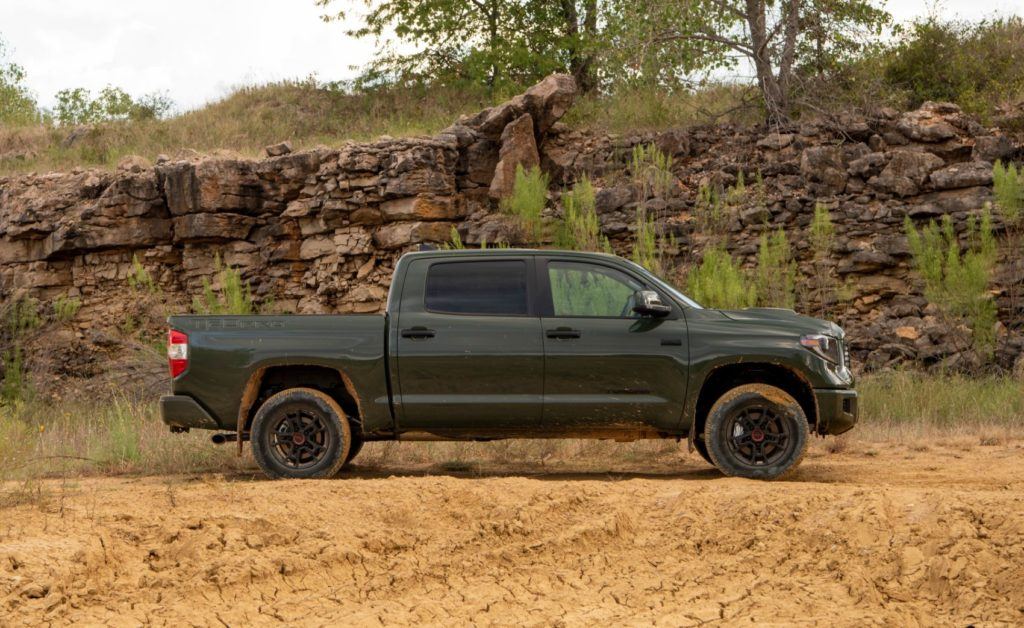
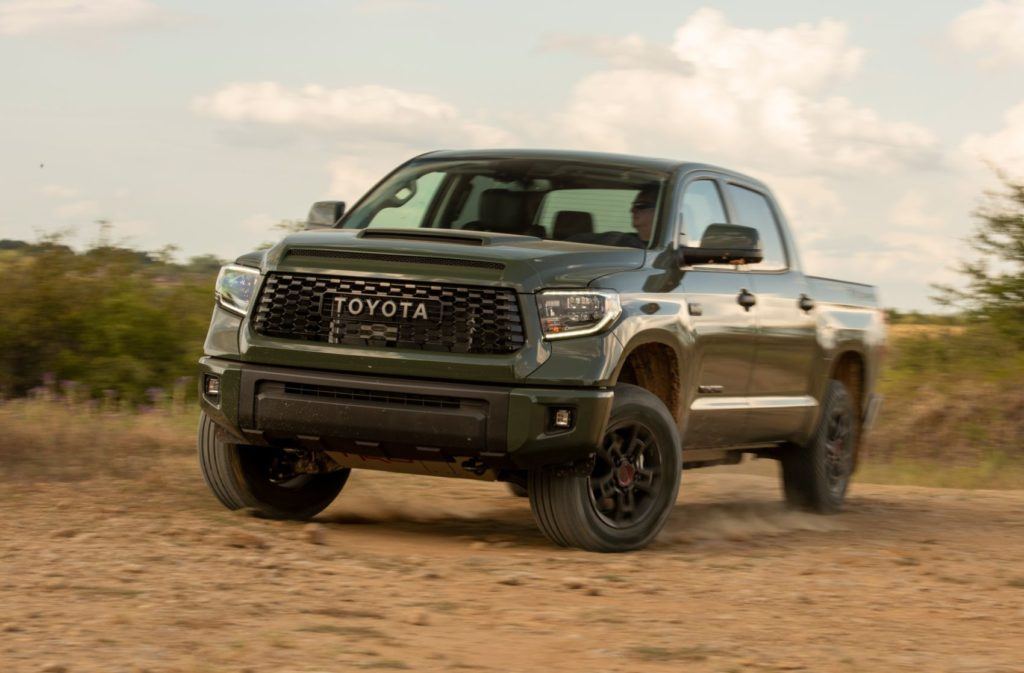
The Tundra TRD Pro is available in Super White, Midnight Black Metallic, Magnetic Gray Metallic, and the TRD Pro-exclusive Army Green for 2020. Aside from that, very little is new about the Toyota Tundra. It’s now the oldest truck in the segment.

2020 Toyota Tundra TRD Pro in Army Green.

Features & Options: Tech & Safety

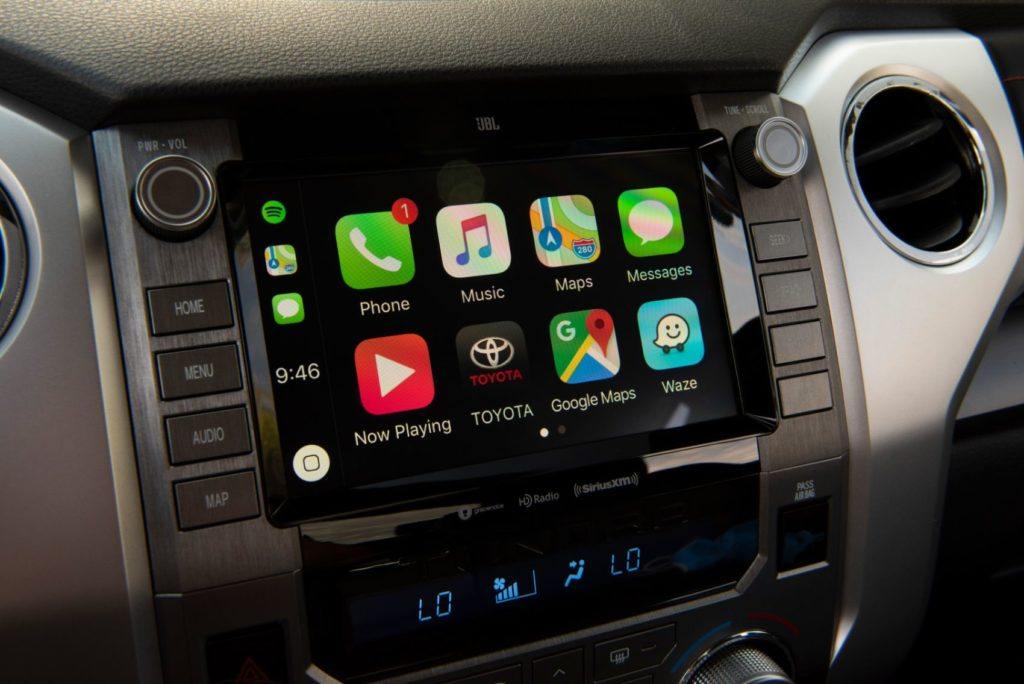
Standard equipment on the 2020 Toyota Tundra TRD Pro includes an integrated trailer brake controller; an upgraded eight-inch infotainment interface; Bluetooth; and Apple CarPlay and Android Auto.

The TRD Pro also includes a number of advanced safety features as part of the Toyota Safety Sense-Pedestrian (TSS-P) package, which is standard on all Tundras for 2020. It includes forward collision warning with pedestrian detection; blind spot monitor and rear cross traffic alert; lane departure warning; automatic high beams; and adaptive cruise control.

Features & Options: Off-Road Tools

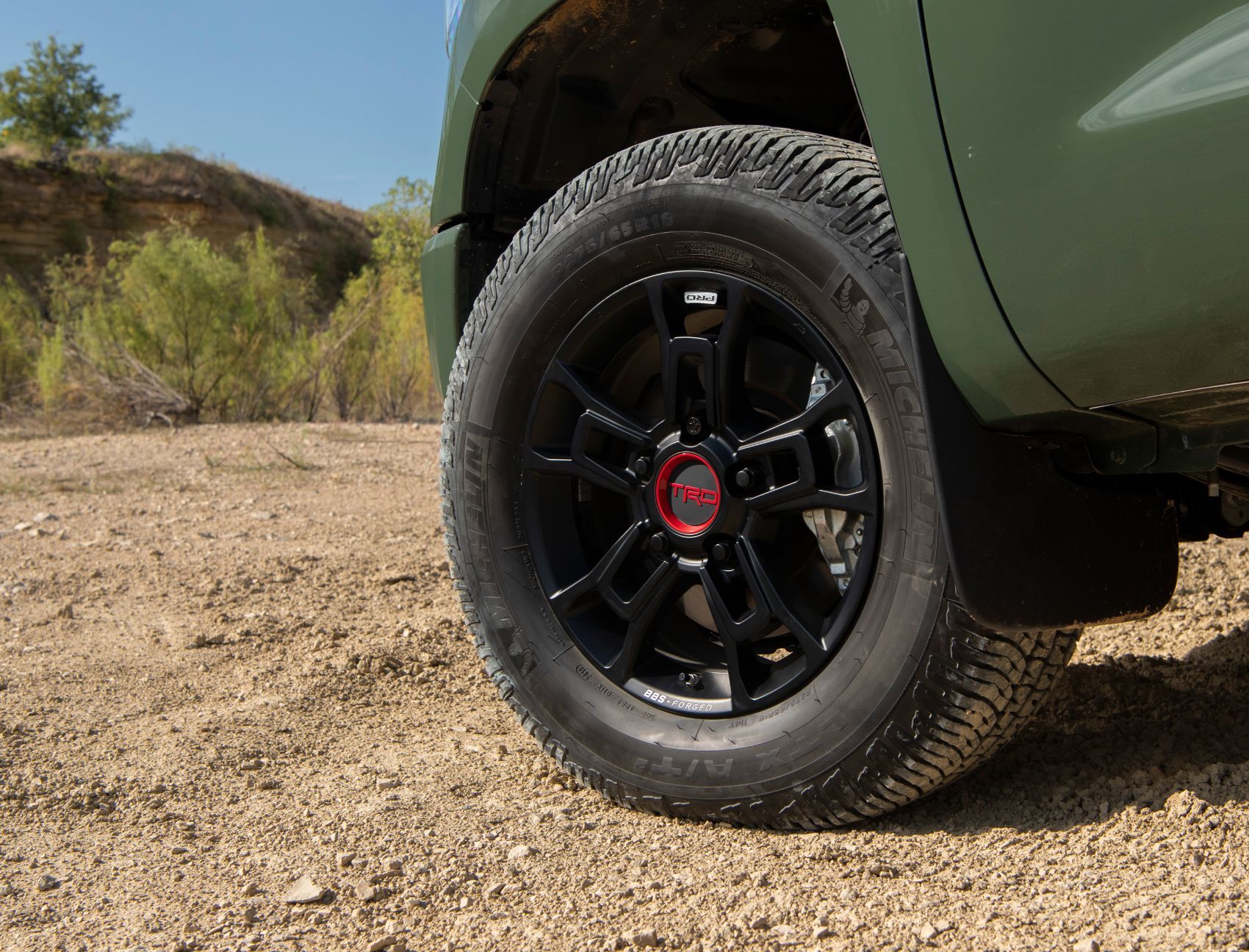
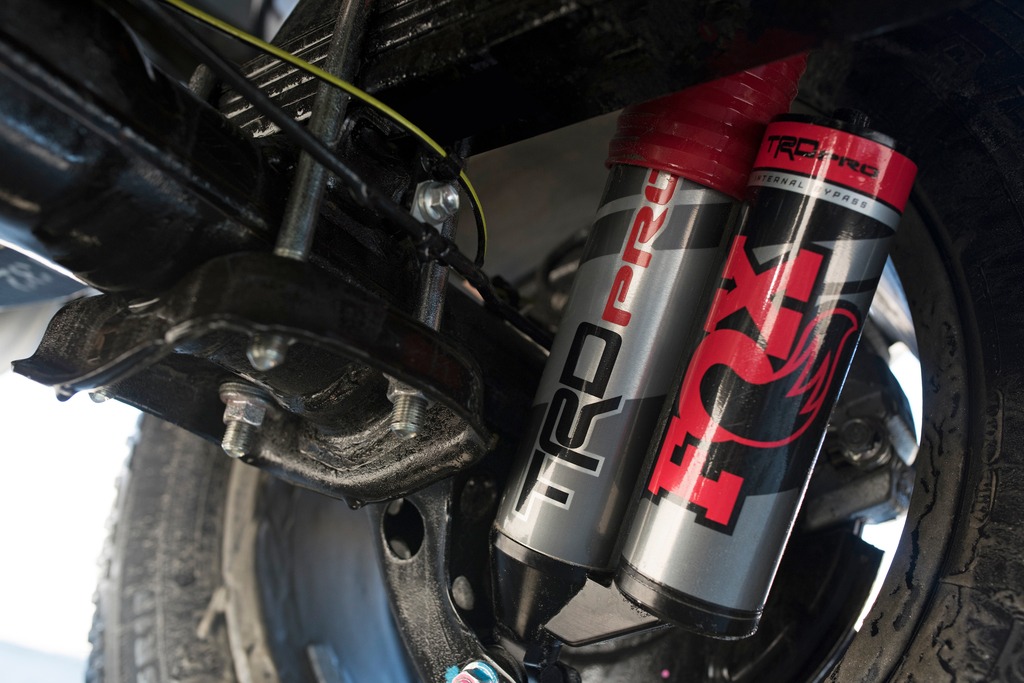
The TRD Pro package gets you extras like leather front bucket seats with red stitching, a tilt-and-telescoping steering wheel, hood scoop, and a larger 38-gallon gas tank. Off-road goodies on the TRD Pro include a special suspension with larger aluminum Fox Internal Bypass shocks (all four wheels); Rigid Industries fog lights; lighter BBS forged 18-inch wheels; TRD exhaust with black chrome tips; and a front skid plate.

Compared to other Tundra models, the TRD Pro suspension increases rear-wheel travel by more than two inches.

2020 Toyota Tundra TRD Pro
The 2020 Toyota Tundra RD Pro starts at $48,505.

How Much Does The 2020 Toyota Tundra Cost?

Total MSRP, including destination, for our 2020 Toyota Tundra TRD Pro CrewMax test truck: $54,414. By comparison, the 2020 Toyota Tundra starts at $33,425 in the entry-level SR trim. The TRD Pro begins at $48,505.

The SR5 and Limited come in near the middle of the pricing spectrum, starting at $35,095 and $42,120 respectively.

Interior Highlights: Plenty of Space

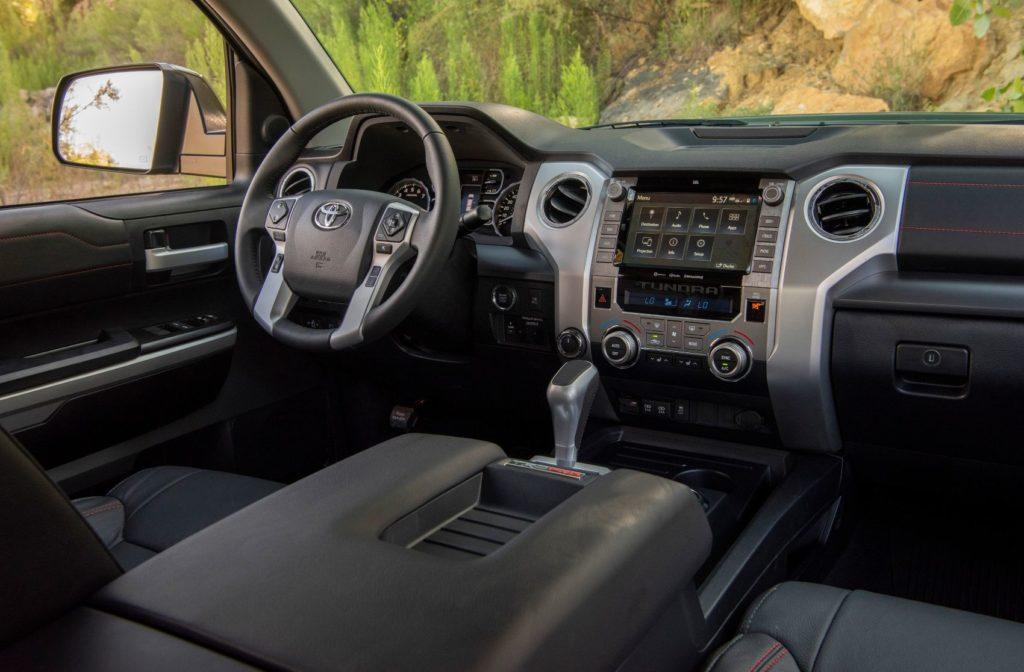
Stepping inside the Tundra reveals a spacious cabin ready to haul five adults and/or kids around with ease. There’s sufficient legroom for every rider, but the CrewMax is definitely the correct choice if you are regularly carrying six-footers in the second row. The leather-trimmed bucket seats are plush and comfy. They feature an attractive red stitching that nicely sets off the black seats and dash.

The rear seats slide and recline, though the backrest reclining angle isn’t too comfortable and the cushions are somewhat low. While the inside is nice overall, the 2020 Toyota Tundra is outdated versus the competition in terms of styling.

2020 Toyota Tundra TRD Pro interior layout.
The 2020 Tundra features High Solar Energy-Absorbing glass. The glass filters UV light to help avoid sun damage to the interior.

Interior Highlights: For Work & Pleasure

The TRD Pro is updated with the larger eight-inch color touchscreen to control the climate, audio, and navigation systems. Even with the touchscreen, the dash’s large knobs can be operated while wearing gloves, something we noticed as temps dropped in Denver this week. Those who use their TRD Pro for work can take advantage of the multiple storage areas inside for tools and electronics.

A premium JBL 12-speaker sound system now comes on Tundra TRD Pro. We cranked up the tunes and sat back to enjoy the ride.

Interior Highlights: Behind The Times

For 2020, the Tundra TRD Pro finally gets keyless entry and push-button start, which also brings remote start capability to the aging half ton. This addition is welcomed, since competitors have offered these features for several years.

One other thing is missing in this spacious cabin: heated seats. We think this is a must in this price range and for going into the high country in the winter. There is tons of room in this Tundra for even the tallest adults, but we would like to see heated seats in this truck. Our passengers on the way to lunch noticed this right away, as they assumed the leather seats were heated.

2020 Toyota Tundra TRD Pro
The 2020 Toyota Tundra TRD Pro has plenty of infotainment features but lacks heated seats.

2020 Toyota Tundra: Engine & Powertrain

The 2020 Toyota Tundra TRD Pro gets one engine, the i-Force 5.7-liter V8, which is synonymous with the Tundra name. The engine produces 381 horsepower (5,600 rpm) and 401 lb-ft. of torque (3,600 rpm). Toyota’s 5.7-liter has an aluminum cylinder block; double overhead-cam heads with four valves per cylinder; and an Acoustic Control Induction System for a broad torque curve. 

The i-Force comes mated to a six-speed automatic with sequential shift technology.

What Is The Gas Mileage of The Toyota Tundra?

EPA fuel economy estimates are 13/17 city/highway and 14 combined for the 2020 Toyota Tundra. Fuel economy is one area where the Tundra really suffers against the competition. Compared to Chevy, Ford, and Ram, Toyota ranks dead last in terms of fuel efficiency.

How Much Can The 2020 Toyota Tundra Tow?

Max towing capacity for the 2020 Toyota Tundra is 10,200 lbs. when properly equipped. The Tundra makes use of engine and transmission oil coolers, and a heavy-duty battery and alternator to help handle heavy loads. All Tundra beds are 22.2 inches deep and, when properly equipped, offer a payload capacity of up to 1,730 lbs.

The TRD Pro offers extra ground clearance and the right suspension setup for extreme off-road use, including 2.5-inch Fox internal bypass shocks. If you want to get away from civilization, this is the Tundra trim you want. 

How Does The Tundra TRD Pro Drive?

As soon as we got underway in the Tundra TRD Pro, we were reminded how much we like the truck’s optional dual exhaust system. The 5.7-liter engine comes to life when you step on the pedal with a nice throaty rumble. We pushed the big truck up I-70 west of Denver and into the mountains without issue. The V8’s 401 lb-ft. of torque helps get the big truck moving even at altitude.

The six-speed automatic gearbox shifts up and down smoothly, with shift points ideal for pulling a long mountain pass or hauling a large trailer. Our only concern is how Ford, GM, and Ram offer eight-speed and ten-speed transmissions. While the Tundra will haul whatever you want, your fuel mileage won’t be as good with only six gears versus eight or 10. This is yet another sign the Toyota Tundra is getting long in the tooth.

The 2020 Toyota Tundra falls behind the competition in gas mileage.

Driving Dynamics: Through The Snow

To get through a heavy snowfall this week, we turned the dial on the dash to “4WD Hi.” The Tundra TRD Pro has an on-demand, electronically-controlled 4×4 system with 4×2, 4×4 Hi, and 4×4 Lo settings. The Active Traction Control operates like an automatic limited-slip differential, sending power to the wheel with the most traction on both the front and rear axles.

We felt the Tundra TRD Pro had sure footing in the deep snow, and the bigger all-terrain tires offered the extra traction we needed.

On our daily commute to Denver, the Tundra had a civilized manner and handled fairly well in traffic. This only thing to consider is: around town, the CrewMax configuration, because of its length, can be tricky to park. This is where the Tacoma TRD Pro has an advantage. The off-road capability is the same but the truck is smaller.

The Fox internal bypass shocks are one of the best features of the 2020 Toyota Tundra TRD Pro CrewMax.

Conclusion: Long In the Tooth But Still Okay

For those interested in venturing off-road or getting away from the city, the Tundra TRD Pro is a good choice. While it does fall behind the competition in some areas, the 2020 Toyota Tundra is still a solid truck with a strong track record of reliability

Denis Flierl has invested over 25 years in the automotive industry in a variety of roles. All of his firsthand reviews are archived on our test drives page. Follow Denis on Twitter: @CarReviewGuy

Original article: 2020 Toyota Tundra TRD Pro Review: Nice But Not The Best Truck Today


from Automoblog https://ift.tt/39BRxvM

Thursday, 2 January 2020

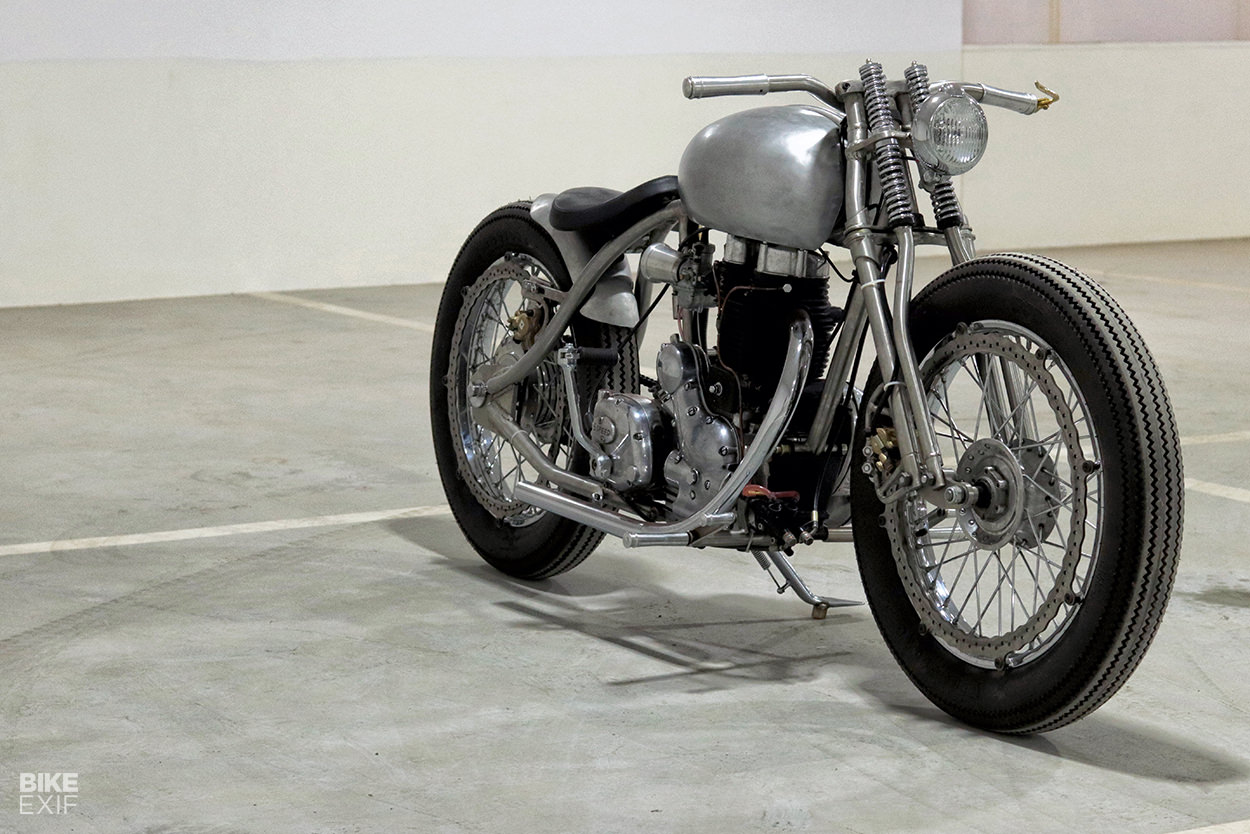
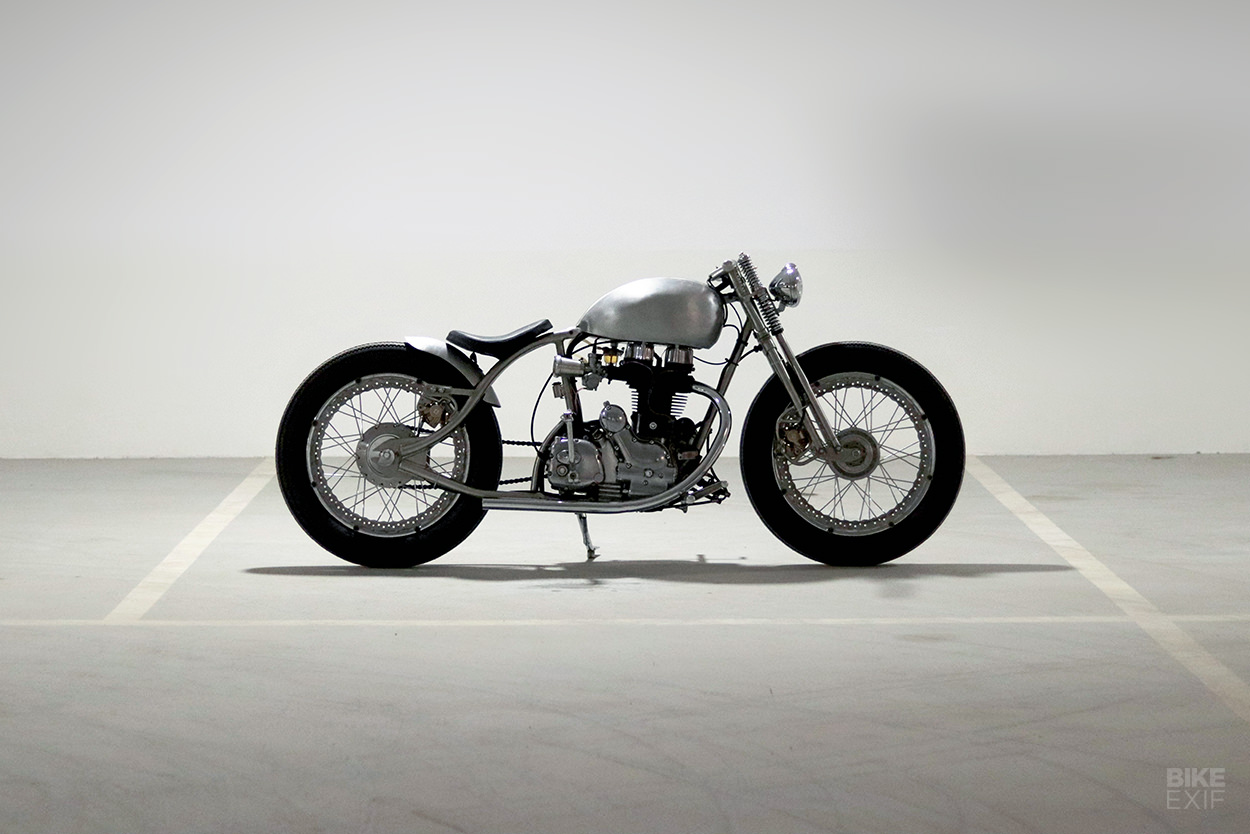
Master of metal: Royal Enfield Electra 350 by J&D Custom

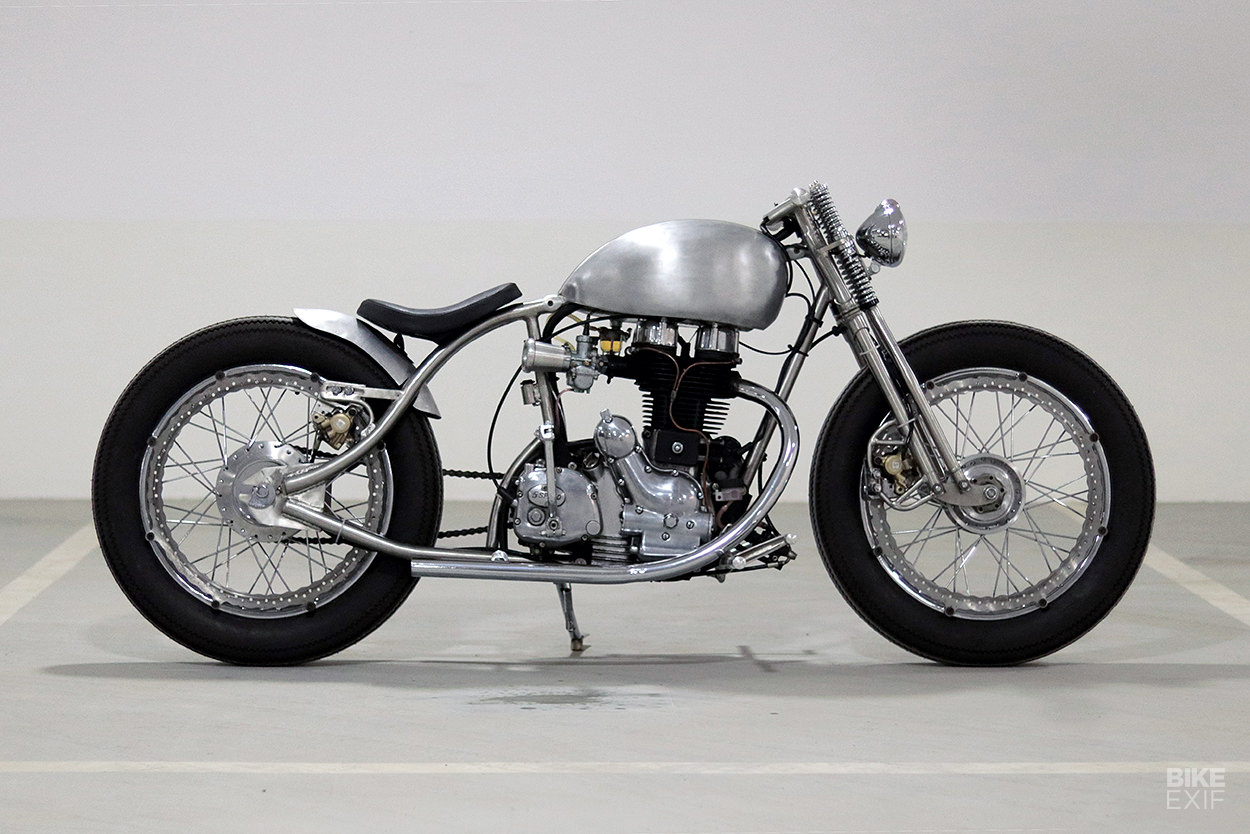
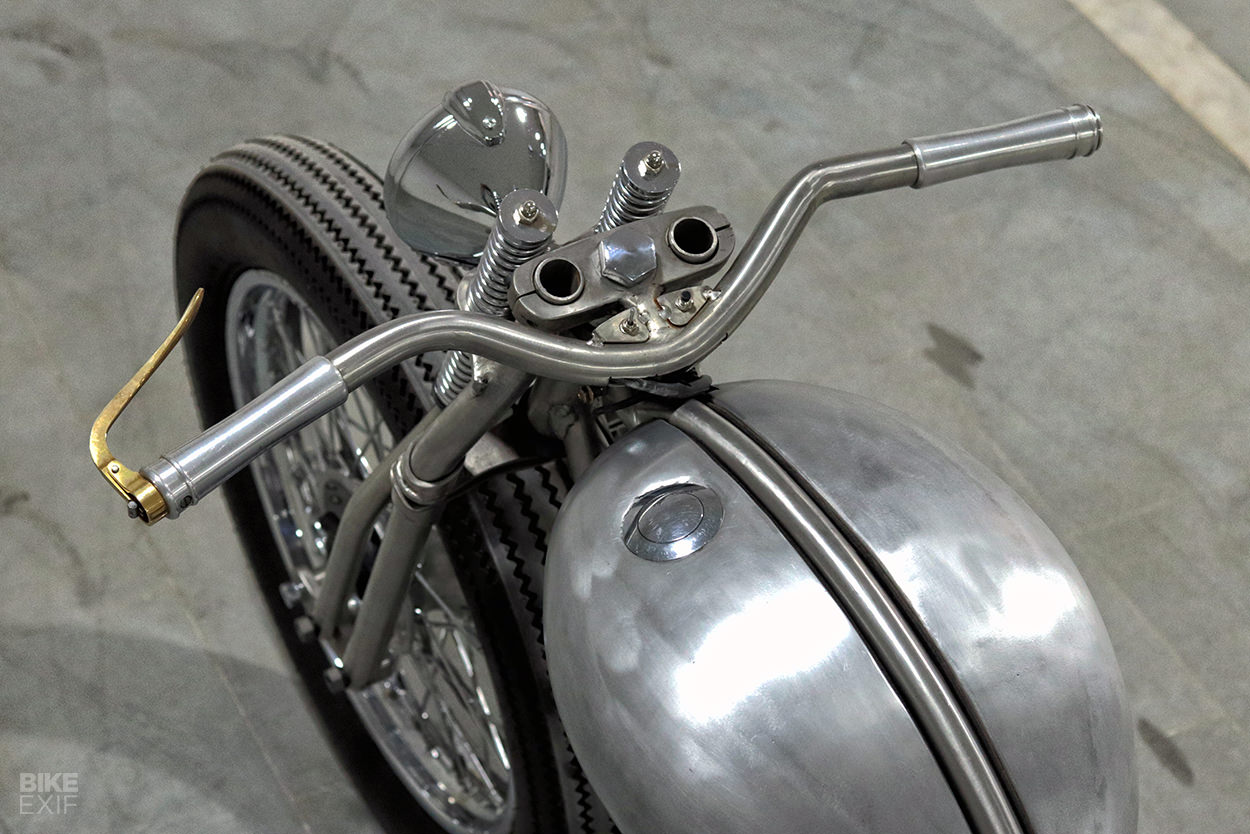
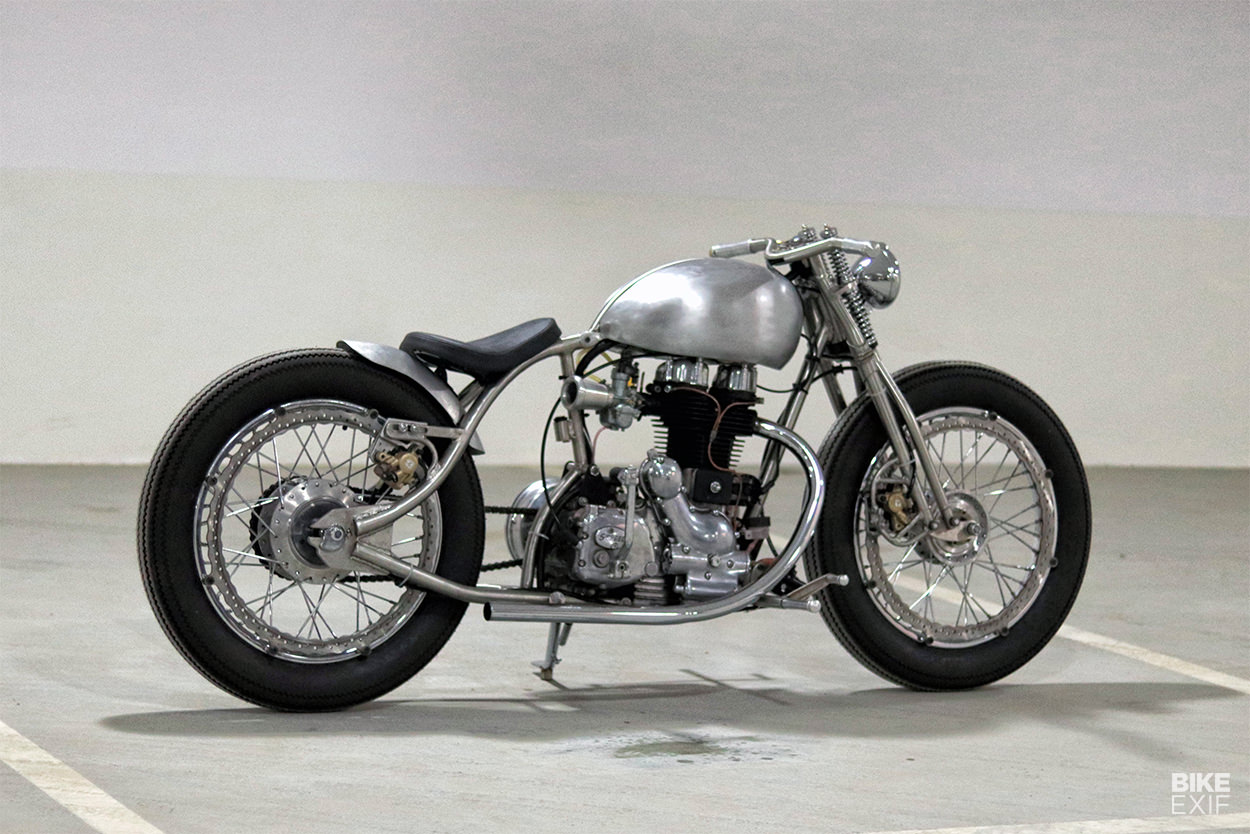
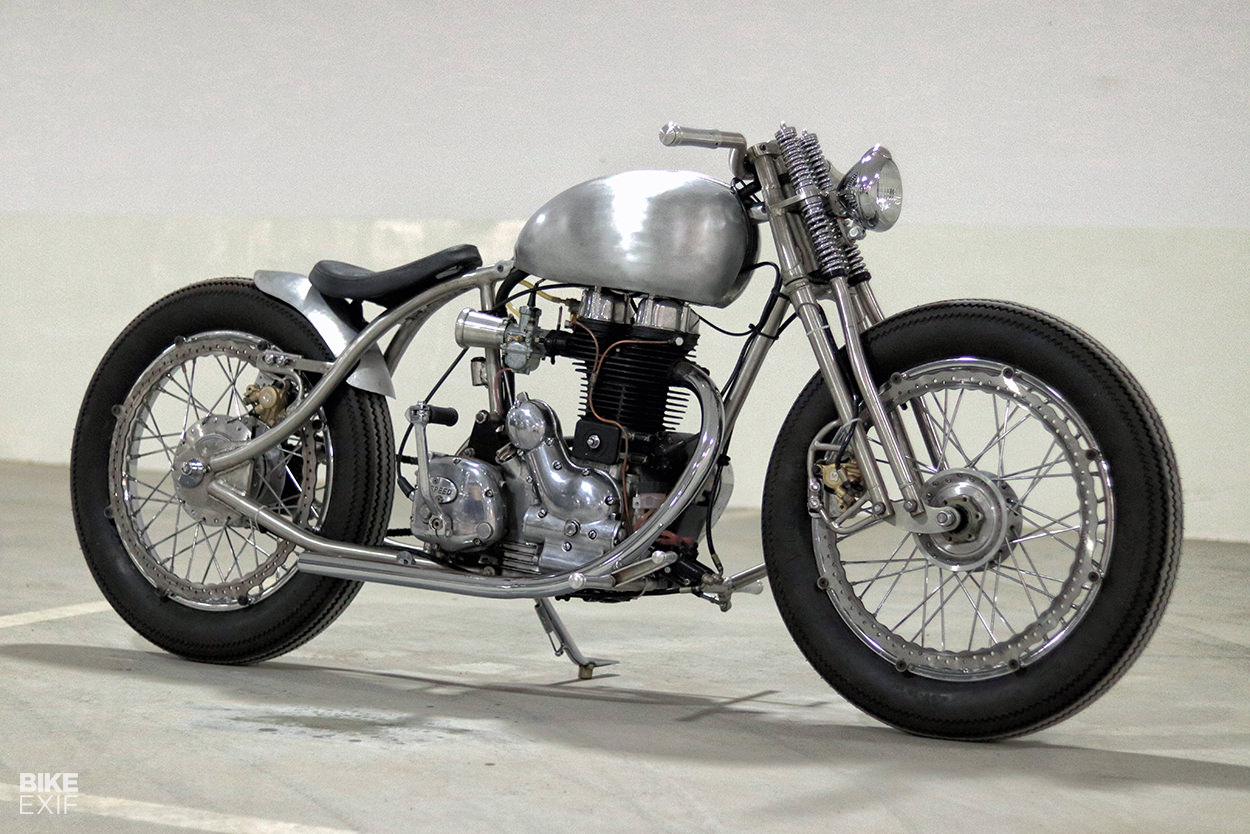
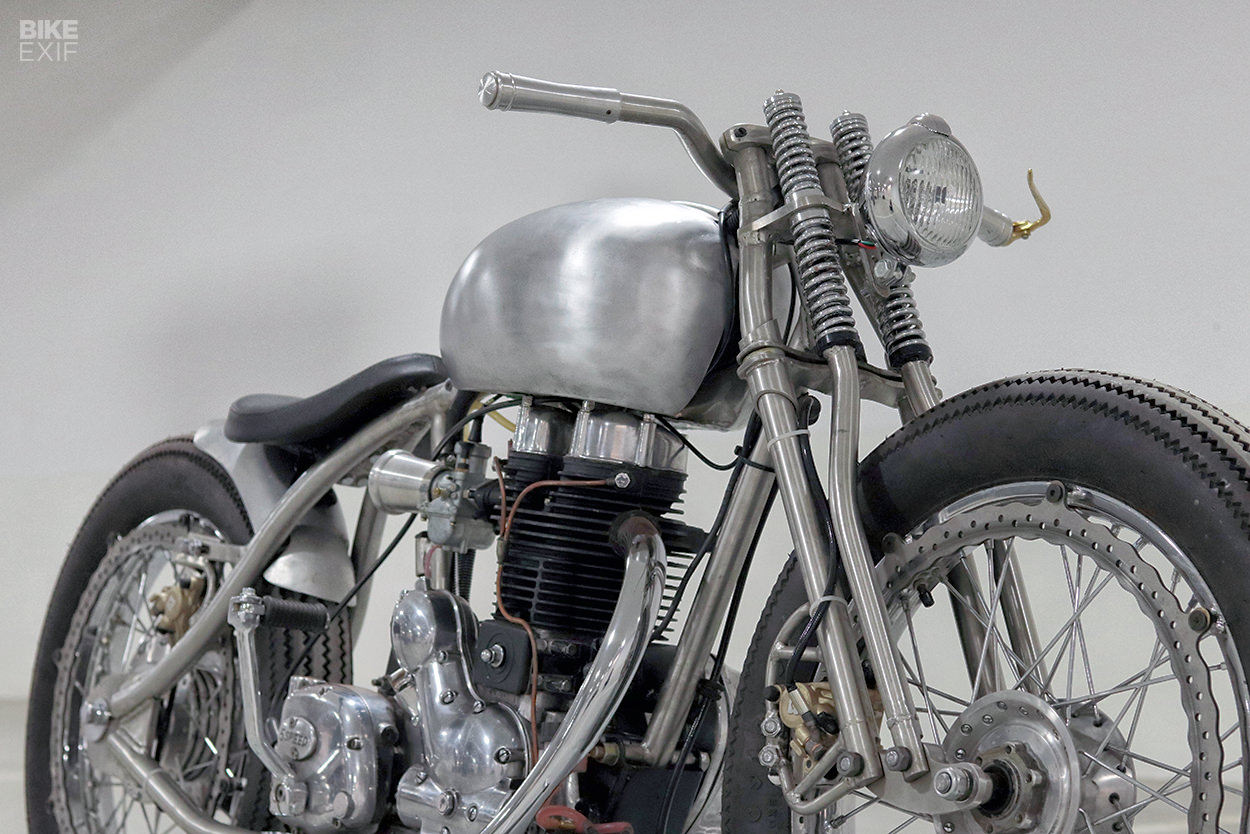
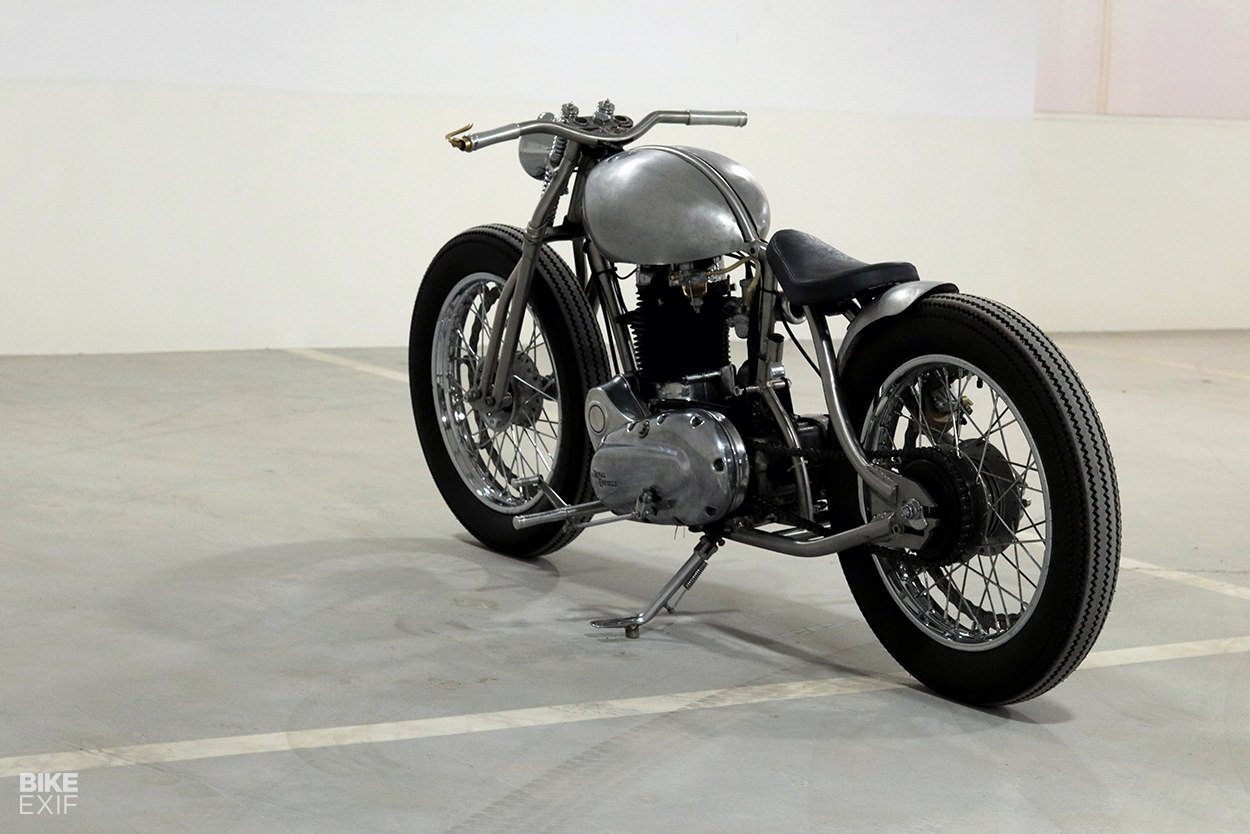
Bare metal custom Royal Enfield Electra 350
The past few years have seen a big change in the way a lot of custom motorcycles are created. Technology is everywhere, with many builders now using computer-aided modeling and machining to create and replicate parts faster and more accurately.

But some builders prefer to keep the traditional craft alive. In the USA guys like Craig Rodsmith and Max Hazan are wizards with traditional tools, and in India, we have Jay D. Patel of J&D Custom Co.—the builder of this raw and beautiful Electra 350.

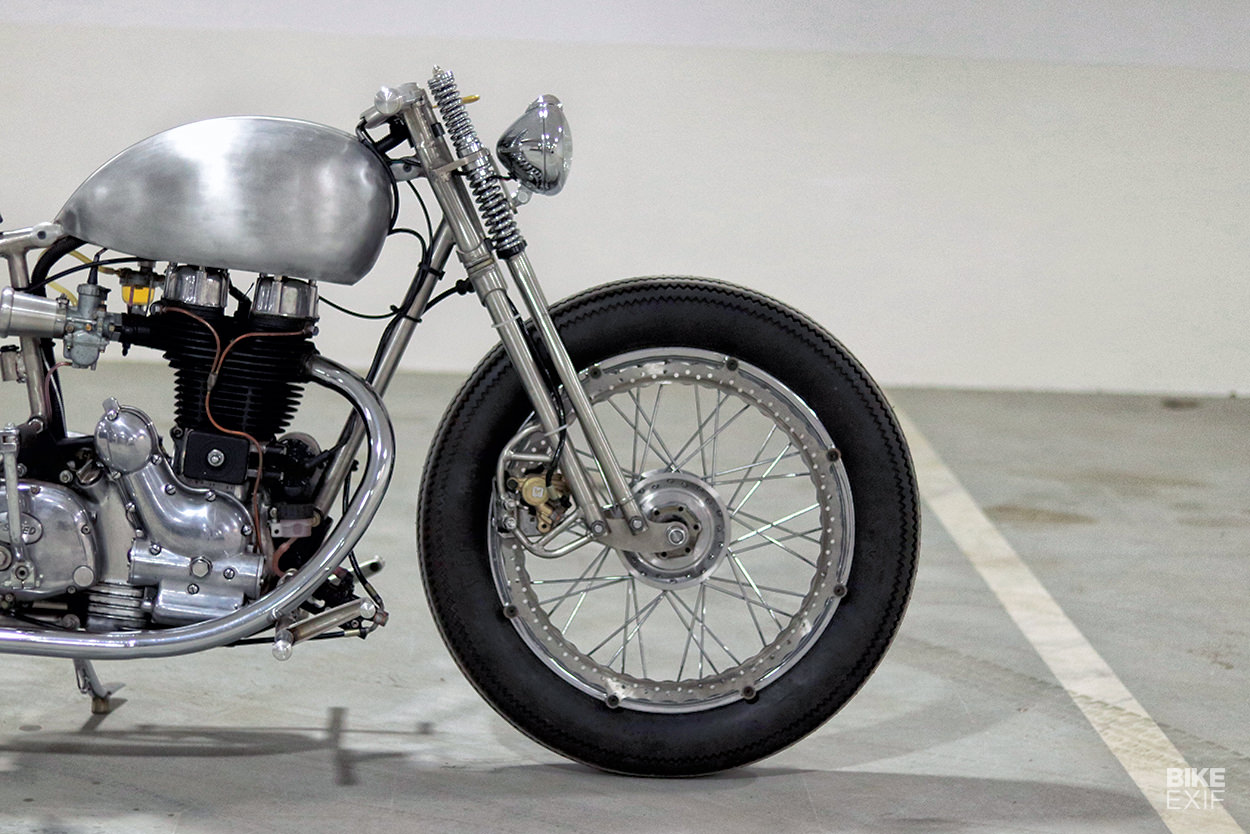
Bare metal custom Royal Enfield Electra 350
Based in Vadodara, a city in western India, Jay eschews digital assistants and sticks to decades-old methods of craftmanship.

“I’ve called the bike ‘Handmade,’ because I hand-built everything from scratch, apart from the the engine and wheels,” he tells us.

Bare metal custom Royal Enfield Electra 350
Jay’s father owns an engineering workshop, and that’s where Jay learnt fabrication and other technical skills. The litmus test was restoring his dad’s Land Rover Defender: “One of the greatest experience of my lifetime! It taught me a lot of lessons.”

Jay quickly moved on to building custom motorcycles from scratch, and first caught our eyes about three years ago with his ‘Baroda Bobber,’ based on a Royal Enfield Thunderbird 350.

Bare metal custom Royal Enfield Electra 350
He’s now honed his skills still further with this compact and elegant Bullet Electra, which was RE’s best-selling model for many years.

“The concept for this bike was to showcase the true craftsmanship of building,” says Jay, “without ‘layering it’ or hiding anything. Whatever I have learned in the past five years, I have tried to implement in this build. It’s a pure labor of love, representing the era of motorcycle development in small garages—without any high tech tools or software.”

Bare metal custom Royal Enfield Electra 350
For bike builders, it’s critical to have clients who are ‘on the same page,’ and Jay got lucky with the guy who commissioned this bike. “He follows the same work and design philosophy as me,” says Jay. “He’s a well known architect and designer who works with brass and wood, and admires hand-built things the most.”

He approached Jay after seeing the Baroda Bobber build. “We decided to do the next expression of that build, using my improved skills to achieve better results in terms of craftsmanship.”

Bare metal custom Royal Enfield Electra 350
This is Jay’s first full-frame build, and he’s used 304 seamless stainless steel tubing. “I did some research and made a frame jig to perfectly align the frame,” he recalls. “But as I was used to working without professional tools, I ended up only using the jig for joining the neck to the front rail.”

While crafting the frame, Jay started figuring out the dimensions for a springer fork setup. “It was my dream to build a springer front end: I wanted to spend a good amount of time to make it perfect in the working sense, as well as aesthetics,” he says.

Bare metal custom Royal Enfield Electra 350
Luckily, Jay got it close to perfect in his very first attempt, and he reckons it’s the most beautiful part of the build. It’s also made out of 304 stainless steel, with the springs coming from a local specialist, built to Jay’s specs.

Then Jay started working on the shape of the tank, splitting the unit into two portions, to make it easier to hide electrical items and the battery.

Bare metal custom Royal Enfield Electra 350
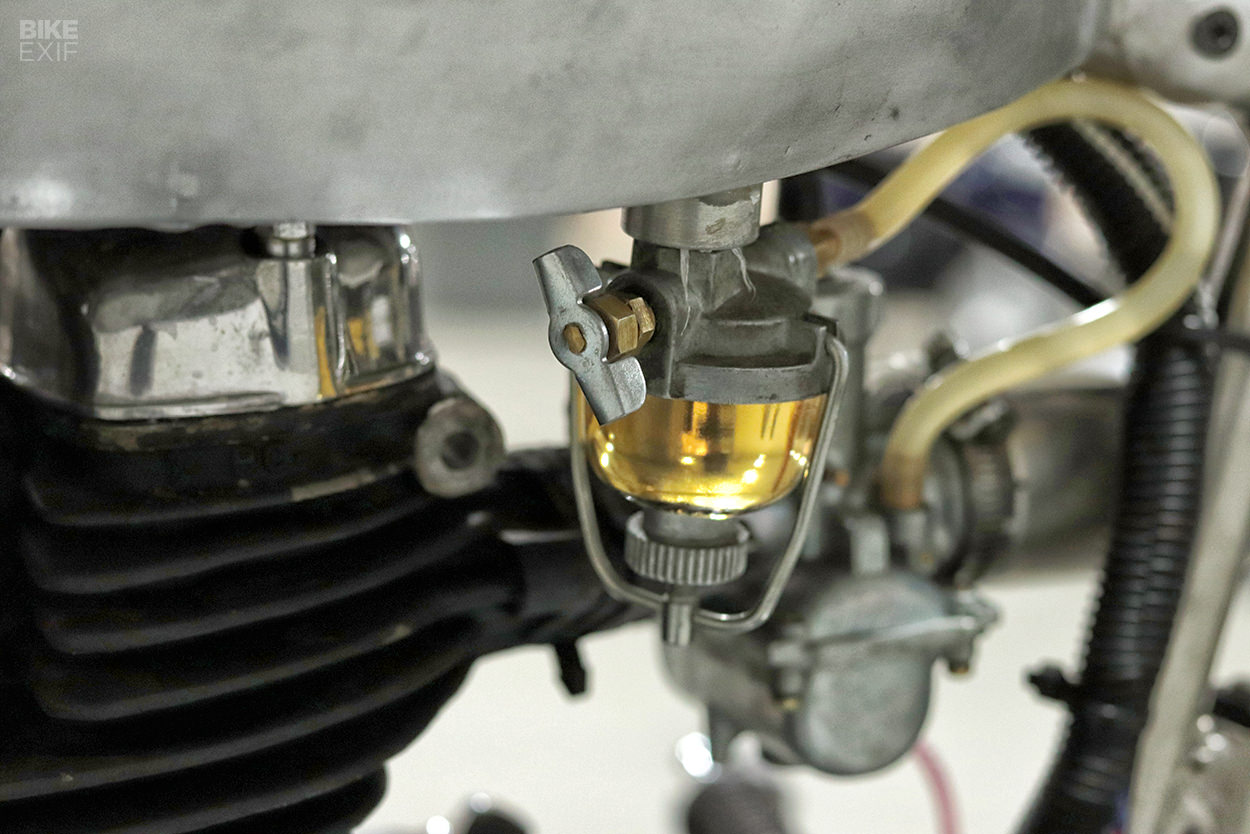
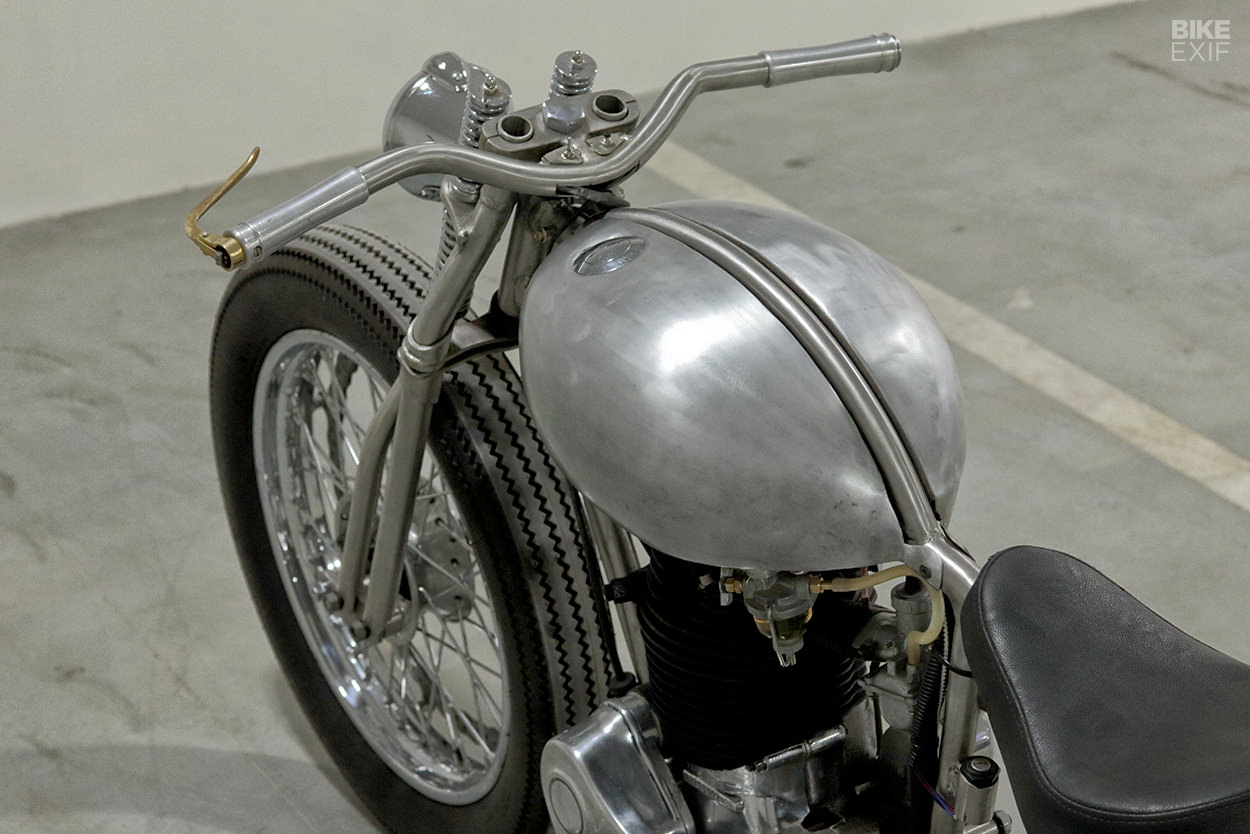
The left side portion is the actual fuel cell, which can hold around six liters (1.6 gallons), while the other half is a cover to hide all the electrical gear. There’s a pop-up gas cap to keep the lines clean, and the fuel petcock is an antique item that Jay found on Amazon.

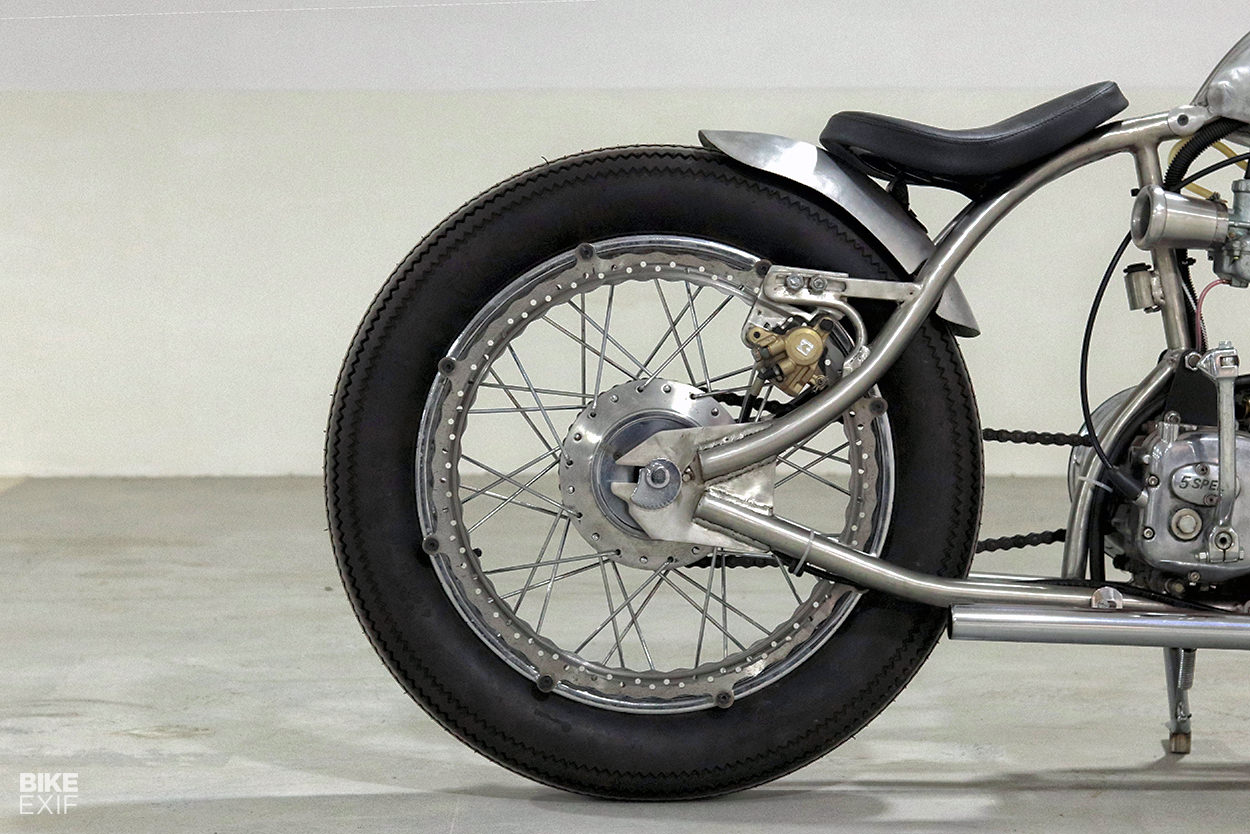
For the rear portion of the frame, Jay wanted to try something different to the usual hardtail frame. After figuring out the curves and axle plate placement, he cut the backbone and grafted on two rear pipes. It’s a simple and seamless look.

Bare metal custom Royal Enfield Electra 350
The arc welding is just as neat. “I tried to make every weld perfect, so that I don’t need to grind them to look good. I just left the welds as they are, to look real raw.”

To keep the bars clean, Jay has used an internal throttle assembly and inverted clutch cable setup. “But since I was using an internal throttle, it wasn’t possible to use an inverted lever for the front brake setup,” says Jay. “And hydraulic brakes can’t work that way. So I decided to link both the front and rear brake operations using a single foot pedal.”

Bare metal custom Royal Enfield Electra 350
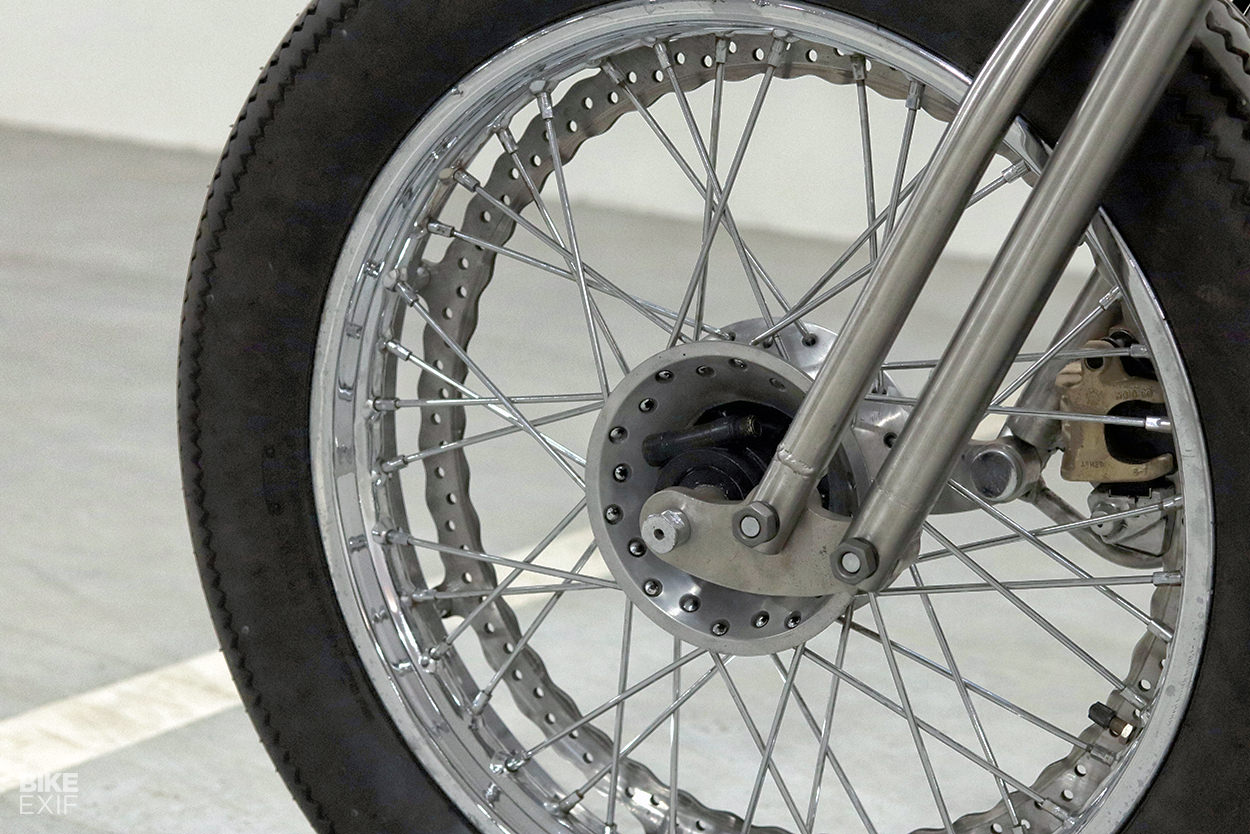
Jay used a perimeter disc brake setup for the Baroda Bobber, which he believes is the only one of its kind in India—as well as unique for an Enfield. So he’s replicated the setup on the Electra, to give the build a signature touch.

Jay has also made the hand and foot controls, using aluminum and a lathe. The velocity stack air filter is made out of a solid bar of aluminum too.

Bare metal custom Royal Enfield Electra 350
The 19-inch wheels are one of the few stock fitments, and the exhaust is an original Enfield part too. “I just love the flow of the stock bend pipe,” Jay explains. “I had to cut it in the middle and re-join it at a specific angle to match the lower frame lines, though.”

We love the understated style of this machine, and the way it has been crafted bit-by-bit, without so much as a Photoshop sketch beforehand. “I don’t work with renders or drawings,” says Jay. “I do that process in my head, and start putting elements together one by one, to achieve the final design.”

Bare metal custom Royal Enfield Electra 350
It’s a brave builder who leaves his bikes unpainted, but Jay has the skills to pull it off. “For me it shows the craftsmanship of the builder. There are no layers of filler or anything, and you can see all the joints, welds, bends and lines.”

We’re all for pushing the boundaries of modern tech, but we also love to see that traditional skills are alive and well too—a refreshing touch of analog warmth in an increasingly digital world.

J&D Custom Co. | Facebook | Instagram

Bare metal custom Royal Enfield Electra 350


from Bike EXIF https://ift.tt/37s4E0T