Tuesday, 5 November 2019

Blade Runner & Flying Cars: Did They Get Anything Right?

Blade Runner was released in 1982 and landed with a thud. It went nowhere at the box office, and only later picked up steam and a cult following when it was released on VHS. Set in a dystopian, grimy, crowded Los Angeles of 2019 (just last year!) Blade Runner showed us a future of environmental devastation and the slow, inexorable grinding down of humanity, one person at a time, in pursuit of the all-mighty dollar.

Like all great works of art, it raises some essential questions of what makes us human; how does a person maintain their humanity; why do we live and what is the point of this life; and is it okay to fall in love with a robot you’ve been having sex with?

Flying Cars & Blade Runner 

Of Blade Runner’s many predictions – genetic engineering, super-scale architecture, and holographic manipulation to name only three – the one we are concerned with here at Automoblog is, of course, flying cars. And, as with most things flying car related, I give this an F grade for its accuracy in terms of a technology prediction. But . . . there’s some interesting caveats that go along with how they handled flying cars in the world of Blade Runner that make the entire idea potentially much more workable.

For starters, the flying cars, called “spinners,” were designed by the great Syd Mead, visual futurist, industrial designer, automotive designer, and all-around interesting human. He called his flying car an “aerodyne” that worked via an unseen propulsion system. Whatever was contained within the beetle-back of the spinner had enough power to both levitate and motivate it. How was never specified, but that was the basic idea. Director Ridley Scott was bright enough to hire just the right guy to work on his flying car concept.

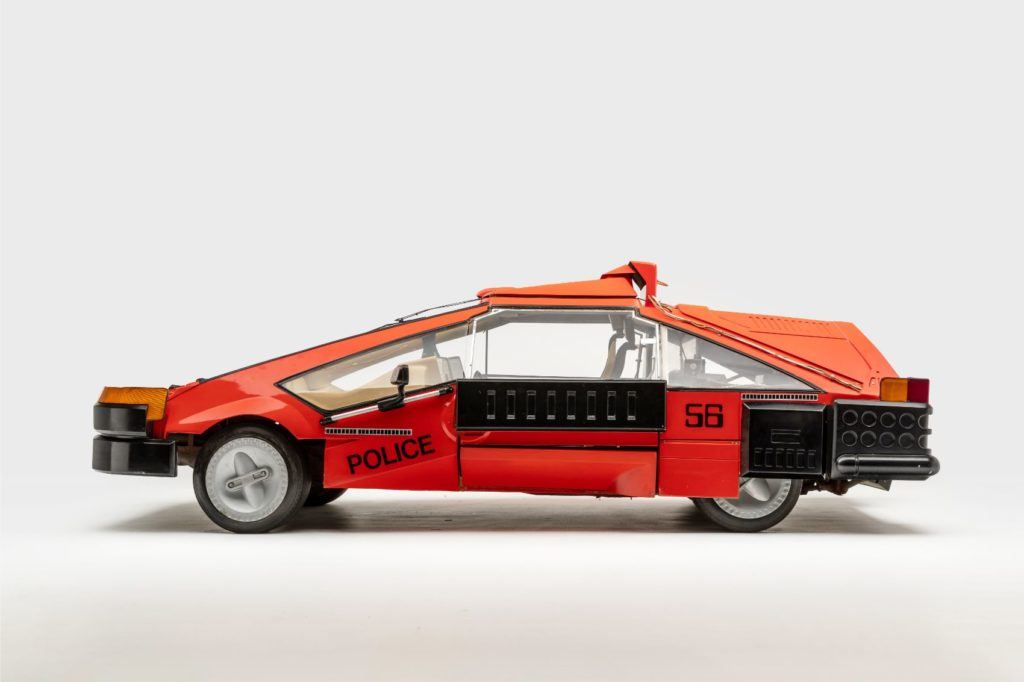
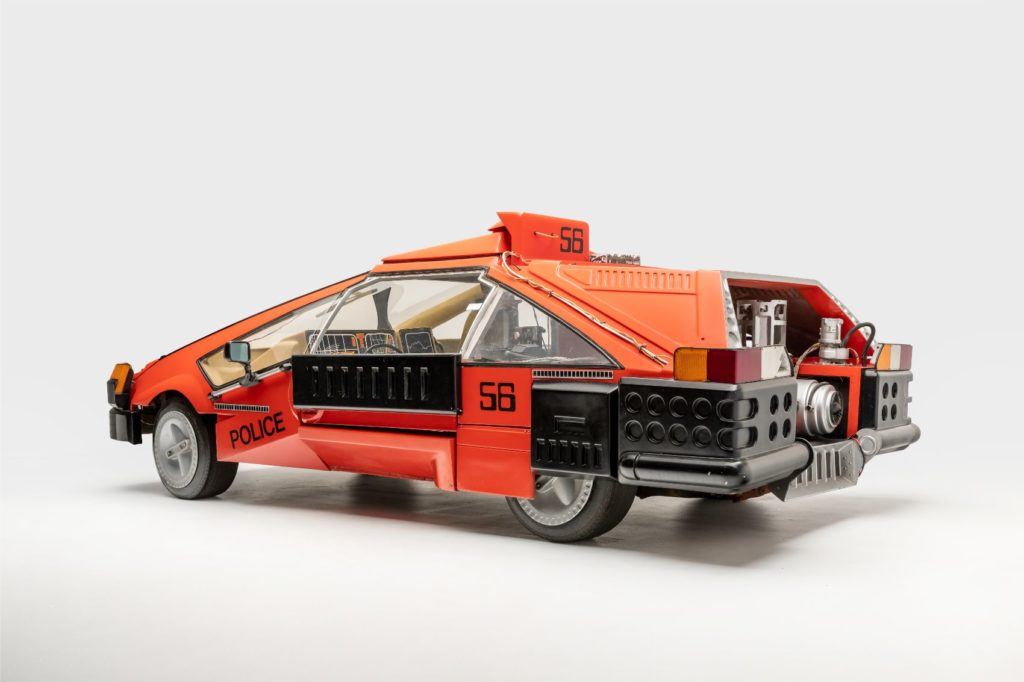
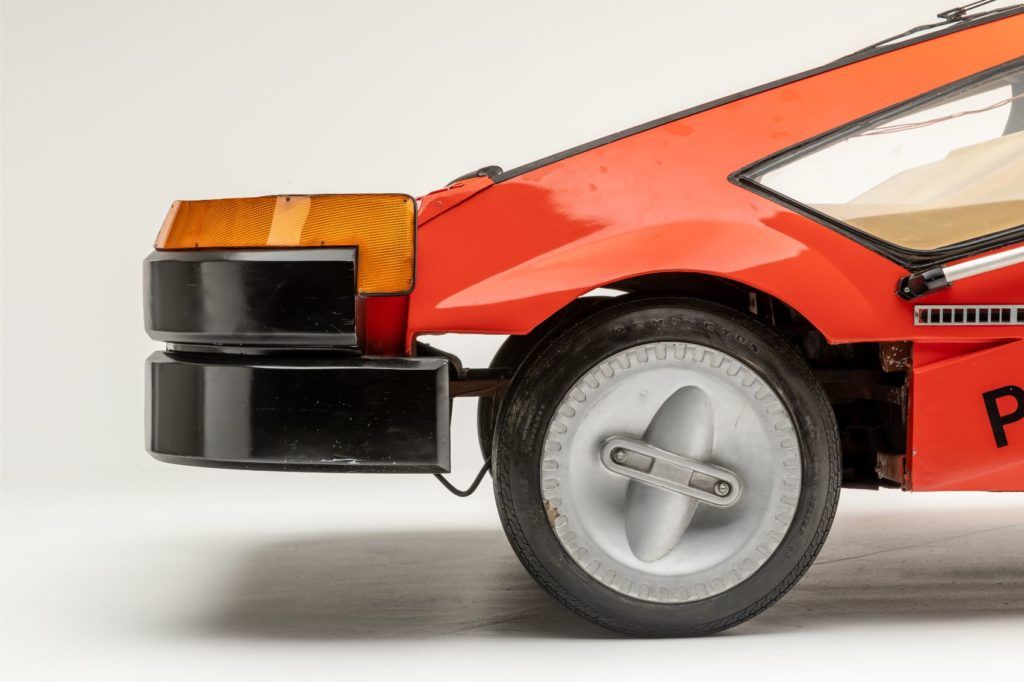
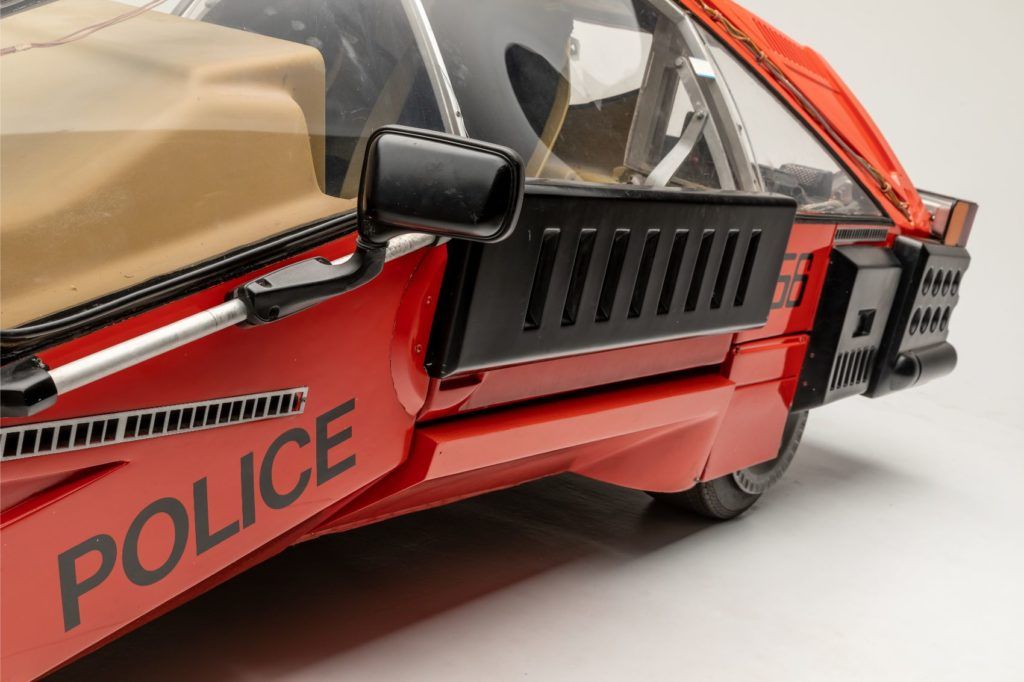
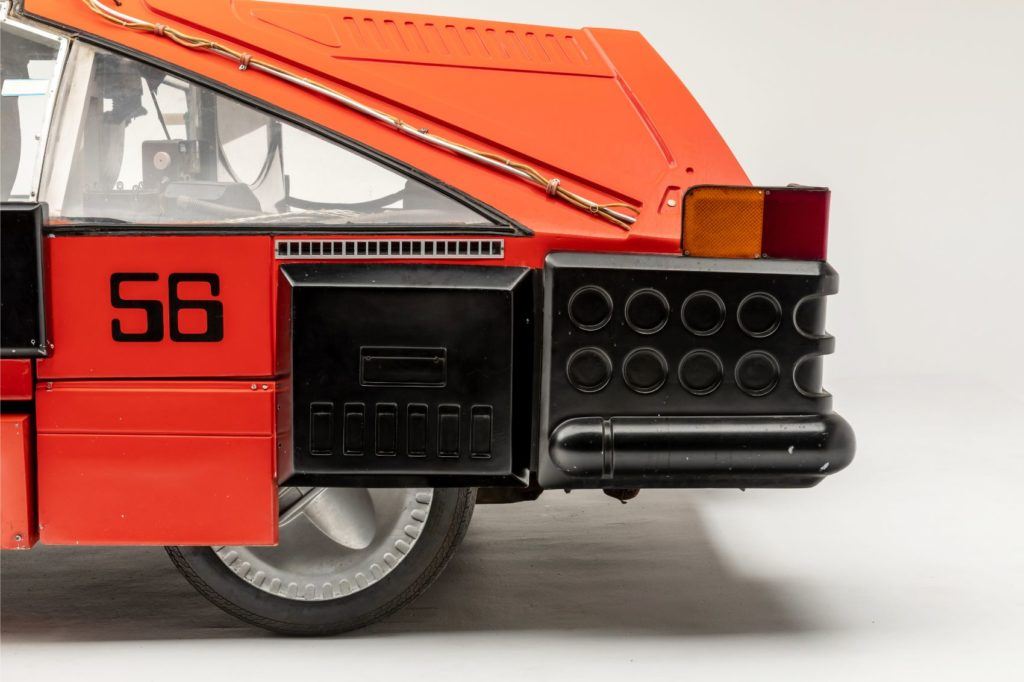
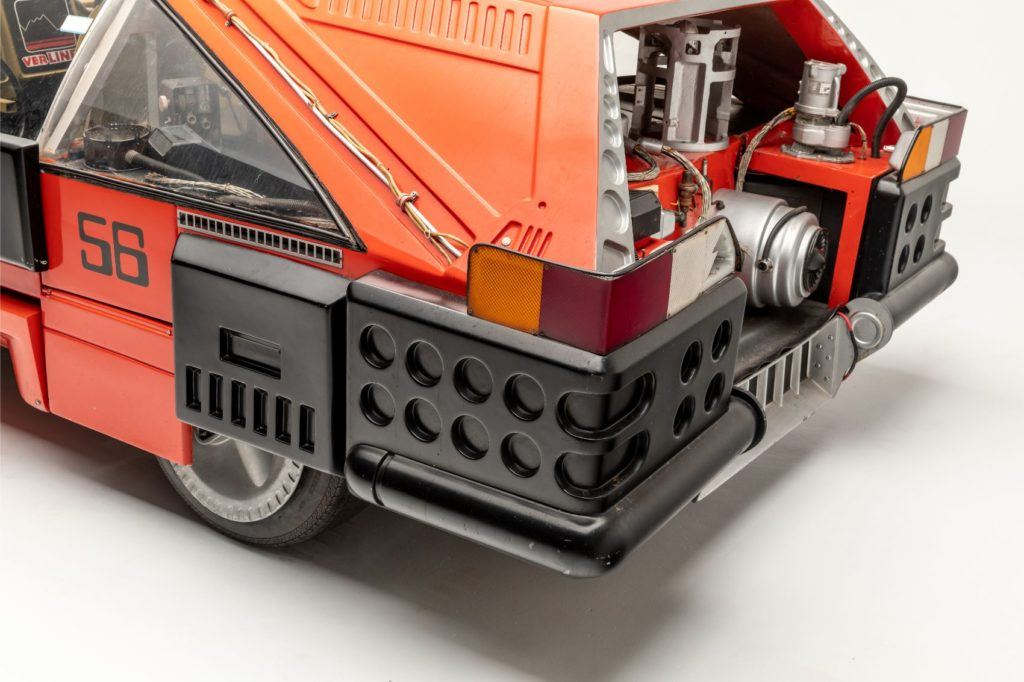
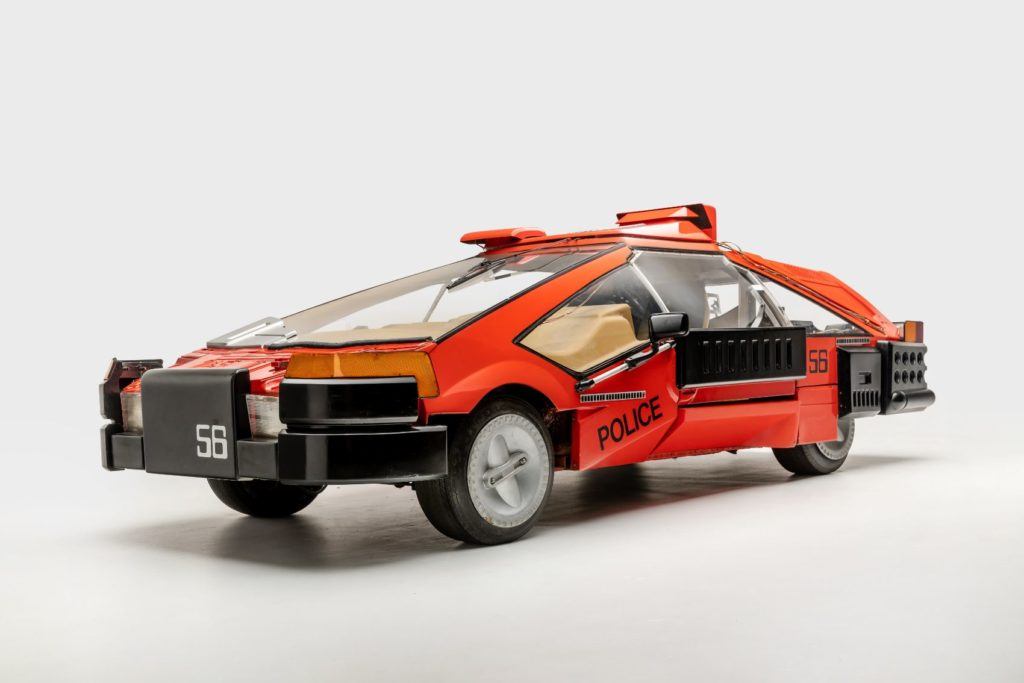
Rick Deckard's spinner from Blade Runner.
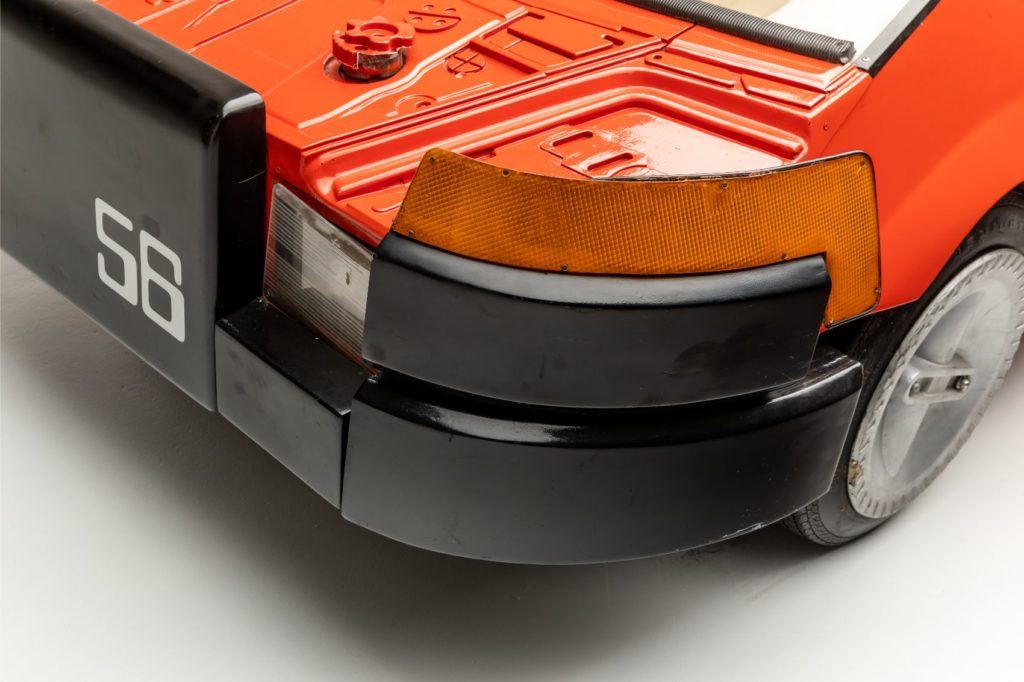
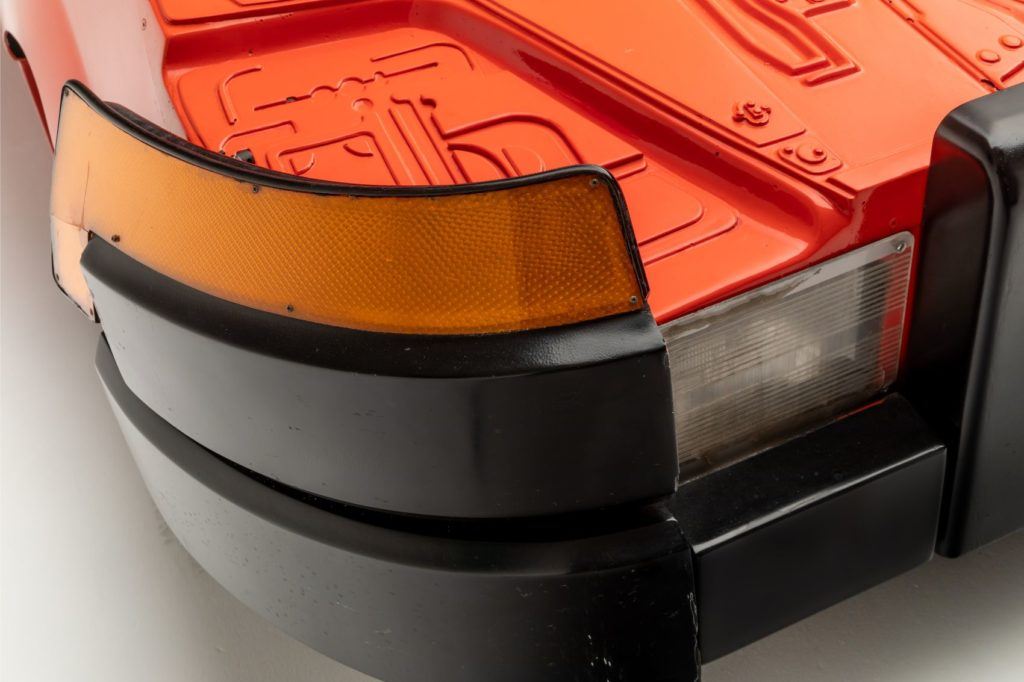
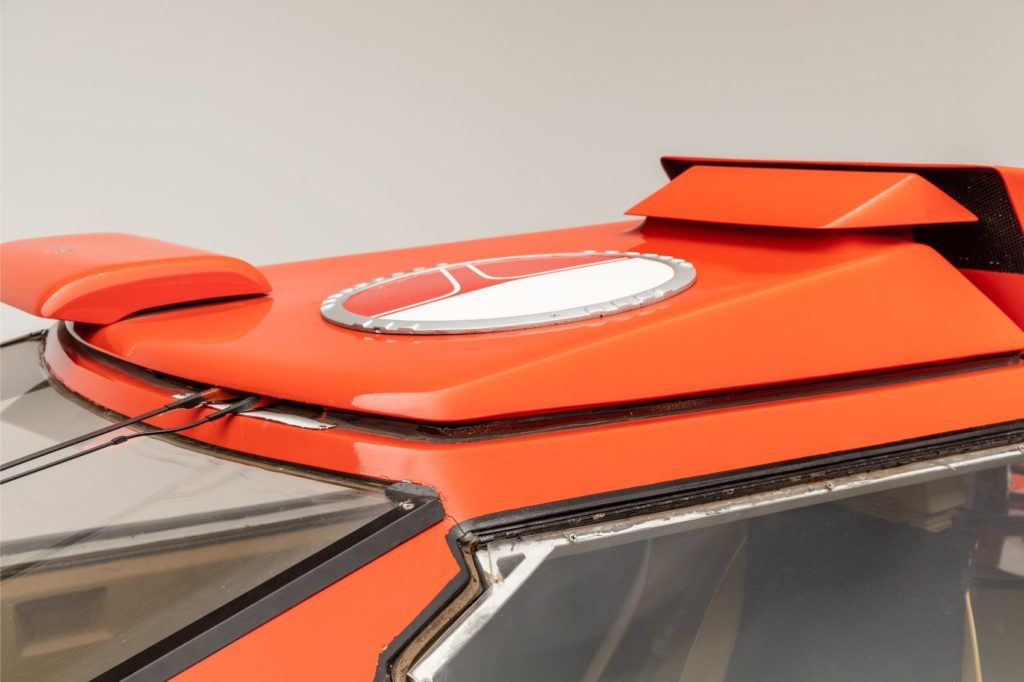
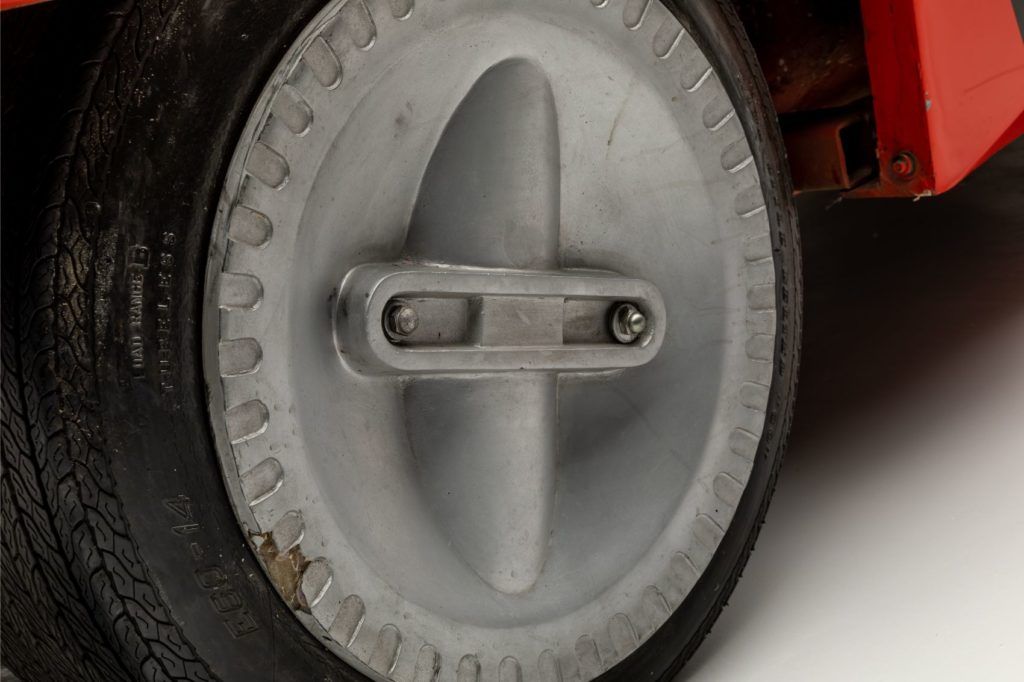
Rick Deckard’s decommissioned spinner from Blade Runner. The vehicle is based on a 1972 VW Super Beetle. Photo: Kahn Media.

Who Would Be Able To Use Flying Cars?

The other thing Blade Runner got right was who was using them. As far as I can tell (and I’ve seen this movie dozens and dozens of times), there are only two kinds of flying cars in the film. There are spinners that are flying police cars, and there was another model that looked like a private vehicle. The implication here is only the cops or wealthy elite get flying cars.

This greatly simplifies potential problems like overcrowded skies, accreditation of who gets to fly, and things of that nature. If there are only two kinds of people flying around our pollution-choked and congested cities – law enforcement and the rich – then there is an implication of a higher level of responsible use. In theory.

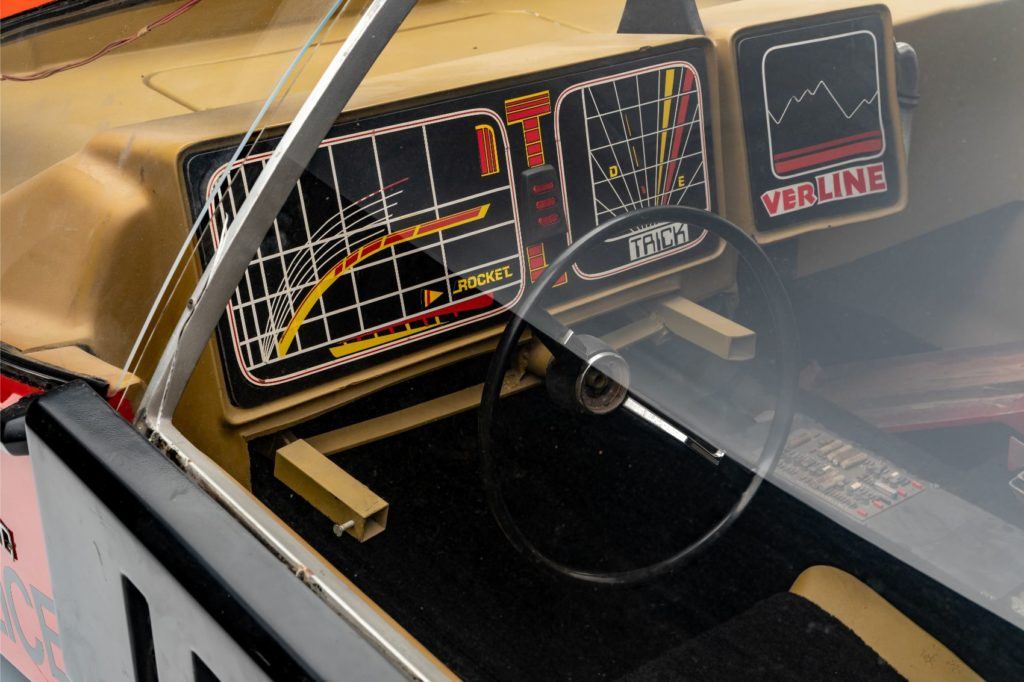
It’s also worth noting the amount of computer control and monitoring seen in the aerial use of a spinner. That would go a long way to mitigating a large number of problems.
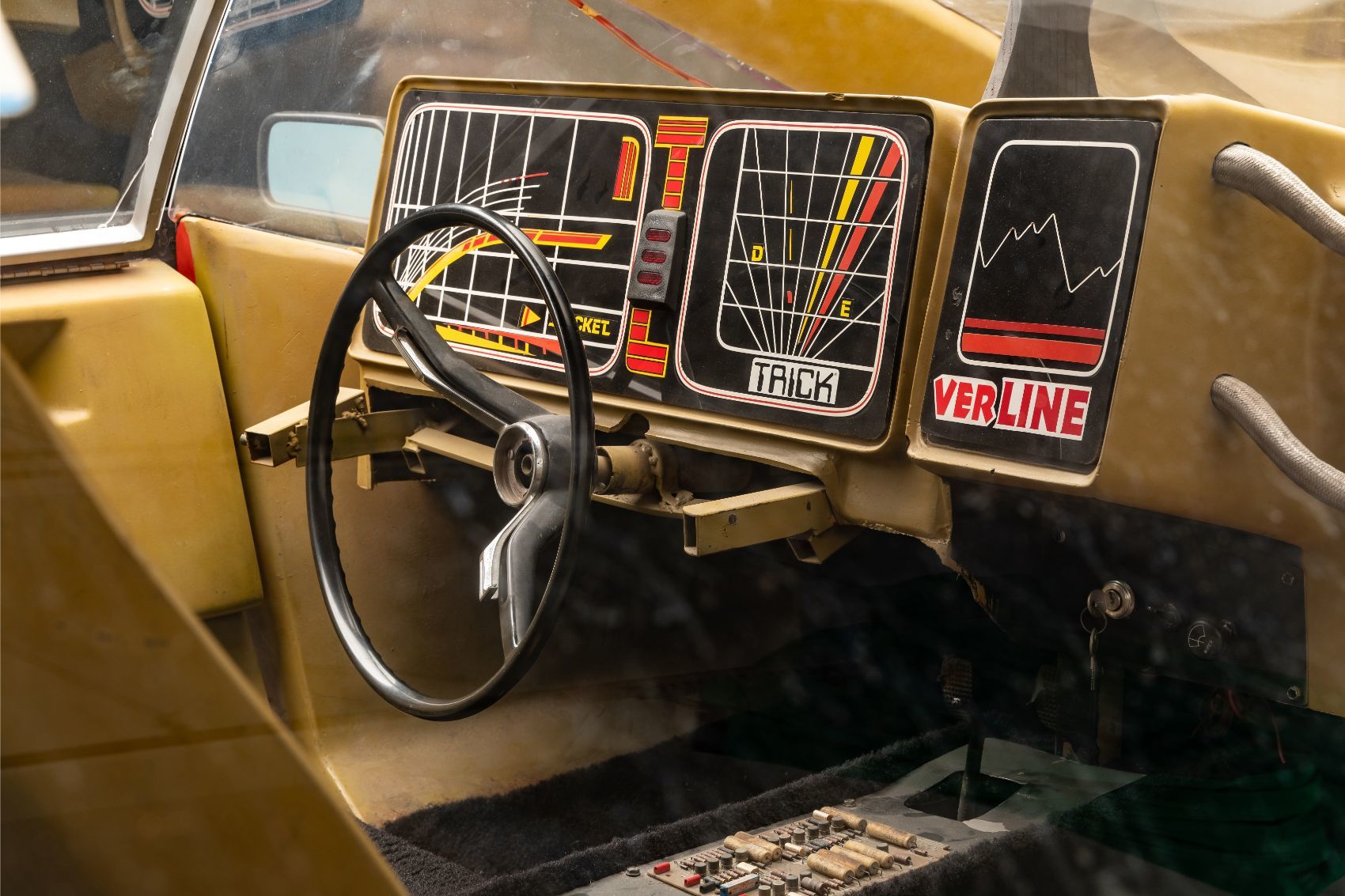
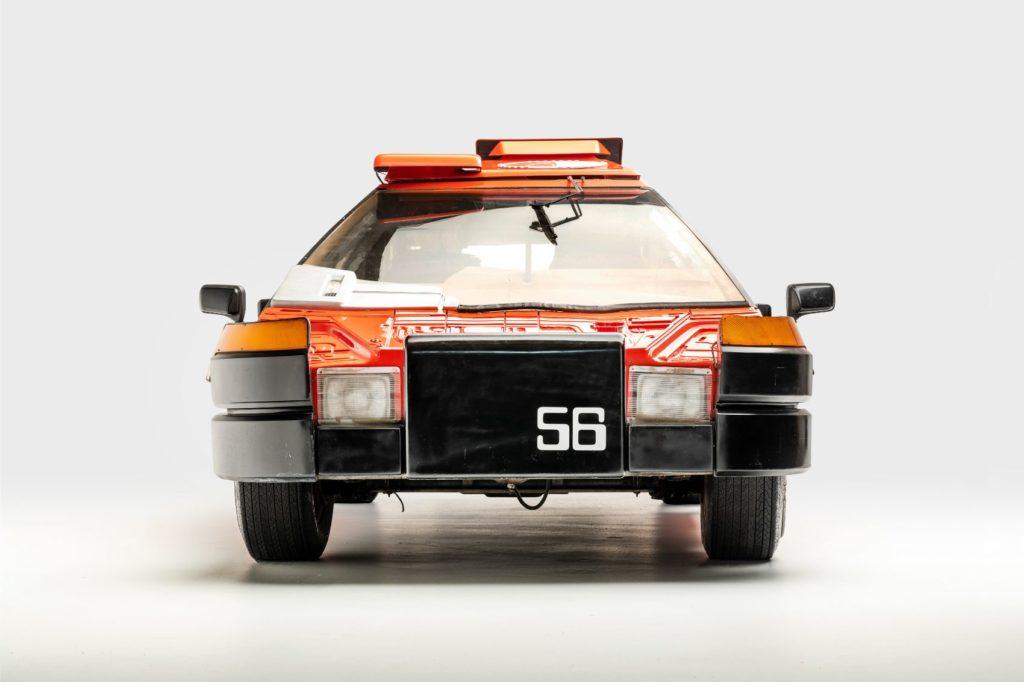
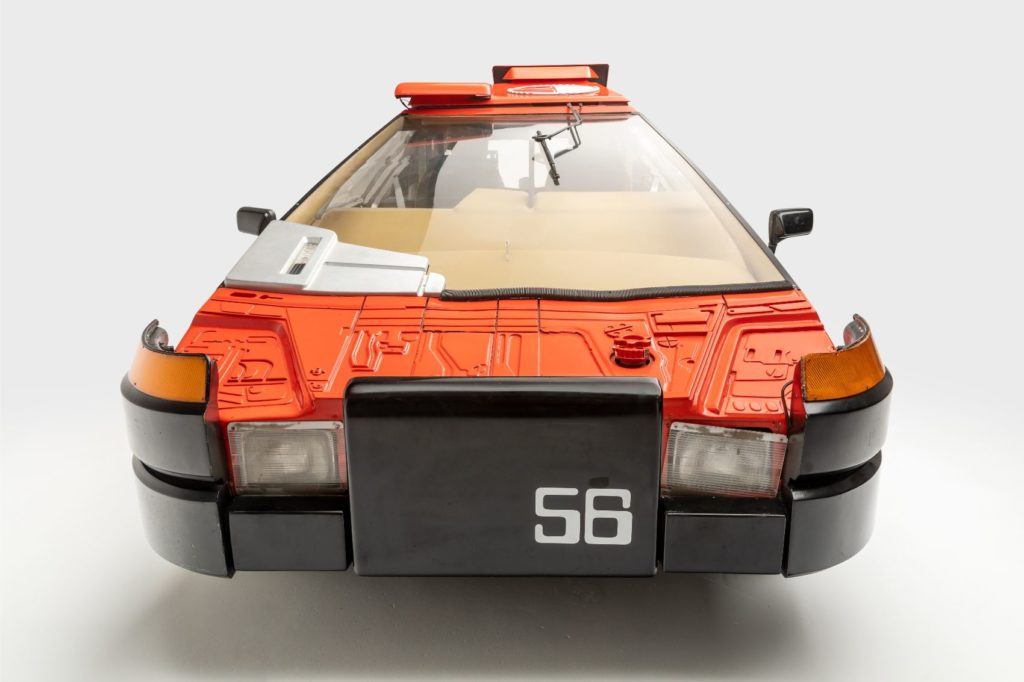
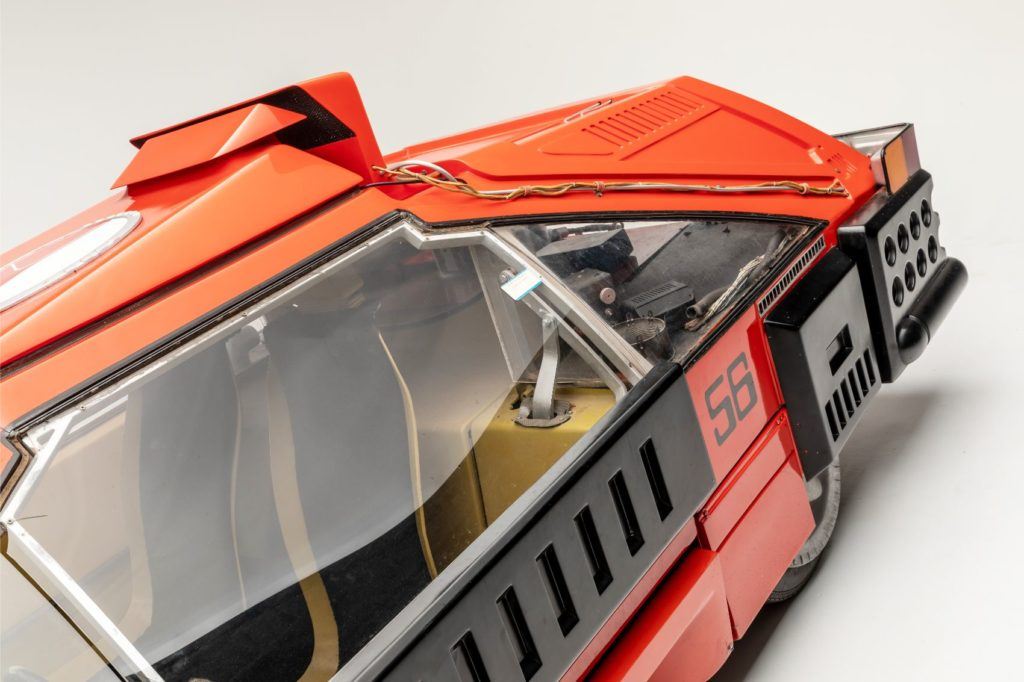
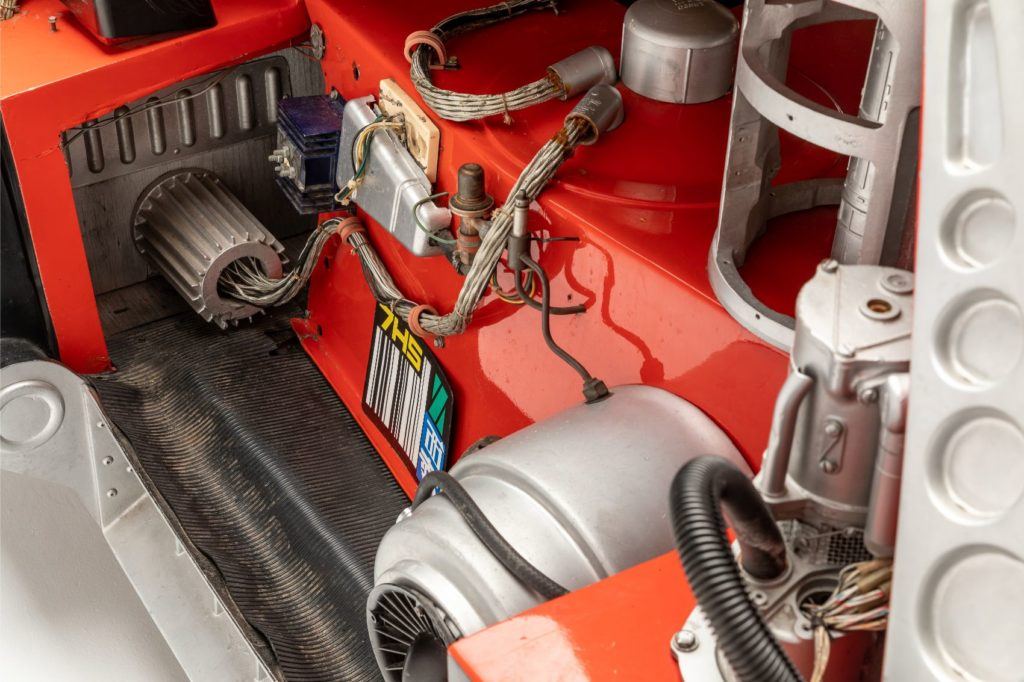
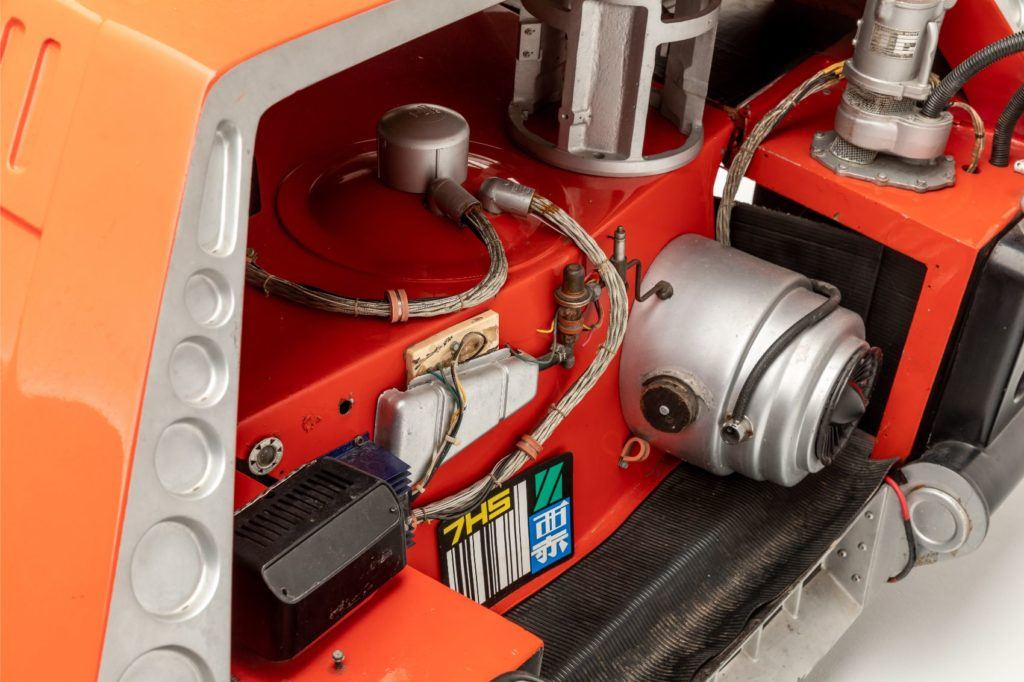
Rick Deckard's spinner from Blade Runner.
Inside Deckard’s spinner from Blade Runner. Photo: Kahn Media.

Are The Flying Cars In Blade Runner Plausible?

Even though I gave the flying spinners in Blade Runner an F grade in terms of plausible technology, it is with those caveats. If there is a way to make flying cars work, we can’t just give them out will-nilly to any swell that desires one. We’d scrap the whole program within months due to fatal, smoking crashes and the inevitable lawsuits. 

To put it another way, practically-speaking, I don’t see flying cars ever coming true. Police don’t need them, they’ve already got helicopters, and the same goes for the filthy rich with private planes. Sure, there are the half-loony innovators and ambitious companies out there still trying to make flying cars happen, but the landscape looks as bleak as the dust-choked desert consuming Las Vegas in the rather well-done follow-up, Blade Runner 2049. (Harrison Ford reprises his role). 

Now, if you’ll excuse me, I’ve got to get down to Taffey Lewis’ place. I’ve got him on a line for drinks and I think I’ve got Sean Young’s number here somewhere.

Tony Borroz has spent his entire life racing antique and sports cars. He is the author of Bricks & Bones: The Endearing Legacy and Nitty-Gritty Phenomenon of The Indy 500, available in paperback or Kindle format. Follow his work on Twitter: @TonyBorroz

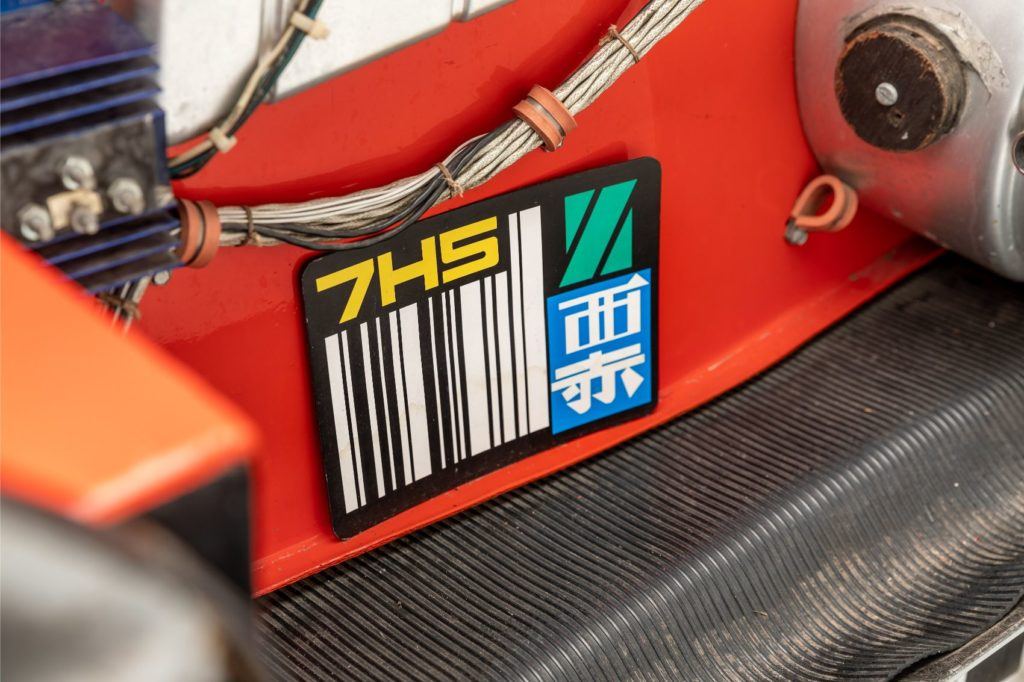
Deckard’s Spinner From Blade Runner Gallery


from Automoblog https://ift.tt/2pvZMYp

Monday, 4 November 2019

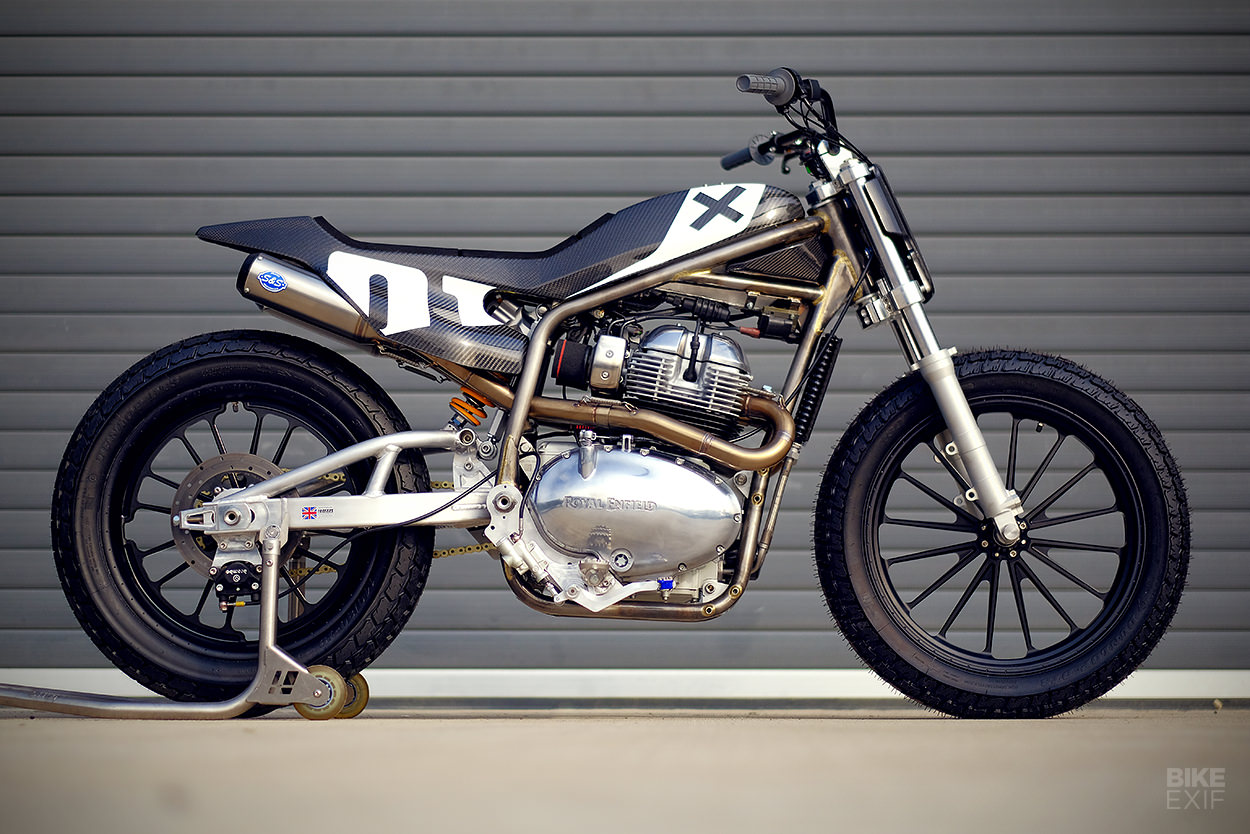
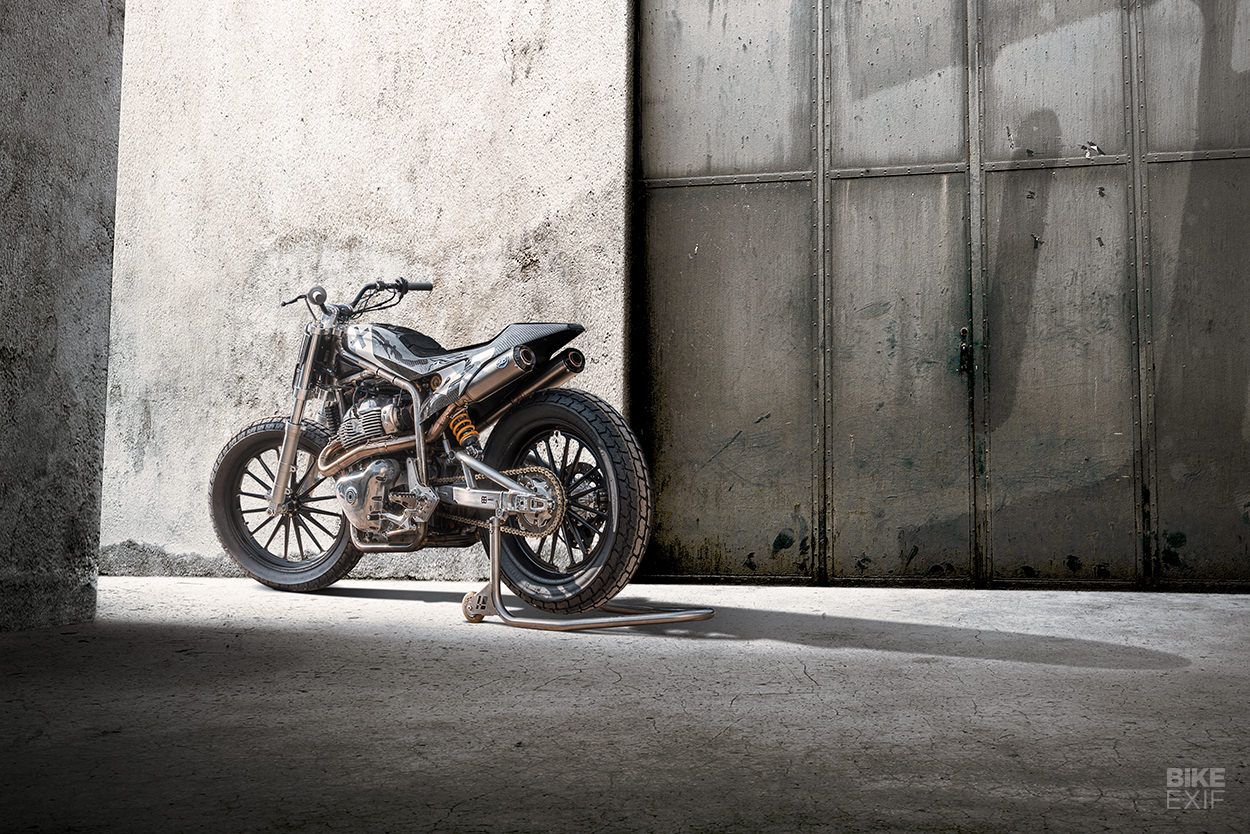
‘Twins FT’: A Royal Enfield x Harris flat tracker

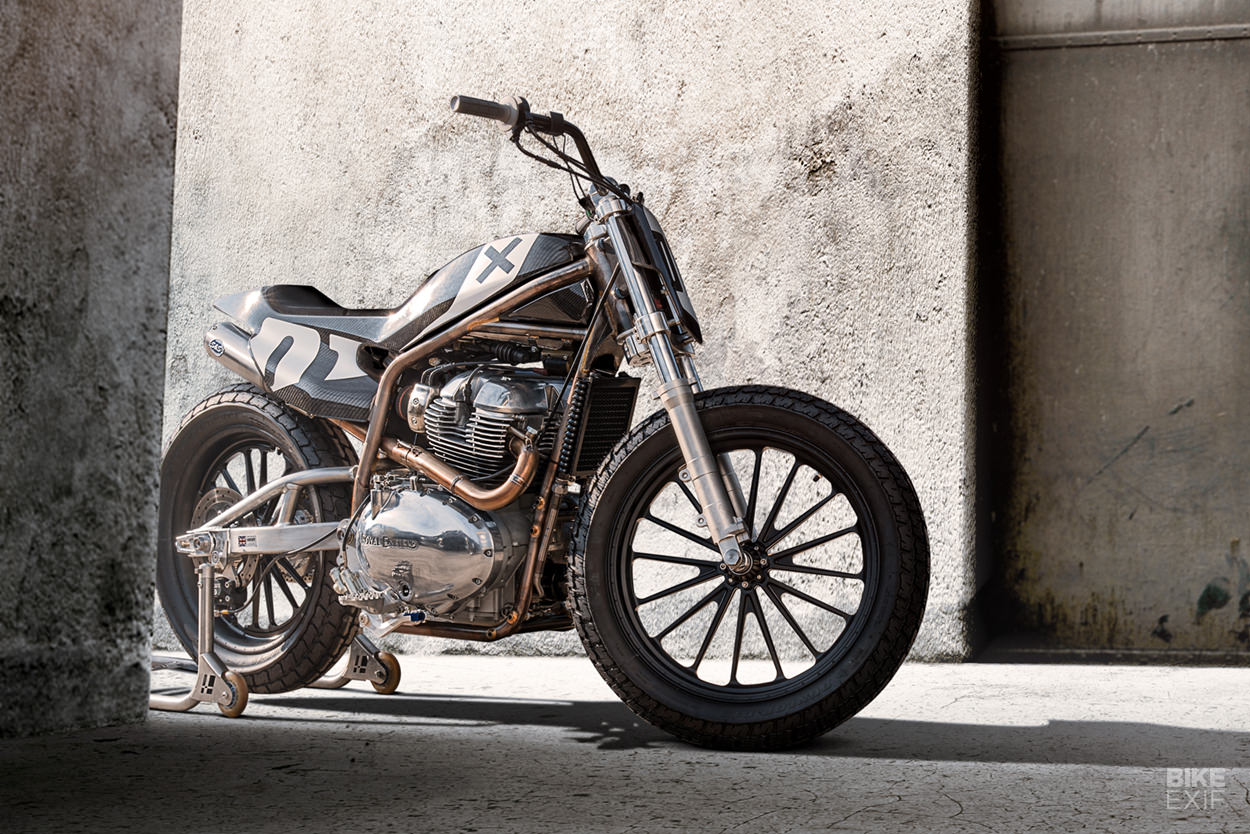
A Royal Enfield flat tracker from Harris Performance
Four years ago Eicher Motors, the owner of Royal Enfield, bought the famous British company Harris Performance. Since the 1970s, Harris has been building high-performance ‘specials,’ and the Hertfordshire firm had already developed the chassis for the Continental GT and Himalayan.

Harris has now gone back to its racing roots with this very intriguing prototype flat track racer based on the 650 twin engine.

A Royal Enfield flat tracker from Harris Performance
It’s a collaboration with Royal Enfield’s technical center in Leicestershire, and although it’s essentially a custom project, we’re wondering if it could also herald the start of a flat track race program.

“Inside Royal Enfield, we like to have a bit of fun,” says RE’s industrial design boss Adrian Sellers. “So we’ve started working on ‘Factory’ builds, to push the limits of our motorcycles’ capabilities.”

A Royal Enfield flat tracker from Harris Performance
“To date, these have included a record breaking Bonneville Salt Flats racer, two drag bikes, two retro racers and now this new ‘Twins FT’ flat tracker.”

The tracker is probably the most ambitious build yet. Harris has over 40 years of expertise in chassis development, but this is the first time they’ve built a flat track chassis.

A Royal Enfield flat tracker from Harris Performance
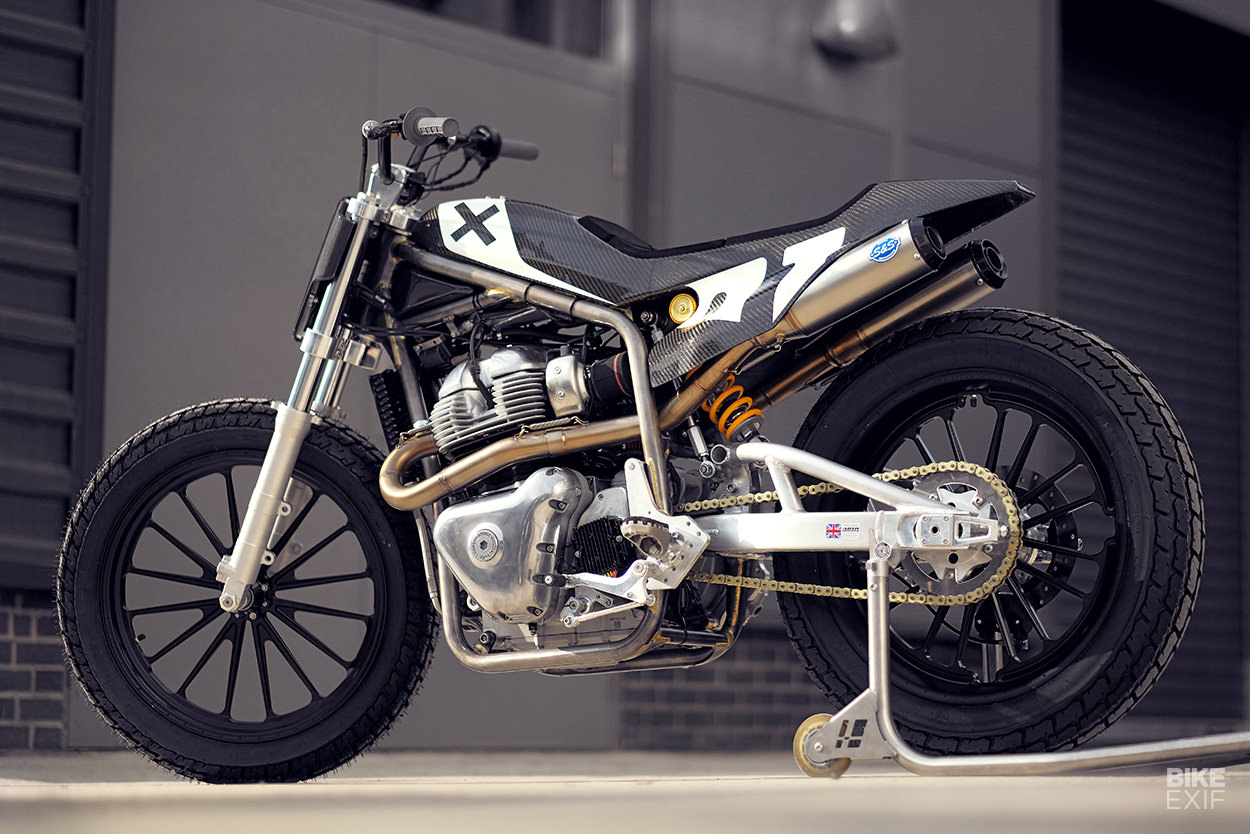
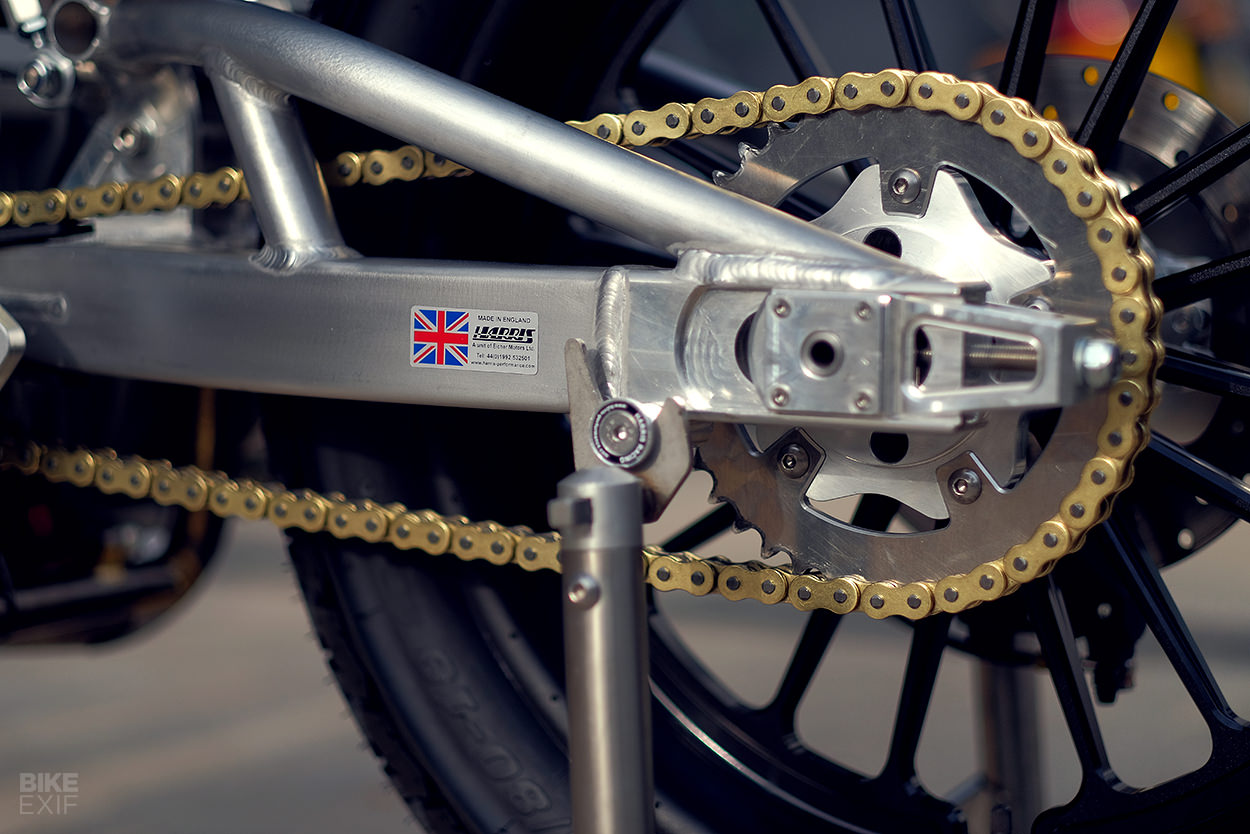
The frame is brazed steel tube—an old-school technique applied to a thoroughly modern motorcycle. The steering stem angle can be altered two degrees each way, by using specially machined inserts that locate the stem bearings at a different angle within the headstock tube.

The yokes can be adjusted 4 mm forwards and backwards too, and the swingarm pivot height has 5 mm of adjustment both ways.

A Royal Enfield flat tracker from Harris Performance
“These adjustments can be used to fine tune the chassis,” Adrian says, “altering the stability of the bike, how it turns in, and how it behaves under power.”

“As this is an exploration, Harris designed-in quite a wide scope for adjustment. As the chassis is developed with more testing, this adjustability could be decreased—to reduce costs and component size.”

A Royal Enfield flat tracker from Harris Performance
All the other chassis parts have been developed specifically for this bike by Harris, including the front forks, which are 41mm right-side-ups running Öhlins 30mm valving.

They’re matched to a top-of-the-range Öhlins TTX36 shock, and the 19-inch wheels are RSD Traction race rims—CNC machined from forged billet aluminum. The tires are the ubiquitous Dunlop DTRs, and there’s obviously no front brake. The rear wheel is hooked up to a Brembo twin-piston setup.

A Royal Enfield flat tracker from Harris Performance
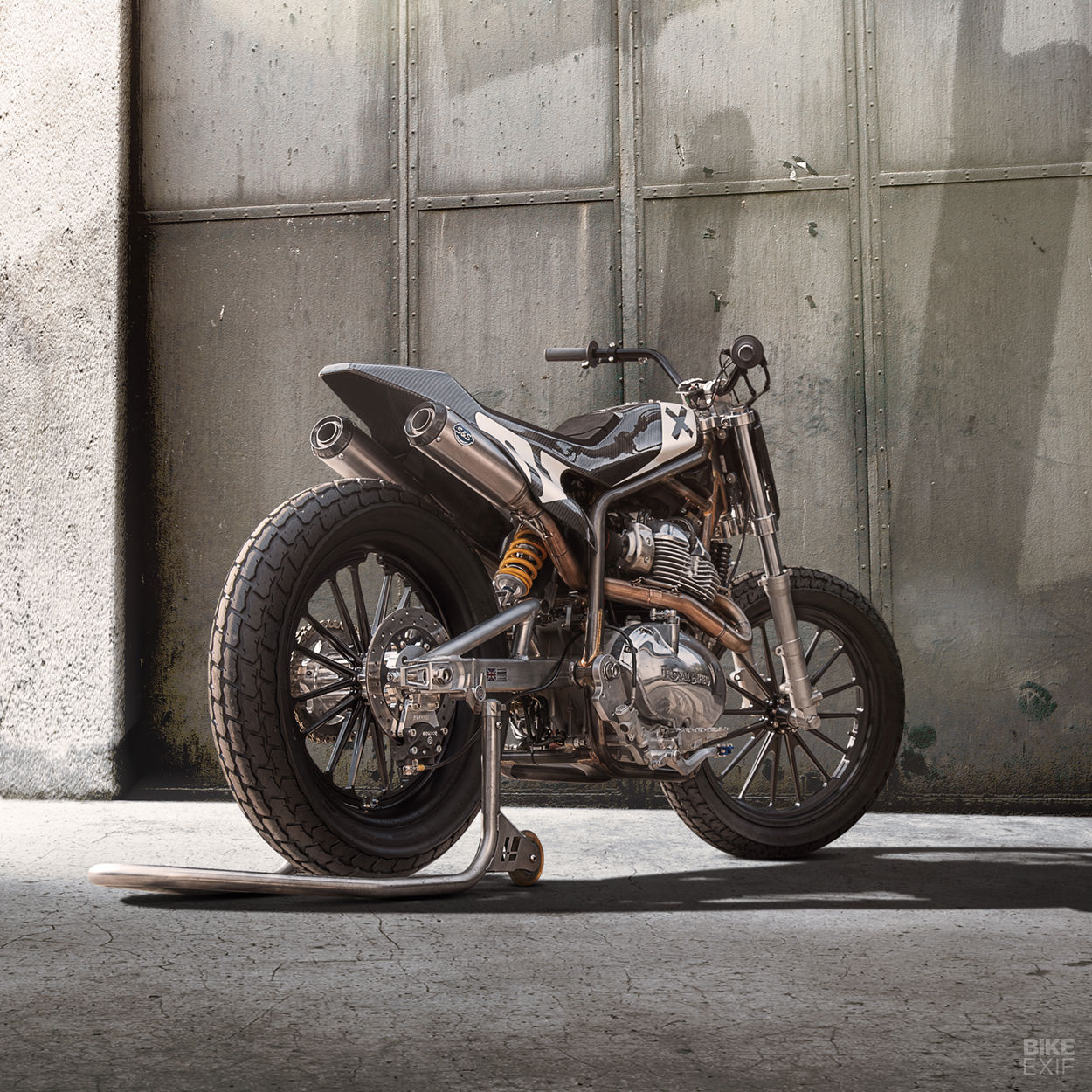
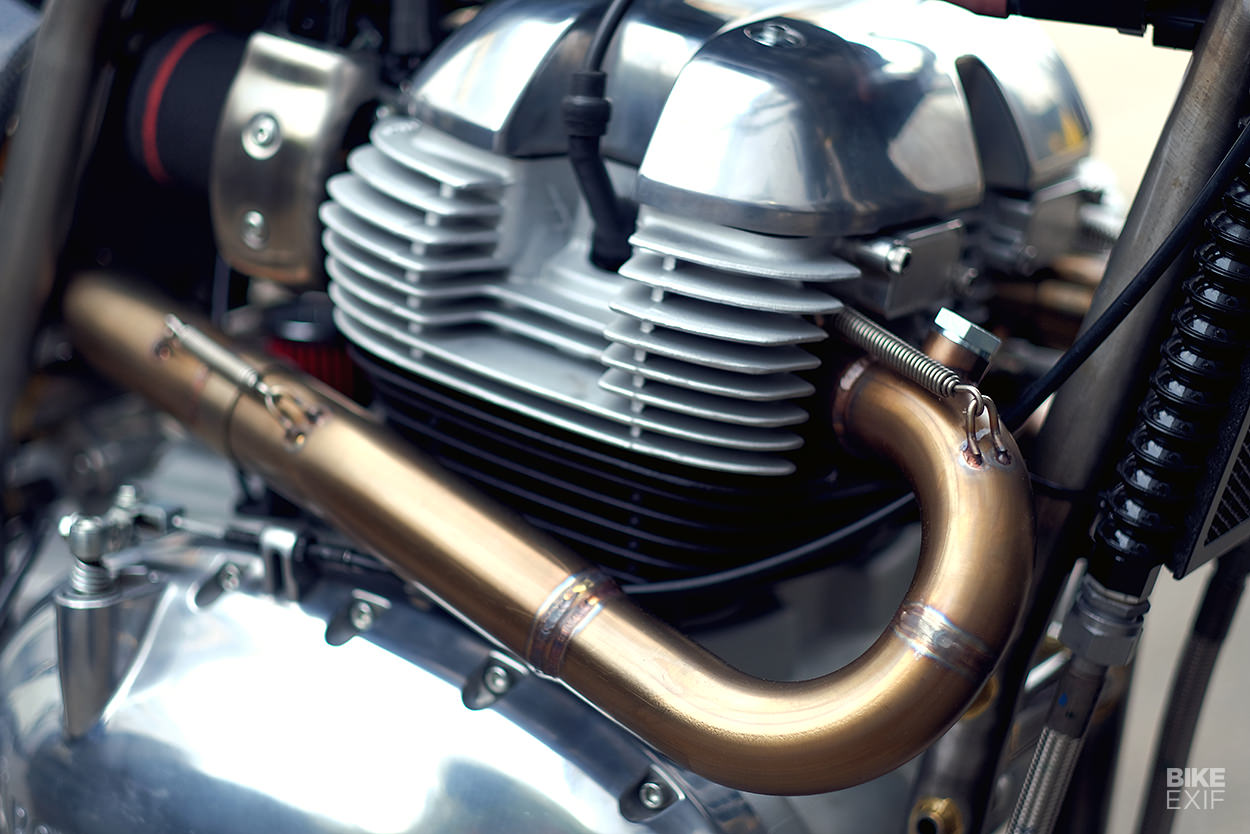
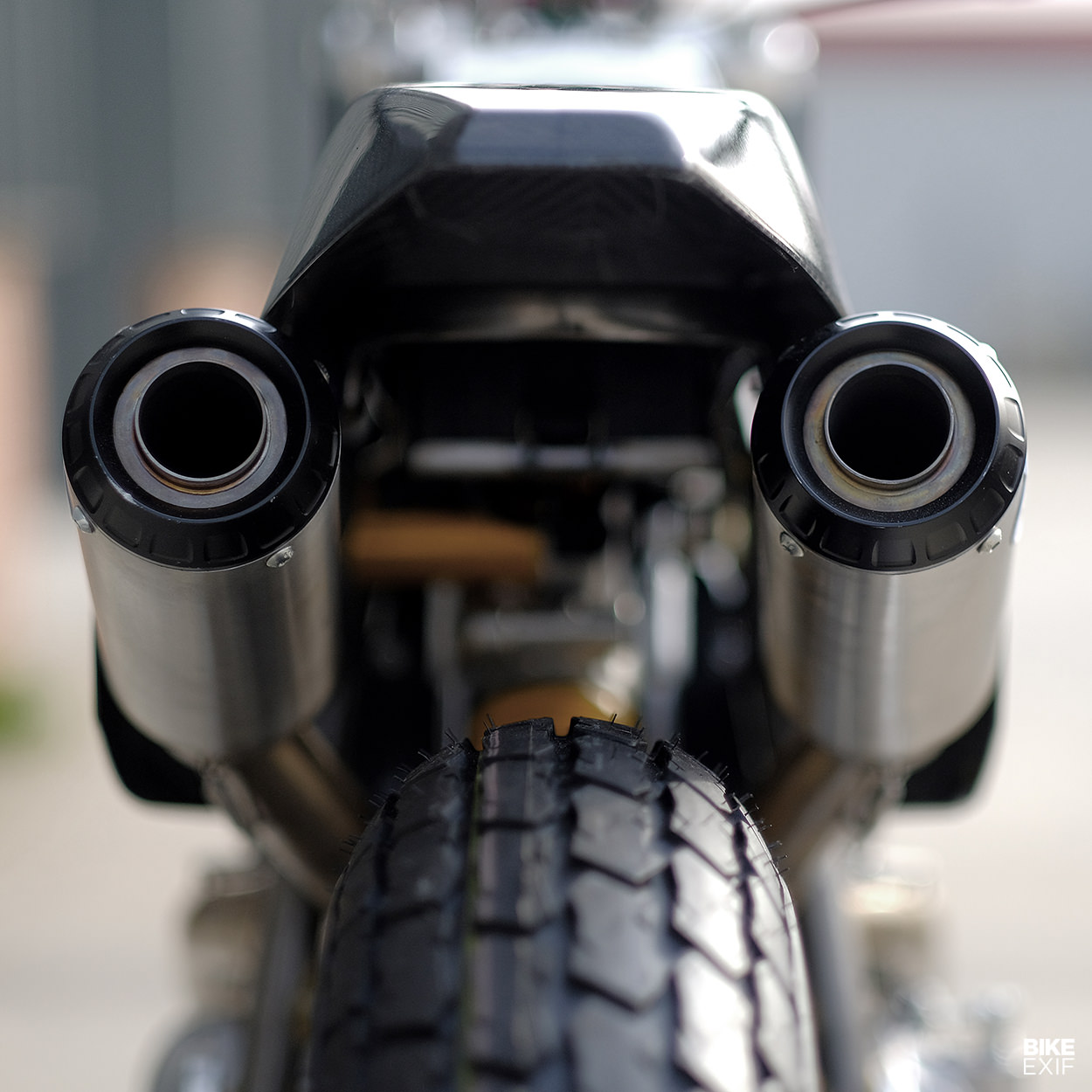
The motor has been juiced up by S&S Cycle, who helped with development of the 650 twin. The American company has supplied the exhaust system, a 750cc big bore kit, and a custom ECU mapped to make the best of both upgrades.

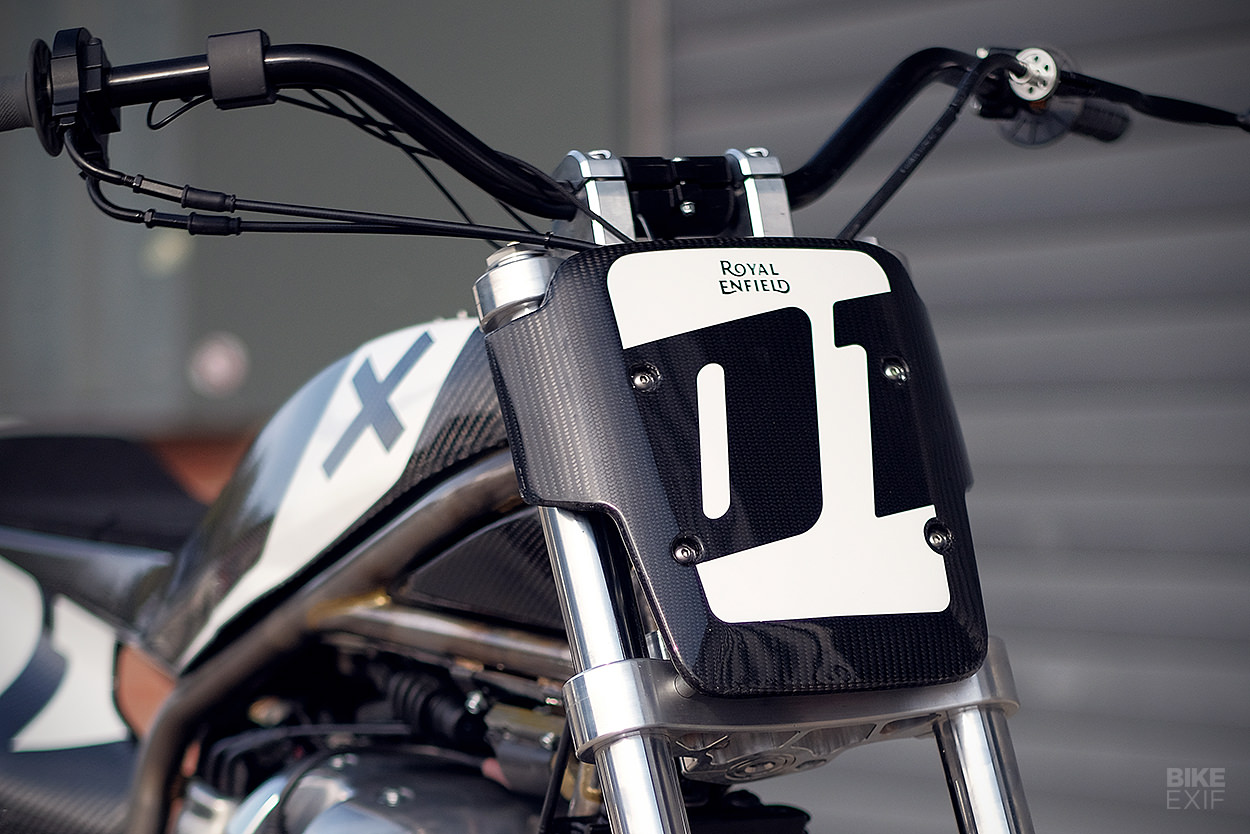
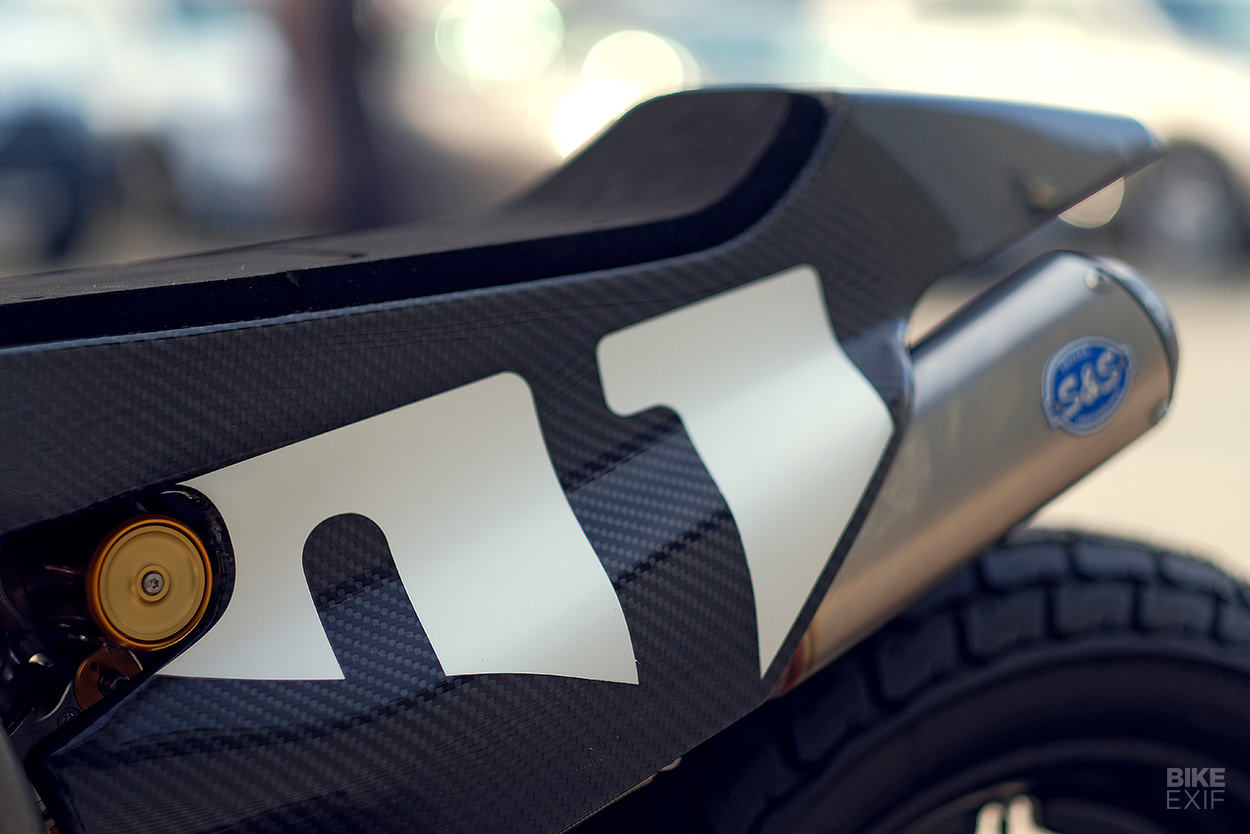
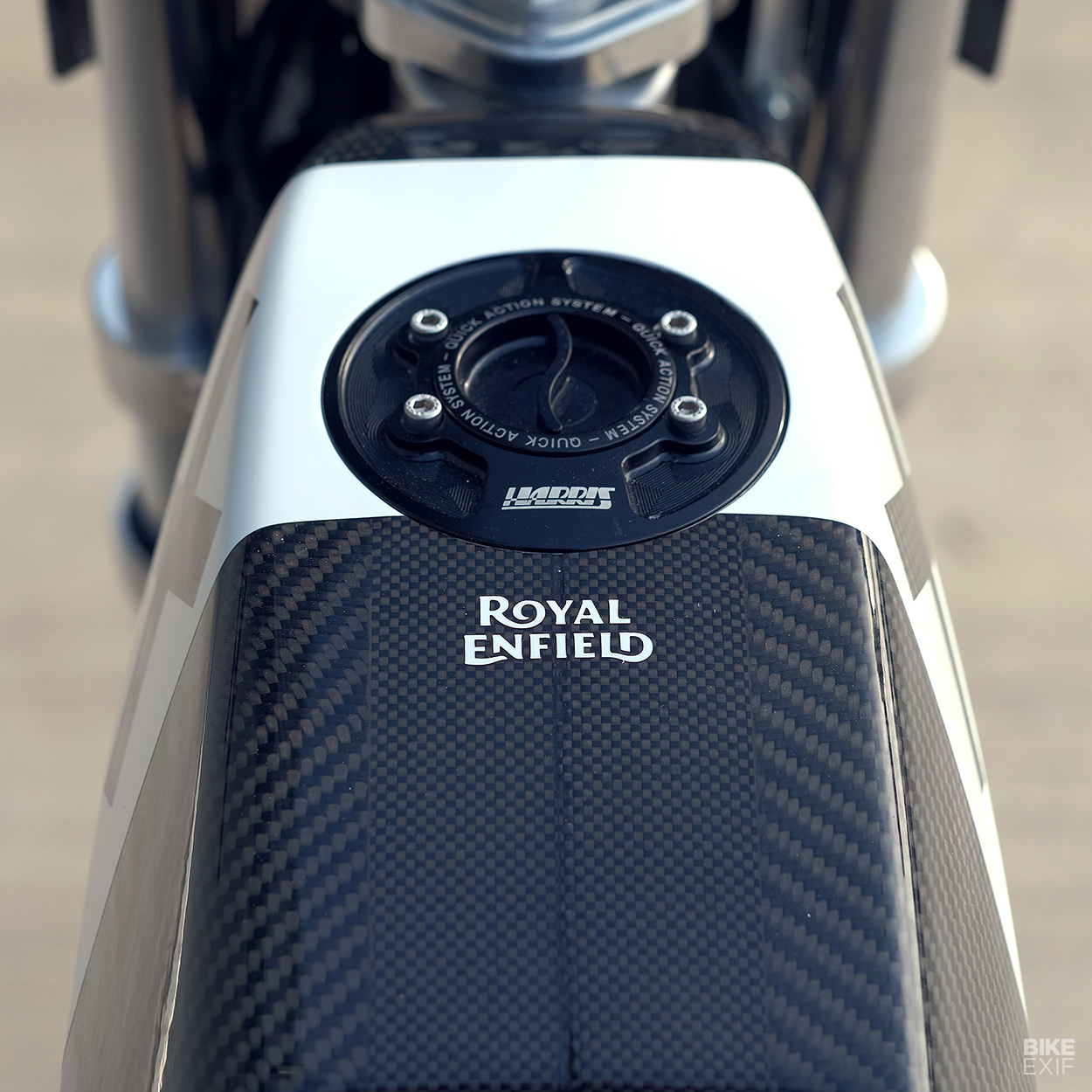
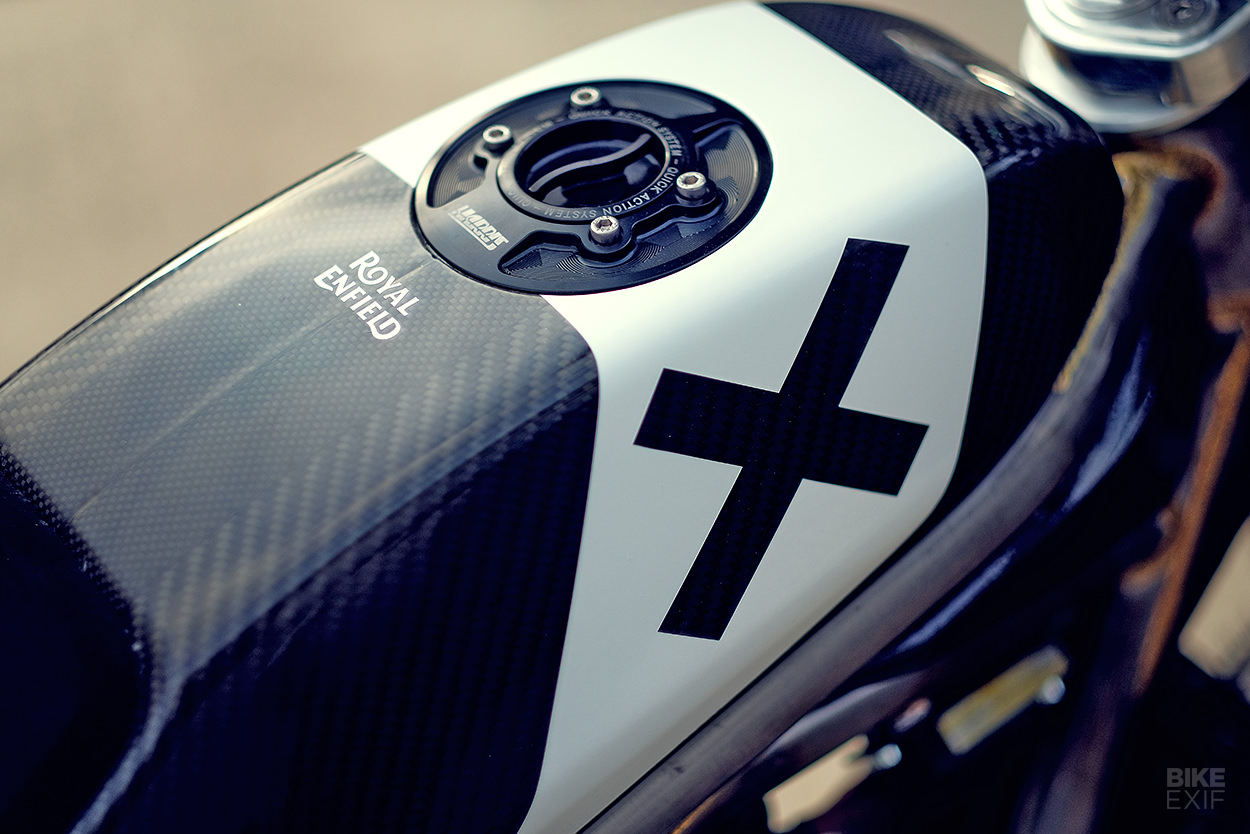
It was the UK design team at Royal Enfield’s technical center who made the stylish carbon bodywork though, taking cues from existing flat track practices.

A Royal Enfield flat tracker from Harris Performance
“As much as we wanted it to look good, we also wanted function to take precedence,” says Adrian. “So Harris made a working chassis first, and then our team designed a good-looking body based on that.”

The bodywork was modeled in 3D, and a negative mold was milled directly into high-density foam. The carbon has been laid up directly into that. Royal Enfield’s in-house modeler made the molds, and the carbon was laid up by Scorpion Composites and P3 Composites.

A Royal Enfield flat tracker from Harris Performance
“Once you’ve designed a few motorcycles, you can visualize the final surface from the CAD,” says Adrian, “and be confident in outputting it directly—without going through a physical modeling step.”

The fuel tank is a separate aluminum vessel that sits below the body shell. “This allows us to change the volume of the tank in the future, without affecting the aesthetics.”

A Royal Enfield flat tracker from Harris Performance
There’s some smart thinking going on here, and we reckon Royal Enfield have nailed the looks too. The bike has already been spotted running laps at a speedway track near RE’s British headquarters, and S&S could probably deliver a decent power output—given that they are heavily involved with Indian’s all-conquering FTR 750. But Adrian is coy about the competitive future.

“We’ve done a little testing to see if we’re in the right ball park, and we are, but not much more than that,” he tells us. “We’ll see how further testing goes, and take it from there. We wouldn’t want to go out unless we have something competitive, and racing is an all-new activity for us—so there is a lot of learning to be done.”

A Royal Enfield flat tracker from Harris Performance
We’re even more excited about a potential roadgoing version, given RE’s known desire to expand the 650 line-up, but there’s no word on that.

Still, if you’re in Milan for the upcoming EICMA show, swing by the Royal Enfield stand to check out ‘Twins FT’ in the metal—it’s a must-see.

Royal Enfield | Facebook | Instagram | Harris Performance | Facebook | Instagram

A Royal Enfield flat tracker from Harris Performance


from Bike EXIF https://ift.tt/2NEvWZD

Sunday, 3 November 2019

Custom Bikes Of The Week: 3 November, 2019

The best cafe racers, limited production bikes and classics from around the web
Details emerge of the new KRGT-1 from Keanu Reeves’ company Arch. Plus a smoking hot Yamaha RD350 board tracker, a rare BSA B50MX from the 1970s with just ten hours on the clock, and a guide to drawing motorcycles—from one of our favorite designers.

Yamaha RD350 by No Joke 2 Stroke
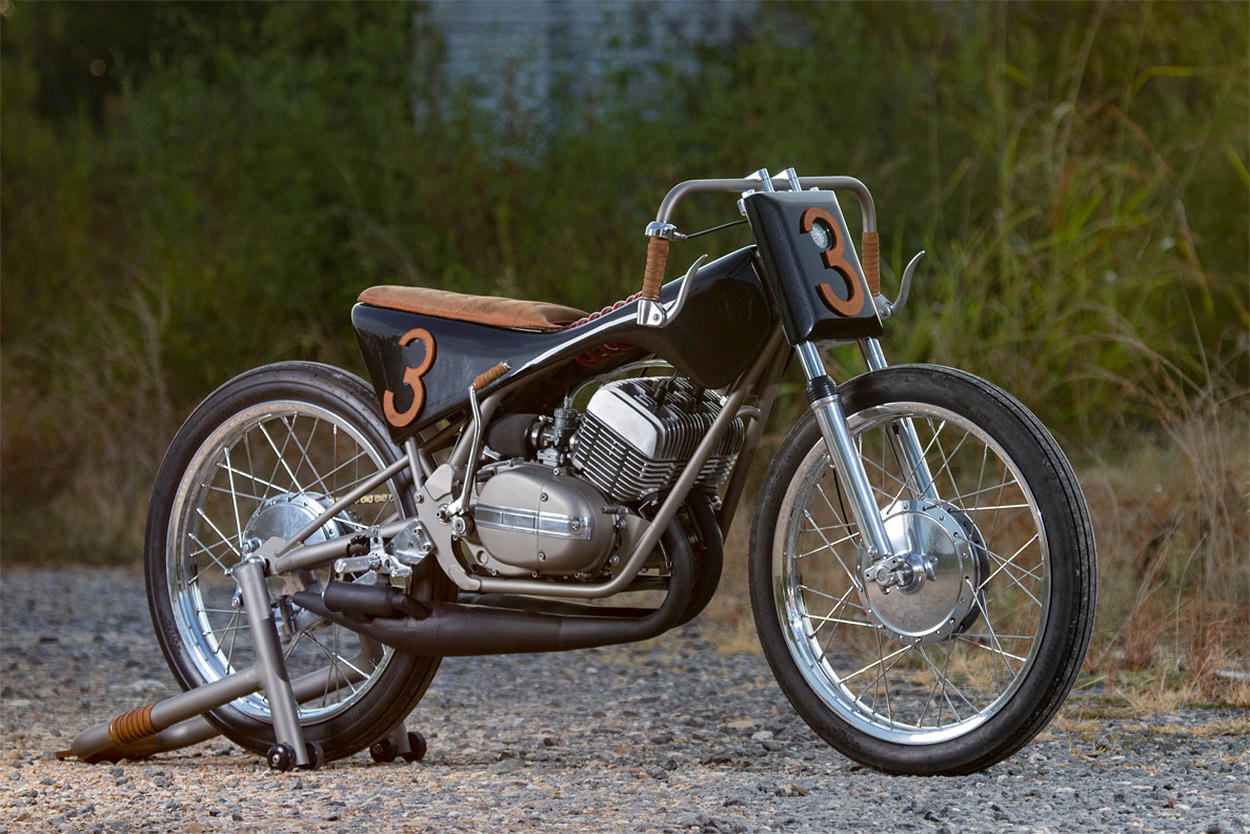
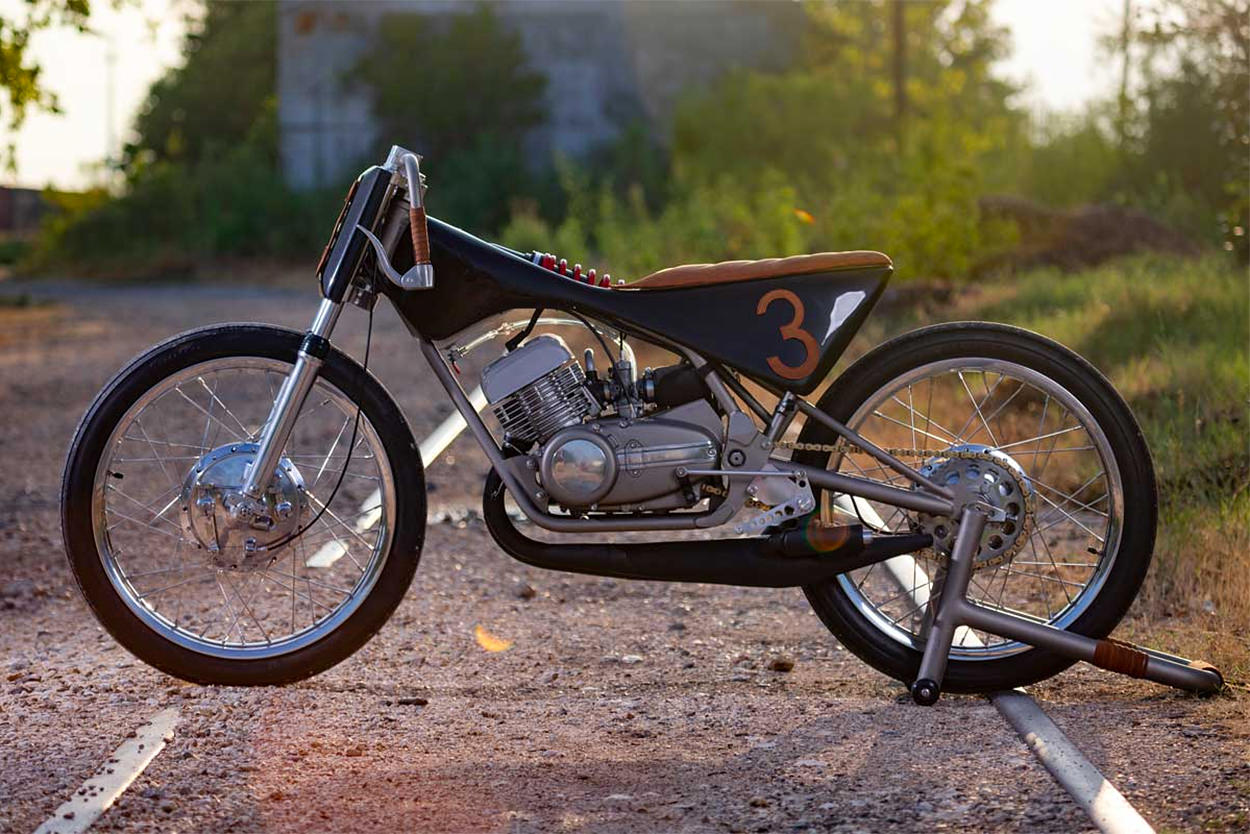
Yamaha RD350 by No Joke 2 Stroke Few two strokes are as beloved as the Yamaha RD350. So we can’t figure out if turning one into a board tracker is sacrilege, or genius. Either way, this 1974 RD350 from Mark Miller (A.K.A. No Joke 2 Stroke) sure looks like fun.

Mark builds bikes as a hobby, putting about 12 months into each project. His goal on this project was to create a board tracker, but one that had decent suspension and a two stroke motor. Besides for the RD350 motor and steering neck, this is a totally from-scratch build.

Yamaha RD350 by No Joke 2 Stroke
The custom frame is particularly sweet, especially the mono-shock setup that forms part of the backbone. Riding on top is a monocoque body. It’s been shaped from fiber glass, and designed to snap into place on the frame rather than be held in place by fasteners.

Other parts include 21” wheels with older Yamaha drum brakes, and exhaust headers that came from an early 80s race team. Mark also installed board track style bars, complete with wrapped grips and reverse levers. And he even reshaped the RD350’s cylinder heads, to make them look they were from an earlier era. [More]

The 2020 KRGT-1 motorcycle from Keanu Reeves' company Arch
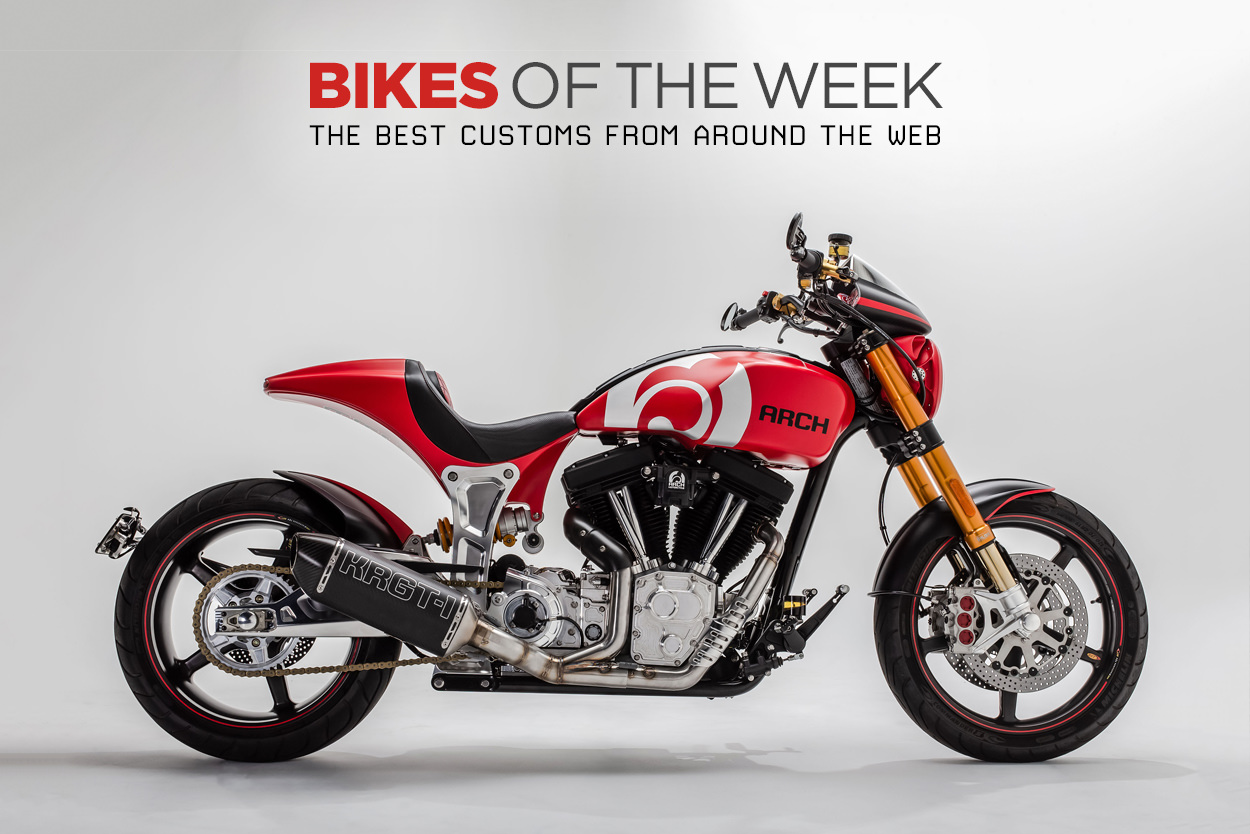
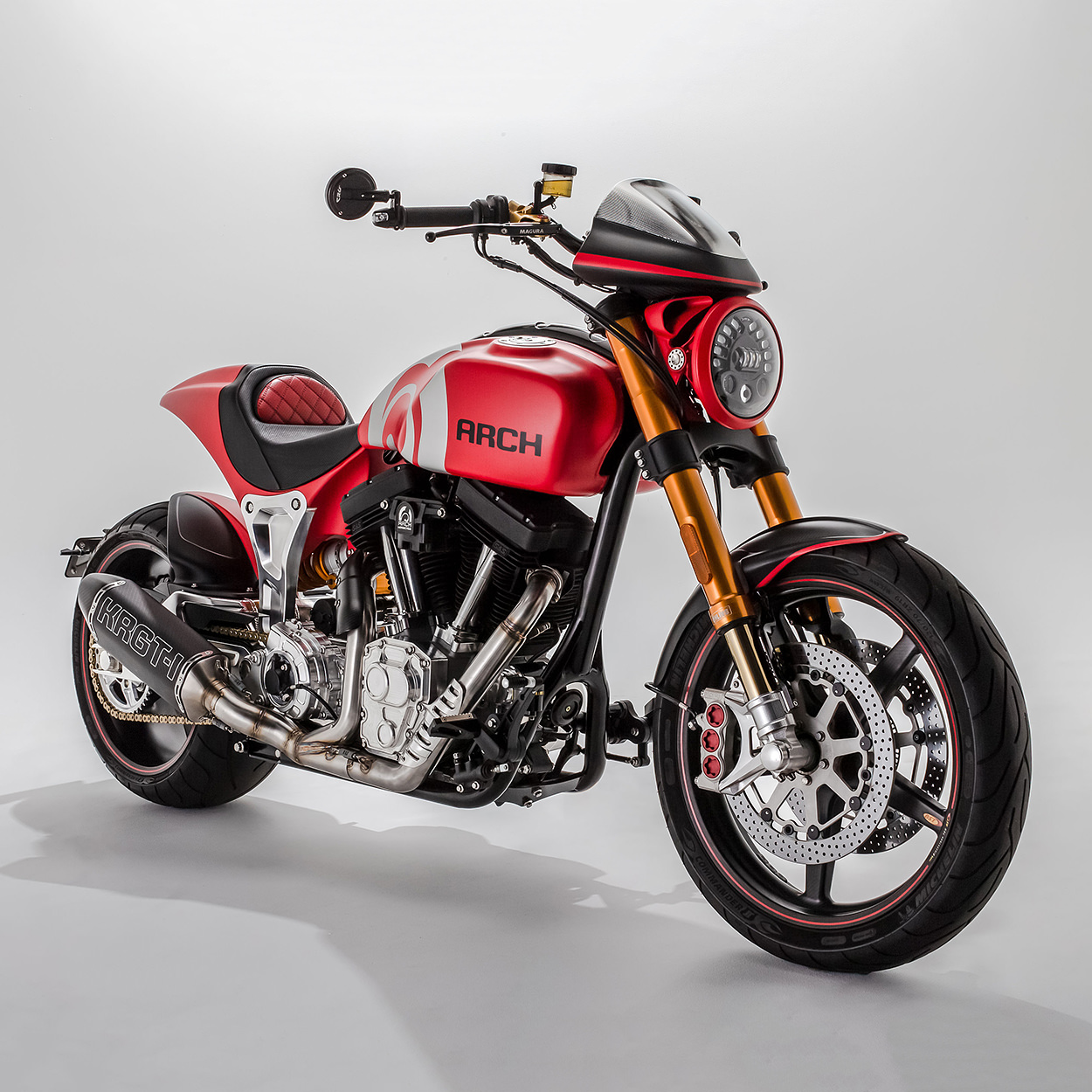
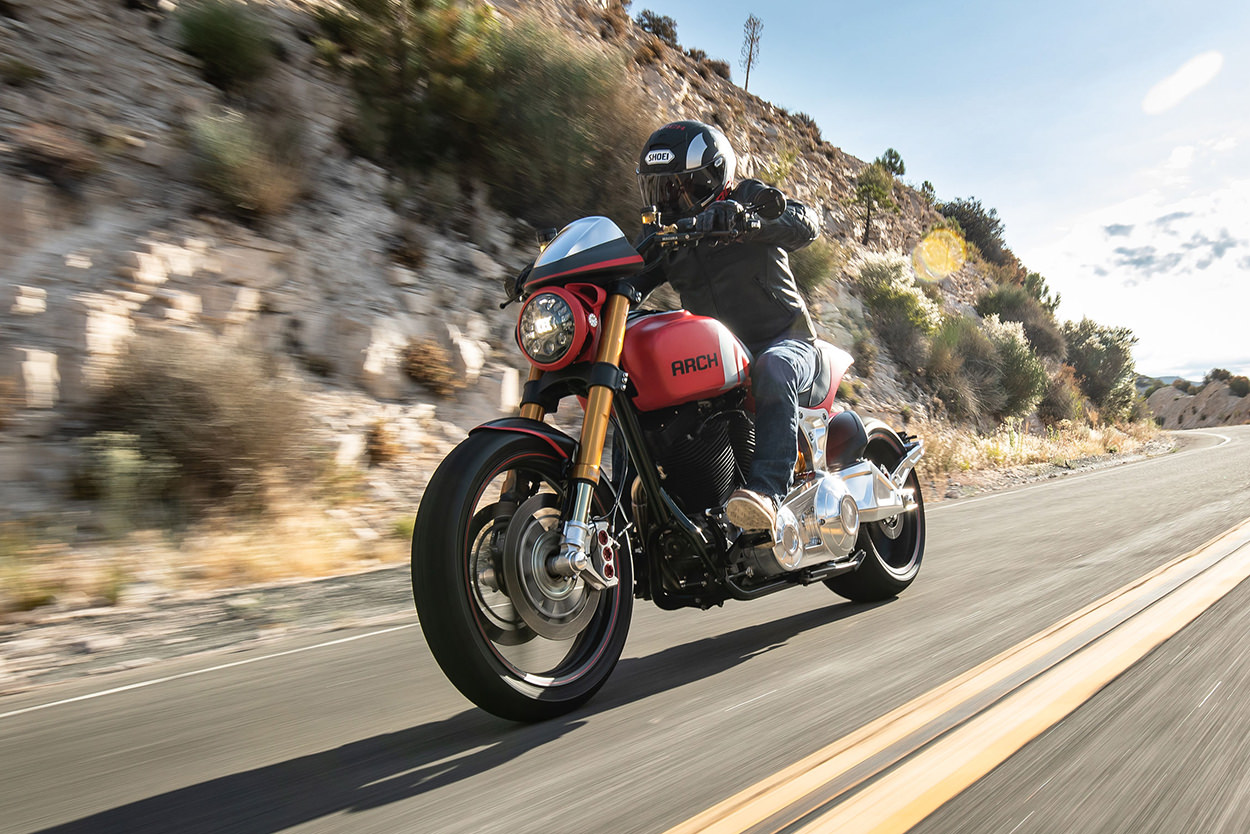
2020 Arch KRGT-1 Arch is a boutique motorcycle manufacturer, founded in LA in 2011 by Keanu Reeves and Gard Hollinger. Its specialty is high-end, made to order American performance cruisers, and the updated KRGT-1 is a total knockout.

At a glance, the $78,000 KRGT-1 isn’t a radical aesthetic departure from the outgoing model. But Arch is calling it an evolution, and a big one at that. There are over twenty major changes, and over 150 newly designed parts.

The 2020 KRGT-1 motorcycle from Keanu Reeves' company Arch
The KRGT-1’s heart is a monster 124 ci v-twin from performance specialists S&S Cycle. It’s a unique setup too, with a proprietary downdraught induction system and K&N filter. The exhaust is an Arch two-into-one system, terminating in a Yoshimura silencer.

There’s top-shelf stuff everywhere here. The forks are 48 mm Öhlins units, the wheels are carbon fiber hoops from BST, and the brakes are from ISR. Each Arch motorcycle is hand assembled in their LA facility, with customization options, so no two bikes are quite the same.

We’ll be swinging a leg over the new Arch KRGT-1 later this week, so stay tuned for more. [Arch Motorcycle]

1973 BSA B50MX
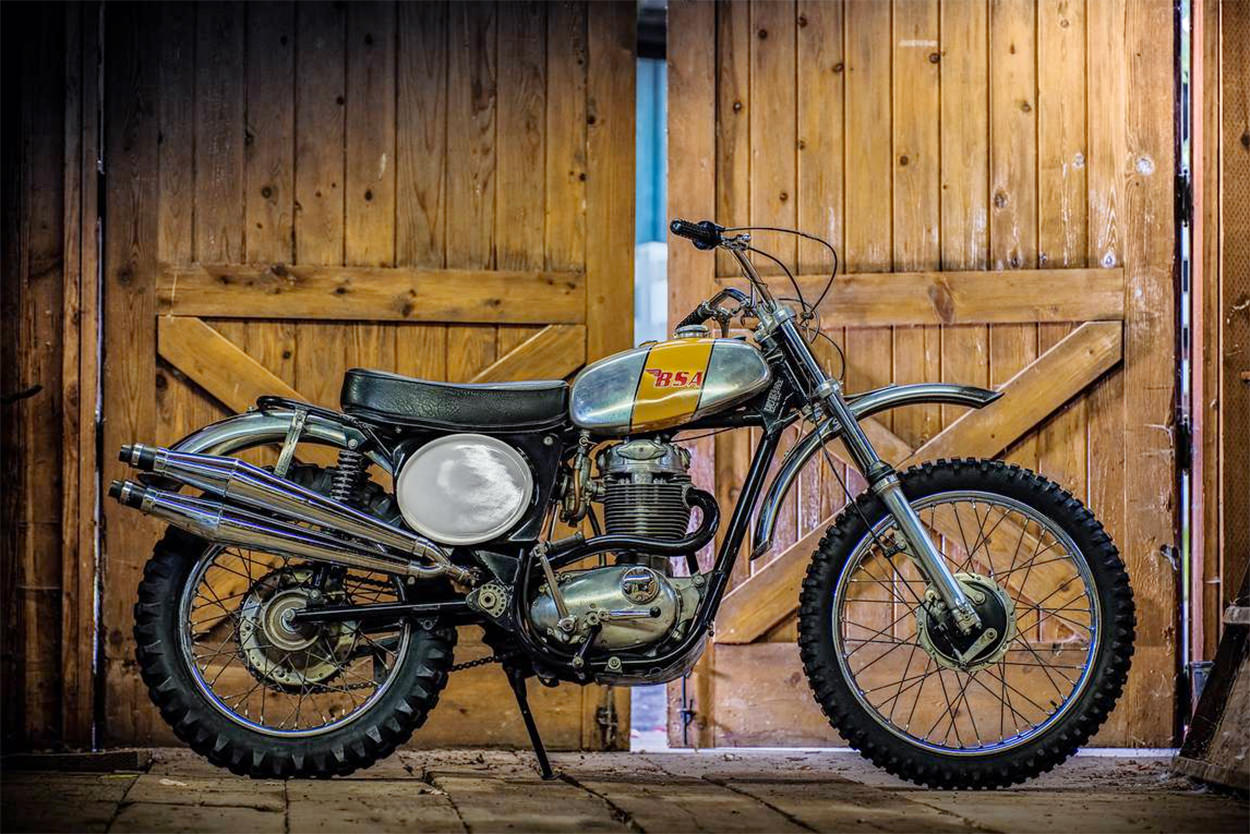
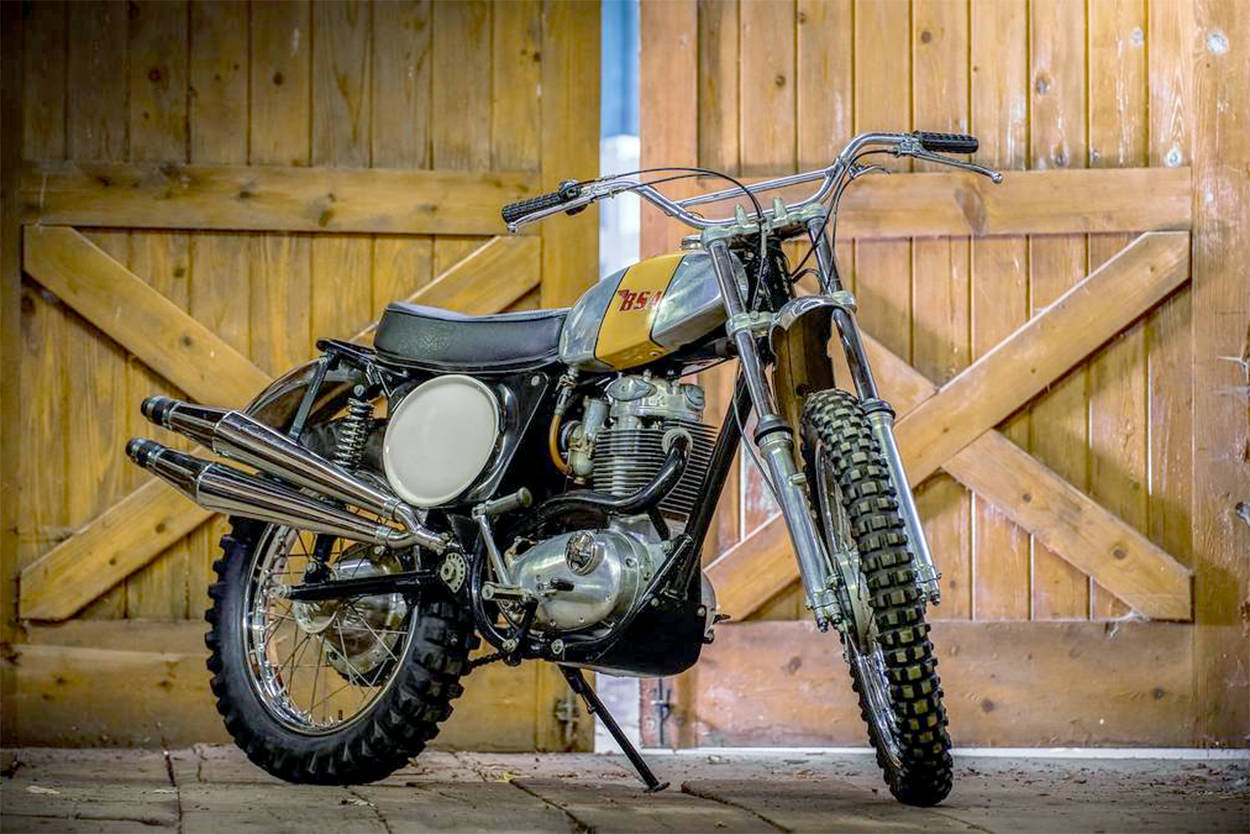
1973 BSA B50MX Back in the 70s, truly focused off-road machines were still fairly rare. BSA had a horse in the race—the B50MX, a ‘motocross’ version of the 499 cc B50 single. It made a whopping 34 horsepower, but weighed only 240 pounds.

There weren’t a whole lot made though, and when BSA folded, the remaining stock was rebadged as the Triumph TR5MX. So finding a BSA B50MX is rare.

1973 BSA B50MX
Finding one in original condition is unusual, which makes this example all the more special. It still has the tires, seat, grips, fenders, exhaust and spark plug it shipped with. And even crazier, is that it’s only seen 10 hours of use, and has never been titled!

If that sounds good to you, you can have it right now for $6,995 on Craigslist. It’s not often we gawk over bikes that are bone stock, but this one’s so cute we can’t resist. [Via]

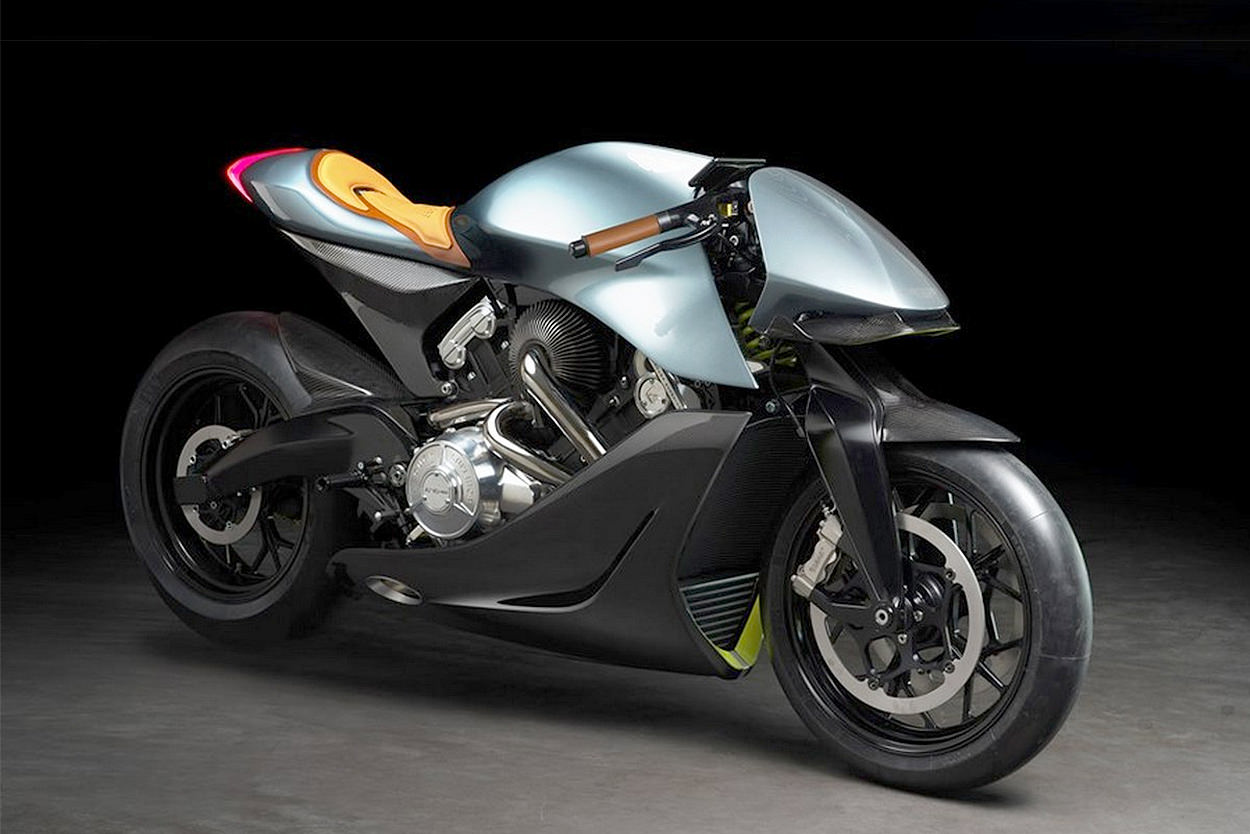
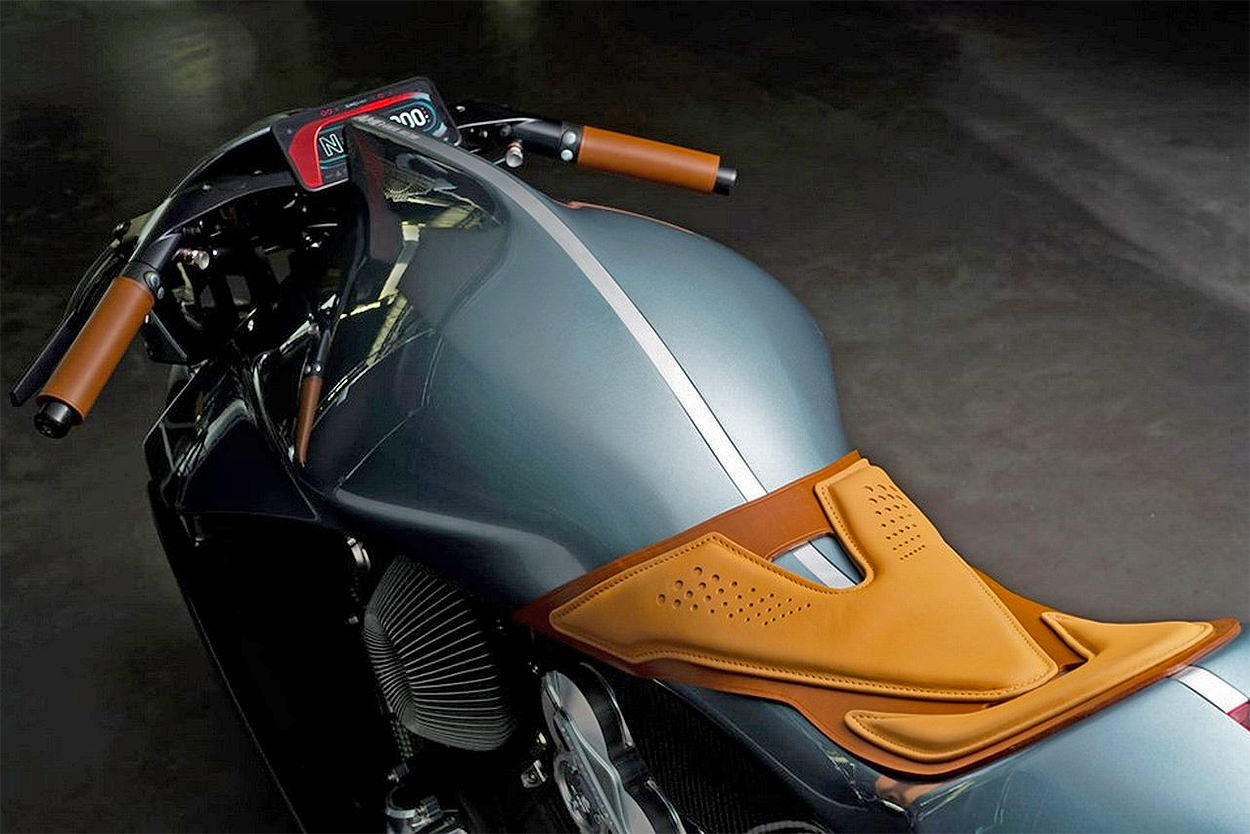
Brough Superior x Aston Martin AMB001 motorcycle
Brough Superior x Aston Martin Two producers of vehicles we can’t afford—Brough Superior and Aston Martin—are teaming up to build a motorcycle. There’s very little info about the project out there, because the bike is not due to be revealed until the EICMA show in Milan in a few days’ time.

Luckily a few images have started leaking online, courtesy of a Japanese website. And as you’d expect from a collaboration between a luxury car brand and a boutique motorcycle brand, the results are rather ostentatious.

Brough Superior x Aston Martin AMB001 motorcycle
We’re not sure if these renders are close to the finished bike (and they might even be fake). But they do tell us a couple of things: we’re seeing what looks like a turbocharged v-twin, and the front suspension design looks to be pretty unique.

Unsurprisingly, early talk is that the bike will be produced in very limited numbers. Add details like swanky upholstery and what looks like a radical TFT display, and you can bet this collab won’t come cheap. [More]

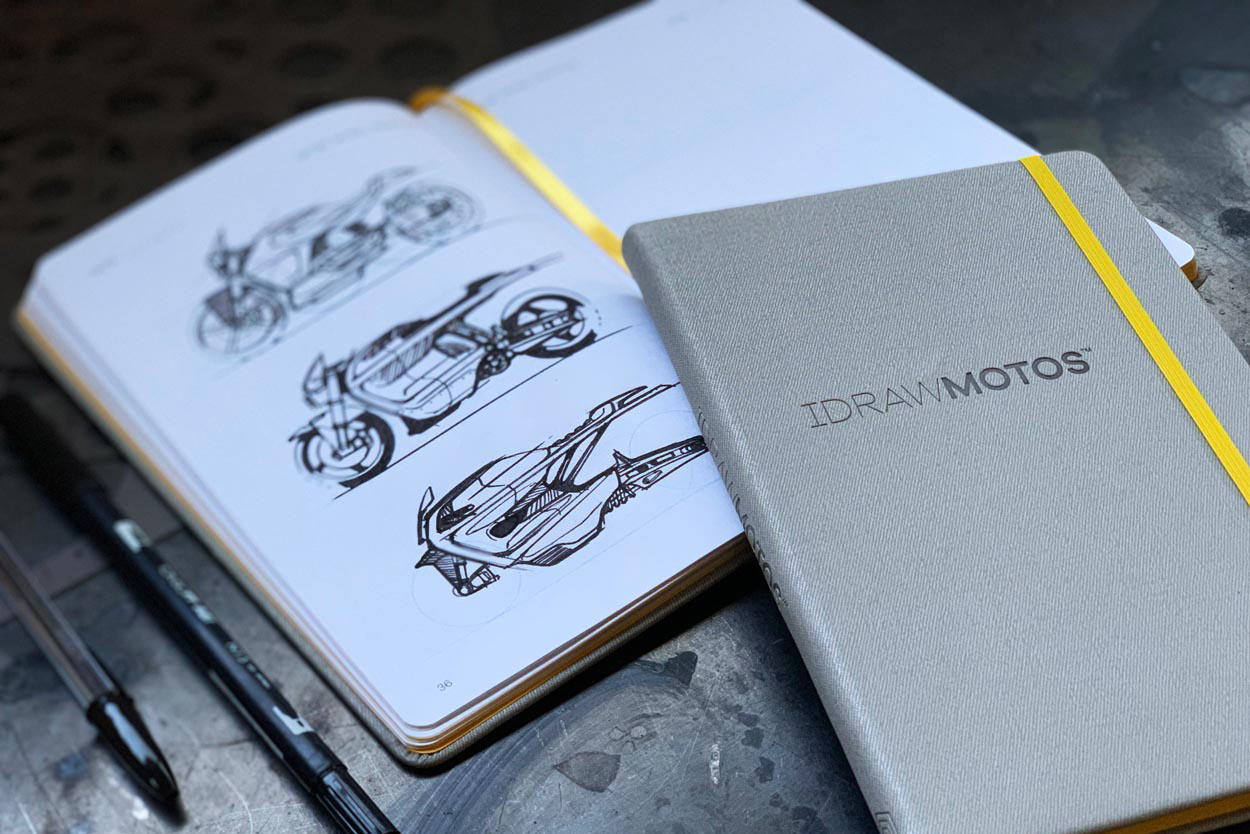
How to draw motorcycles: the I DRAW MOTOS sketchbook
I DRAW MOTOS sketchbook This one isn’t actually a motorcycle, but anyone with a remote interest in motorcycle design is sure to be interested in it. It’s a sketchbook, created by a company called I DRAW Creative Goods, and created with input from designer Dave Mucci, who knows a thing or two about designing gorgeous motorcycles.

I DRAW has a series of sketchbooks out, all designed to help people learn to draw things they’re passionate about. This one is their fifth, and focuses on motorcycles. I DRAW refer to it as “part premium sketchbook, part intuitive textbook, and part handy reference guide.”

How to draw motorcycles: the I DRAW MOTOS sketchbook
So it’s basically a mix of templates, tutorials and lessons, paired with countless examples and guides. It’s packed with handy info like motorcycle anatomy, engine configurations and suspension types, and general bike physics. So it’s designed to help you sketch motorcycles, get their proportions right and make them look good.

It’s a hardcover sketchbook, bound and covered in a premium linen-textured cover, with 100 gsm paper inside. If this sounds like the sort of thing you’d like to do in your spare time, the project’s funding now on Kickstarter.


from Bike EXIF https://ift.tt/36uti14

Automoblog Book Garage: Shelby Mustang: The Total Performance Pony Car

  • Author Colin Comer takes us through the story of the greatest Mustang in history.
  • Our Book Garage series showcases what every enthusiast should add to their library. 

If you’re going to write a book about the Ford Mustang, you might as well write one about the best Ford Mustang. Obviously, I’m talking about the Shelby Mustang, the pony car to end all pony cars. Whatever the normal Mustangs could do, Sheblys did better, both on and off the track. Shelby Mustang: The Total Performance Pony Car is yet another fine entry from Motorbooks that looks acutely into all things Mustang.

Earlier this year, I read another one from Motorbooks by author Donald Farr about the Boss Mustang. It doesn’t look like they’re going to break the chain of their successes any time soon on the topic of the Ford Mustang.

Six Ways From Sunday

Shelby Mustang: The Total Performance Pony Car is written by Colin Comer and features a rather nice forward by Lee Iacocca, Mr. Mustang himself. The subtitle alludes to Ford’s racing slogan from the 1960s. Henry Ford II got a real bee in his bonnet about racing for some reason. He didn’t want to just win here and there, he wanted complete domination. Total Performance was the slogan FoMoCo came up with, and Total Performance is what they got. They won at Indy, they won in NASCAR. Ford won at Le Mans and their corporate backing of the Cosworth engine assured them of Grand Prix immortality.

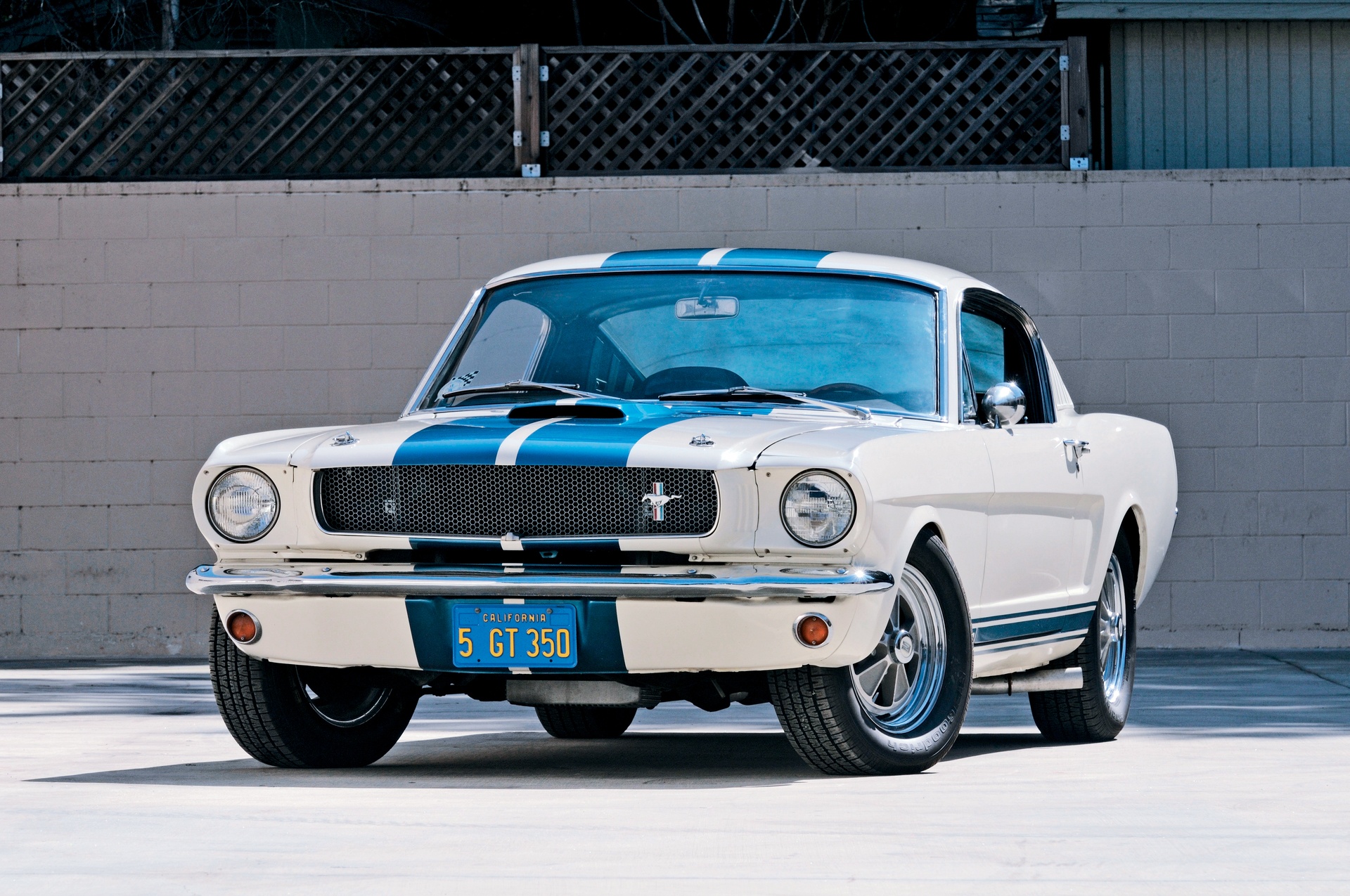
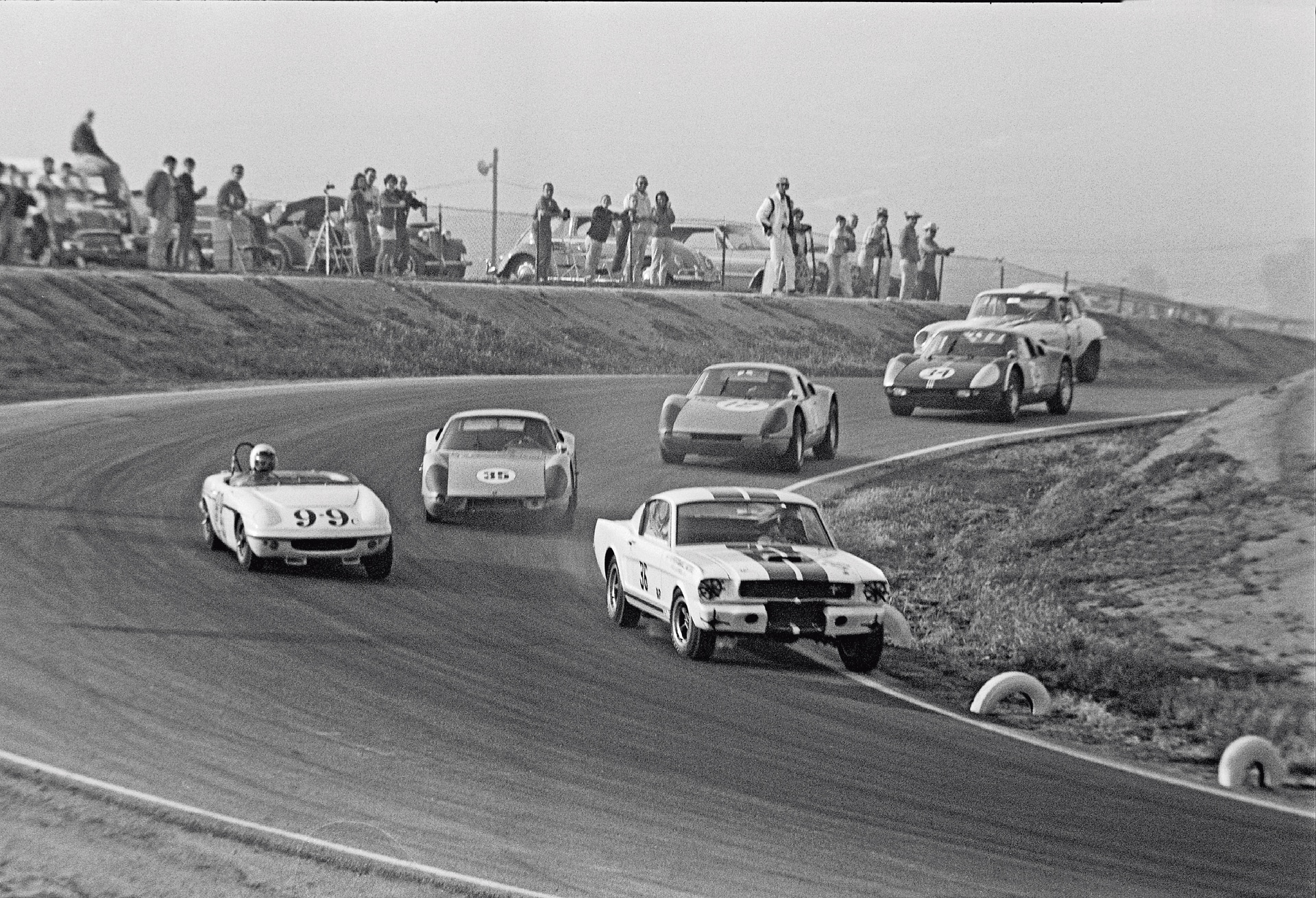
The Shelby Mustang fit right in the middle of this spectrum of world-beating success. It wasn’t the Boss Mustang slugging it out with Mark Donohue and Dan Gurney in the Trans Am series; it was found running against a wide variety of sports cars in SCCA B-Production racing. Back then, that meant everything from big Jags and Healeys to other all-American hot rods.

Shelby Mustang: The Total Performance Pony Car.
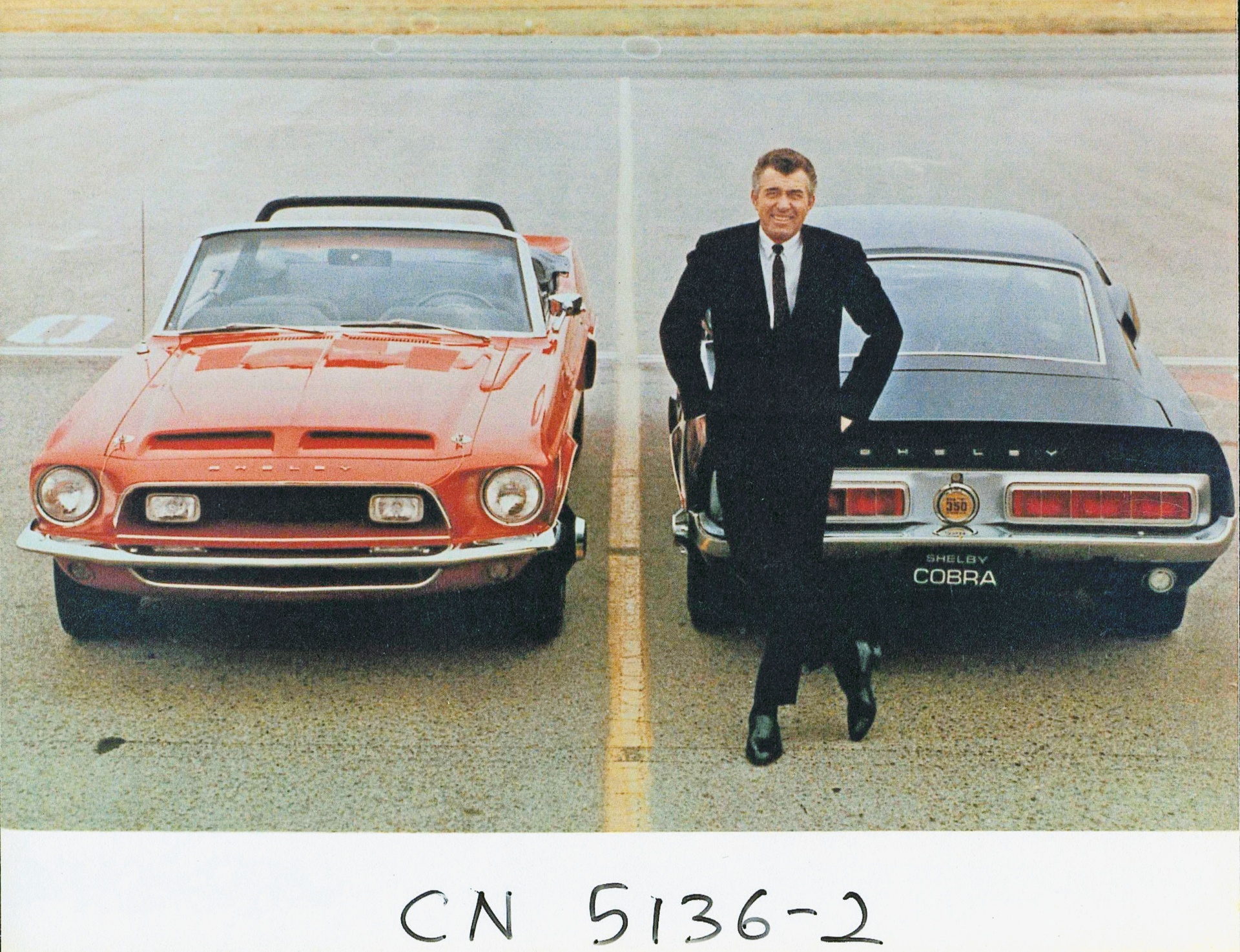
Carroll Shelby with the performance cars that bear his name. Photo: Colin Comer Archives.

New Version of a Classic

This is an updating of Comer’s 2014 version of the book and features lots of new photos and details on individual and historically significant cars. Comer is recognized as one of the world’s foremost authorities on Shelby cars and he definitely gets that impression across in this volume.

Comer starts at the beginning, with Shelby being tasked to “make it better” and make the Mustang go as good as it looked. Carroll did that the old fashioned way. He got a 1965 289 K-code fastback, got the engine producing more power, cut the weight, and “improved” the handling. They sure handle better than stock Mustangs, but no one ever mistook them for a light and agile Alfa or something like that. Then again, raw power overcomes a lot of handling deficiencies. Just ask all the guys Shelby Mustangs were beating with regularity.

Shelby Mustang: The Total Performance Pony Car.
Shelby Mustang: The Total Performance Pony Car takes us through the history of the ultimate Mustang. Photo: David Newhardt.

Foot On The Gas

Of course Shelby didn’t stop there, and neither does Comer. After the deep dive into the 350, he goes just as deep into the GT500 (big block Mustangs that are going for obscene amounts on the auction circuit these days), and even takes a crack at the modern Shelbys Ford started cranking out in 2006. Some might quibble with that, but I am not one of them. They are just as deserving of the moniker as the vintage cars, doing everything Shelby Mustangs have always done. Go fast, turn hard, stop harder, and don’t break the bank.

Wonderfully Illustrated

Oh yeah, photos. Shelby Mustang is swimming in lots of photos and it seems like I have only seen about a third of them before. Motorbooks has a knack for doing this, finding lots of cool old shots from Lord-knows-where. By this point, I’ve stopped asking and am just grateful to whomever their photo researchers are. There’s all these fantastic old shots of the Shelby facility down in SoCal; various famous people in the background; now-priceless parts stacked here and there; and assorted gearheads getting down to the task of making it fast, making it last, and making a lot of them.

Shelby Mustang: The Total Performance Pony Car.
Page 61: A 350 racing at Riverside. Photo: Peter Luongo.

A Definitive Shelby Mustang Book

The photos alone make it worth the price, but it also works as a must-have book it you are, A) a Mustang fan (duh); B) a Shelby Fan (also duh); C) a racing fan; or D) a fan of mid-century cars in general. In other words, you should probably just buy this book on general principles alone if you are a car enthusiast.

Tony Borroz has spent his entire life racing antique and sports cars. He is the author of Bricks & Bones: The Endearing Legacy and Nitty-Gritty Phenomenon of The Indy 500, available in paperback or Kindle format. Follow his work on Twitter: @TonyBorroz

Shelby Mustang: The Total Performance Pony Car by Colin Comer

  • Paperback: 240 pages
  • Publisher: Motorbooks; Reprint edition (October 8, 2019)
  • Language: English
  • ISBN-10: 0760365970
  • ISBN-13: 978-0760365977
  • Product Dimensions: 9.4 x 0.8 x 11 inches
  • Shipping Weight: 1.8 pounds 
  • Where to Buy: Amazon

About The Author

Colin Comer is a respected authority on collector cars and a noted champion for the cars, people, and history of Shelby American. He is known from his many years as editor-at-large for Sports Car Market and American Car Collector magazines, an editor for Hagerty magazine, and a contributing editor for Road & Track magazine. When not writing about cars, Comer enjoys maintaining his own eclectic collection of vintage cars and is an accomplished racer and pilot. He and his family live in Milwaukee, Wisconsin, or, in Comer’s words, “fifty-two miles from Road America.”


from Automoblog https://ift.tt/33d3Uer