Wednesday, 5 June 2019

A classic Laverda Jota with modern performance

A classic Laverda Jota 1200 America with modern performance
Every Laverda that Jean-Louis Olive lays his hands on gets the star treatment. Most of his projects are restorations, but this 1978 1200 Jota America was a full-blown custom job. And it turned out so good, it starred in the pages of Practical Sportbikes magazine in the UK.

Jean-Louis is more than a little obsessed with Laverda. He had his first encounter with the marque in 1977, and has been in love ever since. He’s written multiple Laverda-themed books, and launched the Laverdamania website and owners’ association.

A classic Laverda Jota 1200 America with modern performance
Jean-Louis refers to his passion as “only a hobby, but almost a full time job!” It took him a few years to wrap up the Jota, because he was working abroad while the project was active. So wrench time was limited to vacations, when he could return to his home in Aubagne, a small town near Marseille that’s also home to the French Foreign Legion.

According to Jean-Louis, the idea was to “build a special with the most modern technology, while keeping some strong visual aspects of the original Laverda identity. So it is a mix between modern and ancient.”

A classic Laverda Jota 1200 America with modern performance
“It is a sort of opposite of the current neo-retro fashion,” he continues. “While many of these projects offer a vintage design on a modern base, P12XX puts modern technology on an ancient base.” In other words, it’s a restomod.

Why ‘P12XX?’ The ‘P’ stands for project, the ’12’ for the model designation, and the ‘XX’ because Jean-Louis didn’t know what the engine capacity would eventually be. And that’s not a joke; this motor’s had one of the deepest reworks we’ve ever featured on Bike EXIF.

A classic Laverda Jota 1200 America with modern performance
All the machining and rebuild work was handled by Peter Herrmann, an engineer based in Germany. The cylinder head is a rare TT F1 unit, built by the factory for TT racing back in the 80s. It’s been ported, and modified with large valves and new seats.

It’s also packing slightly re-phased, factory-issue endurance racing cams, and ceramic coated Ross Racing pistons with a 10.5:1 compression ration. The crankshaft has been lightened and balanced, and the conrods are from Carillo USA.

A classic Laverda Jota 1200 America with modern performance
A lot of effort’s gone into lightening the motor, and Jean-Louis reckons it’s now roughly 10 kg lighter. It has a fresh gearbox (also made lighter), and a special hydraulic clutch system from Redax Laverda in Australia (“to cope with the extra power”).

Redax Laverda also supplied a programmable ignition and upgraded charging system. The entire electrical system has been redone with Motogadget components (right down to the switches and speedo), with a lightweight Deka battery, and LED lighting at both ends. The carbs are Mikuni RS series numbers.

A classic Laverda Jota 1200 America with modern performance
The exhaust system is a custom-built titanium and stainless steel affair, digitally designed by Burns Stainless in the US. “All the tubes are laser cut and rolled by hand,” Jean-Louis tells us. “The headers have a conical 38/44 mm shape, and the collector has a venturi shape.”

P12XX has a chassis upgrade package to match too. The frame is original, but it’s been lightened and stiffened, with its trail reduced a touch. The forks are Marzocchi units, upgraded with a Racetech kit and a Redax Laverda brace.

A classic Laverda Jota 1200 America with modern performance
Jean-Louis has also fitted Öhlins rear shocks, a pair of Suzuki GSX-R 1100 wheels, and a Brembo brake set. There are tasty bits everywhere—from aircraft-grade titanium wheel and swingarm axles, to a host of 7075 aluminum parts.

Even the bodywork has a performance bent: it’s all made from carbon fiber, with the addition of Kevlar for the tank. It was built and shipped by the Serbian carbon specialist Slobodan Vukomanovic. Jean-Louis had nothing but praise for his work.

A classic Laverda Jota 1200 America with modern performance
The design is a slightly altered version of the Laverda 750 SFC’s bodywork. With nothing but a pair of racing stripes adorning the carbon sections, the overall effect is both elegant and purposeful.

This Jota has the numbers to back the looks: it now makes 120 hp at the rear wheel, and weighs 192 kg wet. For reference, original numbers were 80 hp at the crank, and 60 kg more on the scales.

A classic Laverda Jota 1200 America with modern performance
“Even when the Laverda triple was a legendary model,” says Jean-Louis, “and the fastest production motorbike in the mid 70s, it had some downsides commonly seen on vintage motorbikes of this period—particularly the weight.”

“I was dreaming of having a lightweight Laverda triple, to light up this fabulous engine.”

A classic Laverda Jota 1200 America with modern performance
It looks like Jean-Louis has found the magic formula. Here’s hoping he has more delicious custom work up his sleeve.

Laverdamania | Facebook | Images © Charles Seguy | Instagram

A classic Laverda Jota 1200 America with modern performance


from Bike EXIF http://bit.ly/2HXqZtg

Tuesday, 4 June 2019

Tarmac Raven: A Street Bob custom from Rough Crafts

Tarmac Raven: A Harley-Davidson Street Bob custom from Rough Crafts
Two years ago, Harley-Davidson flew Winston Yeh to Barcelona to test ride the new Milwaukee-Eight big twins. And like most riders at the launch event, he was impressed by the new Softail platform.

“I’ve had the idea of building a performance version of a Softail in my head ever since,” Winston tells us. “So when a customer arrived with an open brief, I knew exactly what I had to do.”

Tarmac Raven: A Harley-Davidson Street Bob custom from Rough Crafts
There’s a dark, almost baroque feel to ‘Tarmac Raven.’ It drips with the signature Rough Crafts style, but remarkably, it didn’t require any grinder work. Which must have been a relief for Winston’s longstanding fabrication sidekicks at CT-Garage.

The new bodywork sits comfortably on the stock frame, and accentuates the long, sled-like vibe. The tank’s a heavily modified Sportster unit, and the tail’s been fashioned out of fiber glass. Both have been wrapped in a layer of carbon fiber by Simon Fiber Craft, then painted by Air Runner in contrasting matt and gloss shades of black.

Tarmac Raven: A Harley-Davidson Street Bob custom from Rough Crafts
But it’s actually the mighty Milwaukee-Eight that dominates the side view. And as you might have guessed, this V-Twin is a long way from stock.

“I had a chat with David Zemla from S&S Cycle,” says Winston. “He provided their latest kit for the M8 engine: the 124 ci Power Package.” This includes forged pistons with an 11:1 compression ratio and a hotter cam, and promises 124 horsepower at the crank. Torque rises from the stock 110 ft-lb to a massive 135.

Tarmac Raven: A Harley-Davidson Street Bob custom from Rough Crafts
“I haven’t had a chance to dyno mine,” says Winston, “but man, it really has some serious push!”

Keeping all this power in check is a full set of trick Öhlins suspension. Up front are beefy 48mm FGRT301 forks, originally designed for the Ducati Diavel. These move the Street Bob away from Harley’s typical laidback cruiser geometry, to a more aggressive, lean-forward stance.

Tarmac Raven: A Harley-Davidson Street Bob custom from Rough Crafts
“Öhlins also custom made a rear shock that is an inch longer than their regular product for the Softail,” Winston reveals.

CNC Racing provided a triple clamp, which Winston modified to take a Harley-style neck and risers. He then installed his favorite super-light carbon fiber wheels from BlackStone Tek—this time the seven-spoke ‘Black Mamba’ rims, which are around 25% lighter than forged aluminum.

Tarmac Raven: A Harley-Davidson Street Bob custom from Rough Crafts
They’re wrapped in the latest Pirelli Diablo Supercorsa SP V3 rubber to complete the 17-inch handling package. The brakes are Beringer all round: dual 4-piston calipers and Sunstar discs at the front, and a modified Ducati Panigale brake kit at the back.

Winston’s next port of call was Florida-based Roaring Toyz, who know a thing or too about custom billet sportbike parts. “I called to see if they were interested in the Softail platform,” says Winston.

Tarmac Raven: A Harley-Davidson Street Bob custom from Rough Crafts
Roaring Toyz developed and delivered a single-sided swingarm for the Street Bob. “They actually bought an M8 Softail to develop a whole new billet single-sided system,” says Winston, impressed.

“It works with Ducati Panigale-style rear eccentric drive/single sided wheels. It showed up at my door and was a perfect fit!”

Tarmac Raven: A Harley-Davidson Street Bob custom from Rough Crafts
On the opposite side to the swingarm, there’s an SC-Project Titanium S1 series muffler. Rough Crafts have matched it to custom titanium headers, which SC-Project will jig up and replicate soon for a full production system.

A smattering of proprietary Rough Crafts parts add to the ‘Guerilla’ vibe—like the clutch cover, the handlebars, the finned air filter and the gas cap. For the grips and rocker arm covers Winston turned to Arlen Ness, and for the blinkers and taillight, Rizoma. 2 Abnormal Sides whipped up a set of push rod collars and tank badges.

Tarmac Raven: A Harley-Davidson Street Bob custom from Rough Crafts
“You can really tell how much work Harley put into this platform for customizing,” Winston notes. “Even sporting this radical look, it actually has no cutting anywhere.”

“Even the stock gauge for the Street Bob is so nice, we simply designed our finned risers around it—so it maintains all the stock functions.”

Tarmac Raven: A Harley-Davidson Street Bob custom from Rough Crafts
Just to make things even easier, the Italian Harley aftermarket specialist Rebuffini has found a way to make hand controls interface smoothly with the Softail’s CAN Bus electronics. So Winston has installed their RR90 controls with radial master cylinders: “It’s a super-clean looking plug-and-play kit.”

Tarmac Raven: A Harley-Davidson Street Bob custom from Rough Crafts
The good news is that Winston is working on production versions of many of the parts shown on Tarmac Raven. So if you have a Street Bob in your garage, you’ll be able to sprinkle a little of that Rough Crafts black magic over it.

Are you ready to go over to the dark side?

Rough Crafts | Facebook | Instagram | Photos by Mos Photos

Tarmac Raven: A Harley-Davidson Street Bob custom from Rough Crafts


from Bike EXIF http://bit.ly/2Z4QVsD

A Brief Introduction To The Legends of Bugatti

The Bugatti Veyron got its name from French racing driver Pierre Veyron. The man was a test driver and development engineer for Bugatti between 1933 and 1953. But in 1939, Pierre Veyron won the 24 Hours of Le Mans with fellow Frenchman Jean-Pierre Wimille in a Bugatti Type 57C Tank.

20 years ago, the Bugatti Veyron literally invented the hyper sports car segment. It’s a car with ridiculous numbers and an astronomical price tag. Even today, a typical Bugatti Veyron will cost anywhere from $1.7 to around $3 million. Without the Veyron, the Chiron wouldn’t be here today.

“Thanks to the Veyron, Bugatti catapulted itself into a new dimension. We set benchmarks around 20 years ago with the first luxury hyper sports car and we are proud of that to this day,” explained Stephan Winkelmann, President of Bugatti. “The Veyron continues to be a car of superlatives: it broke several speed records and redefined what outstanding automotive engineering can do.”

Looking Back At The Legends

As a fitting tribute to the legends of Bugatti like Pierre Veyron and Jean-Pierre Wimille, the French car maker released a series of special-edition models based on the Veyron Grand Sport Vitesse. These rare collectibles were conceived to celebrate more than a century of Bugatti’s legacy and automotive excellence. Veyron production started in 2005 in the Alsatian town of Molsheim, a significant moment in Bugatti’s history further underscored by the special editions.

“With the Veyron, Bugatti brought vehicle production back to France where our luxury brand was established 110 years ago and where it belongs,” Winkelmann continued. “The Veyron is a work of art on wheels, its materials meet top quality standards and the quality of finishing is still one of a kind to this day.”

Let’s take a moment to look back at the Bugatti Veyron Legends.

Photo: Bugatti Automobiles S.A.S.

Jean-Pierre Wimille

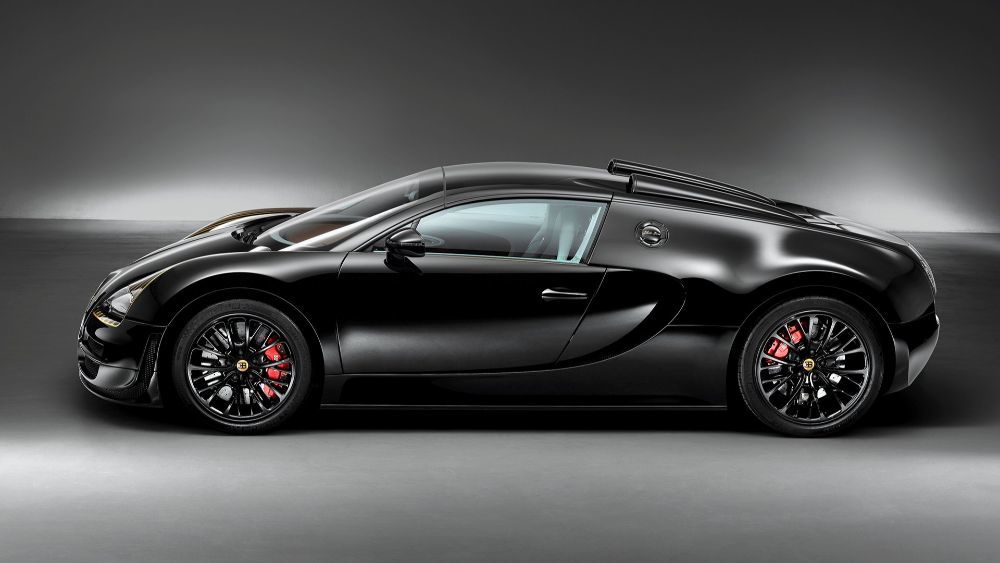
The Bugatti Veyron Jean-Pierre Wimille is hard to miss. The carbon fiber body has the same gleaming blue paint and light blue contrast of the Type 57 Tank race car that won Le Mans in 1939. This is the first Bugatti Legends Edition. It comes with unique touches including a laser-engraved signature of “Wimille” on the petrol and oil filler caps.

The Veyron Jean-Pierre Wimille made its debut in Pebble Beach, California in August 2013.

Jean Bugatti

The second Legends Edition Veyron is named after Jean Bugatti, the eldest son of company founder Ettore Bugatti. In 1936, he became head of the company at just 27. Sadly, he died in a horrific road accident three years later in 1939.

Jean Bugatti was a gifted car designer. He penned the glorious curves of the Type 57SC Atlantic, which remains one of the most expensive vintage cars with only three models in existence today.

Meo Costantini

This Bugatti Veyron Legend is named after one Bartolomeo “Meo” Costantini. He was the head of the factory racing team and the most-trusted ally of Ettore Bugatti. Costantini also won the Targa Florio race twice in a Bugatti Type 35.

The Bugatti Type 35 belongs in the rare echelon of successful race cars in the 1920s. The tribute car comes with hand-polished aluminum panels on the wings and doors, along with a new Bugatti Dark Blue Sport paint job.

Bartolomeo “Meo” Costantini at the Targa Florio in 1925 in a Bugatti Type 35. Photo: Bugatti Automobiles S.A.S.

Rembrandt Bugatti

The fourth Veyron Legends Edition is the Rembrandt Bugatti. He’s the brother of Ettore Bugatti and arguably one of the most important sculptors of the early 20th century. Rembrandt Bugatti is famous for his bronze sculptures of animals.

He was so good that his sculpture of a dancing elephant became the symbol of Bugatti. It first appeared on the radiator cap of the Bugatti Type 41 Royale.

Black Bess

The fifth Veyron Legend is the Black Bess. The Bugatti Type 18 or “Black Bess” is one of the first street-legal supercars, and was the fastest road car in the world back in the day. Interestingly enough, the DNA of the present day Veyron is traced directly to the Type 18.

The first owner of the Bugatti Type 18 was World War I aviator and war hero Roland Garros, a man who crossed the Mediterranean by airplane in 1913. A close friend of Ettore Bugatti, he chose the Type 18 because the car allowed him to travel as fast on land as an airplane did in the air. The French Open today bears his name.

Black Bess. Photo: Bugatti Automobiles S.A.S.

Ettore Bugatti

The sixth and last Veyron Legends car is the Ettore Bugatti, which should come as no surprise. This is the crowning glory of the Legends series. The man combined engineering and artistry in a way that did not exist at the time. To some, the elder Bugatti devised the finest automotive species to roam the planet, and this Legends car pays homage to his brilliance.

The front part of the carbon fiber body is hand-polished aluminum with a coating of clear lacquer. As an added touch, the EB logo and Bugatti horseshoe emblem are crafted from platinum.

Ettore Bugatti circa 1924 in a Type 35. Photo: Bugatti Automobiles S.A.S.

Related: A walk though the showroom of Bugatti Legends.

The Bugatti Veyron: All About The Numbers

The Bugatti Veyron is – for lack of a better word – the granddaddy of hyper cars. Similar to the new Chiron, the Veyron is all about sheer numbers, and the madness starts with the power unit. The Bugatti Veyron makes good use of an 8.0-liter 16-cylinder motor with four turbochargers. It produces 1,000 horsepower and 921 lb-ft. of torque, the latter coming in between 2,200 and 5,000 rpm. This allows the Veyron to scamper from zero to 60 mph in 2.5 seconds, hitting 124 mph in around 7 seconds.

Top speed is a staggering 252 mph.

With those numbers, the Bugatti Veyron became one of the fastest series production cars. Things took a turn for the better when Bugatti came up with the Veyron Super Sport in 2010. It came with 1,200 horsepower and an incredible top speed of 268 mph. Now you know where the Bugatti Chiron got its insatiable appetite for speed.

Do you have a favorite Bugatti Legends car? Let us know on our Twitter page.

Alvin Reyes is the Associate Editor of Automoblog. He studied civil aviation, aeronautics, and accountancy in his younger years and is still very much smitten to his former Lancer GSR and Galant SS. He also likes fried chicken, music, and herbal medicine. 

Photos & Source: Bugatti Automobiles S.A.S.


from Automoblog.net http://bit.ly/2QMoOeN

Monday, 3 June 2019

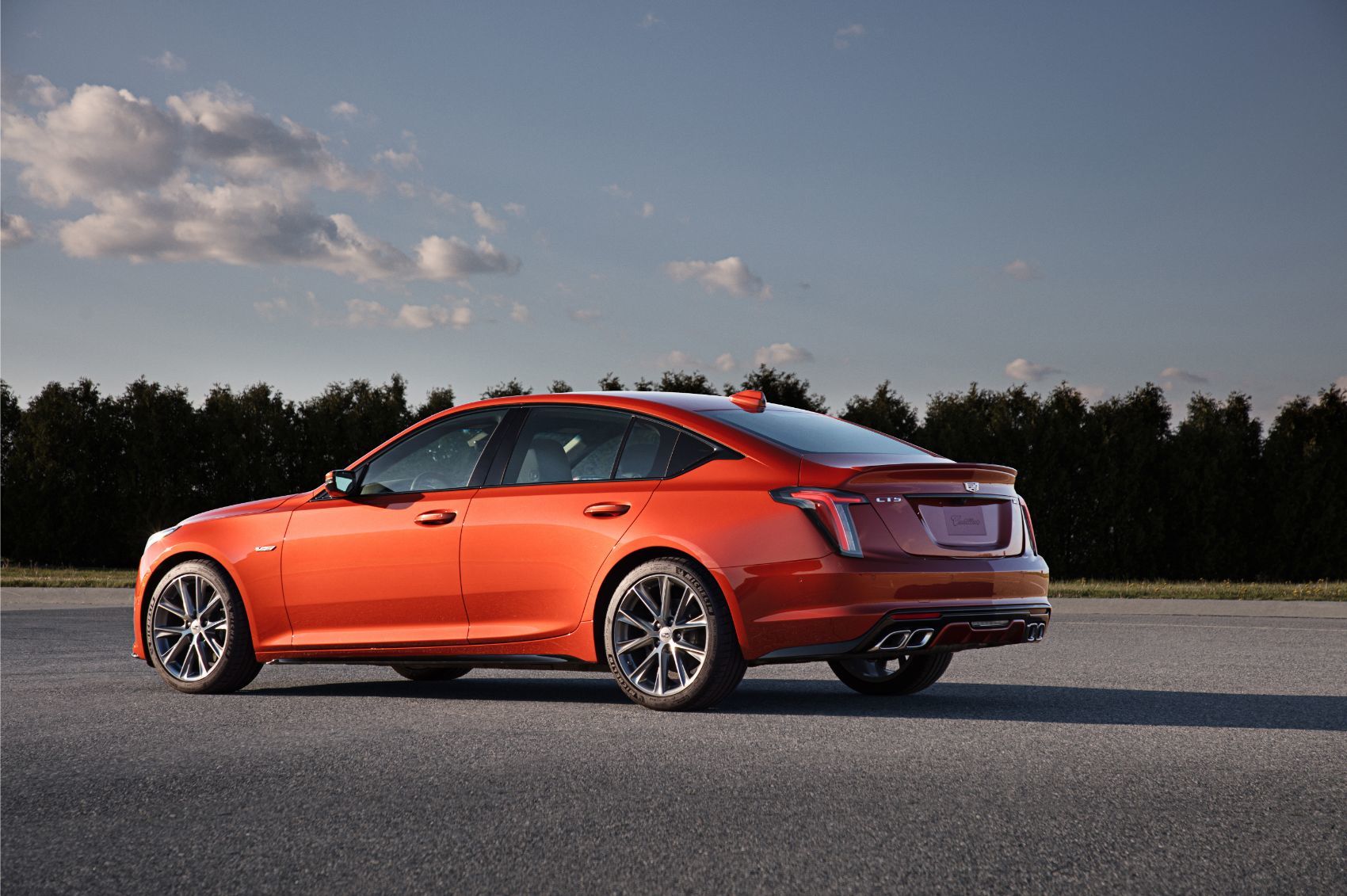
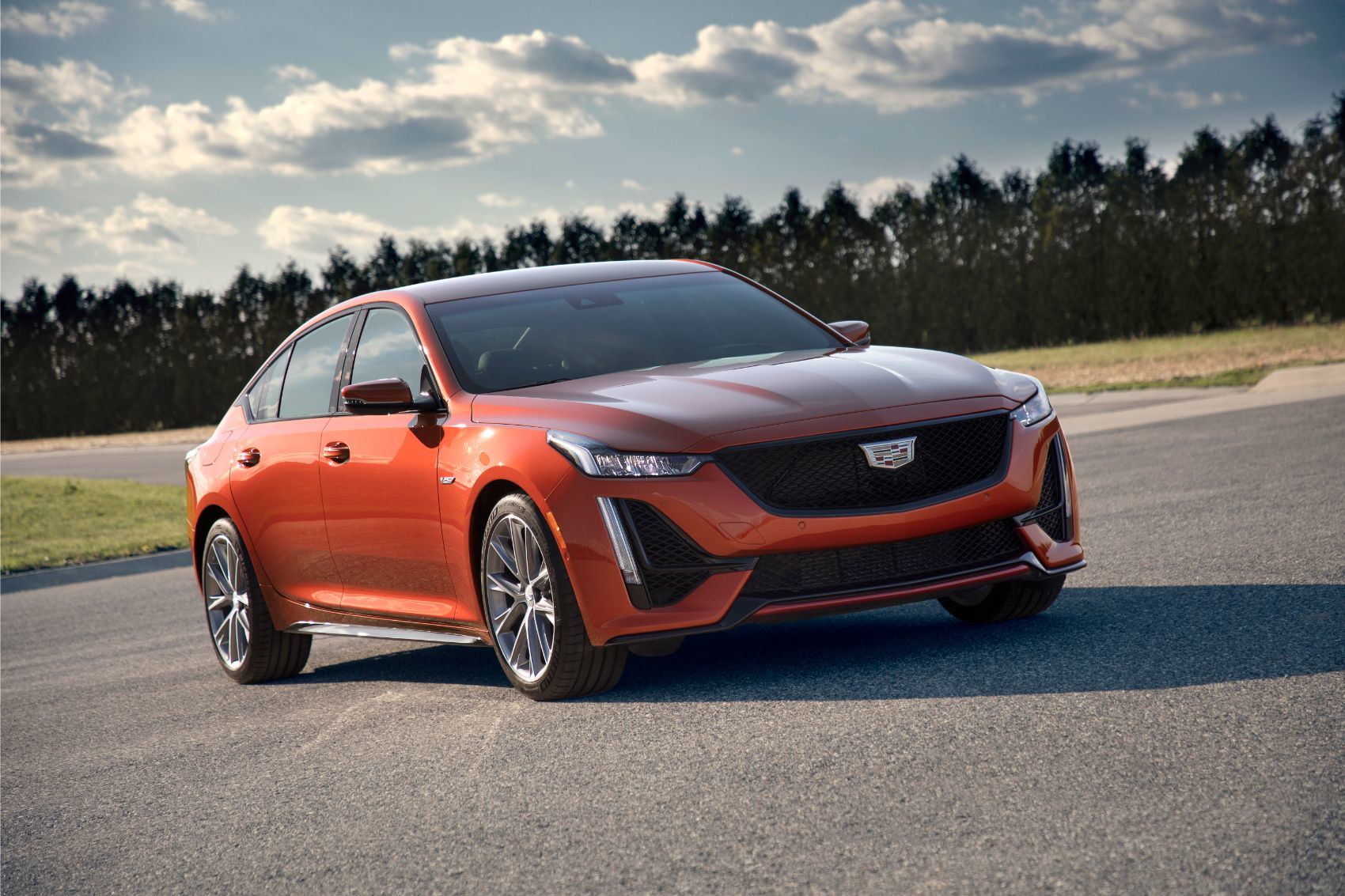
Cadillac CT4-V & CT5-V: Meet Two Beautiful (And Powerful) Twins

  • The CT4-V and CT5-V are the latest members of a growing family at Cadillac’s performance division. 
  • Both employ the automaker’s latest engine technology and utilize a special rear-wheel drive platform. 
  • More information is forthcoming, but for now we have a pretty good idea on what to expect.

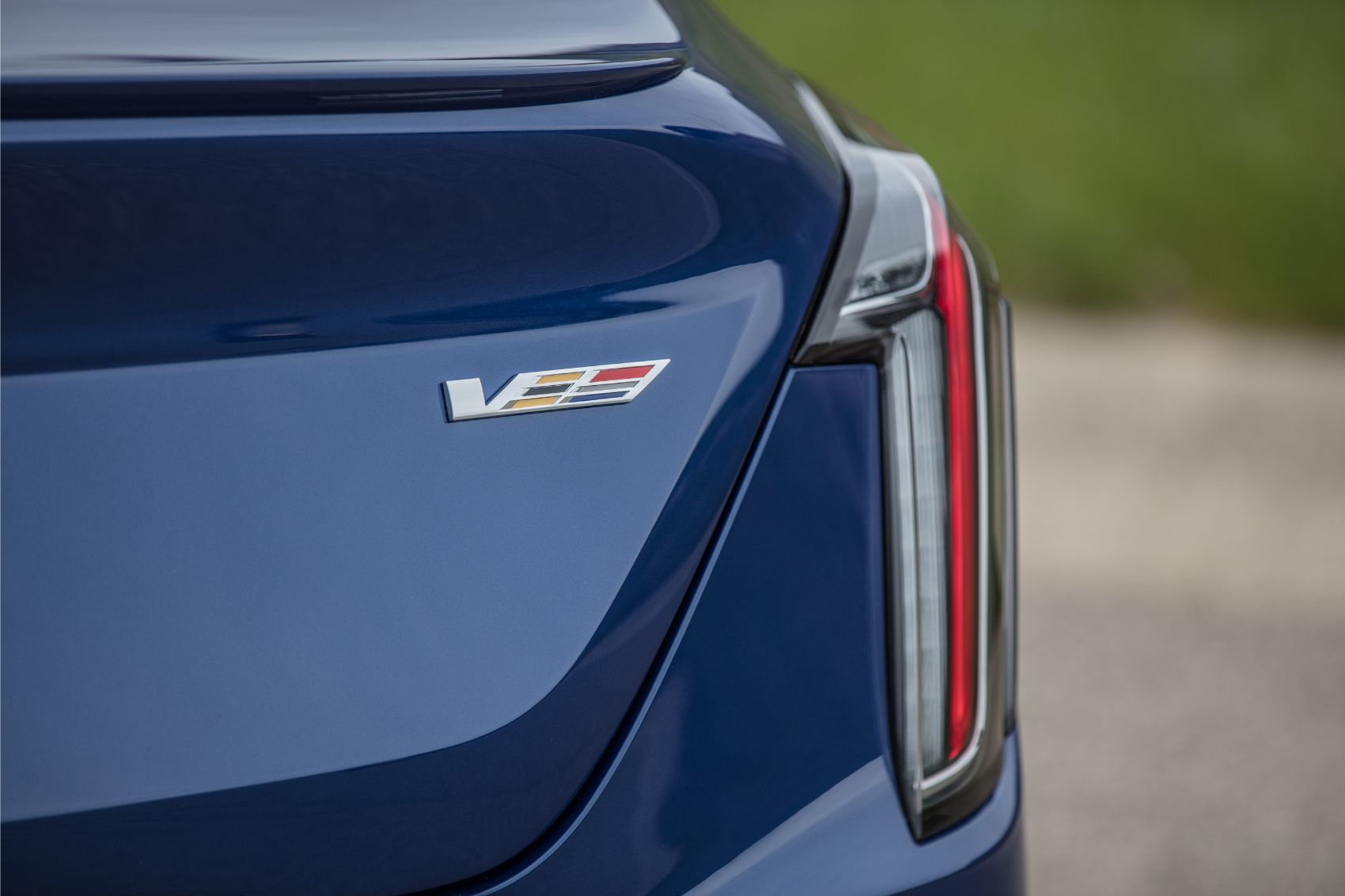
The 2004 CTS-V was not your grandfather’s Cadillac. With a 5.7-liter V8 churning out 400 horsepower (later a 6.0), this new V-Series car hit 60 mph in about 4.6 seconds. Established in 2002 under the direction of one Ken Morris, Cadillac’s special vehicle performance team was looking to give the luxury marque serious street cred. Armed with a manual transmission, the first CTS-V would get its chance two years later, cutting its teeth on Germany’s famed Nürburgring circuit.

And perhaps, the rest is history?

“From the very beginning, Cadillac’s V-Series represented the ultimate expression of our design, technology, and performance,” said Mark Reuss, GM President. “It introduced an entirely new breed of performance-minded customers to Cadillac showrooms and helped transform the brand’s traditional image into one with different facets for customers’ varying driving tastes.”

Family Matters

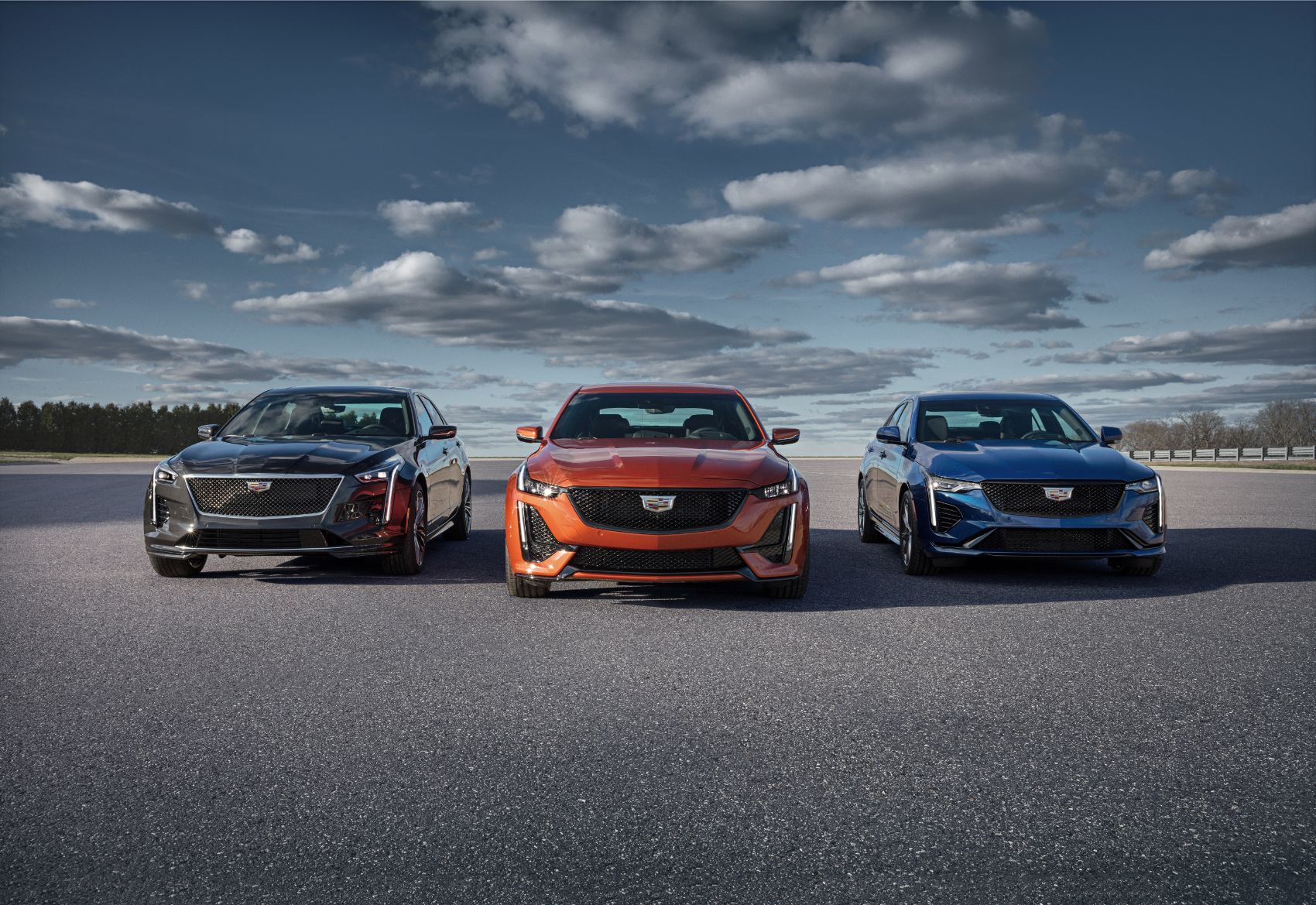
The V-Series family tree grew to include five platforms: CTS, XLR, STS, ATS, and CT6, with the branches of that tree still growing. The new CT6-V is a literal monster and an exact beauty; one showcasing the best elements of Cadillac’s now 15-year-long V program. On the heels of the CT6-V come the CT4-V and CT5-V, smaller variants in size but certinately not in stamina or strength. Both are driven by Cadillac’s latest engine tech; both are supported by GM’s rear-wheel drive Alpha architecture; and both utilize Magnetic Ride Control 4.0 with V-Series specific tuning.

Here is a look at the 2020 Cadillac CT4-V and CT5-V. It’s hard to pick a favorite.

“The new lineup expands the V-Series ethos, drawing more customers into the Cadillac Performance family,” Reuss explained. “The newest Vs are focused on elevated athleticism and luxurious refinement for customers wanting a dynamic daily drive.”

From left to right: CT6-V, CT5-V and CT4-V. Photo: Cadillac.

2020 Cadillac CT4-V: Engine & Transmission

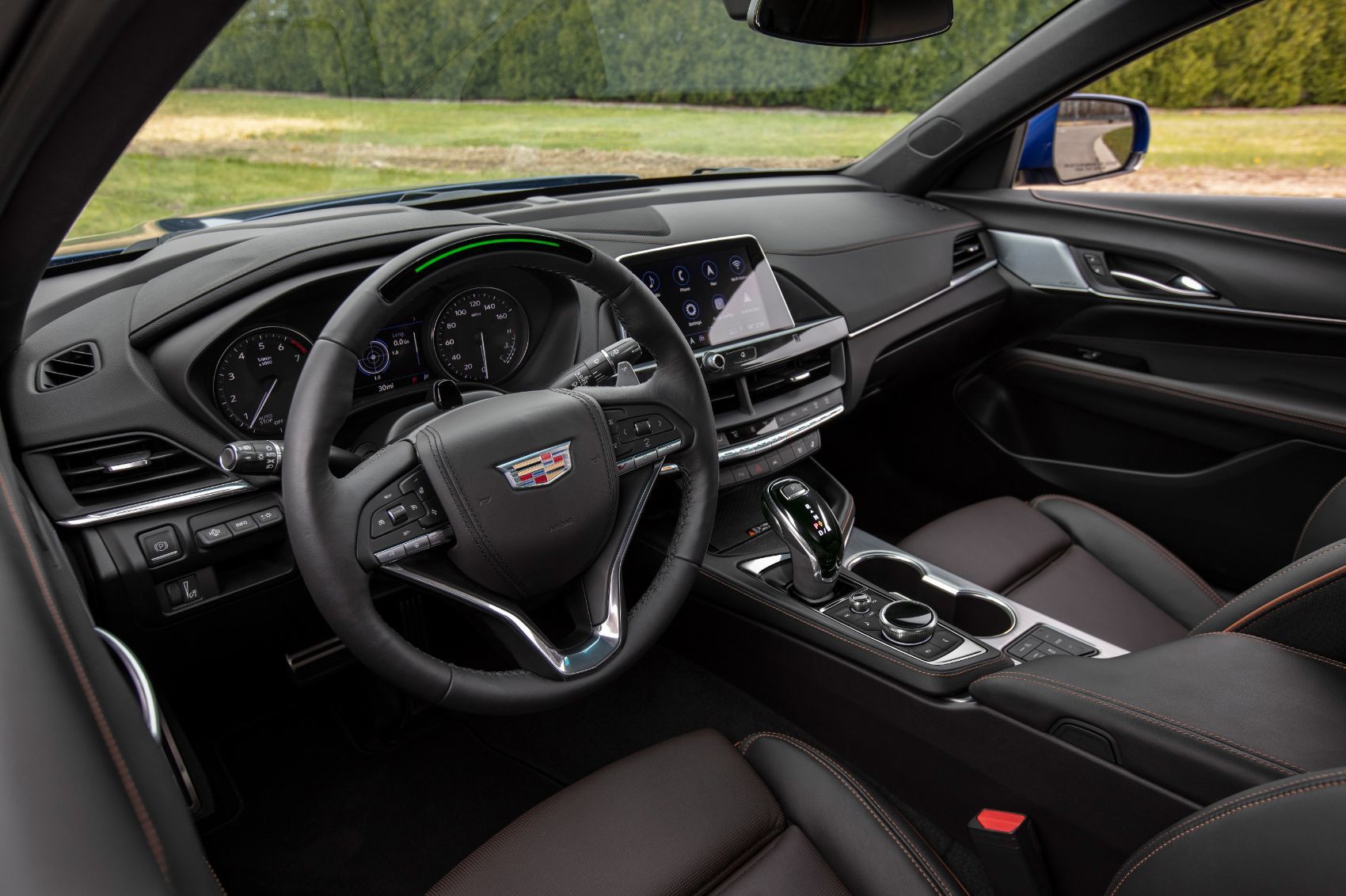
Indeed, the forthcoming CT4-V will make a great daily driver. It will have a nice, plush interior and plenty of connectivity options; it will be quiet and calm inside – essentially, it will have everything one would reasonably believe a Cadillac should. And under the hood, we have enough for a quick sprint down the on-ramp and for a heart flutter once on the highway. In other words, the 2020 Cadillac CT4-V is a nicely-balanced machine.

Take, for example, the 2.7-liter’s valvetrain which consists of a three-step sliding camshaft and dual-overhead camshaft with four-valves per cylinder; continuously variable valve timing and variable valve lift; and, for good measure, Active Fuel Management (or cylinder deactivation in GM’s parlance). These systems combine to balance performance and fuel economy, all while the driver sits comfortably.

Moving through the in-line four engine we find a single, dual-volute turbocharger (33-psi) with an electronically-controlled waste gate and special cooling system. Downstream is a 10-speed automatic (Hydra-Matic 10L60) with a limited-slip rear differential. All told, the 2020 Cadillac CT4-V dials up 320 horsepower and 369 lb-ft. of torque through a 2.85 final drive ratio. (SAE certification pending as of this writing).

2020 Cadillac CT4-V interior layout. Photo: Cadillac.

CT4-V: Chassis & Suspension

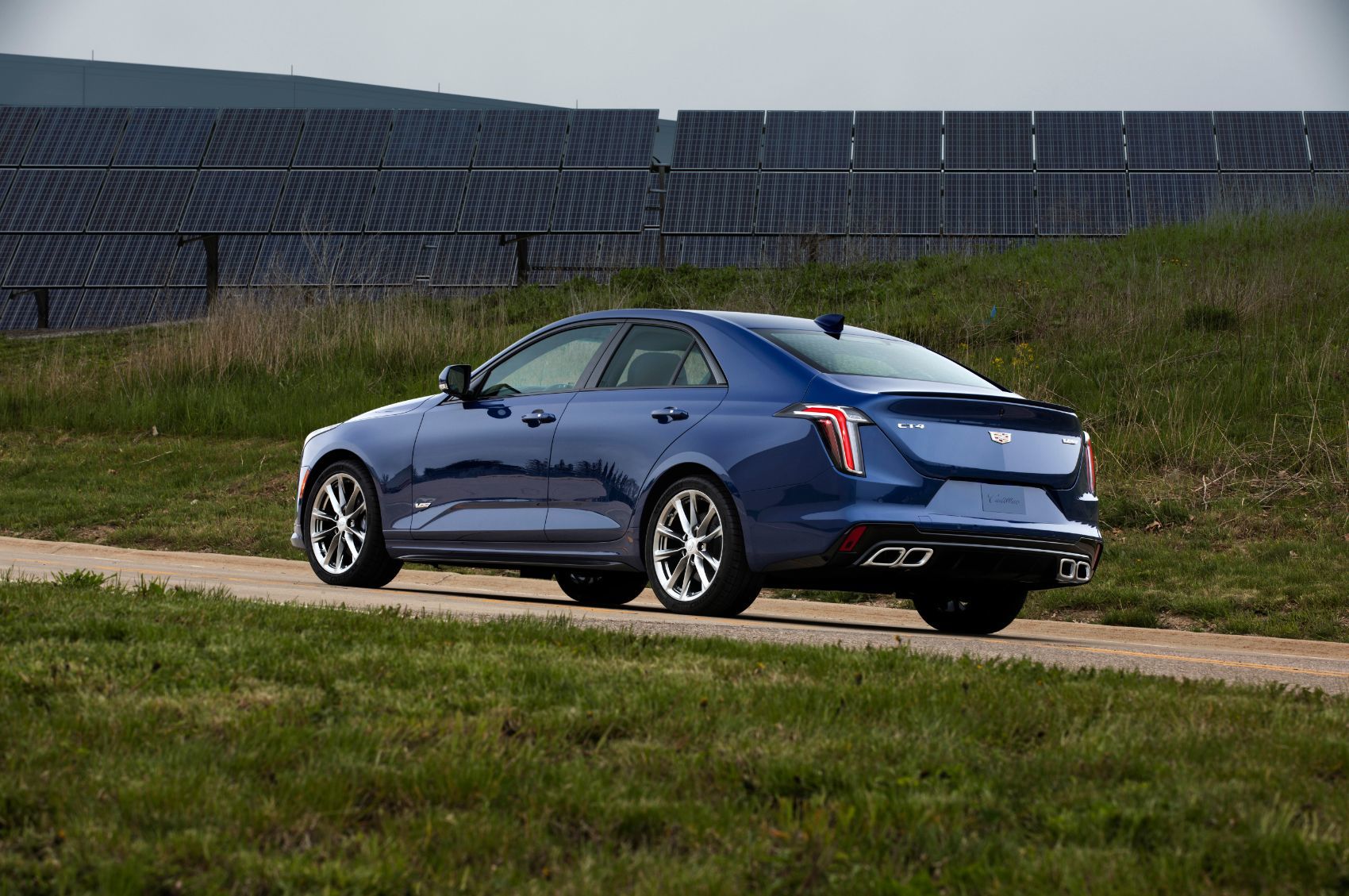
Up front, the CT4-V rides on a MacPherson-type suspension with dual lower ball joints; at the rear, it’s a five-link independent setup. All-wheel drive variants receive ZF MVS passive dampers and a direct-acting stabilizer bar. By comparison, real-wheel drive variants employ Magnetic Ride Control 4.0 with V-Series-specific calibrations. The V-Series calibration treatments continue over to the electric power steering system.

Related: How magnetic suspensions work and function.

From the factory, the 2020 Cadillac CT4-V will ride on 18 x 8.0-inch aluminum wheels with 235/40R18 summer-only tires. If you opt for all-wheel drive, the CT4-V gets all-season treads. Keeping everything under control is a Brembo front braking system with vented rotors.

The 2020 Cadillac CT4-V sits at a near-perfect 50/50 weight distribution. Photo: Cadillac.

2020 Cadillac CT5-V: Engine & Transmission

As we make the jump to the CT5-V, we see more muscle and grunt. The 3.0-liter twin turbo V6 runs low-inertia turbochargers to ensure power delivery across the rpm range. Like the CT4-V, this engine also uses electronically-controlled waste gates, while cooling comes by way of a water-to-air system. Diving deeper, we see the direct-injected V6 has dual-overhead camshafts and four valves per cylinder; along with dual-independent valve timing and Active Fuel Management.

The CT5-V’s 10-speed automatic (Hydra-Matic 10L80) links with an electronic limited-slip rear differential. At the end of the day, the 2020 Cadillac CT5-V cranks out 355 horsepower and 400 lb-ft. of torque through a 2.85 final drive ratio. Like the CT4-V, the figures are pending SAE approval, but still. It’s a solid amount of snort.

2020 Cadillac CT5-V. Photo: Cadillac.

Keeping The Balance

This is a similar approach as the CT4-V. The idea is to keep an ideal balance between performance and fuel economy, while you as the driver are enjoying the comfort of the cabin. With the connectivity options, a driver can cue up their music and settle in for a long trip; the engine will do its job to maximize mileage but spring to life when extra power is needed, say for passing or climbing a hill.

The CT5-V is an ideal middle ground, in the sense it’s a bit more punchy than the CT4-V but not as aggressive as the CT6-V. Cost-wise, it will land between the two, which has it’s own advantages. An approach like this could serve as the CT5-V’s greatest asset. Yes, it runs more money than the CT4-V, but offers more power. No, it’s not as powerful as the CT6-V, but it’s less money. In this new line of Cadillac V-Series cars, the CT5-V may well be the gem.

CT5-V: Chassis & Suspension

The CT5-V resides on a MacPherson-type front suspension with dual lower ball joints, and a five-link independent setup at the rear. Like the CT4-V, Magnetic Ride Control 4.0 and the electric power steering receive V-Series calibrations. The similarities to the CT4-V make sense, although Cadillac puts emphasis on the stabilizer bars, both front and rear, as essential parts of the CT5-V’s suspension.

Wheels are slightly bigger here: 19×8.5-inch aluminum wheels with 245/40R19 summer-only tires. The Brembo front braking system returns with four-piston fixed calipers and vented rotors.

The 2020 Cadillac CT5-V features a Vehicle Control Mode with a customizable V-Mode. Photo: Cadillac.

Advanced Driver Assistance Systems

On the technology and safety-front, both are available with SuperCruise. Cadillac’s Super Cruise can automatically steer, brake, and keep the vehicle positioned on the highway in certain, optimal conditions. The system uses high precision LiDAR map and GPS data, an advanced driver attention system, and a network of camera and radar sensors. Cadillac says customers can drive hands-free on more than 130,000 miles of limited-access freeways in the United States and Canada, provided they have an active OnStar plan with emergency services.

In other words, with these two V-Series cars, it’s all about performance; including performance on the technology side of things.

Photo: Cadillac.

Pricing & Availability

The CT4-V and CT5-V will arrive early next year, with production at GM’s Lansing Grand River facility in Michigan. Exact pricing and additional product information is forthcoming. We are told by Cadillac these two V-Series cars represent “only the beginning” when it comes to what the future holds. With that in mind, we will look to the horizon; in the meantime, we cannot wait to drive the CT4-V and CT5-V.

Carl Anthony studies mechanical engineering at Wayne State University, serves on the Board of Directors for the Ally Jolie Baldwin Foundation, and is a loyal Detroit Lions fan. Before going back to school, he simultaneously held product development and experiential marketing roles in the automotive industry. 

Photos & Source: Cadillac.


from Automoblog.net http://bit.ly/2IeZJp8