Sunday, 2 June 2019

2020 Lexus RX & RXL: A Brief Yet Detailed Walk Around

  • The Lexus RX and RXL receive a number of updates, many of them on the tech front for 2020.
  • Performance and driving enthusiasts will appreciate the addition of two new F SPORT packages. 

The 2020 Lexus RX and RXL (fancy SUVs to you and me) get a thorough revamp for the new year. You can’t really say it’s a little bit of this and a little bit of that. Lexus has redone this luxo-crossover across the board and the improvements are noticeable. The best way to distinguish between the two is how the RXL is a little longer and – most important if you have a large family – comes with a third row of seats.

Other than that, they are quite similar in terms of form, function, safety, and technology.

Styling & Design (Maybe Slightly Overboard)

For 2020, the front and rear fascias are updated to bring the RX and RXL in-line with the rest of the brand’s look. Both have Lexus’ signature grille, and lots of “individual blocks” strewn across the overall form to give a balance of sophistication and strength and blah-blah-blah. Lexus goes on and on about this, but it doesn’t really matter much to me. Lexus has been off in their own design direction for a while now, and I worry they might never come back.

But let’s not talk too much about subjective things like styling, shall we. The meat of the RX and RXL is more than a strong enough selling point.
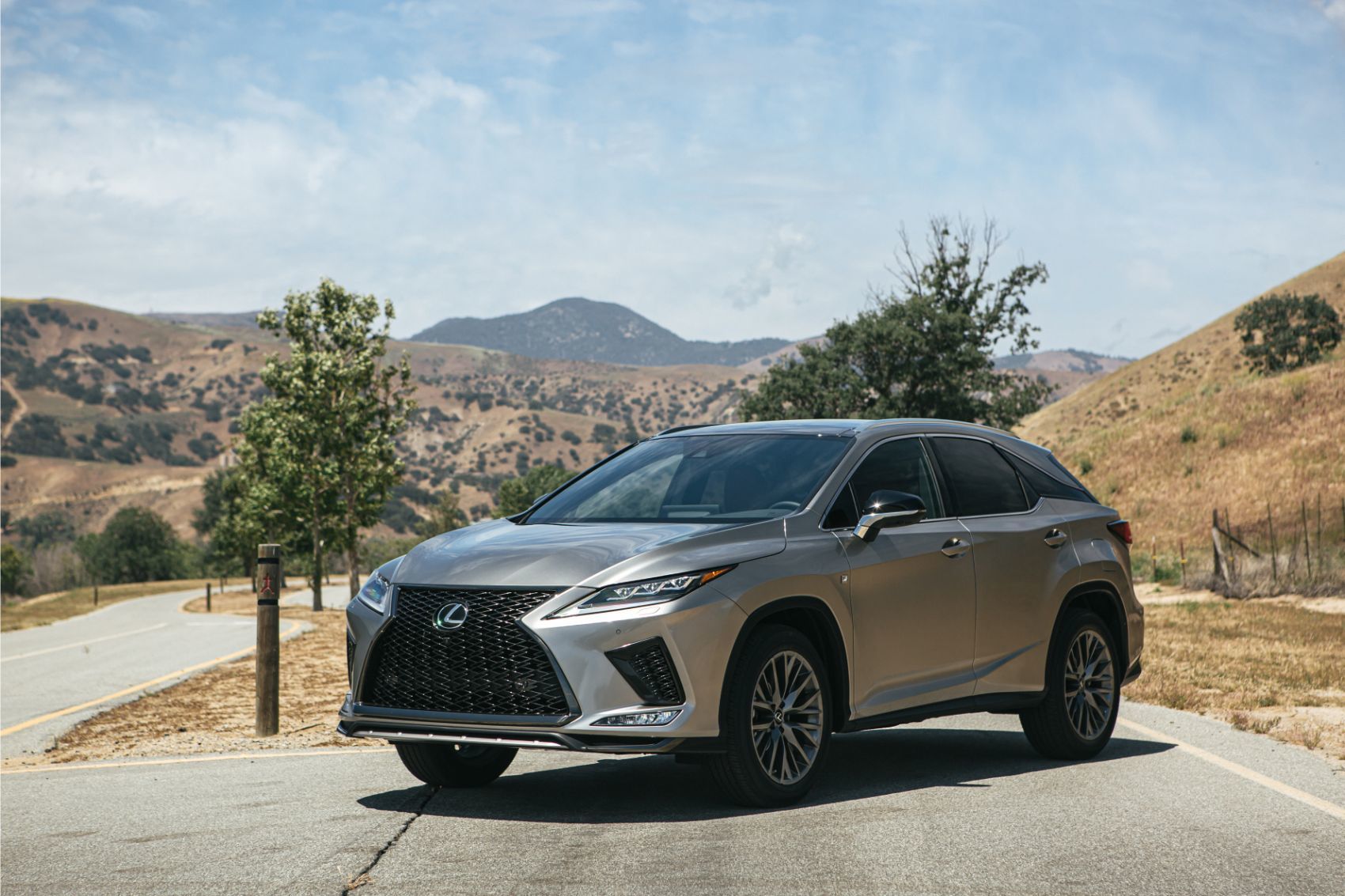
2020 Lexus RX 350 F SPORT. Photo: Toyota Motor Sales, U.S.A., Inc.

Yakety Yak (It Will Probably Talk Back)

Take all of the on-board tech, for example. Standard on all models are the latest smartphone integrations and their respective virtual assistants. The standard eight-inch touchscreen is for messing with everything tech-related, like the Lexus Enform Remote system (you get a three-year trial period). This remotely starts the vehicle using your smartphone, handy to have when it gets cold.

There are six USB ports throughout the RX and RXL, so everybody’s devices stay charged. Of course both are fully compatible with Android Auto and Apple CarPlay. The newest Lexuses (Lexi?) also have voice services like Amazon Alexa, so you can just yack at the Lexus Multimedia System, and it’ll start playing your favorite road trip playlist or start navigating you home.

Passengers (Lexus insists on calling them “Guests” which is kind of annoying) can choose between the standard eight-inch display, or an available 12.3-inch high-resolution, split-screen multimedia display. Going further yet is Dynamic Voice Command, which Lexus says recognizes “millions more phrases” than their conventional systems.
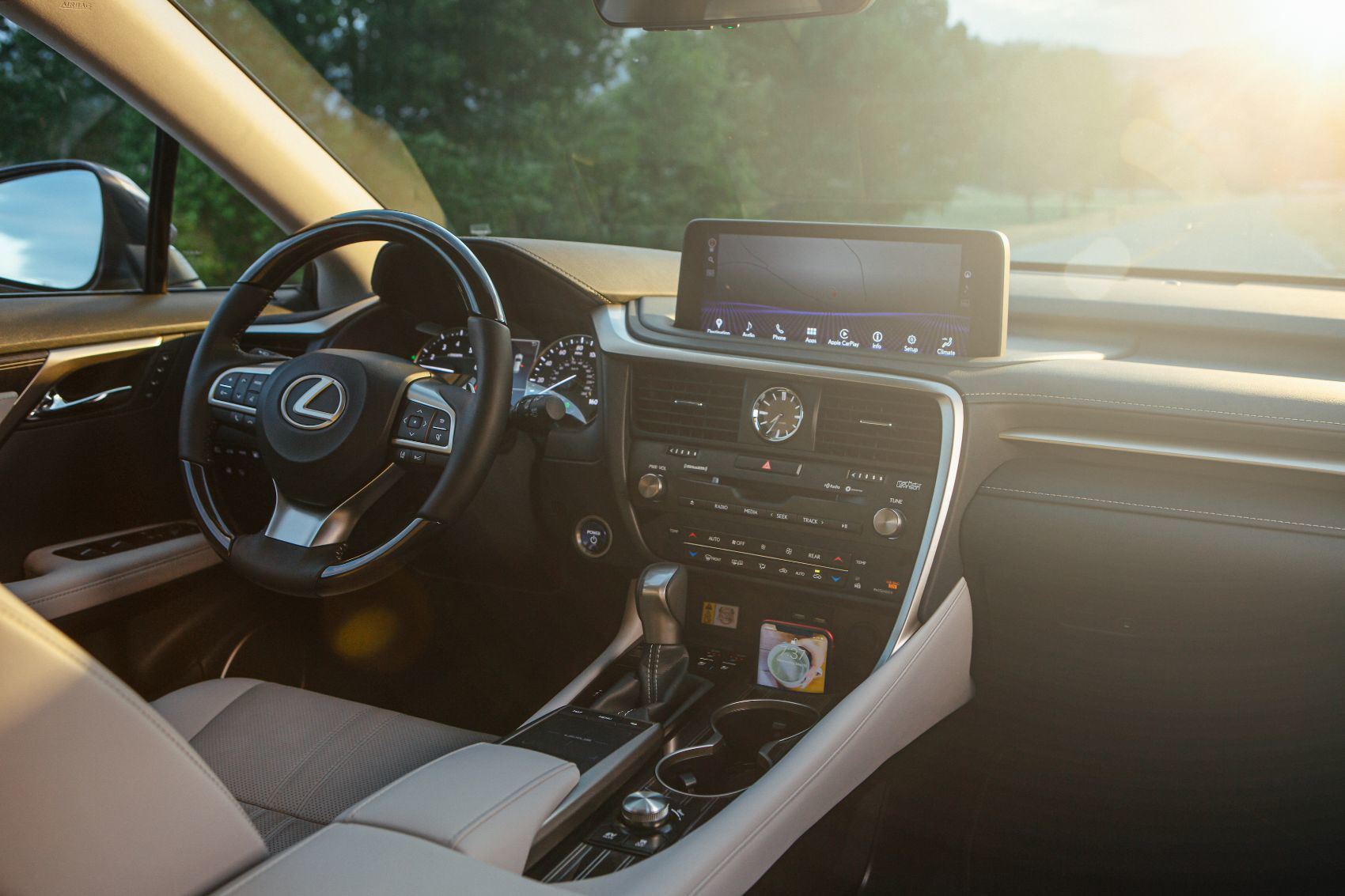
2020 Lexus RX 450hL interior layout. Photo: Toyota Motor Sales, U.S.A., Inc.

Safety & Security

Safety? Of course a vehicle of this stripe will have enough safety stuff to make Ned Flanders sleep like a baby. There’s Lexus Enform Safety Connect and Enform Service Connect along with the Lexus Safety System+ 2.0 as standard equipment. This gives you stuff like daytime bicyclist detection, low-light pedestrian detection, Road Sign Assist, and Lane Tracing Assist. The Pre-Collision System can detect bicyclists and pedestrians in low-light situations.

Lane Tracing Assist also works in conjunction with the All-Speed Dynamic Radar Cruise Control and, in certain conditions, follows the car ahead of you. The Road Sign Assist gizmo displays road sign information in the instrument panel, which I don’t really see the efficacy of.

Related: Small package for the big city: meet the 2019 Lexus UX.

Essential Foundations

The 2020 Lexus crossovers get several updates to improve driving dynamics. The front and rear stabilizer bars are thicker, yet hollow to cut weight. They have reinforced bushings to reduce body roll and improve steering response. The shocks are re-tuned (natch) and feature a new friction control device to manage “high frequency vibrations,” meaning the RX and RXL should provide a smoother ride. The stiffer suspension reduces the overall noise and vibration from the road, Lexus says. And finally, active corner braking prevents understeer by clamping down on the inner tire.

If you want your RX or RXL with a hybrid drivetrain, that’s on offer as well. These are either the RX 450h or RX 450hL and serve up a combined 308 total system horsepower. For fuel economy, Lexus estimates 30 and 29 combined for the RX and RXL respectively. The ICE part of the hybrid system is a 3.5-liter V6 gasoline mill with two high-torque, electric drive motor/generators in the mix. The all-weather drive system employs a trick second independent electric motor to push the rear wheels when needed for optimal traction.
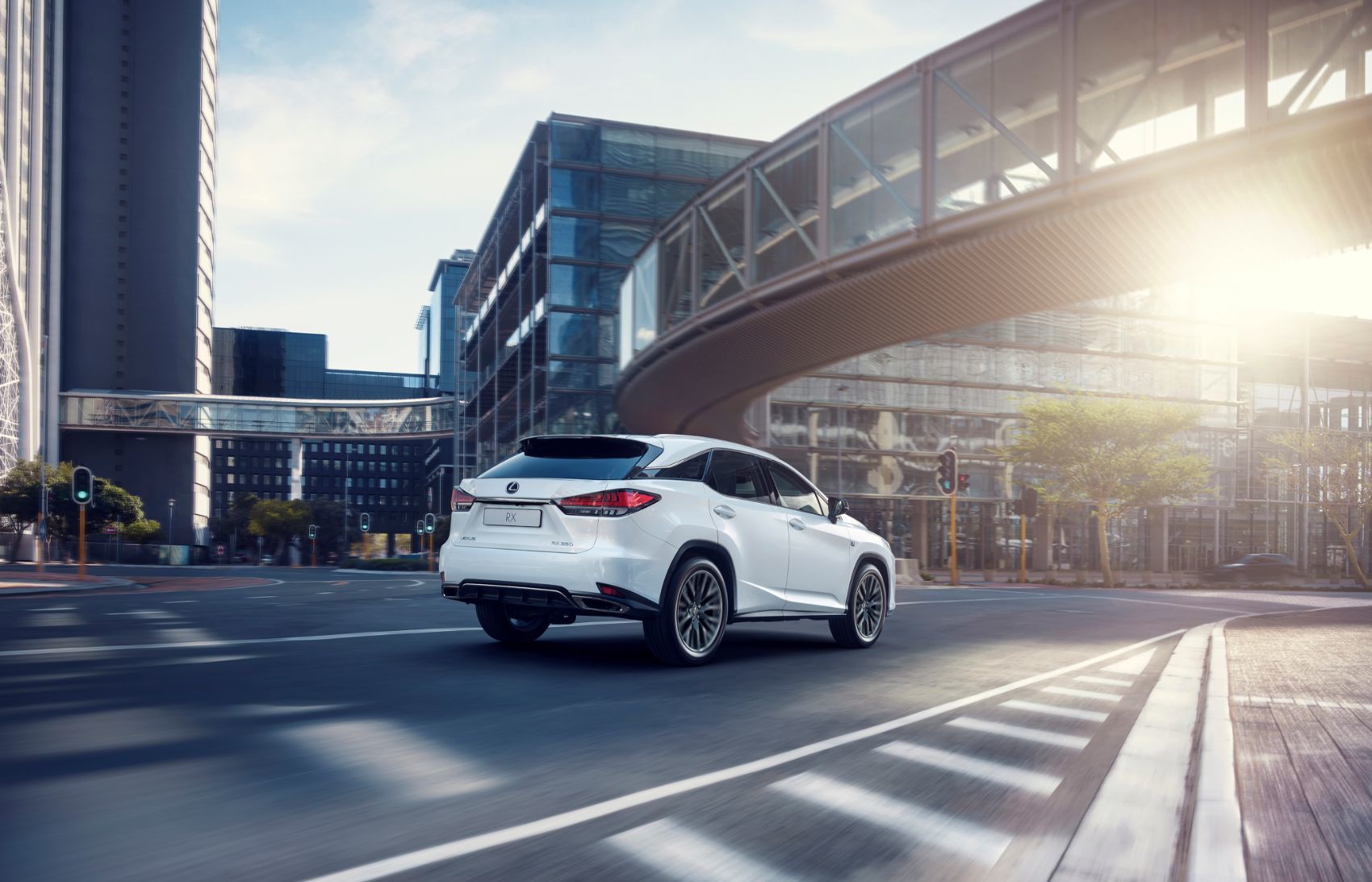
Photo: Toyota Motor Sales, U.S.A., Inc.

Related: Stylish and tech-focused: on the road with the 2019 Lexus RX 350 F SPORT.

F SPORT Treatments

If you’d like things a little more athletic and sporty than eco-conscious, the 2020 Lexus RX offers two F SPORT packages. The regular F SPORT package offers “the look” with additional tuning for a more muscular feel on the road. It includes a cold air intake (very Fast & Furious), active sound control, electric power steering, and a heated steering wheel. There are front and rear “performance dampers” and a Drive Mode Select system with Sport+ (very, very Fast & Furious).

By comparison, the RX F SPORT package includes an active variable suspension, which Lexus says is more responsive than prior systems. That active variable suspension is also borrowed from the mighty Lexus LC. Oh, and the RX F SPORT has Circuit Red seating with grey stitching on the seams.

No word yet on what the 2020 F SPORT packages will return for fuel economy. The current Lexus RX 350 F SPORT gets an EPA-estimated 19/26 city/highway and 22 combined mpg.
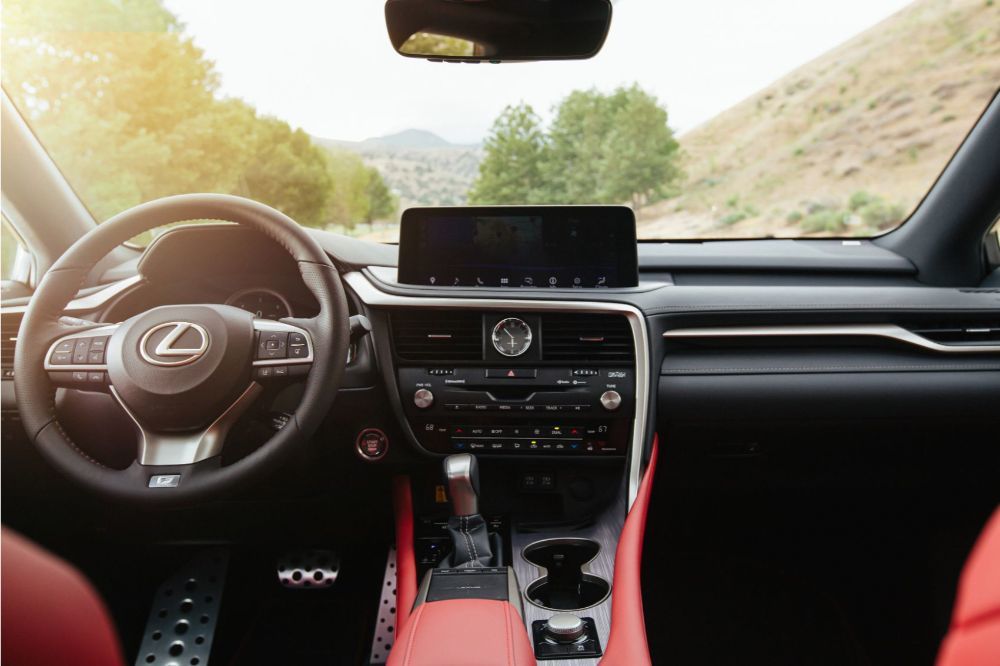
2020 Lexus RX 350 F SPORT interior layout. Photo: Toyota Motor Sales, U.S.A., Inc.

Pricing & Availability

The 2020 Lexus RX and RXL will start production in the third quarter of 2019. Pricing information is forthcoming. The current Lexus RX 350 starts at $43,820 with front-wheel drive; $45,220 with all-wheel drive. The current three-row RX 350L starts at $47,870 with front-wheel drive and $49,270 with all-wheel drive.

Tony Borroz has spent his entire life racing antique and sports cars. He is the author of Bricks & Bones: The Endearing Legacy and Nitty-Gritty Phenomenon of The Indy 500, available in paperback or Kindle formatFollow his work on Twitter: @TonyBorroz

2020 Lexus RX Gallery

2020 Lexus RXL Gallery

Photos & Source: Toyota Motor Sales, U.S.A., Inc.


from Automoblog.net http://bit.ly/2MqCX31

Eye Candy: The Motorcycles of the Concorso d’Eleganza

The best of the 2019 Concorso d'Eleganza
Every year since 1929, rare and classic vehicles have lined the lawns of Villa d’Este and Villa Erba on the banks of Lake Como in Italy. The Concorso d’Eleganza is a magnificent opportunity to indulge in fine machinery while dressed in your Sunday best.

The weekend is dominated by automobiles, but there’s a strong motorcycling component too—and the bikes are no less desirable. The jury is pretty illustrious too, and this year included the fashion editor of Cosmopolitan, the editor-in-chief of the Italian magazine Motociclismo d’Epoca, Mick Duckworth of Classic Bike and The Vintagent himself, the charming Mr Paul d’Orléans.

The best of the 2019 Concorso d'Eleganza
We had the honor of attending the 90th edition of the Concorso d’Eleganza in person, as guests of event sponsors BMW Motorrad. Here are our favorite ten motorcycles from the show, starting with the oldest first.

1905 FN Four at the 2019 Concorso d'Eleganza
1905 FN Four
4 cylinders, 362 cc
Entrant: Wolfgang Straub (Germany)
Honorable mention, Class A

Seeing this rare classic roll by in the Concorso’s motorcycle street parade, pedals turning, was a genuine treat. The FN (‘Fabrique Nationale’) Four was the world’s first production inline-four, with a shaft drive sending power from the 362 cc motor to the back wheel. This particular one is a first-gen model; single speed, with a rear drum brake. It’s not often you see a 114-year-old motorcycle in the flesh—much less one that’s still running.

1929 DKW Super Sport at the 2019 Concorso d'Eleganza
1929 DKW Super Sport 500
2 cylinders, 494 cc
Entrant: Zündmagnet Wurzen (Germany)
Honorable mention, Class B

DKW was once the world’s largest motorcycle manufacturer—and the Super Sport 500 was its flagship. The 1929 model featured a two-stroke, water-cooled 494 cc twin, with an output of 18 hp and a top speed of 120 kph. It didn’t come with a sidecar though; this particular Super Sport 500 had one added somewhere in its past. And whoever built it did an outstanding job, because it looks like it belongs there.

1929 Koehler Escoffier at the 2019 Concorso d'Eleganza
1929 Koehler-Escoffier 1000
2 cylinders, 980 cc
Entrant: Dominique Buisson (France)
Participant, Class B | Best of Show, selected by jury

The Concorso d’Eleganza is the place to go if you’re looking for truly obscure motorcycles. Koehler-Escoffier was founded in 1912 by former Magnat-Debon mechanic, Jules Escoffier, and funded by Marcel Koehler. The company was bought by Monet-Goyon in 1929, then faded from view in 1957. Known as the ‘Four Pipes,’ this model featured a 980 cc twin with a shaft-and-bevel-driven overhead camshaft. And we suspect this might be one of the few—if not the only—remaining examples.

1938 Moto Guzzi GTCL at the 2019 Concorso d'Eleganza
1938 Moto Guzzi GTCL
1 cylinder, 498 cc
Entrant: Gordon de la Mare (UK)
Winner, Class C

Ever heard of the Moto Guzzi GTCL? The ‘Gran Turismo Corsa Leggera’ came out in 1938 as an upgrade to the ‘Gran Turismo Corsa,’ with alloy components to make it lighter (more leggera). It won its debut outing in the production class at the Circuito del Lario, and in 1939 underwent further changes to become the Moto Guzzi Condor. Like most bikes at the Concorso, this GTCL still runs—and still looks incredible.

1942 Gnome et Rhone X40 at the 2019 Concorso d'Eleganza
1942 Gnome et Rhône X40
2 cylinders, 734 cc
Entrant: Pierre Battaile (France)
Participant, Class E

Gnome et Rhône was a French aircraft manufacturer. But from 1920 into the early 50s, they also built motorcycles, using designs they licensed from British firm ABC Motorcycles. The boxer-powered X40 was built in 1939 with one purpose: escorting the president, which this particular example actually did. It’d probably have trouble keeping up with today’s blue light brigades…but it sure is good looking.

1953 BMW R68 at the 2019 Concorso d'Eleganza
1953 BMW R68
2 cylinders, 594 cc
Entrant: Hans Keckeisen (Germany)
Participant, Class C | Best of Show, public vote

As the Concoso d’Eleganza’s primary sponsor, BMW had a number of vehicles on display—including an R7, an R5 and the new Concept R18. But this classic R68 was too good to pass by. Back in 1953, the BMW R68 was considered downright sporty, with a top speed just north of a ton earning it the nickname ‘100 Mile Racer.’ The passenger seat was reportedly set at the same level as the rider’s seat, so that you could slide back if you needed to.

1968 Moto Guzzi V7 at the 2019 Concorso d'Eleganza
1968 Moto Guzzi V7
2 cylinders, 703 cc
Entrant: Collezione Stefano Bartolotta (Italy)
Honorable mention, Class E

Moto Guzzi’s transverse, air-cooled V-twin motor would become a hallmark of the brand—but it all started with the first V7, which was actually first designed for police use. The Italian government put out a tender for a new cop bike, and Moto Guzzi won it with the design of the V7, delivering the first units in 1966. It was only a year later that they started shipping the V7 ‘Ambassador’ to customers.

1969 Kawasaki Mach III at the 2019 Concorso d'Eleganza
1969 Kawasaki Mach III
3 cylinders, 499 cc
Entrant: Sofie Verheyden (Belgium)
Winner, Class D

Unless you know what you’re looking at, a classically restored Kawasaki Mach III looks pretty unassuming next to today’s sport bikes. But back in the day, the Mach III was known both as the ‘Blue Streak’ and the ‘Widowmaker,’ depending on your perspective. The two-stroke triple made 60 hp and topped out at 120-something mph, but also had dodgy handling and brakes. Still, it sold well in the US, and went down in history as a game-changer for the Japanese company.

1969 MV Agusta 750 at the 2019 Concorso d'Eleganza
1969 MV Agusta 750 Sport
4 cylinders, 743 cc
Entrant: Marco Saltini (Italy)
Participant, Class D

Despite being wedged between equally desirable machines at the event, this immaculate 750 Sport was immediately captivating. Even though it was pricey and reportedly a handful to ride, the 750S remains one of the Italian marque’s most iconic road bikes. This particular specimen looks like it rolled out of the factory just last week.

1972 Gilera 50 at the 2019 Concorso d'Eleganza
1972 Gilera 50 Trial
1 cylinder, 49.8 cc
Entrant: Collezione Zappieri (Italy)
Participant, Class S

This year’s Concorso d’Eleganza motorcycle Special Exhibition showcased 50 cc bikes of the 60s and 70s. Killer scoots from Moto Guzzi, Ducati, Fantic and Morini lined the ranks—but it was this tiny red rocket from Gilera that stole my heart. Since Gilera is most famed for its motorcycle Grand Prix victories, information on its off-roaders is scarce. All we know about this petite scrambler is that it was built after Piaggio bought the company, and it’s cute as a button.

Motorcycle images: BMW Group Classic | Header and footer shots by Wes Reyneke

The best of the 2019 Concorso d'Eleganza


from Bike EXIF http://bit.ly/2WzoxkU

Maserati 8CTF: An IndyCar Legend, 80 Years In The Making

There was a weird time in the racing world after World War II broke out in Europe, but hadn’t started in America yet. Racing, along with any sort of normal life, came to a screaming halt for Europeans, but until Pearl Harbor, America continued on like everything was going to be okay. Right in the middle of all this, an unlikely Italian Grand Prix car ended up in the hands of a young, Indiana hot shoe who ran it at the Indy 500 in May of 1939.

Rolling The Dice

The hot shoe in question was 27-year-old Wilbur Shaw, winner of the 1937 Indy 500 who was content to win it more than once. His ride, a Maserati 8CTF, was, to say the least, a bit of a gamble. Grand Prix cars then, as now, were technically-advanced, lighting-fast, and overall high-performing machines. However, they were only designed for races a couple of hours long. 500s of the period could last more than twice that amount, and the 1939 Indy 500 where Shaw’s Maserati debuted went for over four hours. It’s like asking Usain Bolt to run a marathon.

Sure, he’s quick, but will he last?

Second Wind

On top of this, we’re talking about Maserati here. Mercurial doesn’t begin to describe the famed Italian car company’s history. Maserati always seemed to have two modes: on top of the world, or coming apart at the seams. Political infighting, drowning in debt, and (worst of all) failing to win races with slow, outmoded cars. Yet, in May of 1937, the Maserati brothers would get a another chance when the Orsi Group acquired the company’s shares.

At that time, the international racing authority changed the technical rules and introduced tighter restrictions for Grand Prix cars. Starting in 1938, displacement was to be limited on the basis of the car’s weight, with a maximum of 3,000 cc for supercharged engines. 1938, incidentally, was one of those years when Maserati was on an upswing, as Ernesto Maserati was successfully developing a new car, the 8CTF, based on the rule changes.

When they finally rolled out the 8CTF, it looked and felt like a real runner.

This Maserati 8CTF “Boyle Special” won the 1939 Indianapolis 500. Photo: Maserati North America, Inc.

Maserati 8CTF: Technical Specs

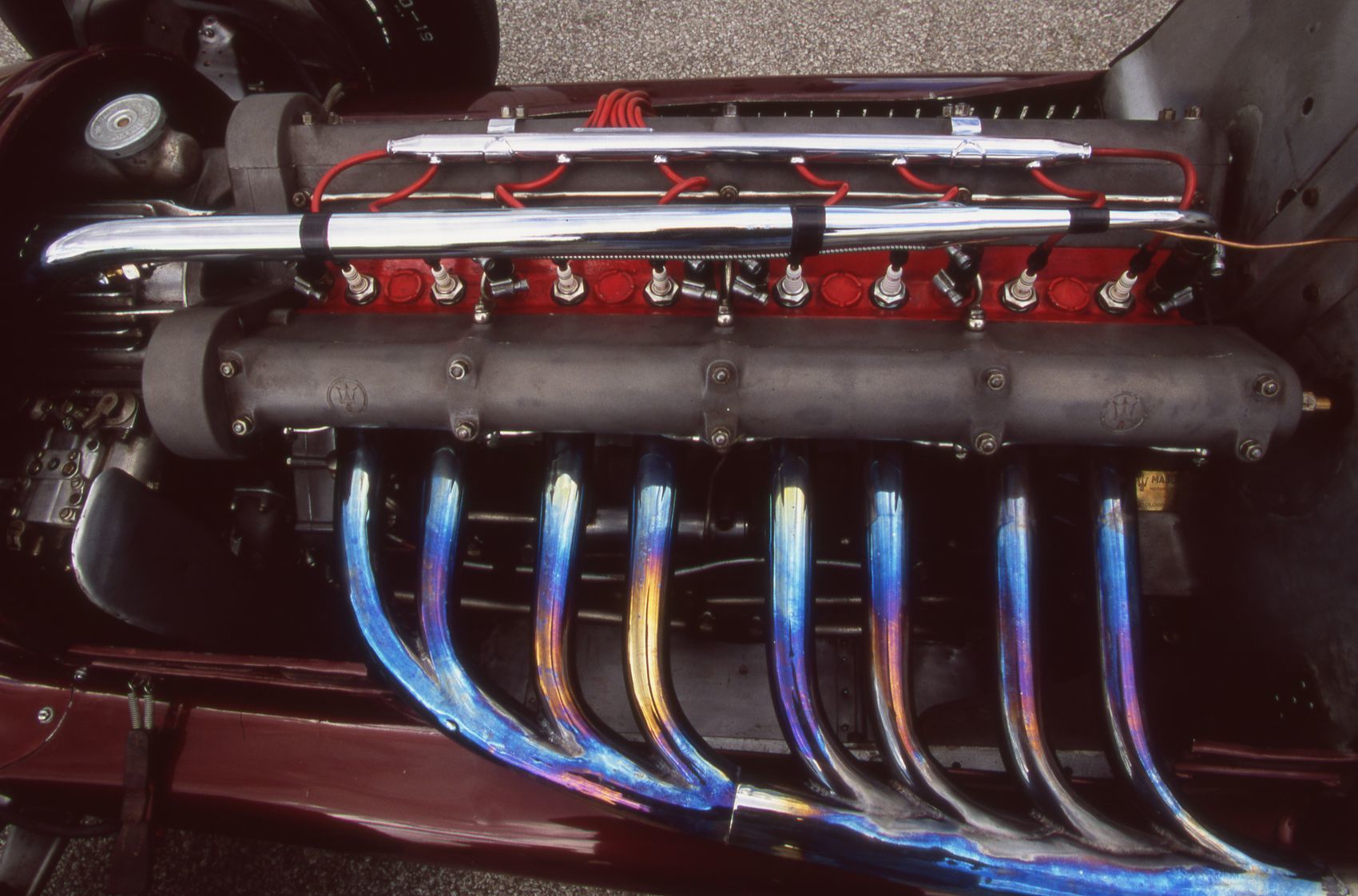
Built to the new GP rules for that year, the 8CTF was state-of-the-art. Constructed around a ladder frame with two steel C-section bar rails and cross-members, the car’s straight-eight was effectively two four-cylinder engines grafted together in the middle. Essentially, it was a “monoblock” design, with the cylinder head and block being one single piece. Ergo, the name “8CTF” or eight cylinders, and the “TF” meaning “Testa Fissa,” or fixed head.

Displacement was 2,991.4 cc with a rather low compression ratio of 6.5:1, dictated by the two superchargers. There were two valves per cylinder in a 90 degree V arrangement, actuated by two overhead camshafts. All told, it cranked out around 365 horsepower through a four-speed transmission, tipping the scales at 1,719 lbs. and topping out at 180 mph.

Radical for the day.

The 8CTF had a straight-eight engine with cylinders in two groups of four, cast in a “monoblock” with the cylinder head. Photo: Maserati North America, Inc.

Related: Monaco is an insane race. And this book captures it perfectly.

Gaining Traction

The 8CTF started off with a bunch of promise and potential. Count Trossi led the Tripoli GP for several laps, and took pole position in the Coppa Ciano. Gigi Villoresi had recorded the fastest lap in the Coppa Acerbo in his 8CTF. With results like this, the customers started lining up at the Maserati brothers shop in Bologna, Italy. One of the customers was, oddly enough, Michael Joseph “Mike” Boyle of the Chicago-based team Boyle Racing.

Early in 1939, Boyle’s team manager, Harry W. “Cotton” Henning, traveled to Bologna and bought a Maserati 8CTF. He then sent it back to Chicago where it was prepped for the race with larger wheels and Firestone tires, and painted in the Boyle Racing amaranth color livery – a gorgeous shade of dark, dark red. Boyle, passionate about Motorsports as a child, was determined to win the Indianapolis 500, with a car funded entirely by himself. And the 8CTF was that car.

Entered as a “Boyle Special” it was entrusted to one Warren Wilbur Shaw. He qualified the thing on the outside of the front row for The 500.

Photo: Maserati North America, Inc.

Repeat Victories

After a day-long, three-way battle between Shaw, Louis Meyer in a Stevens-Winfield, and Jimmy Snyder in an Adams-Sparks, Wilbur Shaw won the Indy 500 on May 30th 1939, leading 51 laps along the way. This was a historic moment for Maserati, since no European car had won at The Speedway since 1919. But it gets even better.

Fast forward to 1940 and Wilbur Shaw won again! In the same 8CTF he used in 1939! I don’t mean the same type of Maserati, I mean the exact same car; same engine, transmission, everything! Two 500 wins, back-to-back, just like that! These wins confirmed the 8CTF’s speed, durability, and reliability over long distances. The seemingly unlikely 1939 Indy 500 win gave Maserati international recognition, and the next year, three more of their cars appeared, the winning one, of course, driven by Shaw himself.

The Maserati 8CTF became a benchmark, racing on American oval tracks through the 1940s.

The 8CTF’s run ended in 1950 after Bill Vulcanich failed to qualify for that year’s Indianapolis 500. In 2014, the United States HVA (Historical Vehicle Association) registered the Maserati 8CTF, making it the first non-American production car to receive a permanent place in the U.S. Library of Congress. Photo: Maserati North America, Inc.

Speedway Legends

The Indiana-born Shaw is among the most successful drivers in the history of the Indianapolis 500, with three victories (1937, ’39 and ’40), and second place finishes in 1933, ’35, and ’38. During his career, Shaw made 13 appearances in Indianapolis.

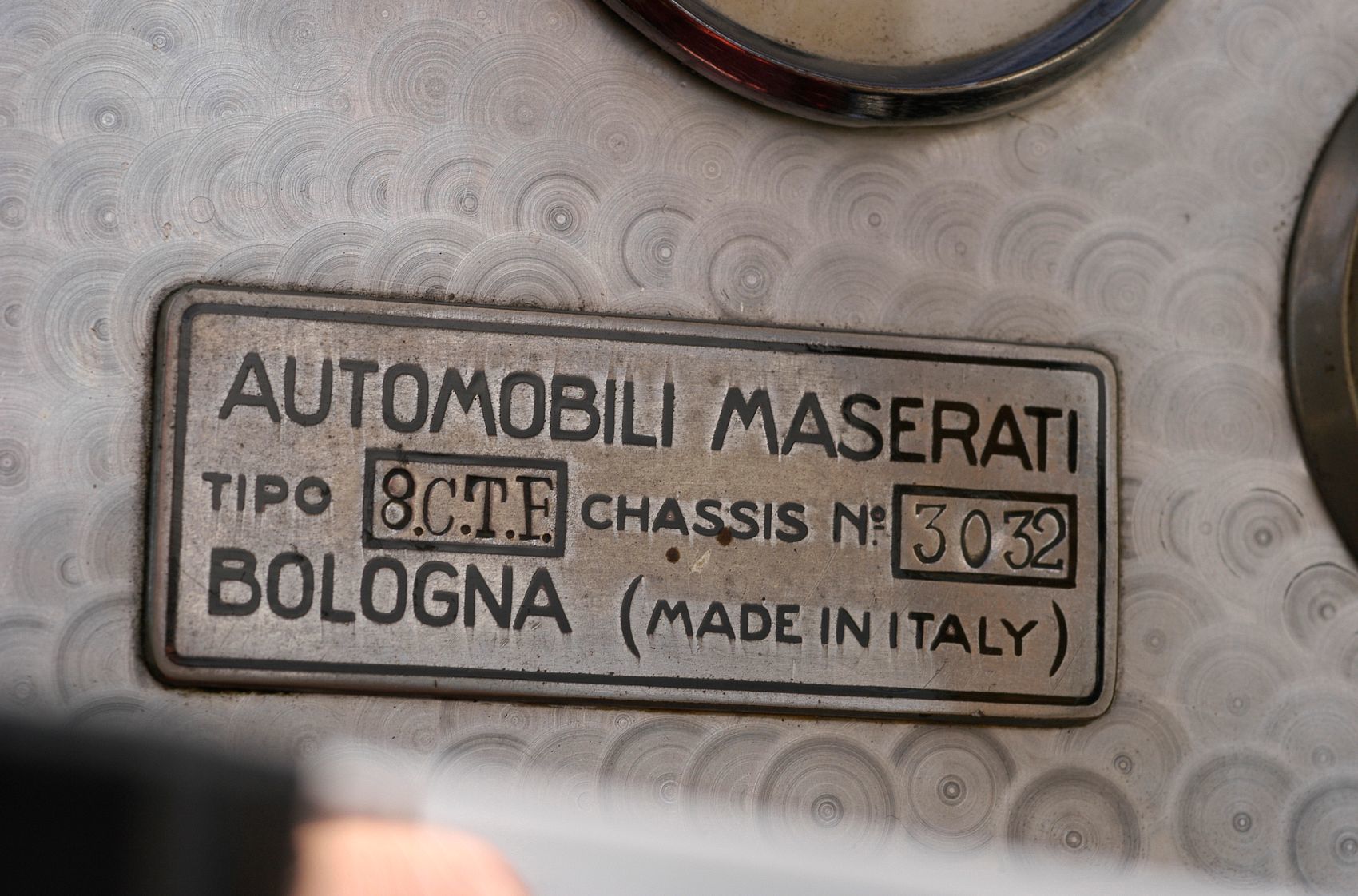
It’s for reasons like this, Shaw’s “Boyle Special” is one everybody remembers. That car, chassis number 3032, is currently on display at the Indianapolis Motor Speedway Museum, right there on the short chute between turns 1 and 2 in the infield of the Speedway itself.

Needless to say, next time you’re in Speedway, go in and check it out.

Tony Borroz has spent his entire life racing antique and sports cars. He is the author of Bricks & Bones: The Endearing Legacy and Nitty-Gritty Phenomenon of The Indy 500, available in paperback or Kindle formatFollow his work on Twitter: @TonyBorroz

Photos & Source: Maserati North America, Inc.


from Automoblog.net http://bit.ly/2WfyZ1w

Saturday, 1 June 2019

Malle hardens up a pair of Enfield Interceptor 650s

Custom Royal Enfield Interceptor 650 support vehicles for the Great Malle Rally
If you’re a fan of classic motorcycle luggage, you probably know the English company Malle. Set up by designers Robert Nightingale and Jonny Cazzola, the London outfit sells tough but stylish travel gear for riders, and classy accoutrements for weekday use.

Robert and Jonny also have a knack for running quirky moto events such as the Malle Mille. Their latest endeavor is next month’s ‘Great Malle Rally,’ and they’ve built two very stylish Royal Enfield Interceptor 650s as support vehicles.

Custom Royal Enfield Interceptor 650 support vehicles for the Great Malle Rally
Royal Enfield signed on the line when Robert and Jonny pitched the idea of rally spec support bikes to them.

The goal was to create two machines to carry engineers supporting 100 ‘very inappropriate’ custom and classic motorcycles on the 1,250-mile (2,000 km), five-day rally—running across the wildest landscapes of mainland Britain.

Hardknott Pass in the Lake District, part of the 2019 Great Malle Rally route
“We wanted to create very specific tools for a very specific job,” says Robert. “The Interceptor 650 twin was perfect for the heart of the build: lightweight, fun, easy to modify and with a beautiful engine at its core.”

Robert and Jonny borrowed a stock Interceptor for a field test in Portugal earlier this year. “After thrashing the bike over a thousand miles in three days, with 200 of those miles off road, we had a pretty good grasp of what it could do,” says Robert. “And also what modifications it needed for the rally.”

Custom Royal Enfield Interceptor 650 support vehicles for the Great Malle Rally
When it was time to build the bikes, Malle worked with the Industrial Design team at Royal Enfield in the UK. On monthly trips north to Leicestershire, Robert and Jonny shared their ideas and sketches.

They started stripping the bikes down, and convinced friends and collaborators to loan them a few parts. “Our friends over at British Customs were on board immediately.”

Custom Royal Enfield Interceptor 650 support vehicles for the Great Malle Rally
“Although they typically make parts for custom Triumphs, they set up a jig and made two sets of custom exhausts that just slipped right on to the 650 Twin,” says Robert.

“We also used British Customs’ heavy-duty Grabber foot pegs and Mule Tracker handlebars, and Biltwell grips.”

Custom Royal Enfield Interceptor 650 support vehicles for the Great Malle Rally
The bikes might look good, but usability was critical too. They needed to carry rally tools, assorted kit and supplies. So Malle adapted each Interceptor to carry a pair of their Moto Panniers, stuffed with 20 kilos of tools on each side—one side with metric, one side imperial.

All of Malle’s luggage is made from British waxed canvas—made by the oldest waxed canvas mill in the UK, established in 1776. One bike has the standard matt black, but the lead engineer’s bike is sporting the new Red 10oz material for greater visibility.

Custom Royal Enfield Interceptor 650 support vehicles for the Great Malle Rally
The large duffel at the back holds a checkpoint kit, plus spare fuel tanks, cables, consumables like zip ties and duck tape, and the personal effects of the engineers. Each set of tools is packed into dry bags inside the panniers, keeping everything waterproof and airtight.

For a support vehicle, lighting and safety are crucial. In the Malle tank pack, you’ll find five USB charging parts for phones, GPS and torches, as well as a first-aid kit, water and food.

Custom Royal Enfield Interceptor 650 support vehicles for the Great Malle Rally
PIAA were the lighting partner of choice and supplied Malle with extra large twin front lights, dual oversize fog-lights and large taillights. The side/rear lights can be rotated to act as spotlights for the engineer.

Most of The Great Malle Rally runs along tiny, single-track B roads. But there are also loose gravel mountain tracks, and small rivers often burst their banks and spread deep mud across many of the lanes.

Custom Royal Enfield Interceptor 650 support vehicles for the Great Malle Rally
So Malle lifted the bikes by a few inches with modified upside down WP forks and extended rear shocks, and installed tough Heidenau K60 dual sport tires.

The new forks meant new yokes, so Royal Enfield’s sister company Harris Performance fabricated a pair—and added a couple of heavy-duty aluminum bash guards too. Malle beefed up the protection still further with more engine guards that also house additional fog-lights.

Applecross Pass in Scotland, part of the 2019 Great Malle Rally route
The tanks and oil boxes have been hand-painted with contoured relief maps of favorite roads in the Rally: the Applecross Pass (Bealach na Bà, above) in Scotland, and the Hardknott Pass from the Lake District in England.

“The Royal Enfield team went to town on the paint jobs, with several post-2 a.m. nights in the spray booth to get them perfect,” says Robert.

Custom Royal Enfield Interceptor 650 support vehicles for the Great Malle Rally
The Interceptor 650s are now ready to tackle the Great Malle Rally, and if the event sounds like your kinda fun, a handful of packages are still available. And no, this isn’t just an event for scramblers and ADV bikes: it’s open to all classics, café racers and choppers too.

That might sound like a recipe for disaster, but there’s little need to worry. If anything goes wrong, the ‘Rally Royale’ Interceptors will be there in a jiffy.

Malle London | Facebook | Instagram | Images by Mihail Jershov

Custom Royal Enfield Interceptor 650 support vehicles for the Great Malle Rally


from Bike EXIF http://bit.ly/2Z4P3QS