Wednesday, 9 January 2019

Lamborghini Huracán EVO: On The 1s & 2s

  • The Lamborghini Huracán EVO is a noticeable improvement over the prior generation.
  • A dynamic control system optimizes performance and handling be it on the street or track.
  • Lamborghini goes a little overboard describing the car at times, like dating profile overboard.  

Lamborghini, finally, is not content to leave well enough alone. The Sant’Agata Bolognese company has a habit of realizing the shortcomings of a given model; then just junking that model entirely and replacing it with a whole new one. Lambo seems to have put that behind them with the new Huracán EVO, a car that corrects and improves upon the original Huracán.

Just Breathe (Normally)

The engine of the EVO, arguably the most important part of any Lamborghini, is the same basic V10 from before, just uprated and tweaked here and there. I think this is the same plant the Italians got from the Audi R8 when the Germans bought Lambo. Everybody agreed that was a good move (both the engine and getting bought by Germans).

And the virtuousness of that shows in what this mill brings to the party.

We’re talking about a 5.2-liter naturally-aspirated V10 with higher power output, titanium intake valves, and a lightweight exhaust system. The Lamborghini Huracán EVO cranks out 640 horsepower and 443 lb-ft. of torque. Since the Huracán EVO tips the scales at a not all that bad 3,100 lbs, it can hit 62 mph in just 2.9 seconds and 124 mph in nine seconds. It tops out at 202 mph. Nice!

It can stop too (thankfully), hauling itself down from 62 mph to zero in just 105 feet. However, the Huracán EVO’s performance evolution is evident outside the engine and braking departments.
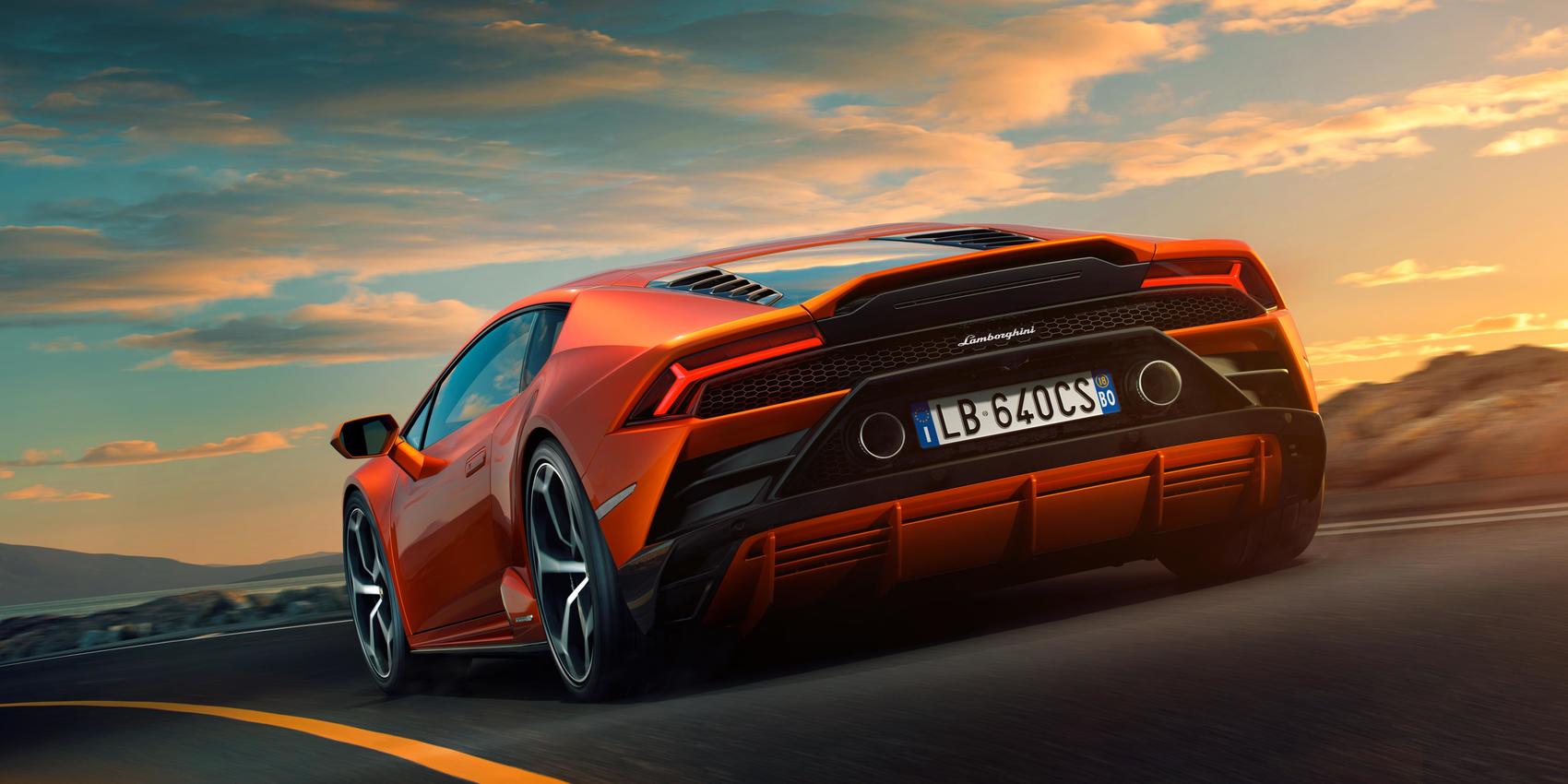
Lamborghini Huracán EVO. Photo: Automobili Lamborghini.

Digital Underground: On The 1s & 2s (And Zeros)

It’s found in the electrical signals and those little 1s and 0s, bouncing back as they make their residence in the LDVI controller. That’s short for Lamborghini Dinamica Veicolo Integrata! And what that mouthful of spaghetti does is control everything in the go/stop/turn department the way a conductor leads an orchestra.

The LDVI handles the rear-wheel steering and torque vectoring system, effectively working at all four wheels. LDVI controls a sub-suite of accelerometers and gyroscopic sensors – the Lamborghini Piattaforma Inerziale (LPI) – located at the car’s center of gravity. LPI monitors lateral, longitudinal, and vertical accelerations, along with roll, pitch, and yaw in real-time. The LPI system feeds data to the LDVI, tweaking the magneto-rheological suspension to immediately adjust the damping.
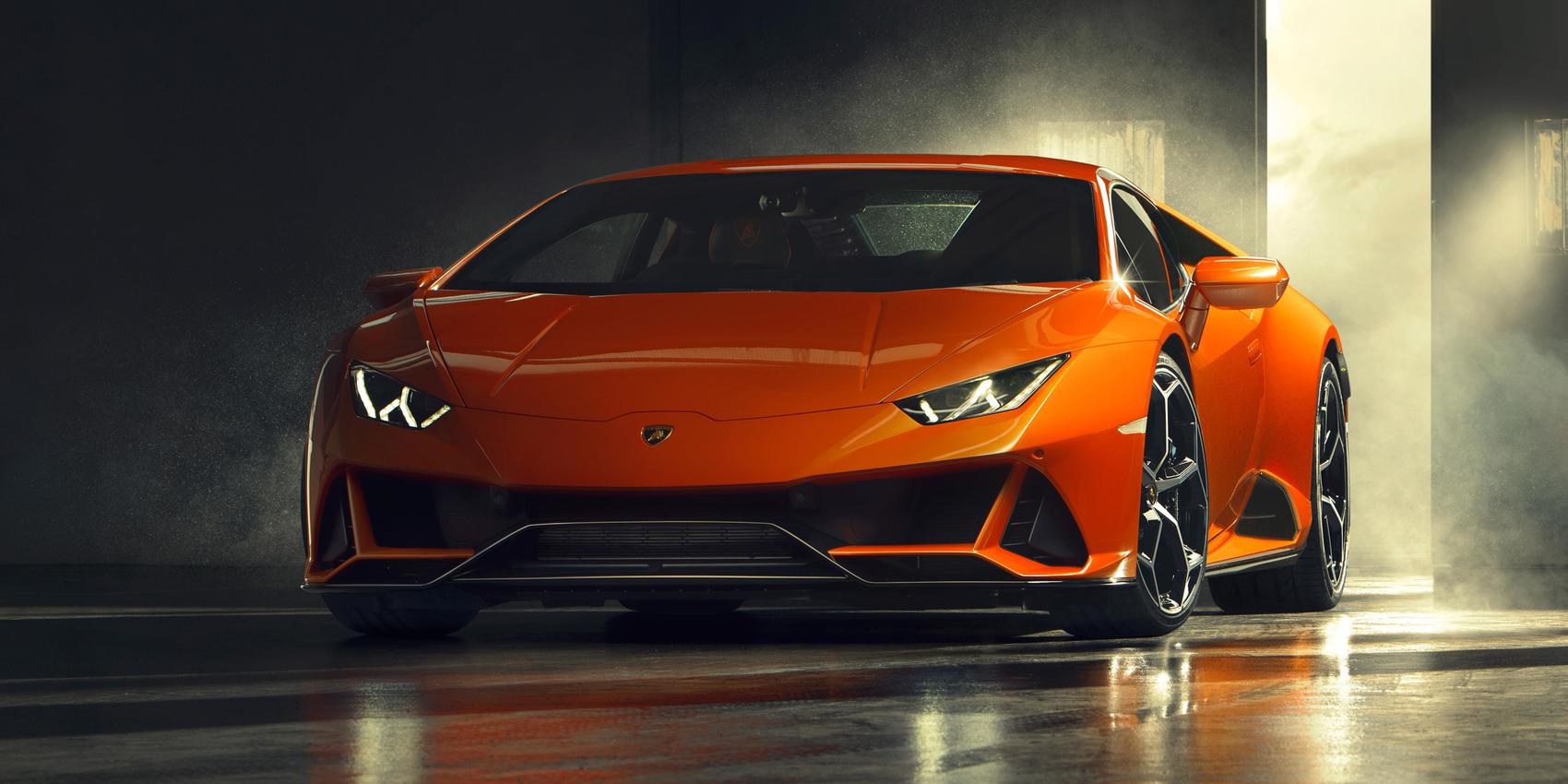
Photo: Automobili Lamborghini.

Driver Controls: Different Animal In Each One

Naturally, there are new traction control parameters working in concert with the all-wheel drive and torque vectoring systems. Yes, even the steering is part of this zuppa di alfabeto. Lamborghini’s “Dynamic Steering,” for example, provides better responsiveness in the corners, according to the automaker. The technology is coupled with the rear-wheel steering for greater stability during high-speed cornering and braking.

Each of these systems is driver-operated via the ANIMA controller in one of three modes: STRADA, SPORT or CORSA. Think of it as Lambo’s version of Ferrari’s Manettino system. STRADA, or Street, aims for capable yet agile enjoyment. SPORT becomes “playful, intuitive, and extremely exciting,” according to the automaker. This sounds less like the Huracán EVO and more like Lamborghini’s bio on their Tinder profile.

Naturally CORSA, Track, is much sharper and reactive for racing.

Related: Open-air emotion: Meet the Huracán Performante Spyder.

Performance Barbershop

The Lamborghini Huracán EVO also gets an aero haircut; some trimming here and there, kicks and flips, and other bits and bobs. There’s a new front bumper and splitter with an integrated wing. The air intakes are enlarged too while a slotted spoiler enhances air flow. Lambo has also gone over the EVO’s underbody, reshaping it to improve aerodynamic efficiency more than five times over the first gen Huracán.

And, since you want everybody to know you’re driving the new Huracán EVO, there’s some styling cues to set you apart. The “show model” is presented in Arancio Xanto, a new four-layer color most likely coming for production cars. You will also find new 20-inch Aesir rims wrapped in Pirelli P Zero tires. The interior trim features an Alcantara and leather mix, with Arancio Dryope styling details that match the body tone and ambient lights.

Lamborghini’s patented Carbon Skin is available on request.

Photo: Automobili Lamborghini.


This sounds less like the Huracán EVO and more like @Lamborghini's bio on their Tinder profile.
Click To Tweet


Must. Have. Connectivity.

As much as I’d like all cars, especially ones from Lamborghini, to simply be about The Pure Driving Experience, I understand it’s 2019. Connectivity is a thing everybody expects these days. Besides, if it works right, why not be able to find your way to the next available greasy spoon for a good-bad breakfast after an early morning of carving it up?

The Huracán EVO has an 8.4-inch HMI touchscreen above the start button, with voice and gesture control. The touchscreen seems to contorl everything: seats, navigation, status of the LDVI system, and infotainment things like Apple CarPlay.

Pricing & Availability

The Lamborghini Huracán EVO arrives this spring. It should cost you around $261,274 which, yes, is a lot of green. But that’s also right where Lambos always are; a little less than a Ferrari and a little more than a Porsche.

Tony Borroz has spent his entire life racing antique and sports cars. He is the author of Bricks & Bones: The Endearing Legacy and Nitty-Gritty Phenomenon of The Indy 500, available in paperback or Kindle format. Follow his work on Twitter: @TonyBorroz

Photos & Source: Automobili Lamborghini.


from Automoblog.net http://bit.ly/2Qy2jsr

Tuesday, 8 January 2019

Street tracker gold: building a road-legal Harley XR750

Street tracker gold: building a road-legal Harley XR750 street tracker
The biggest cliché in motorcycle journalism is the ‘listicle’ of the best-looking bikes ever made.

If we ever run out of ideas and succumb at EXIF, you can guarantee that the Harley-Davidson XR750 flat tracker will be in our list. And we’d lament that it was never street legal.

Street tracker gold: building a road-legal Harley XR750 street tracker
So this streetable XR750 from Brad Peterson is right up our, er, street. And it’s no replica or lookalike, either.

Power comes from a genuine factory race motor, used briefly in 2007 by National #80 Rich King, which probably delivers around 100 horsepower.

Street tracker gold: building a road-legal Harley XR750 street tracker
“The motors are sold without a title,” Brad tells us, “but they do have serial numbers. My motor was confirmed as a Rich King motor via the H-D race department records.”

Brad is a machinist by trade, and hails from the port city of Bellingham in Washington State, near the Canadian border. He’s been riding since childhood, and his grandfather—a motorcycle dealership principal—helped build the town dirt track.

Street tracker gold: building a road-legal Harley XR750 street tracker
Which might explain why the spec sheet for this XR750 is pure street tracker gold. The motor is fed by twin Sudco Mikuni TM 38 flat slides, breathing through Darcy racing intakes. Bill Werner Racing supplied the exhaust and SuperTrapp mufflers, and also the wet clutch.

The powerplant is squeezed into a C&J frame, which has been oiled (rather than painted) to prevent rust. The forks are modified CBR600 items, with nitrided tubes and the caliper mounting lugs machined off the right fork lower. They’re hooked up with A&A variable offset triple clamps and matched to a Penske rear shock.

Street tracker gold: building a road-legal Harley XR750 street tracker
The bars are Vortex’s ‘J Murph’ bend, which are a little higher than most flat track bends. Brad’s also installed a Brembo front master cylinder and Magura clutch assembly, but there’s no speedo or tacho to reveal how fast he’s going…

Stopping, however, is no problem; there’s a front brake on this tracker. The calipers are Brembo, but Lyndall supplied the iron brake rotors—320mm at the front and 10.5” at the rear. The front caliper hanger is custom machined and there’s an A&A racing rear hanger, with quick-change rotor and sprocket carriers. The rear master cylinder is Grimeca.

Street tracker gold: building a road-legal Harley XR750 street tracker
The forged wheels are from Performance Machine, and the real deal—super-light 19” rims designed for the dirt track.

The bodywork is full carbon fiber, with a Corbin seat, and reputedly factory-issue. The raw carbon looks good, so Brad has left it unpainted, like most of the rest of the bike.

Street tracker gold: building a road-legal Harley XR750 street tracker
Discreet LED lighting front and back helps make this XR750 street legal. It’s a bare bones, total-loss electrical system, but it works. “I can easily run a dozen tanks of fuel on the battery life,” says Brad.

Keeping that battery hooked up to a charger is a small price to pay for being able to ride this tracker on the street. “It’s titled and legitimately street legal,” Brad says. “Which is not an easy thing to accomplish in my state. It may be pushing some details into gray areas…”

Street tracker gold: building a road-legal Harley XR750 street tracker
The XR750 is not one of those volatile converted race bikes, even though it needs to be bump started and can wheelie at will.

“I use BBRP (Brian Billings Racing Products) to keep this XR running strong,” says Brad. “He’s done a lot of tuning to make it a reliable street bike: it runs flawlessly, and it’s not crabby or temperamental.”

Street tracker gold: building a road-legal Harley XR750 street tracker
“It starts and runs every time, and has been ridden off the street and onto a dirt track. And then ridden home.”

Brad’s home also includes vintage Harleys dating back to 1921, an Indian Four, and models from Aprilia, BMW, Honda, Suzuki, Triumph and Yamaha.

But we’re betting that this XR750 is the most fun of the lot.

Images by John Meloy

Street tracker gold: building a road-legal Harley XR750 street tracker


from Bike EXIF http://bit.ly/2sg8xn5

Sunday, 6 January 2019

Custom Bikes Of The Week: 6 January, 2019

The best cafe racers, mini bikes and classic motorcycles of the week
Since this is our first weekly round up of the year, we’re taking liberties. A couple of the bikes below popped up last month already, and a couple more have just landed in our inbox.

The list includes everything from a Ducati 750SS dressed as a MH900e, to a BMW R nineT built up with kit parts. We’ve also got a retro-styled Yamaha XJR1300, a rare Moto Martin M16 and a little Honda Z50R filled with attitude.

Let’s get 2019 started then…

Ducati 750SS by Unik Edition
Ducati 750SS by Unik Edition The Ducati MH900e is one of the most iconic motorcycles Ducati ever built. But they only ever built 2 000 units—so if you want one, you better have the bank balance to back up your dream.

This MHe-looking Duc is actually a 1994 750SS, built for a customer by Portugal’s Unik Edition. The brief was to reimagine the MH900E as a contemporary motorcycle, but on a budget. Or, as the client put it: “If Mr. Pierre Terblanche designed the Ducati 900 MHe today, what would it look like?”

Ducati 750SS by Unik Edition
Unik started with a 750SS, then added the wheels and swing arm from a newer Monster S4R. Then they matched up a MHe fairing and tail kit to the stock 750SS tank (which was reportedly quite a mission).

We love the combo of red paint and a gold frame and wheels, but this replica-slash-café racer is also sporting a number of neat details. The back end of the tail’s been louvered with the tail light embedded, and the dash in particular is really neatly arranged. It might not be an actual MH900e, but it’s still damn charming. [More]

Moto Martin M16 1135 EFE Suzuki
Martin M16 1135 EFE Suzuki If you’re looking for vintage machinery that’s truly collectable, Legend Motors is a good place to start. They’re based in a beautiful shop in Lille, France, and they’re the place to go for rare and special classics.

Don’t take our word for it; this gorgeous specimen has just popped up in their inventory. It’s an early 80s Moto Martin M16, and it could be yours for a cool €16,800 (about $19,150).

Moto Martin M16 1135 EFE Suzuki
Moto Martin is a boutique French frame manufacturer, founded by Georges Martin way back in 1970. Martin’s work was originally based on the frame designs of Fritz Egli, with a focus on rigidity and weight saving. This particular model—the M16—uses a perimeter frame design, and is equipped with a Suzuki GSX 1135 EFE motor.

Details are sparse, but we’re smitten with what looks like either a nickel-plated or polished frame, and that retro-fabulous paint scheme. There’s no doubt: this Moto Martin is going to make some collector extremely happy. [More]

BMW R nineT kit by JvB Moto and Kedo
BMW R nineT Parts from JvB-Moto Jens vom Brauck built a BMW R nineT a while back that knocked our socks off. I was lucky enough to not only see, but also ride it—and it eventually landed on our Top 10 for 2017.

Even though Jens swore that the bike was a one-off, he did hint that some of the parts would make it into production. And now they have, via JvB-Moto’s parts partner, Kedo.

BMW R nineT kit by JvB Moto and Kedo
This red R nineT’s carrying a selection of the new parts. Up front is a headlight in the usual JvB style (it’s available in three versions), with an optional bracket that holds a Motogadget dash. Out back, you’ll find a sharp new race-inspired tail piece, with a slim LED light embedded in the back.

Jens has also installed the JvB air intake, license plate holder, LED turn signals, front fender, sump guard, and a few other bits and pieces. It’s a minor rework of the R nineT but it’s majorly cool—and since everything bolts on, it doesn’t take a rocket scientist to build. [More]

Yamaha XJR1300 by Venezia Moto
Yamaha XJR1300 by Venezia Moto This XJR belongs to Federico Agnoletto—the man behind the incredibly well attended Verona Motor Bike Expo. The Expo includes scores of custom bikes, so Federico decided it was time to build a custom of his own, that would be worthy of display.

Enlisting the help of Italian Yamaha dealer and workshop, Venezia Moto, he created this beautiful throwback iteration of the Yamaha XJR1300. Venezia Moto was a logical choice; they took top honors a few years ago at the show, in a build-off organized by Yamaha themselves.

Yamaha XJR1300 by Venezia Moto
Federico picked the burly XJR as a donor, and then settled on a design direction. Inspiration came from Giacomo Agostini’s World Championship-winning Yamaha OW23 YZR500. That meant a full array of race-style bodywork, built from scratch to resemble Ago’s YZR, but fit the much bigger XJR.

Bolt-ons include some Rizoma bits, and a titanium exhaust from SC Project. But it’s that period-correct livery—and those gold Marvic wheels—that push it over the edge for us. [More]

1982 Honda Z50R mini bike by Droog Moto
Honda Z50R by Droog Moto Little bikes are big fun, right? A lot of people think so, and that philosophy’s been creeping steadily into the custom scene over the last year. Here’s a contender from Droog Moto in Arizona.

It’s a Honda Z50R, and it was built up to resemble the shop’s twelfth build: a Kawasaki Ninja 650R with a post-apocalyptic vibe. A customer had bought the Ninja, and wanted something for his son to match it, so that they could “terrorize the neighborhood” together. (Parent of the year perhaps?)

1982 Honda Z50R mini bike by Droog Moto
Droog set about fabricating similar mods to the Ninja’s for the little Honda. On went a front number board with a stubby fender, and a set of MX bars. The rear end was reworked with a new seat, but the stock fuel tank was left alone.

Droog also refurbished the motor, upgraded the shocks, and fitted chunky rubber and solid wheel covers, bringing the style in line with Dad’s bike. Needless to say, the little ripper was beyond stoked when the ‘Mini Brawler’ was delivered. [More]

1982 Honda Z50R mini bike by Droog Moto


from Bike EXIF http://bit.ly/2CS8pjR

Friday, 4 January 2019

Little Ripper! K-Speed’s Honda Monkey cafe racer

2019 Honda Monkey cafe racer by K-Speed
K-Speed is one of the greatest success stories of the modern custom scene. Like a hit factory from the golden era of pop, the Thai company churns out hit after hit.

We’ve seen what they can do with BMWs, Triumphs and Honda Cubs—and now it’s the turn of the funky little Honda Monkey 125, launched less than a year ago.

2019 Honda Monkey cafe racer by K-Speed
With eleven branches spread throughout Thailand, K-Speed is a major industry player in its local market. But even more incredibly, they built over 40 customs last year—releasing a bike every 6.3 working days.

Despite this, there are no formulas or corner cutting, and no subtle variations on a signature style. Each build is started with fresh eyes, and is invariably a knockout.

2019 Honda Monkey cafe racer by K-Speed
‘Monkey Racer’ is based on the new Honda Monkey, which comes with a 125cc air-cooled single-cylinder engine, a four-speed ‘box, and 12-inch wheels. Plus styling that harks back to the Z50A released in the late 1960s.

The short wheelbase gives the stock Monkey 125 a somewhat cartoonish look, but K-Speed have managed to add a dash of sophistication and a classic cafe racer vibe.

2019 Honda Monkey cafe racer by K-Speed
There’s obviously a lot of careful thinking going on here—probably because K-Speed founder Eak is a big fan of the platform. He has a couple of the original 50cc Z-series Monkeys in his personal garage, and started riding them as a child.

The biggest change is a switch to 14-inch wheels. They’re aftermarket rims originally designed for the Grom, modified to fit, and with solid covers to make them stand out even more.

2019 Honda Monkey cafe racer by K-Speed
The tank, surprisingly, is the stock 5.6L item—but chromed to accentuate the distinctive trapezoidal shape. Right behind is a completely redesigned seat, upholstered with black leather, finished with subtle stitching, and much shallower than the original.

That slim and stubby new subframe is now supported via short YSS shock absorbers. At the front, the forks have been clipped by three inches to match.

2019 Honda Monkey cafe racer by K-Speed
The bulky plastic airbox is gone, replaced by a neat velocity stack. And the hefty, high-riding standard exhaust system has also been ditched, in favor of a slender pipe terminating in a low-set SuperTrapp-style muffler.

Black high-temperature paint helps the shiny new breathing equipment stand out, and there’s a drilled clutch cover to match.

2019 Honda Monkey cafe racer by K-Speed
The cockpit is much cleaner too. The bars and risers are gone, the top yoke is blacked out, and clip-ons lower the riding position to a café racer crouch.

The circular speedo and switchgear are much simpler than the originals, and the stock LED headlight—which jars a little against the classic vibe of the Monkey—has been swapped out for a black bucket with a slim grille.

2019 Honda Monkey cafe racer by K-Speed
Despite their track record with Cub conversions and the fame it has brought them outside Thailand, K-Speed rarely work on smaller bikes. They’re willing to make an exception for the Monkey though, describing it as a ‘special’ case.

They also mentioned that they have another new Monkey 125 in the garage, as yet unmolested. Who’s looking forward to seeing what they do with that one?

K-Speed website | Instagram | Images by Hipmotography

2019 Honda Monkey cafe racer by K-Speed


from Bike EXIF http://bit.ly/2CNTiaT