We’ve chronicled countless auctions over the years, giving us a front-row seat to some of the rarest and most significant motorcycles in the world going under the hammer. We revisit some of our favorites.There’s a unique electricity in the air at a high-end motorcycle auction. It’s a mix of history,...
from BikeEXIF https://ift.tt/ZQ62C0i
Tuesday, 30 September 2025

Monday, 29 September 2025
Eyes on the Line: A Rookie's Crack at Bonneville Glory
It’s 85 degrees out here in the California desert – not bad for 7:30 am in June. I’m standing amongst about 25 other folks, drinking some coffee and holding my camera. All is usual except for one thing: my stomach is turning inside out, and it isn’t because of the roach coach black coffee. I’m watch...
from BikeEXIF https://ift.tt/8bvj3Ta
from BikeEXIF https://ift.tt/8bvj3Ta
Sunday, 28 September 2025
Speed Read: New Race Bikes from Ducati and Triumph
This week's Speed Read selection lives up to its name, with new high-octane race bikes from Ducati and Triumph. The Italian firm has just released the 2026 Ducati Panigale V4 R superbike, while the British company has pulled the wraps off the 2026 Triumph TF 450-X. Ladies and gentlemen, pick your po...
from BikeEXIF https://ift.tt/Ws4PDkG
from BikeEXIF https://ift.tt/Ws4PDkG
Saturday, 27 September 2025
Record Setter: How to Build the World's Fastest Indian Bagger
58 years after Burt Munro's iconic land speed record, Indian Motorcycle returned to the Bonneville Salt Flats with an Indian Challenger plucked from their King of the Baggers stable. Here's how they did it.Indian Motorcycle’s racing roots run deep. From Ed ‘Iron Man’ Kretz’s 1937 Daytona 200 win and...
from BikeEXIF https://ift.tt/sxGDVaR
from BikeEXIF https://ift.tt/sxGDVaR
Friday, 26 September 2025
From Eurorack to Tire Attack: A KTM RC8 Streetfighter from a Synth Designer
Based in Riga, Latvia, Ģirts Ozoliņš is the founder of Erica Synths and a total motorcycle fanatic. This is his custom-built KTM RC8 streetfighter.In the late 80s, sportbike riders with crashed bikes and empty wallets ditched broken plastics and ran their machines without fairings. The streetfighter...
from BikeEXIF https://ift.tt/JghFise
from BikeEXIF https://ift.tt/JghFise
Thursday, 25 September 2025
The new Mercedes-Maybach V12 Edition will be produced in only 50 units
Mercedes-Benz has always been associated with taking luxury to a whole new level, and the newest and most advanced product is no different. The Mercedes-Maybach S 680 V12 Edition is an ultra-haute style, laboriously created tribute to the legendary V12 engine with which the Maybach Zeppelin of 1928 propelled itself. The limited edition is as rare as it is lavish, with only 50 units ever produced.
Table of Contents
Mercedes-Maybach V12 Edition: Back to the Top of a Legendary Engine

Maybach has a rich history as far as automotive engineering is concerned. In 1928, a V12 engine was also contained in the Maybach Zeppelin, which was one of the first vehicles to achieve mass production and has been a symbol of power and luxury throughout the years. The new V12 Edition carries on the tradition with a fantastic 6.0-liter V12 with 612 hp and 900 Nm of torque. Wow, it’s an impressive power! 🙂
This beast can achieve a top speed of 250 km/h with electronic control and accelerate from 0 to 100 km/h in 4.5 seconds, which is an undeniable addition to its performance heritage. I am sure that the feeling in the interior is like in “business class” when you’re flying for business meetings.
Striking Exterior Design
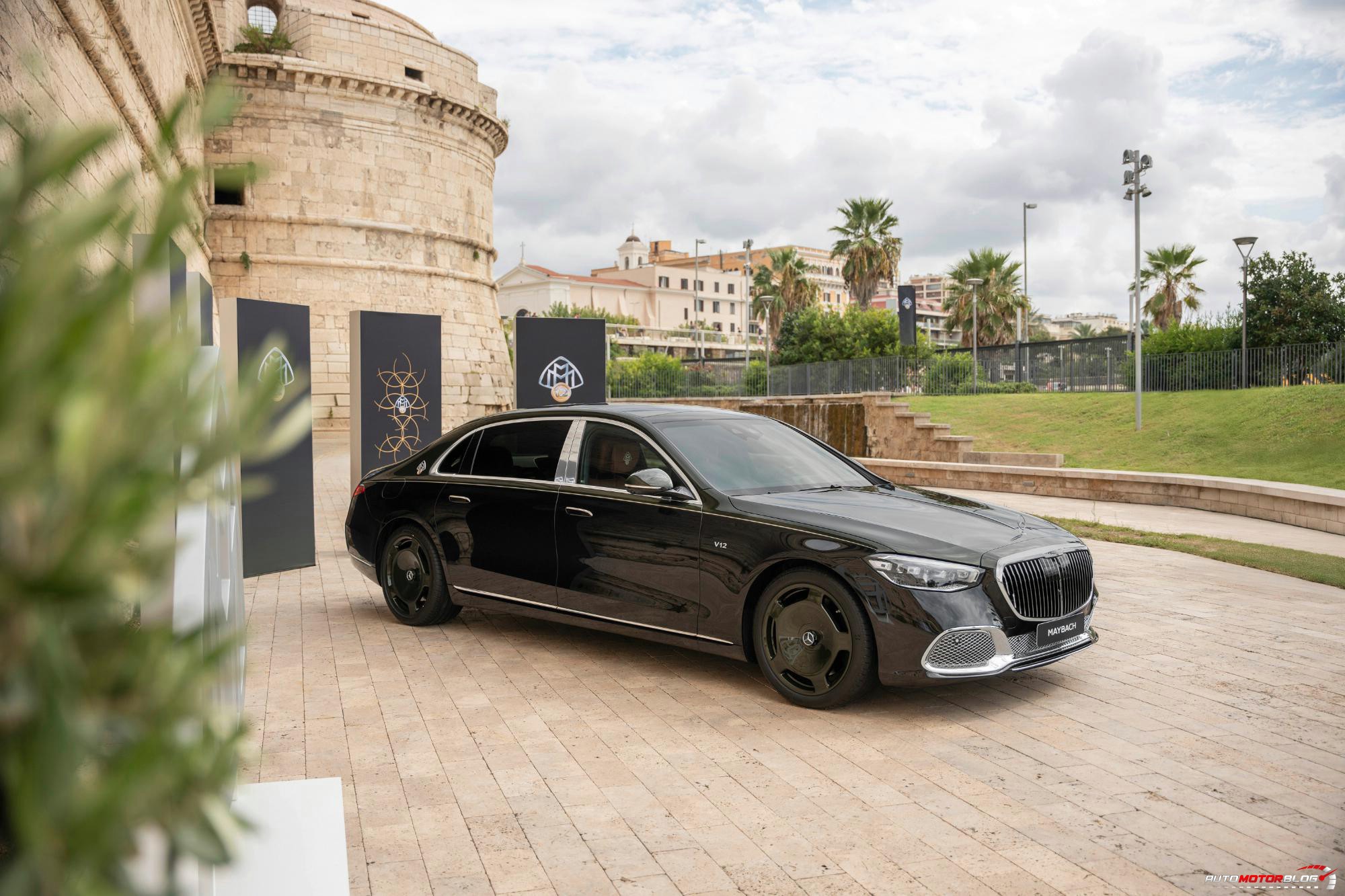
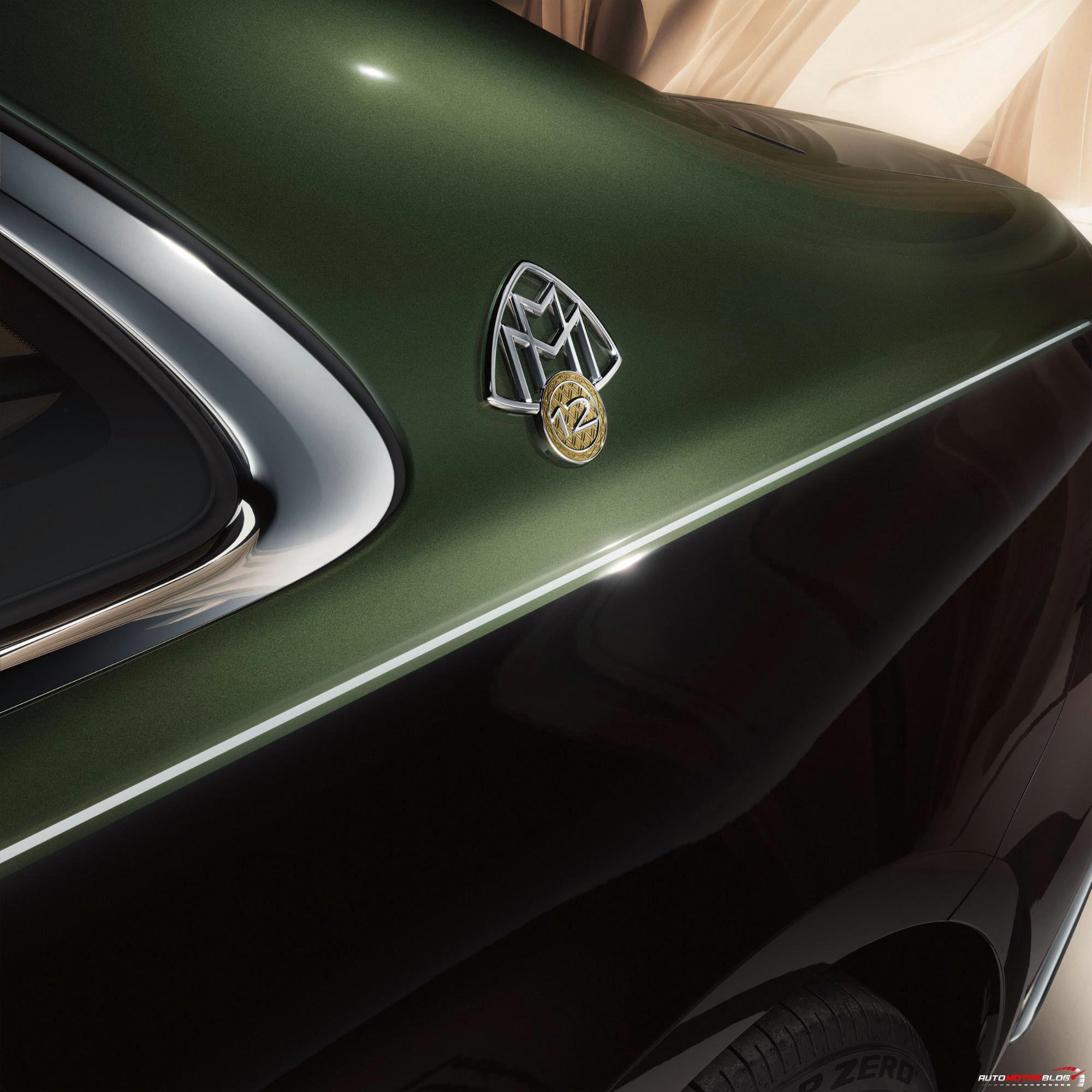
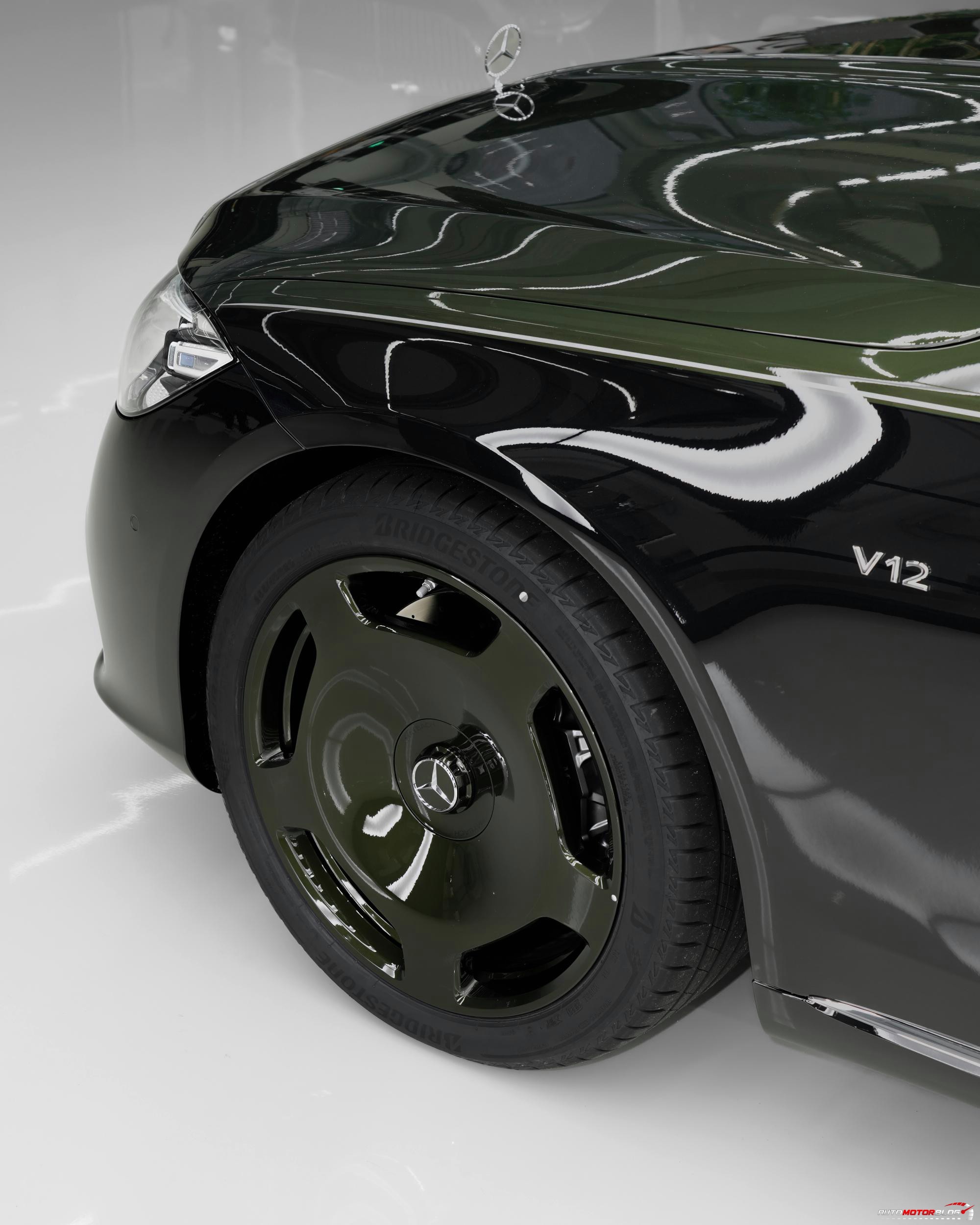
The V12 Edition exterior is a visual festivity of color and craftsmanship. The Manufaktur customizing department came up with a two-tone paint, which is hand-selected and which makes this sedan stand out immediately. It is covered with metallic olive green on the top of the roof and deep obsidian black on the lower portion of the body. An eye-catcher is made with a metallic silver center stripe that cuts across the two colors and provides the outline of the car. Even the 5-spoke forged wheels have the olive finish, which supports the integrated look.
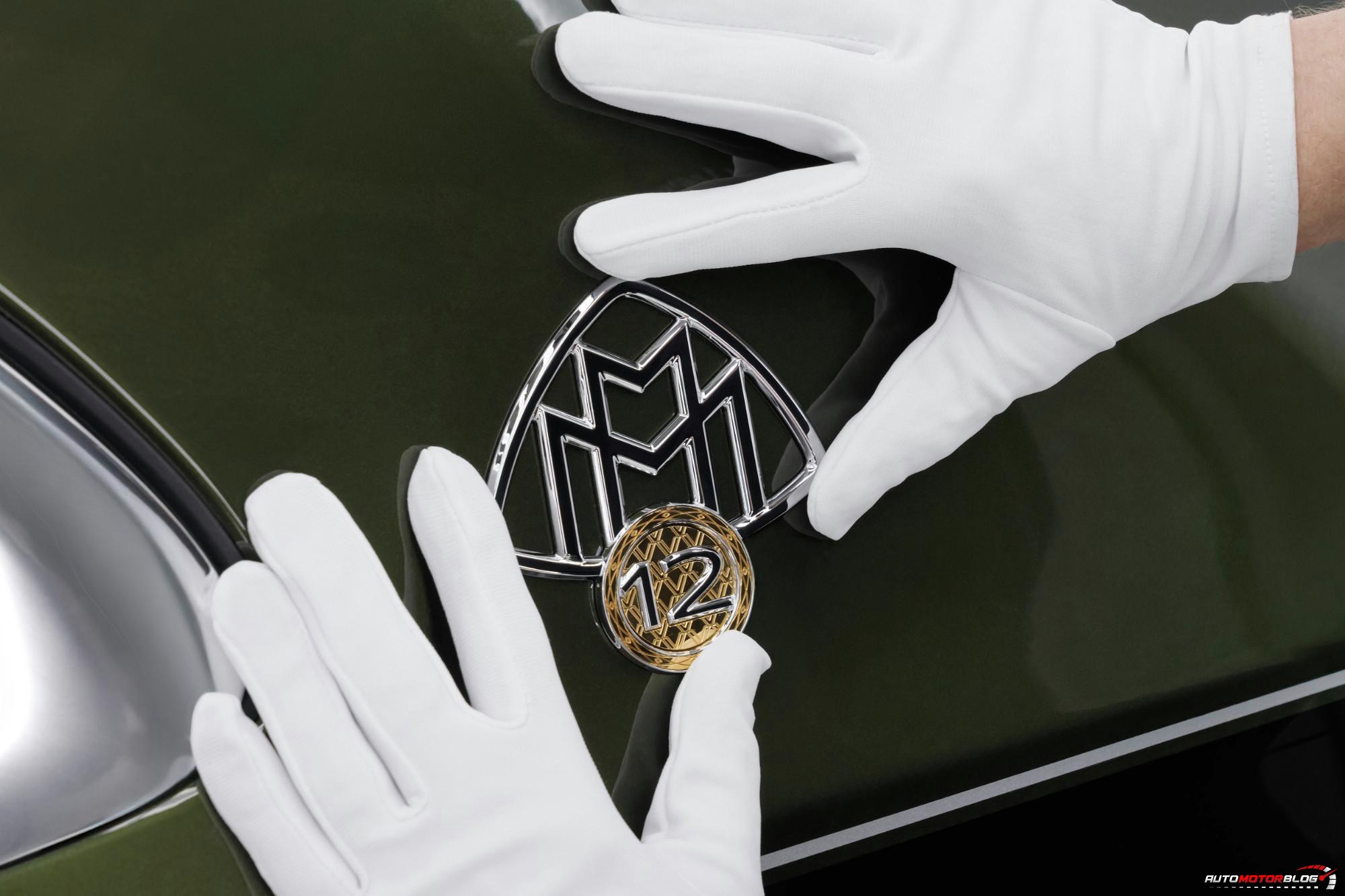
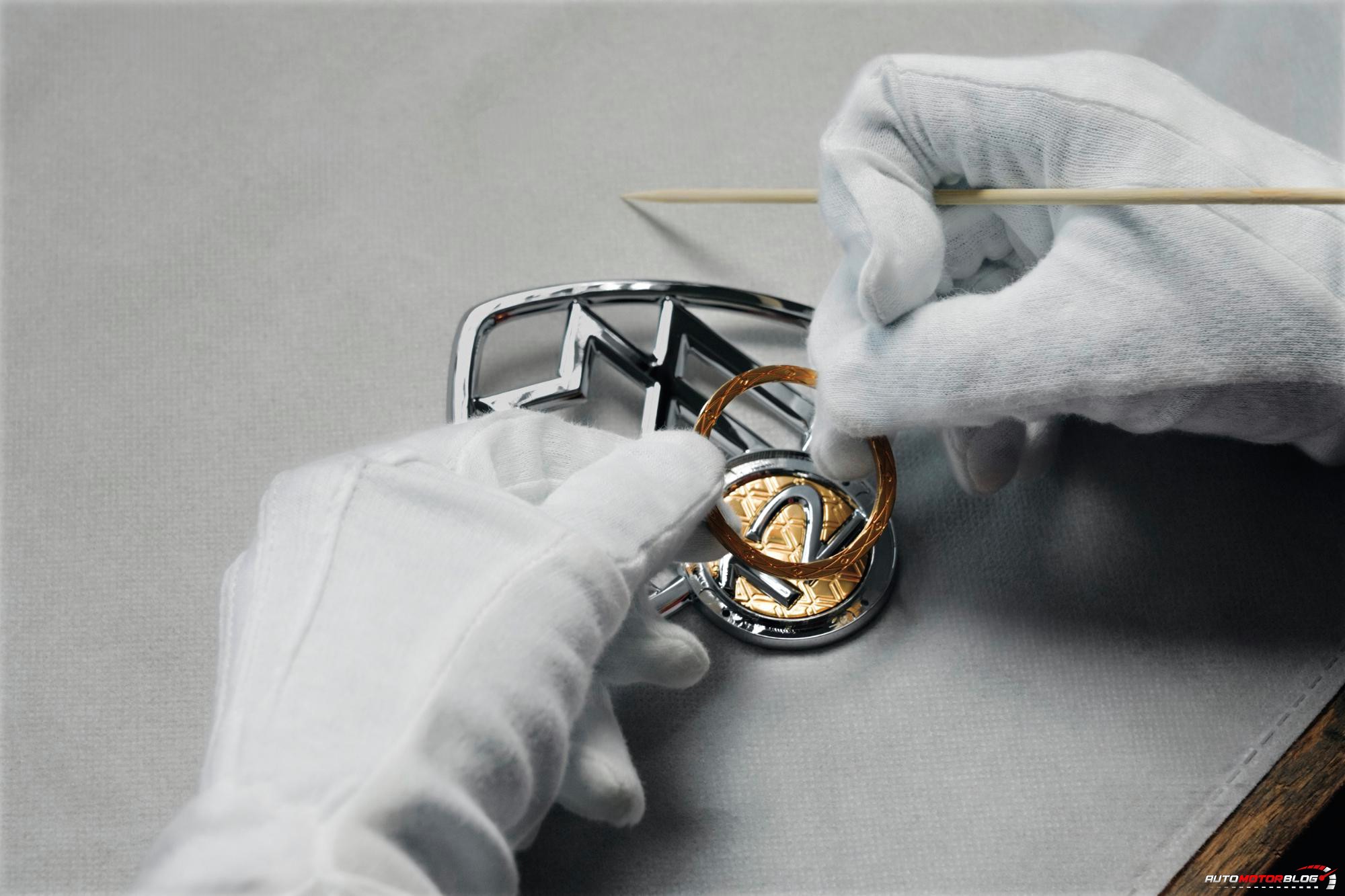
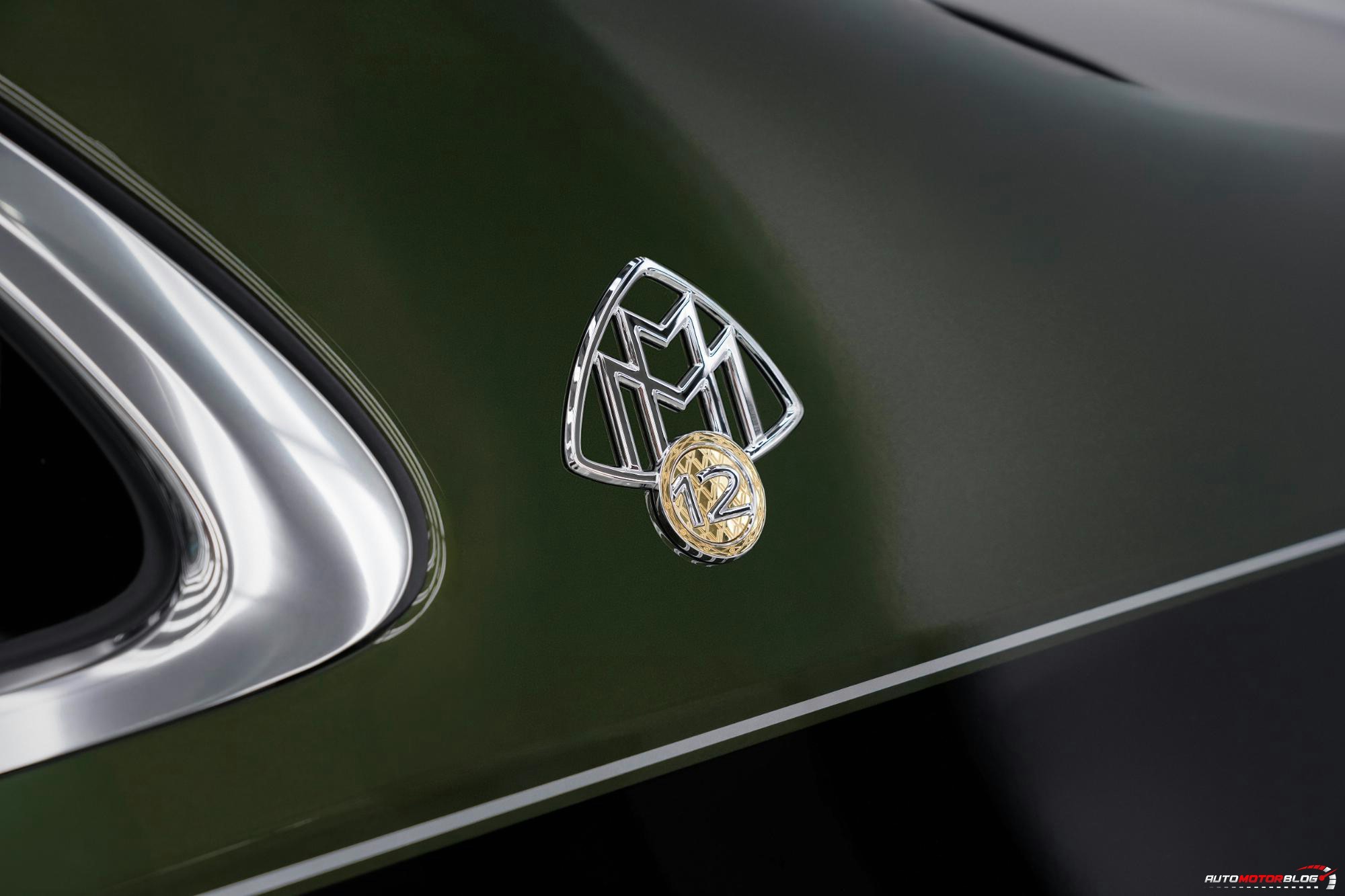
The C-pillar is topped with a unique badge of Maybach: a gold and chrome pendant with the inscription 12. The 24-carat gold medallion ring has a diamond cutting that is divided into twelve segments, a mild reference to the V12 heritage and a testament to a luxurious taste.
Luxurious Interior Details

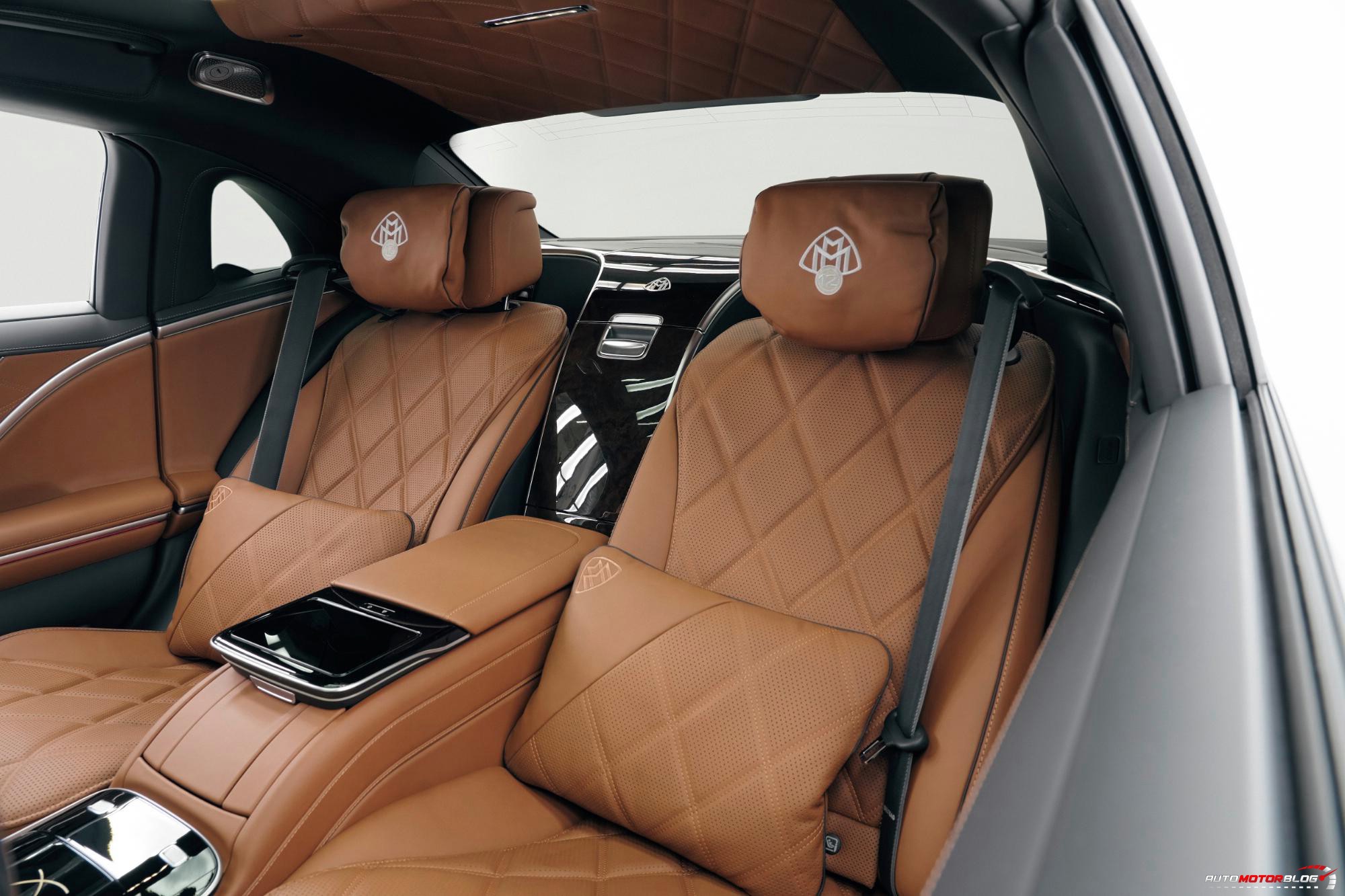
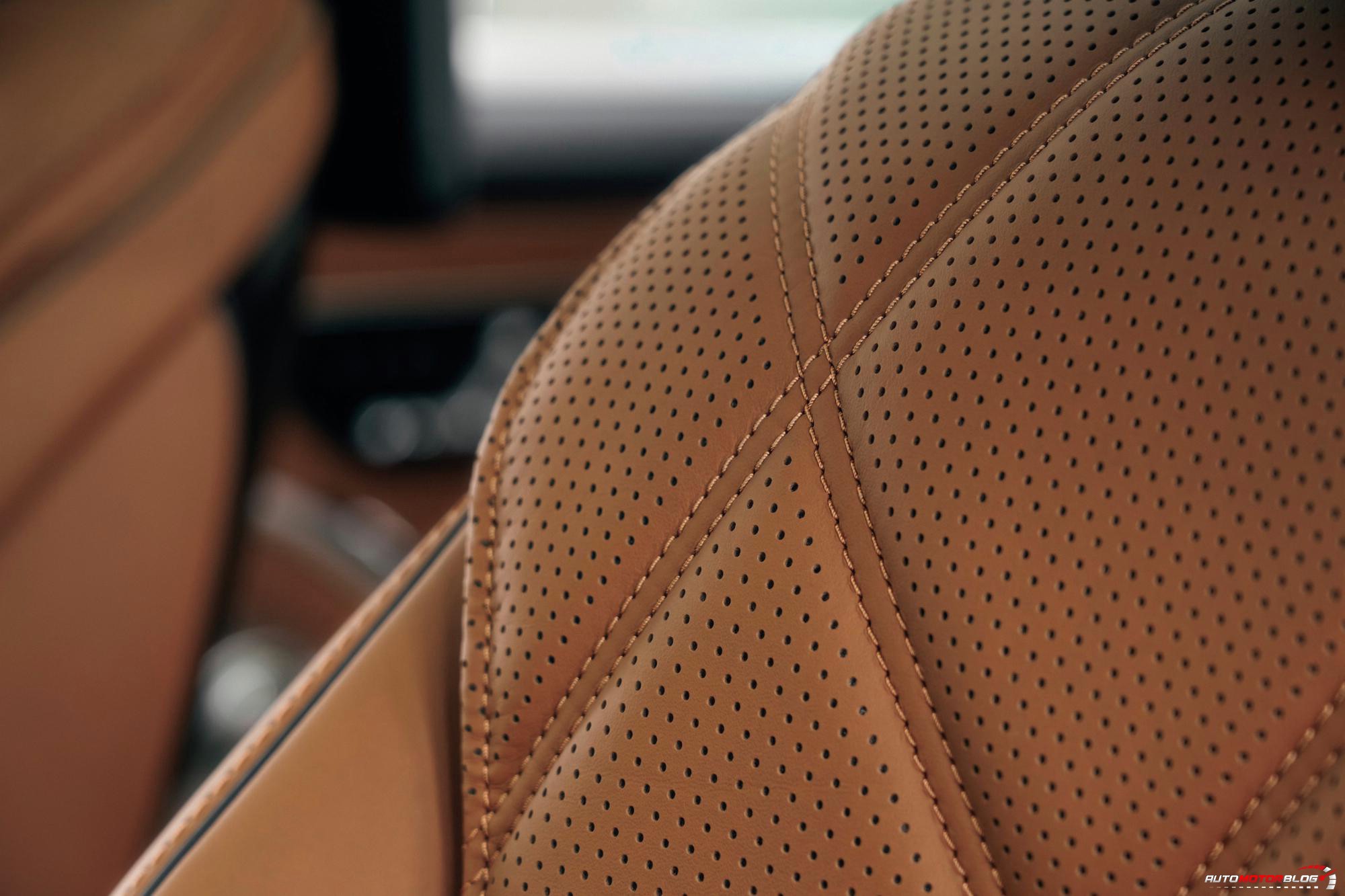
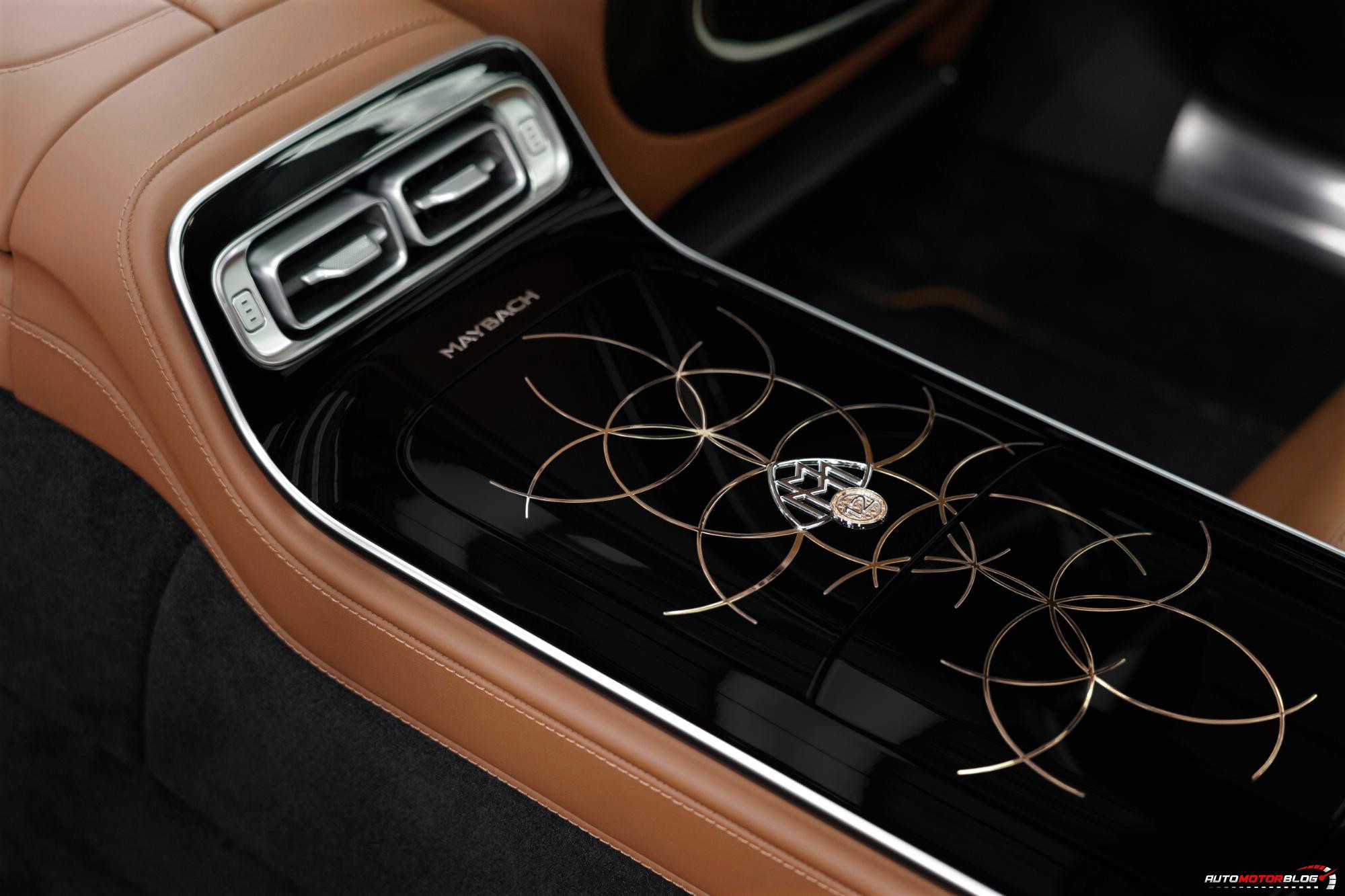
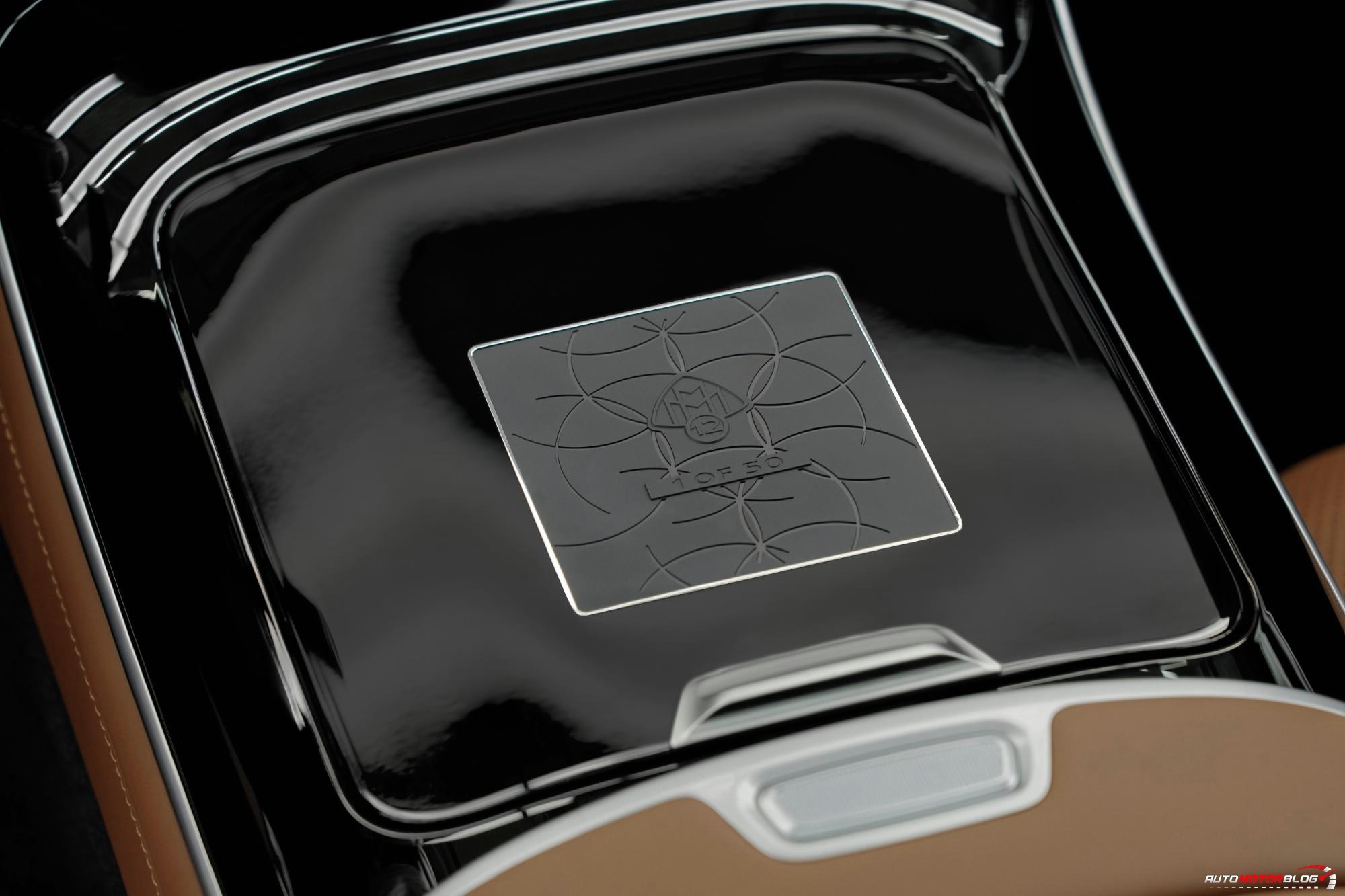
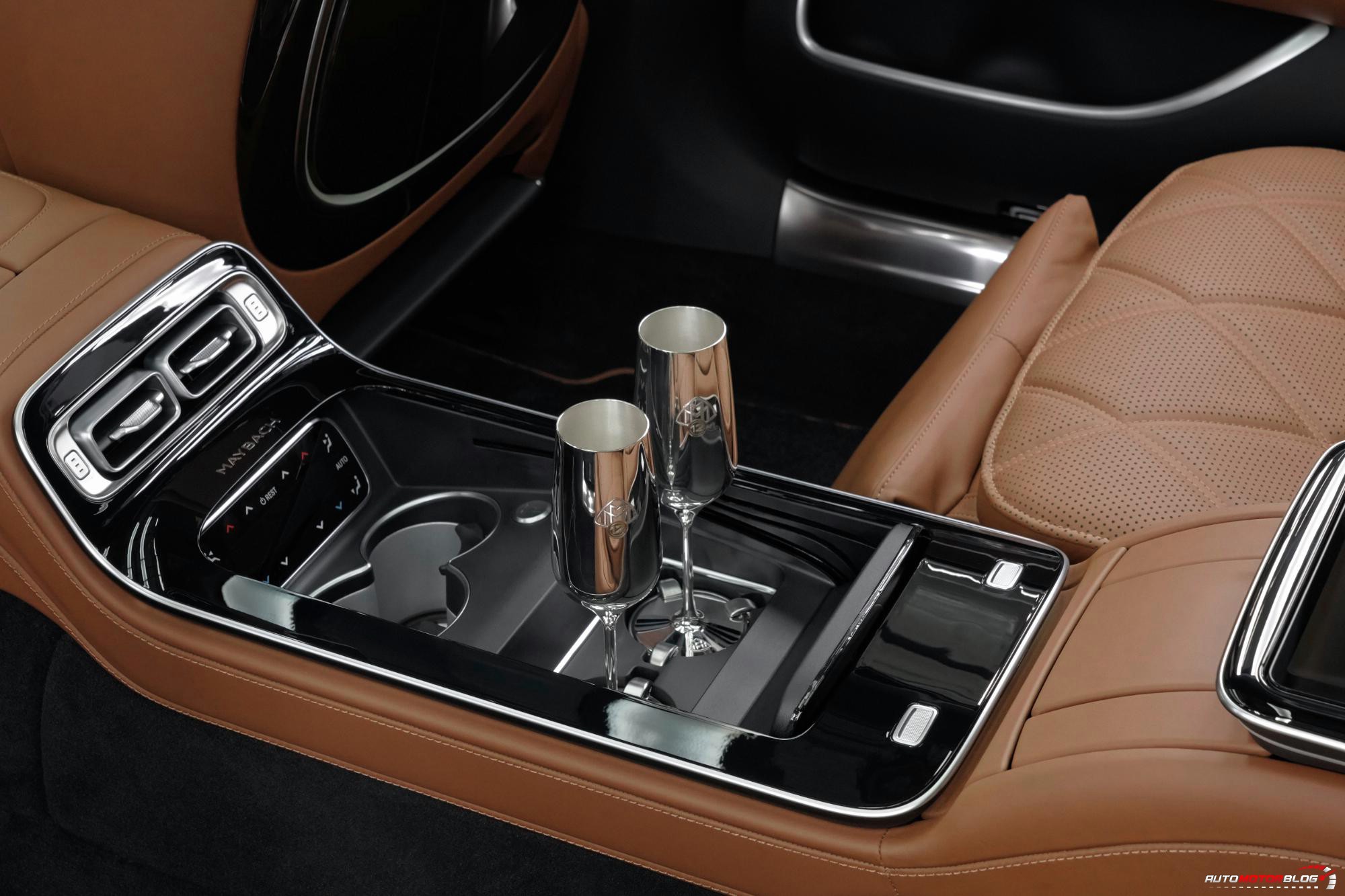
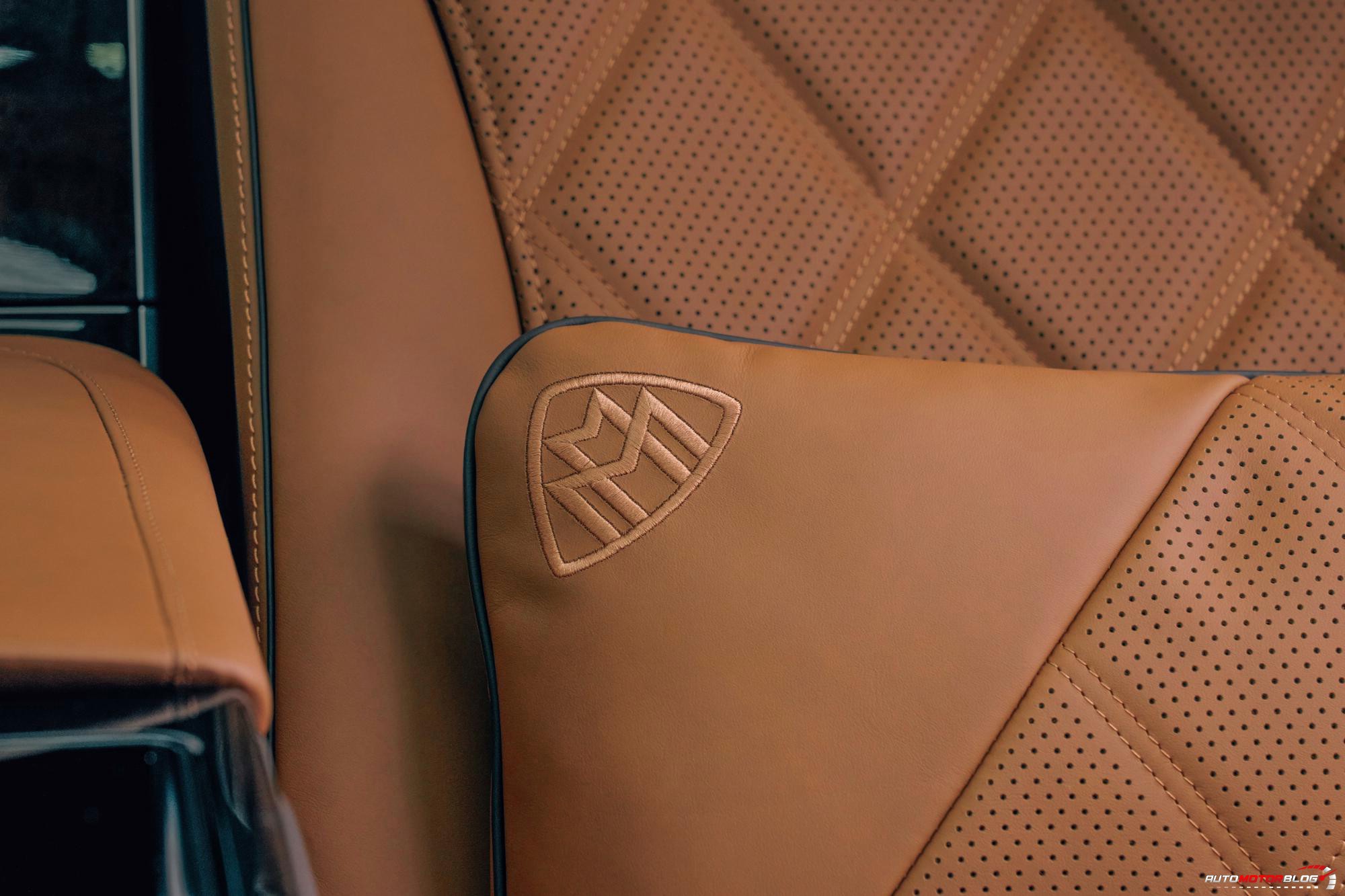
The exclusivity goes on inside. The interior is adorned with a brown diamond-quilted headliner, walnut-wood trim, and Manufaktur brown Nappa leather – classy materials. An exclusive badge that has the number 1 of 50 is the emblem stitched on the front center console as a constant reminder of the rarity of the vehicle. The center console at the back has a gold insert, which is a repetition of the metallic accents in the exterior.
Every component is meant to create a cozy environment, even down to the sitting surface and preference of materials. The cabin ambient lighting system is employed to complement the ambience in the cabin, and it can be adjusted to suit every mood or occasion.
Exclusive Owner’s Package

Mercedes-Benz does not limit the luxury experience just to the car. The V12 Edition owners would get a package of customized products that would enhance their daily experiences. It comes with a set of champagne glasses, made of silver by the famous Robbe and Berking- ideal to celebrate something. The luggage is provided with a trunk mat that has brown edges and provides protection as well as style. The Manufaktur department provides a dedicated key box and an edition-specific key ring so that the individual identity of the car is guaranteed even to the accessories.
These details support the message that the V12 Edition is not only a car but also a statement of life.
Limited Availability

The best thing about the V12 Edition is that it is rare. Mercedes-Benz has also limited itself to only 50 vehicles in the world, each vehicle is a collector product. The exclusivity is also further emphasized in the “1 of 50” symbol of the model, which customizes the identity of each vehicle. Customers are not simply buying a car but a slice of automobile history that will not be owned by many.
Conclusion
The Maybach S 680 V12 Edition of Mercedes-Benz is an ideal embodiment of the art of luxury, which integrates the outstanding historicism with the state-of-the-art performance. Taking into account that the Maybach Zeppelin of 1928 was the first car that was fitted with a V12 engine, the way the car was styled, which had a two-tone look, rich interior, and special accessories, was carefully designed to suit a very critical client.
Having been manufactured in a very small number of fifty cars, the V12 Edition is a testament to the exclusivity of Maybach, the engineering mastermind of Maybach, and the perennial prestige of Maybach.
To people who require the most of automotive opulence, the Mercedes-Maybach V12 Edition is not a car, it is a living heritage.
Mercedes-Maybach V12 Edition – Photo Gallery









from Auto Blog | Latest Car News and Reviews, Trucks, Bikes, and Motorcycles https://ift.tt/FElUS9x
How to Repair Peeling Auto Paint: A Complete Guide
There is little that makes a car look older than peeling paint. What may start out as a small flaky clear coat patch can be expanded until one ends up with dull chalky surfaces that would not be fixed by washing or waxing. It is not only that peeling auto paint would look bad, but it would leave your car in the elements and subject your automobile to the possibility of rust and other damage.
And the positive thing is that it is the kind of project you can do at home, with preparation and patience, to repair peeling auto paint. This guide will explain why you should apply auto paint peels, what kind of tools should be used, how the repair should be done step-by-step, and some tips that should be applied so that they do not peel in the future. When you are overwhelmed with the job, you can still approach a good auto repair shop and leave your vehicle in their hands.
Table of Contents
Why Auto Paint Peels

The automotive paint is applied with layers: a primer, a base coat (a color), and a clear coat that covers the finish. The process of peeling normally occurs when the bond between these layers is broken. The most common ones could be prolonged exposure to the sun, low-quality painting work, rock chips or scratches, which undermine the surface and environmental conditions, such as salt or acid rain.
When not treated, peeling is like an eggshell that has been cracked. Water will creep under the clear coat, pushing it off the base coat and ultimately leaving bare metal. This is why it is essential to do the repair immediately, not only so that it will not be ugly but also in case it will be a long-term protection.
Tools and Materials You’ll Need
Before starting, gather the following supplies:
- Safety gear: gloves, goggles, and a dust mask
- Sandpaper in multiple grits (320, 600, 1,000, 1,500, and 2,000)
- Dual-action sander or sanding block
- Automotive masking tape and plastic sheeting
- Automotive primer (preferably self-etching)
- Base coat paint matched to your car’s factory code
- Clear coat spray (high-quality automotive clear coat)
- Tack cloth and microfiber towels
- Polishing compound and car wax
Having the right materials is crucial. Using low-quality paint or skipping a clear coat may result in peeling again within a year.
Step-by-Step Process to Repair Peeling Auto Paint
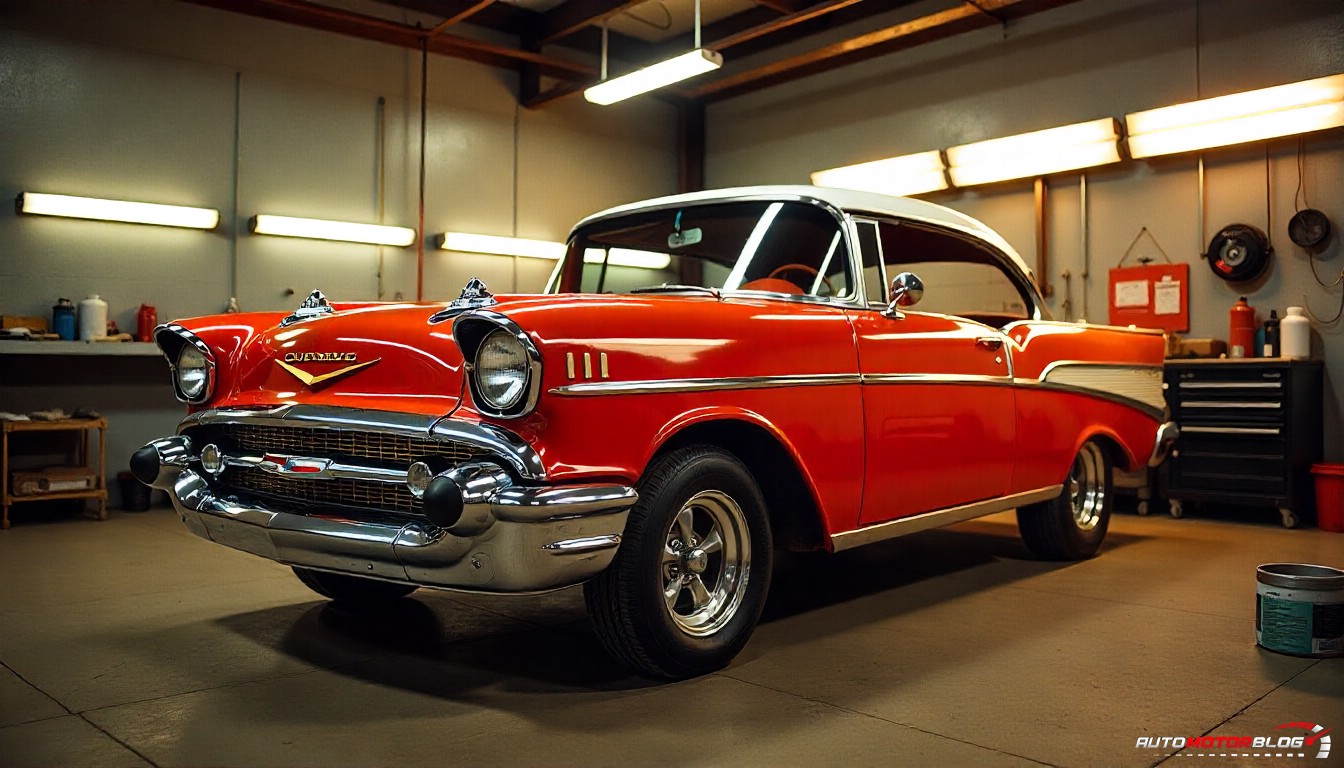
1. Inspect and Prepare the Area
Determine the peeling areas of color. Peeling is commonly initiated on flat surfaces such as the hood, roof, or trunk. Clean the site well to get rid of dirt and debris. After drying, tape and wrap up the panels around the area to prevent overspray.
2. Sand Away the Peeling Paint
Clean the damaged paint and clear coat using the 320-grit sandpaper or a sander with two actions. Sand a little farther out than the peeling line so that the edges can be feathered and give a smooth appearance. Keep on peeling till the edges disappear and the surface becomes smooth.
3. Smooth and Refine the Surface
Change to finer sandpaper (600 grit, then 1,000 grit) to polish the part sanded. This is necessary for the bonding of the new primer and paint. Wipe it with a tack cloth to get rid of dust.
4. Apply Primer
Apply two to three different layers of automotive primer on top of the sanded area. Dry out each coat following the instructions of the manufacturer. Once the primer has dried, wipe a little water on the sand using 1,500-grit sandpaper to form a smooth surface on the paint.
5. Apply the Base Coat
One should shake the touch-up paint thoroughly before spraying. Coat the piece of furniture with the base coat in thin, uniform layers, which should be allowed to dry before applying the second layer. Some light coats is superior to a heavy coat that will run or hang slack. Keep doing this until the area that has been repaired is the same color as the rest.
6. Apply Clear Coat
After the base coat evaporation, apply a clear coating to add back the luster and give the car UV protection. Similar to the base coat, do not use a coating that is thick but has several thin layers. Allow the clear coating to dry, which generally takes 24 hours or more, according to the product.
7. Wet Sand and Polish
Once the clear coat has dried, wipe the part being repaired off with very fine sandpaper (2,000 grit) moistened with water. This is done to eliminate insignificant flaws and blend the repair. Polish with a finishing compound to replace gloss. And last but not least, use car wax.
Preventing Auto Paint from Peeling Again

Proper maintenance will avoid shortening of your paintwork after repairing peeling paint. Regular washing and waxing coats a protective cover to UV rays and pollutants. To reduce sun damage, one must park in shade or use a car cover. The next good measure is to fix the rock chips or scratches as quickly as possible since they might prove to be the root cause of the peeling.
Do not use strong chemicals or cleaners on your car paint, as they may make the paint weak. When you are living in a sunny or coastal region, then a clay-like coating should be applied to protect in the long run. And in case you prefer that professionals should do the work, an auto repair shop would offer high-quality refinishing services with a warranty.
Frequently Asked Questions
What is the cost of repairing it at home?
A DIY repair costs between 50-200 dollars, which is determined by the size of the area and even the material used. A professional repair would cost between 500 dollars and several thousand dollars, depending on the kind of spot repair to carry out, or a complete repaint.
Is it possible to spray clear paint on top of peeling paint?
No. Spraying clear over peeling areas will not rectify the problem. The peeling should be sanded and a proper priming and repainting of the area should be done before a clear coat is applied.
How long will the repair last?
When performed properly, a peeling paint repair can last five years or more. Exposure to harsh weather will be avoided through protecting your car using high-quality materials, and this will extend the results.
Is it possible to remove small spots of peeling without sanding the entire panel?
Yes! 🙂 Little localized damage may be restored without sanding the entire panel. However, make sure that you feather the edges and blend the new paint with the old paint to have a smooth finish.
What if my entire car is peeling paint?
When peeling is done in large areas of your car, then a complete professional repaint is usually worth the money. Smaller, localized areas can be better covered using DIY.
Final Thoughts
A well-conditioned car can be peeled and left to appear to be in bad condition, when it does not necessarily have to be that way. With a couple of basic tools, the right materials and right planning, you will be in a position to refinish your car and protect it against further degradation.
The trick is to clean off every part that is peeling, apply primer and base coating, and then apply a clear coating. With due time and patience, you will see a tremendous improvement in the appearance of your car, and you will save money as opposed to paying someone to fix it.
Any care you take after having your paint repaired by washing, in the form of waxes and shielding layers, will guarantee that you will be using your work for several years. In case you do not want to go the DIY path, going to a local auto repair shop would guarantee that the paint job of your car is done properly and that it lasts longer.
from Auto Blog | Latest Car News and Reviews, Trucks, Bikes, and Motorcycles https://ift.tt/hXaF9VQ
Wednesday, 24 September 2025
A Legend Reimagined: Seven Honda CB750s That Redefined an Icon
The Honda CB750’s legacy isn’t just in its spec sheet, but in its staying power as a versatile custom motorcycle canvas. Here are seven of the best.Few motorcycles carry the same weight as the Honda CB750. When it landed in 1969, its inline-four SOHC engine, electric start, and front disc brake didn...
from BikeEXIF https://ift.tt/cm9hbZg
from BikeEXIF https://ift.tt/cm9hbZg
Tuesday, 23 September 2025
Bolt of Brilliance: A BMW R100 Café Racer in Gulf Blue
72 Performance USA delivers a BMW R100 café racer with custom bodywork, upgraded running gear, and a stunning Gulf Blue livery.They say lightning never strikes twice, but 72 Performance USA begs to differ. After the success of their debut BMW R100 café racer, they announced a limited run of just 10 ...
from BikeEXIF https://ift.tt/MGVP54x
from BikeEXIF https://ift.tt/MGVP54x
Ride Through the Storm: Essential Waterproof Boots for Motorcyclists
As the days grow shorter and a distinct chill creeps into the air, riders faces a familiar ritual: the seasonal gear swap. Those highly ventilated, lightweight boots that felt so good under the July sun are now a liability. With autumn rains and the damp cold of winter on the horizon, the focus shif...
from BikeEXIF https://ift.tt/xBUToSC
from BikeEXIF https://ift.tt/xBUToSC
Sunday, 21 September 2025
Speed Read: A Honda CBX 1000 Restomod and More
This week's selection of custom motorcycles is all about color. We kick off with a Honda CBX 1000 sporting flashes of pink, before focusing on a Triumph Scrambler 1200 in a timeless desert beige. Finally, we profile a pair of BMW R 1300 GS customs with bespoke liveries that are impossible to miss.Ho...
from BikeEXIF https://ift.tt/7dQk3pz
from BikeEXIF https://ift.tt/7dQk3pz
Are Plate Alloy Boats Worth It? A Closer Look at the Benefits
Strength, performance, and versatility—here’s why more Aussie fishos are backing plate alloy boats.
If you’re looking to upgrade your current rig or make the leap into boat ownership, chances are you’ve come across the term “plate alloy” more than once. In the world of serious fishing boats, plate alloy boats for sale have become the gold standard and for good reason.
But what exactly sets a plate alloy boat apart? Are they really worth the investment? And what should you be looking for when it comes to build quality, performance, and long-term value?
Let’s take a closer look at why plate alloy boats deliver serious advantages for Aussie anglers.
Table of Contents
What Is a Plate Alloy Boat?
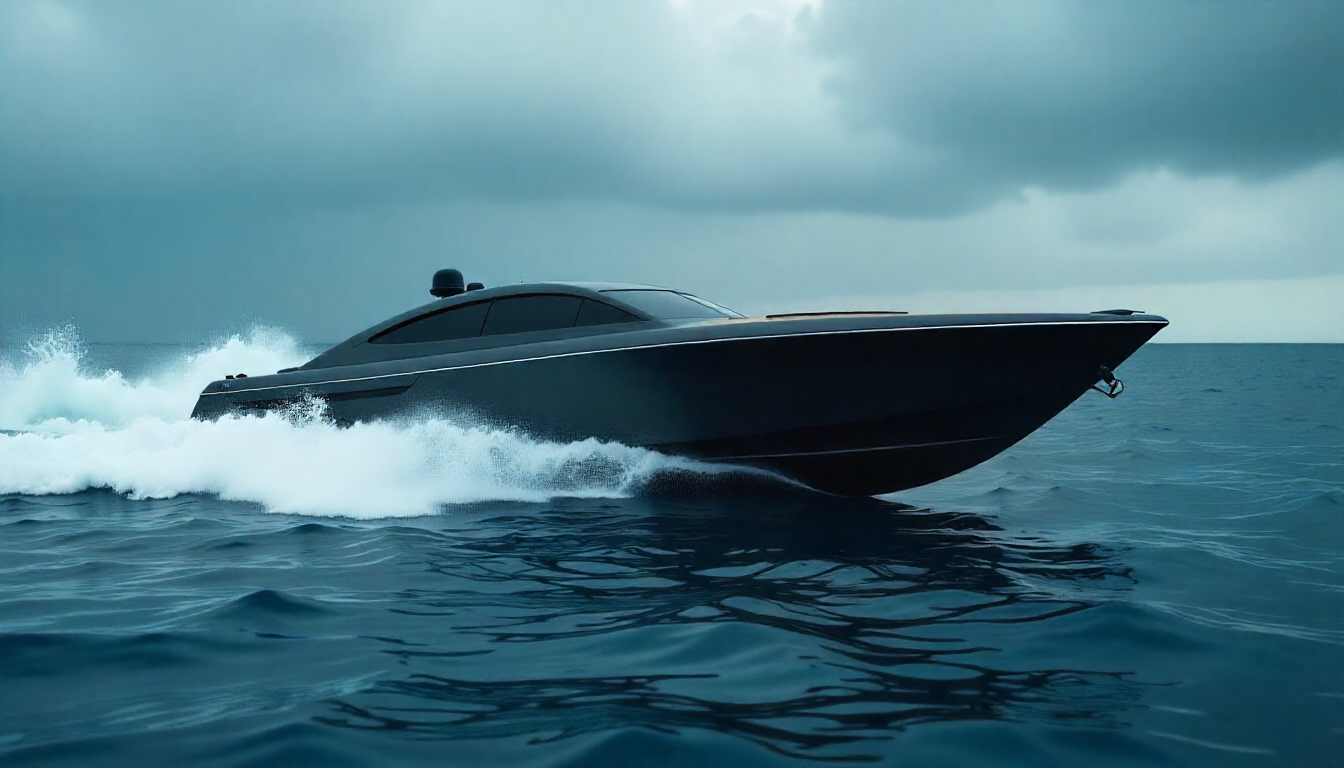
Not all aluminium boats are built the same. Your average tinnie is made from pressed aluminium sheets, fine for calm, inshore waters but not built for the rigours of offshore use.
Boats that are plate alloy, however, are made of high-tensile marine-grade and have a fully welded subfloor frame that provides the next level in strength, durability and performance. They are stronger, more stable and more appropriate to serious fishing in Australia’s difficult conditions.
Key Benefits of Plate Alloy Boats
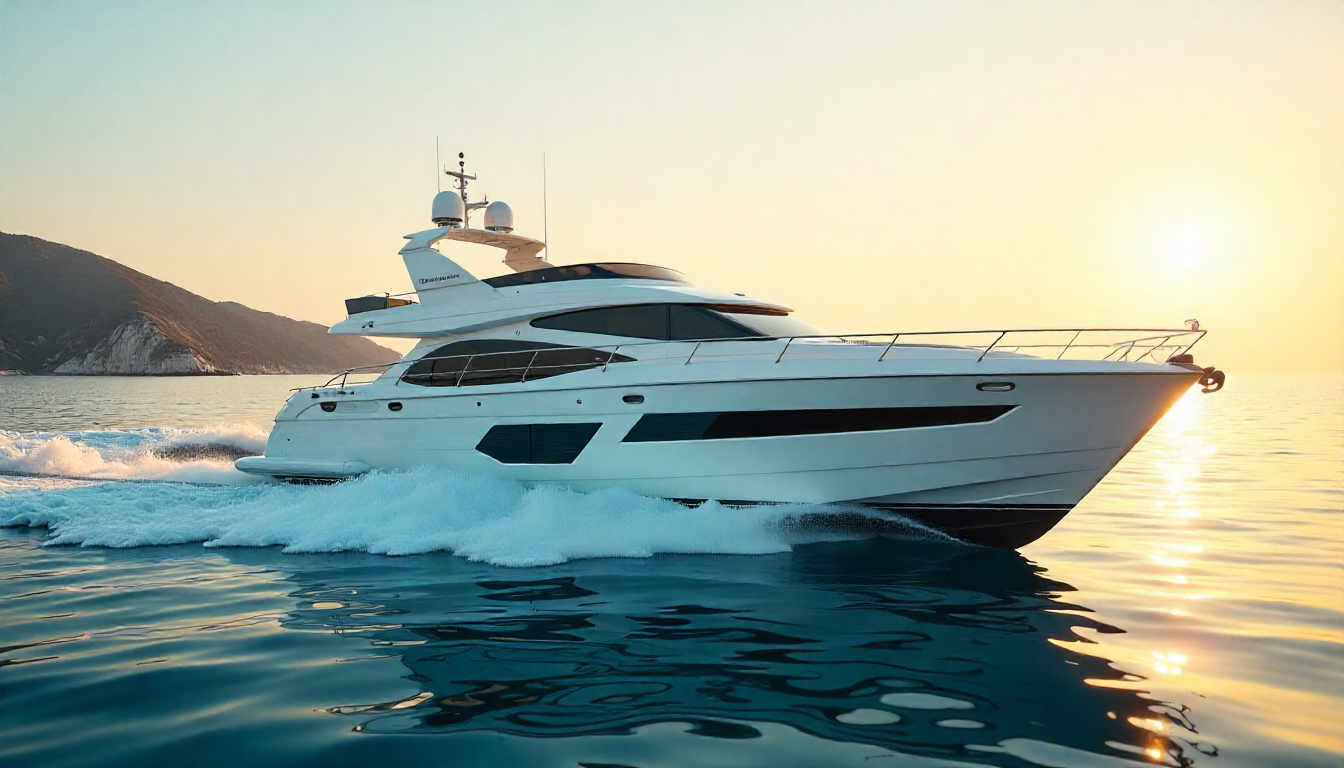
Strength and Durability
The hallmark of a true plate boat is its fully welded structure and thick, high-grade aluminium plating. This delivers exceptional rigidity and strength underfoot, with no flexing or weak points, whether you’re running through swell or moving around the deck during a hot bite.
Smoother Ride
Plate boats have V-shaped hulls, which are deeper in order to slice through chop and harsh waters. It implies that there is less pounding, more comfort, and a drier ride when you are heading offshore or on long journeys.
Stability at Rest
Despite their deep-V hulls, quality plate boats incorporate design features that improve stability when stationary. That means less rolling while you’re bottom fishing, jigging, or waiting out a bite.
Practical Fishing Features
Plate boats are typically set up with serious anglers in mind. You’ll often find:
- Fully-welded structure
- Water ballast
- Live bait tank
- Heavy-duty bait boards and rod holders
- Ample storage throughout the boat
- Cabins for long-range trips
These aren’t afterthoughts… they’re integrated into the build to make fishing easier, safer, and more enjoyable. 🙂
Long-Term Value
Although a plate alloy boat would ordinarily be more expensive than an equivalent made in pressed alloy, it is a safety, performance, and lifespan investment. They have no timber or fibreglass gelcoat to maintain, meaning that the upkeep is easier and the boats are constructed to last the years of hard work.
Why They’re Worth It
Plate alloy boats are:
- Tougher – with thicker hulls and robust subfloor frames
- More capable – ideal for offshore and all-weather fishing
- More comfortable – offering smoother rides and better stability at rest
- Lower maintenance – with minimal materials prone to rot or cracking
- Built to last – designed for serious fishos who demand reliability
Final Word: Built for Serious Fishos
Then shall plate alloy boats be worth it? Assuming that you are a serious fisherman, then the answer is yes. Plate boats have the power, offshore capability, and angler-oriented designs, as well as the performance and confidence needed to navigate the diverse and, in many cases, challenging waterways of Australia.
from Auto Blog | Latest Car News and Reviews, Trucks, Bikes, and Motorcycles https://ift.tt/mV1auRW
Friday, 19 September 2025
R is for Rough: Winston Yeh Redesigns the Aprilia RSV4
Winston Yeh, front man of the Taiwanese powerhouse Rough Crafts, is best known for his brooding Harley-Davidson customs. But he’s just as happy to work on other makes and models, and has turned his hand to everything from the BMW R nineT to the Ducati Monster. His latest project might be Rough Craft...
from BikeEXIF https://ift.tt/Pwj2Ca7
from BikeEXIF https://ift.tt/Pwj2Ca7
How Free Car Checks Help You Avoid Hidden Issues
Buying a used car is an exciting experience, but it also comes with its share of risks. Nobody wants to discover unpleasant surprises after handing over their hard-earned money. Luckily, you can reduce those risks by running a free car check before making your decision. Taking a few moments to verify vital facts can reveal potential issues hiding beneath a car’s shiny surface. In this blog, we explore how these checks empower you to make informed decisions and help protect you from costly surprises.
The process of purchasing a used car is a very thrilling one, but it is also associated with a number of risks. No one would love to make unpleasant discoveries following the release of money that they have worked so hard to get. Fortunately, you can mitigate those risks by carrying out a free car check prior to making your choice. A few minutes of checking the most crucial facts can unveil the problems that are actually lurking behind the shiny hood of a car. We discuss how these checks enable you to make a wise decision and how they assist in avoiding expensive surprises in this blog.
The value of vehicle history checks

Each used car, some of them more complex than others, has its story. A detailed vehicle history check enables you to dig into the past occurrences that may have an impact on reliability or value, even in the present day. These checks will help to determine whether a car has been stolen, written off in an accident, or has outstanding finance, none of which can be seen when performing a standard check. Such information will make you avoid automobiles that may bring future financial or legal complications.
There is always a possibility of having a car that appears perfect on the surface but possesses underlying serious issues because it has been previously used. All that is required is a registration number, which allows online platforms to give important information such as a mileage variance, MOTs, or whether the vehicle is an import. Checking these records in advance means that you tend to be less prone to finding out that the history does not actually correspond with what a seller is telling you. This will enable you to make good decisions and negotiate on facts and not appearances alone.
Spotting potential red flags early
There are many vehicle problems under the carpet that cannot be seen during a check or trial drive. Free car checks are aimed at shedding light on information that might be concealed, intentionally or not, by the sellers. As an example, you can unearth whether a vehicle has been clocked- where its mileage has been compromised; this can be indicative of actual usage greater than it is being presented. This is particularly necessary for buyers who invest in older models, where the chances of being manipulated are stronger.
In addition to mileage abnormalities, these inspections reveal information about the car, like whether it was reported as being scrapped, under insurance claims, or even being caught in the old recall lists. Learning about recalls will allow you to estimate whether the necessary repairs have been done or not. Such type of information protects your interests and helps in making sure that you do not invest in a car that has safety or mechanical issues that cannot be resolved.
Making confident decisions when buying used
When you’re shopping for a used car, confidence is key. The data offered by a free vehicle check provides you with bargaining power, as well as assurance about your purchase. When you have actual records of inconsistencies or risks, it is much easier to walk away from a questionable deal. Open dealers and direct sellers are also likely to indicate increased credibility, and the entire process becomes easier.
Also, clear records may accelerate the process of purchasing. You will waste less time doubting about your conclusions or making attempts to check the facts manually, and more time will be devoted to whether the car really corresponds to your needs. Free checks on cars are easy, fast, and available to anyone who has access to the internet. You learn something invaluable to your choice, which you can use to save yourself a headache in the future and also steer yourself to a used car that you can be absolutely sure of.
from Auto Blog | Latest Car News and Reviews, Trucks, Bikes, and Motorcycles https://ift.tt/rvIaheY
Thursday, 18 September 2025
Ride Warm: Heated Motorcycle Gear for Cold Weather Riding
In the Northern Hemisphere, September marks the end of summer. Days begin to get shorter and temperatures begin to cool. Despite this, fall is arguably one of the best times of the year to ride. While cold can be inconvenient, under the right conditions, it can be deadly. Cold hands...
from BikeEXIF https://ift.tt/YRF41qE
from BikeEXIF https://ift.tt/YRF41qE
33-Inch Tires vs 285 Tires – Are They the Same? Best Comparison Guide
A typical question that comes up is whether 33-inch tires and 285 tires are the same. The short answer is NO! In this comparison guide, you will find all the necessary information regarding the difference between the 33-inch tires and the 285 tires. We have covered all the branches for this guide to be complete, such as basic information, tire measurements, tire size comparison, comparison table, pros and cons, off-road vs. daily driving, price comparison, and more.
Table of Contents
Introduction
The concepts of tire sizing and dimensions are difficult for a large number of vehicle owners and enthusiasts to comprehend.
This is not surprising, considering that most of the time measurements made in inches and millimeters are confused, two terms which are used interchangeably in various companies and regions.
285 tires usually measure close to 33 inches, although they aren’t always the same. This depends on the aspect ratio and rim size.
This comparison article will go over the benefits and downsides of 33-inch tires and 285 tires, as well as the differences and similarities between the two. This will help you figure out which one is ideal for your car and driving demands.
A Guide to Tire Measurements: 33-Inch Tires vs. 285 Tires
The appropriate tire size cannot be calculated easily because different manufacturers measure it in different ways: metric (millimeters) and imperial (inches). In the situation when the individual states that there are 33 inches in a tire, he describes the overall diameter of the tire, the distance between the floor and the pinnacle of the tread upon inflating the tire.
It is an easy method of describing tire size that is prevalent in the aftermarket and off-road markets. It does not, though, mention the breadth or size of the rim, which may vary under circumstances.
Though the metric system is used in a size of 285/70/R17, and the 285 in this case means the width of the tire, approximately 11.2 inches or 285 mm. The aspect ratio is 70%, and it is the height of the sidewall divided by the width. Finally, R17 implies that the diameter of the rim is 17 inches. Simple, huh?
The height of this tire (285/70/R17 in this case) is approximately 32.7 inches, which is approximately the height of what most individuals would refer to as a 33-inch tire. Do you know what the major difference between these is?
The only major difference is that the 33-inch tires are taller and the 285 tires are wider. This is to say that not all 285 are 33 inches long, and not all 33-inch tires are of the same width.
This distinction is highly significant to consider when purchasing tires in terms of their fit, functionality, and appearance.
The difference between the 285 tire and the 33-inch tire is difficult to distinguish. Other individuals refer to the 33-inch tire as either a 285/70/R17 or a 285/75/R16 tire. What is the reason? It is all some 33 inches in height.
However, the reality is not as complicated as that. The 285 is just a representation of the width of the tire in millimeters. It does not give you any idea about the height. Without knowing the aspect ratio and the rim size, you cannot determine the diameter.
A 33-inch tire is a tire that is 33 inches long due to the diameter. The 285/70R17 has an approximate height of 32.7 inches. It is approximately 11.2 inches wide, and people refer to it as a 33-inch.
A 285/75/R17 is around 33.8 inches tall. It is slightly taller than a 33-inch tire. The height of a 33×12.5/R17 is 33 inches. It is 12.5 inches wide, slightly wider than a 285.
That is why, although there may be a great number of 285 tires called 33s, it does not mean that they are all exactly the same as the 33-inch tire.
Comparison Table
| Comparison | 33-Inch Tires | 285 Tires |
|---|---|---|
| Tire Measurement | Imperial (measurement in inches) | Metric (mm width, aspect ratio, rim size): 285/70R/17 |
| Concentrate | Tire diameter | Tire width |
| Common Equivalent | 33×12.5/R17 | 285/70R/17 (~32.7”) |
| Width Dimensions | between 10.5” and 12.5” | approximately 11.2” |
| Accuracy | Approximate | More accurate |
| Most Used | Off-roading, SUVs (Aftermarket, non-OEM) | Off-roading, SUVs (OEM applications) |
| Price / Set (4 wheels) | $1,100 – $1,700 | $800 – $1,300 |
Pros and Cons
Why does the debate matter? I have spent countless hours on the road comparing the two sizes, and the decision could have an immense impact on your driving experience.
Advantages of 33-inch tires: The bigger wheel has a more commanding look and much more grip on uneven surfaces. Those 33-inch tires embrace the ground when I arrive on a muddy road, making the ride smoother. They also permit a lower gear ratio, that is, they provide more torque at the wheel in off-road conditions.
Advantages of 285 Tires: On the positive side, it is lighter, which reduces the total weight of the vehicle and increases fuel economy. I have also found that there is a distinct change in the acceleration during the time when the truck is loaded. In addition, the reduced profile will be more stable on paved roads, and the braking distance will be reduced.
Disadvantages of 33-inch tires: They weigh more and this may strain the suspension and make it wear out. I have also noticed higher rates of tire changes in the 33-inch pattern, and the bigger diameter is prone to cause a drift in the speedometer unless it has been programmed.
Disadvantages of 285 tires: They are a little too skinny in rock-hard conditions, which causes a more brutal ride. I have almost felt a tip on a bumpy road, which would have been leveled by the broader tires.
Off-Road vs. Daily Driving
When comparing the two, the 33-inch tires and the 285 tires, the choice of the use of the vehicle is often used to determine the one that should be used.
The actual 33-inch tires, and especially the bigger versions (33×12.5 and bigger), have several advantages when used off-road, such as better ground clearance, more traction in the sand or mud, and a more aggressive demeanor. They are ideal in terms of rock crawling, overlanding or use on the trail where comfort does not matter, durability and size are of higher priority.
These advantages, though, have several trade-offs in the day-to-day commuting. In the case of tires that are larger in size and weight, such as tires with a diameter of 33 inches, the fuel efficiency will probably be lower, and the noise on the road will also be louder.
Moreover, it is also necessary to manipulate the trimming of the tires in some cases or perform some changes in the suspension to prevent rubbing.
Conversely, tires such as the 285/70/R17, which are highly popular, strike a compromise between size and functionality. They are in a similar diameter range as 33s but are narrower and generally lighter, which allows them to be more easily added to stock models, give a better ride on the pavement, and offer better handling and performance. In the case of the drivers, who drive most of the time and just sometimes drive somewhere outside the road, 285s are more likely to make more sense. Conversely, 33s suit better those fans who consider strong off-road performance a greater priority.
Price Comparison
In terms of price, 285 tires tend to be cheaper since they are more in line with the factory standards and made in a larger volume as OEM tires. An average price of 285/70/R17 all-terrain tires is between $800 and $1300, which is determined by the brand and tread pattern.
In comparison, 33-inch tires, and in particular those with wider treads such as 33×12.5/R17, are sold mainly as aftermarket to the off-road community. This tends to increase their cost, costing between $1,100 and $1,700 and above per set.
The added diameter of the majority of 33-inch tires also suggests that the tires may require wider wheels, which will increase the overall cost of an upgrade even more. I would like the aggressive appearance of these tires!
The 285s are usually the cheapest in terms of providing the budget-conscious customers with the looks and performance of bigger tires, the 33s are only famous with those enthusiasts who want the most off-road and aggressive appearance.
I wrote a review about Douglas Tires, and I think it will be useful if you want tires with the best quality/price ratio. They are the perfect tires for daily use on the road.
33-inch Tire vs. 285 Tire: Which One Should You Pick?
To perform off-road, the most appropriate tire is a 33-inch tire, and in particular, the 33×12.5 or even larger. It offers you added clearance in case of rocks, sand, and mud, and its aggressive tread also offers good traction. The cons are obvious: huge tires become heavier, fuel economy decreases, and roads become noisier. When you are willing to spend a little more and spend time in the garage, the 33-inch set is worth considering to be used in rock crawling, overlanding, or long-trail camping, where comfort is not as important as size and durability.
To use on a daily commute and have more fuel efficiency, the 285/70/R17 is the best choice. These tires are slightly narrower and lighter in weight than the 33-inch set of tires. It makes them a bit easier to fit on a stock model without making significant alterations to the suspension. They provide a more comfortable ride on the pavement, better handling, and reduced operating expenses. In case you drive off-road only once or twice a month, the 285s can be a good combination of performance and practicality.
Final Verdict
When you are all about off-road dominance and are willing to pay a little more for maintenance, get the 33-inch tires. The smarter of the two is the 285, in case the first thing on your list is daily commuting and fuel efficiency.
Finally, it is up to what type of terrain you normally ride and how much time you want to spend in the garage.
Frequently Asked Questions
What is meant by the term 33-inch tire?
The overall size of the tire, with the top and bottom of the tread, is measured when it is inflated, and this is 33 inches in diameter. It’s an imperial measurement.
Is a 285 tire necessarily a 33-inch tire?
No. The width of a tire is not the only size of the tire. The diameter is also determined by the aspect ratio (the height of the sidewall as compared to the width) and the rim size. An example is that a 285/70/R17 is nearly 33 inches, whilst a 285/55R17 is much smaller.
Why do tires with a 33-inch height seem taller than those with 285-wide tires?
This is due to their greater overall diameter. Although tires can be of the same width, a 33-inch tire will have a taller sidewall or a bigger rim; thus, it will be raised higher.
What is the overall mechanical distinction between a 33-inch and a 285 tire?
A 33-inch tire tends to be taller and normally wider at the tread. It provides additional ground clearance, but weight is also added.
What is the impact of the additional height on the off-road performance?
Mud or sand would make higher sidewalls bend more, and that would make them more tractionable. They also take bumps and thus give a smooth ride on uneven surfaces.
What are the benefits of a 285 tire over a 33-inch tire?
Weight saving: lighter tires lower the unsprung mass and enhance fuel economy and handling. Paving stability: the decreased profile brings the tire nearer to the rim, producing a firmer steering action and reduced braking ranges.
Price: 285 tires are manufactured in large quantities and are cheaper than 33-inch tires (approximately 800 to 1300 dollars).
What is the disadvantage of 33-inch tires?
Increased weight: This puts more tension on the suspension and may hasten the wearing of tires. Speedometer drift: the bigger circle varies the relationship of the wheel, thus making the odometer and ABS readings incorrect unless the ECU is recalibrated.
Noise/Fuel economy: Taller tires create more noise on the road and lower miles per gallon.
In which cases would I select a 33-inch tire?
A 33-inch tire is best (in particular, a 33×12.5 R17 or bigger) in case of mostly off-road use, rock crawling, overlanding, or heavy cargo requirements.
In what cases would I leave with 285 tires?
Use 285 tires in situations where you need to commute daily, drive on a freeway, or where on-road stability and fuel economy are important to you. It is also less heavy, less expensive, and more appropriate for paved surfaces.
What will be the price of each type?
285/70/R17 all-terrain: $800-1300/set (factory-standard, OEM volume).
33-inch tires (e.g., 33×12.5/R17): $1,100-$1,700/set (aftermarket tires, non-OEM), due to increased cost of production and a small market.
Can a 33-inch tire destroy the suspension of my car?
Only under the condition that the suspension is already at its limits. The additional weight and height exert pressure on shocks, struts, and bushings, though in most off-road designs, the weight is designed to support.
Is a 33-inch tire going to have an impact on the speedometer?
Yes. The speedometer can display a lower speed than the actual one because the circumference of the wheel is different when the ECU is not reset to the new circumference.
Is it possible to use 33-inch and 285 tires in the same vehicle?
It can, but it will result in uneven wear, traction imbalance, and possibly handling. To maximize the performance, apply the tire type to all four wheels.
References
- https://en.wikipedia.org/wiki/Tire
- https://www.crawlpedia.com/tire_size_converter.htm
- https://www.reddit.com/r/tires/comments/1834cv4/please_explain_2_digit_tires_and_3_digit_33s_and/
- https://www.quora.com/Are-33-tires-the-same-as-285
- https://en.wikipedia.org/wiki/Wheel_sizing
- https://en.wikipedia.org/wiki/Metric_system
- https://www.twinkl.com/teaching-wiki/imperial-system
from Auto Blog | Latest Car News and Reviews, Trucks, Bikes, and Motorcycles https://ift.tt/TqN5MnR
Subscribe to:
Comments (Atom)